

1. Introduction
Essential oils are organic chemicals extracted from plant parts such as leaves, twigs, wood, roots, and barks (1). One of the essential oil characteristics is the presence of various essences or volatile compounds with beneficial properties such as antioxidants (2), antibacterial (3), and anti-inflammatory (4). The development of the essential oil industry started in the early 20th century due to its wide use, making them one of the most important processed products (5).
Data published by Statistics Indonesia in 2020 mentioned that the Indonesian export rate of essential oil has increased during the last three years compared to the 3122,1 tons(x1000) of essential oil export in 2017 and 4819,7 tons(x1000) in 2020 (6). This data suggests that the production process may be ineffective for several reasons, e.g., the yield obtained is too small, lack of management, or less competitive oil quality. As the essential oil is strongly bound to plant cells, the dry weight will have a higher yield value.
Essential oils are produced by isolating the plant's natural ingredients by extracting compounds in the deepest cell layers in the leaves, flowers, twigs, stems, and roots (7). Eucalyptus essential oil is extracted from its leaves and twigs using the wet distillation process (8), steam (1), and other extraction methods. A study by Ratnaningsih & Insusanty (9) found that the eucalyptus refining process produced a maximum oil yield of 0.45%. Eucalyptus leaf distillation is affected by environmental factors such as humidity, temperature (10), leaf conditions, and distillation time (11).
Sugihmukti village, Ciwidey, West Java, is a potential source of abundant eucalyptus leaf. Using eucalyptus leaf from this village as a natural resource for eucalyptus oil production will support the village income and development. This idea aligns with the concept of regional development related to sustainable natural resources (12). This study focused on improving production effectiveness by increasing eucalyptus oil yield by modifying the duration of leaf storage and distillation time. Eucalyptus
leaf storage determines the quality of the post-harvested leaves in the storage process (13). The distillation period determines the amount of eucalyptus oil yielded from the distillation.
Results obtained from this research can serve as a reference for eucalyptus oil production yield and quality optimization that can contribute to future regional potential development. Therefore, it is necessary to adjust the results according to SNI 8834:2019 as adopted ISO 770:2002. This process is important so that aspects of production can be applied further in the next process.
2. Methodology
2.1. Sample Preparation
Eucalyptus (Eucalyptus grandis) leaves used to distillate eucalyptus oil were taken from the forestry plantation as PERHUTANI's forest at Sugihmukti village, Ciwidey, West Java. The weight of eucalyptus leaves used per distillation process was 8 kg. Treatments applied were the variations of storage time (i.e., 1, 2, and 3 days) and distillation time (i.e., 2, 3, and 4 hours). The distillation method used in this study was steam distillation with a specification temperature of 105+2℃, air pressure of +1200 m above sea level, and air temperature is 14-20℃. The steam distillation scheme is presented in Figure 1.
The complete variations of treatment are presented in Table 1. The variations in this study were used to determine the distillation process for each sample. The sample code uses the notation A as leaf storage time, B as distillation time, and numbers as a marker of the time used.
Figure 1. Steam Distillation Scheme for distillate eucalyptus leaf (14)
Table 1. Research Variations
| Number | Sample code | Treatment | ||
|---|---|---|---|---|
| Storage time (day) | Distillation time (hours) | |||
| 1 | A1B1 | 1 | 2 | |
| 2 | A1B2 | 3 | ||
| 3 | A1B3 | 4 | ||
| 4 | A2B1 | 2 | 2 | |
| 5 | A2B2 | 3 | ||
| 6 | A2B3 | 4 | ||
| 7 | A3B1 | 3 | 2 | |
| 8 | A3B2 | 3 | ||
| 9 | A3B3 | 4 | ||
2.2. Sample Test
The essential oil obtained was subjected to several tests to determine its quality. All tests were done at the Laboratory in Indonesian Medicinal and Aromatic Crops Research Institute (IMACRI), Bogor, West Java, Indonesia. Selected tests were, i.e.,
1. Total Yield of Eucalyptus Oils
Determination of total eucalyptus oil yield using the following equation :
Yield (%) = \[\frac{\text{Mass of essential oil (g)}}{\text{Mass of eucalyptus leaf(g)}} \times 100\%\] (1)
This determination is used to determine the percentage of oil produced from eucalyptus leaves used at each storage time.
2. 1,8 Cineole content test
The cineole content test was done to determine the cineole content in the essential oil. The cineol content is an indicator of antioxidants in eucalyptus oil. Cineole/1,8 cineole structure is the same as in Figure 2. This test complied with the Indonesian standard SNI 8834:2019 about Eucalyptus essential oil (Eucalyptus globulus Labill.) rectified (ISO 770:2002, MOD) (15).
3. Optical Rotation Test
The optical rotation test was carried out to determine the purity level of the essential oil obtained. Optical rotation is the index of refraction produced in oil projections when exposed to light. This test complied to the Indonesian standard SNI 8834:2019 about Eucalyptus essential oil (Eucalyptus globulus Labill.) rectified (ISO 770:2002, MOD) (15).
4. Solubility Test in Alcohol
This test was conducted to determine the essential oil level of release in alcohol. This solution is used as a reference in the further processing step. This test complied with the Indonesian standard SNI 8834:2019 about Eucalyptus essential oil (Eucalyptus globulus Labill.) rectified (ISO 770:2002, MOD) (15).
3. Results and discussion
3.1. Eucalyptus Leaf Oil Yield
Results showed that the extraction yield in every storage time treatment increased with the increase in the duration of distillation (Figure 3). The longer the distillation time, the higher the yield produced in each storage time treatment.
Figure 2. 1,8 Cineole structure (Eucalyptol)
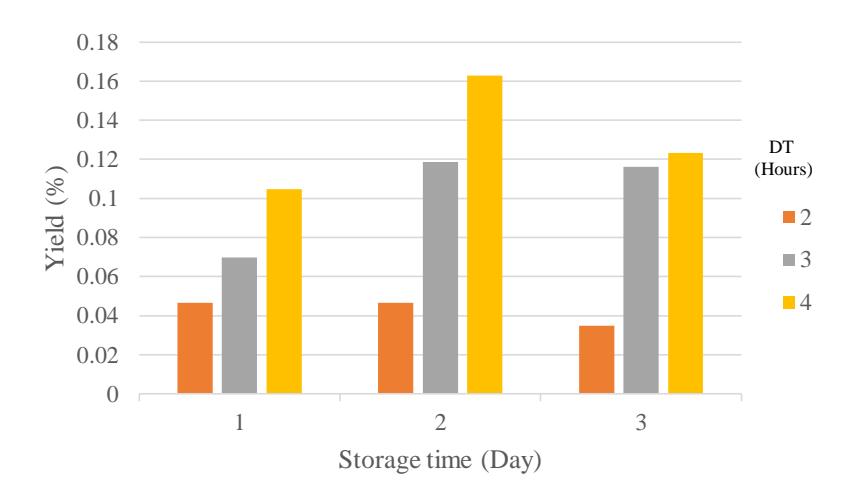
Figure 3. Eucalyptus leaf oil sample yield in different treatments
The storage time treatment results showed the highest average yield of 2 days, followed by 3 days and 1 day. The highest yield value of 0.168% was obtained from sample A2B3 with a storage time of 2 days and a distillation time of 4 hours. The yield value of the 2-hour distillation sample at all storage times ranges from 0.03-0.06%, with increasing sample yield values of 0.047% (A1B1), 0.047% (A2B1), and 0.035% (A1B1). The yield value of the 3-hour distillation sample at all storage times ranges from 0.06-0.12%, with increasing values of 0.069% (A1B2), 0.119% (A2B2), and 0.116% (A3B2). In comparison, the 4-hour distillation yield ranges from 0.1-0.17% with increasing values of 0.105% (A1B3), 0.163% (A2B3), and 0.123% (A3B3).
The measured eucalyptus leaf oil sample showed that the leaf storage time could increase the amount of yield. The process of leaf storage causes degradation of the leaf cell structure, making it easier to isolate the oil (16). However, a more extended storage period will cause continuous cell damage, which adds possibility of oil evaporation that will eventually decrease the yield (17). Indeed, in our study, we found the highest yield on day 2, and the yield slightly decreased on day 3. But, another study by Ratnaningsih & Insusanty (9) showed an optimum eucalyptus pellita leaf storage time of 3 days.
Another treatment showed that the longer the distillation time resulted in a higher yield. The highest yield was demonstrated by 4 hours of DT followed by 3 and 2 hours. A possible explanation is that a relatively large energy/steam propulsion is needed to extract oil from the eucalyptus leaf cell. The results also found that the distillation time of 2 hours to 3 hours experienced the most drastic increase compared to 3 to 4 hours (13). The longer distillation will increase the amount of yield, but there will be a culmination time point that causes no increase in the amount (1). These results follow a study by Ratnaningsih & Insusanty (9), which shows that the distillation of eucalyptus pellita leaf oil produces a maximum yield at 5-6 hours.
3.2. The concentration of 1.8 cineole eucalyptus leaf oil
The measurements of cineole levels in eucalyptus leaf oil showed that cineole levels fluctuated with storage and distillation times. The value tends to decrease based on the storage time of eucalyptus leaves (Figure 4).
The highest cineole levels were shown in samples A1B3 (25.83%) and A2B1 (26.65%). Meanwhile, the lowest cineole content was shown by sample A3B1 (13.75%). The cineole content value indicates cineole in every ml of eucalyptus leaf oil. Cineole is an antioxidant compound that will depend on the conditions of the sample and the environment. The measurement results found a decreasing trend of cineole content with the increase in the storage time from day 1 to day 3. The cineole content ranged from 10- 30% on the 1st to 3rd day of storage. When compared with SNI 8834:2019 or the adoption of ISO 770:2002, this value is lower. The standard value in SNI is >40%. But the research of Ahmad et al. (13) showed that the content of 1.8 cineole ranged from 18-75% due to external variables such as temperature, altitude, and soil type.
Apart from that, 1,8 Cineole as an antioxidant compound can be easily oxidized due to environmental influences (17). The day 1 sample has the highest cineole compared to other samples because the leaves are fresher. The fresh sample has good and potent antioxidants conditions; thus, the antioxidants detected are higher than the withered leaves. The cineole content on the 2nd and 3rd days of storage decreased because the Eucalyptus leaves used were wilted and damaged due to the storage process. Meanwhile, distillation time does not affect the cineole content of eucalyptus leaves. On day 1 samples, the longer the distillation resulted in a higher cineole content. On the contrary, day 2 and 3 samples showed decreased cineole values with increased storage and distillation time. The cineole levels found in this study follow the results of Maail & Purimahua (18), which show damage to antioxidants due to environmental degradation when not appropriately preserved (18).
3.3. Solubility in alcohol
The measurement of the solubility of eucalyptus leaf oil showed that all eucalyptus samples were soluble in alcohol (Table 2). The ratio used was 1:1 to 1:7.
All eucalyptus leaf oil samples were soluble in alcohol in a ratio of 1:1 to 1:7, indicating that eucalyptus leaf oil is easily dissolved in alcohol. The ability to be soluble in alcohol means that eucalyptus leaf oil contains terpenoid compounds such as 1,8 cineole (13).
Indeed, the samples of eucalyptus oils (Figure 5) showed a 15-30% cineole content. The alcohol solubility ratio of 1:1 to 1:7 alcohol shows that the quality of extracted eucalyptus oil fulfills the national standard of SNI 8834:2019 (9). If this data compares with SNI 8834:2019, the result shows that all treatment has good quality. But, if we will use eucalyptus oil for industry and need to reduce the cost of production, maybe sample A2B2 has a good chance. The solubility in alcohol 1:1 shows that eucalyptus oil only needs 1 part alcohol to dissolve 1 part eucalyptus oil.
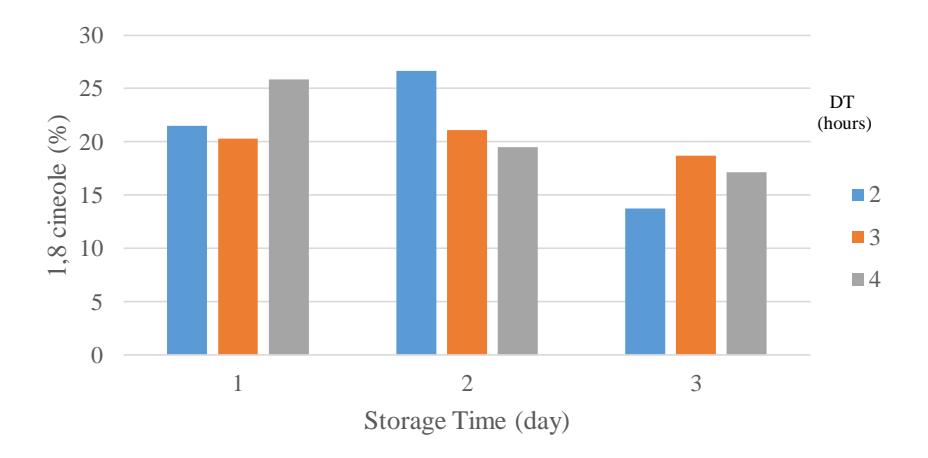
Figure 4. 1,8 cineole content of Eucalyptus oil
Table 2. The solubility of Eucalyptus leaf oil in alcohol
| No | Sample code | Solubility in alcohol | Solubility in alcohol SNI 8834:2019 |
|---|---|---|---|
| 1 | A1B1 | Soluble (1:4) | Min 1, Max 7 |
| 2 | A1B2 | Soluble (1:6) | |
| 3 | A1B3 | Soluble (1:4) | |
| 4 | A2B1 | Soluble (1:2) | |
| 5 | A2B2 | Soluble (1:1) | |
| 6 | A2B3 | Soluble (1:7) | |
| 7 | A3B1 | Soluble (1:7) | |
| 8 | A3B2 | Soluble (1:5) | |
| 9 | A3B3 | Soluble (1:5) | |
Figure 5. Samples of eucalyptus oil
3.4. Optical Rotation Index
The optical rotation index measurement of eucalyptus oil samples showed a value range of 20- 0 Ta le . The optical rotation index value determines the purity of eucalyptus leaf oil.
rom nine samples tested, only three detected optical rotation values. Those three samples showed more than 20 degrees rotation value, with the highest value found in A 2 . , followed y A 2 22. and A 22. 0 . any essential oils, including eucalyptus oil, contain fragrant chiral compounds that rotate levorotatory and dextrorotatory planepolarized light. The measurement of the optical rotation of the essential oil shows the diversity of optically active compounds in natural compounds. The optical rotation value indicates the purity of a specific compound, and the positive
value indicates that the molecular structure has a rotation to the right (10). Compared with the result of other studies with an optical range of +2 to +8, this study indicates a different supporting structure of eucalyptus oil or eucalyptus oil concentration and temperature higher than standard (18). The net rotation, of course, depends on all the chiral compounds present and their relative quantities. There is no simple direct correlation between the net rotations of the experimental and standard essential oils in Table 3. The exact amounts of the different compounds may vary depending on the season, variety and origin and possibly optical rotation as well (19). In another way, the optical rotation exhibited by a chiral medium depends on the optical path length, the wavelength of the light used, the temperature of the system, and the concentration of dissymmetric analyte molecules (20).
Table 3. The optical rotation index of eucalyptus leaf oil samples
| No | Sample code | ptical Rotation | Optical Rotation in SNI 8834:2019 |
|---|---|---|---|
| 1 | A1B1 | NA | +2, +8 |
| 2 | A1B2 | NA | |
| 3 | A1B3 | NA | |
| 4 | A2B1 | NA | |
| 5 | A2B2 | NA | |
| 6 | A2B3 | NA | |
| 7 | A3B1 | 24.75 | |
| 8 | A3B2 | 22.55 | |
| 9 | A3B3 | 22.5 |
*notes : NA (not aviable)
In this study, the extraction process focused on Eucalyptus's leaves and twigs because the oil part tends to be on the leaves and twigs, although there is a yield of essential oil in other parts. Marques et al. (7) showed that the amount of essential oil could be obtained from several parts such as leaves, twigs, wood, and roots (9). However, this research is fair because the objective is to utilize the wasted leaves. In general, the extraction process used in this study allows it to be used on other species of eucalyptus leaves, as has been done by Marques et al. (7) in a variety of Eucalyptus globulus. These results can occur because the family of Eucalyptus has similarities in terms of the content of 1,8 cineole compounds (7). This study allows the method to be used more widely for other varieties. So that use on a larger scale can be increased by farmers or eucalyptus landowners.
From the production aspect, the optimum storage time is 2 days. However, if viewed from research by Marques et al. (7) that shows maximum yield in dry leaf conditions, this extraction process can be further improved. In addition, the production process will pay attention to the distance between the plantation and the production area, temperature, humidity, and air pressure (13). So that in the process of sustainability and minimizing bias in the dry and wet seasons, further studies are needed regarding the use of dry eucalyptus leaf species.
4. Conclusion
This study concludes that eucalyptus oil produced from the refining process has a maximum yield of 0.165% with a content of 1.8 cineole at 20-30%. The storage process affects the quality of eucalyptus oil in terms of the content of 1,8 cineole. Meanwhile, the length of distillation time resulted in differences in yield produced. To reach the maximum yield, the distillation time needed was 4 hours. Eucalyptus leaf oil has good solubility in alcohol from a 1:1 to 1:7 ratio. The quality of eucalyptus leaf oil is also indicated by its optical rotation value. However, this study requires further refinement. More sample replication is needed to test results statistically. By comparing the yield and quality of the eucalyptus oil obtained, eucalyptus oil production can be improved. In addition, oil obtained from different parts of the eucalyptus tree can be an interesting study subject. These processes and evaluations will support a more comprehensive study on eucalyptus oil production.
Acknowledgements
The authors thanked PT. Geo Dipa Unit Patuha, Indonesia, for providing Corporate Social Responsibility (CSR) 2021. The authors also thanked the Faculty of Industrial Technology, Institut Teknologi Bandung, for providing the necessary facilities for testing.