

1. Introduction
Cassava is the third staple food for Indonesian people after rice and corn. Cassava has a low glycemic level and a high level of soluble dietary fibers, making blood glucose increase slower and feeling full longer and slowing the appearance of glucose in the blood, thereby minimizing the need for insulin [1].
Indonesia's ability to process agricultural commodities including cassava - is still low. Only 25%-29% of agricultural products are exported in processed form, showing that most of the agricultural products (71-75%) are exported in the form of raw materials, which do not have added value [2].
One of the processed forms of cassava is MOCAF (Modified Cassava Flour). MOCAF is a flour produced from modifying cassava cells by fermentation. The modification process in MOCAF is carried out biochemically by adding enzymes that can destroy cassava cell walls and hydrolyze starch into organic acids such as pectinolytic or cellulolytic enzymes. This fermentation process causes changes such as increasing viscosity, gelation ability, rehydration power, and ease of dissolving [3].
Wheat flour consumption in Indonesia, according to the Ministry of Industry [4], in 2018 was 6.54 million tons and increased by 5% in 2019, which was 6.8 million tons. Unfortunately, Indonesia itself cannot meet this high demand, so imports are carried out to meet these needs. Based on the FAOSTAT website [5], in 2019, Indonesia imported 81,824 tons of wheat flour, an increase of about 32% from 2018, which was 61,789 tons. Processing cassava into MOCAF has a high potential as a wheat flour substitute. As a raw material for MOCAF, Cassava is more secure than wheat flour. Another advantage of MOCAF is that it is gluten-free, so it is safe for consumption by people with autism and those who are allergic to gluten [6].
The value chain is a series of activities carried out to produce products or services, from production activities and distribution of products to consumers to the final disposal of products after use (waste). According to Kaplinsky and Morris [7], the value chain consists of various actors involved, such as major producers, processors, and distributors. Value chain
analysis can be used to understand how a product's value flows to create value for consumers by identifying the contribution of each activity of the production process [7]. The results of the MOCAF value chain analysis research by Setyaningsih et al. [8] in Wonogiri showed that the value chain of MOCAF agro-industry in Wonogiri has four patterns, there were: Pattern 1: Farmers, MOCAF Processors, MOCAF Collectors, Retailers, Consumers; Pattern 2: Farmer, MOCAF Processors, MOCAF Collectors, Consumers; Pattern 3: Farmers, MOCAF Processors, Consumers; Pattern 4: Farmers, MOCAF Processors, Retailers, Consumers. The analysis showed that the MOCAF value chain pattern in Wonogiri has not been efficient because farmers have not received high profits compared to other actors in all value chain patterns. From each pattern, the profit to farmers was only 2.5%. Meanwhile, MOCAF processors in pattern one and pattern two earned a profit of 26.67%. In the third pattern, it was 98.26%, and in the fourth pattern, it was 62.96% [8].
MOCAF Cap Kujang is one of the MOCAF products produced in Sumedang, West Java, since 2012. But, until now, the MOCAF Cap Kujang business has not developed significantly. The challenges in the MOCAF Cap Kujang business are the limited availability of raw materials and processing machines, marketing which is still limited, and the government's lack of attention to MOCAF's business in Sumedang. The problems faced can be understood and analyzed by understanding the value chain activities created in business activities to formulate appropriate strategies for business development. Therefore, this study aims to analyze the value chain in the MOCAF Cap Kujang business, identify internal and external factors that affect the MOCAF Cap Kujang business, and determine business development strategies that can be applied to the MOCAF Cap Kujang.
2. Methodology
The research was conducted using descriptive qualitative analysis in conducting value chain analysis and SWOT analysis. In contrast, quantitative research was used to calculate MOCAF added value and determine business development strategies. The research was carried out in the MOCAF Cap Kujang business in the Mekar Sari Regency Complex, Mekarjaya Village, North Sumedang, Sumedang Regency, West Java. The research was carried out from June 2021 to December 2021. Data collection was carried out through interviews, observations, questionnaires, and literature studies. The sampling method used was purposive sampling by selecting respondents according to predetermined criteria. The researcher also conducted interviews and a literature study of books, published journals, and articles related to the research topic. The respondents for the value chain analysis consist of two farmers, the owner of MOCAF Cap Kujang, three MOCAF processed entrepreneurs, two stakeholders of Masyarakat Singkong Indonesia (MSI), and the owner of a local food outlet. The respondents for strategy formulation consist of the owner of MOCAF Cap Kujang and two workers of MOCAF cap Kujang, two stakeholders of MSI, the manager of Regional Owned Enterprises, and three MOCAF processed entrepreneurs.
The value chain analysis in the MOCAF Cap Kujang business was carried out based on Porter's model, where the value chain consists of main (primary) activities and supporting (secondary) activities. Then a value chain model was formed by the ACIAR model [9], which consists of the main activities in the form of internal logistics, operations, external logistics, marketing and sales, and services. Supporting corporate infrastructure, human resource management, technology development, and procurement activities. In addition, the added value of MOCAF products was also calculated using the Hayami method. The Hayami method is a method that is used to calculate the added value and also can be used to determine the value of output and productivity [10].
The business development strategy was carried out using the SWOT-AHP Hybrid Model method. The first stage was collecting information about internal and external factors in the MOCAF Cap Kujang business. The next stage was formulating a strategy development for the MOCAF Cap Kujang business. Strategy formulation was carried out using a SWOT analysis approach, which begins with (1) IFE (Internal Factors Evaluation) analysis, (2) EFE (External Factors Evaluation) analysis, (3) IE (Internal-External) matrix analysis, and (4) SWOT matrix. Next, determining the priority of business development strategies using the SWOT-AHP Hybrid Model method. The strategy that has been formulated using a SWOT analysis approach was then determined with the implementation priority using the AHP approach. The SWOT-AHP method was carried out with the help of Expert Choice 11 software. AHP assessor consists of the lecturer, MOCAF Cap Kujang's owner, and three government officials.
3. Results and Discussion
Based on the research results, the value chain in the MOCAF Cap Kujang business starts from providing inputs or production facilities, MOCAF production, MOCAF distribution, MOCAF processing, and consumption activities. MOCAF Cap Kujang business has a simple and linear value chain that can be seen in Figure 1.
The main actors involved in the value chain of MOCAF Cap Kujang are cassava farmers, MOCAF processors, and MOCAF processed entrepreneurs as consumers of the MOCAF Cap Kujang business. The value chain governance relationship between cassava farmers and the MOCAF Cap Kujang business is a market where the MOCAF Cap Kujang business looks for cassava farmers who offer the lowest price for the cassava needed. According to Bhayangkari [11], the market type is characterized by low costs for changing
partners on both sides. Meanwhile, the relationship between the MOCAF Cap Kujang business and the food processing business of MOCAF is in the form of a modular relationship. The supplier's specifications characterize the modular type relationship as the product's buyer (Bhayangkari, 2012)[11]. Therefore, MOCAF that is produced must comply with the required specifications, and if the MOCAF produced is not appropriate with the required specifications. The buyer will look for a new partner who can meet the required specifications.
3.1. Primary Activities and Secondary Activities
The value chain activity scheme in the MOCAF Cap Kujang business is shown in Figure 2. Primary or main activities include inbound logistics, operations, outbound logistics, sales and marketing, and services. Meanwhile, supporting activities include firm infrastructures, human resource management, technology development, and procurement.
Inbound Logistic
According to Suroso [12], activities in inbound logistics include receiving and storing raw or semi-finished materials. In the MOCAF Cap Kujang business, the raw material was obtained from farmers in Sumedang like Wado, Ciherang, Cimalaka, and Tanjungkerta. If the demand for cassava cannot meet by Sumedang, then cassava is obtained from outside Sumedang, such as Subang.
Operations
The MOCAF production process begins with cassava peeling. The peeled cassava was soaked and cleaned from mucus, then reduced in size using a chopping machine. It must be soaked in water and cleaned from the remaining mucus. Next, put it into 25 kg-50 kg sacks to be soaked again in a barrel containing 200 liters of water that contains 200 grams of Bimo-CF starter for 12 hours of the fermentation process to become chips. After that, the chips are drained with a spinner and sun-dried for 3-4 days until reaching 12% moisture content. After drying, the chips are mashed using a grinding machine until they become flour, then the flour is sieved three times, packaged, and labeled in 1000 gram, 500 gram, and 250 gram packages. The production process for the MOCAF Cap Kujang is depicted in the schematic shown in Figure 3.

Figure 1. Value Chain Flow in MOCAF Cap Kujang's Business
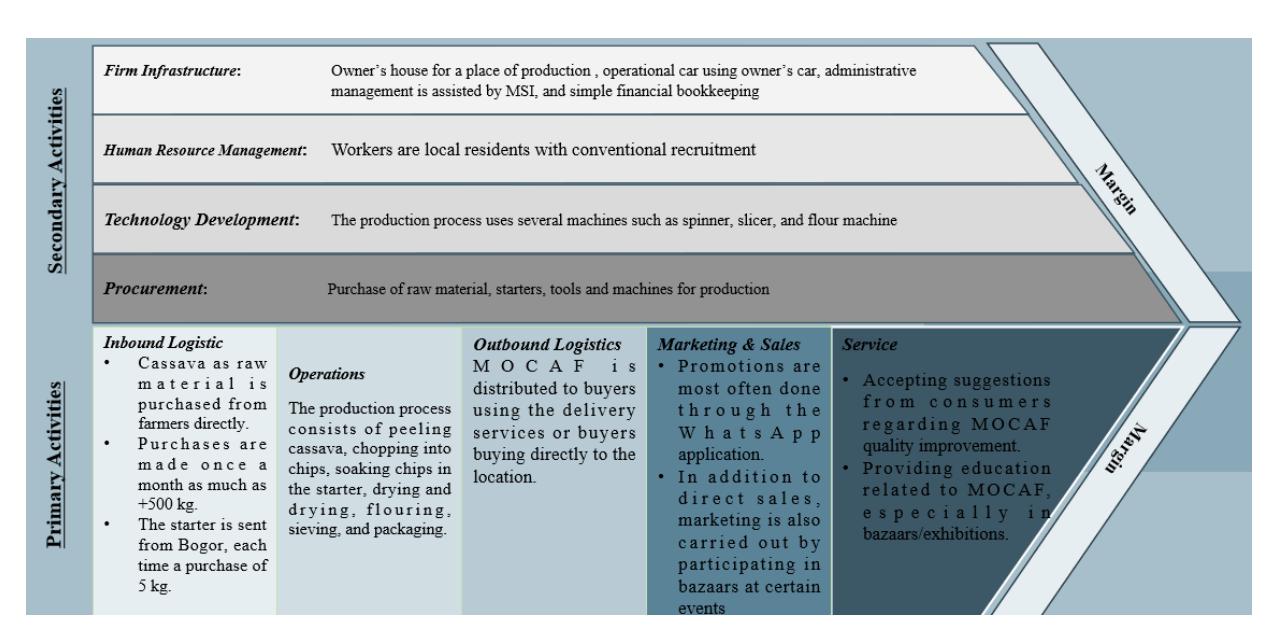
Figure 2. Primary Activities and Secondary Activities of MOCAF Cap Kujang
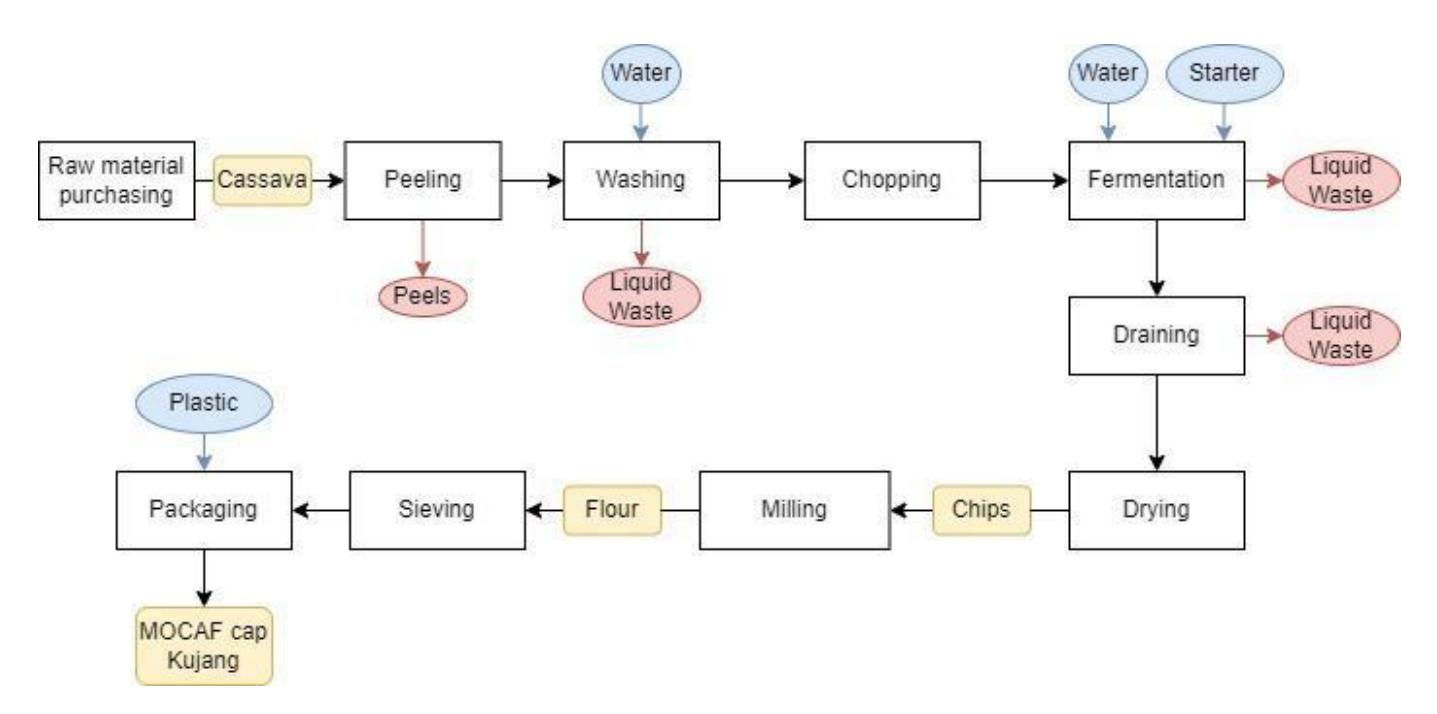
Figure 3. Production Process of MOCAF Cap Kujang
Outbound Logistics
.
The packaged MOCAF Cap Kujang is then collected in a plastic box which is stored in a clean room. Products that are stored properly can last from six months to a year. The MOCAF Cap Kujang business does not yet have a warehouse for product storage. Most packaged products are shipped directly to consumers, so there is not too much product stack.
Marketing and Sales
MOCAF cap Kujang's marketing has not been intensive, the most frequent promotion is direct via phone messaging application. Marketing is also carried out by participating in bazaars at certain events, like the West Java Birthday event. Most of the MOCAF are sold to food processing entrepreneurs from MOCAF, so the type of sales from the MOCAF brand Kujang business is business to business (B2B).
Service
Service activities in the MOCAF Cap Kujang business are still limited, receiving suggestions from consumers regarding improving the quality of the MOCAF Cap Kujang. For example, there are suggestions from buyers regarding the size of the product being sold, buyers asking for small sizes, and some asking for large sizes. The owner will consider buyers' suggestions to improve the quality of MOCAF products. In addition, one of the services provided is to provide education related to MOCAF when MOCAF Cap Kujang participates in bazaars or exhibitions at certain events.
Procurement
The activities of purchasing inputs in the MOCAF Cap Kujang business include purchasing cassava as raw material, starters for fermentation, plastic packaging, and ordering packaging labels. Machinery and equipment for production were purchased at the beginning of the establishment of the business. Repeated purchases were made only when the equipment was broken, for example, such as a sieve and knife, while chopping machines, flour machines, sealers, and vats for fermentation still working until today.
Technology Development
The machines used in the MOCAF production process are a chopper machine to cut the cassava into the chips, a spinner used to reduce the water content of soaked cassava, a flour machine, and a sealer for the packaging process.
Human Resource Management
The MOCAF Cap Kujang business has three male and two female employees. They were recruited conventionally from residents and are not permanent. The wage payment system is paid daily.
Firm Infrastructure
The MOCAF Cap Kujang business's business infrastructure is the MOCAF production site, which is joined by the owner's home and the car used to pick up cassava. Business infrastructure also includes financial activities in the form of making simple financial records and administrative management activities, including processing business licenses carried out by owners with the assistance of MSI Sumedang.
3.2. Value Added Analysis
The value added analysis in this study was carried out using the Hayami method, as seen in Table 1. The added value calculation is only carried out at the stage of cassava becoming MOCAF, while the value added calculation has not been carried out at other stages. The amount of cassava that is processed into MOCAF in one production is 500 kg, and it produces MOCAF as much as 100 kilograms. Cassava as raw
materials is purchased at Rp1,500.00/kg, and MOCAF is sold at Rp15,000.00/kg.
Table 1. Value Added Analysis on MOCAF Cap Kujang
| No | Variable | Unit | Value | |
|---|---|---|---|---|
| 1 | Raw materials input | kg/production process | 500 | |
| 2 | Output | kg/production process | 100 | |
| 3 | Labors input | HOK/production process | 3 | |
| 4 | Conversion factor | 0.2 | ||
| 5 | Direct labor coefficient | HOK/kg | 0.006 | |
| 6 | Product price | Rp/kg | 15,000 | |
| 7 | Labor average wage | Rp/HOK | 50,000 | |
| 8 | Raw material input price | Rp/kg | 1,500 | |
| 9 | Other inputs | Rp/kg | 500 | |
| 10 | Product value | Rp/kg | 3.000 | |
| 11a | Product added value | Rp/kg | 1,000 | |
| 11b | Added value ratio | % | 33.33 | |
| 12a | Labor income | Rp/kg | 300 | |
| 12b | Labor share | % | 30 | |
| 13a | Profit | Rp/kg | 700 | |
| 13b | Profit rate | % | 70 | |
| 14 | Margin | Rp/kg | 1,500 | |
| 14a | Direct labor income | % | 20.00 | |
| 14b | Percentage other inputs | % | 33.33 | |
| 14c | Company profit | % | 46.67 | |
The value added is obtained by subtracting the product value from the price of raw materials and other inputs and obtaining an added value of Rp1,000.00/kg with a value added ratio of 33.33%. This value added is included in the medium category. According to Kipdiyah et al. [13], the value added included in the low category is less than 15%, the medium category is 15% to 40%, and the high category is more than 40%. Previous research related to the value added of MOCAF conducted by Saragih et al. [14] showed the added value at MOCAF was Rp670.27 per kg. However, the value was lower than the added value at MOCAF Cap Kujang, the ratio of added value was higher than the added value to MOCAF Cap Kujang, which was 49.64%. According to Kodrat et al. (2018)[15], added value can be increased by increasing business productivity, which is supported by improving the quality of the workforce and revitalizing the machines used in the production process is carried out efficiently.
3.3. SWOT Analysis
The first step of SWOT analysis is to identify internal and external factors. Internal factors in the form of strengths and weaknesses of the MOCAF Cap Kujang business are listed in Table 2. External factors in the form of opportunities and threats to the MOCAF Cap Kujang business are listed in Table 3.
Table 2. Results of Internal Factor Analysis on MOCAF Cap Kujang's Business
| Internal Factor Strength | ||||
|---|---|---|---|---|
| S1 | Mocaf is clearly white | |||
| S2 | Availability of MOCAF is always maintained | |||
| S3 | The packaging is equipped with a brand and halal logo | |||
| S4 | The business already has a P-IRT permit | |||
| S5 | A long experience in the production of MOCAF | |||
| Internal Factor Weakness | ||||
| W1 | The price of MOCAF is higher than other Mocaf | |||
| W2 | The cassava peeling process takes a long time | |||
| W3 | There is no successor yet | |||
| W4 | No nutritional value information label yet | |||
| W5 | Marketing is still in a limited way (not yet utilizing online media) | |||
| W6 | Financial accounting has not been done in detail | |||
| W7 | Limited capital | |||
Table 3. Results of External Factor Analysis on MOCAF Cap Kujang's Business
| External Factor Opportunity | |||||
|---|---|---|---|---|---|
| O1 | There are still a few competitors | ||||
| O2 | MOCAF can be a substitute for flour for people who can't eat gluten | ||||
| O3 | Public awareness of health is increasing | ||||
| External Factor Threat | |||||
| T1 | Lack of attention from the government | ||||
| T2 | Limited availability of cassava | ||||
| T3 | The high price of cassava | ||||
| T4 | Unpredictable weather interferes with the drying process | ||||
| T5 | Wheat flour's price is lower, so MOCAF unable to compete in the market yet | ||||
| T6 | Suitable starters can only be obtained from one manufacturer | ||||
Internal Factors Evaluations (IFE)
Analysis of internal factors of the MOCAF Cap Kujang business is shown in Table 4. The total IFE score of 2.520 indicates that the internal condition of the MOCAF Cap Kujang business is quite strong, where the MOCAF Cap Kujang business can take advantage of existing strengths to overcome its weaknesses. A total IFE score above 2.50 indicates that the company has strong internal conditions [16]. In MOCAF Cap Kujang business, the strength element score is 1.678. This value is higher than the weakness element score, which is only 0.842. The strength factor that has the highest
score is that the MOCAF Cap Kujang business already has a P-IRT (Pangan Industri Rumah Tangga or Home Industry Food) permit. This permit is issued by the City or District Health Office for household-scale industries. This P-IRT permit shows that the products produced are ensured to follow safety, quality, and product quality standards to be safe for sale [17]. Meanwhile, the biggest weakness in the MOCAF Cap Kujang business is the higher price for the MOCAF Cap Kujang compared to other MOCAFs.
External Factor Evaluation (EFE)
Analysis of external factors in the MOCAF Cap Kujang business is shown in Table 5. The total EFE score of 3.010 indicates that the company is quite good at responding to external factors. However, this score should still be increased to a maximum score of 4.00, meaning that opportunities have been maximally utilized and threats avoided or overcome [16]. The highest score on the opportunity element is the increased public awareness factor. In contrast, the highest score on the threat element is the lower price of wheat flour, causing MOCAF not to be able to compete in the market in general.
Table 4. IFE Matrix Analysis
| Element of Strength | Weight | Rating | Score |
|---|---|---|---|
| Mocaf is clearly white | 0.093 | 3.667 | 0.342 |
| Availability of MOCAF is always maintained | 0.102 | 3.333 | 0.339 |
| The packaging is equipped with a brand and halal logo | 0.059 | 3.667 | 0.218 |
| The business already has a P-IRT permit | 0.102 | 4.000 | 0.407 |
| A long experience in the production of MOCAF | 0.093 | 4.000 | 0.373 |
| Strength Total Score | 1.678 | ||
| Element of Weakness | Weight | Rating | Score |
| The price of MOCAF is higher than other Mocaf | 0.102 | 1.333 | 0.136 |
| The cassava peeling process takes a long time | 0.076 | 1.667 | 0.127 |
| There is no successor yet | 0.068 | 1.667 | 0.113 |
| No nutritional value information label yet | 0.059 | 2.000 | 0.119 |
| Marketing is still in a limited way | 0.093 | 1.000 | 0.093 |
| Financial accounting has not been done in detail | 0.076 | 2.000 | 0.153 |
| Limited capital | 0.076 | 1.333 | 0.102 |
| Weakness Total Score | |||
| IFE Total Score | 2.520 | ||
Table 5. EFE Matrix Analysis
| Element of Opportunity | Weight | Rating | Score |
|---|---|---|---|
| There are still a few competitors | 0.101 | 3.000 | 0.303 |
| MOCAF can be a substitute for flour for people who can't eat gluten | 0.111 | 2.333 | 0.259 |
| Public awareness of health is increasing | 0.121 | 3.000 | 0.364 |
| Opportunity Total Score | 0.926 | ||
| Element of Threat | Weight | Rating | Score |
| Lack of attention from the government | 0.111 | 2.667 | 0.296 |
| Limited availability of cassava | 0.121 | 3.000 | 0.364 |
| The high price of cassava | 0.121 | 3.333 | 0.404 |
| Unpredictable weather interferes with the drying process | 0.101 | 3.000 | 0.303 |
| Wheat flour's price is lower, so MOCAF unable to compete in the market | |||
| yet | 0.121 | 3.667 | 0.444 |
| Suitable starters can only be obtained from one manufacturer | 0.091 | 3.000 | 0.273 |
| Threat Total Score | 2.084 | ||
| EFE Total Score | 3.010 |
Internal External Matrix
The total of IFE and EFE matrix scores is then used in the Internal-External Matrix (see Figure 4). The IFE value is 2.520, and the EFE value is 3.010, indicating that the MOCAF Cap Kujang is in cell II in the Internal-External Matrix. The strategy needed in this position is a growth and build strategy.
The types of strategies that can be used are intensive strategies, such as market development, product development, and market penetration, and integrative strategies, such as downstream/forward integration, upstream/backward integration, and horizontal integration [18].
Figure 4. Internal-External Matrix on MOCAF Cap Kujang Business
The strategies formulated based on the SWOT matrix are:
- 1. SO (Strength-Opportunity) Strategy: This strategy is designed to take advantage of the strengths and opportunities that are owned so that they can be utilized optimally. The SO strategy made are: (a) Make bulky packaging (10 kg – 50 kg); (b) Create a campaign related to the advantages of MOCAF; (c) Establish a partnership with the autism community who generally cannot consume gluten and the healthy food community.
- 2. ST (Strength-Threat) Strategy: This strategy uses its internal strengths by avoiding or minimizing external threats to the MOCAF Cap Kujang business. ST strategies that are made are: (a) Cooperate with capital agencies, look for investors or business joint venture partners, and seek CSR (Corporate Social Responsibility) funding from companies [19]; (b) Use a drying machine for the production of MOCAF [2]; (c) Make processed products, so not only sell in
- the form of flour [19]; and (d) Look for another starter manufacturer.
- 3. WO (Weakness-Opportunity) Strategy: This strategy takes advantage of opportunities by overcoming weaknesses. The WO strategies made are: (a) Conduct regular promotions through social media and sell MOCAF through e-commerce [19] and (b) Include information labels on the nutritional value and advantages of MOCAF [6].
- 4. WT (Weakness-Threat) Strategy: This strategy minimizes weaknesses and avoids existing threats. WT's strategy is defensive, i.e., forming an organizational structure in the business so that business management is better.
These strategies are then narrowed down to obtain five alternative strategies, namely:
- 1. Collaboration with various parties.
- 2. Routine promotion through social media, making brochures and selling MOCAF through e-commerce.
- 3. MOCAF sales in bulk are around 10 kg 50 kg. This is intended to increase profits due to efficiency in the production process. In addition, selling in large quantities can be an option for buyers to increase their attractiveness [20].
- 4. The use of drying machines for production. This alternative strategy will facilitate the MOCAF drying process, which is carried out conventionally by utilizing direct sunlight. Using the appropriate machine following the production capacity and characteristics of the resulting product can optimize the production process [2].
- 5. Establishment of business organizational structure. This strategy is related to the existence of human resources. Currently, the human resources in the MOCAF Cap Kujang business are very limited. This business organization structure is intended to clarify the division of work functions so that the MOCAF production process can be more optimal and increase productivity. In addition, forming a business organizational structure can also facilitate the process of business regeneration [2].
Priority of Business Development Strategy with AHP Method
The AHP (Analytical Hierarchy Process) method determines the priority of alternative strategies. Previous studies related to the use of the SWOT-AHP method include research conducted by Djordje, et al. [21] to determine strategic priorities for the development of tourist destinations in Stara Planina, Serbia, and research conducted by Bojan, et al. [22] to improve electrical energy security in trpce, Serbia.
AHP in this study consists of three levels, the first level is the goal, the second level is the criteria, and the third level is the alternative. The SWOT-AHP hierarchy in this study can be seen in Figure 5. Expert Choice 11 software was used to determine the priority value of AHP. The priority at the first criteria is the availability of human resources (0.281), followed by enhancement in marketing (0.271), access to technology (0.241), and criteria for access to capital (0.207). The inconsistency value at the criteria level is less than 0.1, which is 0.02, meaning the priority determination results at the criteria level are valid [23]. The priority of the MOCAF Cap Kujang business development strategy alternative is a collaboration with various parties (0.370), the second priority is promotion routinely through social media, making brochures, and selling through e-commerce (0.260), the third alternative priority is the use of drying machine for production (0.175). The fourth alternative priority is to sell MOCAF in bulk (0.105), and the last alternative is to form a business organization structure (0.090). The value of inconsistency at the alternative level is less than 0.1, which is 0.01, meaning the prioritization results at the alternative level are valid [23].
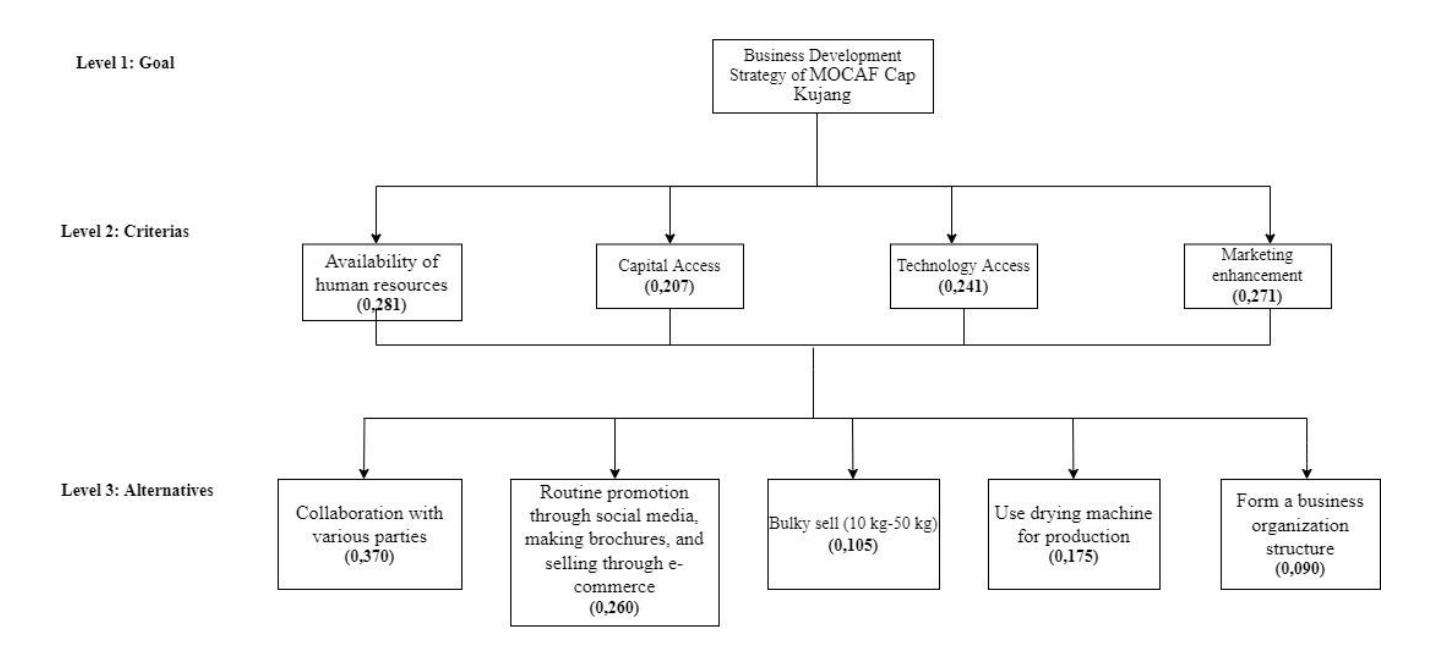
Figure 5. SWOT-AHP Hierarchy of MOCAF Cap Kujang Development Strategy
Based on the strategic priorities generated from the SWOT-AHP, recommendations were then made for the development of the MOCAF Cap Kujang business: (1) Establish cooperation with cassava farmers through a Surat Perjanjian Kerjasama/SPK or Letter of Agreement; (2) MOCAF sales in sacks 10 kg-50 kg sacks to reduce production costs; (3) Recruitment of employees as needed so that the division of tasks can be determined such as the production division, marketing division, and administrative division; (4) Purchase a drying machine such as a drying oven to dry chips; (5) Purchase of peeled cassava from farmers; (6) Determination of the marketing division and selling MOCAF through online stores such as Shopee, Tokopedia, and Bukalapak; (7) Submission of proposals to BUMD (Badan Usaha Milik Daerah or Regional Owned Enterprises) to get business capital; and (8) Establishment of a financial division to manage finances and make detailed financial reports.
4. Conclusions
Based on the results and discussion, the conclusions of this study are:
- 1. MOCAF Cap Kujang's business value chain activities consist of main activities and supporting activities with MOCAF's added value of Rp1,000/kg or 33.33%.
- 2. The internal factor that became the main strength is the MOCAF Cap Kujang business already has a P-IRT permit, and its main weakness is that the MOCAF Cap Kujang's price was higher than other MOCAFs. The external factor that becomes the main opportunity is that MOCAF can be a substitute for wheat for people who cannot consume gluten and the main threat is the lower price of wheat flour.
- 3. The priority of MOCAF Cap Kujang's business development strategy is to build promotions and cooperation with various parties (Surat Perjanian Kerjasama/SPK or Letter of Agreement): routine promotions through social media, making brochures and selling through e-commerce, binding agreements with suppliers and consumers. The next strategic priority is using dryers for production, bulk sales of MOCAF, and establishing an effective business organization structure.
Acknowledgements
The authors thanked Drs. Dindin Fachrudin, M.Sc., the owner of MOCAF Cap Kujang business, for permitting to conduct of this study at the company. The authors also thanked Mr. Hariyanto and Mr. Sutarmin, administrators of MSI Sumedang, for assisting with information related to cassava and MOCAF in Sumedang Regency.