

Abstrak
Pasien dengan serangan skizofrenia pertama biasanya membutuhkan dosis antipsikotik yang lebih rendah, sensitifitas yang lebih tinggi dalam memperoleh efek samping dan lebih mudah mencapai respon bebas dari gejala dibandingkan dengan pasien dengan serangan skizofrenia yang berulang. Serangan ini merupakan tahapan kriitis yang dapat memengaruhi perkembahan penyakit pasien. Evaluasi penggunaan antipsikotik dibutuhkan untuk mencapai terapi yang optimal pada pasien dengan skizofrenia serangan pertama. Penelitian ini dibentuk menggunakan metode retrospektif. Data penelitian didapatkan dari rekam medik, formulir pemantauan suster dan konsultasi dengan tenaga kesehatan profesional. Penelitian ini menunjukkan bahwa antipsikotik yang paling banyak diresepkan yaitu kombinasi antara klorpromazin dan haloperidol (31,12%), risperidon merupakan antipsikotik yang paling banyak diresepkan pada terapi tunggal (35,71%), dan didapatkan 34,29% regimen terapi yang berada di atas rentang dosis yang direkomendasikan. Obat tambahan yang paling sering diresepkan pada terapi bersama dengan antipsikotik yaitu triheksifenidil (62,29%). Pada penelitian ini terdapat 97 kasus interaksi obat dengan 6 kasus interaksi farmakokinetik yang mana memerlukan penyesuaian dosis. Pada penelitian ini juga ditemukan 7 orang pasien (17,07%) yang melanjutkan terapi hingga 10 bulan dan 4 kasus kambuhan akibat pengonsumsian alcohol (satu kasus) dan ketidakpatuhan terapi (3 kasus). Algoritma terapi pada pasien skizofrenia serangan pertama di Rumah Sakit Psikiatrik jambi perlu ditinjau ulang karena adanya perbedaan peresepan antipsikotik yang dilakukan dengan algoritma yang disarankan.
Kata kunci : Evaluasi Penggunaan Obat, Antipsikotik, Skizofrenia Serangan Pertama
Introduction
Drug Use Evaluation (DUE) program is a planned, criteria-based systematic process for monitoring, evaluating, and continually improving medication use, with the ultimate aim of improving medication-related outcomes for a group of patients or consumers (Philips 2003).
Schizophrenia is one of the most complex and challenging psychiatric disorders. It represents a heterogeneous syndrome of disorganized and bizarre thoughts, delusions, hallucinations, inappropriate affect, and impaired psychosocial functioning
(Crismon et al., 2008). Patients with first-episode schizophrenia (FES) are different from patients with multi-episode schizophrenia. Recommended treatment of this stage differs from multiple episode illness in that effective antipsychotic dose ranges are lower, individuals are more sensitive to metabolic and extrapyramidal side effects, and there is greater likehood of achieving a symptom-free response (Mooreet al., 2007). FES represents a critical stage of illness during which the effectiveness of therapeutic interventions can affect long-term outcome (Salimiet al. 2009).
Pharmacotherapy is the mainstay of treatment in schizophrenia, and it is impossible in most patients to implement effective psychosocial rehabilitation programs in the absence of antipsychotic treatment. (Crismon et al. 2008). On 2011, in Indonesia there were 14 types of antipsychotic which divided into two groups which include typical and atypical antipsychotic.
The evaluation of antipsychotic use on first-episode schizophrenic patients is needed ought to many antipsychotic therapy alternatives and the importance of achieving a good therapeutic response as the good predictor of future therapeutical response.
Experiment
The research was started by developing research design, inclusion and exclusion criteria determination, medical record review, developing drug use criteria, data collection, data analysis, and conclusion.
Research Design
The research was conducted retrospectively by using the data of patients which were first-recorded on August-September 2011. Data sources used in this study were medical records, nurse monitoring form and interview with professional health workers.
Inclusion and Exclusion Criteria
Inclusion criteria in this research were patients with schizophrenia diagnosis both inpatients and outpatients. Exclusion criteria in this research were patients with more than one year onset schizophrenia and patients who have been treated by antipsychotic before.
Medical Record Review
Medical record review was conducted by collecting the therapeutical data of patients which first-recorded in Jambi Psychiatric Hospital on August and September 2011. Based on this review, which antipsychotic that would be evaluated were determined.
Drug Use Criteria
Drug Use Criteria is the evaluation guideline for antipsychotic use. Drug use criteria must be objective, firm, clear, and be based on advanced literature, and reflect the experience of medical staff. There are several drug use criteria which includes indication, contraindication, dose, side effect, incompatibility, and drug interaction (Brown, 1988). The literature used to make drug use criteria in this study were AHFS Drug Information 2012 (Mc Evoy 2010), Martindale's The Complete Drug Reference 36th ed (Sweetman 2009), Meyler's Side Effects of
Psychiatric Drugs (Aronson 2009), Drugs Facts and Comparison 2009 (Schwain 2008) and Stockley's Drug Interaction 8th ed (Baxter 2008). Therapeutical guideline used were The TMAP Algorithm for Schizophrenia: 2006 update (Moore et al. 2007).
Data Collection, Analysis, and Conclusion
Data were collected using Patient Medication Record (PMR). The data obtained were organized into tables. The organized data were analyzed to see the suitability with the drug use criteria, therapy efficacy and side effect events.
Findings and Discussions
Preliminary Study
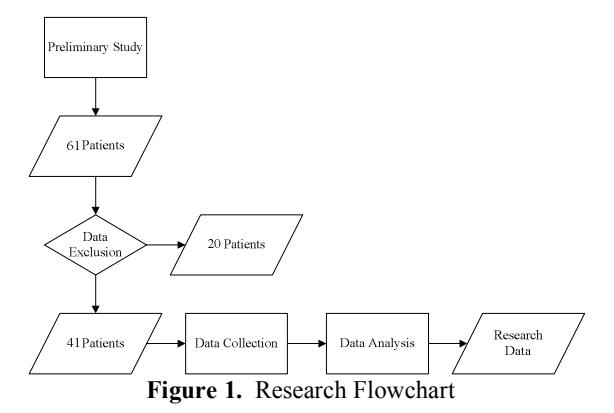
Based on medical record review on August and September 2012, it was obtained 61 patients who was diagnosed as schizophrenia patients. From 61 patients, 12 patients were excluded because the patients experienced the psychosis symptom more than a year ago and eight data were excluded because the patients have been treated with antipsychotic, so then, the total number of who analyzed were 41 patients (Figure 1).
For these 41 patient were prescribed 140 therapeutic regiments with antipsychotic used were chlorpromazine (tablet and injection), haloperidol (tablet and injection), trifluoperazine (tablet), clozapine (tablet), quetiapine (tablet), and risperidone (tablet). There were 24 outpatients (58.5%), ten inpatients (24.4%) and seven patients (17.1%) who were inpatients and continued their medication by being outpatients.
Data of First-Episode Schizophrenia Patients
Data about treatment duration, insurance coverage and their living locations can be seen in Table 1, 2 and Table 3. The treatment of hospitalized patient in Jambi Psychiatric Hospital is divided into two type of treatments which are intensive care (in PICU,
Psychiatric Intensive Care Unit) and non-intensive care treatment in wards. Intensive care treatment is intended to the patient with acute agitation, restlessness, and with tendency to harm themselves or other people. When agitation is under control, the patient could be treated in non-intensive care unit or become outpatient.
Table 1. Hospitalization Duration
| Treatment Type | Duration | Σ | % |
|---|---|---|---|
| Intensive | < 3 Days | 10 | 58.82 |
| 4 - 7 Days | 5 | 29.41 | |
| 8 - 11 Days | 1 | 5.88 | |
| 11 - 14 Days | 1 | 5.88 | |
| Non Intensive | < 14 Days | 8 | 47.06 |
| 15 - 30 Days | 5 | 29.41 | |
| 31 - 60 Days | 1 | 5.88 | |
| 61 - 90 Days | 2 | 11.76 | |
| > 91 Days | 1 | 5.88 |
From 17 patients (Table 1) who needed inpatient care, 15 patients were treated in intensive care unit in one week duration. There were only two patients who were treated more than one week. One patient was a patient who experienced psychosis recurrence and needed to be treated back in intensive care unit for 11 days (first intensive care for seven days and second intensive care for four days). One patient had intensive care for 8 days. The patient was treated by haloperidol. The goals during the first 7 days of treatment should be decreased agitation, hostility, combativeness, anxiety, tension, and aggression and normalization of sleep and eating patterns (Crismon et al. 2008).
Data of Antipsychotic Use
The percentage of antipsychotic use based on the types and route of administration can be seen in Table 4 and 5. There was no data about antipsychotic longacting injections usage. Augmentation therapy which was given to FES patient can be seen in Table 6. The interaction occurred between antipsychotic with other drugs was presented in Table 7.
Antipsychotic Selection in Treatments
Short-acting antipsychotic injection generally was given to the patient who experienced agitation that need fast effect of antipsychotic. Haloperidol was used more preferably than chlorpromazine (Table 4)
because of its lower adrenergic blockers effect, so blood pressure rapid dropping could be avoided.
Typical antipsychotic injection could cause extrapyramidal side effect which reduces the advantage of atypical antipsychotic use (Crismon et al. 2008). There were only two available antipsychotic injections at the hospital and those drugs was chosen based on price consideration and availability.
For maintenance therapy, oral antipsychotic was more preferably than injection drug. Moore et al. (2007) recommends atypical antipsychotic use except clozapine for FES patient. Many studies (Crismon et al. 2008) showed that there was no different in efficacy between typical and atypical antipsychotic and the recommendation was based on a lower extrapyramidal side effect. Research findings (Table 5) showed that typical antipsychotic (both single use or combination) were used more often compared with atypical antipsychotic. The choice of antipsychotic is based on economic consideration.
The combination of antipsychotic use is not recommended to the patient who never accepts antipsychotic medication (Moore et al. 2007; Correll et al. 2009). Moore et al. recommends six stages therapy and combination use is the last recommendation when other antipsychotic use doesn't give optimal outcome (Moore et al. 2007). Clozapine use is not recommended in early therapy except for a case which suicide tendency is higher, drug abuse or history of violence. There are seven therapy regiments (Table 5) which use clozapine combined with other antipsychotic (three regiments combined haloperidol + clozapine, four regiments combined risperidone + clozapine). Clozapine use (in range 25 – 50 mg) is emphasized on sedative effect, not antipsychotic effect.
Antipsychotic Dosage
Antipsychotic dose found in this study is within 100 – 800 mg chlorpromazine equivalent dose (Salimi et al. 2009; Buchanan et al. 2010; Kreyenbuhl et al. 2010). Based on data suggested by Salimi et al. (2009), treatment therapy for first-episode schizophrenia patient ranges from 300 – 500 mg. There were about 34.29% therapy regiment which gave antipsychotic dose above recommended dose range. Antipsychotic medication above recommended dose range has higher risk to side effects event. However, based on
| Municipality | Non Insurance | ASKES | JAMKESMAS DAERAH | JAMKESMAS | ||||
|---|---|---|---|---|---|---|---|---|
| Σ | % | Σ | % | Σ | % | Σ | % | |
| Batanghari | 4 | 9.76 | - | - | - | - | - | - |
| Bungo | 1 | 2.44 | - | - | 1 | 2.44 | 2 | 4.88 |
| Kerinci | - | - | - | - | 1 | 2.44 | 1 | 2.44 |
| Kota Jambi | 8 | 19.51 | - | - | 3 | 7.32 | - | - |
| Merangin | 2 | 4.88 | 1 | 2.44 | - | - | - | - |
| Muaro Jambi | 4 | 9.76 | - | - | 1 | 2.44 | 1 | 2.44 |
| Sarolangun | 2 | 4.88 | - | - | 1 | 2.44 | 1 | 2.44 |
| Tanjabbar | - | - | - | - | 1 | 2.44 | 2 | 4.88 |
| Tanjabtim | - | - | - | - | 1 | 2.44 | - | - |
| Tebo | 2 | 4.88 | - | - | 1 | 2.44 | - | - |
| Σ | 23 | 56.10 | 1 | 2.44 | 10 | 24.39 | 7 | 17.07 |
Table 3. Insurance Mapping of First Episode Schizophrenia Patients
research finding, there were no side effect events that recorded from the usage of higher dose of antipsychotic. This finding might be the result of antimuscarinic/antihistamin concomitant use that can reduce extrapyramidal symptoms.
Side Effects
Risperidone use in lower doses do not cause extrapyramidal effect generally. There were 12 cases that showed the occurrence of extrapyramidal effect (Risperidone dose 2 mg = 8.33% and 4 mg = 83.33% and 6 mg = 8.33%). The occurrence of extrapyramidal effect might caused by typical residual effect which is used beforehand or the higher sensitivity of patient towards therapy.
Augmentation Therapy
Augmentation therapy involves the addition of a nonantipsychotic drug to an antipsychotic drug in a poorly or partially responsive patient, whereas combination treatment involves using two antipsychotics simultaneously. The prescribed drugs in this additional therapy can be seen in Table 6.
Some drugs that use generally in augmentation therapies for schizophrenia are:
- 1. Benzodiazepine. Benzodiazepine (alprazolam, diazepam, estazolam) is one of augmentation therapy that used to give sedative effect, lower the rate of anxiety and insomnia therapy.
- 2. Antiepilepsy. Antiepilepsy takes role as mood stabilizer on patients with unstable mood.
- 3. Antidepressant. Antidepressant is needed to cure negative symptoms from the patients. Prescribed SSRI (fluoxetine) shows positive result when it is used with typical antipsychotic. However, SSRI prescription needs further research (Moore et al. 2007).
4. Antihistamine and antimuscarinic. Antihistamine (diphenhydramine) and antimuscarinic (trihexyphenidyl) give therapeutic effect on extrapyramidal symptoms which is caused by prescribed typical antipsychotic (particularly haloperidol due to its high tendentcy to produce the effects compared to another antipsychotic). Trihexyphenidyl is prescribed orally to haloperidol treated patients or patients with extrapyramidal side effect.
Table 4. Antipsychotic Injection Usage
| Obat | Dosis (mg) | EqCPZ (mg) | Σ | % |
|---|---|---|---|---|
| 5 | 250 | 22 | 15.71 | |
| HLD | 10 | 500 | 6 | 4.29 |
| 15 | 750 | 2 | 1.43 | |
| Σ | 32 | 22.86 | ||
| CPZ | 50 mg | 50 | 2 | 1.43 |
| Σ | 34 | 24.29 |
Note: EqCPZ = Chlorpromazine Equivalence, HLD = Haloperidol, CPZ = Chlorpromazine
Drug Interaction
Finding in drugs interactions were recorded in Table 7. There are two kinds of interaction which are pharmacokinetic and pharmacodynamic interaction. Pharmacokinetic interaction was seen in simultant use of antipsychotic - carbamazepine, antipsychotic ketoconazole and risperidone - fluoxetine. On the other hand, pharmacodynamic interaction was seen between typical antipsychotic with amitripyline and/or trihexyphenidyl. Out of 97 interaction cases, six cases showed clinical manifestations.
Carbamazepine in schizophrenia was used to stabilize patient mood. Carbamazepine is strong inducer of CYP3A4 enzyme that increase antipsychotic metabolism and concommitantly decrease the antipsychotic effect. Oxcarbazepine can be used as alternative to carbamazepine therapy. Oxcarbazepine is lesser enzyme inducer in comparison to carbamazepine.
Therapeutic response on patients should be monitor to achive good response (Baxter 2008). The study showed that there were four cases of ineffective antipsychotic due to prescription of carbamazepine.
Table 5. Orally Used Antipsychotic
| Dose | EqCPZ | Σ | ||
|---|---|---|---|---|
| Antipsychotic | (mg) | (mg) | R | % |
| 3 | 150 | 2 | 1.43 | |
| 5 | 250 | 4 | 2.86 | |
| HLD | 7,5 | 375 | 1 | 0.71 |
| 10 | 500 | 8 | 5.71 | |
| 15 | 750 | 4 | 2.86 | |
| Σ | 19 | 13.57 | ||
| QUE | 400 | 500 | 1 | 0.71 |
| 1 | 100 | 3 | 2.14 | |
| 2 | 200 | 14 | 10 | |
| RSP | 4 | 400 | 32 | 22.86 |
| 6 | 600 | 1 | 0.71 | |
| Σ | 50 | 35.71 | ||
| TFZ | 10 | 200 | 2 | 1.43 |
| 100+3 | 250 | 1 | 0.71 | |
| 200+3 | 350 | 1 | 0.71 | |
| 100+5 | 350 | 6 | 4.29 | |
| 200+5 | 450 | 3 | 2.14 | |
| CPZ+HLD | 300+5 | 550 | 1 | 0.71 |
| 100+10 | 600 | 29 | 20.71 | |
| 200+10 | 700 | 8 | 5.71 | |
| 300+10 | 800 | 3 | 2.14 | |
| Σ | 52 | 37.12 | ||
| CPZ+RSP | 100+4 | 500 | 5 | 3.57 |
| 5+25 | 300 | 1 | 0.71 | |
| HLD+CLZ | 10+25 | 550 | 2 | 1.43 |
| Σ | 3 | 3.57 | ||
| 2+25 | 250 | 1 | 0.71 | |
| RSP+CLZ | 4+25 | 450 | 2 | 1.43 |
| 4+50 | 500 | 1 | 0.71 | |
| Σ | 4 | 2.85 | ||
| RSP + TFZ | 4+5 | 500 | 1 | 0.71 |
| Σ | 137 | 97.86 |
Note: EqCPZ = Chlorpromazine Equivalence, HLD = Haloperidol, CPZ = Chlorpromazine, QUE = Quetiapine, RSP = Risperidone, TFZ = Trifloperazine, CLZ = clozapine
Fluoxetine is CYP3A4 and CYP2D6 enzymes inhibitor. There was one case where patient needed decreased dosage due to extrapyramidal side effect from concomitant use of risperidone and fluoxetine (Baxter 2008).
The interaction between antipsychotic and ketoconazole caused psychosis in patients when ketoconazole was stopped. This happened due to enzyme inhibition effect of ketoconazole, a CYP3A4 enzyme inhibitor, thus when it was stopped, the antipsychotic metabolism was increased and caused inadequate antipsychotic therapy.
The use of amitryptilline can treat negative symptoms or depression (Crismon et al. 2008). Amitriptyline contains antimuscarinic effect as well as typical antipsychotic (haloperidol, chlorpromazine, and trifluoperazine) (Sweetman 2009; Baxter 2008) Trihexyphenidyl, also has antimuscarinic effect, decreases extrapyramidal side effect and is generally used in schizophrenia patients treated by typical antipsychotic (Baxter 2008). The patients who consume these antimuscarinic drugs need extra precaution on these conditions:
- 1. Sun light exposure or heat, and humidity which increase the chance of heat stroke.
- 2. Constipation as additional antimuscarinic effect can causes intestine stasis which could prove fatal.
- 3. Psychosis might be caused by antimuscarinic reactions at center of nerve network.
- 4. Antimuscarinic is only prescribed to patients who urgently need antmuscarinic therapy to decrease extrapyramidal effect. The effectivity of antipsychotic could be declined due to this combination.
Treatment Continuity
Patients with first episode schizophrenia are recommended to be treated for at least a year after the first episode occured (Gaebel et al. 2005). From total 41 patients, only seven (17.07%) that had continued therapy until ten months. From total of 34 patients who had continued the therapy, 21 patients (51.22%) were patients without health insurance. There were 13 patients with health insurane. Eleven patients (26.83%) lived in distant municipalities from the hospital and the rest (4.88%) lived in the same municipalities with the hospital.
Cipolle et al. (2007) stated that there are six causes of drug nonadherence, they are:
- 1. The patient does not understand the instructions.
- 2. The patient prefers not to take the medication.
- 3. The patient forgets to take the medication.
- 4. The drug product is too expensive for the patient.
- 5. The patient cannot swallow or selfadminister the drug product appropriately.
- 6. The drug product is not available for the patient.
Some reasons of drug discontinuity on 34 patients in Jambi Psychiatric Hospital are:
- 1. Medical expenses is over budget. The expenses included drug, indirect expenses (transportation and another miscellaneous along the journey to hospital) and job/occupation lost.
- 2. Patients didn't want to take the drugs. It can be caused by sedative effect, extrapyramidal effect or other other side effects on some prescribed antipsychotic. On the other side, patients awareness on the disease has great impact on drug adherence (Cipolle et al. 2007). Usually, patients in Jambi Psychiatric Hospital unaware of their own disease.
- 3. Patients' psychiatric condition that disables them to use their own drug.
Tabel 6. Augmentation Therapy
| Augmentation Therapy | Σ | % | |
|---|---|---|---|
| Alprazolam | 12 | 8.57 | |
| Benzodiazepine | Diazepam | 27 | 19.29 |
| Estazolam | 2 | 1.43 | |
| Σ | 41 | 29.29 | |
| Carbamazepine | 12 | 8.57 | |
| Antiepileptic | Oxcarbazepine | 1 | 0.71 |
| Σ | 13 | 9.28 | |
| Amitryptiline | 8 | 5.71 | |
| Antidepresant | Fluoxetine | 4 | 2.86 |
| Σ | 12 | 8.57 | |
| Antihistamine | Diphenhydramine | 26 | 18.57 |
| Antimuscarinic | Trihexyphenidyl | 97 | 69.29 |
Disease Relapse
There were four relapse cases that needed rehospitalization at Jambi Psychiatric Hospital. Those 4 relapse cases were caused by alcohol consumption (one case) and therapeutical nonadherence (three cases). Therapeutical nonadherence was caused by some reasons explained at previous section (see Therapy Continuity).
Alcohol consumption may cause dopamine release (Boileau et al. 2003). Dopamine is one of neurotransmitter that actively involved in schizophrenia pathogenesis (Crismon et al. 2008). Alcohol consumption which caused dopamine release would also cause psychosis due to dopaminergic stimulation on the receptors.
Table 7. Drug Interactions
| Interaction | Clinical Manifestation | |
|---|---|---|
| Pharmacokinetic Interaction | ||
| Antipsychotic + CBM | Antipsychotic serum | 12 |
| level decreased | ||||
|---|---|---|---|---|
| Antipsychotic + KETO | Antipsychotic serum level increased | 1 | ||
| RSP + FLX | Antipsychotic serum level increased | 4 | ||
| Pharmacodynamic Interaction | ||||
| Typical Antipsychotic + AMI | Antimuscarinic effects increased | 3 | ||
| Typical Antipsychotic + THP | Antimuscarinic effects increased | 77 | ||
| Σ | 97 | |||
Note: CBM = Carbamazepine, KETO = Ketoconazole, AMI = Amitryptiline, THP = Trihexyphenidyl, RSP = Risperidone, FLX = Fluoxetine.
Conclusion
There are several differences between antipsychotic used in Jambi Psychiatric Hospital and recommended guideline. The differences are the preferably use of typical antipsychotic and the use of antipsychotic combination in therapy. There was no differences in efficacy between typical and atypical antipsychotic although the use of atypical antipsychotic had a lower chance of adverse event. The compliance of patients (especially in treatment continuity) was low.
Suggestions and Treatment Recommendation
Based on the study findings, there are several suggestions that can be proposed to improve FES therapy which are insurance covered antipsychotic drugs should be varied to give clinicians more alternative in schizophrenia pharmacotherapy, generic antipsychotic regulation should be rearranged to make medications cheaper and therapeutic guideline for schizophrenia in Jambi Psychiatric Hospital should be revised. The reccomendation for guideline revision are the usage of single antipsychotic (atypical antipsychotic paticulaly) should be encouraged with minimun yet optimal dose and the usage of antimuscarinic therapy in reducing antipsychotic related side effects should be applied catiously.
References
Aronson JK, 2009, Meyler's Side Effects of Psychiatric Drugs 2nd ed, Elsevier, Amsterdam 185 – 374.
Baxter K, 2008, Stockley's Drug Interaction 8th Ed, RPS Publishing, London, 706 – 771.
Boileau I, Assaad JM, Pihl RO, Benkelfat C, Leyton M, Diksic M, Tremblay RE, Dagher A, 2003, Alcohol Promotes Dopamine Release in the Human Nucleus Accumbens, Synapse 49: 226 – 233.
Brown RT, 1988, Handbook of Institutional Pharmacy Practice, 3rd ed, The American Society of Hospital Pharmacist Inc, Bethesda 19 – 28, 65 – 68, 76 – 80, 193, 205 – 210, 262 – 265.
Buchanan R, Kreyenbuhl J, Kelly DL, Jason MN, Boggs DL, Fischer BA, Himelhoch S, Fang B, Peterson E, Aquino PA, Keller W, 2010, The 2009 Schizophrenia PORT Psychopharmacological Treatment Recommendation and Summary Statement, Schizophrenia Bulletin 36: 71 – 93.
Cipolle RJ, Strand LM, Morley PC, 2007, Pharmaceutical Care Practice: A Clinician's Guide 2nd (Edn), McGrawHill Medical, New York.
Correll CU, Rummel-Kluge C, Corves C, Kane JM, Leucht S, 2009, Antipsychotic Combinations vs Monotherapy in Schizophrenia: Meta Analysis of Randomized Controlled Trials, Schizophrenia Bulletin 35: 443 – 457.
Crismon ML, Argo TR, Buckley PF, 2008, Schizophrenia in Joseph T. Dipiro (Ed), Pharmacotherapy A Pathophysiologic Approach 7th (Edn), McGraw Hill Medical, New York, 1099 – 1122.
Gaebel W, Weinmann S, Sartorius N, Rutz W, McIntyre JS, 2005, Schizophrenia Practice Guidelines: International Survey and Comparison, British Journal of Psychiatry 187: 248 – 255
Kreyenbuhl J, Buchanan RW, Dickerson FB, Dixon LB, 2010, The Schizophrenia Patient Outcomes Research Team: Updated Treatment Recommendations 2009, Schizophrenia Bulletin 36: 94 – 103.
McEvoy GK, 2010, American Hospital Formulary System Drug Information 2010, American Society of Health System Pharmacist, Bethesda 2445 – 2530.
Moore TA, Buchanan RW, Buckley PF, Chiles JA, Conley RR, Crismon ML, Essock SM, Finnerty M, Marder SR, Miller DD, McEvoy JP, Robinson DG, Schooler NR, Shon SP, Stroup TS, Miller AL, 2007, The Texas Medication Algorithm Project Antipsychotic Algorithm for Schizophrenia: 2006 update, Journal of Clinical Psychiatry 68: 1752 – 1762.
Philips MAS, 2003, Medication Use Evaluation, in Joseph T. Dipiro (Ed), Encyclopedia of Clinical Pharmacy, Marcell Dekker, New York 545 – 549.
Salimi K, Jarskog LF, Lieberman JA, 2009, Antipsychotic Drugs for First Episode Schizophrenia, CNS Drug 23: 837 – 855.
Schwain SL, 2008, Drugs Facts and Comparison 2009 Pocket Version, Wolter and Kluwers, New York 663 – 690.
Sweetman SC, 2009, Martindale's The Complete Drug Reference 36th ed, RPS Publishing, London 952 –1041.