

Abstrak
Pada penelitian ini dilakukan pengujian mengenai aktifitas antioksidan dan turunan antosianin dari ekstrak daun katuk (merah Euphorbia cotinifolia L.). Aktifitas antioksidan dilakukan dengan metode DPPH (2,2-diphenyl 1-picrylhydrazyl) menggunakan spektrofotometer UV-Vis dan kromatografi lapis tipis (KLT). Hasil penellitian menunjukkan bahwa ekstrak metanol memiliki aktifitas antioksidan dengan nilai IC50 33,13 µg/mL. Vitamin C sebagai senyawa pembanding memiliki nilai IC50 5,24 µg/mL. Dari ekstrak metanol dalam suasana asam, terdapat 2 turunan antosianin yang berhasil diisolasi menggunakan kromatografi kertas preparatif dan dikarakterisasi dengan spektrofotometer UV-Vis, dimana kedua isolate tersebut diketahui sebagai peonidin dan sianidin.
Kata kunci : Euphorbia cotinifolia L, antioksidan, antosianin
Introduction
Red katuk (Euphorbia cotinifolia L.) is one of traditional medicinal plants which some Garut communities using the cooking water of that leaves in treatment of diabetic. Red katuk plant originated from tropic America. The leaves are oval and purple. This plant is a shrub or small tree. This plant can grow in various places, especially in cold areas including some Garut territorial (Jones and Arlene 1987; Putri 2005).
Antocyanin is one of many leaf pigments which found in some plants, especially red plants. According to Harborne (1987), antocyanins in weak acid chloride solution have obtained one peak with spesific wavelengh areas if characterized by ultraviolet-visible spectrophotometer.
The majority of the antioxidant activity from plants is due to the flavones, isoflavones, flavonoids, anthocyanin, coumarin lignans, catechins and isocatechins (Khalaf et al. 2008). It has been investigated that red katuk leaves contain flavonoid and phenolic acids (Ardiansyah 2005).
The investigation on antocyanin and antioxidant activity of red katuk leaves has not been done. On behalf of that, this research would be done those investigations.
Experiments
Materials
Red katuk (Euphorbia cotinifolia L.) herbs (The determination of taxonomic plant had been done at the Bandungense Herbarium, School of Biology, Institut Teknologi Bandung), distilled water, methanol, DPPH (2,2-diphenyl-1-picrylhydrazyl) (Sigma Aldrich), chloride acid, sulphuric acid and the others material.
Equipments
Dried oven, grinding apparatus, microscope, maceration apparatus, distillation apparatus, chromatography chamber, rotary evaporator, ultraviolet lamp, ultraviolet spectrophotometer, micropipete and the others equipment.
Procedures
The Study of Antocyanin Derivatives of Red Katuk Leaves
Fresh red katuk leaves were heated in 2 M of HCl (100°C) for 4 minutes. The filtrate (antocyanin extract) was rinsed twice with ethyl acetate. The water layer was heated (80°C) for 3 minutes, then extracted by amyl alcohol. The amyl alcohol layer was evaporated, then diluted in 2 N HCl in methanol, it obtained pigment solution which analyzed by paper chromatography and separated by preparative paper chromatography. The study of antocyanin derivatives method of red katuk leaves is presented in Figure 1.
The antioxidants activity of red katuk (Euphorbia cotinifolia L.) leaves
About 100 g of dried, ground plant materials were macerated in methanol for 24 hours. The macerated materials was stirred several times. Those procedure was repeated for 3 times. The final extracts were passed through filter paper, it obtained 6.7 litre. The filtrats were concentrated under vacum on a rotary evaporator. The monitoring of methanol extract was done by thin layer chromatography using visible, 10% sulphuric acid in methanol and 0.2% DPPH in methanol as spray reagents. The antioxidant activity method of red katuk leaves is presented in Figure 2.
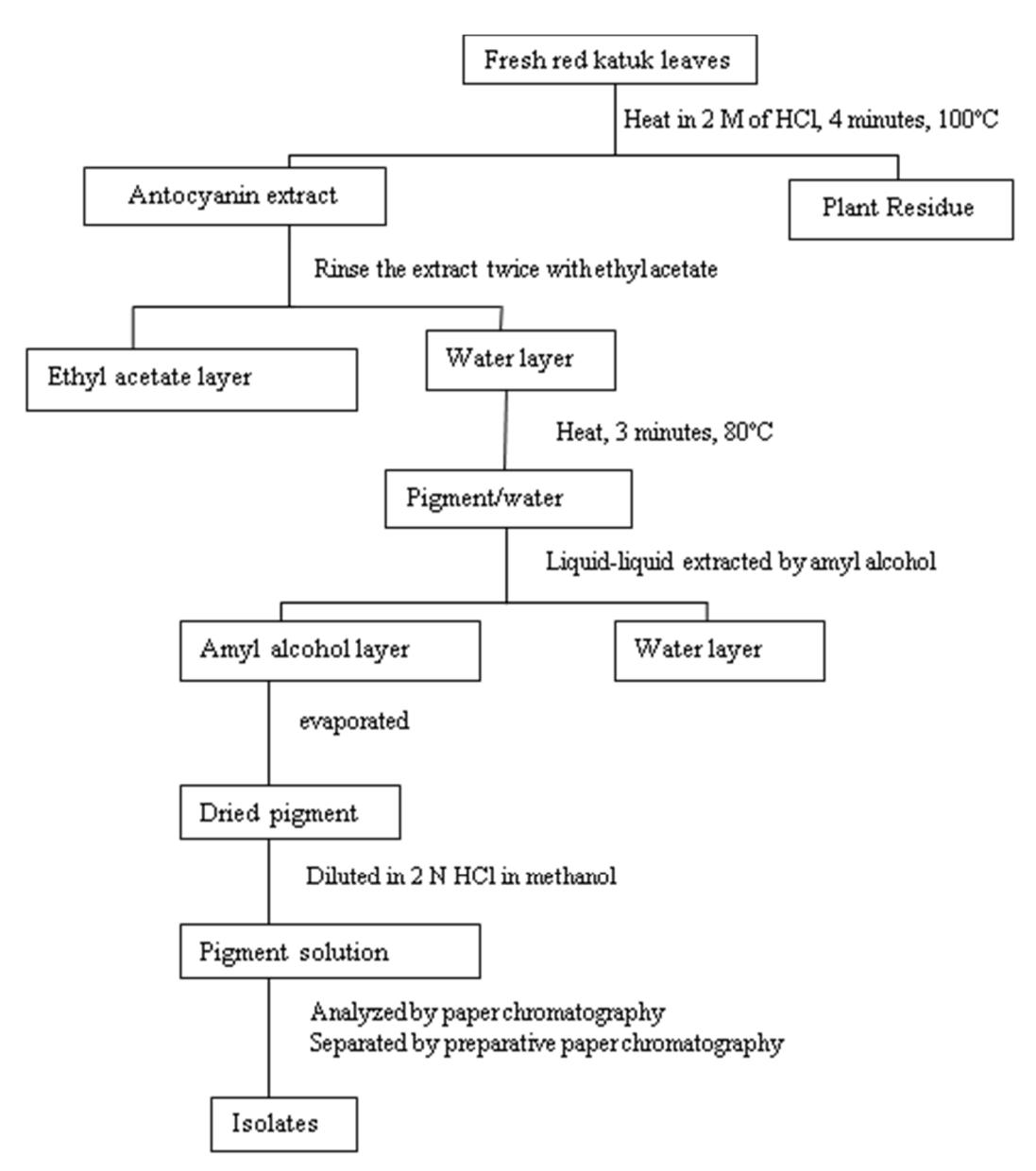
Figure 1. Antocyanine derivatives study scheme
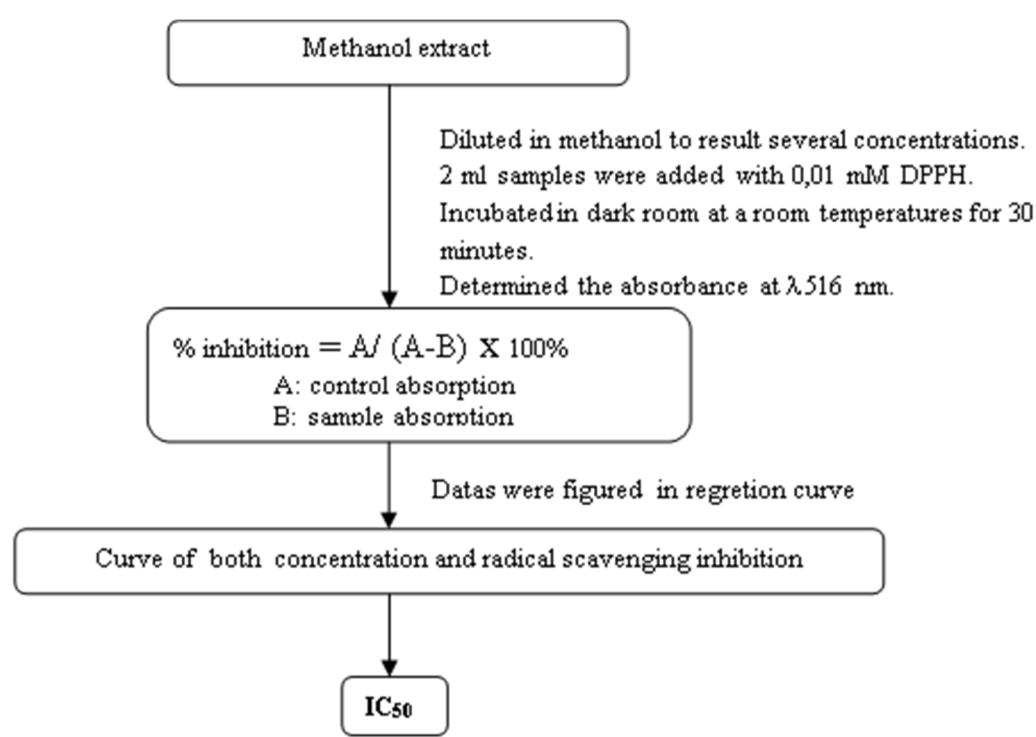
Figure 2. Antioxidant activity scheme
Result and Discussion
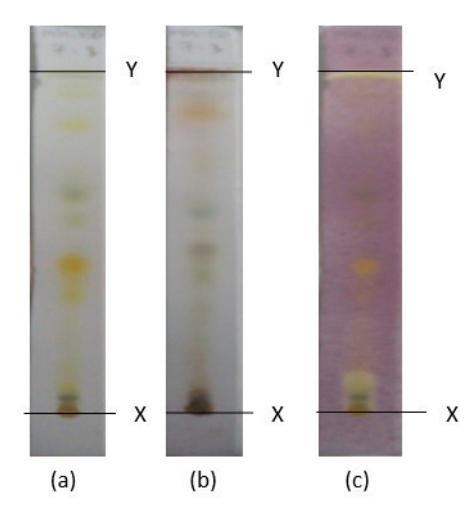
Figure 3. The result of thin layer chromatography. (a) visible; (b) 10% of sulphuric acid in methanol; (c) 0.2% of DPPH in methanol. X = spotted line, Y = developer line. Stationary phase: silica gel GF254, Developer: nhexane-aethyl acetate (7 : 3).
The analytical paper chromatogram (using two mobile phase solution) of the pigment solution (yielded by Figure 1) presented at Figure 4. The separation of pigment solution has been done by preparative paper
chromatography to obtain four isolates. Isolate A and isolate B are obtained from the first developer solvent (BAW: 4:1:5 upper layer), whereas isolate C and isolate D are obtained from the second developer solvent (Forestal: 3:30:10).
Figure 4. Paper chromatogram of pigment solution. (a) paper chromatogram of pigment solution using BAW (4:1:5) as a developer solvent; (b) paper chromatogram of pigment solution using Forestal (3:30:10) as a developer solvent. Reagent spray: 5 % of AlCl3. br: brown; p: pink.
The purity of isolate B has given hRf 73.19 and violet spot (using 5% AlCl3as a reagent spray). Isolate B has been done purity by two dimensional paper chromatography and characterized by UV-visible spectrophotometry (using 2 N HCl in methanol as a standard solution). Isolate B has given one peak (533 nm, 0.3 A), which according to Harborne (1987) (532 nm, hRf 71), it was supposed to be peonidin.
Isolate D has given hRf 50.4 and pink spot (using 5% AlCl3 as a reagent spray). The purity has been tested by two dimensional paper chromatography and also characterized by UV-visible spectrophotometry. The purity of isolate D has given one peak (535 nm, 0.8 A), which according to Harborne (1987) (535 nm, 49 hRf), so it was supposed to be cyanidin.
DPPH has been used for antioxidant activity test because it is simple, easy, and fast. Antioxidant
compounds reacts with DPPH radical by hidrogen atomic donation mechanism and eliminated DPPH's colour. This study used 516 nm as a maximum wavelengh. DPPH must be stored in dark place and avoided from light. Free radical scavenging activity is signed by colour changing (purple to yellow).The strong of free radical scavenging activity could be known by compared it with standard antioxidant, which has established of antioxidant activity. This study was used vitamin C, as a standard antioxidant. Parametric value that has been used this method was IC50.
Table 1. In Vitro Antioxidant Activity of Red Katuk (Euphorbia cotinifolia L.) Leaves Extract
| No. | Concentration | Absorbance ± SD | Inhibition |
|---|---|---|---|
| (μg/ml) | (%) | ||
| Control | 0.7618 | ||
| 1. | 1 | 0.6633±0.0049 | 12.93 |
| 2. | 2.5 | 0.6228±0.0034 | 18.25 |
| 3. | 5 | 0.5956±0.0013 | 21.82 |
| 4. | 10 | 0.5902±0.0024 | 22.52 |
| 5. | 25 | 0.4442±0.0009 | 41.69 |
| 6. | 50 | 0.2415±0.0006 | 68.30 |
Table 2. In vitro antioxidant activity of vitamin C
| No. | Concentration | Absorbance ± SD | Inhibition (%) | |
| (µg/ml) | ||||
| Control | 0.7033 | |||
| 1. | 1 | 0.4535±0.0060 | 35.52 | |
| 2. | 2 | 0.4271±0.0065 | 39.27 | |
| 3. | 3 | 0.3965±0.0062 | 43.62 | |
| 4. | 4 | 0.3638±0.0055 | 48.27 | |
| 5. | 5 | 0.3548±0.0021 | 49.55 | |
| 6. | 6 | 0.3474±0.0041 | 50.60 | |
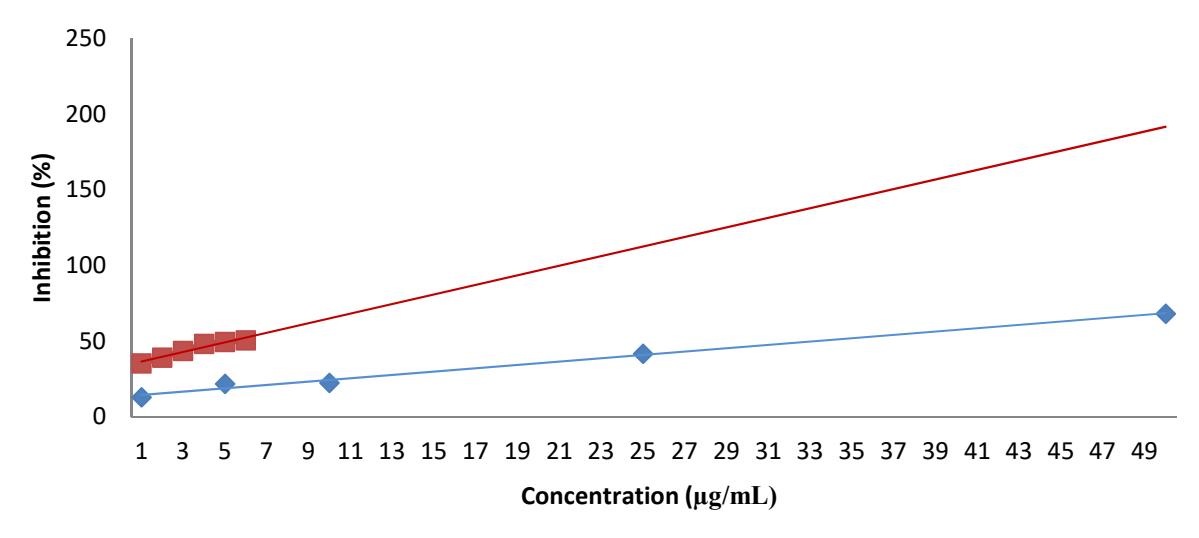
Figure 5. DPPH free radical scavenging activity of standard ascorbic acid and red katuk (Euphorbia cotinifolia L.) leaves extract. Red katuk; Vitamin C.
Conclusion
From the acidified methanolic extract, two anthocyanin derivatives have been isolated by preparative paper chromatography and characterized by uv-vis spectrophotometry, which were supposed to be peonidin and cyanidin. From the antioxidant test of red katuk leaves using DPPH (2,2-diphenyl-1 picrylhydrazyl), it showed that methanol extract had antioxidant activity with IC50 value was 33.13 μg/mL. Vitamin C as a comparative substance had IC50 value was 5.24 μg/mL.
References
Ardiansyah T, 2005, Pemeriksaan Flavonoid dan Asam Fenolat dari Daun Katuk Merah (Euphorbia cotinifolia Linn.), Pharmacy Report, Pharmacy Department, Mathematic and Natural Science Faculty, Garut University, Garut.
Jones SB, Arlene EL, 1987, Plant Systematics, 2nd ed., Mc Graw-Hill Book Company, Singapore.
Harborne JB, 1987, Metode Fitokimia, Translation by K. Padmawinata and Iwang Soediro, ITB Publishing, Bandung, 1987.
Khalaf NA, Shakya AK, Al-Othman A, El-aqbar, Farah H, 2008, Antioxidant Activity of Some Common Plants, Turkey Journal Biology, 32: 51-55.
Putri VDA, 2005, Uji Efek Antidiabetes Infus Daun Katuk Merah (Euphorbia cotinifolia Linn.) terhadap Mencit Diabetes, Pharmacy Report, Pharmacy Department, Mathematic and Natural Science Faculty, Garut University, Garut.