

PENGEMBANGAN DAN VALIDASI METODE SPEKTROFLUOROMETRI UNTUK PENENTUAN ASAM ASKORBAT DALAM BEBERAPA BENTUK SEDIAAN DENGAN MENGGUNAKAN METILEN BIRU
ABSTRAK
Asam askorbat atau vitamin C merupakan salah satu suplemen yang paling banyak dikonsumsi dan tersedia di pasaran dalam berbagai bentuk sediaan seperti tablet, sweetlet, tablet effervescent, dan produk siap minum. Metode spektroϔluorometri telah dikembangkan dalam penelitian ini untuk penentuan kuantitatif asam askorbat dalam berbagai bentuk produk berdasarkan reaksi antara asam askorbat dan metilen biru. Konsentrasi metilen biru menurun seiring dengan penambahan asam askorbat akibat reaksi redoks yang menyebabkan terbentuknya leuco‐metilen biru dan asam dehidroaskorbat yang tidak berwarna. Intensitas ϐluoresensi metilen biru diukur pada panjang gelombang eksitasi dan emisi masing‐masing 664 nm dan 686 nm. Metode yang dikembangkan memiliki selektivitas, linieritas, akurasi, dan presisi yang baik. Studi validasi menunjukkan linearitas yang baik untuk metode ini dengan koeϐisien korelasi > 0,999 dan Vx0 < 2%. Uji akurasi juga memenuhi persyaratan dengan perolehan tidak kurang dari 80,0% dan tidak lebih dari 110,0%. Uji presisi memberikan standar deviasi relatif (% RSD) tidak lebih dari 2%. Kadar asam askorbat pada beberapa produk komersial dievaluasi dengan metode spektroϐluorometri ini dan hasilnya menunjukkan kesesuaian kandungan untuk tablet effervescent, minuman isotonik dan tablet hisap dengan label klaim dan spesiϐikasi. Karena kesederhanaannya, metode ini dapat digunakan untuk menganalisis vitamin C pada berbagai bentuk produk yang berbeda.
Kata kunci: asam askorbat; biru metilen; spektroϐluorometri; redoks
INTRODUCTION
Ascorbic acid has a molecular formula of C6H8O6 and a molecular weight of 176.13 g/mol, ofϐicial in pharmacopoeia (Ditjen POM Kemenkes RI 2014). It is an antioxidant that involve in many body functions such as formation of collagen, ϐight bacterial infections, wound healing, maintenance of teeth, bones, skin, capillaries and also play an important role in a number of metabolic functions including the activation of the B vitamin, folic acid, the conversion of cholesterol to bile acids and the conversion of the amino acid, tryptophan, to the neurotransmitter, serotonin (Dave and Patil 2017). Ascorbic acid can be found in fruits and vegetables. This substance cannot be produced or stored by humans and must therefore be obtained from food (Martı́ et al. 2009). Ascorbic acid, which is also famous for its trade name vitamin C, is one of the most popular supplements and is consumed in various forms of products, from pharmaceutical preparations such as tablets, lozenges, effervescent tablets, injections, to beverage products.
Methylene blue is a synthetic substance and occurs in the form of several different hydrates, but not as trihydrate (Rager et al. 2012). It has a molecular formula of C16H18ClN3S and molecular weight (anhydrous form) of 319.85 g/mol. Methylene blue is an oxidation‐reduction agent and is widely used as a redox indicator in analytical chemistry. Methylene blue is also used in human and veterinary medicine for several therapeutic and diagnostic procedures, including as a stain in bacteriology, as a redox colorimetric agent, as a targeting agent for melanoma, as an antihaemoglobinaemic, as an antidote, and as an antiseptic and disinfectant (National Toxicology Program 2008, O'Neil et al. 2006)
Several analytical methods, including iodimetry titration, spectrophotometric (Gómez Ruiz et al. 2016), electrochemically methods such as amperometry (Scremin et al. 2018), voltammetry (Phong et al. 2018), potentiometry (Elbehery et al. 2019), and chromatography such as high performance liquid chromatography (Cefali et al. 2018), gas chromatography (Silva 2005), and ultra‐ performance liquid chromatography (Cotruţ and Bădulescu 2016, Turak et al. 2017) have already been reported for ascorbic acid analysis. One of methods that still be able to be improved for the analysis of ascorbic acid is the ϐluorimetry method by using a spectroϐluorometer. Fluorometry analysis is well known for its sensitivity, accuracy, and speed of the measurement (Bose et al. 2018, Nahata 2011). However ascorbic acid cannot be determined directly by this method due to the structure of ascorbic acid does not have a ϐluorophore. To overcome this limitation several
methods are applied. Suitable chromophore or ϐluorophore reagents are used in the derivatization process to enhance the sensitivity and selectivity of detection for ascorbic acid by spectroϐluorometric method. Gradual decrease in ϐluorescence intensity of some compounds due to the presence of ascorbic acid also be used for indirectly assay of ascorbic acid in the sample (Abd Ali et al. 2019, Duan et al. 2017, Haskovic et al. 2011, Klepo et al. 2016)
The purpose of the present work was to develop a spectroϐluorimetric assay for ascorbic acid indirectly that can be applied for several preparations utilizing a decrease in the intensity of ϐluorescence from methylene blue which is reduced due to the redox reaction with ascorbic acid. Different samples such as lozenges, effervescent tablet, and ready to drink product were used for the validation of the method to see the reliability of this developed method on different sample matrices.
MATERIALS AND METHODS
Apparatus
Fluorescence measurements were carried out on a FP‐6300 spectro‐ϐluorimeter (Jasco, Japan) equipped with a 150 W xenon lamp and 1 cm quartz cells. Consort P400® digital pH‐meter was used for pH adjustment.
Materials and reagents
All solvents and reagents used throughout the work were of analytical grade and double distilled water was used.
General procedures
Preparation of stock standard solutions
A stock standard solution of ascorbic acid 500 ppm was prepared by weighing accurately 50 mg of standard ascorbic acid and dissolving in 100 ml distilled water. This stock standard solution of ascorbic acid shown to be stable within 3 hours. A stock standard solution of methylene blue in distilled water was prepared with concentration of 25 ppm.
Fluorescence stability study of methylene blue
Fluorescence intensity of methylene blue 1 ppm was carried out at the maximum excitation wavelength for 20 minutes.
Speciϐicity
The speciϐicity was determined by comparing the emission spectra of three samples (lozenge, effervescent tablet, and isotonic drink) were checked and compared to the emission spectra of methylene blue to ensure accuracy and speciϐicity of the analyte of interest in the presence of other components in the matrix.
Linearity and range
Solutions of ascorbic acid standard were prepared with different concentrations in the range between 1 to 8 ppm. To each standard solution 1 ppm of methylene blue solution was added. The ϐluorescence intensity at the optimum condition against the concentration of ascorbic acid then was plotted to obtain the linear range of ascorbic acid. A correlation coefϐicient (r) and coefϐicient of variation (Vx0) from the linear regression were determined to check the linearity.
Limits of detection and quantiϐication
Limit of detection (LOD) and limit of quantiϐication (LOQ) of the method were determined from the linear regression curve obtained from the linearity of ascorbic acid. The slope and standard deviation (Sy/x) of the responses from the linear regression curve were used. The LOD was calculated using the formula 3.3* Sy/x/slope, and the LOQ was calculated using the formula 10* Sy/x/slope.
Precision and accuracy
Precision and accuracy of the developed method were estimated by standard addition method whereby the ascorbic acid was spiked directly to the analyzed samples with three different spiked level, 80%, 100%, and 120% of the actual amount of ascorbic acid in the sample. The precision of the assay was estimated by calculating the relative standard deviation (RSD) for the analysis of each spiked sample in three replicates. The accuracy was calculated based on the given formula; (mean concentration found/ concentration taken) × 100%.
RESULTS AND DISCUSSION
The reaction that occurs between methylene blue and ascorbic acid is a redox reaction. Methylene blue reacts with ascorbic acid to produce a reduced form of methylene blue, namely leuco‐methylene blue and an oxidized form of ascorbic acid, dehydroascorbic acid. Based on this reaction, ascorbic acid which has no ϐluorophore can be determined with spectroϐluorometric indirectly by measuring the decrease of ϐluorescence intensity of ϐluorescent methylene blue. The reaction between ascorbic acid and methylene blue occurs in a span of a few seconds to several minutes. Reaction rate is inϐluenced by ascorbic acid concentration while the light has no observable effect. The study began with determining the maximum excitation wavelength of methylene blue. From this experiment it was found that the maximum excitation wavelength of methylene blue was at a wavelength of 664 nm. After the maximum excitation wavelength of methylene blue had been obtained, the emission spectrum of methylene blue at a wavelength of 600‐800 nm was measured. From this measurement the maximum intensity was observed at a wavelength of 686 nm. The spectrum of excitation and emission from methylene blue are shown in ϐigure 1.
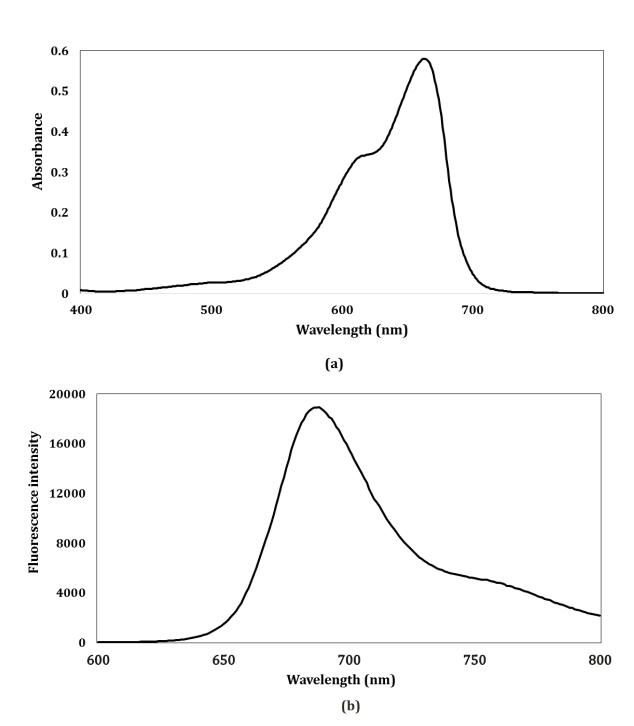
Figure 1. Excitation spectrum (a) and emission spectrum of methylene blue (b).
Stability of the ϐluorescence intensity of methylene blue after reacted with ascorbic acid under the optimum reagent concentrations then was tested against time. Fluorescence intensity measurements of methylene blue solution with and without ascorbic acid were performed every minute for approximately 20 minutes. The results showed stability was achieved on minutes 15 to 20 as can be seen in ϐigure 2. The stability of ϐluorescence intensity of methylene blue after ascorbic acid addition was obtained after a while. This was due to the reaction between ascorbic acid and methylene blue which had not been complete. The reaction between ascorbic acid and methylene blue usually occurs in a span of a few seconds to several minutes.
Method validation in this study was performed by examining numerous assessments designed to verify that the spectroϐluorometric method is capable to provide beneϐicial and legitimate analytical data in compliance with International Conference on Harmonization (ICH) guidelines and criteria (ICH 2005). A validation examine includes testing several validation parameters like
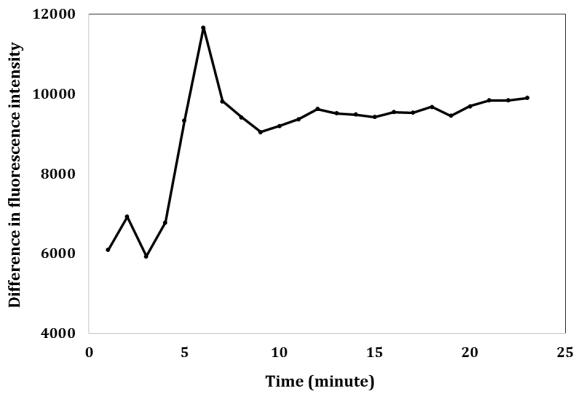
Figure 2. The stability of ϐluorescence intensity of methylene blue after ascorbic acid was added over time.
speciϐicity, precision, accuracy, linearity, limit of detection (LOD) and limit of quantitation (LOQ) (Harmita 2004). Speciϐicity of an analytical method was conducted to test its ability to measure accurately methylene blue in the presence of interferences that may be expected to be present in the sample. At this stage, the emission spectra of three samples (lozenge, effervescent tablet, and isotonic drink) were checked and compared to the emission spectra of methylene blue. Three emission spectra of the samples were superimposed with the methylene blue spectra. From overlap of the spectra, peak of methylene blue was not interfered by the peaks of samples at its maximum emission wavelength that indicate the spectroϐluorometric method has good speciϐicity as shown in ϐigure 3.
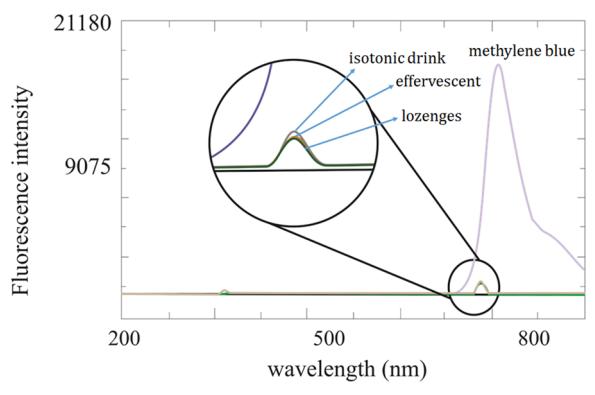
Figure 3. Emission spectrum from methylene blue, lozenges, effervescent tablet, and isotonic drink.
The study was continued by testing the linearity of the method. For this purpose, a series of solutions was made consisting of nine concentration of ascorbic acid solutions; 0, 1, 2, 3, 4, 5, 6, 7, and 8 ppm to each of which was added 1 ppm of methylene blue. The emission spectrum of each concentration was then measured at a wavelength of 686 nm. A decrease in ϐluorescence intensity of methylene blue occurs with increasing concentration of ascorbic acid in solution wherein the relationship was proportional. A calibration curve was made by calculating the difference in ϐluorescence intensity of methylene blue before and after reacted with ascorbic acids which was plotted on the y‐axis, while ascorbic acid concentrations on the x‐axis. The method was speciϐic and showed good linearity (r = 0.9996, Vx0 = 1.33%) at concentration between 1 and 8 ppm of ascorbic acid (Figure 4).
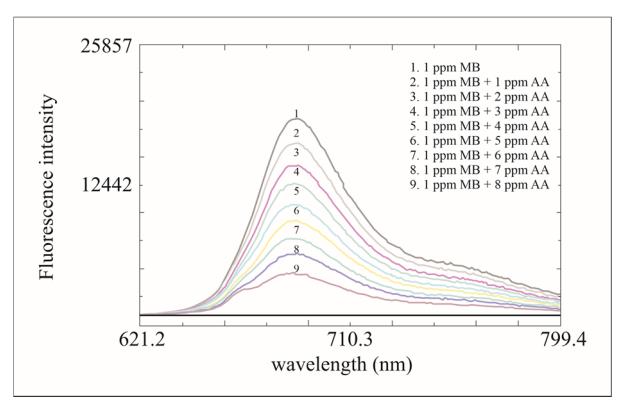
Figure 4. Emission spectrum of a series of solutions for calibration curve.
Limit of detection (LOD) and limit of quantitation (LOQ) of this method were obtained from the statistical calculation of the calibration curve that had been made. From the calculation, LOD and LOQ were 0.198 ppm and 0.601 ppm, respectively. Accuracy was measured by spiking the sample of interest (lozenge, effervescent tablet, and isotonic drink) with a known amount of ascorbic acid standard and analyzing the sample using the spectroϐluorometric method after it was reacted
Table 1. Results of Accuracy and Precision Test (n=3)
| Sample | Spiked level (%) | Average of recovery (%) | RSD (%) | Pooled RSD (%) |
|---|---|---|---|---|
| Lozenges | 80 | 99.1 | 0.9 | |
| 100 | 99.0 | 0.9 | 0.9 | |
| 120 | 97.6 | 0.8 | ||
| Effervescent tablet | 80 | 99.8 | 1.2 | |
| 100 | 98.8 | 0.8 | 0.8 | |
| 120 | 100.3 | 1.0 | ||
| 80 | 90.0 | 1.3 | ||
| Isotonic drink | 100 | 89.6 | 1.3 | 0.7 |
| 120 | 90.8 | 0.9 |
Table 2. Content of Ascorbic Acid in Three Marketed Products Determined by the Proposed Method (n=3)
| Sample | Calculated ascorbic acid content as percentage of label claim | RSD (%) |
|---|---|---|
| Lozenges | 98.6 | 1.7 |
| Effervescent tablet | 102.5 | 1.8 |
| Isotonic drink | 107.1 | 4.9 |
with methylene blue. From the accuracy data obtained, it was concluded that the method met the criteria. The percentage of recovery that is allowed for solutions with a concentration range of 1‐10 ppm are not less than 80.0% and not more than 110.0% of the proper concentration.
To measure degree of repeatability among individual test results when the method is applied repeatedly to multiple samplings, a precision test was carried out. Precision is usually expressed as a relative standard deviation (%RSD) of statistically signiϐicant sample measurements. Measurements were made three times for each spiked sample on the same day to determine precision. RSD values of precision were less than 2% which proved the suggested spectroϐluorometric method was precise for estimation of ascorbic acid (Table 1).
After the spectroϐluorometric was validated, it was applied to the commercial samples. The results of determining ascorbic acid levels in three samples are shown in table 2. The ascorbic acid content in several marketed products was evaluated by this new spectroϐluorometric method. The result was in good agreement for effervescent tablet with the label claim and the Pharmacopeia's speciϐications. The result for isotonic drink and lozenges also met the label claim and speciϐication for ascorbic acid content in isotonic drink products.
CONCLUSIONS
The developed spectroϐluorimetric method is simple, accurate, precise, and selective for the analysis of ascorbic acid in lozenges, isotonic drink, and effervescent tablet. The high percentage recoveries obtained for various amounts of ascorbic acid in formulated sample suggested that there is no interference to the analysis. The proposed method is simple and precise and do not suffer from any interference coming from the excipients.
REFERENCES
Abd Ali LI, Qader AF, Salih MI, Aboul‐Enein HY, 2019, Sensitive spectroϐluorometric method for the determination of ascorbic acid in pharmaceutical nutritional supplements using acriϐlavine as a ϐluorescence reagent, Luminescence 34(2): 168‐ 174, doi: 10.1002/bio.3589.
Bose A, Thomas IGK, Abraham E, 2018, Fluorescence spectroscopy and its applications: A Review, Int J Adv Pharm Anal 8(1): 01‐08, doi: 10.7439/ijapa.
Cefali LC, de Oliveira Maia L, Stahlschimidt R,
Ataide JA, Tambourgi EB, Rosa PCP, Mazzola PG, 2018, Vitamin C in Acerola and Red Plum Extracts: Quantiϐication via HPLC, in Vitro Antioxidant Activity, and Stability of their Gel and Emulsion Formulations, J AOAC Int. 101(5): 1461‐1465, doi: 10.5740/jaoacint.18‐0008.
Cotruţ R, Bădulescu L, 2016, UPLC Rapid Quantiϐication of Ascorbic Acid in Several Fruits and Vegetables Extracted Using Different Solvents, Agriculture and Agricultural Science procedia 10: 160‐166, doi: 10.1016/j.aaspro.2016.09.047.
Dave KN, Patil R, 2017, Biological Importance of Ascorbic Acid (Vitamin C) in Human Health ‐ A Classic Review, International Journal for Research in Biology & Pharmacy 3(7): 01‐08.
Ditjen POM Kemenkes RI, 2014, Farmakope Indonesia, ed V, Kemenkes RI, Jakarta, 149.
Duan R, Jiang J, Liu S, Yang J, Zhu J, Qiao M, Yan J, Hu X, 2017, Spectroϐluorometric determination of ascorbic acid using thiamine and potassium ferricyanide, Instrumentation Science & Technology 45(3): 312‐323, doi: 10.1080/10739149.2016.1242077.
Elbehery NHA, Amr AEE, Kamel AH, Elsayed EA, Hassan SSM, 2019, Novel Potentiometric 2,6‐ Dichlorophenolindo‐phenolate (DCPIP) Membrane‐ Based Sensors: Assessment of Their Input in the Determination of Total Phenolics and Ascorbic Acid in Beverages, Sensors (Basel) 19(9): 2058, doi: 10.3390/s19092058.
Gómez Ruiz B, Roux S, Courtois F, Bonazzi C, 2016, Spectrophotometric method for fast quantiϐication of ascorbic acid and dehydroascorbic acid in simple matrix for kinetics measurements, Food Chem. 211: 583‐9, doi: 10.1016/j.foodchem.2016.05.107.
Harmita, 2004, Petunjuk pelaksanaan validasi metode dan cara perhitungannya, Majalah Ilmu Kefarmasian Vol I: 122.
Haskovic A, Janicijevic AC, Topcagic A, Klepo L, Kapur A, Huseinovic S, Tahirovic I, Soϐic E, 2011, Analysis of ascorbic acid content in various fruits and vegetables by spectroϐluorimetric methods, Planta Med 77: PJ17, doi: 10.1055/s‐0031‐ 1282624.
ICH, Q2 (R1), 2005, Validation of analytical procedure: Text and methodology; international conference on harmonization, Geneva.
Klepo L, Copra‐Janicijevic A, Kukoc‐Modun L, 2016, A New Indirect Spectroϐluorimetric Method for Determination of Ascorbic Acid with 2,4,6‐ Tripyridyl‐S‐Triazine in Pharmaceutical Samples,
Molecules 21(1): E101. doi: 10.3390/molecules21010101.
Martı́N, Mena P, Cánovas JA, Micol V, Saura, 2009, Vitamin C and the role of citrus juices as functional food, Nat Prod Commun. 4(5): 677‐700.
Nahata A, 2011, Spectroϐluorimetry as an Analytical Tool, Pharm Anal Acta 2: 107e, doi: 10.4172/2153‐ 2435.1000107e.
National Toxicology Program, 2008, Toxicology and arcinogenesis studies of methylene blue trihydrate (Cas No. 7220‐79‐3) in F344/N rats and B6C3F1 mice (gavage studies), Natl Toxicol Program Tech Rep Ser. 540: 1‐224.
O'Neil MJ, Heckelman PE, Koch CB, et al., 2006, The Merck Index: an Encyclopedia of Chemicals, Drugs, and Biologicals, 14th ed., Whitehouse Station (NJ), Merck & Co., Inc.
Phong NH, Toan TTT, Tinh MX, Tuyen TN, Mau TX, Khie DQ, 2018, Simultaneous Voltammetric Determination of Ascorbic Acid, Paracetamol, and Caffeine Using Electrochemically Reduced Graphene‐Oxide‐Modiϐied Electrode, Journal of Nanomaterials vol. 2018, doi: 10.1155/2018/5348016.
Rager T, Geoffroy A, Hilϐiker R, Storey JM, 2012, The crystalline state of methylene blue: a zoo of hydrates, Phys Chem Chem Phys. 14(22): 8074‐82, doi: 10.1039/ c2cp40128b.
Scremin J, Barbosa ECM, Salamanca‐Neto CAR, Camargo PHC, Sartori ER, 2018, Amperometric determination of ascorbic acid with a glassy carbon electrode modiϐied with TiO2‐gold nanoparticles integrated into carbon nanotubes, Mikrochim Acta 185(5): 251, doi: 10.1007/s00604‐018‐ 2785‐7.
Silva FO, 2005, Total ascorbic acid determination in fresh squeezed orange juice by gas chromatography, Food Control 16(1): 55‐58, doi: 10.1016/j.foodcont.2003.11.007.
Turak F, Güzel R, Dinç E, 2017, Simultaneous Determination of ascorbic acid and caffeine in commercial soft drinks using reversed phase ultraperformance liquid chromatography, J Food Drug Anal. 25(2): 285‐292, doi: 10.1016/j.jfda.2016.09.004.