

PERAN KASKADE ASAM ARAKHIDONAT DALAM EKSPRESI TANDA PUTUS OBAT PADA MENCIT YANG TERGANTUNG ALKOHOL
ABSTRAK
Gejala putus obat pada ketergantungan alkohol merupakan salah satu masalah utama dalam penanganannya. Studi ini bertujuan untuk mengklariϐikasi peran kaskade asam arakhidonat dalam ekspresi tanda ketergantungan pada model hewan ketergantungan alkohol. Ketergantungan diinduksi dengan peberian berulang etanol 15% dalam larutan sukrosa 0,2% selama 17 hari. Pada hari ke‐18, etanol tidak diberikan, dan empat jam setelah jadwal pemberian etanol, diklofenak pada dosis 10 mg/kg diberikan secara i.p. untuk menginduksi reaksi putus obat. Pengamatan tanda perilaku dilakukan selama 30 menit, dimulai 25 menit setelah penyuntikan diklofenak. Pengamatan perilaku ini diikuti dengan pengujian forced swimming test untuk memeriksa adanya tanda depresi yang menyertai pemutusan obat. Pada kelompok mencit yang berbeda ibuprofen pada dosis 7,5 mg/kg diberikan i.p. 30 menit sebelum etanol, dua kali sehari. Hasil menunjukkan bahwa pemberian diklofenak menginduksi ekspresi putus obat pada mencit yang menerima alkohol secara berulang. Insidensi tanda facial preening (P<0,01), forepaw licking (P<0,01), grooming (P<0,01) dan forepaw tremor (P<0,001) meningkat signiϐikan setidaknya tiga kali dari nilai normalnya. Pada menict yang juga mendapatkan ibuprofen, diamati adanya penurunan bobot badan (300%; P<0,01) dan waktu imobilitas, sebagai indikator kondisi depresi, (50%; P<0,01) dibandingkan dengan kelompok yang hanya menerima etanol. Secara keseluruhan, data studi menunjukkan bahwa penekanan pensinyalan kaskade asam arakhidonat terlibat dalam ekspresi putus obat dari alkohol.
Kata kunci: ketergantungan, putus obat, alkohol, kaskade asam arakhidonat, diklofenak, mencit.
INTRODUCTION
Alcohol is a depressant and widely consumed in a certain community in the world. Individuals whose use of alcohol has negative effects on any aspect of their lives, including health, relationships, work or school and money, are considered to have alcohol problem. Alcohol dependence affects nearly 10 percent of the population and results in social problems, considerable morbidity and mortality, and high health care costs (National Institute on Alcohol Abuse and Alcoholism 2020).
Alcohol dependence is known to be a serious and common public health problem. It is present at relatively high levels in certain community and is characterized by the harmful consequences of repeated alcohol use, a pattern of compulsive alcohol use, and physiological dependence on alcohol (i.e., tolerance or symptoms of withdrawal). The American Psychiatric Association has deϐined alcohol dependence as a person's maladaptive pattern of alcohol use leads to clinically important distress or impairment. Alcohol dependence is treated by medical, psychological, and social interventions that reduce or eliminate the desire to drink and the harmful effects of alcohol. (American Psychiatric Association 1994).
Evidence shows that the drug of choice for treating alcohol dependence is limited and a new approach to treat this disorder is needed due to high prevalence in certain regions. Growing body of evidence has indicated the role of the arachidonic acid cascade in addictive properties of psychoactive substances. Thus, cannabinoid‐induced behavioral suppression was shown to be due to the activation of the arachidonic acid cascade in rats (Yamaguchi et.al 6445). This suggests that the arachidonic acid cascade controls the intracellular action of cannabinoids, and takes the role of the endocannabinoid in the brain reward system. In addition, high doses of diclofenac, a cyclooxygenase inhibitor is demonstrated to induce withdrawal expressions in tetrahydrocannabinol dependence in mice (Anggadiredja et al. 2003).
The objective of this ϐinding is to clarify the role of arachidonic acid cascade in the expression of alcohol withdrawal signs. To this end, the effects were tested on the expression of withdrawal signs in alcohol‐dependent mice.
MATERIALS AND METHODS
Animals
Male Swiss‐Webster mice (purchased from Animal Laboratory of School of Pharmacy Institut Teknologi Bandung) weighing 20‐30 g were used. They were kept at a relatively constant temperature of 26±2 ºC under a 12‐h light/dark
cycle with free access to food and water except during behavioral observations. The experiments were conducted in accordance with the Guide for the Care and Use of Laboratory Animals, and according to the procedure approved by Ethic Committee of Padjadjaran University, Bandung. The animals were assigned into four groups: ethanol (positive‐control) group, water (negative‐control) group, sucrose (control) group, and ibuprofen (test) group.
Induction of Alcohol Dependence
Dependence was induced in the positive‐control group by the administration of 15% ethanol in 0.2% sucrose solution every day for 17 days. For comparison, water and sucrose 0.2% solution were given to both negative‐control and control group respectively for 17 days as well.
Diclofenac‐Induced Alcohol Withdrawal
Withdrawal in alcohol‐dependent mice was induced by administration of 10 mg/kg diclofenac on day 18 of experiment one hour after ethanol was supposed to be given. Twenty‐ϐive minutes later, observation of withdrawal signs was carried out for 25 minutes. Induction of withdrawal and observation the signs were carried as we have performed previously (Anggadiredja et al. 2003).
Ibuprofen Effect on Alcohol Dependence
In the test group, ibuprofen at 7.5 mg/kg was given every other day during the alcohol regimen 30 minutes prior to alcohol dose.
Behavioral Test
Each animal was placed in a glass cylinder of 15 cm in diameter and 20 cm in height. The observation of withdrawal signs started 25 minutes after diclofenac was injected. The behaviors to be observed were fore paw licking, facial preening (rubbing of front paw over the nose, head or ears), grooming (licking the whole body except tail and genital area), and fore paw tremor (lateral clapping of front paws). The number of incidents of each sign was counted for each interval. The time spent on fore paw licking, preening and grooming incidents was counted. After observing the behavior, the animals were weighed.
Forced Swim Test (FST)
The forced swim test was performed in a 20 cm height with 15 cm in diameter cylinder glass. The test was performed in a total of six minutes. The immobility time was recorded during the last four minutes of the experiment. This is the Porsolt forced swim test as used in a study by Povamina and co‐workers (2018).
Statistical Analysis
Experimental data were presented as means ± S.E.
The difference among groups were analyzed using one‐way ANOVA followed by Fischer PLSD test. Differences between groups were considered as signiϐicant at P<0.05.
RESULTS AND DISCUSSION
The Effect of Diclofenac on Alcohol Withdrawal Signs
The proϐiles of diclofenac‐induced withdrawal signs in alcohol‐dependent mice are presented in
In animal group receiving ibuprofen 7.5 mg/kg, the number of incidents increased signiϐicantly compared to the animal group receiving ethanol. However, in group receiving water and sucrose, both had lower number of incidents compared to animal receiving ethanol and ibuprofen.
Figure 1 (a—e). In the ϐigures the effects of ibuprofen pretreatment were also presented.
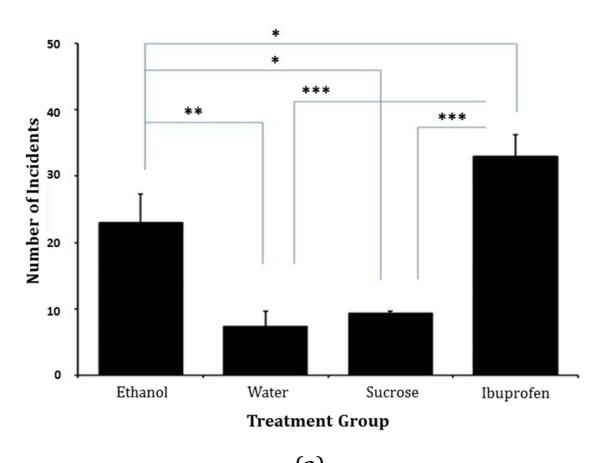
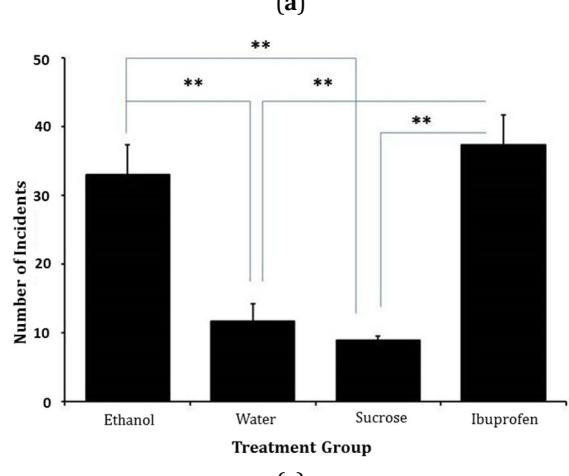
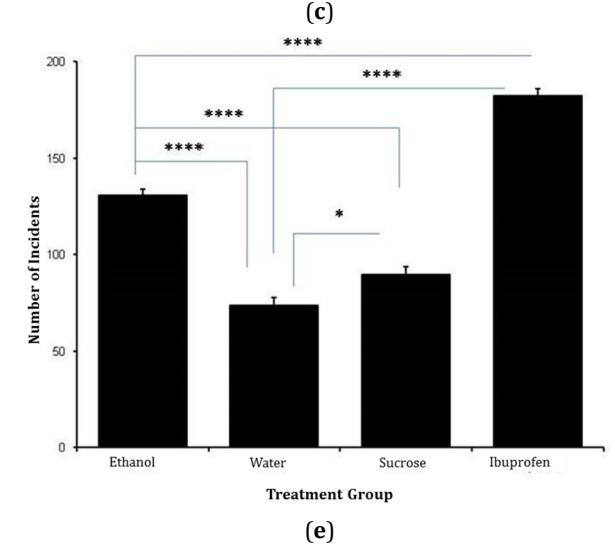
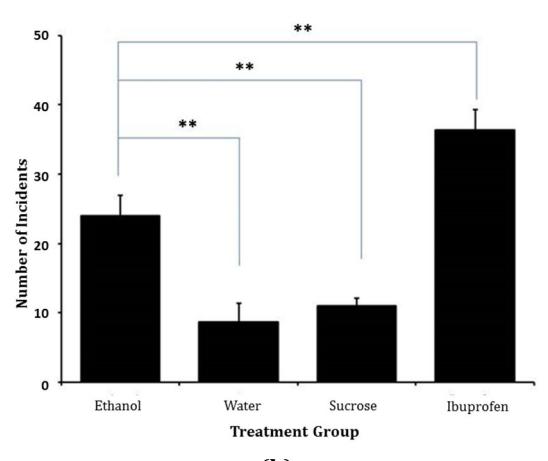
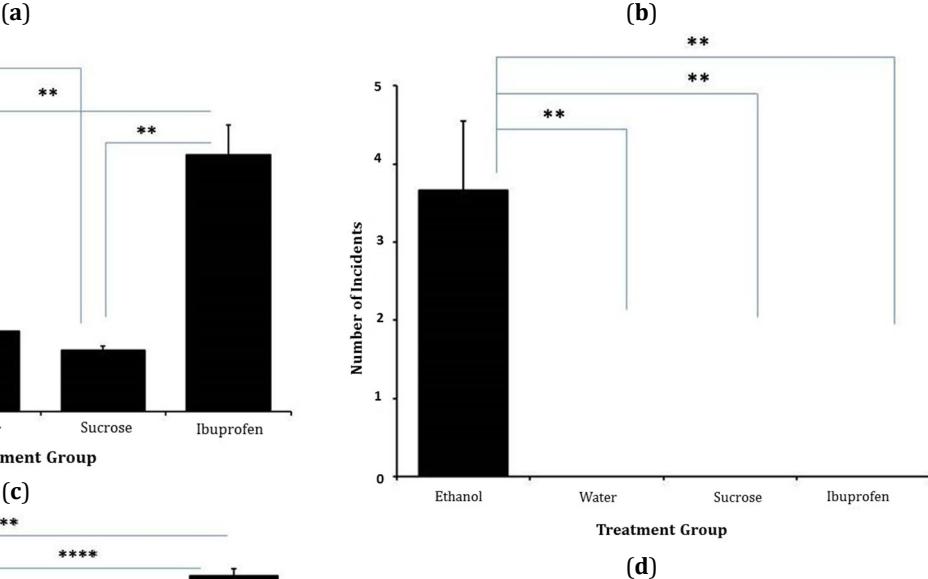
Figure 1. Facial preening (a), Forepaw Licking (b), Grooming (c), Forepaw Tremor (d), and Time Spent on Licking‐ Preening‐Grooming (e) as withdrawal signs expressed after administration of the cyclooxygenase inhibitor 10 mg/kg diclofenac in alcohol‐dependent mice (induced by repeated 15% ethanol in 2% sucrose solution for 17 days). Diclofenac was given i.p. 2 h after the supposed administration time of ethanol on day 18. In ibuprofen group, this cyclooxygenase inhibitor at 7.5 mg/kg was administered every other day during alcohol regimen 30 min before ethanol. Data represent mean S.E. (*P<0.05, **P<0.01, ***P<0.001).
Anggadiredja & Lee
Forepaw licking, animal group receiving ibuprofen 7.5 mg/kg was signiϐicantly increased compared to ethanol group. Animal receiving sucrose and water showed signiϐicantly low number of incidents compared to ethanol group.
Animal receiving ibuprofen showed signiϐicant increase in the number of grooming compared to those receiving water and sucrose. Meanwhile, animal receiving ethanol had signiϐicantly higher incidents compared to both sucrose and water.
The number of forepaw tremor incidents was increased signiϐicantly in animals treated with alcohol compared to those in other groups. In animals in the group receiving ibuprofen, the sign was also absent.
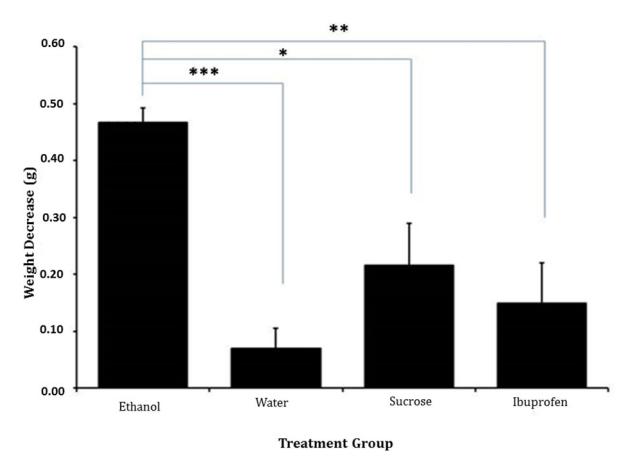
Figure 2. Body weight reduction as a withdrawal sign expressed after administration of the cyclooxygenase inhibitor 10 mg/kg diclofenac in alcohol‐dependent mice (induced by repeated 15% ethanol in 2% sucrose solution for 17 days). Diclofenac was given i.p. 2 h after the supposed administration time of ethanol on day 18. In ibuprofen group, this cyclooxygenase inhibitor at 7.5 mg/kg was administered every other day during alcohol regimen 30 min before ethanol. Data represent mean S.E. (*P<0.05, **P<0.01, ***P<0.001).
Parallel to the results from the behavior test, the time spent on 3 withdrawal symptoms (forepaw licking, facial preening and grooming) the duration spent by animals in the three signs also increased in after alcohol treatment. Animals receiving ibuprofen showed elevated duration compared to ethanol‐treated group.
Signiϐicant reduced body weight was observed in animal group receiving ethanol, compared to animal group receiving water and sucrose. In animals receiving ibuprofen, the weight reduction observed was also signiϐicant compared to the ethanol group (Figure 2). From this data, ibuprofen had the effect of lowering the reduction of body weight during alcohol withdrawal.
Immobility time (which models depressive
symptom) in ethanol‐treated animals increased signiϐicantly compare to the animal receiving sucrose and ibuprofen. (Figure 3)
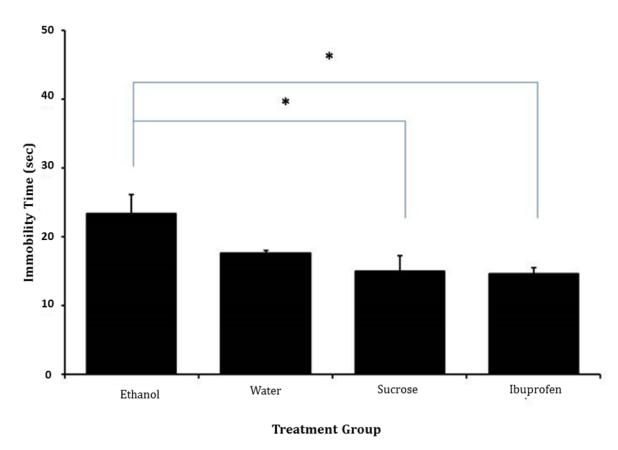
Figure 3. Immobility during Forced Swim Test as a withdrawal sign expressed after administration of the cyclooxygenase inhibitor 10 mg/kg diclofenac in alcohol‐ dependent mice (induced by repeated 15% ethanol in 2% sucrose solution for 17 days). Diclofenac was given i.p. 2 h after the supposed administration time of ethanol on day 18. In ibuprofen group, this cyclooxygenase inhibitor at 7.5 mg/kg was administered every other day during alcohol regimen 30 min before ethanol. Data represent mean S.E. (*P<0.05).
Taking into consideration the overall data, it was demonstrated that withdrawal signs were precipitated by diclofenac. This data indicates that the inhibition of prostaglandin, a metabolite of the arachidonic acid cascade, in the brain facilitated the expression of alcohol withdrawal signs. Our previous study has shown that direct administration of prostaglandin E2 into the brain ventricle of mice model of drug dependence signiϐicantly blocked the expression of withdrawal signs (Anggadiredja et al. 2003). We have further found that mice pre‐treated with diclofenac developed withdrawal signs upon challenge with a cannabinoid receptor antagonist (Anggadiredja et al. 2006).
One of the sites in the mouse brain shown to highly express the EP receptor is the catecholaminergic neurons in the locus coeruleus (Sugimoto et al. 1994), the largest source of noradrenergic ϐibers which project to several areas of the central nervous system. Recently, Lichtman et al. (2001) reported that precipitated cannabinoid withdrawal is reversed by clonidine, a centrally acting alfa‐ adrenergic agonist. This result is an indication of noradrenergic hyperactivity, which has been shown to occur in opioid withdrawal (Maldonado 1997, Silverstone et al. 1992, Vargas et al. 1997), during withdrawal from chronic cannabinoid use. Prostaglandin E, through the EP receptor, has been shown to inhibit the release of noradrenaline and the reverse effect was shown after administration of indomethacin or the prostanoid receptor
antagonists in the mouse (Exner et al. 1995) and rat (Hillier and Templeton 1980) brain cortex. Judging from these results, it is possible that the interaction between the prostanoid and the noradrenergic system in the brain is involved in the attenuating effect of PGE on withdrawal syndrome after chronic administration of tetrahydrocannabinol, a psychoactive ingredient of marijuana.
It is interesting to note that pretreatment of ibuprofen during repeated ethanol administration produced inconsistent results. In the main behavioral signs (facial preening, forepaw licking, grooming, along with time spent in the behaviors), instead of decrease as we have reported previously (Anggadiredja et al. 2003), augmentation was observed. The alternate regimen of ibuprofen might be responsible for such an observation. Alternatively, there might be dissociation of the mechanism of withdrawal which includes grooming‐related behavior and tremor. Grooming‐ related behavior such as forepaw licking, facial preening and grooming are basically normal behavior. However, forepaw tremor might relate to a condition of depressed dopaminergic tone during withdrawal. Indeed as shown in a recent study, a pathological condition associated with depressed dopaminergic pathway related with reinforcement substrate in the brain seemed to be an important factor to the observed shaking (van Nuland et al. 2020).
Expression of withdrawal was also characterized by signiϐicant decrease in body weight. While this sign might be related to the activation of the endogenous opioid system in the gastrointestinal tract, we have also conϐirmed this sign in our previous study (Anggadiredja et al., 2003).
Immobility in forced swimming test, as a model of depression, was observed in the present model of withdrawal, and ibuprofen pretreatment alleviated the duration of immobility. Proinϐlammatory cytokines has been proposed to be responsible in the appearance of negative symptoms as represented in animal model of depression and anxiety. While the exact mechanism remains to be seen, evidence from early studies might predict the association between cytokines and increased expression of serotonin and dopamine transporters and excess release of glutamate (Felger and Lotrich 2013, Adzic et al. 2018) .
CONCLUSION
Taken together, results of the present study provide further conϐirmation on the role of the arachidonic acid cascade in dependence to addictive drugs. In particular, it is reasonable to assume that decrease in prostaglandin level is a prerequisite for the expression of withdrawal syndrome. The results further blaze the trail for the use of substances that inhibit cyclooxygenase as alternative in the management of drug dependence.
DIAGRAMMATIC SUMMARY OF STUDY
Alcohol repeated intake is reasonably assumed to induce escalating level of brain prostaglandin, and upon the challenge with prostaglandin synthesis inhibitors, such as diclofenac, withdrawal expression occurs. Administration of prostaglandin synthesis inhibitors (including ibuprofen) during alcohol intake protects against the expression of withdrawal. Data from this study further corroborates the essential role of the arachidonic acid in dependence to additive drugs, including alcohol.
REFERENCES
Adzic M, Brkic Z, Mitic M, Francija E, Jovicic MJ, Radulovic J, Maric NP, 2018, Therapeutic Strategies for Treatment of Inϐlammation‐related Depression. Curr Neuropharmacol, 16(2): 176‐209.
American Psychiatric Association, 1994, Diagnostic and statistical manual of mental disorders, 4th ed, Washington.
Anggadiredja A, Yamaguchi T, Tanaka H, Shoyama Y, Watanabe S, Yamamoto T, 2005, Decrease in Prostaglandin Level is a Prerequisite for the Expression of Cannabinoid Withdrawal: A Quasi Abstinence Approach, Brain Res, 1066: 201‐205.
Anggadiredja K, Yamaguchi T, Tanaka H, Shoyama Y, Watanabe S, Yamamoto T, 2003, Prostaglandin E2 Attenuates SR141716A‐precipitated Withdrawal in Tetrahydrocannabinol‐dependent Mice, Brain Res, 966(1): 47‐53.
Exner HJ, Schilcker E, 1995, Prostanoid Receptors of the EP3 Subtype Mediate the Inhibitory Effect of Prostaglandin E2 on Noradrenaline Release in the Mouse Brain Cortex, Naunyn‐Schmiedeberg's Arch. Pharmacol. 351: 46–52.
Felger, J C and Lotrich, FE, 2013, Inϐlammatory Cytokines in Depression: Neurobiological
Anggadiredja & Lee
Mechanism, and Therapeutic Implications, Neuroscience, 246: 199229.
Hillier K, Templeton WW, 1980, Regulation of Noradrenaline Rat Cerebral Cortex by Prostaglandin E2, Br J Pharmacol, 70: 469‐473.
Lichtman AH, Fisher J, Martin BR, 2001, Precipitated Cannabinoid Stimulant Dependence and Withdrawal is reversed by delta‐ tetrahydrocannabinol or clonidine, Pharmacol. Biochem. Behav. 69: 181–188.
Maldonado R, 1997, Participation of Noradrenergic Pathway in the Expression of Opiate Withdrawal: Biochemical and Pharmacological Evidence, Nerosci Behav Rev, 21: 91‐107.
National Institute on Alcohol Abuse and Alcoholism, 2020, Alcohol Facts and Statistics.
Povamina PY, Garibova TL, Gudasheva TA, Seredenin SB, 2018, Antidepressant Effect of an Orally Administered Dipeptide Mimetic of Brain‐ Derived Neurotrophic Factor, ActaNaturae 10(3): 81‐84.
Silverstone PH, Done C, Sharp T, 1992, Clonidine but not Nifedipine Prevents the Release of Noradrenaline during Naloxon‐precipitated Opiate Withdrawal: An In Vivo Microdialysis Study in the Rat, Psychopharmacology 109: 235–238.
Sugimoto Y, Shigemoto R, Namba T, Negishi M, Mizuno N, Narumiya S, Ichikawa A, 1994, Distribution of Messenger RNA for the Prostaglandin E Receptor Subtype EP3 in the Mouse Nervous System, Neuroscience 62: 919–928.
Van Nuland AJ, Helmich RC, Dirkx MF, Zach H, Toni I, Cools R, den Ueden HEM, 2020, Effects of dopamine on reinforcement learning in Parkinson's disease depend on motor phenotype, Brain 143:3422‐3434.
Vargas ML, Martinez‐Pinero MG, Milanes M, 1997, Neurochemical Activity of Noradrenergic Neuron and Pituitary‐adrenal Response after Naloxone‐ induced Withdrawal: The Role of Calcium Channel, Naunyn Schmiedeberg's Arch Pharmacol, 355: 501 –506.
Yamaguchi T, Shoyama Y, Watanabe S, Yamamoto T, 2001, Behavioral Suppression Induced by Cannabinoids is due to Activation of the Arachidonic Acid Cascade in Rats, Brain Res, 889(1‐ 2): 149‐154.