

*Correspondence Author
Neng Fisheri Kurniati E-mail: nfkurniati@fa.itb.ac.id
Cheese tea contains two main ingredients, tea and dairy products. Green tea, black tea, and dairy products in the cheese tea have been shown to have beneficial effects on both body weight and blood glucose. However, there is no evidence that this benefit also applies to cheese tea. Moreover, cheese tea drinks which are sold in the market may be added with sugar to enhance flavor. This study aims to identify the effect of green tea and black tea in cheese tea on body weight and the risk of diabetes mellitus. The research was conducted with experiments on 32 male Swiss Webster mice which were divided into eight groups, namely the negative control (water), positive control (dextrose), and treatment group consisting of cheese green tea or cheese black tea groups with different compositions of sugar. The test drinks were administered once a day orally for 21 days. The results of this study showed that cheese green tea or cheese black tea affected blood glucose, but not body weight. Consumption of normal sugar cheese black tea and half sugar cheese black tea showed a significant increase in blood glucose compared to negative control, so there is a risk of developing diabetes mellitus. Meanwhile, consumption of unsweetened cheese tea and half-sugar cheese green tea did not increase blood glucose levels significantly compared to negative control. In conclusion, consumption of cheese tea with green tea shows a better effect on blood glucose.
Keywords: cheese tea, blood glucose, body weight, tea, dairy product
PENGARUH TEH HIJAU DAN TEH HITAM DALAM MINUMAN TEH KEJU TERHADAP BOBOT BADAN DAN RISIKO DIABETES MELITUS PADA MENCIT SWISS WEBSTER JANTAN
ABSTRAK
Teh keju mengandung dua komposisi utama, teh dan produk susu. Teh hijau, teh hitam, dan produk susu dalam teh keju masing-masing telah terbukti memiliki efek yang menguntungkan pada bobot badan dan glukosa darah. Namun, belum terdapat bukti jika efek tersebut juga berlaku pada teh keju. Selain itu, dalam pemasaran minuman teh keju dapat ditambahkan gula untuk menambah cita rasa. Penelitian ini bertujuan untuk mengidentifikasi pengaruh teh hijau dan teh hitam dalam teh keju terhadap bobot badan dan risiko diabetes melitus. Penelitian dilakukan dengan percobaan pada 32 mencit Swiss Webter jantan yang terbagi dalam delapan kelompok yaitu kelompok kontrol negatif (air minum), kontrol positif (dektrosa), serta teh hijau dan teh hitam keju dengan komposisi gula yang berbeda- beda. Penelitian dilaksanakan selama 21 hari. Hasil penelitian ini menunjukkan bahwa konsumsi teh hijau keju atau teh hitam keju dapat mempengaruhi kadar glukosa, tetapi tidak berat badan. Konsumsi teh hitaj keju gula normal dan teh hitam keju setengah gula menunjukkan peningkatan glukosa darah secara signifikan, sehingga berisiko mengalami diabetes melitus. Sedangkan konsumsi teh hijau keju tanpa gula dan teh hijau keju dengan setengah gula tidak terjadi peningkatan kadar glukosa darah secara signifikan dibandingkan kontrol negatif. Dalam arti lain, konsumsi teh keju dengan teh hijau menunjukkan efek yang lebih baik pada glukosa darah.
Kata kunci: teh keju, glukosa darah, bobot badan, teh, produk susu
INTRODUCTION
Diabetes mellitus is a condition where insulin production is inadequate or the insulin does not function properly in the process of carbohydrate, protein, and fat metabolism. This results in an increase in blood glucose levels beyond normal limits. The estimated number of people with diabetes mellitus based on a doctor's diagnosis in Indonesia who are more than 15 years old in 2013 was 1.5% and in 2018 it was 2.0%. So, there was an increase from year to year (Kementerian Kesehatan Republik Indonesia 2019). Diabetes mellitus can occur due to several risk factors such as a family history of diabetes mellitus, unhealthy living behaviors such as body weight exceeding normal limits, lack of physical activity, and frequent consumption of unhealthy foods such as consumption of sweets and high-fat foods and drinks.
In the last few decades, there has been an increase of various beverages in Indonesia, such as tea drinks, chocolate drinks, and coffee. These drinks are very popular with almost all ages, including children, teenagers, and adults. One type of drink that is popular with people in Indonesia is cheese tea. Cheese tea is a drink that has two main ingredients, tea and dairy products. Teas that can be used are black tea, green tea, or Oolong tea. And the added dairy products are cream cheese, whipped cream, and milk. And there are other additives such as salt and sugar.
Tea and dairy products can provide several health benefits. Dairy products can provide various benefits such as treating diabetes mellitus and obesity (Weaver et al. 2013). Green tea can provide a variety of benefits that have been proven by clinical testing. The benefits of green tea include reducing the risk of type 2 diabetes mellitus (Jing et al. 2009) and lowering total cholesterol and LDL cholesterol (Samavat et al. 2016). The benefits that can be provided from consuming black tea are mostly the same as the benefits that can be provided from consuming green tea.
The two main ingredients in cheese tea drinks, green or black tea and dairy products have been clinically proven to help treat diabetes mellitus and obesity, respectively. However, there is no evidence that these benefits also apply to cheese tea drinks. And in fact, in marketing cheese tea drinks use sugar to enhance the taste of the drink. Excessive sugar consumption can increase the risk of developing diabetes mellitus. So, the role of tea and dairy products with sugar in cheese tea drinks has the opposite effect on the body's blood glucose level.
In addition, repeated consumption of cheese tea may lead to increased body weight. Continuous weight gain can lead to obesity. Obesity can lead to impaired quality of life and can increase the risk of several diseases, one of them is diabetes mellitus.
This study aimed to identify the effect of green tea and black tea in cheese tea drinks on the risk of diabetes mellitus and body weight gain in healthy test animals. This study was conducted using male Swiss-Webster mice aged 6-8 weeks (25 Ȃ 30 g) given a solution of dextrose, drinking water, or cheese tea with various compositions for 21 days. Each cheese tea contained green tea or black tea without sugar, half sugar, or normal sugar. The test parameters that became the focus of this study were body weight and blood glucose levels. Body weight and blood glucose were measured on day 0, 1, 5, 9, 13, 17, and 21 days. Blood glucose was determined using the Accu-Chek Glucose Meter.
MATERIALS AND METHODS
Materials
Cheese green tea and cheese black tea were collected from the drink sales. Dextrose was purchased from Brataco.
Animals
Six to eight weeks old ͵ʹ Male Swiss-Webster mice were purchased from Animal Laboratory of School of Life Sciences and Technology Institut Teknologi BandungȌ weighing ʹͷ-͵Ͳ g were used. Before the study was conducted, the mice were acclimatized for seven days with a constant temperature of 26±2 ͑C under a ͳʹ-h light/dark cycle with free access to food and water except during behavioral observations.
Grouping of Animal Subjects
Animal subjects were divided into eight groups, including negative control (water 52 ml/kg bw), positive control (dextrose 3 g/kg bw), and six test groups (cheese tea 52 ml/kg bw). Animal subjects assigned to the test groups were given cheese green tea or cheese black tea with each containing no sugar, half sugar, and normal sugar obtained from a certain brand.
Measurement of Body Weight and Blood Glucose Levels
Before measuring blood glucose levels, mice were fasted for 12-18 hours while still being given water. Measurement of body weight and blood glucose levels was carried out on day 0, 1, 5, 9, 13, 17 and 21. Body weight measurements were carried out before giving the test drink, and blood glucose levels were check using Accu-Check Glucose Meter.
Statistical Analysis
The experimental parameters were analyzed using one-way ANOVA test followed by post-hoc test. Differences between groups were considered as significant if p<0.05.
RESULTS AND DISCUSSION
Effect of Cheese Green Tea or Cheese Black Tea Administration on Body Weight
The result of changes in body weight are presented in Figure 1. Data on changes in body weight from all groups were normally distributed (p>0.05) and homogeneous. Next, one-way ANOVA statistical test was performed and showed p>0.05. So, it can be concluded that there is no significant difference compared to Group 1 and Group 2. However, all test groups have a tendency to increase body weight over time.
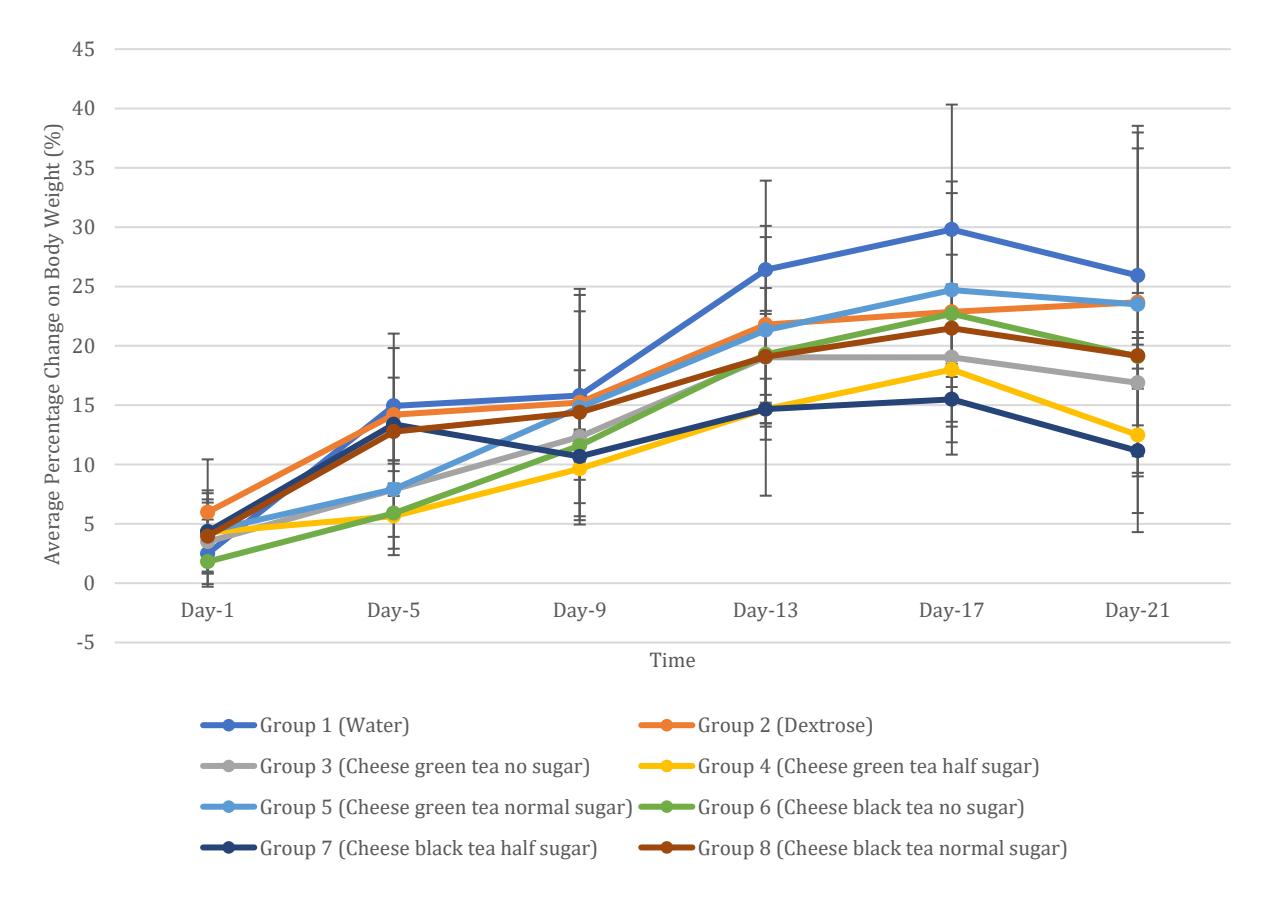
Figure 1. Change on Body Weight after Administration of Cheese Green Tea or Cheese Black Tea. Values are means ± SD. There is no statistically significant change in the body weight among groups. N=4 mice/groups
Effect of Cheese Green Tea or Cheese Black Tea Administration on Blood Glucose
Most significant changes in blood glucose levels occurred starting on day-17. The groups that experienced a significant difference with group 1 (negative control) in changes in blood glucose levels starting on day-17 are group 2, group 5, group 7, and group 8. When viewed from the data on day-13 to day-21, groups 2, 5, 7, and 8 showed a tendency to significantly increase blood glucose levels. While group 1 (water, negative control) and 3 (cheese green tea without sugar) were significantly different compared to group 2 (positive control) in changes of blood glucose levels starting on day-17. Others showed an increase of blood glucose. Group 5 (cheese green tea with normal sugar), 7 (cheese black tea with half sugar), and 8 (cheese black tea with normal sugar) showed significantly increase of blood glucose levels compared to negative control (Figure 2).
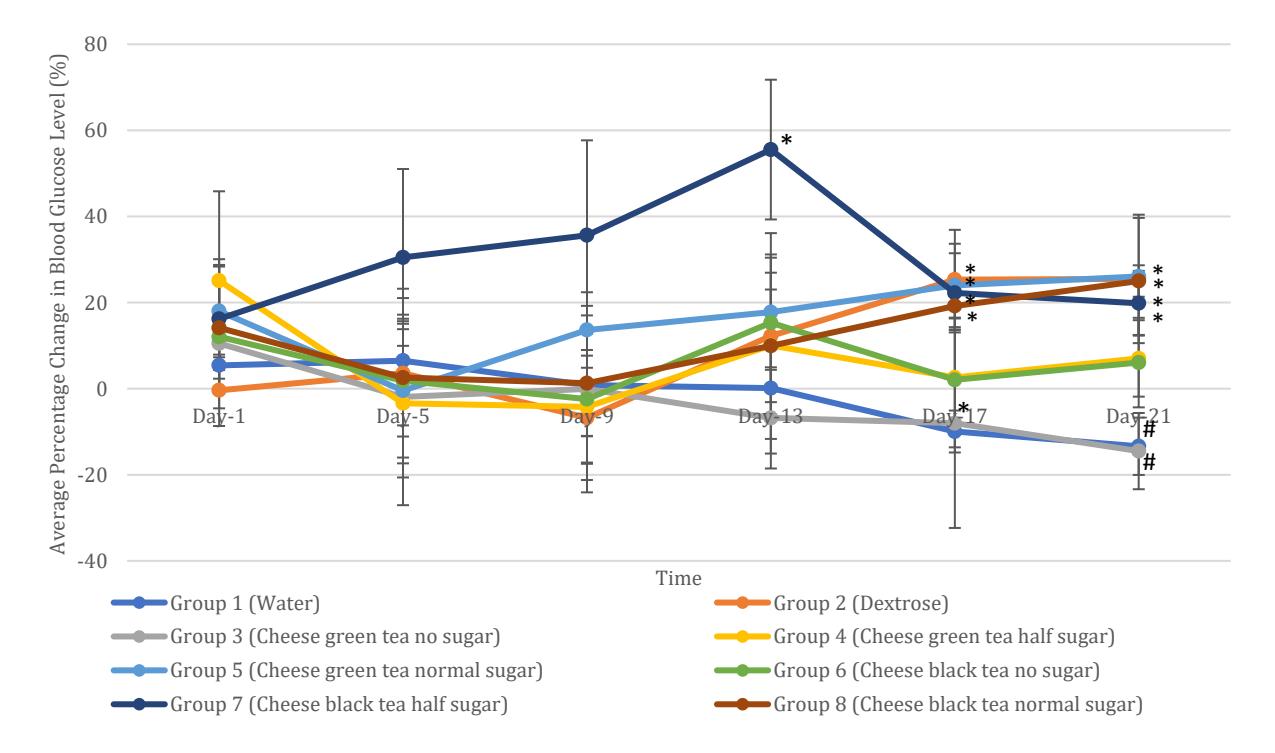
Figure 2. Effect of Cheese Green Tea or Cheese Black Tea administration on Blood Glucose. Values are means ± SD. Cheese green tea with no sugar was found to be statistically significant in attenuating the increase of blood glucose. * and # means significantly different with Group 1 (p<0,05) and Group 2 (p<0,05), respectively. N=4 mice/groups.
On the parameters of blood glucose levels, the results of this study are in accordance with the findings (Tang et al. 2013) in mice induced by type 2 diabetes, green tea and black tea extracts are effective in antidiabetic activity because they can and improve glucose tolerance suppress hyperglycemia. However, green tea extract showed consistently better results when compared to black tea. In addition, according to the findings of Carloni et al. (2013), the antioxidant activity of green tea is higher than black tea. It is known that green tea has higher total catechins than black tea. Black tea
undergoes a fermentation process, so it can reduce the content of catechins because it is converted into theaflavins and thearubigins. Theaflavins are compounds that are responsible for the color, taste, and antioxidant activity of black tea (Carloni et al. 2011). Green tea is a tea that has stronger antioxidant activity than black tea due to the presence of large amounts of catechins, especially epigallocatechin-3-gallate (Yashin et al. 2011). Increased intake of natural antioxidants can prevent oxidative stress that can be involved in the pathogenesis of diabetes mellitus, including
impaired insulin action and an increased incidence of complications of diabetes mellitus. Oxidative stress can induce insulin resistance in peripheral tissues and impair insulin secretion from pancreatic beta cells (Ullah et al. 2016).
Consuming cheese tea can produce inconsistent effects. The relationship between consumption of tea and dairy products with reduced risk of diabetes mellitus and obesity depends on several factors, such as the composition of the tea and dairy products used. In tea, bioactive compounds contained in tea can affect the beneficial effects of tea, such as the content of catechins in green tea and theaflavins in black tea, which are the main ingredients in providing antidiabetic and antiobesity effects. The composition of the tea varies due to the processing in making the tea, one of the examples is the degree of fermentation for different black teas. So, it can produce teas with different bioactive compositions and produce different antiobesity and antidiabetic effects. In addition, the use of different sugars in the consumption of cheese tea drinks can have different effects. This is consistent with the results of this study, which that consuming cheese tea with more sugar can increase blood glucose levels.
Limitation of the study was to determine the amount of green tea and black tea used in the drink. Various amount of green tea or black tea used might also affect the increase of blood sugar. Further study in human would be interesting to be done in the future.
CONCLUSION
By consuming cheese green tea or cheese black tea every day, it did not affect the body weight. Consumption of cheese tea with green tea without sugar could maintain lower blood glucose level than cheese black tea. Also, the more sugar added to the cheese tea, the higher the risk of an increase in blood glucose levels, which is at risk of developing diabetes mellitus. On body weight parameter, all study groups did not show significant differences between groups.
REFERENCES
Carloni P, Tiano L, Padella L, Bacchetti T, Customu C, Kay A, Damiani E, 2013, Antioxidant activity of white, green and black tea obtained from the same tea cultivar, Food Res Int 53(2): 900Ȃ908, doi: 10.1016/j.foodres.2012.07.057.
Kementerian Kesehatan Republik Indonesia, 2019, Laporan Nasional Riskesdas 2018, Badan Penelitian dan Pengembangan Kesehatan
Samavat H, Newman AR, Wang R, Yuan JM, Wu AH, Kurzer MS, 2016, Effects of green tea catechin extract on serum lipids in postmenopausal women: A randomized, placebo-controlled clinical trial1,2, Am J Clin Nutr 104(6): 1671Ȃ1682, doi: 10.3945/ajcn.116.137075
Tang W, Li S, Liu Y, Huang MT, Ho CT, ,2013, Antidiabetic activity of chemically profiled green tea and black tea extracts in a type 2 diabetes mice model via different mechanisms, J Funct Foods 5(4): 1784Ȃ 1793, doi: 10.1016/j.jff.2013.08.007.
Ullah A, Khan A, Khan I, 2016, Diabetes mellitus and oxidative stressȄA concise review, Saudi Phar J 24(5): 547Ȃ553, doi: 10.1016/j.jsps.2015.03.013
Weaver C, Wijesinha-Bettoni R, McMahon D, 2013, Milk and dairy products as part of the diet, 103Ȃ206, In: E. Muehlhoff, A. Bennett, and D. McMahon, eds., Milk and Dry Product in Human Composition, Food and Agriculture Organization of the United Nations (FAO), Rome, doi: 10.1016/b978-0-12-436703- 6.50013-2
Yashin A, Yashin Y, Nemzer B, 2011, Determination of Antioxidant Activity in Tea Extracts, and Their Total Antioxidant Content, Am J Biomed Sci 3(4): 322Ȃ335, doi: 10.5099/aj110400322