

*Correspondence
Email: anggi.gumilar@lecture.unjani.ac.id
Health supplements containing selenium are now increasingly used by public. However, so far, a simple analytical method for determining selenium in health supplements are still rare. The latest method for determining selenium is based on Inductively Coupled Plasma (ICP) spectrometry. The cost of this method is very expensive. This study aims to apply and validate the UV-Vis Spectrophotometry method for determining selenium in health supplements using 2,3 Diaminonaphthalene as reagent. The study began by testing the specificity of the reaction between Selenium and the reagent, which showed in a maximum absorbance wavelength of 483 nm. The linearity test using a calibration curve, the results obtained were a linear regression equation y = 0.0126x + 0.0736 with the value of r2 = 0.9974 and Vx0 = 0.01%. Limit of detection = 0.00917 g/mL and limit of quantitation = 0.02777 g/mL. The accuracy of this method expressed as an average of % Recovery was 97.84% and the precision expressed as % RSD was 0.02%. The final step of this study was the determination of selenium in supplement samples using the standard addition method. The average results obtained based on the determination of selenium levels in supplements were 58.82% (sample A); 111.17% (sample B); and 98.08% (sample C) calculated against the selenium levels listed on the label of each sample, namely 25, 30, and 50 g Se, with the requirement being in the range of 90 - 110% of the levels listed on the label. Thus, only sample C meets the requirements.
Keywords: UV-visible Spectrophotometry, assay, selenium, health supplements, 2,3 diaminonaphthalene.
PENENTUAN KADAR SELENIUM DALAM SUPLEMEN KESEHATAN DENGAN METODE SPEKTROFOTOMETRI MENGGUNAKAN REAGEN KOLOMETRI 2,3 DIAMINONAFTALENA
ABSTRAK
Suplemen kesehatan yang mengandung selenium sekarang makin banyak diminati oleh masyarakat. Namun, sampai saat ini metode analisis yang sederhana untuk menentukan kadar selenium dalam suplemen kesehatan masih langka. Metode mutakhir penetapan selenium dalam sediaan adalah berbasis Inductively Coupled Plasma (ICP) yang membutuhkan biaya yang sangat mahal. Penelitian ini bertujuan untuk menerapkan dan memvalidasi metode Spektrofotometri UV-Vis untuk penentuan kadar selenium dalam suplemen kesehatan menggunakan pereaksi 2,3 Diaminonaftalen sebagai pereaksi pembentuk warna. Penelitian diawali dengan melakukan validasi metode analisis, di mana hasil uji spesifisitas reaksi antara selenium dengan peraksi 2,3 diaminonaftalen menunjukkan pola spektrum yang khas dengan panjang gelombang serapan maksimum pada 483 nm. Uji linearitas yang diperoleh berupa persamaan regresi linear y = 0,0126x + 0,0736 dengan nilai r2 = 0,9974 dan nilai Vxo = 0,01%. Batas deteksi = 0,00917 g/mL dan Batas kuantitasi = 0,02777 g/mL. Akurasi metode yang dinyatakan sebagai rata – rata % Rekoveri = 97,84% dan presisi metode yang dinyatakan sebagai %RSD = 0,02%. Langkah terakhir dalam penelitian ini adalah penetapan kadar selenium dalam sampel suplemen dari pasaran menggunakan metode standar adisi. Hasil rata-rata yang diperoleh berdasarkan penentuan kadar selenium dalam suplemen adalah 58,82% (sampel A); 111,17% (sampel B); dan 98,08% (sampel C) dihitung terhadap kadar selenium yang tercantum pada label setiap sampel yaitu 25, 30, dan 50 g Se, dengan persyaratan berada pada rentang 90 - 110% dari kadar yang tertera pada label. Sehingga, hanya sampel C memenuhi persyaratan.
Kata kunci: Selenium, suplemen kesehatan, Spektrofotometri UV-Visible, 2,3 diaminonaftalen, penetapan kadar.
INTRODUCTION
Selenium is an essential mineral element needed by the human body in small amounts. Selenium that enters the body will be metabolized into selenoproteins that function as antioxidants, such as glutathione peroxidase and thioredoxin reductase. Selenoproteins are essential because they play a major role in inhibiting the pathogenesis of various diseases, such as muscle disorders, cardiovascular disease, hepatopathy, kidney failure, neurological disorders, HIV, type 2 diabetes, thyroid disorders, male infertility, cancer, allergic responses, and aging (Kusmana 2017).
In society, consuming selenium supplements has become a habit. The Decree of Head of the Indonesian Food and Drug Authority concerning the main provisions for the supervision of health supplements states that the maximum limit for the use of selenium as a health supplement is 200 μg/day (BPOM 2020). According to the World Health Organization (WHO), healthy adults should consume 55 μg of selenium per day (Yang et al. 2022). For Indonesian, the recommended dietary allowance (RDA) for selenium is 30 μg/day for adult men and 25 μg/day for adult women (BPOM 2020).
The analytical methods used to determine selenium content include the atomic absorption spectroscopy (AAS) method, where this method is used as a selenium limit test (Depkes RI 2020). However, the disadvantage of this atomic absorption spectroscopy method is quite expensive. Other analytical methods that can be used are spectrofluorometry, Inductively Coupled Plasma-Optical Emission Spectrometry (ICP-OES), Inductively Coupled Plasma-Mass Spectrometry (ICP-MS), Neutron Activation Analysis (AAN) and thiosulfate titration (Convention 2023, Martati 2010). However, various limitations can arise when using these analysis methods, such as the unavailability of instruments and expensive testing costs. The analytical method applied in this study adopted the selenium analysis method in wastewater (Holtzclaw et al. 1987, Popov et al. 2022). In this study, quantitative analysis of selenium in health supplements was carried out by
UV-Visible Spectrophotometry using 2,3 diaminonaphthalene reagent.
For sample preparation, it was carried out by wet destruction using a mixture of HNO3and H2O2. The choice of wet destruction was because the sample contained a matrix that could interfere with the analysis. Selenium is a compound that is metallic and can dissolve in a strong acid. Selenium is also a compound that does not evaporate easily, so this method is recommended as a method for destroying organic matrices in samples (Triana et al. 2010).
This study aims to validate the UV-Vis Spectrophotometry method in determination of selenium content in health supplements and to apply the UV-Vis Spectrophotometry method in determining selenium content in health supplements.
MATERIAL AND METHOD
Instrument
UV-Vis Spectrophotometer (Shimadzu UV-1800), 250 mL separatory funnel(pyrex), 100 mL measuring flask (pyrex), 50 mL measuring flask (pyrex), 100 mL beaker glass (pyrex), filter paper whatmann no.41, and pH meter (Hanna).
Materials
Supplement samples from the Cimahi market, selenium metal as reference standard, hydrochloric acid 37% (Merck), ammonium hydroxide 25%(Merck), 2,3-diaminonaphthalene (DAN) (Merck), cyclohexane (Merck), disodium EDTA (Merck), hydroxylamine hydrochloride (Merck), absolute alcohol, hydrogen peroxide (Merck), nitric acid (Merck), and distilled water.
Preparation of Selenium Stock Solution (1000 g/mL)
Stock solution was made with 100 mg of selenium metal was placed in a 100 mL beaker glass and added 30 mL of HNO3. The mixture was heated on a hot plate until the solution turned clear. The clear solution was cooled at room temperature and then filtered. The final solution is made of 100 mL of distilled water.
Preparation of Selenium Standard Solutions
The selenium standard solution series was made by dilution from the stock solution in five types of concentrations of 20, 25, 30, 35, and 40 g/mL.
Preparation of 2,3-diaminonaphthalene (DAN) reagent Solution
The DAN reagent solution was made with an amount of 200 mg DAN accurately weighed and placed into a 200 mL measuring flask and dissolved with 0.1 N HCl until the mark. The mixture was shaken for 5 minutes and then extracted with 3 X 25 mL of cyclohexane. The extract was filtered in a dark container and stored in a cool place.
Determination of the maximum absorbance wavelength and Calibration Curve
An amount of 10.0 mL of each selenium standard solution was put into each beaker glass. Adjusted the pH to 7.0 ± 0.3 using a pH meter. An amount of 5 mL of 2,3-diaminonaphthalene (DAN) reagent solution was added and let stand for 20 minutes. The mixture was heated in a tightly closed water bath (50 ° C for 30 minutes). The solution was cooled at room temperature, placed into a separatory funnel, and extracted with 2x3 mL of cyclohexane. The separatory funnel was closed tightly and shaked vigorously for 5 minutes and let stand for 2 minutes or until the cyclohexane layer well separated. The organic phase was transferred into the tube and then added with 1 mL of absolute alcohol. The UV-Vis spectrum of organic extract was measured using UV-Vis spectrophotometer ranged 300 – 700 nm wavelength. The absorbance of each concentration of standard solution was measured at maximum absorbance wavelength. The calibration curve was plotted between absorbance and concentration of each standard solutions.
Validation of Analytical Method
Validation of the analysis method was carried out by using the test of specificity, linearity, sensitivity (limit of detection and limit of quantitation), accuracy, and precision parameters, by making 3 series of concentrations of simulation samples, and each concentration was tested three repetitions for accuracy, and 1 concentration of simulation sample measurement was carried out with 6 repetitions for the precision test (ICH Guideline 2022).
Sample preparation for determination of Selenium in Supplement Samples
The supplement tablet samples were accurately weighed (tablet weight ranges from 1-1.5 g) and crushed, and then placed in a 100 mL beaker glass. The mixture of 25 mL of HNO3 and 5 mL of H2O2was added to the powder in the beaker and shaken. The mixture was heated on a hot plate until the solution turned clear. The solution was cooled at room temperature and then filtered. The final solution is made 10,0 mL with distilled water (Maden 2010).
Determination of Selenium Content in Supplements
The amount of 8.0 mL of the 30 g/mL standard solution was pipetted and added into 2 mL of the preparation sample solution in a 100 mL beaker glass. Meanwhile, 10 mL of the preparation sample solution was placed into a different 100 mL beaker glass. The pH of each solution was adjusted to pH 7.0 ± 0.3 using a pH meter. An amount of 5 mL of 2,3-diaminonaphthalene (DAN) solution was added and let stand for 20 minutes and then heated in a closed water bath (50°C for 30 minutes). The solution was cooled, transferred into a separatory funnel, and extracted with 3 mL of cyclohexane. The funnel was closed tightly and shaken vigorously for 5 minutes and then let stand for 2 minutes or until the cyclohexane layer was well separated. The organic phase was transferred into the tube, and then add 1 mL of absolute alcohol. The absorbance of each extract was measured at 482 nm.
The sample concentration of selenium obtained was calculated using the standard addition equation formula as follows:
\[Cu = Ct \frac{Au}{(At - Au)}\]
Where Cu: Sample concentration (%), Ct: Sample + Standard addition concentration, Au: Sample absorbance, and At: Sample + Standard addition absorbance.
RESULT AND DISCUSSION
Determination of the concentration of this supplement was carried out to monitor the concentration of selenium in the tablets of health supplements, so that they should not exceed the
Gumilar et al.
proper dose of selenium. With the addition of the reagent 2,3-Diaminonaphthalene (DAN), the selenium contained in the supplement tablet would react with DAN reagent to make a complex Se-DAN (piazselenol compound) that have cromophore group, which would be read by the UV-Visible spectrophotometer. Piazselenol compound produced a bright orange solution. Therefore it could be measured in the wavelength range of 300 - 700 nm. The advantages of the colorimetric method are that it is easy to do, efficient, and sensitive to low concentrations(Skoog et al. 2013).
The purpose of extraction using cyclohexane was to separate piazselenol compound from other compounds so that it can be read properly with a UV-Vis spectrophotometer. The cyclohexane extract was then separated from the residual water contained in the extract by adding absolute alcohol. Separation of the remaining water in the extract was carried out in order to be not interfered with the reading of the piazselenol spectrum.
The maximum absorbance wavelength of the piazselenol solution shown in Figure 1 was 483 nm. The results of the calibration curve between absorbance of extract (y) and concentration (x) are shown in Figure 2. The shape of the curve was linear with regression equation of y = 0.0126x + 0.0736 where the coefficient of correlation of r 2 = 0.9974. The acceptance requirements for linearity parameters were of r ≥ 0.99 and Vxo ≤ 5.0% (Ahuja and Dong 2005). The correlation coefficient value from the method was obtained r = 0.9987. The data results of the calibration test were then used to calculate the regression variance VX0 and the sensitivity of the method as Limit of Detection (LOD) and Limit of Quantitation (LOQ) parameters. The values of Vx0 = 0.01%, LOD = 0.0092 g/mL, and LOQ = 0.0278 g/mL were obtained.
The average % Recovery obtained (Table 1) in this study was 97.84%. The accuracy acceptance requirement for analyte concentration in samples was 90-110% (Ahuja and Dong 2005). The results of precision obtained SD = 0.0185 and %RSD = 0.02%. The acceptance requirement for this repeatability method was the %RSD value for analyte concentration in samples ≤ 2% (Ahuja and Dong 2005).
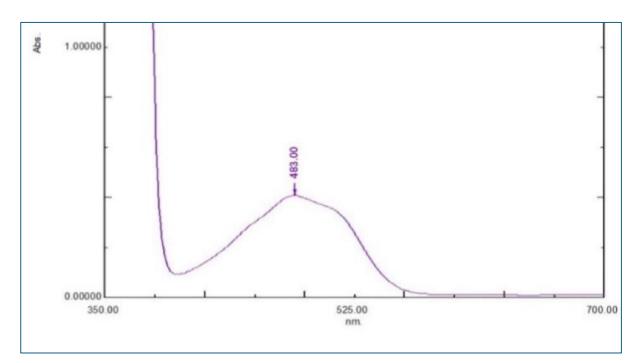
Figure 1. Absorption spectrum of the solution resulted from the reaction of selenium with DAN reagent
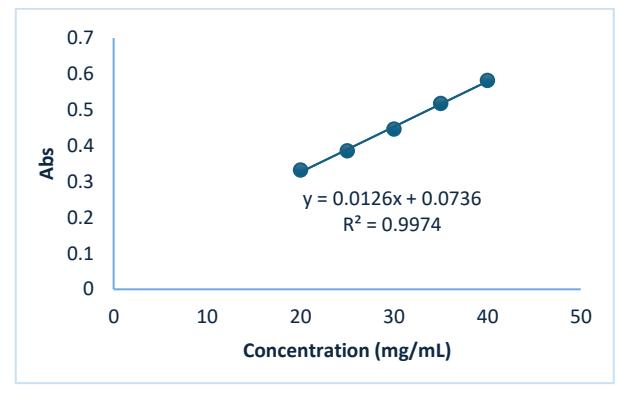
Figure 2. The calibration curve of solution resulted from the reaction of selenium standard solution with DAN reagent
Table 1. Analytical Method Validation Results
| Validation Parameter | Result | Requirement | |||
|---|---|---|---|---|---|
| y = 0.0126x + 0.0736 | |||||
| Linearity | 2 = 0.9974 𝑟 r = 0.9987 | r ≥ 0.99 | |||
| = 0.01% Vxo | ≤ 5.0% Vxo | ||||
| Range | 20 – 40 g/mL | - | |||
| Accuracy (% Recovery) | 97.84% | 90 – 110% | |||
| Precision (%RSD) | 0.02% | ≤ 2% | |||
| Limit of Detection | 1.4417 g/mL | - | |||
| Limit of Quantitation | 4.8058 g/mL | - | |||
The standard addition method was used in the calculation of concentration, because the selenium concentration in supplements was very small. The test was carried out by adding an amount of 8 mL of standard selenium solution to 2 ml of the preparation sample solution. The standard solution used was taken from one of the concentration variations in the calibration curve range. The mixed
solution was then tested with the same treatment as the previous procedure. The absorbance of the extract obtained from the preparation sample with standard addition and the standard solution was measured at 482 nm and then sample concentration was calculated using the standard addition method calculation formula. The results of the determination of the selenium concentration in the samples (Table 2) showed that the average % content of sample A was 58.82%, sample B was 111.17%, and sample C was 98.08%. The average % content requirement for sample determination is in the range of 90 - 110%.
Table 2. Results of determining Selenium in supplements from the markets
| No. | Sample | Result (µg) | Label (µg) | %b/b |
|---|---|---|---|---|
| 1 | · A | 13.10 | 25 | 52.40 |
| 2 | 16.31 | 65.24 | ||
| Average | 58.82 | |||
| 1 | В | 31.85 | 30 | 106.17 |
| 2 | 34.85 | 116.17 | ||
| Average | 111.17 | |||
| 1 | - С | 46.90 | 50 | 93.80 |
| 2 | 51.18 | 102.36 | ||
| Aver | age | 98.08 | ||
CONCLUSION
The assay of selenium in tablets using 2,3diaminonaphthalene reagent meets the validation parameters of the analysis method, namely with a value of % Recovery (Accuracy) = 97.84%, % RSD (precision) = 0.02%, linear regression y = 0.0126x+ 0.0736, coefficient of correlation r = 0.9987, regression variance \(V_{x0} = 0.01\%\), range = 20 - 40 \(\mu\)g/mL, limit of detection LOD = 0.0092 \(\mu\)g/mL, and limit of quantitation LOO = 0.0278 ug/mL. The results of determining selenium concentration in supplement samples were obtained in % average content in sample A = 58.82%, sample B =111.17%, and sample C = 98.08%. The concentration in samples A and B did not meet the requirements because they were not met in the range of 90 - 110%. Meanwhile, only the selenium concentration in sample C met the requirements.
ACKNOWLEDGEMENTS
The Authors thank to Lembaga Pengabdian Pada Masyarakat (LPPM) Universitas Jenderal Achmad Yani – Cimahi (UNJANI) for funding this research.