

INTRODUCTION
Yunnan, a province of The People's Republic of China, offers numerous opportunities for a diverse range of tourism opportunities based on its unique natural resources, scenic variety, ethnic diversity and cultural heritage. Although large-scale international tourism in China only commenced in 1978, the growth in international tourism has been rapid. Domestic tourism has also experienced rapid growth, particularly since 1990 when travel for purposes other than visiting friends and relatives or for business and official purposes was first encouraged by the government. The rapid growth of tourism has placed strains on the ability of provincial governments and the central government to develop the legislative and physical infrastructure required to cope with increasing visitor numbers. This is particularly the case in many of the nation's sensitive environmental areas including Yunnan. As a consequence, concerns have been expressed about aspects of the nation's environmental wellbeing and the threats posed by tourism to endangered species, sensitive habitats, and indigenous ethnic peoples (Liu & Dowling, 1991).
During the last decade ecotourism has emerged as a leading tourism sector. However, the level of understanding of the principles of ecotourism is limited, principally because the concept is not well understood by the industry, many public sector officials and the public. As a result,
Address correspondence to Bruce Prideaux. Professor of Marketing & Tourism Management School of Business, James Cook University, PO BOX 6811, Chairns, Queensland 4870, Australia. Email: Bruce.Prideaux@jcu.edu.au
many developments that are labelled 'eco' have all the hallmarks of mass tourism development. One measure to overcome this problem of misunderstanding and associated mismanagement is through education.
This paper commences with a brief discussion of the issues of ecotourism and sustainability before describing ecotourism in China in general and Yunnan in particular. The discussion then focuses on the development of a Tourism Education Framework. To develop the framework the researchers conducted an inventory of educational programs in Yunnan and undertook an analysis of the role of a range of stakeholders in developing, administering, promoting, financing and staffing ecotourism enterprises in the province.
Although a relatively new form of tourism, ecotourism is, according to Weaver and Oppermann (2000, p. 369), a form of alternative tourism that differs from other forms of tourism in three main ways:
- Ecotourism emphasises the natural environment as the primary focus of interest with cultural attractions constituting a secondary level of focus,
- Interactions between tourists and nature are motivated by a desire to learn about the attraction for its intrinsic qualities, and
- Activities undertaken in the area of interest should be undertaken in a sustainable manner. Where this is not possible, every effort should be made by participants to act in a manner that retains sustainability.
According to Weaver and Oppermann (2000), only a small number of activities qualify for classification as true eco tourism experiences. While bird-watching and stargazing fall entirely within this understanding of ecotourism, other activities carried out in natural areas including safaris, trekking and nature photography overlap with other forms of tourism including alternative tourism, nature tourism and adventure tourism.
For the purposes of this paper sustainability is defined as development in ecologically sensitive areas that ensures long-term preservation of natural resources so that they are able to meet the needs of contemporary users, as well as ensuring that the same level of preservation is available to future generations. To create and maintain a high level of sustainability is difficult and subject to a range of pressures including the need for profit, political issues not necessarily related to tourism, the needs of traditional residents and the expectations of visitors. While some areas are more resilient to human activity than others, pressures created through overuse can quickly degrade an area's ecotourism value causing a reduction in visitor flows and a corresponding reduction in the area's economic worth. Newsome, Moore and Dowling (2002) state that tourism and recreation alter the composition of biotic communities through the introduction of exotic species, pollution and habitat damage. Prideaux and Cooper (2002) observed that "until all the parties involved in a particular development accept and internalise the concept of sustainability as the guiding force behind all decision making concerning the use of nature for tourism purposes, it is unlikely that ecotourism can be structured for long term sustainability". Unfortunately, many so-called ecotourism experiences are exploitative and may not be sustainable over a period of time (Clarke, 1997; Cooper, 1997). Commenting on the popularity of ecotourism, Swarbrooke (1999, p. 320) noted that today's ecotourism package can quickly become tomorrow's mass market tourism product. Evidence of this trend can be seen in Pattaya Thailand, which has lost most of its reefs and suffers from serious degradation of its flora and fauna.
Sustainability in areas were there is a pre-existing pattern of resources use by traditional populations can only be ensured by providing economic opportunities to the communities that host the tourism industry. Ecotourism has been widely suggested as one strategy for achieving sustainability while balancing the need for host communities to benefit from tourism visits with the need for the tourism industry to operate profitability. If host communities fail to benefit from tourism in endangered areas, they will be less inclined to support conservation and bio-diversity, and as a consequence suffer irreversible damage affecting the flora and fauna not only of that particular community but also in surrounding regions. There is evidence that recent ecotourism development in Yunnan has occurred without the full involvement of local communities creating tensions between traditional residents, the tourism industry and provincial authorities. Tensions of this nature may be avoided if each group of stakeholders understand the needs of other stakeholders and collectively, understand the consequences of any suggested course of action on the long-term sustainability of the environment. This level of understanding can only occur if all stakeholders are aware of their own need to increase their level of knowledge through formal and informal training and education.
ECOTOURISM IN CHINA
With abundant high value ecosystems and areas of high scenic and scientific value, China has the potential to develop a significant ecotourism sector provided that sufficient attention is given to ensuring that tourism development is ecologically sustainable. The China National Tourism Administration (CNTA, 2002) has established goals for resource-abundant provinces designed to develop ecotourism during the country's tenth five-year plan for the period 2001-2005. This is particularly important for Yunnan which has many high value ecotourism areas, the development of which must conform to national policy guidelines. Ecotourism activities have expanded rapidly and further growth of tourism income is expected in the near future. The director of CNTA, He Guangwei, stated, "Resources protection and rational exploitation are two important aspects of the healthy growth of China's tourism, which we will put more emphasis on" (Xinhua News Service, 2002). The Chinese government plans to continue promoting ecotourism projects, giving priority to environmental protection ideals.
In 1997, China announced ambitious plans to support ecotourism development with a series of policy initiatives that included; reforestation, introduction of new conservation strategies and development of forest tourism. However, the nation faces a range of challenges to ensure that the emphasis on ecotourism is sustainable and more "green" than "greenwash" (Cao, 1999; McLaren, 1998). To emphasise China's commitment to ecotourism as a leading tourism sector, 1999 was designated "Chinese Year of Ecotourism" by the Chinese National Tourism Administration (CNTA) (China Daily 1998; China Daily 1999a; China Daily 1999b). The theme for that year was 'Touching Nature, Understanding Nature and Protecting Nature'. To achieve the goal of developing ecotourism as a leading tourism sector many government agencies have been tasked with implementing measures to support ecotourism development. One example is the China State Forest Bureau which plans to expand the number of forest parks from 584 in 1997 to 2,000 by 2010. As part of this process, every attempt will be made to tap into what China considers to be unique biological and cultural resources (Tao, 1990). Even though China does not have extensive virgin forests, there are a relatively large number of unusually spectacular national parks and nature reserves that often include ancient cultural and sacred resources as well as unique mountains and rivers. However, difficulties have been experienced with unplanned development, poor integration and co-operation between park agencies, neglect and overuse of environmental resources, pollution, over development or under development, poor quality or counterfeit souvenirs and resource damage during park development (Zhang, 1989; Liu & Dowling, 1991).
By 1999, China has established 1146 nature reserves which collectively occupied 8.8% of the nation's land mass. Declaration of nature reserves reflects the growing interest in conservation by the Chinese government with 97% of all reserves being declared since 1980 (Nianyong & Zhuge, 2001). Although there has been a tremendous increase in the area of land set aside for nature reserves, the administration of such areas is fragmented with control divided between a number of agencies with the State Forest Administration and the State Environmental Protection Administration being the most significant.
Many local authorities have little experience in planning, developing and managing tourism, partly because official recognition of the tourism industry is relevantly recent and prior to 1978 the industry's primary focus was political (Zhang, 2000). Confronting a totally new form of tourism, without understanding the complexity or structure of ecotourism and its need for long term sustainability, has been difficult particularly when tour advertising and promotion by domestic tourism operators has created a false image of ecotourism, likening it more to mass tourism. Development of a sustainable ecotourism sector throughout China faces threats from a number of quarters.
Of particular importance is the lack of effective guidelines for ecotourism in the current Chinese administrative constitution. For example, the Construction Ministry is in charge of scenery resorts; the State Forestry Agency manages scenic spots and national forest parks; the State Environment Protection Administration controls nature reserves; cultural relics are under the control of the Cultural Relics Bureau; any land usage must be permitted and licensed by the Ministry of Land and Nature Resources; while churches, mosques, monasteries and temples are cared for by the State Religions Bureau. As a consequence, there is no single government agency responsible for coordinating the planning, development and management of China's tourism industry.
While the tourism industry lacks the type of regulatory framework that is common in other industries some initiatives have been introduced. Recent decrees governing aspects of tourism, including the "National Decree on Travel and Tour Operators" and the "Edict of Tips & Commissions of Tourism Service", have helped curb some of the excesses occurring in the tour operator sector, however, issues relating to poor planning, managing tourism sites and protecting sensitive cultural and environmental sites have yet to be addressed.
Another major problem facing ecotourism is the tendency for the majority of tourism industry managers and operators to regard ecotourism as just a new tourism product and as a consequence there has been a failure to understand the difference between sustainable ecotourism and mass tourism. As a consequence, highways, hotels and modern buildings have been built allowing mass tourism into the core areas of ecotourism.
On the local level, residents were allowed to continue to live in newly proclaimed protected areas but were prohibited from undertaking further farming activities thus reducing the communities' living standards. Although taking away their right to farm the Government did not provide alternative forms of employment inadvertently encouraging poaching of wild animals and illegal logging.
In a number of protected areas the desire to maximise profits has resulted in visitor numbers exceeding the area's environmental carrying capacity. As a consequence inadequate sewage, waste recycling and disposition facilities have been constructed. According to Nianyong and Zhuge (2001) this problem has been exacerbated by the lack of interest national research institutes have shown towards according a higher priority to research into issues affecting nature reserves.
Poor education, both in understanding the principles of ecotourism and the professional tourism knowledge of the managers and operators of ecotourism areas, has impeded the development of sustainable ecotourism experiences. Waste rubbish, cans or bottles and white plastic often litter ecotourism areas and tourists have not been educated in caring for the environment resulting in removal of plants and flowers and interference with fauna and flora. Management also continues to be profit motivated and planning horizons are often limited to a few years often with little regard for the long term sustainability of sites.
In addition to these problems, Nianyong and Zhuge (2001) have identified a number of challenges that confront the development of natural areas in China. These include a shortage of funds to hire staff to manage the newly declared nature reserves, lack of investment in protected areas by government and the lack of a unified system of overall planning. In other instances, agencies controlling nature reserves have invested the funds allocated to them into hotel and restaurant construction to produce cash flow rather than investment in scientific research into ecosystem and habitat protection. Rectifying these problems can only occur if the principles of ecotourism are understood, accepted and implemented by the government, through regulation, ownership, education and research. Similarly, the private sector and government trading organisations providing ecotourism tourism products and services must also adapt their business planning and management practices to conform to the principles of ecotourism. The consumer also has an important role in supporting true ecotourism development, while declining to support development that is not sympathetic to ecotourism principles. Behind each of these strategy requirements lies a fundamental need to educate all stakeholders on the need for sustainability.
It is apparent that to achieve an integrated approach to the development of ecotourism, all levels of government and the private sector must closely coordinate their activities to ensure that the values that attract tourists to these areas are not lost through thoughtless or exploitative development. Deforestation is one example of the many issues facing public sector policy makers attempting to balance the needs for sustainable ecotourism development with other development needs.
ECOTOURISM POTENTIAL OF YUNNAN
A brief description of the natural qualities of Yunnan illustrates why the province has many areas of high ecotourism value. Development of tourism based on the selling of ecotourism has already commenced and Yunnan is now connected to foreign markets, particularly in South East Asia, through direct flights to Beijing, Bangkok and other Chinese cities. Unfortunately, while ecotourism has been a central plank in opening Yunnan to the international market, there is little understanding of ecotourism and the need for sustainability, and foreshadowed development may create serious problems for the province in the future.
Located on China's southwestern border, Yunnan is rich in natural resources. The province's geographical location, encompassing high elevation and low latitude, has created the unique ecological and environment climatic conditions which, with its landforms and topography, have created a diversity of ecosystems and habitats. Sometimes referred to as the kingdom of plants and animals, Yunnan has a wide range of unique landscapes and ecosystems that include snowcapped mountains, glaciers, lakes, hot springs, highland landscapes, primeval forests, and rainforests. Forests, totaling nearly 10 million hectares, cover 24.9 percent of the province and more than half of China's 30,000 plant species are found in Yunnan. Fauna assets include more than 3,000 species of animals (some rare), 31 species of birds (64 percent of the national total), and 130 species of reptiles (42 percent of the national total). The province's tourism product
currently consists of 10 vacation areas, 64 scenic spots, 26 forest parks, 108 nature reserves and 24 National Key Units for Protection (Mingyi, 2001).
China's largest rain forest, found in Xishuangbanna Prefecture, has been given the name 'The Emerald in the Crown'. The Prefecture is the habitat of more than 5,000 tropical plants and hundreds of rare animal and bird species. Animals found in this forest include wild Asian elephants, tigers, leopards, peacocks and rhesus monkeys. In the west of Yunnan, mountains such as Mt. Gaoligong, Mt. Biluo, Mt. Dandanglika and Mt. Yunlong, and rivers including the Nu, the Lancang and Dulong, offer unique opportunities for ecotourism experiences. The famous Grand East Canyon takes form with Mt Gaoligong and the snow-capped Mt. Biluo facing each other, and the Nu River flowing in between. In this valley, there are many ancient trees, rare plants, flowers and animals. Yunnan is also noted for its abundant wild flowers including camellias, azaleas, fairy primrose, lilies, orchids, magnolias, and thefelwort. In the Northwest the vast Diqing Plateau contains alpine forests, alpine grasslands, rare plants and animals as well as scenic snow-capped mountains.
Yunnan has a population of 42 million people, one third of who are members of the twenty five minority ethnic groups that have settled in the province. Yunnan is the only Chinese province that has such a diverse ethnic population mix which is the result of a long history of cross border migration of people from areas currently controlled by Thailand, Lao, Burma and Vietnam. The province's ethnic groups also attract considerable tourism interest and parallels to cultural tourism based on Thailand's hill tribes are evident. Most ethnic groups live in mountain areas and make their living by logging, hunting or farming. After the State Council banned logging in 1997 tourism was identified as a substitute for previous employment. Ethnic lifestyles have undergone considerable change as a result of these developments.
Much of the biodiversity of Yunnan has remained in a remarkably pristine state as a result of the province's previous remoteness and relatively low population density. The mountains and rivers create a wealth of scenic and recreational attractions appealing to international tourists. Properly developed, these natural and cultural assets can help raise the standard of living for the people of Yunnan, generate revenue for government programs, and preserve the cultural and natural diversity for which the area is so well known.
TOURISM DEVELOPMENT IN YUNNAN
Tourism development in Yunnan has the characteristics of a core-periphery pattern with Kunming located at the core. Investment has been guided by the Provincial government's policy of 'one center, three tourist routes, four places, five areas, six products and nine key projects" (Yunnan Tourism Bureau, 1998). However, the centralization of investment in Kunming has lead to uneven tourism development with many regions that have significant tourism potential being ignored (Zhang, 2000). Before the recent development associated with tourism, Yunnan was an isolated, backward, poor, agriculture dominated province with one third of the province's population suffering serious poverty. The Provincial Government saw tourism as the best option to rapidly improve living standards and has been very supportive of any initiatives to develop the industry.
Currently, the largest tourist sector consists of packaged tours. Kunming is serviced by over 400 travel and tour operators and a wide range of hotels ranging from 5 star to backpacker hostels. Although domestic tourism is relatively new it has experienced rapid growth and by 2001 attracted 1.7 million domestic and 3.9 million international visitors (Kunming Statistical Bureau, 2002). Aside from the many ecotourism areas, the most popular tourism route is located in the Northwest and follows the "the South Silk Road" based on the Tea Road that connected Yunnan to Burma, Bhutan and India.
While Yunnan enjoys an undeniably rich resources base for ecotourism there are many difficulties that reduce its sustainability. Difficulties include: serious pollution; deforestation; landscapes and earth deterioration; poor infrastructure; poor roads and facilities; uneducated decision-makers managers and citizens; and a lack of knowledge of the strategies required for protecting the province's tourism resources.
ECOTOURISM EDUCATION
At the beginning of this paper education was identified as one substantive strategy for dealing with the problems that have emerged as a consequence of the rapid development of ecotourism resources. Education is a key component in the development of workforce skills necessary to service the tourism industry as well as developing the knowledge and skills required by managers. Education has a key role in building and managing a sustainable tourism industry. However, education must not be approached in a piecemeal fashion. Adopting a systems approach, where there is recognition that a problem affecting one element of the system will have spillover affects, of varying degrees of magnitude, on every other element of the system will allow policy makers to identify all stakeholders and include them in education programs. Two of the elements identified as the key components that together create the tourism education system are the tourism education stakeholders illustrated in Table 1 and the Tourism Education Framework outlined in Figure 1.
Table One summarizes the key stakeholders in the development of ecotourism in Yunnan. Collectively the action by stakeholders to safeguarding Yunnan's environment from exploitive and therefore unsustainable development will determine the long term health of the tourism industry and its major natural asserts.
Table 1 The Tourism Education Stakeholders and Their Roles
| 1 | Government: A commitment by to adequately resource education and ensuring that high levels of education compliance are achieved. |
|---|---|
| 2 | Students: Training students to take their place in the industry after graduation. |
| 3 | Guests: Training guests how to respect the sites that they are visiting. |
| 4 | Tourism Workers: Training the existing cohorts of tourism workers in all aspects of the industry. This is particularly important where the person was previously employed in an industry unrelated to tourism. |
| 5 | Public Sector Officials: Training the public sector officials who control and regulate tourism development. |
| 6 | Researchers: Educating researchers from the physical and biological sciences of the needs of the tourism industry and the areas where they can contribute. |
| 7 | Private Sector M anagers: Training private sector managers and investors that short term profits may not result in long term sustainability. |
| 8 | Land holders and Residents: Educating landholders and affected residents about the positive and negative impacts of tourism and how they may benefit through participation. |
| 9 | Teachers: Training teachers to identify the mechanisms needed to ensure the preceding areas of education are effective. |
Failure to include all stakeholder groups in the education system will lead to gaps occurring that might prevent effective management of the province's ecotourism resources. Incorporating stakeholders within the tourism education system offers considerable scope for improving the effectiveness of the education system and through this, the overall improvement of the tourism industry. What is the worth of research if it is not used, or the worth of creating a sustainable attraction if visitors fail to understand that their actions may destroy the attractions they came to see, or of taking visitors to an area where local residents have negative attitudes towards tourism? The solution to some of these questions may be found in the Tourism Education Framework illustrated in Figure 1. The framework is based on an initial assessment of the ecotourism resource followed by a systematic investigation of the education needs of all stakeholders required to achieve the goal of long term sustainability.
Physical, cultural and heritage asserts of specific regions identified as suitable for ecotourism developm ent
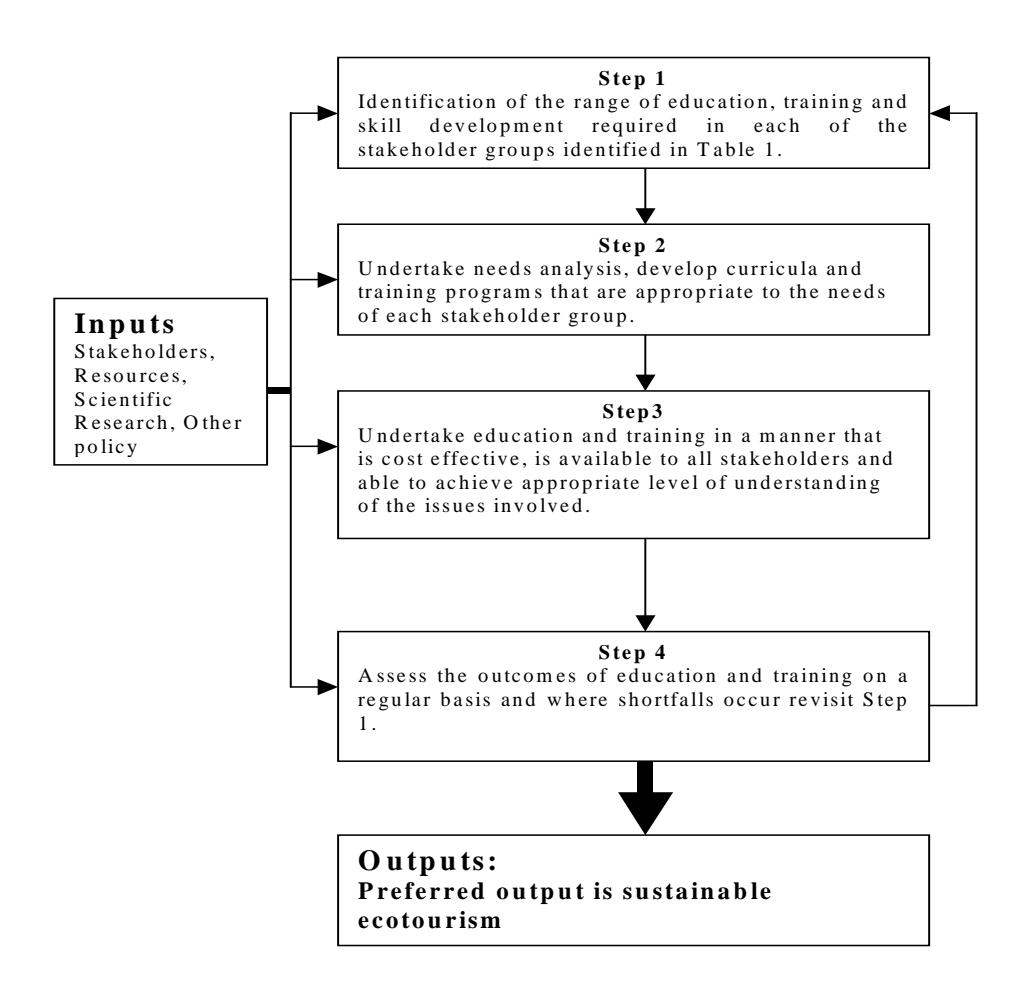
Figure 1 The Tourism Education Framework
It should be expected that Step 4 will identify many shortfalls as the industry, its products and customers change over time and as the impact of tourism on specific ecosystems becomes apparent. Recognition of the dynamic nature of change in the demand for specific tourism products, the resource on which it is based and the needs of customers are key elements to the success of this process which itself requires a high degree of scientific input. Evidence of the need for science to undertake a quasi arbitration role in development has been demonstrated in Australia where scientific research bodies such as the Cooperative Research Centre Reef (www.reef.crc.org 2004) and Cooperative Research Centre Tropical Rainforest Ecology and Management (www.rainforestcrc,jcu.edu.au/publications, 2004) have active research programs to monitor the impact of tourism on the Great Barrier Reef (Moscardo, Green & Greenwood, 2001) and the North Queensland Wet Tropics World Heritage sites. While the desirability of the process outlined in Figure 1 is apparent, the ability of governments to implement, fund and operate an education model of this complexity may be limited. If this is the case there are opportunities for many of these initiatives to be built into existing education structures. Use of existing rural and urban educational institutions for short seminars and workshops for government officials, industry members and local residents are possible options. Other long-term actions include introducing new curricula and designing appropriate training syllabuses for each stakeholder group.
TOURISM EDUCATION IN YUNNAN
A number of countries have noted that there is a close link between the quality of tourism education provided to its young people and the quality of the tourism product that it can offer in the international market place (Barron & Prideaux, 1998). For example, the establishment of Utalii College in Kenya has enabled the country to train several generations of tourism and hotel managers enabling Kenya to compete in the international tourism industry. This contrasts to Tanzania where tourism education has been largely left to the private sector and as a result the country suffered from a shortage of qualified tourism and hospitality staff (Barron & Prideaux, 1998). If Yunnan, and China, are to build an internationally competitive and sustainable tourism industry the education of staff at all levels from cleaner to Chief Executive Office in both the public and private sectors as well as residents of areas where tourists visit must be accorded a high priority.
In Yunnan, the authorities have recognized that there is a need for training in tourism and have funded new tourism courses in secondary and tertiary institutions. However, a systematic approach to that of the nature suggested in this paper has not been undertaken.
Recent Developments
In Yunnan secondary level students have a range of opportunities to study tourism related subjects including hospitality and guiding. Schools offer tourism and hospitality courses that centre on hotel operations, culinary skills, and guest services in the curricula of students who have opted for tourism as a career focus. Secondary l and professional schools offer two to three year tourism and hospitality programs that provide comprehensive training that is recognized by academic and professional certificates. By 2000, 80 vocational high schools, technical schools and high schools had established tourism vocational specialties. In addition, eight training centers for elementary trainees in this field had been established. Variations in curriculum structures reflect different levels of training (Xiao & Liu, 1995). Qualifications gained through certificate programs, such as the tour guide qualification program, are essential for employment.
Professional tourism education at secondary level began in Yunnnan in the late 1980s when Kunming College commenced offering tourism majors which included hotel management and tour guiding. In 1999 Kunming College was converted into the only higher professional education school of Yunnan.
At tertiary level tourism economics, hotel management and tour guiding programs are offered by four-year universities. There are also a range of specialized tourism and hospitality education colleges and institutes. Currently in Kunming, the capital city of Yunnan Province, there are eight colleges and universities offering a range of specialties such as: tourism management; foreign languages in tourism; tour guiding; hotel management and service; travel and tour operating; tourism accounting; catering; forestry tourism; recreation operating and management; and administration. Tourism planning and development as well as human resource management will be added in the near future. The first bachelor students in tourism were recruited in Yunnan in mid 1990s, while the first Masters Degree students graduated from Yunnan Normal University in 1999, with PhD programs having commenced in 2004.
Although colleges and universities offer different specialties, the content and curricula are basically similar with little variation between the various institutions except for Yunnan University which requires a higher standard of English while Yunnan Normal University specializes in tour guiding. South-West Forestry University is the only tertiary college to teach forestry and in 2003 commenced a program in ecotourism. Tourism Business Management is taught at the Yunnan Finance and Trade Institute. As is common with many education systems, not all students seek employment in tourism and hospitality after graduation and a number of travel and tour operators, hotels and small business owners prefer to employ graduates from Kunming High Vocational School because they are perceived to be more practical and demand lower salaries.
Although there are a growing number of opportunities for students to enroll in vocational courses in the tourism and hospitality area there remains a void in ecotourism education. Only a few institutions have commenced training in this aspect of tourism including the Nature Conservancy in Kunming and the Yunnan Park Vocational Job Training Initiative organized by the Nature Conservancy agency. The goal of the Yunnan Park Vocational Job Training Initiative is to provide the necessary training for the citizens of the Great Rivers National Park region to undertake training in firefighting, tour guiding, and as maintenance workers.
Many of the elements of the tourism education system identified above have been established in China and Yunnan. There are, however, gaps that need to be filled if the education system is to produce the level of training, education and scientific capability necessary to underpin a sustainable tourism industry in the future. Gaps that currently exist include educating the visitor, funding of research into tourism issues, diffusion of research findings to industry (Cooper, Prideaux & Ruhanen, 2002), training of private sector managers and investors, and retaining employees who have little or no previous tourism industry experience. To date, considerable resources have been devoted to developing training and education in the secondary and tertiary sectors but less energy has been devoted to the other areas of training identified in Table 1. As previously noted, training at this level is critical for the long-term development of the industry.
This situation is not uncommon and similar observations can be made of many nations. While the initiatives that have been undertaken in Yunnan will ensure that future managers in both government and the private sector are well aware of the needs of the tourism industry and understand the need for sustainability there remains an urgent need to retrain current workers and managers at all levels in both the private and public sectors in all aspects of tourism. This challenge may be a key strategy for ensuring that tourism development in the next 15 years, the time it will take today's graduates to rise to levels of significant managerial responsibility, will not create irreparable damage to Yunnan's special places.
CONCLUSION
If Yunnan is to build a sustainable tourism industry for the future many aspects of current development practices will need to change. The existing understanding of ecotourism in Yunnan is not built on scientific knowledge, rather advertising hype has created images of a wilderness that developers have sort to bring to the tourist via the vehicle of mass tourism. Sustainability is not evident in the rush for profits as officials and entrepreneurs have embarked on tourism's version of an uncontrolled gold rush of development.
This paper has examined the role of education as one vehicle for controlling the gold rush mentality that appears to be emerging in the development of Yunnan's ecotourism industry. Given that many of the goals of sustainability require significant investment and that ecotourism, while regarded by the government as an important tourism sector, must join the queue with other industries for investment, the authors of this paper are of the view that education is a key strategy for building a short term understanding by all stakeholders of the principles of sustainability. With this understanding, hopefully by each of the stakeholders in the tourism education system, there is a good chance that exploitation of ecotourism will cease and a more tempered approach to development based on the principles of sustainability will prevail.