

INTRODUCTION
The complexity of urban and tourism relationships has been discussed from various perspectives and discipline backgrounds such as geography, urban planning and tourism (Jansen-Verbeke, 1986, 1992; Ashworth, 1989, 1992; Law, 1991; Page, 1995; van den Berg et al., 1995; Judd, 1995). This was part of an attempt to clarify the meaning and existence of urban tourism and led to a more comprehensive review in the late 1990's (Murphy, 1997; Mazanez, 1997; Tyler et al., 1998; Judd & Fainstein, 1999). These discussions involve various perspectives, points of view and approaches, which can be similar or different depending on the places to which they refer.
These studies were extended in the early 2000's (Pearce, 2001; Law, 2002; Shaw & William, 2002; Hall & Page, 2002; Page & Hall, 2003), in which discussion addressed urban tourism themes, contributing to further specific exploration of the tourism nature of the city. The discussion addresses either the broad context of tourism, or is specific to elements in urban tourism development, thereby constructing the concept of urban tourism and enabling it to receive recognition as a distinctive sub-discipline. However, much of the literature and research refers to and examines the phenomenon from examples of developed countries (e.g. Western Europe and North America), while by contrast, there is limited knowledge of how tourism operates in the cities of developing countries.
Address correspondence to Hairul Nizam Ismail, Department of Urban and Regional Planning, Faculty of Built Environment, Universiti Teknologi Malaysia, 81310 UTM, Skudai, Johor, Malaysia. E-mail: hairul ismail@yahoo.com, b-hairul@utm.my
In relation to this, Law (1996: 1), in examining tourism in major cities, notes five fundamental questions:
- i. To what extent are there common processes operating across the world?
- ii. To what extent are there differences between the industry in different countries reflecting political, cultural and social factors?
- iii. To what extent does the varying resource-base of cities determine the character of the industry?
- iv. How do the leadership of the public and private sectors and the institutional structure of a city effect the development of the industry?
- v. How do problems caused by the industry vary across the world?
If this agenda has been fully considered in the cities of developed countries, the same attention is also required to address them in relation to the cities of developing countries. As a relatively new subject for the political economy of cities, the emphasis on urban development in developing countries might reveal different directions and perspectives about urban tourism. In this context, maybe the first question we ought to address relates to the main features of urban tourism development in developing countries. This might be difficult to answer. As noted by Oppermann and Chon (1997: 62) in developing countries, 'compared to seaside resorts, city tourism and urban models have attracted less attention'. This lack of attention can not only be seen in urban tourism studies but also in overall systems of tourism in developing countries that are still in their infancy and requires more exploration (Oppermann et al., 1996; Oppermann & Chon, 1997).
Nonetheless, several attempts by tourism and urban or geographical researchers to describe urban tourism in developing countries can be traced back and identified relating to cities such as Lucknow and Simla in India (Singh, 1992; Jutla, 2000), Caribbean Islands locations (Weaver, 1993), Xianmen in China (Begin, 2000) and Johannesburg in South Africa (Rogerson, 2002). Yet understanding of urban tourism in developing countries is still immature and receives limited attention. Despite these initial attempts, the existing literature and research remain fragmented interest of various tourism themes without clear indications of the concept of urban tourism, or within the context of the development of a particular region.
Therefore, an underpinning theme of this paper is an attempt to see different points of view in more depth relating to how urban tourism actually emerges in developing countries compared to developed countries. Obviously, there is a gap in current research to examine the phenomenon in comparison to what have been seen in the Western Europe and North America.
Compared to developed countries (e.g. Western Europe and Northern America), the notion of economic benefit from tourism might still be the same but different approaches and aims may underpin expectations of how tourism is accepted within urban development in developing countries. Thus, this paper examines further the existence of urban tourism in developing countries in the context of Malaysia's cities. The uniqueness of Southeast Asian and Malaysia's cities, in particular, could provide better insight in relation to the character of urban-based tourism in developing countries. It will consider several local perspectives as an evidence of the specific nature of urban tourism in Southeast Asian through the use of example from Malaysia's cities.
Perspectives on Tourism Development in the Cities of Malaysia
The theme to be addressed here is the potential of cities in Malaysia to develop in accordance with the functions and images of tourism. Each of the identified cities in Malaysia has developed in the context of and has their own place in history that, in many ways, influences how tourism can be promoted and managed (Ismail et al., 2003; Ismail & Baum, 2004). Therefore, in general, urban tourism development in Malaysia can be viewed as having evolved through two stages.
- i. Development in cities after independence or after the postcolonial era that began in the 1957.
- ii. The development of tourism in cities after 1990, when tourism begins to be established as a key sector
Both of these stages reflect the efforts of government in urban and regional development, and the trend or influences of tourism in international and domestic markets. Based on these stages, the discussion in this paper will examine further the nature of tourism in the cities of Malaysia.
Location Background
Malaysia is located in Southeast Asia and consists of the South-eastern Asia peninsula (Malay Peninsular), and northern one-third of the island of Borneo, bordering Indonesia and the South China Sea (East Malaysia). It was originally formed as Malaya (what is now Peninsular Malaysia) on 31 August 1957. The Federation of Malaysia was formed on 9 July 1963 through a merging of the former British colonies of Malaya and Singapore, including the East Malaysian states of Sabah and Sarawak on the northern coast of Borneo. However, Singapore left the Federation on 9 August 1965 as an independent country. Malaysia neighbours and shares it boundaries with other Southeast Asia countries of Thailand, Singapore, Brunei, Indonesia and Philippines in a strategic location along the Straits of Malacca and the southern South China Sea.
The Federation of Malaysia consists of 13 states (Negeri) and federal territories (Kuala Lumpur, Labuan and Putrajaya). Therefore, the Federation of Malaysia includes 14 capital cities of which Kuala Lumpur is the Federal capital city of Malaysia. The location of these main cities in Malaysia can be seen in Figure 1.
The First Stage (after independence – 1957)
The existence of urban tourism in Malaysia can be traced back in the beginning of the tourism industry in the country. Here, cities actually played important roles in structuring the evolution of the tourism industry (Oppermann, 1993; Oppermann & Chon, 1997). In explaining the development of tourist space in developing countries, Oppermann (1993) identifies that the first phase of tourism development actually begins and expands from the largest or capital cities especially at national level. Based on this, Oppermann and Chon (1997) assert that:
- i. Capital cities play a dominant role as 'pre-touristic structures' for the tourism industry in the early development phases of international mass tourism.
- ii. The dominant function of capital cities in tourism development is the 'gateway effect' since international airports are developed and located close to them.
- iii. The role of the capital city is to play both the above functions for a long period until an increasing number of tourism destinations or resorts around the country begin to be established and alternatives evolve to execute these functions.
In Malaysia, development after independence or the post-colonial era shows that attention was given to infrastructure, concentrating in the new capital cities especially Kuala Lumpur as capital city of the Federation. Khalifah and Tahir (1997) and Musa (2000) note that the focus for Malaysia from the 1970's was to develop basic infrastructure that indirectly also provides basic facilities for tourism activities. This approach involved the development of a major airport for the country and accommodation such as a range of hotels to cater for international arrivals. Related to this, three early characteristics of urban-based tourism in Malaysia can be seen:
- The cities as gateway for international tourists (Oppermann, 1992; Oppermann & Chon, 1997; Mullins, 1999).
- ii. Cities as point of distribution or connectivity to tourism destinations around the country (Oppermann,
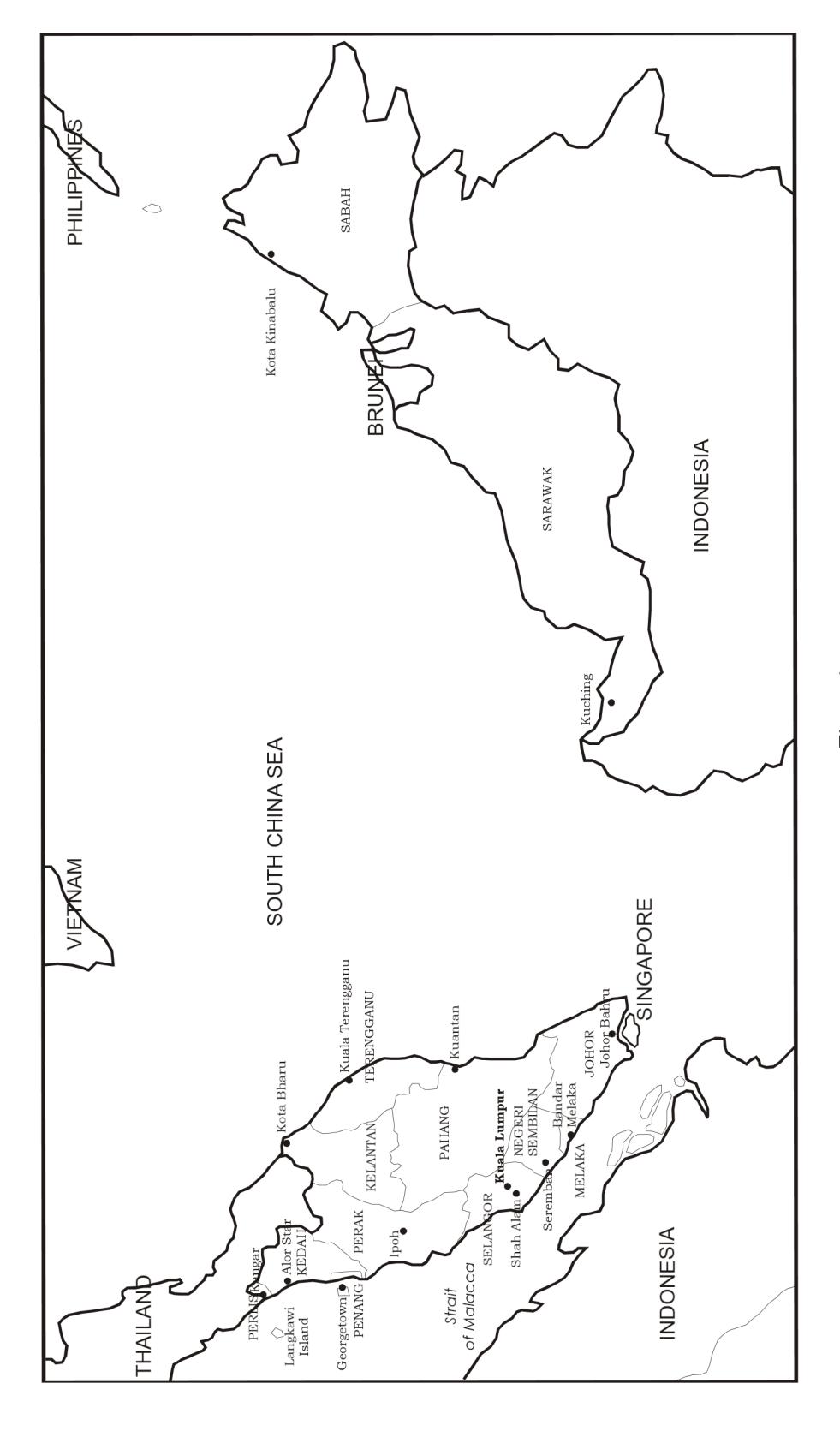
Figure 1. Location of capital cities in Malaysia (Federal and State)
1992).
iii. Cities as bearers of the national symbol, company and government headquarters and therefore as a place for business and diplomatic interaction through meetings and communications (Oppermann et al., 1996; Oppermann & Chon, 1997).
In many ways, these characteristics at the early stage of urban tourism development in Malaysia are similar to other countries in Southeast Asia. In parallel with the growth of tourism activities world-wide in the 1970's, governments in Southeast Asian began to introduce and strengthen policies that could maximise the opportunities from tourism (Mullins, 1999). As mentioned earlier, the first step to be taken was the initiative of government to develop large-scale infrastructure especially airports, internal systems of transportation and accommodation. In this context, according to Oppermann (1993), most international tourism is highly concentrated in the capital city and then disperses to other places around the country. Since additional supply is provided in the capital city, the formal tourism sector starts to establish itself in the city, while new places around the country are explored, especially by the drifter and explorer (Oppermann, 1993).
This nature of the city can be seen clearly in Kuala Lumpur and Penang where the major airports for Malaysia are located. Both of these cities, especially Kuala Lumpur, as the largest city of Malaysia, play a role as main channels to tourism destinations around the Malay Peninsular especially to coastal and rainforest areas (Oppermann, 1992). Moreover, the development of the North-South highway in Malaysia in the 1980's (where Kuala Lumpur is located in the centre of this highway) increases the rapid movement of tourists to other areas of the country especially between cities. Following that, during the Fifth Malaysia Plan (1986-1990), focus was given to establish Kuala Lumpur and Penang as primary tourist nodes for international tourism. This feature worked to 'make the city a major international tourist destination in its own right' in the context of Southeast Asian cities (Mullins, 1999: 252).
Meanwhile, the function as gateway and distribution or connectivity centre encouraged a large proportion of hotel development. Based on the spatial-temporal development of hotel location in Kuala Lumpur between 1957 and 1990, the increase in hotel construction directly influenced the transformation of its urban form (Oppermann et al., 1996; Oppermann & Chon, 1997). Due to the nature of Kuala Lumpur that includes an airport and railway station, and Central Business District (CBD), the location of hotels began to evolve in these areas. According to Oppermann et al. (1996), and Oppermann and Chon (1997), this form of tourism development, as shown in urban hotel locations in Kuala Lumpur, is seemingly more coincidental than well planned, and there is no explicit policy for tourism development except the call for more construction of luxury hotels as noted in the Kuala Lumpur Structure Plan of 1984. For Oppermann and Chon (1997: 72), although the study of 'hotel development reveals only one facet of the overall tourism development, it illustrates the pace of development and it may stand as symbol for other associated changes'. In this case, it gives early and valuable evidence of the existence of urban tourism development in Malaysia.
Nonetheless, although urban tourism at this stage is more coincidental than well planned, King (1993) argues that in terms of image for historical tourism, there is a tendency to focus on locations in cities such as Melaka, Penang and Kuala Lumpur. The target market is education-oriented visitors with colonial experience in relation to objects such as buildings, architecture and museum collections. Furthermore, King also found that many British tourist brochures for 1990-91 located Penang, Kuala Lumpur and Melaka as the main attractions. After this, the attention of promotion went to various other locations around Malaysia for images of culture, heritage, rural life and nature-based tourism. This was to avoid competition with cities in neighbouring countries such as Thailand that had already developed strong images in terms of nightlife, entertainment, and Singapore for a modern urban image (King, 1993).
The Second Stage (after tourism came of age's post-1990)
In the late 1980's and the early 1990's, tourism's importance began to be established in the global economy. Many countries in the developing world took this as an opportunity to further develop the sector. For Malaysia, it was also a response to the poor performance of traditional exports during the economic recession of the middle 1980's and prompted the Malaysian government to focus on tourism (Khalifah & Tahir, 1997). Therefore, tourism was taken seriously and this can be seen through the initiatives such as 'Visit Malaysia Year 1990'. This effort gave significant momentum to the further development of tourism, based on existing resources or established products and new tourism products throughout the nation (MOCAT, 1991). As a result, many major international hotel companies invested not only in Kuala Lumpur as a main gateway to Malaysia but also in a dispersed form in other cities in Malaysia during the early 1990's (Khalifah & Tahir, 1997). Related to this, the potential for urban tourism development began to be recognised and this were further strongly influenced by two main factors:
- i. Awareness of urban conservation especially by those responsible within the city, local communities and non-government organisations.
- ii. Efforts to diversify tourism products and search for identity or image for tourism in Malaysia, including through the events strategy (e.g. Commonwealth Games and Formula 1 Races).
In parallel with the new phenomenon of urban conservation and heritage tourism in the early 1990's, concepts in this regard began to be accepted and implemented. Meanwhile, the endorsement of acts between 1976 and 1988 relating to urban conservation in Malaysia, indirectly supported the initiative to preserve historic and cultural heritage. According to Ahmad (1998) and Hassan et al. (2002), the potential for tourism increasingly received attention as one of the resources that can generate economic benefits for the city. This effort was supported by the initiative to diversify tourism products in Malaysia and the wider search for identity or image, and therefore, to create favourable tourism destinations in Southeast Asia (MOCAT, 1991; Ahmad, 1998).
The influence of these two main factors can clearly be seen in the cities of Melaka and Penang, which both have strong images of heritage and urban conservation. As noted by Ahmad (1998: 6), these cities have become the icons or hosts for historic colonial buildings, and therefore 'portray a distinct image and identity' compared to other cities in Malaysia. In addition, they also have advantages in terms of:
- i. Offering product and infrastructure such as MICE tourism related to their function as capital cities of the state, and therefore the capability to attract tourists with a variety of tourism products.
- ii. Being already in the market for international and domestic tourists as destinations for historical and cultural heritage.
Related to the above, it can be concluded that the focus on urban-based tourism has created opportunity for cities such as Melaka and Penang that offer more of a historic image. However, this does not hinder the role that have been played by Kuala Lumpur, which has a strong image and functions as a gateway and point of distribution (or connectivity). In term of tourism image in Malaysia, Kuala Lumpur still leads as the most popular destination for tourism activities such as shopping, MICE tourism and mega events. Kuala Lumpur (or the Klang Valley) is also the highest populated area in the country and, therefore, offers the market or demand for facilities such as the largest and the best theme park in Malaysia. At the same time, when tourism came of age (after 1990), the development of new shopping complexes was integrated, in the same area as the location of hotels, to underpin the importance of tourism activities in a city such as Kuala Lumpur (Oppermann et al., 1996; Oppermann & Chon, 1997).
Oppermann et al. (1996: 62) note that the Kuala Lumpur economy today is dominated by tertiary activities including tourism as a 'modern' activity, as 'an integral part of today's Central Business District'. This characteristic is also commonly found in other developing countries, especially in Southeast Asia. As part of the attempt to diversify Malaysia's tourism, the image of the city has also been portrayed by modern images such as the Petronas Twin Towers in Kuala Lumpur as an alternative to the image of historical buildings in cities such as Melaka and Penang. Furthermore, mega-event activities are encouraged by the government, and act as a catalyst to urban development for a city such as Kuala Lumpur (Musa, 2000). This can be seen through events such as the Commonwealth Games in 1998 that generated extensive development of sporting facilities and infrastructure to serve the needs of tourist arrivals and movement. In addition, the status of Kuala Lumpur was extended with the completion of the Multimedia Super Corridor (MSC), the new city of Putrajaya and Kuala Lumpur International Airport (KLIA), all of which increased the city's image in the business hospitality market despite criticism about distance from the main city (Kotler et al., 2002). This is also an example of how much the government can be willing to invest in order to attract visitors and investors and then position it as an important and emerging hub in Southeast Asia.
From another points of view, the development of urban tourism in cities such as Melaka is similar to the phenomenon that exists in many European countries where historic buildings have been restored and converted into tourism products such as museums, art galleries, restaurants and tourist centres (Ahmad, 1998). Melaka City was declared an Historical City on 15th April 1989 to boost and establish its image as a core historic tourism destination in Malaysia. This initiative was clearly designed to support the designation and zoning of land specifically for tourism and urban conservation. However, Hamzah (2002) argues that, in some senses, the historic value of this city may only appeal to domestic tourists as key resources such as monuments and buildings at this stage did not compare favourably with historic cities in Western countries. Nonetheless, this does not contradict the intangible value of these structures from the colonial era as a significant element in Malaysian history. The historic dimension creates interest among international tourists to experiences their colonial history. This nostalgia for Europeans is addressed by Douglas and Douglas (2000) in relation to tourist arrivals to Southeast Asia. This gives specific focus to urban tourism development within the economy of the city and enhances the image of Malaysia at an international level.
Since the early 2000's, the features of urban-based tourism development in Malaysia can be summarised as:
- i. The significance of heritage and cultural assets for tourism to the economy of cities such as Melaka and Penang, which have been restored and promoted in the heart of the city and as primary or fundamental attractions for urban tourism (Ahmad, 1998; Hamzah, 2002).
- ii. The promotion of cultural heritage or multicultural diversity in Melaka, which is increasingly significant given its nomination as World Heritage Site along with Georgetown in Penang (Hamzah, 2002; Carolyn, 2001)
- iii. Shopping as an element for cities to attract the tourism market. However, this form of tourism is difficult for cities in Malaysia outside of Kuala Lumpur, which acts as the main 'shopping haven' for the country (Hamzah, 2002).
- iv. The city as destination for activities such as theme parks, entertainment, events and MICE tourism especially in large or capital cities such as Kuala Lumpur. At the Asian region level, these images were central in the promotion of Kuala Lumpur as part of tourism development planning for the National Recovery Plan 1998, in spite of criticism about the position of Malaysia as possibly less appealing compared to cities such as Bangkok and Singapore (Musa, 2000).
With the rapid recognition of the potential for tourism for the Malaysian economy, it also should be realised that there are areas in Malaysia, which have been identified as prime location for development
specifically as tourism destinations, within specific boundaries of administration or geography (Ismail et al., 2003; Ismail & Baum, 2004). This can be seen in terms of the island of Langkawi in Kedah. As a peripheral area with various tourism resources, it received major attention from government to invest and be promoted as a complete tourism product. Very significant development has taken place in this island and, therefore, a process of urbanisation has occurred. In this case, a lot of the core facilities that also exist in capital cities can be found on this island such as an airport, a good internal roadway system and international standard convention facilities. The availability of the infrastructure that exists in this area has arisen as a result of the particular attention of the former Prime Minister of Malaysia.
This type of tourism development in Langkawi is unique in the sense that urban tourism characteristic emerged originally from the increasing manipulation of attractions in the form of resorts or seaside tourism development. According to Harrison (2001: 24), this impact of tourism with the arrival of large tourist numbers 'can make a dramatic and permanent impact, changing the rural to urban' especially for less developed countries. According to Kotler et al. (2002), this is also evidence of the competition of destinations for markets such as conventions that are usually located in capital cities and have now been attracted to peripheral areas. As a further illustration of this, the existence of hill tourism destinations such as Genting Highlands, also known as the 'City of Entertainment', also provides evidence that tourism is able to focus this location on urban class infrastructure such as casinos, a theme park, convention venues and fine accommodation (Musa, 2000).
Based on the state of urban tourism development in Malaysia after the 1990's, Hamzah (2002) notes that this development in the cities of Malaysia has its own features but also exhibits some similar characteristics to that in other cities. These characteristics refer to two main points:
- i. Heavy investment by the local authority in providing infrastructure for tourism facilities, including 'boosterist' approaches that may be controversial and exist within unprepared planning programmes.
- ii. The increase of urban resorts or complexes for pleasure and entertainment. These can be seen clearly in urban areas of the Klang Valley through the development of theme parks such as Sunway Lagoon and Mine World.
A direct response to the potential of tourism by those responsible in the city also highlights issues about the planning and management of urban tourism. In this case, Hamzah (2002) highlights and identifies two main issues. Firstly, city planners are inclined to over-focus on particular assets such as the historic core compared to other urban tourism resources and necessary support elements. Therefore, the integration of the complete tourism product such as services, and actual needs relating to the nature of tourist demand are difficult to determine and manage. In addition, Carolyn (2001) addresses issues that face tourism planners, heritage professionals and government officials in presenting a city such as Melaka for tourism consumption in an appropriate way.
The second issue is the early response to re-create or invent history by over promotion and theming the area for tourists. These can be referred to as the re-adaptive use of historical buildings that result in sameness in the form of the built environment such as accommodation, cafes and ethnic souvenir shops. Despite the potential for re-use of heritage buildings for tourism in Malaysian heritage cities (Hassan et al., 2002), Hamzah (2002) argues that it tends to make the historic streets of places such as Melaka and Penang share the same identity without a sense of uniqueness compared to each other. Moreover, in these places, theming becomes the trend for objects of tourist consumption and increases the possibility that this form of development will change the existing built environment and socio-economic profile of local residents.
IMPLICATIONS OF URBAN TOURISM IN MALAYSIA
Based on the discussion, this paper identifies key perspectives on the implications of tourism's development in association with urban development in Malaysia. Firstly, each of the cities in Malaysia has developed differently and has their own place in history. These types of city have been driven by the potential of tourism as determined by their position and resources. These are described below.
- i. Intensive development of infrastructure in Kuala Lumpur has provided the city with advantages that fit with new modern tourism (or tertiary activities and services) such as MICE, mega events, shopping and theme parks. The dominant economic role has placed this city in a position that is difficult to challenge, which is influenced by its image as bearer of the national symbol, company and government headquarters and as a place for business and communication.
- ii. Meanwhile, the existence of significant tourism resources in the cities of Melaka and Penang in terms of historic and cultural heritage has established them as popular tourism destinations. This comes with opportunities to offer different forms of tourism product or image compared to a city such as Kuala Lumpur.
Secondly, urban tourism development in Malaysia is based in capital cities as a focus for development by government. This can be seen prominently in the cities of:
- i Kuala Lumpur since the nature of it role as capital city of a nation allows this city to cater for international and domestic tourists, and leisure activities for its large population.
- ii. Melaka City in Melaka and Georgetown city in Penang that not only function as capital cities of states but also have urban historic and cultural heritage as tourism resources.
Thirdly, a unique relationship exists between cities in Malaysia in providing different products and facilities for tourism. Here, a symbiotic relationship has given each city a specific role in the tourism system in order to produce the complete tourism product, which also connects with good transportation systems and acceptable time distances. For example, the function played by the city of Kuala Lumpur as gateway and point of distribution (or connectivity) is also essential to support a city that promotes itself as a tourist historic town such as Melaka. On the other hand, Melaka provides the primary product (urban historic core), which is significant and important as a main attraction and as the motive for visitation by international tourists. This relationship was determined and noted in the Malaysia National Tourism Policy Study - Tourism Product Sectoral Report by MOCAT (1991: 44), when the Kuala Lumpur-Melaka corridor was identified as 'the most complete variety of city, town, country and resort tourism of any area in Malaysia' (Figure 2).
Finally, the important role of government in providing infrastructure and developing products even though in the first place these were not always for the purpose of tourism activities especially during the independence or the postcolonial era after 1957. However, when this sector began to be recognised as important for the economy of the country and its cities, tourism received major consideration in most planning and development programmes related to overall urban development. Alongside what can be seen in cities such as Kuala Lumpur, Melaka and Penang, the example of tourism development in the island of Langkawi shows a specific initiative of government in tourism development that increases the function of the island itself in the overall hierarchy of urban development in Malaysia.
This discussion of urban tourism development in Malaysia can lead to a number of conclusions. There are three forms of urban-based tourism in Malaysia as a developing country:
i. Urban tourism development in a capital city such as Kuala Lumpur, which functions as a gateway, point of distribution (or connectivity), and a place with strong infrastructure for tourism activities such MICE tourism, shopping, mega event and theme park. This form of tourism destination and tourism development was initially not well planned and the tourism benefits were more coincidental.
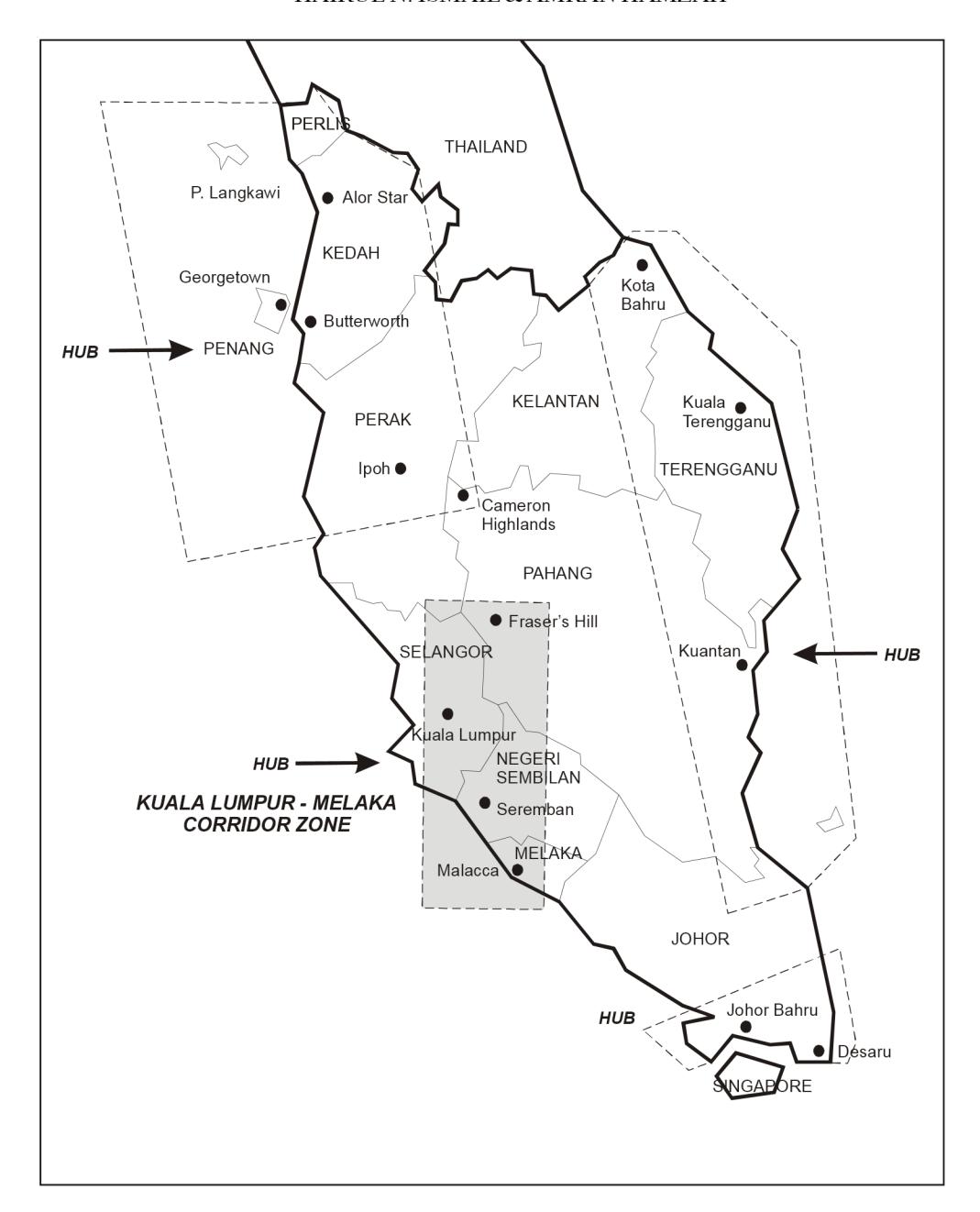
Figure 2. Peninsular Malaysia – Primary Tourism Development Zones (MOCAT, 1991:55)
- ii. Urban tourism development similar to that seen in the cities of developed countries, based on tourist historic cities such as Melaka and Penang. This form of tourism development complies with the trend of tourism development worldwide and tourist demand, which comes either through well-planned programmes or 'boosterist' plans by the city government.
- iii. Urban tourism emerges as a result of intensive development of tourism infrastructure and product
In this case, major cities that function as tourism destinations in Malaysia can be recognised. It is also important to note that other cities in Malaysia show some of the same influences and trends towards tourism, post-1990, but not on a scale that can be compared with cities such Kuala Lumpur, Melaka, Penang and an area that received intensive development of urban infrastructure such as Langkawi.
CONCLUSION
The purpose of this paper is to explore the nature of urban tourism in developing countries. The discussion indicates that tourism has emerged as one of the most important industries in the world, including in developing countries. As a result, this has lead to a serious response and interest from leadership and government to introduce tourism development through intensive promotion that includes and refers to the city as an important tourism destination.
Based on discussion in the context of Southeast Asia and the perspectives of tourism development in the cities of Malaysia, this discussion reveals the specific characteristics and differing perspectives on how tourism has emerged. This has provided insight that is able to locate the position of tourism in Malaysia, as an example of urban tourism development in developing countries. Nevertheless, more exploration and further research is needed in order to gain a better picture of urban tourism in developing countries (e.g. different region of developing countries), especially in term of approaches and aims that may underpin expectations of tourism. Therefore, it is hoped that this paper extends insight and understanding of the nature of urban tourism, not only to the cities of developing countries but also knowledge of the urban tourism field as a whole.