

INTRODUCTION
Good governance is essential for sustainable development. Sound policies, solid democratic institutions responsive to the needs of the people and improved infrastructure are the basis for sustained economic growth, poverty eradication, and employment creation. Freedom, peace and security, domestic stability, respect for human rights, including the right to development, and the rule of law, gender equality, market-oriented policies, and an overall commitment to just and democratic societies are also essential and mutually reinforcing.
WSSD 2002
Case studies in successful developmental activities envisaged for mainstreaming the people are the hot topic social science of today by giving references like 'inclusive growth', pro poor strategies, financial inclusion etc. The scenario of tourism as a developmental tool is also not different from such experiments. A large number of programmes were initiated in this sector as well. The natural and manmade, both tangible and intangible resourses were appropriated for this purpose. The approaches like community based tourism, pro poor
Asst. Professor & Nodal Officer Indian Institute of Tourism and Travel Management, Nellore, Andhra Pradesh, 524004 India. Email: vinodan_tt@yahoo.co.in, vinodan.iittm@gmail.com
tourism, ecotourism, responsible tourism, justice tourism etc., are widely recognized as tools in appropriating these resources. These approaches are being recognized as remedial measures to the ailing 'exclusivity' in the growth 'deemed to be the development' particularly in developing countries.
Evolution of the concept of ecotourism is not introduced at one point of time. Fennel (1999) argues there is no general agreement on who invented or first used this phenomenon as ecotourism. He says it is evident that the concept appeared in the published material during 1980s by citing certain pre fixation of eco with tourism, taking from ecology, ecosystem for a label. According to Orams the term ecotourism is related to three different issues of tourism development (Figure.1). First, it is a reaction on negative impacts associated with mass tourism secondly it has developed in response to the growth of tourism based on natural environmental attractions and third as an outcome of growing understanding and the acceptance of the principles of environmental conservation and sustainability (Orams 1995).
Figure 1. Emergence of Ecotourism
Even then Ceballos Lascurain's conceptualization "traveling to relatively undisturbed or uncontaminated areas with the specific objective of studying, admiring, and enjoying the scenery and its wild plants and animals, as well as any existing cultural manifestations (both past and present) found in these areas" (Ceballos-Lascurain, 1996) has been recognized widely. While, The International Eco-tourism Society (TIES) had also defined eco-tourism as "responsible travel to natural areas that conserves the environment and sustains the well being of local people" and which is also widely accepted. In fact, the year 2002 was declared as the year of the "International Eco-tourism" by United Nations, during which in May 2002, World Eco-tourism Summit was held at Quebec, Canada and the World Tourism Organization (WTO) and United Nations Environment Programme (UNEP) also adopted this definition.
Initial reference on ecotourism states that it is a tool for mitigating the mass tourism impacts and to approach the destination in a different way. For that purpose different resource
appropriation strategies were suggested like reducing the consumptive behavior or the modifying the 'tourist syndrome' in a more sustainable way. Different action like travels lighter, encouragement to low emitters and space to see one's own impact on immediate environment i.e. carbon footprints etc were suggested at the destinations.
Ecotourism signifies the word ecological tourism particularly in contributing to the conservation and management (Kangas et al., 1995) of environmentally and culturally fragile areas by strengthening the management capability of stakeholders through education and scientific interpretation (Kreg Lindberg et al., 1999). It also signifies the community based participative resource management (Ross et al., 1999) at grass root level and enterprise opportunities in small scale (World Ecotourism Summit Final Report 2002) for meeting the livelihood requirements of the local community in a larger scale (Edgar Allan Amador 2004).
While discussing the merit of ecotourism development the component of livelihood option or the local community benefit is very prominent globally. The millennium development goals (MDG) are also pointing in its first and seventh goal of seeking all segments of developmental operation to have a pro poor approach to reach the target of halving the poverty by 2015 and of environmental sustainability, respectively. All tourism operations including ecotourism projects also should negotiate with issue of poverty since most of the ecotourism resources are located in the catchment area of poor people. The creation of employment either waged or self through enterprising the opportunity available under destination development programme has widely sought in this regard.
In India, initial reference of ecotourism got attention during the implementation of India Eco Development (IED) Programme¹. The World Bank aided India-Eco Development (IED) Project was conceived as a pilot project to conserve bio-diversity through eco-development at a total cost of US $ 67 million (Rs.288.80 Crores) in seven selected sites in seven different States namely, Gir (Gujarat), Pench (Madhya Pradesh), Ranthambhore (Rajasthan), Nagarhole (Karnataka), Buxa (West Bengal), Periyar (Kerala) and Palamau (Jharkhand). The main project objectives were to: (a) Improved Protected Area (PA) management; (b) Village eco development; (c) Education and awareness and project impact monitoring and research; (d) overall project management; and (e) preparation of future biodiversity projects (World Bank 2007).
In order to give an impetus to the ecotourism operations in the country the Government of India (GOI) issued an Ecotourism Policy and Guidelines in 1998. The document identified major stakeholders of ecotourism such as: government, destination developers, service providers, visitors, host community, NGOs and research institutions and prescribes operational guidelines for these key players. Policy guideline gives more emphasis on conservation through local community involvement. Other focal point includes minimization of negative impacts of tourism in socio cultural and environmental perspective and to ensure the livelihood security to the community associated. A call for detailed cost benefit analysis was also being made especially for the infrastructure development of the area along with conservation, regulatory framework for destination, standardization of tourism services in certain segments and continuous monitoring criteria at destination.
OBJECTIVES AND METHODOLOGY
Sustainability failures are very common in most of the projects earmarked under sustainable development. This is normally happen due to the absence of good governance mechanism or the failure in meeting the minute elements of the socio ecologic strata of the destination. The present study is an attempt to verify the following statements in the context of Thenmala ecotourism project of Kerala; (a) A well organized and operationalised institutions are essential for the proper delivery of services at the destinations for fulfilling the equitable and inclusive growth and (b) Grass root level institutions have a direct bearing on destination communities in reaching the benefits of tourism to them.
The study fulfills the following objectives:
- 1. Identify the destination management framework of ecotourism for the democratic resource management at destinations.
- 2. Evaluate the competitive efficiency of grass root level institutions of ecotourism project through SWOT analysis, with reference to Thenmala ecotourism project.
Required primary data for this study has been collected through.
- Focus group discussions and field observations- focused group discussions with community members involved in the destination level activities were made to trace their perspectives on operational efficiency and deficiency of various institutional framework under the project. Informal meetings with other local community members who are not part of the tourism programme were also considered as key informant for this study.
- • Interviews direct personal interview with Department of Forest and Wildlife, officials of Directorate of Ecotourism (Kerala) and Thenmala Ecotourism Promotion Society (TEPS) were made to reach conclusion on this study.
The main secondary sources of data that inter alia examined were official websites, reports and documents published by the Directorate of Ecotourism, Ministry Tourism, Forest and Wildlife Departments of Government of Kerala, District Tourism Promotion Councils and Kudumbashree Mission.
. While writing the report the issues observed and cited by the members arranged in a logical order for the purpose of analysis. The findings and solicited feedback and comments were crosschecked among intra community members to ensure comfort and accuracy.
SITUATIONAL CONTEXT
Kerala the Southernmost Provincial State of India is popularly known as God's Own Country in tourist literature. As in case of other sectors of development the state has made remarkable progress in ecotourism destination development. Presently, the state has identified 56 sites in all of its 14 districts for developing ecotourism with special emphasis on conservation, ecological sustainability, environmental education and local community benefits. In order to meet these policy objectives Kerala Tourism has setup a separate Ecotourism Directorate in consultation with Forest and Wildlife Department to give policy support for the development of the ecotourism destinations in the state. The products such as trekking, bird watching trails etc. are proposed and will be operationalised through Ecodevelopment Committees (EDC) at Wild life Sanctuaries and Vana Samrakshan Samiti (VSS) at the territorial division of the forest area, thereby ensuring local benefits from ecotourism, which will ultimately elicit support of local community for forest protection.
Thenmala Ecotourism Project (TEP) is the first planned ecotourism project in the country geographically located at Latitude 9'00"N and Longitude 76'55"E. The project has been formulated in and around a Shenduruney Wildlife Sanctuary (SWS), with the joint initiative of forest and wild life department, tourism department and irrigation department. Thenmala is located about 72 kms from Thiruvananthapuram, the State Capital of Kerala. Thenmala is a small village at the foothills of Western Ghats and predominantly a forest area with a lot of human interventions at the periphery. Shenduruney wildlife sanctuary is the prime ecotourism attraction of the region. The area surrounded by different varieties species of endemism, most important and endangered species Gluta travancorica (locally known as "Chenkurinji") is protected here. This tree has got high medicinal properties, which can control arthritis; blood pressure etc and even possesses aphrodisiac qualities. According to reports of state government major objectives of this project are: (a) to develop Thenmala dam and its surroundings as a major tourist destination; (b) To promote ecotourism on the basis of the principles of ecological sustainability in the areas surrounding Thenmala; and (c) to have a well-planned tourism destination with the emphasis on sustainable tourism development as a model for other destination development programs.
Figure 2. Entrance (left) and Elevated Walkway (right) as Tourist Attraction in Thenmala Ecotourism
The project has developed in two phases. The first phase of the project was inaugurated during 1999 with the commencement of boating in the Shenduruney Wildlife Sanctuary Reservoir and the opening up of Deer Rehabilitation Center for visitors. Second phase was operationalised in the year 2001 with activities like Leisure Zone with Sculpture Garden, Boardwalk, Adventure Zone with Elevated Walkway, Mountain Biking, Rock Climbing, River Crossing and Culture Zone with the facilitation center, Musical Dancing Fountain, Amphitheatre, and Restaurant. The project has also introduced adventure activities like flying Fox, Valley Crossing, Burma Bridge, Commando Net, Snorkeling, Goan banana, Trampoline, Trust fall, Short range, Archery etc. as all season activities.
TEP is a learning point for tourism researchers and policy makers in its operational as well as institutional arrangement are concerned. Let us take its operational side first; the tourism
activities of the destination are grouped under ecotourism as well as general tourism segments. The general tourism activities are arranged in nearby areas of the project in eco friendly manner. General tourist can experience eco friendly products as well such as small nature trails, elevated walkway through canopies, mountain biking etc. Facilities such as boating in the Sanctuary Reservoir, Boardwalk, Sculpture Garden, Amphitheatre, Musical Dancing Fountain, etc. are also part of general tourist activity. Ecotourist to the destination is regulated; usually small in numbers are permitted inside the Wild Life Sanctuary. A butterfly garden was also set up in association with Kerala Forest Research Institute (KFRI). Report shows that TEP is attracting large number of tourists both domestic as well as international (Table 1).
Table 1. Tourist Arrivals and Revenue
| Year | Arrivals | Revenue (Rs) |
|---|---|---|
| 2000-01 | 26,148 | 445,437 |
| 2001-02 | 41,161 | 1,138,839 |
| 2002-03 | 65,075 | 2,147,985 |
| 2003-04 | 118,404 | 4,044,571 |
| 2004-05 | 104,622 | 3,563,820 |
| 2005-06 | 114,443 | 3,926,430 |
| 2006-07 | 120,178 | 4,954,459 |
| 2007-08 | 104,758 | 4,602,536 |
| 2008-09 | 93,715 | 4,990,072 |
Data source: Directorate Ecotourism Government of Kerala
DESTINATION MANAGEMENT FRAMEWORK
According to Department of Tourism (DOT), Government of Kerala (GOK) TEP was initiated on an experimental basis for giving directions to the ecotourism initiatives in the country. So structuring of the projects was a tiresome task for meeting the dimensions of sustainabilities, especially the environmental and economic sustainability. As we know sustainable tourism literally meets the needs of the present guests as well as hosts without impairing the ability of the future tourism requirements. In order to reach these objectives, well knitted institutional framework were formulated with the support of local community members. In order to meet the professional administration of the destination Thenmala Ecotourism Promotion Society (TEPS) was formed. The local community participation ensured through Eco Development Committees (EDCs) as well as Self Help Group (SHGs) of the destination areas. The institutional arrangements at Thenmala are considered as a replicable model for other sustainable tourism destinations which offer, both ecotourism as well as general tourism products. Rather it is a model for all sustainable tourism initiatives of the country. As mentioned earlier a separate ecotourism directorate has created in the state of Kerala exclusively for policy formulation, execution, financing marketing and over all monitoring of all ecotourism sites. Figure 2 shows how ecotourism operations were managed in Kerala with the interference of ecotourism directorate and also how it coordinates the activities at the destination through various agencies like Thenmala Ecotourism Promotion Society and Forest Development Agencies (FDA). In this discussion we came across with three important destination level framework for the management of tourism products namely TEPS, EDC and SHG. The following session would discuss these organizations and its role in meeting the destination specific sustainability.
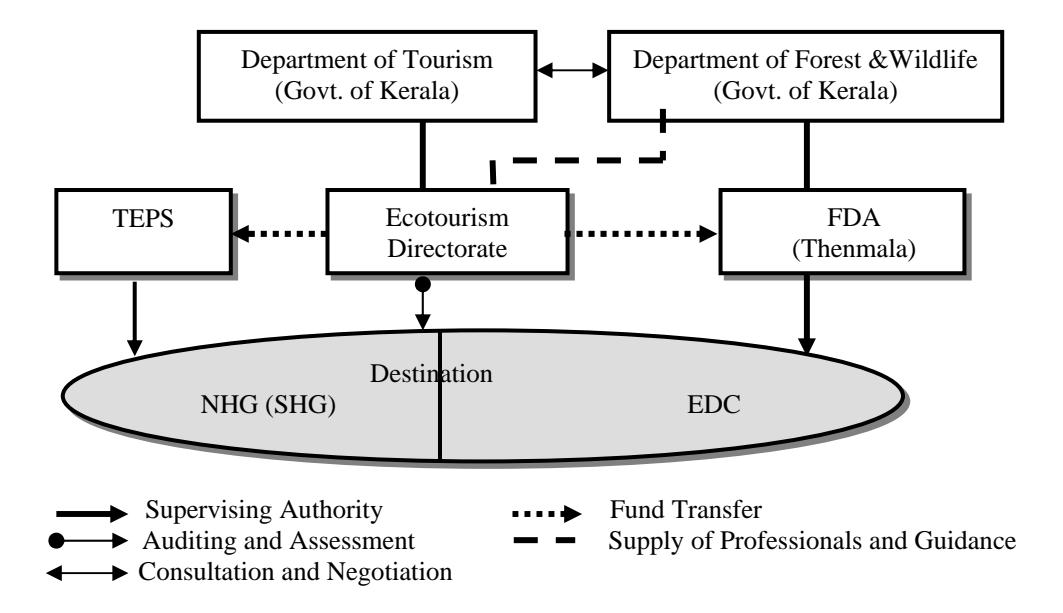
Figure 3. Institutional Framework of Ecotourism Operations at Thenmala
Thenmala Ecotourism Promotion Society
TEPS is a registered society under Societies Registration Act as a nodal agency in 1998 to promote ecotourism activities at Thenmala and with the cooperation of Forest, Irrigation and Tourism departments. TEPS established as destination management society to cover up all administrative level activities like destination planning, marketing and promotion of various products at the destination on an experimental basis. The society supports destination operations, provide infrastructure financing and capacity building of various service providers. Conservation education to the community members and other stakeholders, promotion among interested groups or other associates were also undertaken on rigorous basis. TEPS ensures the safety and security of the visitors, by giving proper directions through sign boards or other information and arranging escorts while proceeding to the wilderness. Precautionary measures like suggesting first aids, preparation and presentation of information to the visitors were also made available.
It will be more educative how these operations are being performed at the destination. A well-coordinated organizational structure (Figure. 3) prevails in Thenmala to execute all these operations. The organization is headed by a chief executive officer (CEO) who is administering the affairs of the society. Under the CEO two operational divisions were formed; for planning and marketing and destination management. The section envisaged for planning and marketing also referred as corporate section is looking after the planning different tourism products to cater the general as well as the ecotourist visiting the destination. This functional area also does the marketing the products among the general public or tour operators and transport operators across the world. Destination management is a crucial job in tourism destination particularly ecotourism destination which requires more attention while managing the visitation. The professional management with TEPS could ensure maximum satisfactions to the visitors. In the administrative hierarchy, the destination manager was assisted by project executive and junior executives respectively. One guest relation executive assigned for customer care segment.
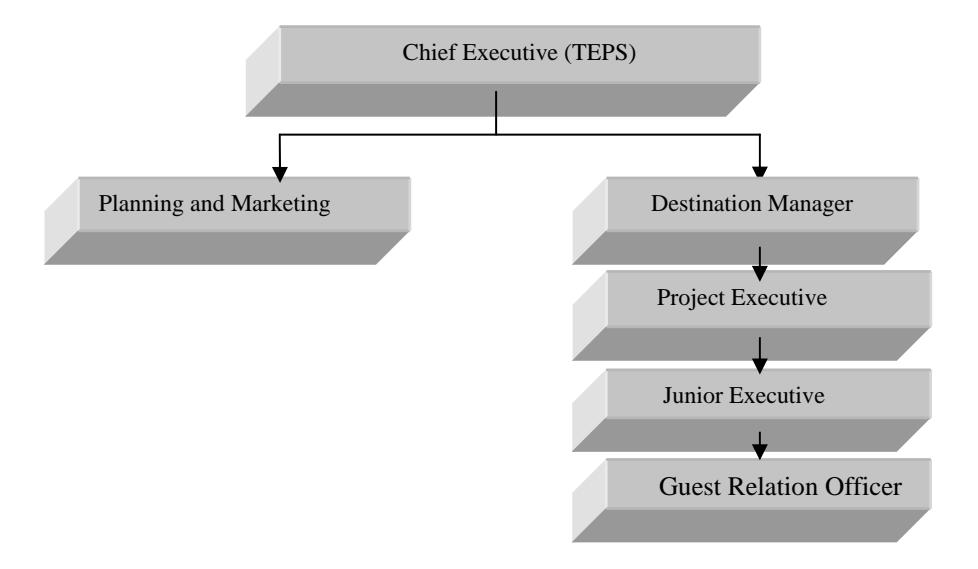
Figure 4. Organizational Structure of TEPS
Let us see how TEPS address the issues of sustainability in systematic way. During the initial stage of development of the project TEPS initiated Environmental Impact Assessment (EIA) of the destination with Kerala Forest Research Institute (KFRI) with regard to ecotourism as well as general tourism and over all human intervention at the protected area. Regular monitoring of the destination areas with the support of the own as well as the forest department staff boost the conservation initiatives. The approach towards waste management and pollution control mechanism like wormy-composting techniques, battery powered vehicles, use of solar lamps, zoning of site, use of site hardening techniques, promoting tree planting etc the core operational areas of the TEPS in keeping the promise of sustainability of the destination area. Environmental education and awareness programmes were also given prominent place in the project operations. They conduct classes to students; special concession for educational institutes, celebrating environmental day in co-ordination with local educational institutions etc. are notable extended activities undertaken by TEPS in this regard.
Ecodevelopment Commitees for Ecotourism
As mentioned earlier the ecotourism programmes operationalised in Thenmala with the support of EDCs. The basic premise of EDC is that local communities will conserve natural resources if their economic stake is clearly defined in the path of sustainable development. The FDA of Thenmala forest division, created under participatory forest management programme plays a leading role in destination management of almost all ecotourism sites. FDA mobilized the local community to support ecotourism operations and it institutionalized as EDCs.
For this purpose local communities were identified in consultation with the forest officials and explore the economic potential of area for livelihood appropriation. Then they jointly workout viable plans for execution by giving primacy to forest conservation and taking into account the carrying capacity of the PA, which is to determine the nature of technology, marketing, finance and other inputs. The FDA is looking after these activities by providing not just cash support but all sorts of institutional, structural and technical assistance.
Under the framework of EDC the local communities were provided with support systems to establish various operations. They prepare micro plans; organize training and awareness programmes and other conservation measures. Apart from giving means of subsistence EDCs also looks in to; capacity building at grassroots level for institutional and enterprise development for democratization of resources, gives impetus to the removal of tenurial contradictions and exploitative intermediaries, promotion of cooperative behavior, preservation and projection of local knowledge and other cultural practices as per the local order, ensuring of distributive justice in benefit sharing, and so on. Well functioning EDCs could raise the confidence of the local people in their collective potential and self -esteem besides imparting a sense of belonging and strengthening the social synergy.
FDA in consultation with EDCs prioritises the schemes and mobilize fund from various departments and arrange financial assistance to EDCs for ecotourism development. The efforts of innovation and guideline for effective implementation and monitoring are also part of its activities. The coordination between EDCs and agencies like District Rural Development Agencies (DRDA) and other government department made possible through FDA. FDA at Thenmala made EDC's competitive to manage forest area especially the catchment area of the Shenduruney River.
As the conservation project needs co-operation and co-ordination from all stakeholders, the TEP has institutionalized the co-ordination of Tourism, Forest and Wildlife and Irrigation departments and local bodies and implemented it. The survey shows that there are 9 EDCs working inside the sanctuary area to undertake various tourism related activities including bird watching, trekking in the pristine forest area exclusively escorted and guided by the members of EDC and other adventure activities. These EDCs activities are coordinated and the programme details are reported through FDA to the Forest and Wildlife department and Tourism department as well. By and large we can see that the entire ecotourism related activities are handled by the EDCs of the locality.
Self-Help Groups (SHG) in Tourism
SHG are locally initiated association promoted by NGO's, government agencies or banks, found in a wide range of financial and non-financial sectors, often this is recognized as the platform of accumulating savings and credits. These associations provide access to credit to their members capable of using their own funds, grants and borrowed funds, helps to promote savings and yields moderate economic benefit by reducing the dependence on moneylenders, increasing employment of women, dissemination of development ideas and information and intervening in other social, political and economic sectors of a locality. Generally such groups are formed as village development groups for integrated development of village through both financial and non-financial intervention to livelihood and empowerment as a basis and extending their synergy towards health, education and natural resource management along with micro finance operation for neighborhood welfare. It also reminds us that the success of collective action emerges from higher levels of social capital due to a sense of cohesion among people, presence of a committed local administration, and local leadership.
Social relations through SHGs are seen as variable and dynamic chains, which can be generated and exchanged, which has not only resource but also has the power to influence tourism development. SHG intervention in the tourism in Kerala is in its infancy. Few example are identified most of which are engaged as the part of responsible tourism initiative at Waynad, Kumily, Kovalam. Consultation with DTPC and other destination management organization reveals that involvement of SHGs is mainly channelized through two agencies; (1) Kudumbashree² and (2) NGOs-locally supported and financially outsourced.
Kudumbashree programme which functions on the principles of participatory democracy recognizes the poor as the active participants in decision-making. The programme takes up the problem of poverty holistically and deals with other issues related to poverty like shelter, self-reliance, education and communication as unlike other poverty reduction programmes, focusing on community driven development. In order to reach the community level Kudumbashree formed Community Development Societies (CDS) in a three-tier pattern. At the grass root level associations of women from 20 - 40 particularly BPL³ families were invited to form Neighborhood Group (NHG), to synergize the neighborhood relations for a common good. These groups are clustered into Area Development Societies (ADS) at the ward level and a Community Development Society (CDS) at the town/area level. This involves bottom up planning process where the NHGs play a crucial role in preparing needbased plans which is later integrated to ward and town/area level. These NHGs are performing the functions of SHGs at the grass root level. They intervened in destination development and management across the state.
Locally initiated women NHGs (SHG) formed under Kudumbashree actively engaged in destination management of Thenmala ecotourism project. These NHGs are monitored and other supports were given by the local bodies (Thenmala Panjayat) and report to the TEPS. This participative community initiative is envisaged for supporting the local women. They opened shops and cafeteria within the project area, training local youth for utilizing opportunities of self employment, supporting community led ecotourism products like management of unique waterfalls within the forest area, conduct of bird watching trails, trekking programs, butterfly watch etc. There are 6 NHGs working under this project out of which 4 is in cultural zone for shop courts one unit is engaged in horticulture and remaining one in adventure zone. From the discussion it is clear that entire destination is managed through local community groups either as EDCs or NHGs (Figure. 2)
TEP also gives unique opportunities to the Government, private sector and the local community. The private sector plays vital role in the areas of accommodation, transport etc. Local community involved in ecotourism product management, local traditional transport operations, local handicrafts production and sale, practice and propitiation of local art and other indigenous practices at the destination. The novelty in the planning process and its implementation argues for the confirmation of sustainability in the rural setting of Thenmala. In this study it would be worthful if we refer some of the appreciation gained by the TEP from the tourism industry:
- Pacific Asia Travel Association (PATA) Gold award for 2003-2004;
- National Tourism Awards for the most Eco-friendly Organization (2001-2002) ;
- National Tourism Awards for Best Ecotourism Practices (2003-2004) and Thenmala Ecotourism project is the only one project from India incorporated in the Publication "Sustainable Development of Ecotourism: A Compilation of Good Practices in SMEs" out of 64 good practices from 47 countries world over.
The case study of TEP is cited as a model framework for destination management both for ecotourism as well as general sustainable tourism. The project which promote ecotourism on the basis of the principles of socio, economic and ecological sustainability in the surrounding areas of Thenmala with the participation of local community members; and designated as a well-planned tourism destination with the emphasis on sustainable tourism development. It is a learning experience for sustainability.
At the same time the project is not free from operational limitations. All other lacuna persists in a social setup will have bearing on a project like ecotourism. In order to visualize the condition of the project the situation analysis is identified for the study purpose. The following session will discuss the operational status of grass root level framework of Thenmala ecotourism projects.
SWOT Analysis
SWOT (Strengths, Weaknesses, Opportunities, and Threats) analysis is the situational analysis in business planning (Wheelen and Hunger, 2004). It has been widely applied in Participatory Rural Appraisal (PRA) and Participatory Integrated Policy (PIP) studies of community development in tourism and allied areas where community members get participative role and thereeby assess the competency of the programme. Major merits of SWOT analysis is that it is an assessment tool where the information can be quickly converted into a simple format which is understandable to people at all levels. This quick assessment tool allows researchers to provide a summary of the information gathered. In TEP as already noticed it is operationalised through TEPS as well as EDC and SHGs. The TEPS as an administrative organ of the destination it is mainly looking after business planning as well as destination management. The SWOT analysis of TEPS could help to identify the existing competencies and deficiencies of this institutional framework in meeting the destination sustainability. Moreover SWOT allows community residents to see
their communities' presence at a glance in terms of their strengths, areas for improvement, inaccuracy in operations, observations that may have been overlooked, and issues that need to be presented differently as they are politically sensitive. So an assessment of EDCs and SHGs is sin qua non for reaching a conclusion.
Table 2. SWOT analysis of TEPS and EDCs & SHGs/NHGs
Strength
TEPS EDC & NHGs/SHGs Well defined role for ensuring sustainability in terms of local development, conservation and tourism promotion Targeting the beneficiaries; potential and present Coordination and formalization of destination specific framework i.e. EDC and NHG for destination management Proper inventory of infrastructure and other superstructure required. Centralized planning for destination facilitation leading to systematic resource mobilization by reducing the leakage in supply chain management Well-directed management of environmental sustainability issues like conservation and management of natural resources, control of pollution and so on. Provision for ensuring the welfare of local communities and valuing their developmental aspirations. Professional management of destination, including well organized visitors management programmes without compromising local values Defined structure for direct intervention Organized intervention of community in the destination development process by partaking various activities leading to actualization of grass root level objectives like poverty reduction, income distribution, employment generation etc Facilitate administrative as well as self targeting of beneficiaries Recognized space for communities for participation and resource appropriation for livelihood through tourism Organization of ecotourism according to local community aspirations. Effective management of conservation efforts through community mobilization. Intervention of women and marginalized group for tourism development. Thrift and savings mechanism for financing the projects and for social security purpose. Well directed support from FDA and ADS
Members are well-informed and act as watchful conservation agents.
Organized intervention in marketing and promotion initiatives gives impetus to the brand building exercise Proper guidance and policy support for destination development under direct supervision of Ecotourism Directorate
Government of Kerala.
Weakness
Through inter mediation process the provision for local stewardship is hampered.
- Limited interlinkages; linkages with informal sector like agriculture or local business sector
- Limited access to negotiate with player in tourism in and around the destination
- Ensuring the compliance of building regulations or construction codes outside the project area is beyond its framework.
- Overlooking in visitors management/ monitoring mechanism
- Absence of coordination with travel agencies and tour operators of nearby areas especially for proliferating ecotourism concepts and programmes
- Limited timely coordination with local level institutions i.e. three tier local self government institutions.
- Lack of coordination / few common platforms to interact with stakeholders outside the destination area.
- No specific mechanism to control misdirected and consumptive tourist to the destination.
- On viability ground mass movement also promoted
- Limited provision for crisis management and such provisions are mostly lies with FDA
- No control over activities in nearby location i.e. excessive infrastructure for other purpose, leading to vision pollution
- Ineffective marketing strategies to market destination
- No provision for credit to EDCs/SHGs for enterprise development
- No mechanism to trace the eco pirates of the destination
TEPS EDC & NHGs/SHGs
- Absence of local/community level stewardship on resource management. No role in the initial stages of development and gaining only limited role in the later stage.
- Community rights/ powers were not well defined so exercise of right is not happening in its full swing. Roles are confined as mere 'engagements'.
- Duplication in scalar chain; where the NHGs and EDCs are being receiving instructions simultaneously from TEPS and ADS/FDA
- Participation process is also not well defined for all activities, some cases the 'need based' participation is allowed.
- Low level of encouragement for enterprising destination opportunities.
- Failed to ensure full intervention of community groups by offering fair chance for income generation and distribution
- Absence of clear guidelines to EDCs/NHGs for monitoring specific ecotourism product/ site
- Limited membership in both group effect the conservation initiative especially waste management.
- Limited financial support from the sponsoring organizations like FDA or Kudumbashree
- Low level of capacity building initiative from within these groups.
- Intervention is confined to certain designated areas.
- Limited coordination between EDC and NHG in approaching the general issues of destination
Opportunities
- Facilitate centralized ecotourism education and awareness programmes to the visitors, stakeholders and interested groups
- Chances for better coordination and negotiation with other government department and NGOs under democratic environment
- Strengthen human resource base; provision for capacity building of the community by undertaking various capacity building for service providers (CBSP) programmes.
- One stop shop for visitors and general public and other educational research agencies for destination related information
- Timely coordination and respond to the destination issues rather approaching different departments. And also effective monitoring of all grass root level activities.
- Assessment of developmental activities in terms of livelihood, standard of living and participation of community members
- Centralized marketing and promotion of destination
- Well framed directions to strengthen local level institutions, decision making for empowering the local resource base etc.
- Priority fixation and financial coordination in destination development and management
- Influence local hospitality institutions and local transport operators for going more eco centric operations and enhancing the eco sensitivity of the region.
- Act as nodal organization of the government for remote area development through sustainable tourism
- Bring out more professionalism in ecotourism destination management.
TEPS EDC & NHGs/SHGs
- Coordinate grass root level planning for development through community participation
- Engaging of under privileged members of the community for active resource management particularly women and poor people; in collective decision making, representation and accountability.
- Promoting indigenous products and services like arts, handicrafts and medicinal practices and so on
- Maintenance and restoration of cultural and heritage values tangible and intangible through local participation
- Undertake community oriented environment management programme, which directly enhance the destination image including practices like rainwater harvesting, biogas etc.
- Ensure tourist satisfaction according to the local social order.
- Natural cultural resources appropriation in sustainable way for the welfare of destination communities
- Increase local economic operations through cooperative/joint initiative; for creating employment and income
- Recognition from government and other donors as an effective mechanism for local level resources management for tourism and allied activities.
- Sensitize beyond the committee members about the relevance of eco practices and other conservation oriented management of tangible and intangible resources.
- Intervene beyond tourism development of the area; engaging education and health sectors.
Threats
TEPS EDC & NHGs/SHGs Increased outside investment in the destination area will undermine the role of TEPS in the run Growth prospects of TEP through participation and enterprise creation has not been properly ventured among local community members. In the long run this may hamper the mobilization process. Lack of organized promotional initiative may reduce the future visitation Activities designed for maintenance and management of destination effect the sustainability Limited demarcation of general tourist activities and ecotourist activities may spoil the very basic of ecotourism in a protected area environment. Infrastructure within the destination is not fulfilling the sustainability principles. It will harm the environment in coming years. Limited effort to ensure local people participation without undermining Increased outside intervention in prime economic activities, for instance, the hospitality enterprises and transport operations handled by non-members of NHGs or EDCs leading to economic leakage. Intervention in other areas particularly may lead geo political issues. Possibilities of labour turnaround due to the low paid jobs offered by ecotourism. Competitive labour market may attract community members to other jobs offers comparatively better options. Change in standard of living and life styles may forbid traditional activities. Apprehension over taking back of existing rights and privileges enjoyed by EDCs and NHGs by concerned departments Low level of community participation in these groups and their reluctance to perform in democratic way. Excessive politicization of grass root level institutions like EDCs and NHGs
Measures for Improvement
their skill especially tribals.
Despite the promise that the ecotourism ideal holds, the mechanism envisaged to reach these goals and its effectiveness remains lightly discoursed in the tourism scenario. This mostly happens because of certain misconceptions of what ecotourism does or should entail. Misleading sale promotion through ecopirating including "greenwashing," is very common in ecotourism business. Most often absence of vision and well framed policy framework hamper the operation of the ecotourism institutions to great extent.
Neoliberal policy of the government to privatize natural resources and allied
livelihood activities.
Having identified different strength, weakness, opportunities and threats of TPES and EDCs and SHGs (NHG), it is found that certain strength and weakness and opportunities and threats are common. Some of the important issues are endemic to the destination. Before reaching a conclusion it is imperative to suggest few ways and means for improvement. Following are some of the concrete steps where the policy executers can look in to, for an integrated operation of TEPS and EDCs /SHGs.
- Develop a participatory planning program that involves stakeholders from all sectors of the local region, including non members of the rural and indigenous communities under TEPS.
- Establish an Inter-departmental working group that combines expertise of official of Tourism, local self governance institutions and Forest and Wildlife departments. An interim meeting can be scheduled ideally twice a year to discuss the maintenance and management of the destination under TEPS.
- Empower and fund the EDCs and SHGs on time for maintenance and management of the destination.
- Establish more locally viable enterprises including community based small ecolodges and enhance the stakeholder groups for further boosting of economic operations of the region for community development.
- Enhance provision for special financial support particularly in the areas of protected area management and improving the resilience of the fragile areas damaged due to tourism activities.
- Ear mark special fund to develop ecotourism product by mobilizing from Tourism, Irrigation, Forest and Wildlife Departments and local self governance institutions.
- Develop training program for product diversification, customer handling and visitors' management for the SHGs and EDCs in view of prospective visitation.
- Develop a visitor information program and niche market plan by keeping sustainability principles.
- Continue long-term community training program to develop community participation in ecotourism development.
- Give awareness in the areas of low environmental impact, low energy use, visitor safety, and scenic qualities; and ensure the quality visitor information.
- Compare/ assess whether the ecological and social carrying capacity has been affected due to tourism if so up to what extent and identify recovery measures through research for long-term monitoring of tourism impacts.
- Develop an information base and best ecotourism practice for local research programs on issues of ethnic diversity and conflicts, ethical delivery of ecotourism products, certification and visitor management plans etc.
- Implement land-use planning in local bodies through exposure to the benefits of zoning and regulatory techniques.
- Introduce ecocentric marketing and promotion campaign through travel agents and tour operators and local media under the aegis of TEPS
- Gradually reduce the scope of general tourism and develop more ecotourism products and engage the local communities in a wider scale by ensuring fair return to them.
- Design strategy to minimize political interference in policy decisions of EDCs/NHGs
- Explore the possibility of ecobudgeting and undertake environment auditing as well as social auditing regularly under the aegis of TEPS with the active involvement of EDCs and NHGs.
CONCLUSION
Ecotourism as a growing as well as one of the widely appreciated approach to tourism development have a responsibility to reach the targeted groups, by fulfilling the socio economic and environmental sustainability. The mechanism that is formulated to appropriate these resources should perform its role effectively and efficiently. Bearing a few project initiatives under Grant-in-Aid programmes of World Bank ecotourism has not even been identified in India as a tool for economic development and environmental conservation (World Bank 2007).
The study explored the institutional initiatives of ecotourism and cited a model of destination management framework for forest based ecotourism operations. As revealed in the discussion two important institutional mechanisms have been evolved in the management of ecotourism at the study area; EDC under FDA, NHG (SHG) under ADS of Kudumbashree programme of Government of Kerala and TEPS at operational and administrative level respectively. EDCs and NHGs are the democratically formulated grass root level institutions with the support of women and marginalized groups of the locality to balance the issue of livelihood, conservation and development. This indicates that destination sustainability is the result of effective interference and systematic governance of local level institutions.
Operational efficiency of destination level framework is the deciding factor of ecotourism success. Strength of TEPS is unique in nature because it give a professional atmosphere in managing ecotourism destination which is hardly exists in other destinations. Same time weakness has to be addressed through rectification measure in consultation with experts and exploit all opportunities to meet the policy objectives. A destination specific strategic plan has to be formulated to tackle the probable threats of TEPS. The operational level institutions i.e. EDCs and NHGs need thorough reorientation to uproot the existing deficiencies identified. Most of these issues are interlinked to each other. So an integrated operations are sin qua non for operational success of the project.
Notes:
- ¹ India Eco Development Project: The project was financed through IDA Credit No. 2916 in the amount of US$28.0 million equivalent (19.5 million SDR) and a GEF Trust Fund Grant of U S $20.0 million (13.9 million SDR) with contributions from project beneficiaries (US$4.50 million) and state and central governments (US$ 14.42 million). The credit was approved on September 5, 1996, became effective on December 9, 1996 and was closed on June 30, 2004, two years behind the scheduled closing date of June 30 2002. Restructuring took place in June 2002 with the total cancellation of US$ 5.6 million from the credit and US$2.2 million from the Grant. The remaining credit was 96.4 percent disbursed i.e. 56.99 million
- ² The word Kudumba means family and Shree means wealth i.e. Kudumbashree is the wealth of the Family. The Kudumbashree6 Programme of Kerala is a globally acknowledged model of poverty eradication and women empowerment at grass root level with the gender, environment and democratic process, jointly initiated by Government of Kerala and National Bank for Agriculture and Rural Development (NABARD). It is Asia's largest women self-help group at grass root level with thrift and credit operations, micro enterprises and social sector interventions in association with local self-governments.
- ³ Below Poverty Line (BPL) of Kerala is different from the estimation of government of India. According to Government of Kerala 28 percent of population falls under BPL, but GOI report shows only 11 percent Keralites falls under BPList