

INTRODUCTION
Tourism is an essential economic development indicator in the international service trade accounting for about 6% of the global trade (UNWTO). Approximately 3% of the global employment is provided by tourism. The International Labour Organizaation (ILO) predicts that this share is likely to rise to 251.6 million jobs by 2010, or one in every eleven formal sector jobs (Ferguson, 2007). For a developing country striving to increase its development potential, the establishment of tourism industry is an important strategy for the generation of foreign exchange earnings (Geraring, Swart & Turgut, 1972). Going by the current trend, the economic benefits derived from tourism are more than mere employment and other related services but a globally accepted economic development indicator. Evidently, tourism has become a medium for growh in many developed and developing countries thus; occupying a significant position in their national economy. Between the years 2000-2006, tourism was the second largest foreign exchange earner after manufacturing for the Malaysian Government. 2006 saw a 6.8% growth rate in tourist arrivals in Malaysia with a 13.5% increase in receipts and this increase annually. In terms of employment, it is estimated that this industry accounts for a remarkable 1,344,000 jobs of which 492,320 are direct employment. For this purpose, tourism development is now a theme of international discourse which has caught the interest of most contemporary researchers, analysts, planners and corporate organizations as one of the remedies that can be used in solving the present
Department of Urban and Regional Plannig, International Islamic University Malaysia. Address: P.O. Box 10, 50728 Kuala Lumpur. Email: ashimoladimeji@yahoo.com.
ASHIM O. GUNDELE
global crisis. As a result of this, different countries and regions identify, develop and manage their resources for economic benefits. Tourism development varies from country to country simply because of the uneven pattern of economic development coupled with the scale of plan and the type of activities involved (Tosun & Jenkins, 1998). The experience of countries where tourism is well planned and developed suggests that the tourism regions in a country do not have similar potentials for development (Awaritefe, 2007). However, planning is said to be the only effective tool that organizes, regulates and monitors the way and manner space is being utilized for various activities in conformity with external conditions. Therefore, assessing the future of tourism should not be viewed holistically, rather should be based on some guiding principles whisch are subjected to constant evaluation and assessment with the notion of achieving sustainablity.
Nigeria is essentially a business travel destination and the most populous nation in West Africa. As the world fifth largest oil producer, it should be one of the wealthiest simply because revenue generated from petroleum has fulled an enermous demand for western consumer goods and costly development projects which also generated a high demand of foreign travel, but failed to make out a resourceful attempt for other sectoral development. Going by the current trend, heavy reliance on the only acknowledged resource in Nigeria vis-a-vis crude oil has rendered other potential irrelevant. It is quite unfortunate that people now rarely talk about other natural resources such as tin, quarry, coal, etc, which were initially alternative ways for revenue generation in the country. This paper, therefore, suggests how resources within the four main divisions of Ogun state, South-Wetsern Nigeria and offer relevant strategies on how their potential may be planned for tourism development.
Development of Tourism in Nigeria
Nigeria is one of the tropical African countries, which is located in the western part of the continent and the most populous nation in Africa. It is comprised of thirty six (36) states within six (6) geopolitical zones and a federal capital territory in Abuja (see fig. 1). The Nigeria Tourist Association (NTA) was founded in September 1962 shortly after independence, to be in charge of the tourism industry in Nigeria. In 1963, Nigeria became a member of the International Union of Travel Organization (IUTO), now World Tourism Organization (WTO), based in Spain. In 1970, she joined other members of the WTO in celebrating the World Tourism Day for the first time. Consequenly, the awareness started flourishing as a result of recognition. Based on this achievement, Nigerian goverment applauded the emergence of the sector as one of the vehicle to heads the development of the country. Several attempts have been made by the Nigerian governments; some of the approaches include the founding of the National Institute for Hospitality and Tourism (NIHOTOUR), in Baganda, Kano, and the National Travel Bureau (NTB), and the adoption of the National Tourism Master Plan in 2006. Nigeria is one of the African advocates on the fight against poverty and plays an active role in UNWTO's ST-EP programme (Sustainable Tourism – Eliminating Poverty) – a programme which was launched in 2002 and focuses on longstanding work to encourage sustainable tourism – social, economic and ecological – which specifically alleviates poverty, bringing development and jobs to people living on less than a dollar a day. Nigeria has chaired the Working Group of the UNWTO Executive Council (the higest policy-making organ of the Organization) which supervised the reparation of the ST-EP initiative. Furthermore, Nigeria was recently elected as the Chairman of the UNWTO Commission for Africa. Despite all these, the success is yet to be ascertained. Therefore appropriate measures needed to be taken regarding diversification of the nation's economy. Tourism is a potential growth sector for Nigeria. The country's natural, historic and cultural assetss are extraordinary, and can easily be exploited by eager entrepreneurs (Ogene, 2009). For this purpose, it will be good enough for Nigerian government to take a closer look on this often neglected global treasure with relevant approaches and planning strategies in order to widen the pace of the nation's economic growth and development through Regional Tourism Development approach.
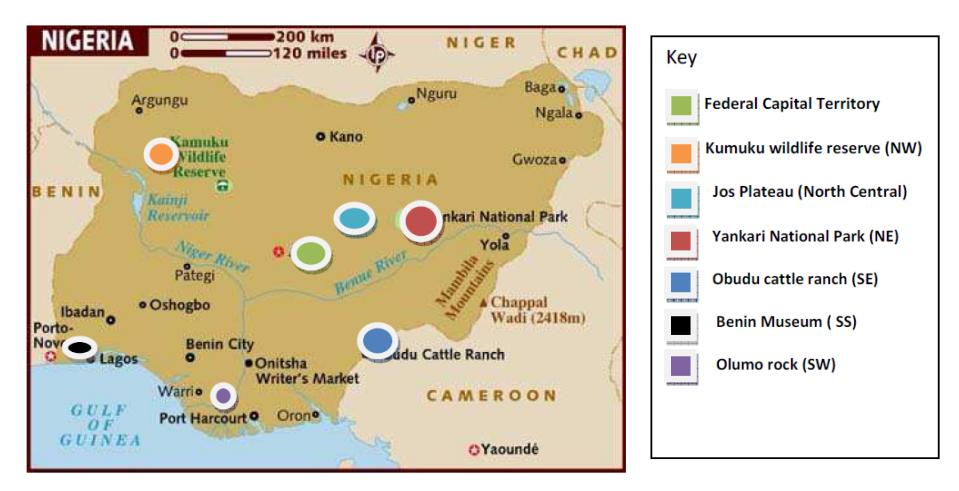
Figure 1. Relevant Destinations Across the Six Geopolitical Zones of Nigeria
There are still enough to be researched regarding tourism development in most developing countries in order to boost their economic status. During the past 2 to 3 decades, Nigeria has experienced series of transformation and awareness regarding tourism development. Nevertheless, recent studies revealed that most of the attractive destinations are yet to become viable products as a result of planning. Aweritefe (2007) identified 101 destinations across the regions and further sub-divided those destinations into 3 distinct categories (primary, secondary and the tertiary respectively) based on their attractions and potential to support economic development. Despite all these, more efforts are needed on the planning as a way to ensure its sustainability.
Factors Limiting The Development Of The Tourism In Nigeria
There are many factors which affect tourism globally. Nigeria is country with vast number of tourist attractions. Despite the abundance of the attractions in the country, effective planning approach coupled with the basic facilities such as accomodation, security, infrastructure and other basic amenities. However, evaluating or assessing tourism should not be treated uniformly. The following are some of the relevant issues limiting the growth of tourism in Nigeria:
- 1. Political instability
- 2. Insufficient tourism facilities, sites and supporting infrastructure
- 3. Insufficient measures and to attract private investors;
- 4. Poor awareness and enlightenment programs
- 5. Insufficient fund
- 6. Problem of land acquisition
- 7. Inadequate research opportunities and innovation
TOURISM IN OGUN STATE
Ogun state is a state in South-Western Nigeria. It was created in February 1976 with Abeokuta as the state capital and the largest city in the state. It is divided into 4 (four) main divisions of Egba, Ijebu, Remo and Yewa, all comprimising (20) local Government Areas and located in the moderately hot, humid tropical climatic zone of southwestern Nigeria (see figure 2). The natural resource endowment of the state includes land, water, mineral, forest and agricultural resources. Gateway tourism development corporation (GTDC), Oke-Ilewo, Abeokuta. Ogun State has had a significant level of development from the beginning of the 20th century. The early exposure of the state to western education wasn an important factor in its development. The state nevertheless still needs to develops further in order to meet the demands of the more competitive 21st century.
Figure 2. South-Western Part of the Country
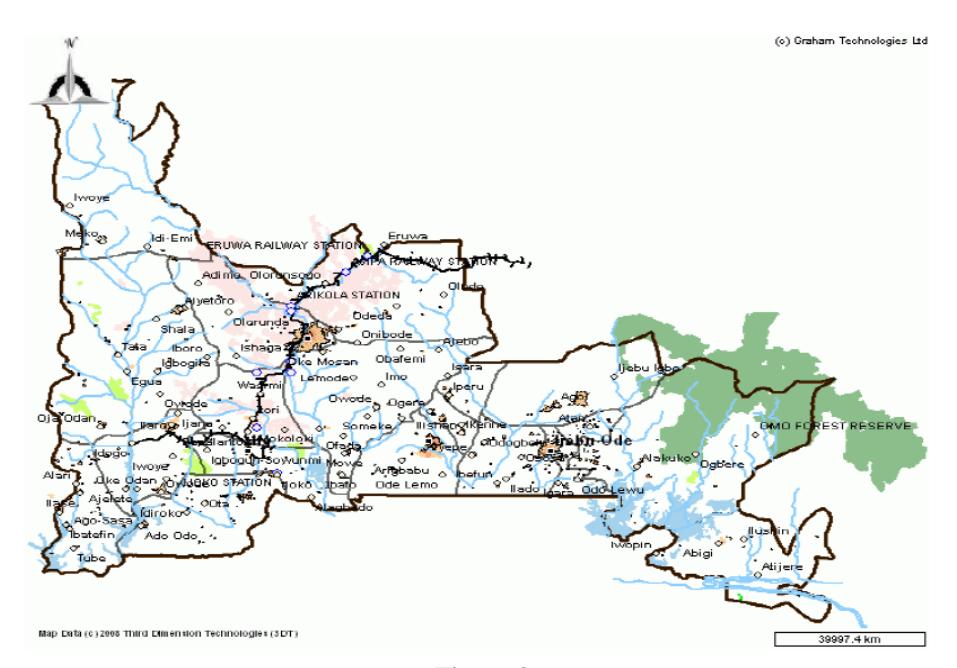
Figure 3. Geographical Map of Ogun State
TOURIST ATTRACTION IN OGUN STATE
Attraction is one of the indicators which determine the success of any tourism activity. Therefore; studying location attractiveness is the foundation of tourism study (Cho, 2007). Perhaps, attraction alone may not necessarily aid tourism development if in the absence of other physical, social and economic development strategies in the light of this; regional tourism planning should be given more attention and proper planning strategies in order to develop the potential and existing resources so that every location will have equal opportunity of developing their resource potential. Ogun State is endowed with lots of tourism resources, which are yet to be developed. Some of these include;
- Olumo rock; it is a sacred rock meaning (the lord built it) which is sbout 300 ft above sea level, in which the Egbas have regarded as their protection shrine which marked the end of their wanderings and struggles for existence thus regarded as the focal point of their promised land.
- Birikisu sungbo shrine, OKE-ERI; it is a pouplar tourist attraction in Ogun state located witihin the Ijebu division. It is a monument of religious tourism in the state with different cultural and religious secrecies.
- Ebute-oni tourist beach; it is a water-front to the small village of Oni, also within ijebu division toeards the Southern Sector of Ogun State.
- Yemoji swimming pool; the yemoji Tourist Centre is a natural swimming pool carved out of the cool stream of Yemoji located within Ijebu Division
- Other tourist potenstials in the state;
There are so,e other tourist potenstials that have been identified in the State. Those tourist cultural spots acquired are the Oronna Shrine, Ilaro (Yewa division), Orisagamu Ewa Stream (Rome division), Sagamu and others that have been identified basically for religious tourism are the Celestial City, Imeko, Taborro Hill, Ogere (Remo division), Traditional Regatta, Iwopin and the Tongeji Island near Ipokia (Yewa division).
Classification Based on The Resource Potential
Yewa Division ; according to help map showing the four divisions, the level of urbanization is low compared to other divisions. In addition to that, there is much influence of nature based on the ecology, therefore, and agro-tourism based on the potential and resource.
Egba Division; this occupies the largest part of the entire state and it is also the divison where the capital city belongs. Although, there are lots of awareness and attractiveness and attractions already on ground but need improvement and sutainable practices. Due to the level of urbanization and improved amenities with some cultural tendencies, the divisons should be developed for urban and cultural tourism
Remo Division; this division should be developed for cultural tourism due to location and socio-economic characteristics.
Ijebu Division; it also occupies a vast proportion of land with many tourist destinations. Domestic and nature tourism should be encouraged and developed in this region.
Figure 4. Identifying Potential Tourist Attractions in Ogun State Based On The Regions
Role of Planning
In physical planning, tourism focuses on accomodation, transportation, land uses, attraction and development. Current trend demands effective and strategic role in order the foster the development of tourism within the regions. These essence of tourism is to view experiences and events that cannot be actualized in one's usual residence. However, domestic, rural and cultural tourism should form the main strategies towards developing tourism in most developing countries. This is also because most developed countries have gone a long way regarding the quest for development. Therefore, the only alterbative way which could create attraction to the developing world is the improvement of domestic and cultural heritage coupled with good planning framework and adequate facilities to support the activities. Creating unique views in tourism improves the attraction and motivation for the tourists. The following suggest ways on how tourism can be improved through planning in the developing countries:
- Constant review of the regulatory framewrk on environmental, economic and social policies at the national level
- Formulation of regional development strategies and thye evaluation of the likely impacts of tourism activities on the destination environment at the regional level
- Carrying capacity, density control, land use and sustainable community at the local level
- Public awareness and involvement in the planning process.
CONCLUSION: FUTURE PROSPECTS
We irresistibly live in an unequal world where resources are not evenly distributed. The truth of the matter is that tourism has become one of the most important global industries of today. Therefore, taking regional approach to planning tourism in indeed effective and a prefered way to assess, evaluate and describe the pattern of tourism development and the scope for future development. Most developed countries succeeded in this ang thus; expaind their chances of economic growth and development. Ogun state is one of the states with many development potentials in Nigeria. For this reason, efforts need to be put in order to increase the development opportunity. Attempts made so far have been on how to develop and integrate tourism into the national economy but failed as a result of "false starts" and poor implementation strategies. Regional development and planning implies macro understanding of the resource distribution across the regions and critical decription and spatial pattern of their respective economic potentials. Therefore effective planning strategies and good monitoring will enhance the progress. Most developing countries should try enlarge the horizons beyond urban and other types of tourism and encourage the attraction by promoting cultural, domestic and other local potentials which will create a unique scenic view for the tourist especially from the developed countries.