

INTRODUCTION
Climate has a reciprocal relationship with tourism (WCP, 2007; IPCC, 2007; Hamilton et al., 2005). On one hand, tourism can affect the climate conditions, and vice versa climatic conditions may also affect tourism. Various activities in tourism will be influenced, either
<sup>1</sup> Bandung Institute of Technology, Address: Jl. Ganesha 10 Bandung 40132, email: ariefr@pl.itb.ac.id.
directly or indirectly, by climate conditions. Similarly, climatic conditions in an area could attract tourist to visit the region but can also cause one not to visit (avoid) the region. Components of the climate that can influence tourism attractions and pattern of tourist visits are air temperature, rainfall intensity, humidity, and the wind pattern (Amelung et al, 2007; Biggano et al, 2007; IPCC, 2007: WTO, 2009).
Although there are reciprocal relationship between tourism and climate, this paper will only discuss the influence of climatic conditions to tourism, both on the supply and demand side. Coastal area is one of the leading tourism destinations, including in Indonesia. Many coastal areas have been developed into popular tourist resorts like Nusa Dua and Kuta in Bali, Anyer, Pulau Seribu, Pelabuhanratu, Pangandaran and Parangtritis in Java, and also many others in other islands of the archipelago. However, the beach area is also one of the most vulnerable areas to climate change impacts, particularly related to an increase in sea water level, which could damages various natural and cultural resources (Michel and Pandaya, 2010; IPCC, 2007).
Figure 1. Sceneries of Tourism Point in Pangandaran
One of a beach tourism area in Indonesia is Pangandaran in Ciamis Regency in West Java Province. Pangandaran is a popular tourist area and become one of the icons of West Java tourism and visited by a lot of tourists, mainly domestic tourists. Climate change could affect the characteristics and patterns of tourists visiting the area. In the future, the changes could affect the performance of the tourism sector, since damages that occur in natural and cultural resources, which become the main tourist attraction of Pangandaran beach area, could influence the attractiveness of the destination. Thus, global climate change is predicted to affect the supply (supply) and demand (demand) of the coastal tourism sector in Pangandaran area. In terms of supply, climate change may cause a damage to tourism infrastructures, natural and cultural resources that became the main elements offered by coastal tourism in Pangandaran beach area. Meanwhile, from the demand side, climate change could affect the number of visits and its pattern of visitations as well as perceptions and preferences of tourists to Pangandaran.
This study was conducted to identify the influence of climate and its changes on Pangandaran beach tourism destination, particularly on changes in physical conditions (environment), tourist attraction, tourist visit patterns and perceptions. Moreover, tourism
area manager and local authority could formulate measures of adaptive strategy to anticipate the impact of climate change on tourism destinations.
The necessary primary data and information were obtained from the tourism area manager, local tourism agencies, community members, and tourists. Secondary data about the number of tourist for the last ten years was obtained from local tourism agencies, while data about climate change component for the last ten years was obtained from local Geophysical and Meteorological Board as well as from local statistical agencies. Information concerning the influence of climate change to tourism in Pangandaran and adaptation strategies to cope with climate change and its impact was obtained from local tourism agencies. The number of quote sample was 60 tourists, mostly were domestic tourists. Tourists were particularly asked about their perception about climate change, and their pattern of visit related to climate change. Descriptive statistical analysis based on the frequency and cross tabulation were used in the analysis of data using Pearson correlation coefficient and regression.
THE GROWTH OF GLOBAL TOURISM
Tourism, which involves the movement of people from one geographical area to another at different (global, national, regional, and local levels), has experienced a steady growth. Number of international visitors has been growing very rapidly, from 25 million in 1950 to 808 million in 2005 and increased to 924 million in 2008, although in the year 2009, the number decreased (4%) to 880 million because of the deteriorating global economic conditions and widespread swine flu outbreak. It is estimated that this amount will increase at 3%-4% (to nearly one billion) in 2010 (UNWTO, 2009 and 2010). It was recorded that number of domestic tourists is far more than the number of international tourists (Republic of Indonesia, 2009; WTO, 2009). When considering data on the number of tourists on regional destinations, the number of tourists in some tourist destinations, however, may decreased.
Various types of tourism has been developed in many countries such as urban tourism, village (rural) tourism, marine tourism, beach tourism, ecotourism, agro-tourism, adventure tourism, special interest tourism, religious tourism, etc. Tourism could also create many jobs, both directly and indirectly, in developed and developing countries, in urban and rural areas (Republic of Indonesia, 2009; WTO, 2009). However, the growth of tourism, both globally and regionally, will be influenced by the climatic conditions (IPCC, 2007; UNWTO, 2009).
CLIMATE AND TOURISM
Climate system consist of land, sea and other water bodies, as well as living things. The system is very complex and dynamic, often experience changes in both long term and all of a sudden. These changes are influenced by internal conditions as well as by external factors. In the last few decades, global and regional climate has changed by natural factors and human activities (Viner and Agnew, 1999; Walker, et al, 2007; IPCC, 2007). This fact has resulted that climate which was initially considered comfortable and attractive for tourists, become uncomfortable now.
Millions of people from different countries have visited other countries for comfort of the climate. Many tourists travel to other countries to avoid unfavorable climate in the country of origin as well as to experience conditions which may not exist in their countries. For example, tourists from Indonesia and Arab countries who visited Europe in the winter season to enjoy the atmosphere, especially the snow season, whilst tourists from Europe who visited tropical countries during the cold season are coming to enjoy the sunshine in the destination country. Nonetheles, extreem climate conditions in a tourist destination could cause tourists to avoid visiting these areas; even canceled the trip (Viner and Agnew, 1999). For example, the floods that inundate a tourist area could cause tourists to leave or cancel visits to these places (Bloomberg, 2010). Heat wave in Europe and America caused some elderly tourists (and some locals) died, while others avoid visiting these places (Casimiro, 2007; NOAA, 2010).
THE IMPACT OF CLIMATE CHANGE ON TOURISM
Global climate change will give impact to each region in accordance with the vulnerability and the capacity of the area. Similarly, the impact of climate change on tourism is also different from country to country, not only because of differences in the characteristics of the tourist destination but also differences in perceptions and preferences of tourists visiting the countries. There is a difference in the preferences shown by different types of tourists from many different regions (Biggano et al. 2005). Amelung and Moreno (2009) conducted a study on the impact of climate change on tourism destinations in the most popular beaches in the Mediterranean Europe. Result of the study stated that the coastal region, as the popular tourist attraction, is very vulnerable to climate change impacts (IPCC, 2007).
Result from the survey to the Belgium and Dutch tourists visiting the Mediterranean, showed that climatic factors play an important role as an attracting factor for tourists to visit the Mediterranean; despite that some of those who visit the area claimed do not tour to the beach. It showed that 76.5% of respondents had chosen climate factors as the first factor of the 14 attributes affecting their preferences of tourism destination. A comfortable climate becomes an important factor for tourists to visit the Mediterranean. On the other hand, although the climate is considered important, the existence of climate change such as rising temperatures did not significantly affect the tourist attraction. The rise in temperature is not too adversely affecting their comfort in travel. Tourists even will continue to visit the Mediterranean, although they are aware of the possibility of encountering bad weather there (Amelung and Moreno, 2009).
Another model that describes the influence of climate on tourist movement was developed by Lars Hein (2007) on the movement of tourists in Spain. This model assumes that the movement of tourists is determined by two things, namely (1) uniqueness/distinctiveness of the attraction (natural resources, landscapes, culture, etc.) and (2) climate. This model has accounted for two possible conditions, the destination may have a very pleasant climate, but does not have a strong attraction as a tourism destination. Vice versa, it is an attractive tourist destination and a very specialized/unique, but climate is not comfortable for tourists. The model has resulted in finding that the preference of tourists to the cultural, natural, and other tourist attractions have not been changed. This model also assumes that no change in travel time preference. During 2070-2099, if the temperature in Spain increase by 4.4 °C-5.6 °C, then the value of TCI (the Tourism Climate Index) of Spain will decline significantly, especially in the summer. Temperatures in the summer in Spain will be very high, so it would not attract more tourists. It is predicted that tourism Spain in the summer will show a sharp decline in the year 2080, around 20% per year. Most tourists who usually visit in summer will move into spring and autumn.
Global climate changes, particularly temperature increases, will have an impact on the tourism industry. This becomes the basis of study of Lau (2006) to perform analysis on the role of climate-related choice of tourist destination. The basic of this study is preliminary study carried out for two months in the summer of 2004 at the main departure point in Hamburg, Germany. This preliminary study indicated that the climate was the most important factor in choosing a destination for tourists with a significant time lag. On the contrary, a small sample of eight trips to China shows that the climate seems less important for tourists to travel to China compared to the landscape and scenery. The analysis also shows that access to the sea and the lake is the second most important factor for tourists when choosing a tourism destination. However, global warming effects on rising sea levels will have a large effect on the tourism industry. Although visiting the beach is less important for foreign and domestic tourists in China, the impact of climate change on the coast will remain to be felt.
CONDITION OF PANGANDARAN TOURISM AREA
The study area is located in Pananjung and Pangandaran Villages, Pangandaran District, about 92 km from the city of Ciamis. Pangandaran tourism area, one of the leading tourism destinations in West Java Province, is situated at 0-25 meters above the sea level. Most of beach area are directly facing the Hindia Ocean. The physical condition of the beach is flat, which become the main attraction for tourist.
As a popular tourist destination in West Java Province, Pangandaran area has several natural attractions such as beaches, marine and terrestrial, nature reserves, natural caves as well as man-made Japanese caves heritage. Besides, cultural attractions such as International Kite Festival has attracted many tourists. Pangandaran is also included in the Visit Indonesia 2009. Visitors to Pangandaran are still dominated by domestic tourists, particularly from regions in West Java (Ciamis, Tasikmalaya, Garut, Bandung), Central Java (Cilacap, Purwokerto), and Jakarta. Study by UNWTO (2009) showed that tourists generally were repeaters who came with family (41.5%) or friends (34.5%) for holidays. They usually stayed for 2-4 days (59%) or for a day trip (33%).
Beautiful white sandy beach with a gentle wave also attract foreign tourists, although in a relatively very small number, averaging less than 1% of total tourist visits during the periode of 1998-2008. In the period of 1980-1995, actually, this area was one of the popular tourist destinations for foreign tourists, especially those who travelled to Yogyakarta or Bali through the Southern Java land route. Most foreign tourists were tourists from Australia, Germany, and the Netherlands. However, after the country's economic crisis and the condition of the beach was dirty and chaotic, due to many street vendors selling along the coastline, the attractiveness of this beach for foreign tourists was decreasing.
The study area is also located in the prone zone to natural disasters, particularly earthquakes and tsunami waves. On July 17, 2006 this area experienced an earthquake of 6.8 richter
scale and followed by tsunami waves as high as 3.5 meters which has been destroyed buildings on this area. The tsunami waves also caused hundreds of people (locals and tourists) injured and significant number died. Hundreds of people lost their homes and have resettled to other places. The threat of tsunami on Pangandaran tourism have resulted decrease in the number of tourist.
Table 1. Number of Tourists Visit to Pangandaran, Year 1998 – 2008
| Year | Domestic Tourist | Foreign Tourist | Total |
|---|---|---|---|
| 1998 | 526,374 | 11,021 | 537,395 |
| 1999 | 766,839 | 6,732 | 773,571 |
| 2000 | 1,424,719 | 6,481 | 1,431,201 |
| 2001 | 935,156 | 5,628 | 940,784 |
| 2002 | 915,361 | 3,882 | 919,243 |
| 2003 | 881,869 | 1,519 | 883,388 |
| 2004 | 968,128 | 3,344 | 971,472 |
| 2005 | 420,886 | 2,801 | 423,687 |
| 2006 | 261,842 | 1,618 | 263,460 |
| 2007 | 253,207 | 4,312 | 257,519 |
| 2008 | 480,703 | 5,041 | 485,744 |
Data source: Office of Culture and Tourism, Southern Ciamis, 2009.
In fact, the number of tourists to Pangandaran was quite unstable, which was influenced by holiday periode, economic conditions, disasters, and other externalities. The existence of unusual conditions such as the Bali bombings, increase of fuel price, and the tsunami disaster also resulted in decreasing numbers of tourists, direct and indirectly. In 1973, the number of tourist was about 53 thousands and significantly increased to 136 thousand at 1978. Tourism in Pangandaran attained its peak (1.4 million visitors) in 2000. However, in 2005, the number of visitors declined sharply to less than half of the previous year, and assumed to be due to the tsunami in Aceh which psychologically influenced tourists to avoid beach areas. The tsunami that hit Pangandaran beach in July 2006 had further impacted to the decrease in the number of visitors to Pangandaran. In the year 2007, the number of visitors was only 257,519 visitors. Then, it increased again and reached 485,744 in 2008. However, number of visitors in the last 5 years was still far lower than in 2000 (which exceeded 1.4 million visits). In general, Southern coastal area of West Java, which is prone to earthquakes and tsunamis, may experience decline in tourist visits, especially with frequent earthquakes in recent years in Indonesia.
Tourism had an important role in the economy of Pangandaran District. Hotel, restaurant, entertainment, and recreation sector had the highest contribution to Regional Gross Domestic Product, accounting for 24.6% (Local Statistical Bureau, 2008 in UNWTO, 2009). Before tsunami, income generated from entrance ticket was 3 billion rupiahs. It was estimated that about 1,800 people worked at more than 130 hotels in Pangandaran.
Thousands of local population involved in local economic activities supporting tourism such as food stalls, street vendors (selling food or souvenir), souvenir shops, and many other services (photos, bike rental, massage, surf board rental, etc). However, after tsunamis (Aceh and Pangandaran), income from entrance tickets decreased to only 700-750 million rupiahs (Gatra, Number 36, Juli 2006 in UNWTO, 2009).
Nowadays, the number of tourist is usually increasing, particularly at every national holidays such as lebaran (Eidul Fitr), Christmas and New Year, as well as other school holidays. Peak seasons usually occured in August, October and December to early January, which then declined drastically during the months of February-March. High number of visitor at Pangandaran tourism area in certain months was caused by the specific tourism attractions which were held annually, such as a kite festival, boat races, etc.
CLIMATE CONDITIONS OF PANGANDARAN TOURISM AREA
Climatic conditions in the study area showed an increased in average monthly temperature about 0.5 °C over the period of 2001-2007 as compared with the average of 30 years earlier (1961-1990). In the study area, there is a range of temperature increase between 0.1 °C-0,5 °C, which is in accordance with a study conducted by the IPCC (2007) that showed an increase of air temperature in Indonesia of approximately 0.3 °C since 1900. This temperature observation data is interpolated from the closest weather station of Pangandaran beach, namely Kincring Station. Substantial rise in temperature occurred in August, while the lowest increase is in November.
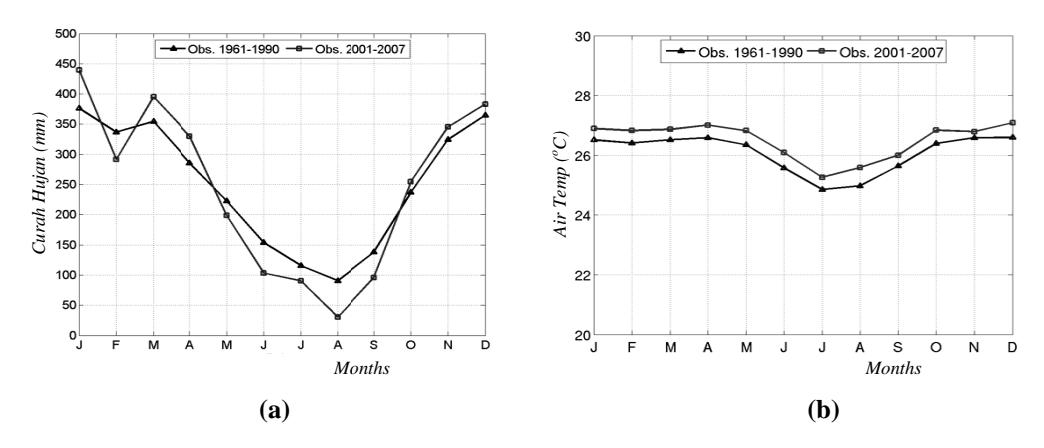
Figure 2. Average Monthly Rainfall (a) and Average Monthly Air Temperatures (b) Source: Rosyidie, et al., 2009)
Composite data on average monthly rainfall from the Global Precipitation Climatology Centre (GPCC) in the study area also showed a change in climatic conditions. In Pangandaran area, increase of rainfall might occur in February, on the contrary, it was a decrease of about 60-70 mm of rainfall in the period of 2000-2007. During the period of
May to October it was increasingly dry. This is consistent with study conducted by the IPCC (2007) which indicated that there has been a significant decline of rainfall in tropical mainland since the 1970s, with a decline of 2% to 3% in Indonesia, especially at the peak of the rainy season, December through February. Decrease in the average rainfall in these months is accompanied by an increase in air temperature which would have implication in the decreasing level of comfort in the area.
In general, it can be said that there had been changes of climate conditions on Pangandaran beach area. The increase of average air temperature above average condition during 30 years has ensure this. A change in rainfall patterns in the last four decades has also strengthened the assumption that climate change has occurred in Pangandaran beach area. The data on average rainfall also showed that there was a change or a variation which maybe caused by local factors such as topography. The existence of climate change that occurred in Pangandaran tourism area can have an impact on tourism activities. Therefore, various impacts of climate change to tourism should be identified in order to prepare adaptation programs which can minimize the impact.
IMPACT OF CLIMATE CHANGES TO PANGANDARAN TOURISM AREA
The 1983-2008 data showed that there was an increase of average sea water surface temperature around 0.02 °C/year in the South Coast of Java, including Pangandaran Beach (Suroso and Sofyan, 2009). The warming of sea water surface in the coming period is predicted to cause the migration of fish from Indonesian waters to sub-tropical regions where the temperature is lower, so that it can affect fish populations in the region. Reduced fish populations will affect production and income of fishermen which then could raise a price of fish, especially for tourism purposes. The increase in temperature of 1° C-2° C for a long time will indeed cause damage to coral reefs, such as coral bleaching that can reduce the attraction for tourism. Coral bleaching has occurred in almost all the coast of Indonesia (NOAA, 2010). The 50,000km² of coral reefs in Indonesia (about 18% of the world's total) was already in a critical condition. A survey held in 2000 showed that 70% of Indonesia's coral reefs are in fair to poor condition (John Hopkins University, 2003 in World Bank and Department for International Development, 2007).
The damages of coral reefs, as a habitat of fish and other sea species, could finally influence the marine ecosystem that until recently become the main attraction of special interest tourism in the Pangandaran Nature Reserve, famous as Marine Park Area in Pangandaran. Sea water level rise as the impact of climate change is beginning to be experienced by areas around the South Coast of Java, including Pangandaran area. Study by Suroso and Sofyan (2009) stated that sea level rise occurs on average between 0.2 cm/year to 0.4 cm/year in the South Coast of Java, including Pangandaran Beach. Based on the prediction for the future, the entire coastal area in Indonesia will experience sea water level rise up to 50 cm-60 cm in the year of 2100. The sea water level rise or flooding could inundate tourism attraction and tourism facilities scattered along Pangandaran beach. This condition will eventually affect the performance of tourism in Pangandaran. Therefore, it needs a simulation about the predicted flooded area with the loss and damage caused by inundation of sea water.
Respondent from Pangandaran Technical Implementation Unit/UPTD (Local Office of Culture and Tourism, Southern Ciamis) expressed that, in the last ten years, climate change
impacts on the physical conditions (environment) and tourist attraction in the area of Pangandaran beach area as well as its influence on the number of tourists, have not been felt. There has been no change or a decrease in natural beauty (which is the main attraction) of Pangandaran beach which is caused by the changes in climate components. Disasters, particularly tsunami, have more influence on the physical condition and the number of tourists to the Pangandaran area. This was similar to the report of UNWTO (2009) which stated that tsunami in 2006 had a serious impact to tourism in Pangandaran area. However, changes in local weather patterns which happened in the last few decades might affect the sustainability of outdoor activities, especially some of the annual event held outdoor, which then ultimately affected the number of tourist visits.
Climate-related disasters which often occur in certain season is flooding or tidal wave, while coastal erosion occurred approximately once in a year on the East Coast of Pangandaran during the east-season winds. However, these do not create a significant impact on the physical conditions (environment) and the intensity of the attraction of tourists, because the concentration of tourists is in the West Coast that is relatively safe from inundation and coastal erosion. Tsunami, which is not related with global climate changes, affected more on tourism conditions in the coast of Pangandaran. Tsunami has ruined the buildings and stalls in the west coast.
To clarify the results of these studies, a survey to identify tourist perceptions on climate change and its impact on tourism attraction of Pangandaran was conducted by taking sample of tourists. The result showed that about one third of respondents felt the changes in physical conditions on coastal tourism attraction in Pangandaran beach area, which is shown by the narrowing of the beach (might be due to sea level rise) and decrease of vegetation. The majority of respondents do not feel any change in the physical condition of tourism attraction in Pangandaran beach area which are caused by climate change.
Until recently, no significant impact of climate change has affected to Pangandaran beach area. The local tourism managers have not experienced climate change and its impact, which may be due to their limited knowledge about those matters. Tourism area managers pay more attention to short-term impacts on tourist attractions and supporting infrastructure as important factors in the rise and decline of visitors. Change or damages on the physical tourist attraction today is more likely caused by major disasters such as tsunami, floods, landslides, and is not a direct impact of climate change. Nevertheless, the occurrence of extreme disasters (extreme events) that are related to climate change in the future have to be anticipated with good early warning system. Therefore, they should begin to notice the existence of global climate change issues and begin to implement measures to reduce the impacts of climate change. Currently, manager of tourism area, local government officials and community have been planting trees and coral reefs to anticipate and to reduce the impact of climate change on Pangandaran beach area.
THE INFLUENCE OF CLIMATE CHANGE TO TOURIST VISITS AND PERCEPTION
Climate change in Pangandaran beach, which caused changes in atmospheric environment (daily weather), will directly affect the comfort of tourists. The motivation to seek areas with different climate and atmosphere from their origin region is one of reasons to be considered by tourists when choosing a tourism destination. The result of the study showed that tourists from Bandung and its surrounding areas with a cool mountain climate choose to have a vacation in Pangandaran beach area.
The global climate change in recent decades has resulted in a climate that was initially considered to be convenient for tourists now are changing to not comfortable. Climate change could have a significant impact on tourism, particularly to the tourist's preference about tourism destination (Hamilton et al. 2004). The climate change and its impact on changes in tourist attraction can influence the pattern of tourist arrivals and tourist perceptions as well as preferences towards their destination.
Based on the data concerning the number of tourist visits and the variability of the climate components (air temperature, rainfall, and humidity) during the period of 1998-2008, there was a high correlation between climate changes and tourists visits to Pangandaran area. Correlation was shown in multiple regression analysis (Table 2) which indicated a correlation between changes in climate components (air temperature, humidity, and rainfall) and total tourist arrivals in Pangandaran area by the R value of 0.705. Therefore, tourist visits to Pangandaran could very likely to be affected by three climatic factors. However, when the correlation of each climate factors with the number of tourist visits were further examined, it showed that precipitation and humidity affected more for tourists to visit Pangandaran compared to the temperature conditions. The figure was indicated by the correlation value which was smaller (3.1%) for the number of tourists visit affected by temperature than the correlation between the number of tourists visit affected by rainfall (49.8%) and humidity (47.1%). Although these three climatic factors could influence tourists visit to Pangandaran, there were many other factors that have greater influence to the number of tourists visit to Pangandaran. This was indicated by the value of Adjusted R2 (0.280) on the relationship between the three climatic factors with the number of tourist visit. This means that these three climatic factors affected only 28% of the number of tourist visit to Pangandaran, while the rest of 72% were from other factors that were not included in regression analysis.
Table 2. Correlation of Climate Variability and Number of Tourist Visits
| R | R2 | Adjusted R2 | Std Error of the Estimate |
|---|---|---|---|
| 0.705(a) | 0.496 | 0.280 | 424073.027 |
(a) Predictors: (Constant), Rainfall, Humidity, Air Temperature.
(b) Dependent Variable: Number of Visitor/Tourist.
Data source: Rosyidie, et al; 2009.
Elements of climate, however, were not fully affecting the pattern of tourist arrivals. There might be other factors that caused greater impact on the pattern of tourist visits. Natural attractions such as beautiful natural scenery and beautiful beaches are factors that affect tourist arrivals. Results of the survey presented earlier showed that only 7% of respondents stated that climate factors as the reason for their visit to Pangandaran area. In addition, cultural tourism attractions (the annual cultural attractions) also highly influenced the pattern of tourist arrivals compared to the influence of existing climate change.
The annual fluctuation of tourist visit was not linearly related to the climate change that occurred in Pangandaran beach in the last 10 years. As observed, climate change which occured at Pangandaran area was not too significant, so it did not affect the pattern of tourist visits. Other factors such as the tsunami disaster in Aceh (December 2004) and the tsunami in Pangandaran beach (July 2006), affected more to the pattern of tourist visits to this tourist area. This was also indicated by a decreasing number of visitors significantly in 2005, 2006 and 2007. However, the number of tourists has then increased gradually in line with the improving security and political conditions in the region and country.
Based on the questionnaire (Rosyidie, 2010), most respondents (75%) believed that climate factors (rainfall = 52% and air temperature = 26%) affected their decisions to visit a tourism destination (Pangandaran). A study by Suwarto (2010) also stated that about 88% of respondents thought that the changes in climate variability would affect the pattern of their visit. In addition, 60% of respondents said they would keep on visiting Pangandaran area. Among them, about 12% would visit at the same time while nearly half of respondent (48%) would visit at other times, waiting for the weather condition to return normal. As many as 40% of respondents would not visit Pangandaran and divert to other destinations if there was a change of weather in the area. Therefore, climate change could affect tourism destinations to be visited.
Table 3. Preference of Tourist Respondents to Visit Pangandaran related to Climate Change
| Preference of Respondent to Visit Pangandaran Related to Climate Change | Percentage |
|---|---|
| To other destination at other time | 14 |
| At the same time but to other destination | 26 |
| To the same destination but at different time | 48 |
| To the same destination at the same time | 12 |
Data source: Suwarto, 2010
CONCLUSION
Number of tourists visiting Pangandaran area was fluctuating. The main factor affecting the decline in the last five years was the tsunami in Aceh (2004) and Pangandaran (2006). In addition, climate change at Pangandaran area started in the period of 1991-2000, which was shown by the increase in air temperature between 0.1°C-0,5 °C compared to the previous three decades, and the changing of rainfall patterns. These conditions could have a significant influence on tourism sector in the area.
Related to the supply side, climate change did not significantly affect the physical condition of tourist attraction in Pangandaran area during the last ten years. However, sea water level rise along the South Coast of Java, including Pangandaran area, (up to 0.2 cm/year) was predicted to inundate tourism facilities around the shore in the future. Related to the demand side, there was a high correlation between climatic factors with the number of tourist visits. Furthermore, climate change could also affect the pattern of tourist visit to Pangandaran area.
Although there were changes in preferences of tourists visit to Pangandaran area due to climate change, they would still visit Pangandaran area (both at the same time or at different times), despite the bad weather is predicted to occur in the region. Therefore, it is necessary to anticipate the impact of climate change on tourism in the future by preparing various related policies, which will minimize possible impacts caused by climate change in the future.
Basic approach in the development of natural tourist attraction is the environmental planning approach, and it should refer to the existing local spatial development plan, mainly related to management of protected areas, such as shoreline and Pananjung Nature Reserve. Developing and strengthening the capacity of institutions and all relevant stakeholders at all levels can increase the toughness of the region to the impacts of climate change. Finally, it need more effective integration of disaster risk considerations into sustainable development policies, planning, and programs at all levels, with special emphasis on disaster prevention, mitigation, preparedness and vulnerability reduction, related to Pangandaran tourism area which is vulnerable to climate change impacts.
This research is expected to be continued by more in-depth assessment of the impact of global climate change on tourism at similar destinations in other regions.
ACKNOWLEDGEMENT
Part of this research was carried out with the financial support of General Directorate of Higher Education, Department of National Education, Republic of Indonesia (2009). The authors would like to thank Tri Wahyu Hadi, Budi Brahmantyo, Ina Herliana Koswara and I Dewa Gede A. Junaedi for their contributions to this study.