

INTRODUCTION
Tourism as one of the fastest growing industry not only has become the main important economy for many countries but also it is considered as one of the fastest growing economic activities of the global trade. International tourism in particular has been growing so fast since 1996 (Smith, 1999), and World Tourism Organization (WTO) forecast of 1 billion international arrival in 2010 and 1.6 billion tourists by 2020, which shows definite rising of this industry. Variety of attractions in different countries motivates tourists from all over the world to choose the destination according to their interests. Natural as well as cultural
School of Housing, Building & Planning, Universiti Sains Malaysia. Address: 11800 Pulau Pinang, Malaysia. Email: banafsheh.farahani@gmail.com
attractions are considered as the main pull factors to absorb tourists worldwide. Considerably these attractions are significantly link to climate and any changes in climate reflects the industry seriously. Despite the positive forecasts in tourism growths, tourism is experiencing a considerable tension recognized as climate change.
Climate change currently turns into a main concern of many researchers as a global challenge facing humanity. Having numerous negative impacts of this problem makes the climate related industries to put more effort to control and manage these negative impacts. In this regards tourism as one of the sensitive industries to climate does not neglect the current and future impacts of this issue. In tourism activities it is confirmed that those countries where tourism is their major economic activity are considered as more vulnerable countries.
Respecting the cultural and natural attraction as well as its particular geography, Malaysia consider as one of the countries under the pressure of climate change. As tourism in Malaysia ranks as the second largest foreign earning for the country, climate change and its impacts is definitely undeniable. In this matter some researches have worked to find the impacts of this crises as well as adaptation or mitigation to the matter.
Climate Change and Tourism
As stated by Becken and Hay (2007. P.16). "To understand the climate of the earth, including its variations and changes over time and its interactions with tourism, we must have some understanding of the global climate system. The system consists of the atmosphere, oceans, ice and snow masses, land surfaces, rivers, lakes and the biosphere (including humans), as well as the mutual interactions and hence changes that are a consequence of the large variety of physical, chemical and biological processes taking place in and between these components" . Figure 1 illustrates the contributions of tourism and other human activities to global climate change.
According to Pleumaram (2007) climate is fundamental resource in tourism. More over Beken and Hay (2007) assert that tourism inextricably connected to climate and its related issues. In this regards the destination with nature attraction like beaches, mountains, winter sports and alike are more affected by climate change. Referring to the sensitivity of tourism to climate change, a number of studies (e.g. Maddison, 2001; Lise and Tol, 2002 and Hamiltton, 2003) have been undertaken to find more about the impacts of this issues in tourism. In this respect, Berritella et al. (2004) believes that the main impacts of climate change on tourism will appear by 2050.
From another point of view, Bigano et al. (2004) indicated that the result of researches in this area was not useful enough. They refer to some main reasons in this concern. Not including domestic tourism in most studies as well as analyzing just few countries and coming up with the bias results are those argues which they denoted. It is believed that domestic tourists are five times more than international ones and studying few countries is not enough for a reliable conclusion (Bigano et al., 2004).
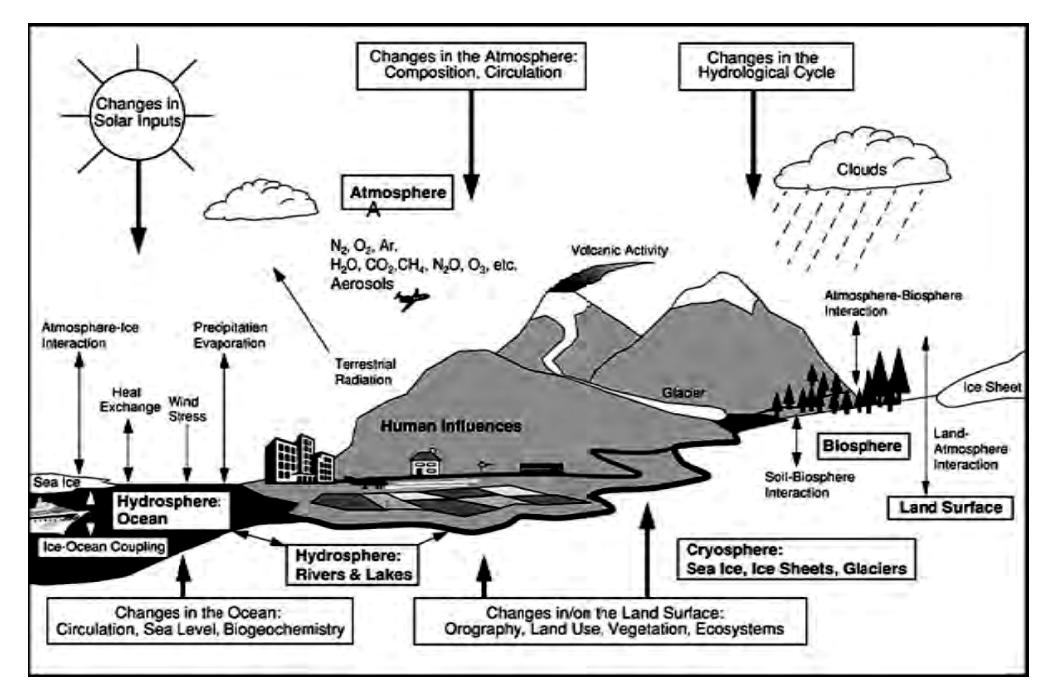
Figure 1. Contributions of Tourism and other Human Activities to Global Climate Change Source: After IPCC, 2001
Ranade (2009) by referring to tourism as a largest growing industry and the risk of climate change for its future, claims six elements of climate change which directly influence tourism related activities. Temperature, sea temperature, ocean acidification, sea level rise, rain fall storm activity and snow are those connected factors. On the other hand, Ehmer and Heymann (2008) consider both loser and winner for climate change regarding to shift in tourism flows. Ehmerald and Heymann (2008) refer to different areas which are at climate change risks. They mentioned that in Europe, Mediterranean countries suffer from climate change more than the others. Higher temperature and water storage make tourists to be less motivated to visit those countries in high seasons. Eastern Mediterranean countries will be losers in this matter while countries like Benelux, Denmark, Germany and the Baltic countries will be the winners. France and Italy in this group are successful regarding to their diversified tourism offers structure. Outside Europe the degree of misery of climate change are different. Canada, New Zealand and USA are the winners of the issue. It is also believed that those countries like Thailand, Malaysia, Tunisia and other countries in which tourism is one of their main industry and has economic dependence role for the country suffer more.
Tourism in Malaysia
Malaysia is located in South-eastern Asia and its bordering countries are Thailand in north, Singapore in south and Indonesia in the west of West Malaysia. East Malaysia includes the states of Sabah and Sarawak and Brunei borders the state of Sarawak while Indonesia is located to the south of these both states (Malaysia vacation guide, 2011).
Malaysia is dating back to the 13<sup>th</sup> century, and has a rich history and different islands that considered charming by having diverse of fauna and flora. It has various racss that compose it population as Malays, Chinese and Indians. They live as one familiy and they celebrate together in their festivals and events. This unity has been an important factors in attracting the millions of people from different countries visting Malaysia. Referring to the geography, Malaysia has a total land area of 329 733 km2 and most coastal regions are low-lying areas less than 0.5 m above the highest tide or are within 100 m inland of the high-water mark which makes them vulnerable in the case of sea level rises.
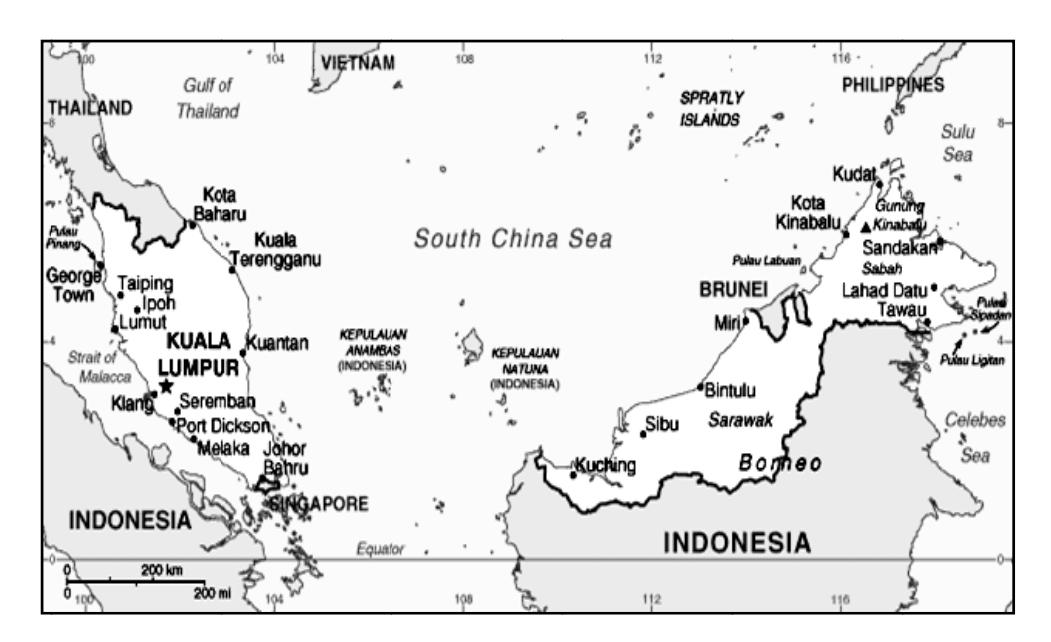
Figure 2. Map of Malaysia Source: Malaysia vacation Guide, 2011
Tourism Malaysia (2010) refers to variety of activities provided for tourists traveling to Malaysia. The mentioned activities include diving, golfing, formula one, cave exploration and bird watching. Additionally they refer to weddings and honeymoons as well as shopping as the other activities. Furthermore, programs like home stay, and Malaysia my second home are another tourism programs in Malaysia. Malaysia contains theme parks, sail and cruise, spas, and national parks which gives the tourists different alternative to choose. Health tourism, education tourism, ecotourism, and agro tourism are some kinds of tourisms present in Malaysia. Food and contemporary arts are the other options presented to tourists in Malaysia.
TOURISM AS A VICTIM OF CLIMATE CHANGE, ADAPTATION AND MITIGATION: CASE OF MALAYSIA AS A VULNERABLE DESTINATION
Tourism industry in Malaysia has started promoting Malaysia as a destination since 1960s when it was in its infancy stage (Badaruddin and Yusnita, 2004). As Tourism Malaysia (2003) noted, Malaysian tourism industry has been ranked the second largest foreign income earners after manufacturing in 2000. Annual report of Bank Negara Malaysia still ranked the industry as the second largest foreign earning which tremendously grows every year. Malaysian ministry of tourism indicated that number of foreign tourists travelling to Malaysia is approximately (23.6) million arrivals in 2009, and pointed to the rising number of tourist arrivals to the country years after years. Table 1. shows this raise from 2003-2009.
Table 1. Tourist s and Receipts: Malaysia 2003-2009
| Year | Tourist Arrivals (Million) | Total Tourism Receipts (Billion) |
|---|---|---|
| 2003 | 10.5 | 21.3 |
| 2004 | 15.7 | 29.7 |
| 2005 | 16.4 | 32.0 |
| 2006 | 17.5 | 36.3 |
| 2007 | 20.9 | 46.1 |
| 2008 | 22.0 | 49.6 |
| 2009 | 23.6 | 53.4 |
Data source: Tourism Malaysia
Impact of Climate Change in Malaysia
Climate change has its global impact on people's life in general and exclusively on different industries which are connected to the climate. Intergovernmental Panel on Climate Change (IPCC) assessments records that Malaysia encounters this issue (Bindoff et al., 2007; Trenberth et al., 2007). In the discussion of climate change in Malaysia, MOSTE (2000) asserts that since 1951 the temperature of Malaysia had increased 0.18 \(^{0}\)C and since 1986 an average annual increase in sea level is about 1.25mm at a southern coastal of the Peninsular Malaysia (UTM, 2007). Therefore, the climate conditions are expected to continue on rising trend (Wan Azli et al., 2008). Tiong et al. (2009), forecast that temperature in Malaysia conceivably turn out to be warmer during mid and end of the century.
A high decrease in monthly rainfall in West Coast region and increase in monthly rainfall over the North East Coastal of Peninsular Malaysia are possibly expected (Tiong et al., 2009). In terms of river flows, numerous watersheds in East Coast of Peninsular Malaysia were simulated as rises in hydrologic extremes when compare with their historical levels. "By the end of this century, more significant changes in the annual rainfall are expected in the western regions of Sabah and Sarawak" (Tiong et al., 2009 p. 1).
Even though, Malaysia has unique and rich resources including water, land, coastal, marine, forestry and biodiversity development of the socio-economic activities on irrigation water supply, agriculture, potable, coastal infrastructure, marine resources, ecological and ecosystem services are dependent and sensitive to climate changes (Tiong et al., 2009). Each 10 C temperature increase may cause prolonged drought conditions and 10% reduction in rice yields may putting national food security at risk and negatively influence the recent flooded rice ecosystem (MOSTI, 2000). Ramadasan et al. (2001) stated that the oil palm plantation probably and adversely affected temperature raise which causes rainfall to be increased and ends to flooding and drought. Due to an increase of flood intensity and regularity, further costs on water resources management are needed. Moreover the necessity of the existing flood mitigation schemes as well as adjusting future flood mitigation plans are noticeable (Low and Ahmad Jamaluddin, 2001). Furthermore, the increase in sea level could cause shoreline erosion, tidal inundation, increased wave action, saline intrusion and also causing relocation of coastal infrastructure, loss of fisheries resources, submergence of corals, plantation lands, and mangrove forests (Lee and Teh, 2001). The climate changes in Malaysia are primary factor causing common communicable diseases that are sensitive to endemic as dengue, Japanese encephalitis, cholera, malaria, meningococcal meningitis, leptospirosis and rickettsial infections (World Health Organization, 2007) This issue not only cause the anxiety for the country by itself but also, brings travelers uncertainty avoidance not to take risk and travel to the country which reduce the number of tourist arrivals for the country.
Malaysia Response to Climate Change
As mentioned before climate change is a global challenge and Malaysia has been affected by it as well. It is widely accepted that the issue historically started from the production of greenhouse gas which is commonly used by developed countries, and challenges begun from international socio-political obligations (Tiong et al., 2009). Due to a quick industrializing economy with quite higher per capita emission among developing countries, Malaysia may need to play vital role in future and to challenge potential trade obstacles on high carbon footprint products.
In this regards Malaysia faces the challenges and come across to the important concern of climate changes for mitigation and adaptation to reduce health impacts. According to World Health Organization (2007) these struggles are: (1) modeling climate change by developing and making a climate model to create relevant and localized scenarios; (2) land use change and forestry to enhance management to balance development goals while reducing and/or avoiding deforestation and land degradation; (3) food sufficiency by putting stress on food production due to anticipated rise in temperature and prolonged periods of drought; (4) providing coastal vulnerability index (CVI) by national mapping exercise to identify coastal areas that are susceptible to the impacts of sea level rise; (5) technology transfer in order to have access to cost-effective technology to reduce carbon emissions; (6) greenhouse gas inventories through research to establish local emission factors, enhancement of institutional capacity for collation of data; (7) trans-boundary haze via further enhance regional cooperation with neighboring countries to prevent and/or reduce the haze; (8) observe differences in diagnostic methods and reporting system and meteorological station representativeness and disease transmission dynamics; (9) concern data quality referring to many missing data; double entry and wrong zoning of dengue cases; (10) availability of data as climatic parameters are not available for all stations and incomplete dengue data available only for the last seven years (1997–2004).
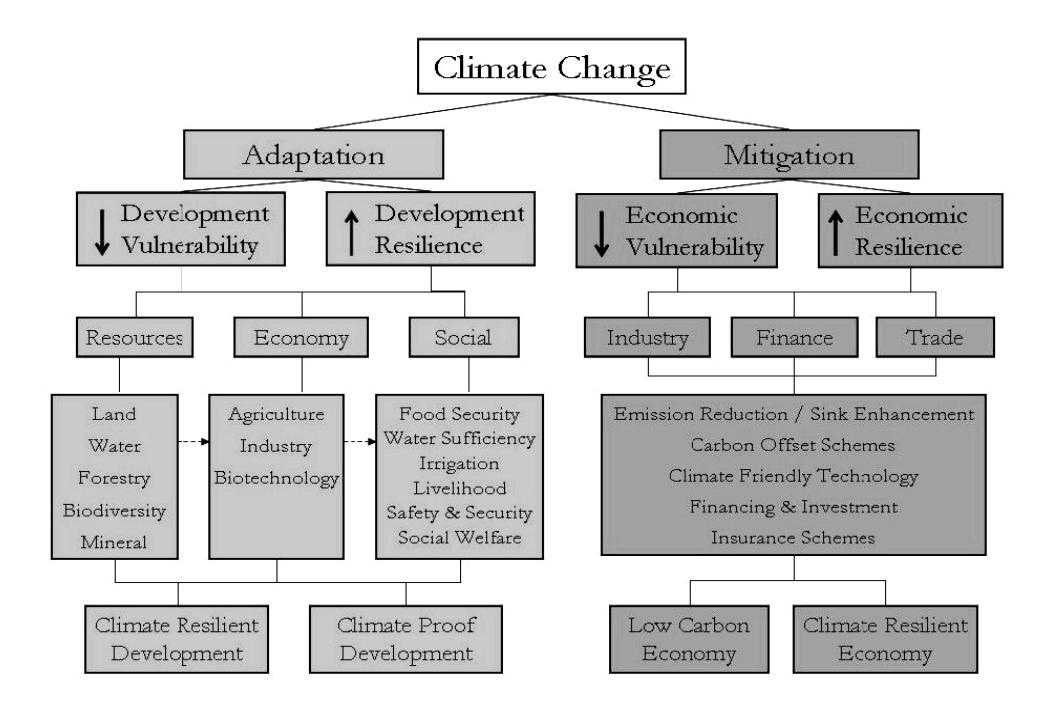
Figure 3. Overall Framework of a National Climate Change Policy Source: Tiong et al., 2009
In 2009, the study was undertaken by Tiong et al., (2009) intended to develop a national policy and strategies on climate change on fostering sustainable development in Malaysia to meet the requirements of the country and to carry out the United Nations framework convention on climate change (UNFCCC). In this regards, figure 2. shows a framework of a national climate change policy for Malaysia.
DISCUSSION AND CONCLUSION
Regarding to the clear scientific evidence, climate change turns to be one of the main issues in the world. Incidentally tourism as a climate related industry will face the challenges more and more day by day. This issue considers as the essential matter to be contemplate for sustainable tourism development in the 21<sup>st</sup> century. Tourism can play a significant role in dealing with this undeniable disaster. More studies are needed in different area in the case of both adaptation and mitigation. The planner, policy maker and tourism key holders should use the result of different studies and put them into action. Postponing these considerations will cause the disappearance of all valuable tourism resources and the time for action is at this point.
Those who have responsibility for tourism resources especially planners and policy makers have a little doubt about the importance of climate change for the future of this industry. Awareness of the variance of climate and reasons behind it is needed to be a superior concern not only for long-term planning but also to deal with existing conditions. As the climate change is affecting the tourist industry, the optimistic thought about increase of number of tourist arrivals is totally wrong and without a better understanding of the close relationships of climate change and gradual dying of tourism, the issue will be inconspicuous. More over it can be concluded that by lack of knowledge adaptation expectation will be impossible.
Damage or even complete wipe out of natural attractions like coral reefs, marine resources, beaches, forests and alike consider as the main climate change impacts for tourism in Malaysia. Additionally climate change increases the risk of flooding, damage tourism infrastructure as well as destroy archaeological resources and ruin dive and snorkeling destination. Anticipation of the crisis in the areas which are at risk will make the confronting easier for the industry as well as preventing high cost of the overdue protection and maintain the attraction. Water, food and energy as well as human health security along with marine and global biodiversity and infrastructure settlements are the main adaptation which can be concern before being late.