

INTRODUCTION
Medical Tourism gained momentum in India in recent years, a trend supported by India's low-cost advantage and the emergence of new high-quality healthcare service providers (Indian Disease Management Association, 2010). In 2004, close to 200,000 international patients came to India seeking medical treatment (Bhangale, 2008). The main driving factors seem to be India's low-cost and high value specialist medical care. New Delhi and Gujarat became known destinations for cardiac care while Kerala and Karnataka are prime destinations for Ayurvedic healing (Hazarika, 2008). The healthcare industry is now emerging as one of the largest service national revenue generators for India. The medical tourism market has grown steadily from US$333 million in 2004 to a predicted value of US$2 billion by 2012 (Ernst & Young, 2008). Further reports estimated that medical tourism to India is growing by 30 per cent a year (RNCOS, 2010).
Address correspondence to Keith Ng: International Business Management, Southern Cross University, Military Road, East Lismore NSW 2480, Australia. Email: keith.ng@scu.edu.au, keithynng@gmail.com.
The surge of patients arriving in India seeking treatment is attributed to India"s highly costcompetitive medical treatments and technological advances in areas such as cardiology, cosmetic and orthopedic surgery, dentistry, eye care and preventive health checks (Indian Disease Management Association, 2010). Costs of comparable treatment in India are on average one eighth to one fifth of those in the west (Hazarika, 2008). Similar treatments such as cardiac procedure and surgery, preventive health screening and diagnostic tests are comparatively cheaper. The overall cost of travel and treatment in India is still far less than the expense of just the medical treatment in many western countries.
The main purpose of this study is to determine issues important to the effective positioning of medical travel and tourism destination, using India as a case study. These factors will contribute to a model of effective destination positioning for the medical travel and tourism industry. Specifically, this study will provide appropriate positioning strategies to place India as the most economic and exotic destination for medical travel and medical tourism.
LITERATURE REVIEW – UNDERSTANDING MEDICAL TOURISM
Medical tourism gained momentum in India over the past few years; a trend supported by India"s low-cost advantage and the emergence of new high-quality healthcare service providers. In this study, medical travel is defined as travel exclusively motivated by a medical need where quality and value proposition are the main selling points whereas medical tourism on the other hand is motivated primarily by recreation where the destination and amenities are the main points for consideration. Carrera and Bridges (2006) further defines medical tourism as an activity in which patients travel to a different country for the enhancement or restoration of the individual's health through medical intervention.
In 2004, Healthcare became one of the largest service sectors in India with a reported spending of US$ 34.9 billion, about 5.2 percent of nominal GDP (Ernst & Young, 2008). This amount is expected to grow at a rate of 12 percent per annum and rise up to 5.5 percent or US$60.9 billion of GDP. The Gallup organization (2007) estimated that approximately 27% of foreigners arrived from all over the world for medical treatment as shown in Figure 1.
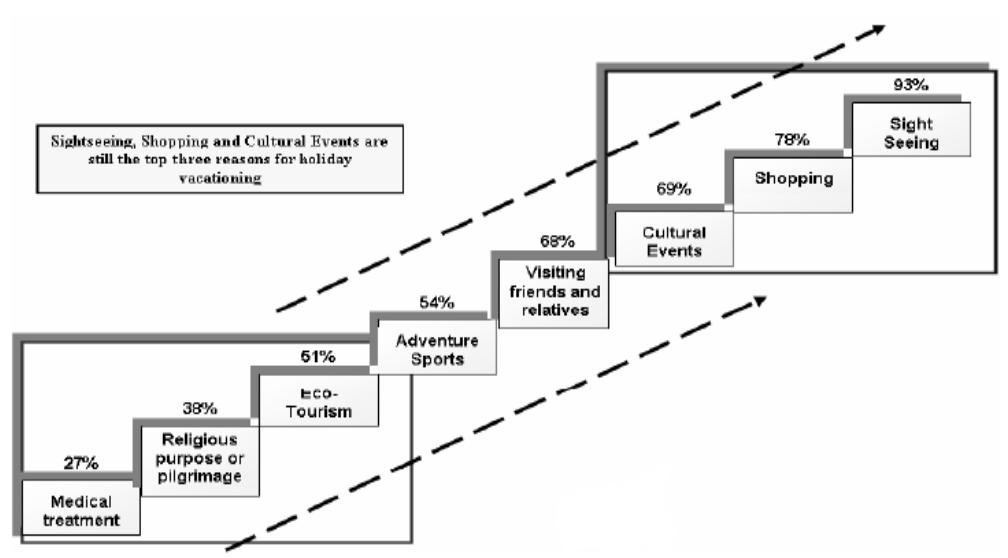
Figure 1. Type of holiday activities preferred by foreigners in India Source: Adapted from The Gallup Organisation, 2007
An incisive and informative analytical study found that foreigners preferred going to India for private health care treatment (Sengupta & Nundy, 2005). The medical tourism market in India is estimated at US$ 333 million and increasing at about 25 percent and is predicted to become a US$ 2 billion a year business opportunity by 2012. The recent remarkable growth of the private health sector in India has come at a time when public spending on health care at 0.9% of gross domestic product (GDP) is among the lowest in the world and ahead of only five countries – Brunei, Myanmar, Pakistan, Sudan, and Cambodia. This proportion has fallen from an already low 1.3% of GDP in 1991 when the neo-liberal economic reforms began (Ministry of Health & Family Welfare, 2002).
Given the importance of medical tourism as a national generator for India, this paper enables the Tourism and Medical authorities to examine the concept of Medical tourism. India will have to face many road blocks, challenges and it may incur obstacles in the way of successful implementation of health tourism. Ultimately the results of this study including the model and guidelines listed forms a reference point for positioning India as a Global Healthcare destination.
RESEARCH PROCEDURES
Grounded theory, as described by Glaser and Strauss (1967), Glaser (1978, 1992, 1994, 1998, 2001) and Dick (2002), was used as a systematically applied set of procedures for building framework. Our principal data collection method of this paper was interviews with spokespersons representing hospitals in India, the Ministry of Tourism and Health in India, India Tourism Development Corporation and Kerala Tourism Development Corporation. Once the research begun, there was always interest to identify people who might provide disconfirmation of the information that were gathered. Similarly the questions asked were modified at each interview depending on what was found to that point. Thus the study was datadriven. Once it became obvious that no new information despite having sought out very different sources, sampling was terminated (this has been termed theoretical saturation in grounded theory). Data was coded on an ongoing process and involved identifying broader categories of meaning from the very specific responses made by interviewees.
Data Collection Method
Guided by the principles of grounded theory, data was collected following the principles of a well-designed data collection strategy described in the works of Creswell (1998). These included:
- (1) Note-taking during Interviews. Glaser (1998) recommends against tape recording and word-by-word transcribing. He cites the following main reasons: it undermines the power of grounded theory, forestalls and delays theoretical sampling, and it prohibits confidentiality. Dick (2002) agrees that more understandings could be obtained from the generation of additional interviews in the time needed to transcribe a tape recording. However, several researchers have offered differing opinions (e.g. Atkinson & Heritage, 1984; ten Have, 1998; Sacks, 1992). To maintain a balance, key-word notes were taken during the interviews and were immediately converted to represent accurately the participants" words after the interview.
- (2) Eliminating the influence of the researcher on participants studied, known as reactivity (Maxwell, 1996) or consequential presence (Emerson, Fretz & Shaw, 1995). An integral part of qualitative research is that the researcher becomes "an instrument of analysis"
(Strauss & Corbin, 1998, p. 53), and thus there exists the potential for reactivity in how the researcher collects and "directs" data through the nature of questions being asked. In this study, the goal was not to eliminate this influence but to understand and use it productively (Hammersley & Atkinson, 1983). In our situation, it was not possible to completely eliminate this influence; our positions were researchers. We were conscious about our positions as those that would be able to provide substantial benefits to participants being interviewed. To maintain a balance between being objective in the study"s findings and minimising reactivity, open-ended and semi-structured questions in the early phases of the study were deliberately used. These questions allowed the participants to talk, and participants were probed further when necessary, thus avoiding leading questions. This was done until the properties and the dimensions of the categories emerged.
- (3) Subjectivity of interpretation arising from participants" perspectives was used to generate theory. It is important for the researcher to be sensitive to one"s own biases, values, experiences and judgments (Locke, Spirduso & Silverman, 1987). Davis (1986), and Guba and Lincoln (1981) suggest that these biases could be limited by conscious recognition and stating explicitly when researchers report their studies. Because this paper reflected the interpretation of complex interactions from the researcher"s point of view, there was a deliberate attempt to guard against possible biases throughout the entire study. This involved making a conscious effort to identify potential biases prior to interviews and discussing the interim findings on a regular basis with other researchers who might be able to point out biases and distortions.
- (4) Data analysis was conducted throughout the phases of research, alongside with data collection. This was done to ensure that the interview method was kept relevant to the study. Therefore, as required by the principles of grounded theory, the constant analysis of the data collected, drove the research.
In addition, in keeping with the principles of grounded theory, literature was used as a data source. As the aim of this study was not to verify existing theories, literature was initially reviewed to identify the scope, range, intent and the kind of research previously conducted in the area. This review assisted in focusing the study and prevented the researcher from leading participants in the direction of what had already been discovered (Glaser & Strauss, 1967; Streubert & Carpenter, 1995). The brief literature review was used to verify the study"s purpose, background and significance rather than to provide a conceptual framework to guide the study (Ng, 2008; Ng & Hase, 2008).
In this study, ten major hospitals, ten major travel agents, five major health care intermediaries and ten holistic treatment centers in India were approached inviting their participation. Interviews were undertaken in person and on the phone. Using convergent interviewing the initial probe question was: "India is well poised to take advantage of its position in medical tourism. What do you think of this idea?" A further question was asked if the participant needed some further prompting: "What could be some of the problems of in positioning India as a medical tourism hub?" Later interviews asked these opening questions but additional more focused questions based on the emerging ideas were also asked as part of the comparative analysis. The interviews were coded as soon as possible after interviewing for analysis. The results of the findings are summarised in the next section.
RESULTS
Analysis of the interview data revealed 78 quite specific issues that respondents thought would influence the positioning of India as a medical tourism destination. These issues were grouped according to conceptual similarity and twelve broader categories were identified that provide the basis for a model. These key categories or factors were:
- (1) Credibility
- (2) Customerised Programs
- (3) Clients
- (4) Competency
- (5) Collaboration
- (6) Cost
Figure 2 below shows the relationships between these issues as they appear to affect positioning strategy of medical tourism industry in India.
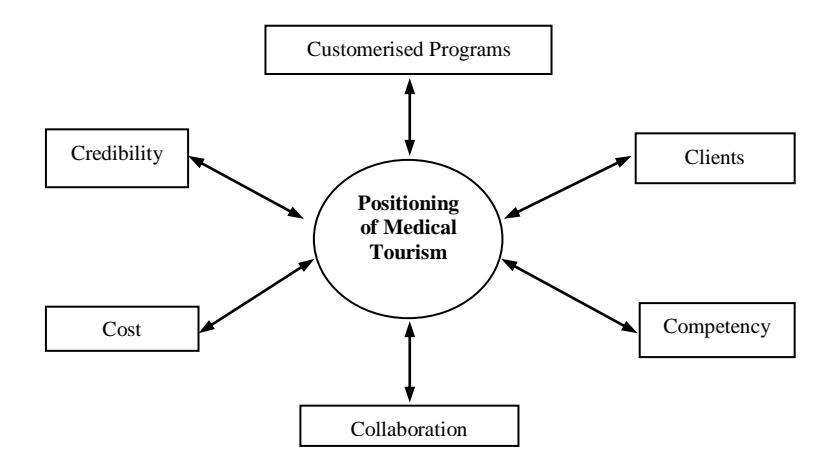
Figure 2. A 6Cs Positioning Typology of Medical Tourism in India
Credibility
An important topic which came out in the interviews was the credibility of hospitals and treatment centers. Some participants view accreditations as critical in marketing medical treatments overseas. However, there were differing views as to what constitute relevant accreditations given the nature of differing international standards.
Several recognized accreditations were deemed necessary for healthcare providers to compete in this industry. These included the National Accreditation Board for Testing and Calibration Laboratories (NABL), the Australian Council on Healthcare Standards (ACHS) and the National Board for Hospitals and Healthcare Providers (NABH). The NABL recognizes hospital"s efforts in the fields of histopathology, cytology, clinical biochemistry, hematology, microbiology, serology according to the International Organization for Standardization (ISO). The ACHS accredits organizations on the basis of assessments on constant evaluation and quality improvement programs. ACHS conducts comprehensive reviews to ensure constant maintenance of standards and quality. The NABH, a constituent board of Quality Council of
India, establishes and operates accreditation programmes for healthcare organizations. The board is structured to cater to the much desired needs of the consumers and to set benchmarks for progress of health industry through efforts like medical tourism initiatives.
Of the several accreditations mentioned, the Joint Commission International (JCI) was referred to the global benchmark for measuring standards of a hospital. Hospitals in competing countries are trying to obtain this accreditation to favor medical tourism. JCI accreditation standards are based on international consensus standards that set uniform, achievable expectations for structures, processes and outcomes for hospitals. The accreditation process is designed to accommodate specific legal, religious and cultural factors within a country. Currently only a handful of hospitals in India was accredited by JCI; namely Apollo Hospital Chennai, Apollo Hospital Hyderabad, Asian Heart Institute Mumbai, Indraprastha Apollo Hospital New Delhi, Shroff Eye Hospital Mumbai and Wockhardt Hospital Mumbai. As such, hospitals with such an accreditation would deem credible than those without. It was highlighted that the Tourism department could provide more support to hospitals in obtaining these international recognitions for constant quality maintenance and medical expertise. Since medical tourism is a recent trend, many hospitals that offer quality health care at affordable prices had not been accredited yet.
Customerized Programs
Most of the participants highlighted the tremendous opportunities on alternative systems of Indian medicine like Ayurveda, Yoga, Homoeopathy, Reiki and Naturopathy. Specifically, participants from the Tourism department identified Ayurveda and Yoga as India"s specialty treatments for the future.
It was reported that Ayurveda is believed to be the oldest healthcare system in the world. Ayurveda has become an integral part of the Indian System of Medicine which aims at purification of body, mind and soul. This treatment style is provided along with modern medicine and it is proved that both systems are made effective when applied in combination at appropriate levels and stages. In addition, participants were of the view that international patients have shown increasing demand for undertaking Yoga as a form of treatment. Yoga is a discipline of mediation thought to lead to spiritual experience and profound understanding or insight into the nature of existence. Internationally, Yoga is well associated with the practice of postures and meditation is the most highlighted aspect of Yoga.
While India offers a wide variety of treatments from invasive cardiac surgeries to general dental treatments such as porcelain inlays, ceramic veneers, crowns and bridges and teeth whitening, alternative medicines allow India to merge both modern and Indian treatments. It is here that many participants believed that India could position herself in specializing customerized programs that utilize both systems in combination at appropriate levels and stages of the treatments. Customized medical packages could help a long with India"s efforts.
Clients
Other than the patients seeking medical treatments, the various stakeholders in the healthcare tourism business such as the state and central governments, tourism departments, private entrepreneurs, travel agents and tour operators, specialty hospitals, holistic treatment centers and medical tourism intermediaries were identified to be important clients in positioning India as a medical tourism hub. The Government of India play a major role in facilitating the growth of this industry that not only harness the direct and multiplier effects of tourism for employment but also eradicate poverty in an environmentally sustainable manner. Given the intention to facilitate the medical tourism industry to achieve targets and expedite growth, there is a need to formulate policies aimed at classifying health service providers on the basis of infrastructure and quality of services offered. This will standardize procedures and aid foreign patients in selecting the best hospitals.
The private sector has to play a vital role in conjunction with the Government acting as a proactive facilitator and catalyst. Integrated tourism circuits should be created and developed based on India"s unique culture, heritage and civilization. For the private investors, the revenue generated from the healthcare tourism industry formed the main driving motivation. As the profits are higher segments such as holistic treatments, the level of investments in this sector were observed to be high.
As private investments are needed in specialty hospitals, holistic treatment centers and tour operations, medical intermediaries, tour operators and travel agents should seek for more support from the tourism department to carry out effective media campaigns. To improve the prospects of the industry, hospitals should also acquire international accreditation, integrate traditional and clinical treatments and offer end-to-end value added services by tying up with tour operators, airline carriers and hotel companies. Hospitals can also allow foreign patients to pay through credit and ensure proper support services to foreign patients after they return to their native countries.
Competency
It was noted that, the healthcare industry must ensure accessibility of all the required facilities to ensure sustainable growth in the industry. International patients" appraisal of a hospital is based primarily on the professional and medical expertise offered. Towards this direction, all hospitals and treatment centres should draw the best professional skills from key sources across India and around the world. This was observed to be a major factor attracting international patients to India especially from the U.S and Europe. All hospitals should develop their competency in providing timely services and treatments with cost-effectiveness. In addition, the most sophisticated technology has to be used for diagnostic and therapeutic purposes. Investment in the best technology is seen as the cause for exceptional clinical outcomes of international patients and also provides them the best possible chance of recovery and staying healthy. Constant commitment on quality is required to maintain India"s leadership position in world healthcare industry.
Collaboration
Alliances between medical tourism service providers and other industry segments can contribute towards growth in healthcare tourism. Initiatives from the part of state and central governments like subsidies and joint promotional programs are required. This could include acceptance of International Medical Insurance so that foreign patient can undertake treatment while all the dues will be settled by the Insurers in their home country. To position the country as a healthcare destination, it was discovered that only through strategic alliances and collective lobbying with the healthcare insurers and airlines that the stakeholders can reap the full potential of healthcare tourism in the country. In addition, to realize the immense potential in certain key markets, regional collaboration was also identified important. India needs to have tourism tie-up with the other nations to further promote and sustain mutual trade and economic cooperation in the region through the exchange of concessions. Both regional and political stability is essential for global marketing of a destination.
Cost
Inadvertently, low cost is what drives tourist arrivals to India. The interviews drew attention to the fact that cost-effectiveness is an important concern in increasing the number of foreigners seeking treatment in India. As compared to other major players in the medical tourism industry such as Thailand and Singapore, India provides better prices for the same treatment packages. The treatment costs, consulting costs, costs of tour packages and all allied services must be fixed on the basis as to sustain our competitive advantage as a "Cost-effective destination for hitech healing". Some participants revealed that the tourism authorities need to promote budget treatment for countries with weak medical system and luxurious medical treatments to countries with high per-capita income. The brand image of India as a medical destination would be communicated along with the unique selling propositions (USP) of India. The government should set-up a Health Tourism Committee including channel partners such as hospitals, specialists, government officials and tourism offices for the identification of potential markets, facilitation of market researches and formulation of objectives for International operations and regulations.
DISCUSSIONS
India has the potential to emerge as the Global healthcare destination. The dual advantage of expert treatment with cost effectiveness and exotic tourism destinations gives an upper hand to India over its competitors. In order to position the country as a medical tourism destination, the country has to face immense competition. It has to ensure that, all infrastructure facilities are up-to-date and sophisticated to meet the needs of tourists from Western countries. There is a need to not only satisfy the domestic health care requirements but also improve on governmental policies and practices. Lack of awareness about the facilities and amenities in India and misconceptions about the Indian culture may also cause hindrances. Unhealthy competition among service providers may also restrict the growth of health tourism. Problems may arise in finding out the target markets and in developing and selling the appropriate packages. Unless there is a sense of close co-operation and understanding between the government, medical experts and tourism operators, the task would be even more difficult to implement. The crucial partners in this industry include Central Government Ministries of Finance, Tourism and Health, medical entrepreneurs, tourism industry and insurance companies.
Subsidizing land taxes and reduced import duties for medical equipment for the private sector may cause divergence of the governmental funds which could otherwise be used for improving public healthcare and basic infrastructural facilities causing a major constraint on medical tourism. Medical tourism is also charged liable for internal brain drain within the country as medical professionals tend to migrate from public services to private sector for gaining more remuneration.
India needs to develop a unique selling proposition to brand herself as a destination for medical tourism or health tourism. India is in a position to offer medical services at a fraction of the cost compared to that in many countries in the West, matching the quality at par with developed countries. Thus by providing cost-effective treatment with holistic medicinal services like yoga, meditation, ayurveda, allopathy, and other medical facilities, India can offer a unique blend of services to an individual that will be difficult for other countries to compete with. India is able to provide the best medical talents, many of the professionals having genuine foreign qualifications and good experience.
Challenges
There are some challenges before India is able to develop as healthcare destination. The biggest challenge is to position itself as a favourable healthcare destination. Setting high standards and work in association with the government and the medical council to ensure that all hospitals
maintain quality standards are primal. There is a huge market for health tourism in Africa. But it would not be possible to reach out to those markets without direct flights. Focus has to be made in identifying those niche markets and facilitating infrastructure facilities to promote health tourism in the country.
Although initiatives are taken, there is a greater need for public-private partnerships. This will enable infrastructure development and health policy, through sharing of technology, physical and human resources, and information. A part of the revenue generated could be channeled towards overall development of the Indian healthcare system.
Wellness tourism is meant for rejuvenation of body and mind that require no advanced medical expertise, but are also highly sought after by many foreign tourists. This offers India a unique opportunity to leverage its century old legacy of Ayurveda, Siddha, and other holistic healthcare systems.
Intense marketing and publicity of India"s medical facilities is yet another issue to be dealt with in my research. Making full utilization of India"s image as a hub for Information Technology, the country can work on its image of offering high-tech healing services. The promotional effort should be focused on the target countries. Well organized word-of-mouth and media campaigns or referral network involving tie-ups with foreign governments, insurance companies and even overseas doctors.
India has to build brand equity by delivering quality services constantly. Accreditation must be made mandatory for all hospitals, set uniform pricing in specialty treatments and continuous training to medical and Para-medical professionals.
Other aspects to be focused include adopting a strategy for use of IT in healthcare delivery, training and administration, regular assessment of quality of healthcare in the public and private sector joint medical tourism. Increased privatization and improvement of government hospitals for operational autonomy and declaration of healthcare as a priority sector for financing by institutions will also help in positioning India and injecting a new pulse of life to medical tourism in the country.
Irrespective of the contributions from other researches listed out in this study, there is a need to include certain important aspects to make my research more logical and reasonable. The domestic healthcare requirements and the actual services are to be measured before going for global promotion of the country"s facilities. The need for a stable Government along with strong tourism policy formulation is also to be discussed if the projected results are to be achieved.
The misconceptions about India"s infrastructure and amenities and false image as a land of terrorism and poverty in the Western markets may adversely affect tourist inflow from those countries. This issue has to be carefully studied identifying the probable sources behind. Competition among the service providers is beneficial to a certain limit in cutting down the treatment rates. But, beyond a limit, it may pose threat to the industry as a whole as private sector always aim at maximizing profits and often move away from the service objective.
A sense of co-operation and understanding between the Ministries of Tourism and Culture, Health and Family affairs, External Affairs, and Civil Aviations will form a platform for solid policy formulation for "healthcare prospects" in the country. This will extend support to health and medical entrepreneurs, tourism industry and insurance companies who are the crucial channel partners in this industry.
Subsidizing the requirements of the private sector undertakings is also to be considered. The scarce resources available in the country should not flow entirely to the private pockets. There is a need to study all the illegal activities going on in the name of Health treatment Packages. The expansion of the healthcare in corporate sector will demand more medical professionals and it has to be checked whether the requirement is satisfied by appointing doctors from the public sector. So, it has to be ensured whether the corporate private sector is the only beneficiary and the cost the general public has to pay for it.
CONCLUSIONS
The trend of medical tourism is still in its infancy in India, but it possesses an enormous potential for growth and development. Cost-effectiveness, medical expertise and low lead times are the competitive advantages India can leverage on. The whole paper discusses on how India can position itself as a medical tourism destination. As medical treatment costs are ever increasing, travel for quality and cost-effective medication will become a regular routine among citizens of developed nations. This study reveals that branding India as a medical hub that provides holistic treatments and public-private partnerships are critical areas for positioning India as a medical tourism destination. This study provides a stepping stone for future studies that will help gain valuable insights for all interest groups and beneficiaries to succeed in this industry.