

INTRODUCTION
Researchers tend to agree that creating and maintaining brand loyalty with existing customers is critical for the survival of an organisation in a competitive environment. Brand loyalty programs, based on underlying emotional attitudes, can increase business performance due to lower sales and marketing costs, increased price premiums, referrals, and revenue growth (McMullan and Gilmore 2008). Further, loyal customers have fewer reasons to engage in an extended information search among alternatives, thus reducing the probability of them switching to other brands (Gounaris and Stathakopoulos 2004). Marketers must understand the nature and dimensionality of brand loyalty, due to the importance of having loyal customers (Oliver 2010). Service firms should also measure the right components of loyalty in their attempt to indentify loyal customers and reward the right customer behaviours when designing loyalty programs (Jones and Taylor 2007).
Considering the importance of brand loyalty, numerous studies have been devoted to understanding the brand loyalty phenomena over the past three decades (Bandyopadhyay and Martell 2007). As a result, the conceptualisation and measurement of brand loyalty have become increasingly complex and recent studies tend to acknowledge that brand loyalty is a multi-dimension construct (Back 2005; Han, Kwortnik et al. 2008; Oliver 2010). Although marketers need to understand the structure of brand loyalty, little work has been done to further advance the theoretical formation of brand loyalty (Lee, Graefe et al. 2007). Hence, there is debate about which dimensions should be included when
Examining The Formation Of Attitudinal, Conative, And Behavioural Loyalty: An Empirical Analysis In The Hotel Industry
conceptualising and measuring brand loyalty and how these dimensions are related to each other.
This study examines the formation of three brand loyalty dimensions: attitudinal, conative, and behavioral dimensions in a hotel industry context. The findings of this study are expected to reduce the ambiguity surrounding the structural dimension of brand loyalty in the hotel industry. An improved understanding will assist hotel marketers in developing more appropriate marketing strategies to tailor their services to attract new guests, while ensuring repeat business from existing guests. This is important as the hotel industry has become very competitive and is considered to be in the mature stage of its lifecycle (Kandampully and Hu 2007).
REVIEW OF BRAND LOYALTY CONCEPT
Brand loyalty has attracted considerable attention in the broader area of consumer behavior, and the importance of studying loyalty has been recognized (Oliver 1999). The studies on the brand loyalty construct have evolved from a traditional framework of unidimension to bi-dimension, and more recently, multi-dimension.
Uni-Dimension Loyalty
The traditional framework of brand loyalty studies was based on uni-dimensional approaches, behavioural and attitudinal. The behavioural approach conceptualises brand loyalty as behaviour. Only a customer that buys the same brand systematically over time can be regarded as a loyal customer. This approach is based on the stochastic philosophy where purchasing is considered as a random behaviour that is very complex and difficult to understand (Odin, Odin et al. 2001). This complexity is attributed to the large number of explanatory variables that influence a customer purchasing behaviour making a comprehensive explanation of this behaviour difficult. Consequently, it is challenging for marketers to directly influence buyer behaviour in a systematic manner (Li and Petrick 2010). Although researchers have emphasised the advantage of a behavioural approach related to the measurement of actual purchase which is directly related to the performance of the firm, the behavioural approach has been criticised for a lack of conceptual basis and narrow view of what is in fact a dynamic and complex aspect of consumer behaviour (Bloemer, Ruyter et al. 1998).
The attitudinal approach to loyalty conceptualises brand loyalty as an attitude. Researchers in this stream follow a deterministic approach, where a limited number of attitudinal causes directly influence repeat purchasing (Odin, Odin et al. 2001). This school of thought maintains that these causes can be isolated from each other and stimulated, resulting in expected consumer behaviour. By contrast, the stochastic philosophy purports that marketers can only influence buyer behaviour in a systematic manner. Thus, brand loyalty research in attitudinal approach is focused on customer beliefs, attitudes, and opinions related to purchasing behaviour (Mellens, DeKimpe et al. 1996). The attitudinal measurement of loyalty avoids the criticism of behavioural measurement by using an interval scale (Odin, Odin et al. 2001). However, the attitudinal approach is criticised mainly due to its lack of predicting power towards an actual purchase behaviour (Mellens, DeKimpe et al. 1996; Bennett and Rundle-Thiele 2002). Further, the measure of attitude alone can overlook an underlying element of purchasing habit and repetition (Pritchard and Howard 1997).
Bi-Dimension Loyalty
The embedded drawbacks of uni-dimension approaches make them insufficient to explain brand loyalty. Kim et al. (2008) contend that measuring only one facet of brand loyalty may result in measuring a spurious attitudes (unstable attitudes that do not influence the subsequent behaviour) or a spurious behaviour (inertial behaviours that are unstable and unpredictable). Researchers suggest a simultaneous consideration of a composite of attitudinal and behavioural loyalty in the measurement of customer loyalty (Dick and Basu 1994). These studies have described brand loyalty as not only an outcome of repeat purchase behaviour, but also the consequences of an attitudinal process.
By combining the dimension of attitude and behaviour, the composite approach provides a more reliable and valid method of measuring brand loyalty. Combining those dimensions helps researchers to understand future customer behaviour and assists marketing managers to develop appropriate marketing strategies to influence their customers" behaviours. Thus, this approach is widely used by researchers across broad research contexts. Although the composite approach may identify loyal segments based on the combination between attitude and behaviour, the segment identified is still considered as too broad. As a result of this criticism, some researchers (Jones and Taylor 2007) argue that the two dimensional concept of loyalty is not sufficient to direct practitioners in their development of brand loyalty programs.
Multi-Dimension Loyalty
While composite approaches have dominated the brand loyalty literature, recent studies on brand loyalty have challenged the two dimensional conceptualisation of brand loyalty. Past researchers such as Dick and Basu (1994) have noted the existence of the multi dimensionality of brand loyalty. However, Oliver (1999; Oliver 2010) was the first scholar who scrutinized the issues of the multi dimensionality of brand loyalty comprehensively.
Following the brand loyalty conceptualisation proposed by Dick and Basu (1994), Oliver (1999) defined (brand) loyalty as "a deeply held psychological commitment to re-buy or re-patronise a preferred product/service consistently in the future, thereby causing repetitive same-brand or same brand-set purchasing, despite situational influences and marketing efforts having the potential to cause switching behaviour". Oliver"s (1999) definition underlines the attitude formulation that not only leads customer to repurchase in the future but also resists competitor marketing efforts. Thus, true brand loyalty will exist if a customer"s attitude is directed toward a focal brand preference.
Oliver"s (1999; Oliver 2010) conceptualisation of brand loyalty implies that loyalty is neither a dichotomy (loyalty and no loyalty), nor multi-category typology (e.g., low, spurious, latent, and high loyalty), but a sequence or continuum of four stages of cognitive loyalty, affective loyalty, conative loyalty, and finally behavioural loyalty (or action loyalty) as shown in the Four-Stage Loyalty Model (Figure 1). In the first loyalty stage (cognitive loyalty), a brand will come first in a consumer"s mind when questions of what to buy and where to go arise. Brand loyalty at this stage is determined by information of the offering, such as price, quality, and so forth. This is the weakest type of loyalty as it is directed at the cost and benefit of an offering and not at the brand itself. The next stage, affective loyalty, refers to a customer"s involvement, liking, and caring towards the brand based on satisfied usage. Affective loyalty is also subject to deterioration due to an increased attractiveness of competitive offering and an enhanced liking for competitive brands (Oliver 2010). Conative loyalty implies a tendency to act
Examining The Formation Of Attitudinal, Conative, And Behavioural Loyalty: An Empirical Analysis In The Hotel Industry
toward a brand which is generally measured in terms of intention to buy. This loyalty stage is stronger than affective loyalty. Finally, the behavioural loyalty stage is a conversion of intentions to action, accompanied by a willingness to overcome obstacles to such action (Harris and Goode 2004). This multi-dimension conceptualisation of brand loyalty is considered to be the most comprehensive evaluation of the brand loyalty constructs (Harris and Goode 2004). The multi-dimension conceptualisation of brand loyalty is an important step in gaining a greater understanding of the dynamic multiphase process of loyalty development.
Several recent studies on dimensionality studies are based on Oliver"s (1999; Oliver 2010) conceptualisation of loyalty. Studies conducted in various contexts (Pedersen and Nysveen 2001; McMullan and Gilmore 2003; Evanschitzky and Wunderlich 2006) report the existence of a four-stage of brand loyalty model (cognitive loyalty, affective loyalty, conative loyalty, and behavioural loyalty). However, studies examining a multidimension loyalty model using structural equation modelling (SEM) have had divergent findings. Harris and Goode"s (2004) study on online services, Han, et al."s (2008) study across services, and Back and Park"s (2003) study in hotel industry provide support for the existence of Oliver"s (1999; Oliver 2010) conceptualization of four loyalty stages. Li and Petrick"s (2008) study on the cruise line industry and Jones and Taylor"s (2007) study in various services indentified two loyalty stages. Finally, Lee et al."s (2007) study in a forestry tourism setting revealed three loyalty stages.
PROPOSED MODEL AND HYPOTHESES
Numerous studies have been devoted to understanding loyalty phenomena. However, theoretical foundations for a multi-dimensional service loyalty construct are lacking (Jones and Taylor 2007). This study extends the information generated from previous studies by proposing a conceptual model of brand loyalty as shown in Figure 1. Following the recent developments of multi-dimensional models of brand loyalty, more specifically Lee et al."s (2007) study, this study conceptualises brand loyalty as a threedimensional construct comprising attitudinal loyalty, conative loyalty, and behavioural loyalty. The proposed three dimensional model of brand loyalty is based on Ajzen"s Theory of Planed Behaviour (Ajzen 1989) and Theory of Trying (Bagozzi and Warshaw 1990). These theories postulate that attitude is one of the independent determinants of intention, and intention is the immediate antecedent of behavior. Although these theories have been widely acknowledged to explain the relationships between attitude, intention, and behaviour (Eagly and Chaiken 2007; De Cannièrea, De Pelsmackera et al. 2009), little attention has been given to adopting this theory to explain a customer"s loyalty behaviour. Although following a three-stage loyalty model, the proposed model also includes the direct link between attitudinal loyalty and behavioural loyalty. The path between attitudinal loyalty and behavioural loyalty is included as this relationship is widely supported theoretically and empirically (Dick and Basu 1994; Bandyopadhyay and Martell 2007; Lee and Back 2009).
Attitude is a psychological tendency that is expressed by evaluating an object, issue, person or action with some degree of favour or disfavor (Assael, Pope et al. 2007). As attitudinal loyalty is developed based on the attitude construct, attitudinal loyalty is defined as a degree of dispositional commitment in terms of some unique value association with the brand (Chaudhuri and Holbrook 2001). Scholars (Breckler 1984; Back and Parks 2003; Oliver 2010) suggest that attitude has three components: cognitive, affective, and conative. However, the conceptulaziation of three components of attitude is often overstated in the literature (Eagly and Chaiken 2007). One concern is that the three components of attitude have frequently failed to appear as neatly separable in a straight factor analytic test (Breckler 1984; Li and Petrick 2008). Thus, it is not necessary that when measuring an attitude all three component (cognitive, affect, and conative)are included in the measurement. Attitude can be formed or expressed primarily or exclusively on the basis of any one or a mix of these components (Eagly and Chaiken 2007). Thus, scholars (Mellens, DeKimpe et al. 1996; Gremler and Brown 1998; Kumar and Shah 2004) argue that attitudinal loyalty captures the affective and cognitive aspects of brand loyalty, such as brand preference and commitment. Attitudinal loyalty represents the long-term commitment of a customer to the organization that cannot be inferred by merely observing customer repeat purchase behaviour (Shankar, Smith et al. 2003). This loyalty component indicates a propensity to display certain behaviours, such as the likelihood of future purchase or how likely it is that customers would recommend the service to others (Bennett and Rundle-Thiele 2002; Reichheld 2003). The empirical studies in various research settings indicate that attitudinal loyalty affects both conative loyalty (Lee, Graefe et al. 2007; Carlson and O"Cass 2010; Yuksel, Yuksel et al. 2010) and behavioural loyalty (Baldinger and Rubinson 1996; Bandyopadhyay and Martell 2007; Li and Petrick 2010). Additional studies report that both cognitive and affective component of attitudinal loyalty significantly affect behavioural loyalty (Harris and Goode 2004; Han, Kwortnik et al. 2008). Based on this discussion, the hypothesis on the relationships between attitudinal loyalty and conative loyalty and behavioural loyalty are formulated as follow:
H1: Attitudinal loyalty directly affects conative loyalty H2: Attitudinal loyalty directly affects behavioural loyalty
Conation is a consumer"s tendency to act toward an object and is generally measured in terms of intention to buy (Assael, Pope et al. 2007). In line with this conceptualisation, conative loyalty (e.g. behavioural intention or loyalty intention) (Johnson, Herrmann et al. 2006), consists of what, first appears to be the deeply held commitment to buy (Oliver 1999). The commitment to buying a product or service is influenced by repeated episodes of positive affects toward the brand. This commitment restricts customers in no uncertain choice directions towards a particular brand"s warranting for repeat purchase. Consequently, having committed consumers is important for any business as they tend to resist the persuasion to switch from other providers (Pritchard, Havitz et al. 1999).
Behavioural intention arises from reward or punishment for response behaviour towards a brand through operant conditioning (Bagozzi, Tybout et al. 1979). Operant conditioning deals with behaviours that are usually assumed to be under the conscious control of an individual (Assael, Pope et al. 2007). Operant behaviours are emitted because of consequences that occur after the behaviour. A hotel which provides excellent service (reinforcer) to a repeat customer may strengthen the customer"s intention to re-stay at the hotel in the future. Providing an excellent service (reinforcer) consistently will shape the attitude and behavioural intention to stay, while providing a poor service (a punishment) to a repeat customer will weaken the relationship leading to negative attitude and intention. Although the relative important of attitude in the prediction of intention varies across behaviour and situation (Ajzen 2005), studies in various services context provide support for the relationship between conative loyalty and behavioural loyalty (Back and Parks 2003; Harris and Goode 2004; Evanschitzky and Wunderlich 2006). Thus, the following hypothesis on the relationship between attitudinal loyalty and behavioural loyalty is formulated:.
H3: Conative loyalty directly affects behavioural loyalty
The discussion on the relationship between attitudinal loyalty, conative loyalty, and behavioural loyalty has clearly indicated the mediation role of conative loyalty on the relationship between attitudinal loyalty and behavioural loyalty. This mediation suggests that a customer who has a positive attitude will have positive intention before acting to buy. Although support for the mediation role of conative on the relationship between attitude and behaviour has been widely reported in social psychology studies (Feldman and Lynch 1988; Armitage and Conner 2001; Van Hooft, Born et al. 2004), the relationship has attracted little attention in loyalty studies. Using the social psychology studies as a frame of reference, it is expected that conative loyalty will have similar mediating role in a loyalty context. Thus, the hypothesis on the relationship between attitudinal loyalty and behavioural loyalty and the mediating role of conative loyalty on this relationship is formulated:
H4: Attitudinal loyalty indirectly affects behavioural loyalty through conative loyalty
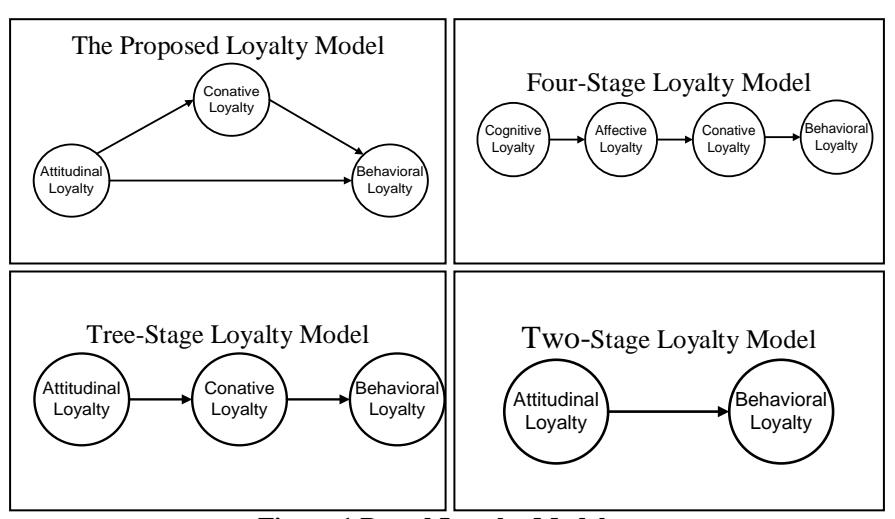
Figure 1 Brand Loyalty Models
RESEARCH METHODOLOGY
Measuring the Constructs
The conceptualisation and items for measuring the three brand loyalty constructs of the proposed model were developed using prior research from the loyalty literature (Back and Parks 2003; Chitty, Ward et al. 2007; Han, Kwortnik et al. 2008).. These constructs were developed using multi-item scales from previous studies, mainly on the hospitality sector. There are 12 items (see Appendix 1) used in this study and all were measured using a 7-point Likert type scale anchored by 1 (strongly agree) and 7 (strongly disagree). Attitudinal loyalty is defined as a degree of dispositional commitment in terms of some unique value association with the brand (Chaudhuri and Holbrook 2001). Based on this definition, attitudinal loyalty is operationalized with six items adopted from Back and Park (2003) and Han et al."s (2008) studies in a hotel context. Conative loyalty is defined as a loyalty state that contains what, at first, appears to be the deeply held commitment to buy (Oliver 1999). Three items adopted from Kayaman and Arasli"s (2007) and Zeithaml et al."s (1996) research are used to operationalize this construct. DeWulf et al. (2001) define behavioural loyalty as consumer's purchasing frequency and amount spent at a provider compared with the amount spent at other providers. Based on this definition, behavioural loyalty is focused on behaviour (purchase) and not on attitudes such as intention to purchase or intention to overcome an obstacle. For the purpose of this study, three self-reported behaviour items adapted from Han et al."s (2008) study are applied to measure behavioural loyalty. The survey instrument was inspected by three academics and several hotel practitioners to improve the face validity of the constructs. Finally, prior to collecting the data, a pilot test of the questionnaire indicated that all of the items were an accurate representation of the constructs under investigation.
Sampling
The sample population in this study consisted of individuals who stayed at five three-star hotels in Indonesia. The difficulty in identifying the total population of hotel guests and the inequality in being chosen as participants made it difficult to use pure random sampling in this study. Therefore, a convenience sampling procedure was used. As the main purpose of this study is to test brand loyalty models, non-probability sampling is considered an acceptable method (Reynolds, Simintiras et al. 2003). Self-administered questionnaires were distributed to 263 hotel guest using a personal approach where the hotel guests were requested personally to respond the questionnaire. Of the 221returned questionnaires, eight questionnaires were excluded due to missing data resulting in 213 usable questionnaires for analysis.
Data Analysis
Structural equation modeling (SEM) with maximum likelihood method was used to examine the proposed and competing brand loyalty models, following the two-stage approach recommended by Anderson and Gerbing (1988). A confirmatory factor analysis was first conducted to determine whether the manifest measurement items reflected the hypothesized latent constructs. When measures were validated, a SEM was utilised to test the validity of the models and hypotheses. To test the goodness of fit of the model, the current study used three fit indices- absolute fit indexes (Goodness of Fit/GFI), incremental fit indexes (Normed Fit Index/NFI and Comparative Fit Index/CFI), and parsimonious fit indexes (Normed Chi-square/χ²/df and Parsimony Goodness-of-fit Index/PGFI) as criteria to decide the model goodness-of-fit. The indexes of GFI, NFI, and CFI more than 0.90, χ²/df less than 5.0, and PGFI more than 0.5 indicate that the model is fit (Bagozzi and Yi 1988; Kline 2005).
RESULTS
Description of the Respondents
Of the 213 respondents, 90 (42.3%) stayed at the hotel for business purposes, 82 (38.5%) for holiday purposes, and 37 (17.4%) for other purposes. The demographic characteristics of the respondents are in Table 1.
Table 1 Demographic Characteristics of the Respondents
| Variable | Category | Frequency | % |
|---|---|---|---|
| Gender | -Male | 121 | 56.8 |
Examining The Formation Of Attitudinal, Conative, And Behavioural Loyalty: An
Empirical Analysis In The Hotel Industry
| -Female | 80 | 37.6 | |
|---|---|---|---|
| -Under 25 years | 15 | 7.0 | |
| -25 to 35 years | 44 | 20.7 | |
| Age | -36 to 45 years | 83 | 39.0 |
| -46 to 55 years | 55 | 25.8 | |
| -More than 55 years | 7 | 3.3 | |
| -High School | 35 | 16.4 | |
| -Diploma | 61 | 28.6 | |
| Education | -Bachelor | 77 | 36.2 |
| -Post Graduate | 28 | 13.2 | |
| -Professional | 42 | 19.7 | |
| -Housewife | 31 | 14.6 | |
| Occupation | -Businessman | 38 | 17.8 |
| -Civil servant | 41 | 19.2 | |
| -Others | 54 | 25.4 |
Measurement Model
The measurement brand loyalty model was assessed using confirmatory factor analysis (CFA), where all constructs involved were assumed to covary with each other (Kline 2005). The result of testing the CFA on the brand loyalty components shows that the goodness-of-fit indexes (GFI: 0.830, NFI: 0.890, CFI: 0.912, χ²/df: 4.456, and PGFI: 0.543) specified a poor level of model fit as only CFI, χ²/df, and PGFI were within the range suggested. The improvement of model fitness was conducted by re-parameterising the model on the basis of the insignificant path, standardized residuals, and substantial value "par change" of the modification index. Above all the statistical considerations, theory and content were highly considered in making model modifications (Anderson and Gerbing 1988; Chin, Peterson et al. 2008). In addition, the process of modifying the model also considered the number of items in each construct, where ideally a construct has four items (Kline 2005) and a minimum of three items (Chin, Peterson et al. 2008). The modification excluded Item al5 and al6 from the model and this resulted in a fit model (GFI: 0.900, NFI: 0.933, CFI: 0.950, χ²/df: 3.634, and PGFI: 0.523).
Table 2 shows that the composite reliability of all constructs were above the cutoff level of 0.60 (Bagozzi and Yi 1988). Furthermore, all constructs also satisfied the minimum variance extracted value of 0.50 (Bagozzi and Yi 1988). These findings indicated that the variance due to measurement error was less than the variance captured by the construct. Thus, the constructs were considered as reliable and satisfied the internal consistency requirement.
Table 2 Correlation, Variance Extracted, and Composite Reliability
| AL | CL | BL |
|---|---|---|
| Attitudinal Loyalty (AL) | 1 | ||
|---|---|---|---|
| Conative Loyalty (CL) | 0.836 | 1 | |
| Behavioural Loyalty (BL) | 0.811 | 0.749 | 1 |
| Variance Extracted | 0.670 | 0.592 | 0.805 |
| Composite Reliability | 0.890 | 0.795 | 0.925 |
Anderson and Gerbing (1988) maintain that convergent validity can be assessed by determining whether each indicator"s estimated coefficient of the underlying construct is significant. Figure 2 reveals that all items were significant at p = 0.05. Although Item co3 has factor loading of less than 0.50, this item was included in the model to satisfy validity requirements and the model"s goodness of fit. With all factor loadings significant, convergent validity of the constructs was satisfied.
Discriminant validity is demonstrated if the AVE is greater than the squared correlation (Fornell and Larcker 1981). Table 2 depicts that among the construct relations tested, the path of attitudinal loyalty and behavioural loyalty, and the path of conative loyalty and behavioural loyalty satisfied the criteria suggested by Fornell and Larcker (1981). The path between attitudinal loyalty and conative loyalty failed to satisfy Fornell and Larcker"s (1981) criteria. However, testing using Bagozzi and Phillips"s (1982) approach resulted in ∆χ² between the unconstrained model and constrained model of attitudinal loyalty and conative loyalty, attitudinal loyalty and behavioural loyalty, and conative loyalty and behavioural loyalty of 26.063, 11.625, and 29.444 respectively. As ∆χ² on all of the comparison constructs are far above 6.635 (χ² value at degree of freedom 1 and p. 0.01), these result indicate that all pairs of constructs tested are significantly different (Bagozzi and Yi 1988; Byrne 2010).
Structural Model
The result of testing the structural proposed model consisting of a single dimension of attitudinal loyalty, conative loyalty, and behavioural loyalty is depicted in Figure 2.
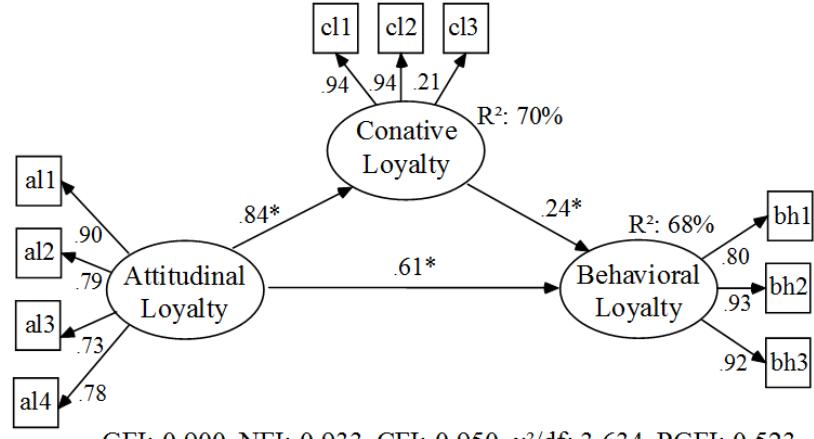
Figure 2 the Structural Brand Loyalty Model
Figure 2 shows that all of the goodness-of-fit indexes are within the suggested range, indicating that the model is fit. Although the model is considered as fit, scholars (Kline 2005; Byrne 2010) suggest the use of an alternative model (i.e. comparing the performance of rival a priori models) in model specification and evaluation. In this regard, the proposed model was compared with other models developed in previous studies (Figure 1). Consistent with Back and Park (2003) and Han et al."s (2008), for testing the Four-Stage Loyalty Model, Item al1, al2, and al3 were treated as cognitive loyalty while Item al4, al5, and al6 were treated as affective loyalty as these items reflected these constructs. The result of the comparison between the proposed loyalty model and competing models is presented in Table 3.
Table 3 Results of Model Comparisons
| Proposed Model | Two-Stage Model | Three-Stage Model | Four-Stage Model | |
|---|---|---|---|---|
| χ² (df) | 116.293 (32) | 65.373 (13) | 148.135 (33) | 214.71 (51) |
| GFI | 0.9 | 0.93 | 0.909 | 0.836 |
| NFI | 0.933 | 0.955 | 0.947 | 0.897 |
| CFI | 0.95 | 0.956 | 0.954 | 0.919 |
| χ²/df | 3.634 | 3.331 | 7.377 | 4.21 |
| PGFI | 0.523 | 0.491 | 0.505 | 0.546 |
| R²* | 68% | 62% | 66% | 61% |
* Behavioural loyalty
Table 3 shows that the goodness of the fit indexes of the proposed model is better when compared to those of the competing models. However, although having relatively lower goodness of fit indexes when compared to the proposed model, Model Two-Stage and Three-Stage are also relatively fit as only one of the indexes was slightly out of the acceptable range. A comparison test was conducted by testing the chi-square between the models to provide a better analysis of the competing models. The differences of the chisquare (∆χ²) and degree of freedom (∆df) between the proposed model and Two-Stage model (31.842/19), Three-Stage model (50.920/1), and Four-Stage model (98.417/19) are significant at p = 0.05. These results indicate that the proposed model is significantly different from the competing models. Further, the R² of behavioural loyalty in the proposed model is also higher compared to that of the competing models. These results indicate that the proposed brand loyalty model provides a better explanation on brand loyalty compared to the competing models.
The results of testing the structural loyalty model (Figure 2) illustrates that attitudinal loyalty significantly influences conative loyalty (β = 0.84) and behavioural loyalty (β = 0.61). This findings support Hypothesis 1 (attitudinal loyalty directly affects conative loyalty) and Hypothesis 2 (attitudinal loyalty directly affects behavioural loyalty). The effect of conative loyalty on behavioural loyalty is also positive and significant (β = 0.24). Thus, Hypothesis 3 stating conative loyalty directly affects behavioural loyalty is supported. The result of testing the proposed model also signifies the importance of attitudinal loyalty as a predictor of conative loyalty as 70% of the variance of conative loyalty is associated with attitudinal loyalty. Moreover, both attitudinal loyalty and conative loyalty are also strong predictors of behavioural loyalty as indicated by 68% of the variance of behavioural loyalty explained by both attitudinal loyalty and conative loyalty.
Mediation Effect
To test the indirect effect of attitudinal loyalty on behavioural loyalty through conative loyalty (Hypothesis 4), the mediation test suggested by Baron and Kenny (1986) was conducted. According to these scholars, the mediation can be tested by using a model including the paths of predictor variable (P) to the mediator variable (M) and the predictor variable to criterion variable (C). The results of testing P-M-C Model indicate that the model is fit with χ²= 148.135. The coefficient path between attitudinal loyalty (P) and conative loyalty (M) is significant (β = 0.86) and the path between conative loyalty (M) and behavioural loyalty (C) is also significant (β = 0.76). Further, testing a path between attitudinal loyalty and behavioural loyalty indicates that this path is also significant (β = 0.81). The inclusion of the attitudinal loyalty to behavioural loyalty path in the P-M-C Model generates a χ² value of 116.293 and a coefficient path (β) between attitudinal loyalty and behavioural loyalty of 0.61. The decrease of the χ² value (from 148.135 to 116.293) caused by the inclusion of the path between attitudinal loyalty and behavioural loyalty in the P-M-C Model and the decrease of coefficient path between attitudinal loyalty and behavioural loyalty (from 0.81 to 0.61) indicate that the mediation of conative loyalty is partial (Cohen and Cohen 2003). These findings provide support for Hypothesis 4 that conative loyalty mediates the relationship between attitudinal loyalty and behavioural loyalty, however the mediation is partial.
DISCUSSION
The objective of this research is to examine the dimensional structure of brand loyalty in the hotel industry context. The results support the proposed model that brand loyalty consists of three dimensions of attitudinal loyalty, conative loyalty, and behavioural loyalty. However, rather than the sequence of attitudinal loyalty, conative loyalty and behavioural loyalty that is widely reported in the literature, this study reveals that attitudinal loyalty directly and indirectly affect behavioural loyalty through conative loyalty. The brand loyalty model identified in this study suggests that hotel guests do not develop loyalty sequentially: cognitive first, then affective, followed by conative, and then behaviour as suggested by Oliver (1999; 2010) and supported by other scholars (Back and Parks 2003; Harris and Goode 2004; Evanschitzky and Wunderlich 2006; Han, Kwortnik et al. 2008). In addition, this finding also does not support the existence of the bi-dimension of attitudinal loyalty and behavioural loyalty (Odin, Odin et al. 2001; Li and Petrick 2008) and a second-order hierarchical loyalty as suggested by Oliver (2010). Rather, the current research reveals that hotel guests develop attitudinal loyalty prior to developing intentional loyalty and, then, perform behavioural loyalty.
The results of statistical analyses show that the R² of behavioural loyalty is 68%. This finding suggests that a hotel guest"s attitude toward the hotel and the intention to stay in the hotel in the future are major determinants of whether the guest will re-stay at the hotel. Considering the effect of attitudinal loyalty on behavioural loyalty (β = 0.61), this finding confirms Dick and Basu"s (1994) conceptualisation that relative attitude is likely to provide a strong indication of repeat patronage. This result suggests that hotel guests
Examining The Formation Of Attitudinal, Conative, And Behavioural Loyalty: An Empirical Analysis In The Hotel Industry who favour a hotel over other hotels (exhibiting attitudinal loyalty), determines their repurchase behaviour. The effect of attitudinal loyalty on behavioural loyalty is not surprising as there is a substantial agreement on this relationship with the findings of previous studies (Bennett and Rundle-Thiele 2002; Glasman and Albarracın 2006; Li and Petrick 2010).
The statistical results also reveal that conative loyalty is an important determinant of behavioural loyalty (β = 0.24). This result provides support for the findings of several studies reporting a positive relationship between conative loyalty and behavioural loyalty (Back and Parks 2003; McMullan and Gilmore 2003; Evanschitzky and Wunderlich 2006; Han, Kwortnik et al. 2008). However, this study reveals that the effect of conative loyalty on behavioural loyalty is far less than the effect of attitudinal loyalty (β = 0.61) on behavioural loyalty. Further, the important role of attitudinal loyalty in developing customers" loyalty behaviour is also evident as 70% of conative loyalty is determined by attitudinal loyalty. This finding implies that customer intention to purchase is more influenced by attitudinal loyalty than by service evaluations such as satisfaction, quality, and perceived value as suggested by literature.
The result of this study clearly indicates that attitudinal loyalty is a powerful determinant of both conative loyalty and behavioural loyalty. No previous study reports this relationship, therefore, this finding provides a significant contribution on understanding the structure of brand loyalty. The implication of this finding is that if attitudinal loyalty is a much more important determinant of behavioural loyalty than conative loyalty, then researchers and marketers should not rely on behavioural intention (conative loyalty) as an indication of a customer future loyalty as suggested by several studies on behavioural intentions (Zeithaml, Berry et al. 1996; Cronin, Brady et al. 2000; Kandampully and Hu 2007). In addition, this finding empirically support for Oliver"s (2010) contention that attitudinal loyalty is a prerequisite of true loyalty.
The analysis on the competing model (Table 2) reveals that, although the proposed loyalty model is a better model compared to the competing models, the Two-Stage Model and the Three-Stage Model are also relatively fit. In addition, Oliver"s (1999; Oliver 2010) Four-Stage Model has been reported as a valid model in various studies (Back and Parks 2003; Harris and Goode 2004; Evanschitzky and Wunderlich 2006; Han, Kwortnik et al. 2008). Similarly the Two-Stage Model of brand loyalty is also valid and supported (Bennett and Rundle-Thiele 2002; Glasman and Albarracın 2006; Li and Petrick 2008). This phenomena raises a question regarding the structure of brand loyalty, is there any general model that can be applied to the structure of brand loyalty? Considering that brand loyalty is an important construct when developing a competitive advantage in any industry, a comprehensive study to examine all of the loyalty models identified for various services industries is desperately needed. Such studies should help to improve the understanding of the general structure of brand loyalty.
This study provides immediate insight for three-star hotel managers; attitudinal loyalty is an important step in the development of conative loyalty as well as behavioural loyalty. The importance of attitudinal loyalty revealed in this research indicates that hotel guests develop their attitude toward a hotel in comparison with competitor hotels rather than solely on the hotel"s service performance (relative attitude). This suggests that the development of true brand loyalty goes beyond providing excellent service. While good service is important, the results of this study suggest that hotel managers should offer a service that is superior to those of other hotels. In order to maintain relative performance, hotel managers need to regularly evaluate their service performance and compare it with the services of other hotels in the same class. To accomplish this, service evaluation (customer feedback) needs to include questions about the hotel service relative to the services of other hotels in a similar class. This service evaluation will help hotel managers to focus their efforts on improving service elements in order for the hotel to deliver a better service compared to its competitors and, ultimately, help create loyal customers.
LIMITATION AND FUTURE RESEARCH
While this study makes a contribution to the body of hospitality marketing literature by offering a new model of the structure of brand loyalty, this study used convenience sampling. Although this sampling design is a suitable method for testing theory (Reynolds, Simintiras et al. 2003) as in the case of this research, further research is necessary in order to determine if the brand loyalty model identified in this study can be generalized to other star rated hotels, and ultimately to different service industries as well as in other countries. The replication of this study to other services industries and other countries should also be fruitful in enriching the understanding of brand loyalty models and determining how customers develop loyalty.
Another limitation of this study relates to the measurement of behavioural loyalty. This study measures behavioural loyalty based on the respondents" recall of their purchasing history. The respondents may respond inaccurately, or just guess the frequency of their visits to the hotel. Hence, the behavioural data collected may not an accurate measurement of a guest"s past behaviour when compared to obtaining actual data from a hotel"s database. Future research should conduct a longitudinal study in cooperation both with respondents and hotels. This approach will measure attitude and behaviour accurately over time.
Appendix 1 Brand Loyalty Indicators
| Code | Item | Std. Deviation | |
|---|---|---|---|
| Attitudinal Loyalty (Cronbach" Alpha: 0.854) | |||
| al1 | No other hotels perform services better than Hotel. | 4.00 | 1.459 |
| al2 | I consider Hotel as my first choice when I need lodging services. | 4.38 | 1.573 |
| al3 | Hotel has more benefits than the other hotels in its category | 3.88 | 1.611 |
| al4 | I like Hotel more than other hotels. | 4.46 | 1.361 |
| al5 | I feel better when I stay at Hotel. | 4.86 | 1.275 |
| al6 | I like staying at Hotel very much. | 5.64 | 1.484 |
| Conative Loyalty (Cronbach" Alpha: 0.727) | |||
| cl1 | Even if other hotels were offering a lower rate, I would stay at Hotel. | 3.96 | 1.676 |
| cl2 | If Hotel were to raise the rate, I would still continue to stay in the hotel. | 3.87 | 1.651 |
| cl3 | I intend to continue staying at Hotel in the future. | 5.34 | 1.715 |
| Behavioural Loyalty (Cronbach" Alpha: 0.911) | |||
| bl1 | When I visit city, I always stay in Hotel. | 4.09 | 1.551 |
| bl2 | Compared other hotels, have stayed more often at the Hotel than the others. | 4.10 | 1.639 |
| bl3 | Compared with other hotel, I have spent more money at Hotel. | 3.65 | 1.71 |