

INTRODUCTION
Mass tourism is criticised because of the use of non-local products which means no multiplier effect (Fennel, 2008). It also jeopardises environment, economic, socio integrity of the destinations, mainly in developing countries (Weaver, 2001). Moreover, mass tourism can lead to impoverishment of local societies (Parra, 2010). In response to that situation, demand of more environmental friendly tourism increases which includes social responsibility and leads to the emergence of alternative tourism (Neil, 2009) for instance ecotourism.
Definition of ecotourism itself is continuously evolving (Donohoe & Needham, 2008). However, there are five conditions deemed as prerequisite of ideal ecotourism (Wallace and Pierce, 2008; Fennell & Dowling, 2003). They are: a. natural setting/environmental friendly, b. conservation, c. local participation and culture, d. benefits to locals economic and e. education
Having the ecotourism study has been largely explored, the governance role in ecotourism is still under-explored (Parra, 2010). Governance here is governance-beyondthe-state system which is governance based on interactive relations between independent and interdependent actors within inclusive participatory institutional or organizational associations (Swyngedouw, 2005 p. 1994).
This research aims at understanding the central role of governance in paving the way to ideal ecotourism practices especially in hazardous- conservation areas.
Related to the role of governance in determining ideal ecotourism practices, policy, perceptions and vision of each institution and stakeholder is important to find out.
This research contributes to give scientific thinking for each institution's role in supporting ecotourism development toward ideal concept in areas where two distinct characteristics collide such as risk of disaster on one hand and function of conservation on the other. It is also intended to fill the knowledge gap to give more comprehensive
Secretariate of DG of Nature and Ecosystem Conservation, Ministry of Environment and Forestry
Faculty of Spatial Sciences, University of Groningen (RuG)
understanding about ecotourism in disaster prone areas. It also aims to shed a light to ecotourism literatures especially in explaining the role of governance in managing ecotourism practices in hazardous places since the concept of ideal ecotourism is underresearched in this area.
LITERATURE REVIEW
Ecotourism literatures mainly discuss the reason why ecotourism develops and different kinds of ecotourism practices in the world. Amongst several ecotourism definitions, Weaver (2001 p.105) wrapped up them up into one definition which is: "A form of nature based tourism that strives to be ecologically, socio-culturally, and economically sustainable while providing opportunities for appreciating and learning about the natural environment or specific elements thereof."
In Indonesia context, ecotourism is recognised and institutionalised as one of the important tourism types in Indonesia. There are some words that can be highlighted from the debate on ecotourism which are: conservation, learning process, and socially, economically and/or environmentally sustainable. These notions also form the principle of ecotourism and then are used to measure how ecotourism is practiced. Wallace and Pierce in Fennell (2008) suggest that tourism may be ecotourism if addresses six key principles, namely:
- a. A type of use that minimises negative impacts to the environment and to local people;
- b. The awareness and understanding of an area's natural and cultural systems and the subsequent involvement of visitors in issues affecting those systems;
- c. The conservation and management of legally protected and other natural areas;
- d. The early and long-term participation of local people in the decision-making process that determines the kind and amount of tourism that should occur;
- e. Directing economic and other benefits to local people that complement rather than overwhelm or replace traditional practices (farming, fishing, social systems, etc.);
- f. The provision of special opportunities for local people and nature tourism employees to utilise and visit natural areas and learn more about the wonders that other visitors come to see.
Based on the aggregation of those principles, the government of Indonesia generates ideal ecotourism criteria (Ministry of Tourism & WWF, 2009) which are:
- a. Conservation as management objectives
- b. Active participation of local people
- c. Encourage local economic development
- d. Educational tourism products
- e. Minimum environmental impacts
Meanwhile the definition about disaster-prone conservation zone is an area where two characteristics are mingled. That area is also prone to sudden disaster and serves as conservational purposes.
Governance of ecotourism in disaster-prone conservation area is much more complex which consists of multi-layered and multi-scalar institutions and stakeholders which determine the practice of ecotourism in the area. The importance to study the underlying governance of ecotourism in disaster-prone conservation area is to find the impact of governance to the ecotourism practices in the area to fulfil ideal ecotourism criteria.
Since the ideal ecotourism concept has never been contested to capture the position of ecotourism in disaster-prone conservation zones, the need of evaluation is obvious. In addition, not only the activities itself contributes to the fulfilment of the criteria, but a lso the role of institutions managing the hazardous areas as well as conservation areas needs to be addressed.
METHODOLOGY
This research embraces qualitative paradigm and emphasise on descriptive and explanatory of a phenomenon. Case study approach is chosen to explain the phenomenon of ecotourism in disaster-prone conservation area because it is a quick method that can represent some social phenomenon in societies (Babbie, 2007).
Some parameters are measured to assess the ecotourism performance in the area as well as the governance underlying it. There are five criteria that are used to assess the ecotourism performance which area: Sustainability Purpose (conservation), Local Participation, Educational Tourism Product, Local Economic Development and Environmental Impacts. Those parameters are analysed by using Ecotourism Fulfilment Analysis. Meanwhile, to assess the role of governance in determining the ecotourism practices in the area, Stakeholder analysis is used by measuring three factors which are Influence of Institution to ecotourism performance, Institutional Interest including vision and mission; and Institution Response to Ecotourism (supportive, indifferent, against).
There are as many as 208 respondents which comprise of: 100 tourists; 100 local people: 8 institutional representatives which are Government (National Park Agency, Local Development Planning Agency, Local Tourism Agency, Local Disaster Management Agency, Local Forestry and Agriculture Agency, Local Water Resource and Mineral Agency) and Local Community Groups (Gadung Melati Private sector: P.T. Anindya) Documents: Regional Spatial plan; Ecotourism development plan; Regulations; Documentary films. Questionnaires and In-depth interview methods were used to collect the data.
RESULTS AND ANALYSIS
Ecotourism Fulfilment Analysis
This section is intended to answer whether or not the ecotourism practices in the area is categorised as ideal ecotourism. By using ecotourism fulfilment analysis five parameters are measured to reflect the ecotourism performance in the area.
Below is the result of ecotourism fulfilment analysis on each criterion.
a. First Criterion: Conservational Purpose Based on the people perceptions (visitors and local people), most respondents (98%) have already understood the term and define ecotourism correctly and understand the purpose of tourism as nature conservation.
The vast majority of respondents were also able to define the purpose of tourism development in disaster-prone conservation areas as an introduction to nature with educational and also conservation purposes, whilst only 19% of respondents state that the tourism development in the disaster-prone conservation areas is not intended for conservation and environmental purposes.
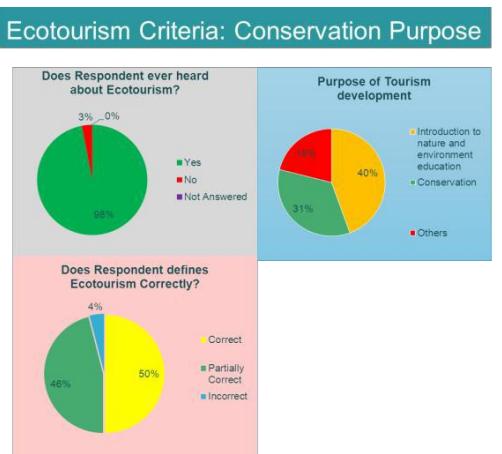
Figure 1. Respondents' responds on the first criterion of ecotourism: Conservation purpose Source: Author
Apart from respondents' perceptions, information is also collected through content analysis from documents on Mount Merapi tourism development. The document mentions "Nature tourism development is put in as a pillar in the context of conservation (TNGM, 2009 p.18) and "… the Merapi area is developed as a tourism destination and conservation area simultaneously (Local Culture & Tourism Agency, 2010 p.179).
Direct observation on the field also shows that the conservational purpose is an important aim that is pursued by tourism practitioners in the Merapi area. As evidence of this, visitors and service providers are encouraged to maintain the area as it is because the area is also a conservation area where disturbance, insertion of non-endemic flora and fauna is strictly prohibited.
Based on those findings about conservational purpose, ecotourism practiced in the area fulfils ideal ecotourism criteria.
b. Second Criterion: Local Participation
Second parameter shows that local participation in ecotourism is high. This is shown by 59% of the respondents who answered that local communities has the most important role in initiating tourism practices in disaster-prone conservation areas, whilst only 25% of respondents said that the government is the main initiator of the tourism development. The high participation of local people in tourism cannot be separated from their original characteristic of local people.
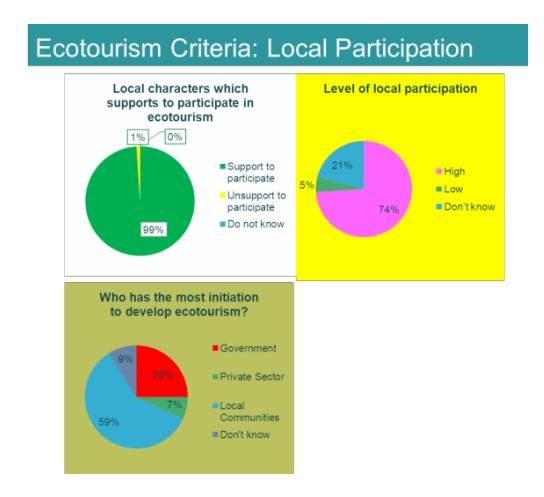
Figure 2. Respondents' responds on the second criterion of ecotourism: Local Participation. Source: Author
Documents also mention about the high participation of locals as stated that there are numbers of local community which highly depends on the tourism practices in the Merapi area. There as many as 1.289 small and medium businesses which correlate with tourism practices in Merapi (Harwati et al., 2012).
When examining directly, there are a lot of local involvement in providing goods and services in the tourism area including jeep tour community, guide community, motor trail rental, food and beverage sellers, and many more.
Based on those results, second criterion which is active local participation in tourism practice is fulfilled.
c. Third Criterion: Educational Tourism Products
This criterion mandates that an ideal ecotourism product should have an educational message in its products.
Based on the survey results, tourism practices in disaster-prone areas are mostly dominated by leisure and amusement purposes, and only one third of respondents assumed that tourism practices in the area carry educational messages whilst only 3% believe that tourism in the area is mainly for other purposes such as pilgrimage and sports. When types of activities are asked, recreational activities domin ate over educational activities by proportion of 58%: 42%.
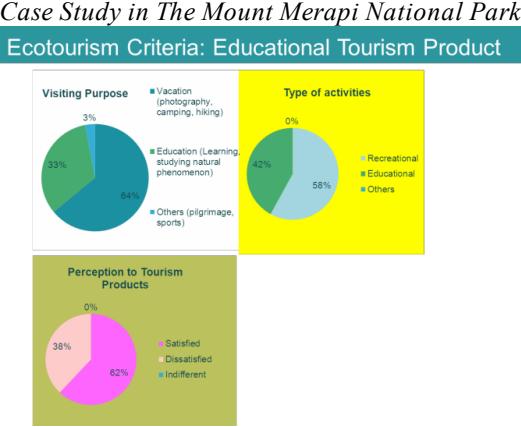
Figure 3. Respondents' responds on the third criterion of ecotourism: Educational tourism product
Source: Author
Secondary data also shows a similar result. This is shown from a study of t ourist preference on the Merapi area which mentions that the vast majority of visitors (68.42%) coming to this area are for vacation purpose, whilst only 20% are coming for learning and research purposes (Dwiputra & Rosyidi, 2013).
Based on direct observation in the area, the education facility in national park area is not so prominent, therefore most tourists coming to this area do not seek for educational tourism products. In fact, the main educative tourism destination is in the Merapi Volcano Museum which is located separately from the national park area.
Based on those results, the tourism practices in disaster-prone conservation areas do not fulfil third criterion of ideal ecotourism criteria.
d. Fourth Criterion: Educational Tourism Products
Based on the data collection result, majority of respondents (83%) believe that the tourism activities in the area generate economic development in the area.
As evidence of this, new job opportunities flourish along with the existence of tourism practices for instance there are 175 new jeeps and drivers and more than 100 trail rentals to serve the increasing demand of lava tourism. This results on the increasing incomes of these service providers above the provincial minimum wage. For the information, they formerly were farmers with incomes below the provincial wage standard. And interestingly, the new business is harnessed fully by the local people as a substitution of the loss of occupation due to volcano eruption. Even so, multiplier effects will likely be generated in larger areas.
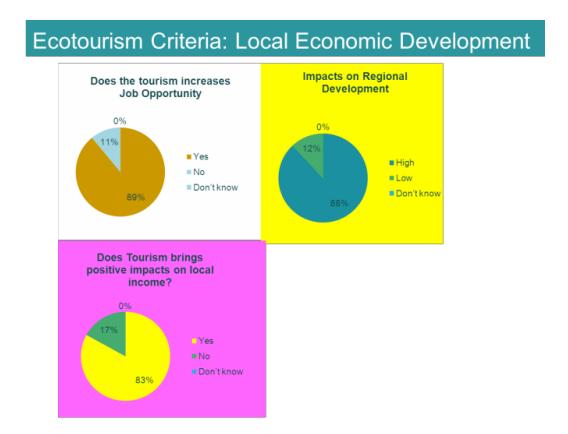
Figure 4. Respondents' responds on the fourth criterion of ecotourism: Local Economic Development
Source: Author
Therefore, summing up the results on this criterion, tourism practices in disaster-prone conservation areas are able to generate local economic development. This means that the fourth criterion: local economic development is fulfilled.
e. Fifth Criterion: Minimum Environmental Impacts
In terms of biophysical quality, 60% of respondents argue that the environmental qua lity is well-maintained and only 13% of respondents assume there is a degradation of physical attributes of environment. Meanwhile, most respondents (55%) do not know whether the tourism practices in the area will alter local value even amidst the rests, 25% of them believe that tourism practices will not change local value.
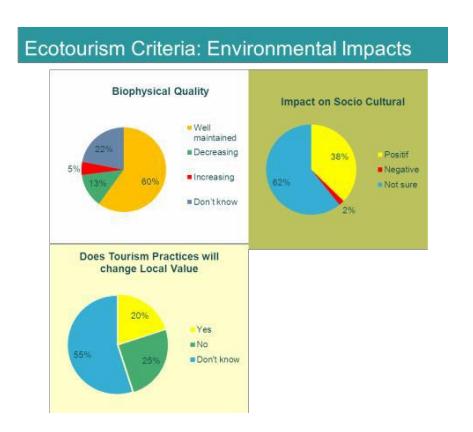
Figure 5. Respondents' responds on the fifth criterion of ecotourism: Minimum Environmental Impacts.
Source: Author
Direct observation on the field found that local value is still upheld and maintained which is found in everyday life of the local people. This also found in Merapi area where the tradition to assist each other can be found everywhere in the area. For instance: when a jeep driver has difficulties to find customers, other drivers who have already been booked can give the opportunities to their less fortunate colleagues. Also when one person has already started to provide a certain kind of business, he will not be allowed to enter other's occupation field. For instance: a person who run jeep lava tour business should not establish a trail rental provider. This effort is a local value to avoid business redundancy which in the end can yield a single powerful entrepreneur.
According to Local Environmental Agency endangered species in disaster-prone conservation area is vanished by the last eruption in 2010. Those species are Gaultheria plant, three-coloured-panda orchid, castanopis fruit, Javan Eagle and Lovebird (Local Environmental Agency, 2012). The data shows a different opinion with that of the perception of respondents. This means that the change of environment is unnoticeable by the vast majority of visitors.
Based on those results, albeit some parameters are responded differently by respondents and data from both secondary and direct observation, the positive result in shown is quite obvious especially in socio-cultural aspect and some biophysics aspects. This also means that fifth criterion is quite fulfilled.
Summing up on the discussion of ecotourism fulfilment analysis, ecotourism practices in disaster prone conservation areas are currently unsatisfactory to meet ideal criteria. There is insufficiency in fulfilling the ideal ecotourism criteria which was formulated not only based on the perspective of local people and visitors, but also taken from documents and direct observation.
Stakeholder Analysis
Institutions are categorised into three category depending on their influence of tourism policy which are: Core, User and Complementary.
a. Core Stakeholder
Core Stakeholders consist of key institutions which have legal authority of decision making process (Maryono et al., 2005) in disaster-prone areas. They are National Park Agency, Tourism Agency and Disaster Management Agency. There are different visions and missions amongst stakeholders. For instance, Disaster Agency sees that tourism practices in which a lot of people crowding the hazardous areas as a challenge to prepare them when disaster occurs. This is different compared with the tourism agency and national park agency which see tourism as an opportunity to develop the area even there is difference about types of tourism between National Park Agency and Tourism Agency.
National Park sees that mass tourism is a threat for environment whilst tourism agency sees it as an opportunity.
Examining those facts, it is undeniable that conflicts often occurs in the area because overlapping authority. For instance, around 2004 there was a dispute in ticket collections between National Park Agency and Tourism Agency during the handover from the old management (Tourism Agency / local government) to the new management (National Park Agency / central government) in which each institution issued its own ticket which makes visitors protest against this policy.
In policy making processes, all institutions argue that each agency often hold a multilateral meeting involving other institutions when a policy is being formulated. However, in practice when strategic plan formulated overlaps with other institutions there is no explicit statement about cooperation with other institution which may joggle with their interests. Although core stakeholders are the main actors in disaster prone conservation area, seems that only the National Park Agency concerns a lot about ecotourism development compared with other institutions.
To conclude, as core stakeholders, it is likely that there is no agreement between core stakeholders to develop the area as ecotourism objects. However, the strongest power of stakeholder which is National Park Agency has more concerned on the development of ecotourism compared with other core stakeholders.
b. User Stakeholder
This group of stakeholder consists of institutions which are directly affected by policy (policy users) in the area (Maryono et al., 2005). Based on that, there are two stakeholders included in this category which are local communities represented by two communities managing trail rental services (Gadung Melati Trail Community) and local motorcycle taxi services; a private company (PT Anindya) which have been permitted to conduct tourism activities in the area; and tourists visiting this area.
Based on the interview on local communities, they established organisations to provide goods and services for tourists to substitute their loss of income as sto ck farmers due to eruption in 2010. Meanwhile, according private company views, the policy on disasterprone conservation area also favours their interests in developing the area as one of tourism objects. From tourist perspectives, their main goal is to fulfil recreational needs and spending their money on experience, foods and souvenirs.
Albeit economic reasons binding these stakeholders, there are different views on how ecotourism practices are actuated in the Merapi area between local communities and private companies. Local communities tend to have more involvement in developing the area as tourism/ecotourism objects whilst the private company is eager to manage and develop their product with their own interests.
However, despite there are differences on how each stakeholder actualising their view on succeeding tourism practices, it can be concluded that user stakeholders are all agree that disaster- prone conservation area can be developed for tourism/ecotourism destination.
As a user of the policy, this group of stakeholder identifies their role in disaster-prone conservation areas mainly as an object of policy products. Top down approach is still prominently felt by the group members.
In policy making processes, user stakeholder sees that there is still non-integrated policy making instead of integrated one. They identify that each institution can impose policy without an obligation to have opinions from other institutions. It is reflected from the statement of the user stakeholder representatives saying that there are no strong efforts from government in planning and developing the areatoward better tourism/ecotourism practices. User stakeholders argue that aside from fragmented policies, most of them are project-based with less concern on long-term goals. This makes user stakeholders mostly do their businesses in self-organisation form of management.
Overall, all user stakeholder members agree that they support ecotourism development in the area as it can give more economic benefits for service vendors as well as social satisfaction for visitors.
c. Complementary Stakeholder
Complementary stakeholders consist of institutions which are not directly affected nor affecting the policy in the area (Maryono et al., 2005). There are three institutions included in this category which are Forestry Agency, Mining Agency, and Planning Agency.
These stakeholder gains benefit indirectly by imposing policy on each sector. For instance, Mining Agency can empower local people and small businesses by harnessing the potent of mineral sources in the foot of the Merapi Mountain to collect sands which have the highest quality amongst other sands in the island (Water Resources, Energy and Mineral Agency, 2010). Another instance is that Forestry Agency can gain more protections on their forest as it is located in adjacent with national park area.
In practice, all stakeholders encourage the involvement and empowerment of local communities. To support this opinion, there are many programmes in empowering local people for instance, Forestry Agency has a cattle protection programme to protect all cows and sheep which died during eruption. This effort has increased the participation of local people in growing cattle in the Merapi region which yields the increasing milk
production up to 12.19% and beef production up to 2.51% (Sleman Forestry Agency, 2013).
Even though institutions in complementary stakeholder has no overlapping interests, some disputes are inevitable, for instance between Mining Agency and the National Park Agency. Mining Agency ever issues sand mining permit in the area where it is very close to the border of the National Park. Even though it is legal and located outside the conservation area, the effects of mining activities can endanger the sustainability of biodiversity and ecotourism practices in the national park area.
In formulating policy in the disaster prone conservation area, all complementary stakeholders said that routine discussions and meetings are often held. However, after crosschecking the strategic plan and practices in the field, some unsynchronised policies are found. For instance, when Planning Agency proposes the conversion of affected areas into protected forest, the data used by Planning Agency is not match with the data from Forestry Agency. This shows that there is no synchronisation of data during policy making amidst these institutions and in the future it is very likely to have a dispute.
Aside from that, local spatial plan also looks rigid especially to deal with a shock event such as disaster. This is because the plan is not adaptive to the dynamic natural and social systems. Every change, which sometimes is required, will be confronted with the existing spatial plan. For instance, the need to change the status of land function from residential areas into new tourism area as the effect of disaster will require a very long process and often fail in the middle of the process.
To sum up, complementary stakeholders will both influence and be influenced by the development of ecotourism in the Merapi disaster prone conservation area. This relation can be negative or positive for the development of the ecotourism practices.
SYNTHESIS AND DISCUSSION
Governance of Ecotourism in the Merapi Disaster Prone Conservation Area Stakeholder analysis succeeds to analyse that there are three polarisations of stakeholders of ecotourism governance in disaster-prone conservation areas. Those three stakeholders share different degrees of power, influence and responsibility in conducting ecotourism practices in disaster-prone conservation areas.
Communication
A finding on the governance of ecotourism is the lack of quality on communication and coordination amongst different stakeholders. As there is no direct command line between the National Park Agency (central government) and other local agencies there is no direct responsibility between them. The National Park Agency with its own authority on the conservation area is able to unfollow local policies which is assumed to have negative impacts on the park, and also on the other way around.
This also happens to many institutions in Indonesia after the decentralisation period, in which locally elected governors/mayors have different visions and / or policies with the central government (Ministry). In disaster prone conservation area, ineffective communication also occurs, however active role of the National Park Agency to communicate with the local government has reduced the communication gaps as found in many other areas in Indonesia.
The relation and communication amongst parties in ecotourism governance of disaster prone conservation area can be found on the following figure.
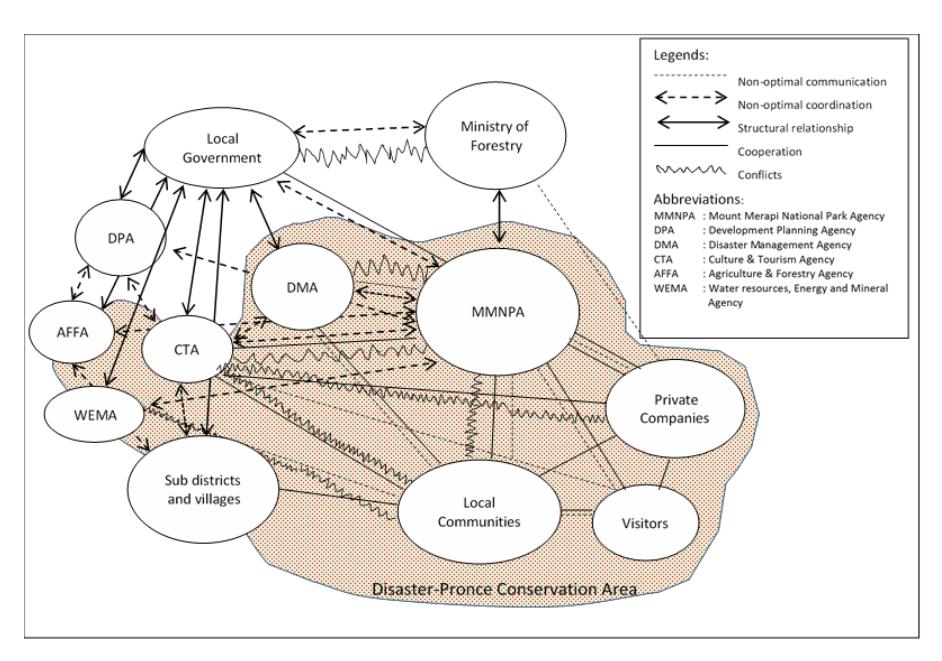
Figure 6. Ecotourism Governance map in Disaster-Prone Conservation Areas Source: Author
The map shows the relationship amongst different institutions in disaster-prone conservation area in which there are many non- optimum communications. This results in some conflicts which occur between parties. This also affects the fulfilment of ideal criteria of ecotourism as there is not sufficient communication amongst different parties. Moreover, multi-layered government aggravates this condition because indirect command line between central government agencies and local government agencies will not the necessity to comply on other's policies.
On top of that, there will not be a mutual mission in developing the area unless there is a facilitator or a mediator to link between different layers of government.
Failing on Fulfilment of Educational Tourism Products
Albeit vast majority of stakeholders understood the ecotourism term, not many of them sees the importance of educational tourism attribute as a component of ecotourism.
The underlying reason of less educational products in ecotourism is the lack of ecotourism campaign which is not only viewing tourism as a matter of amusement and recreation practices, but also tourism practices containing educational message. Core stakeholders which currently actively campaigning it is only the National Park Agency in which they have conservative cadre to spread the message such as educational products on ecotourism. Meanwhile, the importance of educational products is not yet understood by user stakeholders. Be it tourists/visitors, local people and private companies.
This shows that there is a missing link between core and user stakeholders on how tourism practices are packed in more informative way. The gap between what user stakeholders want and the strategy used by core stakeholders in promoting the educational purpose needs to be reduced. For instance, tourist informa tion albeit is existed on the area does not give a comprehensive understanding such as the history of the area, livelihood of local people, educational message, and what the impacts of disasters in the development of the area.
Moreover, because of tourism practices in the area are mostly self-organisation by local communities, educational aspect is often neglected. The lack of government concerning this matter makes visitors are dominated by less experienced tourists. Meanwhile non governmental organisations which concern on ecotourism development in disaster prone conservation is not so prominent in the area. Even so, their programmes indirectly affect the quality of ecotourism practices in the Merapi area. Most of environmental NGOs focus on the preservation of natural habitat and biodiversity. Their programmes (with cooperation with the National Park Agency) such as Birding Competition and Bird Tour (Kutilang, 2010) will likely help to convey the message of educative tourism product in the area.
Politics
It is undeniable that politic plays a major role in a decentralised democratic country such as Indonesia. In Indonesia, all of heads of local agencies are chosen directly by the governor/regent/mayor. In Sleman Regency where this study was conducted, the Regent has the absolute power to choose the head of local agencies. As an impact of direct election, the Regent will likely choose the ones who have the same political views as him.
In disaster-prone conservation area, not only local governments are involved but also other layers of government are responsible in managing the area. The difference in political view is potential to divert the aim of sustainable tourism development. As evidence of this, the spatial and strategic plan cannot be synchronised between multilevels of government (local- provincial-national). Even though the regulation states that the plan should be scrutinised by the upper level of government layers, many plans are executed without communication and consultation from the provincial/ministry level due to the stronger political position of the local government's leaders.
Furthermore, because the ruling leaders have only five-year period of mandate, not many of them formulate a long-term plan nor executing long-term projects. In the governance of ecotourism, this tendency also comes up when many planning documents are regularly changed in accordance with the change of leaders. This makes the plan is inconsistently applied and hence will reduce the ability to reach ideal ecotourism criteria.
Those political vicissitudes will directly affect the management of ecotourism in the Merapi area. A clear evidence of this is by examining the amount of budget allocated on tourism development compared with other programmes. Currently, the National Pa rk budgets are still focused on the protection of biodiversity including forest patrol and forest fire prevention amounting of 30% budgets of the park which totals at around IDR 11.4 billion per year in 2013 (TNGM, 2013). For developing ecotourism and othe r environment services the park allocates 25% of total budgets whilst the biggest amount 42% is allocated for routine expenses including employee salaries and honorarium. The budget arrangement is also influenced by political reasons because officials who propose certain programmes can influence the amount of budget to be proposed by the park's director to the central office. More budgets on ecotourism will show that the institution concerns more on ecotourism rather than other instances and vice versa.
Reactive rather than proactive
Currently role of government in the ecotourism governance in the Merapi area tends to be reactive rather than pro-active. This can be identified through interviews and planning documents as they start to act after new circumstances occur. For instance, as mentioned in the previous chapter, ecotourism practices in post-disaster places are initiated by the interaction between visitors and local communities rather than a programme constructed by governments. This results in uncoordinated and unsynchronised tourism practices during the early period after disaster as they were not accommodated in planning documents yet.
An example is found in the national park area where the main attraction is diminished which is the waterfall because the water is stopped due to some environmental changes in natural ecosystems after the eruption in 2010. All visitor walkways lead to this waterfall area, and since the main attraction is diminished the pathways lead to a spot which is not attractive anymore. This is not anticipated in the planning documents and only later the management finally find a new attraction which is volcano observation spot to substitute the former attraction.
Another instance is when disaster occurs; government has difficulty to manage the evacuees out of the area as there is not enough space, road and mode of transport in the area to get out as soon as possible. This results on casualties which always found in every disaster event.
To overcome those problems, an adaptive approach is needed in the plan. Adaptive planning will give flexible approach when dealing with the shock events such as disaster. In disaster-prone areas where shock events are more likely to occur, an adaptive plan will be more future-proof rather than a rigid plan. As this entire system is interdependent, it requires mutual and strong willingness from one or more stakeholders to start to change the condition and affects the whole system chain to be more communicative, collaborative and adaptive.
Degree of Responsibility of Governance in the Merapi Disaster Prone Conservation Area
Institutionally, all of disaster management is handled by Disaster Management Agency under coordination of National Board of Disaster Management. Both Tourism Agency and National Park Agency do not have disaster mitigation programmes in their strategic plan even though disaster occurs periodically. The absence of disaster crisis sense amongst stakeholders in the area has resulted to unpreparedness actions during the shock events and the transformation after it.
Another problem is when the National Board of Disaster Management issues disaster mitigation plan including Merapi hazard map. In the latest version of the plan, the area where currently serves as tourism objects along with some residential places are prohibited for any activities because they are located in the first inner ring of disasterprone areas. This makes a dilemma between all stakeholders which have activities in disaster-prone areas especially tourism because on one hand according to the plan, their activities are prohibited whilst on the other hand, local government and local communities requires revenue gains from tourism practices in the area. Up to now, the disputes about this dilemma are still on-going.
In terms of degree of responsibility, the Disaster Agency as core stakeholder plays the most important role during disaster events, whilst other institutions support from emergency phase until reconstruction processes.
CONCLUSIONS AND RECOMMENDATION
Ecotourism in disaster-prone conservation area is not a simple model of ecotourism government. There are many interests laid at the same place which makes the coordination and communication become difficult. Moreover the existence of multilayered governance in the area which contains multi-level government, multistakeholders and different types of social status of societies made the effort to realise ideal ecotourism practices become harder.
One thing that can be underlined is the need to enhance the quality of communication between all of the institutions involved. Lack of communication is likely make there is no integrated plan amongst stakeholder in the area to sustain and develop the tourism practices even better. On top of that, to increase the quality of communication is required
Ideal Criteria = A panacea?
The analysis shows that ecotourism practices in the Merapi National Park as a disaster prone conservation area is not sufficient to meet ideal ecotourism criteria. This situation can be because of two things. First, the tourism practiced in the Merapi area is indeed unable to qualify the minimum prerequisite of ideal ecotourism. Second, the ideal principles of ecotourism stated in many documents cannot be applied in extreme condition of tourism such as tourism in disaster- prone conservation area.
This is because the condition of the Merapi disaster-prone area cannot be considered as a prevalent, whilst the ideal criteria itself is constructed based on the experience of existing ecotourism practices which popularly are in non- disastrous zones. For instance, measuring minimum environmental impacts in disaster- prone area where cyclic disaster events occur most of the time will result in inadequacy.
In constructing ideal ecotourism criteria which can be used in broader conditions, only by using this research will not be a robust standard without findings from other disasterprone conservation areas as a comparison. Hence, collaborating various findings on the fulfilment of ecotourism in various places in the world will increase the quality of ideal ecotourism criteria itself. Therefore, ideal criteria of ecotourism is required to be redefined by incorporating the experience from extreme and unique conditions of places such as disaster-prone conservation area.
In terms of governance of ecotourism in disaster- prone conservation areas, it is undeniably essential to determine the ecotourism practices to meet ideal ecotourism criteria. Not only in technical aspects, but also in political and social aspects the ideal ecotourism are shaped through the practices of each component on the governance of ecotourism in disaster-prone conservation areas. The importance of communication, cooperation and collaboration amongst institutions in disaster-prone conservation areas will likely determine the quality of ecotourism.
Another important finding is that the governance of disaster-prone conservation areas still solely constructs a reactive planning rather than a pro- active planning. This means the level of adaptivity is not satisfactory to implement ideal ecotourism practices especially in disaster prone areas where disasters happen in continuous periods.
Merapi case provides a lesson for managing ecotourism practices in the routine disastrous areas where consistent and comprehensive planning is essentially required. This will not
occur without strong attention from all stakeholders involved. Leaders from each institution should have long term vision in developing the area as ecotourism destination toward better management and ideal criteria.
First, a collaborative and communicative planning amongst all stakeholders involved should be strengthened. This is due to the intertwined relations between stakeholders and different kinds of interests are needed to be communicated and coop erated. Only with mutual relationship through active communication the ecotourism in disaster-prone conservation areas can be developed toward ideal ecotourism.
Second, engaging on political aspect is an essential outlook as shown in democratic countries; many decisions are formulated and executed based on political argument. It will require additional attributes from the society representatives, managers and government leaders to identify political agenda slipstreamed within planning processes. And finally, preparing to have adaptive planning approach is also essential to deal with uncertain events such as disaster.