

INTRODUCTION
One of the goal of tourism is to preserve nature, the environment, and the available resources. Since 1987 the concept of sustainability in environmental management was first voiced in coordination commission on "Our Common Future" movement towards sustainability sponsored by the United Nations (UN). Governmental and nongovernmental organizations, companies and consumers has concern focused on how to live in harmony with the environment, and at the same time to reduce the consequence of their organization activity on environmental damage. The hospitality industry is no exception, the concept of sustainability has begun to gain momentum in the hospitality industry (Ernst & Young, 2008). Hotels in term of operation are encouraged to apply and environmentally friendly concepts towards sustainability through initiatives such as education programs, reforestation, eco resort, energy efficiency, and the standard of constructing a building in accordance with the standards set by the government, and in line with the industry that "green" concept has become trends, and preferred by travelers. In a consumer survey, 75 % of travelers say they are environmentally friendly minded consumers, and 54 % of these consumers said, they are also wanted to stay at the hotel that concern for the environment (Feiertag, 1994).
* Corresponding author, email: jayapramono@gmail.com
<sup>1</sup> Doctorate Student in Tourism at Udayana University, Denpasar, Indonesia and Lecturer at Dhyanapura University, Badung, Indonesia,
<sup>2</sup> Lecturer at Doctorate Program in Tourism, Udayana University, Denpasar, Indonesia
According to Cordeiro and Sarkis (1997), planning and implementation of environmental management in the hotel consistently associated with economic principles that gave rise to the concept of cost, not only determined by the benefits to be gained but also impact on the cost of which will definitely affect the appearance of the business as a comprehensive. Moreno et al. (2004), reported that there were two main reasons behind hotel concern on this environmental issues. First, the public and government believed that the hotels as commercial institutions have the financial resources, technical skills, and vision, to develop ecological solutions to environmental problems. Second, the ability to develop ecological solution is closely related to the promotion of hotel, and it will be an competitive advantage for hotel in terms of promotion. Environmental management is also important for the hotel, as many hotels are now being measured not only on financial performance but on its responsibility to the environment, and this turns out to affect the shareholders and customers (Henriques and Sadorsky , 1999).
In addition, it is expected that all the star rated hotel in Bali will manage the program for environmental sustainability through programs such as the management of hazardous and toxic waste (B3), water management, energy management and the other programs, but in the initial survey conducted in several hotels shows that there are some caveats to these program, in particular to the hotel that has been operating for more than 15 years. One of the objections that rise to the surface according Cordeiro and Sarkis, (1997 ) is that the addition of this processing facilities incurring additional costs for hotel operations, not including the cost of the maintenance and depreciation of facilities in the wake. There is no doubt that the investments made will benefit the company because of this program are indirect yield benefits for the management of the hotel. Contradiction between the benefits and costs as previously discussed making environmental management becomes an important issue, this study attempts to see if there is a relationship between the process of environmental management and its benefits at the star rated hotel in Bali.
THE ENVIRONMENTAL MANAGEMENT
Environmental management includes the study of all the technical and organizational activities that aim to reduce the environmental impact caused by the company's operations (Cramer,1998). This definition on hotel is to create a mission of the reduction of environmental impact, the emphasis is to lead manager of the hotel to decide deliberate effort to reduce the environmental impact on the hotel. Environmental management involves various environmental initiatives in its implementation may be different, depending on the type of industry, organizational characteristics and their impact on the environment. Environmental management initiatives can be classified in several different categories such as technical and organizational prevention category, or categories of pollution and pollution control (Russo and Fouts 1997; Cramer, 1998).
In 1995, the International Hotel and Restaurant Association publishes a comprehensive checklist of environmental and local development action for small and medium businesses. This publication helps hotels with more detailed information for environmental management systems. Almost all hotels have implemented this program with varying degrees of intensity. The survey is conducted on the implementation of this program shows that the most significant benefits of environmental management for hotels is improved public image and a better relationship with the local community (Kirk, 1995). However, for hotel workers is more beneficial environmental policy in its financial management.
Environmental management at the hotel should include all activities that will affect to the environment and develop wider practices to reduce these affect. For example, in reducing energy use, hotel managers need to control and improve ventilation and refrigeration, lighting, and other facilities that require energy used in different areas. As the energy
reduction, to reduce waste, hotel seeks to simultaneously minimize customer consumption and packaging which use plastic, use a container that can be parsed back, the materials which can be re-used, such as glass, paper, and garbage collection are selected. However, as Brown notes (1994), although in some practice in the hospitality industry have environmental labels, the main reason to get involved in managing the hotel environment is because of the pressure of regulation, resource saving and pressure from travel agents, and customers or tourists.
The need to involve guests based on the active role of guests, both in the service expected and in what way guests can contribute to efforts to minimize the adverse impact of its activities at the hotel. Therefore, in many hotels, guests can collaborate in saving energy and water consumption, replacement of towels, and others. Through this program a plumpness directly involved in activities that seek to minimize environmental damage. This case can be explained because there is no normative rules that require control of environmental pollution, while on the other hand, control of pollution caused by operational hotel is not the most appropriate choice when many other sources that simultaneously produce high environmental impact as well (Dobers, 1997).
DISCUSSION
According to Cordeiro and Sarkis (1997), planning and implementation of environmental management in the hotel consistently associated with economic principles that gave rise to the concept of cost and according to Zhang et al. (2010), by balancing productivity and environmental impact, environmentally sustainable operations is one of the most promising measures to control costs for the hotel. Houdre (2008), also added that this is related to the management of competitive advantage for the hotel, and on the other side of dealing with government regulations.
Environmental Management Process
Environmental management system is a very important role in sustainable development (Dalem, 2012). Environmental management at the hotel should include all activities that affect the environment and developing a practices activity to reduce the wider environmental impact. Environmental management activities at the hotel looks like on the activity of reducing the use of energy, control and improve ventilation and refrigeration, lighting, and other facilities that require energy. In addition to the undertakings of the hotel simultaneously reducing waste through activities such as minimizing consumption of the customers who use plastic packaging, the use of the box that can be recycled, reusable materials, such as glass, paper and garbage collection were selected. El Dief et al. (2010), suggest environmental management is carried out in four areas, namely water and wastewater management, energy management, solid waste reduction, and the purchase of products with green. Sweeting and Sweeting (2009), adding the management of the use of chemicals at the hotel. So if summarized environmental management practices in hotels include; management of energy, water and wastewater, solid waste, use of chemicals, and the process of purchasing hotel products.
Process of Energy Management
Energy is needed to meet the needs of guest. Guest require a lot of energy and expensive, especially for heating and air conditioning systems. However, there are many options to save energy. According to Alexander and Kennedy, ( 2002), a strategy for designing passive solar heating a good thing to do, but the activity of doing something as simple as providing good insulation can help reduce or eliminate the need for expensive heating and cooling. Change the thermostat setting can make a huge difference. Hotels around the world recognize the opportunities to implement energy-saving projects like this in the heating and air conditioning systems. Table 1, Describe the management process in several hotels around the world. Sweeting and Sweeting (2009), the form of energy management activities are carried out at star rated hotel in Bali include the following activities: (1). Assessing the energy use to determine where the highest energy consumption and make improvements to efficiency. (2). On a regular basis (daily or weekly) monitoring of energy consumption to determine abnormal consumption and energy saving measure. (3). Encourage guests to participate in energy-saving practices. (4). Work with employees to practice energy saving. (5). Regularly monitor all the equipment, make sure it operates as efficiently as possible, upgrade the old, replace with newer technology. (6). Using products that require less energy. (7). Using sensors and timers to turn off unnecessary lights, the meeting room, storage areas, public and staff bathrooms.
Table 1. Some benefits of energy management in hotels
| Ta | ble 1. Some benefits of energy ma | nagement in hot | els | ||
|---|---|---|---|---|---|
| Hotel Name | Process | Cost of Project and BEP | The Advantage | ||
| Hyatt Regency Hotel in New Zealand |
|
| • U.S. $14,000 per year | ||
| Sheraton Hotel and Towers in Auckland |
|
| |||
| Sheraton Tacoma Hotel |
| • BEP for 18 months. | • US$15.000 | ||
| Hotel Sanga Saby in Swedia |
| ||||
| Lodge Aurum in Alberta, Canada |
| • Contribute more than 50% of electricity use in the hotel | |||
Source: Modified from Alexander and Kennedy, (2002).
Process of Water Management
Water efficiency practices using increasingly advanced technology currently allows for generating service that is at least equal or even better by using less water is becoming increasingly important on a star rated hotel in Bali.
Table 2. Benefits of water management in some hotels
| Hotel Name | Process | Cost of Project and BEP | The Advantage | ||
|---|---|---|---|---|---|
| The Saunders Hotel Group, Hotel chain consists of: The Boston Park Plaza Hotel, The Copley Square Hotel, The Lenox Hotel | Program S.H.I.N.E. Installing water setting on the washing machine and air cooling systems. Installing a new laundry system more efficient. Switch from the cooling water to the cooling air with the ice machine. Minimize AC and replace it with cooling water. | From hotel chains every year, save four million gallons of drinking water. Save 225,000 kilowatts of electricity Conserve water as much as 1.5 million gallons of water per year. | |||
| Hotel Sanga Saby in Swedia | Project Shower Head (shower head spray small water and air-tap aerators in every guest bathroom). Project Ultra Flow Toilet (replace all toilets with ultra flow toilets) | Cost of U.S. $3.250 BEP 2.1 Years | U.S. $ 1.50 per room per month Water savings of as much as 180,000 gallons per year | ||
| THC Rotorua Hotel in New Zealand | Project detectors urinals and toilets with automatic flushing. (detector scan when the urinal is used and then flushing). Projects shower head. (Shower head with a small water fountain). | Cost US$ 3,060 BEP 7 month | This program reduces the use of water in three urinal of 66 liters per hour to 40 liters and 20 liters during the night. The program for water conservation of U.S. $ 5.244 / yr. | ||
Source: Modified from Alexander and Kennedy, (2002).
According to Alexander and Kennedy, (2002), water conservation will encourages hotel to better manage how and when water is used, with attention to issues of water management in terms of both technical and in terms of human resources. In many cases water conservation can be a problem, especially in terms of the purchase and use of appropriate tools and systems, the selection of products that components that can be replaced, have the best performance, and durable, yet again considering the use of renewable water resources, its potential impact on the environment, also economic benefits. Implementing water-saving projects bring benefits and advantages for the hotel. Table 2, illustrates the benefits of this management process in several hotels around the world. Toilets and urinals are known as high water users, alternatives are available that use less flush volume, and the system was introduced which separates the solids with liquids. This is an example of a water filtration unit that can be operated from Ecolab in the hotel facilities. Filtration system is expected to filter solids and oils from sources such as laundry waste water and make the water can be reused (Alexander and Kennedy 2002). The water management has done in star hotels in Bali, according to Sweeting and Sweeting (2009), these activity include the following activities: (1). Identify the main parts of water consumption in the hotel so that significant water savings can be achieved. (2). Regularly monitor the water consumption for each area of the hotel, identify leaks and water saving measure. (3). Encourage guests to use towels or linen more than one day. (4). Providing guests tips on water saving measures such as turning off the tap in the sink while shaving or brushing teeth. (5). Work with employees to conserve water action, such as not leaving the water running, or operate a washing machine and dishwasher only when full. (6). Involve housekeeping and engineering departments to actively detect and repair the leaky faucets on toilets, and showerheads. (7). Using water-saving devices such as flush toilets and flow shower head and taps the small watercourses. (8). Maintain equipment on a regular basis, to avoid leakage of small but regular, impact on water loss. (9). Reducing the use of water for watering gardens and other open areas and replace it with recycled water. (10). Avoid the practice of waste water, such as watering the surface in outdoor and watering garden during the day. (10). Using drip irrigation system and choosing native plant species for landscaping. (11). Minimize the discharge of waste water by reducing water use. (12). Collecting waste oil and fat for separate processing. (13). Using biodegradable detergent appropriate wastewater treatment technology. (14). Minimize the use of chlorine, bleach, detergents and other chemicals. (15). Perform waste water treatment before it flows into the environment. (16). Have a waste water treatment and waste water. (17). Checking that the wastewater collection network is really going to the wastewater treatment facility and discharged directly into the environment. (18). Use the natural wastewater treatment such as plants and natural bacteria to purify water, not chemicals. (19). Use the water from sewage treatment for washing floors, flushing toilets and watering gardens and golf courses.
Solid Waste Management Process
Solid waste in the hotel has many components, including paper, food, a variety of metal, plastic, aluminum, and glass. In a study of waste, waste from 25 hotels to be analyzed. Statistics show that all of the existing hotel waste, consists of 46 % food waste, paper 25.3 %, 11.7 % cardboard, plastics 6.7 %, glass 5.6 %, and 4.5 % metals. It gives an overview of the various wastes generated only a small amount in the form of solid waste from the hotel. In addition, through the implementation of solid waste reduction program, hotels can make cost savings particularly to the cost of transporting waste, because the solid waste has a high contribution to the cost of transportation to reach the final landfill, but on the other side the hotel are often hesitant to implement the program solid waste management because it involves the coordination and cooperation between management, employees, and guests. (Alexander, et al. 2002).
Another aspect of solid waste reduction program is how to deal with food waste, which is often the largest part of the waste generated in the hotel and lodging facilities. Excessive preparation, table scraps, cooking loss, and packaging failure is the cause of the accumulation of food residue, resulting in spoiled food when it can be composted, hotels are increasingly recognizing that composting is preferable to dispose of organic material by truck to landfills. Table 3.3., describe the management process in several hotels around the world.
According to Sweeting and Sweeting (2009) then management of solid waste in star rated hotels in Bali includes the following activities: (1). Starting with a review of the amount of waste types are produced at this time and cost. (2). Develop a solid waste management program, known as the three Rs : Reduce, Reuse and Recycle. (3). Buying products in bulk to reduce packaging, and reduce waste. (3). Change their disposable items with reusable, such as batteries, soap and shampoo packaging and a cloth laundry bag. (4). Asking vendors to take back the bags and crates. (5). Separating waste at the source, such as providing garbage bins for recycling and composting bins in the work area. (5). Sell to the recycling market, for all recycled products such as paper, glass metal, and plastic. (6). Making compost from organic waste such as food waste, leaves and pieces of tree branches. (7). Providing garbage bins for guests in the main areas, such as coastal areas and along the road in the hotel. (8). Storing solid waste in a safe place (having sanitary holding) before it is taken by the other authorities.
Table 3. Benefits of solid waste management at hotels
| Hotel Name | Process | Cost of Project & BEP | The Advantage |
|---|---|---|---|
| The Westin San Francisco Airport Hotel | Buying a recycling machine. Perform the steps to reduce waste. To purchase the products have recycled content. Provide environmental education to employees. Donate excess food to food banks they are local. Recycle paper, aluminum, and plastic. Recycle 22 tons of material. Participate in the organization's green practices. The hotel is a member of the Recycled Paper Coalition and the Sustainable San Mateo County Business Council | The hotel has a recognized waste reduction Receiving the award from the Waste Reduction Awards Program in 2000 Save $ 6,000 | |
| Pole Totem Restoran, Hotel Thunderbird in Bloomingto, Minnesota | Assign the head chef to monitor food supplies. Check the amount of food per meal once, and the percent of food waste per ounce. Regularly check the amount and type of food that is generally discarded in the recycling container. Determine which foods they can be reused. Revising food preparation procedures for reducing food waste | - | Cost savings of $451.25 per month was offset by a $128.00 fee per month to have the materials picked up for recycling, resulting in a total savings of $ 323.25 |
Source: Modified from Alexander and Kennedy, (2002).
Process Management of Chemicals and Product Purchase Process Hotels
According to Sweeting and Sweeting (2009) the management of chemicals widely carried in star rated hotel in Bali includes the following activities: (1). Limiting the number of chemical products used in the hotel. (2). Using natural products such as salt, vinegar and baking soda to clean the oven, drains, windows and floors. (3). Using cleaning materials, paints, solvents and other products that are biodegradable and environmentally certified. (4). Using the automatic dosing of chemicals appropriate for the task of clean-up activities and swimming pool. (5). Train staff how to handle and dispose of chemicals and hazardous materials responsibly and safely. (6). Dispose of hazardous materials in a responsible manner and in accordance with local laws and international standards. (7). Regularly monitor air conditioners, refrigerators, freezers and kitchen refrigeration equipment to detect and prevent leakage of CFCs and HCFCs. (8). Change their existing equipment using a low use of Ozone Depleting Potential (ODP) or not using ODP. (9). When buying new appliances, choose which none of its ODP. (10). When creating landscaping, choose native plants that require less water, pesticides, fertilizers and herbicides. (10). Use compost or other organic fertilizers to substitute chemicals. (11). Using of fish, iguanas and other animals for the control of insects, in place of harmful pesticides and other chemicals.
According to Sweeting and Sweeting (2009 ) the managing process of purchasing products for hotel operations are widely carried in star rated hotel in Bali include the following activities: (1). Buying environmentally certified products. (2). Taking an active role in influencing and working with suppliers. Environmentally friendly products cannot
always be identified with the eco label. Working with suppliers will also help you to identify environmental issues and best products available. (3). Using suppliers who have and comply with environmental policy and fair labor practices. (4). Ensure that vendors implement practices on environmental and social concerns. (5). Provides information about a local production as an alternative to imported goods, such as bottled water, as well as a list of products and local services to avoid, such as souvenirs made from endangered species. (6). Buying paper products that have a high recycled content and instead of chlorine. (7). Buying recycled products from the market that already exists. (8). Buying products in bulk and with less packaging, to reduce the cost of packaging, storage, transportation and disposal. (9). Buying local products and materials that do not require transport, packaging and storage that can improve community relations.
Advantages of Environmental Management
The advantage in environmental management processes that perceived of star rated hotels in Bali basically varies from one hotel to another hotel. The bigger the star of this hotel, the more perceived benefits, but in general these advantages include: Financial Benefits, Employee Satisfaction, Guest Satisfaction, Contributions to Biodiversity and Nature Conservation, Advantages of Side Promotions and Publicity, Sustainability Keeping Hospitality Industry, Contributions to community development.
Financial Benefits & Employee Satisfaction
According Mycock and Baker (2008) there is a clear financial benefit from more efficient operations when responsibility for the environment, the advantages include: (1). Reducing the cost of the bill because it uses more resources efficient. (2). Reducing waste disposal costs by reducing excessive product packaging and reusing other materials. (3). The fee for other products and services may be reduced because by purchasing more efficient. (4). The investments made in environmental training activities could be back in six months. (5). Reducing the risk of failing to meet fined legislation. (6). Make the necessary investments done in a planned manner. (7). Minimize investment risk for investors. In accordance with the concept Mycock and Baker (2008) the advantages of environmental management in star rated hotels in Bali for employee satisfaction seen in: (1). The increasing sophistication of staff, and the staff could be in line ambassador of the company, especially companies that have principle and practice the principles of environmental management. (2). The existence of training that can help establish a strong corporate culture, improve staff motivation and morale, making staff feel valued and can contribute positively. (3). Providing workplace cleaner, safer, reducing the risk of security issues, health staff, the possibility of a court case.
Guest Satisfaction and The advantage of Promotion and Publicity
Guest satisfaction is a measurement of the level of satisfaction felt by hotel guests associated with the process of environmental management in the hotel. According to Kirk (1995), hotel guests are people whose presence directly influence service activities going on in the hotel. According Feiertag (1994), in a survey of consumers found that 75 % of consumers say they are environmentally friendly-minded consumers, and 54 percent of consumers said that they were thinking in addition to environmentally friendly, they also want to stay in the hotel (being a guest at the hotel) that shows concern for the environment. According Dobers (1997), and Devis et al. (2000), guests can contribute to efforts to minimize negative environmental impacts arising out of the operations star hotels in Bali such as: (1). Invites tourists to collaborate in saving energy and water consumption, replacement of towels, etc. (2). Directly involving tourists in plumpness activities that seek to minimize environmental damage. (3). Educate travelers about how to minimize the environmental impact of its activities at the hotel. (4). Travelers feel the total satisfaction of the environmental management activities are carried out in the hotel. According to Moreno et al, (2004), Cordeiro and Sarkis (1997) and Kirk (1995), the main reason star hotels in Bali have attention to environmental management in terms of promotion and publicity are: (1). Closely related to the promotion of interest in the hotel, because of environmental problems with the well and wisely, will become a competitive advantage for the hotel in terms of promotion. (2). Will affect the appearance of the business. (3). Will affect the public image improvement and a better relationship with the local community.
The Model Environmental Management at Star-rated Hotels in Bali.
The model environmental management at star-rated hotels in Bali, can be seen the figure 1., below. From this image can be seen the relationship between the process of environmental management to benefit from the financial, employee satisfaction (Puas Kary), benefits of promotion (Promosi), and guest satisfaction (Puas Tamu).
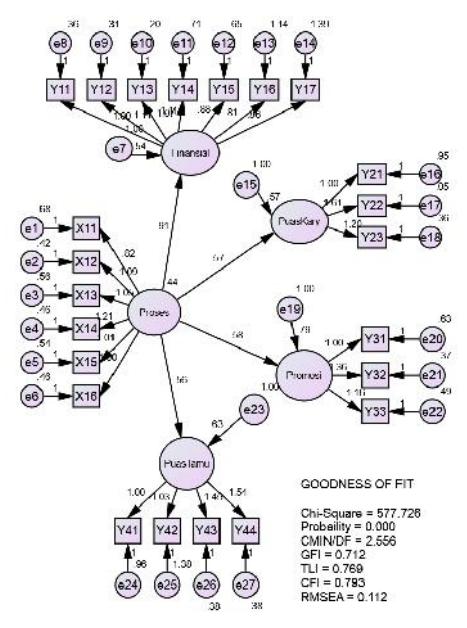
Figure 1. The model of environmental management at star rated hotels in Bali. Source: Data processed
Structural Equation Model(SEM) is known as the model is formed consisting of the latent variables and some manifest variables (indicators) that would explain the latent variable. The purpose of measurement model test is to determine how accurately the manifest variables can explain that there is a latent variable. Basic test is if an indicator of the latent variable can explain, then there will be a relationship between the two. Because the latent variable has a certain value, then the testing process was conducted among the indicators that make up the latent variables. This test uses the maximum like hood estimation procedure and a comparison with the goodness of fit test.
This study uses a latent variable exogenous (the environmental management process) and four endogenous latent variables such as: affect of the financial gain, affect of the benefit of promotion and publicity, effect on employee satisfaction, and the affect guest satisfaction, and hypotheses to be tested are; (h1)it's the environmental management
process (X1) affect the financial gain (Y1) at the five-star hotels in Bali; (h2) it's the environmental management process (X1) affect the benefit of promotion and publicity (Y2) at the five-star hotels in Bali; (h3) it's the environmental management process (X1) effect on employee satisfaction (Y3) on the five-star hotel in Bali; and (h4) it's the environmental management process (X1) affect tourist satisfaction (Y4) at five-star hotel in Bali.
The proposed four hypotheses will be tested in order to answer the existing problems, the results can be seen in Table 4.
Table 4. Results of tested hypotheses
| Estimate | S.E. | C.R. | P | Label | |||
|---|---|---|---|---|---|---|---|
| Financial | < | Proses | .910 | .138 6.609 *** | |||
| Guest Satisfaction | < | Proses | .562 | .133 4.224 *** | |||
| Promotion | < | Proses | .579 | .143 4.041 *** | |||
| Employee Satisfaction < | Proses | .568 | .129 4.398 *** |
Source: Data processed
Based on the following table 4., will be seen that the effect of an exogenous latent variable to the each endogenous latent variable, such as:
- 1. Environmental management processes significantly affect the financial return on star rated hotels in Bali. It is shown from score of p-value of 000 (significance ***) <0.05, and a regression coefficient of 0.910 ≠ 0.
- 2. Environmental management processes significantly affect the benefit of promotion and publicity at star rated hotel in Bali. It is shown from score of p-value of 000 (significance ***) <0.05, and a regression coefficient of 0.546 ≠ 0.
- 3. Environmental management processes have real impact on Employee Satisfaction at star rated hotel in Bali. It is shown from score of p-value of 000 (significance ***) <0.05, and a regression coefficient of 1.057 ≠ 0.
- 4. Environmental management processes significantly affect guest satisfaction at star rated hotel in Bali. It is shown from score of p-value of 000 (significance ***) <0.05, and a regression coefficient of 0.904 ≠ 0.
Therefore in general it can be concluded that there are significant influence among the environmental management process to the satisfaction of the hotel perceived of financial benefits, employee satisfaction, benefits of promotion and publicity, and the guest satisfaction.
CONCLUSION
From this study it can be concluded that the environmental management in the hotel, especially the star rated hotel is increasingly playing an important role in the management of the hotel, especially in Bali. Environmental management processes significantly affect the financial return, the benefit of promotion and publicity, the employee satisfaction, and the guest satisfaction at star rated hotel in Bali. Or in general it can be said that the process of environmental management influencing the benefit of environmental management in star rated hotels in Bali.