

INTRODUCTION
Indonesia, an archipelago in South East Asia, is well known as a pluralistic society. With more than 17,500 islands (Embassy of the Republic of Indonesia, 2014), Indonesia offers different cultures, cuisine, history and landscape as a unique travel experience. Such unique characteristics have ranked Indonesia as the 32nd most visited world tourist destination (Worldbank, 2014). According to the Worldbank (2014) report, international tourist arrivals in Indonesia increased from 6 million in 2009 to 8 million in 2012. In addition, Ms Pangestu, Indonesian Minister of Tourism and Creative Industry, expects up to 9.5 million international tourists to arrive in Indonesia in 2014 (Detiktravel, 2014). This significant growth is expected to contribute an additional 8% to Indonesia's national economy, an economy regarded as the fastest growing out of all G20 countries (WTTC, 2014).
To accommodate the significant tourist influx, Indonesian and global hotel operators are proactively meeting the lucrative demand by opening more hotel rooms. For example, PT. POS Property Indonesia, a subsidiary company of PT. POS Indonesia, is allocating more than Rp. 100 billion to build two new hotels in Bandung (Zadmin, 2014). In addition, global hotel operators such as the Intercontinental Hotels Group (IHG) have recently also inaugurated their newest hotel in Bandung. This new hotel offers an additional 204 rooms and 19 villas (IHG, 2014). Similarly, FHRI Hotels & Resorts, the parent company of Raffles Hotels & Resorts, Fairmont Hotels & Resorts and Swissotel Hotels & Resorts, is planning to open its new Raffles Hotel in Jakarta with 180 luxury hotel rooms (Hospitalitynet, 2014). Additionally, Holiday Inn Group is soon to officially open new Holiday Inn Express Hotels in Bali and Jakarta. These two new hotels will feature 115 and 105 guest rooms respectively (Hotel News Resource, 2014a, 2014b). Overall, Top Hotel Project report (2014) suggests that 800 new hotels with 100,000 guestroom capacities are expected to open during the period 2012-2022. Such significant
* Corresponding author, email: hherjanto@mckendree.edu.
<sup>1</sup> School of Business McKendree University. Lebanon, Illinois, USA
<sup>2</sup> Sunway University, Bandar Sunway, Kuala Lumpur, Malaysia and continuous growth in hotel development not only will improve customers' selection options, but will increase new competition (Cai, Zhang, Pearson, & Bai, 2000) and put additional pressure on existing hoteliers (Williams & Ashill, 2011) to maintain their hotel occupancy and increase loyalty (Thomas & D'Aveni, 2009).
LITERATURE REVIEW
In order to maintain their room occupancies, de Klumbis (2009) suggests that hoteliers need to offer different experiences. In general, customers know exactly what they want and they are not easily satisfied by mass customisation (i.e., luxurious hotel facilities) (Pine, Peppers, & Rogers, 2009). Rather, customers want to experience something different and very personal (Pine, Peppers, & Rogers, 2009); that is, they want an unforgettable experience (Verma, 2003). A positive memorable experience is likely to generate a higher intention to revisit (Yang, 2009) and to recommend the hotel (Woodside, Caldwell, & Albers-Miller, 2004).
To improve hotel customers' memorable experience, Lo (2012) suggests that hoteliers need to fulfil the psychological needs of hotel customers. She explains that positive psychological elements, such as pleasant surprises, are both meaningful and memorable. In addition, Gupta and Vajic (2000) suggest that direct interaction with the local environment, such interaction with the local culture, also provides a unique and different memorable experience. Also, Oh, Fiore and Jeoung (2007) recommend that hoteliers pay more attention to cognitive factors (i.e., faultless services and products). They believe that a faultless travel experience will be easily remembered by customers. According to Walls, Okumus, Wang and Kwun (2014), it is the combination of such factors that will create a strong and memorable customer experience. According to Hinchliffe (2011), however, a memorable experience is multifaceted and its creation is challenging, and research into the 'memorable hotel experience' has produced inconclusive findings. Thus, in order to clarify, identify and generalise the most important elements of the hotel customers' memorable experience, Herjanto and Gaur (forthcoming) recommend expanding the investigation. It is therefore this study's aim to increase our knowledge of the concept of the memorable experience in the context of the Indonesian hotel industry.
RESEARCH METHOD
A qualitative research using thematic analysis was employed to identify the important elements of a memorable hotel experience. Following the recommendation of Braun and Clarke (2006), firstly, initial thematic map was adopted from the existing memorable experience literature (Herjanto & Gaur, forthcoming-a). This tentative thematic map is presented in Figure 1 and discussed in the following section. Secondly, following de Medeiros, Rosenberg, Baker and Onyike (2008), all positive (excellent and very good) reviews and feedback comments relating to top 10 Indonesian hotel customers' experience posted on tripadvisor.com between 1 March 2013 and 31 March 2014 were recorded for thematic analysis. The top 10 hotels were identified from the report titled as "The Top 10 Hotels in Indonesia" and published by tripadvisor. All the reviews and feedback comments were read thoroughly and then recorded on an excel file. Overall, a total of 5181 positive reviews and feedback comments were collected. 97% or 5013 reviews and feedback comments were excluded as they did not mention the experience to be a memorable one. As a result, a total of 3% or 168 positive reviews and feedback comments were found for the purpose of this study. Further, a list of key words or phrases describing a memorable hotel experience was collected and categorised into several themes.
Initial Theme Identification
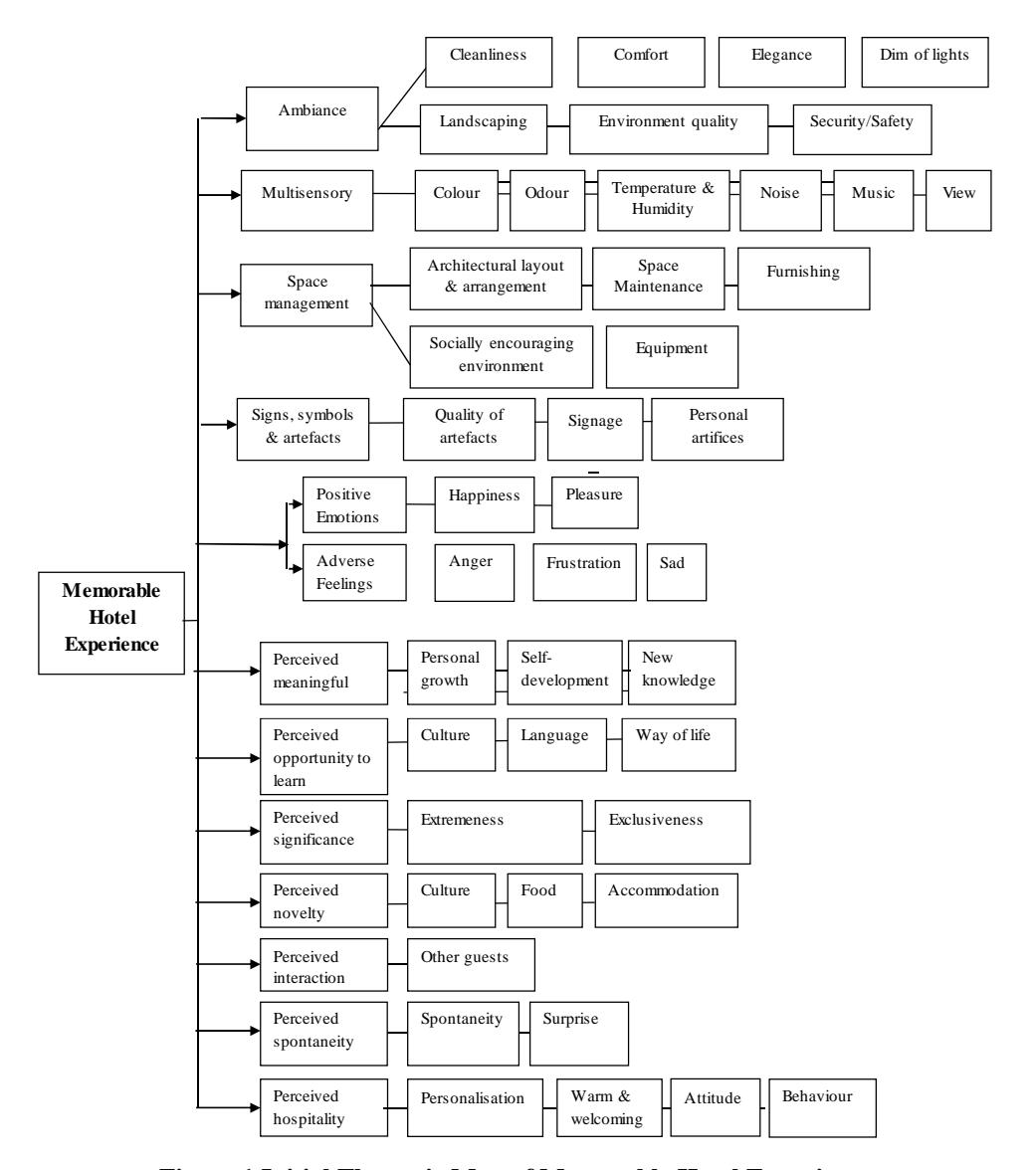
Figure.1 Initial Thematic Map of Memorable Hotel Experience
(adopted from Herjanto, H., and Gaur, S. S. (forthcoming-a), "Creating Memorable Experiences: Lessons from the World's Top 10 Hotels", in Juahari, V. (Ed), Creating Memorable Customer Experiences-Insights from Hospitality Sector, Toronto and New Jersey: Apple Academic Press).
RESULTS AND DISCUSSIONS
Hotel customers' reviews and feedback and feedback comments show that their memorable hotel experiences are generated by numbers of factors. Thematic analysis of these reviews and feedback comments resulted into five different memorable hotel experience themes: ambience, multisensory, space, perception of experience and 92 perceived hospitality. The final themes of a memorable hotel experience are shown in figure 2.
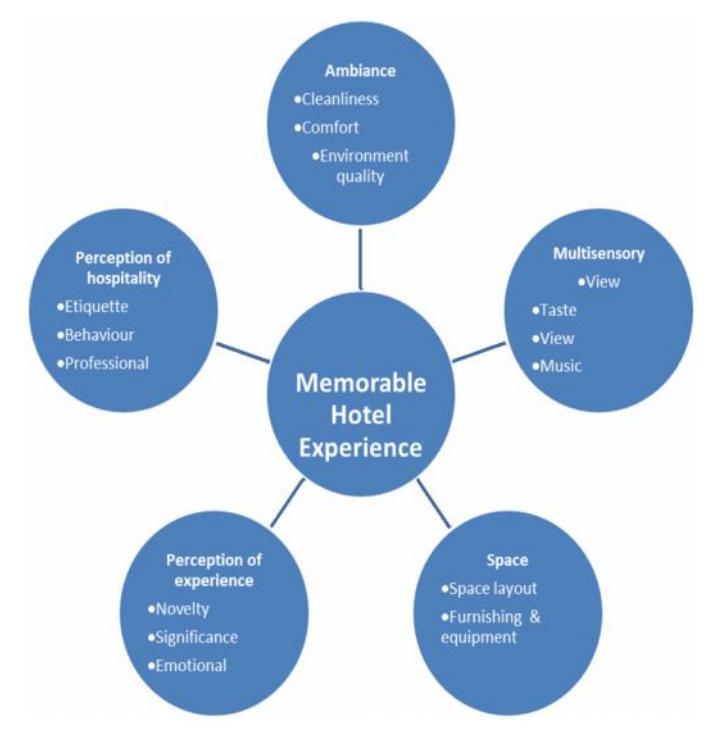
Figure.2 Final Thematic Map of Memorable Hotel Experience
Our findings show that 41% of hotel customers believed that their memorable hotel experience was generated by perceived hospitality. This was followed by perception of experience (26%) and space management (13%). In support of Walls et al. (2014), this study also found that 21% of hotel customers believed that their memorable hotel experiences were a product of a combination of the factors above.
Positive ambience refers to an experience of harmony, cooperation and an uplifting emotional state (Pasiali, 2012; Herjanto & Gaur, forthcoming-b). In a hotel environment, such ambience is produced by cleanliness, comfort, elegance, landscaping, the quality of the surrounding environment, safety/security and the softness or dimming of lighting (Walls et al. 2011). Pizam (2010) further maintains that positive ambience is perceived as a sign of high quality service, which leads to satisfaction and ultimately a memorable experience. Some comments below support these arguments:
"It is not the typical 'run of the mill' 5-star resort. The attentive yet discreet service from all the staff and the serene ambience, plus the luxurious comfort the villa offers, made our stay an unforgettable experience."
Similarly, the following comment also emphasises the ambience as the source of a memorable hotel experience:
"We ate at their Warung restaurant and it was delicious. Great ambience too on the first night as there was a live singer. We thought the prices were also very reasonable for such a great place. On our second night we left this beautiful oasis to go to see the sunset at the (world-famous) Rock Bar about half an hour away by taxi. It was quite tacky (and even the VIPs had to queue to get in!!) and we wished we had stayed at the XXX which was far superior. So thank you XXX you made our stay so memorable."
These two comments above clearly show that different types of ambience are responsible for creating memorable hotel experience.
According to Harthold et al. (2013), multisensory refers to individuals' ability to activate each of their senses (sight, hearing, taste, touch and smell) and/or to integrate these senses into a multisensory experience when identifying and screening stimuli in the environment. This identifying and screening process reduces the number of stimuli to a manageable level and as a result, individuals can easily form perceptions that can be remembered (Nooriafshar, 2004). This argument is supported by the following comments:
"The tables were set around the amphitheatre; the Balinese dance show was wonderful to watch. The set menu was impressive with lots of small dishes to delight the palate. The open-air restaurant was spacious, the menu was varied and the list of wines and drinks ample. The waiters were very helpful and explained the dishes, when I asked for a non dairy dessert they promptly came up with one! The ambience was wonderful, the sea breeze, the peace and quiet, the background music, the scent of the flowers ... it really was perfect. It was an evening to remember."
"From the moment we set our foot in, we were greeted by the endless view towards the Indian Ocean, everything was just perfect. The 1 Bedroom Pool Villa was so lovely that we didn't leave the premises for 2 days. The view and scenery is really breath taking and we were so mesmerized. Taking a dip or swim in the Infinity pool overlooking the Indian Ocean and hearing the sound of the raging waves hitting the cliff is a truly unforgettable experience."
The comments above show that different types of senses – sight (view), smell (scent) and hearing (music) – enhance hotel customers' memorable experience.
Space or physical environment and features of the hotel are regarded as the most classical factors (Herjanto & Gaur, forthcoming-b) in creating hotel customers' memorable experience (Knutson, Beck, Kim and Cha, 2009). In our study, architectural layout (i.e., shape and size of the building, location of the rooms, etc.), architectural arrangement (i.e., local taste, attention to details, etc.), furniture (i.e., traditional, modern, etc.) and equipment (i.e., elevators, escalators, electronic devices etc.) are considered as factors in this category. According to Khvitisiashvili (2012), space or the physical environment of the hotel is very crucial in creating a first impression in the minds of hotel customers. To Dahlgren, Dougherty and Goodno (2013), such an impression will not only attract customers but it will create a memorable experience.
"Having your own private pool in one of the most stunning places on earth — a perch above the cliffs at the southernmost tip of Bali — it's the stuff of travel magazines. The stunning use of space in the bungalows, main pool, dining areas, and the cantilevered lounge deck just take your breath away, at every turn. I found myself feeling full of
Similarly, gratitude and contentment moment after moment. Even if you only stay one night, it will be one to remember for a very long time."
Also,
"All the facilities were very well maintained. Dipping in the 60m infinity pool that is next to a Padi field was just an experience that we would never forget. Not forgetting all the friendly staff who has help us making reservation at restaurants, 'ferry' us back to our villa and etc. etc. Given the chance, we would definitely be back again!!"
The comments above show that architectural layout, such as the well-designed location of the hotel facilities (i.e., bungalows, and dining areas as well as the size of the pool) provides a different and memorable experience for the hotel customers.
Based on Lyons' (2006) conceptualisations, perception of experience is referred to as individuals' acceptance of the situation and conditions at the present time. Such acceptance, according to Donkers (2011), is initiated by individuals' senses and developed by high self-awareness and becomes a personal reflection of thought or perception. The perception of experience is regarded as more important than a hotel's physical environment (Hung, Lee, Wu & Yang, 2010), because such perception creates a new definition that affects customers' emotional experience (Denzin, 1985) and memory (Treadaway, 2009). In this study, perception of experience is conceptualised as a product of the perceptions of meaningfulness, significance, novelty, social interaction and emotional arousal. The following comments support this argument:
"We stay four nights here and all dining in villa for dinner. The Indonesian foods of The Warung are so good. Breakfast at XXX is unforgettable. Breathtaking view."
"The spa holds all kinds of complementary activities. We were at first eager to take part in some of them, but ended up participating in only one program, a bike riding tour of the rice paddies. Our guide (sorry forgot her name) made a great impression of a Balinese as she greeted every person we passed by while riding through the small farming town. It was very memorable."
"We also had our anniversary at XXX and booked a special blessing ceremony, which was amazing and unforgettable. If you have a special event, I would book the lily pond."
"We really enjoyed walking around the property. The landscape was manicured & gorgeous! I particularly enjoyed the massage in the spa. It was my 1st time to try massage and what an unforgettable experience!"
In this study, staff professionalism, attitude (i.e., warm, welcoming and friendly), and behaviour (i.e., helpful, proactive, committed and dedicated to their jobs and customers) are considered as a part of the perceived hospitality themes. According to Marx (cited in Hamington, 2010), perceived hospitality is a special value that is associated with the real emotions offered by hotel staff. The value of hospitality is very much felt, appreciated, honoured, and most importantly remembered by hotel customers (Teng, 2011). In this fashion, perceived hospitality is determined by the quality of the interaction with the staff (Zurita, 2003). Thus, perceived hospitality is clearly an important theme in creating a memorable hotel experience (Teng, 2011). Below are comments that support the arguments above:
"I had high expectations when arriving at XXX. From the moment we arrived, the staff at XXX went out of their way to insure that we had a memorable stay."
In the same manner,
"We found every member of his staff that we interacted with was always quietly doing that little bit more to ensure our stay was memorable. This level of service begins with Kevin's personal warm welcome at check-in. It is the only hotel we have ever been in where you see the General Manager actively engaging and interacting with genuine interest with his guests as if you were in a small boutique hotel."
In support of Walls et al. (2014), we also found that a memorable hotel experience is generated by a combination of the factors mentioned above. The following comments support this concept:
"The best experience of my life so far. Great people, great services, great facilities, great beach and great food! If I have the time and money, I will definitely go back again~ XXX Villa is a life time memorable stay."
In addition,
"Everything was as lovely and romantic as we remembered. The setting is beautiful: frangipani trees around a huge swimming pool, right on the most pristine stretch of beach with warm swimmable water. The XXX is one of the few authentic Balinese resorts on the beach. All lanais and villas are on ground level in lush secluded settings. There is a beautiful spa and the massages are heavenly. The restaurants serve world class food and each table has a view of the ocean. There are often dance and gamelan performances in the evenings, as well as afternoon tea and complimentary fruit skewers and sorbet by the pool. The staff is incredibly friendly and helpful. There are good yoga classes and a wonderful boutique."
CONCLUSION
This study helps hoteliers by re-emphasising the importance of creating a memorable experience for hotel customers. This study provides some important findings. Based on thematic analysis, this study found that ambience, multisensory, space, perception of experience and finally perceived hospitality themes are key ingredients for creating a memorable hotel experience. In addition, the combination of these themes is equally important in ensuring a memorable experience. Interestingly, although customers clearly admire local touches and culture, these themes do not increase or create a memorable experience.
Like any other study, this study also has several limitations. Most serious one is related to the sample. The data was gathered from customers' reviews and feedback comments on tripadvisor.com website between 1 March 2013 and 31 March 2014. This limited sample may not be representative and puts some constraints on the generalisation of the findings. This limitation offers several avenues for future studies. First, future studies are recommended to extend this study by investigating other hotel categories. A different hotel category may offer a different view of a memorable hotel experience. Second, future researchers may also wish to investigate this phenomenon in different countries and cultures. Different countries and cultures may have different ways of offering and creating memorable experiences. Finally, researchers may like to compare memorable hotel experiences between these different hotel categories and cultures.
Implication for Marketing Practitioners
Several implications for hoteliers emerge from this research. First, the study encourages hotel management to be more creative and different. The study has clearly demonstrated that a new or different experience shapes hotel customers' memorable experience. In fact, a new and different experience not only creates a high level of excitement but also increases guests' curiosity and accordingly enhances their emotional experience. A new type of food, way of doing things, dress and language make the hotel guests feel that they are really on vacation and out of their daily routine. Therefore, we recommend that hotel management supports local culture by confidently utilising this culture when serving their guests. For example, a hotel may provide "batik pyjamas" to their guests or encourage their guests to become involved in hotel's cultural activities, such as "free folk dancing" or "free cooking lessons". These different types of experiences will give a sense of freshness, which in turn helps customers to perceive their hotel visit as meaningful and memorable.
Secondly, the hotel also needs to be constantly aware of the beauty of the nature around their hotel property. Our study found that maintaining the natural beauty not only creates positive emotions but more importantly generates a memorable hotel experience. We therefore recommend that hotel management seriously considers the natural beauty when refurbishing or expanding their hotel.