

INTRODUCTION
Indonesia is prone to disaster. This can be seen from many aspects, such as geologically, geographically, sociologically, and pedagogically. Geologically, Indonesia is located between Asia, Pacific, and Australia plate. Geographically, as island and maritime country, Indonesia people are spread unevenly. Many of them stayed in mountain and water area, such as river and coastal area. Sociologically, Indonesia has multi-ethnics and culture. Meanwhile, pedagogically, many of Indonesia people are categorized as low education and economic people. These conditions become a potential disaster for Indonesia.
Indonesian society has both cultural awareness and intelligence. These two awarenesses will be continually developed in line with the ability of mastering science and
* Corresponding author, email: enok.maryani@yahoo.com
1 Paper presented at the International Academic Conference on Tourism (INTACT), Yogyakarta Indonesia, September 15 – 17 th 2014
2 Geography Education Lecture in University Indonesia of Education, specialy Geography of Tourism
3 Geography Education Lecture in University Indonesia of Education, specialy Curricula Geography Education
technology. Cultural element as the result of cultural intelligent, which is perceived as an effective and tested element based on time and space, will be transmitted from one generation to another generation. In society which still keeps the culture, the awareness of natural power is highly kept. They are aware that environment becomes the supplier of their need. Therefore, they have norm and ethic to keep and maintain their environment. This is showed in the form of prohibition of what they can and cannot do; traditional ceremony, and "pikukuh" which has to be lived and become a guidance to behave. The tested knowledge and experience generate some wisdom in several aspects, such in perceiving their self to environment, managing environment in order to avoid disaster, and organizing society relationship. As a result local wisdom, everything which is lived and believed to be truth from one generation to another generation, become a guidance for society of how to behave. This local wisdom can be seen in the form of artefact, sociofact, and mentifact (Maryani, 2010;7).
Local wisdom inherent in society life, in which good values in local wisdom is expressed in traditional ceremony, layout, cloth, settlement, and another cultural forms. These wisdom values become the sublime culture of either society or nation, and therefore it should be socialized into several ways which one of them is through edutourism. Tourism as re-creation to release the boredom and tiredness also need variation, whether in situation, view, and activity. Regarding this, the change in tourism paradigm is needed, such as from mass tourism into individual tourism, from psycocentric to allocentric, and from pleasure to enrichment, from sightseeing relationship with local community to intense and integrated relationship which suits with the community empowerment aim. The local wisdom occurred and developed in local society can be tourism which is not only unique but also offers valuable learning.
The local wisdom, both in mitigating disaster and tourism destination, is rare to be investigated. This is because the investigation of local wisdom needs a deep contemplation, so that it can be rationally understood. Of all the investigation of local wisdom, many of them do not involve rational thinking. They just explain about myth which is reflected into custom, proverb, and traditional ceremony.
This study is conducted based on the assumption that local wisdom in society is expressed in the form of belief and mythology, such as activity, traditional ceremony, and norm. It also expresses in term of the utilization of environment in order to avoid disaster. Traditional ceremony which is regularly held and the prohibition which is made become a relaxation to receive what nature given. This prohibition is very effective to adapt and mitigate disaster. Meanwhile, traditional ceremony, layout, and another behavior which is showed in artifact culture became another attractive power for tourism. All of these elements (traditional ceremony and prohibitions) are relevant to edutourism since they have the value of knowledge, attitude, and behavior.
The aim of this study is to find out the superiority of local wisdom in Sundaness society, especially in Kampung Naga. It is also aim to discover the forms of local wisdom in Kampung Naga, especially which is related to anticipate disaster. Besides, it also aims to find out the potentiality of local wisdom in Kampung Naga to be edutourism destination.
THEORITICAL REVIEW
Local Wisdom
Local wisdom is often called as indigenous wisdom, traditional wisdom and indigenous inventions (Shodyarta, 2008), indigenous knowledge (Respati, 2009), local genius (Aryatrohaedi, 1986; Surya Diarta, 2007). Eric Hobsbawn and Terence Ranger (1983) even use the term invented tradition for local wisdom. All of these terms has similar meaning and complete each other. The word indigenous (indu and genre) refers to naturally developed and made in a certain area. In other word, the present and development of an idea is the result of invention in society as a response from the need and interpretation of even or phenomenon in society. After the utilization of the invention is tested, it will be socialized and manifested in common practice or tradition, in which its truth is internalized and believed, and thus it has consistency.
Further, Keraf (2002) states that local wisdom is similar to belief, understanding or knowledge, and common practice or ethic, which guide human to behave in ecology community. Indigenous knowledge involves common practice, knowledge, perception, norm, and culture that should be obeyed, and it transmits from one generation to another generation (Firmasyah, 2011). The form of local wisdom, in this case, can be seen from knowledge system, social system, and cultural system which is represented from environment management, customs that arrange society relationship, and the result of artifact culture such as land used; house material and architecture; the design and style of dress, utensils, and ceremony.
To maintain the local wisdom, it is often introduced the term "taboo" or prohibition which means something that cannot be done by the local society or visitors who come to their area. In Naga, for instance, the visitors are not allowed to take something from forbidden forest (hutan larangan or hutan Keramat). This prohibition is applied for both Naga society (daily) and visitors. Prohibition in custom society is one of effective way in controlling the society from various deviations coming from both insides and outside. If there is a member of society which breaks the rule, for instance, she will get a punishment whether direct or indirect.
Maryani (2008) notes, local wisdom are an excellent culture which becomes the identity of our nation. As the character of culture, it has various positive side: (1) it is able to persist from another culture; (2) it has the ability to accommodate another culture; (3) it has ability to integrate another culture into the original culture; (4), it has the ability to control; (5), it has ability to give a direction for culture development (Ayatrogaedi, 1986: 40)
The local wisdom in Indonesia has been discussed in many article by some experts, such as the maintenance of forest resource ecosystem sustainability (Santoso, Inam, 2006); human resource development (Wahyuni, DewiUrip, 2010), water management (Sulistiyono, 2005); institutional (Tjondronegoro, 2006), the management of marine natural resources (Salampessy Djalaludin, 2008); spatial planning (Ernawi, Imam, no date); architecture, disaster mitigation, arrangement of supernatural relationship (cosmology), leadership (Trenggono, Indra, 2009) and social system that become a guidance to interact.
Disaster Mitigation
Law No. 26 Year 2007 relating to the spatial planning states that space can be divided into conservation and cultivation space. Space allocations for conservation is based on the fact that human need environment sustainability. There is natural element in which is existence need environment sustainability, such as clean air, productive land, clean and sufficient water, environment which is far for disaster (such as landslide, flood, fires, drought, etc.). Space exploitation, particularly which does not consider environment, is potential to cause a disaster. Disaster is incident which bring harm and dangerous for human. The societies who get disaster sometime are not able to handle it, and therefore they need help from another.
Based on Law of Disaster Management, there are three types of disaster, which are:
- 1. Natural disaster. It is caused by natural incidents, such as volcanic eruption, earthquake, tsunami, flood, landslide, flood, and hurricane.
- 2. Non-natural disaster. It is caused by the non-natural incidents, such as technology failed, modernism failed, endemic, and epidemic disease.
- 3. Social disaster. It is man-made disaster, such as social conflict and terror.
Meanwhile, Bakornas (2005) identified the most frequently disaster in Indonesia. They are flood, drought, land and forest fire, hurricane, earthquake, tsunami, volcano eruption, technology, technology failed, and epidemic disaster.
Mitigate is an action to reduce the danger in order to minimalize or eliminate the lost. According to the Minister Home Affair Decree No. 131 Year 2003, mitigation is the effort and activity done to eliminate or minimalize the effect of disaster. This includes physical preparedness and preparation, the alertness and ability to recover. Further, it is stated that mitigation can be done in the form of spatial planning, physical development, the awareness and the knowledge improvement of disaster.
Edutourism
Tourism is a demand in the high productivity and bustle. The physical and physiological limitation require every person to do a rest, whether it daily, weekly, yearly, and holyday. Basically, human need support energy, knowledge and experience, refreshing through interaction, socialized, appreciation of culture outside society, enjoys the beauty of nature, and travelling. Choosing the tourism activity, in this case, is depended in the residence location, the range, income, education, age, life cycle, and livelihood. Hence, Stopper and Ergun (1980) classify three types of tourist based on their motivation. They are: (1) extroversion (person who are encouraged to interact with other people); (2) achievement (a person who like to do many recreation activities; (3) pastoralism (person who like the nature and have desire to walking out from urban life; (4) escapism (a person who want to escape from their daily routine).
Ecotourism and edutourism is one of alternative tourism to enjoy and appreciate the beauty of nature and the unique of culture which has not been touch by modern technology. The activity of ecotourism and edutourism contains a responsibility, discipline, emphatic, and morality to the nature, social, and culture. Specifically, edutourism is defined as:
"Alternative tourism that incorporates and goes beyond aspects of heritage tourism, ecotourism, and community tourism. It is a hybrid that takes into account the visitor's need for enjoyment in a stress-free environment, and is grounded in the local people's deep cultural roots, social and economic needs, and active participation. Edu-tourism creates reciprocal partnerships, through which all parties learn and contribute their respective resources, expertise, and skills. It involves host communities in a dynamic and selfdefined form of economic and community development. The result is something that makes the whole experience qualitatively different from traditional leisure tourism." (http://www.edu-tourism.org/)
Various definition of edutourism is stated by some experts. Bello Yekinni Ojo and Raha Nerina Raja Yusofu (2013) & Jimenes (1986) state that edutourism is any tourism program or product offering in which participants travel to a location with the primary purpose of engaging in a learning experience. Ritchie (2003) define edutourism as activity undertaken by the tourists for whom education and learning is the primary or secondary part of the trip. Different from the above experts, Paul (2003) mentions several activities categorized as edutourism, such as study tours, international university studies, secondary school students' travel, and exchange programmers. Meanwhile, according to
Ritchie, Carr, and Cooper (2003), edutourim management can be done independently or cooperatively, with various objects, such as natural or human setting.
In edutourism destination, it not only transfer the knowledge to skill, but also explain, invest, and give the example of attitude, value, morality, speech, behavior, and lifestyle. The teachers act as facilitative tool to transfer the knowledge, experience, ethics, and behavior from the nature, community leader, and another society member in destination. Education, in this case, represent the interaction process between the students or tourism with socio-cultural and natural environment. The combination between learning by doing and giving an example will become the important part in edutourism.
RESEARCH METHOD
There is traditional knowledge that is no longer appropriate to be applied at this time, but many of them are still valid because of its general characteristic. It seems that it becomes our task to validate the traditional knowledge in local wisdom to be real, and hence the local wisdom can be effectively utilized again. According to Sagih Biantoro (2011), there are three strategies that can be used to revitalize the local wisdom. They are inventory, reorientation, and reinterpretation. Inventory is aimed to gather and select the cultural value which is relevant to the present demand. Reorientation is actualization and adaptation of local wisdom in order to be easy to receive by other society. Reinterpretation refers to reinterpret the meaning in local wisdom in order to be productive.
This study was conducted in Sundanese custom society in Kampung Naga. The method used was qualitative descriptive. The respondents were some society leaders and society member who perceive have enough knowledge in knowing and understanding the custom tradition. This study was conducted on May to November, 2013.
There are various steps done in this study. They are: (1) literature study; (2) developing the lattice of the study; (3) interview and observation to collect the data; (4) analyzing the data; (5) making a conclusion. The instrument used in this study was interview and observation. These two methods were done simultaneously.
DISCUSSION
The discussion will be divided into three parts. The first one is to do with the description Kampung Naga. The second one deals with the identification of local wisdom in mitigating disaster. The last one is to do with identification of the attractiveness of Kampung Naga as edutourism.
The Description of Kampung Naga
Location
Kampung Naga is located on the roadway Bandung-Garut-Tasikmalaya, which is approximately 30 miles to the west city of Tasikmalaya. To go to the Kampung Naga, we must go to the path that has been formed a stair, with no more than 260 steps. Administratively, Kampung Naga is located in Legok Dage Neglasari Village, Salawu sub district, Tasikmalaya, West Java. Total area of Kampung Naga is approximately 4 ha, with 326 populations and 106 household. The typical characteristic of Kampung Naga is its ridge with has a slope more than 5°, in which Ciwulan river become its lowest point. These types of morphology are very prone to disaster, such as eruption, earthquake, slide land, and hurricane.
Kampung Naga community still keeps their custom, especially in maintaining their environment. Because Kampung Naga has a large slope, there are terracering that separate one group of community with another group. There are almost 6 terracering, and each terracering consists of 12 to 15 home. The clift of terracering is 2 meter high, and it is made from stones which are neatly arranged with natural layout and material. Moreover, there are stones in the edge of the river to prevent vertical eruption and flood. All of these things become the typical characteristic of architecture in Kampung Naga.
Figure 1. Terracering Made from Stone and Home Architecture
Layout
The use of land in Kampung Naga is divided into three areas: forest, village, and rice filed. Forest is located in west and east. The west side of Kampung Naga is bounded by street, and there is a hill covered by sacred forest, called Leweung Keramat. This forest should not be used, it is left naturally. Forest is considered as a sacred place since this is a grave of Sembang Eyang Dalam Singaparna (an ancestor of Kampung Naga society) Leweung Keramat is believed as a source of holiness and goodness. It is expected that Leweung Keramat can bring the kindness to the village through some scared buildings, such as Bumi Ageng (a place to keep heirloom and masque). Simply said, Bumi Ageung, mosque, and gathering place stay between Leweung Karamat and village.
Meanwhile, the east side of Kampung Naga is bounded by Ciwulan River, and there is a hill covered by forest, called leuwueng biuk/larangan. Every people are not permitted to take something from this forest, expect for holy activity or taking a bath in traditional ceremony. However, they can only take something outside the forest. They may not come inside. The reason is the negative atmosphere in Leweung Larangan, in which there are many apparitions there. Thus, Kampung Naga people are not allowed to come inside the forest.
Kampung Naga village is divided into three blocks (zones). The first zone is clean zone. It is located on the middle of Kampung Naga. It consists of house, mosque, place to keep rice (leuit), and public building. Second zone is dirty zone. It is located on the right side of the village. It consists of toilet, livestock, saung lisung, and a large pond in front of the village. The last zone is open space. It is located on the south side of the village. It has a function as a breaker with dirty zone. Toilet is built above the pond, and therefore the sewage of toilet becomes the fish food. Toilet is located on the edge of the hill, in which the water is flowed through bamboo. It is made from half of gendek with 2 meter high, whether without roof or with roof which is higher than gendek. Thus, there is an open space between gendek and roof, known as ventilation. The toilet floor is made from 2 or 3 bamboos. The water from toilet directly flows into pond. Paddy pounding and livestock is also build in the edge of the pond, and thus the sewage from livestock and saung lisung (huut, beunyeu, menir) can be used as fooder or organic fertilizer. Meanwhile, pond has a function as natural recycling. The water in the pond is flown into rice field around the village. From this way, Ciwulan River will be not contaminated.
Farmland is located in north and south side of Kampung Naga, which its broadness approximately 1 km. There is only less number of farmlands on the west sides since it is isolated by Ciwulan stream. The type of paddy planted is bitter melon, which needs 6 month to be harvested. In farming, especially in term of choosing the paddy and planting manner, Kampung Naga people still tied in custom, and they keep doing this until now. Village and rice field are constructed in the form of terracering.
Figure 2. Spatial Planning and River as the Preventive Way from Vertical Eruption
House
Settlement is built on sloping land around 27⁰, with terracering system. Housing is arranged to be 6 floors or sengkedan. Each floor or sengkedan consists of 15 to 21 houses, depending on the vast of the land. The wall of the house is hold with stones which is neatly arranged and glued by the clay. From one sengkedan to another sengkedan is connected by stones stairs. Due to land limitation, the number of housing in Kampung Naga is not developed. House architecture form one house to another is similar, in term of direction, size, and material. All of these have been organized by customary law, and the society does not want to break this custom. For those who want to have a house from wall and modern utilities, they can build it outside Kampung Naga. This condition becomes the form of social tolerance, in which simplicity and utility become typical character of Kampung Naga that does not fade by the time.
House should be built from bamboo and wood. The form is similar like stage. The direction of the house is similar, which is west and east. The front side of the house faces in north or east. The floor of the house is also made from bamboo (palupuh), and a roof is made from palm leaves or tepus leaves. The pole and house is generally builtt based on the knockdown system, without nails or another modern utility.
House becomes the center of life that is why building a home need some consideration which is appropriate with belief value. The home shape is rectangular with size 5 x8 meter, and it should be stage house. There is wood or bamboo stair to come inside the house. The foundation of house pole is constructed by big stone. The pole is made from bamboo, and the floor is made from wood covered by palupuh. Meanwhile, roof is made from palm leaves. Under the house, there is livestock, such as chicken. House should not be painted, expect using camphor.
House is divided into 5 rooms. They are: (1) living room to receive guest; (2) living room as family gathering; (3) bedroom; (4) place to store rice, known as goah. It is only women who can come to this room; (5) kitchen. Regarding house utilities, theKampung Naga society are not permitted to equip their home by chair, table, or bad. Between one house to another houses should be head on, including kitchen. Hence, if one neighbour does not cook, it will be seen by another neighbor. This condition can control the poverty.
Belief and Traditional Custom
Kampung Naga people are Moeslem. Religion ceremonies done are: (1) desolating as meant of self-reflection. It is done every Tuesday, Wednesday, and Saturday. On these days, tourist may not come to Kampung Naga. (2) hajat sasih, bebersih, as a means to meet Sa Naga (the descendant of Kampung Naga people who those who lives outside) and Kampung Naga society (3) Marriage and another ceremony in accordance with Moslem. Prohibition (taboo) should be obeyed without any reasons. Therefore, the society do not know of why they should do and do not do something. Following the ancestor become the only reason of why they should follow some rules. The law of cause and effect is believed as a consequence they should be received if they break the rules.
Livelihood
Kampung Naga society lives from farming, by cultivating the field and huma (tegalan). Agriculture land is located in the north and south side of the village. Field is very supported with a good irrigation, rainfall, and equipped technical irrigation, so that it can be plant through the year. Although the agriculture system is subsistent, food crisis have not occurred in Kampung Naga. Paddy has both economical and magical value. The reason is that rice becomes the main food which supports the life. Planting paddy is a must, even though it can combine with other types of paddy. Planting paddy is treated as people, Dewi Sri, who should be appreciated through several ceremonies. Big paddy planting season is 6 month. It is meant that one year can be harvested twice. Paddy is taken with ani-ani (entem) and tied up in the form of geugeusan. It is then put in leuit, which is located outside the house. Paddy that has been pounded into rice is put in certain room, namely padaringanor goah. The last paddy taken will be made into 7 eundan or paddy mother. It will become stock, and will be kept until several years.
Kampung Naga society has leuit which is used collectively. Every society member can put their paddy in unspecific amount. Leuit and paddy mother will become a stock that can be used if the paddy stock in their house consumed up. This prevents the society from food shortage or starvation.
Small livestock such chicken is kept under the home. Meanwhile, big livestock is kept on the north side of the village, before the pond and field. Basically, livestock become a stock that can be used when there is a big ceremony, such as holyday. Kampung Naga society also make a bamboo craft, such as brooms, bag, boboko (such a basin made from bamboo), hihid (bamboo fan), and angklung (traditional music instrument. All of these craft was marketed in front of their home.
Knowledge System
Knowledge system is manifested in the forms of ideas, value, norms, rules, etc., and it cannot be touched. Cultural form of an idea stays on the mind. The realization of idea can be seen from proverb, norm, and ethics which become guideance for society to behave. Knowledge system can be seen in the form of proverb and life philosophy, such given in the following:
- a. Humility : Teu saba, teu boga, teu banda, teu weduk teu bedas, teu gagah, teu pinter (do not go anywhere, do not have any wealth, do not have physical strength, and is not smart)
- b. Obedience: Panyaura ngancang temonan, pamundut gancang caosan, parentah gancang lakonan. It means that if you have an invitation, you should quickly go. If you have a request, you should quickly fulfill it, and if you have a command, just do it quickly.
- c. Discipline and obedient. Breaking the rule begins from the small staff. Mimitina ngala daun, ngala kulit, ngalarangrang, tuluy nuartangkalna, Pamalima tak ka badi, teu hade matak paeh, cadu matak tumpura. Kampung Naga people call pamali (sin), if they take everything from sacred forest. The purpose is to prevent the greedy, human character which is never satisfied in exploiting the nature. If the nature damage, there will be a disaster. Therefore, Kampung Naga society only utilizes their land as they need.
- d. Maintaining the nature. Lamun urang deukeut jeungalam, alam oge bakalan mere nyaho kaurang. If we keep nature, the nature informs us. This view means that life should be in harmony with nature. Therefore, Kampung Naga society maintains their nature for their survival and their descendant survival.
Local Wisdom in Kampung Naga
Based from the above explanation, the form of local wisdom in Sundannese society can be seen in the following aspects:
Life equipment : House, architecture, house material, space allocation inside, house orientation, and house equipment.
Layout : Clean, dirty, and natural zone
Live hood : The appropriateness with environment Religion and Belief : Traditional ceremony to keep custom
Society : To getherness, cooperation, regularity, obedience, simplicity, responsibility, and care to the environment
Knowledge : Proverb and philosophy of life
The Chairman of Indonesia Architecture, West Java, Purajatnika (Kompas, November 15th, 2009) along with the society did an experiment to test the house resistance in Kampung Naga using a simple method. They put some bananas trunk under the house as a wheel to easily move the house. This process spent for almost 3 hours and included 50 people. On bananas trunk, house was moved. They shifted, shaked, and rotated house of 50 x 4.80 meter as a form a simulation from the earthquake which is equivalent to 7.3 Richter scale. The result showed that the house did not damage, it is still whole. The wall which was made by bamboo, floor and pole from wood, and roof from palm leaves did not show significant damage.
The bamboo house is proven to be effective in mitigating disaster, especially earthquake. If we search bamboo house in Google, we will found around 98.800 sites discussing its benefits. This indicates that bamboo house is popular and becomes one of alternative building which resist from earthquake.
Fery Irawan (available on http://gambarrumah.com, retrieved on November 24th, 2012 at 07.50) states that house is consider as bamboo house if it uses bamboo and contains more than 80% natural material. If designed and constructed properly, bamboo house can last up to 20 years. However, if we see bamboo house in Kampung Naga, it seems that it has last more than 20 years, and it is still tough. According to Ferry (ibid), bamboo house offered several advantages, especially form earthquake. He explains that bamboo is so flexible and it very resistant from fluctuations. If bamboo house tumble by the earthquake, it will still be able to protect person inside. On the other hand, a home with concrete-wall will be broken, in which the debris of roof and wall will cause serious injury and even death for the people inside. Moreover, in tropical season, bamboo house is very appropriate since it does not absorb the heat, and therefore it causes a sense of cool. It also provides good air circulation, in which the air freely flows from bamboo cracks. Thus, air conditioning (AC) is not needed.
Another advantage of bamboo house is its resistance. Bamboo house is very durable if it fulfills the exact rules of preservation. Bamboo without any preservation will be last 1-3 years in open condition, 4-7 years in protected condition, and 10-15 years in ideal condition. If the preservation is done, bamboo house will be last more than 15 years (Liese, 1980 in Morisco, 2005. Cited from http://kabarindonesia.com)
One of article discussing bamboo house is written by Sukawi in Jurnal Teras Volume X No 1, 2010. Sukawi (2010) states that the structure of bamboo house is non-bearing wall with skeletal structure which become one unified structure. It uses horse structure interlinked with building structure, which structure then with vertical and horizontal direction. Bamboo is connected using a pen as locking rope (palm leaves), and rope ties column rod, diagonal rod, and bamboo sloop. The picture can be seen below:
Figure 3. Horse Construction of Bamboo House (Sukawi, 2010)
The present of sacred and ban forest in the edge of river and steep hill is one of adaptation of Kampung Naga society who is lived in valley. This condition can prevent landslide, eruption, flood, and drought. Terracerring system and hardening steep slope with stone can prevent landslide and minimalize eruption.
Land management done by Kampung Naga society has been proved to be environmental friendly. They know and understand that slope of the hill will be fertile if there is no eruption and landslide. They also know that wet rice farming system will scrape land layers. It also will hold the water, so that the land layer will be heavier. Therefore, they use unirrigated agriculture system (huma) rather than wet rice farming system.
In unirrigated agriculture system (huma), they do not have to return the ground into the reverse side. They only use aseuk. With aseuk, land layer will be maintained and prevent the eruption. The customary laws prohibit the people to use mattock with one reason, which is sin, taboo, and another ban. This rule is obeyed heriditary by the society. As a consequence, they were able to maintain the nature more sustainably. Wet field is only located in the flat area with use terracering.
From the above explanation, we can describe interlinked components in mitigating disaster such as given in the following diagram.
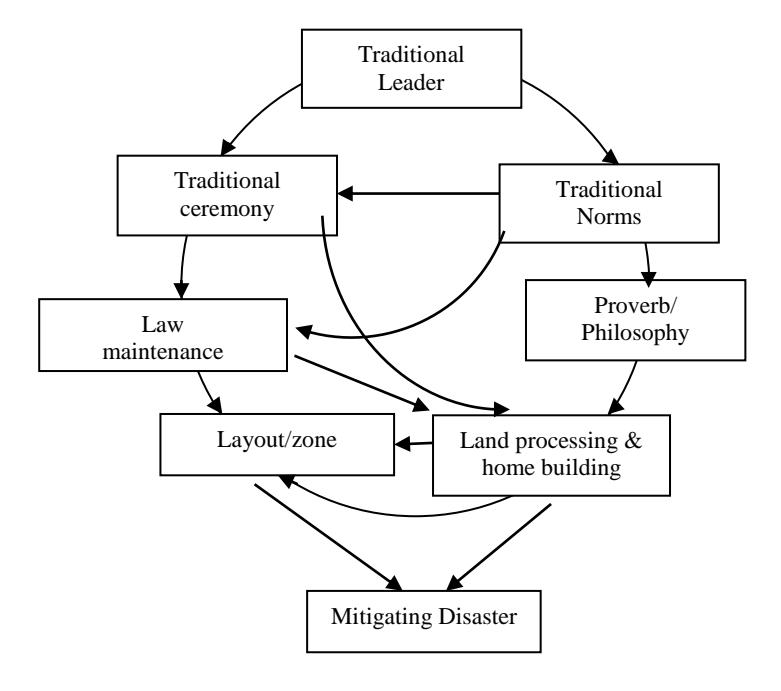
Figure 4. Cycle which Maintain the Local Wisdom in Kampung Naga
The above picture shows that traditional leader has a key role in maintaining the traditional norm and ceremony. Traditional norm and ceremony is an instrument which directly guide the society to obey the norm (pikukuh). To remind this traditional norm, there is a proverb or life philosophy. There are so many life philosophies given to young generation, includee of how to manage the land. Traditional norm and life philosophy is represented in traditional ceremony and law maintenance. This law is formed based on traditional norm. With this kind of system, layout will be kept. The most significance result from this system is the presence of disaster mitigation.
Based on the above explanation, the local wisdom in Kampung Nada are able to mitigate the following disaster:
- 1. Landslide
- 2. Drought
- 3. Flood
- 4. Water pollution
- 5. Eruption
- 6. Social conflict
Educational Values for Tourism (edutourism)
Kampung Naga is located in Negalasari Village, Salawu, Tasikmalaya. It is located in the roadway connected Garut and Tasikmalaya. It is 75 km from Bandung, 30 from Tasikmalaya, and 26 km from Garut. Kampung Naga can be reached from Bandung-Garut-Tasikmalaya-Pangandaran or Yogyakarta through south track. These pass through
areas have variated destination. Bandung is known from its culinary and mountain range. Garut and Tasikmalaya, which is passed through Pameungpeuk, provided a beautiful coast view. Kampung Naga and Tasik offers social tourism object. A long the way, we will enjoy the view of rubber and tea plantation and tropical rain forest. South track access has been widely opened with a good street condition.
Kampung Naga is located in the fertile valley, which is located 400 meter form Garut and Tasikmalaya. There is a park area, which can accommodate more than 20 buses. Around parking area, there are some markets which sell souvenir and food. There is also toilet and rest area. To go to Kampung Naga, we should go down the cement stair which has 360 steps and slope 45⁰. This journey will be challenging tracking path for the tourists.
Kampung Naga society is very welcome. They receive every tourist who comes, except on Tuesday, Wednesday, and Saturday which become a self-reflection day. Kampung Naga atmosphere is very cool, calm and natural. In its residential, there is a house which sells several souvenirs made from bamboo, such as broom, vase, flower, etc. When we arrive in Kampung Naga, we will be welcomed in meeting hall (patemoan) to hear the speech from the traditional leader relating to history and general condition of Kampung Naga. The speech will be last in 60 minute. We, then, will be asked to walk around to get several information of Kampung Naga, such as home condition, layout, farming system, norms, social system, etc. The tourist, in this case, can directly see the activity of Kampung Naga society and interact with them.
The main learning that we can get from vising Kampung Naga is that the society appreciation in maintaining their environment and mitigating disaster. Their local wisdom can be used as the source of learning, particularly in environmental management as followed:
- 1. Scared and ban forest, which is kept and is not allowed to be touched, has climatology, hydrology and ecology function.
- 2. Layout zonation, which is more allocated to supporting area, creates environmental balance.
- 3. Terracering, which is used stone as the strengthen steep terrace, is technological proved to be effective to prevent eruption and landslide
- 4. With presence of clean, dirty, and recycle water zoning system, the cleanest of water flowing into river is kept.
- 5. Stage house with wood construction and knockdown system is proved to be effective in earthquake damage.
- 6. The society's attitude and behavior in managing environment represent social value system which can be used as the source of learning:
- a. Simplicity
- b. Togetherness and tolerance
- c. Care to environment
- d. Keeping the social interaction with ancestors
- e. Responsibility
- f. Cleanness, orderliness, and beauty
These values can be seen from tourism activities such as:
| The thing that can be enjoyed | Things that can be done | Things that can be bought |
|---|---|---|
| The naturalness of the forest | Walking around and enjoying the | Traditional food |
| uniqueness of traditional house. | ||
| The beauty of the valley with its | Walking in the paddy rice field, | Bamboo handicraft |
| The thing that can be enjoyed | Things that can be done | Things that can be bought |
|---|---|---|
| river, paddy rice field, and settlement. | pond, and field. | |
| Farming activities | Fishing | Home furnishing |
| Fishing activities | Feeding the fish and planting paddy. | Ornament made form stone. |
| The scene around the river. | Socializing with the society. | |
| Resting in traditional house. | Making handicraft from bamboo | |
| Enjoying traditional ceremony. | Listening Kampung Naga history in Patemoan. | |
| Art performance | Participating to art performance |
Available accommodation in Kampung Naga is Patemoan building. This building can accommodate 20 people. It also equipped by mats. There is also simple cottage in the outside of Kampung Naga. To meet the needs of food, there are some restaurants in the parking area. Unfortunately, all of these facilities cannot accommodate the entire tourist who comes to Kampung Naga, especially foreign tourist who needs comfortable facilities.
CONCLUSION
From the above findings, it can be concluded that Sundanese society has local wisdom which is very effective in mitigating disaster. This society basically has been realized that the consequence of environmental damage is disaster. Even though the traditional rules become a basis to maintain the environment, this is proven to be very effective in anticipating the disasters especially flood and landslide. There are three forms of local wisdom interpretation: (1) house architecture; (2) land use zoning; and (3) land management.
Strategic location, the openness of society, and educational values (in the forms of simplicity, togetherness, obedience, responsibility, and tolerance) are the important values which make Kampung Naga society keep their environment. Therefore, this can prevent the damage and disaster. All of these things are potential to become tourism destination which has educational value, known as edutourism. Tourism activities is tied to rural village such as agriculture, fishing, the beautiful scenery, traditional house, and Sundanesse art. In Kampung Naga, the tourist can buy the souvenirs which are made from bamboo. They can also buy traditional food. The limitations of facilities, such as accomodation and entertainment, become the obstacle for tourists who demand the comfort in Kampung Naga. For allocentris travelers, it is recommended to enjoy the beauty of Kampung Naga as edutourism destination.