

INTRODUCTION
Cirebon city and its region is part of the West Java province located in the Northeast of Java Island. Since a few years ago the region wanted to separate from West Java and form its own province. The reason for this is the difference in the level of prosperity in which the Cirebon region is less compared to other regions in West Java. In addition, there are also problems of accessibility or "closeness" with Bandung –as the provincial capital city - which are relatively far compared to other regions in West Java.
However, since the toll road on the North Coast of West Java has increasingly extended to the East and reaches the Cirebon area, and has even reached Central Java, on the one hand, and on the other hand, in the next future Cirebon will also be connected to other new toll road from direct Bandung, the accessibility of the Cirebon area will increase very high. Those accessibility is also supported by the Jakarta-Cirebon railroad network which has double tracks so that the frequency of Jakarta-Cirebon train services increases significantly.
On the tourism side, in the Cirebon region there are several nationally known destinations or attractions. Among them are the Cirebon Palaces and the ancient Mosque. Increased accessibility from big cities, such as Jakarta and its surroundings and Bandung, will bring potential tourists to the Cirebon region. The utilization of this potential can make tourism activities increase. In turn, trickling down & multiplier effects can occur from tourism activities to other productive activities. Thus, lagging in the Cirebon region in the future can be reduced.
Geographical conditions of access / gateways to the Cirebon region from the area of origin of potential tourist tourists are via railways, highways and toll roads. While tourist objects / destinations are spread in Cirebon. In order to increase tourism activities there, the concept of tourist routes can be developed.
According to UNWTO (2014), tourist routes create opportunities for inter-border cooperation or areas of government administration, collaborative destination marketing, product development, public-private cooperation, and preservation of natural and cultural heritage. Lourens (2007) states that tourist routes carry more varied activities and attractions and are able to stimulate entrepreneurship from actors in producing goods and services. Stoddart and Rogerson (2009) wrote that tourist routes in South Africa turned out to be more beneficial when directed to pro-poor tourism than when directed to pro-growth focus. But the development of tourist routes, especially related to heritage tourism, needs to pay attention to the power of innovation from the actors (Nagy, 2012).
According to the Ministry of Culture and Tourism (in Yoeti, 2008), elements included in the tourism industry include accommodation, transportation, attractions, travel regulators, and tourism organizations both central and regional. Integrated tourism development is carried out by harmonizing the elements of tourism into a mutually supportive entity. Integrated tourism development can increase the attractiveness of a region.
Integrated tourism development can be done with the concept of sightseeing tours. Regional / city tour concept is one form of touring. The product of this concept is a series of tourist objects and attractions connected by a transportation system (Winarso, et al., 2003). According to Hadinoto (1996), touring is a tourism subsystem which includes attractions, transportation, service facilities and promotional directions used in tours to several locations.
With the development of tourism in an integrated manner through the concept of sightseeing tours, it is expected that the interest of tourists to make tourist visits to the Cirebon region can be increased and can integrate various tourist objects and their supporting elements.
To be able to apply the concept of sightseeing tours, it is necessary to arrange alternative tourist routes. In developing a tourist route, it should be noted that tourists need a full tour experience. Based on this description, the main problem is the lack of development of tourist travel routes and the possibility of providing tourist transport shuttle based on tourist preferences to be able to develop tourism in the Cirebon on one side. On the other hand, tourism activities that have taken place in the future are expected to be more developed requiring infrastructure support, both road networks and supporting facilities in tourist objects / destinations.
The purpose of this paper is presenting the possible tourists route to support tourism development in Cirebon.
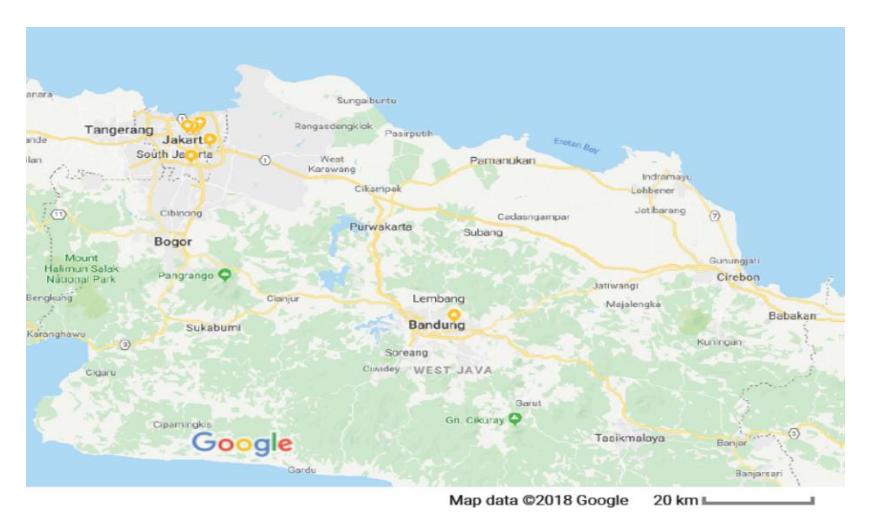
Figure 1. Orientation map of Cirebon
LITERATURE REVIEW
The process of spatial interaction is an important thing that influences tourism development. The process of spatial interaction is described in a basic model, namely the existence of links (linkage) between the area of origin and tourist destination. (Pearce, 1995: 3) In developing tourist routes, the model used is the models of tourist travel. In this model, (1969, in Pearce, 1987) three different routes were proposed that connect between the origin and destination point, namely access route, return route, and recreational route (Pearce, 1987: 3). An access route is a direct route that connects the origin and destination point. Return route is a direct route that connects the destination point with the origin. Meanwhile, recreational route is a route that utilizes various tourist facilities along the way. Recreational routes are part of a trip where tourists can stop and take a trip along the route that connects between the origin and destination.
The origin of tourists for the Cirebon region can be approached by an adaptation of Meyer's idea (2004) where tourists come and return from Cirebon station and or exit the toll road near Cirebon where tourists can stay or rest. From the other side, according to Mason (1990), the location of tourist activities is a major component in tourism. Looking at the demand side, tourists have a big role in developing a tourism product. Development of tourist routes is one form of tourism products. A demand for tourism certainly depends on the tourist market's wishes.
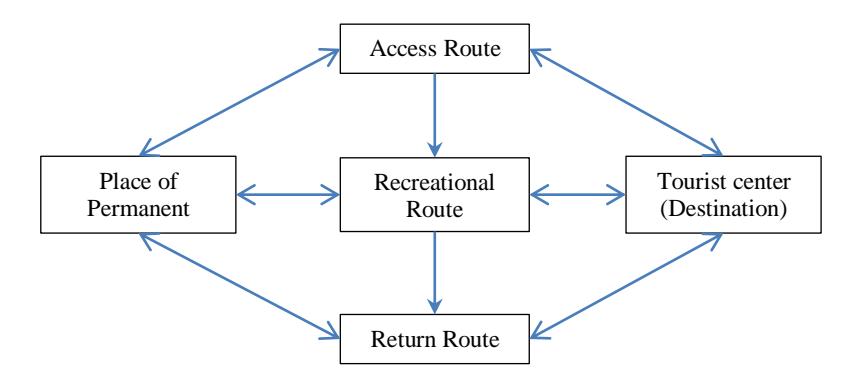
Figure 2. Tourists Travel Model (Source: Mariot, 1969, in Pearce, 1987)
Route tourism unites several tourist attractions and tourism activities in an integrated theme, which encourages the existence of entrepreneurial opportunities through the development of additional products and services (Miossec, 1977; Gunn, 1979; Long, et. al., 1990; Fagence, 1991; Lew, 1991; Greffe, 1994; Page and Getz, 1997; in Meyer, 2004). Basically, the concept of tourism routes can generate the distribution of the economic benefits of tourism to areas outside the main destination so that it can create job vacancies and opportunities for entrepreneurship. The initiation of the tourism route has several objectives, as stated by Meyer (2004) that there are six main objectives of the tourism route. One of them is to assist the spread of tourists and the economic benefits of tourism. Meanwhile, UNWTO (2014) explained that the tourism route has the opportunity to create the sustainable of tourism development, because it has the potential to spread tourism demand and revenue throughout the year in a region, which can support the regional wealth distribution, reduce pressure on major tourist activities and give contributions to overcome seasonality problems. Meyer (2004) explained that based on geographic elements, the attractiveness of any tourism route lays on geographical distance, travel time required by tourists to arrive at a tourist destination, how much money needed to, and cognitive distance between the area of origin of tourists and tourist destinations.
There are three basic assumptions about tourism destination designing scheme, as stated in Dredge (1999), namely: (1) By the presence of tourists, the economy of the tourist destination increases due to a new market that is geographically spread throughout the destination; (2) Complexity and multi-scale of destinations require flexible structured arrangements tailored to different site scales and market characteristics; and (3) The scheme of tourism destination planning and design consist of tourism destination region, tourists generating market, nodes, district, route circulation and gateways. Dredge concept are presented in the figure below.
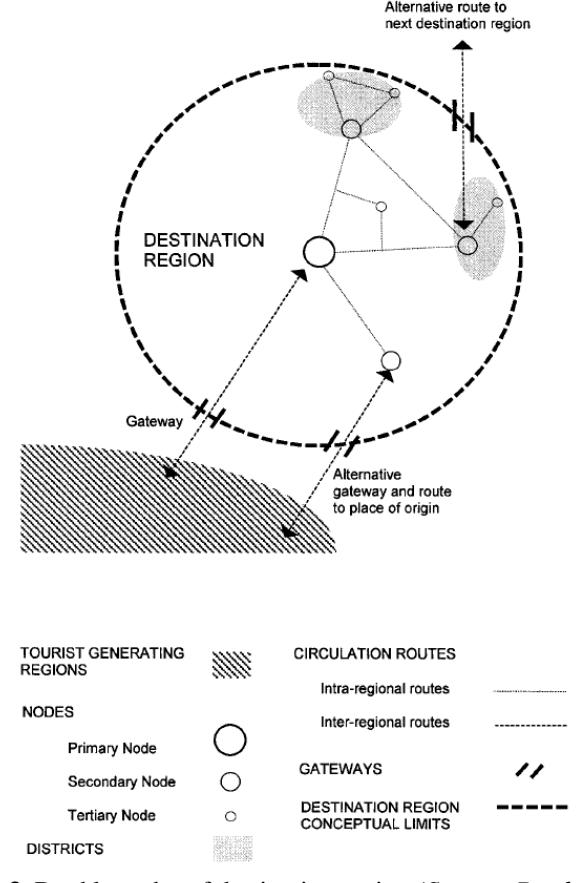
Figure 3. Double nodes of destination region (Source: Dredge, 1999)
Regardless of how or why individual go on a trip, there are some fundamental requirements expected by tourists from their trip destinations. Tourism research and developers said that there are some important key elements generating to the success of a tourist destination. This is traditionally referred to 5A including Accessibility, Accommodation, Attraction, Activity, and Amenities (Cook, et. al., 2002).
CITY OF CIREBON AND ITS TOURIST ATTRACTIONS
In the book of Babad Cirebon (Sulendraningrat, 1986), it is mentioned that Cirebon is a city that has been established since the 15th century AD from a fishing village that was not very meaningful. Cirebon then gradually developed, and by the 16th century the city had grown into the a capital of independent empire equipped with palaces, mosques, a square, markets, roads and sea transportation, harbors, fortresses protecting a 50 hectares area, and a new royal park which was built two centuries later. Cirebon is also well known with the variety of cultures and traditions because Cirebon is a central route of trading and spreading of religions, and it has tolerant and welcoming society. The ancestors of Cirebon formulated the culture and traditionsthat were shown by the existence of many relics of old buildings such as palaces, mosques, petilasan (places had been visited or inhabited by important people at that time), temples, churches, buildings, stations, parks, and so forth. Those are the hallmarks of the Cirebon city in which some of them are still preserved. Cultures and traditions in in Cirebon were strongly influenced by the arrival of Hindu-Buddhist and Islam beliefs. The city of Cirebon is an old city keeping a myriad of real and meaningful stories that are rich cultural and historical heritage, which are partly supported by its people, sites and historic buildings with Hindu-Buddhist, Islamic, China, and Europe influences. They are invaluable assets of cultural heritage, and have strategic significance for historical, cultural, and educational interests as well as the potential to be developed as tourist attractions and destinations.
From geo-economics point of view, Cirebon is located in a very busy lane of Pantura (main national highway in the northern part of Java) and it directly borders West Java and Central Java. Furthermore, the presence of Cipali Highway makes tourists easier to visit the city. Its strategic location supports the city of Cirebon to be a trading center that becomes a core of movements among cities or regions such as Jakarta - West Java and Central Java. The marketing of rural farming products and goods of urban and regional production are concentrated in Cirebon City. Therefore, the economy of Cirebon city is dominated by trading, manufacturing, financial and insurance services, construction and services sectors such as hotels, restaurants and other sectors.
Cirebon City also has some strong points. The first, Cirebon is a transit city located in the main national road which can be reached very easily with all modes of land transportation. The second, the city with the nickname as a city of Wali Sanga (the nine saints) heritage owns the legacy of cultural sites of Kasepuhan, Kanoman and Kacirebonan Keraton (palaces) whose locations are in the middle of a city that is full of commerce. The third, Cirebon is a city with a pluralistic culture built on a mixture of ethnic groups possessing diverse cultures. The next, it has priceless cultural artifacts and a variety of delicious culinary. The last, Cirebon city also has the potential of unique batik patterns such as karangan and mega mendung.
Based on Kota Cirebon dalam Angka 2016 (Cirebon City in Figures 2016) and also a draft study of Cirebon city tourism master plan provided by Cirebon City Planning Office (2017), here's a list of potential tourist attractions in Cirebon:
Keraton (Palace of) Kasepuhan: One of Cultural attractions in Cirebon is Keraton Kasepuhan. It is one of the heritage whose story is still well known until today. This palace was founded in 1529 by Prince Mas Mochammad Arifin II (great-grandson of Sunan Gunung Jati) who succeeded the throne of Sunan Gunung Jati in 1506. He dwelt in the house of Dalem Agung Pakungwati Cirebon. Keraton Kasepuhan which was formerly called Keraton Pakungwati, apparently was the most majestic and luxurious palace in its era of glory.
Figure 4. Kasepuhan palace Figure 5. Kanoman palace
Figure 6. Kacirebonan palace
- Keraton (Palace of) Kanoman: Kanoman palace was one of the kingdom that ever triumphed in the 1500s. The palace was built by Sultan Kanoman I (Sultan Badridin), the 7 th descendant of Sunan Gunung Jati (Syarief Hidayatullah) in 510 years Saka or 1588 AD. This kingdom had a very long live story.
- Keraton (Palace of) Kacirebonan: Kacirebonan Sultanate is one of the palace buildings built in the Dutch colonial era around 1800 in addition to Keraton Kanoman and Kasepuhan. There are many historical objects maintained in this palace such as Keris Wayang, war equipment, gamelan (the traditional ensemble music of Java and Bali) and many others.
- The Great Mosque of Sang Cipta Rasa: Sang Cipta Rasa Great Mosque is one of the oldest mosques in Cirebon which was built by Wali Sanga on the initiative of Sunan Gunung Jati and designed by a Majapahit architect, Raden Sepat, in 1498 AD. At that time, Cirebon residents also named this mosque as the Mosque of Pakungwati because it used to be located in the complex of Keraton Pakungwati.
- Red Mosque of Panjunan: Red Mosque of Panjunan is one of the oldest mosque that is used as one of the religious tourist attractions in Cirebon. It was built by Prince Panjunan. Tourist can enjoy its beautiful architecture of the mosque built in 1480 which now is about 534 years old.
- Taman Sari (park of) Gua Sunyaragi: Sunyaragi Cave is located about 5 km to the west of the heart of Cirebon City. It is precisely in the village of Graksan. Sunyaragi Cave is a natural tourist attraction which formerly was a hermitage that supposedly had many mythical stories. The building of Taman Sari of Cave Sunyaragi was built in 1703, on the idea of Prince Arya Cirebon, a governor of Keraton Kasepuhan.
Figure 7. Sunyaragi park
• Cirebon Waterland of Ade Irma Suryani Park: Cirebon city also has a famous tourist attractions for family that provide entertainment facilities, children's games, zoo, beach tourist attraction and other supporting facilities. It is called Ade Irma Suryani Park which has an area of more than 2.5 hectares. It is located on the northern coast adjoining the port of Cirebon.
Figure 8. Cirebon Waterland Park
POTENTIAL TOURIST ROUTE OF CIREBON
City tourist route is a tourist route made based on secondary data verified through direct surveys of tourist destinations around the area of Cirebon City. When the route had been made, a primary survey was conducted on this route. The tourist attractions that become the nodes in this City Tour Route are Keraton Kasepuhan, Keraton Kacirebonan, Sunyaragi Cave Park, Cirebon Waterland of Ade Irma Suryani, and Batik Trusmi. The visualization of the City Tourist Route can be seen in Figure 9. below, while the explanation of each tourist attraction can be seen in the previous discussion on the tourist attractions in Cirebon.
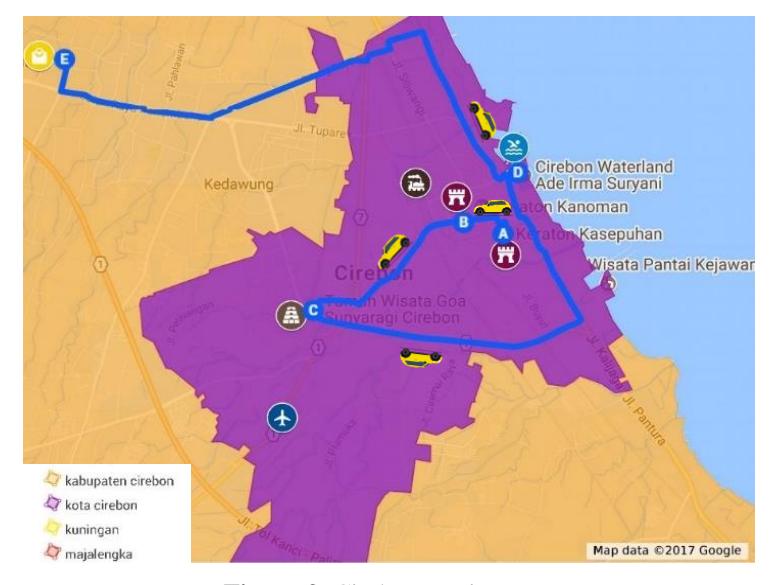
Figure 9. Cirebon tourist route
According to the figure, the first destination that is used as the first tourist attraction in the route is Keraton Kasepuhan. The keraton was chosen to be the first node because this place has a very important history of Cirebon. Besides, it also was the early Cirebon government center in the era the sultanate. Furthermore, this place relates closely to the following tourist attractions to be visited in the route. At the second point of tourist attraction, tourists continued visiting Keraton Kacirebonan because the story of the palace still relates historically to Keraton Kasepuhan. By visiting this place the tourist comprehension about the history of Cirebon will be clearer. Furthermore, at the third point the tourists arrive at Taman Sari Goa Sunyaragi whose story relates to the life of the previous palaces. After that the tour continued to the fourth tourist attraction point, Cirebon Waterland of Ade Irma Suryani, which is a swimming pool completing by the existence of restaurants and accommodation. Therefore, while being invited to enjoy Cirebon Waterland tourists are also invited to have dinner at the boat-shaped restaurant under the sunset on the north coast. After having a satisfied meal, tourists end the tour by shopping typical batiks of Cirebon at Batik Trusmi as the fifth point of tourist attraction.
RECOMMENDATIONS TO CIREBON TOURIST ROUTE DEVELOPMENT
From the results of research that had been done to the existing tourist attractions in Cirebon, there are some suggestions for stakeholders such as local governments, private developers, tour and travel agents and other parties relating to the development of tourist attraction in Cirebon:
- Provision of Shuttle to Support the Tourist Routes: By looking at the short distance among the tourist attractions in Cirebon and to support the existence of tourist routes, the provision of shuttles is recommended. The shuttles can be placed in TIC that will function as a Hub. The provision of the shuttles will facilitate people or tourists who want to visit all the tourist attractions in Cirebon City easily by taking shuttles which transports the tourists directly to their tourist attractions.
- Signage Addition: By focusing on the tourist routes, it is important to increase the awareness of the route. Signage emphasizing that the road is a tourist route and showing
Signage or signposts of tourist attractions are one of the important things helping tourists to look for their tourist attractions. Although there is a digital map now, sometimes the digital map is not accurate and the availability of signals in the highlands towards the mountain is sometimes difficult to get. Furthermore, the addition of signage can also encourage tourists to visit the tourist attractions. The addition of signage can also be a strategy for decoration and beautification in the tourist destinations.
• Website Development: Establishing websites of tourist attractions is one of the benefits gained by tourists in accessing Cirebon Tourist Route. Of course, it should be supported by an interesting user interface and content that is managed regularly.