

1. INTRODUCTION
Agrotourism is the expression of the plurality of the agricultural firm. According to Tirtawinata and Fachruddin (1999), agrotourism is constrained as tourism that utilizes agricultural resources. As a developing country, Indonesians need a variety of ways and means to improve their knowledge and skills in managing their natural resources. Fauziah, et al. (2016) writes that since Indonesia as an agrarian country and most of its population is a farmer then the type of tourism required is agrotourism. According to OECD (2001), multifunctionality refers to the fact that economic activity may have multiple outputs and, thus may contribute to several societal objectives at once. Agrotourism should be considered as the main activity which can guide the development of rural areas.
Understanding agrotourism is a vehicle for agricultural tourism nuanced education for the community but is informal. Formal ways and means are widely available, but the material is highly dependent on the national curriculum and the participants are selected with a certain period. Education is informal to be important as a complement and support efforts to achieve community intelligence in managing natural resources. Today, urban society enjoys tourism activities in agricultural areas as well as a way to reintroduce agricultural activities that have been abandoned by urban communities. The success of an agrotourism is very dependent on landscapes, agricultural resources, accessibility and management. The district of Getasan is part of Semarang regency with the topography of middle to highland. This region has grown as one of agritourism destination in Central of Java. Since 2000 until now, in this region has introduced the cultivation of wheat crops through various research, counseling, expo/exhibition, and wheat harvest festival. The wheat research center is located in the experimental farming's of the SWCU Agriculture and Business Faculty, located in Wates village, Getasan district, Semarang regency.
Faculty of Agriculture and Business Universitas Kristen Satya Wacana, Salatiga, Indonesia
1Corresponding Email: heniwidya@gmail.com
The Potential Of Highland Tropical Wheat As An Object Of Agroedutourism To Promote Tropical Wheat Development (Case Of Wates Village, Getasan District, Semarang)
Wheat crop is a cultivated plant that has not been widely known by the people of Indonesia, although wheat flour "terigu" and derivative products are very popular in this community. Almost of all the flour needs for the Indonesian society are met through imports. The existence of proof that wheat crops can be planted and produce wheat seeds with good yield potential is expected to encourage the people and government of Indonesia to develop this commodity.
One of the most interesting ways for wheat development and the development of agricultural environments is to include wheat farming as one of the educational objects in an agritourism. So farm assessment has been done with regard to the potential of wheat farming's in Getasan district of Semarang Regency as the object of agritourism. Well-designed and managed tourism can not only make a significant contribution to sustainable development and trade opportunities (Gutierrez, 2012). The purpose of this paper is to study the potency of highland wheat farming of Semarang regency as an object of agritourism, to develop strategies for development of the highland wheat field of Semarang Regency as an object of agrotourism.
2. METHODOLOGY
The research was conducted in Wates Village, Getasan district, Semarang Regency, Central of Java Province from January to November 2017.Data collection techniques used observation, surveys, and interviews as well as literature studies. Data were analyzed using SWOT (Strength, Weakness, Opportunity and Threat) techniques. Stages of research include data inventory, analysis, and development planning. The data collected in the study include the physical features of the area, such as carrying capacity of the natural resource, the characteristic of the climate and soil, the suitability of the farming for tropical wheat cultivation. The physical facilities and environmental conditions of the farming area also observed. The managerial side observed as well, such as human resources as a manager of wheat farming and involved in it, attractions, events or activities that have carried out both regular and incidental and the perception of wheat farming visitors to its existence.
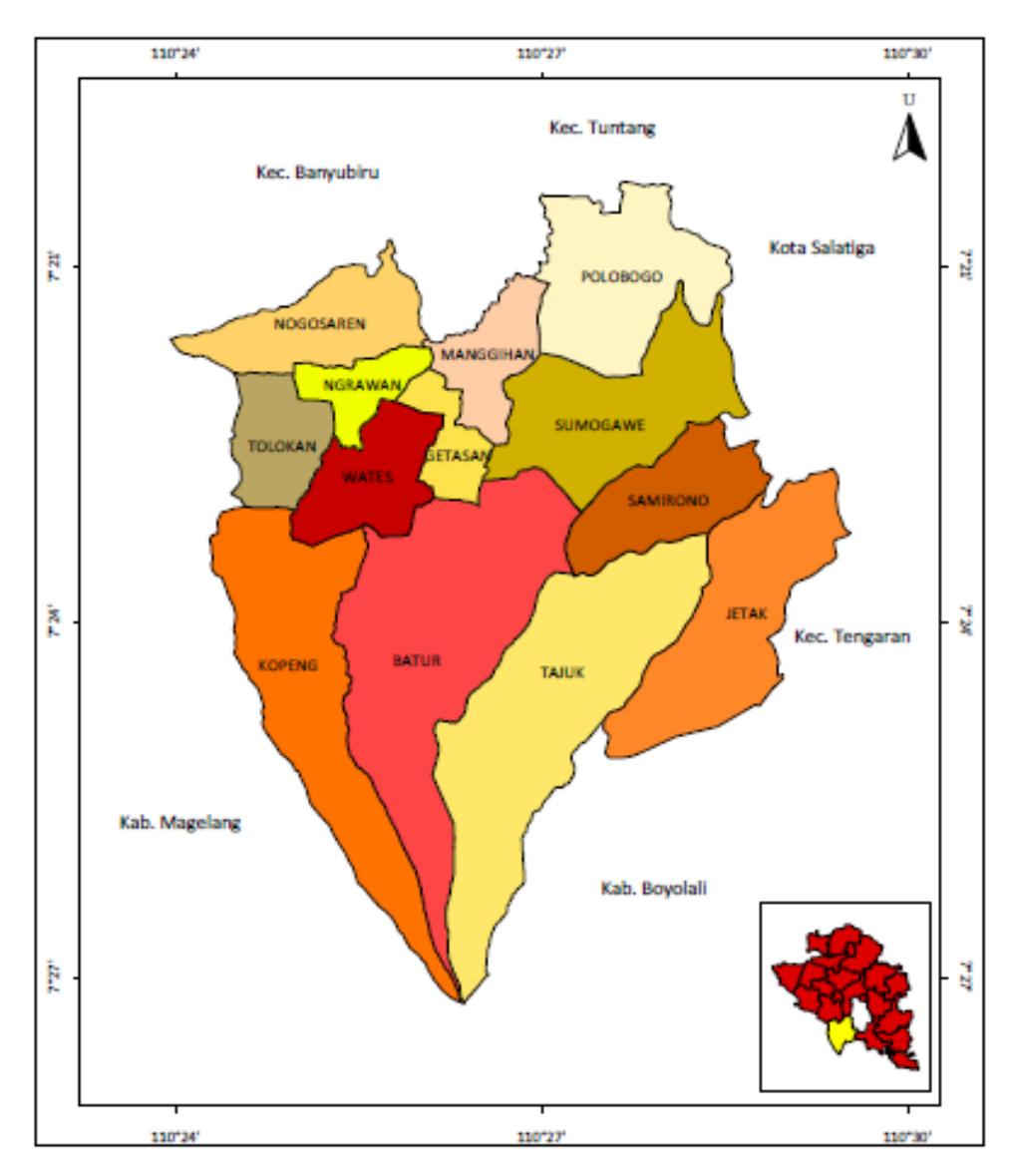
Figure 1. Wates Village,Getasan Source: Analysis Results, 2017
3. RESULTS AND DISCUSSION
3.1 Land Suitability
The Climate and Soil of Land. The altitude of Getasan district is 900-1000 meters above sea level.Wheat farmings are located in the district of Getasan, Semarang regency. The average data of rainfall during 2003-2013 obtained from Agriculture Department of Getasan district of Semarang Regency is 3244,09 mm, the number of rainy days is 179,54 and the monthly rainfall is 262,71 mm.
Table 1. Distribution of monthly rainfall in Getasan District
| Description | Rainfall (mm) | |||||||||||
|---|---|---|---|---|---|---|---|---|---|---|---|---|
| Jan | Feb | Mar | Apr | May | Jun | Jul | Aug | Sep | Oct | Nov | Dec | |
| Mean | 435 | 377 | 413 | 288 | 205 | 109 | 78 | 45 | 45 | 139 | 292 | 392 |
| Median | 418 | 364 | 427 | 275 | 204 | 83 | 33 | 15 | 27 | 112 | 260 | 359 |
| STD | 134 | 119 | 131 | 107 | 115 | 97 | 105 | 67 | 53 | 112 | 151 | 135 |
| Max | 485 | 634 | 736 | 533 | 526 | 330 | 476 | 299 | 205 | 436 | 719 | 692 |
| Min | 173 | 146 | 113 | 42 | 28 | 0 | 0 | 0 | 0 | 0 | 90 | 180 |
Source: Rainman International V4 (2003)
From the topography aspect, the area of wheat farms included in the category of slopes and hilly. The dominant soil type in the district of Getasan is Andosol (BPTP Ungaran, 2000). Sukarman and Dariah (2014) mentioned the definition and character of Andosol soil in Dudal and Soepraptohardjo classification system (1957 and 1961) are black or dark brown soil, crumb structure, high organic material content, slippery. The lower ground is brown to yellowish brown, medium texture, porous, weak compression, and the clay accumulation often found in the lower layers.
Farm Suitability for Tropical Wheat Cultivation. Some environmental conditions used to analyze land suitability for wheat cultivation are climatic and soil factors involve the rainfall, soil texture, soil depth, soil draenase, soil pH, slope or land topography and land use (Sarkar et al., 2013). Guidelines for analyzing land suitability of agro-field sites of wheat-based education, using practical guidance from Djaenudin et al. (2003).
Table 2. Land suitability criteria for wheat crop cultivation
| characteristics S1 (highly S2 (moderately suitable) suitable) | S3 (marginally suitable) | N (not |
|---|---|---|
| suitable) | ||
| 12-23 10-12 Annual | - | <10 |
| temperature (oC) 23-25 | >25 | |
| <1200 1200-1500 Elevation (m) | 1500-2000 | >2000 |
| 200-250 | <200 | |
| 350-1250 250-350 Availability of | 1500-1750 | >1750 |
| 1250-1500 Rainfall | ||
| (mm/year) | ||
| Oxygen Good drainage, Speedy, | obstructed | severely |
| availability: obstructed medium speed | obstructed, | |
| slightly Drainage | speedy | |
| fine, slightly medium Rooting Media: | Slightly coarse | coarse |
| fine The soil texture | ||
| class | ||
| >50 20-50 Soil depth (cm) | 10-20 | <10 |
| Nutrient resistance | 6,0-8,2 | 5,6-6,0 | >5,6 | |
|---|---|---|---|---|
| pH H2O | 8,2-8,5 | <8,6 | ||
| C Organic (%) | >0,4 | <0,4 | ||
| The dangers of | <8 | 8-16 | 16-30 | >30 |
| erosion slope (%) |
Source: Djaenudin, et al. (2003)
Based on the Braak Formula, the air temperature in the district of Getasan, Semarang regency is 19,5oC-20,8oC. This temperature including in the category very suitable for the cultivation of wheat crops. Based on the rainfall data in the region, actually it is not suitable category for wheat cultivation, because the wheat plants requires a wet period only at the vegetative growth stage. In the generative phase, especially in the maturation and senessence phase requires dry period, to decrease the moisture content of the seeds. Based on monthly rainfall distribution data, the suitable planting time for wheat cultivation is April, so that wheat harvesting occured in the dry season of September-Okober. The humidity in the wheat agriculture location is more than 70% and often misty in the evening. Annual rainfall of 3244.09 mm, number of rainy days 179. The wind speed are fluctuates between calm to speedy. The Soil type majority is Andosol, the structure is crumbs. The Soil fertility the wheat farm is vary, it seen from the performance of wild plant species that grow on it. The Getasan district, Semarang regency is suitable for wheat cultivation (based of the analysis), with the average yield potential reaches 2.5 tons per hectare.
3.2 Existing Conditions
Several environmental resources and facilities in the Getasan region have the potential to support the development of tropical wheat.
Table 3. Field observation results and physical facility interviews and environmental conditions of highland wheat farming of Semarang Regency
| No | Environmental Resources and Physical Facilities | The results of observation and interview |
|---|---|---|
| 1. | Land area and Environmental View | There are two separate wheat garden locations 1 km away and the land is certified. The first land area is 3.5 ha, the second land area is 4 ha. Surrounded by the area of agricultural land belonging to the community throughout the year planted various types of vegetable crops. The location of the land adjacent to the residential community has a mosque, can be used by the general public. The landscape of the garden is dominated by mountains and mountains, namely Mount Merbabu, Telomoyo, Andong and Gajah Mungkur mountains. Terraced land follows the contour line with varying sizes. The terrace cliffs have not been permanently styled, only covered by weeds. The second field is only equipped with a villa, while the first land is complete with offices, greenhouses, laboratories and equipment. |
| 2. | Supporting facillities a. Availability of wheat expert and The existence of Wheat Study Center b. The existence of Showroom "Griya Gandum" | The development of tropical wheat originated from the SWCU FPB experimental plant since 2000 and is now a research center and provider of wheat seeds. Wheat Study Center periodically conducting research activities, seminars and socialization of wheat development, exploration of new varieties and provision of seeds. A house building with three rooms for documentation showroom of Center Wheat Studies. Documentation includes: various types of wheat seeds, wheat herbarium, photographs of wheat crops in gardens, wheat research journal books, stadia wheat growth booklets, wheat cultivation booklets, handbooks of wheat crops, some posters of research activities and expo. |
| c. Availability of Mechanization equipment | Some agricultural mechanization equipment can be used for co-learning and for girder attractions, ie tractors, cultivators and wheat harvests. There is also equipment for processing the grain harvest. | |
| d. Availability of meeting room, Greenhouse, laboratory | One hall measuring 10 m x 20 m, multiuse. One greenhouse building in a state of inadequate because there is some damage, but still quite strong. Area 6m x 12 m. Laboratory room measuring 9 m x 13 m for practice tutorial or for training. | |
| 3. | Road access | The first gardens are about 0.5 km from the main road of Salatiga-Magelang through Kopeng. The second garden is right on the edge of the main road Salatiga-Magelang, through Kopeng. In the garden there is no adequate road to reach the corners of the garden. |
| 4. | The diversity of plants and wild plants | Types of annual crops: aren, kelengkeng, kenanga, mahogany, bamboo, avocado, guava, orange, tea, coffee, Plant species dominant and seasonal: wheat, tobacco. Types of vegetable crops: kobis, broccoli, mustard spoon, mustard caysim, chicory, carrot, leek, chrysanthemum, Types of ornamental plants: coleus, kenikir, vinca, petunia, portulaca, ornamental broccoli, zenia, bromelia, several types of wild plants, among others, roleia. Grass puzzle, titonia, reeds, ageratum, |
| 5. | Animal diversity | Chicken as a pet. Wild animals that are often seen are: forest chickens, pheasants, various species of grain eating birds, butterflies, snakes, civets, crickets, orong orong, rats, owls, various types of caterpillars and plant pest insects. |
Source: Observation (2017)
Figure 2. Wheat garden in experimental laboratory of SWCU Agriculture and Business Faculty as a demonstration plot of tropical wheat cultivation
3.3 Attraction Potential
The wheat cultivation initiated by the SWCU Agriculture and Business Faculty in Wates Village is supported by many attractions that have evolved in the village. The wheat cultivation initiated by the SWCU Agriculture and Business Faculty in Wates Village is supported by many attractions that have evolved in the village.
Table 4. Results of interviews activities and attractions that exist in the wheat garden district of Semarang last 5 years
| No | Activities | Interview Results |
|---|---|---|
| 1. | Wheat cultivation | Performed regularly with area and technology that is not always the same. |
| Some of the goals of planting wheat in the garden: the production of wheat seed, adaptation research, research with special treatment, the development of varieties and for the collection. | ||
| 2. | Festival of wheat harvest | Conducted once in two years with the aim of socializing the development of tropical wheat. Attended by provincial officials, related offices, farmer groups, wheat entrepreneurs, researchers, |
| 3. | Expo, exhibition, open house in the garden | Several times exhibition/expo, while open-house is done freely from 007-18.00 hours. |
| 4. | Training | Several times serving farmer groups. A number of training modules are available. |
| 5. | Workshop/Fieldtrip | Several times as the location of the national field trip workshop and one International event. |
Source: Interview (2017)
Figure 3. Several attractions in the wheat garden Source: Analysis Result, 2017
3.4 Stakeholders Contribution
The wheat gardens developed in Wates Village, Getasan, have encouraged the interest of the people around Wates Village, Getasan Subdistrict, cultivating wheat crops, showing smallscale cultivation of some farmers. Community involvement in wheat cultivation also appears in the following activities:
- a. PKK members are involved in the provision of consumption for participants in the activities of the garden, incidental.
- b. Farming communities are involved incidentally as land cultivators, cultivators and harvesters to the processing of wheat crops. There is also involved as a parking attendant at certain events.
- c. The surrounding community has been a "home stay" and is still willing to be a 'home stay', if necessary, but there has been no activity preparing them
- d. Student visits and the general public to learn about wheat and agriculture.
- e. The government of Getasan sub-district is quite responsive with the local tourism community, especially agro tourism, shown through promotional support although in a limited scale
The experimental farm faculty of agriculture and SWCU business that is used as a cultivation plot of wheat has been visited by various tourists, namely early childhood school, elementary school students, other college students and the general public. Data analysis of visitor perceptions of wheat gardens.
Tabel 5. Results of Perception of Visitors analysis on the existence of wheat garden through the spread of questioner
| No. | Aspek | Skor |
|---|---|---|
| 1. | Wheat gardens are useful as a means of agricultural education | 4,23 |
| 2. | Accuracy of planting location | 3,92 |
| 3. | The attraction for visitors | 3,92 |
| 4. | Can be a tourist icon | 4,15 |
| 5. | "Griya gandum" can be a supporter of wheat tours | 3,92 |
| 6. | "Griya gandum" enough collection | 3,38 |
| 7. | Access Strategic location | 3,46 |
| 8. | Adequacy Griya Gandum | 3,23 |
| 9. | Agrotourism promotion using leaflet | 3,77 |
|---|---|---|
| 10. | Direct promotion to supporting the tourism marketing | 3,77 |
Source: interview (2017) Note: score scale 1-5
From the analysis to the perception of visitors seen that highland wheat farmings Semarang Regency has the potential as a means of agricultural education and can be a tourist icon.
3.5 SWOT Analysis of Agro-edutorism to promote wheat production
This analysis is intended to examine the aspects of strengths, weaknesses, opportunities and threats to develop strategies for the development of agroedutism. Strength aspects are seen from the carrying capacity of the wheat farming environment for the development of an agritourism. Carrying capacity is a basic concept developed for sustainable natural resource and environmental management activities according to the size of its capabilities (Nurisjah et al., 2003). Agro-tourism development will be very strategic if it is carried out in an integrated and sustainable manner. Understanding of alignment is related to upstream and downstream business sectors, while sustainable, defined as the utilization of resource conservation technology by involving community groups/institutions, and government in all aspects (Djamhari, 2004).
Table 6. Strength, Weakness, Opportunity and Threat (SWOT) Analysis
STRENGTHS (S)
WEAKNESS (W)
- 1. The suitability of climate and land for wheat production and vegetables and fruit of the highlands.
- 2. Institutional support ie having Wheat Study Study Center and Griya Wheat with Equipment facility for production and processing of wheat crop.
- 3. Beautiful natural Mountain View supports the tourism aspect.
- 4. Available experts in the field of production and post-harvest wheat
- 5. Available office, hall, labotarorium and greenhouse
- 1. Farmers have not dared to try the cultivation of wheat crops and still rely on crops commonly cultivated
- 2. The land area is still limited and the location is separate
- 3. Agritourism managers do not exist yet
- 6. Access to the garden is easy
- 7. Close to the location of mountain tours, agricultural tours and cultural tourism
OPPORTUNITIES (O)
- 1. Cooperation with investors as well as with domestic wheat processing companies, with local, regional bakery factories.
- 2. In Indonesia there is no agritourism based on wheat crop.
- 3. Support the NAWACITA program being promoted by the government as well as the Ministry of Higher Education (Dikti) programs, the field of food security research.
- 4. Market share Food products from whole wheat are on the rise.
- 5. Local village government is designing integrated agro-tourism to optimize the potential of the region.
- 6. There is no domestic wheat seed producer.
- 7. Indonesian people still lay to the figure of wheat plants, how to produce and processing of the harvest, so this object is quite interesting.
(S-O) STRATEGIES
- 1. Establish partnership with the village government, companies / investors to build integrated agrotourism involving potential of culture, nature and the local community.
- 2. Build a showroom for the village featured products including wheat germ, wheat grain for consumption, whole wheat flour and by-products.
(W-O) STRATEGIES
- 1. Expanding the location of agro tourism through cooperation with the farmer's community of landowners adjacent to the garden as well as the workforce.
- 2. Create a zoning master plan for the location of agritourism
- 3. Create a promotion containing:
- a. Schedule of training activities of wheat seed production and post-harvest handling.
- b. Schedule of special events such as the Wheat Harvest Festival, Agroexpo, the local Cultural Festival.
- c. Uniqueness of educational attractions.
THREATS (T)
- 1. Failure to plant wheat due to environmental factors especially seasonal shifts.
- 2. The scarcity of agricultural labor
(S-T) STRATEGIES
1. Make a plan of planting wheat seasonally and out of season by maximizing and adding greenhouse facilities,
(W-T) STRATEGIES
- 1. Improving the resources of managers by including in the training of agritourism management.
- 2. Change the arrangement of the garden periodically
The Potential Of Highland Tropical Wheat As An Object Of Agroedutourism To Promote Tropical Wheat Development
(Case Of Wates Village, Getasan District, Semarang)
| needed to support the sustainability of agro | water tanks and deep wells. | and design a dynamic training model. | ||
|---|---|---|---|---|
| tourism. | 2. | Cooperate with the | ||
| 3. | Compete with other | village government to | ||
| agro-tourism. | regulate the use of | |||
| 4. | Lack of water supply | roads and shoulders. | ||
| during the dry season. | ||||
| 5. | Plant pests disease | |||
| attack. | ||||
| 6. | Public boredom of | |||
| tourism object and | ||||
| education. |
Based on the SWOT analysis above, there are 9 strategies for the development of wheat farming in the highlands of Semarang Regency into an agritourism attraction. These strategies are:
- 1. Establish integrated agro-tourism by involving village government, local cultural and natural potentials and establish cooperation with food companies to organize grain-based food processing training as well as cooperation with investors who can support agrotourism activities.
- 2. Create a showroom for superior village products including wheat seeds, wheat kernels for consumption, whole wheat flour and derivative products.
- 3. Expand the location of agro-edutourism through cooperation with land-owning farmers adjacent to the farming as well as labor.
- 4. Create a zoning master plan for agro-tourism locations, including parking zones, office zones (admission and ticket counters), meeting zones/training ground zones, showroom zone of wheat products, laboratory zone, greenhouse zone, park zone, vegetable planting zone, public bathing, washing, and toilet facilities, gazebos, culinary zone, and park zone.
- 5. Plan a training program and create an interesting brochure containing, Schedule of training activities of wheat seed production and post-harvest handling; Schedule special events such as the Wheat Harvest Festival, Agroexpo, the local Cultural Festival; Uniqueness of educational attractions and Ticket prices and accommodation training costs.
- 6. Make seasonal and off-season wheat planting plans by maximizing or adding greenhouse facilities, water tanks and deep wells.
- 7. Cooperate with the village government to regulate the use of roads and shoulders.
- 8. Increase the resources of managers by establishing an efficient structure and engaging in training related to agro edutourism management.
- 9. Change farming arrangements periodically and design dynamic training models.
4. CONCLUSIONS
Semarang highland wheat farming has potential as agro edutourism attraction. Some important strategies that need to be carried out to develop the attraction of agro- edutourism such as: Establishing managerial cooperation with village governments, farmers around agricultural farm and food companies to create integrated agro-edutourism, by involving the potential of cultural and natural tourism in the region. Zone designation also proposed, for agro-edutourism
locations, including parking lotss, offices (ticket sales counters), meeting places, training ground, grain showrooms, laboratories, greenhouses, parks, wheat and vegetable planting, gazebos, circulation halls, culinary areas, and other related zones. The planning for tourism related activities, such as training program, ineresting and special events, dynamic landscape design and then promote them through various media. And the last is, the improvement of operational management by concerning on efficient structure and engaging in agro edutourism management training.
ACKNOWLEDGEMENT
The authors are thankful to the Universitas Kristen Satya Wacana for its financial support on this research.