

1. INTRODUCTION
Tourism is a very broad concept as defined by (WTO et al., 2000) as "the activities of persons traveling to and staying in places outside their usual environment for not more than one consecutive year for leisure, business and other purposes not related to the exercise of an activity remunerated from within the place visited". Tourism emerged as one of the largest and fastest-growing industries in the world recently, with worldwide receipts totaling $7.6 trillion for the global GDP in 2014 globally generated and making it one the world's fastestgrowing and largest sectors (WTTC, 2016) as the development of tourism sector grows in the world, Indonesia is the world's largest archipelago with abundant of natural resources including a vast expanse of forests as the statistics from the Ministry of Environment and Forestry acronym as (KLHK). The forest areas cover 126 million Ha as Indonesia's Law No. 5 of 1967.
Correspondence:
1Email: mmaalim80@gmail.com
Indonesia has a protected forest area of 29 million hectares. The paper is based on protected area which is Cikole protected forest reserve, in order to develop tourism activities in a sustainable way in the areas it should be sustainable focusing on three dimensions which are economic, environmental and social for present needs and future time as defined by the (WTO et al, 2000) the term sustainable tourism as "development that meets the needs of the present tourists and host regions while protecting and enhancing opportunities for the future".
As areas of our case study focused at Cikole protected forest reserve it is under the Hutan Pangkuan Desa (HPD) covering 680 Ha, as the forest located in the peri-urban settlement Cikole village forest, which has a tendency to change dynamically. However based on the evaluation of the potential of forest resources and based on Decree of the Minister of Forestry No.195 / KPTS-II / 2003 dated July 4, 2003, the forest area of north Bandung is divided into three functions: Production Forest of 3,021.75 Ha (14.6%), Limited Production Forest of 1.378.43 Ha (6.7%) and Protection Forest area of 16,160.18 Ha (78.60%). It is envisaged as leading to management of all resources in such a way economic, socio-cultural and aesthetic needs can be fulfilled while maintaining cultural integrity, essential ecological processes, biological diversity, and life support systems.
Tourism should be sustainable in all three areas, on the other hand, we cannot consider it as sustainable tourism, therefore this is high time for raising awareness of three pillars of sustainability of a sector which is often underestimated to many parts of the world. Additionally, tourism must be planned and managed in a sustainable way in order to ensure the security and suitable economic practices of the natural and human environment in host parts because its backgrounds lie in the wider idea of sustainable development, which is with us for many years. The aim of sustainability is undoubtedly squeezing the environment, people (social) and the economic system at large. Cikole forest reserve is the one of the tourism destination that is very popular in Indonesia and out of Indonesia whereby receive high number of tourists although high demand for tourists are needed to achieve economic benefits hence more encourages should focus on the sustainable tourism development because sustainability issues at Cikole forest reserve is still challenging and more consideration should put on implementation ways sustainable tourism principles. The paper objectives: to explore to what extent sustainable tourism development at Cikole-protected forest reserve is implemented; to examine the impacts of tourism activities at the study area based on the three pillars of sustainability; to evaluate how far sustainable tourism benefits directly local people from tourism business practices at Cikole protected forest reserve. The paper structured into four sections; first, introduce the background of study; second, the literature review discusses the concept of tourism sustainability and its issues; third, about the methodology, fourth, result, and discussions, and final conclusion of the study.
2. LITERATURE REVIEW
2.1 Sustainable Development
As a term, the IUCN's World Conservation Strategy first presented sustainable development in 1980 although it did not receive widespread recognition until the WCED's publication of Our Common Future (more commonly known as the Brundtland report in 1987, Rees 1989;
Steer & Wade-Grey, 1993). However, since then, it has become something of a 'buzzword', with national governments, regional and local authorities, civil society groups and economic actors all making commitments to achieve sustainable development (Dresner, 2008). It has been also widely adopted and championed by international organizations and agencies promoting 'environmentally friendly' development (Barker & Stockdale, 2008; Redclift, 1992). Most notable amongst these is the UN, who have published numerous documents on realizing sustainable development, the most significant of which is arguably agenda 21 which provides "a blueprint for securing a sustainable course of development in the 21st century" (Southgate & Sharpley, 2002).
Number of scholars in the world argues on the sustainable development (SD) as there is still no definitive definition of sustainable development that meets everyone's approval given that the concept is multidisciplinary, it is inevitably applied in a multitude of contexts and thus, means different things to different people other argument pertaining this term like Steer & Wade-Grey (1993) suggest that; There are as many as 70 proposed definitions of sustainable development exist and given that their paper was published nearly 20 years ago, it is likely that there are even more today".
Despite this, perhaps due to a lack of suitable alternative (Redclift, 1992), the most wellquoted definition continues to be the Brundtland Commission's: "Development that meets the needs of the present without compromising the ability of future generations to meet their own needs." (WCED, 1987: p.43)" Sustainable development arose as a result of increasing concern for the global environment and was perceived to be an idea that reflected "a convergence of scientific knowledge, economics, socio-political activity and environmental realities that would guide human development into the twenty-first century" (Bramwell & Lane, 1993; Wood, 1993). Generally given the centrality and importance attached to the notion of various definition of sustainable development in this paper, it is deemed important to establish a suitable and appropriate definitions due to no means exhaustive or universally accepted, by drawing on a number of policy documents and academic research so as to provide a broad horizon about this term is very crucial to focus on the pillars of sustainability.
2.2 Pillars of Sustainability
Sustainability has three vital pillars; the concept of the three pillars of sustainability has been accepted all over the world (Cole, 2006). The main aim of sustainable tourism development is to ensure an intelligible and long-lasting balance between these three dimensions. Sustainable tourism management could only be successful if the inter-relationships between all three dimensions are accepted (Swarbrooke, 2002).
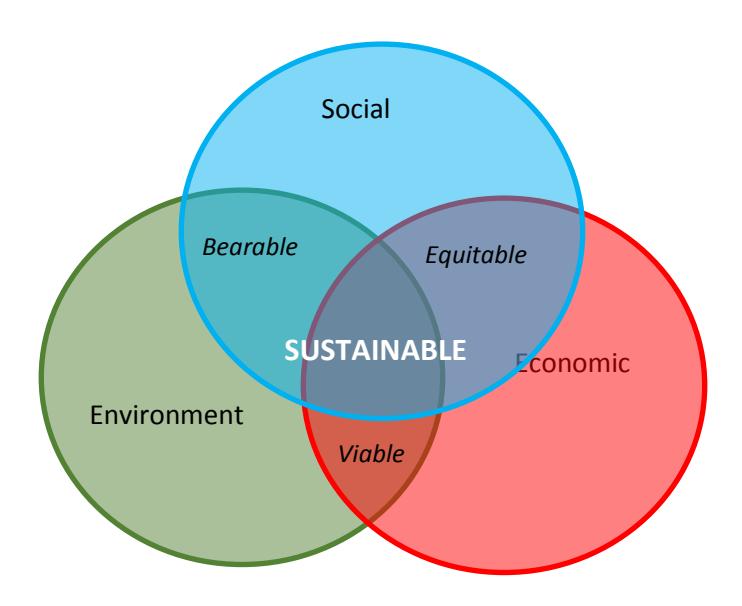
Figure 1. Pillars of Sustainability Sources: Adopted from www.thwink.org (2014)
Social sustainability: The meaning social sustainability is the quality of life and capability of a social system, for instance, a country, family or organization to improve processes and arrangements which not only fulfill the requirements of its current members but it can also support the capability of next generations in order to preserve a healthy community at a standard level of social wellbeing and harmony in determinately. Difficulties, for instance, war, extensive injustice, widespread poverty, and low education rates are symptoms a system, which is often, called "socially unsustainable". Tourist behavior may have a negative effect on the quality of life of the host community, for instance, crowding and congestion, drugs and alcohol problems, prostitution and increased crime levels may occur (Zhao & Li, 2006). Social sustainability minimizes these negative impacts and focusing on more positive ones, like, supporting cultural exchange and conserving local traditions. This may generally be attained by getting the locals involved in the tourism industry (Swarbrooke, 2002).
Environmental Sustainability: The environmental sustainability is obviously one of the most important parts of tourism, mainly the natural, physical and its protection. The meaning of environmental sustainability is to make sure resources in an area should be well maintained for future generations. (Swarbrooke, 2002). Therefore, Tourism associations have to think about the environment carefully in order to protect the environment especially the natural environment and their protection. Wildlife is a major attraction for tourists all over the world but tourism is visibly harmful to the wildlife for instance, by the destruction of habitats, affecting feeding habits, disturbing breeding patterns, fires in woodland and people picking rear plants (Swarbrooke, 2002; Wall, 1997).
Economic Sustainability: Economic sustainability is the capability of an economy to support a defined level of economic production indefinitely. Tourism is now one of the world's fastest
growing economic sectors in the world. According to the WTO, 698 million people traveled to an overseas country in 2000, and spend more than US$ 478 billion. International tourism receipts combined with passenger transport currently total, more than US$ 575 billion, which is making tourism the world's number one export earner, ahead of automotive products, chemicals, petroleum and food. (UNWTO, 2006) Tourism has a positive economic impact on employment, on gross income and production, but it also has negative effects, mainly on the environment. Unplanned and uncontrolled tourism growth cannot be the proper way to get the maximum output for a long term. The key source of tourist product is the environment has to be protected in order to get the further growth of tourism and economic development in the future.
2.3 The Concepts of Sustainable Tourism
The United Nations Conference on the Human Environment in Stockholm in 1972 gave birth to the first true notion of sustainable development, which was called "eco-development" in those days. There have been atmospheric conflict between ecologist and economists, the integration of social equity and ecological caution were incorporated into the economic development models for north and south this resulted the creations of two international organizations under the United Nations are the UNEP (United Nations Environment Programs) and the UNDP (United Nations Development Programs). The idea of sustainable tourism is a phenomenon since 1968 in Italy, think tank known as the club of Rome the greater changes of urbanizations and industrialization led great concern and scope of space in the present and future. To realize these some industrialists established parks to ensure that future generations would have some green space to enjoy in the heart of industrial cities, likewise, as industrialization directed to urban extension and decay in public health. This is in turn governments and local councils initiated to take action to the long-term future of towns and cities (Legrand, 2015).
Sustainable tourism has proved to be an effective instrument for realizing the Sustainable Development Goals. It has proved to be important in addressing the first goal related to poverty alleviation: providing sustainable development opportunities to isolated, poor communities, even in the most remote rural areas (Boluk, Cavaliere & Higgins-Desbiolles, 2017). Tourism sector producing a huge amount of revenue which is more than US$800 billion (WTO, 2006). All exports of services which tourism makes that is nearly forty percent (40%) and making it one of the prime groups of international trade, with more potential that may benefit poor countries. (UNWTO, 2006). Tourism can play the vital role to improve the overall socio-economic development through the facility of roads, telephones, piped and treated water supplies, waste disposal, and recycling and sewage treatment and that may increase more opportunities for further development and create benefits for the sector and it may support in the sustainable management of protected areas and support the protection of natural resources as local communities are able to realize the price of their asset through benefit sharing.
2.4 Sustainable Tourism Development (STD) Practices in the Protected Forest Reserve
Sustainable forest management is the management of forests according to the principles of sustainable development. Sustainable forest management has to keep the balance between three main pillars: ecological (environment), economic and socio-cultural. The "Forest
Principles" adopted at the United Nations Conference on Environment and Development (UNCED) in Rio de Janeiro in 1992 captured the general international understanding of sustainable forest management at that time. A number of sets of criteria and indicators have since been developed to evaluate the achievement of Sustainable Forest Management (SFM) at the global, regional, country and management unit level.
STD in Successful Practices at Cyprus Forest Reserve Management
The case of STD in successful practices at Cyprus forest reserve on environmental conservation can be a good preference to Cikole forest reserve to adopt. Sustainable forest management in Cyprus forests after taking into consideration a national and a science-based framework and the Pan European Criteria and Indicators for Sustainable Forest Management is one of the good examples to apply to forest management like Cikole forest reserve for conservation of tourism activities. Cyprus forest has a set of national criteria and indicators to serve as an evaluation tool to measure the forest condition towards the conservation and sustainable management and provides a good evaluation understanding of the current situation of the forests of Cyprus and provides quantitative and qualitative standards to evaluate sustainable management of the forest as an entire ecosystem and monitor changes over time, evaluation of the progress towards sustainability. The practice of Cyprus forest reserve uses main six criteria to ensure sustainability of the destination area mainly for conservation, can be adopted to applied in any relevant locations Sets of the criteria are: First, the maintenance and appropriate enhancement of forest resources and their contribution to global carbon cycles; Second, the maintenance of forest ecosystem health and vitality; Third, the maintenance and encouragement of productive functions of forests (wood and non-wood); Forth, the maintenance, conservation and appropriate enhancement of biological diversity in forest ecosystems; and Fifth, the maintenance and appropriate enhancement of protective functions in forest management (notably soil and water); and the Sixth, the maintenance of the other socio-economic functions and conditions.
STD in Successful Practices at Jozani Forest Reserve in Zanzibar (Tanzania)
A case of STD in successful practices at Jozani forest reserve in Zanzibar (Tanzania) on economic, social values and environmental conservation can also be adopted and practice for STD. Jozani Chwaka bay forest reserve is located in the southeast region of Zanzibar (Tanzania) and attracts millions of tourists each year. This tourist flow is mainly because Jozani was declared as a biodiversity hot spot with endangered species and a variety of mixed forestry vegetation. Its value is much greater as through agroforestry for instance it contributes 30 % of the GDP (RGoZ, 2015). The highly dependent local communities on forest resources are further increasing the socio-economic value of Zanzibar's forests (Makame, & Boon, 2008). The recreational value of forests that attracts that many tourists combined with the biodiversity richness found in forest ecosystems, plus the indirect contribution to CO2 mitigation, all lead to one conclusion: "forests provide numerous essential benefits, many of which are vital to the fundamental well-being of the nation" (RGoZ, 2015). Jozani forest reserve focus on 1) Social goal: strengthen the role of forestry in alleviating poverty and increasing equity in resource management and utilization; 2) Economic goal: strengthen the role of forest resources in promoting economic development, meeting demand for forest
products, in creating income and increasing national revenues efficiently; and: 3) Environmental goal: protect and conserve forest resources including wildlife and flora, and enhance the role of forest resources in maintaining soil and water conservation and other environmental benefits.
STD in Failed Practices at Oba Hills Forest Reserve in Nigeria
The other case of STD in failed practices at Oba hills forest reserve in Nigeria Oba Hills Forest Reserve is a reserve in Osun State, Nigeria that covers about 52 km2 of hilly terrain with deep gorges. A 2003 report by the UICN stated that about 12% of the reserve planted with teak. In 2009 report said that almost all of the reserve had been converted to plantations and farms, with only two gullies remaining forest-covered. Chimpanzees are now thought to be almost extinct in the reserve the failure to preserve forest for sustainable tourism development led by the following major problems led by human, natural and even bad criteria for conservation strategies as follow; 1) Habitat degradation (through uncontrolled logging); 2) Agricultural projects in the forest reserve; 3) Highway and urban development; 4) Exploitation for fuel woods; 5) Overhunting and poaching. Failure of Oba hill forest reserve is a typical example should avoid the practice.
2.5 Indicators and Criteria of Forest Reserve
Indicators and criteria of forest reserve by the United Nations Forum on Forests-UNFF (2005), forests are essential to the long-term well-being of local populations, national economies and the earth's biosphere as a whole. Forests are home to 70% of the world's terrestrial animals and plants. When managed sustainably, forests can provide a wide range of essential economic, social and environmental goods and services for the benefit of current and future generations.
In 2004 the UNFF identified the following seven "thematic elements of sustainable forest management," which are drawn from the criteria identified by the Montréal Process where criteria and indicators processes as a reference framework for sustainable forest management as follow; 1) Extent of forest resources; 2) Forest biological diversity; 3) Forest ecosystem health and vitality; 4) Productive functions of forests; 5)Protective functions of forests; 6) Socio-economic functions of forests; 7) Legal, policy and institutional framework;. The mentioned criterion of Montreal process of 1995 and UNFF (2005) can be a very crucial point to implement to the development of Cikole forest reserve, which can be positive and successful practices as example of Cyprus, and Jozani forest reserve this will help to the development of sustainable tourism and sustainability for present and future generations. Moreover, Cikole forest reserve since 1954 according to forest research institute Cikole has planted 47 species of plants consisting of 28 types of foreign trees (exotic), 17 species of native trees, and 2 types of bamboo native to Indonesia, with the dominance of species Pinus and Eucalyptus.
3. METHODOLOGY
3.1 Research Design
A qualitative descriptive strategy was adopted in the paper was utilized a multi-case study approach, both primary and secondary data employed. Data were analyzed as thematic analysis of the key ground concepts and coding such as descriptive coding, topic coding, analytical coding (Richards, 2009) of this paper where it observes how far sustainable tourism development at Cikole forest protected is implemented focuses specifically at Cikole forest reserve. Qualitative research is generally based on the belief and experiences or feelings of the people in a particular field, which allows people to speak without the intermediary of the researcher and without being overly constrained to the framework imposed by the researcher (Veal, 2006). In addition, this paper employs specific themes, topics and areas to be covered during the interview and are flexible as well.
3.2 A Case Study: Area Context
The scope of the implementation of this paper derived from research activities done in West Java Province, Indonesia whereby the specific study area at Cikole protected forest that is located in the peri-urban area of Greater Bandung. Administratively placed in Cikole Village, Lembang Sub-district, West Bandung Regency owned by Cikole protected forest or so-called Hutan Pangkuan Desa (HPD), covering 680 Ha (LMDH, 2017). As forests located in the periurban settlement of Cikole village, Cikole Protected Forest has a tendency to change dynamically. Based on the evaluation of the potential of forest resources and based on Decree of the Minister of Forestry No.195 / KPTS-II / 2003 dated July 4, 2003, the forest area of KPH Bandung Utara is divided into three functions: Production Forest of 3,021.75 Ha (14.6%), Limited Production Forest of 1.378.43 Ha (6.7%) and Protection Forest area of 16,160.18 Ha (78.60%).
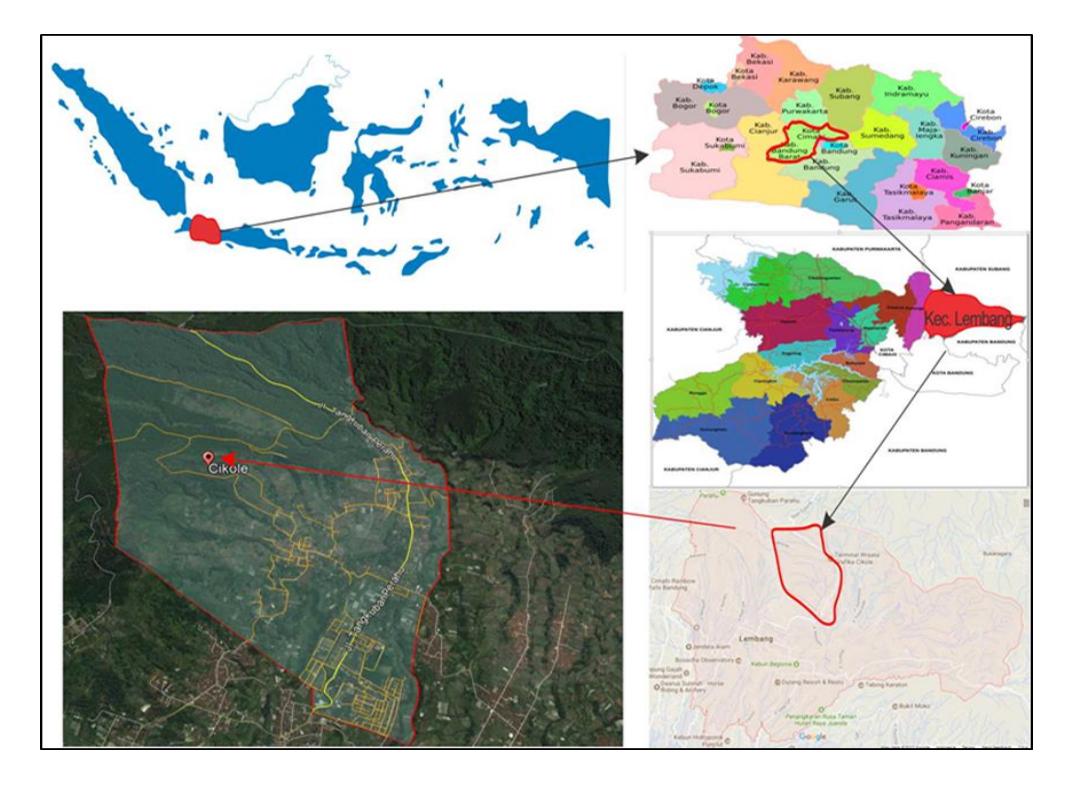
Figure 2: Map of Cikole forest reserve and Village Area Orientations, West Bandung Regency Sources: Google Earth Processed (2019)
4. RESULT AND DISCUSSION
Most of the tourists who are visiting at Cikole forest reserve consist of tourists from different parts of Indonesia such as Jakarta, Purwakarta, Padalarang, and from outside Java such as Sumatra, and Sulawesi. Also, from outside Indonesia come from the country like Malaysia, Singapore, Japan, Thailand, Australia and even some European countries like Germany and England.
Table 1. Number of Tourists Visited Greater Bandung (2011-2016)
| Year | Tourists/visitors | Amount | |
|---|---|---|---|
| Abroad | Domestic | ||
| 2011 | 225.585 | 6.487.239 | 6.712.824 |
| 2012 | 176.855 | 5.080.584 | 5.257.439 |
| 2013 | 176.432 | 5.388.292 | 5.564.724 |
| 2014 | 180.143 | 5.627.421 | 5.807.564 |
| 2015 | 183.932 | 5.877.162 | 6.061.094 |
| 2016 | 173.036 | 4.827.589 | 5.000.625 |
Sources: Statistic Bureau City of Bandung, (2017)
4.1 Sustainable Tourism Development and Conservation Activities
Sustainable tourism at Cikole forest reserve as tourism destination has greatly successful and achieved to add positive to its development in sustainable ways under supervision, monitoring, forest management, innovation, controlled by Perum-Perhutani without destroying the main function of forest as a source of livelihood, natural disaster prevention, and its surrounding environment of the community.
The observation of the researcher and information from the participants in the field areas for example only 10% is considered and implemented as maximum to any changes in the forest like building, praying places, eating and so on, and 20-25 meters to visitors who want to do or perform various tourism activities this because of nature conservations in a sustainable way is highly considered. Sharpley (2009) in his studies of sustainable tourism development shows the importance of environmental conservations as crucial tool to achieve sustainable tourism when he stated "The defining feature of sustainable tourism development does not just embrace environmental factors; it is very foundation in its environmental sustainability" The number of tourists who visit Cikole forest reserve increases day by day and gives a positive image to its development in particular. It is estimated more than 2000 visitor's visit various tourists' attractions at Cikole forest reserve per day notably during the weekend and 1000- 1500 weekdays but the amount depends on the weather as follow:
Table 2: Numbers of Tourist Who Visit Various Tourism Attractions at Cikole
| Tourism attractions | Year (Number of Visitors) | |||||||
|---|---|---|---|---|---|---|---|---|
| 2011 | 2012 | 2013 | 2014 | 2015 | 2016 | 2017 | 2018 (Jan-Jun) | |
| LHI Jayagiri | 10.663 | 12.232 | 15.003 | 33.199 | 31.422 | 26.096 | 40.682 | 194.389 |
| Pall 16 | - | - | - | - | - | 61.521 | 122.064 | 53.247 |
| Orchid | - | - | - | - | - | - | 168.000 | 84.000 |
| forest | ||||||||
| Zona 235 | 14.773 | 17.564 | 20.567 | 35.986 | 41.453 | 50.116 | 173.000 | 90.000 |
Sources: Perum-Perhutani, (2018)
The table above shows the tourists who visits various tourists attractions at Cikole forest reserve whereby the number tends to increases due to good marketing, investment, promotions to the destinations areas also the table shows some attractions like Pall 16, and Orchid forest are among new attractions in the forest reserve but still tend to receive a large number of visitors day today. Until now, there are main 8 tourism attractions with different tourism outdoor activities in the forest but in the future, we will improve other tourism destinations due to changes or demands.
Table 3: Main Tourism Attractions at Cikole Forest Reserve
| No. | Name of attractions | Year | Area/Ha |
|---|---|---|---|
| 1 | Name of attraction | 2008 | 9 Ha |
| 2 | Graphic terminal | Aug ,2017 | 10 Ha |
| 3 | Orchid forest | 2010 | 6 Ha |
| 4 | Bandung tree top adventure | 2000 | 8 Ha |
| 5 | Zone 235 outbound | 2010 | 5 Ha |
| 6 | Jayagiri resort | June, 2016 | 2Ha |
| 7 | Pall 16 | 2003 | 5km |
| 8 | Downhill cyclin (Part of Jayagiri resort) | 2016 | 9 H |
Sources: Perum-Perhutani, (2018)
The above table shows the main tourist attraction at Cikole forest reserve as protected areas the attractions in the areas started deferent years in the forest for tourism business activities and each attraction covers deferent hectors as shown above with the deferent activities also some attraction owned by private and government collaboration with the community. According to data from the Forest Village Community Institute (LMDH), the Cikole Village Forest (HPD) area is 680 Ha, which is divided into 2 areas, 100 Ha as a conservation area and 580 Ha. as a utilization area where tourism has an area of 63.8 Ha in the utilization area. Cikole as forest area has greatly achieved in the conservations areas for the devolvement of tourism activities various tourism studies shows that environmental sustainability is very crucial for the development of sustainable tourism in the present and future, for example, Swarbrooke (2002) stated that "The environmental sustainability is obviously one of the most important parts of sustainable tourism, mainly the natural, physical and its protection. The meaning of environmental sustainability is to make sure resources in an area maintained for the present and future generations" Cikole implements sustainable principles in the conservation of the forest areas, for example, visitors are guided to perform activities around 20-25 m to ensure conservation of environment and good carrying capacity as example shown in the picture below.
Figure 3. Gathering activities at Orchid Forest 2018 Sources: Perum-Perhutani, (2018)
In the conservation activities in tourism site at Cikole forest reserve, there are a number of deferent organization/ institutions that collaborate effectively in the development of conservation that working with Perum-Perhutani as listed below;
Table 4. Organizations Collaborate with Perum-Perhutani
| No. | Name of organization/Institution | ||
|---|---|---|---|
| 1 | Dinas Perindustrian dan Perdagangan (Industry and Trade Office of West Java) | ||
| 2 | Dinas Budaya dan Pariwisataan (Culture and Tourism Office of West Java) | ||
| 3 | Dinas Perhubungan (West Java Provincial Transportation Agency) | ||
| 4 | Lembaga Masyarakat Dekat Hutan (Community Institutions Near Forests) | ||
| 5 | Police | ||
| 6 | Dinas Lingkungan Hidup (West Java Province Environmental Agency) | ||
| 7 | BUMN (State-owned Enterprises) | ||
Sources: Perum-Perhutani, (2018)
Another issue in sustainable tourism development is conservation of tourism area, planning is very important that gives significant to any changes that can be operated in tourism destination area this can be done by invited related institutions because of its positive response from the institutions for the development of tourism during field observation and conversation with tourism officers planning for tourism destinations very important. The explanations from tourism officers are in line with the example of tourism attractions at Cikole in the planning for sustainable tourism as an example of Jayagiri resort as follows.
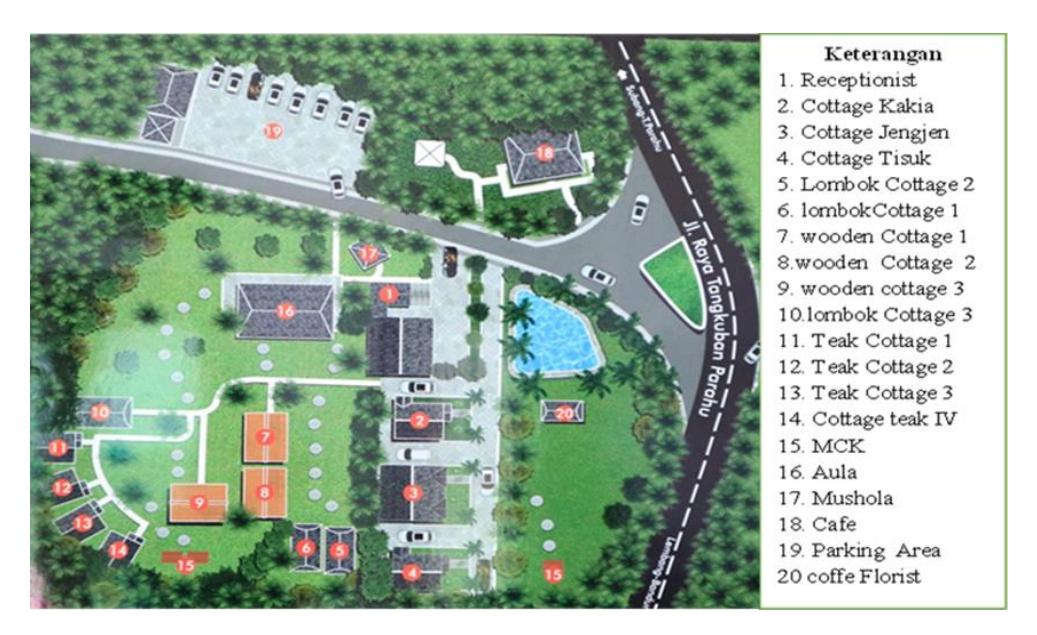
Figure 4. Jayagiri Resorts Planning Floor Division Sources: Management documentation, 2017
Cikole Jayagiri resort undergoes various development changes due to the demand of visitors, in spite of improving resorts and other tourism facilities sustainable principle is considered as shown below on the Google earth data processed from 2003-2017.
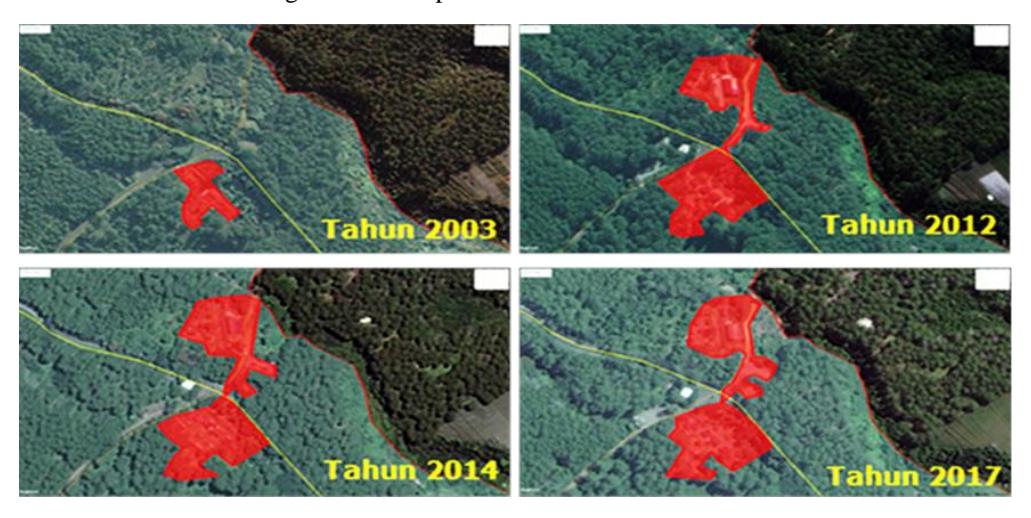
Figure 5. Development Area Cikole Jayagiri Resort 2003-2017 Source: Management Google Earth Data Editing, (2017)
Various studies have shown that successful practices for tourism must be planned in its development and conservations, for example, the Cyprus forest and Jozani forest as protected forest reserve has been in a long time due to its good planning in the conservation of natural areas (Swarbrooke, 2002). Stated that "The target of sustainable tourism is to first plan then development, it maintains the ecological process and conserve biodiversity and ensure viable, long-term economic operations. None sustainable tourism without appropriate planning, starting rapid development which destroys the forest, wildlife and disturbs the local people by making so much noise, air pollution, and waste disposal". For Cikole forest reserve to ensure practices that are more successful should continue implementing good planning and managing tourism destinations for present and future generations. Cikole village, undergo various changes of human settlement development in the areas, therefor for sustainable tourism development there should be considerations on the land use in a sustainable way for the future of sustainable tourism in the forest areas and surrounding Cikole village settlement is a Periurban settlement of Bandung, which only has a distance of 25 km from the City of Bandung so that it has a tendency of dynamic changes.
Various studies have shown that peri-urban areas changes are inevitable for example according to Yunus et al. (2009) stated that "peri-urban settlements is a zone in which there is mixing between the structure of rural land and urban land". He also points out that the periurban area is termed the rural-urban fringe region, which is the transitional area of land use, social and demographic characteristics and this region lies between the following aspects: 1) Constructed compact urban land united with the city center and; 2) Rural land where there are almost no urban landforms and urban settlements.
Table 5. Social Settlement at Cikole Village
| No | Descriptions | Total |
|---|---|---|
| 1 | Total of village areas | 342,996 Ha |
| 2 | Total population | 14,054 |
| 3 | Number of males | 7,178 |
| 4 | Number of females | 6,876 |
| 5 | Number of head of families | 3,493 |
| 6 | Number of dusun/Hamlets | 4 |
| 7 | Number of rukun warga/Citizen associations | 15 |
| 8 | Number of Neighborhood | 68 |
Sources: Head Office of Cikole Village, 2018
Table 6. Number of Residents Based on Age Structure at Cikole Village
| No | Year | Total |
|---|---|---|
| 1 | < 1 | 678 |
| 2 | <1 – 4 | 944 |
| 3 | <5 – 15 | 2.504 |
| 4 | <15 – 39 | 5,200 |
| 5 | <40 – 64 | 3,704 |
| 6 | <65 – above | 1,024 |
| Total | 14,054 |
Sources: Head Office of Cikole Village, 2018
4.2. Impacts Analysis Based on Three Pillars of Sustainability
There are three pillars of sustainability where they should be taken into considerations as "sustainable tourism". These pillars are social-cultural, environment and economic
sustainability. In addition, the researcher observed that communities, companies, and individuals should consider these three areas for the development of sustainable tourism in the area. Moreover, various tourism studies show that consideration of three pillars of sustainability gives positive impacts of these three dimensions for long-lasting without sustainability tourism will not be considered as sustainable tourism for example. Sharpley (2009) and Telfer (2002) stated that; "tourism should be sustainable in all three areas, on the other hand, we cannot consider it as sustainable tourism. Therefore, this is high time for raising awareness of three pillars of sustainability of a sector, which is often underestimated to many parts of the world".
Positive impacts observed in the field study areas based on cultural aspects like creates a pride of place and a sense of place, it makes stronger the community infrastructure, it brings different people together, providing, therefore, opportunities for cultural exchange. Like Lalala festivals, Giri Makmur, strong cultural preservation and bring the community closer and creates a team spirit, it supports the safeguarding and enhancing of local cultural, promote local people culture within the destination and out the Cikole areas on environmental aspect there are conserving and revitalizing the natural of the protected area. Environmental awareness improving and cleanness, re-evaluation of ecological values by the local population and authorities in general to the peri-urban areas, the introduction of planning and management of the protected area.
Tourism may be less damaging to nature compared to alternative economic sectors such as agriculture and business, productions. Community awareness improves due to their participation moreover on the economic aspect the paper observed a number of positive impacts such as it increases job opportunities of the family and community income at large, tourism business strengthens the economy of the areas. It helps to diversify and therefore stabilize the local economy and increases the investments and therefore creates business opportunities both within and outside the tourism industry. Community awareness also provides the opportunity for innovation and creativity, it strengthens and supports the existing businesses and services, it also supports local craft and trade of the area.
Apart from positive impacts as explained above, there are also negative impacts that based on three pillars of sustainability, various studies show that negative impacts of tourism are inevitable for example Adams (2002) stated that "the three 'pillars' are not equivalent independent components, primarily due to their complex relationship with each other" these impacts faces not only the protected forest as tourism destination but also community surrounding at large, social negative impacts observed at Cikole forest reserve introduction of ideas and styles that may conflict with the traditional ones, increase crime due to development of tourism area, it brings about overcrowding and congestion.
Example of Tangkuban Perahu road, atmospheric conflicts between the locals and the tourists in the using of important community resources, moral oral pollution like prostitution due to tourism business and interaction and many others, but also environmental impacts observed like increasing unplanned tourism development and tourist behavior may cause deterioration of the natural environment, increasing noise in the protected area, generation of waste products due to development of tourism, deforestation for human consumptions like firewood.
Buildings to some few cases, disturbance of ecosystems, soil erosion due to Landslide, damage of natural inhabitant due to uncontrolled number of visitors' e.g. Lalala Festivals and economic negative impacts like generates development and marketing costs that often involve risks for the operator and community, increasing the demands on public services, the nature of employment may be part-time e.g. from homestays or hotels. Since tourism is an image industry, it can be very sensitive to the conditions of the macro-environment and can attract outside direct community control, It usually brings about increased prices for property, goods, and services causing the hence high cost of living for community residents.
Haughton (1999) and Sharpley (2000) in their studies of negative impacts suggest that "The impacts of human activities and responsibilities, therefore, need to be recognized at a global scale as well as locally…Thus sustainable tourism development should adopt a holistic approach and frame development policies within a global social, economic and environmental context". For sustainable tourism development, there should be balance of the three dimensions to conserve the nature and guarantee long time especially nature conservations as suggested by Hall (2013) when stated that "Sustainable tourism development guidelines and management practices are applicable to all forms of tourism in all types of destination, including mass tourism and the various niche tourism segments. Sustainability principles refer to the environmental, economic and socio-cultural aspects of tourism development and a suitable balance must be established between these three dimensions to guarantee its longterm sustainability".
Directly benefits from tourism business activities at Cikole protected forest reserve
Tourism activities that exist at Cikole forest reserve is certainly affecting the economy of the surrounding community, especially the people who are in RW 6 and RW 7 because it has a location closer to the tourist location through open food stalls, souvenir shops, gift shops, grocery stores, lodging, restaurants, homestays, benefits from tourism business but also tourism business has improved trading, farmers and ranchers, industry, banking, transport and many other aspect of human life.
Table10. Community Sources of Income at Cikole Village
| No | Occupation | Total |
|---|---|---|
| 1 | Trading | 2.770 |
| 2 | Civil servant/pensioner | 2.278 |
| 3 | Farmer and ranchers | 1.292 |
| 4 | Police force/TNI | 299 |
| 5 | Transport | 100 |
| 6 | Industry | 86 |
| 7 | Banking | 22 |
| 8 | Electricity | 30 |
| 9 | PDAM | 5 |
| 10 | Others | 784 |
| 11 | Not working | 578 |
Sources: Head Office of Cikole Village, (2018)
Various studies show that community participation and involvement in tourism business is very crucial to raise the development for example (Baral and Heinen, 2007) insist that "community participation has become a common element in many development initiatives, such as community-based programs, which assume participatory methods and has been promoted by development organizations, notably the World Bank". Therefore, for sustainable tourism development without community participation sustainability issues will be more complex to its implementation, Vincent and Thompson (2002) insist that it is probably important to insist on here that a key consideration in tourism development is sustainability, which cannot be achieved without community support".
How Tourism Practices Benefit the Local Community.
The researchers observed the following benefits obtained at Cikole protected forest reserve as follow: Availability of direct employment opportunities to the local community: Cikole as forest reserve to a great extent has successful provided various opportunities to local for example it is estimated more than 80% of employee in various tourism activities in the forest from the local community such as tour guide, tourism officers, resorts, restaurants, event organizers, and even provide indirect benefits like food selling stalls (warung), Go-car, and Gojek services.
Benefits through direct participation in environmental and social-cultural activities: Community in Cikole areas is benefited to a great extent through environmental and their cultural events and activities example GIRI MAKMUR which is organized by local people and many visitors experience cultural events of the community, also Lalala Festivals which is famous involve local people to show their culture and traditions to the visitors who come to visited in Cikole. Below picture showing Lalala Festivals as one of the great cultural events performed by community and foreigners.
Figure 6: Lalala Festival in Cikole Area Jayagiri Resort 2003-2017 Sources: www.lalala festivals.com, (2018)
On the other hand on the environmental activities program which is managed by LMDH (Lembaga Masyarakat Desa Hutan) this is an institution that is a gathering of a community group and a combination of forest farmers and groups that are active in environmental activities it benefits community through; develop the revenue share that it receives with productive enterprises include: formed LMDH Langgeng Jati Cooperative, fattening cattle,
Borong tripang danger plants, planting empon-empon, in the field of security, is active providing information to security officers forest, and engage in patrol activities and custody of forests, including the still established young, conducting socialization on PHBM as well as sharing of profit sharing to each hamlet Tanggal Village and procurement of trainings. On the issue of benefits, sharing insists that; "sharing tourism benefits with local communities has always been seen as one of the various modes of community participation in the industry (Timothy, 1999; 1999). In other words, the participation of local communities through sharing the benefits of tourism is one of the major viewpoints for community participation in tourism".
Benefits through social development support facilities in Cikole village community: Tourism activities in the area boast the development of social support facilities that directly benefit community surrounding for example development of settlement, of course, must be supported by social support facilities that support the activities of social settlement based on Law No. 4 of 1992, Article 6, of Indonesia supporting facilities covering socio-cultural aspects, among others in the form of public service buildings and government, education and health, worship, recreation and sports, funerals and landscaping. Based on the above descriptions, the development of social support facilities at Cikole Village improved because of tourism activities business as shown in the table below.
Table 11. Development of Social Support Facilities
| No. | Name of Facilities | Total |
|---|---|---|
| 1 | Total number of schools | 13 |
| 2 | Total health facilities | 4 |
| 3 | Total facilities of worship | 31 |
| 4 | Total facilities shopping centers and | 117 |
| commerce | ||
| 5 | Total government facilities and other general | 11 |
| services |
Sources: Head Office of Cikole Village, (2018)
Development of tourism in the village areas plays a great role to boost social support services facilities in the area due to tourism business activities as shown in the table above, the main big challenges in the area is limited health services which are very important in the development of tourism in the areas. However, the area is still low populated health services is very crucial to meet the visitor's demands.
5. CONCLUSION
Based on the results in the previous section, conclusions drawn according to various tourism theories on the issues of sustainable tourism for example according to (Sharpley, 2002; Haughton, 1999; and Owen, Witt & Gammon, 1993) put much concerned on the "fair and equitable opportunities for development of all people, both in the present and in the future" through their full participation in the tourism business and conservation process. They insists the preservation of ecosystems and maintenance of biodiversity are essential elements of sustainable tourism development to be sustained for present and future demands and this can be achieved through requiring frameworks to be put in place that will control and regulate sustainable development and conservation process so that it is adequate for the needs of current and future generations moreover according to Sharpley (2002) the considerations on the acknowledgment of the importance of all three of its dimensions and achieve an appropriate balance between economic growth and conservation process and put consideration on awareness, educations program to visitors and community, and their full involvement programs for sustainability issues. Telfer & Sharpley (2008) on their discussions on the impacts of sustainability explained as very complex aspects and focuses by put more consideration on these three pillars of sustainability as follow:
- 1. Environmental Sustainability: is primarily concerned with the conservation, ownership, and management of natural resources to counteract major threats to biodiversity including resource degradation, reduced soil and water quality and increased pollution to the natural environment.
- 2. Economic Sustainability: refers to the achievement of wealth and economic growth as well as the attainment of access to secure and sustainable livelihoods for poorer communities.
- 3. Social Sustainability: incorporates poverty alleviation, protection of national traditions and culture, enhanced political, civil rights, and increased individual choices and freedoms.
Cikole forest reserve should note common issues affecting development of sustainable tourism and its surrounding examples include erosion due to land sliding, damage of natural disturbance, cost of living, moral pollutions and others and act deliberately to achieve sustainable tourism. Additionally according to (Tosun, 2001; 2006) direct benefits of tourism can be through participation and decision making as the one of the key underlying principles of pro- poor tourism clearly declares that local communities "must participate in tourism decisions if their livelihood priorities are to be reflected in the way tourism is developed" this can be achieved through engaging local communities as members in the public and tourism related decision making bodies.