

1. INTRODUCTION
Outdoor sports activities have many positive effects. By doing sports activities outdoors, the body becomes better because of the intake of oxygen and sunlight that is obtained more than the activity of sports indoor. Related to outdoor sports it is also done with the intention of getting the chance to cultivate the body while recreation releasing fatigue and saturation of daily routine activities. The human body will produce happy hormones when ones doing sports. Outdoor exercises can help a person enjoy the surrounding scenery, such as the green nature. Such activities make the mind become freer from stress (Aditya et al., 2018). With a fresh sensation and calm the mind, then outdoor exercise will be fun to do so we can make it a daily habit. Based on the Metabolic Equivalent - MET index, cycling for one hour for an average speed of 20 km/h with the bodyweight of the cyclist ± 60 kg will burn as many as 480-500 calories. For some people exercise is not only a necessity of everyday life but also has been considered as a lifestyle. Various kinds of sports activities, especially outdoor sports, are increasingly in demand every day, particularly by the urban communities. Those outdoors sport means of relieving fatigue and saturation of routine activities. Naturally, the body will produce happy hormones when we do sports, however, by exercising outdoors, we can enjoy the surrounding scenery, especially the green nature that can make the mind become increasingly free from stress.
1Sustainable Tourism Programme, School of Postgraduate (SPS), Padjajaran University, Jl. Dipati Ukur 35, 40132 Bandung.
Most urban communities have limitations in doing sports activities. Many alternative choices of outdoor sports activities, ranging from running, cycling, rafting, kayaking, hiking, and tracking to outdoor camping. Cycling is one of the favourite sports types of choice for urbanites. Because in addition to being practical, easy to do and healthy, cycling can get us to the destination faster, because it is relatively not affected by traffic problems. In addition, bicycles are one mode of transportation without fuel and environmentally friendly. So it will not cause air and noise pollution. Also, cycling does not add to traffic jams and clutter. Environmentally friendly transportation means a collection of forms of transportation with a more sustainable model (Widiantono, 2009 in Aquarita, 2016). By cycling, we can exercise while enjoying the scenery along the journey.
Cycling activities then developed not only as a hobby choice, but also closely with the daily activities of urban people. In the end, the bike that was originally functional then turned into a lifestyle. In recent decades, there has been a change in people's interest in traveling, demanding more variation in the needs, types, and patterns of travel. Special interest tourism now places more emphasis on environmental and social aspects that have given birth to "humanization of travel" (Weiler & Hall, 1992 in Aditya et al., 2018). Cycling has evolved as one of the most popular sport tourism alternatives, with many bicycle groups emerging in urban areas. The concept of using a bicycle tour is developing quite rapidly because it is necessary to pay attention to the packaging of bicycle tourism products and supporting tourism facilities and infrastructure in accordance with the needs and desires of cyclist tourists.
2. METHODOLOGY
The method used in this research is a combination of qualitative and quantitative. The qualitative method is a literature study that was carried out through searching various sources such as books, online media, journals, and theses where related to the motivation and characteristics of the urban cyclists. Another qualitative method is observation also carried out, by conducting a field visit to get an overview of general data about the conditions of cyclists, and the destinations of cyclists. While the quantitative approach was carried out through questionnaires, were distributed online to two urban cycling communities. First: TOC (Trifold Owner Community) is a folding bicycle community, based in Greater Jakarta region. And second: JGC – SCAM (Jaserco Gowes Club - Serang-Cilegon-Anyer-Merak) is a cyclist community with main activities are cross-country and cross-city cycling, they are mainly based in the Province of Banten, cover the areas including Serang, Cilegon, Anyer-Merak), related to the general characteristics of cyclists, travel cyclists' travel behaviour preferences in travel, tourist preferences towards bicycle tours, and tourist perceptions related to bicycle tourism and its supporting facilities. The sampling technique used is a purposive sampling method with the selected sample is cyclist tourists. How this research was carried out, as shown in Figure 1.
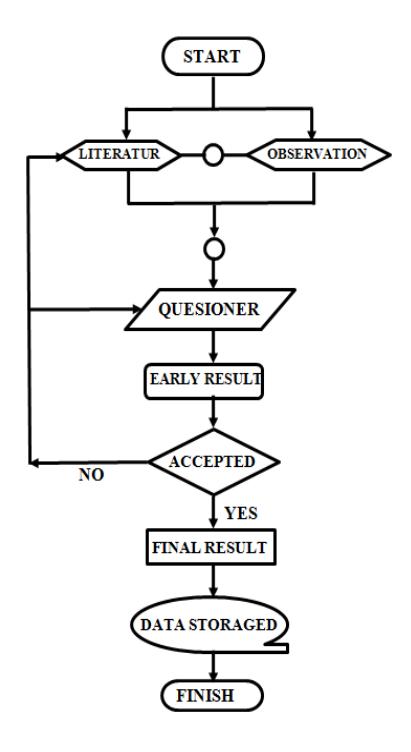
Figure 1. Flowchart of The Research Process
The questionnaire was conducted on two groups of bicycle communities in early 2019. Namely Trifold Owner Community (TOC), is a United Trifold folding bike lover community Trifoldowners (2019). The community members of TOC are urban communities, especially those living in big cities, such as the Greater Jakarta area (Jakarta, Bogor, Depok, Tangerang and Bekasi) as well as the Greater Bandung area (covering the City of Bandung and surrounding cities), there are also members from other cities in Indonesia. The members of this community are spread in almost all regions of Indonesia, with the average age of members ranging from 20 - 60 years and the profession most of them are private employees. The second group is the Jaserco Gowes Club - Serang-Cilegon-Anyer-Merak (JGC-SCAM) in 2019, is a cross-city and cross-region bicycle community. Members of the community, mostly who are living in the area of Serang, Cilegon, Anyer, Merak and Pandeglang. Most of them working in the Greater Jakarta area. The average age of members ranges from 30 – 60 years.
The questions in the questionnaire consist of three integrated parts. The first part (A) about the respondent's profile, the second part (B) about the relationship of the respondent to the bicycle and the third (C) regarding the respondent's motivation towards cycling. The results of the questionnaire on two bicycle community groups obtained regarding the reasons, motivations, and types of cyclists in urban communities. (The detail of questionnaire questions refer to appendix).
3. RESULTS AND DISCUSSION
The online questionnaire has been distributed to the member of two cyclist communities. 102 respondents answered the questionnaire. Part A of the questionnaire containing information on gender; age range; domicile; the profession of the respondents. For gender distribution, more than 80% of respondents are male, and the rest are female. The age range distribution of 40-50 years ranks first (37.3%), followed by the age range of 20-30 years (26.5%) and the age range of 30-40 years is ranked third (25.5%). The remaining 10.7% is distributed into the age group ≤ 20 and ≥ 50 years. As for the distribution of dwellings, as many as 41.2% of respondents live in the district/city capital area, 37.3% live in the national capital, and as much as 14.7% live in the provincial capital. While the remaining 6.8% live in Sub-District / Rural and Overseas. Most of the profession's respondents were private employees (47.1%), followed by civil servants (18.6%) and entrepreneurs (8.8%), while professionals, students, military/police, pensioners, homemakers, and others 25.5%. The results from part A of the questionnaire are shown in Figure 2.
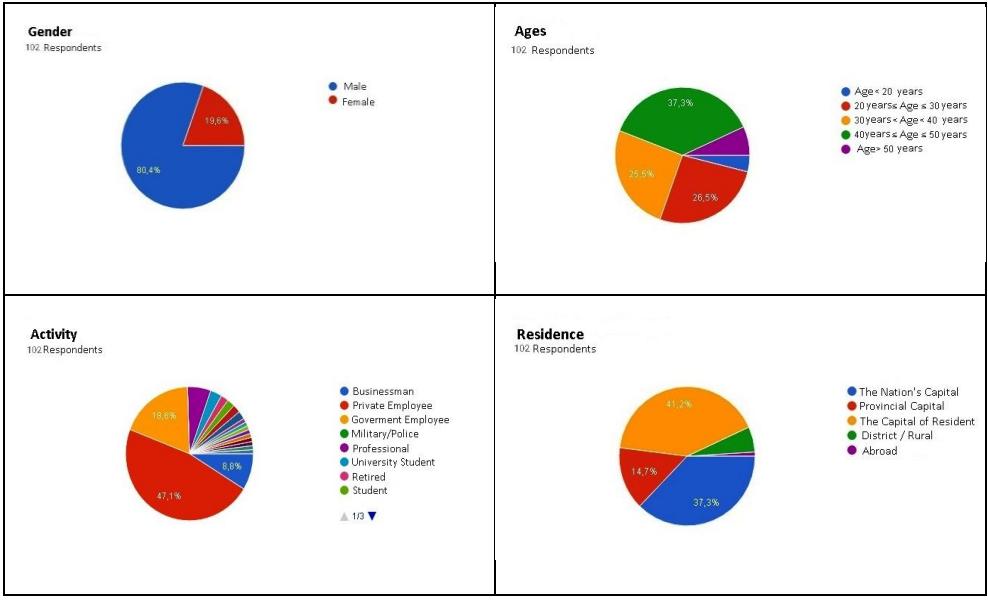
Figure 2. Respondent Profile, Questionnaire Part A (Gender, Ages, Activity and Residence)
Part B questionnaire contains questions about the relationship of the respondent to the bicycle which consists of duration of cycling hobbies; the number of bicycles owned, and the reason for riding a bicycle. The results of part B are shown in Figures 3 and 4. Figure 4 explains the reasons why respondents chose cycling activities.The distribution of respondents' answers for the duration of the hobby of cycling is fairly evenly distributed. 31.4% favour cycling over 8 years. 18.6% have loved cycling for 5-8 years and 17.6% have loved cycling for 1-3 years.
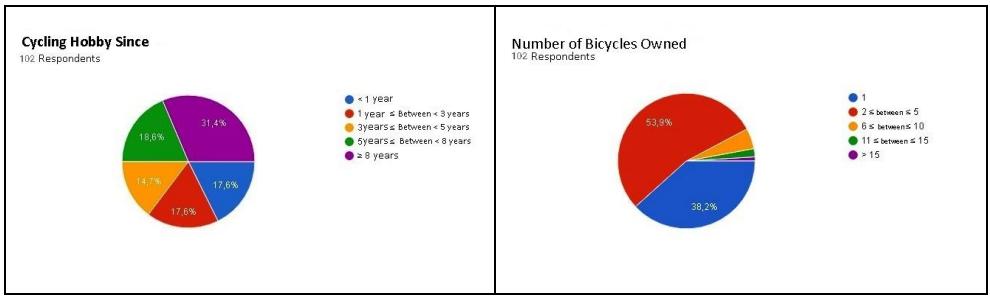
Figure 3. Diagram of The Results of Questionnaire Part B. (Cycling Hobby, Number of Bicycle).
The question of the number of bicycles owned by respondents gave the results 53.9% had 2- 5 bikes, 38.2% only had 1 bicycle and 4.9% had 6-10 bikes. As for the reasons of respondents riding a bicycle most (57.8%) felt that cycling was practical, economical, healthy and cool. And only 32.4% cycled for reasons of having a healthy effect, and 6.9% cycled for practical reasons.
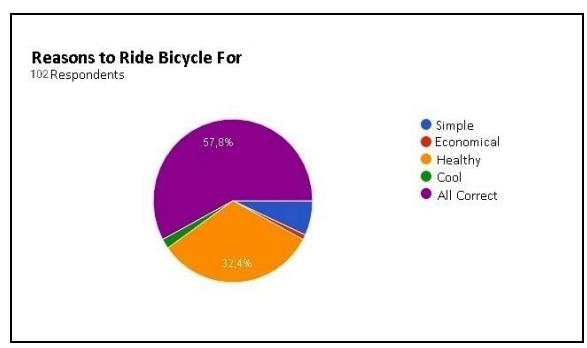
Figure 4. Diagram of The Results of Questionnaire Part B (reason to ride bicycle)
For the questionnaire in section C, there were eleven questions and the answers were distributed in Figure 5 – 7. In Figure 4, most respondents (49%) gave answers to cycling motivation to exercise and were followed by others (43.1%) who gave answers to cycling to exercise, travel, explore new areas, save at the same time as part of the movement green. The most desirable expectations by respondents based on the choices of cycling motivation are 77.5% expecting fitness, 12.7% getting new experiences and the remaining 9.8% expect to be able to make financial savings and reduce pollution. For respondents' favourite destination when cycling alone (solo cyclist), 38.2% of respondents chose to go enjoy nature tours, another 38.2% did a solo cyclist to go to a place of routine activity and as many as 11.8% did it when they wanted to go on a culinary tour.
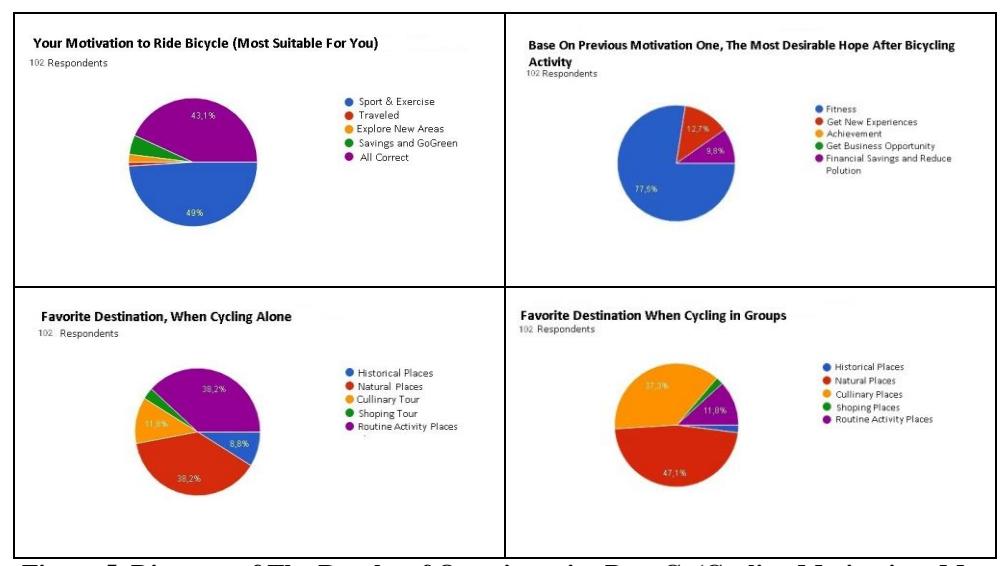
Figure 5. Diagram of The Results of Questionnaire Part C. (Cycling Motivation; Most Desirable Destination; When Alone Ride ; and With Group)
Identical to the solo cyclist, most respondents also chose nature tourism while cycling in groups (47.1%). While 37.3% went on a culinary tour while cycling in a group and 11.8% cycled in a group when going to their routine activities. n Figure 5, using the facilities that are owned and or provided by the community in the area where the cyclists have passed are the answers of most respondents when interacting with the community. This interaction has a percentage of 41.2%, in addition to sharing experiences (32.4%), establishing cooperation with 13.7% and 11.8% of respondents did not find a suitable answer. For the selection of favourite groups in cycling, some respondents still chose group cycling together with members of their bicycle groups (49%). And 22.5% chose group cycling with their families. The natural obstacle faced by cyclists while cycling in urban areas is the problem of traffic conditions and infrastructure that does not favour cyclists (63.7%), as many as 16.7% think that in addition to traffic conditions and infrastructure that are less aligned for cyclists, there are also no clear rules for cyclists, other than social problems that arise. In contrast to urban areas, the constraints experienced by cyclists when biking in areas outside the city, mountains, rice fields, and rural areas are affected by physical fatigue (36.3%), followed by bicycle damage (19.6%), natural conditions and society (16.7%) and financial problems (11.8%).
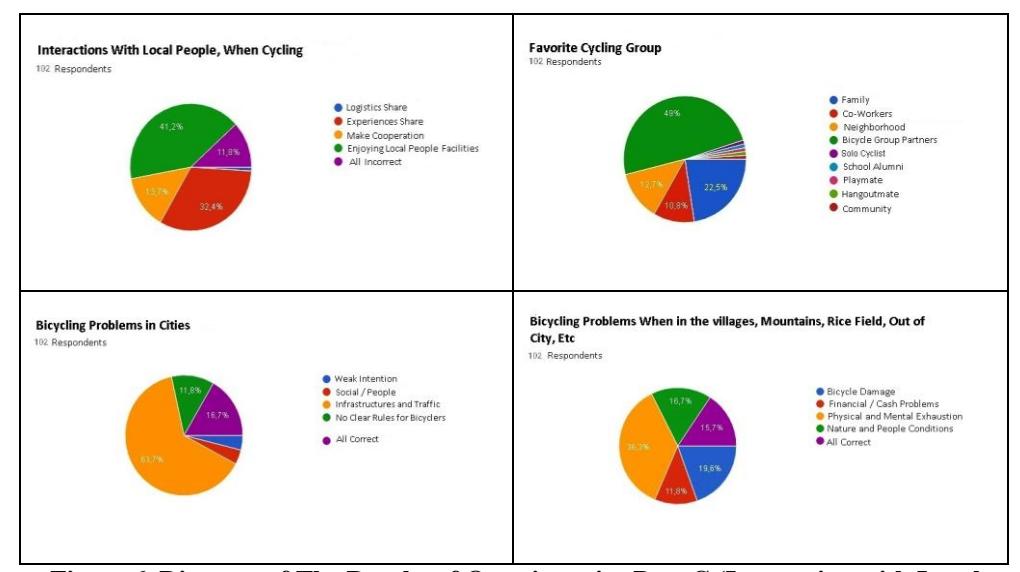
Figure 6. Diagram of The Results of Questionnaire Part C (Interaction with Local People; Favourite Cycling Group; Bicycling Problem in Cities and Bicycling Problems Out of Cities)
The attitude of the cyclists towards the environment can be seen in Figure 6. The respondent's positive attitude is shown when cycling in the natural environment. Most agreed that when passing and doing activities by bicycle, they must be actively involved in protecting the environment, interacting with the local community, and not leaving traces of activity.
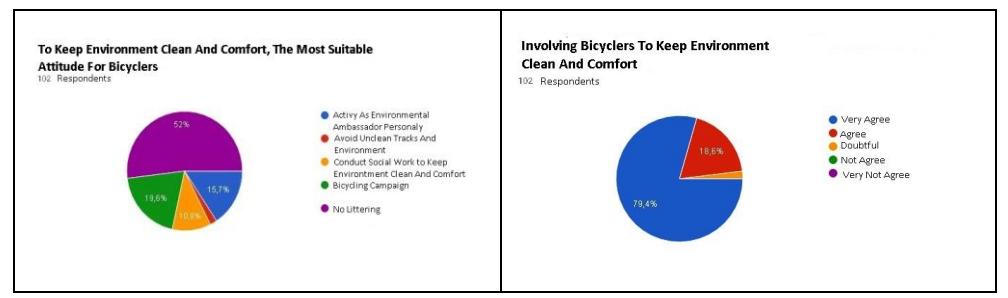
Figure 7. Diagram of The Results of Questionnaire Part C (The Most Habit Cycler in Nature Environment, to Keep Environment Clean and Comfort, Involving Bicycler to Keep Environment Clean and Clean)
Table 2. The Summaries of Questioner Respondents Answers
| No. | Summaries Urban cyclists, demographically are over the productive age group, which mostly consist of the age range of 40-50 years and 20-30 years of old. With most of them work as workers | |||||
|---|---|---|---|---|---|---|
| 1. | ||||||
| (private and government) as well as entrepreneurs. Resident domicile mostly in the regency / city capital, the national capital and the provincial capital. | ||||||
| 2. | The most of urban cyclist has enjoyed more cycling activities from 8 years. And the number of bikes owned between 2-5 bikes. | |||||
| 3. | The use of bicycles for urban cyclists is not limited when traveling only, but also used to get to the place of daily activities. | |||||
| 4. | The obstacles of cyclists when cycling in urban areas are infrastructure and traffic conditions, as well as the absence of clear rules for cyclists. | |||||
| 5. | The obstacle of cyclists when biking in natural areas is physical conditions, bicycle conditions and financial conditions. | |||||
| 6. | Many urban cyclists do solo cycling to get to the place daily activities. While group cycling is generally done when they want to travelled. But it is possible to do solo cycling and group cycling for various opportunities. | |||||
| 7. | A favourite destination for urban cyclists is a place with natural nuances, adventure, nature tourism, urban tourism, culinary tourism, history and culture. | |||||
| 8. | Urban cyclist agrees to maintain the condition and beauty of their destination Urban cyclist agree to maintain the condition and beauty of their destination. | |||||
From the description and explanation of the respondents' answers to the questionnaire that has been distributed to the two cycling groups, the summaries can be given about this. Which consists of eight important points, as written in Table 2.
4. CONCLUSIONS
Urban cyclists, cycling activities based on desire, motivation and make it happen. The motivation of urban cyclists is largely psychological needs, belonging needs and selfactualization needs (Maslow's Hierarchy). Urban cyclists do cycling activities driven by motivation (psychological, belonging, self-actualization) and attracted by the conditions to and a destination (The Pushed-Pulled Model Theory). Urban cyclists are mostly included in the Allocentric and Mid-centric categories. Whereas most Psychocentric cyclists are cyclists (single and group) cycling to go to the place of his daily activities (Plog, 1974). Interest in a destination or activity carried out in the framework towards the destination, can be a separate motivation for cyclists. Besides there other things that will be obtained, such as interacting and using local community facilities available, tasting and feeling the local culture. (Card & Kestel, 1988).
ACKNOWLEDGMENT
Special thanks addressed to the Trifold Owner Community-TOC (United Trifold Folding Bike Lovers Association) and Jaserco Gowes Club-Serang Cilegon Anyer Makak/JGC-SCAM (Association of Cycling Enthusiasts across the Serang-Cilegon-Anyer-Merak) and all respondents to make this research possible.