

1. Introduction
Tourism has been one of the strongest industries to generate global economic benefits. In 2018, the total movement of international tourists was a recorded nearly 1.5 billion, which represents an increase of 5% over 2017 resulting in nearly $2 trillion in revenue (UNWTO 2019). Such growth stemmed from several aspects including travel becoming more affordable, the middle-class growth within newly emerging economies and advances in technology. Regarding emerging markets, a new travel market phenomenon of solo traveling females is apparent. According to Lander (2018), travel statistics show that females responsible for 80% of travel decisions, demonstrating a rise in the phenomenon. Accordingly, females have reshaped the traditional industry of travel.
Literature suggests that, for female travelers, simple business trips become more of an experience (Herjanto et al., 2017). Traveling also serves as a stress reliever and an opportunity to escape work while experiencing new scenery and local culture (Landers 2018). With such different demands, tourism operators should offer unique physiological functions and psychological features to this growing market (Zhang et al., 2008). Recent studies note that aesthetic design (Kumar and Singh 2014) and luxury (Chiang and Jogaratnam 2006) are also responsible for increasing hotel attractiveness among female travelers. Furthermore, a female-friendly hotel concept, with offers such as Ladies' Night events (Emesong 2012) and female-only activities (Han et al., 2019), has recently gained popularity and are viewed more attractive by female travelers. According to Na (2010), this phenomenon shows that female travelers' hotel selection criteria have evolved. Accordingly, the findings of extant literature may be incomplete (Khan et al., 2017) and bias (Howell et al., 1993).
In addition to the travel decision-making experience, a number of scholars have investigated female travelers' onsite behavior. During their travel, female travelers tend to indulge by spending extra money ordering room service (Lauds 2000), visiting hotel lounges or bars (Wilkins et al., 2006), and buying travel memorabilia from hotel gift shops (Dev and Kumar, 2019). Accordingly, Marzuki et al. (2012) concluded that female travelers tend to spend more money, which is considered an important source of revenue for the hotel industry. Consequently, the hotel industry cannot afford to miss this emerging target market.
Additionally, female tourists travel in a variety of group sizes or they travel solo. Solo Traveler (2019) reported that 73% of women from America traveled solo in 2018. Among these women, 46% took multiple trips (3 or 4) in a year. Search engines across the United Kingdom show a 143% increased search for phrase "solo travel" and the total number of accommodation reservations increased by 42%. According to Hostelworld (2018), solo trip bookings among females have increased by 45% from 2015 to 2017. Based on the growing phenomenon, scholars have made efforts to better understand female solo travelers' behavior, from both travel and hospitality perspectives. Studies show female solo travelers are sensitive and have different motivations, experiences, levels of perceived risks, needs, wants and selection standards (El-Gamil 2018). For example, in connection with increased world terrorism and potential assaults toward women, Mayo and Christou (2006) and Seth et al. (n.d.) found that female solo travelers have become more demanding and more specific with regard to their own safety. To illustrate, female solo travelers, demand special accommodations such as female-only hotel floors (Mayo and Christou 2006), and female-only staff (Chan 2014) and butlers (Seth et al., n.d).
The extant literature also suggests female solo travelers looking for a hotel with high-quality services and characteristics (Marzuki et al., 2012) and hotels that offer a "single sensitive" environment (Sammons et al., 1999). The aforementioned examples show that female solo travelers are unique, and therefore, Marzuki et al. (2012) assert that knowing such needs and desires may improve a hotel's competitive advantage and increase repeat guest bookings. Despite this importance, Chen et al. (2013) suggest that the findings from extant literature are limited and insufficient. As such, they urge future scholars to continue investigations by testing different selection criteria attributes and employing different models and research approaches. For example, travelers, including female travelers
consistently update their travel status with their family, peers, and significant others through social media and other messaging or phone applications. The investigation of the hotel's internet connection and speed quality may provide a better picture of female solo traveler selection criteria. Similarly, the vast majority of extant literature focuses on their investigation of personal and room amenities (Khoo-Lattimore and Prayag, 2016). The examination of public or general amenities such as international ATM stations or international public telephone received less attention. The exploration of international standard amenities may also offer a better understanding of female hotel selection criteria. In an attempt to fill the gap of limited, inadequate existing literature, the current study specifically addresses the following research question:
What are the solo traveling females' hotel selection criteria?
The present study is organized and presented as follows. First, the extant literature on female travelers, specifically, the literature related to female solo travelers is discussed. Second, the research methodology used in the present study is explained. Next, the discussions of the findings are presented. Finally, the conclusion, limitations, and future research directions are described along with research implications drawn from this study.
2. Literature review
Travel decision-making is one of the well-researched element of tourism. Indeed, consumer behavior involves making certain decisions. This suggests that a process of acquiring and organizing information is required to support decision-making. In addition, travel knowledge is one of the cognitive domains that have a significant influence on a travel decision-making hierarchy (Jeng and Fesenmaier 2002). On this basis, travel information is used to support travel decision-making. For example, physical evidence and relevant information should be provided for trip decisions.
A number of scholars have been suggesting tourist decision-making criteria. In terms of female solo travel, Kahneman and Tversky's (1979) explains that female solo travelers make their hotel decision based on perceived value. That is, female solo travelers tend to evaluate their perceived gains and losses, and accordingly, they tend to avoid risk in making hotel decisions. During the hotel decisionmaking process, female solo travelers experience uncertainty. In order to reduce this risk; such travelers may evaluate their options based on their selection criteria. In this study, selection criteria refer to parameters or criteria that female solo travelers employ to evaluate the capability and suitability of hotel attributes to produce positive experience. According to real options theory, female solo travelers' selection criteria serve as guidance but not obligation to make a decision (Rakic and Radenovic 2014). Understanding such guidance or selection criteria is useful for the hotel industry to predict female solo travelers' hotel decision (Folta and Miller 2002).
Extant literature on hospitality and marketing has well established the notion that guest selection criteria are paramount to a hotel business's success. Hotel abilities to satisfy guest selection criteria reinforces memories of positive guest experiences, and thus influences the guest's decision to return to that hotel in the future (e.g., Herjanto and Gaur, 2014a). Brownell (2011) argues that one of the most important female solo travelers selection criteria is safety. The author suggests that the safer the female solo travelers perceived, the more comfortable, empowered, and indulged they felt. In a different study, Williams-Knight (2013) notes that female travelers are concerned with their mental and physical health, and consequently, female travelers tend to select a hotel with a gym and relaxation facility. These findings indicate that female guest selection criteria are unique, complex, and multidimensional (e.g., Herjanto et al., 2017). To fulfill female traveler selection criteria, hotels strategically offer high-quality hotel attributes (Marzuki et al., 2012) which further is classified into a hotel facility and safety dimension (Wilson and Little 2008), a room dimension, a staff dimension, a food dimension (Alpert and Raghunathan 2003), a lifestyle dimension and a marketing dimension (Kumar and Singh 2014). A summary of these dimensions is as follows.
2.1. Hotel and safety dimension
Hotel - This dimension involves the basic facilities offered by the hotel. Studies by Kumar and Singh (2014) and Lutz and Ryan (1993) discovered a significant difference between genders when studying needs and desires for general facilities offered by a hotel such as public area washrooms and corridors. As one of the most important categories, the hotel dimension consists of different attributes. The first attribute is the general hotel facility. General hotel facilities are believed to play a very important role in impressing potential and current guests (Herjanto and Gaur, 2014b). This is because such facilities are the first of hotel environments that female travelers encounter. In other words, these facilities serve as the initial image builder. Some examples of general hotel facilities are the pool, lobby, computer room, fitness center, sauna, rooftop terrace and hotel garden. Failure to maintain these areas will not only create a poor image, but it will also, more importantly, generate negative WOM and disloyalty. The second hotel attribute is location. Multiple studies show that a strategic hotel location that easily reaches shopping malls, tourist attractions, supermarkets, eateries, and transportation, not only provides greater convenience but also helps female travelers save time otherwise spent on traveling to and from the hotel and such destinations (Xue and Cox, 2009). The next attribute is the hotel ambiance. The extant literature shows that hotel tranquility, cleanliness, coziness and spacious, luxuries and exotic environment generate a high level of comfort (Marzuki et al., 2012). Finally, complimentary transportation offers, such as airport shuttles, are considered as another selection criteria (Kucukusta, 2017).
Safety - The literature implies safety and security are among the important dimensions for female solo travelers, especially when choosing accommodation. Reasonably simple modifications to traditional hotel designs include the use of key cards to access elevators, extra lighting in corridors and public areas, and digital safety lock systems (Williams-Knight, 2013). Also preferred are women-only car parking lots (Hao and Har 2014), extra door locks (e.g., chain lock), room door peepholes, safe deposit boxes (Marzuki et al., 2012). In addition, women-only floors (Chan, 2014) and higher hotel floors were found as a preference for this group of tourists.
2.2. Lifestyle dimension
To reach the solo traveling female target market, hoteliers may consider implementing lifestyle and self-esteem elements of hotel offerings. For example, Chan (2014) found that popular hotel chains in the United Kingdom offer rooms designed and decorated with a feminine flair, providing female amenities, and toiletry and spa products. Khoo-Lattimore and Prayag's (2016) study found that there was a relationship between self-image and lifestyle amenities and luxury products such as branded toiletry and bath products.
2.3. Staff dimension
Hotels have received positive feedback when introducing female-only staffed hotels, particularly in locations with higher crime or areas known to be unsafe (Seth et al., n.d). According to Chan (2014), women-only staffs in Shanghai and Switzerland are important criteria in hotel selection for this demographic. Staff quality is equally important criteria for solo traveling females (Alpert and Raghunathan, 2003). For example, Marzuki et al. (2012) found that staff efficiency and accuracy of essential services such as knowledge and skills of front desk staff, bell service's promptness, and personality, and room service staff's accuracy and attitude improve the female traveler's comfort and perceived quality. Thus, the staff dimension improves a hotel's competitive advantage by providing differentiation through high levels of peace of mind.
2.4. Room dimension
Bedroom – Dalton (2005) found that a bedroom is a personal and unique space that allows the occupant (i.e., female traveler) to experience private time to relax and recharge alone. Multiple studies revealed that attributes such as hotel room ambiance (Brownell, 2011), personal touch, for example, a flower arrangement (Kumar and Singh, 2014), room amenities, complimentary items, mini bar or a coffee maker (Marzuki et al., 2012) and size of a room (Howell et al., 1993) tend to improve the female traveler's interest in a particular room or hotel.
Bathroom – There is a large body of research establishing the notion that bathroom criteria are critical to hotel selection, with bathroom space and openness highly desired by the solo traveling female. Small hotel bathrooms can quickly appear cluttered (Howell et al., 1993) whereas clear and spacious hotel bathrooms are perceived far more impressive (Brownell 2011). In a study by Wilkins et al. (2006), an abundance of toiletry products and soft, thick towels were found to positively affect hotel selection of the solo traveling female. Additionaly, Marzuki et al. (2012) noted that bathroom amenities and an additional phone in the bathroom are important in improving the comfort (Marzuki et al., 2012) and positively memorable experience (Herjanto and Gaur 2014c) of female solo travelers.
Marketing dimension – Travel activities, shopping most particularly, are considered important to the solo traveling female. According to El-Gamil (2018), shopping helps female solo travelers reduce loneliness during travel periods. Based on this notion, Chan (2014) suggested that hotels should work closely with local shopping malls or shopping centers to generate joint shopping promotions. Shopping activities serve as an escape from the normal daily routine (Urry, 1990) and a coping mechanism to release stress (Hama 2001). In addition, Marzuki et al. (2012) noted that female solo travelers are price-sensitive customers. Therefore, a competitive room price is considered an important hotel selection criteria.
Food dimension: Solo traveling females care about food and pay attention to menu options. They often seek nutritious foods and they are mindful of caloric intake (Williams-Knight 2013). Additionaly, Lauds (2000) also found that female travelers tend to eat more often during their travel, and therefore, they prefer to try a new and different menu. Thus, Williams-Knight (2013) concludes that the variety and quality of food are some of the most important female solo traveler selection criteria in a hotel decision. Figure 1. indicates the summary of these six dimensions.
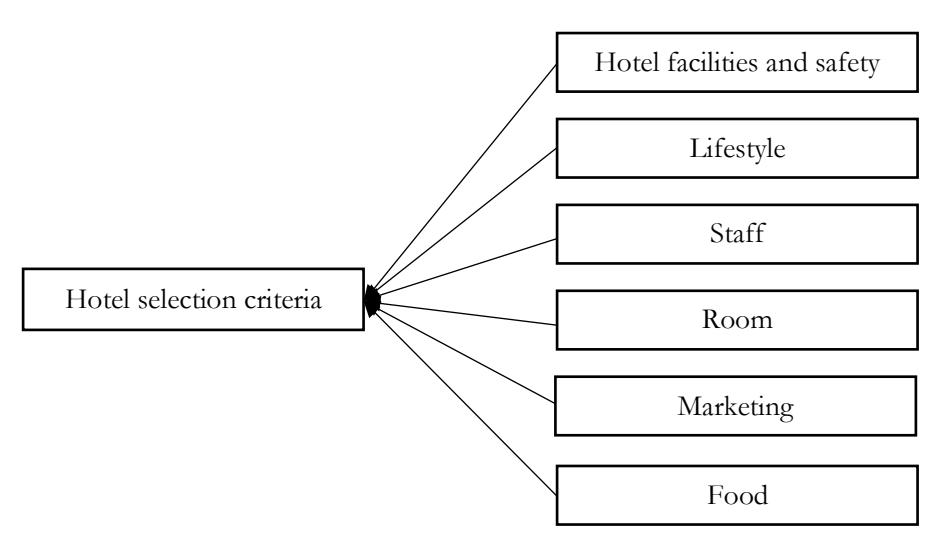
Figure 1. Initial Themes of hotel selection criteria of solo traveling females Source: Author
3. Methodology
To find themes related to hotel selection criteria, the authors utilized the thematic analysis method in this study. According to Olds and Hawkins (2014), the thematic analysis tool is effectively used to identify certain research-related themes in qualitative data. According to Vaismoradi et al. (2013), as a part of qualitative descriptive research, a qualitative thematic analysis is suitable for identifying initial
themes identification and interpretation, and therefore, it helps researchers to establish solid meanings (Sandelowski, 2010). To ensure the accuracy of the reviewing process, this study follows Braun and Clark's (2006) systematic thematic review process. This process consists of two main steps, which include initial theme identification and confirmation of research themes. In this study, initial themes identification involves three steps and they are categorizing themes related to female solo traveler hotel selection-criteria, preliminary coding determination, followed by detecting new possible themes. To identify initial themes, two of the authors conducted systematic literature research by utilizing a combination of specific keywords such as "female/woman/women solo traveler x hotel selection criteria" on Google Scholar. According to Pickering and Byrne (2014), such systematic literature research enables the authors to confidently point out what is known and unknown about female solo traveler hotel selection-criteria, and determine what can be done with that information. Noruzi (2005) suggests that Google Scholar database offers a superior result as it includes articles from different databases, consequently providing a wider inclusion of academic disciplines. This research generated nearly 100 articles published between 1989 and 2019. Following Yang et al. (2016) recommendation, only peer-reviewed published literature is included in this study. Further, the full papers were scanned and fully read by two authors to exclude irrelevant articles. A total of 89 articles were directly related to female solo traveler hotel selection criteria, which was then classified by the same two authors. The results of this classification generated the initial themes of female solo traveler hotel selection criteria (refer to Figure.1).
To confirm research themes, the present study further collected the sample from TripAdvisor's online reporting. Table 1 represents TripAdvisor's 2018 top-25 list of cost-efficient hotels worldwide. As of the aim of this study to investigate female solo traveler hotel selection criteria, the authors included only female solo traveler positive comments and feedback that is written in English language with either 4/5 stars (very good) or 5/5 stars (excellent) on these 25 hotels between January 2018 and December 2018. The 4 or 5 stars represent a degree of a hotel's ability to confirm or fulfill female solo traveler hotel selection criteria. As a consequence of this elimination procedure, a total of 345 usable female solo traveler comments or feedback were gathered and content analyzed. Further, to ensure theme development in the samples' comments or feedback, two of the authors read and coded these comments independently. As a result of this process, four themes emerged from the coding process. Following Holsti's (1969) suggestion, the authors conducted an inter-coder reliability test, and the results of the hotel dimension were 96%, room dimension was 97%, the food dimension was 95% and the staff dimension was 99%. These results well over the suggested minimum threshold of 85%. The disagreements were resolved via discussion.
Table 1. World's top 25 most cost effective hotel
| Rank | Hotel | Country | Qualified reviews |
|---|---|---|---|
| 1 | Hanoi Emerald Waters Hotel & Spa | Vietnam | 9 |
| 2 | Central Suite Residence | Cambodia | 23 |
| 3 | Lawton & Lauriston Court Hotel | United Kingdom | 10 |
| 4 | Riad Kheirredine | Morocco | 11 |
| 5 | Hanoi Marvellous Hotel & Spa | Vietnam | 21 |
| 6 | Viroth's Hotel | Cambodia | 22 |
| 7 | Stradonia Serviced Apartments | Poland | 3 |
| 8 | Lithos by Spyros & Flora | Greece | 4 |
| 9 | La Minerva | Italy | 13 |
| 10 | Ayasoluk Boutique Hotel & Restaurants | Turkey | 8 |
| 11 | Tulemar Bungalows & Villas | Costa Rica | 8 |
| 12 | Boutique Hotel Diana | Italy | 1 |
| 13 | Valle D'incanto Midscale Hotel | Brazil | 6 |
| 14 | Albergaria do Calvario | Portugal | 10 |
| 15 | Reverie Siam Resort | Thailand | 12 |
| 16 | Barrier Beach Resort | Vanatu | 8 |
| 17 | Riad Les Trois Palmiers El Bacha | Morocco | 6 |
| 18 | Derwent House Boutique Hotel | South Africa | 24 |
| 19 | Coeur des Alpes | Switzerland | 2 |
| 20 | Blackheath Lodge | South Africa | 45 |
| 21 | La Maison Hotel | United States | 10 |
| 22 | Padma Resort Ubud | Indonesia | 15 |
| 23 | Puri Mangga Sea View Resort & Spa | Indonesia | 2 |
| 24 | L'Hermitage Hotel | Canada | 50 |
| 25 | Tambo del Inka, Valle Sagrado | Peru | 22 |
| Total Samples | 345 |
Source: Adapted from TripAdvisor (2018)
4. Findings and discussion
Upon analysis of the sample including 345 online reviews, four primary dimensions emerged. These dimensional themes are the hotel dimension; the room dimension; the food dimension; the staff dimension. The detailed attributes of these four dimensions are presented in Figure 2.
The emerged themes have strengthened and reinforced the hotel selection criteria among solo traveling females. The research analysis also showed new criteria as being noteworthy in hotel selection for this demographic. A local cell phone, automatic teller (ATM) machine access, and staff stewardship were the three new selection criteria highly relevant in selecting a hotel. The local cell phone and the ATM machine were sub-categorized under hospitality in the facility dimension. Staff stewardship was in the sub-category of culture within the staff dimension. Thus, final themes of criteria significant to hotel selection for solo traveling females are illustrated in Figure 2 below.
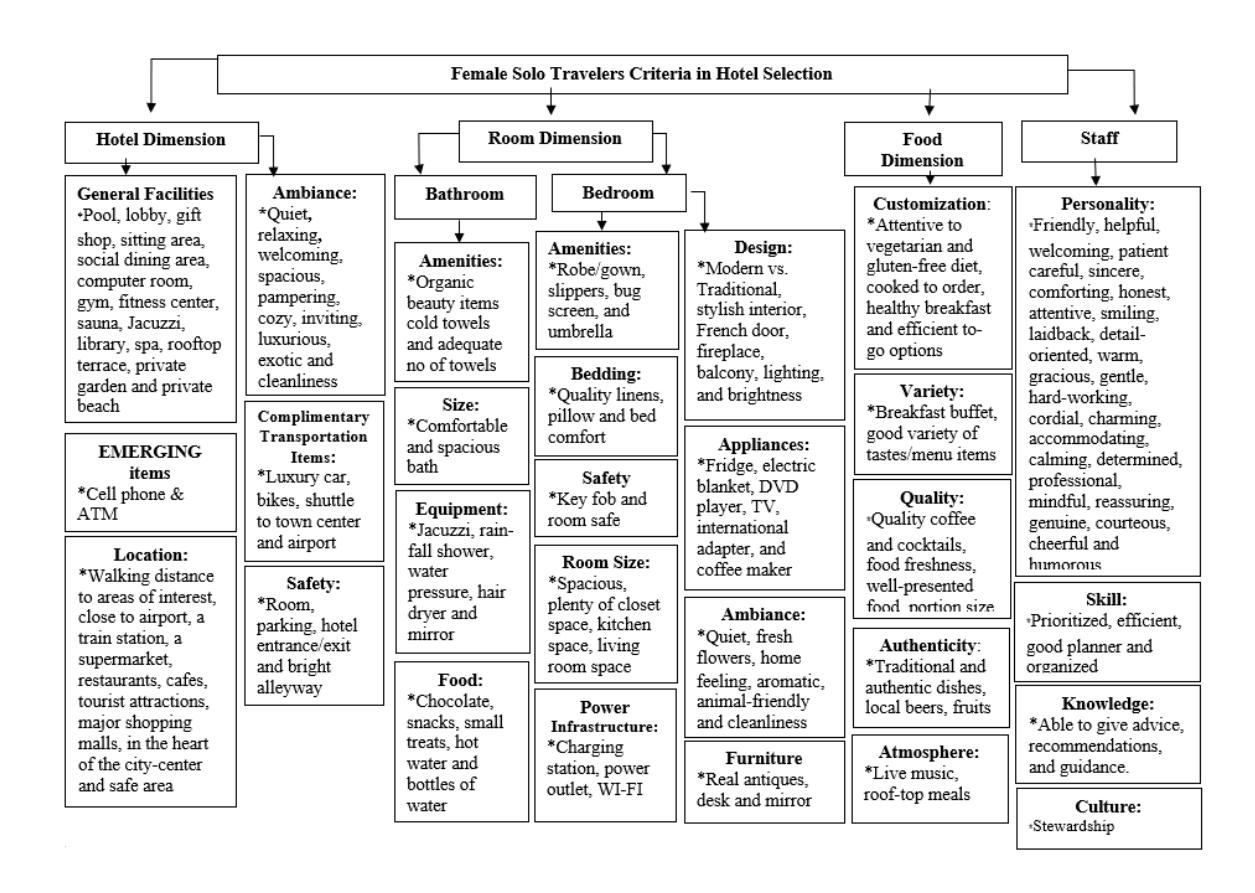
Figure 2. Emerging items of female solo traveler hotel criteria Source: Author
Strengthening of Facility Dimension: The findings support the previous literature regarding the importance of hotel dimension the female solo travelers focusing on when selecting a place to stay, use public facilities were mentioned largely in the e-comments. In the literature review, one study reported that, for female solo travelers, a hotel's public facilities are an important part of guest experience and hotel selection (Kumar and Singh, 2014). Other research found that hotel facilities, such as a pool, lend to companionship and an overall relaxing atmosphere, which are important to this market segment (Junek et al., 2005). Listed below are comments supporting the assertion that the hotel dimension is critical for hotel selection among this demographic.
"In price vs facilities-this hotel is the best […] breakfast terrace […] lovely pool area."
"The [hotel] facilities are so relaxing. I enjoyed lounging in the pool area […]"
"[The hotel is] a small, beautiful and peaceful oasis […]a beautiful pool […]"
In addition, the current research further extends to the hospitality literature regarding additional aspects of the hotel dimension. We found that ATM facilities and local cell phone are found as preferred items for female solo travelers. The aspect of ATM machine is explained first.
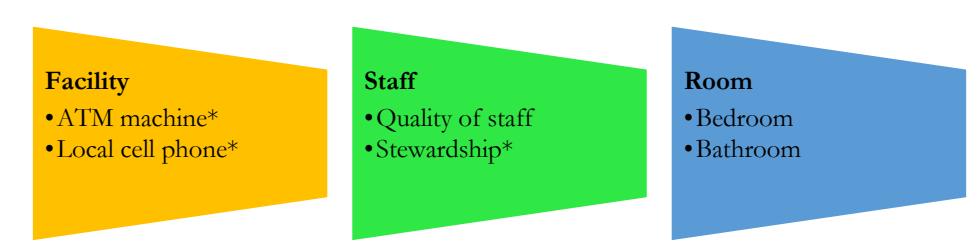
Figure 3. New Emerging hotel selection criteria of solo traveling females Source: Author
ATM Machine: One hotel attribute of significant importance to the solo traveling female convenience (Yavas and Babakus, 2005) and convenient amenities offered by the hotel (Radojevic et al., 2018). According to Rhee and Yang (2015), important factors of convenience include hotel facilities, transportation, and hotel location. Currency exchange is an important part of the facility's criteria (Li et al., 2016). Travelers no longer need to utilize banks and money exchange agencies (Dodgson et al., 2013). Many travelers prefer the efficiency of money machines (ATMs) that integrate directly with personal bank accounts and credit cards. Utilizing this ATM method of currency exchange can mitigate third party fees, commission, and high exchange rates. Having access to an on-premise or nearby ATM increases comfort levels of guests. The importance of having a nearby ATM is conveyed in the following reviewer comments:
"[A] great location, there is a little store and ATM just outside the main door […]"
"[Staff member] accompanied me to a currency exchange gold shop with a competitive rate, and assisted me to translate."
Local Cell Phone: In addition to convenient access to an ATM machine, having a local cell phone, a hospitality item is of equal importance to this emerging tourist market. Hoteliers should implement safety and security strategies that ensure a safe environment (Khan et al., 2017). Maintaining protection and safety is a serious concern for the solo traveling female (Wilson and Dip, 2004). The current study underscores this argument by finding that providing a cell phone, programmed with local contacts, helps solo traveling females feel safer. Hotels in Morocco and South Africa received positive feedback in solo traveling females' reviews who explained that having the security of a local cell phone positively shaped the overall trip experience. The below reviewer comments provide confirmation that safety and security items such as the cell phone are hotel selection criteria considered by this market segment:
"Great security for solo female travelers. They give you a local cell phone […] they sent one of their young men to come and get me."
"I was really impressed by the local cell phone they allow you to use, which already has all the necessary local numbers in it-I have never seen that before around the world-absolutely brilliant!"
Strengthening of Staff Dimension: The thematic analysis further strengthens staff quality including friendliness and their efficiency. This is a consistent finding from previous scholars including Alpert et al. (2012). Hotel staff efficiency and friendliness are important factors in hotel selection criteria and overall experience of solo traveling females, as noted in the following reviewer remarks:
"The staff was all very friendly and efficient […] and everybody really wanted to make you [feel] welcome."
"Customer service was top notch! Greeted and welcomed by friendly staff […] I'd definitely stay again!"
"My room was lovely, the free breakfast was excellent and made to order and the staff was warm, efficient and could not have been more attentive to my every need. Anna and Tracy were especially sweet, professional and helpful […]"
Stewardship: In addition to staff customer service and friendliness, the hotel culture is important in hotel selection criteria for solo traveling females. Reviewers in the sample discussed their experience being affected by staff who go the extra mile, above and beyond basic expectations of hotel guests. Staff personalities are significantly important in hotel selection criteria (Alpert and Raghunathan, 2003; Marzuki et al., 2012). The culture of the hotel in going beyond friendliness, by going the extra mile, does not go unnoticed by the solo traveling female. This staff stewardship has become an important factor in hotel selection criteria. Reviewers quoted below demonstrate the significantly positive role that stewardship plays in the trip experience of solo traveling females. These comments establish the relationship between hotel culture, selection criteria, and overarching trip experience:
"My wallet and phone had been stolen […] the reception manager, even gave me $10 of his own money for food and water that day, as well as letting me pay once I got home and sorted out my credit cards. I'll always remember the kindness […]."
"[T]he manager You Ann dropped me to the airport himself. Absolutely over-and-above service, everyone went out of their way to make a difference."
"[T]hey let me stay in the room and still allowed me to order room service even though it was literally the last day the hotel was open for the season. […] They also rescheduled my transfer from the hotel to the port. […] as far as hotels go...stay here!!"
Strengthening of Room Dimension: the findings suggest two subthemes in this regard, consistent with the hotel literature, specifically the bedroom and bathroom. Both can influence the overall trip experience. Existing research suggests that flowers play a role in hotel selection (Brownell, 2011; Kumar and Singh, 2014). Comments by reviewers in the current study strengthen the argument:
"I arrived in a room beautifully decorated with balloons and flowers, and happy birthday spelled out on the bed."
"There are fresh flowers throughout the hotel, including in your room during the evening turndown service."
For the solo traveling female, bathrooms are an important part of hotel selection criteria. Brownell (2011) and Howell et al. (1993) both found in their studies that bathroom spaciousness is tremendously attractive to this demographic. Reviewer comments in the current study strengthen that argument:
"I love the rooms at ZZZ Hotel. They are spacious, bright, airy, and comfortable. The bathrooms are massive […] and overlooking the Pai hills."
"The room itself is stunning. French doors, decorated just right, huge bathroom with freestanding tub."
The comments and discussions above clearly show that female solo traveler hotel selection-criteria has evolved and therefore requires a different approach and attention from hoteliers. Specifically, this study demonstrated that in today's environment, female solo travelers tend to view ATM, local cell phones and a high level of staff stewardship are becoming more important than before. As Shove (2003) asserts, the sense of convenience has evolved from coziness and simplicity to how one can spend less time and effort in achieving their objective. The availability of an ATM station at the hotel helps female solo travelers to save queuing time in and involvement in potentially complex and unfamiliar foreign transactions. Similarly, a local cell phone allows female solo travelers to contact their hotel in any circumstance. Therefore, a local cell phone facilitates resolutions to problems by providing immediate access to help and guidance whenever needed. For example, when female solo traveler loses their way, they can easily contact their hotel for directions or transport. This way, the availability of local cell phones not only improves convenience but more importantly perceived safety.
The discussion above also shows that although being friendly, helpful and knowledgeable are appreciated, it is not enough to confirm female solo traveler selection criteria. One reasonable explanation of this finding is that spontaneous positive acts or unprompted stewardship is considered genuine and trustworthy (Trifunovic et al., 2010). Another possible explanation is that female solo travelers view spontaneous stewardship as a reflection of high level of care and willingness to act in the best of interest of the female solo traveler (Kulkarni and Ramamoorthy, 2011). Service staff are expected to be pleasant but that demeanor, but that behavior does not necessary reflect a true level of care. However, being genuine is perceived honest and authentic and therefore it is highly valued and cherished by female solo travelers.
5. Conclussion, limitation and recommendation
This research has contributed to existing literature identifying the selection criteria that are most important to solo traveling females. Extracting six particular dimensions of criteria most relevant in fulfilling the needs of solo traveling females during their hotel stay. These dimensions include the hotel facility and safety, lifestyle, staff, room, hotel marketing, and food. Analysis of 345 reviews on the TripAdvisor report supports the assertion that dimensions of hotel facility, hotel staff, and room dimensions remain most crucial for solo traveling female. Individual traveler reviews provide insight into the positive experiences among this sample. Data analysis identified three specifically new criteria applicable to solo traveling females in hotel selection: A pre-loaded cell phone, accessible ATM machine, and staff stewardship.
The reviewer comments analyzed in this study stem from TripAdvisor top 25 list of cost-efficient hotels, published from December 2018 and January 2018. The narrowly condensed sample of 345 reviews, and findings thereof, may not represent the feedback of the larger solo traveling female population. Feedback about hotels and other reviewer comments are unique and vary from traveler to traveler. Therefore, individual perceptions, expectations, and personal experience influence hotel selection criteria. This study included reviews of cost-efficient hotels worldwide. Analysis of other review categories of hotels may provide additional perspective and broad ideas about hotel selection criteria among travelers. These reviewers could perhaps include solo traveling females focused on luxury service and other factors unrelated to cost efficiency.
The findings of the current study presents important theoretical and practical implications. In terms of theoretical implications, recall the three hotel dimensions, specifically facility, staff, and room, as the selection criteria for female solo travelers when seeking a place to stay. The current research expands upon existing hospitality literature. Within the facility dimension, females traveling solo take solace in having a local cell phone and ATM machine for their safety and convenience, respectively. Furthermore, stewardship from staff is highly appreciated by solo traveling females. Regarding practical implications, hoteliers should consider how their hotel appeals to hotel selection criteria of solo traveling females. Hoteliers who want to attract this market segment should be mindful of their unique preferences. Examples include the hotel's public facilities, friendliness of staff, and hotel rooms that meet their expectations.
Hoteliers should also give thought to the newly identified aspects of selection criteria: a local access cell phone, a nearby or on-premise ATM money machine, and friendly staff personnel who consistently go extra miles for the sake of guests. To increase levels of safety, security, and protection of the solo traveling female, hoteliers should consider providing the guest with a pre-programmed cell phone containing contact information for easy access to local venues and emergency help while away from their hotel. Our sample of reviewer comments indicated that solo traveling females felt more comfortable traveling alone, particularly in areas known to be unsafe for women, such as Morocco. In addition, hoteliers can pre-program their cell-phone with emergencies and any important phone numbers such as airport, police, hospital, embassy, etc.
A recommendation to hoteliers who have no ATM on-premise or currency exchange facility nearby should consider installing an ATM on site. An onsite ATM provides for increased convenience while decreasing feelings of intimidation involving currency exchange. Specifically, hoteliers should install an international standard ATM that can accept major global credit cards such as Visa and Master Card. This way, female solo travelers can have enough money as needed and without the worry of carrying too much or little cash.
Most importantly, hoteliers who want to appeal to this market segment should create a positive hotel culture that encourages staff to consistently go above and beyond to serve guests. Comments in our sample that described the "going the extra mile" personality in hotel staff discuss direct relationships and specific experiences that created a highly memorable guest experience. Thus, hoteliers should promote a culture of stewardship toward guests. Customizing the guest experience and accommodating personal needs are examples of the valued guest experience. Personalized assistance can be valuable in creating simple but impactful memories. One way to improve such positive gestures, hoteliers may consider starting exchange staff programs with their sister hotels or other hotels in foreign countries so the staff can experience some challenges of being a foreigner. As Agnihotri et al. (2009) suggest this understanding will not only open their eyes but hopefully, it can improve their cognitive and behavioral task. In other words, such experience will enhance staff adaptability to the situation of female solo travelers.
In addition to hoteliers benefiting from the results of this investigation, travel agencies can also apply information from the study to their travel packages. The implications suggested that safety, convenience, and staff friendliness can all be considered equally important aspects of the tourism market. As such, travel businesses should offer and recommend travel destinations that satisfying these unique and specific needs. Helpful staff should be eager to assist female solo travelers. Furthermore, a destination that aspires to attract female solo travelers should ensure they meet all aspects of selection criteria.
While this research provides several contributions to hospitality literature and to businesses, some limitations should be addressed. First, this research gathered data from TripAdvisor which stems from secondary consumer sources. Therefore, first-hand research should be conducted, which allows a researcher to probe for more information. In addition, the findings focus heavily on the selection criteria of the hotel dimension, and the results are valuable. However, the other important criteria of the study remain under-researched. Future researchers should consider exploring these criteria.