

1. Introduction
Bandung Regency as an area rich in natural and cultural tourism resources has the potential to become a leading tourist destination that can attract domestic and foreign tourists. This makes the tourism sector one of the mainstay sectors of the economy in Bandung Regency. The existing cultural potential then developed into a destination where in addition to culture, there are other interdependent aspects namely the environment and economy, where the three aspects are the concept of sustainable tourism development systems that can be applied to develop rural or rural areas. Rural tourism can generate income for local people by providing opportunities and jobs to improve their standard of living (Svoradova, et al. 2013; Barkauskas, et al. 2015). This can be seen from the increasing number of rural areas that have developed through the tourism sector, especially tourism villages. The tourism village is a place that has certain characteristics and values that can be a special attraction for tourists with a special interest in rural life. To become a leading destination for rural or tourist villages, a rural area must naturally fulfil three aspects of a sustainable tourism development system, where the economy, environment, socio-culture can be developed together without ignoring any of them or the interrelations of the three.
Based on Regulation of Bandung Mayor No. 47 of 2010 which states the purpose and function of the development of tourism villages including: a). The development of the quality of the environment of the village community as well as the cultural and tourism potential contained in each tourism village; b). Maintaining and fostering continuous life order, arts and culture of the local community; and c). Utilizing the potential of the environment for the benefit of cultural tourism, agro tourism and tourism, spiritual tourism, sports tourism in the context of increasing and empowering the people's economy. While the function of the tourist village includes: a). Educational and recreational facilities; b). Facilities for the development of Arts and Culture; c). As a means of developing community-based tourism; d. Means for developing tourist behaviour and culture. Therefore to help the development of tourism villages and improve the productivity of the Bandung regency area, especially in the tourism sector.
2. Literature Review
2.1. Sustainable Tourism
The application of the concept of sustainable development in the tourism sector is known as the concept of sustainable tourism development (Sustainable Tourism Development), which in essence implies the notion of tourism development that is responsive to tourist interest and direct involvement of the local community while still emphasizing long-term oriented protection and management. Efforts to develop and manage resources undertaken must be directed to meet economic, social and aesthetic aspects as well as to maintain the integrity and preservation of ecology, biodiversity, culture, and living systems. (WTO, 1990).
The concept of sustainable tourism development essentially emphasizes four (4) principles, as follows:
a) Economically Feasible
The Principle of Economically Feasible, emphasizes that the development process must be economically feasible, carried out efficiently to be able to provide significant economic benefits for both regional development and improving the welfare of local communities.
b) Environmentally Feasible
The principle of Environmentally Feasible, emphasizes that the development process must be responsive and pay attention to efforts to preserve the environment (natural and cultural), and to a minimum avoid negative impacts that can reduce environmental quality and disturb the ecological balance.
c) Socially Acceptable
The Socially Acceptable Principle emphasizes that the development process must be socially acceptable, where development efforts are carried out in order to pay attention to the values, norms that exist within the community, and that the impact of development must not damage this order.
d) Technologically Appropriate
Technologically Appropriate Principle, emphasizes that the development process carried out is technically applicable, efficient and utilizes local resources and can be easily adopted by the local community for a long-term oriented management process. There is no standardized requirement on how the main content is organized. However, we expect the author to divide it into several sections indicating literature review and analytical results and discussions.
2.2. Tourism Village Developement
According to Wiendu (1993), a tourism village is a form of integration between attractions, accommodation and supporting facilities that are presented in a structure of community life that integrates with the prevailing procedures and traditions. Tourism villages usually tend to be rural areas that have distinctiveness and appeal as a tourist destination.
A tourist village is a self-help and community-driven group that in its social activities seeks to improve understanding of tourism, accommodate the role and participation of the community in tourism development in its territory, increase the value of tourism and empower it for the welfare of the community, participate in the success of tourism development. According to the pattern, process, and type of management, the village or tourist village is divided into two forms, namely the structured type and the open type (Wiendu, 1993).
- 1) Structured Type: A structured type is characterized by the following characters:
- a. Limited land equipped with specific infrastructure for the area. The advantage of this type is in the image that is grown capable of penetrating international markets.
- b. The locations are generally separated from local communities so that the negative impacts are expected to be controlled and socio-cultural pollution will be detected early.
- c. The land is not too large and is still in an integrated and coordinated planning capability level so that it is expected to become an agent for obtaining international funds as the main element in capturing the services of star hotels.
- 2) Open Type: This type is characterized by the character of growth and integration of areas with the structure of life, both in space and patterns of local communities. The distribution of income obtained from tourists can be directly enjoyed by local residents, but the negative impact quickly creeps into the local population so that it is difficult to control. Ideal tourism village development must pay attention to the concepts of sustainability and also refer to the basic thinking of the concept of tourism village development or development in Indonesia based on attractions and localization
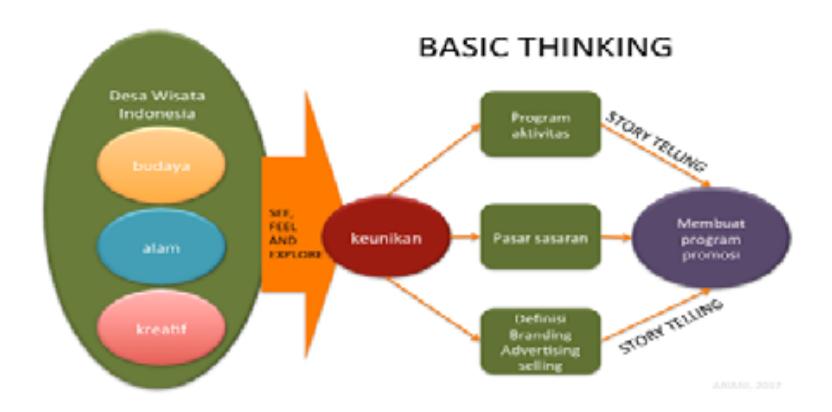
Figure 1. Basic Thinking of Tourism Village Development Source: Ariani (2019)
The most important development principle in developing a tourist village is to implement the 3C strategy formulation as presented in the following chart.
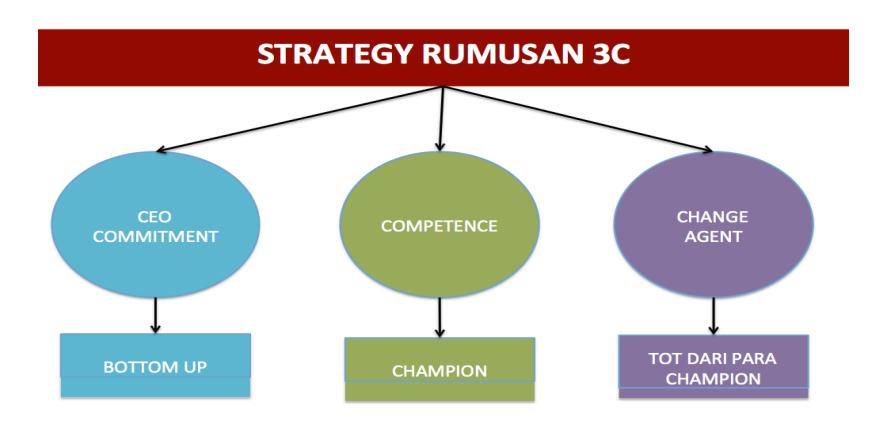
Figure 2. Strategy Formulation 3C Source: Ariani (2019)
After the 3C formula is agreed upon, 9 strategic steps can be taken as follows:
1) Identifying village potential through deliberations with all village components from all walks of life. The potential that can become a commodity can vary from all aspects. It can be natural beauty, agricultural products, richness of flora and fauna, socio-cultural, community, traditions or things that are unique other regions do not have. Ensure superior potential which will be used as the main commodity
- 2) Identifying problems that could be an obstacle to the development of village tourism potential, ranging from physical, non-physical or social, internal and external. Or it could be that if the problem is processed in a certain way, it could become a potential problem
- 3) Maintain a strong commitment from all village components to equalize opinions, perceptions and raise the potential of the village to become a tourist village. This commitment is the strongest support for the realization and sustainability of the tourist village
- 4) Identifying the positive and negative impacts of a tourism activity according to the peculiarities of each village. Each village has its own characteristics that will produce impacts that are also different from one another, especially socio-cultural changes
- 5) Have a strong commitment from all village components to collaborate with the Regional Government and if necessary, collaborate with the private sector. Think about and identify the impacts if you work with the private sector. This includes budgeting for the development of a tourist village by using all existing economic resources
- 6) Prepare all sets of regulation of norms that are more aimed at safeguarding the development of tourism villages and overseeing potential irregularities that might occur. Regulations are prepared so that the running of tourism activities and their impacts remain within the corridor of regulations as a legal protection
- 7) Conduct trainings for all village components, including village government on tourism management, how to manage tourist attractions, visitor management, along with innovations that need to be developed considering that like other sectors the tourism sector also experiences fluctuation and can experience "saturation"
- 8) Using various media to introduce and publish tourism potential in the village, both conventional and non-conventional media, such as the internet. The internet is now a very effective publication tool that can reach all parts of the world. Even tourist attractions in remote locations can be recognized by people in other parts of the world thanks to internet technology
- 9) Studying the success of other tourism villages or comparative studies. We can learn a lot from the success of other tourist villages, especially those of its kind. Because the typical problems and future challenges that will be faced are more or less the same. Only with professional and innovative management will tourism villages exist and be competitive and can pass internal, external and regional international exams.
2.3. Community Based Tourism
The concept of community-based tourism or Community Based Tourism which is abbreviated as CBT is a concept of developing a tourist destination through empowering local communities. Where the community takes part in planning, management and expressing opinions (Goodwin and Santili, 2009). Community Based Tourism (CBT) is tourism that takes into account environmental, social and cultural sustainability aspects. CBT is a tool for community development and environmental conservation or in other words CBT is a tool for sustainable tourism development (Suansri, 2003).
One representation of community-based tourism development is the Tourism Village. Where the concept of tourism development is still a hot topic of conversation in the media, as well as the themes of research and community service both among non-governmental organizations and universities. The tourism village development program is able to suppress the urbanization (displacement) of rural people to the city, and triggers village people to develop their villages in making tourism products such as turning their villages into tourist villages that can provide job opportunities so that people will not look for work in the city.
The village as a tourist destination requires management and improvement of the need for facilities and infrastructure, while the human resources in the village still have limitations in terms of management and knowledge of the village, so in this case an initiative program is needed to turn the village into a well-managed tourism village. The tourism village management and development training program is one of the strengths that will greatly help the village accelerate the steps to become a empowered village.
3. Research Methodology
This research uses a case study method with a single entity or phenomenon ("case") from a certain period and activity (in the form of a program, event, process, institution or specific social group) and collects detailed information using various data collection procedures during the case. . Yin (2012) states that the purpose of case study research is not just to explain what the object under study is like, but to explain how it existed and why the case happened.
Data collection techniques in this study are direct observation, interviews, literature review and documentation. The data that has been obtained are then processed by means of reduction and coding interviews. Data reduction is used to remove / reduce data from the interview results that will be used in the analysis process, considering that the data obtained is very large.
The sampling technique used in selecting interviewed informants is purposive sampling, namely the sampling technique with the consideration that the informant is an actor, both individuals and agencies who understand the problem and can provide accurate information. The determination of informants in this context is not determined by the idea that the respondent must be representative of the population, but rather that the respondent must be representative in providing the necessary information in accordance with the focus and objectives of the study (Siregar, 2011). Interviews with key informants aim to obtain specific information on a topic (Mikkelsen, 2003).
Qualitative descriptive analysis is used to see the existing conditions of tourism village management in Bandung Regency based on data on tourism potential and the involvement of existing stakeholders, so that it is known the description of the conditions of the management of tourism villages in Bandung Regency with the principle of sustainable development.
4. Result
4.1 Village Tourism in Bandung Regency
Based on the Decree of the Regent of Bandung Number 556.42 / Kop / 72-Dispopar / 2011 concerning the Determination of Tourism Villages in the Bandung Regency Area, there are 10 villages designated as tourist villages as shown in the Table 1.
Then from the Tourism Village Development Study document issued by The Tourism and Culture Office of Bandung District in 2017 stated that the development categories of the 10 tourist villages were on average at the budding stage. The bud stage is the stage of development of a tourist village where villagers have started to make informal management and apply "Sapta Pesona" (Disparbud Kab Bandung, 2017).
The village as a tourist destination requires management and improvement of the need for facilities and infrastructure, while the human resources in the village still have limitations in terms of management and knowledge of the village, so in this case an initiative program is needed to turn the village into a well-managed tourism village. The tourism village management and development training program is one of the strengths that will greatly help the village accelerate the steps to become a empowered village.
| No. | Name | Tourism Type | Featured product |
|---|---|---|---|
| 1. | Alam Endah Village Rancabali District | Agro Eco tourism | Processed strawberry foods, handicraft, agriculture and plantation. |
| 2. | Gembung Village Pasirjambu District | Agro Eco tourism | Processed strawberry foods, handicraft, agriculture and plantation. |
| 3. | Panundaan Village Ciwidey District | Agro Eco tourism | Crafts, agriculture, travel education, homestay and cultural arts |
| 4. | Lebak Muncang Village Ciwidey District | Agro Eco tourism | Crafts, rabbits, agriculture and fishery. |
| 5. | Lamajang Village Pangalengan Distric | Agro Eco tourism and Culture tourism | Crafts, homestays, culinary, agriculture, animal husbandry, cultural arts and rafting. |
| 6. | Ciburial Village Cimenyan District | Agro Eco tourism | Crafts, arts and culture the farm. |
| 7. | Cibolerang Village Cimanuk Village, Cileunyi District | Art and tourism village | Cultural arts, traditional culinary, animal husbandry, agriculture and plantations. |
| 8. | Laksana Village Ibun District | Agro eco-tourism | Kamojang Crater, culture, culinary, livestock, agriculture and plantations. |
| 9. | Rawabogo Village Ciwidey District | Agro eco-tourism | Cultural arts, crafts, culinary, livestock, agriculture and plantations. |
| 10. | Jelekong Village, Baleendah District | Art and culture | Crafts, arts, culture, agriculture, plantation, painting and traditional culinary. |
Table 1. Village Tourism in Kabupaten Bandung Regency
Source: The Tourism and Culture Office of Bandung District (2017)
4.2 Stages of the Tourism Village Management and Development Training Program
There are 10 stages or steps that can be taken in realizing an increase in the competency capacity of the community (HR managing) tourism villages through education and training programs for the management and development of tourist villages, namely:
- 1. Analysis of Needs for Competency Improvement. The Tourism and Culture Office of Bandung District conducted a need assessment related to what competencies are needed by the managers of tourism villages in Bandung Regency in managing their tourist destinations effectively, efficiently and competitively.
- 2. Formulation of a Tourism Village Management and Development Training Curriculum. After knowing the various kinds of competencies that need to be increased in capacity, then a curriculum is compiled containing a series of teaching materials that will be given to the managers of the tourism village.
- 3. Development of a Tourism Village Management and Development Module. Then the material modules are compiled as independent study materials or training materials according to the previously prepared curriculum.
- 4. Socialization of Cooperation Program to Tourism Stakeholders. The Tourism and Culture Office of Bandung District carried out the socialization / introduction of the Tourism Village Management and Development Training Program to tourism stakeholders as tourism development partners, especially in Bandung Regency.
- 5. Willingness of Tourism Stakeholders. Tourism stakeholders who are already willing to become partners send a letter of willingness to cooperate.
- 6. The signing of the MOU for Stakeholders of Tourism. The signing of the MOU The Tourism and Culture Office of Bandung District and tourism stakeholders in this tourism village management and development training program will be carried out collectively, which is attended by the Regent of the District. Bandung together with the leadership of the tourism.
- 7. TOT for the Training Facilitator. After the MOU was carried out, The Tourism and Culture Office of Bandung District holds a TOT program for training facilitators who have been selected by The Tourism and Culture Office of Bandung District and or proposed by related tourism stakeholders. District tourism office can assign a Master Assessor Team as resource persons in the TOT program.
- 8. Implementation of Mentoring-based Training. Facilitators who function as resource persons or provide special sources in implementing training in the management and development of tourism villages can participate in assisting empowerment programs.
- 9. Monitoring and Evaluation. The training facilitator plays an active role in providing assistance in the form of: supervision, coaching, monitoring, briefing, problem solving, and documenting all mentoring activities according to the available format.
- 10. Reporting. At the end of the program, the team of facilitators can be given an additional task to make a report which is accompanied by documentation and attachments according to the available format.
4.3 Module System and Its Application in Teaching
In the world of education, the term teaching module began to develop around 1960 (Vembrianto, 1985). This system is an alternative to the classical teaching methods that developed previously. In the classical method, students learn together in a unified time and place. On the one hand, this method is considered beneficial because it can be delivered quickly to many students. From a financial point of view, even this method is much cheaper. The government or educational institutions only need to pay one or two teachers and spend a small amount of operational costs to serve as many students as possible.
However, if the aim is to optimize service and improve the quality of graduates, it appears that the classical method cannot be a mainstay. The reason is that the classical method ignores individual differences. Even though every student has different social backgrounds, interests, opportunities and levels of intelligence. In the classical method, students tend to be passive and educators tend to play a dominant role. Students will be dependent, lack initiative and are not trained to live independently.
In its later development, various concepts and models of individual teaching became more popular. One of the models is known as the module teaching system. This teaching system is considered effective and in accordance with the demands of the modern education world which provides full recognition of the diversity of potentials, interests and opportunities of each student.
The different learning demands of each student reinforce the relevance of the module system in current education. The facilities provided by this system open opportunities for various groups to always develop their potential and expertise. This is no exception for the participants and tourism experts. By not carrying out teaching and learning activities at the same time, they can take part in learning programs according to the opportunities they have.
The module system then becomes a method that can be used to carry out various educational goals, such as the goal of increasing professional skills, developing hobbies, and achieving self-intensity. The module system is a learning method that is able to provide opportunities for people who cannot attend face-to-face education.
This is because the module system provides flexibility for students to take part in educational programs according to their needs, personal development, and opportunities. Students who have
high interest and the opportunity to complete their education programs quickly will not be disturbed by other students who have various obstacles (Vembrianto, 1995).
Based on the above thinking, it is clear that the module teaching system is an alternative to the appropriate teaching and learning process to increase the competency insight (skills, knowledge, and attitude) of tourism practitioners. With this system, it is hoped that the barriers to distance and place for practitioners in the tourism sector can be overcome. The recommended series of management and development modules for tourism villages consists of 12 modules (including training activities):
- 1. Tourism Village Management Module
- 2. Event Management Module
- 3. Customer Satisfaction Management Module
- 4. Accommodation Management Module
- 5. Food and Drink Management Module
- 6. Handycraft Management Module
- 7. Marketing Management Module
- 8. Consumer Behavior Module
- 9. Present Marketing Module
- 10. HR Management Module
- 11. Crisis Management Module (Conflict Management)
- 12. Tourism Regulation Module
The detailed training curriculum for the 12 management and development modules of a tourism village as describes in Table 2.
Table 2. Tourism Village Management and Development Training Curriculum
| No. | Topics & Duration | Subject categories | Subjects detail | Duration (Minutes) |
|---|---|---|---|---|
| 1. | Tourism Village | General | Introduction to Village Tourism | 50 |
| Management | Main | 1. Tourism Village Products | 150 | |
| 300 minutes | 2. Management of tourist village attractions | |||
| 3. Management of tourism village facilities | ||||
| Supporting | Awareness of tours and Sapta Pesona | 100 | ||
| Village Tourism Development | ||||
| 2. | Event | General | Introduction to Event or MICE | 50 |
| Management | Main | 1. Event Planning | 200 | |
| 300 minutes | 2. Event Financing | |||
| 3. Event Publication and Promotion | ||||
| 4. Event Organizing Techniques | ||||
| Supporting | Event package creation maker | 50 | ||
| 3. | Customer | General | Communication Science | 50 |
| Satisfaction | Main | 1. Tourism Communication Engineering | 200 | |
| Management | 2. Understand Customer Characteristics | |||
| 300 minutes | 3. Excellent Service | |||
| Supporting | Intercultural understanding | 50 | ||
| 4. | Accommodation | General | Introduction to Accommodation | 50 |
| Management | Main | Management of Tourist Accommodation | 200 | |
| 300 minutes | Homestay business standards | |||
| Homestay administration | ||||
| Supporting | Homestay hygiene and sanitation | 50 |
| 5. | Food and beverage management 300 minutes | General Main | Introduction to restaurants, cafes and food stalls 1. Selection of food ingredients 2. Principles of food hygiene & sanitation 3. Food & beverage serving arrangement 4. Processing and production of food and beverages | 50 200 |
| Supporting | Basic nutritional science | 50 | ||
| 6. | Handycraft Management 300 minutes | General Main | Introduction for handycraft maker 1. Tourist preferences for Handycraft 2. Product development and innovation 3. Quality assurance and product prices | 50 200 |
| Supporting | Product design and packaging | 50 | ||
| 7. | Marketing management 300 minutes | General Main | Introduction to Marketing 1. Marketing mix and strategy 2. Market Segmentation and Competitors 3. Plan & manage tourist visits | 50 200 |
| Supporting | Modern Marketing | 50 | ||
| 8. | Consumer behavior 300 minutes | General Main | Psychology of Service 1. Consumer behavior 2. Factors that influence consumer behavior | 50 200 |
| Supporting | 3. Negotiation techniques Basic of Anthropology & Sociology | 50 | ||
| 9. | Modern marketing 300 minutes | General Main | Introduction to Marketing 1. Low cost promotion trends 2. Plan, create & select promotional tools 3. Conventional and Digital marketing | 50 150 |
| Supporting | 1. Marketing cooperation 2. Basic of Communication Science | 100 | ||
| 10. | Financial management 300 minutes | General Main | Introduction to Basic Accounting 1. Simple bookkeeping 2. Determination of the budget / RAB 3. Cost control & pricing | 50 200 |
| Supporting | 4. Price disparity Tourism Village Operations | 50 | ||
| 11. | Crisis management 300 minutes | General Main | Introduction to HR Management 1. Definition of Conflict 2. Conflict Resolution 3. Basic communication techniques | 50 200 |
| Supporting | Communication tools and methods | 50 | ||
| 12. | Tourism Policy 300 menit | General Main | Introduction to Tourism Policy 1. Legislation in the tourism sector | 50 200 |
| Supporting | 2. Laws and regulations related to tourism Tourism Village Development | 50 |
Source: the author's analysis (2020)
5. Conclusion
Bandung Regency Government, in this case the Tourism and Culture Office, needs to be encouraged to accelerate the empowerment of tourism village communities which have their own characteristics and have considerable economic potential through training programs for the management and development of tourist villages that can be carried out by cooperating with various related parties (stakeholders), including educational institutions, non-governmental organizations, and tourism industry players in realizing a tourist village that develops continuously so that the acceleration of an advanced and independent village community can be achieved in quantity and quality. To get assistance in realizing tourism villages that meet the required standards both nationally and ASEAN standards, tourism villages need the assistance of various parties in their empowerment, namely the local government as facilitators and other parties mentioned in the previous explanation as technical implementers in the field.