

1. Introduction
COVID-19, the novel coronavirus, has brought the entire globe to a standstill. The virus was first detected in the city of Wuhan in China around December 2019. Although by early January 2020, the infection had spread across hundreds of people in Wuhan with nearly 11 million put under quarantine, but initial diagnosis did not show any signs of such a catastrophic impact on public life (Woodward, 2020). As the number of affected cases rose over the month, WHO declared the disease as a Public Health Emergency of International Concern (PHEIC) on January 30, 2020 and by March 11, 2020 the disease was declared a pandemic (WHO, 2020). The city of Wuhan was put under complete lockdown with inbound and outbound travelling suspended. However, by the time this decision was taken by the Chinese Government, the virus had already travelled beyond borders.
Though the number of patients crossed more than a crore globally by the end of June, the actual number of cases is still under covers. The testing is limited across countries due to lack of proper medical and testing equipment to diagnose the disease. What started as a health crisis soon enough transformed into an economic one. In order to stop the spread of the lethal virus, borders were shut down with immediate effect and inbound and outbound travelling was suspended, bringing the socioeconomic public life to a halt. Some other measures were adopted globally such as closure of schools and colleges, suspension of business activities, cancellations or postponement of mass gathering events like concerts, festivals and closure of theme parks and lockdown on daily activities to name a few.
Among the major sectors of the economy, tourism has been the worst hit. Tourism sustains on human interaction and movement. It is probable that it involuntarily becomes the carrier of any disease. Hence the first non-pharmaceutical intervention to be taken is to restrict the movement (Gössling, 2002). As restrictions came into place, the whole sector went down the hill. Not only the major players of the industry but all the other non-skilled low-income groups have become vulnerable. With nearly 217 destinations observing border restrictions and travel ban, there has been not much left for the sector to thrive on (Hall, 2020). Although episodes of past crises have shown that almost always tourism bounces back to its normal phase of functioning, the current pandemic has shown no such pattern. Estimates of IATA show that the ramifications of the current pandemic are much deeper than the SARS in 2003 and are twice of the Global Financial Crisis of 2008 (iata.org, 2020).
The pandemic has led to an unprecedented situation. Within a span of few months, a sector which was suffering from over tourism has no tourism at all. All the associated segments of the sector are laden with financial and economic crises and survival has become a challenge. UNWTO has estimated that due to COVID-19 there will be a 60-80 per cent decline in the overall tourist arrivals for the year 2020 which puts almost 100-120 million jobs at risk. Although as countries are easing up their border restrictions, there is a ray of hope that the sector will soon enough start its recovery. The researchers and experts are of the view that tourism will have to undergo a transformation in the post COVID era. Tourism being the major source of livelihood in many countries, needs special assistance from the governments in order for the economies to reopen and function progressively. In this regard, UNWTO has called for a responsible and transformative sustainable tourism to become the new face of tourism.
Against this background, the current study aims to identify the probable effects on key areas of tourism where the consequences of the pandemic have been deeply felt. In other words, the objective of the paper is to provide valuable insights of the depth of the situation and analyze the effects of COVID-19 on the global tourism. The structure of the paper is as follows. Section 2 discusses the survey of literature on past episodes of health-related crises and their effects on tourism. Thereafter, section 3 discusses the research methodology used for the study followed by section 4 that elaborates on the effects of COVID-19 on tourism and discusses the findings. Section 5 explores the policy responses of a few selected countries taken to revive the pandemic hit tourism sector. The following
section 6 highlights the new normal in tourism in the post-COVID world. Lastly, section 7 exhibits the concluding remarks.
2. Literature Review
In this section a critical survey of literature is done on the past episodes of the health inflicted crises. Tourism has for long been prone to crises both health related as well as financial along with natural disasters. The section further explores the linkage of globalization with the evolution in global tourism and highlights the growth in the global tourism ecosystem. Finally, the section discusses the impact of past diseases and health-related crises on the resilient tourism sector and sets the path for further discussion of similar effects of the current pandemic.
2.1. Past Pandemics and Crises
Epidemics and pandemics have been in existence since the dawn of mankind. The history of widespread infectious diseases dates back to the Plague of Athens in 430 BC (History, 2020). Since then, the risk of infection has only increased. History is full of episodes of widespread communicable diseases across the world that have affected people, places and economies alike. Small pox, Yellow fever, cholera, malaria, Influenza, HIV AIDS, H1N1 Virus, SARS, MERS among others have left long lasting impact not only on the health status but also on the economic as well as cultural development (Kilbourne, 2008). The source of these infections in most cases have been the transmission of a particular type of microorganism from animals to humans. One of the deadliest of these infectious diseases was encountered in 1918 and is popularly known as The Spanish Flu. Unique in its own way, nothing of such magnitude had been witnessed before nor after the epidemic that claimed almost 20-50 million lives worldwide (Crosby, 1990). Although, with the advancement in medicine and science, vaccines have been developed over the years and most of these infections have been either controlled or eradicated altogether. Things have not changed much since the Spanish Flu, the mitigation process is still the same as in the 20th century (Baldwin & Weder, 2020).
The rapid spread of infections and health related crisis are one of the perils of globalization (Richter, 2003). Urbanization and globalization have brought the world closer which not only changed the way we live today but also the way we travel (Gössling, Scott, & Hall, 2020). Globalization has led to a rapid increase in global travel and tourism (Richter, 2003). These advancements of the mankind have led to adulterated use of the nature and its resources which has resulted into climate change. Global warming, loss of biodiversity, increase in the consumption and desire of meat by humans has all increased the risks of such outbreaks of diseases. Increased interaction among humans, exposure to wildlife and closeness with livestock while facilitating urbanization in countries across the world has also increased the exposure of mankind to diseases (Allen, et al, 2017; Wallace, 2016; Wallace, et al, 2018).
Many tourism related businesses procure industrialized food at low costs irrespective of the fact that these food productions generate heaps of food wastage (Gössling, Scott, & Hall, 2020; Hall, 2013). In this regard, (Sigala, 2020) argues that with the increase in climate change, the risk of pandemics is likely to increase in the future. Interestingly, since 1976, more than three dozen viruses have been found, out of which most of them have been traced from the tropical areas exposed to deforestation (Garrett,1994; Richter, 2003). As the number of travelers increase every passing year, the risk arising from tourism and the pressure put on the environment has also been increasing. These pressures in the form of deforestation, exploring the unexplored areas for adventure related travel and an upsurge in leisure travel among others have contributed towards global warming and changes in the climate resulting into increased risk of health-crisis (Richter, 2003).
2.2. The Growth of Global Tourism In Recent Times
Tourism has been one of the fastest growing industries providing 10 per cent of global employment and accounting for 10 per cent of the global GDP (Faus, 2020). As a leading sector of most economies, tourism supports livelihoods of millions of people employing large number of students, women and low-skilled workers. Tourism alone creates more employment than all other sectors combined together. In the year 2018, approximately 35 per cent of the jobs were generated in the sector with more than 105 destinations earning USD 1 billion or more (webunwto.s3.eu, 2020). Apart from this, a large number of MSMEs are also engaged in tourism related business (policycenter.ma, 2020).
With the rise of low-cost airlines and cheap rental facilities like Airbnb, global tourism has achieved a new arena. The estimation of the growth of the sector can be made from the fact that in the year 2019 alone, global tourism grew at the rate of 4 per cent outpacing the year's global economic growth of around 3% (UNWTO, 2020b). This growth has been steady for the past nine consecutive years. Even though the global economy observed a slowdown in the last fiscal owing to trade related tensions between China and the USA, tourism sector flourished worldwide. Since the start of the century the sector has witnessed a growth of over 117 per cent. The growth of the sector is measured in terms of tourist arrivals. In the year 2017, tourist arrivals stood at a total of 1.3 billion, while the following year viz. 2018 witnessed a 6 per cent growth in these numbers. By the end of 2019, the total number of tourist arrivals rose to a magnificent 1.5 billion tourists (UNWTO, 2020b. This growth was observed across all the regions worldwide. However, Middle-East took the lead where the arrivals grew at 8 per cent. Asia-Pacific region was next to follow projecting a growth of 5% followed by Europe (5%), Africa (5%) and America (1%). With a series of global events such as Tokyo Summer Olympics, the Dubai Expo 2020, the Beethoven 2020 in Germany among others, the year 2020 was geared up to witness a 3-4 per cent growth in the global tourism sector (UNWTO, 2020b). As pointed earlier, the sector has seen immense growth in the last decade but the definition of this growth in tourism is questionable (Gössling, Scott, & Hall, 2020). With the increase in the number of tourist arrivals, the sector's contribution towards climate change has also increased.
2.3. Impact of Health-Crises on Global Tourism
Globalization has led to a rapid expansion of international tourism by facilitating expansion of markets and profit-earning (Maditinos & Vassiliadis, 2008). The neo-liberal economic policy along with globalization has helped tourism connect the remote corners of the world easily and swiftly (Cohen, 2012). This has led to a growing 'inter-continental; East to West' as well as 'inter-regional; within Asia' travel (Cohen, 2012). Such exposure to new areas also increases the susceptibility of the sector to various shocks and crises observed in the global economy. Episodes of past shocks either in the form of financial, political or health-related crises have had severe impact on the travel and tourism sector. As pointed out earlier, tourism is based on mobility and interaction and thus is not only a victim of the epidemics and pandemics but also a major contributor to the creation of them (Sigala, 2020). Therefore, even though some of the major crises of the world have taken place in the western economies, they have had severe impacts on the rest of the world (Cohen, 2012). Aalbers (2009) suggested that these crises have led to an increased growth in the Asian region, especially China while also powering the sensitivity of the Asian countries to crises born in the west (Cohen, 2012).
Crosby (1990) in his work explained that during the early days of the outbreak of the Spanish Flu, there were evidences of army camps filled beyond capacity by almost ten thousand soldiers. Furthermore, the movement of troops during those times lined up with the emergence of the First World War, across Europe and the United States, facilitated the rapid spread of the disease. Thus, decreasing the occupancy of the troops in the camps, building spacious hospitals, use of masks and maintaining social distancing while restricting travel were the only remedies at the disposal of the medical teams. Hence, non-pharmaceutical interventions have always been effective, whether it be the case of SARS in China or MERS in Saudi Arabia. Tourism has always been prone to the crises as pointed out earlier. During the SARS (Severe Acute Respiratory Syndrome) epidemic of 2003, international tourism fell 1.2 per cent to 674 million. In Hong Kong, tourism declined by almost 68 per cent during the first 2 months of the outbreak of the disease while Singapore witnessed a decline of 71 per cent in its tourism (Wanjala, 2020). The airline sector also witnessed major economic loss with Asia-Pacific airlines losing around USD 6 million. As the virus spread to 26 countries in five continents (Wilder-Smith, 2006), non-pharmaceutical interventions had to be adopted to contain the infection. The closure resulted in lost sales of hotels with Canada reporting a loss of USD 4.3 billion in the hotel industry (Keogh-Brown & Smith, 2008; Wanjala, 2020). Over time the Asia-Pacific region witnessed a decline of 12 million tourist arrivals viz. a 9 per cent fall from the previous year (Wilder-Smith, 2006). The outbreak of MERS in 2015 saw a similar loss in the tourism sector. Since the virus emerged in Saudi Arabia and restrictions were put in place to curb the spread, the tourism industry witnessed a loss of revenue of almost USD 5 billion. In Mexico, the epidemic led to a loss of USD3 billion in terms of revenue from the tourism sector (Wanjala, 2020). The outbreak of Ebola in 2015 in West Africa resulted in a decline of tourist arrivals in Africa by 2 per cent in 2014 and by 5 per cent by October in 2015 (Novelli, 2018).
The current pandemic viz. COVID-19 is of a much larger magnitude than the epidemics and pandemics the world has experienced. The pandemic has several similarities with the great influenza pandemic of 1918 also known as the Spanish Flu (Wanjala, 2020). Galvani, et al (2020) argue that globalization has led to the rapid advancement of COVID-19. The virus is deadlier than any experienced before and has left severe health as well as economic impacts across the globe. The restrictions imposed on travel and tourism around the world have led to the collapse of the sector.
3. Research Methodology
This is a conceptual study that involves assessment of the effects of COVID-19 on tourism and its associated sectors. Since the paper is based on COVID-19 pandemic and there was limited data available country-wise for the period this paper studied, therefore a regional assessment was undertaken. This study segregates the world five specific regions viz. Europe, Asia-Pacific, America (North and South combined), Africa and Middle-East. The study is based on secondary data mostly taken from United Nations World Tourism Organization (UNWTO), for the period between January and May, 2020. At the time the study was undertaken, almost all the regions of the world were experiencing lockdowns. Given the rapid evolving nature of the pandemic, in order to examine the effects of restrictions on travel and tourism, data has been taken till the month of May, 2020 while most of the restrictions were still in place. It is unwise to make predictions as the current pandemic is one of its kind. Until the peak is over and economies return to the normal functioning, making an actual assessment of the catastrophic impact on the sector would be dangerous and highly misleading. However, the paper attempts to put forward the adverse effects as well as the opportunities presented by the disruptive COVID-19 to the tourism ecosystem. The paper also highlights the potential path that policymakers have taken across countries in order to restrict the decline in the tourism business.
4. Finding and discussion
As the number of confirmed cases increased and spread worldwide, travel restrictions were imposed by most countries by the end of March 2020. Within the weeks between the end of January 2020 and May 8, 2020, almost all the tourist destinations (217 in total) had implemented this ban either complete or partial (webunwto.s3.eu, 2020). Owing to the current pandemic, all activities in the sector have been put on hold since Mid-March. Airlines, hotels, transport, local businesses have all been shut down for the time being. The shutdown has both economic and social consequences. The impact can be seen across all verticals of the industry- inbound, outbound and domestic. With restrictions in place, the dependent segments of the industry namely aviation, hospitality, transportation and a large number of MSMEs are impacted deeply (ILO, 2020). In light of the restrictions imposed due to the pandemic, the industry was likely to face a collapse.
This section throws light on the effects COVID-19 and the induced lockdown along with restrictions had on tourism and its associated sectors. Firstly, the impact has been discussed on the global tourism as a whole. Subsequent sections include a brief discussion on the airline industry, hospitality sector with major focus on the hotel and accommodation segment followed by a discussion on the MSMEs that are engaged in tourism related business.
4.1 Impacts on Tourism and Allied Industries
With the closure of Wuhan airport in January and subsequently the entire China, travelling declined worldwide. The loss of Chinese tourists has deeply affected global output especially in the tourism dependent economies. With the declaration of the coronavirus as a pandemic by WHO, the industry witnessed the first leg of the downfall. The panic associated with the virus spread rapidly than the virus itself and traveling reduced significantly during the months of January-February-March 2020. This resulted in a 22 per cent decline in international tourist arrivals in Quarter-1 of 2020. The growth of the industry earlier projected at 3-4 per cent in 2020, was revised by UNWTO and stripped to a negative one as depicted in Figure 1. By the end of March 2020, the tourism industry witnessed a 57 per cent decline in tourist arrivals as majority of nations all over the world had imposed a completed ban on travel in order to stop the spread of the lethal virus (webunwto.s3.eu, 2020).
Countries all over the world are facing the brunt of these unprecedented activities. International tourism saw a decline of about 67 million tourists in the first quarter of 2020. The loss of exports is estimated to be almost USD 80 billion. According to World Tourism Organization the decline in tourist arrivals of 60-80 per cent by the end of the year will lead to a loss of almost USD 300-450 billion in terms of spending by tourists.
As a major job creator, tourism sector works along with the economies in fostering development and growth. With tourism sector collapsing, economic growth of the world is under the radar. Countries that are heavily dependent on tourism are suffering the most, especially the Small Island Developing states (SIDs). In these economies, tourism sector makes up for approximately 30 per cent of the total GDP generating USD 30 billion every year. Therefore, a decline in tourism receipts in these regions by 25 per cent will lead to a 7.3 per cent fall in GDP. In countries like Maldives, Seychelles, Nevis, Grenada among others tourism accounts for more than 50 per cent of the GDP and the pandemic is likely to have a greater impact leading to a loss of approximately 16 per cent of their GDP (unctad.org, 2020). Additionally, thirteen million livelihoods are directly or indirectly dependent upon tourism in Europe. The closure of businesses due to the pandemic is resulting in a loss of €1 billion per month. Globally the restrictions on travel have been in place since Mid-March and inactivity for such a prolonged period has led to a loss of output of about 70 per cent in the tourism sector.
As per the forecasts of OECD, the impact of lockdown will be seen across all sectors and affect economic output in advanced economies by 15 per cent or more and the developing ones by 25 per cent. However, the economies that are heavily dependent on tourism will be the worst affected as compared to agriculture and mining-based countries (Jackson, 2020). The fall of the sector is historic. One of the major reasons for such a decline is the huge dependency of the sector on Chinese tourists. Since the last pandemic in 2003 (SARS), the Chinese economy has grown 4 times (Jackson, 2020) and the number of travelers to and from China have increased manifold. According to OECD, the current episode of the pandemic and the eradication efforts implemented in the form of travel restrictions would cost the tourism sector 45-70 per cent reduced business in the year. The magnitude of losses would depend on the extent to which the restrictions are put in place and the speed in which recovery happens. The loss in terms of revenue has put the industry 5-7 years behind of the growth it made.
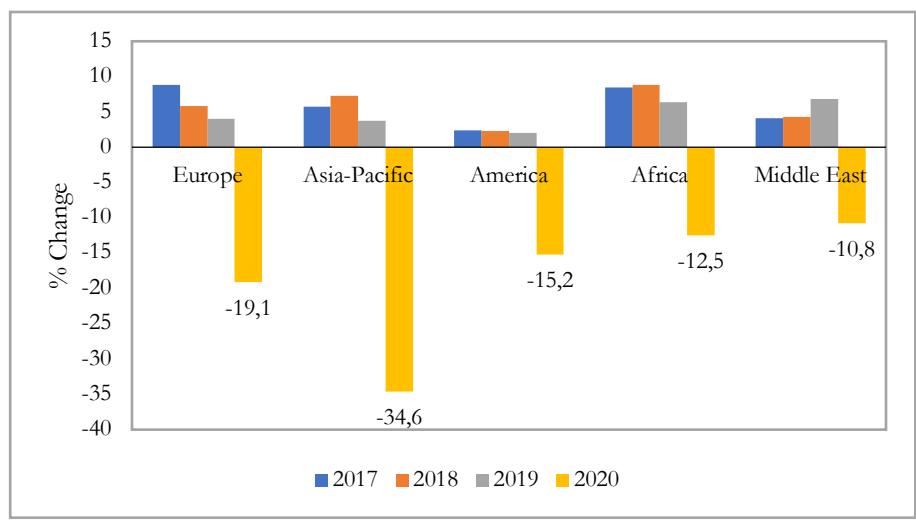
Figure 1. International Tourist Arrivals (% change Year on Year) Source: UNWTO Barometer (2019, January 2020, May 2020).
4.2 Airlines Industry
The airline industry is facing an extraordinary trend of low-demand and cancellations owing to the restrictions on travel imposed by governments across the globe pushing the global tourism into a slowdown. The global passenger daily demand declined by almost 40 per cent in January 2020 as compared to January 2019. As the lockdowns came into effect, passenger demands fell even more steeply and kept on declining throughout the month of March with Global RPKs (Revenue Passenger Kilometers) falling at 52.9 per cent year on year basis as shown in Table 1.
Table 1. Region-wise breakdown of changes in Revenue Passenger Kilometers
| Region | RPKs 2020 (% change Year on Year) | Passenger Revenue 2020 ($ billion vs 2019) |
|---|---|---|
| Asia-Pacific | -50% | -113 |
| North America | -36% | -64 |
| Europe | -55% | -89 |
| Middle East | -51% | -24 |
| Africa | -51% | -6 |
| Latin America | -49% | -18 |
| World | -48% | -314 |
Source: IATA Economics, April 2020
As the number of cases exploded and spread worldwide, and demand pummeled with a 60 per cent fall in seating capacity, around 2/3rd of the commercial carriers was grounded by April (IATA, 2020a). Additionally, the bookings of air tickets declined by 80.4 per cent worldwide within the first quarter of the year. Region-wise Asia-Pacific region reported the highest decline of 98.2 per cent, followed by America (68 per cent), Europe (75.9 per cent), Africa and Middle-East (64.8). This could lead to a loss of USD 314 billion in terms of revenue worldwide. Estimates of IATA show that the industry is likely to have a 48 per cent decline in the RPKs year on year basis as compared to 2019 (IATA, 2020b). These slow demands have a ripple effect on the livelihoods of millions working in the airlines industry. For example, in Asia-Pacific region alone, 11.2 million jobs are born out of the airline industry and due to the pandemic are at risk. With the demand declining and approximately 4.5 million flights cancelled until the end of June 2020, the industry is facing the biggest crisis in its lifetime.
The airline industry supports international trade, travel and tourism. The low demand due to coronavirus and lockdowns has put serious pressure on the airlines as it is running out of cash. An airline ideally has a cash coverage of approximately 2 months of the revenue loss. With the suspension of travel, loss in revenues has become a major concern for the industry. A liquidity crunch of USD 61billion is expected as the lockdowns have entered Quarter-2 (Pearce, 2020). With most of them running out of cash and barely surviving, many airlines have resorted to lay-offs putting 65.6 million people's job at risk (IATA, 2020c). With global recession expected in Quarter-3, the Global RPKs will fall by another 8 per cent in Quarter-3 excluding the effects of COVID-19. Before any recovery starts, airlines would be out of cash and survival will be difficult.
4.3 Hospitality Sector
With the ban on domestic and international travel, the hospitality industry suffered huge losses, especially the hotel and accommodation segment. The months of January-March 2020 recorded a steep fall in the occupancy rate by almost 96 per cent in Italy, 68 per cent in China, 67 per cent in UK, 48 per cent in Singapore and 59 per cent in US (Sorrells, 2020). The Global RevPAR (Revenue per available room) took a declining trend in the first quarter of 2020 as shown in Figure 2.
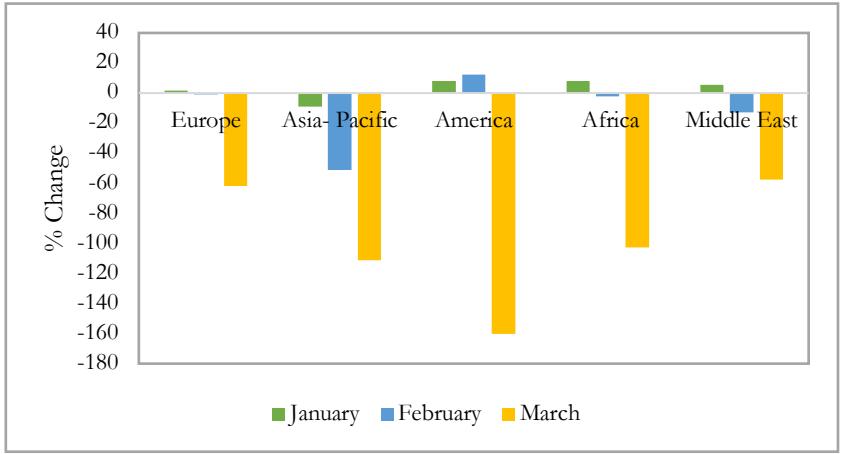
Figure 2. Global Revenue per available room in Quarter-1 (2020) Source: STR, UNWTO (data taken till April 7, 2020)
As the number of confirmed cases increased, the situation worsened. By the end of first week of May, 2020 several countries across the world started recording low occupancy rates, ADRs and RevPAR. In countries like USA, the hotel occupancy rate fell 58.5 per cent to 28.6 per cent with ADR falling 44 percent to USD 74.72 and RevPAR by 76.8 per cent to USD 21.39 (for the week ending May 2, 2020). In Canada the occupancy rate declined by 75.8 percent to reach at 16.6 per cent with Daily revenues reduced by 37.5 per cent to CAD 101.69, the RevPAR fell by 84.9 per cent to arrive at CAD 16.91. A view of Australian continent can be made by observing the falling occupancy rates of hotel in Melbourne by 62.8 per cent to 28.8 percent (for the week ending May 2, 2020). The ADR in Melbourne fell 32.8 percent to AUD 115.22 (USD 74.63) with RevPAR declining by 75 per cent to AUD 33.16 (USD 21.48). The scenario in Middle East points towards a 42.9 per cent decline in the occupancy rate with daily revenues declining by 24.9 percent and RevPAR by 57.1 per cent (str.com, 2020). African region witnessed an all-time low of only 13.8 per cent occupancy with daily revenues declining by 27.1 per cent and RevPAR by 83.1 per cent.
A regional analysis of the hotel occupancy over the years as depicted in Figure 3 shows the declining patterns since the start of the year. Average daily revenues of the hotels have also been on a downward trend as shown in Figure 4 and the Revenue per available room has been reducing too as displayed in Figure 5.
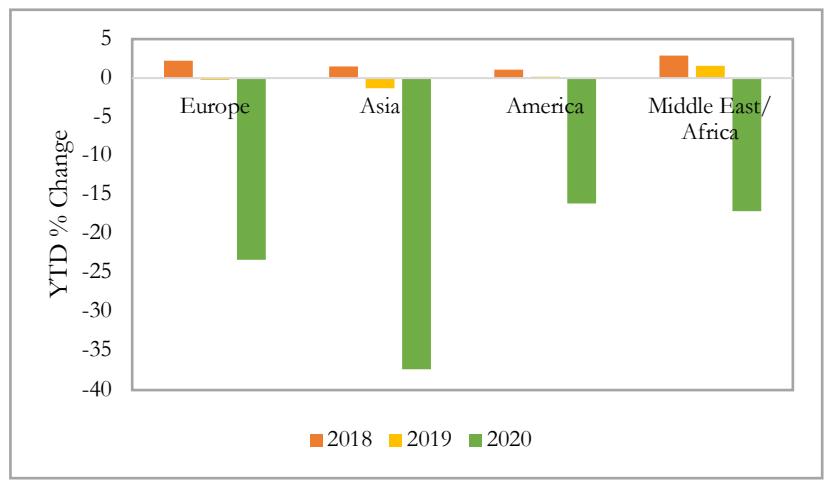
Figure 3. Occupancy Rate in Hotels (% change Year to Date)
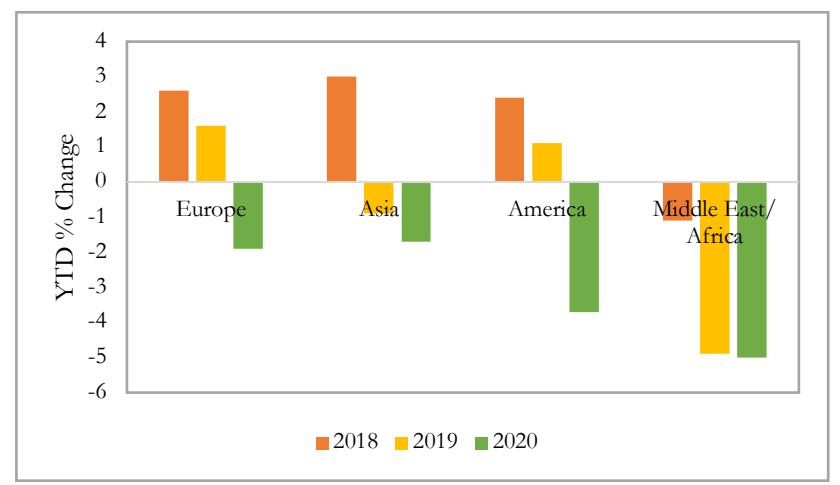
Figure 4. Average Daily Revenue in Hotels (% change Year to Date)
In Asian countries such as India, hotel occupancy rate fell to only 11% by April 2020 (Chaturvedi, 2020) while the revenue per available room had an 87% fall per cent leading to a revenue loss of about USD 8.85-10 billion (Hotelier, 2020). By June the occupancy in India improved with the levels now down by only 67%, but these still remain at an all-time low for the month of June. Countries like Thailand, Malaysia witnessed a 20% decline in occupancy rates whereas in Singapore, Philippines owing to relaxations by the government, the occupancy rose beyond 50% (ET Hospitality World, 2020). In China, where the virus originated, the hotel occupancy declined by 64% with a loss anticipated to reach 3 trillion RMD Yuan (Yuki Hu, Eva Liu & George Yu, 2020).
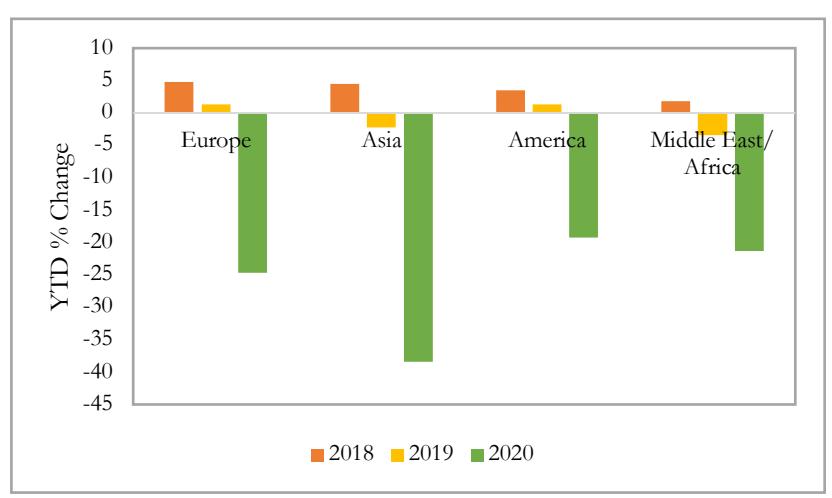
Figure 5. RevPAR in Hotels (% change Year on Year) Source: STR, UNWTO (data taken by May, 2020)
The total loss of revenue in USA amounts to be of approximately USD 21 million. The months of May-June added to the depressing figure and are expected to borne a loss of around 80 per cent. The revenues have been down by about 50%. According to STR, eight out of ten hotel rooms in USA are vacant. According to Oxford Economics and Hotel Effectiveness, approximately 70% of workforce are laid off. Full-service hotels are working with only 14 employees and the total loss of revenue will mount up to USD 2.4 billion weekly (Hotel Business, 2020). RevPAR decline in US however was slow as compared to China and other countries as unlike others the country did not resort to a complete national lockdown to fight the virus (Sorrells, 2020). According to U.S. travel Association and the American Hotel and Lodging Association, the hotel industry was earning up to 1.5 billion loss of revenue every week in March.
The cascading effect can be seen across the entire sector. Hotel owners are under severe liquidity stress with mounting fixed costs and no significant relief from the government. Hotels are trying to save whatever could be and resorting to temporary closure of business. For example, Marriott chain of hotels shut down 25 per cent (about 7,300) hotels temporarily due to the restrictions on travel. Its revenue per room fell by 60 percent in march globally (Hotelier India, 2020). IHG closed down 10 per cent of its business in USA with 50 per cent in the rest of the world (Sperance, 2020). Hilton shut down about 60 per cent of its business in China (approximately 150 hotels) by mid-February 2020 (zeebiz.com, 2020). Apart from these, lay-offs have also been opted by these giant companies. Hyatt furloughed 1,300 of their work-force globally while Marriott in March had announced lay-offs of tens of thousands of its employees whilst the salaries of the senior executive staffs estimated to be cut by 50% (Borden, 2020). Other than branded segments, the unorganized sector as well as homestays like Airbnb have been laying off employees (Sorrells, 2020). In May, about 25 per cent of the workforce (1,900 employees) were laid off by Airbnb in order to save money for survival (Carville, 2020).
4.4 MSMEs in Tourism
A large number of MSMEs are involved directly or indirectly in tourism. They make up for about 85 per cent of the sector (policycircle.org, 2020). With limited financial resources and access to capital, these businesses are unable to cope up with shocks like the current one. MSMEs are less flexible in nature and highly interdependent which means, a crisis in one area has ripple effects on all the others. Tourism sector is seasonal in nature and thus the employability is temporary which results in low job security for workers. The lack of access to capital is one of the major problems for the MSMEs which has been a major source of distress during the COVID-19 crisis. Even reopening the businesses
would be a tedious task for the MSMEs as the costs involved for adopting prevention and safety measures, certain change in the operation of business will be hard to incur in the light of inaccessibility of capital. Thus, in current crisis scenario bigger players are the ones that are likely to survive.
MSMEs in this sector involves tour operators, travel agents, planners, organizers, regional and tourist transporters that facilitate the smooth functioning of the sector. For instance, India has around 53,000 people working as travel agents, and over a lakh, tour operators (Kumar, 2020). Restrictions on travel has put these small business operators out of business with majority of them shutting down their business completely. There have been no new bookings in the months of January till April, the hotels are unoccupied, airplanes are grounded and these have together led to the halt of business activities of these businesses. These businesses have no other resort but for stimulus packages announced by the governments in the hope of some credit accessibility and waivered off loans.
4.5 Future Projections for The Sector
The episodes of past epidemics have shown that the shutting down of airports, restrictions on travel and closure of borders result in a much larger impact on the economy that the pandemic itself (wttc.org, 2020). Many organizations have published the consequences of the pandemic on COVID-19. As specified earlier, these estimates have to be used with utmost care as the pandemic is not yet over and it is not sure how the future unfolds. Although the future of the sector is still behind the curtains, it is estimated that the revival of the sector from the crisis will be a rocky road. As per IATA, the fall in demand for air travel in the year 2020 has reached to a level that was last observed in 2006. During the SARS epidemic, the Asia-Pacific airlines lost around 8 per cent of their annual RPKs and suffering a loss of around USD 6 billion in terms of revenue at the peak month, i.e., May (2003), a fall of 35% (IATA, 2020d). The impact was deep and the air travel recovered in nine months. The flus and pandemics after SARS had a mild impact on the travel sector and mostly confined to one or two countries.
The impact on the entire tourism industry due to coronavirus is estimated to be nine times higher than the incident of 9/11 and 10 times worse than SARS pandemic (AHLA, 2020). The current crisis is pushing the world in a recessionary phase. The tourism sector being the most affected is likely to recover the last but this recovery will be a fast one. The post lockdown period will create a new normal and the recovery of the tourism sector is expected to be in phases. While other sectors are expected to recover once restrictions are lifted, the restrictions are likely to have a long-lasting impact on the tourism sector. One of the major reasons for a sluggish recovery is the loss of consumer confidence. As per WTTC, in the light of earlier pandemics and flus, the sector took approximately 19 months to recover its pre-crisis level. However, proper planning and mitigation techniques can reduce this to 10 months.
Domestic tourism is supposed to pick up the pace initially (Hall, Scott, & Gössling, 2020). Estimates of IATA show that because of the pandemic there will be a slow start in Quarter-3 in the domestic market and it will lead to a 33 per cent year on year fall in RPKs in Quarter-4. As per IATA, international travel will lag behind and international RPKs will regain its pre-crisis level till 2023-24. However, with the opening up of the Chinese economy, the business confidence is rising and the industry expects a fast V shape recovery (IATA). The air travel is expected to recover slower than the economy and restore its pre-lockdown levels in 2023, which would be 2 years behind GDP recovery (iata.org, 2020).
5. Policy Responses by Selected Countries
The current scenario was unforeseen and unpredictable. Tourism sector is suffering for survival. The 2-month buffer cash-flow held by sectors such as aviation and tour operators has run out and one of the major issues in front of the sector is liquidity. Many tourism related organizations both at international and domestic level have been requesting the governments for a stimulus and relief
package. Without external assistance the sector will not be able to recover. As discussed earlier, many other sectors of the economy are related directly or indirectly to tourism. In the light of lack of opportunities for the tourism sector, the overall economic revival will be difficult. A range of short term and long-term policy actions will be taken to revive the tourism sector. Several countries have already taken initiative to revive their tourism sector. Some of these have been discussed below:
Table 2. Policy responses to the pandemic in Developing Economies*
| Developing Economies | Policy Responses | |
|---|---|---|
| Albania | Seven billion has been issued to be transferred to employees of small and large businesses including tourism sector. Tax deferral measures have been adopted by the government wherein tourism and small businesses with a turnover of not more than Lk14m will be able to defer the payment of profit tax till next year (April 15, 2020). | |
| The Bahamas | A phased plan of opening the economy has been rolled out where in phase 4 the hotels, restaurants, theatres and cultural events will take place. While the borders will be opened in phase 5 followed by the reopening of tourism in this tourism dependent economy (April 27, 2020). | |
| Bahrain | A total of USD 1.5bn package was announced as a stimulus for the economy which will be effective for three months starting from April wherein the tourist facilities will be exempted from payment of tourism fees. SMEs will get liquidity aid (March 17, 2020). | |
| Bhutan | Entities in business related to tourism and leasing government lands will be exempt from payment of rent and other bills (April-June). | |
| Cambodia | The central bank has been instructed to look into loan structures for sectors like tourism that are financially distress. | |
| China | The revival of the economy has been sought through introduction of some financial support the MSMEs. The VAT in Hubei province was exempted altogether while in all other regions reduced from 3 to 1 per cent from March till May 2020. | |
| Columbia | A policy package has been issued by the government in order to extend credit facilities for the tourism sector along with education, healthcare, coffee sector and SMES in order to provide liquidity. Additionally, extensions have been granted on tax payments with exemption of tariffs and VAT for selected food and beverage industries. | |
| Egypt | Out of the 100 billion Egyptian Pounds announced to aid the recovery, 50 billion has been issued for the tourism industry and hotel industry in particular. Additionally, all the payments in lieu of rent for tourism and food related businesses at government owned spaces have been suspended and a special toll number has been created to register the complaints and grievances of the workers in tourism. | |
| Morocco | In order to assist the sector, a stimulus of 10 billion dirham (USD1billion) for sectors including tourism to prevent lay-off of employees and mitigate the crisis. | |
Source: IMF, Policy Responses to Covid-19, 2020; ILO Sectorial Brief, 2020; OECD Policy Responses, 2020.
*Country status based on the UN, (2020) https://www.un.org/development/desa/dpad/wp-content/uploads/sites/45 /WESP2020_Annex.pdf
Table 3. Policy responses to the pandemic in Developed Economies*
| Developed Economies | Policy Responses |
|---|---|
| Australia | For the aviation sector, a couple of packages have declared providing financial assistance of AUD 100 million to battle the liquidity crisis and AUD 198 million to maintain domestic and regional connectivity. The government has waived off and reimbursed charges such as fuel excise, air service charges and security charges from the domestic and regional operators which is likely to provide a benefit of AUD 159 million since February, 2020. The relief package will be extended till September 2020 which is aimed at providing financial feasibility to the airlines stuck due to the pandemic. The government has agreed on waiving off license fees for businesses in the commonwealth National parks till March 2021. For SMEs the government has declared wage payment and financing schemes to benefit both employers and employees and also retaining the employment. |
| Austria | Fiscal package of 38 billion euros has been announced wherein the share of tourism is 9 billion euros (March 15, 2020). |
| Croatia | Croatian Banking Association will defer loan repayments of the tourism sector until the end of June 2021. |
| Canada | In order to safeguard the interests of the workers and small businesses, the government has announced certain policy actions in the form of wage subsidies and work-sharing programmes. The duration of the subsidies is up to 3 months which will amount to be about 10 per cent of the remuneration paid in those 3 months up to a maximum of 1,375 CAD per employee and 25,000 CAD per employer. Meanwhile, the benefits of the work sharing programme will be availed off by only that share of workers who would reduce their working hours and this benefit will be available for 76 weeks. Other than this a forum has been created to assist industries including tourism, transportation, oil and gas in credit availability. |
| France | In order to avoid any hindrances due to lack of labor post COVID, the government has adopted various measures to support the MSME. Policies and reforms have been announced related to partial unemployment. The employees that earn minimum wages will keep receiving the same while those whose salaries exceed the threshold will be eligible to receive compensation up to 4.5 times the minimum wages. |
| Hungary | A stimulus package has been announced by the government wherein support will be extended to tourism and food industry and an investment stimulus of USD1.3 billion for companies that has reduced their working hours. Loans would be extended in subsidized form to companies of about 2 trillion forints. |
| Ireland | A special taskforce has been formed to recommend the government for measures to support the employment, help in sustainable business development and help in revival of the sector. |
| Italy | Government of Italy has created a fund to support all the sectors. 80 per cent of the salaries of the employees would be paid from the said fund. Tourism and hospitality sectors are exempted from payments towards VAT, social security and other compulsory insurance payments for March. Seasonal workers that have been laid off will be awarded a compensation of 600 euros for march. |
| Japan | An economic package of JPY 117 trillion has been announced where tourism sector has been granted subsidy of USD 10 billion for tourism, and allied industries in the form of vouchers and discounts. Apart from this, another USD 2.2 billion is to be invested by the Japan Tourism Agency to attract tourism in the country. |
| New Zealand | Under the budget announced for the economy, NZD 400 million have been allocated to the tourism sector under the new Tourism Recovery Fund (TRF). The forum has been created to provide assistance and guidance to businesses and customers. Additionally, a provision for interest free loans have been made for those loans that will be paid within a year. In other cases, the maximum limit has been fixed at 3 per cent for a term of five years wherein the repayment has been made non mandatory up to the first two years. |
| Developed Economies | Policy Responses | |
|---|---|---|
| Spain | A credit line has been formed to provide assistance to businesses and self-employed workers. Apart from this, a basic income instrument is under formulation which is said to help families during the pandemic and also help workers in the tourism sector. | |
| Switzerland | The Swizz Society for Hotel Credit has waived off amortization for its customers for a period of one year. Review of investment in the form of reinvesting from previous year earnings especially made in 2018 and 2019 to a maximum of CHF 500,000 has been allowed to the customers with an aim to ease the liquidity crisis. Apart from this, a stimulus fund of CHF 40 million has been allocated to Switzerland Tourism for 2020 and 2021 in order to revive the sector. | |
| United | Visit England has arranged for a fund of GBP 1.3 million to guide and assist the SMEs in | |
| Kingdom | the tourism sector. A coronavirus Job Retention Scheme has been rolled out in order to deal with the emerging issues in the tourism sector along with other sectors. Easing of restrictions are being closely monitored with OECD and G20 forums in close lines. | |
| United States | A USD 2 trillion stimulus has been announced by the government for support to all the businesses. Around USD 50 billion has been issued in favor of the aviation sector which will be further barred from furloughing employees. The hotel segment that re-appoints the sacked employees by the end of June, 2020 are eligible for free loans from the government up to a threshold of 250 per cent of the monthly payroll of the hotels. Another USD 25 billion have been issued for the travel and tour advisors, ticket booking businesses, passenger airlines among others. | |
Source: IMF, Policy Responses to Covid-19, 2020; ILO Sectorial Brief, 2020; OECD Policy Responses, 2020. *country status based on the UN, (2020) https://www.un.org/development/desa/dpad/wp-content/uploads/sites/ 45/WESP2020_Annex.pdf
6. What Would Tourism Look Like Post Covid-19?
Some researchers are of the view that the pandemic is a ringing bell which highlights the need of transformation required in businesses across sectors, especially when we talk about the tourism sector. Several destinations had become saturated with over tourism: "the presence of increasing numbers of tourists in popular destinations throughout the world, leading to conflict with and complaint by residents concerned that this influx was making their homes unliveable." (Fletcher, et al, 2020) and suddenly the pandemic has catapulted the sector into a collapse (Romagosa, 2020).
Given that tourism has been halted for the past few months, it is time to grab the opportunity and cultivate sustainable tourism, one that is less exploitative and promotes environmental health, and is mindful (Niewiadomski, 2020). In this regard, UNWTO has called for nations to build a new tourism which will thrive on the reins of innovation and sustainability. The foundation for sustainable tourism had been laid down years ago when UN included tourism in 3 of the 17 SDGs, however almost all the nations have failed to achieve this goal. The COVID crisis has provided ample time to reflect on the unsustainable practices being followed in the tourism sector for years in the name of growth (Romagosa, 2020). Since the lockdown, several reports have been published highlighting the healing of the environment and the nature. For example, the over polluted canals of Venice became cleaner during the lockdown period. In India, several incidents were noticed where due to clear visibility and low pollution levels, many Himalayan mountain ranges were visible from Punjab, the rivers such as Ganges and Yamuna getting cleaner than they were in the last few decades. The change in Air quality levels across cities all over the world, the healing of the ozone layer, flocks of flamingos flying to the city of Mumbai, and many more such events point towards the restructuring of nature in its purest form in the absence of human activities. However, these positive reactions of the environment are short lived and as tourism restarts, the negative effects will evolve. There is a need to make structural changes in tourism which would follow a triple bottom line approach and be more sustainable (Romagosa, 2020).
Terming the recovery as Responsible tourism, WTO along with ministries of different European regions has issued guidelines on planning for a safe reopening of the sector. Additionally, countries that have eased restrictions on travel and tourism have stared incorporating different, novel ideas for maintaining the consumer confidence by placing safety first. For example, the city of Helsinki, is the first in the world to introduce virtual tourism. Interestingly, the city plans on providing a full destination-based comfort and enjoyment at the safe haven of our homes. Against a payment for the attraction, tourists can virtually visit the museums. Apart from this, the circus and dances like samba which are major attractions in the city have been also brought online. Another innovative example comes from Japan, where hotels have reduced the human interaction at the reception with robots. The robots are equipped with sanitization facilities as well to ensure maximum safety of the clients. Sicily, an island of Italy is offering free one-night stays in hotels and also paying off half of the air ticket cost of the passengers in an effort to attract tourists. Greece on the other hand is trying to woo the rich class of tourists by preparing a package with external activities like yachting and custom boutique stays (curlytales.com, 2020). Copenhagen is leading with the best example of floating islands. These islands are built in a futuristic way where festivals and events are to be organized during winters (Sanand, 2020). Interestingly ecotourism is expected to lead the way out of this crisis-laden phase of the sector. Ecotourism activities are carried on in the nature and majorly at mountains and cliffs which are perfect for social distancing and prevents much human interaction (Ocampo, 2020).
Since the fear of infection has embedded in the minds of people, travelling post-COVID will be different. More and more people who want to travel or spend some leisure time out of the confined space of their houses will prefer a local and close-by place. The disposable income at the hands of people will make travel a luxury again (Everingham & Chassagne, 2020). Cars as opposed to airlines will be the new safe travel as it would help them prevent human interaction. Longer stays at a destination rather than frequent movement would be seen in order to restrict human interaction.
Additionally, the role of technology would be crucial in the post-COVID phase. ICT tools along with Artificial Intelligence, Internet of Things, big data have been already in use by the sector but at a miniscule level. Many countries and places are planning for virtual tours for tourists. The reservation and customized booking of activities by the tourists are a good example of how technology has been used so far. However, there is much more to be incorporated in the system such as use of chatbots by tour operators, online tour guides for tourist destinations among others (innovationcloud.com, 2020).
The new normal would require social distancing norms, proper sanitization facilities and changes to infrastructure. Various destinations will require visitors to have a virus-free certification (Sigala, 2020). The governments across the world are considering implying social distancing norms while flying as well. Air travel will have to adopt this new way of operation. The proposal is to leave one seat vacant between two passengers. With the new seating arrangement, the seating capacity would be reduced by about 33-50 per cent leaving only 62 per cent seats to be booked. The seats filled in an aircraft contribute to the financials of the airlines and with the new seating plan, the airlines will find it difficult to break-even. In order to meet their costs, the airfares would have to be hiked. However, it is still debatable if within the current levels of demand, hiking prices would be a wise plan of escape from the over burdening fixed costs. With the fuel prices dropping, and the huge costs of running aircrafts, it will be a tough decision to make (iata.org, 2020). Social distancing will change the experience of travelling but by how much is something that the businesses will have to figure out.
7. Concluding Remarks
The unforeseen coronavirus has put everyone in a state of shock and awe. While the initial crisis analysis did not point to a catastrophic downfall in the growth rate of the global economy, the revised forecasts are that the downfall is twice of what was suffered during the Global Financial Crisis in 2008-09 (iata.org, 2020). Addressing a volatile situation like this requires coordinated actions across
all levels and stakeholders. The tourism sector, a key pillar of the economy, has a critical role to play in economic recovery (EY, 2020).
The restrictions imposed on travelling by almost all nations led to a decline in tourist arrivals globally. Asia-Pacific region suffered the most with a decline of almost 35% followed by Europe (19%) and America (15%) in tourist arrivals. This trend was observed across all associated segments of tourism. The airlines in the Asia-Pacific region had the most cancellations and the demand has only pummeled. Europe and America were next in line to suffer these losses. Also, Asia-Pacific region has been the worst affected one both in terms of healthcare and economic growth including the tourism sector.
At present, domestic travel is likely to be the backbone of every country and the prospective source of revival. Hence, countries need to encourage local tourism (UNESCAP, 2020). It is important for every economy that the tourism sector revives soon enough (ILO, 2020). Past crises have shown that the sector has an ability to bounce back and plays a crucial role in marking the revival of the global economy. However, the pandemic has raised several questions in relation to the business model of the sector. The plight of employees in the sector is evident. The sector needs a boost from the governments and needs to focus on achieving sustainability in order to safeguard itself from future crises. Social security of the employees, safeguard of the natural resources are directions in which change is required. Demand will pick up eventually but like other sectors tourism also has to chalk out a mitigation process so that such losses could be minimized.
Researchers have been of the view that there is no new normal as there was never a normal situation before the pandemic. Tourism had long been unaffected by the challenges it was creating for the environment and nothing has been done to help transforming the problem of climate change. So post-COVID is a new opportunity provided to view and restructure businesses from a sustainable point of view that will safeguard the profit, people and the planet following a triple bottom line. The profit-mindedness of the businesses will have to take a backseat and certain amendments have to be made across the sectors such as airlines changing the seating arrangement, hotels keeping a check on the occupancy among the basic safety and sanitization rules. Certain guidelines have been issued by UNWTO to help the countries in a smooth reopening of the sector and abiding by the same is the only way to save the sector. There is no doubt that the future of tourism stands on the shoulders of sustainability and innovation.
The paper has been written while the restructuring of world economies is still under process. Therefore, the reports and data discussed here are of a limited time period. As the restrictions on travel are being eased around the world and the economies are reopening, it will be interesting to see how the policy actions that have been taken, turn out. Further, this study has considered only airline, hotel industry and MSMEs in tourism. However, it can further be grouped and a rigorous study could be done. Noticeably, the study is a regional analysis, a clearer picture of major economies can be studied further. Separate study revealing the policy implications could be done. The study covers facts from the period of January-May 2020, so further studies can be directed to a longer time period.