

1. Introduction
The destination image seems to be highly subjective than objective in literature. In the tourism industry, the destination image acts as a pull factor in the selection of a destination. The significance of the tourism destination image is capable of affecting the individual's subjective perception, consequent behaviour, and choice of destination (Chon, 1990a, 1992b; Echtner and Ritchie, 1991; Stabler, 1988; Talisman–Kosuta, 1989). The research on the destination image has gained an extensive interest of researchers and this change is evident from studies on the tourism destination image (Baloglu & McCleary, 1999; Chuchu, Chiliya & Chinomona, 2019; Dann, 1996; Echtner and Ritchie, 1991; Gartner, 1994; Syafganti & Walrave, 2019; Son & Pearce, 2005; Walmsley & Jenkins, 1993).
Destination image studies talked about measures of the destination image (Gartner, 1989), components of the destination image (Dann, 1996; MacKay & Fesenmaier, 1997), the differences between the projected image of the destination and the image held by tourists (Andreu, Bigne &
Cooper, 2000; Stabler, 1990), a modification of the image (Gartnerand & Hunt, 1987; Chon, 1991) and the process of image formation (Gartner, 1994; Gunn, 1972; Lubbe, 1998). The destination image is defined as a psychological representation of knowledge (belief), feeling, and a comprehensive feeling of destination (Bologlu & McCleary, 1999); and also as favourable or unfavourable prejudices in relation to destination (Parenteau, 1995). The destination image is defined subjectively by most scholars and the conceptualizations of the destination image differ across scholars (Gallarza, Saura, and Garcia, 2002).
Chaudhary (2000) concluded that India can promote her image as a cultural destination as it is already known for rich culture and heritage. While, Dwivedi (2009) identified that the destination image of India is appreciated by tourists for natural resources, history, culture, and art. In the case of tourism in Himachal Pradesh, the Chinese traveller 'Hiuen T-Sang' visited India and made important observations about the old Himachal provinces of 'Jalandra', 'Kuluta' and 'Srugna' (Balokhra, 1997). On the same line 'William Moorcraft' a British traveller described the various aspects of society in the term of culture, art, climate and the natural flora fauna (Chand, 1998). Shimla was declared the British summer capital in 1864.
This historical event presented Himachal as an international destination. In the state, there are areas like Kullu, Manali, Kangra, Dharamshala, Shimla, Chail, and Dalhousie that have tremendously rich attractions for tourists (Balokhra, 1997). For most of the tourists visiting Himachal the natural and scenic beauty is the main attraction (Singh, 2002). Tourism as a major element of the service sector is largely contributing to strengthening the economy of this hilly state in India. The destination image influences the tourist's decision regarding selection, positioning, satisfaction level during vacation, and regarding the decision to return; it affects the level of satisfaction with the tourist experience (O'leary & Deegan, 2005). The objective of the present study is to identify and explore various attributes contributing to the destination image of Himachal Pradesh and validation of the extracted factor structure of the destination image perceived by foreign tourists after the visit.
2. Literature Review
A tourist is a person traveling across the places of interest over a period of time; a tourist left his place of residence for the purpose of traveling (Robinson, 1976). A temporary journey & stay out of a place of work or residence leads to tourism (Burkart and Medlik, 1981). In the field of tourism, destination image plays an important role than tangible resources because perceived destination image motivates the tourist to act or not to act in a certain way by avoiding the reality of the situation (Gallarza, Gil & Calderón, 2002). Out of the total tourists, some carry a positive image and some carry a negative image while some want to spend their holidays at a specific destination; others prefer another destination (Frias, Rodriguez & Castaneda, 2008).
The destination image is universally acknowledged. But it is very difficult to establish this subjective and perceived phenomenon into a generalized concept (Jenkins, 1999). Image is holistic impressions (Hunt, 1975); perception of attributes (Echtner and Ritchie, 1991); cognitive and evaluative ideas and conceptions (Embacher & Buttle, 1989) of the destination in the individual's tourist mind. Gartner (1989) described it as a complex combination of various products and associate attributes. Calantone, Benetto, Hakam, and Bojanic (1989) described the destination image as perceptions about potential tourist destinations. Fakeye and Crompton (1991) related destination image to activated impressions in tourist mind out of total impressions of destination. It is the perceived phenomenon results of well-reasoned emotional understanding developed in tourists through the cognitive and affective mechanisms (Dobni & Zinkhan, 1990).
The destination image can be categorized into primary and secondary, static and flexible, cognitive and affective. The information is gathered physically through the result of the visit is the primary image of the destination. While the secondary image is an impression of external induced, organic and autonomous information sources perceived before experiencing a destination. The primary
image is more realistic, accurate, personal, and comprehensive than the secondary image (Beerli & Martín, 2004; Echtner and Ritchie, 1993; Molina, Gómez and Martín-Consuegra, 2010).
Gallarza, Gil, and Calderón (2002) discussed that the destination image is vulnerable to variables like time and space; hence is more dynamic than a static concept in theory. The perception of an individual change over time; real-time experience leads to change in the affective image while the prior knowledge without real-time experience is more static (Kim, McKercher & Lee 2009). Individual's cognitive and affective evaluation as reasons and emotions generate perception toward the destination. Cognitive evaluation is knowledge of the destination while affective evaluation is feelings towards the destination (Baloglu & McCleary, 1999; Burgess, 1978; Holbrook, 1978; Walmsley & Jenkins, 1993). The objective function of cognitive assessment is to build an effective evaluation for the effective assessment of the destination. As a result, an overall compound positive or negative destination image is formed (Baloglu & McCleary, 1999; Beerli & Martín, 2004).
The visualization of the image as holistic or at attribute level, functional or at a psychological level, and at common or unique level lead to tangible, measurable, and perceived social characteristics of the destination image (Echtner & Ritchie, 1993). While the functional and symbolic pictures of the destination image are described as physical attributes and psychological traits. The functional aspects are more tangible and symbolic aspects of the destination image are more perceivable (Chon & Olsen, 1991; Sirgy, 1982). Travelling occurs due to the impact of the functional and symbolic image on the tourists.
Destination image studies lack conceptualization of the image framework (Baloglu & McCleary, 1999; Echtner and Ritchie, 1991; Fakeye & Crompton, 1991; Gartner, 1994). This is due to tourism's perceived attributes like intangibility (Fakeye & Crompton, 1991), subjectivity (Gallarza, Saura & Garcı́a, 2002) multidimensionality (Gartner, 1989), and complexity. Structured and unstructured methods were used to measure the tourism product image (Echtner & Ritchie, 1993). In structured studies, the attributes like natural attraction, destination visit cost, host friendliness, sites, and entertainment activities were the main focus areas (Echtner & Ritchie, 1993). Emotions and feelings can be the main component in image conceptualisation and measurement (Keaveney & Hunt, 1992). Apart from cognitive and affective components, Gartner (1994) propounded a Conative image as the third main dimension of the destination image.
Tourists' beliefs about the destination result in the development of the destination's effective image. Destination effective images have positive as well as negative aspects (Baloglu, 1997). But unfortunately, the affective components were ignored in tourism destination image research literature (Son & Pearce, 2005). The information sources about the prospective tourism destination play a vital role in image formation. The received and processed information develops organic and induced images (Gunn, 1972). The real experience after visit results in organic image development while the processed information through external and secondary sources results in induced image development. The organic image leads to affective image formation (Gunn, 1988). The information reach and penetration are important elements of image formation; the reach of information depends upon the cost and media used for the broadcasting of information (Sonmez & Sirakaya, 2002). The quality of information attracts the tourist toward the destination (Ross, 1993).
Gallarza Gil & Calderón (2002) and Ross (1993) found that the locality is the main attracting dimension of destination image, While Beerli and Martin (2004) classified natural attractions, cultural heritage, and infrastructure as attributes affecting image assessment. Rittichainuwat, Qu, and Brown (2001) stated that tourist return to a destination depends upon the perceived image in the form of value, social and environmental acceptance. The negative perception prohibits tourists to return to the destination. Tkaczynski et al. (2009) suggested that the 'one size fits all approach is not suitable because the destination may have different meanings for different tourists. Therefore segmentation of tourists is very much important. Zhang et al., (2014) suggested that overall the image is an important factor in tourist loyalty i.e. revisit the destination and recommend the destination to others.
They also suggested further scrutiny in the theoretical conceptualization of the overall image and stressed the importance of research on the overall image of the destination.
Various government and non-government tourism destination marketers can develop segmenting and positioning strategies after a clear understanding of the perceived destination image (Sonmez & Sirakaya, 2002). Image is a shared group concept used to develop tactics at the segment level. The varying impact of attributes on tourists helps to categories attributes into least and most favourable; the results guide the marketers to develop and use promotional tools s per needs (Leisen, B. 2001). While the demographic profile of a targeted segment can be used to identify the media and channels for information dissemination. It increases the market effectiveness and efficiency in the term of product promotion. Chaudhary (2000) and Dwivedi (2009) explored the destination image of India among tourists. There is clearly a lack of research on the destination image of Himachal Pradesh.
3. Method
3.1. Pilot study
Initially, the literature was reviewed to identify the dimensions of the destination image; and then statements were framed and checked for expert validation. The Pilot Study was conducted on 60 respondents. The information was analysed through the test-retest method to check the reliability of the scale. The results showed inter-item consistency in the measurement scale. This research-based is on a quantitative approach. The destination image attributes were extracted through exploratory factor analysis. PLS-SEM 2.0 was used to validate the extracted factor structure of the destination image. Finally, a sample of 384 respondents was selected for conducting the study on the basis of tourist arrivals data of 2014 in Himachal Pradesh (the number of tourists arrived = 363023, the sample selected = 384, Z = 1.96). The convenience sampling method was used to identify the potential respondents.
3.2. Sample demographics
The socio demographic findings are vital for tourism studies. The collected data presents the various socio demographic attributes of foreign tourists sample under study.
Table 1. Respondents profile
| Variable | Category | Percent | |
|---|---|---|---|
| Gender | Male | 63.1 | |
| Female | 36.9 | ||
| Marital status | Married | 44.6 | |
| Unmarried | 55.4 | ||
| Occupation | Student | 21.4 | |
| Self-employed | 28.4 | ||
| Business | 8.20 | ||
| Government Job | 8.80 | ||
| Private Job | 16.5 | ||
| Others | 16.8 | ||
| Education | Elementary School | 0.30 | |
| High School | 21.4 | ||
| College | 59.3 | ||
| University | 18.8 | ||
| Others | 0.30 | ||
| Income | Below 1000$ | 34.0 | |
| (monthly) | 1000$ - 3000$ | 45.1 | |
| 3001$ - 5000$ | 14.2 | ||
| 5001$ and above | 6.70 |
63.1 percent of the respondents are male "(Table 1 & 2)". The income statistics is also vital with respect to spending power of tourist; the major part of sample have monthly income between 1000$ and 3000$ "(Table 1 & 2)".
Table 2. Socio-demographic variables profile
| Variable | Category | Percent |
|---|---|---|
| Stay Length | 1-3 days | 17.3 |
| 4-6 days | 30.7 | |
| 6-10 days | 26.3 | |
| More than 10 days | 25.3 | |
| Number | 1 | 91.2 |
| of Visits | 2 | 6.20 |
| 3 | 1.00 | |
| More than 3 | 1.60 | |
| Destination | Tourist office | 2.30 |
| Learning | Travel agents | 19.3 |
| Friends and relatives | 50.5 | |
| Websites | 13.7 | |
| Social media | 2.80 | |
| Others | 11.3 | |
| Purpose | Leisure/holidays | 86.3 |
| Education | 5.90 | |
| Sports & events | 2.10 | |
| Visiting friends & relatives | 2.10 | |
| Business/official | 1.30 | |
| Religious | 1.00 | |
| Others | 1.30 |
The number of visits represents the destination experience. 91.2 percent respondents came to Himachal Pradesh first time. The major source of information to these tourists is their friends and relatives (50.5 percent). Majority of the tourists i.e. 86.3 percent were here for the purpose of leisure/holidays "(Table 1)".
3.3. Measurement tool
A questionnaire was developed on 5 point Likert scale 1 (strongly disagree) to 5 (strongly agree.) The variables included in measurement tool are given below. The Cronbach's alpha value of the scale is 0.861.
- V1: Himachal Pradesh has good roads
- V2: It has good air connectivity
- V3: The rail connectivity to the state is good
- V4: Himachal Pradesh has good transport facilities
- V5: Himachal Pradesh has suitable accommodations
- V6: Himachal Pradesh offers quality restaurants
- V7: Himachal Pradesh has a good network of tourist information centres
- V8: Foreign Exchange services are easily available
- V9: Official tourism promotion websites are very informative
- V10: I have not faced any problems in obtaining the restricted area permits
- V11: Hygienic food is available
- V12: Himachal Pradesh offers good standards of hygiene and cleanliness
- V13: Public toilets are easy to locate
- V14: Pollution is not a problem here
- V15: Himachal Pradesh is a safe destination to travel
- V16: Destination Himachal Pradesh has a stable political environment
- V17: Foreign tourists are not cheated here
- V18: The destination is safe for women tourists
- V19: Himachal Pradesh has good adventure sports sites
- V20: The destinations has good shopping facilities
- V21: Himachal Pradesh has beautiful natural attractions (parks, forests, and/or trails)
- V22: Himachal Pradesh has beautiful scenery
- V23: Himachal Pradesh has unique flora and fauna
- V24: The destination has a pleasant climate
- V25: The place has unique culture & customs
- V26: Himachal is known for its rich handicrafts
- V27: Himachal Pradesh offer interesting fairs & festivals
- V28: There are opportunities to experience folk dances and folk music
- V29: Local cuisine is easily available
- V30: Local Himachal cuisine is delightful
- V31: Himachal Pradesh offers interesting historical attractions (museums/monuments/art centres)
- V32: The destination offers good night life
- V33: This destination has reasonable prices
- V34: Himachal Pradesh offers good value for my travel money
- V35: The cost of visiting the destination is relative to the benefits I receive
- V36: Visiting this destination is a good deal
- V37: Local residents are very friendly here
- V38: Language is not a barrier in communication with locals in Himachal Pradesh
- V39: The local people have good civic sense here
- V40: Beggars and touts are not problems in the destination
- V41: The Quality of life is good in Himachal Pradesh
- V42: Himachal is a pleasant destination rather than unpleasant
- V43: It is a relaxing destination rather than distressing
- V44: The atmosphere of the destination is arousing rather than sleepy
- V45: Himachal is an exciting place for tourists rather than gloomy
- V46: I would recommend this destination to my family and friends
- V47: I would like to revisit the destination in future
- V48: I am likely to spread positive word-of-mouth about this destination
4. Result
4.1 Exploratory factor analysis
To extract the factors the 5-step procedure suggested by Hair et al., (2013) was used. The R-type extraction was used which is based on the correlation among variables. The inter-correlation was checked through the Bartlett test of Sphericity (χ² = 6306.51, df = 1081, p < .001). The exploratory factor analysis was run and variables with cross-loadings and communalities less than 0.40 were dropped at the initial stage. The Principal component analysis Varimax rotation with the Kaiser Normalization method was used to extract the factors from the dataset. The extraction is converged in 30 iterations. An eigenvalue greater than 1 criterion was used (Hair et al., 2013). The highest Eigenvalue of the factor is 7.47. Totally 10 factors were extracted and the rotated solution with factor loadings is given in the "(Table 2)". The model explained 53.92 percent of the total variance.
Table 3. Rotated factor matrix: post visit destination image
| Rotated Factor Matrix | ||||||||||
|---|---|---|---|---|---|---|---|---|---|---|
| Variables | F1 | F2 | F3 | F4 | F5 | F6 | F7 | F8 | F9 | F10 |
| V48 | 0.729 | |||||||||
| V47 | 0.711 | |||||||||
| V46 | 0.702 | |||||||||
| V45 | 0.595 | |||||||||
| V43 | 0.443 | |||||||||
| V42 | 0.410 | |||||||||
| V44 | 0.403 | |||||||||
| V29 | 0.736 | |||||||||
| V28 | 0.721 | |||||||||
| V25 | 0.615 | |||||||||
| V30 | 0.491 | |||||||||
| V26 | 0.470 | |||||||||
| V4 | 0.687 | |||||||||
| V32 | 0.615 | |||||||||
| V5 | 0.610 | |||||||||
| V3 | 0.583 | |||||||||
| V6 | 0.427 | |||||||||
| V1 | 0.377 | |||||||||
| V15 | 0.643 | |||||||||
| V40 | 0.518 | |||||||||
| V41 | 0.512 | |||||||||
| V16 | 0.509 | |||||||||
| V12 | 0.501 | |||||||||
| V17 | -0.498 | |||||||||
| V18 | 0.483 | |||||||||
| V13 | 0.616 | |||||||||
| V31 | 0.580 | |||||||||
| V11 | 0.523 | |||||||||
| V20 | 0.511 | |||||||||
| V33 | 0.650 | |||||||||
| V36 | 0.599 | |||||||||
| V34 | 0.577 | |||||||||
| V35 | 0.488 | |||||||||
| V39 | 0.658 | |||||||||
| V37 | 0.402 | |||||||||
| V38 | 0.392 | |||||||||
| V14 | 0.687 | |||||||||
| V24 | 0.680 | |||||||||
| V22 | 0.718 | |||||||||
| V21 | 0.564 | |||||||||
| V23 | 0.557 | |||||||||
| V10 | 0.496 | |||||||||
| V8 | 0.730 | |||||||||
| V7 | 0.474 | |||||||||
| V9 | 0.438 | |||||||||
| Eigen Values | 7.47 | 4.18 | 2.46 | 2.16 | 1.80 | 1.61 | 1.52 | 1.45 | 1.39 | 1.26 |
| %age Variance | 7.36 | 6.93 | 6.78 | 5.99 | 5.54 | 5.04 | 4.44 | 4.34 | 4.15 | 3.35 |
| Cumulative Variance | 7.36 | 14.29 | 21.07 | 27.06 | 32.6 | 37.64 | 42.08 | 46.42 | 50.57 | 53.92 |
Source: Primary data
The rotated factors are presented in "(Table 2)". The factor 'affective and conative' explained the highest variance of 7.36 in the model. The factor constitutes regarding the atmosphere, mood, and behaviour of foreign tourists in the term of a positive word of mouth, revisiting desire, the effectiveness of place as a relaxing and exciting place, and the pleasantness perceived by tourists. The factor loading ranges from 0.729 to 0.403. The second factor was named 'culture'. It constitutes five variables representing the cultural dimension of Himachal Pradesh. The factor explained 6.93 percent of the variance in the model. The cultural variables like cuisine, folk dance and folk music, and unique customs impacting foreign tourists. The factor loadings are 0.736 to 0.476 "(Table 2)".
The third factor formed is named 'infrastructure'. It has six variables representing the infrastructurerelated image of the destination. Factor explained 6.78 percent of the variance. Variables like transport facilities, nightlife, accommodation, roads, restaurants, and rail connectivity are contributing to the formation of the 'infrastructure' factor. The factor loadings are between 0.687 and 0.377. 'safety' has emerged as the fourth factor that consists of seven variables that represent safety and security-related attributes of the destination image. This factor explained 5.99 percent of the variance. Variables like beggars and touts, stable political environment, cheating, safe for women tourists are contributing to the formation of the safety factors. Factor loadings ranged from 0.643 to 0.483. 'Hygiene' is the fifth extracted factor explained 5.54 percent of the variance. This factor has 4 variables. Factor loadings range 0.616 to 0.511. Variables like Public toilets, cleanliness, and hygienic food contributed to the formation of this factor. The sixth factor was named 'value for money. This factor consists of four variables and explained 5.04 percent of the variance. Variables like a reasonable price, as a good deal, value for money is forming this factor. The factor loadings range from 0.650 to 0.488.
The seventh factor is named 'social environment' it consists of three variables. Factor explained 4.44 percent of the variance. Factor loadings range 0.658 to 0.392. Variables like civic sense, friendliness, language contributed to the formation of this factor. 'Environment' is the eighth formed factor. It has 2 statements. Factor loading varies between 0.687 and 0.402 and explained 4.34 percent of the total variance. Pollution and climate variables formed this factor. The ninth factor formed is named 'natural attraction'. This factor has three variables. Variables like beautiful scenery, natural attraction, and flora & fauna are constituents of this factor. This factor explained a variance of 4.35. Factor loadings range 0.718 to 0.557. The last factor formed is named 'services'. This factor has four variables like obtaining permits, foreign exchange, information centres, and promotional websites. The total variance explained by this factor is 3.35 percent. The factor loading values are between 0.496 and 0.438 "(Table 2)".
4.2 Destination image factor structure validation (PLS-SEM)
The perceived destination image factor structure was validated through PLS-SEM 2.0. The factors' reliability and validity statistics were tested in terms of composite reliability (CR); Cronbach's alpha value (α); average variance extracted (AVE) and communality (see Table 3).
Factors Average Variance Extracted (AVE) Composite Reliability (CR) Communality Affective and Conative (F1) 0.422 0.831 0.422 Culture (F2) 0.452 0.804 0.452 Infrastructure(F3) 0.318 0.706 0.317 Safety (F4) 0.350 0.783 0.346 Hygiene (F5) 0.355 0.681 0.352 Value for money (F6) 0.557 0.832 0.557 Social environment (F7) 0.495 0.745 0.493 Environment (F8) 0.644 0.783 0.644 Natural Attraction (F9) 0.419 0.738 0.417 Services (F10) 0.517 0.750 0.516
Table 4. Factors validity and reliability statistics
Source: PLS-SEM 2.0 output
The factor loadings, path coefficient (β), T-value, and factor index values were determined for the second-order structural model of the perceived destination image. The extracted factors are not showing any issue regarding the validity and reliability "(Table 3)". The validated model statistics is presented in the Table 4. The statistics included factor loadings, standard error, t - value and path coefficients. The factor 'affective and Conative image' presented the highest factor loading with tvalue of 6.115 (β = 0.305). The factor 'safety' is perceived as the second important dimension of the destination image of Himachal Pradesh with factor loading of 0.25 and t-value of 5.165 (β = 0.243). The validated factor structure is significantly representing the perceived destination image of Himachal Pradesh by foreign tourists "(Figure 1)".
Factors Factor Loading Standard Error t -Value Path Coefficient (β) Affective and Conative (F1) 0.278 0. 049 6.115 0.305 Culture (F2) 0. 091 0. 044 2.413 0.106 Infrastructure(F3) 0.183 0. 029 6. 008 0.179 Safety (F4) 0.253 0. 047 5.165 0.243 Hygiene (F5) 0.137 0. 022 5.602 0.127 Value for money (F6) 0.203 0. 031 6.740 0.214 Social environment (F7) 0.118 0. 022 4.685 0.106 Environment (F8) 0. 094 0. 028 2.789 0.080 Natural Attraction (F9) 0. 095 0. 030 2.897 0.089 Services (F10) 0.111 0. 021 4.871 0.104
Table 5. Path coefficient, factor loadings and t-Value
Source: PLS-SEM 2.0 output
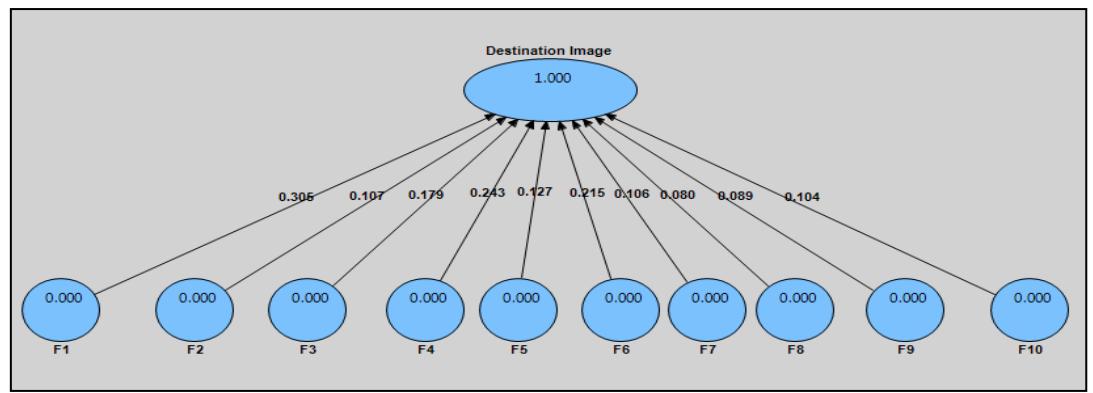
Figure 1. Destination Image Measurement Model Source: PLS-SEM 2.0 output
5. Discussion
Destination image as a psychological concept in a tourist's mind represents different perceived dimensions about a particular destination. The study revealed effective image as the main element of overall image formation in foreign tourists' minds. It is the feelings of tourists towards the destination (Baloglu & McCleary, 1999; Burgess, 1978; Holbrook, 1978; Walmsley & Jenkins, 1993). In the study these feelings are perceived in the terms of perceived pleasantness, relaxing place than distressing, perceived arousing atmosphere, exciting place to visit, and with a strong intention of tourists' to revisit the place. Himachal Pradesh is perceived as a safe destination to travel to by foreign tourists. The factor is presenting the quality of life perceived by tourists during their visit to the destination. The factor develops an organic image in the mind of tourists which leads to an effective image (Gunn, 1988). The perceived economic value from the destination is helping to build the destination image.
The commodities prices, cost of living generate good deal and value of traveller money. Value perceived from destination image results in the generation of effective and conative image in tourist's mind (Rittichainuwat, Qu and Brown, 2001). The physical infrastructure is a vital element of a tourism destination; a tourist's perceived comfort is the consequence of the experience of roads, rail, and airway infrastructure during the journey toward the destination.
Beerli and Martin (2004) classified infrastructure as an attribute affecting image assessment. The study showed that although Himachal Pradesh is a hilly state still it has good roads, air, rail, and other transportation facilities. Suitable and quality accommodations are available in the state. On the other hand, hygiene can be used as a structured method to measure the tourism product image of Himachal Pradesh. Echtner & Ritchie (1993) propounded the use of structured methods to measure the image of destination product offerings. The availability of food variety and local cuisine attracts foreign tourists to experience product offerings of high quality at affordable prices.
Himalayan states of India are unique in their cultural and social backgrounds and their experience with these tourism destinations is also unique and incredible in itself. The cultural aspects of Himachal Pradesh include local traditions, artifacts, fairs, and festivals. The study revealed that foreign tourists showed a keen interest in the diversified culture of Himachal Pradesh. Culture exhibits the real experiences in tourist mind; real experiences generate organic image and organic image leads to affective image formation (Gunn, 1988). The place has unique culture & customs, handicrafts, rich in folks and delighted local cuisine which not only taste better but leaves an effective impression in tourist's mind. Although the social structures are close and compact in the state (Kumar, 2016). But the practical philosophy of 'Atithi Devo Bhava' is integral to the Himachal Pradesh social value system. Study shows that people are friendly with foreign tourist and tourists feel that visiting Himachal Pradesh is a good deal. Locality acts as the main attraction of tourism destinations (Gallarza Gil & Calderón, 2002).
Singh (2002) in his study propounded that natural and scenic beauty is the main attraction for tourists in Himachal Pradesh. Dwivedi (2009) in his research also identified natural resources as the main dimension of the destination image of India. The results of this study presented that Himachal Pradesh has beautiful natural attractions, scenery and unique flora and fauna constitute of lower Himalayan to upper Himalayan geographical ranges. The pollution-free and pleasant environment is the regional specialty of Himachal Pradesh. The study presented the different significant dimensions of the destination image of Himachal Pradesh. The structural model presented in the study leads to develop an affective, conative, organic, and induced image in foreign tourists mind.
6. Conclusion
Himachal Pradesh as a mountainous tourist destination is on the world map since the British era. Tourism in this state benefits the economy directly and indirectly through infrastructure development and job creation. This study will help the various government and non-government, commercial and non-commercial organizations to strategize and position tourism products to foreign tourists. The validated structural model is significantly impacting the perceived destination image of Himachal Pradesh. The affective image is the main construct in the destination image of Himachal Pradesh. The culture, infrastructure, safety, and value for money are the main dimension attracting foreign tourists to this hilly state.
Limitations and future scope of the study: The study is confined to selected tourist destinations only. The tourists' inflow in the state is seasonal. It receives maximum tourists in the summer season. In the rainy and winter seasons, there are accessibility issues and a large area of the state remains covered with snow. Due to these weather conditions, the study was conducted mainly in summers. The study is limited to the post-visit experience of the tourists. The revisit tendency of tourists is not clear in this study. Future researchers can investigate the pre and post destination image gap. The comparative research approach can be used to study the image of two states with similar geographical conditions.