

1. Introduction
It is a widespread fallacy that everybody feels the same and have similar values, expectations, and desires. Cultures, those collections of customs, practices, beliefs, values, and expectations, are mostly unique, as are subcultures within a larger national culture. Therefore, understanding and appreciating a larger national culture is exceptionally subjective. Time is required to gain a sense of how best entrepreneurs to communicate with employees and manage a business. While most studies examine factors such as economic determinants, research on the effect of culture that explains a firm's customer orientation and knowledge creation remains underdeveloped (Liu, Fan and Qiu, 2021).
Furthermore, how small hotels gain a competitive advantage with its scarce resources through the lens of the resource-advantage theory is much less discussed.
Small hotels in the marketplace have been facing fierce competition from their competitors offering similar products, and pressure from customers who are demanding more for the products that they consume (Ramadani et al., 2017). Small hotels have placed customer orientation in the heart of their businesses (Mady, 2020; Sa et al., 2020) to instil a competitive advantage and to position themselves differently from their larger hospitality business counterparts. On the other hand, recent studies on knowledge creation with the effects of organisational learning (Celemín-Pedroche et al., 2020) and business performance (Sa and Chai, 2020) have seen a gradual emergence in the hospitality literature. However, little effort to study the joint effects of customer orientation and knowledge creation for dealing with the competitive environment, and their influences on firm performance for small hotels lingers.
This paper has three aims. First, to explore the extant literature on resource-advantage theory and effects on managerial lifestyle and the influences of the national Hofstede cultural dimensions on manager and employee relationship management. Second, this study further contributes by exploring the interplay effects of customer orientation and knowledge creation process on firm performance. Third, to develop a firm performance framework for small hotels and recommend business practices to small hotel owners and managers for sustaining firm performance.
A qualitative study has been performed to gain insights and answers to the three research aims of this paper. Small hotels are primarily dependent on their owners and managers who are the main decision makers of their firms (Nolan, Garavan and Lynch, 2020). Due to the limited funds and manpower that small hotels possess, there is a heavy dependency on their owners' and managers' personal knowledge, skills, and abilities (Nolan, Garavan and Lynch, 2020; Wang, Li and Xu, 2019) to keep the business afloat. A study was undertaken in Malaysia that project distinct national cultural values, primarily a masculine and a collectivist society. The author wanted to comprehend how these national cultural values have an impact on the managerial lifestyles of the small hotel owners and managers, and the influence on instituting the knowledge creation process and the customer-led strategies in their business to sustain firm performance.
2. The development of small hotels in Malaysia
Malaysia's attempt to industrialise was an initial plan by the Government of Malaysia to eradicate poverty and to improve the social environment through government intervention (Dana, 1987). Industries from the manufacturing and services sectors are the main engine of the nation's economic growth. Business start-ups have relied on a centralised government authority for industrialisation, primarily to uplift the living standards of the Bumiputra or the "sons of the soil" (Dana, 1987, p. 74). The Bumiputra represents majority of the Malaysian population. Through the institution of the Malaysian Industrial Development Authority, the Bumiputra entrepreneurs received support in gaining licenses, tariff protection, control over foreign investments, and import duty exemption (Dana, 1987).
In the Economic Transformation Programme of the tenth Malaysia Plan, the Government of Malaysia has demarcated the tourism industry as one of the key economic pillars for the nation in 2010 (Giap et al., 2016). The aim is to achieve economic transformation for small tourism businesses and to generate a high yield nation (Giap et al., 2016). The Government of Malaysia has since designed several industry programmes such as branding, technology and innovation initiatives to improve the competitiveness of these small tourism businesses which are identified as the nation's economic sweet spots (Giap et al., 2016).
The Government of Malaysia is concerned whether these small hotels would be able to sustain their business with the growing local and international competition. The Department of Statistics of Malaysia (2017, July 31) recorded the accommodation sector grew a mere annual growth of 6.9 percent between the period of 2010 and 2015. Malaysia is no longer the world's top ten holiday destinations based on United Nations World Tourism Organisation rankings since 2015 (World Travel & Tourism Council, 2015). Lobel (2016) recorded 40 percent of the small businesses fail after five years of trading. Despite the initiatives made by the Government of Malaysia, the small hotels are the least receptive. The small hotel owners and managers felt that the benefits have not been channelled accessibly to them (Associated Chinese Chamber of Commerce and Industry of Malaysia, 2016).
The globalisation of markets is a double-edge sword phenomenon. Small hotels can attract visitors from neighbouring countries and further expand their businesses. Otherwise, business failure is inevitable since competition from the international and local hotel chains as well as state-owned hotels can be intense (Hossain et al., 2021; Sa et al., 2020). However, researching on small hotels cannot be overlooked. Small hotels serve a mix of local and international clientele that generate additional economic growth for many developing nations. For some tourism-based nations, Giap et al. (2016) gathered the contribution of small hotels to their economy ranges from 35 percent to 48 percent to their national Gross Domestic Product.
In this study, small hotels are defined as independently managed properties by their owners and managers. These small hotels do not belong to any foreign or local hotel chains, as well as stateowned hotels. In Malaysia, these accommodation properties primarily offer sleeping facilities to guests but do not include the home-stay facilities where guests stay and live with the local families (Ministry of Tourism Malaysia, 2015). These service-based enterprises employ between 5 to 29 employees and generate between 77 thousand to 800 thousand US Dollars in annual sales turnover (SME Corporation Malaysia, 2018). Small hotels in Malaysia are designated either with the Orchidrating (primarily for the budget motel category that falls below the 1-star rating) or are classified based on the Ministry of Tourism and Culture of Malaysia's Star rating that is between 1-star and 5-star (TM Media, 2017). Small hotels in Malaysia encompass accommodation premises located in beaches, islands, lake or river resorts, boutique hotels, city hotels, innovative or concept hotels, and highland hotels (TM Media, 2017). Majority of the small hotels serve the inbound visitors from other Malaysian cities or states and a small number of foreign visitors.
3. Literature Review
3.1. Resource – Advantage Theory
According to the resource-advantage theory, innovative competences including managerial lifestyles of entrepreneurs may be a source of a firm's competitive advantage. There are likely to be deeply entrenched in the firm systems and cannot be explicitly expressed or articulated (Barney, 1991; Grant 1996; Hunt and Arnett, 2006). Entrepreneurs who are customer-oriented are likely to be committed to the idea of implementing new products and convenient service processes that satisfy customers and more so, to delight them. Entrepreneurs are likely to be dependent on extensive and intensive knowledge activities into making informed business decisions that can greatly improve firm performance. Therefore, resource-advantage theory recognises knowledge as a strategic resource for firms. With the capabilities of the entrepreneur to create and utilise knowledge, enables a firm to enhance their firm performance. Companies that can better utilise the knowledge creation process, can connect knowledge in novel and unique ways, offering more value to their customers (Hunt and Morgan, 1997; Lee and Choi, 2003; Li, Huang and Tsai, 2009). Since the small hotels in this study would be dependent on their owners and managers to introduce and implement customer-oriented and knowledge creation activities, it will be suitable to link this study findings with the resourceadvantage theory.
3.2. Influences of the national Hofstede cultural dimensions on manager and employee relationship management.
Malaysia is a unique society. From an agricultural-based country before the 1950s and in the second phase of the industrialisation era in the 2000s, different generations in Malaysia are exposed to new and different set of cultural values (Dana, 2007). In the Malaysian entrepreneurship context, the older generation, Generation X and Baby Boomers dominate most of the decision-making in their companies. Although the younger generation, Generation Y wants to be more assertive and independent, the national cultural values of filial piety, respect for elders, humility, and saving face are mostly displayed in the Malaysian society. Therefore, the members from different generations need to learn to co-exist in harmony with one another.
The Hofstede cultural dimension and scores are used in this study to assess the Malaysian national cultural values. Malaysia scores very high on power distance (100 out of 100) (Hofstede Insights, 2021). This means the people accept the hierarchical order in organisations and every individual has a role to play. A centralised organisational structure and autocratic leadership are popular in this society. Employees prefer to be told what to do rather than instituting changes to improve firm performance.
For the individualism dimension, Malaysia scores low (26 out of 100) (Hofstede Insights, 2021). This means Malaysia is a collectivist society that pride themselves in a group, and loyalty is paramount. It is common for the owners and managers to take responsibility for their employees who are likely their immediate and extended family members, and trusted friends. In a collective society like Malaysia, harmony must co-exist with one another to refrain from loss of face or shame. Malaysia scores an intermediate score of 50 out of 100 (Hofstede Insights, 2021) which means in the Malaysian society exhibit both feminine and masculine cultural values. A feminine society is associated with the care for the relationships forged among group members and a masculine society is driven by achievement and success that is wanting to be the best. As for the uncertainty avoidance dimension, Malaysia scores 36 out of 100, therefore has a low avoidance for uncertainty. In a weak uncertainty avoidance society, the members of society maintain a more relaxed attitude to life, and deviance from the norm is acceptable. Punctuality and accuracy do not come naturally and are not bothered with possible innovation threats.
Canestrino et al. (2020) as well as Ibinabo, Zeb-Obipi and Samuel (2020) highlight understanding cultural influences is becoming increasingly important. Hofstede (2021) dimensional model of national cultural values have been linked to studies of organisational behaviour. The model has been useful to explain the concepts of identity, self and personality, which in turn explain the variations of managerial lifestyles in work-context scenarios, specifically in the business and marketing field. Customers have been placed at the focal point of their studies and have not taken much interest the perspective of the owners and managers as the service provider. The earlier review of Malaysian national cultural values raised several issues that instigate this study of its influences on the customerled strategies and knowledge practices that are embedded in the small hotel industry in Malaysia.
3.3. Customer orientation and firm performance
Customer orientation is defined by Ruekert (1992) that relates to the degree that a business gathers and uses customer information. With effective strategies in place, businesses are being responsive to fulfilling customers' expectations. This definition carries the notion that market-oriented organisations should be aware that customers is one of the most crucial external environmental factors, therefore influences the development of customer-led strategies and practices in firms. The interest in service enterprises appeared mainly in the 1990s, for a growing number of publications on the topic (Esteban et al., 2002) that provided evidence when a firm is customer-oriented, the firm performance of these enterprises is greatly improved.
It has been argued that the conventional role of marketing is customer orientation, including for small tourism businesses (Shaw and Williams, 2009; Tsiotsou and Ratten, 2010). Local and international competition calls for continuous focus in offering enhanced products and services to customers (Tajeddini, 2010). Further investigations on customer orientation in small tourism businesses are needed to gain a better understanding of fulfilling customer needs and its role on the firm performance of these small tourism businesses (Tsiotsou and Ratten, 2010). Past literature on tourism businesses investigated on affective factors to design customer loyalty programs to forge strong customer bonds (Tsiotsou and Ratten, 2010). Research topics in customer orientation mostly focused on its influences on employee behaviour or consumer behaviour (Tsiotsou and Ratten, 2010). Thus, Yavas, Karatepe and Babakus (2011) studied the impact of inter-role conflicts on frontline hotel employee performance whereas Tang (2014) studied customer orientation as an antecedent of service improvement and service innovation. In this regard, scholars in the recent years suggest measuring the effect of customer orientation on performance of small firms or specific industry sub-sectors (Mady, 2020; Sa et al., 2020; Tajeddini, Elg and Trueman, 2013; Tsiotsou and Ratten, 2010). This study aims to explore the role of customer orientation and its effects on firm performance, since research is embryonic in the context of small tourism businesses primarily from the accommodation industry when comparing to the previously discussed topics.
3.4. Customer orientation and knowledge creation process
Customer orientation triggers firm-wide collection, sharing, and utilisation of customer information and market intelligence in the form of business strategies (Sin et al., 2005) and service procedures (Tajeddini, 2011). In the accommodation industry, customers are actively involved in designing their service offerings (Tajeddini, 2011), resulting in the more varied forms of services. Entrepreneurs need to keep abreast with the accumulation of consumer consumption experiences. As consumers mature, they tend to have higher expectations of the service offerings that they demand (Orfila-Sintes et al., 2005), including those supplied by small tourism businesses. Customer orientation focuses on collection and application of customer information efficiently, therefore compelling small tourism businesses to conscientiously learn of customer needs (Lages and Piercy, 2012) that create firm value (Sin et al., 2005). Being close to customers, small tourism businesses can gather first-hand customer information (Shaw et al., 2011) and identify service gaps (Altinay, 2010) on a continual basis. Because the stakeholders of small tourism businesses prudently monitor the customer information, entrepreneurs can accurately design products and services that are likely to meet customer expectations (Lages and Piercy, 2012).
Underpinned by knowledge creation theory coined by Nonaka (1994), this theory suggests that the collection and application of information goes through a dynamic spiral process. The tacit knowledge and the external knowledge that are cultivated by a firm's stakeholders is known as SECI (socialisation, externalisation, combination, and internalisation) (Li, Huang and Tsai, 2009). As businesses grow, the tourism entrepreneurs adopt the SECI processes to combine novel and existing knowledge gathered from their employees, travel intermediaries, and customers (Li, Huang and Tsai, 2009). The knowledge is integrated to form customer orientation activities of these tourism businesses. The continuous purchase actions and feedback from the firm's stakeholders help to gather new knowledge on an ongoing basis and are combined then disseminated to the tourism entrepreneurs for strategic business decision-making. Small hotels that practise customer orientation are prone to place efforts on knowledge creation process due to this form of knowledge accessibility. The SECI process enables tourism entrepreneurs to exploit the knowledge through the spirals of knowledge creation and adoption, improving the customer-oriented activities implemented in their firms. Based on this discussion, it is believed that customer orientation is critical because of its potential positive impact on knowledge creation process.
3.5. Knowledge creation process and firm performance
To sustain firm performance, existing organisations must gather, retain, and transform knowledge (Li, Huang and Tsai, 2009; Nonaka, Toyama and Nagata, 2000a). Nonaka, Toyama and Nagata (2000a) claimed that knowledge creation process is crucial for existing organisations when engaging in their new product development and marketing efforts. However, knowledge is immobile (Grant, 1996; Hunt and Arnett, 2006; Li, Huang and Tsai, 2009). Therefore, Nonaka and Takeuchi (1995) suggest that organisations need to embrace the knowledge creation process. The knowledge creation process, a termed coined by Nonaka (1994) involves a series of self-transcendental processes that include socialisation, externalisation, combination and internalisation (SECI) processes that facilitate knowledge conversion and transformation. Marketing activities and new product development start with the socialisation process involving face-to-face meetings, brainstorming sessions, and grapevine (Li, Huang and Tsai, 2009). Externalisation process informed different organisational stakeholders who are involved in the initial formulation of marketing and product concepts. Combination process filters the concepts before more time, funds and manpower are allocated to produce actual product and launch of public marketing campaigns. Internalisation process institutes standard operating procedures such as the step-by-step guide to administering new product and marketing efforts. Overall, the knowledge creation process is viewed as a company's strategic resource for business growth and to improve firm performance.
Knowledge is reckoned to be a strategic resource for businesses (Li, Huang and Tsai, 2009; Yeow, 2014; Sa et al., 2020). However, it will be dependable on the capabilities of the entrepreneurs to generate and exploit knowledge, that enable them to forge a sustainable competitive advantage for their firms (Li, Huang and Tsai, 2009). Past studies have revealed because of the immobility and heterogeneity characteristics of knowledge (Hunt and Arnett, 2006; Li, Huang and Tsai, 2009), the role of knowledge creation process is crucial to transform a firm's knowledge pool into the firm's competitive advantage that reflects the success of a new business venture (Li, Huang and Tsai, 2009).
Knowledge created through the SECI process triggers a spiral of knowledge creation for firms (Li, Huang and Tsai, 2009). The social interactions among the stakeholders such as employees, travel intermediaries and customers enable transfer and dissemination of knowledge that surpasses a firm's boundaries (Li, Huang and Tsai, 2009; Sa et al., 2020). The emerging knowledge from this knowledge conversion are then embedded as organisational strategies in a quick and a cost-efficient manner that outperform competitors (Li, Huang and Tsai, 2009). Therefore, knowledge creation offers ways for businesses to increase efficiency and gain a sustainable competitive advantage.
Theoretically, it is found that knowledge creation process constitutes a contemporary strategic orientation for small tourism businesses and may end up becoming an element in future research frameworks on firm performance. Such strategic approach is pursued by small tourism businesses as a response to intense local and international competition and eroding customer loyalty to tourism service providers (Tsiotsou and Ratten, 2010; Sa et al., 2020). A recent review of literature on small tourism businesses identified that there is an under-exploitation and under-utilisation of knowledge creation process that states their offering of personalised services to their customers, and in competing effectively with their business rivals (Tsiotsou and Ratten, 2010; Sa et al., 2020). Due to the inconsistencies in the literature, studying the role of knowledge creation process on firm performance becomes an emerging research topic. Similar sentiments on understanding about the knowledge acquisition, conversion and sharing within small tourism businesses and the impact on firm performance have been seen in some scholarly work (example, Acs et al., 2012; Ramadani et al., 2017; Sa et al., 2020; Tsiotsou and Ratten, 2010). Ramadani et al. (2017) confirmed the importance of the knowledge spill overs in small firms which was found to help in the overall economic growth of the Balkan countries. The ability to transform novel knowledge into economic opportunities would involve entrepreneurs' perspectives in transmitting and applying appropriate knowledge within their firm operations (Acs et al., 2009).
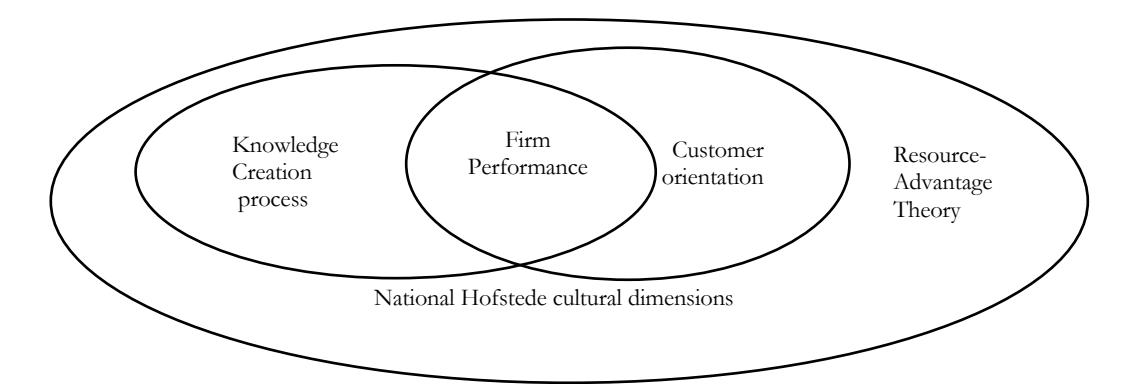
Figure 1. Conceptual Firm Performance Framework for Small Hotels Source: Author (2020)
The disintermediation of tourism distributors and the increasing number of prosumers have disrupted how knowledge is generated, transferred, and received in tourist destinations. This discussion calls for a need to delve into whether the firm performance of small hotels will be impacted with the adoption of knowledge creation process in their firms since it will be dependent mostly on their owners' and managers' capabilities.
3.6. Firm Performance Framework for Small Hotels
A performance framework in Figure 1 for small hotels has been conceptualised to offer guidelines to researchers on synthesising the customer orientation, knowledge creation and firm performance themes underpinned by resource-advantage theory and national Hofstede cultural dimensions on manager and employee relationship management.
4. Research Methodology
The research of this study was primarily qualitative in nature. This approach is undertaken to collect rich data from relatively a few cases (Creswell, 2014). Malaysia is selected for its accessibility and collectiveness as a cultural unit. Case selection in this study would apply the purposive sampling technique (Creswell, 2014) that enable to explore the effects of customer orientation and the influences of knowledge creation process within a Malaysian sociological context. There is another matter to address on the selection of suitable participants for inclusion in this case study. Malaysia is a multi-racial society, with half of the population being the Malays (50.1 percent), the Chinese (22.6 percent), the non-Malay Bumiputra and Indigenous Groups (11.8 percent), the Indians (6.7 percent) and other groups (8.8 percent) (worldatlas.com, 2018). Due to cost, time and accessibility issues, random sampling is not practical. Therefore, a better result could be achieved through a combination of non-probability and purposeful sampling (Creswell, 2014). This is because this study encompasses the effort to gather the perspectives of the case through probing owners and managers in charge of small hotels with the following characteristics. They are (i) of Malaysian nationality (ii) is the main decision-maker of the business operations (iii) is exposed to customer-related strategies for example, new product or service development and innovation in their business (iv) adopt initiatives related to knowledge creation process in their hotel operations, in which the owners and managers are reliant on databases to make informed decisions that include the company websites, hotel property management systems, online travel booking platforms, travel blogs and forums. The list of potential respondents are also active Malaysian Association of Hotel members. They are classified experts in the small hotel industry as they actively participate in networking sessions and entrepreneurial talks. Therefore, they are abreast with the small hotel trends and have a good insight of the performance of their own managed property against competitors and the overall small hotel industry performance benchmarks.
In-depth interviews were conducted with the Malaysian owners and managers who have at least six years of experience of managing small hotels. They are named experts, recognised for their related work experience so primary data was collected for this study based on their perceptions. The experts are engaged to help enumerators to gain more insights toward the research aims of this study. Several small hotel owners and managers were purposely identified, selected, and contacted through phone calls for this study. Only a few were willing to grant the interview session, where the rest cited time constraints because of their heavy involvement in the day-to-day operations. After careful consideration, the researchers decided to approach the prospects in Kuala Lumpur, the capital city of Malaysia and its vicinity, where there is a high concentration of small hotels.
The identified participants who responded voluntarily were approached by the enumerators to set a date and time for the interview sessions. The researchers requested that the interviewers must be either the owner or manager who is actively involved in the small hotel operations. Initial background checks over the phone were initiated by the enumerators with each owner and manager and if he or she would fit well with the selected characteristics as those set above. All participants agreed to sign a letter of permission to grant the voluntary interview session, in return for the promise of keeping the participants' anonymity. At the start of each interview session, each participant is briefed on the research objectives. This study used in-depth, one interviewee-to-two interviewers' approach, reducing interviewers' bias of the gained responses. The interviewers relied on a checklist of topics that included items based on the theoretical framework from past literature, rather than a formal questionnaire. Thereby, the interview sessions were semi-structured using the checklist as a guidance.
Tape-recording and notes-taking were conducted for each interview session that lasted on an average of 45 minutes to an hour. With two interviewers in the same session, this interview arrangement can help to improve the validity of the interviewee responses. One interviewer was in charge to pose the questions to the interviewee, while the other interviewer was there to help to fill in with the interview questions that were missed out based on the checklist. A total of six interview sessions were conducted over a length of six months due to unexpected rescheduling of the interview sessions. Researchers found convergence in the data; therefore, the qualitative data collection was terminated after six interviews. There would not be significant benefit to continue with the interviews as the participants were consistently giving similar responses. For confidentiality purposes, the two interviewers performed checks with one another in the process of producing the verbatim transcripts from the six interview sessions. The six participants were contacted again to check if the recording of the transcripts were not misinterpreted. Corrections were done after receiving feedback from two of the six participants. The data analyses were conducted based on the verbatim transcripts produced from the six interview sessions. The data from the interviews was examined to search for the emerging themes. The examination was done manually since the number of transcripts was small. A final check was performed one more time by the two interviewers before communicating the findings to the six participants.
5. Qualitative Research: Analysis and Results
5.1. Participants' Profile
The validity of the participants' responses was examined in the identified sample that were gathered during the qualitative study. Table 1 summarises the participants' profile. For this purpose of this study, the numbers of years of work experience in the small hotel industry were recorded for each participant. Small hotels are less hierarchical than their large hotel counterparts, and participants who are owners or managers would be well-versed with both the front-of-the-house and the back-of-thehouse operations.
| Participant | Age Group | Years of Work Experience | Gender | Hotel Position |
|---|---|---|---|---|
| 1 | 41 to 50 years old | 11 to 15 years | Female | Manager, 5-star highland hotel |
| 2 | 31 to 40 years old | 6 to 10 years | Male | Owner, 1-star concept hotel |
| 3 | 51 years and above | 16 to 20 years | Male | Owner, 3-star city hotel |
| 4 | 41 to 50 years old | 11 to 15 years | Male | Manager, Orchid-rating budget motel |
| 5 | 31 to 40 years old | 6 to 10 years | Female | Manager, 4-star golf and island resort |
| 6 | 51 years and above | 16 to 20 years | Female | Owner, 2-star beach resort |
Table 1. Participants' Profile
They have been found to have accumulated between six years and twenty years of work experience in the small hotel industry (though not necessary from the same hotel in the case study). The even spread of this demographic information was crucial to support the relevance of the valuable insights of this study and to avoid potential biases in the data. Gender bias would not be a severe problem since there was an equal number of three males and three females who participated in the interviews. Male participants are more process oriented while female participants are always ruled by the emotional aspect of the company initiatives. There was a balanced number of three owners and three managers who participated in the interviews, and biases in the data would be insignificant since all six of them were fully in charge in running their respective small hotel business. There was a good spread of the types of small hotels they were managing that would account for the heterogenous nature of this industry.
When asked about the customer-oriented strategies, the participants cited the themes of 'continuing research on market/customers/competitors', 'innovative/upgraded hotel facilities', 'role model', 'value for money', 'home away from home' and 'regular guest feedback'. However, when asked particularly about the adoption of knowledge creation process, the participants raised the notions 'owners-managers are information gatherers', 'latest technology, 'new knowledge to make informed product and market decisions'.
5.2. Influences of Malaysian cultural values
The understanding of culture plays an important role in its influence on the managerial lifestyle of a tourism entrepreneur (Canavan, 2016; Swanson and DeVereaux, 2017; Thomas, Shaw and Page, 2011). In this study, it is important to explore the influence of the Malaysian national cultural values that effect the customer orientation and the adoption of the knowledge creation process by the tourism entrepreneurs managing the small hotels.
On the masculinity dimension, Participant 3 pointed out "Malaysians are conservative and do not like confrontations. Staff and the younger family members (my sons) are mindful of their behaviour and have lots of respect for the hotel owners and senior managers who are likely to be older and the most experienced". Majority of the participants felt that hotel employees and the younger family members display humility and pleasant mannerism, likely conditioned by the nature of the hospitality industry. Participant 1 quoted "Hoteliers value harmony and they just do not go against each other, and their superiors". This finding can be explained as Malaysia scores an intermediate score of 50 out of 100 (Hofstede Insights, 2021), in between being a feminine society that stresses on pleasant relationships and being a masculine society that strives to be the best in their profession.
The participants suggested that the Malaysian cultural values play a large impact on their managerial lifestyles. All participants felt there is a need to perform continuing research on market/ customers/competitors, though this responsibility lies primarily on their shoulders. They would be the prime company's information gatherers. They feel competent to make informed product and market decisions through new knowledge gained when mingling with customers, travel
intermediaries, and conducting site visits to competitors' premises. They constantly look for novelty in their hotel concept or services and new target markets to improve their bottom-line but do not rule out, for those customers who patronises small hotels, in which majority are the locals, they prefer 'value for money' hotel services. All six participants highlighted innovative or upgraded hotel facilities and latest technology utilisation features in their small hotels is something they would invest time and money, wanting to be the best, a characteristic demonstrated in a masculine society. Participant 6 claimed "Employees prefer to be told what to do, in fact they are fearful of new responsibilities and tasks. Counting on them to conduct abstract work like market research would be unfamiliar to them. I have no choice but to do all this work by myself. I know if I do not do so, I will be lagging behind my competitors. I also want the best for any hotel guest who stays in my hotel. It is very important as it will bring huge job satisfaction for me".
Pertaining to the collectivism dimension, Participant 5 described "Malaysians like to work in groups and prefer to voice opinions collectively as a group. They are concerned with the group feelings, and rarely act for their personal interests only". This is aligned with Hofstede Insights (2021) finding which defined Malaysia as a collectivist society, whereby long-term commitment to the group is important. Participant 3 explained "We are like one family since we (the owner, his sons and employees) spend lots of time together at work in a day. I have to work like anyone else in the hotel, be it reception duties, housekeeping, monitoring room reservations, and foodservice, alongside with my staff". Participants 1, 2, 4 and 6 also expressed that to influence the behaviour of their group of family and/or staff members, they would need to lead by example or become the role models when instituting changes to standard operating procedures, which in their view, can enhance guest services. As Participant 4 commented "I realised if I instruct individual staff, they don't bother. I must 'show and tell' to the whole group". This observation can be explained that it is possible to change a group's behaviour if the individual has positive relationship with the group members. The group members would not want to hurt the relationship with their owner or manager, as offending their owner or manager leads to loss of face or shame. On the other hand, all six participants felt it was easier to interact with guests from other Malaysian cities or states and creating the 'home away from home' experience. Malaysians also find it is important to play host to the small number of foreign visitors so that they make repeat visits. Regular guest feedback through personal conversations with them and encouraging guests to fill in the feedback forms are common practices in their hotels. Participant 4 quotes "We take measures to make all guests feel like a part of us. It is the sweet memories, the personalised care to their needs, making them feel at home and the thought of being around with us that are going to make the guests happy. This is going to make them remember us and keep coming back to us".
In regard to the high-power distance dimension, Participant 1 commented "In Malaysia, it is a norm to observe that lower ranking people do not find it easy to approach the higher-ranking people; those with higher authority, title and salary. It is an unwritten protocol that rank-and-file employees report to managers, while managers report to the owners. There is little interaction and communication of company initiatives between the rank-and-file employees and owners". This comment corresponds closely with the Hofstede Insights (2021) finding that scores Malaysia very high (100 out of 100) in the power distance that this society displays. People just accept the hierarchical order in company reporting and challenges to the leadership are not well-received. Being in a high-power distance society, it can be expected that the hotel management will place guests on higher priority compared to their employees. All six participants are in the view that there is an unwritten rule that employees in the hotel industry must be prepared to make time sacrifices including their personal time with their families, to ensure guests' stay is made comfortable. As majority of the guests are mainly Malaysians, some guests who are under the loyalty program or with corporate affiliations, view themselves as Commercially Important Persons to the small hotel business. Employees need to get accustomed to these guests' mindset who would prefer to deal with hotel owners or managers rather than them at the rank-and-file level.
Being in a society that has weak uncertainty avoidance, all six participants unanimously agree that this is the most challenging part of their job. Participant 2 made the following remark "I cannot tolerate there is always a few of my staff who will be late for work or do not come for the correct work shift". Participant 6 added "What makes me very upset when my employees procrastinate, they like to postpone things and it will be a matter of days before the task that I have given is completed, or worse still – never". Participant 4 mentioned "I have a staff who is a bellman for the past eight years and refuses any promotion as he is contented with what he has and what he does. It is a culture shock for me. After working in the Thai hotel industry for a couple of years, I, a Malaysian myself find it hard to adjust to the local employees' behaviour who accept the way things are. They don't like changes and little planning is done for their careers". Malaysia has weak uncertainty avoidance, and the concern would be with employees who report late for work or for the wrong shift could mean delayed or compromised customer services, and unhappy customers. Participant 2 finds using affiliation rather than power is more effective to motivate staff to arrive punctually for work. He is the role model himself. Although he is the owner of hotel, he arrives at least 15 minutes before reporting time at 9am on his working days. As for Participant 6, she finds if she needs to take quick actions to adapt to the market changes, she can only count on herself since her employees tend to procrastinate on the job.
Therefore, she is keen to invest on technology that help in relieving manpower and her operational duties. This include routine jobs such as the hotel check-in and check-out duties as well as a range of concierge services that are performed using the self-help hotel kiosks which looks like the Automated Teller Machines in banks. By outsourcing some of the hotel duties to her hotel customers, she can concentrate on the market research and her role as information gatherer. She uses technology platforms, including the reports generated by the self-help hotel kiosks, accounting reports from online travel agent platforms, company website for info commercials and room booking confirmation, as well as her company's intranet embedded with training videos and pre-recorded tutorials for staff training. Although it is a heavy investment and would take time getting use to all this technology, she finds it is worthwhile to position her small hotel business in the marketplace that is increasingly getting tech-savvy. Customers value speed and accuracy, as well as she has systems in place to monitor the market trends and gain customer information that would be helpful for her to make more informed business decisions.
6. Conclusion and Reccomendation
6.1 Theoretical and Practical Implications
The researchers performed qualitative research for this study. The objective is to explore the influences of the Malaysian national cultural values on the degree of customer orientation and the adoption of knowledge creation process. The qualitative research data was collected from six Malaysian small hotel owners or managers through in-depth interviews.
This study makes several contributions. A firm performance framework in Figure 1 for small hotels has been formulated that guided researchers on synthesising the customer orientation, knowledge creation and firm performance themes supported by the resource-advantage theory and national Hofstede cultural dimensions on manager and employee relationship management. Based on the qualitative research findings, it is found that hotel employees' behaviour mostly forms the customer service rendered to the hotel guests. In the Malaysian context, hotel employees are generally polite, warm, and non-confrontational, yet at times, they can be complacent at work. In dealing with employees, small hotel owners and managers should emphasise on training and people development.
It has been established from the six in-depth interviews that the small hotel owners or managers plays an integral role in the customer-led strategies and adoption of the knowledge creation process in their business. In the Malaysian context, the key person responsible for instituting these initiatives would be the small hotel owners and managers themselves.
There is a need to rethink on how to leverage on the awareness of the national Hofstede cultural dimensions that we have learnt from this study. It starts with the topic on the organisational behaviour in the small hotel industry. Rather than depending solely on the small hotel owners and managers to gather market/customer/competitor information and to institute the ideas to enhance customer service, these tourism entrepreneurs can administer a more structured way to mould the employees to behave the way they want them to. As participant 6 cited "Employees prefer to be told what to do, in fact they are fearful of new responsibilities and tasks". Byrant (2003) and Ertkulu (2008) cite in a feminine and in a collectivist society, a transformational leader understands that gradual changes would be more effective. It starts with a formally approved flow-chart process, then the small hotel owners and managers gradually introduce the new customer and knowledge activities to their employees. When employees become familiar with the new activities, it becomes a routine and eventually imbued as a part of the organisational culture. As Participant 4 commented "I realised if I instruct individual staff, they don't bother. I must 'show and tell' to the whole group". This observation can be explained that it is possible to change a group's behaviour if the individual has positive relationships with the group members rather than exercising powers of an autocratic leader. The small hotel owners and managers need to be aware that to gain collective support from their employees, they need to demonstrate they care for the employees despite being in a high-power distance society.
A collectivist society thrives on the notion that there are deep bonds and a long-term commitment among the group members. As Participant 3 expressed "We are like one family since we (the owner, his sons and employees) spend lots of time together at work in a day. I have to work like anyone else in the hotel, be it reception duties, housekeeping, monitoring room reservations, and foodservice, alongside with my staff". Investing coaching effort to groom employees to be future leaders in the profession, and making the employees feel that they are a part of the company (rather than just to eke a living) can trigger the service profit chain more effortlessly. The spirit that employees must feel that is their duty to continuously improve customer product and services must be forged. The sense of belonging to the company and not wanting to let down one another is important since the nature of the industry is such a case where it would take the whole group's effort, the back-of-the house and front-of the-house employees to offer excellent customer service throughout the hotel guests' stay. As participant 4 quotes "We take measures to make all guests feel like a part of us. It is the sweet memories, the personalised care to their needs, making them feel at home and the thought of being around with us that are going to make the guests happy. This is going to make them remember us and keep coming back to us".
This study has found out from the six interviews that the most problematic aspect is that the Malaysian society demonstrates weak uncertainty avoidance. The small hotel managers and owners could undertake the role of a transactional leader who offer incentives for achievers, otherwise punitive measures for the recalcitrant staff members. The incentives and punitive measures should be formalised and documented in the employee handbooks that provide the do's and don'ts which are probably lacking in small hotels, though are known to be best practices of their large hotel counterparts. On the positive note, both types of measures are easy to be executed since Malaysians are fairly feminine that stresses on pleasant relationships with one another. Participant 1 quoted "Hoteliers value harmony and they just do not go against each other, and their superiors". In addition, being in a collectivist society, people just accept the hierarchical order in company reporting and challenges to the leadership are not well-received. Alternatively, soft measures like administering rewards for employees who do not take medical leave in a working year and/or achieved 100 percent work attendance and punctuality are ways to introduce the mob mentality that influences their peers to adopt similar positive behaviours. The small hotel owners and managers themselves can serve as role models to reinforce these positive behaviours. For example, Participant 2 finds using affiliation rather than power is more effective to motivate staff to arrive punctually for work. He is the role model himself. Although he is the owner of hotel, he arrives at least 15 minutes before reporting time at 9am on his working days. Despite the recommendations stated above, all these measures can take time. In the meantime, to mediate the situation, owners and managers managing small hotels could consider leveraging on technology to relieve manpower issues.
Further practical implications for the small hotel owners and managers are that they must be aware of the importance of the SECI spiral of knowledge creation and its role in customer orientation that impacts firm performance. Entrepreneurs can make continuous efforts to schedule frequent staff briefings and quality circles. Novel spirals of knowledge that are identified and shared in these sessions are compiled into shared databases. To drive the desired behaviour, small hotel owners and managers can offer attractive schemes and incentives to their staff who deal with these stakeholders frequently. Baule and Soost (2016) researched about pay for performance in small and medium-sized enterprises. They found non-financial incentives and social environment do lead to higher intrinsic motivation for the staff. Therefore, non-financial incentives in small hotels such as giving awards to recognise staff suggestions on continuous customer service improvements can compensate for the financial incentives such as the one-time job promotion and annual bonuses.
Arguably, this study claims that customer orientation positively impacts firm performance operationally and financially. In the sample of this study, this result indicates that small hotels can influence their firm performance by focusing on customer needs. The reason being that an owner or manager who upholds customer orientation, provides the firm's stakeholders such as their employees with a better understanding of its customers (Tajeddini, 2011; Tajeddini, Elg, and Trueman, 2013). This consequently leads to returned customer visits as small hotels can fulfil the customer needs well. The satisfied customers are more likely to inform the travelling public of the unique customer experiences that the small hotels have to offer. The repeat customer visits and spending as well as the positive word-of-mouth in turn enhances the firm performance of the small hotels. Therefore, it is largely dependent on the small hotel owners and managers to enable this service profit chain to work. This study recommends that the small hotel owners and managers to conduct internal staff training in customer service or enrol their staff in customer-centric courses offered by the local hotel associations. Local hotel associations can initiate national customer service awards to recognise the outstanding professionals from the small hotel industry. Small hotel owners and managers can seek public subsidies, grants, and training to internationalise their unique customer experiences through online travel booking platforms such as Booking.com, Trivago.com and Hotel.com. Showcasing promotional packages on the firm's corporate website and portraying the small hotels as iconic attractions or destination per se in the national tourism campaigns are other marketing initiatives that the small hotel owners and managers can partake in.
6.2 Limitations and recommendations for future research
While the qualitative research enabled us to gain deep insights on the influences of the national Hofstede cultural dimensions on the effects of customer orientation and the adoption of knowledge creation process in small hotels, there are limitations within the research paradigm and the research methodology. Case study methodology has a disadvantage that the findings cannot be generalised outside the sample boundaries since other tourism stakeholders' perspectives are not accounted for. Accordingly, this study cannot claim to have fully captured the cultural influences on the small hotels' business practices. Additionally, although the interviewers made every attempt to allow the data to inductively speak for itself, the manual process undertaken in capturing the emerging themes may have possibly disregard data that could have contributed to addressing this study's research aims. There might be potential bias due to the two interviewers being 'participants' in the interview process. At no point, the interviewers would claim they know the absolute truth, only had provided a fuller understanding of the role of national cultural values in customer-led strategies and adoption of knowledge creation process in small hotels. Thus, efforts to formulate valid and reliable scale measurements of the cultural values to gain further empirical verification on both constructs, customer orientation and knowledge creation process on firm performance is recommended for future research.
There are several limitations of this study. A cross-sectional study has been undertaken by the researchers. Further research should include additional dimensions with respect to strategic firm resources that can enhance firm performance, for instance, their branding orientation and their innovation culture. The sample of this study is primarily drawn from small hotels. Therefore, some caution needs to be practised when generalising the findings of this study to other service sub-sectors in the tourism industry due to their heterogenous characteristics (Tsiotsou and Ratten, 2010; Thomas,
Shaw and Page, 2011). One promising research avenue is to establish whether the results of the relationship for the effects of customer orientation and the adoption of the knowledge creation process on firm performance would be similar by extending the research to other service sub-sectors in the foodservices, event management and travel agencies. Additionally, what is lacking is the study on the overarching public policies that are recognised for their influences on the entrepreneurship programs that governments can offer to small enterprises (Dana, 2007, 2014; Nielsen, 2016). Future research should study the social and environmental effects since this study has only examined the economic perspective for improving firm performance. This study was conducted in Malaysia; and if this study is performed in other countries, the results may differ due to different cultural context, thereby future research should be investigated if the results are transferable to other tourism-based nations.