

1. Introduction
The pandemic of COVID-19 has completely crippled the tourism industry worldwide due to the implementation of travel restrictions for both foreign and domestic tourists, as well as the recommendation of human mobility reductions applied by various health authorities to diminish the virus's spread (Aiello et al., 2020; Chen et al., 2021; Farzanegan et al., 2020; Fong et al., 2020; Gössling et al., 2020; Hall et al., 2020; Lew et al., 2020; Niewiadomski, 2020; Tremblay-Huet, 2020). Because of these conditions, the entire supply and value chain of the tourism industry is disrupted, as airlines, hotels, restaurants, and cruise ships must deal with numerous risks and uncertainties (Chen et al., 2021; Chua et al., 2020; Dube et al., 2020; Gallego & Font, 2020; Gössling et al., 2020; Ou & Wong, 2020; Pan et al., 2021; Quintal et al., 2021). Apart from private businesses, local communities and organizations that are regularly involved in the tourism industry under the informal sector domain are also forced to face challenging circumstances as a result of pandemic-driven crises (Carr, 2020; Ioannides & Gyimóthy, 2020). Based on this fact, the issue of resilience became a major headline in tourism studies that have been increasingly discussed at the time of the pandemic (Adams et al., 2021; Sharma et al., 2021).
In general, a series of COVID-19 impacts are unavoidable and spread rapidly across the globe, regardless of the country's strength (Heisbourg, 2020; Mayer & Lewis, 2020). First-world countries, which are considered as role models for third-world countries' development, are not completely impervious to the implications of the COVID-19 pandemic (Ndlovu-Gatsheni, 2020). In some cases, leaders' capability and ownership of resources are recognized to be pivotal factors that determine recovery purposes during a crisis (Dirani et al., 2020; Talu & Nazarov, 2020; Yusko & Goldstein, 1997). Therefore, the establishment of policy and roadmap implementation as a quick response to the COVID-19 pandemic is crucial to resolving the crisis generated by the virus, which was originally discovered in Wuhan, China at the end of 2019.
Efforts to avoid the catastrophic consequences of pandemics, particularly crises, can also be directly traced to Indonesia. The government has been implementing a series of regulations to prevent and minimize the risks of the COVID-19 outbreak (Djalante et al., 2020). In contrast to many other countries, Indonesia prefers to apply partial lockdown in 2020 under a policy commonly known as large-scale social restriction, or Pembatasan Sosial Berskala Besar (PSBB). Afterwards, a newer type of similar policy, i.e. restrictions on community activities, also known as Pemberlakuan Pembatasan Kegiatan Masyarakat (PPKM), emerged in 2021 to respond to worse circumstances after the number of COVID-19 victims did not significantly decrease (Hasrul, 2020; Krisdiyanto & Nurhayanto, 2021; Mas'udi & Winanti, 2020). However, policies associated with the COVID-19 pandemic deployed by the Indonesian government, both at the national and local levels, have had numerous detrimental effects on many tourist destinations throughout the country.
One of the tourist destination regions in Indonesia which was affected significantly due to the pandemic is the Special Region of Yogyakarta, commonly known as DIY. This condition is reflected by the decline in the number of tourist arrivals, as well as the occupancy rate of hotels in Yogyakarta, which in June only reached 19,70%, a significant decrease from the previous year, which was 53,90% throughout 2019 (DIY Statistic Bureau, 2020). Moreover, many workers are disturbed as they must deal with the risk of losing their jobs, as well as informal tourism businesses facing a drop in revenue that, in some cases, surpasses 50% (Perdana et al., 2020). The dreadful ramifications of COVID-19 have also reached Gunungkidul, one of DIY's tourist destinations region. The number of tourist arrivals in Gunungkidul fell precipitously, resulting in a loss of both actual and potential tourism revenue1. Closely watching, one of the tourist attractions in Gunungkidul that has already been 1 In the first and second quarters of 2020, Gunungkidul Regency revenue from the tourism sector only attain IDR 5.6 (USD 392,846.16) billion from the target of IDR 29 billion (USD 2,034,381.90). It is also estimated that in 2020, Gungkidul will lose a potential turnover of IDR 450 billion (USD 31,567,995) from the tourism sector due to the COVID-19 pandemic (Cited from Gunungkidul Regency Revenue Statistics until April 30, 2020 — Data accessed from Gunungkidul Tourism Office, 2020).
affected by the pandemic is Nglanggeran Tourism Village, which is totally operated by local residents under a community-based tourism concept. The relationship between tourism, community, and pandemic is then viewed as becoming interesting, especially when the discussion begins with resilience as a form of recovery efforts and strategy. Because resilience has become a much more desirable quality for "rescuing" the tourism industry through various methods, such as livelihood diversification, innovation, and refocusing on development orientation (Adams et al., 2021).
As a result, according to some literature, community resilience can be accomplished by incorporating existing social capital to deal with crises (Growiec et al., 2012). The framework of social capital itself has been assessed as not only compatible with depicting social order in a particular arena (Bourdieu, 1986) or linked to the discussion about social ladder hierarchy (Coleman, 1988), but also useful in examining how the social spectrum works in order to achieve the post-disaster recovery process (Aldrich & Meyer, 2014). Several academic studies have revealed that social bonding as an element of social capital is favourable for post-crisis rehabilitation, restoration, and reconstruction efforts (Aldrich, 2010, 2012; Nakagawa & Shaw, 2004; Panday et al., 2021). Nonetheless, most academic studies that have used the social capital framework so far have been limited to the scope of natural disasters that cause physical damage. In other words, there is still little interest in studies that discuss social capital to analyze recovery in pandemic times that do not cause enormous physical destruction (Aldrich & Meyer, 2014; Chowdhury et al., 2019; Guo et al., 2018; Moscardo et al., 2017; Saefulrahman, 2015; Ngurah & Utama, 2018).
As aforementioned, Nglanggeran Tourism Village is considered eligible to be a case study for research to examine the relationship between social capital and the local community's resilience strategy in tourist destinations. This is primarily due to the fact that Nglanggeran is a tourist destination in DIY, or even in Indonesia, that was formally opened whilst a pandemic is still underway. As a result, it is essential to comprehend the dynamics of processes in restarting tourism activities. Second, Nglanggeran is regarded as a model of tourism village development in the country as an outcome of their achievements. They were named the best tourism village in both Indonesia and South-East Asia in 2017 who applied community-based tourism (Ristiawan & Tiberghien, 2021). Thus, many other tourism village representatives in Indonesia regularly visit Nglanggeran for benchmarking purposes. Third, rural culture, which is still very perceptible in Nglanggeran Tourism Village, is frequently regarded as having an impact on the social conditions of the community throughout times of crisis due to the pandemic. The objective of this study is to critically examine social capital ownership and its relationship with various resilience strategies being used in Nglanggeran as part of the tourism recovery process. Furthermore, this study is expected to contribute to illustrating the Nglanggeran Tourism Village recovery process, which may also be adopted by other tourist destinations, particularly in Indonesia or developing countries that employ tourism village platforms.
2. Theoretical Framework
Research on resilience in tourism studies has predominantly focused on economic resilience, shortterm disasters and hazards, highly vulnerable systems, and long-term climate change impacts (Adams et al., 2021; Bec et al., 2015; Coaffee & Wood, 2006; Dogru et al., 2019; Hamzah & Hampton, 2013; Larsen et al., 2011; Lew, 2014). Historically, the foundation of the resilience conceptual framework in tourism studies can also be identified in the theories proposed by Holling (1973), which focuses on ecological system context, and Adger (2000), who has used a resilience approach to analyze the complexity of social phenomena related to the environment. Resilience, in general, can be defined as the ability of a particular object or system to return to its original posture by absorbing disturbance and reorganizing while undergoing change in an effort to accomplish post-disaster balance by retaining essentially the same function, structure, identity, and feedback (Adams et al., 2021; Davoudi et al., 2012; Holling, 1973; Walker et al., 2004).
Subsequently, recent academic studies on resilience have frequently figured prominently in explaining the interaction between society, the economy, and the environment under the discourse of sustainable development (Cochrane, 2010). In addition, in the context of tourism studies, resilience has been closely associated with the Tourism Area Life Cycle (TALC) model likewise, which was originally published by Butler (1980; 2006). The intersection of the two concepts is in a state of decline and rejuvenation, with an emphasis on restoring tourism activities in a destination as a turning point strategy (Farrell & Twining-Ward, 2004; Correia, 2009). As an outcome, resilience will be one of the most prominent themes (Sharma et al., 2021) that unfolds when reviewing the condition of a tourist destination during a disaster or crisis.
The pandemic of COVID-19 is currently recognized as a serious crisis that must be addressed by the tourism industry because its impact is much worse than the 2008 economic crisis (Cetin, 2020). Nevertheless, it is not the end of the industry, but rather a turning point in the tourism industry's endeavour for sustainability (Ioannides & Gyimóthy, 2020; Prayag, 2020; Romagosa, 2020; Sharma et al., 2021). Pandemics, on the one hand, provide opportunities for stakeholders such as governments, private sectors, and academics to make tourism more adaptive to change (Ioannides & Gyimóthy, 2020). Additionally, technological innovation, local ownership, and consumption levels will be the foundation for seeking resilience in the tourism industry at the time of crises (Sharma et al., 2021).
Furthermore, Cetin (2020) stated that encouraging resilience as a key component in accomplishing tourism recovery has the potential to be effective if started at the local level and then expanded to a larger scale. Regardless, according to the universal theoretical approach, various resilience efforts have been made to restore pre-crisis conditions in tourist destinations, but nothing will ever be the same again (Romagosa, 2020). This condition illustrates that alteration in tourist destinations, including tourism villages, seems to be inevitable (Aji & Kusumawanto, 2020). However, there is still an option to achieve some stability and adaptability to change, as well as long-term sustainability, which is by leveraging community social capital. According to the preliminary literature review, there is still little research that has been conducted to investigate the role of social capital in efforts to survive the threat of crisis and bounce back or resilience in a tourist destination during COVID-19 in Indonesia. In addition, common discussions of social capital theory mostly centre on the range of efforts to develop and recover tourist destinations following natural disasters that cause massive physical damage (Aldrich & Meyer, 2014; Chowdhury et al., 2019; Guo et al., 2018; Moscardo et al., 2017; Ngurah & Utama, 2018; Saefulrahman, 2015).
The role of social capital in disaster response are commonly shown in attempts to provide mutual support within and between community members, meet common needs during crises, and communicate information to external institutions (Aldrich & Meyer, 2014). Social capital itself hugely affected by possession of relations and networks among society (Tse et al., 2013). Rodriguez-Giron & Vanneste (2018) identified social capital as interactions between actors to establish collaborative actions in order to achieve collective goals that, in some cases, manifest in development and recovery agendas in particular tourist destinations. The relationship between social capital and tourism implementation may also be reciprocal (Moscardo et al., 2017). This means that tourism can have an impact on social capital as an arena, as proven by effective local community involvement, strengthened local leadership, and local level management models. In the context of Indonesia, social capital is commonly has been used as a tool to develop tourism owned by local communities, with the goal of fostering long-term development in the community through concern for others, trust, compliance to applicable norms, community participation, and proactive participation in activities (Ngurah & Utama, 2018; Saefulrahman, 2015).
The establishment of social capital is based on three fundamental elements, which are: norms, trust, and networks (Putnam, 2000), while the interaction between individuals leads to the formation of these three elements. Norms become the primary motive in a society where people comply with the values that are embedded in their social life. The formation of social networks occurs as a result of shared values and norms, which can then foster community partnership (Fathy, 2019). Norm
compliance also demonstrates mutual trust between villagers and local stakeholders. According to Putnam (1995, 2000), partnerships are possible due to society's high level of trust. Trust that has been widely deeply ingrained by society makes it far easier to realize cooperation in establishing partnerships. So, in times of crisis due to pandemics, these three main elements of social capital serve as a basis for examining the relationships between social capital and various resilience strategies pursued as community common goals in tourist destinations.
3. Research Methodology
The methodology employed for this study involves a qualitative approach which focuses on exploring a particular context as an attempt to understand situations in a distinctive setting (Merriam & Tisdell, 2016). The context pointed out here certainly leads to the research focus, which is the interrelationship between social capital and resilience strategy in Nglanggeran Tourism Village during the COVID-19 pandemic. This study used two mainstream techniques to collect primary data: a) direct observation, which was conducted by the authors visiting Nglanggeran Tourism Village directly for more than two months between early January 2021 and late March 2021; and b) semi-structured interviews with 14 local key actors who are regularly involved in Nglanggeran Tourism Village management, including local government officials, chairman, secretary, promotion department and field operators of Pokdarwis2, some merchants on the tourist site, as well as several community leaders. The interviewee was chosen using a sampling technique based on the fact that the informant is a key actor, both individuals and institutions, who understands the issues and can provide accurate information related to the study's focus and objectives (Khoir & Dirgantara, 2020).
Meanwhile, secondary data for this study is compiled through literature reviews of academic journals or articles, official government reports, and various news sources, both online and printed, which are related to the research's scope and focus. The data that has been obtained is then processed by means of reduction and coding in order to be used in the analysis process, considering that the data obtained is very large (Khoir & Dirgantara, 2020). Subsequently, qualitative descriptive analysis is used in this study to generate interpretations of the data's meaning, whilst the final manuscript written has flexible structures (Creswell, 2014).
4. Findings and Discussion
4.1 An Overview of Nglanggeran Tourism Village during the Pandemic
As aforementioned, Nglanggeran Tourism Villages is located in Patuk District, Gunungkidul Regency, Special Region of Yogyakarta (see Figure 1). This place is well-known for its historic volcano attraction, but it also has other attractions such as the Nglanggeran Reservoir, the Kedung Kandang Waterfall, and a chocolate factory, namely Griya Cokelat. Tourism has significantly benefited the village economy, as evidenced by a IDR 3.3 billion (USD 232,144.77) increase in gross revenue between 2018 and 20193. However, there is no strong correlation between a tourism village's revenue and a drop in visitor numbers, such as that shown in 20144.
2 Pokdarwis, also known as Kelompok Sadar Wisata, is a local organization which is responsible for the management of the entire tourism activities in Nglanggeran Tourism Village and is fully comprised of local residents.
3 Nglanggeran Tourism Village's revenue has continuously grown from IDR 81 million (USD 5,698.10) in 2012 to approximately IDR 3.3 billion (USD 232,144.77) in 2019 — Data accessed from Pokdarwis, Nglanggeran Tourism Village.
4 In 2014, the number of tourist arrivals in Nglanggeran hit the highest level ever reached, at 324,827, which was seriously generating waste production. To deal with this condition, the tourism village officials raised the ticket price, which was originally IDR 7,500 (USD 0.53) to IDR15,000 (USD1.06). Interestingly, after 2014, which experienced an increase in ticket prices, the amount of revenue actually increased while the number of visits decreased to 118,306 in 2019.
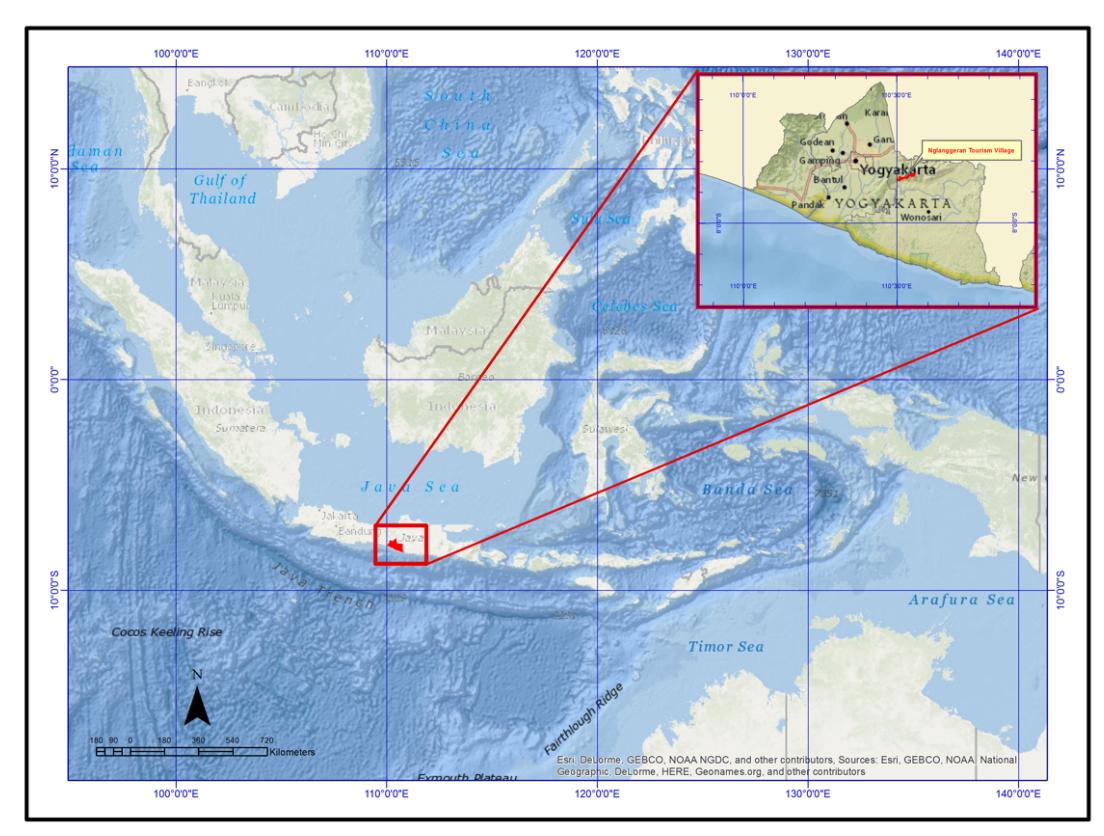
Figure 1. The Location of Nglanggeran Tourism Village Source: Authors — created using ArcMap 10.2.2. (2021)
As previously stated, the usual circumstances have abruptly changed as a result of the COVID-19 pandemic. It had an impact on the number of visitors and income, with such a significant drop in 2020 due to the tourism village's closure from March to July 2020. About 61.650 people visited in that year, and yearly revenue dropped almost thrice, to IDR 1 billion (USD 70,346.90), compared to the prior year. As a consequence, the management of the tourism village laid off the staff who regularly work in the Nglanggeran Tourism Village area, as tourist activity had halted. To survive, those staffs return to farming occupations to meet their basic daily necessities in the pandemic period.
In July 2020, the local tourism officials, in collaboration with the local authorities, cautiously reopened the tourism village after adjusting to the pandemic phase. Nglanggeran Tourism Village became a pilot project destination as a response to the officials' attempts, and it opened early during the COVID-19 pandemic period. As a distinctive feature of rural society, social cohesion is one of the most important components in revitalizing tourism activities. It is demonstrated by mutual cooperation among tourism officials in the destination, society, and local government, which seeks resilience. Furthermore, a social capital approach will be used to explain its potency to analyze how Nglanggeran Tourism Villages recover.
4.2 Practicing New Norms in the Making
A new norm emerged as part of the social capital formed in Nglanggeran Tourism Village during the pandemic of COVID-19. One notable standard is the use of health protocols, which has been crucial to the resumption of tourist activities. The Nglanggeran Tourism Village officials have been instructed by Gunungkidul's government to guide the implementation of new regulations in the making. The local government invited tourism officials to the site attraction to rule events in order to socialize new norms and begin putting them into practice. The socialization component
emphasizes how to follow health protocol and treat guests in a protocol-compliant manner. Following their socialization, Pokdarwis with a responsibility to the local community began to inquire about their readiness to open a tourism village. As a result, local society is willing to cope with the reopening of tourist activities with unavoidable requirements: strictly enforce health protocols and safeguard them. Before reopening and obtaining approval from the Gunungkidul legislation, the local officials needed to get one step closer to simulating a new norm. Long story short, by strictly following health protocols, Nglanggeran Tourism Village was eventually granted authorization to become a pilot project destination which was opened amidst the pandemic COVID-19 period.
"It is apparent that the government's responsibility is to distribute new regulations and to make an appeal to encourage people to follow them. In general, the infrastructure to protect [residents and visitors] against COVID-19 in 2020 does not exist, but new infrastructure was built to support health protocols." (Interview with JR, Senior Officer of Nglanggeran Tourism Village).
The Nglanggeran Tourism Village's rules have the effect of restricting their operations during the pandemic time. For instance, the number of visitors is limited, whereas their visit is only available until 5 p.m. However, unlike the prior circumstance, there was no limit on the number of visits. Visitors are not only limited in numbers, but their activities in the Nglanggeran, such as camping at night and staying in homestays, are also restricted. For the sake of the common good among local society, tourism village managers, and local government, the Nglanggeran Pokdarwis continue to follow all of the restrictions that limit their operations. They cannot, however, ignore the need for adaptability in the midst of a new situation, so the new norms must be adjusted.
Following the implementation of new norms, previously agreed-upon regulations are eventually adjusted to reflect the current circumstances. By the end of 2020, for example, the comparative study event that was planned in the early part of the year will be able to accommodate the additional criteria, such as presenting an antigen rapid-test. Due to requests from guests who want to camp, the adaptation is also loosening a curfew. As a result, Nglanggeran Pokdarwis has offered to the government an adaptation proposal to relax the curfew, although the proposal is taking a long time to be approved. Internally, the officials discussed their proposed new forms before presenting it to the government, which were later certified as new norms by the government in December 2020. However, the permission to camp can only be obtained on weekends. Additionally, staying at a homestay is completely not permitted.
In order to adapt to the current situation, norm adaptation has become a tremendous necessity. If the previous standard is maintained, it will place a burden on each party, including the officer and the visitor. As a result, norms must be precisely adjusted in order to renew existing norms. However, the process of coordinating among the various parties took a lengthy time. The new rules are not just written by the government, but they also include unspoken norms that are widely disseminated verbally. The achievement of the Ministry of Home Affairs as the second winner of the innovation competition and pilot project destination is one example of a typical norm.
"Alhamdulillah [praise God to express gratitude], because we clearly follow the regulations, notwithstanding their limitations. As a pilot project, we have a responsibility to keep the public's trust. If we break the regulation, it will have ramifications for our reputation as a pilot project. We at the very least set a positive example for other tourist attractions, thus alhamdulillah [praise God to express gratitude], at Gunungkidul, we all follow the rules." (Interview with LL, Senior Treasurer of Nglanggeran Tourism Village).
The achievement that Nglanggeran Tourism Village has attained is not only a triumph, but also a burden for them. They aim to retain the reputation of Nglanggeran as a precious tourism village by adhering to the previously agreed-upon rules. Nglanggeran Tourism Village must provide a favourable model to other destinations as a pilot project. If an external party discovers a breach, it
will tarnish their image, which they have worked hard to maintain up to this moment. Even while the changes in norms cannot be resisted, unspoken norms eventually force them to practice new norms in the making. They must, however, obey the rules, which must be coordinated first.
It is crucial to practice new norms in the making throughout the pandemic period in order to maintain each party's health and safety. The custom is followed not just as a form of bonding, but also to safeguard their health during the COVID-19 pandemic. If they break the rule, the consequences are handled not only by the officials, but also by all parties concerned. New norms subsequently must be evaluated in order to adapt to current conditions, therefore changes in norms are unavoidable. On the other hand, the unspoken norms have become a fundamental guide for the Nglanggeran Tourism Village, which has been designated as a pilot project and must maintain its image. Negative feedback will be received if new norms are not implemented carefully. Furthermore, the resilience framework possessed by Nglanggeran Tourism Village can be formed by the norm that is an element of social capital. As a result, tourist attractions now have a roadmap to reviving tourism. It will be difficult to carry out tourism activities if there are no norms in place, especially given the potential of the virus spreading, which is still extremely plausible.
4.3 Consolidating Trust
Consolidating trust is another sticky factor of social capital in the Nglanggeran Tourism Village's businesses. It is fairly obvious that the attempt to strengthen trust in the local community paved the way for the reopening of tourist attractions. Because of the solid relationship between local society and the authority, this trust network plays a vital role in community-based tourism (Dewanti, 2020). Furthermore, during the recent COVID-19 pandemic, such a relationship still existed between the closure of tourist destinations and their site reopening agendas.
When tourist attractions were closed, some members of the local community agreed that it was necessary to take a break for the greater good. The local community believes that the tourism village closure policy is in place to protect them. Even if it is still debatable whether the tourism village is completely closed or not, they responded positively. However, the local community's shopkeepers were divided, citing threats to their livelihood, while those who agreed were concerned about their health as a result of the COVID-19 outbreak. Due to dissent when making a decision, weighing the benefits and drawbacks is a reasonable procedure. Nonetheless, a good decision must be made to protect society's safeguards, even if it means sacrificing them.
"There was apparent opposition to the closure of tourist activities, but it was understandable. Shopkeepers that frequently offered necessities for tourists did not agree, and visitors were barred, therefore it had implications for us. Because of the COVID-19 pandemic, we lost our income. Local administrators and local society members involved in the Nglanggeran Tourism Village, on the other hand, must adjust to the newer rules. We made every effort to keep COVID-19 out of our village at that time." (Interview with MS, Chairman of Nglanggeran Tourism Village).
The local community grasps the facts during the pandemic time, and it must adjust to the present situation despite the fact that it cannot be forced. The local society has fully entrusted the local managers with information on current conditions. They believe that what the authorities have done is the best option for them. Tourist activity began to reopen as the country entered a new normal time. The process of opening tourist attractions cannot be used to undermine the trust that has been placed in the local community.
Gaining the trust of the local community is a long process. To begin, the local society was asked if they were ready, and they agreed to some additional conditions, such as following health protocols for the greater good. Furthermore, the local community expects the administration to follow through on what they promised to in order to protect the villagers' entire life. These restrictions, such as the limits of visitors and visitors' hours, as well as the closure of homestays, are also in line with the managers' priorities. This was a sort of reciprocity in which the local society gave the administrators something in return. In other words, if the health protocol is relaxed, there will be danger because the major purpose is to prevent the infection from spreading. As a result, activities that pose a risk should be avoided or modified to appeal to individual visitors or small groups.
"We follow the rules. It signifies that the procedure told us to do something specific. Without a doubt, we followed it. Because we have won the trust of the local community, it is unimaginable for us to forget the guidelines if the visits return to normal. We avoid the public's perspective, if our destinations do not strictly comply with the standards." (Interview with SH, Secretary of Nglanggeran Tourism Village).
However, Nglanggeran Tourism Village officials consider that external causes can change ordinary habits, not just those beliefs of the local community, managers, and government. It is possible to conclude that market changes are unavoidable as a result of COVID-19. In response, the local officials assumed that the COVID-19 outbreak was to blame for the visitors' tendency to travel in small groups and be health-conscious. The officials have figured out that the regular visit patterns will not be the same. It can be proven that the number of visitors decreased dramatically. As a result, despite market shifts, they try to innovate in order to earn money. Finally, an innovation incorporating Bank Indonesia, an Indonesian state-owned bank, as a third party conducting a Corporate Social Responsibility (CSR) Program surfaced. Their idea is to build a glamorous camp or glamping as a new attraction based on guest feedback, identification, and discussion among the tourism officials.
"In order to meet the next challenge, we tried something new, such as planning a luxury camp by the Kedung Kandang Waterfall. The reason we are preparing it is to fill a gap if the homestay service remains closed during the pandemic. As a result, we may direct the guesses to our new invention. As a result, our society's economy may be able to recover. On the other side, we expect the Jogja toll exit, which is close to our village, therefore we expect Kedung Kandang to have more track access." (Interview with LL, Senior Treasurer of Nglanggeran Tourism Village).
During the pandemic, the tourism officials' main attention was on the development of the Kedung Kandang Waterfall, as well as the distribution of the economy in that area. Because Kedung Kandang Waterfall has been overlooked despite its potential, visitors are encouraged to not only visit the mainstream area but also Kedung Kandang Waterfall. If the manager used to refuse the homestay service, they could tend to offer the tourists the option of staying at a luxurious camp. Its creativity, regardless of short-term planning, is also for the long-term. As a result of the predicted exit toll at the waterfall, drivers will be more likely to visit due to the wonderful landscape in the area. As an outcome, market changes may boost the development of Nglanggeran Tourism Village, and they will have more attractions to visit.
The trust of Nglanggeran Tourism Village has various forms that cannot be denied by the role of the officials who are consolidating trust in the pandemic period. As a result, it is clear that the local society consented when Nglanggeran was closed. It is not a big deal for them, and the local officer is doing his best to safeguard them. When tourism attractions reopen in the coming, local management will have to maintain society's trust. On the other hand, they need to involve Bank Indonesia as a development partner, because the trust is concerned not only with managers and society, but also with market dynamics. Thus, in terms of social capital, consolidating trust is the most important factor in shaping rural society's resilience.
4.4 Bridging Partnerships Among Stakeholders
The role of partnerships among various stakeholders in shaping social capital within the construction of resilience cannot be overlooked. It will not impose actual action in terms of tourism on rural communities without other elements of social capital, such as norms and trust. A partnership, on the other hand, is the result of collaboration among a wide range of stakeholders, particularly local tourism officials, society, and the government. The success of Nglanggeran Tourism Village at the time was due to the emergence of partnerships.
Despite the tourist site's shutdown, its partnerships continue to thrive. The variety of cooperation that existed at the time is still in place to protect the tourism area's ecology. The tourism officials at the destination, on the other hand, continued to instruct two officers to keep an eye out for the obstinate guests. In addition, the partnership worked with the government to prepare for the next phase of the new normal. Last but not least, Nglanggeran Tourism Village is trusted to relaunch its tourism activities as a result of its partnerships.
Internally, socializing for reopening is used to establish partnerships in preparation for the new normal era. At the end of the day, the partnership has gained local support, and mutual cooperation among stakeholders has emerged to support the reopening. Partnerships appeared to be a practical application of standards, with trust as a framework. Without norms and trust, structural partnership is predicated on the rules never being followed, and hence, mutual collaboration is extremely difficult, or in other words, partnerships would be structurally impossible.
The first phase in establishing partnerships in the recovery of tourist attractions is to socialize a series of new health protocols. The government installs these values in local officials, then communicates them to the rest of society. To go any further, a simulation was run with numerous stakeholder groups to see how far the preparations had progressed throughout the COVID-19 period. The local society developed trust as a result of this process, and now supports the reopening. Tourism officials are not the only ones who prepare, but also shopkeepers who were previously closed. Tourism activities might be oriented towards health protocols as a result of preparedness and cooperation. Eventually, it is the outcome of Nglanggeran Tourism Village's social capital assets in relation to establishing a resilience strategy.
5. Conclusion
The 'rapid' recovery of Nglanggeran Tourism Village during the pandemic period cannot be overlooked with a resilience strategy based on social capital. Nglanggeran used its social capital assets to revive after its closure on several occasions between March 2020 and June 2021, with the objectives of advancing social cohesiveness as a rural society characteristic. In general, social capital related to the resilience strategy has been manifested in three full schemes in this study, including practicing new norms, consolidating trust, and bridging stakeholders partnerships, all of which involve different elements in Nglanggeran Tourism Village. They have continuously been an active process even though it can be seen till now when restrictions on community activities policy is still applied. It means that in Nglanggeran Tourism Village, social capital has a direct relationship with the ability to develop a resilience strategy.
To put it another way, the rules enforced by Nglanggeran Tourism Village specifically towards tourism activities differ from those enforced by the government. These are significantly affected by common consensus among inhabitants, which, on particular occasions, depends on social capital. For example, during a pandemic period, the norms that are accepted and trusted by members of a community in the tourism context cannot be enforced by intense pressure. Therefore, new norms must be initially installed and consolidated rigorously towards all community members by a specific actor, which in this context is Pokdarwis. After going over these various 'unspoken' requirements, unsurprisingly Nglanggeran tourism officials eventually earn confidence to relaunch tourist attractions alongside all of related-tourism activities. As a result, local tourism officials, took on a role in the social capital system to link up, communicate, and coordinate tourism activity. The latter's bridging role eventually resulted in tourism officials, society, and the government working together to relaunch. Thus, Nglanggeran Tourism Village's resilience may be restored by using social capital assets as a hallmark of rural society, thanks to the partnership of three elements of social capital.
Acknowledgment
First, we would like to thank the residents of Nglanggeran Tourism Village, particularly the local governance, local communities, and local leaders, for their hospitality, all data collected, and remarkable assistance during the research process. Second, we would like to thank R. Rucitarahma Ristiawan, M.Sc., Ph.D. (Cand.) and Dr. Wiwik Sushartami, M.A. for their valuable inputs during the article writing process.
Disclosure Statement
No potential conflict of interest was reported by the authors.
References
- Adams, K. M., Choe, J., Mostafanezhad, M., & Phi, G. T. (2021). (Post-) pandemic tourism resiliency: Southeast Asian lives and livelihoods in limbo. Tourism Geographies, 23(4), 915–936. DOI: 10.1080/14616688.2021.1916584.
- Adger, W. N. (2000). Social and ecological resilience: Are they related? Progress in Human Geography, 24(3), 347–364. DOI: 10.1191/030913200701540465.
- Aiello, F., Bonanno, G., & Foglia, F. (2020). On the choice of accommodation type at the time of COVID-19. Some evidence from the Italian tourism sector. Current Issues in Tourism, 1–5. DOI: 10.1080/13683500.2020.1846504.
- Aji, K. B., & Kusumawanto, A. (2020). Life cycle analysis of Ponggok Tourism Village, Polanharjo District, Klaten Regency, Central Java Province. Journal of Indonesian Tourism and Development Studies, 8(3), 181–189.
- Aldrich, D. P. (2010). Fixing recovery: social capital in post-crisis resilience. Journal of Homeland Security, 1–16.
- Aldrich, D. P. (2012). Social Capital in Post Disaster Recovery: Towards a Resilient and Compassionate East Asian Community. In Y. Sawada & S. Oum (Eds.), Economic and Welfare Impacts of Disasters in East Asia and Policy Responses. Jakarta: ERIA Research Project Report 2011- 8.
- Aldrich, D. P., & Meyer, M. A. (2014). Social capital and community resilience. American Behavioral Scientist, 59(2), 254–269.
- Bec, A., McLennan, C. L., & Moyle, B. D. (2015). Community resilience to long-term tourism decline and rejuvenation: A literature review and conceptual model. Current Issues in Tourism, 19(5), 431–457.
- Bourdieu, P. (1986). The forms of capital. In J. Richardson (Ed.), Handbook of Theory and Research for the Sociology of Education, Westport, CT: Greenwood.
- Butler, R. W. (1980). The concept of a tourist area cycle of evolution: Implications for management of resources. Canadian Geographer, 24(1), 5–12.
- Butler, R. W. (2006). The Concept of a Tourist Area Cycle of Evolution: Implications for Management of Resources. In Richard W. Butler (Ed.), The Tourism Area Life Cycle: Applications and Modification (pp. 3 – 12). Great Britain: Channel View Publications
- Carr, A. (2020). COVID-19, indigenous peoples and tourism: A view from New Zealand. Tourism Geographies, 22(3), 491–502.
- Cetin, G. (2020). Impact of recession on tourism industry. Journal of Tourismology, 6(1), i–iii.
- Chen, S., Law, R., & Zhang, M. (2021). Review of research on tourism-related diseases. Asia Pacific Journal of Tourism Research, 26(1), 44–58.
- Chowdhury, M., Prayag, G., Orchiston, C., & Spector, S. (2019). Postdisaster social capital, adaptive resilience and business performance of tourism organizations in Christchurch, New Zealand. Journal of Travel Research, 58(7), 1209–1226.
- Chua, B.-L., Al-Ansi, A., Lee, M. J., & Han, H. (2020). Impact of health risk perception on avoidance of international travel in the wake of a pandemic. Current Issues in Tourism, 1–18. DOI: 10.1080/13683500.2020.1829570.
- Coaffee, J., & Wood, D. M. (2006). Security is coming home: Rethinking scale and constructing resilience in the global urban response to terrorist risk. International Relations, 20(4), 503–517.
- Cochrane, J. (2010). The sphere of tourism resilience. Tourism Recreation Research, 35(2), 173–185. DOI: 10.1080/02508281.2010.11081632.
- Coleman, J. S. (1988). Social capital in the creation of human capital. The American Journal of Socilogy, 94, 1–27.
- Correia, F. (2009). Parks, People and Processes: Rethinking Sustainable Tourism in Protected Areas Through Complexity Approaches. PhD thesis. Leeds Metropolitan University.
- Creswell, J. W. (2014). Reseacrh Design: Qualitative, Quantitative, and Mixed Methods Approaches (4th Edition). USA: SAGE Publications.
- Davoudi, S., Shaw, K., Haider, L. J., Quinlan, A. E., Peterson, G. D., Wilkinson, C., Fünfgeld, H., McEvoy, D., & Porter, L. (2012). Resilience: A Bridging Concept or a Dead End? "Reframing" Resilience: Challenges for Planning Theory and Practice Interacting Traps: Resilience Assessment of a Pasture Management System in Northern Afghanistan Urban Resilience: What Does it Mean in Planni. Planning Theory and Practice, 13(2), 299–333.
- Dewanti, A. W. (2020). Modal Sosial dalam Pengembangan Pariwisata di Desa Wisata Nglanggeran, Patuk, Gunungkidul, Daerah Istimewa Yogyakarta. Thesis. Yogyakarta: Universitas Gadjah Mada.
- Dirani, K. M., Abadi, M., Alizadeh, A., Barhate, B., Garza, R. C., Gunasekara, N., Ibrahim, G., & Majzun, Z. (2020). Leadership competencies and the essential role of human resource development in times of crisis: a response to Covid-19 pandemic. Human Resource Development International, 380–394.
- Djalante, R., Lassa, J., Setiamarga, D., Sudjatma, A., Indrawan, M., Haryanto, B., Mahfud, C., Sinapoy, M. S., Djalante, S., Rafliana, I., Gunawan, L. A., Surtiari, G. A. K., & Warsilah, H. (2020). Review and analysis of current responses to COVID-19 in Indonesia: Period of January to March 2020. Progress in Disaster Science, 6.
- Dogru, T., Marchio, E. A., Bulut, U., & Suess, C. (2019). Climate change: Vulnerability and resilience of tourism and the entire economy. Tourism Management, 72, 292–305.
- Dube, K., Nhamo, G., & Chikodzi, D. (2020). COVID-19 cripples global restaurant and hospitality industry. Current Issues in Tourism, 1–4.
- Farrell, B. H., & Twining-Ward, L. (2004). Reconceptualizing tourism. Annals of Tourism Research, 31(2), 274–295.
- Farzanegan, M. R., Gholipour, H. F., Feizi, M., Nunkoo, R., & Andargoli, A. E. (2020). International tourism and outbreak of Coronavirus (COVID-19): A cross-country analysis. Journal of Travel Research. DOI: 10.1177/0047287520931593.
- Fathy, R. (2019). Modal sosial: Konsep, inklusivitas dan pemberdayaan masyarakat. Jurnal Pemikiran Sosiologi, 6(1), 1–17.
- Fong, L. H. N., Law, R., & Ye, B. H. (2020). Outlook of tourism recovery amid an epidemic: Importance of outbreak control by the government. Annals of Tourism Research. DOI: 10.1016/j.annals.2020.102951.
- Gallego, I., & Font, X. (2020). Changes in air passenger demand as a result of the COVID-19 crisis: using Big Data to inform tourism policy. Journal of Sustainable Tourism, 1–20. DOI: 10.1080/09669582.2020.1773476.
- Gössling, S., Scott, D., & Hall, C. M. (2020). Pandemics, tourism and global change: a rapid assessment of COVID-19. Journal of Sustainable Tourism, 1–20.
- Growiec, K., Vilhelmsdóttir, S., & Cairns, D. (2012). Social capital and financial crisis: The case of Iceland. CIES E-Working Paper N.o 138/2012 Social, June 2012, 1–19.
- Guo, Y., Zhang, J., Zhang, Y., & Zheng, C. (2018). Examining the relationship between social capital and community residents' perceived resilience in tourism destinations. Journal of Sustainable Tourism, 26(6), 973–986.
- Hall, C. M., Scott, D., & Gössling, S. (2020). Pandemics, transformations and tourism: be careful what you wish for. Tourism Geographies, 22(3), 577–598.
- Hamzah, A., & Hampton, M. P. (2013). Resilience and non-linear change in island tourism. Tourism Geographies, 15(1), 43–67.
- Hasrul, M. (2020). Aspek hukum pemberlakuan Pembatasan Sosial Bersakala Besar (PSBB) dalam rangka penanganan Corona Virus Disease 2019 (COVID-19). Legislatif (Lembar Gagasan Mahasiswa Yang Solutif Dan Inovatif), 3(2), 386–398.
- Heisbourg, F. (2020). From Wuhan to the World: How the Pandemic Will Reshape Geopolitics. Survival, 62(3), 7–24.
- Holling, C. S. (1973). Resilience and Stability of Ecological Systems. Annual Review of Ecology and Systematics, 4(1), 1–23.
- Ioannides, D., & Gyimóthy, S. (2020). The COVID-19 crisis as an opportunity for escaping the unsustainable global tourism path. Tourism Geographies, 22(3), 624–632.
- Khoir, M. H. A., & Dirgantara, A. R. (2020). Tourism village management and development process : Case study of Bandung Tourism Village. ASEAN Journal on Hospitaity and Tourism, 18(2), 84– 94.
- Krisdiyanto, T., & Nurhayanto, E. M. O. (2021). Analisis sentimen opini masyarakat Indonesia terhadap Kebijakan PPKM pada media sosial Twitter menggunakan naïve bayes clasifiers. Jurnal CoreIT: Jurnal Hasil Penelitian Ilmu Komputer Dan Teknologi Informasi, 7(1), 32–37.
- Larsen, R. K., Calgaro, E., & Thomalla, F. (2011). Governing resilience building in Thailand's tourism-dependent coastal communities: Conceptualising stakeholder agency in socialecological systems. Global Environmental Change, 21(2), 481–491.
- Lew, A. A. (2014). Scale, change and resilience in community tourism planning. Tourism Geographies, 16(1), 14–22.
- Lew, A. A., Cheer, J. M., Haywood, M., Brouder, P., & Salazar, N. B. (2020). Visions of travel and tourism after the global COVID-19 transformation of 2020. Tourism Geographies, 22(3), 455– 466. DOI: 10.1080/14616688.2013.864325.
- Mas'udi, W., & Winanti, P. S. (2020). COVID-19: Dari Krisis Kesehatan ke Krisis Tata Kelola. In W.
- Mas'udi & P. S. Winanti (Eds.), Tata Kelola Penanganan COVID-19 di Indonesia: Kajian Awal (pp. 3–18). Yogyakarta: Gadjah Mada University Press.
- Mayer, J. D., & Lewis, N. D. (2020). An inevitable pandemic: Geographic insights into the COVID-19 global health emergency. Eurasian Geography and Economics, 61(4–5), 404–422.
- Merriam, S. B., & Tisdell, E. J. (2016). Qualitative Research: A Guide to Design and Implementation (4th Edition). USA: Wiley and Sons.
- Moscardo, G., Konovalov, E., Murphy, L., McGehee, N. G., & Schurmann, A. (2017). Linking tourism to social capital in destination communities. Journal of Destination Marketing and Management, 6(4), 286–295.
- Nakagawa, Y., & Shaw, R. (2004). Social capital: a missing link to disaster recovery. International Journal of Mass Emergencies and Disasters, 22(1), 5–34.
- Ndlovu-Gatsheni, S. J. (2020). Geopolitics of Power and Knowledge in the COVID-19 Pandemic: Decolonial Reflections on a Global Crisis. Journal of Developing Societies, 36(4), 366–389.
- Ngurah, I. D. G., & Utama, M. S. (2018). Peran modal sosial, potensi pariwisata dan pemberdayaan masyarakat pada pembangunan pariwisata berbasis masyarakat di Kawasan Strategis Pariwisata Lebih. E-Jurnal Ekonomi Dan Bisnis Universitas Udayana, 7(6), 1647–1666.
- Niewiadomski, P. (2020). COVID-19: from temporary de-globalisation to a re-discovery of tourism? Tourism Geographies, 22(3), 651–656.
- Ou, J., & Wong, I. K. A. (2020). Strategic crisis response through changing message frames: a case of airline corporations. Current Issues in Tourism, 1–15.
- Pan, T., Shu, F., Kitterlin-Lynch, M., & Beckman, E. (2021). Perceptions of cruise travel during the COVID-19 pandemic: Market recovery strategies for cruise businesses in North America. Tourism Management, 85, 104275.
- Panday, S., Rushton, S., Karki, J., Balen, J., & Barnes, A. (2021). The role of social capital in disaster resilience in remote communities after the 2015 Nepal earthquake. International Journal of Disaster Risk Reduction, 55.
- Perdana, A. B., Novianto, A., Fathin, C. A., Ranggajati, A., Wulansari, A. D., Dyah, R., Sulistastuti, R., Wijayanti, & Murwani, Y. (2020). Pekerja Informal di Tengah COVID-19. In W. Mas'udi & P. S. Winanti (Eds.), Tata Kelola Penanganan COVID-19 di Indonesia: Kajian Awal (pp. 238– 252). Yogyakarta: Gadjah Mada University Press.
- Prayag, G. (2020). Time for reset? COVID-19 and tourism resilience. Tourism Review International, 24(2–3), 179–184.
- Putnam, R. D. (1995). Bowling alone: America's declining social capital. Journal of Democracy, 6(1), 65– 78.
- Putnam, R. D. (2000). Bowling Alone: The Collapse and Revival of American Community. New York, USA: Simon & Schuster.
- Saefulrahman, I. (2015). Kepemimpinan, modal sosial dan pembangunan desa: Kasus keberhasilan pembangunan di Desa Pangauban Kecamatan Cisurupan, Kabupaten Garut. CosmoGov: Jurnal Ilmu Pemerintahan, 1(1), 149–166.
- Quintal, V., Sung, B., Lee, S., Quintal, V., Sung, B., & Lee, S. (2021). Is the coast clear ? Trust , riskreducing behaviours and anxiety toward cruise travel in the wake of toward cruise travel in the wake of COVID-19. Current Issues in Tourism, 1–13.
- Ristiawan, R., & Tiberghien, G. (2021). A critical assessment of community-based tourism practices
- in Nglanggeran Ecotourism Village, Indonesia. Journal of Indonesian Tourism and Development Studies, 9(1), 26–37.
- Rodriguez-Giron, S., & Vanneste, D. (2018). Social capital at the tourist destination level: Determining the dimensions to assess and improve collective action in tourism. Tourist Studies, 19(1), 23–42.
- Romagosa, F. (2020). The COVID-19 crisis: Opportunities for sustainable and proximity tourism. Tourism Geographies, 22(3), 690–694.
- Sharma, G. D., Thomas, A., & Paul, J. (2021). Reviving tourism industry post-COVID-19: A resilience-based framework. Tourism Management Perspectives, 37, 100786. DOI: 10.1016/j.tmp.2020.100786.
- Talu, S., & Nazarov, A. D. (2020). Challenges and competencies of leadership in COVID-19 pandemic. Advances in Social Science, Education and Humanities Research, 486, 518–524. DOI: 10.2991/assehr.k.201105.092.
- Tremblay-Huet, S. (2020). COVID-19 leads to a new context for the "right to tourism": a reset of tourists' perspectives on space appropriation is needed. Tourism Geographies, 22(3), 720–723. DOI: 10.1080/14616688.2020.1759136.
- Tse, C.-W., Wei, J., & Wang, Y. (2013). Social Capital and Disaster Recovery: Evidence from Sichuan Earthquake in 2008. In CGD Working Paper 344 (No. 344). DOI: 10.2139/ssrn.2440405.
- Walker, B., Holling, C. S., Carpenter, S. R., & Kinzig, A. (2004). Resilience, adaptability and transformability in social–ecological systems. Ecology and Society, 9(2), 5. DOI: 10.1103/PhysRevLett.95.258101.
- Yusko, K. P., & Goldstein, H. W. (1997). Selecting and developing crisis leaders using competencybased simulations. Journal of Contingencies and Crisis Management, 5(4), 216–223.