

1. Introduction
The development process of an area is a series of community activities that are identical to the cultural characteristics contained in it. Every group of people will who run their lives continuously and need space to carry out their activities (Prima, 2014). The behavior of people's lives is the extraction of various life activities, all of which need a place to bridge these activities, both in physical and nonphysical forms ( et al., 2021).
The island of Bali as a famous tourist destination with its cultural uniqueness. The uniqueness of Balinese culture is reflected in the unique life of its people, traditional architectural patterns and natural beauty (Elziny et al., 2020). Therefore, many tourists are interested in coming to visit these tourist destinations. One of the interesting tourist destinations to visit is Puri, which in ancient times served as the center of government, the residence of kings and the center of Balinese culture. The development process of tourism industrialization in Bali caused the castle to be transformed into a tourist area that provides various facilities, but does not reduce the cultural and architectural value of the building. The Puri Saren Ubud area as a heritage tourism area has a variety of unique building functions with the Tri Mandala concept that is able to attract tourists to visit it (Firdaus, 2018) . With the creativity of artistic performances, the production of Balinese art works, as cultural attractions of Puri Saren Ubud, is the main attraction for tourists to visit, enjoy cultural arts performances and even stay overnight. Tourists are interested in visiting the castle to know the history of Puri Saren Ubud and the value of traditional architectural building designs (Darmi et al., 2021).
The development of the castle as a tourist destination affects the function of the space contained in it which is used for tourism facilities. The outbreak of the Covid-19 pandemic around the world has had a major impact on the tourism sector in Bali, including the arrival of tourists to Puri Saren Ubud. The number of visits during March 2020 fell by 56.89 percent compared to the number of foreign tourist arrivals in the previous month, and continued to worsen in the following year. The Covid-19 pandemic has an influence on travel patterns in the future, improvements, especially in regulating safe activity patterns from the spread of the Covid-19 virus, are very important to do. To anticipate this, it is necessary to analyze the spatial conditions and architectural patterns in the tourist area of Puri Saren Ubud to increase the fulfillment of the criteria in providing safe space requirements from the spread of the Covid-19 virus. The purpose of this study is to analyze people's perceptions about new approaches in carrying out tourism during the pandemic by taking the case of the suitability of the spatial arrangement of Puri Saren Ubud as a tourist destination during the Covid-19 pandemic (Nugraha, 2021) .
2. Research Method
This study uses a mix method approach that combines two analyzes, namely quantitative and qualitative. Quantitative analysis was obtained through a perception survey of 100 respondents who were local people, in the sub-district of Ubud and travelers who were obtained through the distribution of questionnaires using social media to get their opinion on the importance of using a new approach in managing a safer space during the pandemic and obtaining their opinion about the condition of Puri Saren Ubud as a tourist destination that will be opened during the pandemic. The concept of traveling to be applied is the principle of spatial interaction (Bagas & Pratama, 2020). This spatial interaction is implemented by limiting the mobility of visitors and applying physical distancing in the form of certain symbols. The data analysis model used was to calculate the score of the respondent's statement by describing it through the use of Table 1, using a Likert scale.
| Information | Score | |
|---|---|---|
| Maximal | 100 (respondents) x 5 = 500 | means very positive |
| Minimal | 100 (respondents) x 1 = 400 | means positive |
| Median | 100 (respondents) x 3 = 300 | Neutral |
| Quartile I | 100 (respondents) x 2 = 200 | means negative |
| Quartile II | 100 (respondents) x 4 = 100 | very negative |
Table 1. Grading criteria for the respondents
Sources: Sugiyono, Qualitative and Quantitative Research
If projected, the level of community perception can be calculated based on the following formula:
Participation Rate = \[\frac{Obtained\ Scores}{Maximal\ Score}\] x 100 (1)
Meanwhile, the qualitative analysis was carried out by identifying the spatial conditions, layout and building patterns at Puri Saren Ubud, then describing it into a detailed plan to adjust the spatial function used for tourism activities in accordance with the safety and comfort criteria of traveling during the pandemic, including adding capacity restrictions. space and instructions for implementing health protocols.
3. Results and Finding
3.1. Function of Space in Puri Saren Ubud as a Tourist Area
Ubud Palace is located in the center of Ubud District which is also the center of the Gianyar kingdom. The Puri Saren Ubud complex is divided into 12 areas as the embodiment of the Nawa Sanga concept. Puri is the center of royal government activities in Bali, as well as a center for cultural activities, a center for religious activities and learning, as well as a center for cultural and religious ceremonies. Puri Saren Ubud is currently undergoing a change in function due to other activities, namely urban heritage, so that special rooms are built around the castle in the form of tourism accommodation to support tourism activities (Rahardjo, 2019). The need for tourism activities has resulted in some rooms being converted into tourist home stays, restaurants, and performing arts and culture halls. If you look at the space pattern of Puri Saren Ubud, there is a separation of the division of the royal area, residential areas and public facilities, so that the castle area is still very safe and comfortable to visit during the pandemic, although it must still apply health protocols and provide restrictions on tourist mobility.
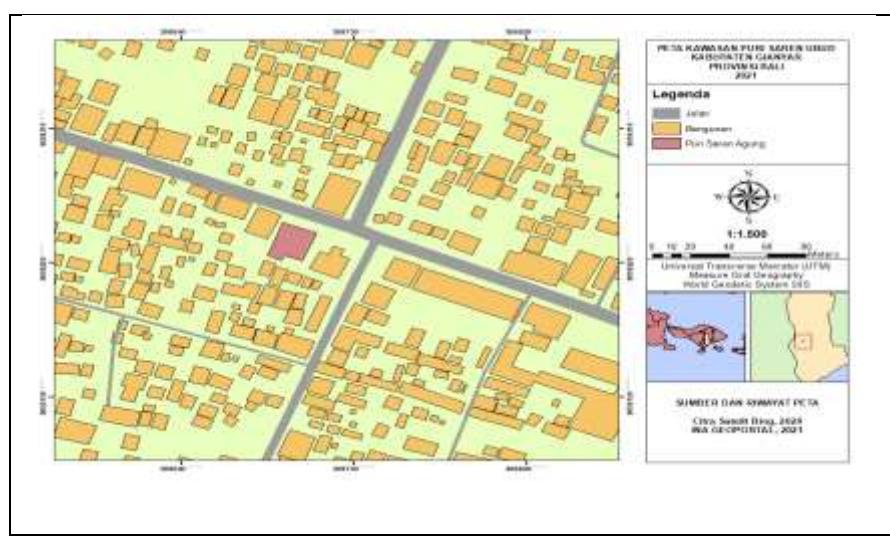
Figure 1. The Location of Puri Saren Ubud
Spatially, the spatial functions contained in the Ubud Palace are: Changes in the use of macro space occur in the environment around the castle, especially in the change in the function of residential buildings into tourism support facilities. Changes in the spatial structure and function of the building in the northeast direction of the castle area, there is a bale wantilan, besides being used as a place for daily residents to gather, it is mostly used as a place for rest or transit for tourists who have either finished seeing Ubud Royal Palace or enjoying trips around the Ubud area. Most of the traditional market space is now transformed for activities selling art goods, becoming the Ubud Art Market. The biggest change has occurred in the area that used to be an open space when the Village Head's office has now been built which also serves as the Tourism Information Center (TIC) (Rahardjo, 2019).
Puri Saren Agung Ubud consists of several palebahan which generally describe the sanga mandala or nawa sanga pattern in accordance with the philosophy and conceptions of traditional Balinese architecture. This conception is clearly applied in the palebahan layout of Puri Saren Agung Ubud. The castle management limits the area that tourists can visit, namely in the nasty zone and part of the middle zone. In each palebahan there are building units oriented in the middle of the palebahan called natah. Each palebahan area is equipped with a gate, landscape and circulation path. The building is composed in each palebahan area which is bordered by a perimeter fence (penyengker) equipped with entrances (candi bentar, kori alit, and kori agung) as a link between palebahan. Almost all building units in each palebahan are oriented towards the courtyard (natah). Natah is currently in the form of a landscape with a garden equipped with various types of plants ranging from ground cover, flower plants, shrubs, shrubs, shade plants, the use of paving blocks for circulation/walking paths and in some palebahan equipped with a water pool. The design and arrangement of the outer spatial layout of the castle can be said to be a form of architectural adaptation that can provide added strength and value as well as aesthetics, increase the function of the outer space, and thermal comfort for the inner space in each building unit in palebahan.
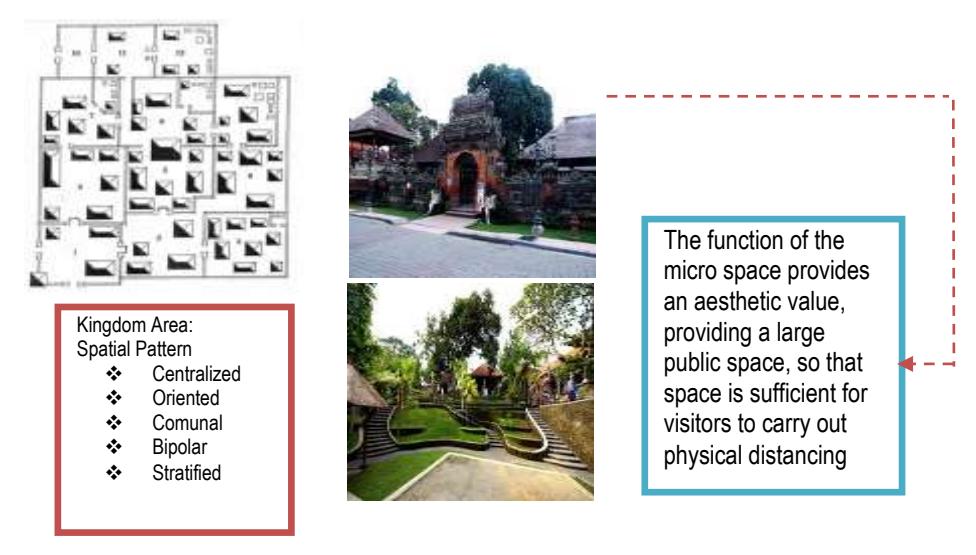
Figure 2. Tipology Mikro, Meso, dan Makro Space Puri Saren Ubud Area Source: Secondary Data Analysis, 2021
Building renovations have been carried out in the Puri Saren Ubud building units, due to the old building age, the development of modern design types and the use of new materials. The renovation process of several areas of the building did not change the traditional Balinese architectural style and historical significance of the function of the castle as a royal building. It was found that there was a tendency to maintain the size, basic shape and form of the original / original building, but to make changes to the appearance of the building so that the building became more elegant, luxurious and authoritative when compared to its original condition. Changes in interior space can be observed through changes in the spaces in the building units in each palebahan, especially in the nista and madya zones which are tourist areas. For example, in palebahan ancak saji there are additional functions of space as a reception area /lobby, a place for performing arts (traditional dance) and a place for training in cultural activities. Changes in the function of rooms and buildings for guest houses can be found in building units in several palebahan.
Based on the concept of architectural design and spatial arrangement in Puri Saren Ubud, it is in accordance with the green architecture concept which is located in several palebahan rooms complete with circulation patterns and room comfort. Natah as a public space is equipped with gardens, the use of paving blocks for circulation / roads. This will make visitors who come to Puri Saren Ubud feel comfortable seeing the excellent arrangement of the heritage tourism area. However, during a pandemic, the part of space used for tourism activities must be modified by completing facilities for implementing health protocols such as hand washing places, providing physical distancing symbols in public spaces, reducing density space in places that become wosata points so that the use of travel space at Puri Saren Ubud at the time of the pandemic, it was effective in controlling the spread of the covid-19 virus, as well as being the most effective mechanism in providing comfort for tourists.
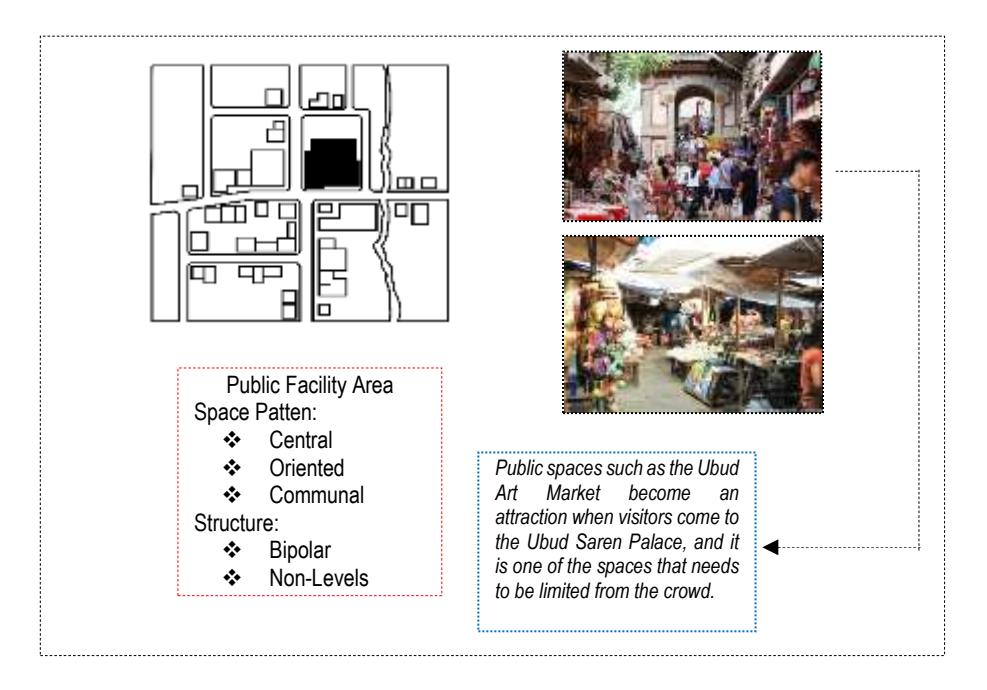
Figure 3. Public Facility Area BasedStructure and Space Pattern Source: Secondary Data Analysis, 2021
Based on the spatial pattern around Puri Saren Ubud, there are various public facilities, residential areas, restaurants. Besides that, there is also an art market that sells a variety of handicraft products, processed traditional foods and other local products. As the most visited function of space, the part of the space located in the nista area (common space) requires restrictions on tourist mobility by adjusting the distance when shopping at the Ubud art market by providing a dividing symbol, this is done in an effort to reduce the spread of the Covid-virus 19. The arrangement of this space unit will be a solution for the tourist area of Puri Saren Ubud to maintain its existence during the Covid-19 pandemic as a heritage tourist location in the City of Gianyar.
| Space substance | Traditional form | Existence form | Abbreviation |
|---|---|---|---|
| Makro Space | Shopping center Arts center Tourism Facilities | Changes in the function of Puri buildings into tourism support facilities | Creating spaces between the urban model's services and the rural model's quality. |
| Meso Space | Palebahan Puri Saren Ubud | Describes the existence of the sanga mandala or nawa sanga pattern in accordance with the philosophy and conceptions of traditional Balinese architecture | The space full of cultural symbol Favouring cultural production |
| Mikro Space | Penyengker, candi bentar, kori alit, dan kori agung | Describe the aesthetics and architectural characteristics of the building | Traditional Balinese architectural design |
Table 2. Pattern Value and Structural Space in City Space of Ubud Sub District
2.1. Public Perception of Restructuring the Puri Saren Tourism Area in Ubud
The rapid development of tourism in Bali, especially in the city of Gianyar, affects all aspects of life, especially the economy (Hardianto et al., 2021). This happened along with the increase in visitors who came to this place, which was followed by an increase in tourism accommodation such as homestays, art shops, restaurants, etc. The accommodation increases people's income while reducing the quality of the environment.
The concept of tourism revitalization has been carried out to optimize the Puri Saren Ubud area as a heritage tourist destination. Before the Covid-19 pandemic, the formation of space as a tourist area was found in building units in each palebahan, especially in the nista and middle zones. In the ancak serving palebahan there are additional functions of space as a reception room/lobby, a place for performing arts (dance) and a dance training place for the community around the castle. Changes in the function of space and buildings for guest houses can be found in building units in several Palebahan Saren.
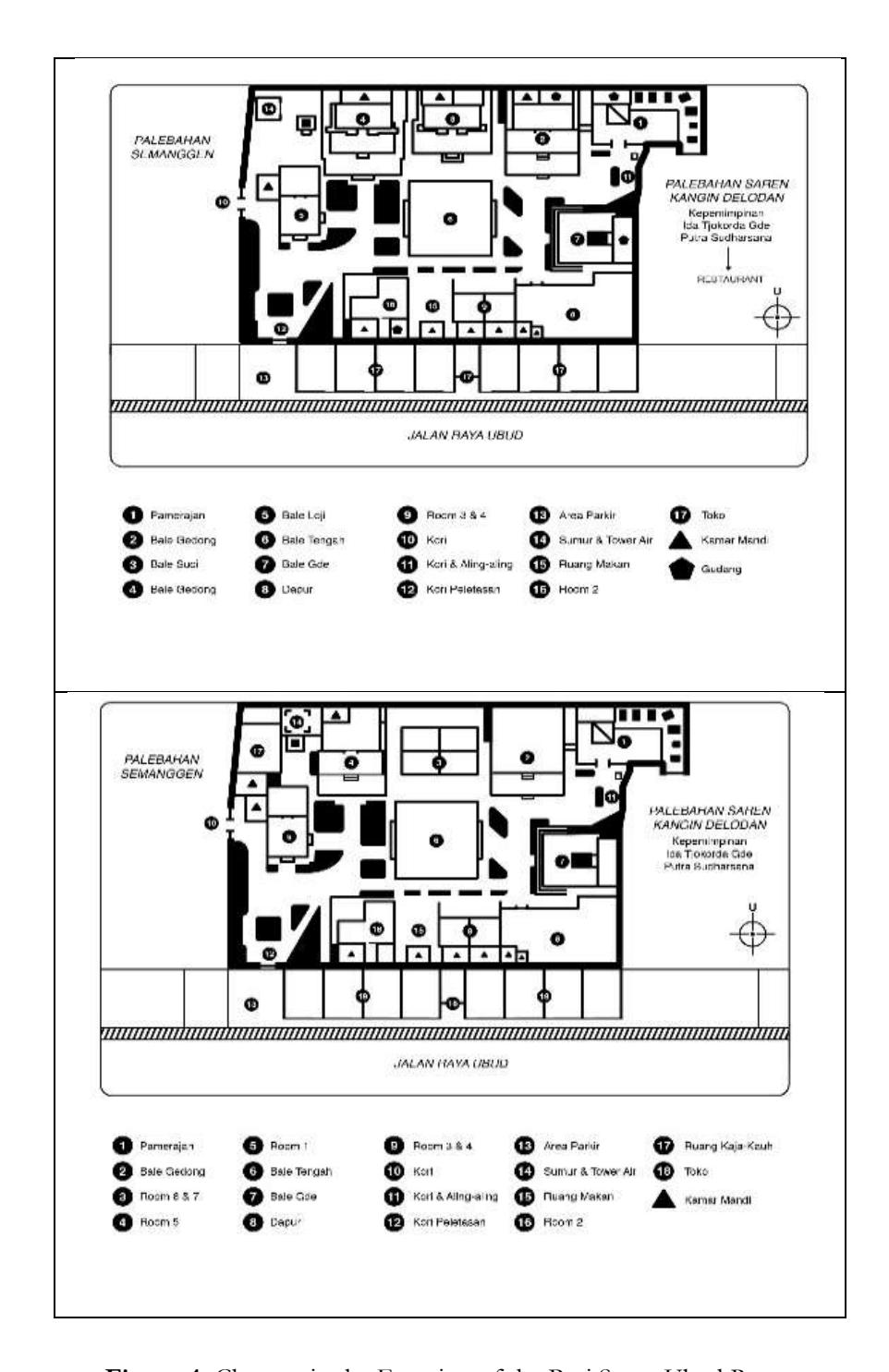
Figure 4. Changes in the Function of the Puri Saren Ubud Room
The emergence of the Covid-19 pandemic has caused the tourism industry sector in Bali to come to a halt, including heritage tourism. Puri Saren Ubud as one of the heritage tourism affected by this impact, so that this tourist area is also affected, but there are still some local visitors who are interested in visiting this destination, even it remains an attraction because the concept of structuring the area is good enough to make visitors feel at home. to enjoy the beauty of Puri design. A new approach in the era of adapting to new habits to prepare a spatial arrangement that provides safety and comfort to potential tourists who will come. The focus of the approach that will be carried out in this new arrangement is spatial interaction and designing the social distancing boundary symbol. Several models of implementing new tourism in the era of adaptation to new habits during the pandemic at Puri Saren Ubud include:
- a. It is necessary to prepare destinations in accordance with the conditions of 'new habit adaptation' by prioritizing the principles of sustainable tourism, including health and safety issues (Anggarini, 2021). The space that is a function of heritage tourism at Puri Saren Ubud must improve sanitation standards such as clean toilets, hand washing facilities, availability of masks, body temperature gauges, checking health certificates and vaccinations.
- b. The tourists who will later go to the Puri Saren Ubud castle will definitely prioritize health and safety such as continuing to carry out social distancing, and comply with the Covid-19 protocol, so that the availability of cleanliness facilities will be the main focus of tourism actors. This staycation is a tourist choice for tourists who still don't have the courage to mingle with other tourists. This will encourage hotels in Bali to provide extra facilities such as various Balinese classes such as yoga courses, Balinese dance, Balinese cooking, and meditation. Providing additional attractions such as various Balinese dances, Balinese traditions and ceremonies so that tourists can get to know Bali or let go of their longing for Bali with high security standards or on a virtual basis (Mandaka & Ikaputra, 2021).
- c. Spaces that become tourist facilities must be provided with guidelines for restrictions, especially in areas that are crowded with visitors, such as art markets, art performance spaces and so on. The instructions in question are in the form of certain symbols that indicate social and physical distancing.
- d. In addition to implementing a strategy of limiting spatial interaction and social interaction, it is also necessary to limit the visiting time by registering at the site of the visit first.
- e. Increased security standards such as: CCTV installation on each side of the Puri Saren Ubud tourist attraction, and the addition of security personnel such as security guards and pecalang to ensure all health protocols have been implemented properly.
Based on several concepts of travel arrangements in the era of adaptation to new habits caused by the Covid-19 pandemic, the surrounding community and tourism service managers at Puri Saren Ubud give their perceptions.
Table 3. Pattern Value and Structural Space in City Space of Ubud Sub district
| No. | Space substance | Traditional form | Abbreviation |
|---|---|---|---|
| 1 | Advancing an innovative concept of art and culture | Creating safe, innovative and inclusive spaces Adaption of ordinary activities | Standardization of the - application of health protocols in public spaces The delimiter symbol in - the public space |
| 2 | Integration of physical and digital spaces | - The space full of cultural symbol - Favouring cultural production - Tools for reservations and entrances - Introduction of digital services | - Modernising cultural experiences - Combination of traditional and new services |
| 3. | Redistribution of visitors' flow | - Reduction in overcrowding risks - Respecting social-distancing restrictions - Better cultural experiences | Creating spaces between the urban model's services and the rural model's quality |
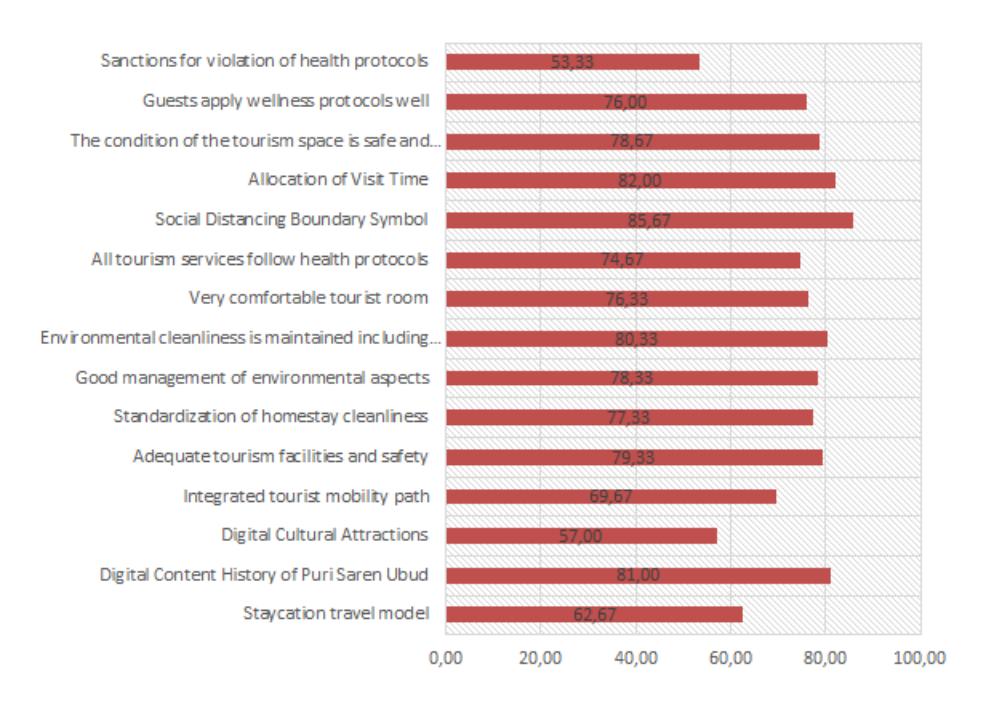
Figure 5. Visitor Perceptions of Puri Saren Ubud Tourism Management Source: Secondary Data Analysis, 2021
To support the re-implementation of the operationalization of all tourist destinations in Bali, it is necessary to prioritize the application of health protocols, including the tourist area of Puri Saren Ubud. In terms of function, Puri Saren Ubud is actually an area that applies the concept of green architecture which has been able to create a comfortable tourist space for tourists. However, because it is necessary to apply spatial design by applying health protocols, the concept of spatial planning for the tourist area of Puri Saren Ubud must be adjusted accordingly. Based on the results of the analysis obtained from the identification of the perceptions of the visitor community and tourism actors that they strongly agree that there is a need for social distancing restrictions with the use of space dividing symbols with a percentage of 85, 67%, the hope is that it can prevent crowds of visitors that can trigger the spread of the Covid-19 virus. In addition, the community believes that it is necessary to share the visiting time, so that the number of visitors is not too crowded with a score reaching 82.00%. However, according to their perceptions, changes in the travel model still get a bad response, such as cultural attractions / performances virtually getting a score of 57.00%, in this case the respondent thinks that cultural attractions / performances are better witnessed directly because they are related to the cultural values performance. contained in the performing arts. While the community also disagrees if there is a sanction for violating health protocols, the tourist service officers only need to give a warning so that tourists are not afraid to return to Puri Saren Ubud (Widodo et al., 2019).
4. Conclusion
Puri Saren Ubud is one of the heritage tourist areas which was previously the residence of the king and his family who held the government. The development of Puri Ubud as a tourist area is due to the fact that many tourists who are interested in visiting the castle know the history of the development of the castle and the splendor of traditional Balinese architectural building designs. The Covid-19 pandemic has a major impact on tourist arrivals to Bali, including to Puri Saren Ubud, whose numbers are decreasing and have an impact on the economic income of the surrounding community. Based on the concept of architectural design and building layout, Puri Saren Ubud uses a green architecture concept consisting of three spatial functions, namely macro, micro and meso spaces equipped with circulation patterns and room facilities in accordance with the Tri Mandala concept. Based on the analysis of respondents' perceptions, they agree that there is a need for space restrictions to carry out social distancing in the form of space dividing symbols, reaching a score of 85.67% as an effort to prevent crowds of visitors that can trigger the spread of the Covid-19 virus. Perceptions of changes in the travel model still get a bad response, such as cultural performances virtually getting a score of 57.00%, they think that cultural performances are better witnessed directly because they are related to the cultural values contained in the performing arts. The hope is that through this new approach, the tourism manager of Puri Saren Ubud and the local community will pay more attention to health and safety aspects in tourism activities in the Ubud Saren castle area.
Aknowledgements
Thank you to the tourism manager of Puri Saren Ubud and the local community who are willing to provide their comments regarding new strategies that can be implemented to restore par-tourism activities in the Puri Saren Ubud area.