

1. Introduction
Walking has been increasingly introduced as a leisure and travel activity that forms personalised tourist experiences during their pilgrimage routes and walking trails (Timothy and Boyd, 2015). There has been growing interest to make tourist destinations more sustainable by making tourist walking more convenient. Walking has been considered a recreational activity that enables sustainable mobility for people (Wang and Wen, 2017). Therefore, the term Tourist Walkability was coined as a means of alternative transportation. Tourists mostly walk on foot except for some parts of their trips, where they resort to using the public transport or hire private cars to get around large spatial areas in tourist destinations (Wang and Wen, 2017). Under these assumptions, the related industries which is tied to fuel-based land transportation will be gradually disrupted. Digital mapping services for tourists to get around on foot such as Google Maps or using other interactive Geographic Information
Systems (Endalew, Shiferaw and Kindie, 2019) are becoming popular. The other themes, which are linked to cycling using online user-generated content (Chiu and Leng, 2017), urban bicycle tourism (Nilsson, 2019), and cycle-tourism strategy (Bakogiannis et al., 2020) are emerging steadily in the sustainable tourism research stream.
Therefore, the concept of tourist walkability would blend well with the goals of environmentalists which is to educate consumers in the downstream of the marketing channel of distribution of travel and tourism products. Significant awareness and efforts have been adopted by the travel and tourism suppliers. Airports, accommodation, and transportation businesses are keen to invest their effort in energy and water conservation measures; they are seemingly encouraging to do their part to save utility costs. However, the role of the consumers aka tourists has been downplayed in preserving the environment or are they just not equipped to do so with the current walkability infrastructure in tourist destinations around the world. Therefore, public infrastructure such as pedestrian walks, cycling paths and walkway shelters connecting the places of attractions within tourist destinations is seemingly important. If not, tourists are coaxed to think that tourist walkability would make their travel experience seamless and unique.
Walkability infrastructure in tourist destinations may enhance the tourists' perceptions of getting an eco-friendly vacation. Based on the growing trend of tourist walkability, it is important for public agencies that are involved in the urban and recreational planning and the local tourist boards to work hand in hand to plan and equip tourist destinations with cycling paths and proper infrastructure for pedestrians. In addition, proper connection with the public transport such as hop-on buses and trains in strategic locations to pick-up and alight the tourists must be included in the plan. There are limited cross-comparison destination studies on the potential values of tourist walkability in the tourism industry. Extant studies have mostly explored on longitudinal investigation on the positive social and health impacts of walkability and the facilities provided in the neighbourhoods and residential areas across different family life stages (Rundle et al., 2019).
In the tourism context, there has been cross-sectional studies and specific tourist destinations selected as case studies. However, cross-comparison studies in this topic remains very rudimentary. Therefore, it would be interesting to examine a few similar destinations in each of the six Tourism Area Life Cycle (TALC) stages (Butler, 1980) and analyse its impact on the communities that thrive on the tourism industry. The comparative lack of social science perspectives, alongside with the rapid pace of the tourist walkability trend, and the accompanying impacts on the development of communitybased tourism, have led to this urgent call. Further studies are needed to examine the relationship between tourists and residents and the economic, environmental sustainability, quality-of-life satisfaction, and socio-cultural implications. Yet, few authors (e.g., Sharmin and Khan, 2019) have examined tourist walkability in the context of urban and recreational planning together with community-based tourism in Bagerhat, Bangladesh.
Against this background, this paper aims to penetrate new grounds in the socio-economic and environmental study of tourism by exploring the implications of tourist walkability. The paper focuses on analysing various impacts of tourist walkability on the residents' life in different tourist destinations. The selected tourist destinations are in the Indonesia-Malaysia-Singapore Growth Triangle (or IMS-GT) where the host communities have similar demographics, social, economic, and environmental status, and are experiencing growth in the travel and tourism industry. The research gaps in the sustainable tourism development would be addressed by studying the residents' perceptions of sustaining community-based tourism. Although the concept of tourist walkability has wide-ranging economic, environmental, quality-of-life satisfaction, and socio-cultural impacts for both tourists and residents, limited research has been emphasised on the residents' perspective in the Asian context (Jordon et al., 2019). Studies (e.g., Hunt and Stronza, 2014; Lundberg, 2015) have considered monitoring the changes in residents' perceptions in varying development phases of the community-based tourism (Li et al., 2015). Therefore, the relationships between tourist walkability and indicators of sustainable tourism are discussed by applying a research framework developed for this purpose, and it is named Tourist Walkability Sustainable Tourism Impact on Residents (or TWS).
This paper advocates future studies to be undertaken in studying tourist walkability in tourist destinations that are in six different stages based on the TALC model. Set against key arguments in the urban and recreational tourism, it is to gather residents' perceptions on how tourist walkability may impact the tourist destinations in terms of spatial changes, choices on the transport mode, tourism employment, social behaviour, and environmental resources. The discussion in this paper may not only be of interest to the scholarly world, as its original idea and concluding research agenda are burrowing into a new sub-field of empirical interest in tourism research. A widespread potential of tourist walkability for urban and recreational tourism infers that local and state tourism policymakers, travel and tourism entrepreneurs may find this paper of instant and ongoing relevance. As the following sections reveal, tourist walkability will not only lead to new social, economic, and environmental opportunities for urban and recreational tourism spaces. It would also present the sacrifices and inequalities of communities, in which the attention of tourism policymakers and the communities that thrive on the travel and tourism industry must not be neglected. A critical review of relevant literature, predominantly from 2011 to 2021 was extracted from ABDC publications, Scopus, ResearchGate.net and Google Scholar is performed to develop a novel research framework of the six TALC stages with informed guidelines and identified themes.
2. Literature Review
2.1. Tourism Area Life Cycle (TALC) for Community-Based Tourism
The TALC model by Butler (1980) depicts the changes in the tourism development over the years. The TALC model or its S-curve is an adaptation of the product life cycle concept to suit the tourism context, in which the x axis represents the evolution of the tourism development over six stages and the y axis represents the number of tourists (Butler, 1980). The S-curve shape may vary across tourist destinations due to their different characteristics; though the evolution of the tourism industry regularly undergoes the following six stages, namely exploration, involvement, development, consolidation, stagnation, and decline or rejuvenation (Butler, 1980). Based on the Butler's (1980) model, it describes the incipient number of tourists taking interest in a new destination at the exploration stage. As tourists visit more often at the development stage; better-equipped infrastructure, facilities and services are offered by the residents. At the development stage, the number of tourists hover close to the number of residents at any point of time (Butler, 1980). Butler (1980) accounted that when the number of tourists surpasses the number of residents but at a declining growth rate, this phenomenon signals the reach of the consolidation stage. The residents begin to feel irritated with the likely commodification of their local activities and the mass tourist behaviour at this stage. The irritation leads to the decline stage in which the residents choose social and environmental conservation over the positive economic benefits (Butler, 1980). This may lead to a rejuvenation of the tourist activity that would shape a new S-curve all over again (Butler, 1980). Since residents may have different viewpoints and involvement across the six TALC stages, it is important for the destination managers to recognise each stage of the tourism development plan, to consider progress of infrastructure, facilities, and services that appeal communities (Kubickova and Martin, 2020). Both positive and negative perceptions of the residents are vital determinants for the success of implementing the tourism development plans (Kubickova and Martin, 2020). Liu and Li (2018) studied resident perceptions in developing countries and found that the residents desire to attract more tourists and further develop the tourism infrastructure to host the tourists, despite environmental apprehension. It was found that the residents strongly agreed to open their communities to tourists between the development and the stagnation stages of the TALC due to the increase in job opportunities and the revival of community cultural activities (Liu and Li, 2018). Whereas environmental pollution, which results in strict industry regulations, was a key concern among the residents in the exploration stage (Liu and Li, 2018). Therefore, the TALC model may
help destination managers make informed decisions, formulate, and implement effective sustainability strategies based on the past and present tourism development trends (Kubickova and Martin, 2020).
Past studies based on the carrying capacity theory have discussed about the degree of residents' support towards tourism development in the different stages of the TALC model (Liu and Li, 2018). One of the positive residents' perceptions toward tourism is the economic benefits gained at the early developmental stages (Diedrich and García-Buades, 2009; Liu and Li, 2019). Peters, Chan, and Legerer (2018) found that the attitude of the residents in Austria towards tourism is highly positive as the respondents indicated a sense of openness towards tourism development and that the benefits outweigh the costs. Although significant positive relationship between attitude and support is detected, the findings should be treated with discretion. There are residents within the Austrian community who tend to act more passively in supporting tourism development, therefore the association of their attitude and support is not obvious (Peters, Chan and Legerer, 2018).
Negative impact on the environmental and socio-cultural factors may occur but deemed acceptable; and in some developing nations, negative impacts were ignored during the early stages of the tourism development (Liu and Li, 2018). Meanwhile, the negative perceptions in comparison are suppressed by the increasing positive perceptions of the residents following the early stages of the tourism development. This leads to residents supporting the advancement of the tourism development that is taking place. Despite those positive perceptions gradually increase the degree of tourism development, the pace of increased development declines and the negative perceptions start to rise in the consolidation and stagnation stages (Diedrich and García-Buades, 2009; Yun and Zhang, 2017). Yu, Cole and Chancellor (2011) shared that socio-cultural and environmental repercussions reduce resident support for tourism, whereas economic and socio-cultural benefits positively garner residents' support. Furthermore, it is found that there is insignificant relationship between the environmental benefits and the negative economic impacts as well as the residents' support for tourism development. In the studies of resident attitude, factors such as positive and negative economic, socio-cultural, and environmental impacts have been observed in the resident and tourist exchange processes. In the tourism literature, the TALC model suggests that residents tend to have positive perceptions for tourism development, and they subsequently support it when they perceive the advantages outweigh the disadvantages. Several studies have reported that the TALC model explains how residents respond to tourism development. Residents who appreciate local resources and support tourism development will portray higher involvement (Shakeela and Weaver, 2018). On the other hand, there are also claims that residents who are not involved in the tourism sector tend to have a more negative attitude toward tourism development as compared to residents who do participate (Hunt and Stronza, 2014; Wang, Xu and Huang, 2020). Therefore, motivating residents to partake in the tourism development phase with additional economic advantages can improve residents' perceptions of tourism development (Hunt and Stronza, 2014; Ng and Feng, 2020).
2.2. Sustainability of Community-Based Tourism
During the initial stages of the community-based development, the biophysical environmental elements, tourism policymaking and managerial implications for future tourism development must be examined (Cerveny, Miller and Gende, 2020). Substantive planning, management, and control enable community-based tourism to progressively improve the quality-of-life of communities. Other than drawing respect from others, people can embrace the local cultures while preserving the biodiversity in communal spaces (Cerveny, Miller and Gende, 2020). There has been a shift of focus on the concept of Gross National Happiness (GNH) that encompasses 33 indicators which could be classified into nine domains and four pillars. These four pillars are socio-economic development, cultural conservancy, environmental protection, and good governance (United Nations, n.d.). GNH recognises the effort from major groups and other stakeholders (MGoS) and upholds the practice of sustainable tourism development. The adoption of low impact and high value tourism policies aim to protect the socio-economic and environmental interests, as well as the happiness of the local communities (United Nations, n.d.).
Hasty and poorly thought-out plans and environmental management for an emerging tourist destination may cause dreadful problems for the local communities such as strained water and energy resource management, lack of waste and sewage management, pollution, and biodiversity damage (Chen, 2020). The growth of tourism development in a destination on one hand may create job opportunities for the tourism communities, on the other hand it may jeopardise the traditional livelihoods of the non-tourism communities (Chakraborty, Gasparatos and Blasiak 2020). Therefore, the local communities and residents possibly will endure these opposed impacts to gain economic benefits in the early stages of the community-based tourism (Diedrich and García-Buades, 2009; Liu and Li, 2019).
In order to sustain community-based tourism, tourism policymakers and managers must obtain greater knowledge in sustainability, garnering support from the public-private companies such as universities, non-governmental organisations (NGOs), urban and planning architects, tourist boards, tourism-based commercial companies, the local residents and the sojourners that form the broad ecosystem of the tourist destination. In some emerging tourism-based nations, NGOs and scholars offer education on sustainable tourism and provide training to the local residents on how to preserve their socio-cultural resources (Chakraborty, Gasparatos and Blasiak 2020) and conserve their environment (Cerveny, Miller and Gende, 2020; Chen 2020). Likewise, governments implement tourism policies to control tourism development in an effort to secure the welfare of the local residents and their quality-of-life (Rubio-Cisneros et al., 2019).
Sustainability implications in terms of community-based tourism have been intensely debated (Cerveny, Miller and Gende, 2020). Community-based tourism must foster local economic opportunities to residents, fairly protect the local environment, and improve the quality-of-life of residents (Diedrich and García-Buades, 2009; Liu and Li, 2019). Furthermore, tourism policymakers and managers of community-based tourism may offer farming expenses and educational services that can generate new income for some agricultural communities and socio-economic sustainability, while enhancing tourists' satisfaction (Ohe, 2020). Community-based tourism has several caveats. Cuong (2020) claims that the minority ethnic groups could be alienated in the community-based tourism business ventures and other value production activities. Stone and Stone (2020) attempt to explain that the challenges arise are due to loose community definitions, passive involvement of multistakeholders, lack in business acumen, unfair income distribution and poor reinvestment planning.
Dewi, Ristianti and Kurniati (2020) commented that while there is gradual increase in interest amongst the local villages of Balik Kampong Semarang in Indonesia, it has resulted unplanned disappearance of historic buildings and changes of modern buildings and activities to fulfil the emerging commercial and tourist needs. The economic sustainability has not been meaningfully achieved despite help from the local government to develop the local villages into tourist destinations. Barbieri, Sotomayor and Gil Arroyo (2020) find that the direct government support in communitybased tourism had not been forthcoming. The goal to improve the welfare of the rural communities in Peruvian Andes, in Peru has not been formally evaluated until now. In the progress development of community-based tourism, Barbieri, Sotomayor and Gil Arroyo (2020) assert that the communitybased tourism should be maintained as a side income to agricultural livelihoods.
Giampiccoli, Abdul Muhsin and Mtapuri (2020) commented that unequal distribution of benefits and control can lead to uneven redistribution of resources in a matured tourist destination. Decentralisation of the guesthouse sector in the community-based tourism destinations is recommended. For instance, the foreign controlled organisations develop resorts, while the locals can focus on community guesthouses to serve the high-yield tourists and the budget market. Gan (2020) adds that reasons attributing to the negative perception of native communities may be due to prolonged disruption of livelihood as they gradually lose the non-tourism land to the industry. The loss of native livelihood exacerbates socio-economic deprivations and thus amplifies the anticipation for income replacement. When the income is deemed lacking, the perceived costs of communitybased tourism is magnified. Therefore, it is pivotal to manage the expectations of the locals. Overplaying the role of community-based tourism as the primary source of income may result conflicts and unhappiness for its residents.
Community-based tourism increases social unity, consolidates socio-cultural identity (Su et al., 2020) and protect natural resources (Dewi, Ristianti and Kurniati, 2020). Life satisfaction benefits concerning the community's well-being, health and safety, emotional well-being, and material are paramount (Sirgy, 2019). Tourism policymakers can comprehend the local residents' perceptions of tourism impacts by evaluating those four life satisfaction benefits. It can infer the level of success of community-based tourism (Sirgy, 2019). Tourism policymakers, travel and tourism business entrepreneurs are able to gain a better understanding of local residents' perceptions by continuing studies spanning the pre-, during and post- development of community-based tourism (Mustafa, Omar and Mukhiar, 2020). The research framework of this study would be useful for reference to manage and observe changes caused by community-based tourism development and assess sustainability.
2.3. Residents' Perceptions of Tourism Impacts
Demographic factors such as gender, age, education level, and years of residence can influence residents' perceptions for community-based tourism (Sinclair-Maragh, 2017). Other factors that affect residents' perceptions include tourism planning (Gong, Detchkhajornjaroensri and Knight, 2019), the stage of tourism development (Lee and Jan 2019) and community attachment (Eslami et al., 2019). Models that encompassed the three connections - tourism, local residents, and biodiversity are formulated to comprehend the benefits and costs to the community (Brandt and Buckley, 2018). Previous studies that evaluated residents' perceptions had covered socio-economic impacts and their support for tourism development (Chang et al., 2018; Hunt and Stronza, 2014). Several scholars have incorporated life satisfaction indicators and stakeholders' well-being in their study on communitybased tourism. Residents' perception on well-being and life satisfaction may impact the direction of tourism planning and policymaking (Lin, Chen and Filieri, 2017; Kim, Uysal and Sirgy; 2013). The rest of scholars applied the PESTEL model and situational analysis to examine the development of tourism management and strategies (Jalani and Rahim, 2018). Lee and Hsieh (2016) studied the community-based tourism perceptions of stakeholders which include government agencies, for-profit and non-for-profit firms, residents, visitors, and the environmentalists. 141 indicators were formulated to measure each of the stakeholders' perceptions. Residents appear to be the most visible stakeholder in community-based tourism development (Lee and Hsieh, 2016).
Studies on residents' perceptions of tourism impact have become an area of interest in tourism literature, namely linked with the concept of societal sustainability since the tourism phenomenon intervenes directly in the life of individuals (Kubickova and Martin, 2020; Lee and Hsieh, 2016). The costs and benefits of tourism impacts will determine the residents' support for tourism development, particularly towards community-based tourism (Lee, 2013; Lee and Hsieh, 2016; Jordon et al., 2019). Residents are important stakeholders in community-based tourism because tourists communicate and interact with the residents who forge memorable experiences for one another. Carvalho, Ribeiro and Peter (2020) used the attitudes-behavioural approach to study the order of residents' perceptions for community-based tourism. One primary contribution was when the three authors introduced residents' attitude towards tourism and tourists as a new variable in the tourism literature.
The findings of Carvalho, Riberio and Peter's (2020) study deduce that the residents have dismal belief for the environmental impacts of tourism, but they have higher appreciation for the social impacts, and they value the economic benefits the most. Framing on Weber's theory of substantive and formal rationality and social exchange theory, Gannon, Rasoolimanesh and Taheri (2020) found that the residents' perceptions of tourism impacts play a mediating role in influencing the relationships between economic gain, community attachment, environmental attitudes, and resident support for tourism development. The indirect effects of involvement and cultural attitudes are not significant in determining residents' support for tourism development (Gannon, Rasoolimanesh and Taheri 2020). This study proposes that for future empirical evidence gathering to apply a mixed method approach. This encompasses investigation of residents' perceptions of tourist walkability and the economic, environmental, quality-of-life, and socio-cultural impacts on its communities.
2.4. Walkability, Weighing Benefits versus Costs
Some studies focus on the perceived economic, socio-cultural, quality-of-life satisfaction and environmental impacts when examining the residents' perceptions on tourism development. Litman (2017) explains that walking offers a fair and an efficient mode of transport. Traditional transportation planning tends to overlook the economic assessment of walking and its benefits, therefore underestimating the potentials of walking, and seeing far less investment in walkability infrastructure. Studies with regards to the resident and tourist exchange process include tourists' reliance on walking and/or cycling for basic mobility and paying for the accommodation, entertainment, and foodservices offered by the residents in the communities. Despite many government officials, tourism practitioners, tourists and residents show support for active transport, Litman (2017) observes that they prefer cycling rather than walking.
Provokingly, majority of the community stakeholders consider walking is too communal and its pedestrian benefits are too obvious to call for serious research. Better assessment tools for tourist walkability need to be developed to receive the support and attention that this touristy activity deserves. Tourist walkability depends on the walkability improvements which include the automobile travel reductions beyond just the travel shifts to walking and cycling from automobile travel (Litman, 2017). An automobile-mile travelled will be saved with an additional mile walked by tourists. Tourist walkability improvements would not only reduce the need for car rentals, but they also support public transit travel and multi-modal neighbourhood development.
Cycling and walking pathways, side and cross walks, street scaping, comfort and safety are a few important considerations for walkability improvements. From the economic perspective, the direct benefits of walkability improvements include the ease of managing travelling time and the money savings valued at a percentage of wages (Blincoe et al., 2014). Nearby property values increase when pedestrian paths, sidewalks, and street scaping are built and improved (Litman, 2017). Street scaping draws residents to set-up their business in the new-found commercial streets and attracts local and touristy business activities (Fleming, Turner and Tarjomi, 2013). Hotel real estate values rise in New York City in areas of high walkability (Lee, 2019).
On the other hand, there are economic costs for the walkability improvements such as upgrading pedestrian walks and cycling paths that can potentially increase tourist tax collection (Litman, 2017). From the socio-economic equity grounds, walkability improvements with universal design features like the ramps and curb cuts, offer basic and independent mobility that would benefit the socially and economically disadvantaged people (Litman, 2017). Pedestrian facility investments enable nonautomobile travel for residents and tourists from all age groups, incomes, preferences, or disabilities. Public investments in the walking, cycling, and public feeder services allow non-drivers including tourists to travel economically (Litman, 2017). Other socio-cultural benefits and quality-of-life satisfaction have been observed too. Walking ranks as one of the popular recreation activities and it is a common alternative mode of transport where people walk on trips for enjoyment, even if they could drive or hire a car. Studies have shown that walking improvements enable more walking activities and lead to higher user enjoyment (Calogiuri et al., 2018; Forsyth, 2015; Wang and Wen, 2017). Other than the routine gym and sports activities, walking is often the most accessible way to increase public fitness that offer positive health benefits (Mansfield and Gibson, 2015). Another utmost benefit is community cohesion and increased security (Litman, 2017).
Improved walkability potentially enhances the quality of relationships of tourists and residents as well as residents and neighbours, friends, and acquaintances, leading to improved community connections and better sense of responsibility (Litman, 2017). Gilderbloom, Riggs, and Meares (2015) found that local crime rate declines and residents' security increases when community walkability escalates. The shift of automobile travel to walking and cycling can help to relieve traffic woes. A travel in the urban areas that encompasses a short distance could shift to walking and cycling. When walking and cycling conditions are better, tourists can walk or cycle to nearby places and subsequently reduce traffic friction, hailing taxi and chaperon needs, as well as reduce the public transit travel such as feeder buses.
Kuzmyak (2012) and Litman (2017) claimed that when the tourist and resident communities do more walking and cycling or both, the walkability improvements increase traffic calmness, reduce vehicle travel speeds, and road accidents. Both scholars added that lower traffic congestion costs reduce vehicle ownership costs and energy consumption. It is noted that energy consumption causes several external costs encompassing national security and economic impacts from the need of important fuel, in addition to the health and environmental damage from pollution (Litman, 2017). Litman (2017) explains that vehicle ownership costs increase when motorised travel for short urban trips is made, in which more fuel is burnt due to starting a cold engine and being stuck longer in traffic congestion. Litman (2017) added that with less motor vehicles on the roads, results in less water, noise, and air pollution which can otherwise harm the natural environment, vegetation, and people. Walkability improvements that encourage walking and cycling can improve the overall quality-of-life satisfaction for both residents and tourists due less carbon emissions. On the hindsight, walking requires additional travelling time since walking tends to take a longer time to reach one's intended destination. Depending on the infrastructure conditions, walking and cycling travel time can result in negative social costs. If walking or cycling is undertaken under stressful conditions such as without designated walking and cycling paths, additional stress and health problems for people who cannot cope with a sudden prolonged walking and cycling can happen (Litman, 2017).
Walking and cycling seemingly assume unique roles in offering a fair and an efficient transportation mode. Traditional transportation inclines to disregard these benefits and so undervalues walking and cycling, resulting to insignificant investment in walkability improvements that tourists and residents could have relied on and enjoy the benefits. Many government officials, municipal councils and residents may support active transport, and their efforts mostly concentrate on cycling rather than walking as the latter is apparently deemed too common to demand any serious research. Walkability improvements may shift travel from automobile to walking and cycling, and offer substance to accommodate a more compact, multi-modal neighbourhood spatial planning. On the other hand, poor walkability conditions may lead to longer travelling time, higher stress levels and adverse health benefits to residents and tourists. Therefore, the costs and benefits in the assessment of walkability offers guidance to respond to those demands and to be mindful of the adverse impacts. By understanding the walking and cycling benefits, tourism policymakers would consider changing tourism planning priorities. Furthermore, the decision to channel more tourist taxes into walking and cycling projects, shifting automobile road lanes to walking and cycling paths in touristy places, urban areas, and recreational places could be justified. More importantly the reduction of traffic woes, longterm environmental pollution, vehicle ownership costs, and the increase of tourist and resident interactions, economic benefits from the tourist spending, and potential health benefits create winwin strategies that directly benefit the tourists and residents.
2.5. Research Framework
A critical review of the literature from Sections 2.1 to 2.4 had formed Table 1, referring to publications primarily from 2011 to 2021 from ABDC publications, Scopus, ResearchGate.net and Google Scholar. The discussion and findings had allowed the framing of the aims of this paper and thereafter underpins the research framework in Figure 1.
Table 1. Critical review of literature
| Topic | Authors | Critical Review |
|---|---|---|
| Tourism Area Life Cycle (TALC) for Community Based Tourism | Butler, 1980; Diedrich and García-Buades, 2009; Hunt and Stronza, 2014; Kubickova and Martin, 2020; Liu and Li, 2018; Ng and Feng, 2020; Peters, Chan, and Legerer, 2018; Shakeela and Weaver, 2018; Wang, Xu and Huang, 2020; Yu, Cole and Chancellor, 2011; Yun and Zhang, 2017. | Residents exhibit different viewpoints and involvement across the six TALC stages. Destination managers need to recognise at each stage of the tourism development plan, to consider the progress of infrastructure, facilities, and services that appeal to the communities. Both positive and negative perceptions of the residents are vital determinants for the success of implementing the tourism development plans but must take careful deliberation of the carrying capacity of the tourist destination. Even though significant positive relationship between attitude and support is established, the findings should be treated with discretion. There is evidence that residents would partake in the tourism development phases by providing additional economic advantages, but more research effort in the Indonesia-Malaysia-Singapore Growth Triangle (IMS-GT) region would be necessary. |
| Sustainability of Community Based Tourism | Barbieri, Sotomayor and Gil Arroyo, 2020; Cerveny, Miller and Gende, 2020; Chakraborty, Gasparatos and Blasiak 2020; Chen, 2020; Cuong 2020; Dewi, Ristianti and Kurniati, 2020; Diedrich and García-Buades, 2009; Gan, 2020; Giampiccoli, Abdul Muhsin and Mtapuri 2020; Liu and Li, 2019; Mustafa, Omar and Mukhiar, 2020; Ohe, 2020; Sirgy, 2019; Su et al., 2020. | There has been a shift of focus in the more recent studies. This refers to the adoption of low impact and high value tourism policies aim to protect the socio-economic and environmental interests, as well as the happiness of the local communities. The growth of tourism development in a destination on one hand may create job opportunities for the tourism communities, on the other hand it may jeopardise the traditional livelihoods of the non-tourism communities. Sustainability implications in terms of community-based tourism have been intensely debated. Henceforth, there is a further need for tourism policymakers to comprehend the local residents' perceptions of tourism impacts by evaluating in terms of sustainability from the economic, environmental, quality-of-life, and socio-cultural perspectives. |
| Residents' perceptions of tourism impacts | Brandt and Buckley, 2018; Carvalho, Ribeiro and Peter, 2020; Chang et al., 2018; Gong, Detchkhajornjaroensri and Knight, 2019; Eslami et al., 2019; Hunt and Stronza, 2014; Jalani and Rahim, 2018; Jordon et al., 2019; Kubickova and Martin, 2020; Lee, 2013; Lee and Hsieh, 2016; Lee and Jan 2019; Lin, Chen and Filieri, 2017; Kim, Uysal and Sirgy; 2013; Gannon, Rasoolimanesh and Taheri, 2020; Sinclair-Maragh, 2017. | Extant studies have identified residents' demographic factors, PESTEL and situation analyses can influence residents' perceptions for community-based tourism. In turn, models that encompassed the three connections - tourism, local residents, and biodiversity are formulated to comprehend the benefits and costs to the community. Residents appear to be the most visible stakeholder in community-based tourism development. Studies on residents' perceptions of tourism impact have become an area of interest in tourism literature, namely linked with the concept of societal sustainability since the tourism phenomenon intervenes directly in the life of individuals. The costs and benefits of tourism impacts will determine the residents' support for tourism development, particularly towards community-based tourism. Therefore, more research effort is vital for future empirical evidence gathering that encompasses investigation of residents' perceptions of tourist walkability and the economic, environmental, quality-of-life, and socio-cultural impacts on its communities. |
| Authors | Critical Review | |
|---|---|---|
| Walkability, | Blincoe et al., 2014; | Traditional transportation planning tends to overlook the |
| Weighing | Calogiuri et al., 2018; | economic assessment of walkability (walking and cycling) and |
| Benefits versus | Fleming, Turner and | its benefits. Fewer studies were seen on examining the |
| Costs | Tarjomi, 2013; Forsyth, | residents' perspectives on the socio-economic, environmental |
| 2015; Lee, 2019, | and quality-of-life impacts of walkability. Provokingly, | |
| Gilderbloom, Riggs, and | majority of the community stakeholders consider walking is | |
| Meares, 2015; Kuzmyak, | too communal and its pedestrian benefits are too obvious to | |
| 2012 Litman, 2017; | call for serious research. Better assessment tools for tourist | |
| Mansfield and Gibson, | walkability needs more attention. Walking and cycling | |
| 2015; Wang and Wen, | seemingly assume unique roles in offering a fair and an | |
| 2017. | efficient transportation mode. By further exploring the costs | |
| and benefits in the assessment of walkability, future research | ||
| findings can offer guidance to tourism policymakers when | ||
| considering the tourism planning priorities and to create win | ||
| win strategies that directly benefit the tourists and residents. |
Sources: ABDC publications, Scopus, ResearchGate.net and Google Scholar (2011-2020)
A tourist destination can be reeling over its lifetime in six stages: exploration, involvement, development, consolidation, stagnation, and decline/rejuvenation stages; coined the S-curve of the Butler's (1980) TALC model. The extent of evolution of tourism development or S-curve pattern may differ based on factors such as the tourist and resident demographics, the tourist walkability places and connectivity as well as the carrying capacity (Butler, 1980). Butler (1980) claimed that the residents' attitude may change from being euphoric in the early stages of the TALC model in community-based tourism destinations to being annoyed and even aggressive towards tourists in the later stages of the TALC model. By mapping the six TALC stages, this paper uncovers both positive and negative residents' perceptions as well as the extent of resident support for community-based tourism. Residents' positive attitude towards community-based tourism development in the early stages is mostly related to economic benefits that outweigh the socio-cultural costs, otherwise ignored in developing nations (Diedrich and García-Buades, 2009).
However, negative residents' perception may begin to increase, particularly in the consolidation stage, although tourism development is on the right track and is reaping positive economic benefits (Diedrich and García-Buades, 2009). The residents' support for community-based tourism may vary significantly and it depends on the reaction and adjustment of the residents towards the negative impacts on environment, quality-of-life, and socio-cultural aspects of their lives (Diedrich and García-Buades, 2009). Tourist walkability is deemed less imposing on residents' life (Calogiuri et al., 2018; Forsyth, 2015; Wang and Wen, 2017), so it is interesting to establish the degree of residents' involvement with tourism across several tourism destinations at different TALC stages. Walkable and cycling places are being positively associated in enhancing economic performance (Credit, 2018) and real estate development (Trowbridge et al., 2014).
Previous studies have also promoted the perceptions of environmental impacts for measuring residents' perceptions of sustainable tourism (Jordon et al., 2019; Lee, 2013; Lee and Hsieh, 2016). Researchers (e.g., Kim et al., 2013; Woo et al., 2015) have presented quality-of-life as a measure of residents' perceptions of community-based tourism and have used it to investigate residents' perceptions and support for tourism development. Various benefits of walking, cycling and improvements in walkability have been encapsulated as improved feelings, positive sense of place, better public health, as well as reduction in resource use, traffic congestion, air and noise pollution in urban and natural spaces (Calogiuri et al., 2018; Forsyth, 2015; Wang and Wen, 2017). Therefore, residents' perceptions regarding tourist walkability on economic, environment, quality-of-life, and socio-cultural outcomes of community-based tourism can be both positive and negative. This is incorporated in the TWS framework (Figure 1) with the following hypotheses:
H1a: Tourist walkability (+) has a positive impact on economic sustainability.
H1b: Tourist walkability (-) has a negative impact on economic sustainability.
H2a: Tourist walkability (+) has a positive impact on environmental sustainability.
H2b: Tourist walkability (-) has a negative impact on environmental sustainability.
H3a: Tourist walkability (+) has a positive impact on quality-of-life sustainability.
H3b: Tourist walkability (-) has a negative impact on quality-of-life sustainability.
H4a: Tourist walkability (+) has a positive impact on socio-cultural sustainability.
H4b: Tourist walkability (-) has a negative impact on socio-cultural sustainability.
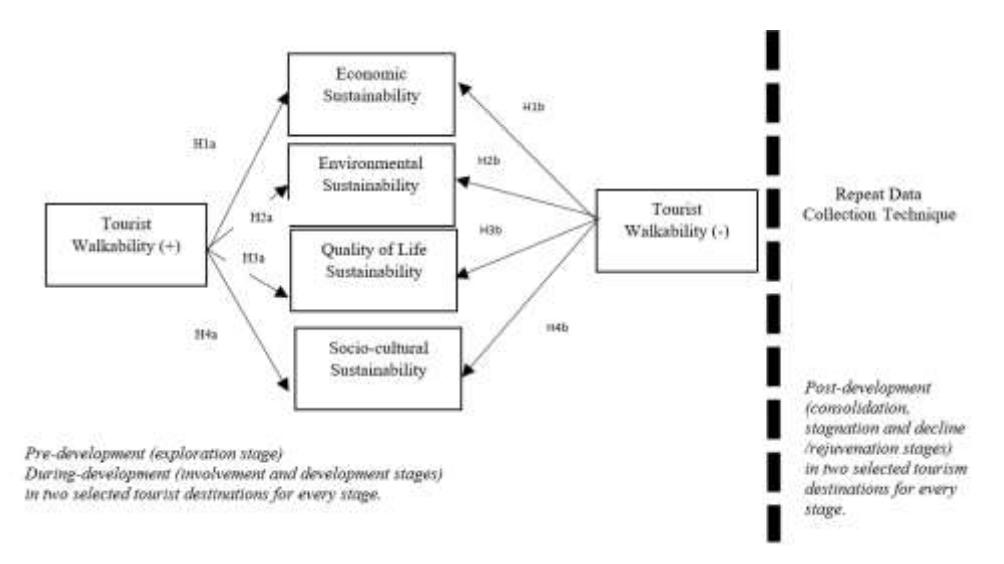
Figure 1. TWS research framework: Pre-, During and Post- Tourism Development Stages Source: Author (2021)
3. Research Methodology
The recommended measurements for the degree of tourist walkability are to apply the Walk Score and the Transit Score. Both scores are widely used indices for assessing walking potential. Spatial features such as accessibility, attractiveness, comfort, connectivity, and continuity, to some degree form tourists' expectations that impact their levels of satisfaction (Mansouri and Ujang, 2016). The residents' perceptions on the built environment are gathered to facilitate tourist walkability based on pedestrian paths and transportation transit facilities in the pre-, during, and post- tourism development stages. This is to reflect the extent to which tourists would be able to undertake walking in their travels within each tourist destination. To reduce spurious effects, a baseline approach on the similarities that include the attraction types, population size, economic development status, residents' demographics and occupation are to be applied when selecting the tourist destinations under study. The baseline study would be able to assess the economic, environmental, quality-of-life satisfaction and socio-cultural impacts where tourist walkability has been practised in the community-based tourist destinations.
One year is cumulatively added through the passage of the subsequent TALC stage when assessing the pre-, during and post-development impacts of tourist walkability. This is to examine before- and after-effects of tourist walkability and its introduction for one year in the exploration stage, two years after in the involvement stage until six years later in the decline or rejuvenation stage. Information on tourism communities from travel websites would be gathered to identify good samples of community-based tourist destinations. Two best-fit community-based tourist destinations will be selected for each of the six stages of the TALC model. The selected tourist destinations are located
within the Indonesia-Malaysia-Singapore Growth Triangle (or IMS-GT) that host communities with similar demographic and socioeconomic status and are experiencing tourism market growth. The touristy activities are similar in its natural and man-made attraction settings as well as the targeted tourists.
Table 2 shows the tourism development stages coined by Butler (1980) and tourist destinations proposed for understudy. Permission will be sought from the leaders from each community who are willing to participate in the survey before data collection. Two similar tourist destinations representing each of the six TALC stages are targeted to improve the validity of future empirical studies and make data comparisons. A mixed methods approach is recommended to examine the goodness of fit of the proposed TWS research framework.
Table 2. Tourism development stages and proposed tourist destinations
| Selected Tourist Destinations |
|---|
| Kusu Island in Singapore and Kapas Island in Terengganu, Malaysia |
| Kukup Laut, Johor, Malaysia and Labuan Bajo in Nusa Tenggara, |
| Indonesia |
| Desaru, Johor, Malaysia and Mandalika in Lombok, West Nusa |
| Tenggara Province, Indonesia |
| Genting Highlands, Malaysia and Marina Bay Sands in Singapore |
| Medan City, Indonesia and Malacca City in Malaysia |
| Lake Toba in North Sumatra and Lake Chini, Pekan District, Pahang, |
| Malaysia |
Source: Author (2021)
Focus groups with residents applying the themes in Table 3 and construct items in Table 4 will form the core semi-structured interview questions. In each of the selected tourist destination, research team members or the local enumerators would undergo training on effective interviewing techniques. Preferably, university students who are pursuing tourism related courses and can speak the local language in case of translation into the local language and back translation is needed. A set of the survey indicators on assessing tourist walkability that impact the residents' life would be revised according to the feedback from the residents in the focus group interviews conducted in the final twelve identified community-based tourist destinations.
Table 3. Primary themes for evaluating walking accessibility
| Themes | Characteristics | Utility | Sources |
|---|---|---|---|
| Distance | Accessibility (proximity) is spatial separation among places, i.e., lower separation implies higher accessibility. The shorter the distance to opportunities the higher the | Useful if opportunities are perceived as, substitutes, perfect, or near perfect, e.g., accessibility train stations or bus stops. This assumes a | Pearce, Witten and Bartie, 2006; Mavoa et |
| accessibility. | person wants to be closest to the most possible opportunity, and all opportunities offer the similar value. | al., 2012 | |
| Gravity-based (and cumulative opportunities) | The gravitational technique claims that spatial interaction increases inversely with shorter distance. Based on weight opportunities and denominator in the gravity model, applying an impedance function, i.e., travel distance, travel time | Opportunities are viewed as complementary, and travel (distance or time) as a cost to be optimised or kept within at an acceptable value, e.g., accessibility to attractions that help in urban planning. | Manaugh and El Geneidy, 2012 |
| Infrastructure based or topological | Measures accessibility that focuses on the analysis of network connectivity | Useful for evaluating the influences a road network has on movements and overall | Hoedl., Titze and Oja, 2010; |
| Themes | Characteristics | Utility | Sources |
|---|---|---|---|
| and/or the active transport infrastructure and typology. | accessibility. Despite that these measures do not assess the present opportunities, are useful as planning tools for development proposals. | ||
| Walk or walkability score-type | Built environment characteristics but not route characteristics that defines accessibility as the relationship between a clear origin point to a clear set of destination points, e.g., Walk Score®. | Overall indicators of the active travel fundamentals for spaces. | Duncan et al. 2013; Manaugh and El Geneidy, 2012 |
| Expectations of Walkability Elements | Close to public transport nodes, easy to connect destination points, directness of walkway points, proximity to transit points, availability and continuity of walkways/alternative routes, pedestrian routes, walking signages, visual attractiveness | Useful for evaluating walking element, attributes and outcomes including revisit intention. | Ujang and Muslim (2014) |
| Walkability attributes | Presence of sidewalk, ground conditions, pavement width, slope, vehicle traffic flow, number of crosswalks, signage, litter, number of trees, natural areas, shade, number of shops and services, number of tourist establishments, bus/subway stops, bicycle-sharing stations, bike lanes, street connectivity | Manzolli, Oliveira and Neto (2021) | |
| Factors influencing walkability | Spatial climate, topography, prevailing wind direction, urban pattern, landscape), social (demographic data, cultural and sociological values), economic (land-use patterns) | Arslan et al. (2018) | |
| Satisfaction on Walkability | Connectivity, comfort, Feelings, safety, attractiveness, pleasantness | Ujang and Muslim (2014) | |
| Revisit Intention | Authenticity, Walkability, Satisfaction | Ernawadi and Putra (2021) | |
| Walkability | Comfort and safety (behavioural and | Useful for indicators to | Berzi, |
| Assessments | subjective), structured (usefulness), structured and subjective (comfort and attractiveness) | incorporate on walkability assessments | Gorrini and Vizzari (2017, July) |
| Assessments | Weather and climate are barriers of tourism-related walkability | Hall and Ram (2019) |
Source: Multiple authors (2006, 2010, 2013, 2014, 2017 July, 2018, 2019 2021).
Pre-testing of the revised survey questionnaire would be performed with at least two residents each from the selected tourism destinations. A pilot test would be performed with at least 30 usable responses to test the reliability (Cronbach's alpha) of the scale measurements that meet the minimum acceptable level of 0.7. The Pearson Product Moment Correlation would be used to test the validity of the scale measurements. Data collection would be performed using the tested survey questionnaire to gather residents' perceptions on the accessibility of the tourist walkability based on the Walk Scores and Transit Scores and the impact on the four sustainability indicators.
Indicator No of construct Adapted from Extant Studies Economic Sustainability 6 Choi and Sirakaya (2006); Lee (2013); Yu, Chancellor and Cole (2011) Environmental Sustainability 3 Choi and Sirakaya (2006); Lee and Hsieh (2016); Yu et al. (2011) Quality-of-life Sustainability 14 Kim et al. (2013); Sirgy and Lee (2006); Woo et al. (2015) Socio-cultural Sustainability 10 Choi and Sirakaya (2006); Lee (2013) Total: 33
Table 4. Constructs for Four Sustainability Indicators
Source: Multiple authors (2006, 2011, 2013, 2015, 2016)
A compilation of the resident demographics such as gender, age, educational level, marital status, and monthly income would be incorporated in the survey. Purposive sampling would be adopted in the survey which is a useful technique for identifying and selecting information-rich cases. The primary selection criteria of the tourist destinations include meeting the descriptive characteristics of the TALC stages and following the baselines that bear similar touristy activities and community demographics. The targeted sample size for the residents in each community-based tourist destination is established based on its percentage composition over the total population. Chi-square (χ2) goodness-of-fit test can establish whether the usable samples of each community are representative of an equal percentage of the survey (Hair et al., 2010).
Descriptive statistics (e.g., frequency, and percentages of resident demographics) and non-parameter analysis results (e.g., χ2 test) would be analysed using the SPSS Statistics 28. A confirmatory factor analysis would be carried out using AMOS to assess the validity of the research instrument. The model fit, reliability, and validity i.e., convergent and discriminant validity of the four sustainability indicators would be verified. In addition, the paired-sample t-test would be used to determine the differences between the pre-, during and post-tourism development periods and the multivariate analysis of variance (MANOVA) would be used to analyse the four sustainability indicators and to establish the between-group statistical differences (Wilks's lambda). A one-way analysis of covariance (ANOCOVA) would be performed to observe if the results remain significant after controlling the co-variate. Post hoc significant differences are to perform for each of the four sustainability indicators across the six different TALC stages.
4. Discussion
A critical review of relevant literature, predominantly from 2011 to 2021 was extracted from ABDC publications, Scopus, ResearchGate.net and Google Scholar. There are a total of 4 main topics that were discussed (1) Tourism Area Life Cycle (TALC) for Community-Based Tourism (2) Sustainability of Community-Based Tourism (3) Residents' perceptions of tourism impacts and (4) Walkability, Weighing Benefits versus Costs. Although significant positive relationship between attitude and support from residents located in tourism destinations, the findings should be treated with discretion. More research effort to establish if residents would partake in the tourism development phases by providing additional economic advantages. The growth of tourism development in a destination on one hand may create job opportunities for the tourism communities, on the other hand it may jeopardise the traditional livelihoods of the non-tourism communities.
Sustainability implications in terms of community-based tourism have been intensely debated. A further need for tourism policymakers to comprehend the local residents' perceptions of tourism impacts by evaluating in terms of sustainability from the economic, environmental, quality-of-life, and socio-cultural perspectives. The costs and benefits of tourism impacts will determine the residents' support for tourism development, particularly towards community-based tourism.
Therefore, future empirical evidence gathering that embraces investigation of residents' perceptions of tourist walkability and the economic, environmental, quality-of-life, and socio-cultural impacts on its communities is necessary. In further exploring the costs and benefits in the assessment of walkability (walking and cycling), it offers guidance to tourism policymakers to respond to these changing tourism planning priorities and create win-win strategies that directly benefit both tourists and residents.
In view of the critical review in Table 1, this paper aims to determine the significance of tourist walkability on four sustainability indicators from the perspective of residents. These include the economic, environmental, quality-of-life, and socio-cultural impacts in community-based tourism destinations. TWS was formulated to scope the research. This had helped to fill up the gap in providing a research framework accompanied by a research plan on executing the studies over the six stages of the TALC advocated by Butler (1980). Eight sub-hypotheses were formulated with the intent to propose investigation of both positive and negative sustainability impacts. Using the same research measurements, the purpose is to determine the changes of these sustainability impacts on residents for tourist destinations at different development phases. Selection of tourist destinations in Table 2, two for each TALC stage is to increase validity of these study examinations. Each tourist destination was carefully selected as each exhibited similar tourism industry progress with the other counterpart within the three neighbouring countries, Indonesia, Malaysia, and Singapore.
5. Conclusion
Themes and potential indicators to assess the impacts of tourist walkability inform scholars on the technique that can be applied across the pre-, during and post development stages of the communitybased tourism. The market proposed for understudy is within the Indonesia-Malaysia-Singapore Growth Triangle (or IMS-GT). To improve data accuracy, the degree of walking potential of tourists in the selected tourist destinations would be measured using the widely applied Walk Score and Tourist Score. The contribution to the body of knowledge is the TWS research framework that is cross-disciplinary from leisure and exercise studies to tourism management.
The practical implications guided by the TALC model and a study of the residents' perceptions on pre-, during and post-tourism development will provide valuable insights to the tourist destination policymakers and managers. They can make thoughtful strategic decisions and draw a roadmap on sustainability strategies that suit the development plan for each tourist destination. These strategies would bring values and benefits not only directly to the tourists and community residents but also various groups of stakeholders. Research limitations is that there is no tangible empirical evidence collected yet and the data collection planning and implementation phase needs to be kicked off for future works. There is lack of assessment on political, technological, and legal issues and therefore future research is warranted in these three areas. Since a part of the questionnaire is adapted based on previous scale measurements in Table 3 and Table 4, some feelings and attitudes of the respondents may not be captured in this study. The validity of the questionnaire would be heavily dependent on the feedback from the focus groups to address this shortcoming. Additionally, it can be further improved using ethnography studies and in-depth unstructured interviews. Longitudinal studies rather than studying pre-, during and post-tourism development studies at one point of time may garner more insights on the development progress in community-based tourism destinations. Cost and benefit analysis can be used to evaluate the sustainability issues faced by various tourism stakeholders. Thus, research on tourist walkability and its contribution to community-based tourism is vital.