

1. Introduction
Popular media, in keeping with the times, has had an impact on the lives of people all over the world. Since the mid-twentieth century, popular media such as film and television have dominated the mass media and had a significant impact on the tourism industry (Beeton, 2005, p. 4). The mass media can influence tourist attractions and tourism activities by shaping or strengthening the destination's image. Some researchers have conducted research on film tourism in this regard.
Film-induced tourism encompasses a wide range of activities such as visits to filming locations and TV shows, tours of production studios, and theme parks themed after films (Beeton, 2005, p. 11). There are various types of film-induced tourism, one of which is off-location film studio tourism. According to Beeton (2005, p. 174), off-location film studio tourism refers to a tourist attraction in filmmaking sets that are built within the boundaries of production units rather than natural locations such as cities, coastal areas, or deserts. Gamplong Studio Alam Sleman (hence GSAS) in Sumberrahayu Village, Moyudan District, Sleman Regency, Province of Daerah Istimewa Yogyakarta (DIY) is one of Indonesia's off-location film studio tourism destinations. The tourist attraction is a filming location for Hanung Bramantyo's Bumi Manusia (This Earth of Mankind, 2019a). According to travel.kompas.com (2019), Joko Widodo, President of the Republic of Indonesia, inaugurated GSAS on July 15, 2018. After filming, the set was not dismantled but given to the Sleman Regency Government to be used as a new tourist attraction. According to the DIY Tourism Statistics for 2019, the total number of tourists who visited Gamplong Tourism Village in 2019 was 1,133,856 (Dinas Pariwisata Daerah Istimewa Yogyakarta, 2020). Since June 2019, GSAS has been operating as both a film studio and a tourist attraction.
Furthermore, film-induced tourism raises questions about what tourists perceive as authentic experiences. Croy & Heitmann (2011, p. 200) argue that tourists judge authenticity since they encounter film-induced tourism attractions like things they have seen in films. This claim is supported by anecdotal evidence that the tourists who visit film-induced tourism sites are upset because they do not see exactly what is depicted in the film, so they think that their experience of travelling to these places is something 'inauthentic' (Beeton, 2005, p. 4). This clearly demonstrates that tourists want to experience 'authenticity' based on the things depicted in the films they watch, so the search for authenticity is important in their visits to film-induced tourism attractions. The previously mentioned ideas and evidence pique the researchers' interest in the perception of tourists about authenticity at GSAS, Indonesia's first film-induced tourism attraction to use off-site filmmaking sets to become a theme park. The presence of GSAS as a representation of the setting depicted in the film Bumi Manusia raises various tourist perceptions of authenticity in film-induced tourism attractions. This study is needed to better understand the concept of authenticity in theme park attractions that are also filming locations, such as GSAS. This research will assist tourism managers in developing attraction and marketing development plans to meet tourist expectations and provide 'authentic' experiences, which will have implications for the GSAS's sustainability.
2. Theoretical Background
2.1. Notions of Authenticity
MacCannell (1973) pioneered the concept of authenticity in tourism studies by conducting a study of tourist motivation and experiences (Wang, 1999, p. 349). Since then, the quest for authenticity has emerged as a major theme in tourism debates (Belhassen et al., 2008, p. 668). Wang (1999, p. 350) classifies the types of authenticity experiences in tourism, namely objective, constructive, and existential authenticity, in its development. Objective and constructive authenticity are related to tourist objects, whereas existential authenticity is based on the awareness of personal or intersubjective feelings that are activated through tourism activities and has nothing to do with the object of authenticity (Wang, 1999, pp. 351–352). Reisinger and Steiner (2006, pp. 80–81) argue that the term objective authenticity should be dropped in connection with this type of authenticity
experience because a heterogeneous understanding emerges and is constructed socially and personally, preventing the concept of objective authenticity from reaching a consensual understanding. On the other hand, they argue that existential authenticity is a more useful concept for comprehending the meaning of tourists' authentic experiences (Steiner and Reisinger, 2006, p. 300). Belhassen et al. (2008, pp. 671–672) are opposed to this shift in the concept of authenticity and argue that abandoning the concept of objective authenticity poses a larger problem. The tendency of a subjective approach then eliminates the importance of place and social aspects as the main components of tourism itself.
Therefore, Belhassen et al. (2008, pp. 668–669) propose a theoretical framework that bridges the conceptual gap between the subjective and objective natures of authenticity and contextualizes it in the socio-spatial relationship related to travel as an important force mediating tourists' experience of authenticity. Based on research findings, Belhassen et al. (2008, pp. 682–683) state that the convergence of toured places, tourist activities, and beliefs in pilgrimage tour moments results in strong spiritual experiences and forms the authenticity of pilgrimage tours. Without the convergence of these three aspects, the meaning of authenticity would be weak.
The key findings of this study are then used to develop a theoretical framework for Theoplacity (Figure 1). According to the Theoplacity theoretical framework, pilgrims' perceptions of authenticity are built on theological beliefs that underpin pilgrimage tours, the places visited, and the activities undertaken by pilgrims (Belhassen et al., 2008, p. 683). The theoretical framework of Theoplacity is proposed as a comprehensive conceptual tool that combines elements of place, belief, and activity to generate complex ideas about authenticity (Belhassen, et al., 2008, p. 686).
2.2. Authenticity in Film-Induced Tourism Study
Buchmann et al. (2010) then applied the Theoplacity theoretical framework to their study of filminduced tourism. The study used a qualitative approach and took place during a tour of Queenstown and Auckland, New Zealand, which served as the filming locations for Lord of the Rings (Buchmann et al., 2010, p. 235). According to the key findings, the combination of reality at the filming location and the story depicted in the film resulted in a satisfying and authentic experience for tourists (Buchmann et al., 2010, p. 244). This study's findings support the argument that film-induced tourism tourists in New Zealand, as a location for the Lord of the Rings film, seek authentic experiences that are dependent on places, activities, and social processes such as values and understanding of film (Buchmann et al., 2010, pp. 243–244). The study demonstrates that the Theoplacity theoretical framework can be applied to forms of tourism other than religious tourism, such as film-induced tourism (Buchmann et al., 2010, p. 245).
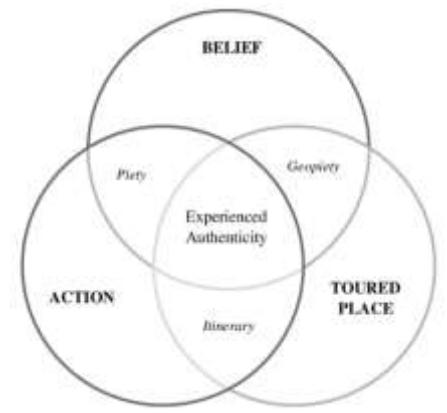
Figure 1. Theoplacity Theoretical Framework Model Source: Belhassen et al. (2008)
Unlike Belhassen et al. (2008), who include religious belief in their application of the Theoplacity theoretical framework, the belief component in the context of film-induced tourism by Buchmann et al. (2010, p. 245) refers to tourists' understanding of the film's story. Tourists' perceptions of authenticity are formed as a result of their evaluations of places and experiences at tourist attractions, which are based on ethos or beliefs derived from tourists' understanding of the story in the film. The tour participants, who served as research informants in the study, were asked about their perceptions of travel to New Zealand, with several focused questions relating to understanding the film story as a belief component in the study, the meaning of their travels associated with tourist attractions and activities in New Zealand, and the factors that influence their decision to undertake the tour (Buchmann et al., 2010, p. 237). The findings of the study show that tourists' perceptions of authenticity are influenced by their interpretations of the Lord of the Rings film story. All tour participants agreed that New Zealand was an 'authentic' place that could represent Middle-earth, as described in the Lord of the Rings film story. The emotional link between places, tourist experiences, and the Lord of the Rings story is the essence of authenticity (Buchmann et al., 2010, p. 240). This demonstrates that tourists' perceptions of authenticity in film tourism cannot be generated unless they understand and interpret film stories. As a result, the belief component in this study was also adapted as a comprehension of the film Bumi Manusia, making this research relevant to GSAS as the research locus.
The Theoplacity theoretical framework (Belhassen et al., 2008) was used as a guide in developing interview questions about the authenticity of GSAS in this study, but it was not used as a variable in determining GSAS authenticity. The study employed a qualitative approach, with a focus on each tourist's unique perception of authenticity based on their travel experience. The questions asked are limited to the components of tourists' understanding of the film Bumi Manusia, GSAS as a place component, and components of tourism activities, and do not cover other topics.
3. Methods
As previously stated, the research was conducted at GSAS, which is located at Dusun Gamplong 1, Sumberrahayu, Moyudan, Sleman Regency, Province of Daerah Istimewa Yogyakarta. GSAS was completed in December 2017. GSAS was initially designed solely for filmmaking. According to Hafidz Kurniawan, the head manager of GSAS, the initial purpose of establishing GSAS was to produce the film Sultan Agung: Tahta, Perjuangan, dan Cinta (2018) on the initiative of Mooryati Soedibyo as the producer of the film. Sultan Agung: Tahta, Perjuangan, dan Cinta was shot between December 2017 and January 2018.
Numerous people from all over Indonesia developed an interest in visiting GSAS over time, most notably during the filming of Bumi Manusia, an adaptation of Pramoedya Ananta Toer's (1980) awardwinning novel of the same title, in August and September 2018. As a result, the producer and local community of Sumberrahayu Village began to think of GSAS as a tourist attraction. Following that, the film producer and the local community formed a planning team to develop tourism facilities. The construction of facilities such as toilets, parking lots, and food stalls took place between May and June of 2019 (interview with Hafidz Kurniawan as the head manager of GSAS on February 18th, 2021). On June 7th, 2019, GSAS was officially opened to the public as a tourist attraction after the construction process was completed. Since it opened to the public, the number of visitors per day has ranged between 3,000 and 8,000. Until February 2021, this tourism attraction that also served as a film set features Kereta Tua (Old Train), Pecinan (Chinatown) and Surabaya City Area, Museum Bumi Manusia (Mellema's House) as Bumi Manusia film sets; Kampung Kumuh (Slum Village) as one of the settings of Habibie & Ainun 3 (2019b); and Pendopo Sultan Agung as the set for Sultan Agung: Tahta, Perjuangan, dan Cinta (2018).
The descriptive-qualitative method was used in this study (Altinay and Paraskevas, 2008, p. 75). The data was collected through self-selection sampling via the internet and semi-structured interviews with six informants who met the following criteria (Table 1):
- 1. Non-DIY visitors who visited GSAS between August 2019 and February 2021.
- 2. Have seen the film Bumi Manusia (This Earth of Mankind) prior to visiting GSAS.
- 3. Minimum age of 17 years
These criteria are based on the fact that the filming set of Bumi Manusia has been the primary tourist icon at GSAS (interview with Hafidz Kurniawan, the head manager of GSAS, on February 18, 2021), leading researchers to believe that the majority of tourists visit GSAS based on their experience watching the film Bumi Manusia. The Bumi Manusia filming set at GSAS is still operational until February 18, 2021, and thus is relevant to the first criterion of informants, namely tourists who visited GSAS between August 2019 and February 2021 (based on field observations on February 10, 2021). The minimum age requirement for research informants is 17 years. This criterion is based on the Indonesian Film Censorship Institute's (LSF) audience classification for the film Bumi Manusia (Fauziah, 2019).
Four males and two females are among the informants. The informants ranged in age from 21 to 24 years. Five informants are currently enrolled as students, with informant numbers one, two, three, and six being undergraduate program students and informant number four being graduate program students. Meanwhile, informant five has completed his diploma education and is now working as an entrepreneur. Furthermore, only informant four was a repeat visitor who had visited GSAS twice (see Table 1).
Informant no. Sex Age Origin Education Visit to GSAS 1 M 22 Pacitan (East Java) Undergraduate 1 time 2 F 21 Temanggung (Central Java) Undergraduate 1 time 3 F 22 Magelang (Central Java) Undergraduate 1 time 4 M 24 Bangka Belitung Graduate 2 times 5 M 22 Boyolali (Central Java) Diploma 1 time 6 M 21 Purworejo (Central Java) Undergraduate 1 time
Table 1. Informants Profiles
Source: Authors (2021)
Interviews were conducted using web video conferencing software (Google Meet) to reduce the risk of COVID-19. The interview was divided into two sessions: one for questions about the informants' personal data (name, age, gender, place of origin, education, and occupation) and the other for questions about their perceptions of authenticity. The interview questions about perceptions of authenticity were created by modifying the Theoplacity theoretical framework (Belhassen, et al., 2008).
Thematic analysis methods were used to analyze the collected data (Braun and Clarke, 2012). The results of the interview transcript coding and the components of the Theoplacity theoretical framework were used to develop themes. The narrative was developed by the researchers through interpretative analysis of themes used as discussion material in this article.
4. Results and Discussion
The purpose of this study is to examine tourists' perceptions of the authenticity of GSAS as a filminduced tourist attraction. Based on adaptations of the Theoplacity theoretical framework, information from informants regarding perceptions of authenticity of GSAS was explored through interview questions that were developed based on three components that influence tourists' individual meanings about their authenticity experiences, that is, place, belief and activity. The discussion on tourist perceptions of the authenticity of GSAS as a film-induced tourism attraction is divided into four sections.
4.1. Tourists' Understanding of The Bumi Manusia Film
According to the research findings, tourists' understanding of the film Bumi Manusia is divided into several categories. The following elements are included in the tourists' understanding of the film: the outline of the story, the settings (time, place, and atmosphere), other supporting elements, and the film's most memorable scene. For each subject, it is possible to have more than one aspect of the informants' answers based on the breadth of their understanding of the film.
In general, informants perceive the story of the film Bumi Manusia to be an escalating story about Minke, a Dutch East Indies (now Indonesia) native student who attends a school for the community of Dutch descent; a love story between Minke, an East Indies native, and Annelies, a child of Indo descent (a mixture of natives and Dutch); and the emergence of conflict between Minke and his biological family as a result of Minke's parents' opposition to Minke's romance with Annelies, the daughter of a Nyai (mistress, concubine), who was looked down upon in society at the time. Furthermore, the film discusses the culture of the indigenous peoples of the Dutch East Indies during the colonial period, the Dutch treatment of the natives, and the natives' struggle during Dutch colonialism. The struggle in question refers to Minke's struggle as a native against the injustices of Dutch colonialism (informant six). Meanwhile, another informant explains that the film depicts the natives' struggle to obtain rights as free human beings during colonialism in the Dutch East Indies (Informant one).
Informants two and five stated that the film is set during the Dutch colonial period. Meanwhile, informants one and six explained that the film Bumi Manusia is set between the 1800s and 1900s. The informants discovered the film's setting in Wonokromo and Surabaya (informants one and five), East Java (informant three), and the Dutch East Indies (informant six). One of the informants, informant four, initially believed that the background of the atmosphere depicted in the film is that of a city in a European country. This is because the train is depicted in European style, and the people were of European descent. According to informant six, the film's setting is the atmosphere of life in the Dutch East Indies in the 1800s, which is supported by the Dutch-style building.
Meanwhile, other elements such as the cast of the film Bumi Manusia, the cinematography of the film, and details such as the architecture of the buildings and the tools used in the colonial era in the film help informants understand the film itself. Informant two, who is 21 years old, stated that the film's cast, the majority of whom were young and the same age as the informant, was a motivating factor in enjoying and comprehending the entire story. Informant six previously thought that the cinematography of the film would be made in monochrome color, but the film was shown in color, which further supports his understanding of the atmosphere depicted in the film Bumi Manusia. Furthermore, he stated that details such as European-style architecture and the tools used in film production, such as typewriters, printing presses, clothing, and modes of transportation, were carefully considered, thereby supporting the depiction of the atmosphere of the Dutch colonial period in the film Bumi Manusia.
None of the informants could recall the plot of the film Bumi Manusia in detail. Nonetheless, some informants were able to explain some of the most memorable scenes from the film. Informants three, four, and five recall a scene near the beginning of the film in which Minke was invited by his friend, Robert Suurhof, to walk around Surabaya. According to informant three, in that scene, Minke and Suurhof were denied entry to the cafe because natives were not permitted to enter. Minke and Suurhof finally decided to go to a Chinese restaurant. According to informant four, the scene was able to provide an understanding of the atmosphere of Surabaya in the 1900s.
Informants two, three, five and six stated that they recall Minke's first visit to the Mellemas Family's home. This scene marks the beginning of Minke's love story as a native with Annelies, the daughter of Herman Mellema, a dairy entrepreneur of Dutch descent, and Nyai Ontosoroh, a native mistress. According to informant two, Minke was treated very well by Annelies and her mother, Nyai Ontosoroh. The same informant also recalled the Mellemas family's dinner with Minke. Suddenly,
Annelies' father, Herman Mellema, arrived at the house drunk and stated in front of Minke that he disliked natives. The informant also remembered Minke being forced to leave the house. This made Annelies feel lonely and depressed. Other informants understood that Minke's first meeting with Annelies at the Mellema's house formed an understanding of the two characters' different backgrounds as one of the causes of the conflict in the film's story, that is, Minke's biological family who opposed the relationship between Minke and the Mellema Family (informant six). Informant three recalls that Minke and Annelies were also asked to walk together in the farm and lake area surrounding the Mellema's house.
Informant six recalled a scene in which Minke was forced to leave the Mellema's house to face his biological father, who was appointed as a Regent. Then, at the Regent's house, Minke finally met his biological mother and father. When Minke first met his mother, he fell on his mother's knees and declared that he desired to be a free human being, not to be ruled or reigned over. He interpreted Minke's meeting with his mother as the beginning of the central conflict in the story of Bumi Manusia, namely the struggle of the indigenous people to fight for their rights as free human beings and against the injustice of Dutch colonialism.
Informants one, two, and three remembered the scene at Nyai Ontosoroh's trial court in the case of her husband's death, Herman Mellema. The scene was described by informant one as an unfair trial court by the Dutch for accusing Nyai Ontosoroh of murdering her husband. The unfounded allegations arose as a result of Nyai Ontosoroh's status as a native given by the judge, a Dutchman, and ultimately caused negative sentiments in society towards Nyai Ontosoroh. In addition, informant three recognized the court's structure as a pendopo.
Informants one and four recalled the final scene of the film Bumi Manusia, in which Nyai Ontosoroh's authorization in the form of property and family members was 'deprived' by Herman Mellema's legal wife, who lives in the Netherlands. As a result of this incident, Annelies was forcibly deported to the Netherlands. Informant four vividly remembered Minke and Nyai Ontosoroh's conversation in that scene:
"When Ann was about to be taken to the Netherlands by force, Minke told Nyai Ontosoroh, "we lost", to which Nyai Ontosoroh replied, "Yes, we lost, but we fought with honor." (Informant four, interviewed on March 3rd, 2021).
Several informants briefly mentioned that the most memorable scenes in the story of the film were the raid on a prostitution place in Chinatown (informant three), Minke's graduation party from Hogere Burgerschool (HBS) (informant five), Minke's journey by train (all informants), and his marriage party to Annelies in Mellema's yard (informant five). Because it relates to GSAS as the filming location set for the film, the most memorable scene in the story becomes an important discussion theme in this research. The connection between the most remembered scene as a form of tourists' understanding of the film Bumi Manusia and the shooting location forms the perceived authenticity of GSAS in terms of the place component. The next section will discuss the connection between the scene from the film that is remembered as a form of tourists' understanding of the film and the filming set.
4.2. Perceived Authenticity of GSAS among Tourists viewed as the Place Component
The Old Train, Mellema's house (Museum Bumi Manusia), pendopo, and Surabaya City Area, which included Minke's inn, a café, and a Chinatown, were among the filming locations visited by informants. The buildings and other objects in GSAS can be identified as filmmaking sets for Bumi Manusia because they are related to the scene, setting, and other details in the film based on each informant's understanding. The Old Train (Figure 2) was met by all of the informants because it appeared on the scene while Minke was riding it. Five informants, namely informants two, three, four, five, and six, recognized the vehicle as the film's set. According to informant one, the Old Train is an object that appears at the beginning of the film's scene to describe the atmosphere of the Dutch East Indies in the 1900s.
Informants one, two, three, five, and six identified the Mellema's House, which served as the Museum Bumi Manusia, as the setting for the scene in which Minke visited the Mellema's House for the first time. It is also the location where Robert Suurhof first met Robert Mellema, Annelies Mellema's older brother. Meanwhile, informant four did not visit the Museum Bumi Manusia. Informants two and three discovered the pendopo. According to the two informants, the building is connected to the trial court scene of Nyai Ontosoroh. Informants one, four, five, and six, on the other hand, stated that they did not find the pendopo during their visit to GSAS.
According to his understanding of the film Bumi Manusia, informant six knows Surabaya City Area as a tourist attraction that describes the atmosphere of Surabaya City during the Dutch colonialism period. Informants one, three, and four identified the Surabaya City Area as the film's setting because a café in that area is shown in the scene where Minke is denied entry into the building due to his indigenous status. Informants three and four encountered Minke's inn in the Surabaya City Area as part of the filming set for the scene in which Minke was picked up by Robert Suurhof. Informants two and four identify one of the Chinese restaurants as being part of the Chinatown building in the Surabaya City Area, as seen in the scene where Minke and Robert Suurhof visit the restaurant after being refused entry to the café. Meanwhile, informant five could not recall any specific scenes involving the Surabaya City Area as the film's setting.
Figure 2. The Old Train Source: Authors (2021)
Regarding the perceived authenticity of GSAS among tourists as a place component, all informants agreed that buildings and other objects as tourist attractions, as well as the set of the film, could be called 'authentic' if the shape and atmosphere of the buildings and objects indicate suitability with the setting of the place in several scenes, the atmosphere, and the details of the objects depicted in the film based on their individual understanding. As a result, depending on each informant's understanding of the film, the perceived authenticity of GSAS among tourists viewed as a place component may differ. According to informants three and five, the entire Bumi Manusia filming set found at GSAS was 'authentic'. They thought it was 'realistic', and that it represented every aspect of the film.
"It's totally 'realistic', like the one in the movie." (Informant three, interviewed on March 4, 2021)."
"The buildings are quite 'original', reflecting all aspects of the film Bumi Manusia." (Informant five, interviewed on March 6, 2021).
Meanwhile, informant six considered that 90% of the set for the film could be called 'authentic'. He realized that there were additional visual effects in the film, such as objects that varied in size and number, as a result of several sets of filming at GSAS. The informant, on the other hand, thought the difference was minor. He also claimed that the architectural details at GSAS were accurate to what was depicted in the film.
"In my opinion, 90% of Gamplong is appropriate [with the film]. Why 90%? Because the film contains additional visual effects such as a large natural setting and a large number of trees, although the difference is insignificant. The building and its details are identical when found in Gamplong." (Informant six, interviewed on March 7, 2021).
The informants also expressed their perceptions of the authenticity of the sets, which were reviewed one by one based on what each informant encountered at GSAS. The Old Train ride, according to informants two, five, and six, is an 'authentic' tourist attraction at GSAS. The train ride is identical to the one Minke rode in several scenes. Informant six was drawn to the shape of the Old Train's window. The shape of the window, according to the informant, corresponds to the train depicted in the film.
The perceived authenticity of the Museum Bumi Manusia, which serves as Mellema's House in the film setting, is divided based on the parts of the building. The terrace of the house as part of the Museum Bumi Manusia building is 'authentic', according to informants two, three, five, and six. The informants clearly recognize this part of the building as part of Mellema's house in the scene when Minke visits the house for the first time, then sits on the terrace and meets Annelies. For informant one, the terrace of the house is also known as the location of the Robert Suurhof and Robert Mellema meeting scene.
Informants one and six argue that the Museum Bumi Manusia's dining room is an 'authentic' part of the structure. Informant one believes that the five chairs in the dining room as depicted in the film are a factor that influences the authenticity of the dining room. Informant six claims that the quiet atmosphere felt during the visit to this part of the building is similar to the atmosphere depicted in the film, particularly during the dinner scene, and thus considers the dining room to be an 'authentic' part of the building.
Informants two, three, and six all stated that the Museum Bumi Manusia complex's front yard is 'authentic'. The front yard of the house was able to stimulate the informant's imagination about Minke's arrival at the Mellema family's house. According to informant six, the golden chariot in the front yard of the house corresponds to the vehicle used by Minke and Robert Surhoff when they visited Mellema's house, as depicted in the film.
"When I saw the front yard from the house's gate, I imagined Minke getting off the chariot and meeting Annelies." (Informant two, interviewed on March 2, 2021).
Unlike the other three informants, informant one believes that the front yard of the house is not an 'authentic' location. This is due to the fact that the distance between the gate and the house's terrace does not correspond to what is depicted in the film. The informant believed that the distance between the house's gates and its terrace should be greater than what was found at GSAS.
"The distance from the gate to the Mellema Family House building should be quite long and pass through quite a few trees, but in Gamplong, the distance is not long enough, in fact very close, so I conclude that the part of the house does not match the one in the movie." (Informant no. 1, interviewed on March 2, 2021).
Two bedrooms were located in another section of the building where informant one was encountered. The informant was unable to verify the two bedrooms' veracity. The informant was unsure which rooms belonged to Herman Mellema and Nyai Ontosoroh, Annelies, or Minke during Minke's stay at the Mellema's house. The informant believes that the Museum Bumi Manusia's interior should include an information sign describing the room's function in the film scene.
Informant three believes that the pendopo building is an 'authentic' set. The informant thought the structure matched the pavilion depicted as the setting for Nyai Ontosoroh's trial court scene. Informant two, on the other hand, claimed that the pendopo structure was 'inauthentic'. This is due to the fact that the atmosphere in the building does not correspond to the atmosphere depicted in the film. The informant felt that the contrast between the quiet atmosphere in the pendopo during her August 2019 visit to GSAS and the atmosphere full of crowds depicted in the film raised questions about whether the pendopo building was used as a filming set for the Nyai Ontosoroh court scene or not.
Informants one and six thought the entire Surabaya City Area was an 'authentic' set. Informant one claims that the atmosphere of the Surabaya City Area visited at GSAS is true to the atmosphere of the City of Surabaya in the 1900s, as depicted in the scene when Minke was invited to tour the city by Robert Suurhof. Informant six shares the previous informant's viewpoint. Furthermore, informants three and four thought the café building in the Surabaya City Area set was 'authentic'. This is due to the building's shape matching the café depicted in the scene where Minke is refused entry. Informant four, who saw the Minke's inn building, thought it was 'authentic' because the shape of the building corresponded to the Minke's inn depicted in the film.
In addition to the cafe and Minke's inn, informant two encountered a number of Chinatown structures in the Surabaya City Area. The informant thought the exterior construction of a Chinese restaurant and a Surabaya shop was appropriate as depicted in the film, especially when Minke and Robert Suurhof visited a Chinese restaurant after being refused entry to the café. The interiors of the two buildings, however, were found to be inconsistent with what was depicted in the film. The lack of attributes and ornaments that describe the Chinese oriental style in the building is what makes the interior of the Chinese restaurant building 'inauthentic'. According to her statement, the building of a Chinese restaurant should have more diverse attributes and ornaments, as shown in the scene of Minke and Robert Suurhof visiting the restaurant. The informant discovered the interior of the Surabaya Store building, which is part of the Surabaya City Area, to be empty and devoid of any attributes. She also stated that the availability of attributes and ornaments as interior decorations of Chinatown buildings in the Surabaya City Area is critical in creating AN 'authentic' tourist experience.
"From the exterior the buildings in Chinatown appear to be the 'originals' particularly in the scene where Minke and his friend were refused entry to the café. However, when I look at the interior, I don't think it's authentic because as a Chinese restaurant interior it lacks any Chinese elements or ornaments. The object should exist in the same way that it is depicted in the film. The Surabaya Store was also deserted and appeared to be in disrepair. Well, I believe the ornaments should be displayed in Gamplong so that the film tour experience is more 'real'." (Informant 2, interviewed on March 2, 2021).
Some informants noticed that the film Bumi Manusia's settings, such as the Mellema's farm, the lake in the Mellema's yard, the regent's house (Minke's parents' residence), and the black train, were not present during their visit to GSAS. Informants one and three were aware that the location for the filming of Bumi Manusia in the lake behind the Mellema family's yard was not GSAS, but rather Waduk Sermo. According to several informants, the Mellema's farm, the lake in the yard of the Mellema's House, and the regent's house are important to present at GSAS. Informant three believes that the film's setting, which is not found at GSAS, should be presented so that tourists can have the feeling of being in the "world of the film". Informant four agrees with the previous informant.
Other informants, on the other hand, argued that the Mellema's farm, the lake in Mellema's yard, the regent's house, and the black train were insignificant enough to be shown at GSAS. Informant six explained that the regent's house or Minke's parents' residence, as well as a black train, do not need to be presented at GSAS in order to avoid giving tourists the impression that the attractions at GSAS are merely artificial, without regard for the originality of the filming location. Informant one claims that the Mellema family's farm and the lake in the Mellema family's yard do not need to be presented by GSAS because the area around the Mellema's House is too narrow to present both settings in a large size and in a position that corresponds to the depiction of the film's setting.
The authenticity of the Bumi Manusia filming set as a tourist attraction at GSA was important to all informants. Tourists expect to visit filmmaking locations, so the compatibility of tourist attractions with tourists' understanding of the film is critical.
"It's significant, in my opinion, because the film is built on expectations, so conformity is crucial. People visit Gamplong expecting to see the filming locations for Bumi Manusia. Gamplong, in my opinion, has exceeded my expectations. I was surprised because the location had been meticulously constructed, either for filming or tourism purposes. It is obvious that tourist attractions such as Gamplong require further development in Indonesia." (Informant three, interviewed on March 4, 2021).
This compatibility between the filming setting and location is critical in order to avoid visitor disappointment if the tourist attractions visited at GSAS differ in shape and atmosphere from the background depicted in the film (informant six). Furthermore, informants two and four stated that the authenticity of the Bumi Manusia filming set as a tourist attraction at GSAS is vital to creating an emotional attachment between the place and the film. In addition, a discussion of tourist activities at GSAS and their relationship to tourists' understanding of the film and the filming set of Bumi Manusia at GSAS will be provided in the following section.
4.3. Perceived Authenticity at Gamplong Studio Alam Sleman based on Tourists' Activities
The first topic of discussion in this section is the tourist activities undertaken by the informants during their visits to GSAS. Furthermore, this section will explain specific activities that relate to tourists' understanding of the film and the Bumi Manusia filming set at GSAS. Each theme allows for more than one aspect of the informants' answers based on their visits to GSAS.
All of the informants at GSAS engaged in tourist activities such as photography. Informant two engaged in additional activity by sitting in the field in front of the entrance. Informant four participated in guessing games about the connection between the film's setting and the filming set discovered at GSAS. Meanwhile, informant three travelled to GSAS with his family to participate in tourism activities.
Furthermore, the informants took part in special activities related to their understanding of the film, such as riding the Old Train ride (Figure 3), reimagining film scenes based on the Bumi Manusia filming set found at GSAS, and posing as a character from the film in certain scenes.
Figure 3. A tourist taking in the sights on the Old Train Source: Authors (2021)
Informant one stated that by participating in tourist activities on the train rides, he was able to experience the atmosphere of the Dutch East Indies in the 1900s, as depicted in the film. Furthermore, three other informants, namely informants two, five, and six, stated that the tourism activity reminded them of the scene in which Minke was riding the train.
Informants two, three, and six participated in the tourism activity of reimagining scenes from the film. The activity was carried out, according to informant three, while walking around the Surabaya City Area set and visiting café buildings. The informant's activity was based on her understanding of the film's scene in which Minke was refused entry to the café. According to informant number two, tourists recreated the scene from the film by viewing the front gate and courtyard of the Museum Bumi Manusia as the Mellema's House. The informant carried out this activity because it was based on her understanding of the film's scene when Minke got off the golden chariot.
"I imagined Minke approaching the Mellema's House as I stood at the gate. I could also imagine Minke getting off the chariot and meeting Annelies on the house's terrace." (Informant two, interviewed on March 2, 2021).
Informant six engaged in tourism activities such as re-enacting a scene from the film while in the dining room of the Museum Bumi Manusia. The informant carried out this activity because it was based on her understanding of the film about Mellema's family and Minke's dinner. The activities of the informants are supported by the compatibility between the filming location's quiet atmosphere and the atmosphere depicted in the film.
Informant one participated in tourism activities by posing as movie characters. The informant photographed himself and a friend impersonating the character of Robert Suurhof, who met Robert Mellema. The informants were encouraged to participate in this activity because the terrace of Mellema's House was easily identified as the setting for the scene in which Robert Suurhof and Robert Mellema met.
Meanwhile, several informants argued that the GSAS developer should present a variety of tourism activities related to the film. Informants three and four suggested that the rental of Dutch East Indiesstyle costumes during colonialism could be shown in GSAS. Informant three contends that the costumes that visitors can rent can stimulate their imaginations so that they can resemble the characters from the film. Informant four contends that visitors and officers on duty at GSAS can be a representation of the people depicted in the film if they dress in costumes similar to those depicted in the film.
Furthermore, informant three believes that the café building in the Surabaya City Area can be used as a real café. She stated that the cafe building, which serves as a real place to eat, will enhance the experience of being in the café where Minke was refused entry. She also anticipated that if the café set served as a real café, the café waiter would need to dress similarly to the waiter in the film to enhance the experience of being in the film's setting. Meanwhile, informant five believes that the manager should present wax figures of the film's characters. According to the informant, the wax statue can be used to have experiences such as 'meeting' the characters. The following section will explain the authenticity experience that is formed by the interrelationship between the components of understanding the film with the filming set at GSAS and the activities carried out by the informants.
4.4. Perceived Authenticity among Tourists based on the Interrelation between Tourists' Understanding of the Bumi Manusia Film, Places, and Activities
Based on the theoretical framework of Theoplacity (Belhassen et al., 2008: 683), authenticity experiences are formed through the interrelationship between belief, places, and tourist activities components. The findings of this study indicate that the tourist experience of riding the Old Train ride, posing like a character from the film Bumi Manusia on the terrace of the house, and re-imagining the scene of Minke being refused entry to the café, Minke getting off the golden chariot in the front yard of Mellema's House, and Mellema's family dinner is an authentic experience felt by the informant during a tourist visit to GSAS. This experience demonstrates the connection between the components of tourists' beliefs or understanding of the film, the filmmaking set at GSAS as a place component, and the activities undertaken by tourists (see table 2).
Meanwhile, the informants' visits to several filming locations, including Minke's inns, pendopo, and Chinatown buildings such as Chinese restaurants and Surabaya shops, were deemed insufficient for producing a complete authenticity experience because there were no activities stimulated by the film's story on the sets. According to informants, these locations were only capable of reminding them of the objects depicted in the film and were unable to arouse a desire to engage in activities that would place them as 'involved' directly in the film (informant four). According to informant one, visiting GSAS becomes more 'authentic' when it is accompanied by individual actions that reflect the suitability of the movie scene through the tourist attractions visited.
Table 2. Coding of the Understanding of the Film Bumi Manusia, Places, and Activities
| Understanding of the film Bumi Manusia | Place | Activity | Informant no. |
|---|---|---|---|
| The atmosphere of the Dutch East Indies in the 1900s Minke's scene on the train | The Old Train | Riding The Old Train ride | 1, 2, 5, 6 |
| - | 4 | ||
| Meeting of Robert Suurhof and Robert Mellema | Museum Bumi Manusia - terrace | Imitating the poses of Robert Suurhof and Robert Mellema | 1 |
| The scene when Minke visited the Mellema's house for the first time | - | 2, 3, 5, 6 | |
| Mellema's family dinner scene | Museum Bumi Manusia - dining room | Re-imagining the scene of Mellema's family and Minke dinner scene | 6 |
| - | 1 | ||
| The scene of Minke visited the Mellema's house by riding the golden chariot | Museum Bumi Manusia - front gate to the courtyard | Re-imagining Minke getting off the chariot | 2 |
| The golden chariot's shape | - | 6 | |
| - | Museum Bumi Manusia - bedrooms | - | 1 |
| The scene in which Minke is refused entry to the café | Surabaya City Area - café | Re-imagining the scene of Minke is being refused to entry the café | 3 |
| - | 1, 4 | ||
| The scene when Minke is picked up by Robert Suurhof | Surabaya City Area – Minke's inn | - | 4 |
| The scene of Minke and Robert Suurhof visiting a Chinese restaurant | Surabaya City Area - Chinatown | - | 2, 4 |
| Nyai Ontosoroh's trial court scene | Pendopo | - | 3 |
Source: Authors (2021)
The informant's statement is consistent with the viewpoint of Belhassen et al. (2008, p. 683), who believe that without the convergence of the three previously mentioned components, namely belief, places, and activities, the meaning of authenticity will be weak. The experience of visiting two
bedrooms at the Museum Bumi Manusia does not constitute an authentic experience because the informant cannot identify the relationship between the place and the understanding of the film, and thus it does not stimulate the informant to engage in activities directly related to it (informant one).
The purpose of this study was not to examine the relationship between informant profiles and their perceptions of authenticity at GSAS. However, this study discovers that no aspects of the informant's profile are related to the pattern of responses regarding tourist perceptions of authenticity at GSAS as an attraction for film-induced tourism. The perception of authenticity is based on the understanding of the film Bumi Manusia, the filmmaking set at GSAS, and the overall experience of tourists.
5. Conclusion
This study examines tourists' perceptions of GSAS as a film-induced tourism attraction. The researchers understand the tourists' perception of authenticity at GSAS as a tourist attraction related to the success of the film Bumi Manusia production based on research conducted with six informants. The findings revealed that the relationship between tourists' beliefs or understanding of the film, the filmmaking set as a place component, and the activities performed by tourists at the tourist attraction influenced tourists' perceptions of their authenticity experience at GSAS as a film-induced tourism attraction. The findings of this study support the assertion of Belhassen et al. (2008, p. 683) regarding the Theoplacity theoretical framework, namely that authenticity is formed through place and belief as to the physical and social environment that mediates the meaning of tourist activities undertaken by tourists.
The tourists' experiences of riding the Old Train ride, posing like a character from the film on the house terrace, re-enacting the scene of Minke being refused entry to the cafe, Minke getting off the golden chariot in the front yard of the Mellema family's house, and Mellema's family dinner are considered authentic experiences felt by the informants during a tourist visit to GSAS. The informant judged the tourist experience to be authentic because of the compatibility and strong interrelationship between the scene, setting, and details of objects depicted in the film Bumi Manusia as the informant's understanding of the film; and the shape and atmosphere of the film's sets, as well as activities carried out by informants on various sets of the film as a tourist attraction at GSAS.
Meanwhile, the informants' visits to several filming locations, including Minke's inns, pendopo, and Chinatown buildings such as Chinese restaurants and Surabaya shops, were deemed insufficient for producing a complete authenticity experience because there were no activities stimulated by the film's story on the sets. This is similar to the experience of visiting the two bedrooms in the Museum Bumi Manusia; neither is it considered an authentic experience.
The findings of this study also highlight tourists' perceptions of the object's authenticity. According to informants, buildings and other objects used as tourist attractions as well as sets for the filming of Bumi Manusia at GSAS can be called 'authentic' if their shape and atmosphere match the setting of the place. Based on their individual understanding of the film, in several scenes, atmosphere, and details of objects depicted in the film. The findings revealed that not all of the sets from the film Bumi Manusia at GSAS were deemed authentic. The buildings and objects at GSAS that the informants deemed 'inauthentic' were due to differences in physical conditions such as the distance between objects, the number of objects, and the availability of supporting attributes, as well as the atmosphere with the conditions depicted in the film.
Another significant finding from this study is that authenticity is important in terms of tourists' experiences at GSAS. Tourists expect to visit the filmmaking site, so compatibility between tourists' understanding of the film and tourist attractions at GSAS and tourist activities carried out by them is crucial. According to the informant, this suitability is important to anticipate tourist disappointment if the tourist attractions visited at GSAS differ from those depicted in the film, thereby affecting tourist satisfaction at GSAS. Furthermore, the authenticity of the filming set of Bumi Manusia as a tourist attraction at GSAS is essential to creating an emotional attachment between the film and tourist places and activities.
This study is related to the August 2019 release of the film Bumi Manusia. The majority of the informants saw the film when it first came out in theaters. The two-year gap between the time the film was shown in theaters and the time of this research influences the informants' memory of the film. This influences the breadth of the informants' responses to questions about the film's understanding. Future research on perceived authenticity at GSAS can be developed using other reference films released in a relatively shorter period prior to a new study. This is feasible because GSAS can be developed into a filmmaking set for future films.
As an example of a practical benefit from the study's findings, the researchers propose that the GSAS developer complete some of the facilities required by tourists, such as information boards that describe the functions of the building and photo opportunities in specific movie scenes. This is due to the difficulty that tourists have in determining and distinguishing the use of various filmmaking sets for specific film productions. Furthermore, the developer must present various supporting features for tourism activities related to the film, such as costume rentals, the use of costumes for officers on duty, the café building in the Surabaya City Area set to function as a real café, and the display of wax figures of the film's characters. In terms of the attributes and ornaments that describe the Chinese oriental style decoration in the set of Chinese restaurants and Surabaya shops, they must be completed in accordance with the physical condition of the interior of the building depicted in the film. The developer must present these features in order to increase satisfaction with the travel experience, including the authenticity experience at GSAS.
Meanwhile, due to the limitations of the online interview method and the pandemic situation, further research can be conducted directly at GSAS by conducting direct interviews with informants who are visiting these tourist attractions when the situation permits. Furthermore, based on the informants' profiles, the informants who participated in this study were nearly the same age range, namely 21-24 years, and had nearly the same educational background, namely being or having completed a diploma or undergraduate education. As a result, the authors suggest that the selection of informants in future research be based on the diversity of ages and levels of education. This can be done to see if there is a link between the informants' profiles and the perception of authenticity in film-induced tourism attractions.