

1. Introduction
Green tourism, nature tourism, ecotourism, or alternative tourism are no longer new concepts in the world. Since the 1980s, many researchers have discussed these types of tourism (Butler, 1989; Jones, 1987; Fennell et al., 1990; Travis and Anthony, 1988). In general, these types of tourism are aimed at a common goal of limiting the negative impacts caused by mass tourism; towards the goals of sustainable tourism development. Among the types of tourism mentioned above, green tourism has become a rapidly growing trend in many countries worldwide, attracting more and more attention from the community, tourism businesses, and tourists. However, the concept of green tourism and the approach of green tourism development in Vietnam is still limited (Đính, 2020).
According to Furqan et al., (2010), green tourism is defined as eco-friendly tourism activities with many different goals and meanings. In a broad sense, green tourism is being an eco-friendly tourist or providing eco-friendly tourism services. The most important element of green tourism is "green tourism products". The required criteria of green products can be related to the production and the use in tourism activities such as: products made from eco-friendly materials; solutions and initiatives associated with human safety and health; minimization of the impact on the environment, etc., (Đính, 2020). Thus, in order to be recognized as a green tourism product, all tourism service providers (e.g., travel companies, restaurant systems, hotels sector, etc.) must ensure the basic contents of the tourism services as above mentioned criteria. The level of "green" of a tourism product or service will depend on the environmental friendliness of the factors affecting the formation, participation and use of tourism services and products.
Having said that, green tourism products are understood as eco-friendly tourism products and services which are developed in accordance with the principles of environmental protection and towards sustainable tourism development. Today, consumers in general and tourists in particular also tend to be more interested in eco-friendly lifestyles because on the one hand they have more responsibility to the environment, on the other hand they also expect personal benefits from green tourism products (Marchand and Walker, 2008; Huong et al., 2019a; Huong et al., 2019b). Therefore, the enhancement of green tourism product development will make an important contribution to creating the competitiveness and attractiveness of tourist destinations and tourism suppliers. A number of travel companies, hoteliers, restaurants owners, and transportation services are taking advantage of the green trend to provide more environmentally and socially responsible tourism products and services (Yang et al., 2020). Several green initiatives and solutions are being applied to protect the environment such as the reduction of pollution through treating waste water, the reduction of noise, the limitation of plastic waste, etc.
In response to the action program of the Vietnam Tourism Association (Anh, 2019), on "Tourism joins hands to protect the environment, limit plastic waste", green tourism combines with other forms of tourism has been focused on developing in some provinces/cities such as the development of garden tourism in Hue, marine tourism in Nha Trang, and the agrotourism in Mekong Delta region. This campaign also has been promoted in the tourism enterprises such travel companies, restaurants and hotels system. A number of tour operators also have attempted to build up the green tours; the certification of green hotel (Đính, 2020). However, the approach to green tourism is still not really synchronous and highly effective across the country.
Ho Chi Minh City (HCMC) is a major economic, cultural-political center of Vietnam where tourism activities are developed well with a sufficient tourism facilities. HCMC has many types of modern accommodation, including the hotel system, with more than 80 hotels of 4 & 5-star international standards. Based on the need for green tourism development, the authors chose HCMC as a research area to explore the awareness of customers on the use plastic products in 5-star hotels. This study contributes to clarifying the situation of approaching green tourism in the hotel sector in particular, and in the tourism industry in HCMC in general. From the findings, this study suggests directions
towards development of green tourism in the future. In order to achieve the research objectives, this paper focuses on examining two main questions: (1) What is the situation of using plastic items in 5 star hotels in HCMC? (2) What are the customers' perceptions of the use of plastic products in the hotel?
2. Research Method
To collect primary data for conducting this research, several methods were carried out from March to May 2021. First, an online questionnaire survey was sent to the group of customers who have used (or have potential to use) the service at 5-star hotels in HCMC. The main objective of the survey was to explore the perceptions of customers regarding the use of plastic items in the hotel sector. Second, semi-structured interviews with department heads who are involved waste treatment at the hotels. The content of the interview was mainly related to the advantages and disadvantages of the hotel when handling plastic waste as well as their business situation and policy to reduce the plastic waste. Third, non-participant observation method was also conducted several times. In total, 87 valid online survey samples (of which 58 survey respondents have used the service at 5-star hotels and 29 respondents have never used) were collected (Table 1); 02 semi-structured (face-to-face) interviews with department heads of the hotel were employed. Many observations were conducted at 5-star hotels because some members of the authors had the opportunity to do their internship during the research period.
Table 1. Characteristics of the survey respondents
| Respondents' Demographic | Frequency (N= 87) | Percentage (%) | |
|---|---|---|---|
| Gender | Male | 32 | 37% |
| Female | 52 | 60% | |
| Other | 3 | 3% | |
| Age | 18-24 | 33 | 38% |
| 25-30 | 27 | 31% | |
| 31-40 | 21 | 24% | |
| 40 and above | 6 | 7% | |
| Education | Primary school | 0 | 0% |
| Secondary school | 0 | 0% | |
| High school | 9 | 10% | |
| College graduate | 70 | 81% | |
| University graduate | 8 | 9% | |
| Occupation | Office staff | 19 | 22% |
| Student | 27 | 31% | |
| Unskilled labor | 7 | 8% | |
| Skilled labor | 11 | 13% | |
| Businesspeople | 8 | 9% | |
| Freelancer | 15 | 17% |
Source: Survey data (2021)
Table 2. Characteristics of the observed hotels
| Characteristic | Hotel A | Hotel B |
|---|---|---|
| Investor | Foreign | Vietnam |
| Program of reducing plastic waste | Implemented | Not yet |
| Location | Downtown | Downtown |
| Customer | Business persons | Business persons |
| Employee | Skilled, well educated | Skilled, well educated |
Source: Fieldwork (2021)
The results of primary data collection were analyzed and will be presented in the next section.
Due to the impact of the COVID-19 pandemic situation, many hotels had to close during the time when the research was conducted. Therefore, the authors only approached 2 hotels that are still operating to observe and interview. Table 2 describes the basic characteristics of these two hotels. Although the number of observed hotels is small, these two types of hotels represent the two groups of hotels which have not yet implemented and have implemented a program of reducing plastic waste.
3. Research Findings
3.1.Situation of the use of plastic items and plastic waste treatment in the hotels
According to the observation, the plastic waste at the 5-star hotels appears in many areas such as at the lobby, guestrooms, restaurants, offices, conference halls, etc. Table 3 shows details of source and types of plastic waste at the observed hotels.
Table 3. Sources of plastic waste at hotels A & B
| Garbage generating area | Types of plastic waste | |
|---|---|---|
| Lobby | Garbage from plastic products that customers bring into the hotel (drinking cups, boxes, plastic bags, etc.). Garbage from plastic water bottles that guests bring down from the room | |
| Guestrooms | Plastic water bottles, all kinds of plastic tools and utensils for guests, plastic bags from amenities | |
| Restaurant | Plastic straws, plastic water bottles, food wraps, rubber gloves, food packaging, imported materials | |
| Laundry room | Types of packaging for clothes of customers and employees, bags, plastic bags for laundry (bags, pillowcases, napkins, tablecloths, etc.) | |
| Offices | Plastic water bottles, drinking glasses, officers' food boxes, paper packages, boxes of stationery, covers of all kinds of files | |
| Conference hall | Plastic bottles, garbage bags, tool bags, food wrap, food packaging, plastic boxes for customers, spoons, forks, plastic straws | |
| Locker | Plastic water bottles, food containers, employees' plastic cups, staffs' shower gel and shampoo packaging, staffs' plastic bags for clothes and items | |
| Sporting area | Plastic water bottles, plastic bags for tools, plastic bags for clothes, plastic straws | |
| Outdoor area | Types of bags, plastic boxes of customers | |
Source: Fieldwork (2021)
Observation revealed that, although the amount of plastic waste between hotel A and hotel B were different, plastic waste can be seen in almost areas of these hotels. The source of plastic waste not only comes from the hotel guests but also a large part was brought in from the hotel staffs. This raises the issue of reducing plastic waste not only related to the use of services and products provided to customers, but also connected to the hotel staffs themselves as well as the items used in the hotel's parts (e.g., guestrooms, kitchen etc.,).
According to the survey on the type of plastic items used in 5-star hotels in HCMC, the result shows that plastic items include plastic water bottles in guest rooms, cleaning kits in bathrooms such as bags, covers of shower gel, shampoo, toothbrushes, combs, plastic straws and other types of plastic such as plastic bags for laundry, garbage bags, boxes, spoons, cups (Figure 1).
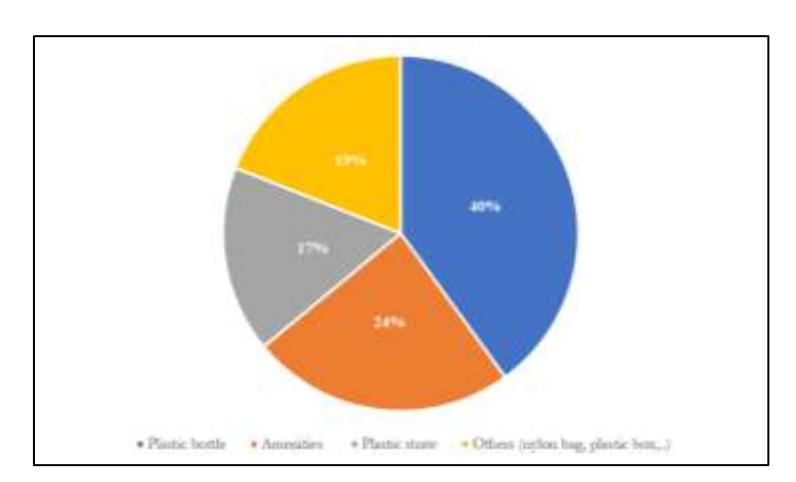
Figure 1. Type of plastic items commonly used by guests in 5-star hotels in HCMC Source: Survey data (2021)
Figure 1 shows that most of the plastic items used at the hotel are intended to serve customers. The hotels always consider customers as an important factor in their business plans. The change in customers' perceptions about the use of plastic will also change the hotels' business plan. The hotel is equipped with facilities including plastic items to serve the needs of customers. Therefore, if customers do not want to use plastic or have complaint about the use of plastic, the hotel may have to change plastic products to more eco-friendly items. Having said that, customers' perception can influence the use of plastic products at 5-star hotels in HCMC. In addition, the source of plastic waste is not only generated from plastic products serving customers, but also plastic products from the use of hotel staff themselves. Therefore, to reduce the source of plastic waste in hotels, it is necessary to cooperate from all stakeholders, both insider (employees) and outsider (customers).
3.2. Customers' perceptions of using plastic products in the hotel
Respondents were asked to express their feeling when using plastic items at 5-star hotels in HCMC. Of the 87 respondents, about 41% stated that they feel "normal" and 7% feel "convenience" when using plastic at 5-star hotels in HCMC (Figure 2). This findings suggest that respondents do not really care about the use of plastic items in the hotels. However, still 36% of respondents feel "inconvenience" and 16% feel very "uncomfortable" when using plastic products at 5-star hotels. This percentage shows that more than half of the survey respondents feel dissatisfied when using plastic products at 5-star hotels in HCMC.
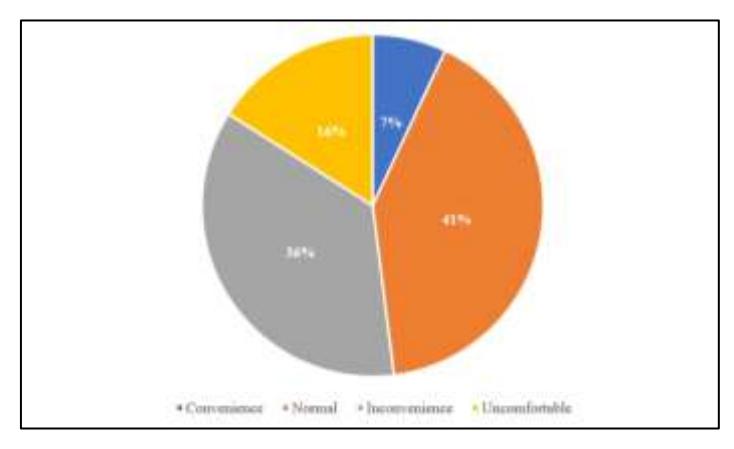
Figure 2. Level of satisfaction when using plastic products at 5-star hotels in HCMC Source: Survey data (2021)
When asked about the respondents' desire regarding "not to use" plastic products, 84% of them agreed that hotels should not use plastic products. This suggests that although respondents perceive the use of plastic products at hotels as normal, they still want to use services and products at hotels that do not use plastic items and are more eco-friendly. However, there was about 14% of respondents feel "it's normal" when hotels use or not use plastic and 2% of respondents disagreed when hotels don't use plastic items. This data shows that respondents are still not completely interested in using plastic at 5-star hotels in HCMC. However, the majority of respondents still want to use non-plastic products to have the best experience, which is more eco-friendly.
The survey results on the priority of customers when using services at hotels where apply eco-friendly products (Figure 3) shows that 76% of respondents answered "yes" to give preference to hotels that use environmentally friendly materials. The finding suggests that this group of customers has a high awareness of the reduction of plastic waste in general, and the use of plastic items at hotels in particular. However, there were also 23% of the customers stated "considering" and 1% of the customer said "no" on the priority of service used at 5-star hotels in HCMC if the hotels use environmentally friendly products. One of the reasons for this consideration could be related to the pricing of the hotels. Because if the hotel plans to use eco-friendly products and services, this also means that the hotel has to pay an additional investment for the above change. This will lead to the increase in the hotel prices where apply eco-friendly products. Overall, the important factor that makes the customers consider or not prioritize using services at 5-star hotels using environmentally friendly products is the price.
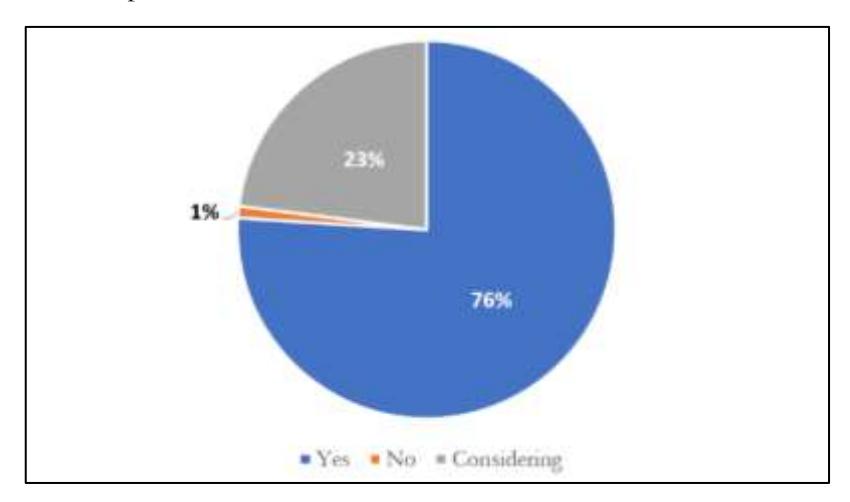
Figure 3. The priority for the environmentally friendly hotels Source: Survey data (2021)
When asked about the reasons why guests (76% of customers) would choose the environmentally friendly hotels, figure 4 shows that there were 64% of respondents stated their choice was because of the environmental protection, the minimization of plastic waste released into environment. While 14% of respondents mentioned the reasons was related to user safety, to minimizing dangers to human health, and 13% of respondents' priority was because of the current trends. Finally, 9% of the respondents' choice was related to the hotel's branding, because promoting eco-friendly products and services used in the hotel is also a way to promote the hotel's brand.
34 Hoang Nguyen, et al.
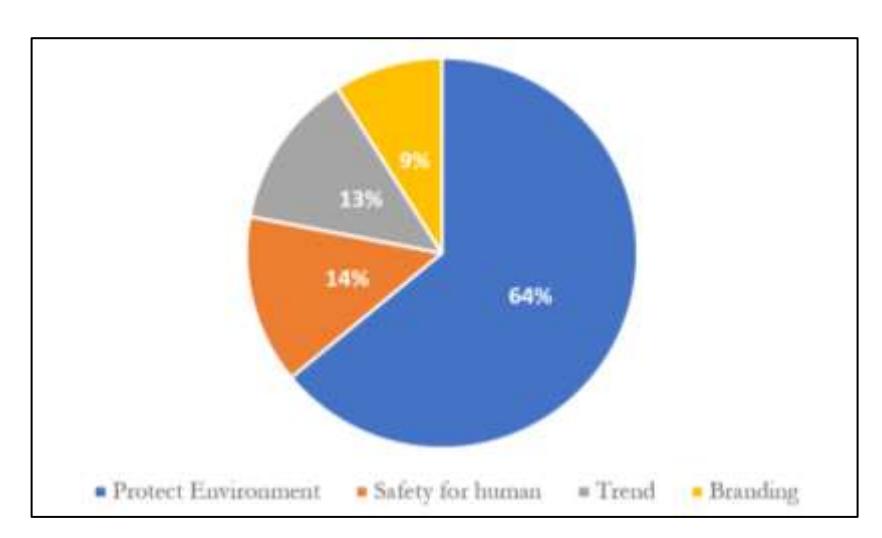
Figure 4. The reason why the guests choose environmentally friendly hotels Source: Survey data (2021)
Along with above mentioned prioritization, when asked about the willingness to pay for using environmentally friendly services at the hotels, figure 5 reveals that, up to 62% of respondents are willing to pay a higher price for not using products made from plastic. This suggests that, today the customers pay more attention on "green lifestyle", "green tourism" by mitigating or "say no" to the use of plastic products for different purposes. However, there are still 36% of respondents considered whether or not to pay for a higher price for this proposal. In which, only 2% of the respondents are not willing to pay for not using plastic at 5-star hotels in HCMC.
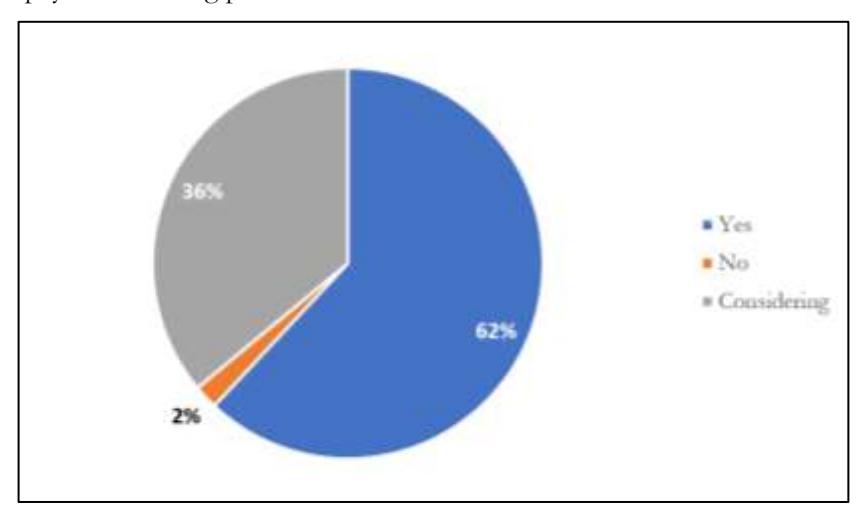
Figure 5. The willingness to pay for using service in environmentally friendly hotels Source: Survey data (2021)
Overall, it can be seen that most customers pay attention on the use of plastic products at 5-star hotels in HCMC because of the "green, clean and beautiful" nature of the service. Customers' attention are not just only their perception but also their willingness to pay a higher price for the use of environmentally friendly products at the hotel. However, the attention of customers and their willingness to pay might be affected by other factors, especially the price, which is a big obstacle to propagate the awareness of changing green lifestyles for both customers and the hotels.
4. Discussion
This paper discusses the current use of plastic items as well as the customers' perception on the use of plastic products at 5-star hotels in HCMC. Through the findings, several arguments are draw up as follows:
The use of plastic products in 5-star hotels is still very common. This is reflected in the amount of waste, the types of plastic waste that had been observed at the observed hotels. The sources of plastic waste not only come from the products and services provided by the hotel but also from tourists and employees brought into the hotel. Although some hotels have responded to the action program of the Vietnam Tourism Association (Anh, 2019) on "Tourism joins hands to protect the environment, limit plastic waste", in general, the hotels in our study still have to use many plastic-related items because of its convenience and low cost. Replacing plastic items in hotels will take up a huge amount of money. According to the interviewee, Ms. Huong, hotel B said that the cost for producing glass bottles is more expensive compared to cost for making plastic bottles. In addition, the waste of hotel is treated by a waste treatment company hired by the hotel, and the cost for this way of treatment is not too high compared to the production and replacement of plastic products at the hotel. Furthermore, the situation of the COVID-19 pandemic has also severely affected the hotel's revenue and policy of changing products to be more environmentally friendly.
Regarding plastic waste treatment at hotels in general, some large hotel groups in the world have policies to reduce or replace plastic items in their hotels, such as (AMSI, 2021):
Marriott Corporation, in 2019, announced it would replace most of the plastic items in hotel rooms such as hotel disposable shampoo, conditioner and shower gel bottles with larger ones by 2020. They also tried to prevent about 500 million (equivalent to about 770 tons of plastic/year) small plastic bottles from being discharged into the environment. The policy of reducing plastic straws and spoons has prevented the release of more than 1 billion plastic straws each year.
The Hilton system has eliminated plastic straws from all hotel operations, reducing more than 250 million straws annually; switch from plastic room key card to digital room card at some hotels in the system. As a result, Hilton has eliminated more than 40 tons of plastic waste. In addition, disposable cosmetic plastic bottles are also reduced, plastic films used to wrap food, drinks and other activities are also replaced.
Six Senses Group, which operates hotels, spas and resorts globally, has eliminated plastic straws and disposable food and beverage containers. The group has set a target of phasing out plastic by 2022 and has already achieved 90% of that goal. Glass bottles are used instead of plastic bottles for shower gel, shampoo, tea which are packed in paper bags instead of plastic bags.
Given the solutions and policies of above-mentioned hotel groups, it suggests that the 5-star hotels in HCMC should learn from them the best policies to change plastic products in their hotel system to more environmentally friendly items despite of the face of high cost of investment in eco-friendly products and equipment. In the trend of green tourism development, when the demand for green lifestyle and customers' willingness to pay is increasing, the increase in hotel prices to compensate for the investment costs of eco-friendly products and services is completely acceptable.
Furthermore, the survey results also revealed that the main customers of 5-star hotels are those with high education, good economic conditions, willing to pay higher prices to meet the requirements of high-class service. Because the 5-star hotels are considered the "home" of these customers, with the nature of work and the hobby of moving a lot, for their business trips. They are the main customers of 5-star hotels in HCMC. This can be considered a loyal customer group, and also a potential group of all large hotels in HCMC. On the other hand, using environmentally friendly products not only contributes to protecting the health of the community, but also an effective way to express the level of awareness and class of individuals. Thus, hotels can completely raise costs (if necessary) to meet the needs of these groups of customers.
Regarding the perception of customers about the plastic waste at 5-star hotels in HCMC, most customers are quite aware of the harmful effects of plastic waste on the environment. Therefore, they feel uncomfortable when using plastic items, have the desire that the hotel equips more environmentally-friendly items and products, and are willing to pay more to access green standard hotels.
Nowadays, people are paying more and more attention to their health and protecting the living environment, it is necessary for the services from the hotel to meet this demand of customers. Therefore, the reduction of plastic and the treatment of plastic waste of 5-star hotels in HCMC will have a profound effect on the business situation of the hotel in all aspects such as revenue, return rate, etc. According to the interviewee, Mr. Khanh at Hotel A, the change of plastic items at his hotel has a positive effect on customers' feedback on the hotel's service quality, specifically:
"Most guests at the hotel are quite aware of the problem of plastic waste. Therefore, their reactions are mostly positive and gratifying. For example, the glass bottles for guests to use received very good feedback, even many customers wanted to bring back as souvenirs, of course, my hotel was okay with this. To me, this also contributes to better environmental protection, not only within the hotel, but also emphasizes the image of the hotel quite well."
The survey also reflects the desire of customers to use eco-friendly products at 5-star hotels in HCMC. This is a positive aspect when the customers want to experience environment-friendly services, but in practice, they still have not actively changed their behavior, still want to use ecofriendly services where is available. The benefits of environmentally friendly consumer behavior have initially influenced people's perception, but have not completely changed the convenient habit of using plastic.
Besides the main customer group of 5-star hotels in HCMC having high education, they are also young people aged 18-24 (38%). These are potential customers in the future, they are young, trendsetters, catching up with modern lifestyles. These will be potential domestic customers of 5-star hotels in HCMC in the future. Therefore, for long-term development, hotel businesses also need to consider appropriate policies and solutions to attract this group of customers. The basic characteristics of this customer group can be indicated as: progressive awareness, willingness to absorb positive changes, psychology of wanting to experience new things and special services, demand express ego and personal brand, update trends through the experience of predecessors, etc. When the green lifestyle, green tourism becomes a new global trend, young people will be a group of those are interested and have awareness of the benefits of this trend fastest, they will have the behavior to choose businesses that offer products and services with the same goals. Furthermore, this group is also willing to pay an appropriate cost to use high-class services, especially at the hotel where have environmentally friendly services.
5. Conclusion
Although this article does not directly discuss green tourism, the analysis of the current situation of the use of plastic, the treatment of plastic waste and the perception of customers about the problem of plastic waste in 5-star hotels in HCMC can also be seen as an indirect approach towards the development of green tourism and sustainable tourism in the future. In addition to certain contributions to the scientific and practical significance of this study, this paper also has certain limitations when approaching the small number of survey samples, the survey respondents are mainly Vietnamese. The small number of observed hotels and in-depth interviews were because of the complicated ongoing COVID-19 pandemic that have significantly affected the research design.
The COVID-19 pandemic appears as a catalyst to promote awareness of green lifestyle, an ecofriendly lifestyle because people are increasingly focusing on their own health, the health of the community as well as their living environment. Therefore, the use of products that adversely affect human health and the environment such as plastic products needs to be significantly reduced.
Specifically, the hotel system in particular and the tourism industry in general need to be a pioneer in this regard in order to develop green tourism and sustainable tourism in the future.