

1. Introduction
This paper provides the theoretical model to understand the broad connections between infrastructure and services and sustainable tourism. Sustainable Tourism focuses on better waste management, environment conservation structures, use of bio-toilets, quality standards, and better facilities at tourism destinations. It infers that implementing sustainable tourism is possible by providing sustainable infrastructure and standard services (Adebayo & Iweka, 2014; Government of India - Ministry of Tourism, 2014).
Tourism destinations face unprecedented sustainability challenges in solid waste and wastewater management, biodiversity loss, road and transportation issues, and other problems (NITI Ayog, 2018). Tourism products are susceptible and necessitate sustainable tourism initiatives. Most potential destinations face sustainability issues regarding plastic menace, wastewater treatment, pollution and cleanness, transport, and other issues. Specifically, famous tourism destinations are facing inadequate waste management infrastructure problems. Dumping waste in open yards is common because of inadequate waste collection facilities (Bashir & Goswami, 2016).
Infrastructure deficiency widely affects service delivery and quality assurance and aggravates destination sustainability issues. For the adoption of sustainability practices, infrastructure and services play a significant role. A destination weak in infrastructure and services provides space for various negative externalities and threatens sustainability.
Therefore, this study presents the conceptual replica of broad interlinkages between infrastructure, services and sustainable tourism under five sections. The first section explains the tourism destination as the spaceship earth, and the second part describes the association between sustainable development and sustainable tourism. The third and fourth sections present tourism, infrastructure, and services at tourism destinations. The last section provides an overview of infrastructure, services and sustainable tourism. In the end, an overview is presented, and further research is needed to analyze such interlinkages empirically.
2. Literature Review
Due to the advent of sustainable development in the 1990s, there was a discussion about sustainability in tourism activities (Swarbrooke, 1999; UNESCO, 2009; Guo, Jinbo & Shengchao, 2019). Previously, sustainable tourism was thought of as a way to protect the environment, community, and culture (Bac, 2012). UNWTO studies steadily developed the idea and dimensions of sustainable tourism (UNDP & UNWTO, 2018). Studies contributed to developing the concept, dimensions, and scope of the analysis (United Nations, 2007; Hussain & Ali, 2015; Luo, 2018).
The relationship between the principles of sustainability and tourism development is examined and found to be good (Huayhuaca et al., 2010). However, positive changes in the institutional component have a more significant impact on tourism development than other factors (Hussain & Ali, 2015; Siakwah, Musavengane & Liewlenn, 2019). The contribution of sustainable tourism features, on the other hand, varies depending on community participation and the nature of the site (European Parliament, 2016; Guo, Jiang & Shengchao2019).
Improving the lives of the local community in tourist areas is essential and closely linked to sustainable tourism. As a result, studies analyzed the impact of guest-to-host relationships and the impact on the lives of different people who depend on tourism at their destination. The results confirmed the links and provided appropriate policy proposals and guidelines (Carneiro & Eusebio, 2015; Aall, 2014; Dahiya, 2018).
Studies investigated the interaction between tourism development and its impact on the environment. As a result, stakeholders focus on maximizing economic benefits and pay less attention to environmental protection. It is widespread in developing countries (Neto, 2003). This phenomenon reduced the carrying capacity of the destination due to environmental pollution, waste generation, and poor resource quality. It reduced the functioning of the environment and affected the sustainability of tourism products and tourist destinations (World Bank, 2004; Khalid & Stephanie, 2010; Nepal, Irshad & Sanjay, 2019; NITI AYOG, 2018). Therefore, the study examined sustainable tourism initiatives and practices with the geographic features of the destination. The need for initiatives and strategies for practice has emerged (Kruja & Hasaj, 2010; Cotrell, Vaske, & Shen, 2012; Eusebio, Kastemholz, & Zelia, 2014; Ackerman, 2015; Huang, Chang & Chung, 2019; Kisi, 2019).
The concerns and challenges of sustainable tourism vary by location, necessitating the use of indicators of aspects that are specific to the region. It aided in developing sustainable tourism practices by providing a proper monitoring system (Choi & Sirakaya, 2005; Kaul & Gupta, 2009; Dias & Rodriguez, 2016; Font, Higham, & Miller, 2019). Few studies have developed the dimensions and methods necessary to evaluate rural tourism's long-term impact and implications at the macro level (Eusebio, Kastemholz & Zelia, 2014). On the other hand, few looked at the importance of local products and resources in developing sustainable tourism initiatives. It was discovered that the advantages of using sustainable materials to build infrastructure encourage agents to embrace sustainable tourism (Boers & Cottrell, 2007, p. 152).
Few studies on sustainable tourism identified the relationship between infrastructure performance, quality of service and sustainability, highlighting the lack of empirical analysis on their broad interlinkages at destinations. It infers that the existing literature only included infrastructure and services in research analyses of sustainable tourism, and they didn't include them entirely (Khalid & Stephanie, 2010; APEC, 2013; UNEP, 2014; Purwomarwanto & Jayalakshmy, 2015; Genc, 2018; Eckert & Hartman, 2020; Mamirkulova et al., 2020; Chi & Han, 2021; Bazargani & Hasan, 2021). Therefore, it opens up the possibility of analyzing the impact of infrastructure and services on each aspect of sustainable tourism. This study presents the conceptual replica of broad interlinkages between infrastructure, services and sustainable tourism at tourism destinations.
3. Methodology
A key objective of this paper is to understand the broad connections of infrastructure and services with sustainable tourism. It needs the application of theories suitable for framework and analyses. As a result, the theories of environmental economics, Theory of Infrastructure-Led Development, tourism services, theories of Sustainable Development and Sustainable Tourism had considered for the discourse analysis.
For this rationale, many data webs were investigated to get a clear idea of their conceptual replica. Standard data webs, Elsevier, Jgate, J store, Taylor and Francis, Emerald, SAGE, ABDC journal papers, Springer, and MDPI, were considered for selecting relevant materials. Pertinent studies are sorted out by subject matter, highness of contents, focus and requirement of the study.
4. Discussion
4.1. Tourism Destinations and Spaceship Economy: Similar Characteristics
According to Kenneth (1966), there are two types of economic systems: open economy or cowboy economy and Spaceship Economy. Inputs and the space for waste describe the functioning of the systems. The producers are free to get the raw materials in the open system and convert them into vast output and wastages. Output supplied to the market and wastes dumped into the oceans, atmosphere and surface of the earth. However, the spaceship economy cannot be managed like the open economy because resources and space to dump waste are limited. It needs a proper system to monitor and manage the material, energy and waste generated by economic activities.
Boulding applied the 'law of conservation of energy and 'law of entropy' to examine the process and characteristics of the spaceship and open economy. Entropy is the measure of the disorderliness of materials through the entropic process. The theory treats the earth as a spaceship economy; everything needs to be adequately managed and utilised. Similarly, Kneese, Robert & Ralph (1970) also applied the same laws to examine the spaceship economy and the relationship between environment and economy.
The first law says that "energy can neither be created nor destroyed", and therefore, the form of energy and the material and residues produced by the consumption and production must be equal or similar to the forms of the inputs mined from natural resources. Another law infers that "in the spaceship economy, production and consumption activities of the economy change materials from low entropy to high entropy."
Both theories empirically proved that the forms of the raw material, energy and residues produced by economic activities equal the forms of resources for input obtained from natural resources. However, quantum is unchanged and exists in the system in various forms. Expansion of production and consumption activities increases the entropy process and accumulates the mass in the spaceship economy. It causes damage to the environment and warrants sustainable development.
With this backdrop, the researcher considered tourism destinations as an economy of spaceship earth based on the following justifications:
- a. Tourism Destination as a Spaceship Economy
- Above mentioned ideas considered the earth as a spaceship economy and functioning with limited resources and space. Similarly, different segments of the earth can be treated as the subsets of spaceship economy and are in countries, states, regions, and destinations. As a result, tourism destinations are also treated as a spaceship economy concerning tourism resources, attraction, carrying capacity and absorption capacity of tourism negatives.
- b. Spaceship Economy and Interdependency
As specified in Material Balance Approach, the impacts of the tourism industry are interdependent. Issue of individual components widely affects all segments and the sector's balance.
- c. Limited Resources
- In general, tourism destinations and their resources are limited. If the tourism resources are limited, the host community, service providers, and tourism agencies must manage the tourism destinations as spaceship economies.
- d. Entropic and Anti-entropic
- A high influx of tourists brings economic benefits and an increased amount of tourism negatives. It takes the tourism destination from low to high entropy status. The gradual increase of disorderliness in tourism destinations required the process of anti-entropic operations.
- e. Sustainability
- If the tourism destination is an open system (or) the cowboy economy, there are no sustainability issues. Tourism destinations are spaceship economies in nature, and tourism negatives will remain at destinations and affect the resources and stakeholders.
4.2. Association of Sustainable Development and Sustainable Tourism
Following the arguments of tourism destinations as spaceship economies, the present section exhibits sustainable development in the tourism industry and sustainable tourism at the destination level. United Nations (1987) conceptualised sustainable development as the development that has to satisfy the wants and necessities of the current generations without weakening the future generations' capability to satisfy and achieve their wants and requirements. From the definition, it is evident that sustainable development limits the use of resources but not the absolute limits. It infers meeting the basic needs of the present generation and extending the capacity of resources to meet the needs of future generations with better quality of life. Therefore, sustainable development is not a static process but a dynamic and elongated use of resource potentials.
It depicts the association between economic, social and environmental dimensions and hence needs a balanced approach. It aims to give equal importance to all the dimensions and ensure the well-being of future generations. Therefore, fundamental principles of sustainable development focus on equity, holistic approach and futurity (Barbier, 2017). Sustainable development comprises various subsystems like agriculture, cities, ecology, and tourism. These are different ways to achieve sustainable development (Koncul, 2008). It confirmed that sustainable tourism is a part of sustainable development in the tourism industry (Bramwell & Sharman, 2002).
Sustainable development is deeply concerned with society's present and future needs and well-being. It is duly applicable to the tourism sector as well. In tourism, sustainability demands the well-being of visitors, the host community, service providers, the environment, and industry. Important channels to achieve well-being are economic, environmental, tourist satisfaction, host community welfare and industry development (UNWTO, 2016; Ministry of Tourism- Govt. of India, 2014).
In the past, mass tourism and maximisation of economic gains were prime targets of the industry than the sustainability of destinations. The emergence of negative externalities, acceptance and consciousness of sustainable tourism is getting recognition. In this context, tourism destinations raised concerns about carrying capacity and maintenance, and therefore it required adequate infrastructure and services to practice sustainable tourism (Sharpley, 2000; Archer, Cooper & Ruhanen, 2005).
4.3. Tourism Development and Role of Infrastructure
In this study, infrastructure means tourism infrastructure. The concept of tourism infrastructure should include various types of infrastructure and their interlinkages with tourism services at destinations. Consequently, tourism infrastructure is defined as road and transport, accommodation, tourist markets and shopping malls, public utilities, environmental infrastructure, health care, financial and information technology and sports and entertainment establishments available in the tourism destinations used by tourists, service providers and host community (Ministry of Tourism - Government of India, 2018; Panasiuk, 2007; World Bank, 1994; Ministry of Tourism, Ontario, 2009).
Destinations are bound to ensure better visitor experiences, which require support from infrastructure facilities, namely road and transportation, hotel and lodging, markets and malls, public utilities, finance, sports, and entertainment. Consequently, this segment accounts for the analogy between tourism development and infrastructure (Jovanović & Ilic, 2016; Mandić, Mrnjavac & Kordić, 2018).
Geological resources (minerals, metallic and non-metallic items), geography (natural assets), and infrastructure are the lifeline for development. Countries rich in geological resources are using their resources for economic growth. On the other hand, countries rich in geography reap financial gains through marketing the uniqueness of resources such as tourism. However, the nations are deficient in geological and geographic resources; infrastructure is the engine for economic growth. Though countries are rich in geological and geographic resources, infrastructure is mandatory to use them and achieve growth.
Scholars developed an infrastructure-led development paradigm and conducted empirical investigations to know the linkages between infrastructure and development. Specifically, Rosenstein-
Rodan's 'Big Push Theory (1943)' and 'Note on the Theory of the Big Push (1957)' state that economic development required a big push through industry investment programmes. It explained investment in infrastructure and its impact on production and economic growth.
The relationship between tourism and infrastructure presented through international agencies works at the macro level. World Development Report (1994) confirms the positive association between infrastructure, economic growth, poverty alleviation and environmental sustainability. The empirical work of Fernald (1997) portrayed a positive correlation between infrastructure and productivity in countries. A study by Canning and Esra (2000) estimated the social rate of return from the energy and road sector and evidenced its effects on the economy's output. In addition, studies conducted in China verified the influence of infrastructure facilities on the economic growth and productivity of the nation (Sahoo, Rajan & Geethanjali, 2010; Deng, 2013).
Agénor and Blanca (2006) and Agénor and Monteil (2008) explored the association between health, infrastructure and economic growth. Moreover, they identified that provision of infrastructure benefits production and positively influence consumption and saving of the economy. Further, Agénor, Bayraktar and Aynaoui (2004) showed the impact of Infrastructure public good capability and their contribution to production. However, proper maintenance is required for infrastructure to ensure its continuous functioning and quality. It helps improve service delivery and promotes the quality of the services to ensure growth. Primarily, it is widely helpful to reduce the costs and burden on the public funds (Agénor, 2005; Agénor, Nabli & Yousef, 2005).
Empirical works audited the relation between economic growth and infrastructure at the macroeconomic level. Agénor (2006) developed "A Theory of Infrastructure-Led Development" and proved infrastructure and services as an engine of growth based on the established relationship. Furthermore, improvement in physical and soft infrastructure encourages the productivity of every economic sector. As per this Theory, investment in public infrastructure promotes the production of capital and quality services.
It leads to a reduction in service costs and promotes the demand for services. Nevertheless, in the current scenario, the destinations should develop infrastructure to reduce pollution and promote environmental quality and sustainability. In this context, quantity, quality, maintenance and technological infrastructure augmentation are essential segments of sustainable development. The United Nations (2017) included advancement in infrastructure and services as sustainable development goals.
Though tourism is a service industry, it heavily depends on infrastructure. For development, accommodation, transportation, roads, and public utilities were designated as the industry's primary sub-sectors. In addition, service delivery at destinations depends on infrastructure, and both are deeply inter-connected. It strengthens the destinations to satisfy tourists' expectations and helps sustain the quality of tourism products. Thus, better infrastructure is the mainstay of sustainable tourism (Williams, 1998).
4.4. Tourism Services and their interlinkages with Infrastructure
The tourism industry absorbs services from other sectors and makes service clusters under tourism services at destinations. Services of tourism destinations are Infrastructure dependent and infrastructure-independent. For accommodation and transport services, infrastructure establishments are inevitable for service delivery. Tourist guides, locally available entertainments and leisure activities are infrastructure independent.
As a result, the term 'tourism services' is defined as road and transport services, boarding and lodging services, services offered by markets and malls, information and communication services, electricity services, water supply and sanitation services, environmental services, financial services, health care services, tourist information services, sports and entertainment services and security services available at destinations in a separate or combined manner (UNWTO, 2017; World Trade Organisation, 2009; Govt. of India, 1986).
Tourism services depend on Infrastructure at various points; however, the degree of dependency may vary among the types. Some of the services are purely infrastructure dependent, few are partially, and very few services are independent. Tourism services play a vital role in infrastructure and tourism development. Subsequently, the functioning and delivery of services are to be approached with the underpinnings of infrastructure-led development to understand the influence of tourism infrastructure on the functioning of services (Agénor, 2006).
4.5. Infrastructure, Services and Sustainable Tourism
This part provides the theoretical underpinnings and connectivity between Infrastructure, services and sustainable tourism. Tourism destinations are just like spaceship Economies and sustainability issues emerge continuously. Tourism destination comprises tourism resources, Infrastructure, services and agents. It needs to adopt sustainable development through sustainable tourism. For the sustainability initiatives and practices, Infrastructure and services are indispensable for the tourism industry.
Discussions of sustainable development categorised them as 'strong' and 'weak'. Types of capital are the instrument for categorisation. It includes natural and other capital types, including human, physical, and social. Strong sustainability refers to other forms of capital that are no substitute for natural capital (Brekke, 1997). Weak sustainability infers that other forms of capital can perform the functions to reduce the negative impact caused by tourist influx at destinations.
However, the total capital stock should be intact or maintained (Hartwick, 1997). Another way of looking at weak sustainability is the Hicksian Sustainability perspective. It underlined that capital corrosion compensates by an allotment of sufficient portions from current receipts (Serafy, 1996). It is known as the Hicks-Hartwick-Solow weak sustainability approach (Pearce & Atkinson, 1995).
On the contrary, in tourism economics, there are four sustainable tourism approaches: weak, weak, strong, and very strong (Batia, 2000). Very weak sustainable tourism means that if tourism is the sole source of development, the economy can use that opportunity without considering sustainability. The weak sustainable tourism approach confers that economies should develop tourism without disturbing the most critical natural resources. On the other hand, a strong sustainable tourism approach advises preference for natural/tourism resources and environmental quality than economic and other gains. Very strong sustainable tourism insists on no compromise in natural resources for tourism development.
The tourism industry is functioning based on natural resources, and natural resources are an essential destination product. Adopting a very weak sustainable tourism approach erodes the tourism resources for the future and adversely affects the stakeholders and industry. Similarly, if they prefer to adopt strong and very strong sustainable tourism, there is no place for tourism development. Therefore, the reliable option for the tourism industry is to adopt a weak sustainable approach. That is, the provision of green infrastructure is essential to foster essential services for preserving natural tourism assets (Wright, 2011). Sustainable or green infrastructure and standard services at destinations could reduce the loss of tourism resources (UNEP & UNWTO, 2005). The wastewater released from sub-sectors of the tourism industry can be purified by treatment plants and then released into water
bodies. Consequently, the provision of sustainable Infrastructure and allied services could be proven fruitful in lessening the negatives of tourism to a greater extent at different levels.
Adopting a weak sustainable tourism approach requires sufficient Infrastructure to substitute for natural capital functions and reduce the negatives. UNWTO (2018) included Infrastructure as one of the goals of their sustainable tourism framework. Furthermore, it advised continuous augmentation of Infrastructure as sustainable tourism initiatives. The prime goal of the Infrastructure at destinations is to promote sustainability through better quality of services. It helps improve service delivery and reduces the cost of services (Agénor, 2006). The provision of better infrastructure supports the progress of the tourism industry and plays a significant role in service delivery. It favours the stakeholders and the sustainability of the destination. This supports sustainability in income, employment, society and the environment (ESCAP, 2006; Ukabuilu & Igbojekwe, 2015).
Tourist attraction and willingness to revisit ensures the sustainability of destinations shortly. It depends on visitor satisfaction and experiences, and destinations achieve it through the quality of services. It includes infrastructure-led environmental services like sewerage management, solid waste disposal and sanitation services (Seetanah et al., 2011). In this context, infrastructure and services are mandatory at destinations to achieve sustainable benefits from tourism and ensure tourists' satisfaction (Samer, Yiu & Filature, 2015; Hidayat et al., 2017).
It motivates investment in infrastructure augmentation and tourism services. Ministry of Tourism - The government of India spends 50 per cent of its funds on infrastructure and service delivery through sustainable tourism promotions. However, infrastructure-related issues are a vital challenge to the industry's sustainability (Economic Forum, 2017). Potential and attractive tourism destinations have faced serious sustainability issues for a long time (Govt. of India - Yes Bank, 2017).
4.6. A Framework of the Study and Concluding Model
As a sustainable tourism initiative, well-known tourism nations implement sustainable management in the tourism sector through policies and programmes. Execution of full-fledged sustainable tourism development may not allow tourism activities at destinations critical in nature. The negative consequences of tourism activities adversely affect the sustainability of natural capital and critical natural services. Consequently, based on the empirical studies, policies recommended the 'weak sustainability' at tourism destinations. This approach says that the manufactured capital and human capital, such as sustainable infrastructure and standard services, could be helpful to downscale the tourism negatives. It will help nature by reducing the negative impact on critical natural resources.
However, sustainable tourism is not solely related to only conservation of critical natural resources. Nevertheless, it aims to ensure the present and future capabilities of the tourism industry, stakeholders, and the tourism destinations' economic, environmental and institutional sustainability. Quality infrastructure and standard services ensure sustainability in each dimension of sustainable tourism. Therefore, different infrastructure facilities and services are highly indispensable to enhance sustainability in each dimension of sustainable tourism at destinations. In this way, sustainable tourism operation depends upon the different types of infrastructure and allied services available at tourism destinations. The framework is depicted below in figure 1
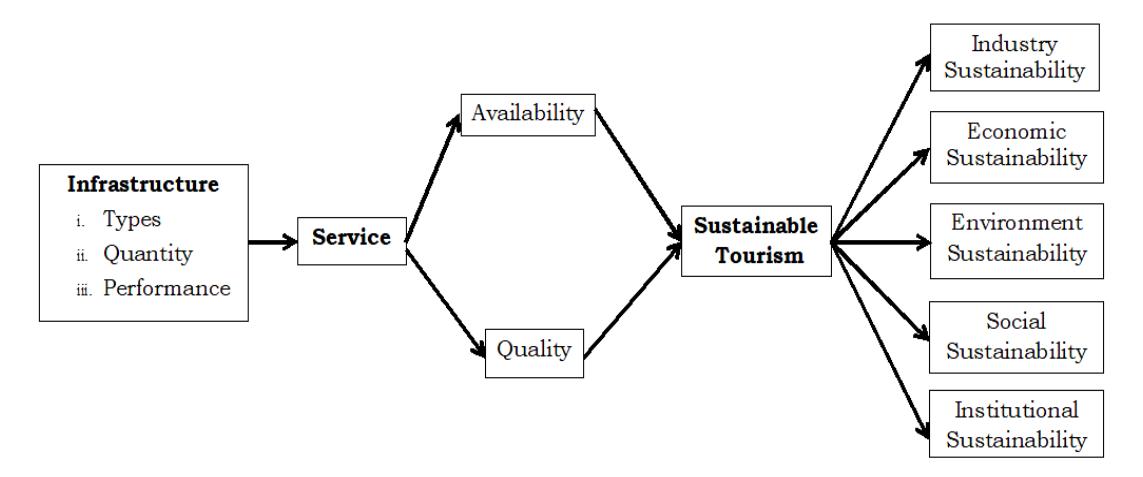
Figure 1. Framework and Concluding Model
5. Conclusions
Based on the models of Kenneth (1966) and the Material Balance Model (1971), a conceptual replica of the study states that the characteristics of the tourism destinations are similar to the spaceship economy. It has a limited capacity to manage and tolerate the negative externalities of tourism. Therefore, sustainable tourism is the best solution to manage the long term sustainability of destinations and ensure sustainable development as the sole redeemer of the tourism sector. The tourism industry categorises sustainable tourism as strong sustainable tourism and weak sustainable tourism. Arguments for sustainable tourism are similar to the literature and analyses of sustainable development. Sustainable development literature stratified sustainability as 'strong sustainability and 'weak sustainability.
Strong sustainability confirms that natural capital cannot be substituted by manufactured capital such as investment and human resources. The weak sustainability says natural capital can be substituted by manufactured capital and human resource, but the critical natural capital should not be disturbed. The discourse of sustainable development and tourism suggested the suitability and adoption of weak sustainability in the tourism industry. However, sustainable tourism is not solely exploring the environmental quality and protection of natural resource-based tourism products. Nevertheless, sustainable tourism ensures sustainability in industry, economic potential, environmental quality, social benefits and governance.
Based on sustainable tourism initiatives, adopting sustainable tourism want manufactured capital and human resources through investment to serve a purpose. This initiative is happening in the tourism industry by establishing sustainable infrastructure facilities and services. At this juncture, the Theory of 'Infrastructure-led Development' has argued that the provision of state-of-the-art infrastructure energies the economy and leads to the economy's development. Further, studies underlined the dependency of services on infrastructure and their role in sustainable tourism practices.
Theoretical underpinnings endorse the inter-linkages between infrastructure, services and sustainable tourism at the destination level. Tourism spots with inadequate infrastructure facilities cannot equal the growing tourist influx. It leads to overburdening of the infrastructure, and improper maintenance affects the functional capacity of infrastructure. The decline in infrastructure functioning adversely affects the functioning of infrastructure dependent services and raises sustainability issues at destinations.
Therefore, capital investment is needed to develop the tourism industry for the up gradation and construction of infrastructure sustainably and responsibly, which in turn promotes tourism sustainability in new directions (UNWTO, 2018, goal 9). Development of destinations and promotion of tourism are positively correlated. Tourist inflow to attractive destinations is always high. It, therefore, needs the planning of sustainable tourism through the means of a better quality of infrastructure and services to reduce the negative externalities (Govt. of India, Yes Bank, 2017, p. 43). All of this motivates countries to invest in promoting and auguring tourism infrastructure and maintaining the standard of tourism services. So, sustainable touristic infrastructure and services play a significant role in ensuring sustainable tourism in countries.
This study analysed the theoretical linkages between infrastructure, services and sustainable tourism through the theories of environmental economics, Theory of Infrastructure-Led Development, tourism services, Sustainable Development and Sustainable Tourism. Theory of infrastructure-led development advocates implications of infrastructure on long-term growth. In the case of tourism, sustainable infrastructure development can support sustainable growth through environmental protection and the well-being of the stakeholders.
Studies conducted by researchers' revealed issues of deficient sustainable tourism infrastructure, which greatly influence the functioning of environmental services and the sustainability of tourism destinations (Bashir & Goswami, 2016). It required verifying the issues addressed by the theories. With this framework, this study recommends empirical verification to understand the interlinkages between infrastructure, services and sustainable tourism at the micro and macro levels.