

1. Introduction
Indonesia is an archipelagic country, which is located between the Asia and Australia continent. It has more than 17,500 islands with rich biodiversity, unique and extraordinary ecosystems, and high endemicity. Indonesia has amazing natural places ranging from underwater beauty, coasts, forests and mountains along with exotic endemic biodiversity. All of these have the potential as ecotourism destinations that offer beautiful places not only for photography, but also for getting new experiences (Indonesia Biodiversity Strategy and Action Plan, 2015).
As a country with a large number of islands, Indonesia is also rich in ethnic and cultural diversity. There are more than 300 ethnic groups in Indonesia, or about 1,340 tribes. (BPS census, 2010). The largest ethnic group is Javanese, about 41%, besides living on the island of Java, they have also migrated to many other islands in Indonesia. Many tribal communities live at remote areas on the islands of Kalimantan, Sumatra, Sulawesi, East Nusa Tenggara and Papua. Many of them live at remote areas at the foot of the mountains or at small islands. Indonesia is also rich in languages, at least more than 700 languages and dialects are recorded. All the rich ecosystems, biodiversity, tribes and languages are unrivalled and valuable assets for Indonesian tourism.
Tourism is one of the priority sectors for the Government of Indonesia. Therefore, tourism is developed and utilized in accordance with the potential sources of Indonesia. Tourism is encouraged as the main driver of job creation and business in order to accelerate economic growth and foreign exchange earnings. In total, the contribution of the tourism sector to the national economy increased from 4.2 percent in 2015 to 4.8 percent in 2018. Meanwhile, foreign exchange earnings in 2019 reached 280 trillion rupiahs, an increase from 2018 which was recorded at 270 trillion rupiahs. (BPS, Statistics of International Tourist Visits, 2019). However, in 2020, the tourism sector is one of the sectors worst affected by the COVID-19 pandemic. In 2020, the number of tourist visits to Indonesia decreased by 87% (Kemenparekraf, 2020).
Traditional villages in Indonesia are also one of the strong attractions for both foreign and domestic tourists. Tribes in the interior of Sumatra, Sulawesi, East Nusa Tenggara, Papua and Kalimantan have become targets for tourists to visit. Regardless the level of difficulty that tourists face during the journey to traditional villages, tourist interest continues to increase, because traditional villages offer different travel experiences.
Waerebo traditional village is located in an enclave area at an altitude of 1,117 meters above sea level. This village has a very beautiful view, because it is surrounded by hills of unspoiled tropical rain forests. Administratively, it is located at Satarlenda Village, West Satarmese Sub-District, Manggarai Regency. Waerebo traditional village is the only living traditional village of the Manggarain tribe. There are seven traditional houses, which is called Mbaru Niang. Mbaru means house and niang means tall and round. The seven Mbaru Niang buildings are said to be a reflection of ancestral beliefs to honor the seven mountain peaks that surround Waerebo village, which are believed to be the "protectors" of the prosperity of the kampong (Suhandi et.al., 2016). Each house is inhabited by 6 families, except for the Niang Gendang (main house) which is inhabited by 8 families. In front of the Niang Gendang there is a compang, which is a round altar platform made of soil and natural stone, as the center point of the seven traditional houses. Compang has a sacred value and serves as a place for worship ceremonies to God and ancestors. (Katup, Y, 2018) Once a year, the people of Waerebo carry out the Penti ceremony, which is an event to give blessing for the springs, to ask for the safety of the village from evil spirits, and to ask for good crops. Penti ceremony is held annually in November and is one of the most popular ceremonies for tourists; because this event will also feature the traditional Caci dances and traditional songs.
The main entrance for domestic and foreign tourists is Labuan Bajo, which is the capital of West Manggarai Regency. To reach Waerebo traditional village, tourists have to drive from Labuan Bajo to Kombo village for approximately 3.5 hours. The journey continues by taxi-bike for 10 minutes, then tourists have to take a hiking trip in the tropical rainforest to the traditional village of Waerebo, for 2.5 or 3 hours depending on their physical condition. The Waerebo Cultural Conservation Institute (LPBW) is an institution that manages tourism in the Waerebo traditional village. This institution was formed based on a community agreement in 2006. Initially named the Waerebo Tourism Institute (LPW), but later in 2010, the community agreed to change it into Waerebo Cultural Conservation Institute. Waerebo traditional village has received an award from the UNESCO Asia Pacific Award for Cultural Heritage Conservation in 2012. At the national level in 2018, it had received the Indonesia Sustainable Tourism Award (ISTA) in the Culture category. Following that, in 2021 it also received the Indonesian Tourism Village Award as the best tourist attraction. It is certainly interesting to know how the process which were went through by Waerebo indigenous people in developing tourism to get recognition at the national and international level. How is the process to increase community participation? How are tourism benefits distributed? This study aims to determine the process of community participation in the development of community-based ecotourism in the traditional village of Waerebo.
2. Literature Review
The ecotourism concept is used by Indonesian Ecotourism Network as community partners to develop tourism in Waerebo. "The Ecotourism Society (TIES)" in the early 1990s defined ecotourism as follows: "ecotourism is responsible travel to natural areas which conserved the environment and improves the welfare of local people"(TIES, 1990). There are several key words from this definition. First, the word "responsible" means that in its implementation, both tourists and tourism actors, it is emphasized that they must have care, commitment and responsibility to minimize negative impacts on the environment. In addition, ecotourism activities are also expected to involve the community and contribute to the creation of jobs and income for the community. A total of 42 ecotourism definitions mentioned in the ecotourism literature were identified over the past twenty-five years from 1990 to 2015 (Chandel & Mishra, 2016). In 2015, Global Ecotourism Network issues a definition of ecotourism to emphasize the importance of education and interpretation, as follows: "Ecotourism is responsible travel to natural areas that conserves the environment, sustains the wellbeing of the local people, and creates knowledge and understanding through interpretation and education of all involved: visitors, staff and the visited" (Global Ecotourism Network, 2015). Meanwhile Silva (2015) mentioned that "Ecotourism is often viewed as a sustainable, nonconsumptive strategy for the benefits of conservation and the local communities. It focuses on governance of resources, tourism's contribution to economic sustainability, cultural identity and social relations.
Waerebo traditional village was developed by adopting the concept of Community Based Tourism (CBT), which is also known as Community Based Ecotourism (CBeT) in the context of ecotourism. The people of Waerebo have high commitment to participation because they were determined to make changes to get out of poverty. In the development of CBT, local community participation is one of the criteria that is often agreed upon as important to maintain the sustainability of village development in tourism schemes (Mowforth & Munt, 2009). According to Priasukmana and Mulyadin (2001), in Indonesia, the concept of CBT has actually been introduced by the Ministry of Culture and Tourism. In 1999, the concept is known as Pariwisata Inti Rakyat (PIR), which can be literally translated as People as the Core of Tourism. At that time the PIR program aimed to developing villages by using tourism as a way to increase job opportunities and community income. CBT is seen as an alternative against mainstream tourism, which is considered to provide little benefit to the community around the destination. Community-based tourism seeks to increase community
involvement and ownership of tourism in destinations. It is must be initiated and managed by the local community, although sometimes the initiative comes from the operator (Mowforth & Munt, 2009). In Indonesia, the initiation of community-based tourism is also widely encouraged by Non-Governmental Organizations (NGOs) engaged in conservation and ecotourism.
Community involvement and participation at all levels is important in the development of community-based tourism. This is emphasized by Suansri (2013) which defines community-based tourism as "tourism activities that are owned, managed and operated by the community; so that it can contribute to the welfare of the community by supporting sustainable livelihoods and protecting valuable socio-cultural traditions as well as natural resources and cultural heritage". In practice, the challenges in the process of increasing community involvement in managing tourism are enormous, because tourism is a new thing for local people who traditionally work as farmers, fishermen, craftsman, or planters. For tourism development at traditional villages, which usually have stronger values and local wisdom, the level of complexity is higher. The values and local wisdom are great assets as attractions for visitors, but on the other hand it is a challenge to manage the impact of tourism activities, so that the values and local wisdom can be sustained.
Furthermore, there are at least three types of community participations in CBT development that have been identified by Giampiccoli and Mtapuri (2019) namely: (1) the CBT business is solely owned and managed by the community, where external parties play a role in assisting or facilitating the development, but do not own part or all of the CBT business; (2) The community has full control over the CBT business, but agrees to partner with external parties through an agreement and ultimately determines the division of roles and control in the business; (3) External parties (private) decide to make local communities as partners, which at the end will also create a balance of control in the business.
3. Research Method
This study uses a qualitative method. This method is selected as a tool to deeply understand the participation and processes which the Waerebo indigenous people had gone through to develop ecotourism. Primary data collection in this study was carried out by conducting direct interviews with the core management of the Waerebo Cultural Conservation Institute (LPBW), including the chairman, secretary, treasurer, head of the cultural sector, advisors; as well as as well as with stakeholders which had been involved in the development process, such as village heads and traditional leaders. In addition, the author also organized focused discussions with women groups who are tasked with providing services to tourists; and interviews with non-governmental organizations that assisted Waerebo community during the ecotourism development process. Meanwhile, direct observations were made on tourist attractions and tourism products offered to tourists. In this interview, in order to avoid bias, the researcher must study the understanding of each informant. Therefore, interviews were conducted using an ethnographic method, which focused on the depth of experience and material from the informants. Meanwhile, supporting or secondary data in this study was collected by studying the results of previous studies as well as books and other supporting documents.
4. Research Findings
The Indonesian Ecotourism Foundation or known as Indecon was invited by Waerebo community to assist the village in 2006. At that time, it was difficult for Waerebo people to maintain their traditional houses and carry out traditional ceremonies, which required high costs, while their income from coffee, cinnamon and corn plantations was not sufficient. Climate change had affected the yield of coffee beans, which fluctuated sharply every year. In addition to the high cost of maintaining the traditional houses, the cost of education for their children was also their highest concern. After that in 2008 UNESCO Indonesia through Burung Indonesia provided assistance in clean water management and provided training for tourism services. In the same year, Rumah Asuh Foundation, which focuses on preserving and rehabilitating traditional Indonesian houses, came to help. Furthermore, the Foundation collaborated with the community to successfully rehabilitated Waerebo traditional houses, from the remaining 4 houses back to 7 traditional houses. Funding was obtained by Rumah Asuh Foundation from private donors and Indonesian companies who were willing to help. In 2010 contributions also came from the Indonesian Ministry of Education and Culture. Meanwhile, Indecon supported by the European Union since 2013 has started to help Waerebo intensely for assistance in tourism planning, capacity building, institutional strengthening, and development of tourism management systems.
4.1 Community Participation Process
In mentoring the development of tourism in Waerebo traditional village, Indecon used participatory approach and assigned its staffs as facilitators to live with the community. The community was involved at all stages, from planning, implementing, and evaluating activities. During the mentoring process, training activities were carried out then followed by exercises by the community and mentored by the facilitator; for each stage and different topics of activity. The training involved experts from Indecon as well as from Indecon partner institutions.
In developing the local economy through tourism, the approach taken by Indecon was to integrate the existing livelihood at the village to tourism sector. In this case, tourism become the driving sector for other sectors at the village. In the early stage of development, the focus was improving tourism services which could add value to tourists experience when visiting Waerebo, such as telling stories about customs and people's daily lives, visiting community coffee plantation and listening to story of civet and coffee, woven stories, and so on. At the next stage, the focus was to develop activities on food-making and craft-making as tourist activities. In addition to producing goods for tourists, the process of making crafts and food-based preparations can be an attraction for tourists.
In the Community Based Tourism development initiative, there are 5 main components that are usually implemented by Indecon, namely pillars (1) Participatory Planning; (2) Capacity Building, (3) Tourism Product Development, (4) Institutional and Management System Development, and (5) Marketing (Indecon, 2019).
4.1.1 Participatory Planning
Planning should be carried out in sufficient time and in stages, starting from providing an understanding of tourism, including its positive and negative impacts, to instilling the concept of sustainable local resource management in the community. This was especially important for Waerebo, because access to materials from outside the village required a lot of effort. In addition to reducing costs by optimizing existing resources in the village, the community was also invited to consider the impact of any new activities. This perspective was important so that the community continued to maintain cultural sustainability so it would not be eroded by tourism activities.
The next planning activity was to explore various community stories about the potential of the Waerebo traditional village, such as history, daily activities of the community, time spent in gardening and housework, division of roles for women and men and others. In addition, it also identified the seasonal calendar in the traditional village of Waerebo, including identifying the arts and culture of the community, the procedures for receiving guests, things that guests could and could not do when they came to the village. In this process another important thing was that the experts, facilitators, and the community members visit the attraction together, to experience first-hand whether this was activity is worth to be presented to tourists or not.
Spatial planning was another important activity in planning. It aimed to ensure the availability of sufficient and appropriate spaces for the designed tourism activities. In addition, it aimed to ensure that tourism activities do not interfere or coexist in harmony with people's daily lives.
Figure 1. The planning process with the community through several stages Source: Indecon (2014)
The involvement of stakeholders in the planning process was equally important; especially for traditional villages, key stakeholders such as traditional leaders and other customary stakeholders had to be involved (see figure 1 and figure 2). The customary rules should be studied well and accommodated in planning. In addition, it is necessary to explore the community's perspective and also the community's expectations of tourism. The preparation of a shared vision and goals of tourism was also carried out in a participatory manner by involving all elements of traditional stakeholders and also the village. (Suhandi, AS, 2018).
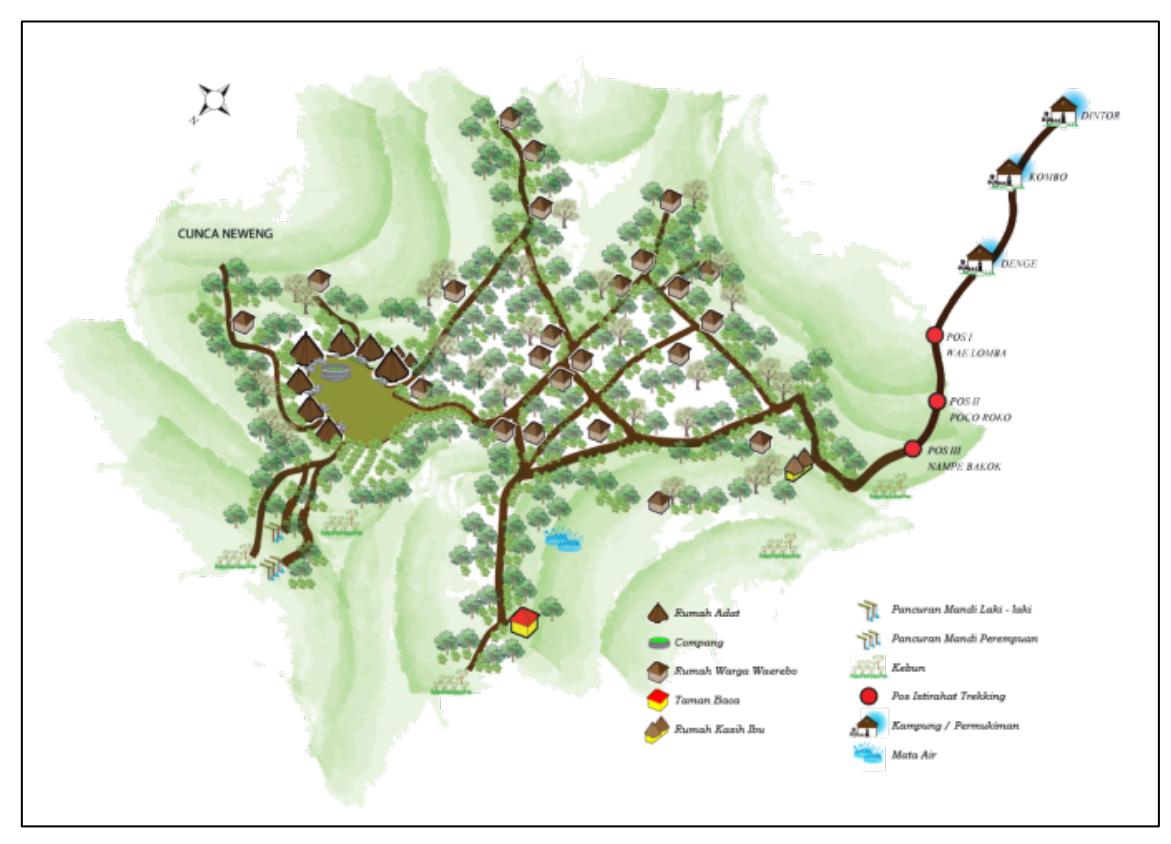
Figure 2. Map of Waerebo village as a result of joint planning with the community assisted by Indecon Source: Indecon (2014)
4.1.2 Institutional Development
Sustainable management is one of the pillars of the 4 main pillars in sustainable tourism, in addition to a sustainable environment, sustainable socio-cultural and sustainable economy (Ministerial Decree No.9, year 2021). In the process of building a management institution in Waerebo, Indecon provided important insights, such as consistency and community commitment in the process of developing tourism. Developing tourism takes time and the results cannot be directly obtained, so it requires a high commitment and consistency to survive. Community expectations are one of the considerations in shaping the organizational structure.
The process to develop local institution was not completed in one meeting, but carried out in a series of meeting until the community agreed. During the meeting, the duties and functions of each division in the management structure was determined, so that the people involved in the organization could understand well. In the following meetings, the institution decided on the organizational structure, the assignment of the roles and duties of each division, the preparation of the institution statute (anggaran dasar / anggaran rumah tangga) and the time period for the management.
Another interesting process in Waerebo was when the community was assisted by a facilitator to gradually develop its visitor management system. They ensured that the visitor management system was made according to the conditions of the community, including ensuring sufficient time for working at their plantation and weaving. Their system had accommodated several principles, including:
- a. distribute the maximum benefit to the community;
- b. open new job opportunities as much as possible for the community;
- c. open management, including in terms of financial management;
- d. ogetherness and mutual respect.
Based on the above considerations, tourism management in Waerebo was regulated as follows:
- a. Tourism management in Waerebo was executed by one institution, namely LPBW (Waerebo Cultural Conservation Institute). LPBW also managed all development support from external parties in collaboration with the village head.
- b. The institution organized regular meetings and annual accountability meetings in front of the customary leader and the community.
- c. All visitors were received according to the Waerebo custom. Visitors were not allowed to do any activities at the village prior to following the welcoming ritual (Wailu'u ritual). In this ritual, visitors were formally accepted as guests at the village by the community and the ancestors, which were represented by village elders. The traditional leader would communicate with the ancestors to receive the visitors. After participating in Waelu'u ritual, which only take 5-7 minutes, visitors were allowed to visit people's homes and also take photos.
- d. Guest services at the guest house were coordinated by the daily manager, which was assigned by LPBW. One of his/her tasks was to provide information about what tourists can and cannot do during their visit at the village, by reading out the tourist code of ethics that had been prepared in a participatory manner. He also had to ensure the comfort of tourists and responds to tourist complaints.
- e. Management system is one of the keys in sustainability. In the traditional village of Waerebo, a rotation system was applied to provide daily service for guests. LPBW formed 5 women groups for providing tourist services. Each group consisted of 8 or 9 women. Three groups consisted of 8 people and 2 groups consisted of 9 people, so the total number of women involved were 42 people. These five groups took turn every day to provide various services (i.e. meals, lodging, etc.), so that each group would be on duty on different days. One group was on duty for one day only, and the next day would be assigned to the next group and so on.
- f. This system was carried out so that everyone who was directly involved in tourism activities only spent 1 or 2 days a week for tourism, and the rest of the time they could focus on their main livelihood. This design had been the strategy to maintain the economic resilience of the village and at the same time to increase the number of people who receive benefits from tourism. The more people involved, the stronger the resilience of the tourism business.
- g. Tourism is vulnerable to external factors, including infectious diseases, climate change, natural disasters, and social conflicts. Therefore, tourism development in a village or tourist village should be designed to maintain community income from their main livelihood. In this case tourism should be seen as a secondary activity, from which the community can receive additional income. Although, in some cases, the income from tourism can be higher than the income from their plantation. However, COVID19 pandemic made Waerebo people aware that they were on the right path, because during the pandemic, people still received income from their plantation, even though income from tourism stopped.
- h. Sales arrangement of weaving products and souvenirs; only products from the assigned group and families could be offered to tourists on that particular day. The other groups could sell their home-made products on the day they were on duty. This arrangement allowed each group to have similar opportunities to sell their homemade products. Indecon also supported women group at Waerebo to produce coffee, chips, and handicrafts.
- i. Tourists stayed overnight at one of the two guest houses that have been specially provided for guests, and the daily manager arranges where exactly they will sleep. The particular houses
- were arranged like a dormitory, where tourists sleep in a communal bedroom with matrass, handwoven pandanus covered, and blanket. Both guest houses could accommodate around 50 people. The women groups were in charge of maintaining them clean, including washing blankets, pillowcases, etc.
- j. Tourists would eat together with their group members. If tourists came alone then the daily manager will arrange to eat together with the existing group. The food menu is arranged by a group of women who have been taught how to cook, serve and maintain cleanliness.
- k. Tourists are allowed to visit the community in their respective homes to interact and share stories.
4.1.3 Capacity Building
The capacity building program for Waerebo community was based on the studies during the planning process and strategies developed by Indecon with the community. At the beginning of tourism development at Waerebo traditional village, capacity building was focused on institutional capacity, which included organizational training, bookkeeping and administration, communication channels, handling complaints and conflicts (see figure 3). Furthermore, when the management system had been mutually agreed upon, standard operational procedures were made and technical trainings were carried out to increase the capacity of the community who will be involved in their respective positions. The training improved capacity on hospitality services for daily managers at guest houses, guiding technique, porter service, meals preparation, room maintenance training, and cleaning the bathroom.
Figure 3. The process of increasing the capacity of tourism institutions by Indecon Source: Indecon (2013)
Figure 4. Training on handicrafts and packaging of food-based products Source: Indecon (2018)
Meanwhile, at the advanced stages, training was conducted in series for improving their food services (including herbal drinks and new food varieties), packaged food for souvenirs (including coffee, taro chips); and for improving their handicrafts (natural dyes, bracelets, key chains from natural dyed threads) (see figure 4). Trainings to improve the quality of tour packages were also conducted, because there was an opportunity from the increasing number of visitors to Waerebo traditional village. In this case, tourists were seen as the markets for handicraft products and food products from the community's agricultural products.
Coffee packaging was organized in a group with 7 women who were trained to carry out the traditional roasting process, the pounding process, and the packaging process. It aimed to maintain the quality standards of the final products. However, the members of the coffee group reached 54 people, who took a small portion of their coffee to be processed by the coffee management group. They will get finances that are paid every month, with the amount depending on the packaged coffee sold.
In addition, trainings were also carried out for porters, guides, English and also special assistance to handle visitor management during the Penti ceremony. Specifically, to strengthen services for tourists, Indecon assigned a special assistant to help the group carry out the maintenance of the guest house. All training were carried both in classroom and also practicing directly.
4.1.4 Tourism Product Development
The development of tourism products at Waerebo were carried out in phase one of the program, where the community was taught to tell stories about the village and their daily activities. Initially many people were embarrassed to talk to guests, this process took a long time for them to talk and interact with guests. The local communities learnt to emphasize the importance of maintaining cultural values and people's daily lives by sharing stories with tourists, because most tourists came to Waerebo not only to enjoy the natural beauty of Waerebo village, but more than that, based on guest comment book, they wanted to gain experience and listen to stories directly from Waerebo communities. Interpretation has power and provides great added value to a tour product. Waerebo village itself is unique, how people carry out their daily lives and how they maintain relationships with their ancestors, the meaning of the architecture of Waerebo traditional house: these were very interesting for tourists to know. If tourists know more then they will usually give more appreciation to the community.
One of the tourism products that had been successfully packaged was titled "A Journey of A Cup of Coffee". In this tour, tourists would be guided by coffee farmers, starting from going to the garden, hand-picking coffee cherries, hearing stories about coffee processing to dry beans. Tourists would then participate in sorting dry beans, pounding, brewing and enjoying a cup of coffee in front of the traditional house. The story of Civet and Civet Coffee were also unique to Waerebo. The Civet at Waerebo is a sacred animal, so all Waerebo residents are forbidden to kill it. They believe that the ancestors of Waerebo sought refuge during wartime and were guided by the weasel until they finally found the location of the current village, which was considered good and safe from enemy pursuit.
4.1.5 Marketing
Product marketing was one of the things that not many Waerebo people can do themselves at first. Indecon helped a lot in making information materials in the form of electronic flyers, posters and website (www.wonderfulflores.com) which contained information about flores and the villages. However, the strength of Waerebo's marketing relied on the stories of tourists who had visited in social media, on comment pages of traveler sites such as trip advisor, and on national television
coverage. Only recently, many promotional materials had also been produced by the Ministry of Tourism, Regency and Provincial Governments.
After going through a long process, the community got the results of their persistence in increasing their capacity. In addition to the awards received, the following are description of the achievements obtained by the Waerebo community, in terms of the number of visits, income, environment, and culture. Accessibility to the traditional Waerebo village has improved significantly. Repairs to roads and bridges connecting Kampung Kombo and Nangalili in West Manggarai Regency have shortened the road from Labuan Bajo to 3.5 hours. According to Indecon records in 2006, the road access to this traditional village was still bad. It took 6.5 hour-drive from Labuan Bajo and 6 hour-walk to reach the traditional village of Waerebo from Dinthor, including 4 hours in the forest. While the path in the forest, during the process in 2013 has undergone 2 changes and is currently 4.5 km, more gentle and takes 2.5 to 3 hours.
Meanwhile, for the implementation of traditional rituals, maintenance for traditional houses and maintenance of waterways, footpath maintenance has been allocated from tourism revenue. In the next stage, LPBW carried out several important strategies to involve the wider community, including creating new businesses managed by community, such as raising chickens, to meet the high demand for eggs to be served to tourists. In addition, the provision of truck transportation for business, as well as for emergency needs if someone is sick and needs to be taken to the hospital. LPBW also provides subsidized assistance for students who want to continue their study to senior high school in Ruteng city and also student who want to continue to the university.
Hilly rainforests, diversity of flora and fauna, landscapes with beautiful views, authentic culture and architecture, and friendly people are a complete combination for this destination. While the activity of traveling up the hills in the rainforest provides its own sensation for tourists. The beauty of Waerebo traditional village and its traditional houses or niang, is presented in Figure 5. The number of tourist visits continued to increase from year to year until 2019 (see Figure 6) before the COVID19 pandemic started. From March 16, 2020 to October 2021, Waerebo village was closed for tourist; then it was opened gradually by implementing health protocols.
Figure 5. The beauty of Waerebo traditional village setting Source: Indecon (2016)
The data shows that from 2011 to 2015 foreign tourists still dominated the number of visits to Waerebo. However, since 2016 the number of visits by Indonesian tourists had exceeded the number of visits by foreign tourists. This is most likely because Waerebo's popularity at the national level is getting higher, due to the large number of coverage at national medias. Waerebo had become the subject of discussion on social media and had obtained positive reviews from tourists on various travel platforms such as trip advisor.
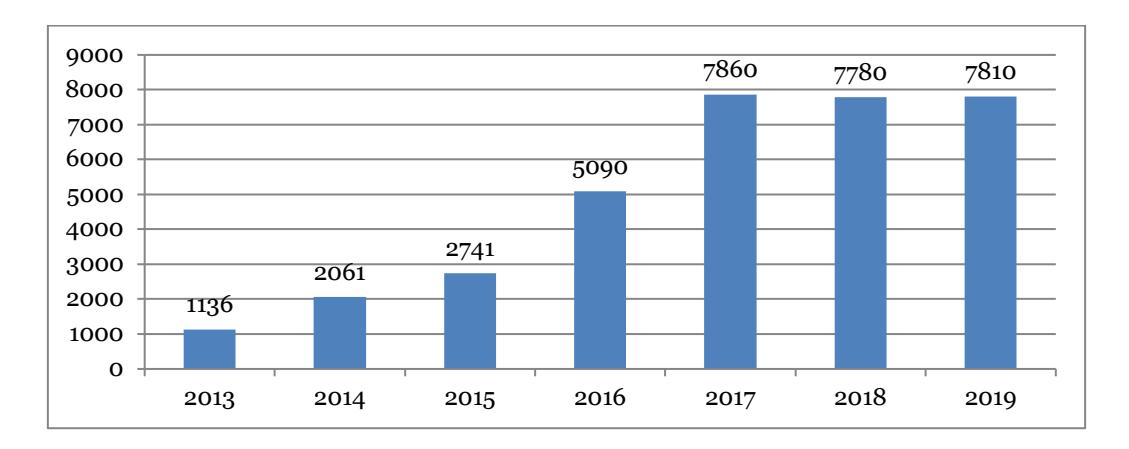
Figure 6. Number of Tourist Visits to Waerebo from 2013 to 2019 Source: LPBW (2020).
The increasing number of tourist visits from year to year had also increased people's income from tourism. According to the annual report of the Waerebo Cultural Conservation Institute (LPBW) in 2017, it had earned Rp. 2,251,075,000 or equal to U$D. 157,400, with an exchange rate of 1 U$D equal to Rp. 14,300. This figure was of course very high for a remote traditional village that has only started tourism for less than 12 years. The above income excluded the sales of souvenirs and foodbased products to tourists, which itself amounted to Rp. 645,695,000,- or equal to USD, 45,153. It was a significant increase in income for women who were members of the coffee, weaving and chips group (Suhandi, AS, 2018). In this case, tourism showed its multiplier effect. When a destination is known by the market and the number of visits is sufficient, then tourism has the potential to have a follow-up impact. This opportunity can certainly increase profits by developing other creative industries, so as to create new jobs.
4.2 Distribution of Tourism Benefits
The distribution of benefits from tourism results has always been a hot topic of discussion. In community-based tourism development, it is important to consider who will receive the benefits? What are the benefits allocated for? How will the benefits be distributed? Below in Figure 7, the distribution and utilization of tourism revenues at Waerebo in 2017. Tourism funds were distributed for various purposes, including operational costs, support for traditional ceremonies, support for environmental improvement, support for the construction of new facilities, facility maintenance costs, funds for old people, support for education, support for cultural activities. The distribution every year might had changed depending on the agreement of the LPBW, community and customary leaders.
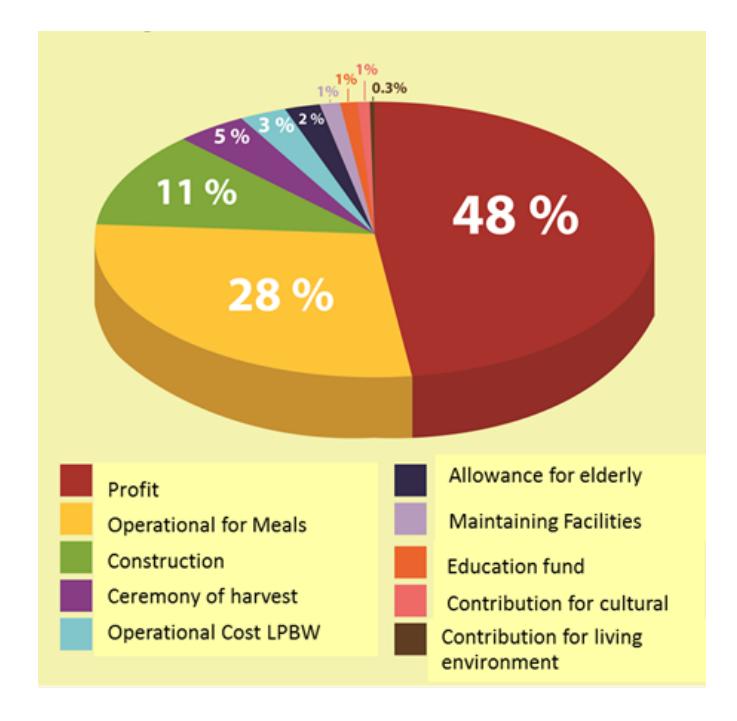
Figure 7. Financial distribution of tourism profits managed by LPBW Source: LPBW (2020)
Tourism in Waerebo not only provides financial benefits to the people of Waerebo, but also the people around Waerebo village. The revenue data above is only financial received and managed by LPBW. Not counting other income from tourism actors, such as income from porter, motorcycle taxi and lodging income in Denge and Dinthor. Economic benefits were divided to direct beneficiaries (received by management and members of LPBW, including cooking group, chips group, coffee group, chicken group, weaving group, handicraft group, local guides, porters) and indirect beneficiaries (received by people around Waerebo village, such as accommodation owners in other villages, motorcycle taxis, market traders, farmers, and so on).
5. Discussion
The people of Waerebo have high commitment to participation because they were determined to make changes to get out of poverty. In the development of CBT, according to Mowforth & Munt (2009), local community participation is one of the criteria that is often agreed upon as important to maintain the sustainability of village development in tourism schemes. In addition, the support of the village community in tourism activities is very important, because it ensures the establishment of safe and conducive conditions. The strategy in facilitating the community is the key to success in changing the perspective and capacity of the community about tourism and its management.
The process of increasing community capacity in tourism management in Waerebo has gone through several complementary stages using 5 pillars: tourism planning, capacity building, tourism product development, institutions and marketing. Learning from the Waerebo case, this process requires the right strategy, which takes into account several factors, including (1) customary rules and habits; (2) the character and social of the community; (3) mapping stakeholders; (4) mentoring with considerable time; (5) placement of live in facilitator; (6) training followed by coaching, where community can directly practice what was given during the training; (7) stages that complement each other from one pillar to another.
In practice, the challenges in the process of increasing community involvement in managing tourism are enormous, because tourism is a new thing for local people who traditionally work as farmers, fishermen, craftsman, or planters. For tourism development at traditional villages, which usually have stronger values and local wisdom, the level of complexity is higher. The values and local wisdom are great assets as attractions for visitors, but on the other hand it is a challenge to manage the negative impact of tourism activities, so that the values and local wisdom can be sustained. The achievement by the Waerebo Cultural Conservation Institute (LPBW) is the result of the hard work of the Waerebo community. The key success factors are strong commitment of the village communities, community participation in the process, and sufficient mentoring in considerable time, which allow the Waerebo community to be confident and able to manage tourism. Indecon had assisted them throughout this process. Capacity building programs must also be carried out in stages. In the early stages it is very important to provide a complete understanding of tourism, examples of bad practices as well as good practices of tourism. Raising public awareness so that community can understand that they have great potential in nature, culture and daily life which are attracted by many tourists from various parts of Indonesia and the world.
The challenge in CBT, usually local people do not realize that their daily life, their culture is an attraction for visitors. The activities of picking coffee, roasting coffee, mashing coffee are common things for local people and they consider it as something that is not special. However, if the activity is accompanied by stories of people's daily lives by locals, it will be an attraction for tourists. This perspective needs to be built on the village community. The next stage is capacity building in accordance with the activities and services that will be provided to tourists. The practice of the given theory and continued with simulations, can increase people's confidence. Once confidence is established, partnership programs with various parties can be encouraged, in order to accelerate the implementation of the plans that have been made.
Financial benefit from tourism needs to be allocated towards activities that support sustainability and increase the resilience of the destination. If it is not regulated how to use the fund, it can potentially be used for activities that are counterproductive to tourism. Utilizing income from tourism for tourism supporting activities, especially to meet the supply needs of vegetables, eggs, chicken meat, is the right strategy and according to the inclusive concept.
6. Conclusion
If managed properly, tourism will deliver positive impacts on community activities. Sustainability requires a strong institution and a management system that pays attention to economic sustainability, environmental sustainability and socio-cultural sustainability. CBT at Waerebo village belongs to the category wholly owned and managed by the community, where external parties play a role in assisting in the facilitation of development, but do not partially or fully own the CBT business.
Tourism is a process of creating added value, so an approach that integrates other sectors in the village into tourism activities is the right approach. In the CBT approach, community daily activities and local wisdom are attractive for visitors. Developing them in stories and interpretations will increase tourists' understanding of local culture, which in turn will increase tourists' appreciation of nature and community culture.
In the process towards sustainable tourism, community participation plays a very important role in maintaining harmonious relations between communities in tourism management. Without high involvement and commitment, the institutions operated by the community will not run well. It is very important to carry out a capacity building program with a focus on managing local resources in a sustainable manner, not only focusing on technical skills, but also on soft skills. The community has good knowledge of the area and its culture, but they need guidance to be able to tell well and serve excellently. Partnership with various parties is one of the keys to the success of Waerebo Traditional Village. Waerebo management and community institutions were open to receive assistances from any institutions, as long as they were in compliance with the goals of the community and did not conflict with custom.
Waerebo was able to rise from adversity. Development of Community Based Tourism had been able to increase their income, to help restoring their traditional houses and forest trails, to help providing community services (electricity, health), as well as to preserve rituals and to secure higher education of their children. The number of tourist visits continued to increase every year until 2019 before the COVID19 pandemic started Indonesia. From March 16, 2020 to October 2021, Waerebo village was closed from tourist visits. But the community was still able to survive from their coffee farming. However, the LPBW had to continue to adapt to the situation at hand without sacrificing local wisdom and mutual cooperation, because the more popular Waerebo is as a tourism destination, the greater the challenges are faced by the community.