

1. Introduction
The twins of internet and travel provide information visually rich content to inspire and support all stages of the travel lifecycle. Travel is one of the top five product categories purchased on the internet. There has not been a good deal of research into smart tourism and spiritual experience to date. Most studies in the area focus instead on 'smart cities' or 'smart destinations'. Antonio López de Ávila Muñoz et al. (2015) takes the smart tourism destination as 'an innovative tourist destination, made on an infrastructure of latest technology ensuring the sustainable development of geography spots, available to everyone, which facilitates the visitor's interaction with and integration into domain system, smarting up the quality of the experience at the destination, and uplifts visitors' quality of life.'
Bremer (2005) notes three broader approaches in the intersections of religion and tourism: the spatial approach, the historical approach, and the cultural approach in a modern world. With a heightened level of consciousness and awareness obtained, travellers also may be inspired to change themselves. YouTube and Tweeter as the smart medium or channels that are used prominently in tourism promotional literature (Olsen and Timothy 1999). Cripps et al. (2020) investigated the use of Twitter in business as a medium for knowledge sharing in the context of business-to-business (B2B) marketing. Bai et al. (2020) determined the impact of different dimensions of consumer engagement in social media on firm performance.
Arli et al. (2021) explored the impact of consumers' religious orientation on motivation and commitment toward recycling and investigated the mediating effect of motivation, commitment and love for nature on the relationship between consumer religiosity and their intention to recycle. Willson et al. (2013) claim that people who travel for spiritual tourism are 'elevated', 'enchanted' and 'engulfed' after their trips and also feel a sense of 'connectedness'- a clear signal of spiritualism for them. It has left a gap, however, that deeply intense internal experiences are not mentioned in the previous research. So, we propose the following research questions to investigate in our study: (1) What is the relation between smart technology and spiritual tourism experience? (2) What is the role of sentiments to effect spiritual destination travel?, and (3) What can be marketing policy responses?
2. Literature Review
Number of ethnographic studies by Anna Fedele (2013); Sammet, Kornelia. (2019) conducted in various geographies have focussed on spiritual pilgrims, their destinations and intentions to undertake spiritual tourism. Though they do not try to dig out internal reasons for spiritual tourism journeys (Shoval 2000; Myra Shackley 2015). This suggests some point is missing in perceptions of spiritual tourism itself, and how different they are from religious experiences or for that matter traditional religious pilgrimages. Jennifer Hall (2006) concludes that a religious humanist can harness spiritual experience as long as it 'comes from within'. It also supports the Foucauldian notion of too many discursive shifts, seeding the bed for new spiritual chasms. If it is not from within, does it have roots in social exchanges, or customer value, or co-creation experiences? Reverse behaviour can also come about through not going into soul-searching. Digital disruptions too can aid this type of outward behaviour.
2.1. Social Connections
Do spiritually curious tourists visit for social connections that give a new experience within? Smart tourism is a social occurrence as it comes out from the blending of Information and Communication Technologies (ICTs) with the tourism experience (Gretzel, U. et al 2015). The social experience is enhanced through awareness of the destination, personalisation and monitoring (Buhalis and
Amaranggana 2015) through marketing functions. So, social consumer produces value-added content out of experiences. Zhang and Guo (2021) explored how consumer expertise affects domestic tourism loyalty and provided differences between married and unmarried consumers in responses to the impact of expertise on loyalty. Neuhofer et al. (2015) point out to information summation, connectedness and real-time alignment as the primary drivers of such social experiences. Each one factor is laden with meaning. Information infrastructures thus usher in a panoply of smart tourism experiences (Wang and Xiang, 2012). The distinction between the formal or social experiences associated with religions, and more fluid and personal impressions of the believer is relevant here. It is possible to conjecture that the desire for a more palpable self- experience is the force behind this shift towards subjectivity, and this is what demarcates spiritual tourists from traditional pilgrims. Whether smart technology enabled smart marketing can capture this subjective element of selfabsorbing mood or sentiments and deliver solutions is the moot question we are trying resolve.
2.2. Customer Value and the Tourism Consumption Experience
What lies within customer value? Epistemic Value is one that arouses curiosity, novelty which satisfies a desire for knowledge. Pre-tour epistemic value perceptions are evident in consumers choosing the tour to do something 'different'. It appears that tourists seek novel and different things in their quest for knowledge; so they challenge assumptions and hedonic experiences. A Model is elaborated later for the purpose. Srivastava and Sivaramakrishnan (2021) empirically assessed the influence of eWOM and Customer Brand Engagement on customer loyalty and satisfaction with the brand. Market actors, market structure, market institutions, and market dynamics play its roles constantly in the name of smart tourism and spiritual tourism (Sigala,2015). Nevertheless, spiritual travel prompts an individual to find a deeper connection to themselves and the world, more so after the trip. Smart technology with smart guidance can take one to elevated levels of consciousness internally or externally to a hyper reality, a la technology and reveal experiences and sentiments hitherto unexpressed. Consciousness or experiences come from visiting new spiritual places cleansing the soul as per tenet of spiritualism.
2.3. Innovations
Consciousness or experiences apart, investments in smart technology can be considered resource inputs to develop new innovative marketing capabilities. With resources as an input, and experiences as the back-up, smart economy is taken over by co-creation experience as a tested bed for new smart technology, lapping it up by innovation. Cheung et al. (2021) examined the impact of social media marketing efforts via WeChat, on consumers' online brand-related activities (COBRAs) and their related outcomes, search behaviour and repurchase intention. Technology innovations developed by online travel intermediaries have spawned Matrix display (allows travellers to click on any heading within a search result matrix to sort choices according to criteria such as price, airline, duration and number of stops),filters (narrow the search based on price, brand, review scores, star ratings), opaque pricing ( allows tourism suppliers to offer heavily discounted rates to dispose of distressed inventory),and dynamic pricing allows travellers to bundle several products into a package that is booked at a lower price than purchasing each component separately. Flexible date search, low fare notifications, map display, semantic search and pressure selling, intelligent assistants and online recommender systems provide personalized key information about products. Spiritual tourism obviously stands to gain from such minute innovations.
2.4. Digital Disruptions
Digital disruptive technologies include mobile integration (mobile messaging, mobile payment), ambient intelligence (sensors, IOT), which are set to disrupt the ways tourists interact with and experience tourism attractions. Digital entities and communities such as catalysers (increase the survival changes), dictators (Google), Milkers (extract more value from the ecosystem then they contribute, example Online Travel Agent), Niche players (specialized players such as TripAdvisor) all are trying for disruptive changes to create tourist inflows to make a gain. Disruptive changes, however, are not without its demerits.
2.5. Over Tourism
Doubts concerning the spiritual, social and environmental deficits of disruptive technology assisted inflow of tourism are growing. Will spiritual beliefs then be in deficit? Perhaps not. In the B2C (business to consumer) interaction, real-time synchronisation is critical and smart technologies like Tweets and YouTube offer extensive scope for interaction and sharing sentiments (Neuhofer et al., 2015). In the train of sentiments, smart technology dishes out new experience marketing strategies. These are specific and targeted social listening analyses like Share of Voice, or share of audience or search of search. At a macro level, the issue that confronts managers is whether gradual change of marketing strategy- 'logical incrementalism' is suitable to accommodate macro-shocks or step changes in the environment will suffice or not. Alternatively, 'punctuated equilibrium' events like cyber positioning can cause desired changes in tourism space and so nudge the environment for a period of time and restore the equilibrium. Explicit consideration of macro-drivers and strategic positioning can work for a destination organisation's advantage. To quote Shakespeare's Hamlet: 'If it be now, 'tis not to come; if it be not now, yet it will come- the readiness is all.' Preparedness to adjust is the answer then. We see that (micro) smart technology assisted experiences can help to boost sentiments.
2.6. Micro Level and Sites
Perhaps at a micro level, the most distinct type of smart tourism is the value-in-use; assisted experience or contentment. The Hub Hotel UK from Premier Inn has nudged augmented reality compatible with the wall maps in the hotel rooms. The wall maps present extra information about some of the local destinations worthy of visit, may be spiritual interest. Hyunmi Back et al. (2012), researched why consumers focus on different information sources of reviews, and highlighted how online reviews can be used for evaluating alternatives. Spiritual spots in India is dotted with sentiments and religious interest that attract tourists from across the world. These spiritual centres reflect India's culture, tradition, religious beliefs and grand architecture. On a low key, Government tries to guide authentic tourists through e-efforts and e-services.
2.7. Experiences
The creation and even more the co-creation, of memorable and superior spiritual experiences stand out as a major milestone in tourism for aligned travellers and organisations operating in the sector. Diversified (experiences, greater personalization) smart infrastructure-all this booms tourist experiences and satisfaction (Jinsoo Hwang and JungHoon, 2019) Satisfaction comes from both physical and virtual spaces. Even then, negative emotions also surge in the garb of 'technology anxiety' (Meuter et al., 2003) together with digital detox (Jing Li, Pearce and Low, 2018). That means communication with fellow travellers or past travellers plagues the temporal-spatial organisation or structure. So we see an effervescence of highly positive, moderately positive, negative or highly negative flow of information in the form of sentiments. Whether it prompts a repeat visit intention needs to be addressed. Seifert and Kwon (2020) examined how the sentiment of eWOMs influences consumers' repeat engagement in brand value co-creation and brand trust with the moderating effect of mavenism.
2.8. Anxiety
Psychographics may be more accurate in predicting repeat visit behaviour than demographics. Psychographic traits (attitude, perceptions) are important in determining how individuals respond to technology. The COVID-19 pandemic has created a new life paradigm, in which many emotions have played out, leading to new consumer needs. The one overriding emotion that has defined our feelings and actions this year has been anxiety. Smart tourism and smart spiritual travel are both badly hit in the wake of anxiety germinating from pandemic. Health anxiety, safety, anxiety for example turn sentiments from positive to negative sentiments- a reverse syndrome so to say.
2.9. Reverse behaviour
Penitential pilgrimage of ages before or aristocratic educative travel no longer rules now. Modern tourists have become ambivalent about smart city travel plans and decisions. Individuals nurse both positive or negative perceptions of destinations. Contradictory information, lack of linguistic adherence in technology and anxiety have hampered perceptions of facts and consequent comprehension. Hotel reviews or sentiments for a religious place dishing out incorrect mechanics and grammar may give mark of an inhospitable place. Giving positive and negative reviews that cloud smart tourists' minds cannot be deleted easily. Downstream effects aid tourists avoiding smart cities and reverse behaviour starts. This produces ambivalent behaviour triggering psychological discomfort along with negative behavioural responses. These are anticipated conflicting reactions (ACRs).
3. Research Design
The episode is ingrained in the model as in Fig 1 below starts with smart technology which produces information and travel decisions leading to spiritual experiences and consequent sentiments- Highly positive, moderately positive, moderately negative and highly negative. Smart technology then contributes to spiritual experiences,if information travels smoothly. Theoretically, this dashboard will be automatically updated by data from different destination stakeholders: DMOs, hoteliers, restaurants, transport companies, museums, entertainment and recreation sector, banks, technology companies, etc., and forms the base for making de novo decisions. DMOs can use virtual assistants, chatbots, and robot concierges providing real-time interaction for a smarter experience. In spite of technology mandarins, authentic pilgrim's experience is diluted by 'e-alienation' as an outcome of SMTS among tourists (Tribe and Mkono,2017). Tourists are in a virtual tourist zone and become 'ealienated' from other tourists and the destination itself. As Raj et al. (2013) explain, pilgrims share six objective components, namely, faith, feelings, culture, community, ceremony and contact, but are these being jeopardised by the advent of digital e-lienations?.
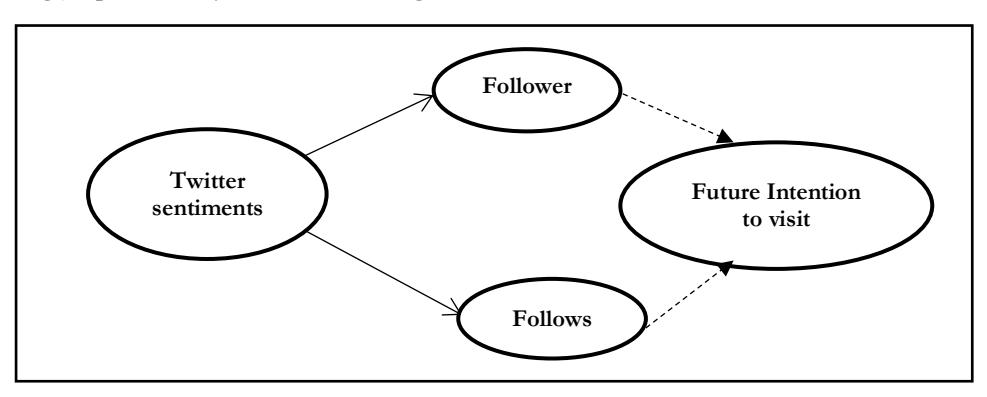
Figure 1. Spiritual destinations with sentiment nodes
Hypotheses: The individual's psychological dispositions predict the usage and non-usage of YouTube videos (Debra Grace et al., 2015). Positive or negative comments elicited out of online comments increase the marketing intelligence mechanism using tweets (Pantano et al., 2019). Anubhav Mishra et al. (2018) researched how online impression is a strong moderator which influences whether teenagers would engage in eWOM activities or not. Both followers and follows group of tourists move with sentiments. With updated technology and information, 'follows' improve sentiments thereby increasing the willingness of actual visits. The valence of sentiments too goes up. Sometimes sentiments become so strong that it forces present intention to visit. Therefore, from the extant discussion, we frame the following hypotheses and the Figure 1 depicts the conceptual model of our proposed work.
H1: Twitter sentiments have a significant relationship for a spiritual destination with Twitter followers
H2: Twitter sentiments have a significant relationship for a spiritual with Twitter follows.
H3: There is a significant relationship between the Twitter sentiments and Future Intention to visit.
4. Research Methodology
We used the sentiment analysis of Twitter tweets to methodically extract, and study the subjective information of tourists. The sample period of a four months duration is taken for our research analysis and these tweets were reflected the sentiments of viewers. Sentiment analysis gives out polarity of the given text into positive, negative, or neutral (Kumar et al., 2018); are collected automatically and are analysed using text mining techniques. The sample of fourteen Indian spiritual destinations (Ajmer, Amritsar, Bodhgaya, Haridwar, Kedernath, Kumbakonam, Puri, Rishikesh, Shiridi, Somnath, Thiruvannamalai, Thirupati, Vaishnavi Devi, Varanasi) are selected for our research study. The empty, non-English and disabled tweets are excluded in this research. The total sample of 12,000 tweets of above spiritual destinations are selected for our study.
The visitors are from different parts of the world. Selected spiritual destinations are popular for their divinity, heritage, culture, history, beauty, aesthetic, and religion or others. The summary statistics of each sentiment is analyzed on selected destinations; it provides the overall inputs for DMOs to improve the destinations. To investigate viewer's polarity on different Tourist destinations, the algorithm generated highly positive, positive, negative, and highly negative sentiments. Multiple Linear Regression is applied in this work to validate our proposed hypotheses. Also, samples of spiritual destination's YouTube video comments (1626) are selected (Ajmer, Amritsar, Haridwar, Kedarnath, Puri, Somnath, Vaishnavi Devi, Varanasi) to cross verify the channel conflicts (if any) for our research analysis. The future intention to visit for Twitter channel is 5 out of 14 destinations whereas for YouTube channel it is 9 out of 14.
In the proposed model we are taking spiritual destinations depending both on accessibility and legacy. Tourists look for easy accessibility and also a place which is older, traditional, and has a rich cultural heritage or legacy. The dependent variable is future intention to visit (FITV). The twitter reaction is a stimulus and future intention to visit can be carried out any time in the future. The symbols and notations used in our research models are listed in Table 1.
| Symbols | Notations | |
|---|---|---|
| Attitudes | TWHPS | Twitter Highly Positive Sentiments |
| TWPS | Twitter Positive Sentiments | |
| TWNS | Twitter Negative Sentiments | |
| TWHNS | Twitter Highly Negative Sentiments | |
| Smart Technology | TWTS | Twitter Tweets |
| TWRTS | Twitter Retweets | |
| TWFRS | Twitter Followers | |
| TWFS | Twitter Follows | |
| Spiritual Destination | ACCES | Accessibility |
| LEGY | Legacy | |
| Intention to Visit | FITV | Future Intention to Visit |
Table 1. Symbols and Notations
Source: Source (Year)
Experimental Design through Multiple Linear Regression – The linear relationship between the predictors and the response variables are defined in equations 1 to 2 posited as mathematical equations. These models quantify the relationship between the variables.
\[TW_{Followers} = \beta_0 + \beta_1 * TW_{HPS} + \beta_2 * TW_{PS} + \beta_3 * TW_{NS} + \beta_4 * TW_{HNS} + \varepsilon\] (1)
\[TW_{Follows} = \beta_0 + \beta_1 * TW_{HPS} + \beta_2 * TW_{PS} + \beta_3 * TW_{NS} + \beta_4 * TW_{HNS} + \varepsilon\] (2)
\[FITV = \beta_0 + \beta_1 * LEGY + \beta_2 * ACCES + \beta_3 * TW_{HpS} + \beta_4 * TW_{PS} + \beta_5 * TW_{HNS} + \beta_6 * TW_{NS} + \beta_7 * TW_{FRS} + \beta_8 * TW_{FS} + \beta_9 * TW_{TS} + \beta_{10} * TW_{RTS} + \varepsilon\] (3)
5. Research Findings
Highly positive, or positive views can be taken as precursors to repeat visit intentions. Negative sentiments indicate contra effects for revisit; thus it may not be spiritual but still be religious. Positive sentiments denote contentment and happiness. Negative sentiments connote annoyance which over time, can be changed or transformed by concerted efforts. The spiritual destinations with sentiments are depicted in Figure 2, and we find from this Figure, the religious places in India are Amritser, Bodhgaya, Haridwar, Puri, Rameshwaram, Rishikesh, Shiridi, Somnath, Srirangam, Thiruvannamalai, Thiruppati, Vaishnavi Devi get the lion's share of moderately positive tweet comments, which are reflected the diversity of religions in India. Though nature bestows mountain and river in all the places, but Vaishnavi Devi and Somnath score more points may be due to religious proclivities and intensity of visits. Vaishnavi Devi is a mountain trek besides seeing the Holy Caves; has an enchanting blue ocean adjoining the famous Devi Temple where thousands throng every day. Other sacred places have a mixture of positive and negative tweets. Obviously, smart tourism can help more the first two cities than the latter. The latter can see growth with smart technology but with sentiments running low, smart spiritual progress seems to be muted. The findings of Hsin-Hui Lin et al. (2018) support this. Onus falls on DMOs and other ecosystem partners to boost up the potential of spiritual tourism destinations and encourage segments of travellers. They should better adopt a blue ocean strategy rather than a red ocean strategy which may cause overtourism and bring in a train of problems.
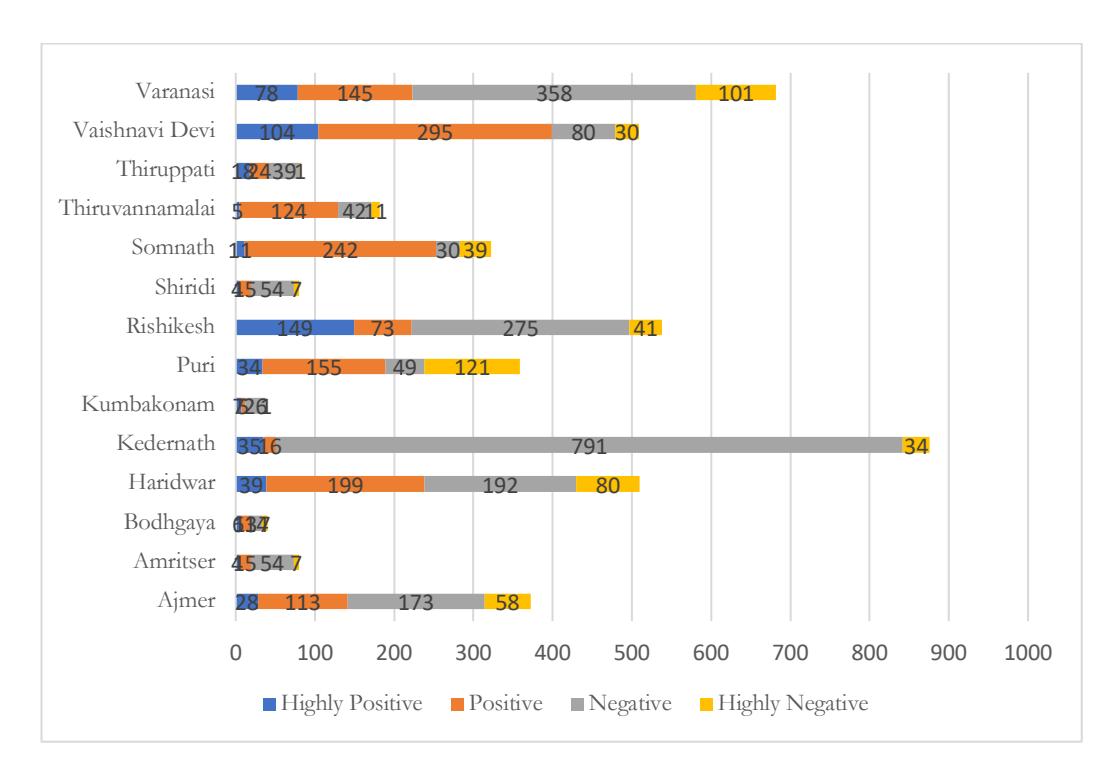
Figure 2. Spiritual destinations with sentiment nodes
Figure 3 shows the sentiments extracted from Twitter and YouTube channels of Indian spiritual destinations. The total number of comments are more in Twitter than the YouTube since former is a text based and later is a Video based communication channel. But in both the channels, number of negative sentiments outnumbers positive sentiments. It may be Indian spiritual destinations, even though appealing, do not suit the mental faculty of pilgrims. Either technologically Indian destinations may not up to the mark or hygienically they are below standards.
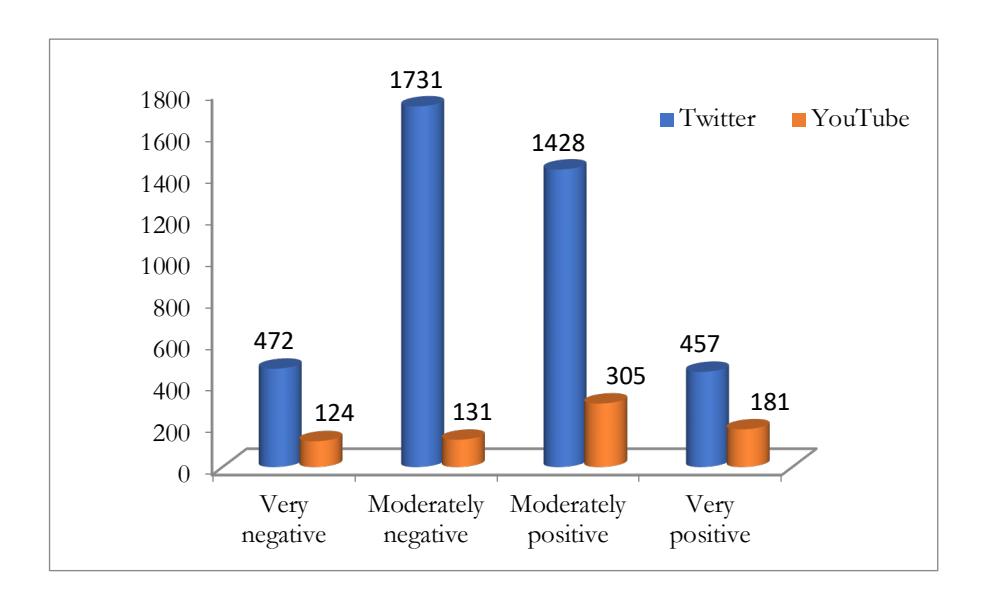
Figure 3. Spiritual destinations with Twitter and Youtube sentiments
Correlation and Regression Design Output – The correlation analysis reflects the direction of linear relationship between the variables. The correlation value within the twitter sentiments are tabulated in Table 2. The statistical inference of correlation results evidenced that positive sentiments are encouraging more followers to follow the twitter tags. These positive sentiments increase the destination visibility and brand which leads to intention to visit. The study by Wang et al. (2020) regarding spatial and psychological involvement supports this point through destination image.
Table 2. Correlation values between the variables
| Correlation | Positive Highly | Positive | Negative | Negative Highly | Followers | Follows | m of tweets Su | m of Su | Accessibility retweets | Legacy | Future ITV |
|---|---|---|---|---|---|---|---|---|---|---|---|
| Highly Positive | 1.00 | ||||||||||
| Positive | 0.37 | 1.00 | |||||||||
| Negative Highly | 0.33 | -0.13 | 1.00 | ||||||||
| Negative | 0.35 | 0.51 | 0.25 | 1.00 | |||||||
| Followers | 0.37 | 0.70 | -0.09 | 0.24 | 1.00 | ||||||
| Follows | 0.37 | 0.45 | 0.37 | 0.06 | 0.53 | 1.00 | |||||
| sum of tweets sum of | 0.25 | 0.52 | 0.25 | 0.04 | 0.72 | 0.83 | 1.00 | ||||
| retweets | 0.12 | -0.13 | 0.76 | 0.27 | 0.00 | 0.46 | 0.33 | 1.00 | |||
| Accessibility | -0.39 | -0.46 | -0.41 | -0.10 | -0.48 | -0.84 | -0.75 | -0.59 | 1.00 | ||
| Legacy | -0.36 | -0.35 | 0.21 | 0.15 | -0.39 | -0.53 | -0.60 | 0.21 | 0.35 | 1.00 | |
| Future ITV | 0.02 | 0.82 | -0.28 | 0.36 | 0.58 | 0.39 | 0.53 | 0.02 | -0.52 | -0.26 | 1.00 |
From the regression results as tabulated in Table 3, R2 values of all the three models are reasonably high and are explained as 53%, 62% and 98% of predictability. Twitter sentiments are not significant (p > 0.05) for model 1 but it is significant for model 2. So as per our research results, H1 is not supported but H2 is supported. We infer that number of Followers (opinion leaders) in a twitter is significant than the Follows. Since p < 0.05 for model 3, H3 is supported, we infer that future intention to visit is depending on the twitter sentiments. Jorge Arenas-Gainta et al. (2018) is supporting this, that is, there is a strong relationship between social identity and perceived encouragement.
So, we postulate that the highly positive (highly negative) sentiments are emotional in nature thereby future intention to visit depends on these emotional sentiments. Mild sentiments (instead of strong) of positivity increase the intention to visit. FITV as per the Tabl 3 is significant in the sense that these are affected by Spiritual destinations (SD), Attitudes and Smart Technologies (ST). The values found are significant; so the model is fitted. The research finding of Pengfei Zhao et al. (2018) and Panogiotis et al. (2018) are supporting our results. To test multicollinearity, Variance Inflation Factor (VIF) is calculated using predictor variables and all the VIF values are (1.88, 1.98, 1.28, 2.33) are lesser than 5, indicates that there is no multicollinearity between the independent variables.
Table 3. Regression Analysis between the variables
| DV | IV | R2 | Standard Beta Coefficients | F-Value | Sig.level (�-value) | Remark |
|---|---|---|---|---|---|---|
| Followers | Twitter Sentiments | 0.53 | 0.17,0.73,0.00, -1.89 | 2.51 | 0.12 H1 is not supported | |
| Follows | Twitter Sentiments | 0.62 | 0.33, 0.64, 0.48, -0.50 | 3.69 | 0.04 H2 is supported | |
| Future Intention to Visit (FITV) | Twitter Sentiments | 0.98 | .69, .93, -1.23,12, 97, -1.04, 1.77, .69, 18, .63 | 15.35 | 0.02 H3 is supported |
DV – Dependent Variable, IV – Independent Variable, (α = 0.95), Variance Inflation Factor (1.88, 1.98, 1.28, 2.33)
ANOVAa
| Model | Sum of Squares | df | Mean Square | F | Sig. | |
|---|---|---|---|---|---|---|
| 1 | Regression | 3.153 | 10 | .315 | 15.350 | .023b |
| Residual | .062 | 3 | .021 | |||
| Total | 3.214 | 13 |
a. Dependent Variable: Future ITV
b. Predictors: (Constant), Legacy, Highly Negative, Negative, Followers, Highly Positive, Accessibilty, Positive, Follows, sum of retweets, sum of tweets
| Coefficientsa |
|---|
| Model | Unstandardized Coefficients | Standardized Coefficients | t | Sig. | ||
|---|---|---|---|---|---|---|
| B | Std. Error | Beta | ||||
| (Constant) | 005 | .685 | 007 | .995 | ||
| Highly Positive | .008 | .004 | .694 | 2.242 | .111 | |
| Positive | .005 | .001 | .927 | 3.448 | .041 | |
| Negative | 003 | .001 | -1.229 | -4.841 | .017 | |
| Highly Negative | 002 | .003 | 120 | 559 | .615 | |
| 1 | Followers | -4.500E-008 | .000 | 974 | -3.285 | .046 |
| Follows | -1.385E-006 | .000 | -1.038 | -2.716 | .073 | |
| sum of tweets | 6.528E-008 | .000 | 1.771 | 3.436 | .041 | |
| sum of retweets | 1.653E-006 | .000 | .690 | 2.138 | .122 | |
| Accessibilty | 121 | .165 | 176 | 733 | .517 | |
| Legacy | .613 | .208 | .633 | 2.955 | .060 | |
a. Dependent Variable: Future ITV
Table 4 lists the qualitative samples of sentiments extracted from Twitter and YouTube channels. These qualitative data provide the insights which are helpful to improve the destination infrastructure and keep the spiritual destinations as tourist friendly.
As per our sample results, the proposed model is not fit for H1 but it is fit for H2 and H3. Findings illustrate that Twitter sentiments alone are inadequate to represent viewer sentiments. It implies that
Indian spiritual destinations have not yet matured. Communicating right content to the potential market has not happened so far. So, Indian spiritual destination managers or temple authorities should gear up, carefully fathom these sentiments and map suitable strategies to keep their destinations alive with positive sentiments. Few spiritual destinations are using only one channel for their digital promotions; since social media is low or no cost medium, DMO can use more channels to attract more visitors and elicit more sentiments.
Table 4. Sample Twitter and YouTube qualitative sentiments.
| e-WoM Sentiments | Explanation |
|---|---|
| Positive Sentiments | Better than Heaven or Arcadia Come and Experience something different, spend time with your family at this unique, one-of-a-kind historic museum with an artistic blend! Environment lover !!! I love thee, O my India! |
| … Greetings of Peace @DeepakChopra sb as your words/silence enable inner consciousness with joy n smiles. I love my India. | |
| Negative Sentiments | # Brisk pace of illegal commercial building in Ajmer @RajGovOfficial Heavy vehicles have been recklessly moving on Jaipur Ajmer high way creating threat to people lives, request to ban entry of all heavy vehicles into City jurisdiction of traffic with immediate effect. Tarif for electricity has been increased in Rajasthan but the service provide by the Ajmer Vidyut Vibhaag is the worst. |
| Positive YouTube Sentiments | I had visited this holy place on 13th June 2008 along with my family. I have seen most of the beautiful places in India made dirty with plastic and bottles. I think Banares is one of the most wonderful places I have ever seen. A very informative video, it was a delight to view, continue the good work, it had balance of everything a tourist would appreciate viz, religious place, food joints, shopping, cultural events, village tour, bird watching. |
| … This is a historical place to comment on a holy place the Lords beautiful place. this' a detailed beautiful videothanks for tbe caption and those 'pre\post' views of the affected placesSUCH AND AWESOME WAY TO THAT PLACE AND THE MOST OF THANKS IS FOR SHOWING ME THAT INSIDE OF THAT SHRINE | |
| Negative YouTube Sentiments | Some of those places looked like no-tourist places. Messy place. It has been shared on a forum with the subject of the most disgusting places on Earth. … The whole India looks the same,what a dirty place with no infrastructure what a mess,unique and most ugliest place on earth,they should move the people out and rebuild the city roads rivers ect learn from China bunch of miserable idiots stop making excuses. |
6. Discussion
Smart technology can address spiritual destinations; has an assortment of market mix, volume and growth and a shibboleth of sentiments. All these factors can contribute to spiritual tourism. For each impacted place, complex thresholds exist for policy responses. Policy responses can address the segments mainly through knowledge (human) resources. Sentiments can better be shaped by refreshed new & revised marketing, branding and endorsement strategies while keeping the structural and operational strategies intact. Involvement through various branding activities will foresee a remarkable growth for destination brands in sync with the real-time tourism industry outlook.
Offering authentic food and spiritual experience will be a nice mingling for guests. Hotels now-adays are talking to be compassionate, a virtue espoused in spiritualism discourses.
A paradox of being technologically smart is that tourism lacks substantial rich human resources (HR) or knowledge workers. The sector also struggles detrimentally with lack of Human Resources innovation deficiencies. Even the adventurous travellers will be irked if technology fails to work. This produces an umbilical tension between the wish to explore and the vexations or exasperations of moving stray. Naturally, sentiments will be negative however attractive a destination may be. Personalisation is a key factor to drive down such negative marketing contingencies.
However, Smart tourism is becoming a harbinger of and advocate of the "sensor society" (Mark Andrejevic and Burdon 2014). Our study throws the fact that tourism organisations can connect with myriad touchpoints in multiple channels and media, producing variety of information so that one can visualise the path of sentiments and virtues if be, that a customer takes from beginning to the end of a journey. Selecting the right policy mix or a granular policy is crucial.
Personalisation is an issue which comes in the wake of smart technology progress. Privacy may be disturbed. It makes consumers unhappy or vulnerable. Trust-building is an issue when relationships with apps/service providers is temporary. Further, in the wake of drilling information, tourists may be easily persuaded to jettison privacy and start commenting negative. Huge anonymous data therefore calls for monitoring under the disguise of service delivery.
Information governance becomes the key issue as it hinges on correctly distilling the value of information and delivery to recipients. Clearly, the 'Surveillance' tag is the one that is highly cited with all the smart technologies. Smart technology will augment spiritual tourism but, in the process, whether it will promote spiritual surveillance or not is not clear. This is due to the fact that the use of geo-localization systems for surveillance has been subjected to an intense debate proliferating sentimental outbursts. It follows that accessibility and legacy should be the base or precursor of any marketing strategy devised by DMOs or any other agency. Smart technology and attitudes also play its part, but overall a destination must be convenient to go, and it must harp on a good old spiritual tradition, so that the legacy effect is strong.
7. Conclusion and Limitation
7.1 Conclusion
In our study, YouTube and Tweets are shared and disseminated to wider receptors, who retweet or like it further. This value further seeds sentiments for travel. For effective marketing actions, critical junctures that influence decision-making must be seen. DMOs can go for analytics based insights sense trends/patterns, can seize opportunities and reconfigure resources under uncertainty. DMOs should regularly post quality tweets on various angles of spiritual sojourns such as accessories, lonely or recluse spots in places for reflective moods, brave mountainous climbs, serene meditation rooms, group chanting and music meditation and the like. The COVID19 crisis has caused an unprecedented collapse in economic activities and is having a 'deep impact' on Tourism sector. The effect of COVID19 has hit Indian tourism industry very badly which has resulted in job losses and sociopsychological imbalances. Social distancing, safety norms have made people more suspicious, anxietyridden, looking for safety. Families too are affected leading to societal tensions. Due to COVID-19, there are major changes in organisation, especially technology-enabled changes, have significant impacts on job outcomes as discussed by Bariso (2020). Post COVID-19, competitions becoming more and more intense in Tourism Industry, some spiritual (tourist) destinations are exploring their ability and capability to provide tailor-made products to their customers. The findings of this study
will benefit academicians, practitioners and to the tourism researchers. Spiritual information sentiments go directly into short-term memory for processing, where two primary activities take place -maintenance rehearsal and elaborative. As long-term memory processes more information, consumers continuously restructure themselves. Elaborative memory and long-term memory contribute to brand schemas consisting of experiences, values, key attributes, and feelings. Smart technology will contribute to meeting the needs of guests and add to their gamut of experiences. An additional motive for organizations both in public and private sectors and destinations may be to increase the time and money spent by travellers. If smart technology marches forward, smart religious sentiments will follow suit. It will not fall behind.
7.2 Limitation
Sample size of data is a first limitation; in an online community, behaviour seem to be indeterminate. Second, focus of this study is only on Twitter and YouTube channel; it limits the generalization of our findings. Thirdly, neutral sentiments are real challenge for marketing managers (Lamest et al., 2019), so in-depth analysis is required on it. The final limitation is omitted variable bias, it can be the result of theoretical misspecification or practical problems involved in collection of data for certain factors. These limitations offer avenues for further research.