

1. Introduction
There are numerous sub-sectors in the tourism sector like- aviation, travel agencies, food and beverage, casinos (Ritchie & Jiang, 2021). Hospitality Industry is a vital sub-sector and an integral part of the tourism industry (Dube et al., 2020). More than half of the total expenditure on a trip is incurred in the hospitality industry for residing and dining purposes (J. Wang & Ritchie, 2012). " The hotel and tourism business is one of the largest and most rapidly growing industries, but it is extremely vulnerable" (Wong et al., 2021, p. 3). The COVID-19 pandemic crisis is an exogenous crisis that develops logically (Pforr & Hosie, 2007; Santana, 2012). It is current, dynamic, vulnerable, sensational, unpredictable, inevitably affects millions of people worldwide (Davahli et al., 2020; McKercher & Hui, 2004). The world has witnessed reverse migration due to the explosion of the pandemic COVID-19 crisis (Behera et al., 2021). In India, it was the second most painful migration ever after the partition of India in 1947 (Inamdar & Thusoo, 2020). The COVID-19 pandemic crisis continues to become severe in India(Mehta & Jha, 2020); the downward spiral of productivity in the hospitality and tourism
industry embraces higher unemployment rates across the nation (Kaushal & Srivastava, 2021). Tourism and its allied sector indirectly supports crises (Gössling et al., 2020). Hence, disruption of the Pandemic COVID-19 has squeezed the hospitality sector. The pandemic COVID-19 is a macrolevel crisis in the hospitality sector (Leta & Chan, 2021). Although the COVID-19 pandemic crises have been seen as challenging, they can be seen as an opportunity. In China, Crisis is called 'Wei-Ji', which means threat and opportunity (Y. Wang et al., 2020). "The COVID-19 crisis should thus be seen as an opportunity to critically reconsider tourism's growth trajectory, and to question the logic of more arrivals implying greater benefits"; " The 2003 SARS outbreak illustrates this well, as tourism growth in the Asia picked up very quickly once the perceived threat diminished" (Gössling et al., 2020, p. 13,15).
Over a year after the epidemic COVID-19 began, the organisations are now considering long-term structural and policy adjustments to prepare for future catastrophes. An Organization should prioritize the safe conduct of activities and maintain regular communication with all stakeholders to understand their needs and changing requirements (Kwok et al., 2021). To overcome the curse of the epidemic COVID-19 catastrophe, a strong, responsive structure is required to protect and safeguard the interests of employees, consumers, and other stakeholders. If we seek to realize potential of Hospitality and Tourism industry carries, it is of utmost importance to perform a deep wellresearched analysis of the crisis management capacity of the organizations within this sector so that the losses can be minimized and changes at the policy level can be made to build more resilient and sustainable models of business that can withstand any future challenges. "If organizations are not prepared to respond to emergencies and crises, communities also are not prepared" (A. V. Lee et al., 2013, p. 29).
This review paper provides a systematic review of the studies done earlier on the consequences of the epidemic on the hospitality sector, the reaction of the organizations to this global crisis, and the influence of such organizational responses on the employees working with them. The study also suggests policy reforms that should be adopted to overcome this period of slump and regain the equilibrium and prepare beforehand for any future uncertainties (Zopiatis et al., 2021). This review paper also ventures the multifaceted issues that need to be addressed. And recommends the policy reassessment and responses necessary for the organizations to sustain and manage themselves in critical situations like the COVID-19 pandemic. This paper will help prepare organizations for future uncertainties as crises quickly affect Tourism, hospitality, and allied industries (Uğur & Akbıyık, 2020).
This review study entails a theoretical overview of the organizational crisis response and management followed by a brief outline of the methodology for collecting the research articles relevant to this study. Further, it includes an extensive analysis of the findings of these articles to seek an answer to some questions -1. What is the "Organizational response to COVID-19"? What are measures have organizations should adopt in response to the pandemic COVID-19? 3. What was the impact of these responses on the organization, employee, and their relationship.
2. Theoretical Framework
2.1. Organizational resilience theory
Organizational response to COVID-19 can be observed as the outcome of the resilience of the organization and employment security (Filimonau et al., 2020). Resilience can play a significant role in responding to crises like the COVID-19 epidemic (Rivera et al., 2021). It may enable organizations to recreate, modify, extend, and recreate themselves during and after a crisis and strengthen psychological health throughout the pandemic COVID-19 (Verdolini et al., 2021).
Organizational Resilience Theory may be explained as "An organisation's ability to survive a major crisis depends on their organisational structure, the management and operational systems they have in place, and the resilience of these. Organisations deal with uncertainties and unexpected events all the time, and managing these presents both opportunities and risks for the organisation"(Seville et al., 2008, p. 02). "Resilience is an important concept to organizations in responding to a crisis. Resilience is the ability to recover quickly after a crisis. In other words, an organization should be able to resume its original shape or position after being damaged" (Hurley-Hanson, 2006, p. 481).
2.2. Social exchange theory
According to this theory, when an organization implements some response to a crisis like COVID-19, it increases employees' morale and commitment level as they believe that the organization is responding for their betterment (P. C. Lee et al., 2021). An organization's communication regarding safeguarding the stakeholder during a crisis, especially employees, can enhance employees' trust and commitment level towards organizations and improve employees' Performance supposing that employees are more satisfied with the organization's crisis response (Vo-Thanh et al., 2020).
2.3. Conservation of resource theory
According to the conservation of resource theory, resources such as humans are valuable resources, and it can be challenging to build and retain resources during a situation like the COVID -19 pandemic (Hobfoll, 1989). Lack of Support from the organization can lead to stress and anxiety in employees, reduce job satisfaction, and affect employee commitment (Duarte Alonso et al., 2020).
2.4. Situational Crisis Communication Theory (SCCT)
Situational crisis communication theory facilitates a comprehensive framework so that an organization can effectively respond to a crisis. Lack of communication and disseminating incorrect information in crises like COVID-19 can be hugely detrimental for individuals and organizations in the hospitality industry (Kwok et al., 2021). The challenges like the unavailability of the internet and required technological devices for communication can negatively impact the organizations and the employee working there.
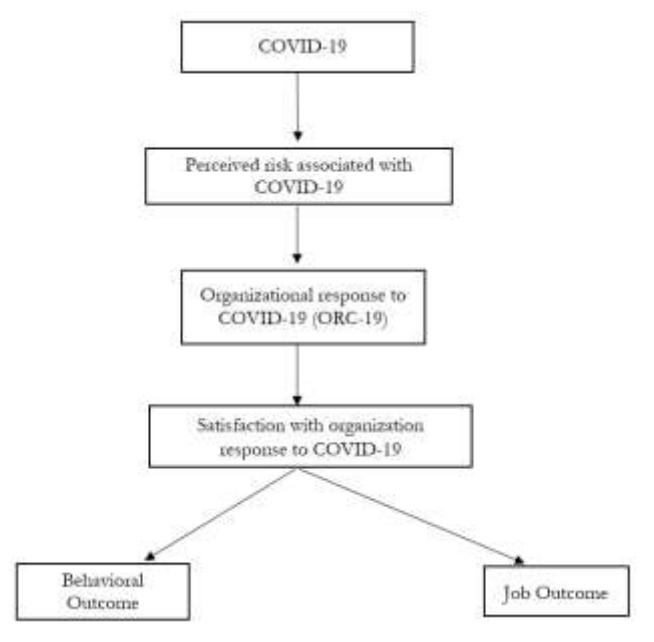
Figure 1. Theoretical Framework
2.5. COVID-19
Since the onset of the pandemic COVID-19, the world has been on the verge of a transformation. This transformation can change the world comparatively very fast. COVID-19 can be comparable to the climate transition issue around the globe (Gössling et al., 2020). The Word "COVID-19" consists of two words, namely COVID and 19, Where COVID is abbreviated as Coronavirus disease, and 19 depicts the year of emergence. The virus SARS CoV-2 is responsible for expanding pandemics COVID-19(Uğur & Akbıyık, 2020) . This virus is the second version of SARS. SARS Cov-1 virus was primarily the reason for the pandemic at the beginning of the 21st century (Huang et al., 2020; Leung & Lam, 2004). COVID-19 fosters epidemic as well as a pandemic (Uğur & Akbıyık, 2020). SARS CoV-2 virus is responsible for expanding COVID-19 pandemic (García-Gómez et al., 2021). It is an unusual kind of Pneumonia (Altuntas & Gok, 2021)
The United Nation's World Health Organization had declared a health crisis on 30th January and later pronounced pandemic to COVID-19 (Donald et al., 2021). The pandemic COVID-19 disrupts the business, production, performance of the organization that can lead to crisis (Guzzo et al., 2021).COVID-19 triggers the social threat (Nicola et al., 2020). Several governments across the world had seized the national and international border for the spread of the disease (Higgins-Desbiolles, 2020). People were forced to use face masks, shield, maintain social distance, quarantine at home to stop the spread of the virus. Governments, various international agencies such as the World health organization, World trade Organizations have issued guidelines for the contamination of virus and diminish the detrimental consequences of the pandemic. A crisis like Covid-19 can trigger the economic menace (Ritchie & Jiang, 2021). This unusual situation has disrupted all economies' activities on hold. Due to strict restrictions and closure, Market demand was severely affected. Due to COVID-19, millions of people lost their job (Bakar & Rosbi, 2020). "The COVID-19 pandemic has caused a "zero tourism" situation throughout the world with unpredictable consequences" (Sanabria-Díaz et al., 2021, p. 1).
2.6. Perceived risks associated with COVID-19
The experience of facing the challenge of COVID-19 was new for the organizations, government. Neither government, society, nor organizations have ever experienced it (Guzzo et al., 2021). According to the International Labor Organization, the COVID-19 epidemic has affected more than 400 million workers. The COVID-19 has posed social, environmental, economic, socio-economic and financial issues for organisations (Boiral et al., 2021; Huang et al., 2021).
Risks Source Social risks Lack of support from family especially in case of female employee, Anxiety, Psychological stress, POS-Cov (lack of Perceived organizational support), POF-Cov. (Lack of Perceived family support from Family), Physiological and Psychological stress. (Chanana, 2021) (Gursoy & Chi, 2020) (Tu et al., 2021) Environmental risks Aerial transmission of SARS virus, an environmental issue like- damage of habitat. (Boiral et al., 2021) Economic risks Loss of market demand of service, Loss of economic activities like sale and purchase of products and services in hospitality and Tourism industry. Decrease (Bakar & Rosbi, 2020) (Nicola et al., 2020)
in revenue from room availability. Uncertainty in dividend, affect performance of stock in financial
hospitality market across globe.
Financial risks Inadequate liquid fund, decrement in profit ratio, market.
Table 1. Perceived risks associated with COVID-19
(Chen et al., 2007) (Wieczorek-Kosmala, 2021) (Song et al., 2021)
2.7. Organizational response to the Pandemic COVID-19
The organizational response to COVID-19 like pandemic exudes light on distinguishing aspects of the hospitality industry's organization. Many organizations in the hospitality industry are now facing the pandemic COVID-19 and have to face the aftermath of the pandemic COVID-19 crisis. It is challenging for the organization to take the initial step of acknowledge to the COVID-19 crisis (Zhou, 2020). At an initial level, the organization should understand the problem at hand better and initiate a better response mechanism to reduce the panic and resume operations under the government or officials' guidelines(Zhou, 2020). Due to the attractiveness and long-lasting impact of COVID-19, 'Organizational response to the COVID-19' may be perceived as a Construct in upcoming future days (Filimonau et al., 2020; Sasaki et al., 2020).
Organizational response to the pandemic COVID-19 can be defined as the ability to face the challenges thrown by the exogenous environment of the organization due to the agitation of the pandemic COVID-19 to safeguard the interest of stakeholders and creating opportunities (Aguinis et al., 2020). The variable "Organizational response to COVID-19" may reshape the involvement level, especially employees (Guzzo et al., 2021). The response to a situation is how an organization recognizes and responds to any change or destabilizing circumstances. Organizational responsiveness refers to an organization's ability to adapt appropriately to its surrounding environment.
The devastating effects of the COVID-19 pandemic brought out several vulnerabilities and susceptibility to the hospitality industry. To sustain this challenging situation, an organization should implement changes at their workplace and new work to acknowledge the COVID-19 (Carnevale & Hatak, 2020). Thrown out of their comfort zones into uncharted territory, risk management and swift adaptation to new working condition should be the topmost priority of the organization(Brown et al., 2021). To maintain high performance in every changing situation, an organisation must respond swiftly and effectively to the dynamic environment (Stephens et al., 2020).
These responses should be appropriately transparent and should be implemented timely to mitigate threats (Clippinger1999). Organizations can be reactive or proactive depending upon how they respond to during or the aftermath of a crisis. They prepare themselves for crisis as well as the aftermath of a crisis. Organizations should be proactive in responding to the COVID-19 and use CSR practices to enhance satisfaction among employees (Hosie & Smith, 2004; Mao et al., 2020).
Bardo has categorized organizations depending on the response to the crisis (Bardo, 1977).
- 1. Type1: Organization does not want to modify the functional and structure operating during or after the crisis. It is still working as they run before the crisis.
- 2. Type 2: Organizations implement changes in structures to resume the daily operations during or after a crisis.
- 3. Type 3: Organizations want to immortalize their composition with some changes in their job during or after a crisis.
- 4. Type 4: Organizations want to implement changes in their composition and task to sustain during or after a crisis.
Organizational response to COVID-19 can depend upon the internal and external factors of the organization. If the organization is more internally constrained, it can engage the environment more readily than it can rearrange the organization. (Hu et al., 2021) has identified physical and economic threats as two environmental threats that may badly affect organizations and employees of the hospitality industry (Higgins-Desbiolles, 2020).
The United Nation's International Labor Organization (ILO) has analyzed the outgrowths of the ongoing pandemic crisis across the world. ILO has proposed four poles in response to the COVID-19 pandemic crisis to better employees based on international labor standards (ILO, 2020).
- 1. Pole 1: Focusing on uplifting economy and employment
- 2. Pole 2: Promotes organizations, employee, their employment and earnings
- 3. Pole 3: Safeguards employees in organization
- 4. Pole 4: Support two-way communication for the challenges/ problem occur
There are some measures an organization should implement that can enhance the compliances to the pandemic COVID-19 (Mont et al., 2021).
Table 2. Measures of Organizational response to the COVID-19
| Immediate Responses | Work from home |
|---|---|
| Employee Redundancy | |
| Outsourcing | |
| Cost reduction | |
| Structural Changes | Restructuring |
| Rationalising of Services and target customers | |
| Resilient models | |
| Exit Strategies | |
| Functional Changes | Exploring alternate source of revenue |
| Adaptation of Sustainable Development plans | |
| Active Participation of Stakeholders |
The hospitality industry of Spain has adopted current actions to prevent the critical pernicious influence of covid-19 to protect employees and organization (Ozamiz-Etxebarria et al., 2020). The Industry has implemented future measures to decrease the post-pandemic repercussions of the crisis in reaction to the pandemic like COVID-19 (Filimonau et al., 2020). Many organizations and researchers have given theories, frameworks, and strategies in response to the earlier crisis. (Filimonau et al., 2020; Zhong et al., 2021) have proposed the current measures and future measures to reduce the long and short-term effects of the pandemic COVID-19 crisis. To shield workers from the visible menace of COVID-19, organizations have implemented a "safety-first strategy" to ensure employees' physical safety and employment in hotels/restaurants (Hu et al., 2021, p. 13). The method mainly focused on the health and physical security of worker throughout the pandemic. The strategy has identified the importance of reducing physical danger over the economic danger that badly affects the employees and organizations of the hospitality industry. Organizations should implement Innovations Strategy to face the challenges thrown by the pandemic such as COVID-19 to recreate the more reliable organization (Hidalgo et al., 2022). Hotels should implement AI-based technologies like serving and assisting customers with Digital modes of Payment, virtual training and meeting methods, and an Advanced digital system for marking employees' attendance and performance to avoid physical contacts and maintain social distance at their workplace (Aurelia & Momin, 2020; Bergami et al., 2021). Consumers' trust in hospitality organizations can be regained through a wide range of innovative ways (Breier et al., 2021).
2.8. Satisfaction with organizational response to COVID-19
Satisfaction with organizational response to COVID-19 can be defined as "the perception that the organization has acted appropriately and effectively in assisting employees during COVID-19" (Vo-Thanh et al., 2020, p. 2). According to (Mao et al., 2020), Satisfaction with organizational response to COVID-19 can be explained as the employee perception of aid and support offered by organizations dealing with pandemic-like situations such as COVID-19.
According the theory of conservation of resource theory, a successfully practices can enhance the satisfaction among employees. This can increase the affective commitment and continuance commitment in the organization. (Vo-Thanh et al., 2020). It can reduce the physical and mental stress associated with depletion of human resource enhance by the induction of the Pandemic COVID-19 provided employees are satisfied with the organization's response to COVID-19.
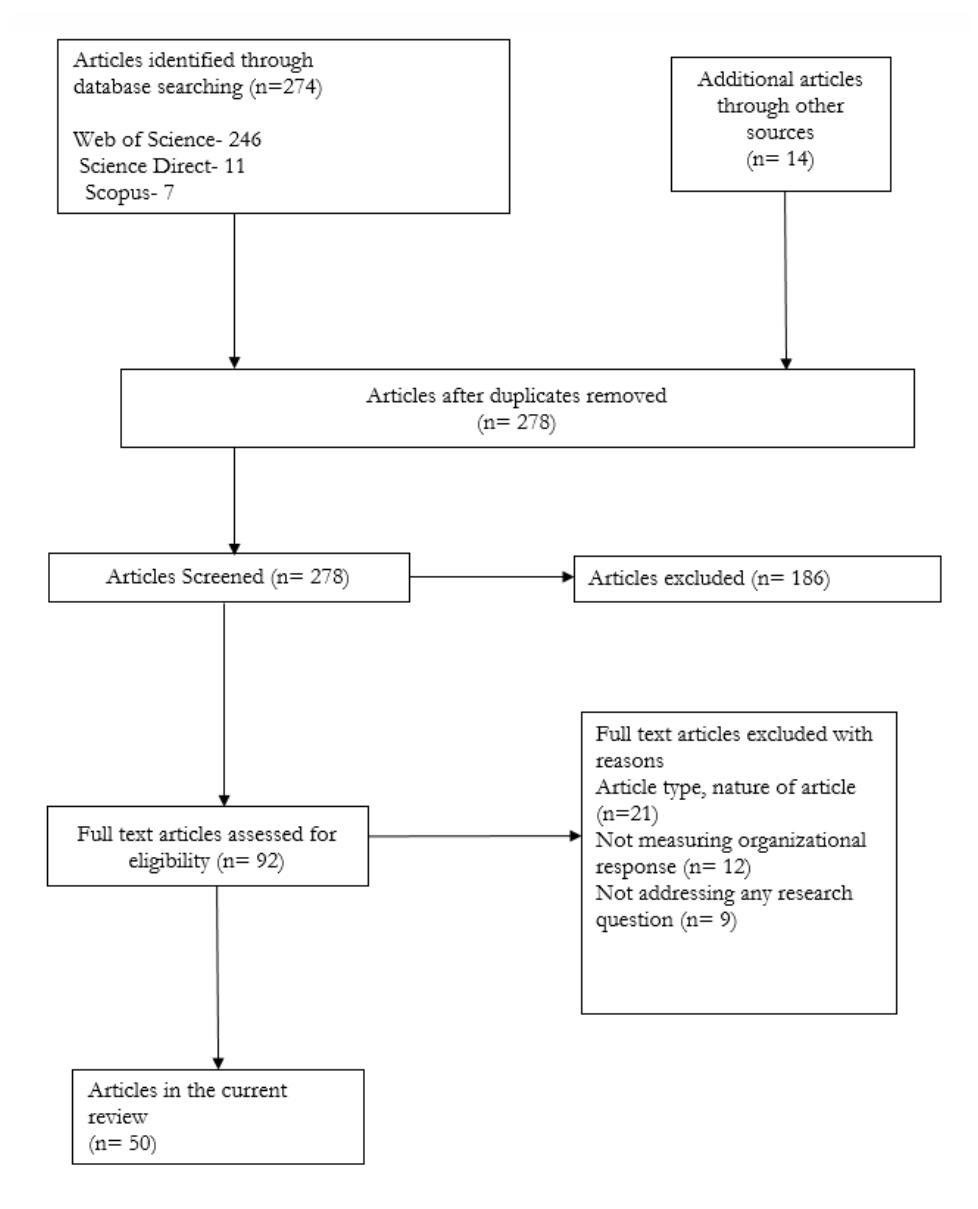
Figure 2. PRISMA flow diagram of theoretical perspectives explaining Organizational response to COVID-19
3. Methodology
We have performed a systematic review using PRISMA analysis guidelines for transparency in the study (Liberati et al., 2009) for ascertaining research questions and searching strategies. See figure 3 for the PRISMA flow diagram. We have included those research papers which are available in online databases. Articles are written in English considered for ease of understanding.
3.1. Inclusion criteria
For searching the research paper, we have set a range of Publication dates. The Publication date ranged from December 2019 (when the COVID-19 was highlighted) to September 2021. Academic research papers form the comprehensive source of this study. It does not include newspaper articles or data published by government publications, letters; since the COVID-19 pandemic is only about two years old, there are relatively more minor research data available on the topic and searching the relevant articles.
3.2. Search strategy
Search strings/terms such as "Organizational Response to the COVID-19", "Organizational response to COVID-19", and "Hospitality Industry" were used to retrieve research articles from online repositories like Science Direct, Web of Science, EBSCO, and Scopus, Taylor & Francis, and SAGE Publications. Peer-reviewed journals limit the search strategy. We used Organizational response to COVID-19 as a construct. So We did not use an inverted comma between the construct. We used it as "Organizational response to COVID-19", However, we considered the different spellings of the Same word (Organizational and Organisational).
3.3. Study selection
The searches were conducted in the titles, abstracts, and body of the articles using the search windows on each database's website, and the results were presented in order of relevancy. In the first step, the topic and abstract of the articles in the search results were studied and the articles with relevant abstracts were shortlisted. In the next step, we did a close reading of all the shortlisted articles to determine their relevance and closeness to our area of study. The articles which were found to be irrelevant or disconnected from our research scope were excluded from the review. Lastly, we browsed through the reference lists of the relevant articles and included additional articles pertaining to our research from there.
4. Findings dan Discussions
COVID-19 is quite different from all calamities, whether it is natural or artificial. The effects of these calamities are short-term and predictable, but not in the state of the pandemic such COVID-19 (Stephens et al., 2020). Hospitality Organizations should also be focused on creating an employeefriendly environment at the workplace so that employees can feel relaxed and comfortable at the workplace and adjust themselves in the organization (Agarwal, 2021; Jung et al., 2021). This employee-friendly environment can enhance employees' commitment level, increase their performance level, and decrease the intention to quit the organization (Abdalla et al., 2021; Demirović Bajrami et al., 2021). It has the potential to impact job security, work-life balance, and the employeremployee relationship (Wu et al., 2021). Organizations should implemented strategic plans to respond to COVID-19 that boosted employees' mental health (Hamouche, 2020) and increased their commitment level and performance in the Organizations (Sasaki et al., 2020). Organizational
responses to COVID-19 can help to boost economic activity by contributing to CSR initiatives such as charity and social services (Finchum-Mason et al., 2020; Mahmud et al., 2021).
4.1. Policy reform post-pandemic
An organisation should establish a post-pandemic plan to deal with the crises' consequences. An organisation should create a resilient environment so that it can foresee and adjust to any unexpected developments that threaten its survival (Sobaih et al., 2021). To calm the chaotic atmosphere created by the COVID-19 epidemic, it is critical to place professional personnel with experience at all levels, monitor operations, and keep data on health and other aspects of stakeholders (Hao et al., 2020). In addition, employees should be provided with safety equipment and be required to undergo regular health screenings. Individuals and organisations can establish and enforce strict criteria for their safety and security (Petersen et al., 2020).
Covid-19 has exposed the vulnerabilities of organization's structures and it is necessary to rebuild new, better structures for any future shocks like this. Such events that thrust organizations away from their stable equilibrium are inescapable, an organization should learn and embrace new insights as well as learn new insights. To correctly adopt new logic, the organisation should discontinue and disregard the older version. Bettis and Prahalad (1995) that no longer give life to the organization. Additionally, they must learn new logics and new patterns to sustain themselves in the face of such critical conditions. Weick believes that managerial problems persist because of the redundant belief in unilateral causation, independent variables, origins and terminations (Weick, 1979). Organizations should go through a process of unlearning and learning to build better response systems to any future crisis and ensure their survival against the unforeseen circumstances.
The hospitality business, as well as related industries such as tourism, are highly vulnerable to pandemics. Literature is scarce in the hospitality industry about emergencies, particularly pandemics. Earlier pandemics, such as COVID-19, were thought to be once-in-a-generation occurrences. Pandemics, it is now predicted, will become more widespread in the in the conceivable future. This review analysis can add to the body of knowledge about the hospitality industry's dynamic engagement with the epidemic. And the effect they have on personnel.
4.2. Theoretical implication
Our findings can contribute to the corpus of knowledge regarding how an organization can adapt to a crisis scenario in the future, such as the pandemic like COVID-19. This research analysis can help to better understand principles of response measures. Organizations in the hospitality industry are vulnerable to crises and pandemics. These organizations (Hall et al., 2020) encounter numerous obstacles in almost every event, such as a pandemic, natural disaster, or terrorist attack, yet they do not plan for them. This research can help for better understand the principles of response measures. It can serve as a concrete measure of an organization's intention to provide organizations and employees with safety and security policies. In the future, respond to catastrophic instances in pandemic such as the COVID-19.
Our findings can help to improve the conceptualization by offering an understanding of the concept of Organizational Response to COVID-19 that is more detailed (ORC-19). According to our findings, the ORC-19 could minimize employee insecurity, increase employee commitment, and improve employee performance and outcomes.
4.3. Practical implication
Pandemics may become more widespread in the future as a result of environmental devastation. One of the most important lessons that the pandemic imparted was uncertainty Our findings can assist managers in making their firms more robust during and after crises such as the COVID-19. Manager should learn how to function with it by mastering crisis management rather than pursue risk avoidance. From this research analysis, managers can learn to implement crucial strategies such as ready employees for unseen contingencies and managing reserve funds.
5. Conclusion
This study uses the PRISMA approach to conduct a systematic review analysis for broader perception of the concept of "Organizational response to COVID-19" in the hotelier and restaurant industry during as well as post- pandemic. The purpose behind included articles is to investigate the term "organizational response to COVID-19". This review was focused on defining the organizational resistance to the pandemic COVID-19, identifying organizations depending upon responses, and describing the measure in reacting to COVID-19 both during as well as after COVID-19. This study focuses on several aspects of hospitality organizations, such as employee outcomes, based on organizational responses, and employs numerous theories, such as Resilience theory, the Conservation of resource theory as well as SCCT (Social Exchange Theory, Situational crisis communication theory).
The sudden eruption of the Covid-19 disease that took the whole world by surprise at the start of the decade has left long-lasting implications on almost every industry of this economic world. Multiple issues have arisen out of the whole pandemic situation and that challenges (Hall et al., 2020). In a bid to counter the cascading effect of this pandemic, organizations took up several measures so that they could minimise their losses, adapt to the changing circumstances and prepare for future crisis that threaten their vitality and survival (Adikaram et al., 2021).
The pandemic has significantly impacted organisations pushing them to suddenly restructure their processes and routines so that businesses could remain operating (Tortorella et al., 2021). The apprehension and anxiety induced by the uncertainties around the pandemic have also forced the workplaces to introduce new adaptation techniques. While the overall problem remains the same for everyone, the responses vary. Studies have shown that quick changes were done by organizations which have survived previous crises (Hirt et al, 2019) while many organizations had to shut down because of lack of proper coping mechanisms.
The main agenda of the paper was to portray an insight into the hotelier organizations' response to the challenges thrown their way by the eruption of pandemic COVID-19. The assertive and adverse repercussions of these recourses on the employees have been highlighted for an insight into the problem. The study was conducted from the organization's prospect. Further research analysis can proceed on 'organizational response to the COVID-19' from the perspective of employees, measurements of responses from the perspective of employees, and the effects of these measures on an organization. There are a few flaws in this research. The research is only focused on the tourist and hospitality industries. Employees are the primary focus of the study, rather than other areas such as finance, marketing, and so on.
References
Abdalla, M. J., Said, H., Ali, L., Ali, F., & Chen, X. (2021). COVID-19 and unpaid leave: Impacts of psychological contract breach on organizational distrust and turnover intention: Mediating role of emotional exhaustion. Tourism Management Perspectives, 39, 100854. DOI: 10.1016/j.tmp.2021.100854.
- Adikaram, A. S., Priyankara, H. P. R., & Naotunna, N. P. G. S. I. (2021). Navigating the Crises of COVID-19: Human Resource Professionals Battle Against the Pandemic. South Asian Journal of Human Resources Management, 8(2), 192–218. DOI: 10.1177/23220937211018021.
- Agarwal, P. (2021). Shattered but smiling: Human resource management and the wellbeing of hotel employees during COVID-19. International Journal of Hospitality Management, 93(June 2020), 102765. DOI: 10.1016/j.ijhm.2020.102765.
- Aguinis, H., Villamor, I., & Gabriel, K. P. (2020). Understanding employee responses to COVID-19: a behavioral corporate social responsibility perspective. Management Research, 18(4), 421–438. DOI: 10.1108/MRJIAM-06-2020-1053.
- Altuntas, F., & Gok, M. S. (2021). The effect of COVID-19 pandemic on domestic tourism: A DEMATEL method analysis on quarantine decisions. International Journal of Hospitality Management, 92, 102719. DOI: DOI: 10.1016/j.ijhm.2020.102719.
- Aurelia, S., & Momin, M. M. (2020). Global reverberation and prediction for HRM amid and after COVID-19: A technological viewpoint. Materials Today: Proceedings. DOI: 10.1016/j.matpr.2020.11.544.
- Bakar, N. A., & Rosbi, S. (2020). Effect of Coronavirus disease (COVID-19) to tourism industry. International Journal of Advanced Engineering Research and Science, 7(4), 189–193. DOI: 10.22161/ijaers.74.23.
- Behera, M., Mishra, S., & Behera, A. R. (2021). The COVID-19-Led Reverse Migration on Labour Supply in Rural Economy: Challenges, Opportunities and Road Ahead in Odisha. The Indian Economic Journal, 69(3), 392–409. DOI: 10.1177/00194662211013216.
- Bergami, M., Corsino, M., Daood, A., & Giuri, P. (2021). Being resilient for society: evidence from companies that leveraged their resources and capabilities to fight the COVID-19 crisis. R and D Management, 1–20. DOI: 10.1111/radm.12480.
- Boiral, O., Brotherton, M. C., Rivaud, L., & Guillaumie, L. (2021). Organizations' management of the COVID-19 pandemic: A scoping review of business articles. Sustainability (Switzerland), 13(7), 1–20. DOI: 10.3390/su13073993.
- Breier, M., Kallmuenzer, A., Clauss, T., Gast, J., Kraus, S., & Tiberius, V. (2021). The role of business model innovation in the hospitality industry during the COVID-19 crisis. International Journal of Hospitality Management, 92, 102723. DOI: 10.1016/j.ijhm.2020.102723.
- Brown, C. E., Schwatka, N., Dexter, L., Dally, M., Shore, E., Tenney, L., & Newman, L. S. (2021). The importance of small business safety and health climates during covid-19. Journal of Occupational and Environmental Medicine, 63(2), 81–88. DOI: 10.1097/JOM.0000000000002080.
- Carnevale, J. B., & Hatak, I. (2020). Employee adjustment and well-being in the era of COVID-19: Implications for human resource management. Journal of Business Research, 116, 183–187. DOI: 10.1016/j.jbusres.2020.05.037.
- Chanana, N. (2021). The impact of COVID-19 pandemic on employees organizational commitment and job satisfaction in reference to gender differences. Journal of Public Affairs, April. DOI: 10.1002/pa.2695.
- Chen, M. H., Jang, S. C. (Shawn), & Kim, W. G. (2007). The impact of the SARS outbreak on Taiwanese hotel stock performance: An event-study approach. International Journal of Hospitality Management, 26(1), 200–212. DOI: 10.1016/j.ijhm.2005.11.004.
- Davahli, M. R., Karwowski, W., Sonmez, S., & Apostolopoulos, Y. (2020). The hospitality industry in the face of the COVID-19 pandemic: Current topics and research methods. International Journal of Environmental Research and Public Health, 17(20), 1–22. DOI: 10.3390/ijerph17207366.
- Demirović Bajrami, D., Terzić, A., Petrović, M. D., Radovanović, M., Tretiakova, T. N., & Hadoud, A. (2021). Will we have the same employees in hospitality after all? The impact of COVID-19 on employees' work attitudes and turnover intentions. International Journal of Hospitality Management, 94(October 2020). DOI: 10.1016/j.ijhm.2020.102754.
- Donald, W. E., Ashleigh, M. J., & Baruch, Y. (2021). The university-to-work transition: responses of universities and organizations to the COVID-19 pandemic. Personnel Review. DOI: 10.1108/PR-03-2021-0170.
- Duarte Alonso, A., Kok, S. K., Bressan, A., O'Shea, M., Sakellarios, N., Koresis, A., Buitrago Solis, M. A., & Santoni, L. J. (2020). COVID-19, aftermath, impacts, and hospitality firms: An international perspective. International Journal of Hospitality Management, 91(July), 102654. DOI: 10.1016/j.ijhm.2020.102654.
- Dube, K., Nhamo, G., & Chikodzi, D. (2020). COVID-19 cripples global restaurant and hospitality industry. Current Issues in Tourism, 1–4. DOI: 10.1080/13683500.2020.1773416.
- Filimonau, V., Derqui, B., & Matute, J. (2020). The COVID-19 pandemic and organisational commitment of senior hotel managers. International Journal of Hospitality Management, 91, 102659. DOI: DOI: 10.1016/j.ijhm.2020.102659.
- Finchum-Mason, E., Husted, K., & Suárez, D. (2020). Philanthropic Foundation Responses to COVID-19. Nonprofit and Voluntary Sector Quarterly, 49(6), 1129–1141. DOI: 10.1177/0899764020966047.
- García-Gómez, C. D., Demir, E., Díez-Esteban, J. M., & Bilan, Y. (2021). The impact of COVID-19 outbreak on hotels' value compared to previous diseases: the role of ALFO strategy. Heliyon, 7(8), e07836. DOI: DOI: 10.1016/j.heliyon.2021.e07836.
- Gössling, S., Scott, D., & Hall, C. M. (2020). Pandemics, tourism and global change: a rapid assessment of COVID-19. Journal of Sustainable Tourism, 0(0), 1–20. DOI: 10.1080/09669582.2020.1758708.
- Gursoy, D., & Chi, C. G. (2020). Effects of COVID-19 pandemic on hospitality industry: review of the current situations and a research agenda. Journal of Hospitality Marketing and Management, 29(5), 527–529. DOI: 10.1080/19368623.2020.1788231.
- Guzzo, R. F., Wang, X., Madera, J. M., & Abbott, J. A. (2021). Organizational trust in times of COVID-19: Hospitality employees' affective responses to managers' communication. International Journal of Hospitality Management, 93(October 2020). DOI: 10.1016/j.ijhm.2020.102778.
- Hall, C. M., Scott, D., & Gössling, S. (2020). Pandemics, transformations and tourism: be careful what you wish for. Tourism Geographies, 22(3), 577–598. DOI: 10.1080/14616688.2020.1759131.
- Hamouche, S. (2020). COVID-19 and employees' mental health: stressors, moderators and agenda for organizational actions. Emerald Open Research, 2, 15. DOI: 10.35241/emeraldopenres.13550.1.
- Hao, F., Xiao, Q., & Chon, K. (2020). COVID-19 and China's Hotel Industry: Impacts, a Disaster
- Management Framework, and Post-Pandemic Agenda. International Journal of Hospitality Management, 90, 102636. DOI: DOI: 10.1016/j.ijhm.2020.102636.
- Hidalgo, A., Martín-Barroso, D., Nuñez-Serrano, J. A., Turrión, J., & Velázquez, F. J. (2022). Does hotel management matter to overcoming the COVID-19 crisis? The Spanish case. Tourism Management, 88. DOI: 10.1016/j.tourman.2021.104395.
- Higgins-Desbiolles, F. (2020). Socialising tourism for social and ecological justice after COVID-19. Tourism Geographies, 22(3), 610–623. DOI: 10.1080/14616688.2020.1757748.
- Hobfoll, S. E. (1989). Conservation of Resources: A New Attempt at Conceptualizing Stress. American Psychologist, 44(3), 513–524. DOI: 10.1037/0003-066X.44.3.513.
- Hosie, P. J., & Smith, C. L. (2004). Preparing for Crises with Online Security Management Education. Research and Practice in Human Resource Management, 12(2), 90–127.
- Hu, X., Yan, H., Casey, T., & Wu, C. H. (2021). Creating a safe haven during the crisis: How organizations can achieve deep compliance with COVID-19 safety measures in the hospitality industry. International Journal of Hospitality Management, 92, 102662. DOI: 10.1016/j.ijhm.2020.102662.
- Huang, A., De la Mora Velasco, E., Marsh, J., & Workman, H. (2021). COVID-19 and the future of work in the hospitality industry. International Journal of Hospitality Management, 97(May), 102986. DOI: 10.1016/j.ijhm.2021.102986.
- Huang, A., Makridis, C., Baker, M., Medeiros, M., & Guo, Z. (2020). Understanding the impact of COVID-19 intervention policies on the hospitality labor market. International Journal of Hospitality Management, 91, 102660. DOI: DOI: 10.1016/j.ijhm.2020.102660.
- Hurley-Hanson, A. E. (2006). Organizational responses and adaptations after 9-11. Management Research News, 29(8), 480–494. DOI: 10.1108/01409170610692806.
- ILO. (2020). COVID-19 crisis and the informal economy. ILO Brief, 2015(204), 1–8. https://www.ilo.org/global/topics/employment-promotion/informaleconomy/publications/WCMS_743623/lang--en/index.htm.
- Jung, H. S., Jung, Y. S., & Yoon, H. H. (2021). COVID-19: The effects of job insecurity on the job engagement and turnover intent of deluxe hotel employees and the moderating role of generational characteristics. International Journal of Hospitality Management, 92(October 2020), 102703. DOI: 10.1016/j.ijhm.2020.102703.
- Kaushal, V., & Srivastava, S. (2021). Hospitality and tourism industry amid COVID-19 pandemic: Perspectives on challenges and learnings from India. International Journal of Hospitality Management, 92, 102707. DOI: 10.1016/j.ijhm.2020.102707.
- Kwok, L., Lee, J., & Han, S. H. (2021). Crisis Communication on Social Media: What Types of COVID-19 Messages Get the Attention? Cornell Hospitality Quarterly, 193896552110281. DOI: 10.1177/19389655211028143.
- Lee, P. C., Xu, S. (Tracy), & Yang, W. (2021). Is career adaptability a double-edged sword? The impact of work social support and career adaptability on turnover intentions during the COVID-19 pandemic. International Journal of Hospitality Management, 94, 102875. DOI: 10.1016/j.ijhm.2021.102875.
- Lee, A. V., Vargo, J., & Seville, E. (2013). Developing a Tool to Measure and Compare Organizations' Resilience. Natural Hazards Review, 14(1), 29–41. DOI: 10.1061/(asce)nh.1527-6996.0000075.
- Leta, S. D., & Chan, I. C. C. (2021). Learn from the past and prepare for the future: A critical assessment of crisis management research in hospitality. International Journal of Hospitality
- Management, 95(June 2020), 102915. DOI: 10.1016/j.ijhm.2021.102915.
- Leung, P., & Lam, T. (2004). Crisis management during the sars threat: A case study of the metropole hotel in Hong Kong. Journal of Human Resources in Hospitality and Tourism, 3(1), 47–57. DOI: 10.1300/J171v03n01_05.
- Liberati, A., Altman, D. G., Tetzlaff, J., Mulrow, C., Gøtzsche, P. C., Ioannidis, J. P. A., Clarke, M., Devereaux, P. J., Kleijnen, J., & Moher, D. (2009). The PRISMA statement for reporting systematic reviews and meta-analyses of studies that evaluate health care interventions: Explanation and elaboration. PLoS Medicine, 6(7). DOI: 10.1371/journal.pmed.1000100.
- Mahmud, A., Ding, D., & Hasan, M. M. (2021). Corporate Social Responsibility: Business Responses to Coronavirus (COVID-19) Pandemic. SAGE Open, 11(1). DOI: 10.1177/2158244020988710.
- Mao, Y., He, J., Morrison, A. M., & Andres Coca-Stefaniak, J. (2020). Effects of tourism CSR on employee psychological capital in the COVID-19 crisis: from the perspective of conservation of resources theory. Current Issues in Tourism, 0(0), 1–19. DOI: 10.1080/13683500.2020.1770706.
- McKercher, B., & Hui, E. L. L. (2004). Terrorism, economic uncertainty and outbound travel from Hong Kong. Journal of Travel and Tourism Marketing, 15(2–3), 99–115. DOI: 10.1300/J073v15n02_06.
- Mehta, K., & Jha, S. S. (2020). COVID-19 : A Nightmare for the Indian Economy. SSRN Electronic Journal, 20, 333–347. DOI: 10.2139/ssrn.3612676.
- Mont, O., Curtis, S. K., & Palgan, Y. V. (2021). Organisational Response Strategies to COVID-19 in the Sharing Economy. Sustainable Production and Consumption, 28, 52–70. DOI: 10.1016/j.spc.2021.03.025.
- Nicola, M., Alsafi, Z., Sohrabi, C., Kerwan, A., Al-Jabir, A., Iosifidis, C., Agha, M., & Agha, R. (2020). The socio-economic implications of the coronavirus pandemic (COVID-19): A review. International Journal of Surgery, 78(March), 185–193. DOI: 10.1016/j.ijsu.2020.04.018.
- Ozamiz-Etxebarria, N., Idoiaga Mondragon, N., Dosil Santamaría, M., & Picaza Gorrotxategi, M. (2020). Psychological Symptoms During the Two Stages of Lockdown in Response to the COVID-19 Outbreak: An Investigation in a Sample of Citizens in Northern Spain. Frontiers in Psychology, 11(June), 1–9. DOI: 10.3389/fpsyg.2020.01491.
- Petersen, E., Wasserman, S., Lee, S. S., Go, U., Holmes, A. H., Abri, S. Al, McLellan, S., Blumberg, L., & Tambyah, P. (2020). COVID-19–We urgently need to start developing an exit strategy. International Journal of Infectious Diseases, 96, 233–239. DOI: 10.1016/j.ijid.2020.04.035.
- Pforr, C., & Hosie, P. J. (2007). Crisis management in tourism: Preparing for recovery. Journal of Travel and Tourism Marketing, 23(2–4), 249–264. DOI: 10.1300/J073v23n02_19.
- Ritchie, B. W., & Jiang, Y. (2021). Risk, crisis and disaster management in hospitality and tourism: a comparative review. International Journal of Contemporary Hospitality Management, 33(10), 3465– 3493. DOI: 10.1108/IJCHM-12-2020-1480.
- Rivera, M., Shapoval, V., & Medeiros, M. (2021). The relationship between career adaptability, hope, resilience, and life satisfaction for hospitality students in times of Covid-19. Journal of Hospitality, Leisure, Sport & Tourism Education, 29, 100344. DOI: DOI: 10.1016/j.jhlste.2021.100344.
- Sanabria-Díaz, J. M., Aguiar-Quintana, T., & Araujo-Cabrera, Y. (2021). Public strategies to rescue the hospitality industry following the impact of COVID-19: A case study of the European Union. International Journal of Hospitality Management, 97(July 2020). DOI: 10.1016/j.ijhm.2021.102988.
Santana, G. (2012). Crisis management and tourism: Beyond the rhetoric. Safety and Security in Tourism: Relationships, Management, and Marketing, 8408, 299–321. DOI: 10.4324/9780203049464.
- Sasaki, N., Kuroda, R., Tsuno, K., & Kawakami, N. (2020). Workplace responses to COVID-19 associated with mental health and work performance of employees in Japan. Journal of Occupational Health, 62(1), 1–6. DOI: 10.1002/1348-9585.12134.
- Seville, E., Brunsdon, D., Dantas, A., Le Masurier, J., Wilkinson, S., & Vargo, J. (2008). Organisational resilience: Researching the reality of New Zealand organisations. Journal of Business Continuity & Emergency Planning, 2(3), 258–266. http://www.ncbi.nlm.nih.gov/pubmed/21339112.
- Sobaih, A. E. E., Elshaer, I., Hasanein, A. M., & Abdelaziz, A. S. (2021). Responses to COVID-19: The role of performance in the relationship between small hospitality enterprises' resilience and sustainable tourism development. International Journal of Hospitality Management, 94, 102824. DOI: DOI: 10.1016/j.ijhm.2020.102824.
- Song, H. J., Yeon, J., & Lee, S. (2021). Impact of the COVID-19 pandemic: Evidence from the U.S. restaurant industry. International Journal of Hospitality Management, 92, 102702. DOI: DOI: 10.1016/j.ijhm.2020.102702.
- Stephens, K. K., Jahn, J. L. S., Fox, S., Charoensap-Kelly, P., Mitra, R., Sutton, J., Waters, E. D., Xie, B., & Meisenbach, R. J. (2020). Collective Sensemaking Around COVID-19: Experiences, Concerns, and Agendas for our Rapidly Changing Organizational Lives. Management Communication Quarterly, 34(3), 426–457. DOI: 10.1177/0893318920934890.
- Tortorella, G., Narayanamurthy, G., & Staines, J. (2021). COVID-19 Implications on the Relationship between Organizational Learning and Performance. Knowledge Management Research and Practice, 00(00), 1–14. DOI: 10.1080/14778238.2021.1909430.
- Tu, Y., Li, D., & Wang, H. J. (2021). COVID-19-induced layoff, survivors' COVID-19-related stress and performance in hospitality industry: The moderating role of social support. International Journal of Hospitality Management, 95(January), 102912. DOI: 10.1016/j.ijhm.2021.102912.
- Uğur, N. G., & Akbıyık, A. (2020). Impacts of COVID-19 on global tourism industry: A crossregional comparison. Tourism Management Perspectives, 36(September), 100744. DOI: 10.1016/j.tmp.2020.100744.
- Verdolini, N., Amoretti, S., Montejo, L., García-Rizo, C., Hogg, B., Mezquida, G., Rabelo-da-Ponte, F. D., Vallespir, C., Radua, J., Martinez-Aran, A., Pacchiarotti, I., Rosa, A. R., Bernardo, M., Vieta, E., Torrent, C., & Solé, B. (2021). Resilience and mental health during the COVID-19 pandemic. Journal of Affective Disorders, 283(December 2020), 156–164. DOI: 10.1016/j.jad.2021.01.055.
- Vo-Thanh, T., Vu, T. Van, Nguyen, N. P., Nguyen, D. Van, Zaman, M., & Chi, H. (2020). How does hotel employees' satisfaction with the organization's COVID-19 responses affect job insecurity and job performance? Journal of Sustainable Tourism, 29(6), 907–925. DOI: 10.1080/09669582.2020.1850750.
- Wang, J., & Ritchie, B. W. (2012). Understanding accommodation managers' crisis planning intention: An application of the theory of planned behaviour. Tourism Management, 33(5), 1057–1067. DOI: 10.1016/j.tourman.2011.12.006.
- Wang, Y., Hong, A., Li, X., & Gao, J. (2020). Marketing innovations during a global crisis : A study of China firms ' response to COVID-19. Journal of Business Research. DOI: 10.1016/j.jbusres.2020.05.029.
- Wieczorek-Kosmala, M. (2021). COVID-19 impact on the hospitality industry: Exploratory study of financial-slack-driven risk preparedness. International Journal of Hospitality Management, 94,
- 102799. DOI: DOI: 10.1016/j.ijhm.2020.102799.
- Wong, A. K. F., Kim, S. (Sam), Kim, J., & Han, H. (2021). How the COVID-19 pandemic affected hotel Employee stress: Employee perceptions of occupational stressors and their consequences. International Journal of Hospitality Management, 93(October 2020), 102798. DOI: 10.1016/j.ijhm.2020.102798.
- Wu, X., Lin, L., & Wang, J. (2021). When does breach not lead to violation? A dual perspective of psychological contract in hotels in times of crisis. International Journal of Hospitality Management, 95(February), 102887. DOI: 10.1016/j.ijhm.2021.102887.
- Zhong, L., Sun, S., Law, R., & Li, X. (2021). Tourism crisis management: evidence from COVID-19. Current Issues in Tourism, 24(19), 2671-2682. DOI: 10.1080/13683500.2021.1901866.
- Zhou, X. (2020). Organizational Response to COVID-19 Crisis: Reflections on the Chinese Bureaucracy and Its Resilience. Management and Organization Review, 16(3), 473–484. DOI: 10.1017/mor.2020.29.
- Zopiatis, A., Pericleous, K., & Theofanous, Y. (2021). COVID-19 and hospitality and tourism research: An integrative review. Journal of Hospitality and Tourism Management, 48(July), 275–279. DOI: 10.1016/j.jhtm.2021.07.002.
Appendices: List of publication on Tourism and Pandemic COVID-19 (2020 – 2021)
| S.N | Author | Title of Paper | Year | Findings |
|---|---|---|---|---|
| 1. | V. Filimonau et al. | The COVID-19 pandemic and organisational commitment of senior hotel managers | 2020 | Introduced the construct "Organizational response to COVID-19". It explained how ORC-19 affects commitment level of employee. |
| 2. | Sasaki et al. | Workplace responses to COVID-19 associated with mental health and work performance of employees in Japan | 2020 | Explained how organizational response to COVID-19 affects psychological health and performance of the employee. |
| 3. | H.Aguinis et al. | Understanding employee responses to COVID-19: a behavioral corporate social responsibility perspective. | 2020 | Impact of using CSR (Corporate Social Responsibility) as a measure of ORC-19and its consequences on employees. |
| 4. | Mont et.al. | Organisational Response Strategies to COVID-19 in the Sharing Economy | 2021 | Explored different measures of ORC-19. ORC-19 in sharing economy for the purpose of Sustainable production and Sustainable consumptions. |
| 5. | Adikaram et al. | Navigating the Crises of COVID-19: Human Resource Professionals Battle Against the Pandemic. | 2021 | In Phase 19 of COVID-19, study analyzed into the hotel business and how to leverage human resource policies in the event of disasters, epidemics, and pandemics. |
| 6. | Bakar et al. | Effect of Coronavirus disease (COVID-19) to tourism industry. | 2020 | Describe how the COVID-19 pandemic affected the tourism industry's market demand (Demand & Supply). |
| 7. | Bergami, et al. | Being resilient for society: evidence from companies that leveraged their resources and capabilities to fight the COVID-19 crisis. | 2021 | Studied How resilience theory aids various organisations in their deployment of AI technology in response to COVID-19 |
| 8. | O Boiral et al. | Organizations' management of the COVID-19 pandemic: A scoping review of business articles. | 2021 | COVID-19 pandemic was described as a threat and an opportunity for the corporation and its employees. |
| 9. | Higgins et al. | socialising tourism for social and ecological justice after COVID-19. | 2020 | During the first wave of the COVID-19 epidemic, employees perceived a health risk connected with ORC-19. |
| 10. | Carnevale et al. | Employee adjustment and well-being in the era of COVID-19: Implications for human resource management. | 2020 | Describe how organisations use the adaptive measure as a reaction to ORC-19. |
| 11. | Chanana et al. | The impact of COVID-19 pandemic on employees' organizational commitment and job satisfaction in reference to gender differences. | 2021 | Explained male and female employees have different levels of commitment and job satisfaction. |
| 12. | MH. Chen et al. | The impact of the SARS outbreak on Taiwanese hotel stock performance: An event-study approach. | 2007 | Organizations in the hospitality industry that are experiencing challenges as a result of the pandemic outbreak in the early |
| twenty-first century, when the SARS virus was discovered. | ||||
|---|---|---|---|---|
| 13. | M. Davahli et al. | The hospitality industry in the face of the COVID-19 pandemic: Current topics and research methods. | 2020 | Reviwed the constraints that hospitality organizations and employees confront in the COVID 19 era. |
| 14. | A. Duarte Alonso et al. | COVID-19, aftermath,impacts, and hospitality firms: An international perspective | 2020 | Explained how the small-scale hotel industry uses resilience theory to deal with the pandemic's issues. |
| 15. | K. Dube et al. | COVID-19 cripples global restaurant and hospitality industry | 2020 | Examine the influence of the COVID-19 epidemic on employee organisation. Analyze the SARS COVID-19's socioeconomic impact on personnel and organisations. |
| 16. | S. Gossling et al. | Pandemics, tourism and global change: a rapid assessment of COVID-19. | 2020 | Explore COVID-19 in relation to the travel industry. It also discussed how the COVID-19 epidemic can help the globe achieve sustainable development. |
| 17. | R.F. Guzzo et al. | Organizational trust in times of COVID-19: Hospitality employees' affective responses to managers' communication. | 2021 | Studied how organizations use government regulations to improve employee focus and trust, enhance communication to employee. |
| 18. | D. Demirovi´c Bajrami et al. | Will we have the same employees in hospitality after all? The impact of COVID-19 on employees' work attitudes and turnover intentions. | 2021 | Examine the impact of COVID-19 on hospitality industry personnel. |
| 19. | Hamouche et al | COVID-19 and employees' mental health: stressors, moderators and agenda for organizational actions | 2020 | Investigate and analyze factors affecting employees' mental health and influence due to the pandemic COVID-19 onset. |
| 20. | A. Huang et al. | COVID-19 and the future of work in the hospitality industry. | 2021 | Studied how to use technologies to optimize the skills of low-level employees and how to incorporate flexibility into the work environment. |
| 21. | Huang, A et al. | Understanding the impact of COVID 19 intervention policies on the hospitality labor market. | 2020 | The consequences of earlier pandemics on the hospitality business was studied. |
| 22. | Nicola et al. | The Socio-econmoic implications of Coronavirus Pandemic (COVID-19): A Review | 2020 | Analyze COVID-19's socioeconomic impact on a case by-case basis. COVID-19's socioeconomic impact on other economic areas, such as agriculture, tourism, and hospitality, was also studied. |
| 23. | Hu et al. | Creating a safe haven during the crisis: How organizations can achieve deep compliance with COVID-19 saftey measures in the hospitality industry. | 2021 | Studied " Saftey First Strategy" in response to pandemic COVID-19 |
| 24. | Jung et al. | COVID-19: The effects of job insecurity on the job engagement and turnover intent of deluxe hotel | 2021 | Studied the intention of employees in the hotel industry to leave their jobs due to the COVID-19 pandemic. |
| employees and the moderating role of generational characteristics. | ||||
|---|---|---|---|---|
| 25. | Kaushal, et al. | Hospitality and tourism industry amid COVID-19 pandemic: Perspectives on challenges and learnings from India. | 2021 | Studied the decline in the hospitality industry and its impact on employee due to the pandemic outbreak. |
| 26. | Kwok et al. | Crisis Communication on Social Media: What Types of COVID-19 Messages Get the Attention? | 2021 | Studied how an organization can communicate with employees using Situational crisis communication theory during COVID-19. |
| 27. | Lee et al. | Is career adaptability a double-edged sword? The impact of work social support and career adaptability on turnover intentions during the COVID-19 pandemic. | 2021 | Studied the application of the Social exchange theory in response to the pandemic COVID-19. |
| 28. | Leta, et al. | Learn from the past and prepare for the future: A critical assessment of crisis management research in hospitality. | 2021 | Reviewed organizations' response to crisis-like situations in the hospitality industry. |
| 29. | Mahmud et al. | Corporate Social Responsibility: Business Responses to Coronavirus (COVID-19) Pandemic. | 2021 | Studied how CSR as a measure of organizational response to COVID 19 can aid employees. |
| 30. | E.Petersen et al. | COVID-19–We urgently need to start developing an exit strategy. | 2020 | Studied how different hospitality organizations across the world respond to COVID-19. |
| 31. | Uğur et al. | Impact of COVID-19 global tourism industry: A cross-regional comparison. | 2020 | Studied about COVID-19 in brief. |
| 32. | Altuntas et al. | The effect of COVID-19 pandemic on domestic tourism: A DEMATEL method analysis on quarantine decisions | 2021 | Considered the pandemic COVID 19 as Pneumonia. |
| 33. | García-Gómez et al. | The impact of COVID-19 outbreak on hotels' value compared to previous diseases: the role of ALFO strategy | 2021 | Studied about SARS COV-2. Compared previous pandemic disease with the Pandemic COVID 19. |
| 34. | T. Vo-Thanh et al. | How does hotel employees' satisfaction with the organization's COVID-19 responses affect job insecurity and job performance? | Studied COVID-19 affect job satisfaction, performance, the commitment of employees. | |
| 35. | P. Hosie et al. | Preparing for Crises with Online Security Management Education | 2004 | Studied Technology Plays a crucial role in times of crisis and enables an organization to alleviate the communication gap with employees. |
| 36. | A. Hurley et al. | Organizational responses and adaptations after 9-11. | 2006 | Studied the importance of crisis management in hospitality industry after 9-11 |
| 37. | Ritchie et al. | Risk, crisis and disaster management in hospitality and tourism: a comparative review. | 2021 | In the pandemic COVID-19, researchers analyzed resilience can be used effectively in response. |
| 38. | Santana, G. | Crisis management and tourism: Beyond the rhetoric. Safety and Security in Tourism: Relationships, Management, and Marketing. | 2012 | Studied about hospitality industry in the crisis phase. |
| 39. Wang et al. Marketing innovations during a global 2020 Studied in innovative strategy in crisis: A study of China firms' response response to the Pandemic COVID to COVID-19. 19. 40. Hao et al. COVID-19 and China's Hotel 2020 Studied how Chinese hotel Industry: A Disaster Management responds to COVID-19 and Post Framework and Post-Pandemic pandemic agenda. Agenda. 41. Zhou et al. Organizational Response to COVID 2020 Studied the pandemic COVID-19 19 Crisis: Reflections on the Chinese affected Chinese bureaucrats and Bureaucracy and Its Resilience. organizations and responded to it. 42. Pforr et al. Crisis management in tourism: 2007 Studied natural and artificial crises Preparing for recovery. (man-made) create challenges for Tourism and its allied industry. 43. Rivera et al. The relationship between career 2021 Studied how the Pandemic adaptability, hope, resilience, and life COVID-19 can affect the satisfaction for hospitality students in hospitality industry and its key times of Covid-19. stakeholders in adaptability and satisfaction. 44. Tortorella et al. COVID-19 Implications on the 2021 Studied how COVID-19 can affect Relationship between Organizational the relationship between Learning and Performance. organizational learning and employee performance using Social learning theory and transactive memory system theory. 45. Verdolini et al. Resilience and mental health during 2021 Studied how COVID19 affected the COVID-19 pandemic. psychological health during the of resilience and psychological health. 46. Abdalla et al. COVID-19 and unpaid leave: Impacts 2021 Studied the organizational response of psychological contract breach on to COVID-19 can affect the organizational distrust and turnover relationship of employee and intention: Mediating role of emotional organization. This can be lead to exhaustion. turnover intention. 47. Mao et al. Effects of tourism CSR on employee 2020 CSR activities as a measure in psychological capital in the COVID-19 response to Pandemic COVID-19 crisis: from the perspective of can impact employees. conservation of resources theory. 48. Breier et al. The role of business model innovation 2021 Studied innovative organizational in the hospitality industry during the measures in response to pandemic COVID-19 crisis. COVID-19. 49. Brown et al. The importance of small business 2021 Employees working in the small safety and health climates during scale industry are concerned about covid-19. their health during the Pandemic COVID-19. 50. Finchum et al. Philanthropic Foundation Responses 2020 Studied various organizational to COVID-19 responses to the pandemic COVID-19. | |||
|---|---|---|---|
| crisis. Studied relationship of theory | |||