

1. Introduction
From a financial perspective, tourism is counted as one of the vital industries worldwide. Among the world's biggest industries, the tourism industry supports approximately one in every ten jobs globally, contributing 10.4% to the global GDP (WTTC, 2021). As wave after wave of the COVID-19 pandemic impacted every country globally, the first sector to get severely disrupted was the tourism sector from a global economic perspective. Before COVID-19, the scenario was such that the total number of tourists travelling every year was over-shooting the world's population (Hall, 2015). The number of travels of international tourists has gone up incrementally to pass 1.5 billion tourists incoming in the year 2019 (UNWTO, 2020). This number is expected to persist its run, with a prediction of approximately 1.8 billion international visitors by the year 2030 (UNDP, 2017), whilst this number may be re-examined post the impact of the COVID-19 pandemic on tourism (Gossling et al., 2020).
Numerous travel restrictions across the world and advisories have revealed that the tourism industry is vulnerable (De Sausmarez, 2004) and the waves of the COVID-19 pandemic catapulted the industry into a collapse (Romagosa, 2020). Such restrictions imposed on travelling across the globe led to a decline in tourist arrivals in every country. The impact of the COVID-19 pandemic crisis was devastating to both tourism and hospitality equally. Significant impact on the tourism industry due to COVID-19 includes the calling-off of some gigantic events, occurrences, and gatherings, which ultimately unfavourably impacted the host destination's local economy (Skift, 2020). This trend was observed across the segments associated with the tourism industry (Harchandani et al., 2021).
As an impact of COVID-19, at least 90% of the world's population was underneath the limitations of cross-border movements, subsuming a complete or partial suspension of all the visa related application processes (Fragomen, 2020). Most airlines either downscaled or dropped their flight operations due to lesser calls from travellers or closedown of international borders (Darlak et al., 2020). Among the most affected regions by the pandemic, the Asia-Pacific region severely suffered from a decline in tourist arrival by about 35%, followed by Europe, declining by 19% and America by 15% (Harchandani et al., 2021).
There is a rapid growth in tourism in countries with a high reliance on low-replacement production and rural industriousness, where the whole nation is getting healed from political turmoil (UNWTO, 2012). Organizations and the stakeholders functioning in such countries affectionately view tourism as a viable instrument for slacking poverty and as a force for developing a business environment where economic expansion opportunities are limited (U.N., 2003; Harrison et al., 2007; Zhao et al., 2007; UNDP, 2011; Hummel et al. 2012). Although the tourism industry is directly dependent on health-related conditions and the surrounding natural environments, it also simultaneously negatively affects the conditions and environment. Minimizing the adverse effect necessitates tourism stakeholders to practice sustainable activities (Getz and Timur, 2012). Sustainable tourism attempts to upgrade its stakeholders' stature of life by optimizing the economic sustenance, safeguarding manmade and natural environment and providing an excellent experience for the tourists (Bramwell et al., 1993; Hall et al., 1998; McIntyre, 1993; Stabler, 1997). Extant literature emphasizes the need to focus on sustainable tourism detailing the environmental issues related to tourism development (Butler, 1999; Lu & Nepal, 2009; Waligo et al., 2013; Pjerotic et al., 2017). Questions that arise, what is the way forward for sustainable tourism? Role of sustainable tourism in helping to revive the tourism industry post-COVID-19 pandemic?
Burrai et al., (2019), emphasizes on the long-term and an inclusive sustainable tourism. Joo et al., (2020), states that it is vitally important to empower various stakeholders towards the achievement of sustainable tourism. Through this literature review we try to find out, what role sustainable tourism
can play in reviving the tourism industry in post-COVID-19 pandemic era. To accomplish this purpose, we compiled the existing research work and its created knowledge at one place. Which will be useful in making necessary strategies related with sustainable tourism in post pandemic world. The identified gaps in literature would also help the future researchers to further add new knowledge in this field.
We examine the above inquiry by applying a systematic review of the peer-reviewed research articles. Our research aims to interrogate and explore the imperative contents, topics, and uncertainties in sustainable tourism during COVID-19, to understand and help the future advancements in the tourism industry. We mainly searched online databases for articles that adopted sustainability-focused tourism-related articles during COVID-19. We also inspected precise inputs for the unfolding of a thriving tourism industry which preserves sustainability ideals post-pandemic rather than only proclaiming sustainable tourism concepts during unprecedented times of COVID-19. Through literature review, gaps in knowledge are pinpointed, and future research directions are emphasized.
2. Literature Review
In the year 2020, the whole world faced the COVID-19 pandemic with an inevitably esoteric shift in every aspect of life, from everyday routine activities to any lifestyle activity. Very quickly, the COVID-19 pandemic has given a new topic to researchers worldwide to observe and analyze in-depth the impact and its subsequent changes on organizations and industries with a supplement of literature. Numerous researchers across the different research domains make it necessary to have an organized and systematized study to fully extrapolate the result of this COVID-19 pandemic on the tourism industry. Looking from the managerial perspective, few contributions have started organizing the literature on COVID-19 and the future of tourism.
By analyzing and understanding the depth of unrealized consequences of COVID-19 on tourism, it may become helpful to predict the extent of current and possible future pandemic effects on the tourism industry. It will also be beneficial for practitioners and policymakers to design new policies aimed at operational sustainability and capacity building of the travel and tourism sector as an active recovery policy in reply to COVID-19 impact on tourism. Due to travel constraints and restrictions on moving across international borders, COVID-19 severely affected the domestic tourism industry and international tourism.
Table 1. Defining factors of sustainable tourism
| Reference | Defining factor |
|---|---|
| Woodley (1993: 94) | Sustainable ecosystem. |
| Countryside Commission (1995: 2) | Local stakeholders and surroundings. |
| World Tourism Organization (1993: 7) | Fulfilling needs and strengthening future opportunities. |
| Eber (1992: 3) | Natural resources and local communities. |
| Hysa et al., (2022) | Smart tourism |
| Mondal & Samaddar, (2020) | Environment, local community, and economy |
| Kumar, S. (2020) | Average length of tourist stays |
| Era & Del Rosario, (2020) | Collaboration of all stakeholders |
| Tiago et al., (2021) | Local community and regulatory stakeholders' co-operation |
We explored and examined (see Table 1) how sustainable tourism has been defined. For a specific area, Woodley (1993: 94) defines it from the perspective of a sustainable ecosystem. Countryside Commission (1995: 2) defines sustainable tourism as a framework that keeps the local stakeholders up without damaging their surroundings. Similarly, World Tourism Organization (1993: 7) defines sustainable tourism as an archetype for all the stakeholders of the tourism industry to fulfil the current needs of tourists and tourist destinations and preserve and strengthen their future opportunities. Eber (1992: 3) defines sustainable tourism, along with its allied resources, as a system that runs and utilizes the available natural resources efficiently at present times and will also maintain the same value in future, to keep the local community's life economically viable. Hysa et al., (2022), defines the sustainable tourism from smart tourism perspective. Mondal & Samaddar, (2020), define the sustainable tourism in terms of the total value to the environment, local community and ultimately to the economy. Kumar, S. (2020), defines the sustainable tourism from the average length of tourist stay's perspective. Era & Del Rosario (2020) defines the sustainable tourism in terms of collaboration and working together towards the sustainability, as a combined effort of all the stakeholders. Tiago et al., (2021), defines sustainable tourism form the perspective of co-operation among the local community and the regulatory stakeholders.
While sustainable tourism has its unequal position and has been improperly used in the tourism sector, a few have challenged its value propositions too (Weaver & Lawton, 2007; Bramwell & Lane, 2008; Buckley, 2012; Reimer & Walter, 2013). Nonetheless, sustainable tourism factors are also an extensively disputed topic (Butler, 1999; Sharpley, 2000; Hardy, Beeton, & Pearson, 2002; Page & Dowling, 2002; Lu & Nepal, 2009). The meaning of sustainable tourism in developed countries and developing countries may differ. However, some scholars have challenged the understanding of how practical and achievable sustainable tourism in an emerging economy is (Ioannides, 1995; Carbone, 2005; Chok, Macbeth, & Warren, 2008).
3. Methodology
The literature review aims to distinguish the various shifts during the COVID-19 pandemic and published literature in tourism. The time duration chosen for the study is from 1st January 2020 to 31st December 2021. For journal-wise articles published, see Figure 2. The published literature on tourism and COVID-19 increased rapidly during the year 2020. Still, a broad framework is absent for further findings in this emerging area of tourism during pandemic times.
A literature review based on content analysis is widely an acceptable study for assessing the available pool of knowledge and bringing up new questions to enhance the general awareness of the subject to a greater extent (Tranfield et al., 2003). As per Tranfield et al., (2003) this method tries to investigate "key scientific contributions", lower the bias and "provide collective insight" into the area. Caulley, (2007) defines it as an organized, precise and re-creatable outline for recognizing, assessing, and understanding the available information of archived data. Seuring et al., (2012) inferred the literature review based on content analysis as a standardized and coherent approach to producing solid outcomes from the available literature. So, we chose content analysis-based literature review as a suitable method for our research study.
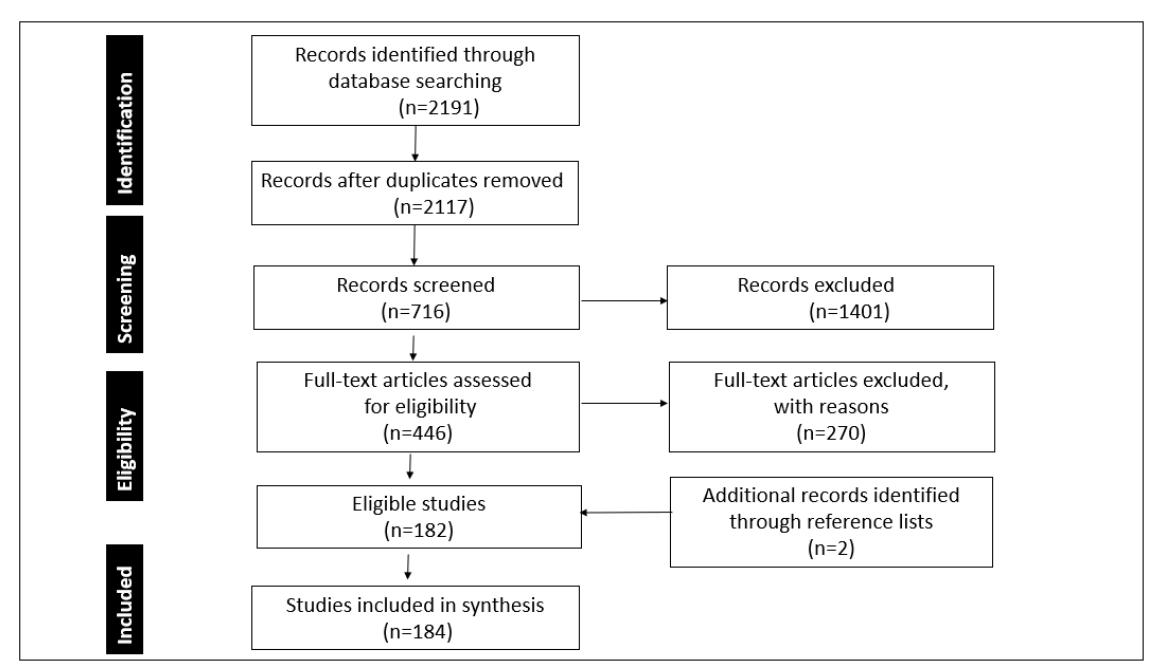
Figure 1. PRISMA Flowchart Source: Adapted from Moher et al. (2009)
For reviewing the published literature related to tourism and COVID-19, various ways, guided by Pickering and Byrne, (2014) were ensured to capture the relevant articles. The examined search keywords were: "travel," "tourism," "sustainable tourism," "pandemic", and "COVID-19". These were scanned from three major databases – Scopus, Google Scholar and the Web of Science (WoS) – with boundary conditions of articles published during the years 2020 and 2021. First, Harzing's tool (Annamalai & Varshney, 2018) Publish or Perish 8, was used for identifying tourism-related publications. Similar to Leung et al., (2013) we applied keywords search that included different word combinations of tourism, e.g. "travel" or "tourism" or "sustainable tourism" and "pandemic" or "covid-19". For Scopus, the combinations of keywords used are: "travel" or "sustainable tourism" and "pandemic" or "covid-19". A total of 235 papers were found. No duplicate articles were found in data collected from Scopus. Exact keywords were also used to collect the published articles from the Web of Science (WoS).
Table 2. Inclusion and exclusion criteria
| Inclusion | Exclusion |
|---|---|
| Conference papers, book chapters, commentary, notes, | |
| Journal articles | editorials |
| English articles | Articles of other languages |
| Articles with defined keywords | Articles without defined keywords |
| Peer-review articles | Other types of published articles |
The six-stage process by Durach et al., (2020) defines the research question, sets inclusion and exclusion criteria, determines searching databases, applies criteria, synthesizes appropriate literature, and gives an account of the findings. As an initial step, we designed the research question of our study. For inclusion and exclusion criteria, we chose only English articles published in reputed journals. To ensure the representativeness and reliability of our result, we developed a search string of related keywords as per the study. "COVID-19" and "tourism" are the combinations identified as keywords were used in the online database searches.
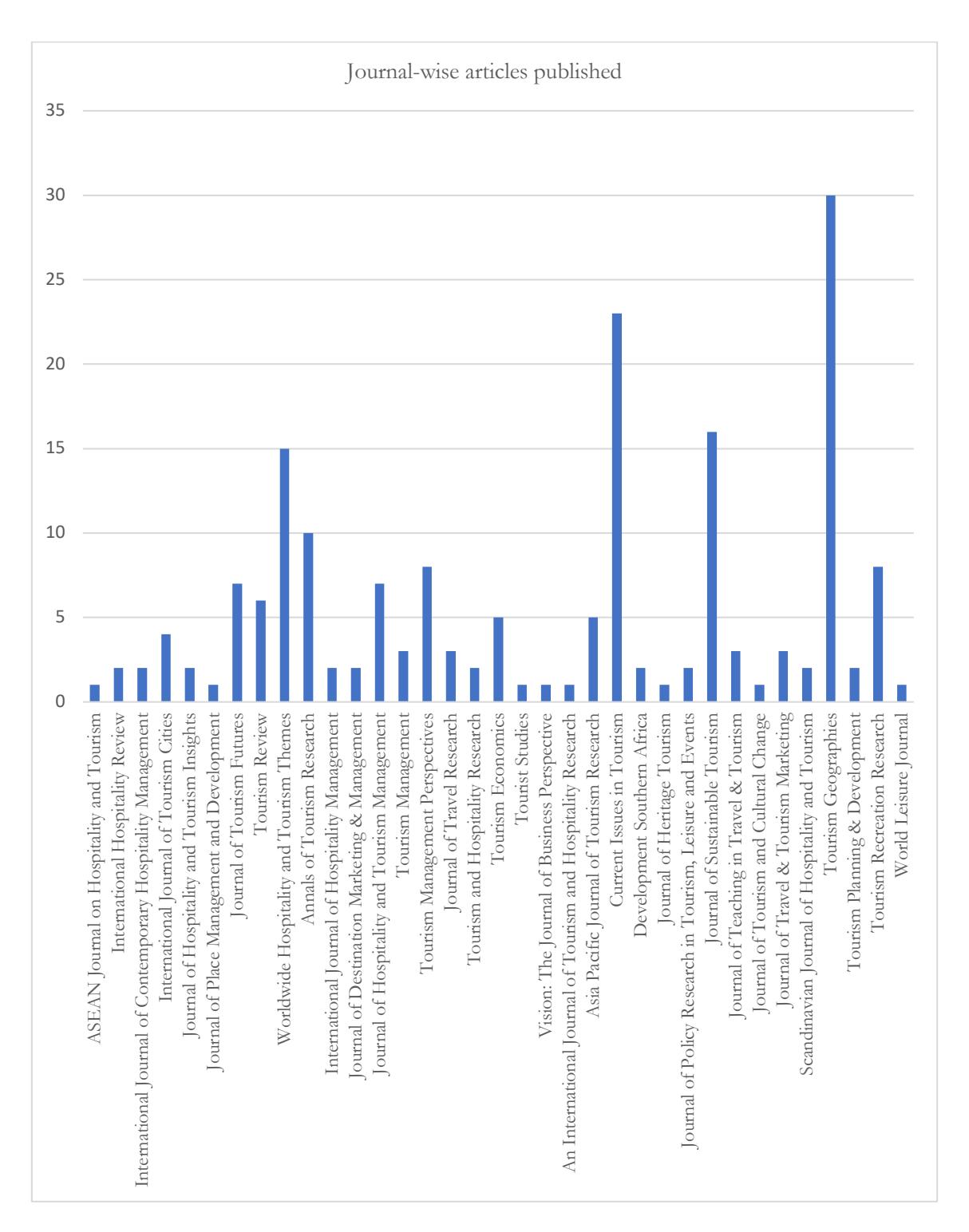
Figure 2. Journal-wise articles published Source: Retrieved from Scopus database (2022).
Next, we excluded all duplicate papers and implemented the defined inclusion and exclusion criteria (see Table 2). At the closing of collecting the data on 31st March 2022, using the PRISMA flowchart (see Figure 1), a total of 184 journal articles specifying keywords such as "COVID-19" and "tourism"
from online databases of five reputed publishers were collected. Publication houses-wise number of articles published is mentioned in Table 3.
The main aim of content analysis is to make valid deductions and conclusions of available information through a scientific process of data collection, categorization, synthesis, and compilation. It also provides an in-depth knowledge of the whole scenario. The primary purpose of content analysis is to organize, categorize, and synthesize to extract the appropriate knowledge from the available data. Through constant comparison, thematic analysis can be conducted. This method's limitations and shortcomings are also mentioned towards the end part of this study.
We adopted the analytical framework for our study. The current research involves a systematic analysis of tourism literature published during the covid pandemic. To clarify the objective of this study, there are specific steps to review the research progress building-up on tourism during the covid pandemic by applying a systematic review method. The subsequent steps are collecting, extracting, and evaluating the published literature on tourism. Finally, the future direction of tourism post covid pandemic is determined.
The main research questions addressed in this literature review are:
- What is the present status of understanding sustainable tourism during the COVID-19 pandemic?
- What are the future directions of research?
This literature review also analyses the following sub-questions:
- In which contexts have sustainable tourism been investigated during Covid-19?
- What are the identified implications of sustainable tourism?
Which theories were used to demonstrate the results of sustainable tourism post-pandemic?
4. Discussion and Future Directions
Repercussions of COVID-19 profoundly impact the well-being of tourism players and the industry. It has also affected many other stakeholders related to the tourism industry. As per the research findings (Madgavkar et al., 2020; Baum & Hai, 2020) the study states that there is an increase in pressure on workers due to household work of the family members who are connected with the tourism industry are facing job losses, financial losses, and opportunity losses. There is also an increase in domestic and sexual violence cases due to an economic loss of workers in the tourism industry.
| Table 3. Number of articles published in five publishing houses | |||
|---|---|---|---|
| Publisher | Number of Articles published | Percentage-wise |
|---|---|---|
| Elsevier | 32 | 17.39 % |
| Emerald | 39 | 21.19 % |
| Institut Teknologi Bandung | 1 | 0.54 % |
| Sage | 12 | 6.52 % |
| Taylor & Francis | 100 | 54.34 % |
As per Becker, (2020) the tourism industry has fallen steeply in the wake of the COVID-19 pandemic. Gossling et al., (2020) state that the effect of the COVID-19 pandemic on the tourism industry should be seen as an opportunity to critically evaluate tourism's growth trajectory for the future and focus on the available opportunity this pandemic brings. Doing so may start a new benefit of positive outcomes of COVID-19 on tourism as an industry. Butler, (1999) in the research article, gave clarity about sustainable tourism being different from tourism in the context of sustainable development. As per Butler, (1999) sustainable tourism is "tourism which is in a form which can maintain its viability in an area for an indefinite period". The author stated tourism in the context of sustainable development as "tourism which is developed and maintained in the area (community, environment) in such a manner and at such a scale that it remains viable over an indefinite period and does not degrade or alter the environment (human and physical) in which it exists to such a degree that it prohibits the successful development and well-being of other activities and processes" (Butler, 1999, p. 35). As per Higgins-Desbiolles, (2020) in the post-COVID-19 era, responsible tourism should not only be concerned with sustainability in tourism but also about responsible tourism. And as a result, these will revive the current economic situation over some time, along with the revival of the tourism industry. Although tourism marketing is essential during regular times, tourism in the post-pandemic era has even greater importance during post-COVID-19 crises (Beirman, 2006).
The academic advances on sustainable tourism during the considered two years provide interesting insights. A word cloud by assigning the 45 most frequently occurring keywords within the realms of sustainable tourism were considered to understand the significance of those words in the tourism industry. A word cloud is a presentation of word frequency in a visually appealing way, such that the higher frequency words are assigned increased font size and a more arresting colour for easy identification (Annamalai & Varshney, 2018; Johansson et al., 2021). A word cloud is generated with selected articles' keywords as shown in Figure 3. While choosing the keywords, uninformative terms like tourism, covid, or sustainable and broader terms like management or pandemic were eliminated. Further, only those keywords with an occurrence frequency of 5 or more were retained for further analysis.
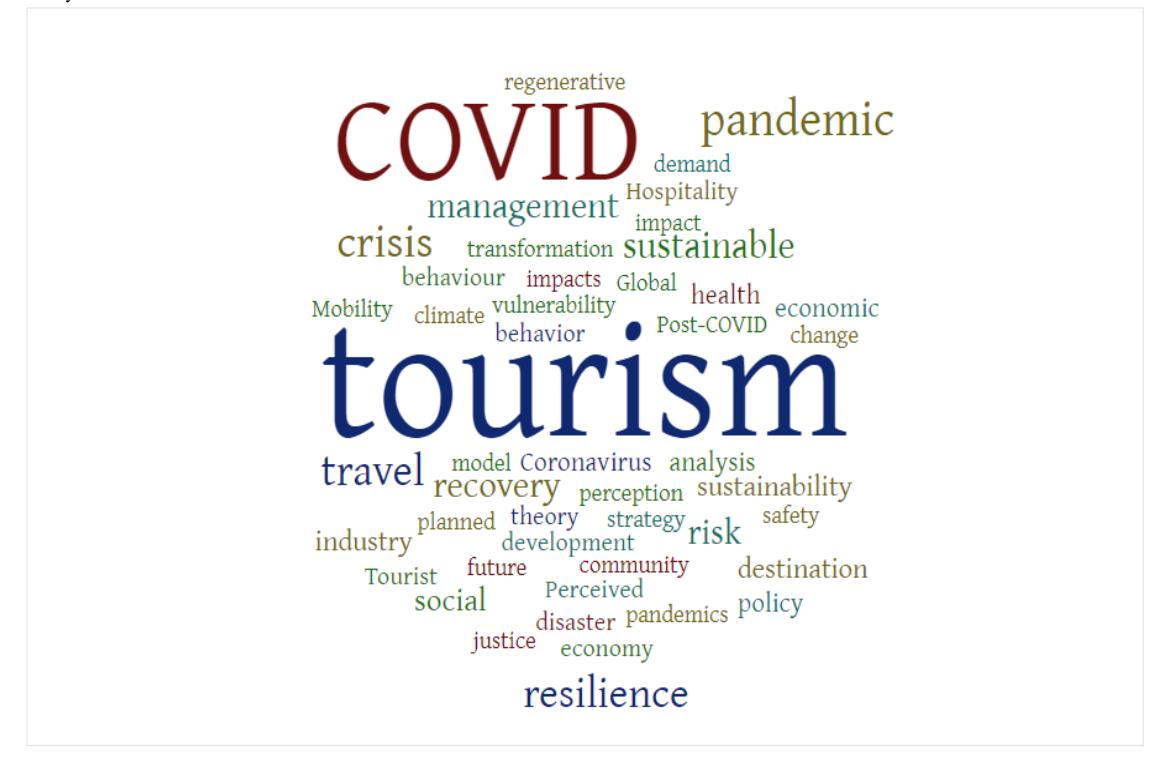
Figure 3. Word cloud from the keywords of selected articles
Based on the word cloud (Miley et al., 2011) four prominent topics, namely resilience, risk, recovery and social, were subjectively identified, representing either the underlying impact or the study objective. Here the study objective represents the broad concept, while the underlying impact is related to the effect of COVID-19 on tourism. The word cloud helped to identify the prominent topics of sustainable tourism. Resilience has been viewed as an outcome, a process, a pattern or a trait of life, or a broad conceptual domain encompassing all these ideas (Masten et al. 1990; Panter-Brick et al. 2013). Kaplan, (1981) states that risk is a combination of uncertainty attached to probable damage. Recovery, in general terms, is a process of change through which an individual or industry achieves a relaxed physical state of improved quality of life. Parsons et al., (2017) state that the social system is composed of the actions of individuals interacting with others, in which complex rules orient the action.
4.1. Theoretical models
We analyzed the literature and identified the related theoretical frameworks used in tourism-related research works. The theories which are predominantly used are mentioned in Table 4.
Table 4. Theories, model and framework
| Theories, model and framework | Implication | Reference | |
|---|---|---|---|
| Theory of Planned Behaviour (TPB) | Tourists' individual decision to engage in a specific behavior. | Rahmafitria et al., (2021); Sánchez-Cañizares et al., (2021); Rather et al., (2021); Bae et al., (2021). Gu et al., (2021); Zhang et al., (2021); Yang et al., (2021). | |
| Time Series Forecast Model | Dependent on historical data and previous trends to forecast future tourism. | ||
| Resilience Theory | When crisis events occur in the tourism industry, they will rapidly return to their initially balanced state or even achieve better performance and qualities than the previous state. | Traskevich et al., (2021); Bui et al., (2021); Lew et al., (2020). | |
| Social Exchange Theory (SET) | If the local community perceives that the tourism industry's benefits are more than the costs, in such a case, the community will readily support the developments in the tourism industry. | Woosnam et al., (2021); Joo et al., (2021). | |
| Tourism Disaster Management Framework (TDMF) | A framework on crisis and disaster management to handle pandemic like situations. | Dayour et al., (2020); Miao et al., (2021); Yeh, S. S. (2021). | |
| Computable General Equilibrium (CGE) Model | It explicitly incorporates information supply constraints, identifying prices to create preferences among tourists. | Lim, W. M. (2021); Khalid et al., (2021); Wang et al., (2021). | |
| Crisis Management Framework | A framework on crisis management in which reconstruction of tourist destinations in post-pandemic situations is the prime purpose. | Zhong et al., (2021); Li et al., (2021); Volgger et al., (2021). | |
4.2. Suggestions for future research
Current research study engrossed consumption to reset tourism to promote sustainability in the coming days. Although the need for a more holistic approach to methodology adoption still exists. By accepting the tourism industry's best practices and cultural and environmental practices (Grilli et al., 2021) such a holistic approach can be taken into consideration for the re-development of the tourism industry. The ecological perspective plays a vital role in understanding tourists' behaviour, as such behaviour is critical in redesigning entire services to promote sustainability across tourism's stakeholders. Further, it is also essential to investigate the various roles of local communities, governments, stakeholders, destinations, and tourists to develop tourism sustainability (Lee et al., 2019).
Transforming tourism into an economic activity for creating a positive impact on the whole world is critical, especially after the dreadful experience of the COVID-19 pandemic. More research is needed on how an organizational strategy should be evolved in a phased manner for an effective transformation. The investigation should also include the required collaboration and support for smooth transitioning. Now, cooperation is the key to crisis management, especially between authorities and tourism industry stakeholders (Cardoso, 2020; Jones et al., 2020; Vargas, 2020) to revive the whole industry and make it sustainable. For effective recovery, all the stakeholders need to be aware of the guidelines and directions toward sustainable development and follow them (Cardoso, 2020) strictly. Redesigning tourism will be the ultimate way forward as numerous research works state crisis as an opportunity to develop sustainability in tourism. Very little research gives the logical direction and guidelines for achieving revival turnaround of the tourism industry. Further study is needed to measure the effectiveness of the government's policy for the recovery of the tourism industry and its ancillary industries and, finally, make the policy makers aware of the appropriate and prompt steps to take. Any country-specific factors, such as culture and demographics, should also be considered in future studies.
5. Conclusions and Limitations
This systematic literature review gave a significantly clear understanding of tourism-related behaviour, the situation of the tourism industry and its various stakeholders and the government's effort towards the re-start of tourism in their respective countries. This review also identified significant gaps in tourism for sustainable growth and development in the post-pandemic era, which might be used for future research on the tourism industry. Memories of past photographs of holidays, travel descriptions and fun enjoyment during past visits shared on a tourism-related social platform might arouse a desire to travel, steering other tourists towards planning the same type of holiday/vacation/trip to the same or similar destinations. An affective forecast helps to induce an impulsive travel decision within the group of potential tourists during or before going for a holiday (Karl et al., 2020).
Future researchers also need to study the sustainable development indicators in tourism postpandemic. The monitoring and evaluation of government policy, process and revival efforts need to be taken care of. For sustainable long-term growth in tourism, decision making, deliberative planning and the ability of all the stakeholders to create an impact for re-shaping the tourism-related policy instruments are critical for the flourishing of the tourism industry. Indeed, effective governance is required to enable the impactful implementation of sustainable tourism, including different aspects of economic development, social inclusion and environmental protection related to the tourism industry. In case of any future pandemic crises, they should be dealt with promptly. To do so, the practitioners and the policymakers must need an effective contingency plan for faster implementation.
This study uniquely contributes in four ways: a) captures the progress of literature in the field of sustainable tourism, b) to understand the dominant research patterns during Covid-19 pandemic, c) to identify current factors, journals, publishers, and theoretical models used in the published research articles, and d) to offer the future research directions of sustainable tourism.
Finally, this study must acknowledge that it has several limitations. Current analysis has been done taking a specific time duration and a longitudinal work can test the findings' consistency in future work. Future research may consider conducting a comparative analysis between two regions on other aspects of sustainable tourism. The demographic variables of tourists can also be studied across all age groups. Limitations notwithstanding, the study intended to review the current state of knowledge on sustainable tourism during Covid-19, for which the work provides a definitive treatment.
References
- Annamalai, B., & Varshney, S. (2018). Practical implications in popular consumer behaviour research. The Marketing Review, 18(3), 322-343.
- Andereck, K. L., Valentine, K. M., Knopf, R. C., & Vogt, C. A. (2005). Residents' perceptions of community tourism impacts. Annals of tourism research, 32(4), 1056-1076.
- Ajzen, I., & Fishbein, M. (1977). Attitude-behavior relations: A theoretical analysis and review of empirical research. Psychological Bulletin, 84(5), 888.
- Bae, S. Y., & Chang, P. J. (2021). The effect of coronavirus disease-19 (COVID-19) risk perception on behavioural intention towards 'untact'tourism in South Korea during the first wave of the pandemic (March 2020). Current Issues in Tourism, 24(7), 1017-1035.
- Baum, T., & Hai, N. T. T. (2020). Hospitality, tourism, human rights and the impact of COVID-19. International Journal of Contemporary Hospitality Management, 32(7), 2397-2407.
- Beirman, D. (2006). A Comparative Assessment of Three Southeast Asian Tourism Recovery Campaigns: Singapore Roars: Post SARS 2003, Bali Post–the October 12, 2002 Bombing, and WOW Philippines 2003. In Tourism, Security and Safety (pp. 257-275). Routledge.
- Boley, B. B., & Uysal, M. (2013). Competitive synergy through practicing triple bottom line sustainability: Evidence from three hospitality case studies. Tourism and Hospitality Research, 13(4), 226-238.
- Bramwell, B., & Lane, B. (1993). Sustainable tourism: An evolving global approach. Journal of Sustainable Tourism, 1(1), 1-5.
- Bramwell, B., & Lane, B. (2008). Priorities in sustainable tourism research. Journal of Sustainable Tourism, 16(1), 1-4.
- Buckley, R. (2012). Sustainable tourism: Research and reality. Annals of Tourism Research, 39(2), 528- 546.
- Brown, T. J., Ham, S. H., & Hughes, M. (2010). Picking up litter: An application of theory-based communication to influence tourist behaviour in protected areas. Journal of Sustainable Tourism, 18(7), 879-900.
- Bui, P. L., & Wickens, E. (2021). Tourism industry resilience issues in urban areas during COVID-19. International Journal of Tourism Cities, 7(3), 861-879. DOI: 10.1108/IJTC-12-2020-0289.
- Burrai, E., Buda, D. M., & Stanford, D. (2019). Rethinking the ideology of responsible tourism. Journal of Sustainable Tourism, 27(7), 992-1007.
- Butler, R. W. (1999). Sustainable tourism: A state‐of‐the‐art review. Tourism geographies, 1(1), 7-25.
- Butler, R. W. (1999). Tourism-an evolutionary perspective. Department of Geography Publication Series-University of Waterloo, 52, 33-62.
- Carbone, M. (2005). Sustainable tourism in developing countries: Poverty alleviation, participatory planning, and ethical issues. The European Journal of Development Research, 17(3). 559-565.
- Cardoso, C. (2020). The contribution of tourism towards a more sustainable and inclusive society: Key guiding principles in times of crisis. Worldwide Hospitality and Tourism Themes. 12 (6). 679- 689. DIO: 10.1108/WHATT-07-2020-0065
- Caulley, D. N. (2007). Conducting research literature reviews: From the internet to paper. Qualitative Research Journal, 7(2), 103-105.
- Chacko, H. E., & Marcell, M. H. (2013). Repositioning a tourism destination: The case of New Orleans after hurricane Katrina. N. Scott, E. Law, & B. Prideaux (Eds.), Safety and security in tourism, 223-236.
- Chok, S., Macbeth, J., & Warren, C. (2007). Tourism as a tool for poverty alleviation: A critical analysis of 'pro-poor tourism'and implications for sustainability. Current Issues in Tourism, 10(2-3), 144- 165.
- Countryside Commission. (1995). Sustaining rural tourism. Countryside Commission (CCP 483): Cheltenham, UK.
- Darlak, J., Lund, T., Daniel, A. C., & Eluri, K. C.(2020). Airlines suspend flights due to coronavirus outbreak, Retrieved on March 20, 2022 from https://www.reuters.com/article/us-china-health-airlinesfactbox/factbox-airlines-suspend-flights-due-to-coronavirusoutbreak-idUSKBN20Q2XA.
- De Sausmarez, N. (2004). Malaysia's response to the Asian financial crisis: Implications for tourism and sectoral crisis management. Journal of Travel & Tourism Marketing, 15(4), 217-231.
- Dann, G. M. (1977). Anomie, ego-enhancement and tourism. Annals of Tourism Research, 4(4), 184- 194.
- Dann, G. M. (1981). Tourist motivation an appraisal. Annals of Tourism Research, 8(2), 187-219.
- Dayour, F., Adongo, C. A., Amuquandoh, F. E., & Adam, I. (2020). Managing the COVID-19 crisis: coping and post-recovery strategies for hospitality and tourism businesses in Ghana. Journal of Hospitality and Tourism Insights. Vol. 4 No. 4, pp. 373-392. https://doi.org/10.1108/JHTI-08- 2020-0150
- Duan, J., Zhang, C., Gong, Y., Brown, S., & Li, Z. (2020). A content-analysis based literature review in blockchain adoption within food supply chain. International Journal of Environmental Research and Public Health, 17(5), 1784.
- Durach, C. F., Kembro, J., & Wieland, A. (2017). A new paradigm for systematic literature reviews in supply chain management. Journal of Supply Chain Management, 53(4), 67-85.
- Eber, S.(1992). Beyond the green horizon: A discussion paper on principles for sustainable tourism, Tourism Concern & World Wildlife Fund.
- Era, J. S. B., & Del Rosario, J. M. (2020). Examining Tourism Resilience Practices As Basis For A Post-COVID-19 Recovery In The Philippines. ASEAN Journal on Hospitality and Tourism, 18(1), 1-12.
- Fielding, K. S., & Head, B. W. (2012). Determinants of young Australians' environmental actions: The role of responsibility attributions, locus of control, knowledge and attitudes. Environmental Education Research, 18(2), 171-186.
- Fink, A.G. (2014). Conducting Research Literature Reviews: From paper to the Internet, Sage Publications, Thousand Oaks, CA, USA.
- Fishbein, M., & Ajzen, I. (2011). Predicting and changing behavior: The reasoned action approach. Psychology Press.
- Fragomen. (2020). COVID-19 pandemic – immigration situation overview. Available at: new_coronavirus_table_for_news_page_1.4v2.pdf (fragomen.com).
- Gössling, S., Scott, D., & Hall, C. M. (2020). Pandemics, tourism and global change: a rapid assessment of COVID-19. Journal of Sustainable Tourism, 29(1), 1-20.
- Grilli, G., Tyllianakis, E., Luisetti, T., Ferrini, S., & Turner, R. K. (2021). Prospective tourist preferences for sustainable tourism development in Small Island Developing States. Tourism Management, 82, 104178.
- Gu, Y., Onggo, B. S., Kunc, M. H., & Bayer, S. (2022). Small Island Developing States (SIDS) COVID-19 post-pandemic tourism recovery: A system dynamics approach. Current Issues in Tourism, 25(9), 1481-1508.
- Guo, Y., Jiang, J., & Li, S. (2019). A sustainable tourism policy research review. Sustainability, 11(11), 3187.
- Gursoy, D., & Rutherford, D. G. (2004). Host attitudes toward tourism: An improved structural model. Annals of Tourism Research, 31(3), 495-516.
- Hall, C. M. (2015). On the mobility of tourism mobilities. Current Issues in Tourism, 18(1), 7-10.
- Hall, C. M., & Lew, A. A. (1998). The geography of sustainable tourism development: an introduction. Sustainable tourism: Geographical Perspectives, 1-24.
- Han, H., & Kim, Y. (2010). An investigation of green hotel customers' decision formation: Developing an extended model of the theory of planned behavior. International Journal of Hospitality Management, 29(4), 659-668.
- Harchandani, P., & Shome, S. (2021). The effects of Covid-19 on global tourism. ASEAN Journal on Hospitality and Tourism, 19(1), 63-82.
- Harrison, D., & Schipani, S. (2007). Lao tourism and poverty alleviation: Community-based tourism and the private sector. Current Issues in Tourism, 10(2-3), 194-230.
- Hardy, A., Beeton, R. J., & Pearson, L. (2002). Sustainable tourism: An overview of the concept and its position in relation to conceptualisations of tourism. Journal of Sustainable Tourism, 10(6), 475- 496.
- Higgins-Desbiolles, F. (2020). Socialising tourism for social and ecological justice after COVID-19. Tourism Geographies, 22(3), 610-623.
- Hsu, C. H., & Huang, S. (2012). An extension of the theory of planned behavior model for tourists. Journal of Hospitality & Tourism Research, 36(3), 390-417.
- Hummel, J., Gujadhur, T., & Ritsma, N. (2013). Evolution of tourism approaches for poverty reduction impact in SNV Asia: Cases from Lao PDR, Bhutan and Vietnam. Asia Pacific Journal of Tourism Research, 18(4), 369-384.
- Hysa, B., Zdonek, I., & Karasek, A. (2022). Social media in sustainable tourism recovery. Sustainability, 14(2), 760.
- Ioannides, D. (1995). Planning for international tourism in less developed countries: Toward sustainability?. Journal of Planning Literature, 9(3), 235-254.
- Jeong, C. (2014). Marine tourist motivations comparing push and pull factors. Journal of Quality Assurance in Hospitality & Tourism, 15(3), 294-309.
- Jones, P., & Comfort, D. (2020). The COVID-19 crisis, tourism and sustainable development. Athens Journal of Tourism, 7(2), 75-86.
- Johansson, E., & Johansson, K. M. (2021). Along the government–media frontier: Press secretaries offline/online. Journal of Public Affairs, e2759.
- Joo, D., Xu, W., Lee, J., Lee, C. K., & Woosnam, K. M. (2021). Residents' perceived risk, emotional solidarity, and support for tourism amidst the COVID-19 pandemic. Journal of Destination Marketing & Management, 19, 100553.
- Joo, D., Woosnam, K. M., Strzelecka, M., & Boley, B. B. (2020). Knowledge, empowerment, and action: Testing the empowerment theory in a tourism context. Journal of Sustainable Tourism, 28(1), 69-85.
- Kaplan, S., & Garrick, B. J. (1981). On the quantitative definition of risk. Risk Analysis, 1(1), 11-27.
- Karl, M., Chien, P. M., & Ong, F. (2021). Impulse buying behaviour in tourism: A new perspective. Annals of Tourism Research, 90(C).
- Khalid, U., Okafor, L. E., & Burzynska, K. (2021). Does the size of the tourism sector influence the economic policy response to the COVID-19 pandemic?. Current Issues in Tourism, 24(19), 2801- 2820.
- Kim, S. S., Lee, C. K., & Klenosky, D. B. (2003). The influence of push and pull factors at Korean national parks. Tourism Management, 24(2), 169-180.
- Klenosky, D. B. (2002). The "pull" of tourism destinations: A means-end investigation. Journal of Travel Research, 40(4), 396-403.
- Kumar, S. (2020). Technology and innovation: Changing concept of rural tourism–A systematic review. Open Geosciences, 12(1), 737-752.
- Lee, H. Y., Bonn, M. A., Reid, E. L., & Kim, W. G. (2017). Differences in tourist ethical judgment and responsible tourism intention: An ethical scenario approach. Tourism Management, 60, 298- 307.
- Lee, T. H., & Jan, F. H. (2019). Can community-based tourism contribute to sustainable development? Evidence from residents' perceptions of the sustainability. Tourism Management, 70, 368-380.
- Lew, A. A., Cheer, J. M., Haywood, M., Brouder, P., & Salazar, N. B. (2020). Visions of travel and tourism after the global COVID-19 transformation of 2020. Tourism Geographies, 22(3), 455- 466.
- Lew, A. A., Hall, C. M., & Williams, A. M. (Eds.). (2008). A companion to tourism. John Wiley & Sons.
- Li, Z., Zhang, X., Yang, K., Singer, R., & Cui, R. (2020). Urban and rural tourism under COVID-19 in China: research on the recovery measures and tourism development. Tourism Review, 76(4), 718-736.
- Lim, W. M. (2021). Conditional recipes for predicting impacts and prescribing solutions for externalities: the case of COVID-19 and tourism. Tourism Recreation Research, 46(2), 314-318.
- Lu, J., & Nepal, S. K. (2009). Sustainable tourism research: An analysis of papers published in the Journal of Sustainable Tourism. Journal of Sustainable Tourism, 17(1), 5-16.
- Madgavkar, A., White, O., Krishnan, M., Mahajan, D., & Azcue, X. (2020). COVID-19 and gender equality: Countering the regressive effects. McKinsey Global Institute, 15.
- Mair, J., Ritchie, B. W., & Walters, G. (2016). Towards a research agenda for post-disaster and postcrisis recovery strategies for tourist destinations: A narrative review. Current Issues in Tourism, 19(1), 1-26.
- Mathew, P. V., & Kuriakose, V. (2017). A Study on the Indicator Framework of Responsible Tourism in Tourism Accommodation Sector. Asian Journal of Management, 8(4), 989-996.
- Masten, A. S., Best, K. M., & Garmezy, N. (1990). Resilience and development: Contributions from the study of children who overcome adversity. Development and Psychopathology, 2(4), 425-444.
- McIntyre, G. (1993). Sustainable tourism development: guide for local planners. World Tourism Organization (WTO).
- Messina V. (2021) Travel and Tourism Economic Impact 2021, World Travel and Tourism Council. Retrieved on April 4, 2022 from https://wttc.org/.
- Miao, L., Im, J., Fu, X., Kim, H., & Zhang, Y. E. (2021). Proximal and distal post-COVID travel behavior. Annals of Tourism Research, 88, 103-159.
- Miley, F., & Read, A. (2011). Using word clouds to develop proactive learners. Journal of the Scholarship of Teaching and Learning, 91-110.
- Mobley, C., Vagias, W. M., & DeWard, S. L. (2010). Exploring additional determinants of environmentally responsible behavior: The influence of environmental literature and environmental attitudes. Environment and Behavior, 42(4), 420-447.
- Moghimehfar, F., Halpenny, E. A., & Ziaee, M. (2014). How big is the gap? Comparing the behaviours and knowledge of mountain hikers with ecotourism ideals: A case study of Iran. Journal of Ecotourism, 13(1), 1-15.
- Moher, D., Liberati, A., Tetzlaff, J., Altman, D. G., & PRISMA Group*. (2009). Preferred reporting items for systematic reviews and meta-analyses: the PRISMA statement. Annals of Internal Medicine, 151(4), 264-269.
- Mondal, S., & Samaddar, K. (2020). Issues and challenges in implementing sharing economy in tourism: a triangulation study. Management of Environmental Quality: An International Journal, 32(1), 64-81.
- Nunkoo, R., & Gursoy, D. (2012). Residents' support for tourism: An identity perspective. Annals of Tourism Research, 39(1), 243-268.
- Page, S. J., & Dowling, R. K. (2002). Ecotourism. Themes in Tourism Series. Prentice Hall: Harlow, UK.
- Palacios-Florencio, B., Santos-Roldán, L., Berbel-Pineda, J. M., & Castillo-Canalejo, A. M. (2021). Sustainable Tourism as a Driving force of the Tourism Industry in a Post-COVID-19 Scenario. Social indicators research, 158(3), 991-1011.
- Panter‐Brick, C., & Leckman, J. F. (2013). Editorial commentary: resilience in child development– interconnected pathways to wellbeing. Journal of Child Psychology and Psychiatry, 54(4), 333-336.
- Parsons, T., & Shils, E. A. (2017). The social system. In Toward a general theory of action (pp. 190-233). Routledge.
- Petticrew, M., & Roberts, H. (2008). Systematic reviews in the social sciences: A practical guide. John Wiley & Sons.
- Pickering, C., & Byrne, J. (2014). The benefits of publishing systematic quantitative literature reviews for PhD candidates and other early-career researchers. Higher Education Research & Development, 33(3), 534-548.
- Pjerotic, L., Delibasic, M., Jokšienė, I., Griesienė, I., & Georgeta, C. P. (2017). Sustainable tourism development in the rural areas. Transformations in Business & Economics, 16, 21-30.
- Prayag, G., & Ryan, C. (2011). The relationship between the 'push' and 'pull' factors of a tourist destination: The role of nationality–an analytical qualitative research approach. Current Issues in Tourism, 14(2), 121-143.
- Prayag, G., and S. Hosany. (2014). When Middle East Meets West: Understanding the Motives and Perceptions of Young Tourists from United Arab Emirates. Tourism Management , 40, 35–45.
- Poudel, S., and G. P. Nyaupane. (2017). Understanding Environmentally Responsible Behaviour of Ecotourists: The Reasoned Action Approach. Tourism Planning & Development, 14(3), 337–352.
- Quintal, V. A., J. A. Lee, and G. N. Soutar. (2010). Risk, Uncertainty and the Theory of Planned Behavior: A Tourism Example. Tourism Management, 31(6), 797–805.
- Rahmafitria, F., Suryadi, K., Oktadiana, H., Putro, H. P. H., & Rosyidie, A. (2021). Applying knowledge, social concern and perceived risk in planned behavior theory for tourism in the Covid-19 pandemic, Tourism Review. 76(4), 809-828. DOI: 10.1108/TR-11-2020-0542.
- Rather, R. A. (2021). Monitoring the impacts of tourism-based social media, risk perception and fear on tourist's attitude and revisiting behaviour in the wake of COVID-19 pandemic. Current Issues in Tourism, 24(23), 3275-3283.
- Reimer, J.K.K., & Walter, P. (2013). How do you know it when you see it? Community-based ecotourism in the Cardamom Mountains of southwestern Cambodia. Tourism Management, 34, 122–132.
- Romagosa, F. (2020). The COVID-19 crisis: Opportunities for sustainable and proximity tourism. Tourism Geographies, 1-5.
- San Martín, H., and A. Herrero. (2012). Influence of the User's Psychological Factors on the Online Purchase Intention in Rural Tourism: Integrating Innovativeness to the UTAUT Framework. Tourism Management 33(2), 341–350.
- Sánchez-Cañizares, S. M., Cabeza-Ramírez, L. J., Muñoz-Fernández, G., & Fuentes-García, F. J. (2021). Impact of the perceived risk from Covid-19 on intention to travel. Current Issues in Tourism, 24(7), 970-984.
- Seuring, S. and Gold, S. (2012). Conducting content‐analysis based literature reviews in supply chain management. Supply Chain Management, 17(5), 544-555. DIO: 10.1108/13598541211258609.
- Sharpley, R. (2000). Tourism and sustainable development: Exploring the theoretical divide. Journal of Sustainable Tourism, 8(1), 1–19.
- Skift. (N.D). Coronavirus and the travel industry. Retrieved on March 12, 2020 from https://skift.com/coronavirus-and-travel/?.
- Slaper, T. F., and T. J. Hall. (2011). The Triple Bottom Line: What Is It and How Does It Work. Indiana Business Review, 86(1), 4–8.
- Spenceley, A., and S. Snyman. (2017). Can a Wildlife Tourism Company Influence Conservation and the Development of Tourism in a Specific Destination?. Tourism and Hospitality Research, 17(1), 52–67.
- Smith, S., C. Costello, and R. A. Muenchen. (2010). Influence of Push and Pull Motivations on Satisfaction and Behavioral Intentions within a Culinary Tourism Event. Journal of Quality Assurance in Hospitality & Tourism, 11(1), 17–35.
- Stabler, M. J. (1997). Tourism and sustainability: Principles to practice, CAB International.
- Stoddard, J. E., C. E. Pollard, and M. R. Evans. (2012). The Triple Bottom Line: A Framework for Sustainable Tourism Development. International Journal of Hospitality & Tourism Administration, 13(3), 233–258.
- Thapa, B., A. R. Graefe, and L. A. Meyer. (2005). Moderator and Mediator Effects of Scuba Diving Specialization on Marine-based Environmental Knowledge-behavior Contingency. The Journal of Environmental Education 37(1), 53–67.
- Tiago, F., Gil, A., Stemberger, S., & Borges-Tiago, T. (2021). Digital sustainability communication in tourism. Journal of Innovation & Knowledge, 6(1), 27-34.
- Tranfield, D., Denyer, D., & Smart, P. (2003). Towards a methodology for developing evidence‐ informed management knowledge by means of systematic review. British Journal of Management, 14(3), 207-222.
- Traskevich, A., & Fontanari, M. (2021). Tourism potentials in post-COVID19: The concept of destination resilience for advanced sustainable management in tourism. Tourism Planning & Development, 1-25.
- United Nations. (2003). Poverty alleviation through sustainable tourism development. New York, NY: United Nations Economic and Social Commission for Asia and the Pacific.
- United Nations Development Programme. (2011). Discussion paper tourism and poverty reduction strategies in the integrated framework for least developed countries. UNDP, Geneva.
- United Nations World Tourism Organization. (2012). Compendium of best practices and recommendations for ecotourism in Asia and the Pacific. UNWTO, Madrid.
- United Nations World Tourism Organization. (2020). UNWTO World Tourism Barometer (English version). UNWTO.
- Vargas, A. (2020). Covid-19 crisis: A new model of tourism governance for a new time. Worldwide Hospitality and Tourism Themes, 12(6), 691-699.
- Venkatesh, V., M. G. Morris, G. B. Davis, and F. D. Davis. (2003). User Acceptance of Information Technology: Toward a Unified View. MIS Quarterly, 27(3), 425–425.
- Volgger, M., Taplin, R., & Aebli, A. (2021). Recovery of domestic tourism during the COVID-19 pandemic: An experimental comparison of interventions. Journal of Hospitality and Tourism Management, 48, 428-440.
- Waligo, V. M., Clarke, J., & Hawkins, R. (2013). Implementing sustainable tourism: A multistakeholder involvement management framework. Tourism Management, 36, 342–353.
- Wang, C., Meng, X., Siriwardana, M., & Pham, T. (2021). The impact of COVID-19 on the Chinese tourism industry. Tourism Economics, 28(1), 131-152.
- Wang, J., and B. W. Ritchie. (20120. Understanding Accommodation Managers' Crisis Planning Intention: An Application of the Theory of Planned Behaviour. Tourism Management, 33(5), 1057–1067.
- Ward, C., and T. Berno. (2011). Beyond Social Exchange Theory: Attitudes toward Tourists. Annals of Tourism Research, 38(4), 1556–1569.
- Weaver, D.B., & Lawton, L.J. (2007). Twenty years on: The state of contemporary ecotourism research, Tourism Management, 28(5), 1168–1179.
- Woodley, S. (1999). Tourism and sustainable development in parks and protected areas. Department of Geography Publication Series-University of Waterloo, 52, 159-176.
- Woosnam, K. M., Russell, Z., Ribeiro, M. A., Denley, T. J., Rojas, C., Hadjidakis, E., & Mower, J. (2021). Residents' pro-tourism behaviour in a time of COVID-19. Journal of Sustainable Tourism, 1-20.
- Yang, T. T., Ruan, W. Q., Zhang, S. N., & Li, Y. Q. (2021). The influence of the COVID-19 pandemic on tourism demand for destinations: an analysis of spatial heterogeneity from a multi-scale perspective. Asia Pacific Journal of Tourism Research, 26(7), 793-810.
- Yeh, S. S. (2021). Tourism recovery strategy against COVID-19 pandemic. Tourism Recreation Research, 46(2), 188-194.
- Zhang, H., Song, H., Wen, L., & Liu, C. (2021). Forecasting tourism recovery amid COVID-19. Annals of Tourism Research, 87, 103149.
- Zhao, H. H., Q. Gao, Y. P. Wu, Y. Wang, and X. D. Zhu. (2014). What Affects Green Consumer Behavior in China? A Case Study from Qingdao. Journal of Cleaner Production 63, 143–151.
- Zhao, W., & Ritchie, J.R.B. (2007). Tourism and poverty alleviation: An integrative research framework. Current Issues in Tourism, 10(2–3), 119–143.
- Zhong, L., Sun, S., Law, R., & Li, X. (2021). Tourism crisis management: Evidence from COVID-19. Current Issues in Tourism, 24(19), 2671-2682.