

1. Introduction
Globally, the tourism industry contributes enormously to employment, GDP and foreign exchange for individual countries (WTO, 2020). Additionally, the industry has strong links with other segments of the economy like transport, accommodation, food and beverage services, financial and insurance services. Foodborne outbreaks can be a strong deterrent to the growth of the industry. The prevalence of foodborne diseases resulting from public foodservice establishments has been well documented over the years worldwide (Bhattacharya et al., 2020; WHO, 2020). Unfortunately, the biggest burden of food-borne diseases has been experienced and reported in Africa (WHO, 2020; Amoako et al., 2019). The Sub-Saharan Africa has the highest per capita health burden and this undermines well-being and economic productivity (World Bank, 2022). The annual cost of foodborne diseases in Sub-Saharan Africa is estimated to be around USD 16.7bn. According to World Bank (2022), relatively little is being done to reduce foodborne illnesses among consumers in Sub-Saharan Africa (SSA). The most prominent contributing factors to foodborne diseases include improper cooking, improper storage temperatures, poor personal hygiene of the food handlers and limited food safety knowledge (WHO, 2020; and Gould et al., 2013).
Tourists routinely stop at identified highway tourist stop-over foodservice establishments (HTSFE) in Uganda for foods and beverages to and from their excursions of countryside tourist attractions. The tourists' expectation is that foods and beverages from HTSFE are safe and of high quality because they play an important role in their daily options and nutritional demands. The safety of such foods and beverages is highly paramount. Worldwide, there is increased concern about the safety of foods served in commercial foodservice establishments because of cases of adverse foodborne illnesses that have originated from such establishments (Yasim, Phetvaroon & Zhu, 2021, WHO, 2020, Amoako et al.; 2019). Unsafe food can affect the reputation and patronization in the food service industry and this dictates the choice of a food service establishment (Dzeagu-Kudjodji, Adjibolosoo & Otoo-Arthur, 2019). Unfortunately, there is limited information about the profiles and operations of the HTSFE in Uganda yet this is important information for informed choice by the tourists. There is, therefore, a need to establish their characteristics, construct a profile and grading for informed choice by tourists and subsequently minimizing the risk of foodborne diseases.
This study was a preliminary study to a bigger study that was aimed at testing if the category of a highway stop-over foodservice establishment (A, B, C & Non-graded) could predict the level of food safety knowledge, attitudes and practices (KAP) of the food handlers as well as the microbial quality and safety of the ready-to-eat foods (RTE) served in these establishments for the health of the consumers hence sustainable tourism development in the country. In summary, the study wanted to test if the category of the establishment could be a predictor variable for KAP of the food handlers and microbial quality of the RTE foods served in such establishments (theoretical implication). Additionally, the profiling could assist customers both domestic and foreign to choose foodservice establishments with minimal risk of contaminated foods (practical implication) since the grading was based on food safety indicators.
Universal access to safe food is a key requirement for the 2030 Agenda for the Sustainable Development Goals (FAO, 2021). An estimated 600 million people worldwide are affected by foodborne diseases each year and 420,000 deaths are recorded, resulting into loss of 33 million healthy years (DALYS) (WHO, 2020). World Health Organisation (WHO) reports that approximately 110 billion US dollars is lost in productivity and medical expenses in Low- and Medium-Income Countries (LMICs). Furthermore, foodborne diseases hinder social economic development by straining the health care systems and affecting both tourism and international food trade (WHO, 2020). Food safety is an underlying factor in restaurant choice by tourists as emphasized by Lee et al. (2012). The food safety indicators act as a benchmark of food safety, a basis for choice of a restaurant and satisfaction. The inspection notes and other food safety cues are key determinants of perceived safety hence restaurant choice (Henson et al., 2006).
The reliance on individual food safety indicators without profiling and grading of the HTSFE remains a highly subjective matter. Restaurant grading greatly improves on the sanitary conditions of commercial foodservice establishments (Melisa et al., 2015) The customers ordinarily have limited access to all vital areas of the establishment hence become reliant on a few indicators that might not be adequate to guarantee safety hence need for profiling and grading by relevant authorities. The food safety studies conducted in African countries, Uganda inclusive, have been limited to assessing the knowledge, attitudes and practices of food handlers involved in vending street foods and institutional catering establishments and transport hubs like taxis parks and a few conducting microbial analysis and levels of chemical contaminants like aflatoxins, pesticide residues, antibiotic residues and heavy metals (Serem et al., 2021, Ncama et al., 2021, Illes et al., 2021, Afolabi et al., 2021, Ncube et al., 2019, Baluka et al., 2015, Makwanda & Woyo (2014) and Muyanja et al., 2011). None of the above studies focused on establishing a profile for HTSFE and grading based on food safety indicator compliance scores. On the other hand, as much as data was collected about practices, only one study (Muyanja et al., 2011) had an additional tool in form of an observational checklist which this study included as an instrument in data collection. Additionally, most of the studies were done pre- COVID-19 pandemic and this was done post Covid-19 where consumers are more cautious about food safety. On the other hand, none of the studies was done in highway tourist stop-over foodservice establishments. This study, therefore, was undertaken with the following objectives in mind; (i) To establish the characteristics of HTSFE and develop a profile (ii) To grade the HTSFE based on food safety indicators for easy choice by tour operators, tourists and the general public.
2. Literature Review
Gastronomic experience is pivotal in choosing travel destination and important in shaping the tourists' overall satisfaction (Rodriguez, Borges and Vieira, 2023; Carpio, Napod and Do, 2021; Mora et al., 2021). Food safety enormously contributes to gastronomic experience of the tourists, thus, a key determinant of travel satisfaction, vacation well-being, destination decision process and inclination to return (Polat and Ozdemir, 2021, Lee et al., 2019). Food safety is vital to the health and well-being of the consumers as well as the industry. Visitor satisfaction is key to sustainable tourism development in a destination and impacts significantly on visitor expenditure patterns (Odinga, Manyara and Atieno, 2018). Approximately 600 million people fall ill from contaminated food annually with 42,000 deaths attributed to foodborne diseases, resulting into loss of 33 million healthy years (DAILYS) (WHO, 2020).
With increased global travels, tourists are risk of foodborne diseases originating from contaminated foods prepared in commercial foodservice establishments (Tezzo et al., 2021; Bhutan et al, 2018., Zang et al., 2018). Foodservice establishments have enormously contributed to the global burden of foodborne diseases (ECDC, 2020; CDC, 2019; Ford et al., 2018). Any concerns about a destination can damage its image and influence travel decisions (Tsai and Wang, 2019; Anderson et al., 2017). Kumar, Zulkifli and Ray (2023) suggest that service quality in restaurants is key in sustainable tourism development. Service quality leads to a positive word of mouth and intention to return (Adinegara et al., 2017)
Globally, commercial foodservice establishments account for a substantial percentage of foodborne diseases, thus, a huge public health risk and concern (Yasim, Phetvaroon & Zhu, 2021; Bhattacharya et al., 2020; WHO, 2020; Amoako et al.; 2019). The contributing factors include improper cooking, poor food handling, improper storage temperatures, poor personal hygiene, inadequate food safety knowledge, lack of proper supervision and inspections (WHO, 2020; and Gould et al., 2013). Unsafe foods impact negatively on the reputation and patronization of tourism destinations (Dzeagu-
Kudjodji, Adjibolosoo & Otoo-Arthur, 2019; WHO, 1999). Safety, effective dimension, infrastructure, culture are key dimensions in persuading forces in destination image (Karma and Sharma, 2021). Destination image is a psychological set of emotions in the tourist's mind.
Efforts towards food safety and consumer protection have included grading of foodservice establishments based on compliance to hygiene regulatory standards. Grading of foodservice establishments fits into the model of innovative practices in the foodservice industry. Innovative practices positively affect customer experience, satisfaction and a key to success in the food service industry (Manhas, Sharma and sarangal, 2022; Musomera, 2019). The grading of foodservice establishments contributes notably to compliance with specific sanitary requirements, thus, food safety (Meltzer et al., 2017; Wong et al., 2015). Additionally, the grades are a powerful incentive for restaurants to maintain high standards of hygiene, accountable for food quality facilitates fair inspections, informed choices, builds a sense of authenticity and transparency. The foodservice establishments are graded based on their degree of compliance with food safety regulations (Da Cuhna et al., 2016). The grading of restaurants has proved to be an effective strategy in reducing the risk of foodborne diseases originating from such establishments. A 13.1% reduction in hospitalizations was realized in the year following implementation of the restaurant grading system in Los Angeles county USA (Kuafu et al., 2013). Similar results were recorded in New York (Wong et al., 2015). Due to the anticipated massive inflow of tourists during the 2014 FIFA world cup in Brazil, the grading system of restaurants was well applied in an effort to protecting consumer health and a significant reduction in violation scores was recorded (Da Cunha et al., 2016). According to Choi and Scharff (2017), grading of restaurants promotes public health.
Different grades are to a certain extent explained by factors related to the economic status and urbanization of the area (Lunden et al., 2021). Contextually, food operators and service personnel in rural areas may present with poor food safety risk literacy (Sha et al., 2020). The level of inspections is ordinarily predetermined by the grade of foodservice establishment. Inconsistent inspections may endanger food safety and lead to mistrust in official food control (Lunden et al., 2021). In a practical perspective, the grading may be in form of star ratings, letters or colours. The letters typically interpreted as follows; A (the restaurant minimal to no food safety rule violations, B (the restaurant has minor food safety violations that need to be corrected) and C (the restaurant has numerous food rule violations that put it at risk of closure) (FAO, 2021; Da Cunha et al.; 2016 and USA Food and Drug Authority, 2013). The ratings signify quality, thus, the higher the rating, the better the food quality and dining experience.
3. Literature Review
3.1. Study Area
Uganda is located in Eastern Africa and has a latitude of 1.37330N and a longitude of 32.29030E. It boarders Kenya in the west, south of South Sudan, east of the Democratic Republic of the Congo, and north of Rwanda and Tanzania (Figure 1). Uganda has a total area of 241,038km2 and an estimated population of 47.1 million (World Bank, 2021). It is in the heart of the Great Lakes region, and is surrounded by three of them, Lake Edward, Lake Albert, and Lake Victoria. Uganda's outstanding features are the largest freshwater lake on the continent, the source of the longest river, the strongest waterfall, the largest number of primates, and the highest number of mountain gorillas worldwide. Uganda is home to a vast number of species, including a population of mountain gorillas in the Bwindi Impenetrable National Park, gorillas and golden monkeys in the Mgahinga Gorilla National Park, and hippos in the Murchison Falls National Park (Figure 1).
The study was conducted, particularly in highway tourist stop-over foodservice establishments (HTSFE). HTSFE are foodservice establishments located along the highways where foods and beverages are prepared and served to the long-distance travelers that include tourists, domestic travelers and local communities. These food service establishments are distributed all over the country as shown in Figure 1. The total number of HTSFE considered in this study were 30 as guided by Uganda Tourism Board (UTB) and Uganda Safari Guides Association (USAGA).
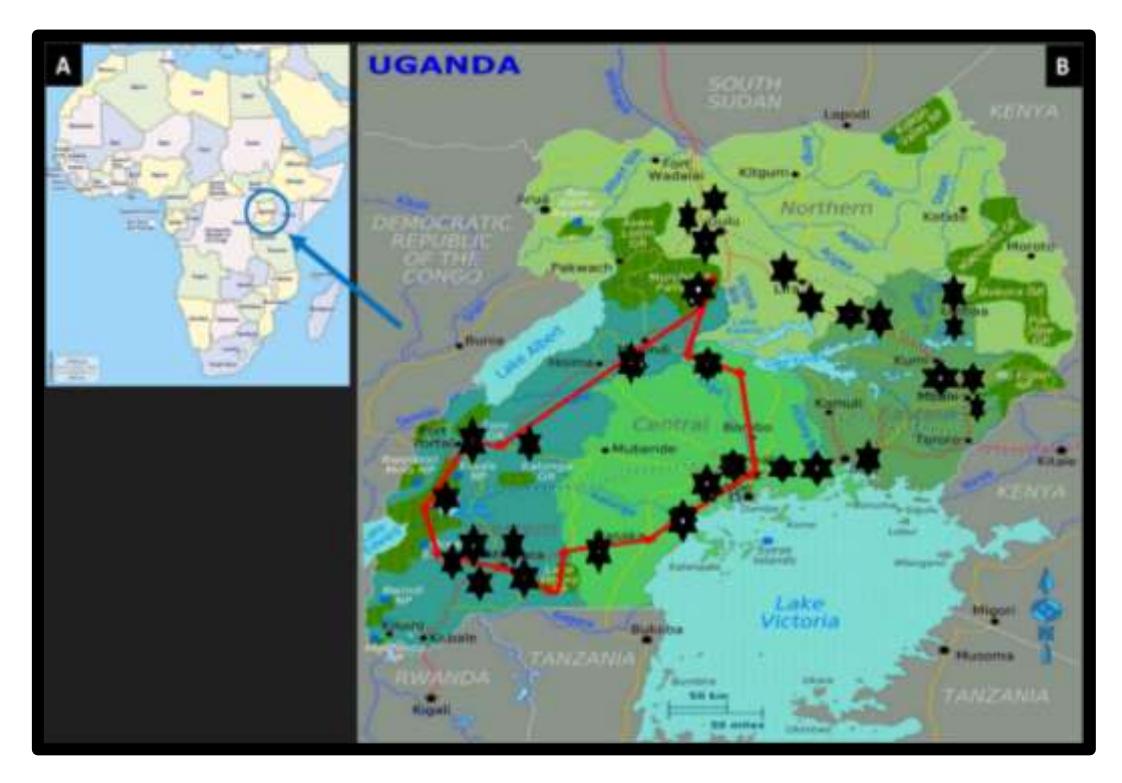
Figure 1. Map of Uganda (B) showing location of National Parks (dark green) and location of HTSFE (stars). The inset (A) is the map of Africa showing location of Uganda Source: Uganda Tourism Board (2020)
3.2. Research Desaign
The study employed a cross-sectional design to obtain quantitative data using a structured interviewer-administered pre-tested questionnaire. The justification for this design was that data could be collected at a point in time. On the other hand, quantitative data was necessary in order to quantify the results, compute the compliance scores and then grade the HTSFE. The study population included managers of all thirty highway tourist stop-over foodservice establishments. The census was done because the establishments were few and all of them had to be graded. The food establishment managers were used as a unit of inquiry because they oversee and run the daily operations of the foodservice establishments and the unit of analysis was the highway tourist stopover foodservice establishment (HTSFE). Data was collected between July 2022 and September 2022. Data was collected through face to face interviews using a pre-tested structured questionnaire. Each interview lasted between 30-40 minutes. Twenty more minutes were used for the observational checklist.
3.3. Survey Content
The constructs of the questionnaire were informed by literature with respect to characterization and profiling of food service establishments (FAO, 2021 and WHO, 2016). The final questionnaire consisted of 38 questionnaire items inquiring about the characteristics and operations of the highway tourist stop-over foodservice establishments (Table 1). The questionnaire was divided into six (6) sections each with a specific theme and items of interest.
Questionnaire section and theme Items Background characteristics Location, status, hours of operation, period in operation, inspection status, type of menu, mode of transaction Customers Type of customers, customer feedback platforms, customer complaints, reported cases of foodborne illnesses Employees Number of employees, food safety trainings, medical examinations. Management Presence of a management structure, presence of a food safety manager, food safety management system Food preparation and safety Sources of foodstuffs, sources of water, food warming facilities, dishes prepared Food safety facilities Hand, food and utensil washing facilities, labelled sinks, storage facilities, changing rooms, waste disposal facilities, kitchen lighting, pest
Table 1. Questionnaire Sections and Items
The developed questionnaire was peer-reviewed and pilot tested for expert advice and to assess clarity, suitability of wording and the average time needed for its completion. At pre-testing stage, Cronbach's alpha test for reliability and internal consistency yielded a coefficient of 0.83. The Cronbach's alpha coefficient is used to assess internal consistency and reliability of the questionnaire items. The pre-testing was done on 10 establishments of a similar setting but not in the study area. After pretesting, some of the questions were changed, improved and some deleted completely for being irrelevant. The necessary modifications were identified and amendments done before the final version was administered to the respondents, however, the results at pretesting stage were not included in the final analysis.
control measures
3.4. Ethical Consideration
Both verbal and written consent was sought from the respondents before they were interviewed. An introduction letter from the institution (Makerere University) allowing the researcher to conduct the research was also presented as well as a valid institutional identity card. Adequate information about the aims of the study were equally shared with the respondents. It was also made clear to the respondents that participation was voluntary and they were at liberty not to participate. The respondents were also informed that they had a right to stop the interview at any stage in case of any discomfort. They were also informed that the data being collected was purely for academic purposes and maximum confidentiality would be exercised.
3.5. Computation of Compliance Score and Grading of HTSFE
A standard tool was developed to achieve this task. The components of the tool were adopted from grading and inspection tools used in other countries but modified to fit our context. The tool was based on food safety indicators that included registration status, inspection certificate, frequency of inspection, management structure, food safety personnel, food safety management system, qualification of the chef, food safety trainings and their frequency, medical tests of food handlers, frequency, hygiene facilities, storage facilities, waste disposal facilities, pest control measures, materials used for working surfaces, sources of water and raw foodstuffs and any incidences of foodborne diseases. The grading was based on food safety compliance scores as recommended by (FAO, 2021; Da Cunha et al.; 2016 and USA Food and Drug Authority, 2013). Each food safety indicator had a compliance score of one (1) and a non-compliance score of zero (0). The cumulative grades were computed for each establishment and a grade awarded depending on the cumulative compliance score. The grades were as follows; = or > 99.4% (Grade "A"), 80.4%-99.3% (Grade "B"), 55.1%-80.3% (Grade "C") and below 55.1% (Non- classified). The FDA interprets the grades as follows:
Grade A: The restaurant is clean, up to code and free of violations.
Grade B: The restaurant has some issues that must be fixed but still safe to patronize.
Grade C: The restaurant is a public risk and on verge of closure.
Not graded: Extreme violations and should be closed immediately.
3.6. Statitiscal Analysis
The fully filled questionnaires were cleaned up, coded and entered into Statistical Package for Social Scientists (SPSS) version 21 for analysis. Descriptive statistics were derived for the general characteristics of the establishments. For the grading and classification, the grades were generated based on the compliance scores in relation to the food safety indicators. The establishments were then classified as either A, B, C or Non-classified depending on the aggregate compliance scores. Data about characteristics and operations of HTSFE was collected in this study, however, data about the actual observed practices, knowledge and attitudes of the food handlers was not collected yet it would improve on the study findings.
4. Results
The response rate was 100%. In this study, the target respondents were managers of highway tourist stop-over foodservice establishments. Since the main goal of this study was to profile all the HTSFE, all efforts were made to engage and interview all the respondents.
5.1. Background Characteristics of HTSFE
Location, period of operation, mode of transaction, status and type of menu
Table 2 shows the general characteristics of HTSFE. Majority (83.3%) of the highway tourist stopover foodservice establishments were located in the South-Western (46.7%) and Eastern (36.7%) Uganda. Most (63.3%) of the establishments had been in operation for more than 10 years. Furthermore, all establishments accepted mobile money as a mode of transaction in addition to either cash or visa cards. Additionally, 43% of the HTSFE were part of hotels, majority (76.6%) of the establishments had a written menu while others had a verbal menu (23.3%).
Table 2. General Characteristics of Highway Tourist Stop-over Foodservice Establishments
| Characteristic | Frequency | Percent | |
|---|---|---|---|
| Location | South-Western | 14 | 46.7% |
| Eastern | 11 | 36.7% | |
| Northern | 5 | 16.6% | |
| Status | Stand alone | 12 | 40% |
| Part of a hotel | 13 | 43% | |
| Highway grill | 5 | 17% | |
| Years in operation | 3-5 years | 3 | 10% |
| 5-10 years | 8 | 26.7% | |
| More than 10 years | 19 | 63.3% | |
| Mode of transaction | Cash only | 17 | 56.7% |
| Cash and visa cards Mobile money | 13 30 | 43.3% 100% | |
| Type of menu | Written | 23 | 76.7% |
| Verbal | 7 | 23.3% | |
| Number of employees per establishment | 1-5 | 9 | 30% |
| 6-10 | 5 | 16.7% | |
| 11-15 | 4 | 13.3% | |
| 16-20 | 5 | 16.7% | |
| More than 20 | 7 | 23.3% |
Types of customers, customer feedback platforms, common complaints and cases of FBDs
Majority (93.3%) of the HTSFE reported that the common customers were local people and only 6.7% were more frequently visited by foreigners. A considerable number (46.7%) of the HTSFE provided telephone contacts a medium for feedback. Others media used included customer feedback forms (43.3%), suggestion box (36.7%) and very few establishments (13.3%) used social media platforms. There was a wide spectrum of customer complaints recorded by HTSFE with delay in service being the most reported (46.7%). Other complaints included price (6.7%), quality of meals (13.3%) and level of hygiene and sanitation (6.7%). Only 20% of the establishments recorded cases of FBDs.
Style of service, hours of operation, inspection status and currencies accepted
Majority (90%) of the establishments practiced takeaway service, table service (80%) and buffet (63.3%) with very few using cafeteria service (10%). All HTSFE operated for approximately 12-18 hours daily between 7:00hrs to 23:00hrs. Whereas 51.7% were under supervision of city councils,48.3% were under supervision of local councils. Additionally, the inspection exercise was complemented by Uganda Tourism Board (UTB), unfortunately only 58.6% were being inspected by
UTB. All establishments (100%) accepted Uganda shillings, most (70%) accepted US dollars (Figure 2). The establishments accepted Kenya shillings and Rwanda Francs were close to the border with Kenya and Rwanda respectively.
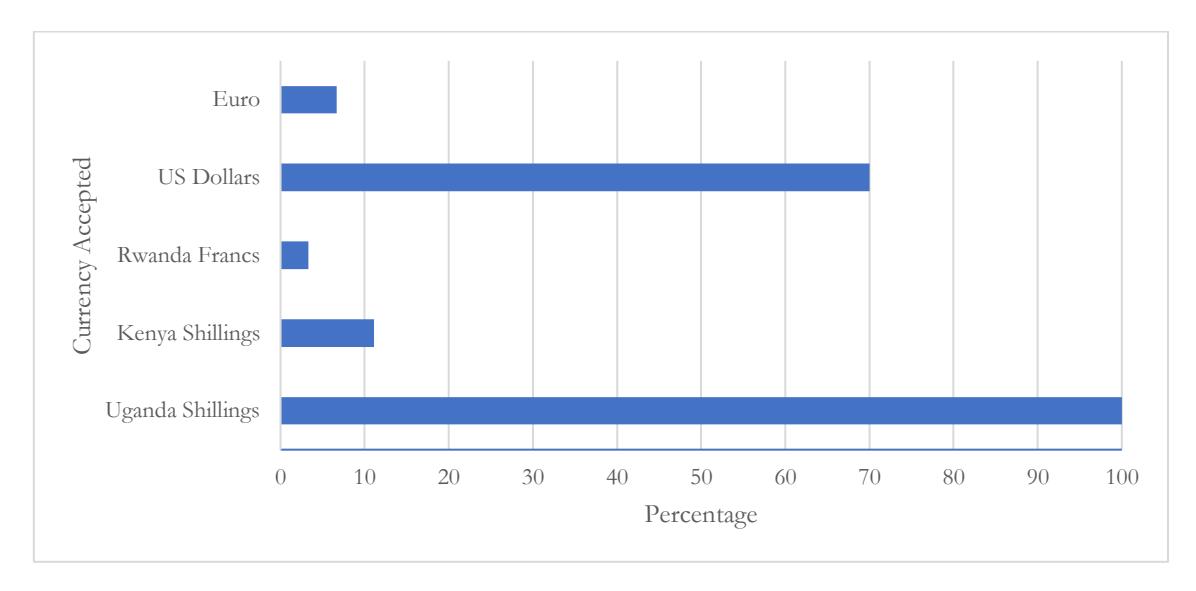
Figure 2. Currencies Accepted by HTSFE
Number of employees, food safety trainings and medical examinations
Only 66.7% of the establishments had conducted food safety trainings for their staff and different areas were covered; 56.7% of the establishments trained employees in personal hygiene, 63.3% in food hygiene, 36.7% in environmental hygiene, 3.3% in Hazard Analysis Critical Control Points (HACCP) and 3.3% in cold chain management. Only 33.3% of HTSFE conducted food safety trainings once in 6 months and less whereas 16.7% twice a year, 13.3% once a year and 3.3% once in 2 years. Additionally, majority (83.3%) of HTSFE had conducted routine medical examinations of the employees and 16.7% conducted it twice a year, 60% once a year and 3.3% once in two years. Majority (80%) had conducted laboratory medical tests and only 26.7% had conducted physical medical examinations.
Management structure, food safety manager and food safety management system
All (100%) of the HTSFE had a management structure with different levels of complexities, however none (0%) of them had a food safety manager. Additionally, only 3.3% had HACCP as a food safety management system.
Sources of foodstuffs and water, dishes prepared and food warming equipment
The findings of this study indicated that HTSFE got foodstuffs from a mixture of sources; certified suppliers (40%), uncertified suppliers (23.3%) and common open markets (70%). Majority (76.7%) of the HTSFE used water from National Water and Sewerage Corporation (NWSC) (Figure 3). The findings further indicated that (90%) of HTSFE prepared local dishes, (66.7%) prepared international dishes, (76.7%) prepared fast foods and (76.7%) prepared roasted foods. Only 70% of the establishments had food warming equipment.
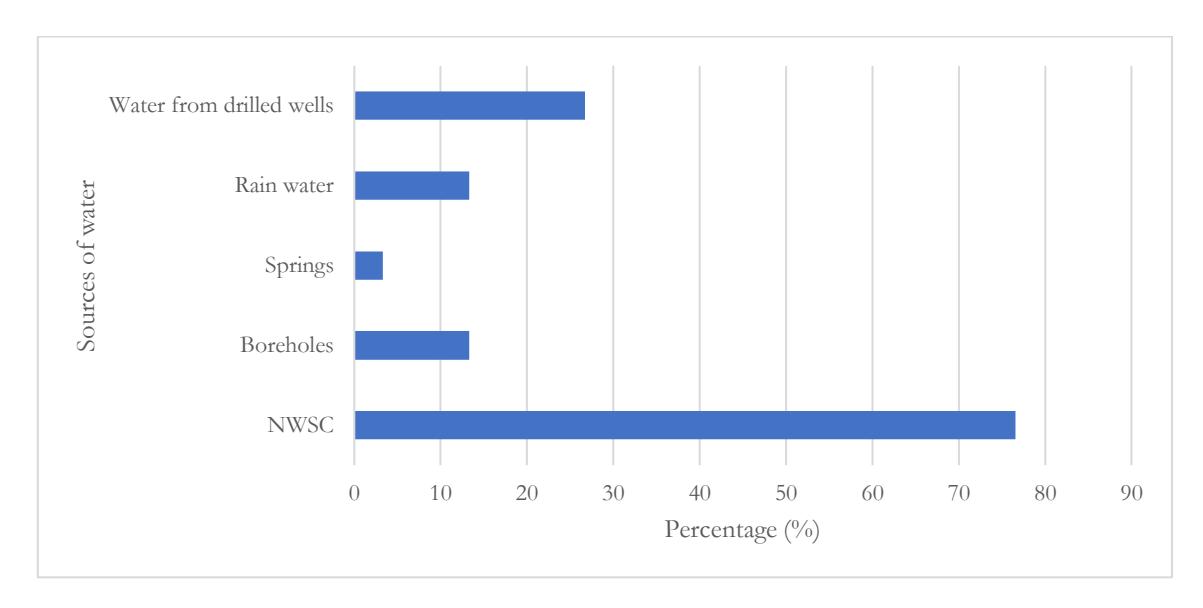
Figure 3. Currencies Accepted by HTSFE
Hand washing, food washing, utensil washing facilities, labelling and food storage facilities
Majority (96.7%) of HTSFE had hand washing facilities, whereas, only 70% had food washing facilities. Additionally, only 70% had equipment for washing utensils. Only 23.3% of the establishments had labelled sinks. Majority (90%) of the establishments had food storage facilities and were distributed as follows; refrigerators (86.7%), freezers (80%), dry food stores (56.7%), cold rooms (30%) and 63.3% had separate stores for food and chemicals
Changing rooms, kitchen lighting, pest control measures, waste disposal facilities and toilets
Majority (76.7%) of the establishments had changing rooms for employees and only 70% had separate changing rooms for men and women. Additionally, majority (90%) of HTSFE had proper kitchen lighting and 73.3% had pest control measures. Most (96.7%) of the HTSFE had waste disposal facilities. Most (80%) of the establishments had clean toilets with soap and water.
5.2. Letter-grading of HTSFE
Figure 4 shows the letter grading of the HTSFE. None of the establishments belonged to grade A while an almost equal proportion belonged to either grade B, C or was ungraded. The letter-grading was done based on the compliance scores of the food safety indicators by each establishment in the study (Figure 5). Thirty food safety indicators were considered in this study (Figure 6).
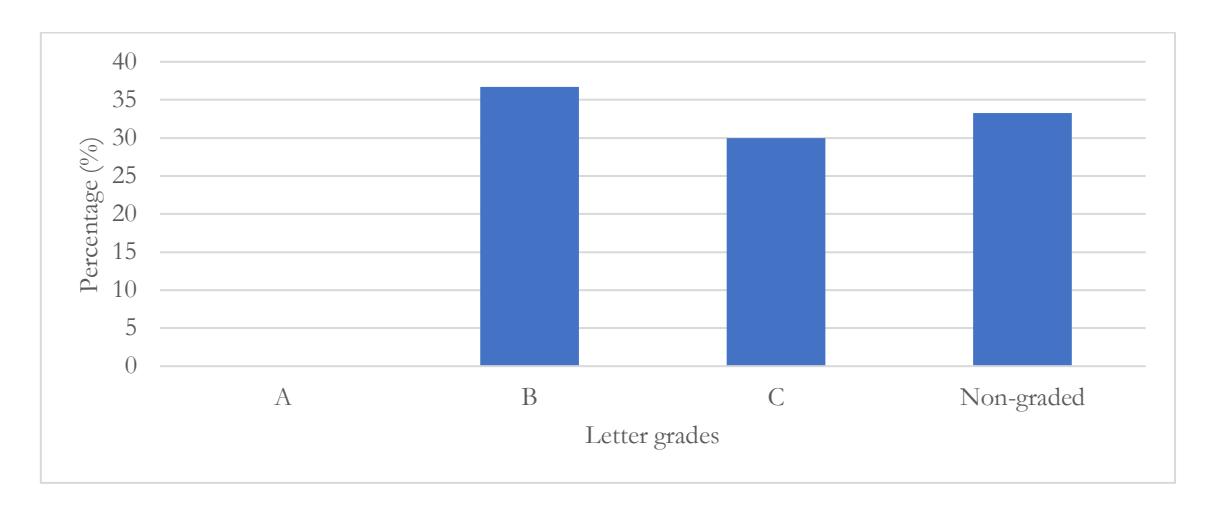
Figure 4. Letter grades of HTSFE
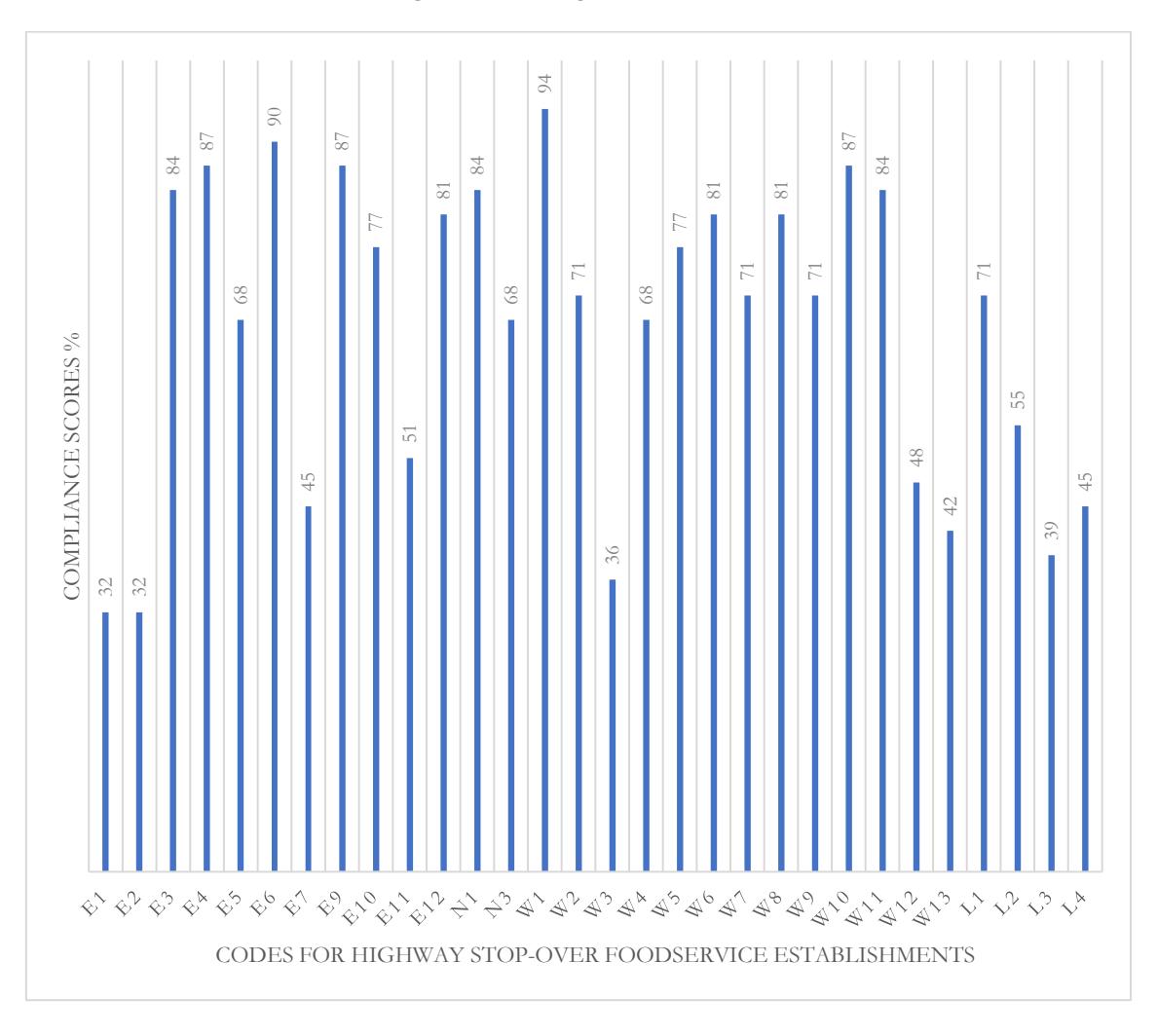
Figure 5. Food safety indicators compliance scores of HTSFE
Key: > 99.4% (Grade "A"), 80.4%-99.3% (Grade "B"), 55.1%-80.3% (Grade "C") and below 55.1% (Non- classified).
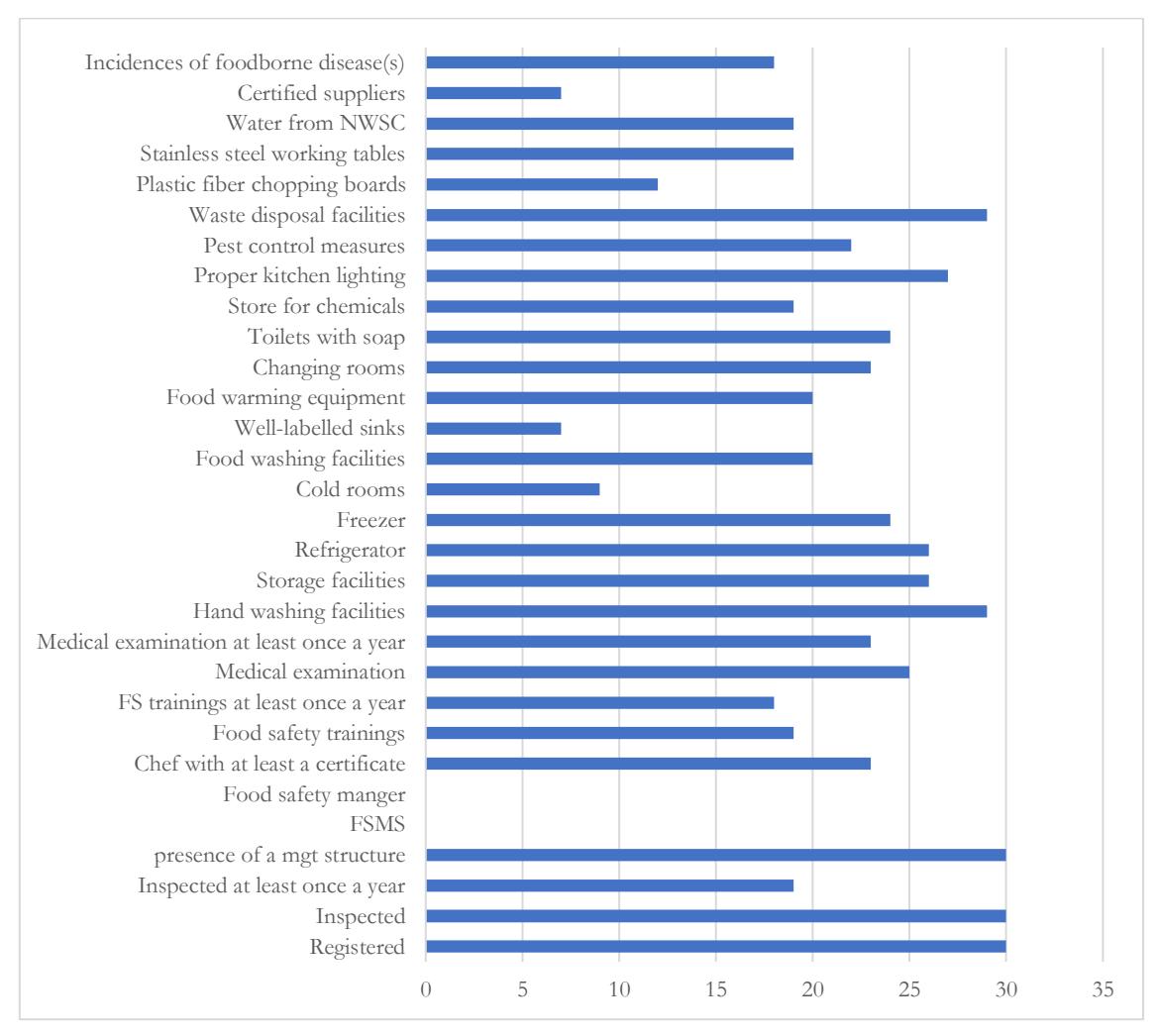
Figure 6. Food safety indicators and compliance in terms of numbers of HTSFE
5. Discussion
The present study was undertaken to investigate characteristics of highway tourist stop-over foodservice establishments in Uganda, document their profiles and grade them based on food safety indicator compliance scores. The findings indicated that majority of HTSFE were located in western, southern and eastern Uganda. This could be explained by the fact that most of the national parks are located in the above mentioned regions (UWA, 2020). This implies that tourists can easily access foods and beverages on their way to and from the tourist destinations. The findings further indicate that majority of the establishments had operated for more than 10 years. The long period of operation should perhaps equip the food handlers in the establishments with enough experience for hygienic food handling practices hence food safety. Similar studies have showed that work experience is significantly associated with food safety knowledge and hygienic food handling practices (Alemayehu et al., 2021, Tuncer and Akoglu, 2020, Baser et al., 2017).
A considerable number of HTSFE were part of bigger establishments (hotels). These were expected to practice high standards of food hygiene and food safety probably because of the need for maintenance of high standards of the bigger establishment. Others were stand alone and highway grills. Critical food safety violations differ depending on the status of the food establishment. The status of the foodservice establishments has an impact on food safety standards as shown in several study findings (Osalai et al.,2013 and Murphy et al., 2011) where it was established that independent foodservice facilities present increased risks of foodborne diseases. In terms of numbers, the study findings were different from the work done by Gase et al. (2019) where 62.2% of the restaurant were independent or standalone foodservice establishments.
The HTSFE literally use all modes of transaction from cash to cashless transactions but results revealed that all the establishments generally accepted cash transactions. The paper money used can be a vehicle for transmission of pathogenic micro-organisms responsible for foodborne diseases like E. coli, Salmonella. This mainly happens when money is handled and the hands are not washed afterwards. In addition, there is a high likelihood of paper money in supporting the transmission of Corona virus responsible for COVID-19. All establishments transacted using Uganda shillings with most of them accepting US dollars as well.
Majority of the HTSFE had a written menu. The written menu assists consumers (tourists) to make informed choices of establishments preparing foods with minimal risk of food-borne diseases. In contrast, however, the written menus can be a source of contamination if not well routinely cleaned. This is supported by the findings by Choi et al. (2014) where it was established that the menus particularly the most touched parts were highly contaminated and further asserted that the menus distributed by service staff when guests are already seated are cleaner than those kept on the table.
It was established that all HTSFE were either inspected by the local or city authorities in addition to UTB, however, the inspection was not consistent. Frequent inspections may perhaps help ensure operator compliance hence improving food safety within the HTSFE. Consistent inspection of foodservice establishments promotes compliance to food safety standards and regulations and in the process protect the consumers from any food-borne diseases. FAO (2016) recommends inspection of FSE at least once in six months. This is in agreement with the study findings by Lunden et al. (2021) where it was established that the consistency of inspection helps in ensuring food safety and the inconsistency undermines the willingness of the food service operators to comply to food safety regulations.
Most HTSFE were obtaining their water from National Water and Sewerage Corporation (NWSC). Using water from a national supplier ensures more quality water as opposed to other sources like wells, springs and boreholes. The findings are in contrast to what was established by Onyeneho and Hedberg (2013) in Nigeria where most foodservice establishments obtained water from private boreholes (59% from private boreholes and 41% from city water supplies).
All HTSFE had organizational structures of different magnitudes and complexities. Organizational structures with a clear hierarchy are paramount in successful running of commercial foodservice establishments. Proper management structures promote consistent supervision and implementation of hygienic food handling practices during storage, preparation and service consequently promoting food safety. This is consistent with the study findings by Dacunha (2021), Kamar (2018) in Egypt and Lee et al. (2013) where the findings indicated that proper organizational structures promote food safety leadership.
The results indicated that none of the HTSFE had a food safety management system like HACCP. With all HTSFE not having any food safety management system (FSMS), it puts consumers at risk of consuming unsafe foods. Implementation of a food safety management system like HACCP significantly reduces on possibilities of food contamination since it focusses on prevention, reduction of food safety hazards and sometimes complete elimination. This is in agreement with a study conducted by Shiz (2017) where the findings indicated that implementation of HACCP in the hotel catering industry greatly reduced on microbial load of foods. Similarly, in a study by Shehbaz (2016), it was established that foodservice establishments that implemented HACCP had a higher level of food safety and hygienic practices.
The education level of the food handlers particularly the head chef, the assistant chef, store manager and service staff revealed that most of them had a certificate in catering and above. Similary, in a study by Ongeneho and Hedberg (2013), it was established that all food handlers had undertaken a catering course. A good level of education would perhaps imply that they are well equipped with adequate food safety knowledge and the dangers of contaminated foods. Additionally, they would be in a better position to exercise hygienic food handling practices hence safe food for the consumers. This is in agreement with other studies by Huynh (2022), WHO (2020), Ababio, Adi & Commey (2012) and Ackah et al. (2011) where it was established that the level of education has a direct positive impact on good hygiene practices and food safety compliance.
Majority of the HTSFE conducted food safety trainings though with no constant regularity. In a similar study in Brazil by Madeiros, Cavalli and Proenca (2021), only 73.3% of the restaurants conducted employee training. Food safety trainings of food handlers equip them with more food safety knowledge that would probably influence their attitude and practices with regards to hygienic food handling. Proper and regular trainings are necessary in every foodservice establishment without which it would jeopardise the food safety efforts. Additionally, training gives a deeper understanding of the importance of maintaining good hygiene practices. This concurs with the findings of the studies conducted by Azanaw, Gebrehiwot & Dagne (2019), Habiballah et al. (2018), Aluko et al. (2014) and McIntyre et al. (2013) where it was established that training improves the food safety knowledge of food handlers colloquially improving on safe food handling practices.
Most HTSFE were conducting medical check-ups of their workers though not consistently neither focusing on specific food related diseases. Routine medical check-ups are important in ensuring food safety. With routine medical check-ups, the food handlers with diseases that can be transmitted through food can be advised to stay away from work, get treatment and only return to work when they have fully recovered. This would limit on the transmission of diseases to consumers from the food handlers. This is confirmed by study findings by Huynh (2022) where he emphasized that medical examination helps to detect and treat carriers of harmful pathogens amongst food handlers in order to reduce the risk of food contamination and consequently protecting consumers
The findings revealed that most of HTSFE had facilities (sinks) for hand washing, washing food and utensils. Unfortunately, they were not labelled with respect to their intended purpose. The absence of well labelled facilities cannot be under estimated because it can be a source of cross-contamination. Independent hand washing facilities provided with liquid soap in a dispenser and disposable towels or hot air hand dryers are paramount in ensuring food safety. They assist food handlers in ensuring proper hand hygiene and reduction of cross-contamination. This is in agreement with the work done by (Muyanja et al. 2011; Kitagwa ,2012) where the findings revealed that there is need for proper, convenient hand washing facilities because hands are potent vehicles for transmission of disease causing microorganisms like E.coli, Salmonella, Staphylococcus aureus, Campylobacter. Additionally, Samapudo (2016) established that without convenient facilities for handwashing, it becomes hard to implement food hand hygiene practices.
Most HTSFE had at least a refrigerator with very few having a freezer neither a cold room. Possession of well-functioning storage facilities like refrigerators, freezers and cold rooms would be vital in ensuring food safety. Cold storage facilities help in reducing on the microbial multiplication and activity hence preserving and protecting the food, however, this can only be achieved by maintaining these facilities at optimum operational temperatures. Failure to know the right operational temperature can easily jeopardise the food safety efforts. A case in point is a study conducted by Onyeneho and Hedberg (2013) in Nigeria where it was established that 35% of the managers lacked
knowledge of ideal refrigerator temperature and 6% could not adjust its temperature yet 90% of the facilities had at least a refrigerator.
It was established that most of the HTSFE got their food supplies from all kinds of sources including common public food markets and un certified suppliers with very few getting their supplies from certified suppliers. Getting foodstuffs from open markets and un-certified suppliers does not guarantee quality and food safety. Similar findings were established by Onyeneho and Hedberg (2013) in Nigeria where most the foodservice establishments obtained their foodstuffs from the open markets and non-certified suppliers. Certified suppliers are more committed to food safety standards in terms of quality of their products. This is confirmed by Huynh et al. (2022) where he established that certified suppliers help in ensuring that the foods supplied are safe with no prohibited additives or restricted substances, not expired and meat that is inspected by relevant authorities.
The results further indicated that none of the highway tourist stop-over foodservice establishments belonged to Grade "A", with considerable proportional numbers belonging to grade B, grade C and non-graded. The grade of the HTSFE is an indicator of the cleanliness of the establishment and presumably represents safety of food in the respective establishment. The study findings clearly indicate the grades of the highway tourist stop-over foodservice establishments in Uganda. The nonexistence of any HTSFE belonging to the "A" grade is a clear indication of violations of food safety compliance in all the restaurants to some degree in this study. Letter-grading of restaurants has been universally used in most developed countries with a lot of success in improving food safety and reduction in incidences of foodborne diseases. This is in agreement with the study findings by Wong et al. (2014) conducted in New York City, where it was established that inspection score and violation citations tremendously reduced upon letter-grading of the restaurants. In the same city, posting of restaurant inspection results as letter grades led to a decline in salmonella infections (Firestone and Hedberg, 2018). In a similar study in Singapore by Aik et al. (2018), the findings indicated that letter grading information disclosure system influenced restaurant choice and improved on hygiene standards of the restaurants and in the process ensuring food safety and majority (64.5%) of the respondents referred to letter-grade for choice of a restaurant. Furthermore, the study findings by Fleetwood (2019) and McKelvey et al. (2015) indicated that letter-grading and disclosure of restaurants induced restaurants to improve their compliance to food safety standards hence reduction in foodborne diseases and influences informed consumer choice.
Therefore, grading of highway tourist stop-over foodservice establishments in Uganda will contribute to promoting good food safety standards and creating a platform for informed choice of restaurants by tourists. Additionally, the findings revealed a high number (33.6%) number of HTSFE that could not be graded because of high level of non-compliance scores. This clearly indicates the high risk of exposure of clients to unsafe food, however, it can also be used by individual restaurants as an incentive to improve their level hygiene standards in order to be graded.
6. Conclusion
The performance of HTSFE on key food safety indicators was moderately good, however, most fell short on certain aspects like lack of a FSMS like HACCP, poor labelling of washing facilities, absence of a food safety manager and non-routine medical check-ups yet these are key factors in ensuring food safety. As a result, none of the HTSFE belonged to class "A" category. The findings of the study highlight the need for mandatory implementation of HACCP to strengthen the operations of HTSFE, regular trainings, routine medical examinations, scheduled inspections and public disclosure of inspection results and grades. Further studies should establish the knowledge, attitudes and practices of food handlers in HTSFE as well as the quality of foods and beverages served.
References
- Ababio, P. F., Adi, D. D., & Commey, V. (2012). Food safety management systems, availability and maintenance among food industries in Ghana. Food Science and Technology, 14, 62-74.
- Ackah, M., Gyamfi, E. T., Anim, A. K., Osei, J., Hansen, J. K., & Agyeman, O. (2011). Economic profile, knowledge of hygiene and food safety practices among street food vendors in some parts of Accra- Ghana. Internet Journal of Food Safety, 13, 191-197.
- Adinegara, G. N. J., Suprapti, N. W. S., yasa, N. N. K and Sukaatmadji, P. G. (2017). Factors that influence tourits' satisfaction and its consequences. European Journal of Business and Management, 9(8), 39-50.
- Afolabi, I. B., Aremu, A. M. B., Abaku, A., Yaharg, S. S., Aliyu, A. L., Ango, B. M., Yusuf, A., & Atulomah, N. O. (2021). Low level of food handling practices among food handlers in selected restaurants in Ggaba Kampala, Makindye division Uganda. An implication for safety training and regulation. International Journal of Advanced Research, 9(8), 929-939.
- Alemayehu, T., Aderaw, Z., Giza, M., and Diress, G. (2021). Food safety knowledge, handling practices and associated factors among food handlers working in food establishments in Debre Marcos Town, Northwest Ethiopia. Risk management Health Care Policy, 14, 1155-1163.
- Aluko, O. O., Ojeremi, T. T., Olaleke, D. A., Ajidagba, E. B. (2014). Evaluation of food safety and sanitary practices among food vendors at car parks in Ile Ife, south- western Nigeria. Food Control, 40, 165–71.
- Amoako, G. K., Neequaye, E. K., Kutu-Adu, S. G., Caesar, L. D., & Ofori, K. S. (2019). Relationship marketing and customer satisfaction in the Ghanaian hospitality industry: an empirical examination of trust and commitment. Journal of Hospitality and Tourism Insights, 2 (4), 326-340.
- Anderson, T. D., Mossberg, L and Therkelsen, A. (2017). Food and tourism synergies: perspectives on consumption, production and destination development. Scandinavian Journal of Hospitality and Tourism, 17(1), 1-8.
- Aik, J., Newall, A.T., Ng, L., Kirk, M.D & Heywood, A. E. (2018). Use of the Letter-based grading information disclosure system and its influence on dining establishment choice in Singapore: A cross-sectional study. Food Control, 90, 105-112.
- Azanaw, J., Gebrehiwot, M., and Dagne, H. (2019). Factors associated with food safety practices amongst food handlers: facility based cross-sectional study. BMC Research notes; 12, 683.
- Bai, L., Wang, M., Yang, Y & Gong, S. (2019). Food safety in restaurants: The consumer perspective. International Journal of Hospitality Management. 77, 139-146.
- Baluka, S. A., Miller, R., & Kaneene, J.B. (2015). Hygiene practices and food contamination in managed food service establishments in Uganda. African Journal of Food Science, 9(1), 31-42.
- Baser, F., Ture, H., Abubakirova, A., Sanilier, N and Cil, B. (2017). Structural modelling in the relationship among food safety knowledge, attitude and behavior of hotel staff in Turkey. Food Control, 73, 438-444.
- Bulsunukul, P., Binkley, M and Sukalakamala, P. (2011). Understanding tourists' patronage of Thailand foodservice establishments. An exploratory decisional attribute approach. British Food Journal, 113(8), 965-981.
- Bhattacharya, A., Shantikumar, S., Beaufoy, D., Allman, A., Fenelon, D., Reynolds, K., Normington, A., Afza, M., & Todkill, D. (2020). Outbreak of Clostridium perfringens food poisoning linked to leeks in cheese sauce: An unusual source. Epidemiology and Infection, 148(43), 1–7.
- Bhutani, S., Schoeller, D. A., Walsh, M. C and McWilliams, M. S. (2018). Frequency of eating out at both fast-food and sit-down restaurants was associated with high Body mass index in nonlarge metropolitan communities in midwest. American Journal of health promotion, 32 (1), 75-83.
- Carpio, N. M., Napod, W., Do, H. W. (2021). Gastronomy as a factor of tourits' overall experience: A study of Jeonju, South Korea. International Hospitality Review, 35 (1), 70-79.
- Centers for Disease Control and Prevention (2019). "Foodborne illness outbreaks at retail establishments National Environmental Assessment Reporting System, 16 state and local health departments, 2014–2016," 2019.
- Choi, J., Almanza, B., Nelson, D, Neal, J., and Sirsat, S. (2014). A strategic cleaning assessment program. The Journal of Environmental Health, 76(10), 18-25.
- Choi, H. C., MacLaurin, T., Cho, J. E., & Hahm, S. P. (2010). Food hygiene standard satisfaction of Singaporean diners. Journal of Foodservice Business Research, 13(3), 156–177.
- Cusato, S; Gameiro, A. H., Corassin, C.H.,Sant'Ana, A. S., Cruz, A. G & Faria, J. (2012). Food safety systems in a small dairy factory: Implementation, major challenges and assessment of system's performances. Foodborne disease pathogens and disease, 10 (1), 6-12.
- Da Cunha, D. T. (2021). Improving food safety practices in the food industry. Current Opinion in Food Science; 42, 127-133.
- Da Cunha, D, T., De Freitas Saccol, A.L., Tondo, E. C., De Oliveira, A. B. A; Ginani, V. C., Araujo, C. V., Lima T. A., De Castro, A. K. F., & Stedefeldt, E. (2016). Inspection score and grading system for food service in Brasil: The results of a food safety strategy to reduce the risk of foodborne diseases during the 2014 World cup. Frontiers of Microbiology, 7, 614-624.
- Djekic, I., Kuzmanovic, J., Andelkovic, A., Saracevic, M., Stojanovic, M. M & Tomasevic, I. (2016). Effects of HACCP on process hygiene in different types of Serbian food restaurants. Food Control, 60(6), 131-137.
- Dzeagu-Kudjodji, J., Adjibolosoo, S & Otoo-Arthur, D. (2019). "Promoting indigenous dishes in luxurious hotels in the hospitality industry: the case of three selected hotels in the Accra metropolis of greater Accra region," European Journal of Research and Reflection in Management Sciences, 7(4), 1-28.
- European Center for Disease Prevention and Control (2020). Salmonella the Most Common Cause of Foodborne Outbreaks in the European Union. 2020. Retrieved from https: //www.ecdc.europa.eu/en/news-events/salmonella-most-common-cause-foodborneoutbreaks-european-union (accessed on 10 December 2023).
- FAO (2021). Measuring food safety indicators to achieve sustainable development goals (SDGs). Food safety technical toolkit for Asia and the Pacific No.9. Bangkok.Bangkok 2021.
- Firestone, M., and Hedberg, C. (2018). Restaurant inspection letter grades and Salmonella infections, New York, USA. Journal of Emerging Infectious Diseases, 24, 2164-2168.
- Fleetwood, J. (2019). Scores on doors: Restaurant hygiene ratings and public health policy. Journal of Public Health Policy, 40 (4), 410-422.
Gase, L. N., Green, G., Montes, C and Kuo, T. (2019). Undestanding the density and distribution of restaurants in Los Angels county to inform the local public health practice. Preventing Chronic disease, 16, 1-9.
- Gould, L. H., Rosenblum, I., Nicholas, D., Phan, Q., & Jones, T. F. (2013). Contributing factors in restaurant-associated foodborne disease outbreaks, Food Net sites. Journal of Food Protection, 76(11), 1824–1828.
- Gormley, F. J., Rawal, N., and Little, C. L. (2011). Choose your menu wisely: Cuisine-associated food poisoning risks in restaurants in England and Wales. Epidemiology Infectious; 140, 997-1007.
- Habiballah, M. A., Al-Shakhsheer, F. J., Al-Sabi, S. M and Masadeh, M. A. (2018). Food safety training: A study of food handlers working in hotels in the North of Jordan. European Scientific Journal, 14(26), 1857- 7881.
- Henson, S., Majowicz, S., Masakure, O., Sockett, P., Jones, A., Hart, R., Carr, D., & and Knowles, L. (2006). Consumer assessment of the safety of restaurants: the role of inspection notices and other information cues. Journal of Food Safety, 26(4), 275–301.
- Ho, D. E. (2013). Fudging the Nudge: Information disclosure and restaurant grading. The Yale Law Journal, 122, 574-688.
- Huynh-Van, B., Vuong-Thao, V., Huynh-Thi-Thanh, T., Dang-Xuan, S., Huynh-Van, T., Tran-To, L., Nguyen-Thi-Thao., Huynh-Bach, C., and Nguyen-Viet, H. (2022). Factors associated with food safety compliance among street food vendors in Can Tho city, Vietnam: implications for intervention activity design and implementation. BMC Public Health, 22(94), 1-11.
- Kamar, M. A. (2018). Behind the closed doors: Performance assessment of food safety management systems in five-star hotels in Egypt. International Journal of Heritage and Hospitality; 12(2), 216- 240.
- Kitagwa WG, Bekker J, Onyango R. (2012). An assessment of knowledge, attitudes and practices of food handlers in food kiosks in relation to food hygiene in Eldoret, Kenya. International Journal of Current Research, 4(4), 127–38.
- Kumar, S and Sharma, S. (2021). Destination image of Himacal Pradesh: Foreign tourist perception. Asean Journal on Hospitality and Tourism, 19(2), 112-124.
- Kumar, D., Zulkifli, N and Ray, N. (2023). Identifying critical factors in sustainable tourism and community development: Evidence from selected restaurants in Bangladesh. Asean Journal on Hospitality and Tourism, 21(1), 124-135.
- Illes, C.B., Dunay, A., Serrem, C., Atubukha, B., & Serrem, K. (2021). Food safety and sanitation implementation impasse on adolescents in kenya High Schools. International journal of Environmental Research and Public Health, 18(3), 1304-1323.
- Lee, L. E., Niode, O., Simone, A. H and Bruhn, C. M. (2012). Consumer perceptions on food safety in Asian and Mexican Restaurants. Food Control, 26(2), 531-538.
- Lee, J., Almanza, B, A., Jang, S., Nelson, D. C., and Ghiselli, R. F. (2013). Does transformational leadership style influence employees' attitudes towards food safety practices. International Journal of Hospitality Management, 33, 282-293.
- Lunden, J., Kosola, M., Kiuru, J., Kaskela, J., & Inkinen, T. (2021). Disclosed restaurant inspection results on food safety show regional and local differences in Finland. Food Control, 119 (11), 250-257.
- Macheka, I., Manditsera, F, A., Ngadze, R. T., Mubaiwa, J., & Nyanga, L. K. (2013). Barriers, benefits and motivation factors for implementation of food safety management system in the food sector in Harare province, Zimbabwe. Food Control, 34(1), 126-131.
- Madeiros, C.O., Cavalli, S. B., and Proenca, R.P.D. (2021). Human resources administrational process in commercial restaurants and food safety: The actions of administrators. International Journal of Hospitality Management; 31(3), 667-674.
- Makwanda, P. N., & Woyo, E. (2014). Food safety violations by food handlers in the food industry in Zimbabwe. American Journal of Nutrition and Food Science, 1(2), 25-31.
- Manhas, P. S., Sharma, P and Sarangal, R. (2021). Assessing the impact of innovative practices on customer experience, satisfaction and loyalty: A study of quick-service restaurants in Northern India. Asean Journal on Hospitality and Tourism, 20(22), 83-89.
- McKelvey, W., Wong, M. R & Matis, B. (2015). Letter-grading and transparency promote restaurant food safety in New York city. Journal of Environmental Health, 78(2), 46-49.
- Meltzer, R., Rothbart, M. w., Schwartz, A. E., Calabrese, T., Silver, D., Mijanorich, T and Weinstein, M. (2019). What are the financial implications of public quality disclosure? Evidence from Newyork city's restaurant food safety grading. Public Finance Review, 47(1), 170-201.
- Mora, D., Solano-Sanchez, M. A., Lopez-Guzman, T and Moral-Cuadra, S. (2021). Gastronomic experience as a key element in the development of a tourist destination, 25. DOI: 10.1016/j.ijgfs.2021.100405.
- Musomera, E. (2019). Merger of Burger King and Tim Hortons: Analysis of marketing strategies in quick-service restaurants. International Journal of Strategic Business Alliances, 6(4), 267-283.
- Murphy, K. S., Dipieto, R. B., Kock, G., and Lee, J. S. (2011). Does mandatory food safety training and certification for restaurant employees improve inspection outcomes. International Journal of Hospitality Management, 30(3), 150-156.
- Muyanja, C., Nayiga, L., Namugumya, B., & Nasiyama, G. (2011). Practices, knowledge and risk factors of street vendors in Uganda. Food Control, 22(10), 1551-1558.
- Nartey, E., Owusu, J., Gamor, E., & Mensah, E. E. (2017). Assessment of Knowledge and Practices of Food Hygiene and Safety of Caterers in Senior High Schools in Ghana: A Case Study of Two Senior High Schools in Koforidua. ADRRI Journal of Agriculture and Food Sciences, 3(3), 1- 18.
- Ncama, B. P., Kuupiel, D., Duma, S.E., Mchumu, G., Guga, P., & Slotow, R. (2021). Scoping review of food safety at transport stations in Africa. BMJ, 11(11), 3455- 3462.
- Ncube, F., kanda, A., Chijokwe, M., Mabaya, G., & Nyamugure, T. (2019). Food safety knowledge, attitudes and practices of restaurant food handlers in a lower middle income country. Journal of Food Science & Nutrition, 8(3), 1677-1687.
- Odinga, P., Manyara, G and Atieno, L. (2018). Visitor satisfaction as key to sustainable linkages in Rwanda's tourism value chains. An International Multidisciplinary Journal of Tourism, 13(2), 62-86.
- Onyeneho, S. N., and Hedberg, C. W. (2013). An assessment of food safety needs of restaurants in Owerri, Imo state, Nigeria. International Journal of Environmental Research and Public Health, 10, 3296-3309.
- Osail, T. M., Jamous, D. O. A., Obeidat, B. A., Bawadi, H. A., Tayyem, R. F., and Subih, H. S. (2013). Food safety knowledge among food workers in restaurants in Jordan. Food Control; 31(1), 145- 150.
Polat, E and Ozdemir, S. S. (2021). Food and beverage experience in tourism in the context of experience economy. Journal of Gastronomy Hospitality and Travel. 4(2), 409-420.
- Rodrigues, P., Borges, A.P. and Vieira, E. (2023). Gastronomic experiences on tourists' life satisfaction and happiness: The case of Porto. European Journal of Tourism Research, 34, 3412. DOI: 10.54055/ejtr.v34i.3034.
- Samapundo S., Cam, T. T. N., Xhaferi, R., Devlieghere, F. (2016). Food safety knowledge, attitudes and practices of street food vendors and consumers in Ho Chi Minh city, Vietnam. Food Control, 70, 79–89.
- Seguin, R. A; Aggarwal, A; Vermeylen, F; Drewnowski, A. (2016). Consumption Frequency of Foods Away from Home Linked with Higher Body Mass Index and Lower Fruit and Vegetable Intake among Adults: A Cross-Sectional Study. J. Environ. Public Health, DOI: 10.1155/2016/3074241.
- Serem, K., Illes, C. B., Serem, C., Atubukha, B., & Dunay, A. (2021). Food safety and sanitation challenges of public university students in a developing country. Journal of Food Science & Nutrition, 9(8), 4287- 4297.
- Sha, Y., Song, X., Zhan, J., Lu, L, Zhang, Q and Lu, Y. (2020). Regional character, restaurant size and food safety risk: Evidence from food safety variation data in Gansu province, China. Journal of Food Protection, 83, 677-685.
- Seguin, R. A; Aggarwal, A; Vermeylen, F; Drewnowski, A. (2016). Consumption Frequency of Foods Away from Home Linked with Higher Body Mass Index and Lower Fruit and Vegetable Intake among Adults: A Cross-Sectional Study. J. Environ. Public Health. DOI: 10.1155/2016/3074241.
- Shebhaz, M. (2016). Evaluation of current food safety practices at various food service establishments in Lahore. Journal of Food Processing and Technology, 7(3), 559-567.
- Shiz, Z. (2017). Study on food quality and safety management based on hotel management. Food technology, 21(2), 91-96.
- Tezzo, X; Aung, H. M; Belton, B; Oosterveer, P; Bush, S. R. (2021). Consumption practices in transition rural-urban migration and food fish system in Maynmar. Geoforum, 127, 33-45.
- Tsai, C and Wang, Y. (2017). Experietial value in branding food tourism. Journal of Destination Marketing and Management. 6 (1), 56-65.
- Tunker, T., and Akoglu, A. (2020). Food safety knowledge of food handlers working in hotel kitchens in Turkey. Food and Health, 6(2), 77-89.
- UNWTO (2020). World Tourism Organization, Compendium of Tourism Statistics dataset UNWTO. Madrid.
- Waters, A. B., Vanderslice, J., Porucznik, C., Kim, J., Delegge, R & Durant, L. (2013). Impact of Internet posting of restaurant inspection scores on critical violations. Journal of Environmental Health, 75(10), 8-12.
- Wong, M. R., McKelvey, W., Ito, K., Schiff, C., Jacobson, J. B and Kass, D. (2015). Impact of letter grading program on restaurant sanitary conditions and diner behaviour in New York city. American Journal of Public Health, 105(3), 81-87.
- World Health Organization (2020). WHO estimates of the global burden of foodborne diseases: Foodborne diseases burden epidemiology reference group 2007-2015. Retrieved on January 2, 2023 from https://apps.who.int/iris/bitstream/handle/10665/199350/9789241565165
- World Bank (2022). Food Safety in Africa: Past Endeavors and Future Directions. Washington. DC: World Bank. © World Bank. https://openknowledge.worldbank.org/handle/10986/37438 License: CC BY 3.0 IGO.
- Yasami, M., Promsivapallop, P., & Kannaovakun, P. (2021). Food image and loyalty intentions: Chinese tourists' destination food satisfaction. Journal of China Tourism Research, 7(4), 592-612.
- Zang, J.; Luo, B.; Wang, Y.; Zhu, Z.; Wang, Z.; He, X.; Wang, W.; Guo, Y.; Chen, X.; Wang, C.; Guo, C.; Zou, S.; Jia, X.; Wu, F. (2018). Eating Out-of-Home in Adult Residents in Shanghai and the Nutritional Differences among Dining Places. Nutrients, 10(7), 951. DOI: 10.3390/nu10070951.