

1. Introduction
In December 2019, the city of Wuhan in China reported an unknown virus infection (WHO, 2020a), causing several deaths. Then, on 30 January 2020, the World Health Organization (WHO) declared this unknown virus an international health emergency (WHO, 2020a). Later, on 11 February, this unknown virus was named Covid-19 (a novel discovered virus that belongs to the Coronavirus family) by the WHO. Table 1 provides a glimpse of the series of events related to Covid-19. Due to this Covid-19 outbreak, countries worldwide have started sealing their borders and restricting air and other modes of travel to avoid spreading the virus. A recent report published by the United Nations World Tourism Organization (UNWTO) stated that the tourism sector had been the worst affected sector due to the Covid-19 outbreak (UNWTO, 2020a). Almost 188 out of 195 countries are suffering from the Covid-19 outbreak (Aljazeera, 2020), with almost 5.2 million infected people and more than 334 thousand reported deaths (Worldometer, 2020). UNWTO has estimated a fall in international tourists by 21% by the end of Q1 (January to March 2020), which could shrink by 60-80% by the end of the year (UNWTO, 2020b). As reported in Q1, Asia and the Pacific regions are highly affected regions, witnessing a decline of almost 35% (33 million arrivals) compared to other regions like Europe, Africa, etc., which shows an intensive effect of Covid-19 on the tourism sectors across the worlds as displayed in Table 2. Besides China, the European countries were the most affected due to this virus. To overcome the spread of the virus, countries went locked down for a significant duration of time, affecting tourism very severely. Italy was the worst affected country among all EU nations, depending highly on tourism, accounting for almost 13% of the GDP (Barry, 2020).
The countries were in a state of lockdown and started lifting the lockdown in a phase-wise manner for the survival of the economy and tourism sector. Among the EU nations, Italy has announced that it will open tourism activities on 3 June 2020 (Barry, 2020) to support its economy. Further, the country has also lifted the 14 days of compulsory quarantine conditions to attract more tourists. Recently, a few countries are again looked at lockdown as an option to limit the Covid-19 infection, considering the Covid-19 third wave. For example, Latvia (a European country) has reimposed a month-long lockdown because of the country's rising number of Covid-19 cases (Pjotr, 2021). Also, international travelers will be skeptical about traveling, especially in Asia and the Pacific regions, possibly due to the high population density, low medical facilities, and other travel restrictions. Further, many countries from Europe and America have imposed travel restrictions in light of Covid-19 to deal with the covid-19 . It leaves these countries with the option of boosting the tourism activity (domestic tourism) within the country to support the travel and tourism industry. Even though so many developments have been achieved in terms of the number of covid vaccines and the number of vaccinated people, the issue of Covid-19 cannot be entirely neglected. People have a fear of covid-19 infection and they show resistant behavior towards traveling in case of any such event. Hence, the domestic tourism industry has been affected enormously by the outbreak of Covid-19, especially in India. Therefore, this study analyses the impact of the Covid-19 outbreak on domestic travelers' travel intentions.
The Indian travel and tourism sector accounted for 9.2% of the GDP and ranked third amongst the 185 countries globally as per the Indian Equity Brand Foundation (IBEF, 2020). The Indian travel and tourism sector recorded a footfall of 1652.49 million domestic tourists compared to more than 10 million international tourists in 2017 (Ministry of Tourism, 2018), which shows that domestic tourism holds an imperative share in the tourism sector. Hence, boosting domestic tourism will support the tourism sector as well as the economy of the country. The findings will help the government strategic-making agencies, destination marketing organizations, and tourism marketers understand the tourists' behavior concerning the Covid-19. Due to this pandemic, potential travelers have a high-risk perception of Covid-19 while planning a tourism activity. Hence, the study considered the risk perception of Covid-19 as an imperative element of traveling behavior. As of now, no cure or vaccine for Covid-19 has been discovered; hence the preventive measures are most important in shaping travel intention. To the best of my knowledge, no studies have been conducted to boost domestic tourism in the near future, given the Covid-19 outbreak.
The proposed work utilizes Ajzen's Theory of Planned Behavior (TPB) to understand, predict, and explain the potential tourists' behavioral intention to travel in the near future (Ajzen, 1991). However, the TPB has been employed in explaining consumer behavior across various contexts (Quintal et al., 2010; Han et al., 2017; Soliman, 2019); still, scant research has been found about its applicability in the situation of such a crisis, specifically in the domain of tourism. Hence, it is essential to test the theory in such a situation as Covid-19. The study incorporated the risk perception of Covid-19, response efficacy, and anticipated fear as additional factors and extended the original TPB framework. The study also tested the conceptual framework across two groups. The first group involves people with short-distance tourism intentions through private vehicles (self-owned or rented), while the other group is interested in long-distance travel through other modes of transport (flight and train, etc.). The inclusion of these two is a unique contribution to the study. The findings and implications have been discussed.
Table 1. Series of Covid-19 events
| No | Date | Events |
|---|---|---|
| 1 | December 2019 | Unknown virus detected infecting humans causing deaths by the local authorities in |
| Wuhan and Hubei Province of China. | ||
| 2 | 3 January 2020 | China has informed the WHO about new cases of pneumonia-like symptoms. |
| 3 | 10 January 2020 | WHO issued the technical guidelines for the countries. |
| 4 | 22 January 2020 | WHO office in China has confirmed the human-to-human virus transmission. |
| 5 | 24 January 2020 | Countries started imposing travel restrictions to and from China. |
| 6 | 30 January 2020 | WHO declared it a public health emergency of international concern. |
| 7 | 11 February 2020 | WHO given official name covid-19 or SARS-CoV-2. |
| 8 | 11 March 2020 | WHO declared Covid-19 outbreak a pandemic. |
| 9 | 12 March 2020 | WHO confirmed that almost 45 countries have imposed travel restrictions. |
Table 2. International tourist arrival (% change) to 2019
| No | Regions | International tourist arrivals (% change) Q1 |
|---|---|---|
| 1 | Europe | -19 |
| 2 | Asia and the Pacific | -35 |
| 3 | Americas | -15 |
| 4 | Africa | -13 |
| 5 | Middle East | -11 |
2. Literature Review
2.1. Coronaviruses and Covid-19
The novel coronavirus (Covid-19) belongs to the family of coronavirus. The United States Centers for Disease Control and Prevention (CDC) has classified the coronavirus into two categories: first: "Common human coronavirus" and second: "Other human coronavirus". Common human coronavirus consists of two alpha coronaviruses ("229E, NL63") and two beta coronaviruses ("OC43, HKU1"). The other category consists of three viruses out of which two are beta coronavirus ("MERS-CoV, SARS-CoV") and the novel coronavirus Covid-19 ("SARS-CoV-2 or 2019-nCoV") (CDC,2020). These three viruses are transmitted to humans from animals, can evolve, and make people sick. Covid-19 can spread easily from one infected person to another non-infected person (human-to-human transfer). It was first identified in the Hubei province of China in 2019 and has spread rapidly all around the globe (Uras, 2020). The WHO gave the name Covid-19 (SARS-CoV2) on 22nd February 2020. Later, on March 11, WHO declared it a pandemic for the rest of the world (Uras, 2020; WHO, 2020b). Covid-19 has infected more than 5.2 million people and claimed more than 333 thousand deaths around the globe (WHO, 2020c; Worldometer, 2020).
2.2. Pandemics and their Influence on Tourism: A Timeline
In the past, the world has witnessed numerous pandemic outbreaks, such as H1N1, SARS, and MERS, which heavily affected the lives of millions of people. The tourism industry is one of the worst-hit sectors during any pandemic. Humanity has seen a global disaster like the "Spanish flu" in the year 1918. In the past few decades' humankind has also suffered from the coronavirus "severe acute respiratory syndrome" (SARS) identified in the year 2003 (WHO, 2012), which heavily impacted the world's economy (Lee et al., 2012). Further, in 2009, an unknown influenza-like virus was first identified in the United States named H1N1 (Swine flu), which spread rapidly around the globe, causing infections to millions of people (CDC, 2009). Now, in 2019, the Covid-19 outbreak has threatened the world, causing millions of humans to be infected and recorded thousands of deaths worldwide (WHO, 2020a). The Covid-19 get the status of pandemic declared by the WHO and spread to almost 216 countries, areas, or territories having confirmed reported cases (WHO, 2020c).
A Covid-19 infected person shows symptoms like fever, dry cough, and tiredness. In addition to that, several other less common symptoms include "aches and pains, nasal congestion, headache, conjunctivitis, sore throat, diarrhea, loss of taste or smell or a rash on skin or discoloration of fingers or toes headache, sore throat, diarrhea" are reported (WHO, 2020a). Initially, the symptoms are mild and further grow slowly. Covid-19 is spreading from person to person by droplet transmission from the mouth or nose. It can also be possible to get the infection by touching the mouth, eye, and nose after touching any surfaces infected by the virus. Covid-19 has spread in the community more quickly than the SARS and MERS. Even though Covid-19 spreads very quickly the death rate is very low (2.5%) compared to SARS (9.5%) and MERS (34.4%) (Petrosillo et al., 2020).
On the contrary, the influenza H1N1 (Swine flu) identified in 2009 has the lowest fatality rate of 0.02%, infecting almost 762 million people across the globe (Syal, 2020). As of now, the world has developed many vaccines to protect from covid-19 (WHO, 2021) and billions of vaccine doses have been successfully administered (Our World in Data, 2021). However, these vaccines have not proved fully effective against the covid-19 and many people got infected with covid-19, and a few even died (CDC, 2021). Hence, adopting precautionary measures can ensure safety and protect people from getting infected by the virus. The WHO has recommended guidelines of measures such as washing hands with soap frequently or using hand sanitizer, not touching the mouth, eyes, or nose, and maintaining at least a 1-meter distance from another individual (social distancing) (WHO, 2020a).
As with the previous pandemics, Covid-19 has also influenced the travel and tourism sectors of numerous countries. For example, Smith (2012) stated the link between the SARS and travel. The travelers became the carriers of the virus from one place (country) to another, leading to infection among the local people. According to the World Travel and Tourism Council, travel and tourism reported a drop of 41% from 1 April to 21 April 2003 compared to the same period of the year 2002 in the East Asia region. However, Beijing has reported a drop of almost more than 480 thousand in international tourists and more than 8 million domestic tourists, incurring a loss of 1.3 billion US dollars. Likewise, Covid-19 is also not far from other previous pandemics in affecting the travel and tourism sector. The World Tourism Organization has reported a decrease of 55.7% in Q1 ending in March 2020 compared to the same period (UNWTO, 2020c), while India has alone seen a drop of 66% in international tourist arrival in the first quarter of 2020 compared to the previous years. Further, the virus has affected the travel and tourism industry most in the Asia and Pacific regions compared to other regions around the globe. It accounts for a drop of 66% by March 2020. Due to Covid-19, India and other countries worldwide closed their borders to stop spreading the virus from the outside. This led to the suspension of the existing Visa and the cancellation of all international flights, resulting in massive pressure on the economy and tourism sector. Initially, India underwent 60 days of lockdown to reduce the spread of the virus, which further extended for many more weeks. Italy's worst affected country has lifted its most prolonged lockdown globally and announced to open the for-tourism activity to support the countries' economy. In the last few months, India has also started easing restrictions, opening trains and flight travel to move the country's economic wheels. The government of India released an advisory for citizens and other people residing in the country who have to follow the guidelines of the Ministry of Health and ICMR (Indian Council of Medical Research) to travel within the country.
2.3. Theory of Planned Behavior (TPB)
Ajzen (1991) postulated the theory of planned behavior in explaining individual behavior, which is an extension of the theory of reasoned action (TRA). TRA posits that individual behavioral intention is driven by attitudes and subjective norms (Ajzen, 1985). As per TPB, Ajzen (1991) stated that individual behavior is not only driven by attitude and subjective norms but also perceived behavioral control, which is an important determinant of behavioral intention. Ajzen (1991) also stated that the predictive power of the TPB framework is better than that of the TRA model. Gentry and Calantone (2002) conducted a study on the use of shop-bots on the web, and their findings suggested that the TPB model is capable of explaining behavior better than TRA. Past studies also verified the same in multiple contexts of e-commerce adoption (Grandón et al., 2011) and domestic technology adoption (Chen and Huang, 2016). Scholars in the past have adopted the TPB in various contexts to understand consumer intention and behavior. For example, Cheng and Tung (2014) have incorporated TPB to understand consumer intention to visit a green hotel. Various past studies have also implemented TPB as a model to determine and predict individuals' behavioral intentions (Park et al., 2017; Verma and Chandra, 2018; Ahmed et al., 2020; Zhang et al., 2020).
Additionally, many research scholars have extended the original TPB model with context-specific factors and found that the extended TPB framework better predicts behavioral intention. For instance, Verma and Chandra (2018) extended the basic TPB framework with the two variables "Environmental concern" and "Perceived moral obligation" and found that the extended model explains human behavior. Many authors have also applied the extended TPB model in several contexts, such as choosing the destination (Yuzhanin and Fisher, 2016), adopting sustainable tourism (Raab et al., 2018), patronizing food trucks (Shin et al., 2019) and poultry consumption during pandemic (Zhang et al., 2020).
Besides the original TPB variables, the other factors which are more effective might be useful to add to the original TPB model (Conner and Armitage, 1998). In the current context, we assumed that potential tourists would feel the possible threat of Covid-19 infection (pandemic) if they traveled. Hence, the tourist risk perception of Covid-19 is one of the significant elements while they will consider traveling in the future, as this infection is not going anywhere soon. Risk perception varies from person to person and is based on the person's interpretation of risk (Benthin, Slovic, and Severson 1993). In simple words, the risk can be viewed differently by different persons (Sadiq et al., 2019). Thus, it is evident that tourists will have varied perceptions of the Covid-19 infection while planning for travel. Further, Scherer and Cho (2003) also stated that the perception of risk could vary across the community. Hence, the inclusion of risk perception of Covid-19 is very vital in identifying their intention to travel. Even though many companies have come up with different vaccines, people are scared of Covid-19 as it is contagious and has claimed many lives. In many instances, people who got both doses got infected with the virus, and in some cases, few have died. Irrespective of the huge vaccination drive in the country, the government and state health departments keep on informing and forcing people to follow Covid-19-related protocols to prevent infection. Hence, our understanding of these preventive measures can be considered as a response. As much as we are aware of the response (attentive measures) to fight the infection, the chances of getting infected will be less. Thus, considering the response efficacy (coping measure) is very vital in this research. Further, Ajzen's (2011) study stated that the anticipated effect is more vital in explaining the intention towards a particular behavior. Further, Rapaport and Orbell (2000) stated that anticipated effects are different from the original TPB construct (perceived behavioral control, subjective norms, and attitude). The current work considers anticipated fear as an anticipated effect that will help explain the individual's
traveling behavior more accurately. Therefore, in addition to the three core elements of the TPB model, we have extended the model by adding three elements, i.e., risk perception of Covid-19, response efficacy, and anticipated fear.
2.4. Research Framework and Hypothesis Development
The current research work is grounded on the Theory of Planned Behavior (TPB). The proposed research framework has extended the TPB framework by including the three variables: risk perception of Covid-19, response efficacy, and anticipated fear. The study postulated these three elements as a significant influencer of the tourists' traveling intention, considering the Covid-19 outbreak. The proposed framework will be tested for two groups. One group consists of people who desire to travel a long distance through public transport like flights and train. Another group of people desires to travel short distances via private transport mode (private vehicle or rented vehicle).
Risk Perception of Covid-19
A chunk of previous studies have stated the importance of risk perception in explaining human behavior, especially in tourism-related studies (Lepp and Gibson, 2003; Reisinger and Mavondo, 2005; Kapuściński and Richards, 2016). As risk perceived by travelers is one of the key factors in explaining their behavioral intention to travel, especially in the case of the Covid-19 outbreak. Hence, the risk perception of Covid-19 has been considered along with the original elements of the TPB.
In tourism, Moutinho (2000) stated that risk perception is a function of uncertainty and consequences. At the same time, Brewer et al. (2007) explained it as a subjective assessment of objective risk. The thread of risk is connected to the domain of psychology and is now becoming a crucial element across numerous research areas. Many research scholars have understood and explained risk from a new perspective. For instance: Lee et al. (2012) proposed the risk perception of H1N1 influenza as an important element of travel intention. Yeung and Morris (2001) explained the three types of food risk. Further, Cases (2002) has described the five risk perceptions concerning the products: 'financial', 'physical, 'performance', 'psychological', and 'social'. In this line, the study considered the risk perception of Covid-19 as a health risk caused by Covid-19 infection and proposed the impact on tourists' travel intention.
A study by Lee et al. (2012) conducted a study on the influence of H1N1 influenza on tourists' intention to travel intentionally and stated that the risk perceived by travelers does not have any influence on their intention. However, the H1N1 influence fatality rate was very low compared to the Covid-19. So, it could be possible that people perceive it as very low risk due to its low mortality rate (0.02%). However, in the case of Covid-19, it is very contagious and has also resulted in many causalities until now. Although world scientists have developed various vaccines, many people are vaccinated worldwide (specifically, more individuals in developed countries). Still, only a tiny fraction of the entire world population has been fully vaccinated against the covid-19. Many of the vaccines developed by various companies require two shots to protect an individual from the covid-19 infection fully. Also, many people who got two doses of the covid-19 vaccine were again infected by the covid-19 virus. It creates doubt and fear in the mind of the people while they plan to travel for leisure purposes. Hence, they feel there is a high possibility of being sick (health-related risk) if they travel. Therefore, it is evident to consider the risk perception of Covid-19 and test its influence on tourists' travel intentions. Higher risk perception of Covid-19 will drive lower intention to travel and vice-versa. The present work considered two groups: one group (group 1) of people wanting to travel short distances via private vehicle (private cars or rented cars). In contrast, the other group (group 2) of people want to travel to long distances through the public mode of transport (train and flight) for the study. There is a reasonable possibility that both groups have a significant difference in their level of risk perception of Covid-19, which will influence their intention to travel in the near future. Hence, we proposed the following:
H1 : Tourists' risk perception of Covid-19 will have a negative impact on the intention to travel.
H1a : The effect of the risk perception of Covid-19 on the intention to travel is significantly different for group 1 and group 2.
We posited that the risk perception of covid-19 has an imperative influence on individuals' intention to travel across two groups of people. A past study by Leppin and Aro (2009) found that the risk of H7N7 infection could lead to unknown and fatal consequences. Thus, risk perception could have a crucial impact on individual behavior. We assumed that due to fear of Covid-19, travelers have a negative attitude towards leisure travel activity. It is challenging for travelers to ensure that they will not be infected by covid-19, leading to the anticipated fear of leisure traveling. As in some cases, covid-19 infected person is asymptotic and does not show any symptoms of infection would be a more complex situation to filter out those people at visiting destinations. The higher an individual perceives the risk, the lower the visit intention will be (Cases, 2002). Hence, the attitude towards travel for leisure will adversely influence the risk perception of Covid-19 and will be significantly different across the two groups. Therefore, we posit:
H2 : Tourists' risk perception of Covid-19 will have a negative impact on the attitude towards traveling.
H2a : The effect of the risk perception of Covid-19 on the attitude towards traveling is significantly different for group 1 and group 2.
Anticipated Fear
The present work has extended the original TPB model with the element of affect (anticipated fear). Frijda (1994) stated affect is a persons' psychological perception of a specific situation. In line with this, anticipated affects are defined as "an individual's positive or negative feelings about performing or not performing the behavior". The current research work posits the anticipated fear as an element of effect due to Covid-19 infection. A study by Irvin et al. (2008) stated that the situation of a pandemic is probably inciting the precise negative affect like fear. Also, Lazarus (1991) identified fear as a negative emotion that can be experienced by individuals when they feel that a particular situation can cause damage. In the present situation, the anticipated fear specifies the fear or anxiety traveler considers before deciding to take a leisure trip. Field et al. (2008) argued that the feeling of fear is a vital cause of avoidance behavior. A study by Rescorla and Solomon (1967) described that an individual would not adopt a specific behavior even if the hazard had been abolished. Very recent work by Zhang et al. (2020) found that anticipated fear is one of the major elements affecting consumers' consumption behavior of poultry during a pandemic (H7N7). Therefore, it is evident that travelers may feel fear of Covid-19 while they plan for travel-related leisure activities in the near future. Hence, we hypothesized:
H3 : Tourists' anticipated fear of Covid-19 will have a negative impact on the intention to travel.
H3a : The effect of the risk perception of Covid-19 on the intention to travel significantly different for group 1 and group 2.
Perceived Response Efficacy and Self-efficacy
Perceived response efficacy is a coping appraisal adopted by an individual to reduce the risk involved in performing a certain behavior. It was drawn from the protection motivation theory (PMT) proposed by Rogers (1975). Woon et al. (2005) defines coping appraisal as ones' evaluation of his/her
ability in reacting to the perceived threat (i.e., Covid-19 infection on leisure) and thus escape from a specific behavior (i.e., the negative effect of Covid-19 infection). They also classified these coping appraisals into response efficacy and self-efficacy. The response efficacy talks about one's anticipation of adopting a specific recommended behavior that can remove or reduce a particular risk (i.e., precautionary measures to protect from Covid-19). In contrast, self-efficacy underlines the ability or confidence in their ability to perform a particular behavior effectively (Bandura, 1997). Perceived selfefficacy has been used interchangeably with perceived behavioral control (a determinant of TPB) (Conner and Armitage, 1988). Studies in the past have employed the response efficacy and selfefficacy under the condition where a threat is involved in performing a specific behavior, such as online safety behavior (Tsai et al., 2016) and traveling under air pollution (Ruan et al., 2020). Numerous past studies have concluded the positive relationship between self-efficacy and behavioral intention across various fields, e.g., hotel information system usage intention (Kim et al., 2010), hospitality industry (Zhao and Namasivayam, 2009) and self-service technology (Zhao et al., 2008). Here, the response efficacy is about the precautionary measure to diminish or reduce the influence of Covid-19 infection while planning for leisure travel. Therefore, the travelers' safety motivation will increase their behavioral intention as their protective behavior reduces the threat of Covid-19 infection (high response efficacy) and enriches their intention to be involved in a particular behavior (i.e., high self-efficacy). Thus, we proposed the following hypotheses:
H4 : Tourists' perceived response efficacy will have a positive impact on the intention to travel.
H4a : The effect of perceived response efficacy on the intention to travel is significantly different for group 1 and group 2.
H5 : Tourists' perceived self-efficacy will have a positive impact on the intention to travel.
H5a : The effect of perceived self-efficacy on the intention to travel is significantly different for group 1 and group 2.
Attitude and Subjective Norms
In TPB, attitude and subjective norms are the two most important predictors of individual behavior. Attitude refers to "the degree to which a person has a favorable or unfavorable evaluation or appraisal of the behavior in question" (Ajzen, 1991, p. 188). Simply, it is an individual's positive or negative feeling about performing/adopting a particular behavior. In this case, the individuals' feeling of traveling for leisure activity considering Covid-19 infection. At the same time, subjective norms are defined as "the perceived social pressure to perform or not to perform the behavior" Ajzen (1991, p. 188) and are considered as the second most important element in predicting individuals' behavior. Simply, it is the social pressure an individual perceives. India is a collectivist country where people pay more importance to their family members than themselves (Chadda and Dev, 2013). Hence, an individuals' behavior also depends upon the approval or disapproval of their family members or close friends. Thus, if a person perceives less risk of Covid-19 and decides to travel but his/her family member disapproves of his/her decision, it will have an imperative effect on that individual's decision-making. Numerous research work has stated the criticality of the subjective norms and attitude as a decision factor in performing/adopting a specific behavior such as bicycle tourism (Han et al., 2017), travel decision making (Quintal et al., 2010) and eco-friendly travel intention (Ahmad et al., 2020). In the case of a pandemic, a study by Zhang et al. (2020) implemented the TPB model in poultry consumption under the threat of pandemic H7N7 and found that attitude and subjective norms are the most prominent elements of consumption intention. Hence, it is reasonable to assume that individuals' travel intention will influence ones' own beliefs and subjective norms (family/friends). While travelers plan for short-distance travel via private vehicles, they have a very favorable attitude towards traveling. There are fewer chances to get infected by the Covid-19 infection
during the journey than the group of people who adopted long-distance travel via public transport modes (flights or trains). Therefore, we advance the following:
H6 : Tourists' attitude towards traveling will have a significant positive effect on the intention to travel.
H6a : The effect of attitude on the intention to travel is significantly different for group 1 and group 2.
H7 : The effect of subjective norms will have a positive impact on the intention to travel.
H7a : The effect of subjective norms on the intention to travel is significantly different for group 1 and group 2.
3. Methodology
3.1. Instrument Development
To attain the research objectives of the present work, the instruments were adopted from the past literature and were modified according to the present context. The measurement instruments were measured on a Likert scale of 1 to 5, shown in Table 3. Items for risk perception of Covid-19 were adapted from Lee et al. (2012). The response efficacy and self-efficacy were measured using the Ruan et al. (2020) and Lee et al. (2012) scale. For anticipated fear, the items were taken from Watson and Clark (1999); Ajzen and Sheikh (2013); Cameron et al. (2009).The scale for attitude, subjective norms and travel intention were adopted from Lee et al. (2012).
Table 3. Measurement Instruments
| Construct | Items | FL |
|---|---|---|
| Risk Perception of | RPC1: It is very dangerous to travel due to the Covid-19 infection. | 0.879 |
| Covid-19 | RPC2:Covid-19 is more dangerous infection as compared to precious infections like | 0.887 |
| (RPC) | SARS. | |
| RPC3: I am fearful of Covid-19. | 0.875 | |
| RPC4: I believe Covid-19 is a frightening infection. | 0.870 | |
| Response Efficacy | REF1: I believe minimum exposure to crowded places can protect me from Covid-19. | 0.833 |
| (REF) | REF2:I believe precautionary step like wearing masks and sanitizing/washing hand with soaps | |
| frequently can protect me from Covid-19 infection. | 0.845 | |
| REF3:To avoid Covid-19 infection, I will restrain from touching my eyes, nose, and mouth while | ||
| traveling. | 0.825 | |
| Attitude | ATT1: I think that traveling domestically is positive. | 0.802 |
| (ATT) | ATT2: I think that traveling domestically is valuable. | 0.841 |
| ATT3: I think that traveling domestically is delightful. | 0.780 | |
| Anticipated Fear | If I travel during Covid-19, | |
| (AF) | AF1:I would feel anxious. | 0.911 |
| AF2:I would feel fear. | 0.926 | |
| AF3:I would feel nervous. | 0.901 | |
| AF4:I would feel scared. | 0.916 | |
| Subjective Norms | SN1: Most people (family/friends) who are important to me think it is okay | |
| (SN) | for me to travel domestically. | 0.798 |
| SN2: Most people (family/friends) who are important to me agree with me | ||
| about traveling domestically. | 0.790 | |
| SN3: Most people (family/friends) who are important to me understand that I travel domestically. | 0.754 | |
| Self-efficacy | SE1: I considered carrying face masks and hand sanitizer before traveling. | 0.800 |
| (SE) | SE2: I researched Covid-19 coping measures (e.g., social distancing, avoid | |
| people having symptoms of flu etc.) when planning my travel to destination. | 0.807 | |
| SE3: I made an alternative plan in case of Covid-19 infection before traveling to destination. | 0.780 | |
| Travel Intention | INT1: I intend to travel domestically in the near future. | 0.791 |
| (INT) | INT2: I am planning to travel domestically in the near future. | 0.754 |
| INT3: I will certainly invest time and money to travel domestically in the near future. | 0.784 |
3.2. Data Collection
As the study is focused on the intention of tourists to travel domestically in the purview of the Covid-19 pandemic, we have targeted all the tourists who used to travel to domestic destinations before the pandemic. The questionnaire link was shared on social media platforms (e.g., Facebook, Linked In, etc.). We have also shared the questionnaire via WhatsApp messages. We have received responses from 507 respondents, out of which 272 have chosen short-distance travel and the rest (235) have shown interest in long-distance travel.
4. Data Analysis and Results
We have adopted a two-step approach to data analysis suggested by Anderson and Gerbing. This involves the analysis of the measurement model followed by the analysis of the structural model. The study utilized the SPSS and AMOS software packages to facilitate the analysis procedure. The study adopted a covariance-based SEM technique as its aptness in the current work. It is suitable where the sample size utilized for the study is large enough, and the sole objective of the research is to verify the presumed hypotheses.
4.1. Preliminary test
Initially, the collected data were tested for missing, invalid values and the presence of outliers. The descriptive analysis results showed an absence of missing and invalid values in the collected dataset. It also revealed that the dataset did not have any outliers. As per the normality assumption of the SEM, the skewness and kurtosis values were examined. The values of skewness and kurtosis were found below 3.0 and 10.0, respectively (Kline, 2005).
4.2. Reliability and Validity Measures
In the two-step approach, the first step is to perform the measurement model analysis to check the reliability and validity of the scale. The measurement model results showed that the data fitted the model very well with the indices shown in the Table. These indices were found in line with the recommendation of Hair et al. (2010). Further, the factor loadings of the items were examined (see Table 3). The factor loadings of items were found above 0.70 (Hair et al., 2010), except for the two items of attitude, one item of anticipated fear, one item of subjective norms, and one item of visit intention. Hence, these items were removed for further analysis. Next, we have examined the composite reliability (CR) and average variance extracted (AVE), and the found values were reported above 0.70 and 0.50, respectively (Hair et al., 2010), confirming the convergent validity of the scale (see Table 4). Further, the square root of AVE for each construct was found greater than the interconstruct correlation value, ensuring the discriminant validity (Hair et al., 2010) (see Table 4). After that, the study also checked for the presence of multicollinearity among the independent variables. We have calculated the variance inflation factor (VIF) values to do so. The outcomes showed that the VIF values were below the level of 10.0, confirming the absence of multicollinearity.
Table 4. Reliabilities and Discriminant Validity
| Correlation of Constructs | ||||||||||
|---|---|---|---|---|---|---|---|---|---|---|
| Models | CR | AVE | (1) | (2) | (3) | (4) | (5) | (6) | (7) | |
| Overall | (1) Risk Perception of Covid-19 (RPC) | 0.931 | 0.770 | 0.878 | ||||||
| (2) Self-efficacy (SE) | 0.838 | 0.633 | -0.262 | 0.796 | ||||||
| (3) Anticipated Fear (AF) | 0.953 | 0.835 | 0.229 | -0.284 | 0.914 | |||||
| (4) Subjective Norms (SN) | 0.824 | 0.610 | -0.291 | 0.336 | -0.103 | 0.781 | ||||
| (5) Travel Intention (INT) | 0.820 | 0.603 | -0.518 | 0.405 | -0.366 | 0.374 | 0.777 | |||
| (6) Response Efficacy (REF) | 0.873 | 0.696 | -0.107 | 0.131 | -0.096 | 0.13 | 0.344 | 0.834 | ||
| (7) Attitude (ATT) | 0.849 | 0.653 | -0.305 | 0.268 | -0.138 | 0.332 | 0.452 | 0.345 | 0.808 | |
| Group 1 | (1) Risk Perception of Covid-19 (RPC) | 0.951 | 0.829 | 0.910 | ||||||
| (2) Self-efficacy (SE) | 0.757 | 0.510 | -0.213 | 0.714 | ||||||
| (3) Anticipated Fear (AF) | 0.940 | 0.797 | 0.172 | -0.283 | 0.893 | |||||
| (4) Subjective Norms (SN) | 0.780 | 0.541 | -0.229 | 0.324 | -0.141 | 0.736 | ||||
| (5) Travel Intention (INT) | 0.796 | 0.565 | -0.407 | 0.358 | -0.312 | 0.342 | 0.752 | |||
| (6) Response Efficacy (REF) | 0.843 | 0.643 | -0.042 | 0.075 | -0.007 | 0.088 | 0.278 | 0.802 | ||
| (7) Attitude (ATT) | 0.845 | 0.645 | -0.203 | 0.187 | -0.071 | 0.404 | 0.457 | 0.203 | 0.803 | |
| Group 2 | (1) Risk Perception of Covid-19 (RPC) | 0.910 | 0.716 | 0.846 | ||||||
| (2) Self-efficacy (SE) | 0.880 | 0.711 | -0.305 | 0.843 | ||||||
| (3) Anticipated Fear (AF) | 0.962 | 0.863 | 0.287 | -0.284 | 0.929 | |||||
| (4) Subjective Norms (SN) | 0.842 | 0.639 | -0.350 | 0.338 | -0.088 | 0.800 | ||||
| (5) Travel Intention (INT) | 0.840 | 0.637 | -0.612 | 0.429 | -0.405 | 0.409 | 0.798 | |||
| (6) Response Efficacy (REF) | 0.883 | 0.716 | -0.158 | 0.152 | -0.172 | 0.091 | 0.417 | 0.846 | ||
| (7) Attitude (ATT) | 0.838 | 0.633 | -0.409 | 0.299 | -0.185 | 0.236 | 0.496 | 0.378 | 0.796 |
4.3. Structural Model and Hypothesis Testing
the second step: analysis of the structural model. In this, we have analyzed structural path coefficients and the explanatory power of the overall model (see Figure 1). Further, we have also evaluated the path coefficients across the groups (see Figure 2).
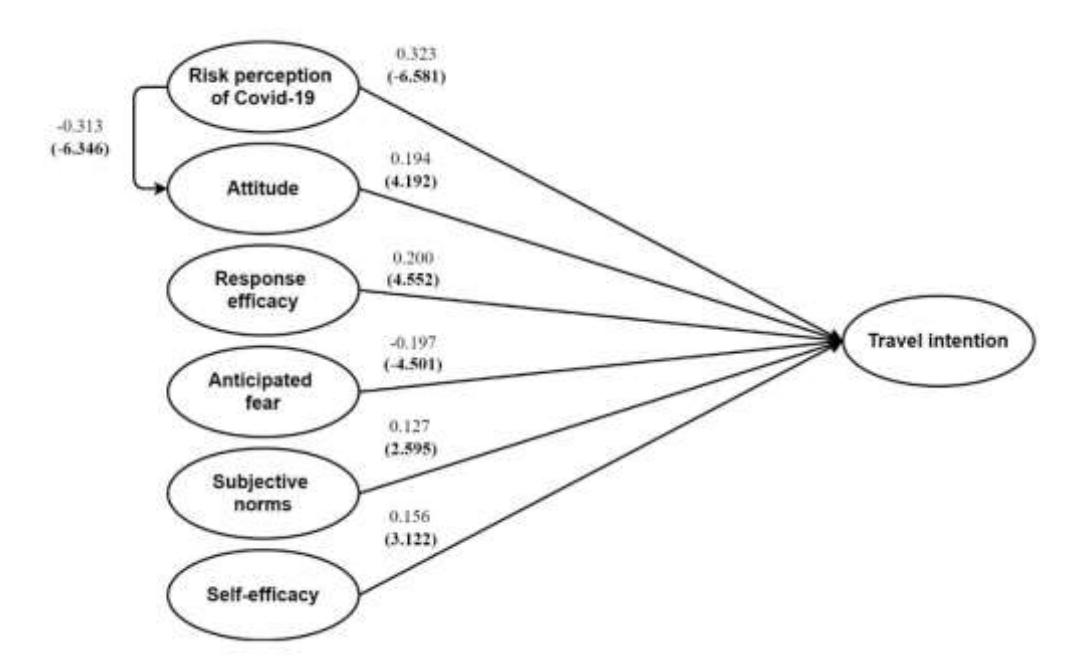
Figure 1. Results of hypotheses testing
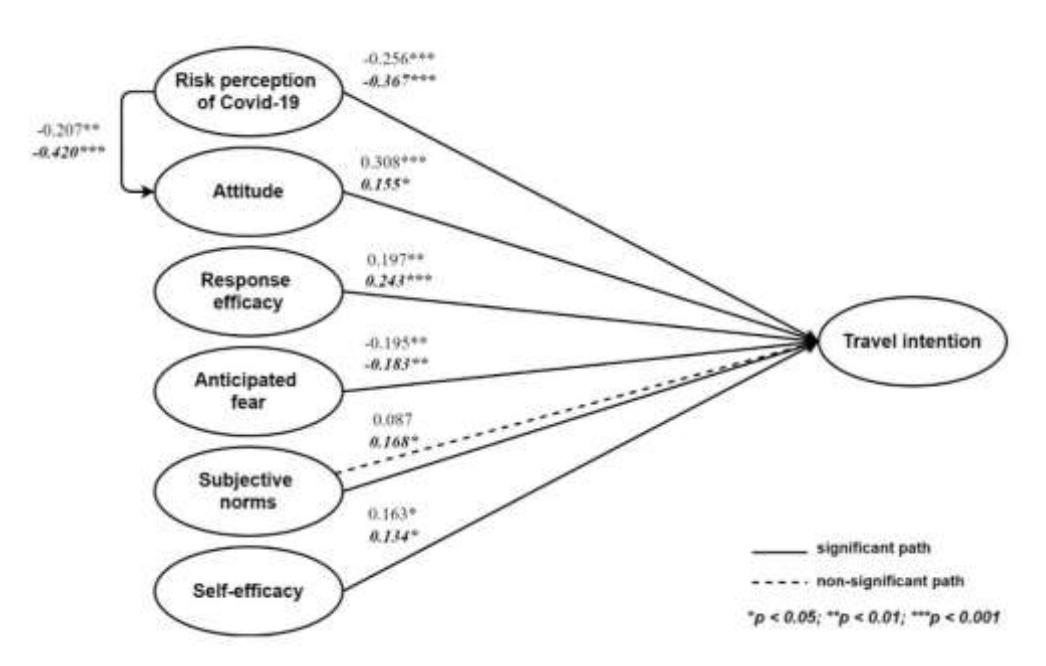
Figure 2. Results of hypotheses testing (group 1 and group 2)
Note: Non-italic coefficients denote group 1 and italic and bold coefficients denote group 2
About hypotheses testing results, the individual travel intention is affected by the risk perception of Covid-19, attitude towards traveling, response efficacy, anticipated fear, self-efficacy and subjective norms. Hence, all the proposed hypotheses were supported (see Table 5). Among all, the risk perception of covid-19 (β = -0.323, t-value = -6.581, p = 0.000) exerted a vital negative influence in shaping individuals' travel intention (H1). Also, it has an imperative influence on the formation of individuals' attitudes (H2). However, the subjective norms (β = 0.127, t-value = 2.595, p = 0.009) had the least significant influence on travel intention. Also, the testing of hypothesis H3 revealed that the anticipated fear of Covid-19 deteriorates (β = -0.197, t-value = -4.501, p = 0.000) individuals' intention to travel. Further, hypothesis H4 was also found to support and positively influence intention to travel. Overall, the antecedent variables in the hypothesized model explained 47% (R2 = 0.47) variance in individual travel intention.
Path Hypotheses Path Coefficient tvalue pvalue Supported RPC → INT Risk Perception of Covid-19 → Travel Intention -0.323 -6.581 0.000 Yes RPC → ATT Risk Perception of Covid-19 → Attitude -0.313 -6.346 0.000 Yes ATT → INT Attitude → Travel Intention 0.194 4.192 0.000 Yes REF → INT Response Efficacy → Travel Intention 0.200 4.552 0.000 Yes AF → INT Anticipated Fear → Travel Intention -0.197 -4.501 0.000 Yes SN → INT Subjective Norms → Travel Intention 0.127 2.595 0.009 Yes SE → INT Self-efficacy → Travel Intention 0.156 3.122 0.002 Yes
Table 5. Summary Results of Hypothesized Model Testing (Overall)
4.4. Multiple Group Analysis
A multi-group analysis was conducted to investigate whether the predefined groups (group 1 and group 2) are different in their group-specific estimates. To do so, we have conducted a multi-group analysis test in the AMOS 24.0. We have performed the difference test to check whether these two groups (group 1 and group 2) are different at the model level. The results of the χ2 difference test revealed that these two groups are significantly different at model level with the values Δ χ2 (7) = 12.554, p-value = 0.084. As the χ2 difference test value was found significant, we can conclude that these groups are significantly different at the model level. This would lead to further investigation across path levels. Table 6 exhibits the value of the path coefficients and the p-value for both the groups: group 1 and group 2. First, the path coefficient for group 1 has been examined. All the path coefficients were found to be significant except one. In addition, the attitude towards traveling has exerted the highest positive effect on individuals' travel intention, having a path coefficient of (ATT → INT = 0.308) followed by a negative effect with (RPC → INT = -0.256). Further, risk perception of Covid-19 (RPC → ATT = -0.207) has shown a negative influence on attitude formation. Also, response efficacy (REF → INT = 0.197) positively influences travel intention among the people belonging to group 1. However, the results revealed that the subjective norms (SN → INT = 0.087) have an insignificant influence on travel intention. Overall, the variance explained by travel intention was reported 41% (R2 = 0.41) for group 1.
About group 2, all the hypothesized paths were found significant, as shown in Table 6. Among all the predictors, risk perception of Covid-19 (RPC → INT = -0.367) had a vital impact on travel intention for the individuals belonging to group 2. However, it (RPC → INT = -0.420) also had an imperative effect on attitude formation. Further, response efficacy (REF → INT = 0.243) was found to be a significant positive predictor of travel intention followed by anticipated fear (AF → INT = 0.183), which negatively influences travel intention. Moreover, the predictor variables explained 58% (R2 = 0.58) variance in travel intention.
Group 1 Group 2 Path Path Coefficient p-value Supported Path Coefficient p-value Supported RPC → INT -0.256 0.000 Yes -0.367 0.000 Yes RPC → ATT -0.207 0.002 Yes -0.42 0.000 Yes ATT → INT 0.308 0.000 Yes 0.155 0.017 Yes REF → INT 0.197 0.002 Yes 0.243 0.000 Yes AF → INT -0.195 0.003 Yes -0.183 0.002 Yes SN → INT 0.087 0.232 No 0.134 0.038 Yes SE → INT 0.163 0.035 Yes 0.168 0.011 Yes
Table 6. Comparison Between the Groups 1 vs Group 2
Overall, the two groups differed across a few of the paths hypothesized in the current research work (see Table 7). However, the other proposed hypotheses were not supported. First, the hypotheses H1a and H1b were found supported. It implies that people belonging to group 2 have a stronger negative relationship between the risk perception of Covid-19 and travel intention than those belonging to group 1. Further, the results also stated that group 2 perceived a higher risk perception of Covid-19 than group 1 and had a more substantial negative effect on individuals' attitude formation. Also, the relationship between subjective norms and travel intention was only significant for the individuals belonging to group 2. Otherwise, all the other hypotheses (H3a, H4a, H5a & H6a) were not supported, failing to establish the significant differences between group 1 and group 2.
| Table 7. | Path Coefficient Difference for Groups 1 vs Group 2 | |
|---|---|---|
| Path | Hypotheses | Path coefficients difference (group 1 Vs group 2) | p - value (group 1 Vs group 2) |
|---|---|---|---|
| RPC -> INT | Risk Perception of Covid-19 -> Travel Intention | -0.110 | 0.057 |
| RPC -> ATT | Risk Perception of Covid-19 -> Attitude | -0.213 | 0.007 |
| ATT -> INT | Attitude -> Travel Intention | -0.153 | 0.168 |
| RPC -> INT | Response Efficacy -> Travel Intention | 0.046 | 0.468 |
| AF -> INT | Anticipated Fear -> Travel Intention | 0.012 | 0.832 |
| SN -> INT | Subjective Norms -> Travel Intention | 0.081 | 0.543 |
| SE -> INT | Self-efficacy -> Travel Intention | 0.081 | 0.543 |
5. Conclusion
The travel and tourism sector is one of the worst-hit sectors during the covid-19 pandemic. The Covid-19 pandemic has created so much negativity in peoples' minds. Due to the pandemic, people started considering travel and tourism-related activity risky and resisted travel. The current research focused on assessing the individuals' travel intention in the purview of Covid-19 by extending the TPB framework and testing it across the two groups. The first group of people want to travel for a short distance in their personal/private vehicle, and the other group want to travel long distances by train/flight, etc. As proposed in the work, both groups could vary in travel intention based on the predictor variables in the purview of the covid-19 outbreak.
Further, the results of the study have shown some very interesting findings. First, these two groups (1 & 2) are not entirely different among all the proposed paths in the research framework. However, it is exciting to see that the group 1 people perceive fewer negative feelings towards travel and less resistance towards attitude and travel intention than group 2. In other words, we can say that people belonging to group 2 perceive covid-19 very contagious virus, which can have a significant adverse on an individuals' health. This led to forming a strong negative influence on their attitude as well as on their travel intention. Also, group 2 people want to travel far locations that require taking other transport media such as flight, train, etc. or the combination of these. The people may feel that traveling in these transport mediums will expose them to the virus (even though people are fully/partially vaccinated) and could result in possible health-related issues. In some cases, where people want to travel from one part to another, they feel that if something happens at the destination, then how I will deal with the situation due to the lack of knowledge? In some cases, people resist travel because if they got infected with Covid-19, they would incur huge expenses, which could be a life-threatening experience. To tackle this situation and attract travelers to visit far destinations, the stated governments should come forward and provide some unique benefits to the visitors, reducing their risk perception of traveling during Covid-19 and motivating them to visit. For example, the host state government can provide free and on-priority vaccination facilities to visitors who are not vaccinated or partially vaccinated (in case of the second dose is due). Also, the government should remove/relax the mandatory requirement of RT-PCR testing before boarding (at source) the flight for the destinations and facilitate rapid on-site testing at the airports/train stations, encouraging more people to come. Also, the government should provide more facilities to the incoming visitors, such as low-cost/free Covid-19 travel insurance during the entire visit within a state; this could act as a game-changer during the Covid-19 crisis.
Further, group 2 showed a higher positive effect of the subjective norms on their travel intention. However, the said relationship was not found significant in the case of the people belonging to group 1. The possible reason could be that people planning to travel for shorter distances perceive less subjective norms. In other words, these people did not give enough importance to the opinions of others as they felt that they were traveling for a shorter distance where they knew most of the things and there was no language barrier. Also, if they face any adverse situation (e.g., Covid-19 infection), they can easily return to their homes and get help. As these people are traveling by their own/rented vehicle, they are more confident about the possible infection during travel. Therefore, due to selfbelief, people belonging to group 1 do not pay attention to the opinions of others. However, in the case of group 2, these travelers consider the opinions of their family members and friends, which has been proven statistically. It could be because, in case of any emergency, these people will criticize the decision to travel. Thus, the individuals of group 2 pay significant attention to the opinions of others. This can be minimized by changing the perception of a large body of people. The government and state tourism bodies can come together and make the general public aware of the facilities and other emergency service arrangements across the destination, showing their preparedness in case of emergency (e.g., Covid-19 infection), boosting the people's confidence. They can advertise their Covid-19 preparedness and other benefits for travelers on digital media, TV to inform the general public about it. Also, they can post testimonial videos of other travelers sharing their experiences about traveling and other facilities at the destination to cope with the covid-19. These efforts will enhance the awareness among the general public, which indirectly leads to positive opinion formation about visiting a distant destination.
Interestingly, all other relationships were not significantly different across group 1 and group 2 travelers. For example, people from both groups anticipate almost equal fear of Covid-19 while planning their trip. Although group 1 and group 2 people were not statistically different in response
efficacy, the people belonging to group 2 show a little higher effect on travel intention. This implies that people belonging to both groups are very much informed and prepared about the precautionary measures of Covid-19. They are also very much educated and aware of the other important Covid-19 related information such as coping measures or having a plan B in case of an emergency. The state government and tourism bodies should keep travelers informed about the coping measures by showing advertisements over social media, TV channels, booking tickets. This will enhance people's understanding of Covid-19 and help boost their morale and confidence.
In a nutshell, the government health department and tourism department should join hand to reduce the risk perception of Covid-19 among individuals, enhance the awareness about the state health preparedness regarding covid-19, inform the general public about the Covid-19 preventive and coping measures as well as provide some salient incentive to the travelers to visit. Some travelers perceive that travel costs have significantly increased during Covid-19, such as the cost of the RT-PCR test. The government should establish test centers at the airports/major train stations to provide testing results within a minimal timeframe. These steps will help travelers boost their confidence by reducing the uncertainties they have in their minds during this unprecedented time of Covid-19.
The present study has considered domestic travelers and investigated their behavioral intention to travel within the country in the light of Covid-19. Future research work can consider what foreign people think about traveling to developing countries under Covid-19 conditions. The population surveyed was in the age group of 23 to 45. However, further studies can investigate how Covid-19 affects traveling behavior among older adults. As there is no vaccine available for small children, researchers can also examine how small babies (infants) or children under the age of 12 influence adults' traveling behavior.
References
- Ahmed, W., Kim, W. G., Anwer, Z., & Zhuang, W. (2020). Schwartz personal values, theory of planned behavior and environmental consciousness: How tourists' visiting intentions towards eco-friendly destinations are shaped? Journal of Business Research, 110, 228–236.
- Ajzen, I. (1985). From intentions to actions: A theory of planned behavior. In Action control (pp. 11- 39). Springer, Berlin, Heidelberg.
- Ajzen, I. (1991). The theory of planned behavior. Organizational behavior and human decision processes, 50(2), 179-211.
- Ajzen, I. (2011). The theory of planned behaviour: Reactions and reflections.
- Aljazeera. (2020). Coronavirus: Which countries have confirmed cases? | News | Al Jazeera. https://www.aljazeera.com/news/2020/01/countries-confirmed-cases-coronavirus-200125070959786.html
- Bandura, A. (1997). Self-efficacy: The exercise of control. W. H. Freeman and Company.
- Barry, C. (2020). Italy seeks to boost tourism by opening borders June 3. https://apnews.com/42cfc1dae337bc50069576a01a38ccee
- Benthin, A. C., Slovic, P., & Severson -, H. (1993). A Psychometric Study of Adolescent Risk Perception. Journal of Adolescence, 16(2), 153–168.
- Brewer, N. T., Chapman, G. B., Gibbons, F. X., Gerrard, M., McCaul, K. D., & Weinstein, N. D. (2007). Meta-analysis of the relationship between risk perception and health behavior: the
- example of vaccination. Health psychology, 26(2), 136.
- Cases, A. S. (2002). Perceived risk and risk-reduction strategies in Internet shopping. The International Review of Retail, Distribution and Consumer Research, 12(4), 375-394.
- Centers for Disease Control and Prevention (CDC). (2009). 2009 H1N1 Pandemic (H1N1pdm09 virus) | Pandemic Influenza (Flu) | CDC. https://www.cdc.gov/flu/pandemic-resources/2009 h1n1-pandemic.html
- Centers for Disease Control and Prevention (CDC). (2020). Coronavirus | Human Coronavirus Types | CDC. https://www.cdc.gov/coronavirus/types.html
- Centers for Disease Control and Prevention (CDC). (2021). Selected Adverse Events Reported after COVID-19 Vaccination | CDC. https://www.cdc.gov/coronavirus/2019 ncov/vaccines/safety/adverse-events.html
- Chadda, R. K., & Deb, K. S. (2013). Indian family systems, collectivistic society and psychotherapy. Indian Journal of Psychiatry, 55(Suppl 2), S299.
- Chen, M. F., & Tung, P. J. (2014). Developing an extended Theory of Planned Behavior model to predict consumers' intention to visit green hotels. International Journal of Hospitality Management, 36, 221–230.
- Chen, N.-H., & Huang, S. C.-T. (2016). Domestic Technology Adoption: Comparison of Innovation Adoption Models and Moderators. Human Factors and Ergonomics in Manufacturing & Service Industries, 26(2), 177–190. DOI: 10.1002/hfm.20621
- Conner, M., & Armitage, C. J. (1998). Extending the theory of planned behavior: A review and avenues for further research. Journal of Applied Social Psychology, 28(15), 1429–1464.
- Field, A. P., Lawson, J., & Banerjee, R. (2008). The Verbal Threat Information Pathway to Fear in Children: The Longitudinal Effects on Fear Cognitions and the Immediate Effects on Avoidance Behavior. Journal of Abnormal Psychology, 117(1), 214–224.
- Frijda, N. H. (1994). Varieties of affect: Emotions and episodes, moods, and sentiments.
- Gentry, L., & Calantone, R. (2002). A comparison of three models to explain shop-bot use on the web. Psychology and Marketing, 19(11), 945–956.
- Grandón, E. E., Nasco, S. A., & Mykytyn, P. P. (2011). Comparing theories to explain e-commerce adoption. Journal of Business Research, 64(3), 292–298.
- Hair, J. F., Black, W. C., Babin, B. J., & Anderson, R. E. (2010). Multivariate data analysis (7th ed). Englewood Cliffs, NJ: Prentice-Hall.
- Han, H., Meng, B., & Kim, W. (2017). Emerging bicycle tourism and the theory of planned behavior. Journal of Sustainable Tourism, 25(2), 292–309.
- IBEF (2020). (2020). Tourism & Hospitality Industry in India: Market Size, Govt Initiatives, Investments | IBEF. https://www.ibef.org/industry/tourism-hospitality-india.aspx
- Irvin, C. B., Cindrich, L., Patterson, W., & Southall, A. (2008). Survey of hospital healthcare personnel response during a potential avian influenza pandemic: Will they come to work? Prehospital and Disaster Medicine, 23(4), 328–335.
- Kapuściński, G., & Richards, B. (2016). News framing effects on destination risk perception. Tourism Management, 57, 234–244. DOI: 10.1016/j.tourman.2016.06.017
- Kiernan, S., & DeVita, M. (2020). Travel Restrictions on China due to COVID-19 | Think Global Health. https://www.thinkglobalhealth.org/article/travel-restrictions-china-due-covid-19
Kim, T. T., Suh, Y. K., Lee, G., & Choi, B. G. (2010). Modelling roles of task-technology fit and selfefficacy in hotel employees' usage behaviours of hotel information systems. International Journal of Tourism Research, 12(6), 709–725.
- Kline, R. B. (2005). Principles and Practice of structural equation modelling. New York, NY: Guilford Press.
- Lazarus, R. S. (1991). Cognition and motivation in emotion. American psychologist, 46(4), 352.
- Lee, C. K., Song, H. J., Bendle, L. J., Kim, M. J., & Han, H. (2012). The impact of non-pharmaceutical interventions for 2009 H1N1 influenza on travel intentions: A model of goal-directed behavior. Tourism Management, 33(1), 89–99.
- Lepp, A., & Gibson, H. (2003). Tourist roles, perceived risk and international tourism. Annals of Tourism Research, 30(3), 606–624.
- Leppin, A., & Aro, A. R. (2009). Risk perceptions related to SARS and avian influenza: Theoretical foundations of current empirical research. International Journal of Behavioral Medicine, 16(1), 7– 29.
- Ministry of Tourism (MOT). (2018). STATEMENT CONTAINING BRIEF ACTIVITIES OF THE MINISTRY OF TOURISM 2018 Ministry of Tourism Government of India.
- Moutinho, J. (2000). Strategic Management in Tourism, 3rd Edition. CABI Tourism Texts - Google Books (L. Moutinho & A. V. Sanchez (eds.); 3rd ed.). CABI Publishing. https://books.google.co.in/books?hl=en&lr=&id=u3tSDwAAQBAJ&oi=fnd&pg=PR5& ots=sto4WnDrkR&sig=54buxT6 dgRiMtyYNaNQa4H4_eU&redir_esc=y#v=onepage&q&f=false
- Our World in Data. (2021, October 21). COVID-19 vaccine doses administered. https://ourworldindata.org/grapher/cumulative-covid-vaccinations?tab=table
- Park, S. H., Hsieh, C. M., & Lee, C. K. (2017). Examining Chinese college students' intention to travel to Japan using the extended theory of planned behavior: Testing destination image and the mediating role of travel constraints. Journal of Travel & Tourism Marketing, 34(1), 113-131.
- Petrosillo, N., Viceconte, G., Ergonul, O., Ippolito, G., & Petersen, E. (2020). COVID-19, SARS and MERS: are they closely related? Clinical Microbiology and Infection, 26(6), 729–734.
- Quintal, V. A., Lee, J. A., & Soutar, G. N. (2010). Risk, uncertainty and the theory of planned behavior: A tourism example. Tourism Management, 31(6), 797–805.
- Raab, C., Baloglu, S., & Chen, Y.-S. (2018). Restaurant Managers' Adoption of Sustainable Practices: An Application of Institutional Theory and Theory of Planned Behavior. Journal of Foodservice Business Research, 21(2), 154–171.
- Rapaport, P., & Orbell, S. (2000). Augmenting the theory of planned behaviour: Motivation to provide practical assistance and emotional support to parents. Psychology and Health, 15(3), 309–324.
- Reisinger, Y., & Mavondo, F. (2005). Travel Anxiety and Intentions to Travel Internationally: Implications of Travel Risk Perception. Journal of Travel Research, 43(3), 212–225.
- Rescorla, R. A. (1967). Pavlovian conditioning and its proper control procedures. Psychological Review, 74(1), 71–80.
- Rogers, R. W. (1975). A protection motivation theory of fear appeals and attitude change1. The Journal of Psychology, 91(1), 93-114.
- Ruan, W., Kang, S., & Song, H. (2020). Applying protection motivation theory to understand international tourists' behavioural intentions under the threat of air pollution: A case of
- Beijing, China. Current Issues in Tourism, 1–15.
- Sadiq, A.-A., Tharp, K., Graham, J. D., & Tyler, J. (2019). Temporal stability and changes in risk perception rankings of hazardous activities and technologies. Journal of Risk Research, 22(1), 93–109.
- Sauer, P. (2021, October 20). Latvia is first country to reimpose lockdown in Europe's new Covid wave. https://www.theguardian.com/world/2021/oct/20/latvia-enters-month-long-covidlockdown-as-fourth-wave-breaks
- Scherer, C. W., & Cho, H. (2003). A social network contagion theory of risk perception. Risk Analysis, 23(2), 261–267.
- Shin, Y. H., Im, J., & Severt, K. (2019). Consumers' intention to patronize food trucks: An application of the theory of planned behavior. Journal of Foodservice Business Research, 22(6), 582–599.
- Smith, A. W. (2006). The severe acute respiratory syndrome: Impact on travel and tourism. Travel Medicine and Infectious Disease, 4(2), 53–60.
- Soliman, M. (2019). Extending the theory of planned behavior to predict tourism destination revisit intention. International Journal of Hospitality & Tourism Administration, 1-26.
- Syal, A. (2020). How does COVID-19 compare to other pandemics? - The Daily Wildcat. https://www.wildcat.arizona.edu/article/2020/03/n-covid-comparison
- Tsai, H. Y. S., Jiang, M., Alhabash, S., Larose, R., Rifon, N. J., & Cotten, S. R. (2016). Understanding online safety behaviors: A protection motivation theory perspective. Computers and Security, 59, 138–150.
- UNWTO. (2020a). Covid-19: Putting people first | UNWTO. https://www.unwto.org/tourism-covid-19
- UNWTO. (2020b). International Tourist Numbers Could Fall 60-80% in 2020, UNWTO Reports | UNWTO. https://www.unwto.org/news/covid-19-international-tourist-numbers-couldfall-60-80-in-2020
- UNWTO. (2020c). International Tourism and covid-19 | UNWTO. https://www.unwto.org/international-tourism-and-covid-19
- Uras, U. (2020). Coronavirus: Comparing COVID-19, SARS and MERS | News | Al Jazeera. https://www.aljazeera.com/news/2020/04/coronavirus-comparing-covid-19-sars-mers-200406165555715.html
- Verma, V. K., & Chandra, B. (2018). An application of theory of planned behavior to predict young Indian consumers' green hotel visit intention. Journal of Cleaner Production, 172, 1152–1162.
- WHO. (2012). WHO | SARS (Severe Acute Respiratory Syndrome). WHO.
- WHO. (2020a). Coronavirus (COVID-19) events as they happen. https://www.who.int/emergencies/diseases/novel-coronavirus-2019/events-as-theyhappen
- WHO. (2020b). WHO Director-General's opening remarks at the media briefing on COVID-19 - 11 March 2020. https://www.who.int/dg/speeches/detail/who-director-general-s-opening-remarksat-the-media-briefing-on-covid-19---11-march-2020
- WHO. (2020c). Coronavirus disease 2019. https://www.who.int/emergencies/diseases/novelcoronavirus-2019?gclid=CjwKCAjwk6P2BRAIEiwAfVJ0rAfJD9lz1zu8pVa7eFnQ9RTy_KMr0xyGlVbZKBd3_uecR2rMYwZzBoCLgwQAvD_BwE
WHO. (2021, October 21). COVID-19 Vaccines Advice. https://www.who.int/emergencies/diseases/novel-coronavirus-2019/covid-19 vaccines/advice
- Woon, I., Tan, G. W., & Low, R. (2005). A protection motivation theory approach to home wireless security.
- Worldmeter. (2020). Countries where Coronavirus has spread - Worldometer. https://www.worldometers.info/coronavirus/countries-where-coronavirus-has-spread/
- Yeung, R. M., & Morris, J. (2001). Food safety risk: Consumer perception and purchase behaviour. British food journal.
- Yuzhanin, S., & Fisher, D. (2016). The efficacy of the theory of planned behavior for predicting intentions to choose a travel destination: a review. Tourism Review, 71(2), 135–147.
- Zhang, Y., Yang, H., Cheng, P., & Luqman, A. (2019). Predicting consumers' intention to consume poultry during an H7N9 emergency: an extension of the theory of planned behavior model. Human and Ecological Risk Assessment: An International Journal , 26(1), 190–211.
- Zhao, X., Mattila, A. S., & Tao, L. S. E. (2008). The role of post-training self-efficacy in customers' use of self service technologies. International Journal of Service Industry Management, 19(4), 492– 505.
- Zhao, X., & Namasivayam, K. (2009). Posttraining Self-Efficacy, Job Involvement, and Training Effectiveness in the Hospitality Industry. Journal of Human Resources in Hospitality & Tourism, 8(2), 137–152.