

1. Introduction
The role of digital technology has played a huge part in the development of the tourism sector as one of the drivers of the national economy. One of the business models that is popular through social media is the peer-to-peer business model (P2P). In the P2P accommodation and hospitality sector, the leading company is Airbnb (Anindita, 2017; Chua et al., 2019; Chua et al., 2020; Ert et al., 2016; Gurran et al., 2018; Gurran & Phibbs, 2017; Guttentag, 2015; Bhaskara, 2018; Lutz & Newlands, 2018). As Airbnb customers are both domestic and foreign travelers, Airbnb able to generate the highest valuation compared to other competitors (Oliver, 2013). Prior the pandemic, Airbnb has rapid growth globally with more than 1 million new listings and more than 50 million customers growth between 2015 and 2019 (Curry, 2024). However, Airbnb has been severely impacted, with hosts experiencing revenue losses and reduced daily bookings. Since the pandemic, there is increasing trend of Airbnb listing performance throughout the years with number of listing increase from 5.6 million (2020) to 7.7 million (2023) and number of users increased from 200 to 265 million, in the same period. Similary, annual revenue has peaked from 3.3 to 9.9 US$billion, whilst annual net income has bounced from -4.525 U$million to 4791U$million.
However, the COVID-19 outbreak in early 2020 forced all countries in the world to impose lockdowns and restrictions on community activities that has led to economic recession. The ban on the world's countries to their residents to travel has made tourism, including in Bali, slump (Mahagangga et al., 2020). In response to this, the Indonesian government has made efforts to boost the tourism sector amid the COVID-19 pandemic by applying Cleanliness, Health, Safety, and Environment (CHSE) scheme (Rosmiyanti et al., 2022; S. et al., 2021; Sandhubaya, Hidayatullah & Roedjinandari, 2021). Currently, around 877 hospitality businesses in Bali have successfully implemented CHSE by the end of 2020, but most smaller business operators have not been able to meet the strict requirements of the scheme (Subadra & Hughes, 2021).
Presently there is lack of studies that examines the relevance and implementation of CHSE in the Airbnb environment. Previous studies merely studies the implementation of CHSE within the scope of the conventional hotel accommodation and tourist destinations (Candranegara, Mirta, & Putra, 2021; Karo et al., 2021; Rosmiyanti, 2021; Sandhubaya, Hidayatullah & Roedjinandari, 2021). Thus, these issues would hinder Airbnb's business expansion, in the midst of the increase of new demands under the New Normal conditions.
As such, this study aims to examine the Airbnb's readiness to implement CHSE during the New Normal by understanding of each stakeholders' perspectivein the Airbnb business ecosystem. The Denpasar City is selected as a case study as it is the capital city of Bali province, known as the main tourism destination in Indonesia, and the city has a large number of Airbnb listings. Together with secondary data sourced from AirDNA in 2021 and CHSE documents, our research gather primary data sourced from staying in a few Airbnb listings, Airbnb host interviews, Denpasar City Tourism Office interviews and domestic tourist questionnaires taken in 2022. The survey period was during the COVID-19 the new Normal era as the pandemic in Denpasar City were under control.
The paper proceeds as follows. Section 2 explains the emergence of P2P accommodation, the CHSE as a scheme to adapt for Covid-19 in the accommodation sector and Denpasar city as a case study, while Section 3 presents the method and data gathered in the research. The analysis results are presented in Section 4 and the last section provides the conclusions.
2. Context: The Dynamics of Airbnb during Pandemic and the Case Study
2.1 Peer-to-Peer Accomodation (P2P)
The communication barrier between one consumer and another becomes non-existent through peerto-peer exchanges. Consumers can talk or read content uploaded by other consumers. This phenomenon gives rise to co-creation, where consumer interaction creates the value of a product's benefits. The online peer-to-peer (P2P) market proliferates, especially in travel and tourism services (Ert et al., 2016; Bhaskara, 2018).
As one of the main P2P accommodations, Airbnb is an online community marketplace where anyone can list, search, and book rooms (Guttentag, 2015). This relationship links hosts directly to potential customers, thus reducing transaction fees (Chua et al., 2020). Airbnb also allows users to access more private spaces and encourages interaction between hosts and their guests. In addition, after they temporarily stay in an Airbnb listing, they will have the opportunity to evaluate the host and the condition of the property (Bellina & Hartono, 2019). The uniqueness of Airbnb is that it connects people globally who offer and require underutilized rooms for a fee through an online platform.
Notably, Airbnb has made significant strides in various countries, including Indonesia. The platform's user base in the country continues to expand, with a diverse range of listings, including shared rooms, private rooms, and entire homes for rent. In Indonesia, where sharing rooms is not a common practice, they account for only 1% of the listings, compared to entire homes (55%) and private rooms (44%) (Airdna, 2024). However, the number of Airbnb listings is on the rise, indicating a growing trend and the platform's potential as an alternative to traditional hotels, particularly in popular tourist destinations like Jakarta and Bali (Ganapati et al., 2021; Maulana et al.).
2.2 Cleanliness, Health, Safety and Environment (CHSE) Protocol
In response to the impact of the COVID-19 pandemic, the Ministry of Tourism and Creative Economy impose new strategies implemented to accelerate tourism recovery (Anggarini, 2021). The strategy is to increase the implementation of CHSE, aka Cleanliness, Health, Safety, and Environment. This guideline refers to the protocol established by the Indonesian government, the World Health Organization (WHO), and the World Travel & Tourism Council (WTIC) in the context of preventing and handling COVID-19 (Karo et al., 2021). The Cleanliness, Health, Safety and Environmental Sustainability (CHSE) protocol is a program in the form of operational guidelines from the Ministry of Health Number HK.01.07/Menkes/382/2020 concerning Health Protocols for the Public in Public Places and Facilities in the Context of COVID-19 Prevention and Control, as well as the Ministry of Tourism and Creative Economy policies that apply to tourism actors in adapting guidelines for tourism businesses, tourism destinations, and other tourism products.
This CHSE protocol has been implemented in the tourism and creative economy sector in Indonesia since September 2020. At the preparation stage, the CHSE involves various parties including trade and professional associations that are related to tourist attractions, tourism village managers, as well as groups of tourism leaders who are aware of tourism and academics (Rosmiyanti et al., 2022). As of 2021, it was found that 5,901 tourism businesses have been CHSE certified spread across 34 provinces and 349 city districts in Indonesia (Candranegara, Mirta, & Putra, 2021).
2.3 CHSE Policy and Specialized Health Protocols in Airbnb
During the pandemic, Airbnb established mandatory COVID-19 safety practice policy forhosts and guests, based on the World Health Organization (WHO) and the US Centers for Disease Control. The protocolrequiring hosts and guests to wear masks or face coverings when interacting in person, maintaining physical distance of at least 6 feet or 2 meters between each other at all times, and issued five 5-step enhanced cleaning process which include prepare, clean, sanitize, check and reset (Last, 2020). In the event of any violation of the aforementioned safety guidelines, Airbnb reserves the right to penalize hosts and their guests in the form of Airbnb account suspension or removal of membership from the Airbnb community.
The impact of COVID-19 has been widely examined globally. Generally, the pandemic has affected P2P accommodation providers and traditional hospitality businesses, with hosts experiencing revenue losses and reduced future bookings, leading to challenges in paying staff and other expenses. (Farmaki et al, 2020; Hossain, 2021). Nevertheless, P2P accommodations have displayed resilience and innovation with the introduction of health protocols and hosts offering free accommodation to healthcare workers, which may strengthen its post-pandemic legitimacy and consumer trust (Gerwe, 2021).
Most studies on the impact of a pandemic on P2P accommodation have emphasized enhanced safety protocols and measures such as insurance policies (Bigné, 2020; Farmaki et al, 2020, Hossain, 2021, Wang et al, 2023). In particular, travellers' priorities are evolving, with anti-COVID-19 protection measures ranking as the top consideration for booking accommodations, surpassing traditional factors like location and price. In this sense, cleanliness and sanitation protocols have become crucial for robust sanitation protocols (Bigné, 2020). Furthermore, the role of the government is also critical for disease containment and health measures (Wang et al, 2023). The study highlights various government responses and fostering technology deployment, including closure policies, health regulations, and financial support, which are essential to enhanced government response in controlling COVID-19 spread.
Geographically, the perceived health risks associated with Airbnb amenities' locations have prompted a shift towards less densely populated urban areas, resulting in unequal spatial impacts within cities. The study by (Kourtit et al, 2022) confirms customers' selective preferences for Airbnb accommodations based on health safety and geographical location within cities, implying a trade-off between high-potential but high-risk locations and low-potential but low-risk areas near urban fringes. This finding highlights integrating economic geography awareness into risk management in the hospitality sector, considering the localized economic effects of pandemic-related restrictions on businesses concentrated around public attractions.
Consequently, the financial impact is unavoidable, with some hosts opting to exit and pursue longterm renting due to dissatisfaction with platform support, especially concerning refund policies favouring guests. (Farmaki et al, 2020). P2P firms need to reconsider their business strategies, regulations and challenges, hygiene standards, insurance provisions and guidelines to resolve disputes arising from cancellations (Hossain, 2021). However, there is also a geographical effect that determines variation between cities due to factors such as local tourism characteristics and government responses, where some cities experienced fewer cancellations despite the pandemic due to lower infection rates or different price categories within Airbnb markets, suggesting that local tourism characteristics played a significant role in shaping booking trends (Boros et al, 2020).
Despite CHSE has been aimed at conventional accommodation businesses such as hotels and homestays which are also part of Airbnb, the implementation in the non-conventional accommodation business environment remains neglected, as Airbnb listings are managed by private hosts, not a a corporate. This nature of Airbnb's business model is considered as shortcomings in determining minimum service standards because each accommodation offered has different management, features, and prices. Airbnb relies heavily on ratings and reviews as a way for potential guests to evaluate the quality offered by the venue alone (Bigné, 2020; Reinhold & Dolnicar, 2021).
2.4 Case Study
In Indonesia, the Ministry of Tourism and Creative Economy provides CHSE guidelines related with tourism attractions such as homestays or tourist lodges; hotels; MICE; organizing events; restaurants or restaurants; rafting tours; golf tours; diving tours; spa businesses; and creative economy businesses. Unlike conventional hotels such as those incorporated in the Indonesian Hotel and Restaurant Association (PHRI) where members are given easy access to information as well as oversight in regulations issued by the government, Airbnb tends to be individualized (Nugraheni, Nurcahyo & Gabriel, 2022), Airbnb tends to be individualized, making it difficult to supervise the implementation of CHSE on Airbnb as a tourism business actor (Subadra & Hughes, 2021).
Bali as one of the country's prime tourist destinations for both foreign tourists and domestic tourists.Airbnb was first introduced in Indonesia in 2017 and Bali has became the target of various home or apartment unit owners to invest through Airbnb (Ganapati et al., 2021). Recent study shows that the island has the highest Airbnb ownership in the world outside the United States and outperforms European cities such as Madrid, Lisbon, Florence, and Vienna. Bali is even the only Asian representative in the top 20 in terms of Airbnb asset ownership (Bhaskara, 2018).
As one of the main gateways for tourists to enter Bali, Denpasar City has a strategic location that is beneficial both in terms of economy and tourism as well as a link with other districts in Bali Province. As a tourist destination, Denpasar City is supported with various facilities such as accommodation, restaurants, travel agencies, shopping centers and health facilities (Dinas Pariwisata Kota Denpasar, 2019). Denpasar City has also propagated the tagline 'The Heart of Bali' which was developed as an identity to express the charisma of Denpasar as a dynamic cultural tourism city on the island of Bali (Utama, 2017).
The proximity of various tourist sites from Denpasar makes the city one of the top residential and rental destinations for tourists coming to the island of Bali. With a high tourist visitation rate of up to 6 million people per year, it provides great rental potential for property investment in the city of Denpasar (Rumahbali.id, 2021). Thus, many foreign and domestic tourists are competing to get lodging facilities through various online platforms such as Airbnb (Fig. 1). Compared to other areas on the island of Bali, Denpasar City is also an area famous for its cultural tourism and is expected to grow even more in the next few years, making Denpasar City a potential competitor as well as a new alternative for tourists who want to visit Bali.
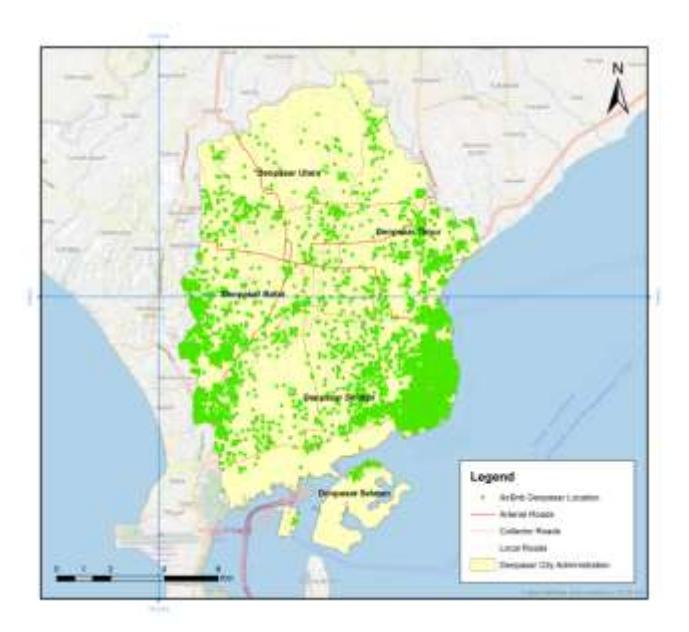
Figure 1. Area of Study
3. Methods
This research was conducted by utilizing the results of questionnaires to domestic tourists, observing Airbnb listings, interviewing Airbnb hosts based on the type of listing (Entire home, Private room and Shared room), and interviewing the Denpasar City Tourism Office in the field of Tourism Industry Development. The research questionnaire was distributed online to respondents with the condition that the respondents had used and/or knew about Airbnb in Denpasar City in the range of 2020 - 2022 through social media platforms and online messengers.
The survey was conducted during COVID-19 transmission that was under control in Denpasar City had entered the New Normal era. Lemeshow's sampling method with an accuracy level of 8% was used to determine the minimum number of respondents needed for an unknown population of 150 respondents. This study managed to get 165 respondents.
The secondary data used comes from AirDNA excel data in 2021, data on CHSE-certified accommodation and hospitality businesses, and other supporting literature. Literature studies are used to obtain information on indicators that affect the quality of accommodation provision based on the government's new policy in facing the New Normal, namely the Cleanliness, Health, Safety and Environment (CHSE) policy where the scope of indicators used is listed in Table 1.
Table 1. Scope of CHSE Assessment Indicators
| Indicator | Variables |
|---|---|
| Cleanliness | 1. Availability of hand washing facilities and soap 2. Cleaning of public spaces and goods with safe and appropriate disinfectants 3. Free of vectors and disease-carrying animals |
| 4. Clean and well-equipped restrooms 5. Availability of trash bins | |
| Health | 1. Body temperature check 2. Provision of clean and hygienic food and beverages 3. Simple health equipment and supplies 4. Public spaces and workspaces with good air circulation 5. Handling for visitors with health problems while on site |
| Safety | 1. Availability of disaster self-rescue procedures 2. Availability of first aid kit 3. Availability of fire extinguishers 4. Availability of assembly points and evacuation routes 5. Availability of media and communication mechanisms for handling emergencies |
| Environment Sustainability | 1. Use of environmentally friendly equipment and materials 2. The surrounding environment is beautiful and comfortable, either naturally or through engineering. 3. Monitoring and evaluation of the implementation of CHSE guidelines and SOPs |
Source: CHSE Homestay & Hotel Guidelines Kemenparekraf (2020)
3.1. Descriptive Analysis
Descriptive analysis describes event using a quantitative approach, namely in the form of statistical numbers that have meaning. In this study, quantitative descriptive analysis is used to identify the listing characteristics and availability of CHSE Airbnb amenities in Denpasar City in the form of bar charts, graphs, and maps so that information can be considered by Airbnb hosts and the Denpasar City government in making decisions.
3.2. Spatial Analysis of Hotspots
Hotspot analysis is a cluster detection method in Geographic Information Systems to identify significance of spatial concentrations (Kurniawan & Sadali, 2015; Papilaya, 2020; Yenusi et al., 2020). Hotspot analysis is performed by calculating Getis-Ord Gi* statistics for each feature in the dataset resulting in so-called z-scores and p-values that serve to describe where features with high or low values cluster spatially. This analysis works by looking at each feature in the context of neighboring features so that a high value feature may not be a statistically significant hot spot if it is not surrounded by other high value features (ESRI, n.d.). The formulation for the Getis-Ord Gi* statistical value is as follows.
\[= \frac{\sum_{j=1}^{n} w_{i,j} x_j - \bar{X} \sum_{j=1}^{n} w_{i,j}}{S \sqrt{\left[n \sum_{j=1}^{n} w_{i,j}^2 - \left(\sum_{j=1}^{n} w_{i,j}\right)^2\right]}}\]
Where \(x_j\) is the attribute value for the feature j, while \(w_{i,j}\) is the spatial weight between features i and j, then n is equivalent to the total number of features with the following additions.
\[X = \frac{\sum_{j=1}^{n} x_j}{n}\] and
\[S = \sqrt{\frac{\sum_{j=1}^{n} x_j^2}{n} - \left(X\right)^2}\]
Statistics \(G_i^*\) is a z-score so no further calculations are required.
The Gi* statistic displayed for each feature in the data set is the z-score. The larger the z-score, the more intense the clustering of high values (hot spots). For negative z-scores or the smaller the z-score, the more intense the clustering of low values (cold spots). While the p-value indicates the probability level. When the p-value is small, the probability of the spatial pattern coming from a random process is also small, so the null hypothesis can be rejected. The null hypothesis of this hotspot analysis is that the features in the data set are spatially random. In this study, the formation of hotspot clusters indicates that the area contains Airbnb groups that have high scores in CHSE amenity ownership. Meanwhile, a coldspot cluster indicates that the area contains Airbnb groups with low values or no CHSE amenity at the listing location.
3.3. Importance-Performance Analysis
Importance-Performance Analysis measures the relationship between consumer perceptions and priorities on service quality, also known as 'quadrant analysis' (Dirgantara & Sambodo, 2015). This analysis also allows to measure customers' satisfied, and to what extent service provider understands customers' demand for the services (Nugraha et al., 2014) with the output in the form of a calculation of the level of conformity between importance and performance assessment. The following is the formula for calculating the level of conformity of IPA analysis.
\[T_{ki} = \frac{X_i}{Y_i} * 100\%\]
\(T_{ki}\): Respondent's level of conformity
\(X_i\): Average score of company performance assessment \(Y_i\): Average score of respondents' importance assessment
The attributes that affect customer satisfaction are then mapped into 4 (four) sections into the Important-Performance Matrix. Where this matrix is made based on the average value of the importance score and the performance assessment score with the formula used as follows.
\[X = \frac{\sum_{i=1}^{N} X}{k}\] and \[\sum_{i=1}^{N} Y\]
: Average of the average importance scores of all attributes
=
: Average of the average performance scores of all attributes
: The number of attributes that affect satisfaction
=
In this study, Importance-Performance Analysis (IPA) is used to assess the readiness of Airbnb hosts in providing accommodation for tourists according to CHSE standards in the New Normal era (Fig. 2)
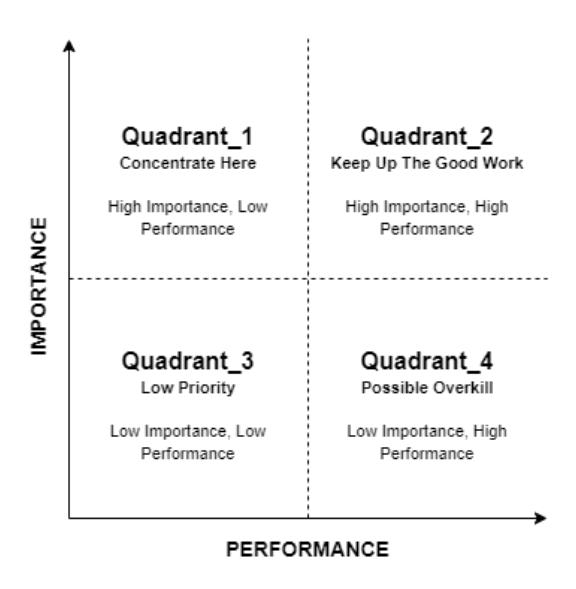
Figure 2. Illustration of the Importance-Performance Analysis Quadrant (after Martilla and James, 1977)
3.4. Qualitative Descriptive Analysis
Data collection in qualitative research using primary data sources and data collection techniques relies on observation, in-depth interviews and documentation. In qualitative research methods, what is meant by data is all information, both oral and written, can even be in the form of images or photos, which contribute to answering research problems as stated in the formulation of the problem or research focus (Rachmawati, 2007). Qualitative descriptive analysis was used on the results of interviews with Airbnb hosts, observations of Airbnb listing locations in Denpasar City and interviews with the Tourism Office regarding the implementation of Cleanliness, Health, Safety and Environment (CHSE) in Denpasar City.
4. Results
4.1. Readiness of Airbnb Hosts in Providing Accommodation according to CHSE Standards in the New Normal Era
The identification of the readiness of Airbnb hosts is carried out through several stages. The first stage is to see how the impact of the pandemic affects the Airbnb business in Denpasar City before the pandemic, during the pandemic, and after entering the New Normal era. The following graph suggests Airbnb hosts feel considerable losses, especially in the Entire Home/Apartment and Private Room types, such as decreased income, no guest visits, and difficulty getting overseas guests so that the occupancy of the inn is dominated by local/domestic guests (Fig. 3). One of the factors for the decrease in visitors is that there is a sense of objection from the guests to visit due to the many new regulations issued by the government in the face of the COVID-19 pandemic.
These losses have forced Airbnb hosts to take extreme measures to maintain their business, including changes in management. Some of the actions taken by Airbnb hosts of Entire Home/Apartment and Private Room types include cancellation of bookings, reporting to the local government when receiving visits, socializing regulations to guests, and benchmarking with similar business owners. However, for Airbnb hosts who own Shared Room listing types, no strict measures were taken in response to the COVID-19 pandemic. After entering the New Normal era, all hosts stated that business climate conditions were getting better and there was an increase in local and overseas guest visits and changes in the number of bookings. So it can be concluded that the COVID-19 pandemic has had a significant impact on Airbnb's business operations. However, there has been an adjustment to the New Normal conditions and an increase in Airbnb bookings although not as many as before the pandemic.
The second stage is to see the implementation of the CHSE protocol on Airbnb in the New Normal era by utilizing interview and observation data (Fig. 4). All Airbnb hosts have heard and know about the CHSE protocol policy launched by the government. However, hosts do not really feel that CHSE is a priority that must be prioritized in managing the Airbnb business. Several obstacles were also found in the implementation of CHSE not only by Airbnb but also the government, especially in terms of funds and income. During the COVID-19 pandemic, almost all tourism businesses including Airbnb experienced a drastic decline in income, which mostly came from tourist visits. This has implications for staff layoffs and funding allocations that are minimal and insufficient to provide complete health equipment according to CHSE standards. It is not uncommon for some of them to go bankrupt.
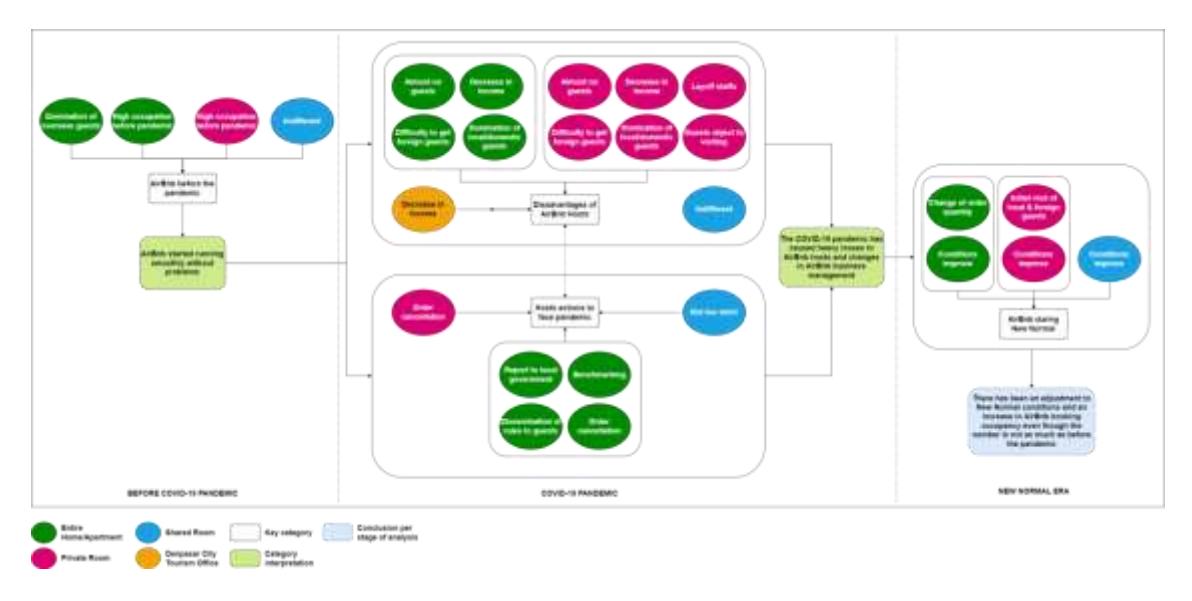
Figure 3. Visualization of the Analysis Results of Pandemic Impact on Airbnb Business
The most obstacles are found in Airbnb with the Entire Home/Apartment listing type where in addition to funding problems, there is no government assistance in providing subsidies for the completion of the CHSE protocol. Policies set by the government are also considered to make it difficult for hosts to run their businesses such as policies that require all guests to report first to the village office before visiting then they are required to wait some time to be given a decision whether they can stay or not at the lodging location, this has implications for canceling bookings because guests feel burdened by these requirements. Bureaucratic issues, especially in the flow of applying for funding assistance from the government, are also considered complicated and require a long process while the needs of hosts in managing Airbnb are quite numerous and urgent. Finally, the lack of socialization from the government regarding CHSE certification is also a factor in the lack of awareness of Airbnb hosts regarding the implementation of CHSE itself.
Lack of knowledge, awareness of the urgency of CHSE, and constraints in its implementation resulted in almost all Airbnb hosts only implementing protocols without reference to CHSE. Airbnb Entire Home/Apartment only implements protocols such as washing equipment regularly, UV work equipment, employee vaccines and requiring employees to always wear masks. Airbnb Private Room only makes adjustments to the needs of guests staying and follows local government recommendations. This is also done by Airbnb Shared Room. However, Airbnb Shared Room hosts do not emphasize the protocol in the listing area and are only limited to communicating with guests regarding the needs of their stay. So it can be concluded that the implementation of CHSE in the Airbnb business environment is still not optimal and does not comply with the standards set by the government regarding CHSE protocols in the tourism industry business.
The third stage is to look at the relationship between Airbnb and the local government, namely the Denpasar City Tourism Office, oversee the implementation and supervision of the CHSE protocol in Denpasar City (Fig. 5). For CHSE protocol implementation, the government has provided initial counseling and socialization to tourism industry businesses including Airbnb. This counseling is received by Airbnb Entire Home/Apartment and Private Room. However, this counseling was not received by Airbnb hosts who own Shared Room listing types. However, according to Airbnb Entire Home/Apartment hosts, there is no further counseling and dissemination of information on new regulations including CHSE to respond to the New Normal conditions so that business actors need to act proactively to obtain information. The treatment received by each host is also different and uneven, especially regarding assistance funds from the government. It is known that Airbnb Entire Home/Apartment and Shared Room hosts do not receive assistance funds from the government, in contrast to Airbnb Private Room hosts who receive funding assistance from the government to implement the CHSE protocol at the listing location.
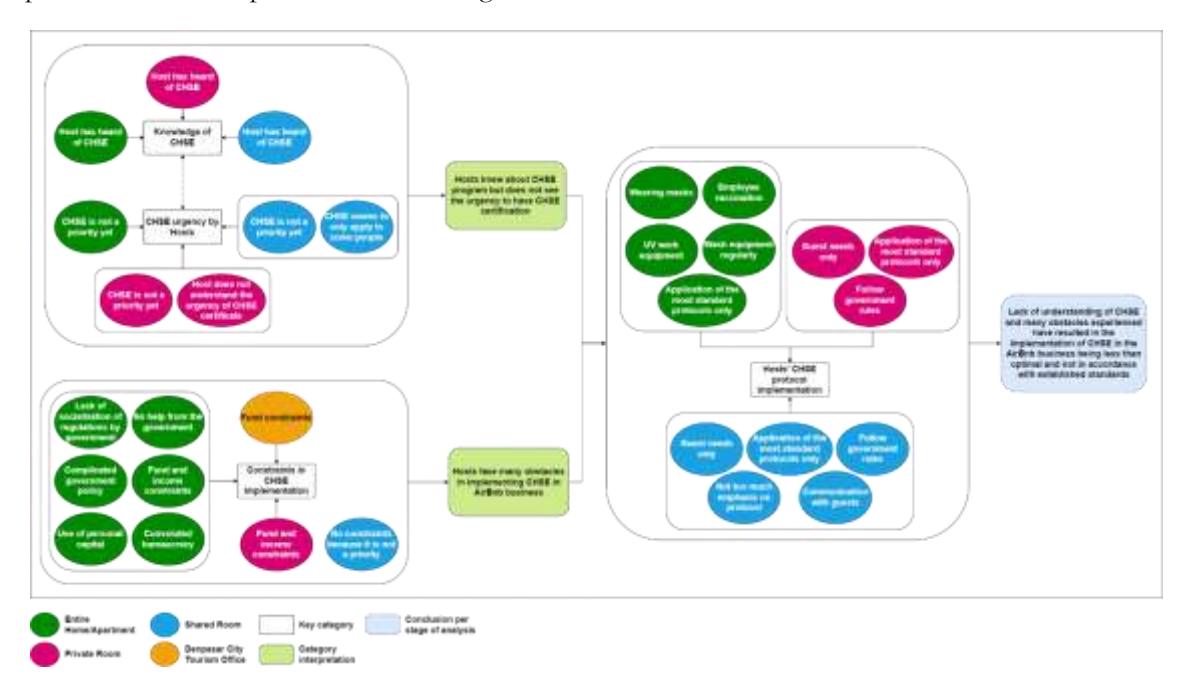
Figure 4. Visualization of CHSE Protocol Deployment Analysis Results on Airbnb
While from the government side, the implementation of CHSE is not only carried out by the government but also by a third party, namely PT Sucofindo. Local government certification is also applied to support the existence of CHSE which for Denpasar City, the certification is called TKEB (New Era Life Order). During its existence, the government did not find any violations committed by business actors who already have CHSE certification. This is supported by direct supervision carried out by the government on businesses that have been CHSE certified. However, supervision is not carried out on Airbnb listings that have not registered for CHSE certification. In order to receive direct supervision from the government, Airbnb hosts need to first register their businesses for CHSE certification so that their operations can be controlled. Local leaders such as neighborhood leaders are also encouraged to participate in collecting data on Airbnb businesses in their neighborhoods and registering them with the government.
It can be concluded that the socialization of regulations, bureaucratic clarity and the establishment of business licensing regulations for Airbnb business actors that are able to support business operations in the New Normal era have not been maximally implemented. Airbnb as one of the tourism industry players supported by the government, is expected in the future to have CHSE certification in order to adapt to changes in travel habits in the New Normal. Government also plays a role in socializing, educating, promoting and providing clarity of regulations and bureaucracy to Airbnb business actors in order to increase tourist interest in booking Airbnb. So that both the expectations of Airbnb and the government, namely increased guest visits, adaptation to changes in travel habits and ownership of CHSE certificates in all tourism industry business actors can be achieved.
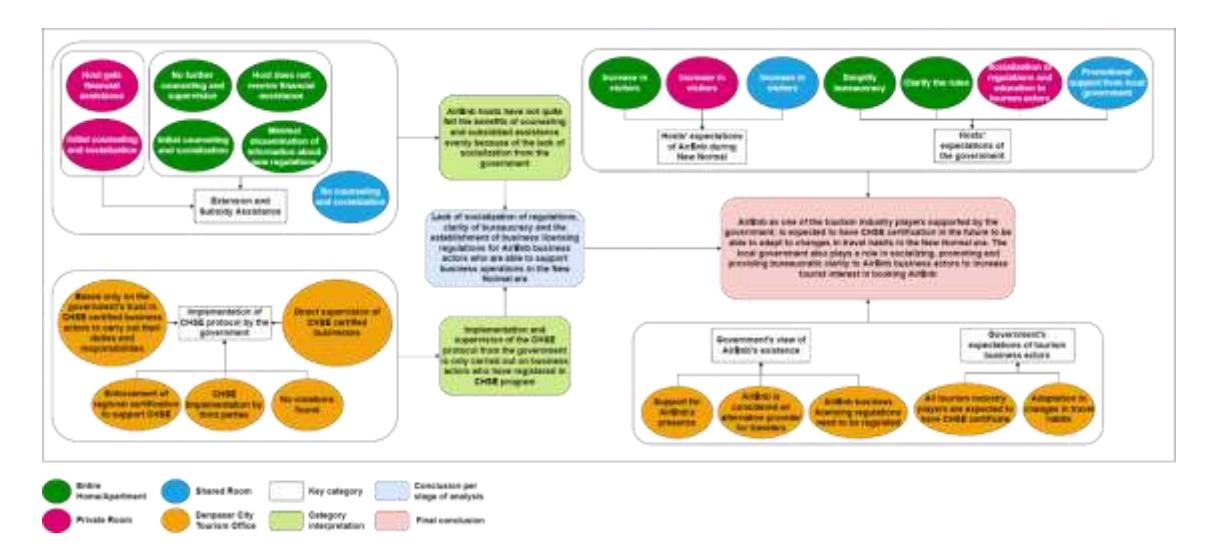
Figure 5. Visualization of the Results of Airbnb Business Actors' Relationship with Local Government
Next, we examine domestic tourist demand on Airbnb accommodation according to CHSE indicators from the questionnaire (Table 2).
Table 2. CHSE Assessment Indicator Criteria
| Indicator | Variables | Code |
|---|---|---|
| Cleanliness | Availability of hand washing facilities and soap | C1 |
| Cleaning of public spaces and goods with safe and appropriate disinfectants | C2 | |
| Free of vectors and disease-carrying animals | C3 | |
| Clean and well-equipped restrooms | C4 | |
| Availability of trash bins | C5 | |
| Health | Body temperature check | H1 |
| Provision of clean and hygienic food and beverages | H2 | |
| Simple health equipment and supplies | H3 | |
| Public spaces and workspaces with good air circulation | H4 | |
| Handling for visitors with health problems while on site | H5 | |
| Safety | Availability of disaster self-rescue procedures | S1 |
| Availability of first aid kit | S2 | |
| Availability of fire extinguishers | S3 | |
| Availability of rallying points and evacuation routes | S4 | |
| Availability of media and communication mechanisms for handling emergencies | S5 | |
| Enviroment | Use of environmentally friendly equipment and materials | E1 |
| Sustainability | The surrounding environment is beautiful and comfortable, either naturally or through engineering | E2 |
| Monitoring and evaluation of the implementation of CHSE guidelines and SOPs by the local government | E3 |
Validity and reliability tests were carried out to see whether the data obtained was valid and reliable for further analysis. Validity test is calculates the degree of freedom with the Pearson product moment r table then comparing the value between and . The validity test uses the principle of correlating each variable score or question with the total score obtained from the respondent's
answer. If the value >, then the variable being tested can be declared valid. However, if the value <, then the tested variable is declared invalid. By using Pearson's two-way product moment test, the value of obtained for N = 165 and 5% significance is 0.1528.
The reliability test was carried out using the Cronbach's Alpha formula with the basis for decision making, whereas if the Cronbach's Alpha value is greater than 0.6 then the questionnaire is declared reliable or consistent. On the other hand, if the Cronbach's Alpha value is smaller than 0.6 then the questionnaire is declared unreliable or inconsistent. The results of the data reliability analysis, Cronbach's Alpha value is 0,9451, suggesting that all variables to be analyzed are declared reliable.
Then Importance-Performance Analysis maps importance attributes with the performance attribute according to the CHSE indicator using a Likert scale with 5 (five) scale levels (Table 3).
| Weight | Performance | Importance |
|---|---|---|
| 5 | Very Good | Very Important |
| 4 | Good | Important |
| 3 | Moderate | Moderate |
| 2 | Deficient | Less Important |
| 1 | Not Good | Not Important |
Table 3. Weighted Assessment of Performance and Importance Attributes
The analysis was carried out through the calculation of the average importance score and the average performance score from the answers of 165 respondents. The analysis also compares the performance and importance scores obtain the respondent satisfaction index (TKi) of Airbnb services based on CHSE indicators is 93.36%. This value is used as a decision-making limit for each CHSE variable.
The level of conformity is considered good if it is higher than 93.6% and this level of Airbnb services quality must be maintained, but if the level of conformity is less than 93.6%, it is required to improve service quality. The average value of the variables is then entered into the IPA analysis diagram to find out what CHSE service variables need to be prioritized to be improved by Airbnb managers (hosts) in providing satisfaction to tourists (Fig. 6).
Figure 6 reveals that variables S3, S2, S1, H5, and S5 are in quadrant I (Concentrate Here) shows that these variables include high importance but the service/performance has not met the quality according to the wishes of the respondents. Variables S4, C3, E3, C2, H2, H3, and C4 are in quadrant II (Keep Up The Good Work) which shows that these variables are good and must be maintained in performance. Variables E1, C1, H4, C5, and E2 are in quadrant III (Low Priority) which shows that these variables are still considered lacking in terms of service/performance but do not require special attention because they are considered less important by respondents. Finally, variable H1 is in quadrant IV (Possible Overkill) which shows that the variable is considered less important by respondents but has been provided by the host very well or even considered excessive. The priority order of CHSE is obtained by looking at the amount of satisfaction index value and IPA quadrant as found in Table 4.
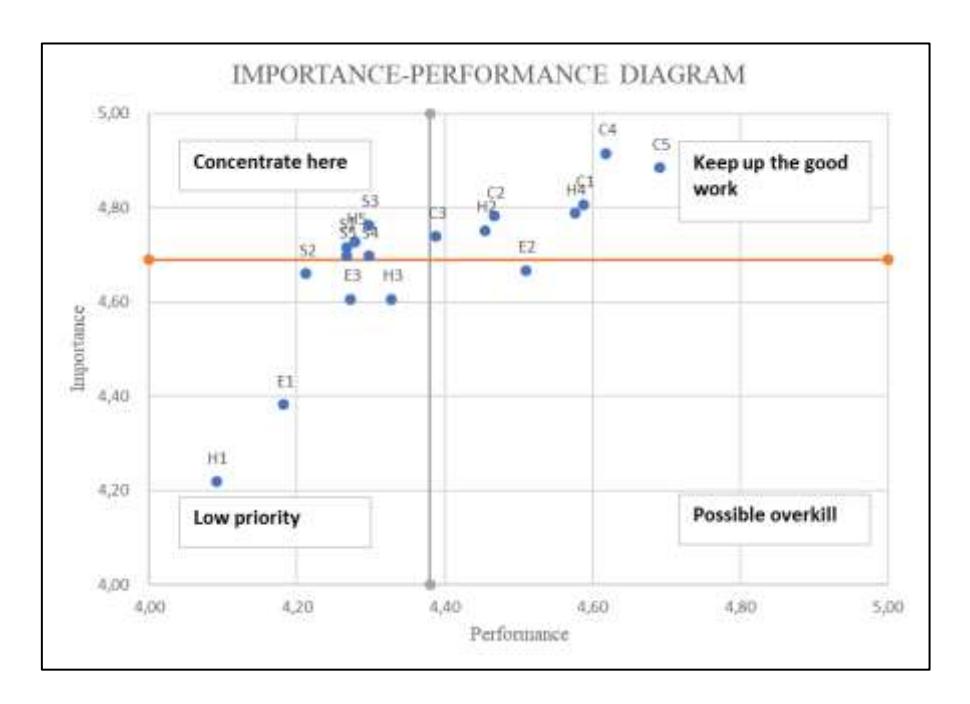
Figure 6. IPA Matrix Diagram Analysis Results
4.2. Characterizing Airbnb CHSE Listing and Amenity Availability in Denpasar Cit
The listing characteristics and availability of Airbnb CHSE amenity in Denpasar City analyzed are divided based on the type of listing, occupancy rate, lodging rate and amenity supporting the CHSE protocol. Based on the type of listing, Airbnb Denpasar City is dominated by the Private room type which amounts to 4286 listings, Entire home/Apartment as many as 2346 listings, Hotel room as many as 103 units and Shared room as many as 88 listings (Fig. 7).
Based on the occupancy rate, 5688 listings have an occupancy rate of 0%, 805 listings have an occupancy rate of 1% - 25% and 46 listings have a high occupancy rate (76% - 100%). Based on lodging rates, 6084 listings have a nightly rate of less than Rp 500,000, followed by rates of Rp 500,000 - Rp 1,000,000 as many as 257 listings, rates above Rp 2,000,000 as many as 256 listings, rates of Rp 1,000,000 - Rp 1,500,000 as many as 147 listings and rates of Rp 1,500,000 - Rp 2,000,000 as many as 79 listings.
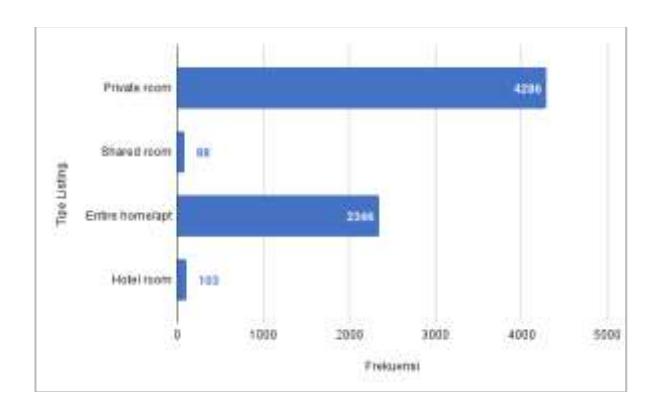
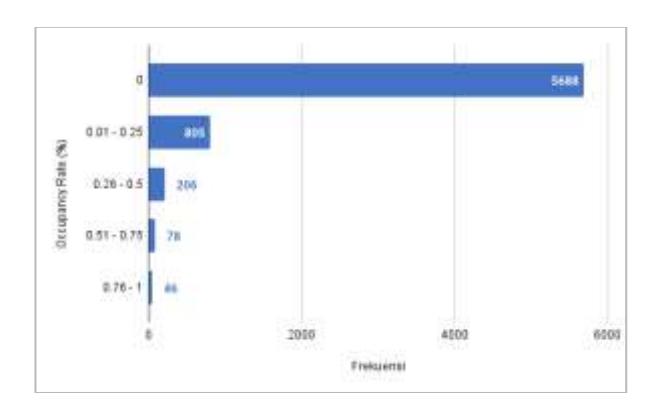
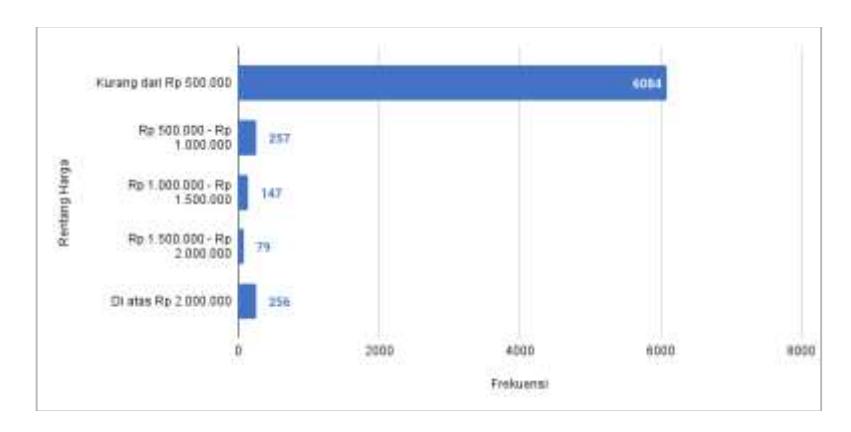
Figure 7. Airbnb Characteristics by Listing Type, Occupancy and Lodging Rates
Table 4. Results of Analysis of Priority Handling of CHSE Variables in Airbnb
| Quadrant | Quadrant Name | Priority | Variables | TKi (%) | Description |
|---|---|---|---|---|---|
| 1 | Concentrate | 1 | S3 | 90.20 | Availability of fire extinguishers |
| Here: High Importance, | 2 | S2 | 90.38 | First aid kit availability | |
| Low Performance | 3 | S1 | 90.49 | Availability of disaster escape procedures | |
| 4 | H5 | 90.51 | Handling for visitors with health problems while on site | ||
| 5 | S5 | 90.84 | Availability of media and communication mechanisms for handling emergencies | ||
| 2 | Keep Up The Good Work: | 6 | S4 | 91.48 | Availability of rallying points and evacuation routes |
| High Importance, High Performance | 7 | C3 | 92.58 | Free of vectors and disease-carrying animals | |
| 8 | E3 | 92.76 | Monitoring and evaluation of the implementation of CHSE guidelines and SOPs by the local government | ||
| 9 | C2 | 93.41 | Cleaning of public spaces and goods with safe and appropriate disinfectants | ||
| 10 | H2 | 93.75 | Provision of clean and hygienic food and beverages | ||
| 11 | H3 | 93.95 | Simple health equipment and supplies | ||
| 12 | C4 | 93.96 | Clean and well-equipped restrooms | ||
| 3 | Low Priority: Low Importance, Low Performance | 13 | E1 | 95.44 | Use of environmentally friendly equipment and materials |
| 14 | C1 | 95.46 | Availability of hand washing facilities and soap | ||
| 15 | H4 | 95.57 | Public spaces and workspaces with good air circulation | ||
| 16 | C5 | 96.03 | Availability of trash bins | ||
| 17 | E2 | 96.62 | The surrounding environment is beautiful and comfortable, either naturally or through engineering | ||
| 4 | Possible Overkill: Low Importance, High Performance | 18 | H1 | 96.98 | Body temperature check |
The identification of Airbnb characteristics is also carried out based on the availability of existing CHSE amenities on Airbnb listings in Denpasar City and categorized into several sub categories as in Table 5.
Table 5. Division of Supporting Amenity Categories Based on CHSE
| Indicator | Supporting Amenities | ||
|---|---|---|---|
| Cleanliness & Health | Cleaning Product | ||
| Bathroom Essentials | |||
| Essentials | |||
| Safety | First Aid Kit | ||
| Fire Extinguisher | |||
| Smoke Detector | |||
| Environmental Sustainability | Wireless Internet | ||
| Garden or Backyard | |||
All CHSE amenities on Airbnb were analyzed with the assumption that the CHSE amenity data from AirDNA 2021 is correct and indeed provided by Airbnb at the listing location (Fig. 8).
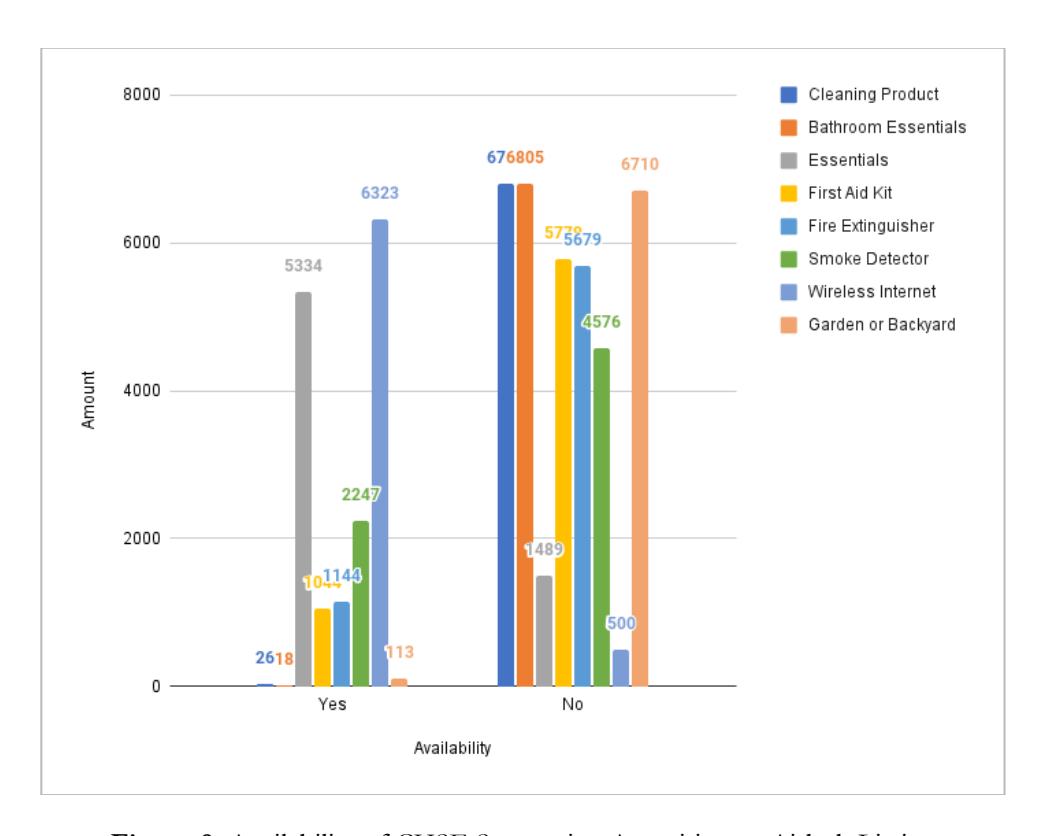
Figure 8. Availability of CHSE Supporting Amenities on Airbnb Listing Source : Source (Year)
The CHSE supporting amenity that will be reviewed depends on the results of the CHSE priority order analysis based on the magnitude of the satisfaction index value and the IPA quadrant that has been done previously. This needs to be done to see how far and how much the existing availability of prioritized CHSE amenities is at the Airbnb listing location in Denpasar City. The types of CHSE amenity that are further reviewed are those included in the Safety sub-category. For first aid equipment, Airbnb listings that have provided first aid equipment are 1044 listings, while those that have not are 5779 listings. For fire extinguishers, 1144 listings have provided fire extinguishers, while those that have not provided a total of 5679 listings. As for smoke detectors, 2247 listings have provided smoke detectors, while those that have not provided 4576 listings.
4.3. Airbnb Lodging Cluster Based on Priority CHSE Amenity Availability
After analyzing the performance of the implementation of the CHSE protocol in Airbnb both in terms of implementation and satisfaction of each stakeholder as well as in terms of the availability of existing CHSE amenity, a hotspot analysis (Getis-Ord Gi*) using ArcMap is then carried out to see how the spatial distribution pattern of priority CHSE amenity is. In this analysis, the Zone of Indifference concept was chosen where in this concept features that are within the critical distance range (distance band) will have an influence in the analysis. However, once the critical distance has been exceeded, the level of influence decreases with increasing distance.
Variables Global Moran's I Summary Fire Extinguisher Moran's Index 0.010014 Expected Index -0.000147 Variance 0.000000 z-score 15.516069 p-value 0.000000 Distance Treshold 809.7158 Meters First Aid Kit Moran's Index 0.008638 Expected Index -0.000147 Variance 0.000000 z-score 13.415306 p-value 0.000000 Distance Treshold 809.7158 Meters Smoke Detector Moran's Index 0.003760 Expected Index -0.000147 Variance 0.000000 z-score 5.963698 p-value 0.000000 Distance Treshold 809.7158 Meters
Table 6. Spatial Autocorrelation (Moran's I) Test Results
Hotspot analysis is carried out on CHSE amenities that are prioritized for handling based on consideration of existing amenity availability and the results of IPA analysis, namely those included in quadrant I of the IPA matrix diagram, namely fire extinguishers, first aid equipment, and smoke detectors. Due to the hotspot analysis using the Zone of Indifference concept, it is necessary to determine the critical distance value used for all variables through the Spatial Autocorrelation (Moran's I) test as found in Table 9, so that the critical distance value is 809.7158 meters. This critical distance value is used as a reference for the maximum distance of Airbnb services that have priority CHSE amenity which also affects cluster formation. The farther the distance between one Airbnb
listing and another Airbnb from the predetermined critical distance value limit, the less influence it will have in forming a cluster.
The cluster pattern of each variable was reviewed by calculating the p-value and z-score obtained from the Spatial Autocorrelation Test (Moran's I). The p-value of the fire extinguisher, first aid equipment and fire detection equipment variables is less than 0.05 and the z-score value is positive, indicating that the three CHSE amenity has a high probability of forming a cluster pattern (Table 6). The Moran's I index on all variables is positive suggesting there is a clustering pattern with similar characteristics in adjacent locations.
The hotspot analysis of each CHSE amenity is also used as input to the overlay analysis with several other external variables that may affect the availability of CHSE amenity, namely the type of listing, lodging rates, and Airbnb occupancy rates.
Hot Spot Analysis Based on Availability of Fire Extinguishers
There is a cluster of hotspot areas (red colour) for fire extinguisher availability, especially in the South Denpasar area, especially around Sanur Beach (Sanur, Sanur Kaja and Sidakarya) and West Denpasar, especially in areas adjacent to Kuta (Pemecutan Kelod and Padangsambian Kaja) (Fig. 9).
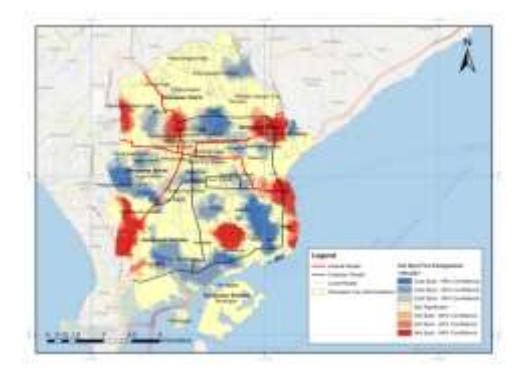
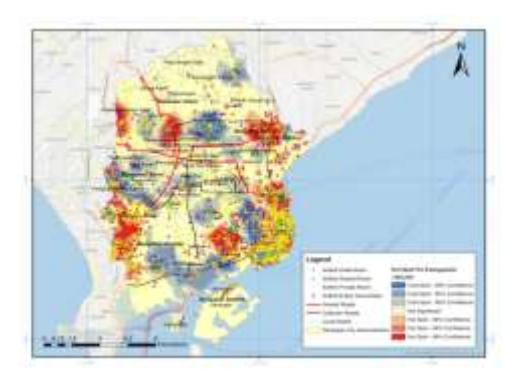
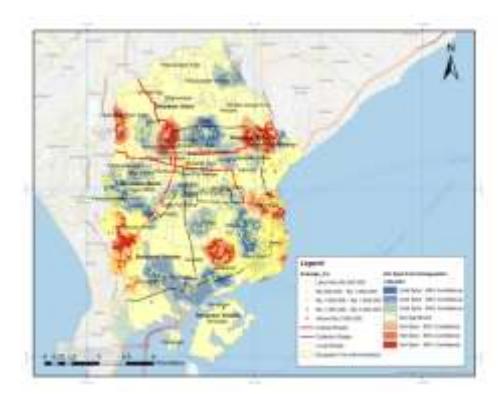
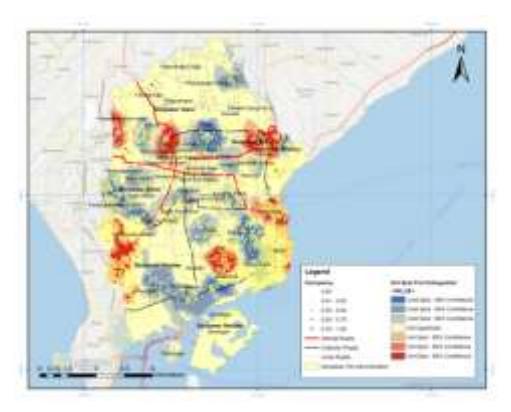
Figure 9. Hotspot Analysis of (1) Fire Extinguisher Availability, (2)-Listing Type, (3)-Lodging Rates and (4)-Occupancy Rate
Hot Spot Analysis Based on the Availability of First Aid Equipment
The cluster of hotspot areas (red colour) of first aid equipment availability are found in South Denpasar, especially around Sanur Beach (Pemogan, Sanur Kaja, and Sidakarya) and West Denpasar, especially in areas adjacent to Kuta (Padangsambian Kaja and Pemecutan Kelod) (Fig. 10).
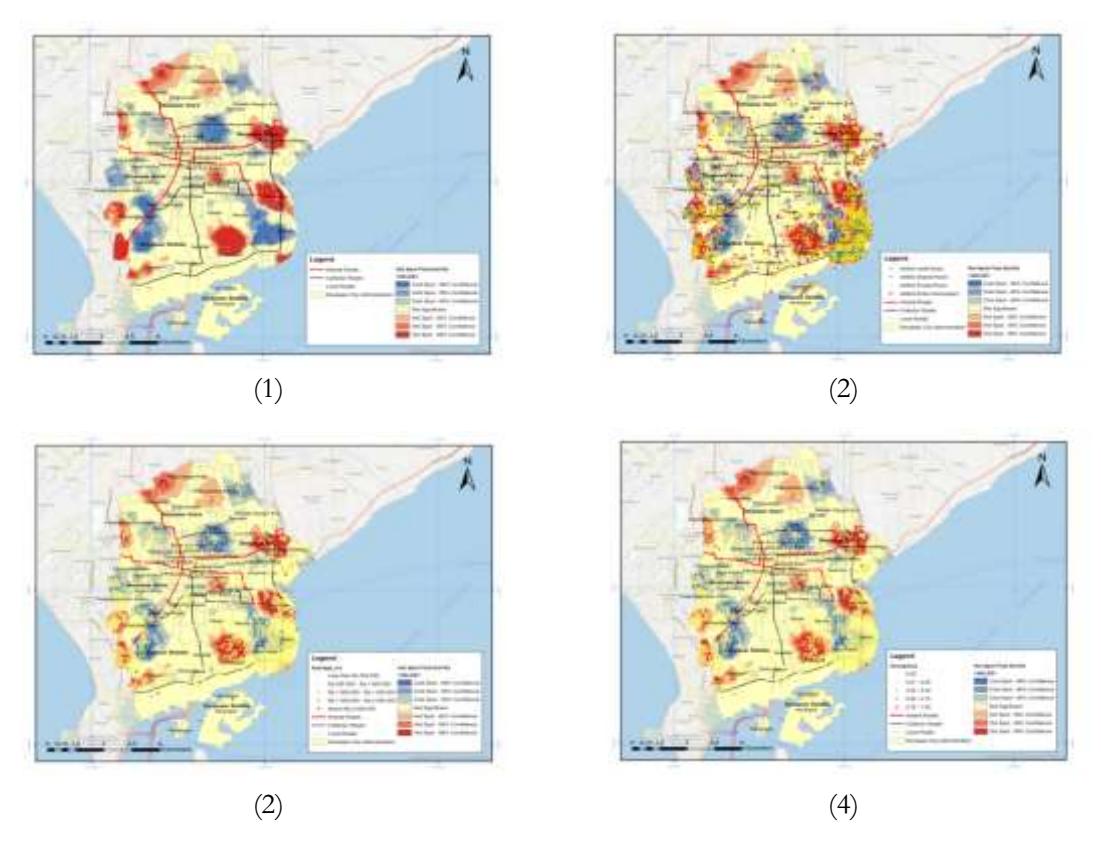
Figure 10. Hotspot Analysis of (1) First Aid Equipment Availability, (2)-Listing Type, (3)-Lodging Rates and (4)-Occupancy Rate
Hot Spot Analysis Based on the Availability of Smoke Detectors
There are clusters of hotspot areas (red colour) for the availability of smoke detectors, especially in South Denpasar, especially around Sanur Beach (Sesetan, Serangan, Pemogan, Sanur Kaja and Sidakarya) and West Denpasar, especially in areas adjacent to Kuta (Padangsambian Kaja and Pemecutan Kelod) (Figure 11).
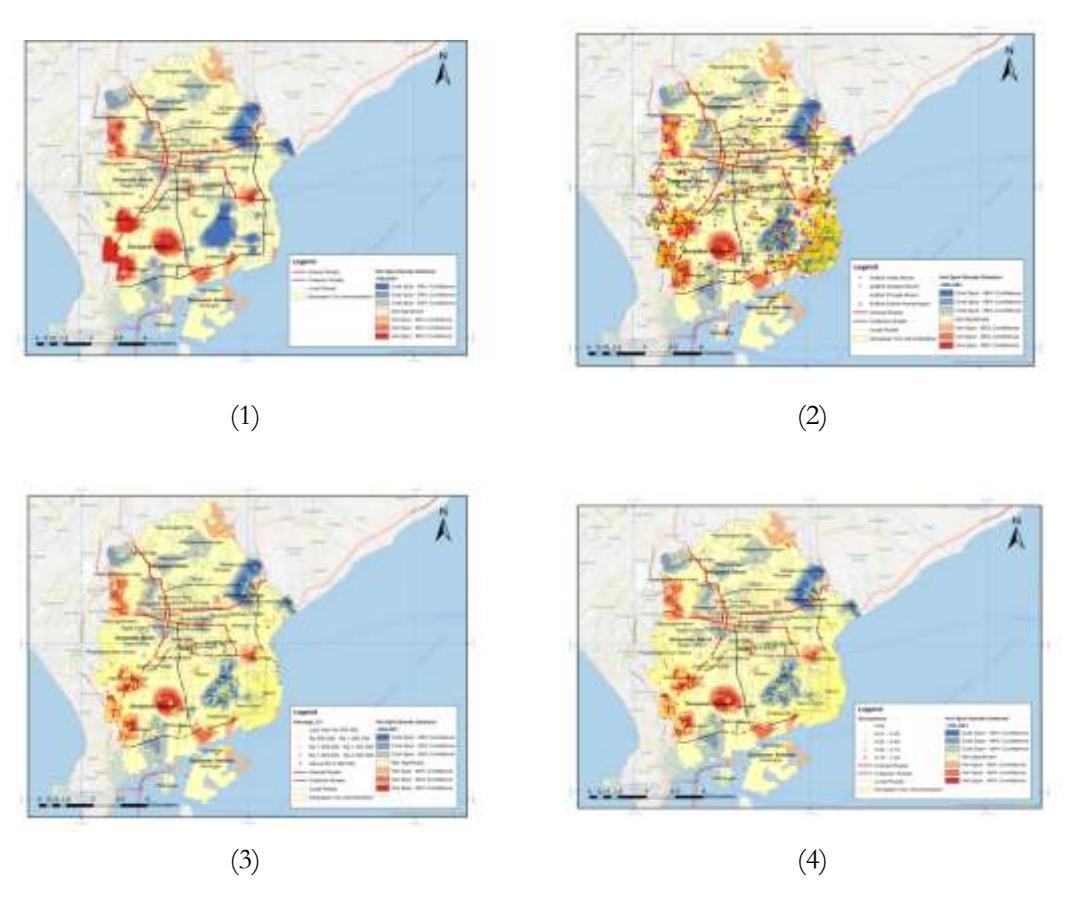
Figure 11. Hotspot Analysis of (1) Smoke Detectors Availability, (2)-Listing Type, (3)-Lodging Rates and (4)-Occupancy Rate
Overall, the hotspots of CHSE amenity availability; fire extinguishers, first aid kits, and smoke detectors are mainly found in Private Room and Hotel Room types. Thisindicates that Airbnb Private Room and Hotel Room are more prepared to provide CHSE amenities.
5. Conclusion
The existence of Airbnb as one of the businesses driving the tourism sector in this digitized era is no exception to the impact of economic risk due to COVID-19. The Airbnb listings in Denpasar City also experienced many losses from the COVID-19 pandemic, such as a decrease in income and significant reductions in guests, which led to the importance of changing the business management system. This finding confirms the significant impact of Covid-19 globally on P2P accommodation financial and booking performance (Farmaki et al, 2020; Hossain, 2021). Furthermore, the finding by Gerwe (2021) on the critical role of government to provide health and regulation measures to contain the pandemic has been implemented by the Indonesian government attempts to recover the tourism sector by implementing the CHSE protocol. This protocol is applied to all tourism actors in adapting new habits to prevent and control the spread of COVID-19 (Indonesia Ministry of Tourism, 2020).
However, our study suggests that this policy has yet to be fully implemented by all groups, especially the non-conventional tourism industry, such as Airbnb. The concentration of Airbnb listings in South Denpasar, especially around Sanur Beach and West Denpasar, especially in the area adjacent to Kuta, implies the unevenly distributed CHSE information, guidance and knowledge among Airbnb listing hosts. This finding is in line with studies conducted by Bhaskara (2018) and Ganapati et al (2021) that
(
( the majority of Airbnb listing locations are mainly near leading tourist destinations in the Southern part, such as Kuta, Seminyak, Ubud, Jimbaran and Nusa Dua.
This study's findings are significant as they underscore the lack of CHSE implementation among Airbnb listings, particularly in private and hotel room listings. This highlights the concern that small business operators like Airbnb may struggle to meet the stringent requirements of the CHSE scheme (Subadra & Hughes, 2021). The challenge is further compounded by the ambiguity surrounding Airbnb's legal status, given hosts' varying willingness to register with the Tourism Office. Therefore, it is crucial to conduct further research that examines the implementation of CHSE and its potential to bolster Airbnb renters, particularly in Bali.
References
- AirDNA, (2024). Airdna Default data. https://www.airdna.co/vacation-rentaldata/app/id/default/jakarta/overview and https://www.airdna.co/vacation-rentaldata/app/id/default/bali/overview
- Anggarini, D. T. (2021). Upaya Pemulihan Industri Pariwisata Dalam Situasi Pandemi Covid -19. Jurnal Pariwisata, 8(1), 22–31. DOI: 10.31294/par.v8i1.9809.
- Anindita, A. G. (2017). 2030: A scenario planning of the sharing economy in Bali accommodation. Academia.Edu.http://www.academia.edu/download/58239657/2030A_scenario_planning_of _the _sharing_economy_in_Bali_accommodation.pdf
- Bellina, S., & Hartono, N. (2019). Customer intention to use Airbnb application: a case study. InCITE 2019: International Conference on Informatics, Technology, and Engineering 2019, December. https://www.researchgate.net/profile/Natalia_Hartono/publication/338117773_Customer_ intention_to_use_Airbnb_application_a_case_study/links/5e009a7e299bf10bc371bb19/Cus tomer-intention-to-use-Airbnb-application-a-case-study.pdf
- Bhaskara, G. I. (2018). Airbnb di Bali: Identifikasi Ulasan Online wisatawan Asing Melalui Metode Netnography. Jurnal Master Pariwisata (JUMPA), hlm, 27-56.
- Bigné, E., Jenkins, C. O. L. B. Y., & Andreu, L. U. I. S. A. (2020). Effects of Covid-19 on consumersintention to book Airbnb: an empirical study in US and Spain. Economía Industrial, 418, 97-107
- Boros, L., Dudás, G., & Kovalcsik, T. (2020). The effects of COVID-19 on Airbnb. HUNGARIAN GEOGRAPHICAL BULLETIN (2009-), 69(4), 363-381.
- Candranegara, I. M. W., Mirta, I. W., & Putra, K. A. F. (2021). Implementasi Program "We Love Bali" Berbasis CHSE (Clean, Health, Safety, Environment) dalam Pemulihan Pariwisata Bali. Journal of Contemporary Public Administration (JCPA), 1(1), 27-32.
- Chua, E. L., Chiu, J. L., & Bool, N. C. (2019). Sharing economy: An analysis of Airbnb business model and the factors that influence consumer adoption. Review of Integrative Business and Economics Research, 8, 19.
- Chua, E. L., Chiu, J. L., & Chiu, C. L. (2020). Factors influencing trust and behavioral intention to use Airbnb service innovation in three ASEAN countries. Asia Pacific Journal of Innovation and Entrepreneurship.
- Curry, D. 2024. Airbnb Revenue and Usage Statistics. Available from https://www.businessofapps.com/data/Airbnb-statistics/ Accessed April 1st 2024.
- Dinas Pariwisata Kota Denpasar. (2016). Profil Dinas Pariwisata Kota Denpasar 2016. 56. https://pariwisata.denpasarkota.go.id/uploads/download/PROFIL DINAS PARIWISATA_839098.pdf
- Dinas Pariwisata Kota Denpasar. (2019). Denpasar Tourism Data 2018. 1–77. file:///C:/Users/ASUS/Downloads/download_191712011229_BukuDataStatistik2018.pdf
- Dirgantara, H. B., & Sambodo, A. T. (2015). Penerapan Model Importance Performance Analysis dalam Studi Kasus: Analisis Kepuasan Konsumen bhinneka.com. Jurnal Sains Dan Teknologi Kalbis Scientia, 2(1), 52–62. http://research.kalbis.ac.id/Research/Files/Article/Full/ CANWL8MBTPOVL4NIQWGNIA6H1.pdf
- Ert, E., Fleischer, A., & Magen, N. (2016). Trust and reputation in the sharing economy: The role of personal photos in Airbnb. Tourism Management, 55, 62–73. DOI: 10.1016/j.tourman.2016.01.013
- ESRI. (n.d.). How Geographically Weighted Regression ( GWR ) works. ArcGISPro Documentation.
- Farmaki, A., Miguel, C., Drotarova, M. H., Aleksić, A., Časni, A. Č., & Efthymiadou, F. (2020). Impacts of Covid-19 on peer-to-peer accommodation platforms: Host perceptions and responses. International journal of hospitality management, 91, 102663.
- Gerwe, O. (2021). The Covid-19 pandemic and the accommodation sharing sector: Effects and prospects for recovery. Technological Forecasting and Social Change, 167, 120733.
- Ganapati, I. D. G., Sukwika, T., & Sulistyadi, Y. (2021). Analisis Dampak Platform Peer-To-Peer Airbnb Terhadap Usaha Perhotelan Konvensional di Provinsi Bali. Jurnal Kepariwisataan: Destinasi, Hospitalitas Dan Perjalanan, 5(1), 34–47. DOI: 10.34013/jk.v5i1.340.
- Gurran, N., & Phibbs, P. (2017). When Tourists Move In: How Should Urban Planners Respond to Airbnb? Journal of the American Planning Association, 83(1), 80–92. DOI: 10.1080/01944363.2016.1249011.
- Gurran, N., Searle, G., Phibbs, P., Gurran, N., Searle, G., & Phibbs, P. (2018). Urban Planning in the Age of Airbnb : Coase, Property Rights, and Spatial Regulation internalizing. Urban Policy and Research, 1146. DOI: 10.1080/08111146.2018.1460268.
- Guttentag, D. (2015). Airbnb: disruptive innovation and the rise of an informal tourism accommodation sector. Current Issues in Tourism, 3500. DOI: 10.1080/13683500.2013.827159.
- Hossain, M. (2021). The effect of the Covid-19 on sharing economy activities. Journal of Cleaner Production, 280, 124782.
- Karo, P. K., Pasaribu, R. M., Vebiola, P., & Nopy, N. (2021). Consumer Perspectives on the Implementation of CHSE Certification (Clean, Health, Safety, Environment Sustainability) at Fast Food Restaurants in Palembang City. In Palembang Tourism Forum 2021 (PTF 2021) (pp. 1- 8). Atlantis Press.
- Kementerian Pariwisata dan Ekonomi Kreatif / Badan Pariwisata dan Ekonomi Kreatif. (2020). Panduan Pelaksanaan Kelestarian Lingkungan Pondok Wisata Panduan Pelaksanaan Kelestarian Lingkungan di Homestay / Pondok Wisata. Panduan Pelaksanaan Kebersihan, Kesehatan, Keselamatan, Dan Kelestarian Lingkungan Homestay/Pondok Wisata, 2019.
- Kourtit, K., Nijkamp, P., Östh, J., & Turk, U. (2022). Airbnb and COVID-19: SPACE-TIME vulnerability effects in six world-cities. Tourism Management, 93, 104569.
- Kurniawan, A., & Sadali, M. I. (2015). Pemanfaatan Analisis Spasial Hot Spot (Getis Ord Gi*) untuk Pemetaan Klaster Industri di Pulau Jawa dengan Memanfaatkan Sistem Informasi Geografi. Hibah Penelitian Dosen Sekolah Vokasi Universitas Gadjah Mada, 1–21.
- Last, U. S. E. (2020). The Airbnb cleaning handbook. June.
- Lutz, C., & Newlands, G. (2018). Consumer segmentation within the sharing economy: The case of Airbnb. Journal of Business Research, 88(June 2017), 187–196. DOI: 10.1016/j.jbusres.2018.03.019.
- Mahagangga, I., Permana, R., Saragih, S. J., Diah, N. H. T., & Andini. (2020). Fenomena Masa Jeda Pariwisata Bali (Suatu Studi Pustaka). Pemikiran Kepariwisataan, August, 39–50.
- Martilla, J. A., & James, J. C. (1977). Importance-performance analysis. Journal of marketing, 41(1), 77- 79.
- Maulana, A., Rosyidi, M. I., Koesfardani, C. F. P. P., Hidayah, S. A., & Amory, I. D. G. R. A. (2021). Potensi dampak Airbnb terhadap usaha penyediaan akomodasi di Provinsi DKI Jakarta. Jurnal Ekonomi dan Pembangunan, 29(1), 59-80.
- Maulina, L., Dianawati, N., Nugraha, S. Y. I., Maemunah, I., & Sukmadi. (2021). Pelaksanaan Protokol Kesehatan Berbasis Cleanliness, Health, Safety, and Environment Sustainability (CHSE) Pada Industri Perhotelan di Kota Bandung. Media Bina Ilmiah, 15(10).
- Nugraha, R., Harsono, A., & Adianto, H. (2014). Usulan Peningkatan Kualitas Pelayanan Jasa pada Bengkel " X " Berdasarkan Hasil Matrix Importance-Performance Analysis *. Jurnal Online Institut Teknologi Nasional, 01(04), 174–184.
- Nugraheni, A., Nurcahyo, R., & Gabriel, D. S. (2022). Certification of Tourism Business Standards and CHSE Standards in Indonesia. Industrial Engineering and Operations Management Istanbul, 239– 250. http://ieomsociety.org/proceedings/2022istanbul/52.pdf
- Oliver, J. (2013). Analisis Adopsi Situs Airbnb Menggunakan Technology Acceptance Model (Tam). Journal of Chemical Information and Modeling, 53(9), 1689–1699.
- Papilaya, F. S. (2020). Analisis Pola Spasial Kebakaran Lahan Di Kabupaten Pulang Pisau Tahun 2001-2019. Tunas Geografi, 9(1), 23. DOI: 10.24114/tgeo.v9i1.17365.
- Rachmawati, I. N. (2007). Pengumpulan Data Dalam Penelitian Kualitatif: Wawancara. Jurnal Keperawatan Indonesia, 11(1), 35–40. DOI: 10.7454/jki.v11i1.184.
- Rosmiyanti, E., Sutjiatmi, S., & Azzahra, C. Q. (2022). Restoration of Tourism in Indonesia New Normal Era through CHS Program in Bali Tourism. Proceedings of the 2nd International Conference on Social Science, Humanities, Education and Society Development (ICONS 2021), 629(12), 117–121. DOI: 10.2991/assehr.k.220101.018.
- Sandhubaya, G., Hidayatullah, S., & Roedjinandari, N. (2021). Study of Influence of Cleanliness, Health, Safety & Environment Sustainability on Tourist to Revisit the Beaches of Indonesia. International Journal of Advances in Scientific Research and Engineering, 07(10), 36–47. DOI: 10.31695/ijasre.2021.34090.
- Subadra, I. N., & Hughes, H. (2021). Pandemic in paradise: Tourism pauses in Bali. Tourism and Hospitality Research, March. DOI: 10.1177/14673584211018493
- Utama, I. G. B. R. (2017). Integrasi Daya Tarik Wisata Kota Denpasar Bali. Jurnal Perkotaan, 9(1), 48– 66. DOI: 10.25170/perkotaan.v9i1.285.
- Wang, X., Xu, Z., Xiao, A., & Skare, M. (2023). Measuring short-and long-run impacts of COVID19 on the sharing economy and business models. International Entrepreneurship and Management Journal, 19(3), 1341-1366.
- Yenusi, Y. N., Setiawan, A., & Linawati, L. (2020). Analisis Spasial berdasarkan Indeks Getis Ord Data Laju Inflasi Tahunan di Pulau Sumatra. Jurnal Teknik Informatika Dan Sistem Informasi, 6(1). DOI: 10.28932/jutisi.v6i1.231.