

1. Introduction
In recent times, a significant number of people consume foods out of their homes in commercial food service establishments. The reasons for such a trend include convenience, social contact, female labor force participation, increasing urbanization, evolving food systems that have increased food availability, economic growth associated with more disposable income, and increased global travels by tourists (Bhutaniet al., 2018; Zang et al., 2018; Senguinet al., 2016; Bazogluet al., 2013). This changing lifestyle puts consumers at risk of foodborne diseases if the foods and beverages served in such establishments are not hygienically prepared. The majority of the factors related to the occurrence of FBDs are associated with the food handlers.
Commercial food service establishments are food outlets focused primarily on serving and selling food to the public for a profit. Globally, approximately 2 million fatal cases of food poisoning are reported annually with higher incidences recorded in developing countries (WHO, 2020). The continued outbreaks of FBDs originating from commercial food service establishments are a clear indication of the failure of the food handlers to adhere to hygienic food handling practices. Unfortunately, the biggest burden has been recorded in Africa (WHO, 2020; Amoako et al., 2019). According to the World Bank (2022), little is being done to reduce cases of foodborne illnesses in Africa, particularly Sub-Saharan Africa.
Despite all efforts and advances in technology towards alleviating foodborne diseases stemming from commercial food service establishments, cases remain high, particularly in developing countries, Uganda inclusive (WHO, 2020; Wu, 2013). The majority of FBD outbreaks globally have been attributed to poor food-handling practices (Centers for Disease Control and Prevention, 2019, Liu, 2015). Foodborne outbreaks can easily damage the reputation of a country as a tourist destination (WHO, 1999), yet the tourism industry hugely contributes to the socio-economic development of the host countries. In particular, the tourism industry contributes approximately 10% to the Gross Domestic Product (GDP), and 6% to total employment in Uganda (UBOS, 2018). Tourism acts as a catalyst for the development of the local economy and improves socio-cultural changes and lifestyle of people particularly those residing around tourist destinations (Kumar, Zulkifli and Ray, 2023). Several studies have indicated that the dining experiences of tourists are key in predicting overall travel satisfaction (Chi, 2009., Ozdemiret al., 2012). According to Chatterjee and Rishi (2020) and Kumar, Zulkifli, and Ray (2023), safe food is one of the key factors in extending the length of stay (LOS) and choice of tourism destination hence sustainable tourism development. The perceived risk, perceived value, and destination image are some of the key factors considered in tourist destination decisions (Liqun, Wee, and Kumar, 2023).
The majority of the efforts towards food safety should be focused on the food handlers despite contamination of food occurring at different stages in the farm-fork continuum. Different studies have emphasized the importance of food handlers in ensuring the safety of foods (Victoria et al., 2021; Baser et al., 2021; Akabandaet al., 2017). Furthermore, several studies worldwide have indicated that the food safety knowledge of the food handlers has a strong influence on ensuring food safety because of its significant influence on the practices of the food handlers (Ncube et al., 2020; Nkhebenyane and Lues, 2020; de Souza, et al., 2018). It is important to note that Highway tourist stop-over food service establishments (HTSFE) are common along the major tourist routes in Uganda as a key source of food and beverages for tourists. Our earlier study indicated that there are up to 30 HTSFEs in Uganda each employing 5-15 people. However, evidence regarding the food safety knowledge, attitudes, and practices of food handlers in HTSFE in Uganda is still limited.
This study, therefore, was set out to establish the demographic characteristics and examine the gaps in food safety knowledge, attitudes, and self-reported practices of food handlers in HTSFE to create a platform for evidence-based future interventions geared towards promoting food safety in Uganda. Additionally, the study aimed to establish the relationship between food safety knowledge, attitudes, and practices of the food handlers.
The novelty of this current study is that there has not been a KAP study in HTSFE in Uganda and no SEM analysis in evaluating the relationship between knowledge, attitudes, and self-reported practices. In Uganda, food safety studies have concentrated on street vended foods as well as institutional catering establishments like schools and hospitals (Balukaet al., 2015; Muyanjaet al., 2011). The study proposed the following hypotheses based on the hypothesized model below (Figure 1).
- H1: Food safety knowledge directly affects food safety practices.
- H2: Attitude towards food safety directly affects food safety practices.
- H3: Food safety knowledge and attitude are correlated.
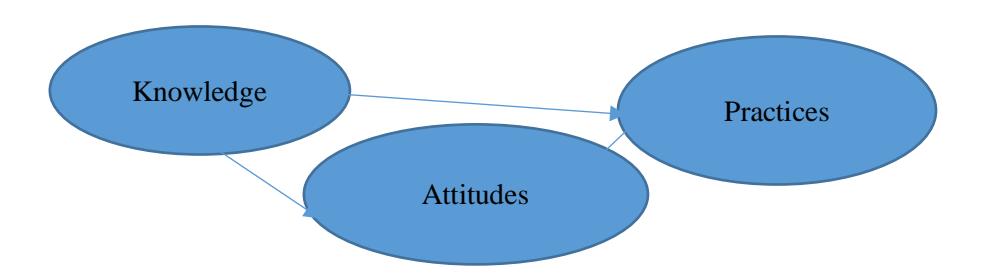
Figure 1. Hypothesized model for the relationship between knowledge, attitudes, and practices
The study utilized the Structural Equation Model (SEM) as a confirmatory technique to determine the hypothesized model validity and additionally examine the relationship between food safety knowledge, attitudes, and self-reported practices of food handlers in HTSFE in Uganda. Different researchers have used SEM to study and establish the relationship between knowledge, attitude, and practices or behavior of food handlers (Markilinderet al., 2022; Sarmaet al.,2022; Ampoto& Aidoo, 2022; Ellinda-Patra et al., 2020; Soon et al., 2020; Lim et al., 2016).
2. Literatur Review
An estimated 600 million people worldwide are affected by foodborne diseases each year and 420,000 deaths are recorded, resulting in a loss of 33 million healthy years (DALYs) (WHO, 2020). World Health Organisation (WHO) reports that approximately 110 billion US dollars is lost in productivity and medical expenses in Low- and Medium-Income Countries (LMICs). Foodborne diseases have been reported in many countries (ECDC, 2020; Moritz et al., 2019). Prevalence of foodborne outbreaks can easily damage the reputation of a country as a tourist destination (WHO, 1999), yet, the tourism industry contributes significantly to the socio-economic development of the host countries (Nangendrakumaret al., 2023, Zarkasyi, Kuniawan and Darma, 2021). Furthermore, foodborne diseases hinder social and economic development by straining the healthcare systems and affecting international food trade (WHO, 2020).
The prevalence of foodborne diseases resulting from public food service establishments has been well documented over the years worldwide (Yasim, Phetvaroon& Zhu, 2021, WHO, 2020, Amoako et al.; 2019; Bhattacharya et al., 2020; WHO, 2020). Unsafe food can affect the reputation and patronization in the food service industry and this dictates the choice of a food service establishment
(Dzeagu-Kudjodji, Adjibolosoo&Otoo-Arthur, 2019; Lee et al.,2012). The majority of FBD outbreaks globally have been attributed to poor food-handling practices (CDC, 2019, Liu, 2015). Food safety plays a pivotal role in overall travel satisfaction, vacation well-being, destination decision process, and inclination to return (Polat and Ozdemir, 2021; Lee et al., 2019; Anderson et al., 2017., & Tsai and Wang, 2017).
Food and Agricultural Organization (FAO) emphasizes that keeping food safe is a complex process that starts from the farm and ends with the consumer, however, different studies have highlighted the importance of food handlers in ensuring the safety of foods (Baser et al., 2021; Akabandaet al., 2017; Soares et al., 2011). Several factors notably food safety knowledge and attitudes of the food handlers have been found to positively influence food handling practices, thus, food safety assurance (Al-Ghazali et al., 2020, Ncube et al., 2020; Nkhebenyane and Lues, 2020; De Souza, De Azvedo&Seabra, 2018; Lim et al., 2016). Wu (2013) noted key barriers to food safety and these included incompetent personnel, lack of a training program, time and resources, layout, and equipment in the kitchen. Wu (2012) suggests that for food safety training to be effective, there is a need for practical skills development and knowledge requirements. The training regime should have an element of assessment in both theory and practical exams. Installation of a video camera in the food preparation area would be of great help and the food safety auditor can use it to check for any defaults during the operation.
3. Material and Method
3.1. Study Area
The study was carried out in Uganda which is located in Eastern Africa and has a latitude of 1.37330N and a longitude of 32.29030E. It borders Kenya in the west, south of South Sudan, east of the Democratic Republic of the Congo, and north of Rwanda and Tanzania (Figure 2). Uganda has a land area of 241,038 km2 and an estimated population of 47.1 million (World Bank, 2021). It is in the heart of the Great Lakes region and is surrounded by three of them, Lake Edward, Lake Albert, and Lake Victoria. Uganda is one world's growing tourist destinations because of its outstanding attractions (UNWTO, 2020). The study was conducted particularly in Highway Tourist Stop-over Foodservice Establishments (HTSFE) in Uganda. These food service establishments are distributed all over the country. Highway tourist stop-over foodservice establishments are food service establishments located along the highways where foods and beverages are prepared and served to long-distance travelers including tourists, domestic travelers, and local communities. The total number of HTSFE considered in this study was 30 as guided by Uganda Tourism Board (UTB) and Uganda Safari Guides Association (USAGA).
. 3.2. Study Design
The study employed a cross-sectional design. A total population of 210 food handlers from 30 HTSFEs in Uganda was considered for this study. The population was determined based on the preliminary study. An appropriate sample size of 136 was attained usingKrejcie and Morgan's table of sample size determination (Krejcie and Morgan, 1970). A systematic random sampling technique was employed in selecting the target respondents from the sampling frame. The unit of inquiry was a food handler and the unit of analysis was the same.
3.3. Questionnaire Development
The questionnaire was developed based on previous studies (Cunha et al., 2014…Soares et al., 2012; Akabandaet al., 2021; Smigicet al., 2016; Farahat, El-Shafie&Waly 2015). The assessment tool for the majority of the above studies was developed based on the recommended food safety handling practices and fulfilled the WHO Five Keys to Safer Food Practices (WHO, 2006), that is, keep clean; separate raw and cooked; cook thoroughly; keep food at safe temperature; and use of safe water and raw materials. The questionnaire was peer-reviewed and pre-tested before being administered to the respondents(food handlers). The Cronbach Alpha coefficient was 0.74, testing for reliability and internal consistency. The questionnaire contained 4 sections focusing on specific areas (socioeconomic and demographic characteristics, food safety knowledge, attitudes, and practices). Section A consisted of the socioeconomic and demographic characteristics of the food handlers (gender, marital status, level of education, age, nationality, job title, work experience, food safety training, and food safety management systems. Section B consisted of 30 closed-ended knowledge questions with 3 possible answers/responses "Yes", "No" and "No idea". The options were provided to limit the possibility of the respondent selecting the right answer by chance. The knowledge variable was anchored on the following constructs; food preparation, food storage, personal hygiene, crosscontamination, and foodborne diseases. The questions examined the respondents' knowledge about food preparation (4 items), food storage (8 items), personal hygiene (4 items), cross-contamination (9 items) and foodborne diseases (5 items). Section C consisted of 16 attitude questions scored on a 5-point Likert scale (Strongly disagree, disagree, Neutral, agree, and strongly agree). Section D consisted of 20 practice questions each with 3 possible answers/responses "sometimes", "Never" and "Always".The attitude variable covered attitudes toward hygienic food handling during storage, preparation, cooking, and service.
Section B: For knowledge, a scale between 0 and 30 (representing the total number of questions on food safety knowledge) was used to evaluate the overall knowledge of the respondents. Every correct response was scored 1 point and the wrong response zero points. Food handlers that obtained a total score of =< 20 points were considered to have "insufficient" food safety knowledge and those that had total scores of >20 points (>66.7% accuracy) were considered to have "good" food safety knowledge. The scoring was done according to Akabandaet al. (2021) and Soares et al. (2012).
Section C: For attitude questions (n= 16) testing the food handlers' perceptions, beliefs, values, and dispositions about food safety. Attitude was evaluated based on a 5-point Linkert scale and each indicator was scaled as follows; strongly agree (4), Agree (3), Neutral (2), Disagree (1), and strongly disagree (0). Conversely, for negatively worded items, the lowest point (0) was given to strongly agree and the highest (4) was given to strongly disagree. A scale between 0 and 64 was used to evaluate the overall attitude of the food handlers. For every correct response, a score of 4 points was given, and for the wrong response zero points. Food handlers that scored =< 40 points were considered to have a "poor" attitude and those that had a total score of >40 points (>62.7%) were considered to exhibit a "good" attitude. The scoring was done according to Akabandaet al. (2021) and Soares et al. (2012).
Section D: Consisted of 20 questions that assessed the practices of the food handlers (self-reported). The practice variable covered the following constructs; food preparation and handling, use of a food thermometer, personal hygiene, food storage, care of working surfaces, and washing-up procedure of the utensils. Every correct response was scored 1(one) point and the wrong response zero points generating a maximum total score of 20 points. Food handlers that attained a total score of => 14(=>70%) were considered to exhibit "good" food hygiene practices and those that had a total score of <14 points were considered to exhibit "poor" hygiene practices. The correct answers were based on recommendations by WHO (2006); CDC (2003) and Cunha, Stedefeldt, and Rosso (2014).
3.4. Data Collection
Data was collected between September and November 2022 using a self-administered pretested peerreviewed structured questionnaire. The food handlers were given 1-2 weeks to fill out the questionnaire. The food handlers participated in the study of their own free will and were instructed not to write their names and identities on the questionnaire. This was meant to ensure anonymity and reduction in respondent bias.
3.5. Construct and Content Validity
For the construct and content validity of the questionnaire, 2 food safety experts and 3 experts in tourism thoroughly reviewed it before it was administered to the respondents. Additionally, the questionnaire was subjected to the Cronbach alpha coefficient test and the reproducibility test and the outcomes were 0.72 (knowledge), 0.75 (attitude), 0.72 (practices), and 0.80 respectively. The questionnaire was subjected to a reproducibility test given the limitations with the use of such instruments such as imprecise respondents and failure to understand the material. This was done to obtain better-quality data. The retest procedure was done 14 days after the first administration. This was done in a similar group of food handlers but those not participating in the study. Data from the pre-test was not included in the final analysis.
3.6. Data Analysis
Descriptive statistics and inferential statistics were derived using the Statistical Package for Social Scientists (SPSS) Version 21 particularly for socio-economic and demographic characteristics of food handlers and knowledge, attitude, and practice scores (KAP scores. Exploratory Factor Analysis (EFA) was conducted to extract questionnaire items that contributed significantly to the knowledge, attitude, and self-reported practices of the food handlers based on their factor loadings of >0.4 (Baser et al., 2017). Factor loadings are measures of the influence of a common factor on a manifest variable or regression coefficients between items and factors and measure the influence of a common factor on a measured variable. Confirmatory Factor Analysis (CFA) and Structural Equation Modelling (SEM) were conducted using Analysis of Moment Structures (AMOS) and the confidence level was set at 95%. This was conducted to establish the relationships between knowledge, attitudes, and practices.
3.7. Ethical Considerations
Both verbal and written consent was sought from the food handlers before they were interviewed. An introduction letter from the institution (Makerere University) allowing the researcher to conduct the research was also presented as well as a valid institutional identity card. Adequate information about the aims of the study was equally shared with the food handlers. It was also made clear to the food handlers that participation was voluntary and they were at liberty not to participate. The food handlers were also informed that they had a right to stop the interview at any stage in case of any discomfort. They were also informed that the data being collected was purely for academic purposes and that maximum confidentiality would be exercised.
4. Results
The results on socioeconomic and demographic characteristics of the food handlers are shown in Table 1. Of the targeted 136 food handlers (sample size), only 108 filled and returned the questionnaires for final analysis generating a response rate of 79.4%. The majority (77.8%) of the food handlers were men aged between 21 and 41 years (85.2%). Most of the food handlers, (61.1%) were married and had worked for more than 2 years (79.4%). Regarding education, most food handlers (79.6%) had a certificate and above. Eighty-eight percent (88%) were full-time employees. A substantial number of food handlers (89.8%) had attended food safety training and a reasonable percentage (41.7%) knew Hazard Analysis Critical Control Points (HACCP).
Table 1. Socio-economic and demographic characteristics of food handlers
| Variable | Item | Number | Percentage (%) |
|---|---|---|---|
| Gender | Male | 84 | 77.8 |
| Female | 24 | 22.2 | |
| Marital status | Married | 66 | 61.1 |
| Single | 42 | 38.9 | |
| <21 years | 5 | 4.60 | |
| Age | 21-41 years | 92 | 85.2 |
| >41 years | 11 | 10.2 | |
| Level of education | No formal education | 2 | 1.90 |
| Primary level | 2 | 1.90 | |
| Secondary level | 18 | 16.7 | |
| Diploma | 66 | 61.1 | |
| Degree and above | 20 | 18.5 | |
| Job-status | Full-time | 95 | 88.0 |
| Part-time | 10 | 9.30 | |
| Intern | 3 | 2.80 | |
| Work experience | < 2 years | 32 | 29.6 |
| 2-4 years | 37 | 34.3 | |
| 5-6 years | 18 | 16.7 | |
| > 6 years | 21 | 19.4 | |
| Food safety training | Yes | 97 | 89.8 |
| No | 11 | 10.2 | |
| Last food safety training | Never | 11 | 10.2 |
| < a year | 63 | 58.3 | |
| > a year | 34 | 31.5 | |
| HACCP training | Yes | 45 | 41.7 |
| No | 62 | 58.3 | |
| Total | 100 | 108 |
Table 2 shows the scores for knowledge, attitudes, and practices. The findings indicated average scores for knowledge (52.8%), self-reported practices (48.1%), and high attitude scores (77.8%). The performance of each questionnaire item for each construct is shown in Tables 3, 4, and 5.
Table 2. Food handlers' knowledge, attitude, and practices scores (%)
| Factor | Status | Percentage |
|---|---|---|
| Knowledge Sufficient knowledge | 52.8 | |
| Insufficient knowledge | 47.2 | |
| Attitude | Good attitude | 77.8 |
| Poor attitude | 22.2 | |
| Self-reported practices | Good practices | 48.1 |
| Bad practices | 51.9 | |
Table 3 shows the responses to knowledge questions by the food handlers as well as the factor loadings. The food safety knowledge variables in Table 3 above were generated based on thirty observations (K1-K30). The best performance was recorded in the area of personal hygiene (89.5%) and the worst in knowledge about foodborne diseases (57.2%). The factor loadings for each
questionnaire item were considered and only those with factor loadings equal to or greater than 0.4 (K1, K3, K6, K18, K24) were considered in the final analysis in the structural equation model as recommended by Baser et al. (2017).
The attitudes of the food handlers were based on 16 indicators (A1-A16). The food handlers demonstrated a negative attitude, particularly in areas of food storage (A7, A8, A9). Similarly, factor loadings were computed and items with factor loadings >0.3 were included in the final model (A1, A5, A13) (Table 4). This is slightly in contrast to what Baser et al. (2017) recommend in line with factor loading cut-offs, however, Hair et al. (2014) and Matsunaga et al. (2010) suggested that factor loadings as low as 0.3 and 0.2 can be accepted in social studies respectively.
The measurement of practices of the food handlers in HTSFE was based on twenty items(P1-P20) and the best practice (95.4%) was recorded in the area of food handlers not being allowed to work when they had wounds on their bodies. However, the worst practice was recorded in the inability to use a food thermometer during food preparation to check for readiness (Table 5). Furthermore, factor loadings were considered to select the questionnaire items to include in the final model of structural equation modeling. Only items with loadings above 0.4 were considered (P3, P4, P6, P20) (Baser et al., 2017).
Table 6 shows the different goodness of fit indices in comparison with the reported acceptable values. As recommended by Soon (2018) and Hair et al. (1998), it is important to use more than one goodness of fit index to evaluate the model fit. All the estimates for the model fit indices fulfilled the accepted values (Table VI). This is a clear indication that the hypothesized model for food safety knowledge, attitude, and practices had a good fit and was acceptable. The structural model between the latent variables; food safety knowledge, attitudes, and self-reported practices is shown in Figure 3.
Table 3. Food handlers'' food safety knowledge"
| Food preparation and cooking K1 Food should be cooked to an internal temperature of ≥1400F Yes 72(66.7% 0.55 K2 Defrosting frozen chicken should be done under running tap water or Yes 62(57.4%) <0.4 in a refrigerator K3 Salads can be kept at room temperature after preparation No (71(65.7%) 0.52 without any safety implications K4 It is ok to wash fruits and vegetables in stationary water No 74(68.5%) <0.4 Average percentage 64.5% Food storage K5 Keeping expired foods with other foods has no safety implications No 81(75%) <0.4 K6 Stacking raw chicken or raw meat on top of other foods has no No 71(65.7%) 0.60 safety implications K7 The refrigeration temperature should be between 20 C and 100 C No (51(47.2%) <0.4 K8 Leaving foods in a can that has been opened has no safety No 67(62%) <0.4 implications K9 All potentially hazardous foods must be kept out of the danger zone Yes 54(50%) <0.4 410 F≤ X ≥1400 F K10 Foods can be left in open packaging No 103(95.4%) <0.4 K11 Storing foods in single-serving containers has no safety implications Yes 40(37%) <0.4 K12 Some food items or utensils can be stored under the sink No 100(92.6%) <0.4 Average percentage 65.6% Personal hygiene K13 It is necessary to tie your hair behind your head and put on a chef's Yes 89(82.4%) <0.4 cap K14 Hands must be washed only after visiting the washrooms No 99 (91.7%) <0.4 K15 It is okay to dry wet hands with an apron No 98 (90.7%) <0.4 K16 Any food handler with open wounds or sores can be allowed to work No 103(95.4%) <0.4 Average percentage 89.95% Cross-contamination K17 Single-serving spoons and forks should be facing down and hands up No 42(38.9%) <0.4 K18 It's not necessary to have different sinks for utensils, food, and No 67(62%) 0.49 hand washing. K19 Any pesticide can be used to kill insects in the kitchen No 85(78.7%) <0.4 K20 Raw foods and cooked foods can be kept together No 103 (95.4% <0.4 K21 Using the same chopping board for salads, fish and beef has no safety No 81(75%) <0.4 implications K22 It is okay to keep raw fish or raw chicken in the upper compartment No 72(66.7%) <0.4 of the refrigerator K23 Wearing watches, rings, and any other jewelry in the kitchen can lead Yes 88(81.5%) <0.4 to food contamination K24 Tasting food using the same spoon or fingers has no safety No 77(71.3%) 0.57 implications K25 Smoking and eating in the kitchen has safety implications Yes 56(51.9%) <0.4 Average percentage 69.04% Foodborne diseases K26 Foodborne diseases are diseases that come as a result of the Yes 78(72.2%) <0.4 consumption of foodstuffs contaminated with pathogenic microorganisms K27 Is Salmonella one of the microorganisms responsible for foodborne Yes 54(50%) <0.4 diseases? K28 Q28. Some foodborne diseases include cholera, typhoid, dysentery, No 36(33.3%) <0.4 and malaria K29 Foodborne diseases are only limited to the following symptoms; No 40(37%) <0.4 nausea, headache, stomach ache, vomiting K30 Is it okay for a food handler with a foodborne disease to continue No 101(93.5%) <0.4 working | Item | Description | Correct answers Frequency (%) | Factor loadings | |
|---|---|---|---|---|---|
| Average percentage | 57.2% | ||||
Table 4. Food handlers'' attitude towards food safety"
| Item | Description | SD (F/%) | D (F/%) | N (F/%) | A (F/%) | SA (F/%) | Mean/SD |
|---|---|---|---|---|---|---|---|
| A1 | Proper hand hygiene can | 1(0.9) | 3(2.8) | 4(3.7) | 38(35.2) | 62(57.4) | 4.45+0.778 |
| prevent food-borne disease (True) | |||||||
| A2 | Food taste is more important than food safety (False) | 55(50.9) | 32(29.6) | 5(4.60 | 9(8.3) | 7(6.5) | 1.9+1.215 |
| A3 | Hand washing can be done in any of the available sinks in the kitchen (False) | 39(36.5) | 44(40.7) | 4(3.7) | 15(13.9) | 6(5.6) | 2.12+1.205 |
| A4 | Food poisoning is not a serious matter (False) | 85(78.7) | 15(13.9) | 1(0.9) | 0(00) | 7(6.5) | 1.42+1.024 |
| A5 | Raw and cooked foods should be stored separately to reduce the risk of contamination (True) | 2(1.9) | 0(00) | 2(1.9) | 25(23.1) | 79(73.1) | 4.66+0.699 |
| A6 | It is necessary to check the temperature of the refrigerator, freezer, and cold room periodically to reduce the risk of food spoilage (True) | 3(2.8) | 4(3.7) | 12(11.1) | 35(32.4) | 54(50) | 4.23+0.982 |
| A7 | Defrosted foods can be cooked after 2 hours (False) | 15(3.9) | 20(8.5) | 9(8.3) | 40(37) | 24(22.2) | 3.35+1.376 |
| A8 | The ideal place to store fresh meat is the uppermost shelf of the refrigerator close to the freezer compartment (False) | 24(22.2) | 17(15.7) | 8(7.4) | 40(37) | 19(17.6) | 3.12+1.488 |
| A9 | Defrosted foods can be refrozen (False) | 19(17.6) | 17(15.7) | 7(6.5) | 40(37) | 25(23.1) | 3.32+0.488 |
| A10 | There is no danger associated with eating and drinking in the kitchen (False) | 51(47.2) | 29(26.9) | 7(6.5) | 7(6.5) | 14(13) | 2.11+1.403 |
| A11 | Foods in damaged or swollen cans can still be used (False) | 66(61.1) | 34(31.5) | 2(1.9) | 3(2.8) | 3(2.8) | 1.55+0.890 |
| A12 | Knives and cutting boards should be properly sanitized to prevent cross-contamination (True) | 11(10.2) | 7(6.5) | 3(2.8) | 26(24.1) | 61(56.5) | 4.10=1.322 |
| A13 | Food handlers who have abrasions or cuts on their hands should not touch foods | 13(12) | 4(3.7) | 6(5.6) | 34(31.5) | 55(50.9) | 4.06+1.331 |
| A14 | without gloves (True) The best way to defrost chicken is to put it in a bowl of cold water (False) | 15(13.9) | 16(14.8) | 0(00) | 45(41.7) | 26(24.1) | 3.47+1.370 |
| A15 | I think by attending a food safety seminar, I would increase my food safety knowledge (True) | 3(2.8) | 2(1.9) | 2(1.9) | 31(28.7) | 72(66.7) | 4.56+0.789 |
| A16 | I think I do not need to attend a food safety seminar because I think I have sufficient knowledge about food safety (False) | 63(58.3) | 37(34.3) | 3(2.8) | 3(2.8) | 1.57+0.888 |
Note: SA (Strongly agree), A (Agree), N (Neutral), D (Disagree), SD (Strongly disagree
Table 5. Food handlers' self-reported practices
| Item | Description | Correct Practices Frequency (%) | Factor loadings |
|---|---|---|---|
| P1 | Our dishwashing procedure involves a 3- step process, that is, washing in soapy | Always 69(63.9%) | |
| water, rinsing in hot water, and submersion into a sanitizer for at least | <0.4 | ||
| P2 | one minute All foods undergoing cooking are checked for readiness by using a food | Always 30(27.8%) | <0.4 |
| P3 | thermometer The thermometer probe is sanitized | Always 50(46.3%) | 0.47 |
| P4 | before being used A copy of the previous inspection report is pinned in the kitchen | Always 56(51.9%) | 0.87 |
| P5 | I work with my ring and watch in the kitchen | Never 89(82.4%) | <0.4 |
| P6 | The food permit and food manager certificate are pinned in a visible location | Always 57(52.9%) | 0.60 |
| P7 | Vegetables and fruits are sometimes kept on a cold floor to extend their shelf life | Never 23(21.3%) | <0.4 |
| P8 | Employees with wounds and sores are freely allowed to work | Never 103(95.4%) | <0.4 |
| P9 | Hand washing is done using a detergent or disinfectant before handling food. | Always 100(92.6%) | <0.4 |
| P10 | Labels on the foodstuffs are read before using the product | Always 97(89.8%) | <0.4 |
| P11 | Vegetables and fruits are normally washed in any sink of choice | Never 73(67.6%) | <0.4 |
| P12 | Defrosted food is cooked immediately | Always 25(23.1%) | <0.4 |
| P13 | All meats are cooked to an internal temperature of at least 1650F | Always 43(39.8%) | <0.4 |
| P14 | The holding temperature for equipment like refrigerators, freezers, and cold rooms is checked periodically | Always 83(76.9%) | <0.4 |
| P15 | Sanitizer test strips are used to test the concentration of the sanitizer (1ppm) | Always 43(39.8%) | <0.4 |
| P16 | I wash and sanitize the knife after chopping raw chicken or meat. | Always 83(76.9%) | <0.4 |
| P17 | Do you work when you are sick (flu, cough, diarrhea)? | Never 88(81.5%) | <0.4 |
| P18 | Different chopping boards for raw meat/fish and fruits and vegetables | Always 94(87%) | <0.4 |
| P19 | Hands are dried using approved methods (e.g., disposable towels, hot air hand drier. | Always 87(80.6%) | <0.4 |
| P20 | I wash my hands after touching raw foods | Always 97(89.8%) | 0.40 |
Table 6. The goodness of fit indices
| Fit indices | Model Value | Accepted value | |
|---|---|---|---|
| Chi-Square/Degrees of Freedom | 1.086 | <3 (Hooper et al., 2008) | |
| Comparative Fit Index (CFI) | 0.975 | >0.95 (Hu and Bentler, 1999) | |
| Goodness of Fit Index (GFI) | 0.923 | >0.90(Hu and Bentler, 1999) | |
| Root Mean square error of Approximation (RMSEA) | 0.028 | <0.05 (MacCallum et al., 1996) | |
| Tucker-Lewis Index (TLI) | 0.968 | >0.95 Bentler and Bonnet, 1980) | |
| Root Mean Square Residual (RMR) | 0.0694 | <0.08 (Hu and Bentler, 1999) | |
The model further shows the direction and extent of relationships in food handlers' food safety knowledge, attitude, and their direct effects on practices. Based on the regression coefficients, food safety knowledge has a positive significant relationship (β= 0.37 p<0.05) with food safety practices hence hypothesis 1 (H1) is sustained. These findings indicated that the food safety knowledge of the food handler directly and significantly affects food safety practices. Based on the magnitude of the regression coefficient (β= 0.37 p<0.05) and the positive direction of the model; food practices will probably increase by 0.37 units with each unit increase in food safety knowledge. The second hypothesis (H2) states that attitude toward food safety directly affects food safety practices. However, the findings from the model indicated that attitude negatively and insignificantly affects food safety practices (β = -0.04 p>0.05) hence rejecting H2. Similarly, there is an insignificant weak relationship between food safety and attitudes (r = 0.10 p> 0.435) thus H3 is rejected. R- squared was 0.133. The relationships between knowledge, attitudes, and practices are shown in the structural model below (Figure 2).
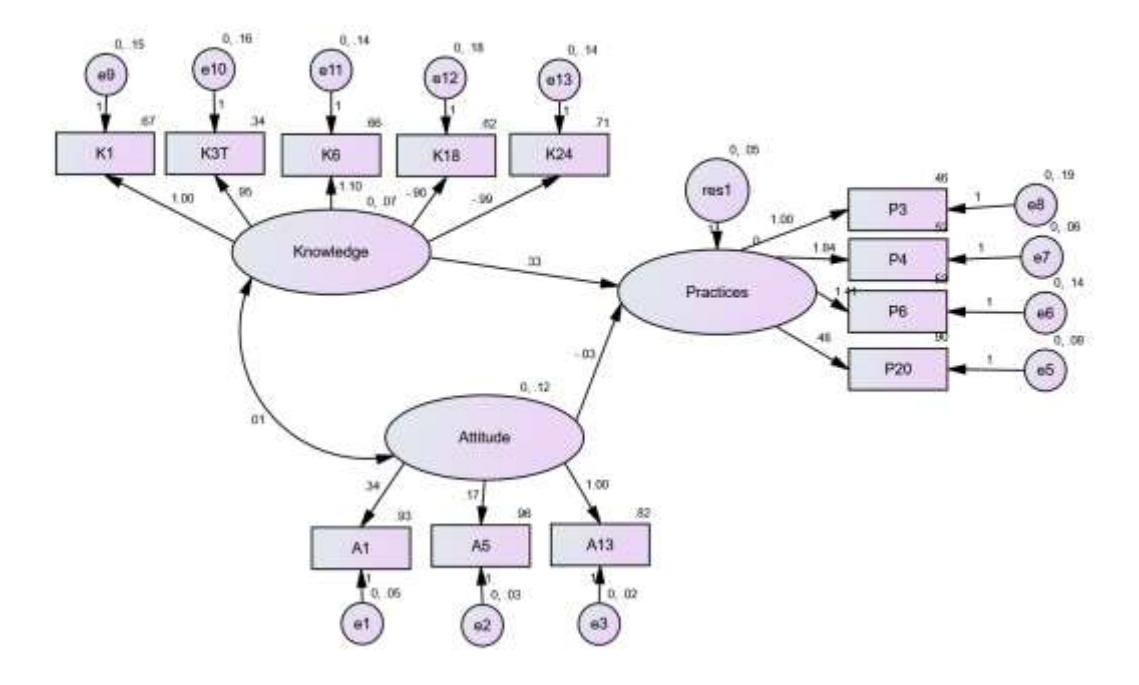
Figure 3. Structural Equation Model for Knowledge attitude and practices of the food handlers in HTSFE
5. Discussion
Most of the food handlers in this study were males. The findings are similar to studies conducted by Mohamandi-Nasrabadi (2021), Hamed and Mohammed (2020), Tuncer and Akoglu (2020); de Souza et al. (2018). However, these findings are contrary to other studies where females were the dominant workforce (Reta et al., 2021; Kibret&Abere, 2012; Akabandaet al., 2017). This disparity could be attributed to the difference in cultures where some cultures are hesitant to allow women to work.
Most of the food handlers were married and these findings are similar to studies by other authors (Akabandaet al., 2017 and Lee et al., 2017). However, the number is much higher than in studies by Kibret&Abere, (2017) and Alemayehu et al. (2021). Married food handlers are more likely to practice hygienic food handling practices because of the value they attach to their work to their family responsibilities.
Concerning age, the majority of the food handlers were aged between 21 and 41 years. The results obtained in this study are similar to those reported by Mohammadi-Nasrabadi (2021); Al-Ghazali et al. (2020); De Souza et al. (2018) and Soares et al. (2012). This age category is composed of youths hence expected to be hardworking and practice hygienic food handling.
In this study, most of the food handlers had an education qualification of a diploma and above. This is in contrast to other studies (Kaptsoet al., 2021, Hossenet al., 2021, Addo-Thamet al., 2020, Victoria et al., 2021, Soares et al., 2012, Faribaet al., 2018). These authors reported very low levels of education of the food handlers in their respective studies. This discrepancy could be attributed to the nature of the establishments where the study was conducted. For example, this current study was conducted in commercial foodservice establishments (HTSFE) where certain levels of education are a key requirement whereas other studies were conducted on street vendors and institutional catering institutions where the level of education might not necessarily be a key requirement. Educated food handlers are more likely to comprehend information regarding food safety. Additionally, they can read food labels, posters, or any other important information related to food safety.
Approximately half of the food handlers had a work experience of 2-6 years and this was slightly higher than in other studies (Lee et al., 2017, Akabandaet al., 2017). The length of time when food handlers are working can be translated into experiential learning hence improvement in food handling practices.
Regarding the frequency of food safety training, the findings of this study are higher compared to other studies (Alemayehu et al., 2021, Tuncer and Akoglu, 2020, Kibret&Abere, 2017, Lee et al., 2017, Akabandaet al., 2017, Halim et al., 2014). The above-mentioned studies were conducted in schools and among street food vendors. The current study was, however, conducted in HTSFEswhere hygiene expectations are usually high thus food safety training. Food safety training is most likely to improve on food safety culture of the food handlers.
Slightly more than half of the food handlers had sufficient food safety knowledge. The findings are similar to studies conducted in Turkey, Taiwan, and Malaysia (Tuncer&Akoglu, 2020; Wu, 2013; Zain and Niang, 2002) respectively. However, the findings are higher than in studies conducted in Ethiopia (Reta et al., 2021) and Egypt (Hamed and Mohammed, 2020). This discrepancy could be due to the nature of the establishments where the study was conducted. For example, the one in Egypt was conducted in cafeterias, restaurants, and roadside food sellers. The inclusion of roadside food sellers could have affected the food safety knowledge scores negatively. With nearly half of the food handlers with insufficient food safety knowledge, there is a high possibility of unhygienic food handling practices putting consumers at risk of FBDs. In the same vein, a large number of food handlers who had previously attended food safety training had sufficient food safety knowledge compared to their opposite counterparts. This indicates the importance of food safety training in improving the food safety knowledge of the food handlers.
The weak correlation and insignificant relationship between food safety knowledge and attitudes implies that the two exogenous variables independently influenced practices. Similar findings were established by Soon et al. (2020) among consumers; and Tan et al. (2013) among food handlers.
This study further revealed a significant positive relationship between knowledge and practices. This probably implies that food handlers who are more knowledgeable about food safety are more likely to exhibit good hygienic practices. These findings are consistent with results from other studies (Marklinderet al., 2022; Sarma et al., 2022; Ampoto& Aidoo, 2022 and Ellinda-Patra et al., 2020). Conversely, other studies noted an insignificant negative relationship between knowledge and practices (Soon et al., 2020; Lim et al., 2016). These contrasting findings could probably be attributed to the nature of the respondents (consumers vs food handlers).
Furthermore, the study findings indicated a negative insignificant relationship between attitude and practices. This could probably imply that irrespective of having a positive attitude but with a knowledge limitation, the practices could still be affected negatively. Similar findings were obtained in other studies (Ampoto& Aidoo, 2022; Ellinda-Patra et al., 2020). In contrast, other studies established a positive significant relationship between attitude and practices (Soon et al., 2020; Lim et al., 2016). This discrepancy could be due to the nature of the respondents in the study. For example, the respondents in the above studies were consumers rather than food handlers and consumers might exhibit positive attitudes toward handling their food.
R-squared statistic explains the proportion of the variance for the dependent (endogenous) variable that is explained by the independent (exogenous) variable(s) in the regression model. According to the model, it implies that 13.3% change in practices can be explained by food safety knowledge and attitudes. This alludes to the fact that behavioral practices are not only predicted by knowledge and attitudes rather other factors influence practices. These sometimes include subjective norms and/or perceived control according to the Theory of Planned Behavior (TPB). Others include optimistic bias, lack of motivation, and inadequate infrastructure (Da Cunha, 2021; Mullan et al., 2013).
6. Conclusion
The food handlers demonstrated average levels of food safety knowledge and practices. Such manifestations can compromise the safety of foods and beverages served in HTSFE. The study suggests that appropriate future routine food safety training tailor-made to address the food handlers' knowledge gaps and practices on food safety should be emphasized. In addition, it is important to recruit food handlers that are well-grounded in food safety. Furthermore, the study suggests that to protect the consumers' risk of exposure, food samples should be analyzed for microbial quality, aflatoxins, pesticide residues, heavy metals, and antibiotic residues to ascertain the quality of the foods and beverages served in HTSFE.
The study was based on self-reported practices by the food handlers instead of actual observed practices and since a good number were educated, it was highly likely for them to give positive responses thereby giving a wrong impression of what was happening in the establishments. The targeted sample size was 136 but only 108 filled and returned the questionnaires. This could probably have impacted on the study findings. Additionally, the research design was cross-sectional in nature, however, some studies have shown that the knowledge, attitude, and practices of the food handlers
tend to improve upon the first assessment. This study is the first of its kind in Uganda particularly in HTSFE and using Structural Equation Modeling.
Globally and particularly in Uganda, the majority of the KAP studies on food handlers have concentrated on street food vendors and institutional catering establishments like schools, and hospitals. By conducting this study in highway tourist stop-over food service establishments, the literature is expanded. The literature is further extended by using Structural Equation Modeling (SEM) to understand the interaction between the above-mentioned variables (Food safety knowledge, attitudes, and practices).
Additionally, many studies using SEM have concentrated in specific parts of the world such as Europe (Marklinderet al., 2022), and Asia (Lim et al., 2016, Soon et al., 2020, Sarmaet al., 2022). The use of SEM in a developing country like Uganda increases the generalizability of the results. Furthermore, Food safety knowledge is an important component of good practices in the food service industry, however, the assumption that it is the main predictor of practices is inaccurate and wrongfully suggested. The study displayed that food safety knowledge and attitudes could only explain and account for 13.3% of the practices implying that there are other factors responsible for 92.7% of the practices. These could probably include the availability of necessary facilities, quality of supervision, and motivating factors.
The study findings suggest that food handlers with good safety knowledge ultimately exhibit good practices. The food safety knowledge can be enhanced through well-planned tailor-made food safety training of the food handlers. Whereas the structural equation model, clearly shows that food safety knowledge and positive attitudes influence the practices of food handlers, they could only explain 13.3% of the practices. This implies that other factors influence practices. These could probably include the availability of necessary facilities, quality of supervision, and motivation factors.
References
- Akabanda, F., Hlortis, E. H and Owusu-Kwarteng, J (2017). Food safety knowledge, attitudes and practices of institutional food handlers in Ghana. BMC Public Health,17(40),1-9.
- Alemayehu, T., Aderaw, Z., Giza, M and Diress, G. (2021). Food safety knowledge, handling practices and associated factors among food handlers working in food establishments in Debre Markos town, Northeast Ethiopia, 2020: Institution-based cross-sectional study. Risk Management and Health Care Policy, 14,1155-1163.
- Ampofo, R. T and Aidoo, E. N. (2022). Structural equation modeling of COVID-19 knowledge and attitude as determinants of preventive practices among university students in Ghana. Food control, 16 e01182.
- Anderson, T. D., Mossberg, L and Therkelsen, A. (2017). Food and tourism synergies: perspectives on consumption, production and destination development. Scandinavian Journal of Hospitality and Tourism, 17(1), pp 1-8.
- Addo-Tham, R; Appiah-Brempong, E; Vampere, H; Acquah-Gyan, E; and Adjei Gyimah Akwasi, A. G. (2020). Knowledge on Food Safety and Food-Handling Practices of Street Food Vendors in Ejisu-Juaben Municipality of Ghana, Advances in Public Health. DOI: 10.1155/2020/4579573.
- Amoako, G. K., Neequaye, E. K., Kutu-Adu, S. G., Caesar, L. D., and Ofori, K. S. (2019). Relationship marketing and customer satisfaction in the Ghanaian hospitality industry: an
- empirical examination of trust and commitment, Journal of Hospitality and Tourism Insights, 2(4). URI: http://hdl.handle.net/123456789/1106
- Al-Ghazali, M., Al-Buhishi, I., Al-Subhi, L., Rahman, M. S., and Al-Rawahi, A. (2020). Food safety knowledge and hygienic practices amongst different groups of restaurants in Muscat Oman. International Journal of Food Science. DOI: 10.1155/2020/8872981.
- Baluka, S. A., Miller, R., and Kaneene, J.B. (2015). Hygiene practices and food contamination in managed food service establishments in Uganda. African Journal of Food Science, 9(1),31-42.
- Baser, F., Ture, H., Abubakirora, A,Sanlier, N and Cil, B. (2017). Structural modeling of the relationship among food safety knowledge, attitude, and behavior of hotel staff in Turkey. Food Control, 73,438-444.
- Bentler, P. M., and Bonnet, D. C. (1980). Significance tests and goodness of fit in the analysis of covariance structures. Psychological Bulletin, 88(3),588–606.
- Bhattacharya, A., Shantikumar, S., Beaufoy, D., Allman, A., Fenelon, D., Reynolds, K., Normington, A., Afza, M., and Todkill, D. (2020). An outbreak of Clostridium perfringens food poisoning linked to leeks in cheese sauce: An unusual source. Epidemiology and Infection, 148(43), 1–7.
- Centers for Disease Control and Prevention. (2019). Foodborne illness outbreaks at retail establishments National Environmental Assessment Reporting System, 16 state and local health departments, 2014–2016.
- Center for Disease Control and Prevention. (2013). Tracking and reporting foodborne disease outbreaks". http://www.cdc.gov/features/dsfoodborneoutbreaks/. Retrieved on 28/03/2023.
- Chatterjee, T. K and Rishi, B. (2020). Determining factors of length of stay of Indian domestic tourists. ASEAN Journal on Hospitality and Tourism, 18(1), 29-42.
- Cunha, D. T., Stedefeldt, E., & Rosso, V. V. (2014a). He is worse than I am: The positive outlook of food handlers about foodborne disease. Food Control, 35, pp 95–97.
- Cunha, D. T., Stedefeldt, E., & Rosso, V. V. (2014b), "The role of theoretical food safety training on Brazilian food handlers' knowledge, attitude and practice. Food Control, 43, 167– 174.
- European Center for Disease Prevention and Control. (2020). Salmonella is the Most Common Cause of Foodborne Outbreaks in the European Union. 2020. https: //www.ecdc.europa.eu/en/news-events/salmonella-most-common-cause-foodborneoutbreaks-european-union (accessed on 20 September 2023).
- Dzeagu-Kudjodji, J., Adjibolosoo, S &Otoo-Arthur, D. (2019). "Promoting indigenous dishes in luxurious hotels in the hospitality industry: the case of three selected hotels in the Accra metropolis of greater Accra region. European Journal of Research and Reflection in Management Sciences, 7(4), 1-28.
- Ellinda-Patra, M. W; Dewanti-Hariyadi, R; and Nurtama, B. (2020). Modeling of food safety knowledge, attitude, and Behavioural characteristics. Food Research, 4(4), 1045-1052.
- Farahat, M. F. El-Shafie, M. M. and WalyM. I. (2015). Food safety knowledge and practices among Saudi women". Food Control, 47,427–435.
- Fariba, R; Gholamreza, J. K; Saharnaz, N; Ehsan, H; and Masoud, Y. (2018). Knowledge, attitude, and practice among food handlers of semi-industrial catering: a cross-sectional study at one of the governmental organizations in Tehran. Journal of Environmental Health Science and Engineering, 16, 249–256.
- Hair, J. F; Black, W. C; Babin, B. J; Anderson, R. E. (2014). Multivariate data analysis. Pearson New International Edition; Pearson Education Limited: Harlow, UK.
- Hossen, T; Ferdaus, J; Hasan, M; Lina, N. N; Kumar, A; Barman,S. K; Paul, D. K; Roy, R. K (2021). Food safety knowledge, attitudes and practices of street food vendors in Jashore region, Bangladesh. Food Science and Technology, 41(1),226-239.
- Hamed, A., and Mohammed, N. (2020). Food safety knowledge, attitudes and self-reported practices among food handlers in Sohag Governorate, Egypt. East Mediterranean Health Journal, 26(4), 374-381.
- Hu, L. T and Bentler, P. M. (199). Cutoff criteria for fit indexes in covariance structure analysis: Conventional criteria versus new alternatives. Structural Equation Modeling. A Multidisciplinary Journal, 6(1), 1–55.
- Hooper D, Coughlan J, Mullen M. (2008). Structural equation modeling: Guidelines for determining model fit. Electronic Journal of Business Research Methods, 6 (1),53–60.
- Kaptso, G. k; Tchabo, W; Mbafor, C. B; Nkeudem, A, G; Amungwa, F. A and Mbofung, C. M. (2021). Assessment of Food Hygienic and Vending Practices among Street Food Vendors in Buea and Kumba City Council (South-West Region Cameroon). Food Science and Technology, 6 (2),263-274.
- Kibret, M. and Abere, B. (2012). The Sanitary Conditions of Food Service Establishments and Food Safety and Knowledge and Practices of Food Handlers in Bahir Dar Town.Ethiopian Journal of Health Sciences, 22, 27-35.
- Krejcie, R.V., & Morgan, D.W.(1970). Determining Sample Size for Research Activities. Educational and Psychological Measurement.
- Ko, W. H. (2013). The relationship between Food safety knowledge, attitudes, and self-reported HACCP practices in restaurant employees. Food Control, 29 (1),192-197.
- Kumar, D., Zulkifli, N and Ray, N. (2023). Identifying critical factors for sustainable tourism and local community development. Evidence from select destinations in Bangladesh. ASEAN Journal on Hospitality and Tourism, 21(1), 124-135.
- Lee, Y., Pennington-Gray, L. and Kim, J. (2019). Does location matter? Exploring the spatial patterns of food safety in a tourism destination. Tourism Management, 71, pp 18-33.
- Lee, L. E., Niode, O., Simone, A. H and Bruhn, C. M. (2012). Consumer perceptions on food safety in Asian and Mexican Restaurants. Food Control, 26 (2), 531-538.
- Lee, J., Almanza, B., A., Jang, S., Nelson, D. C., and Ghiselli, R. F. (2013). Does transformational leadership style influence employees' attitudes toward food safety practices? International Journal of Hospitality Management; 33, 282-293.
- Lim, T; Chye, F. Y; Sulaiman, M. R; Suki, N. M., and Lee, J. (2016). Structural modeling on food safety knowledge, attitude, and behavior among the Bum Bum Island community of Semporna, Sabah. Food Control, 60,241-246.
- Liu, Y. Y. H. Tam, Y. H and Yuan, J (2015). A foodborne outbreak of gastroenteritis caused by Vibrio parahaemolyticus and norovirus through non-seafood vehicles. PLoS One,10 (9), e0137848.
- Liqun, C., Wee, V. and Kumar, J. (2023). Cruising after a COVID-19 pandemic: Factors influencing tourists' purchase intention. ASEAN Journal on Hospitality and Tourism, 21(1), 81-89.
- Nangendrakumar, N., Lokeshwara, A., Jayasuriya, K. R. G. T and Ravisara, H. G. A. M., Weerawickrama, M. J., and Madushan, M. G. D. (2023). Social economic factors and tourism
- impact analysis using indicator approach. ASEAN Journal on Hospitality and Tourism, 21(1), 1- 16
- Marklinder, I; Eskhult, G; Ahlgren, R; Blücher, A; Börjesson, S. M. E; Moazzami, M; Schelin, J; Danielsson-Tham, M. L. (2022). A Structural Equation Model Demonstrating the Relationship between Food Safety Background, Knowledge, Attitudes and Behaviour among Swedish Students. Foods, 11(1). DOI: 10.3390/foods11111595.
- MacCallum, R. C; Browne, M. W and Sugawara, H. M. (1996). Power analysis and determination of sample size for covariance structure modeling. Psychological Methods, 1(2),130–149.
- Matsunaga, M. (2010). How to Factor-analyse your data right: Do's, Don't's, and How-To's. International Journal of Psychological Research, 3, 97-110.
- Mohammadi-Nasrabadi, I., Salmani, Y and Esfarjani, F. (2021). A quasi-experimental study on the effect of health and food safety training intervention on restaurant food handlers during the Covi-19 pandemic. Journal of Food Science and Nutrition, 9(7), 3655-3663.
- Moritz, E. D; Ebrahim-zacheh, S. D; Wittry, B; Holst, M. M; Daise, B; Zern, A; Taylor, T; Krammer and Brown, L. G. (2023). Foodborne disease outbreaks at retail food establishments: National environmental reporting system, 25 state and local health departments, 2017-2019: CDC morbidity and mortality weekly report: Surveillance summary 2023, 72(6).
- Mullan, B; Wong, C; and Kothe, E. (2013). Predicting adolescents' safe food handling using an extended Theory of Planned Behaviour. Food Control, 31, 454-460.
- Muyanja, C., Nayiga, L., Namugumya, B., &Nasiyama, G. (2011). Practices, knowledge and risk factors of street vendors in Uganda. Food Control, 22,1551-1558.
- Ncube, F., Kanda, A., Chijokwe, M., Mabaya, G and Nyamugure, T. (2020). Food safety knowledge, attitudes and practices of restaurant food handlers in a lower middle-income country, Food Science and Nutrition, 8(3),1677-1687.
- Nkhebenyane, J. S and Lues, R. (2020). The knowledge, attitude, and practices of food handlers in central South African hospices. Food Science & Nutrition, 8 (6),2598– 2607.
- Polat, E and Ozdemir, S. S. (2021). Food and beverage experience in tourism in the context of the experience economy. Journal of Gastronomy Hospitality and Travel. 4(2), pp 409-420.
- Reta, M. A., Lemma, M. T., Gemeda, A. A., and Lemlem, G. A. (2021). Food handling practices and associated factors amongst food handlers working in public food and drink service establishments in Woldia, North East Ethiopia. Pan African Medical Journal, 40 (128),1-19.
- Soon, J. M; Wahab, I. R. A; Hamdan, R. H; Jamaludin, M. H (2020). Structural equation modeling of food safety knowledge, attitude, and practices among consumers in Malaysia. PLoS One, 15 (7), e0235870.
- Sarma, P. K; Alam, M. J and Begum, I. A. (2022). Red meat handlers' food safety knowledge, attitudes, and practices in the Dhaka megacity of Bangladesh. International Journal of Food Properties, 25(1),1417-1431.
- Soares, L.S., Almeida, R.C.C., Cerqueira, E.S., Carvalho, J.S. and Nunes, I.L. (2012). Knowledge, Attitudes, and Practices in Food Safety and the Presence of Coagulase-Positive Staphylococci on Hands of Food Handlers in the Schools of Camacari, Brazil. Food Control, 23, 184-190.
- Tsai, C and Wang, Y. (2017). Experiential value in branding food tourism. Journal of Destination Marketing and Management. 6 (1), pp 56-65.
- Tuncer, T., and Akoglu, A. (2020). Food safety knowledge of food handlers working in hotel kitchens in Turkey. Food and Health, 6 (2),77-89
- UNWTO. (2020). World Tourism Organization, Compendium of Tourism Statistics dataset. UNWTO. Madrid.
- Victoria, A. G., Oliveira, J. D. C., Pereira, L. C. D., Faria, C. P and Jose, J. F. B. (2021). Food safety knowledge, attitudes and practices of food handlers. A cross-sectional study in school kitchens in Espirito Santo, Brazil. BMC Public Health, 21(349). DOI: 10.1186/s12889-021-10282-1
- World Health Organization (2020), "WHO estimates of the global burden of foodborne diseases: Foodborne diseases burden epidemiology reference group 2007-2015", Retrieved from https://apps.who.int/iris/bitstream/handle/10665/199350/9789241565165 on 19/1/2023.
- World Health Organisation. (1999). Food Safety.
- World Health Organization (2006). Five keys to safer food. Geneva, Switzerland.http://www.who.int/foodsafety/publications/consumer/5 keys/en/. Accessed Jan 2023.
- World Health Organization (2020). WHO estimates of the global burden of foodborne diseases: Foodborne diseases burden epidemiology reference group 2007-2015. Retrieved from https://apps.who.int/iris/bitstream/handle/10665/199350/9789241565165 on 9/02/2023.
- Wu, S (2013), "Innovative food safety strategies in a pioneering hotel. Food and Nutrition Sciences, 4, 1054-1059.
- Wu, S. L. (2012). Factors influencing the implementation of food safety control systems in Taiwanese International tourist hotels. Food Control, 28 (2), 265-272.
- Zain, M. M and Naing, N. N. (2002). Socio-demographic characteristics of food handlers and their knowledge, attitudes, and practices towards food sanitation. A preliminary report, 33 (2),410-417.
- Zarkasyi, M. R., Kuniawan, D. A and Darma, D. C. (2021). The prospect of Halal Tourism destination. A Strategy for Ponorogo Regency, East Java, Indonesia. ASEAN Journal on Hospitality and Tourism, 19(2), 158-166.