

1. Introduction
Medical tourism, the practice of travelling to other countries for medical care, is a growing industry (Sonalika, 2016). It is prevalent for cost-effective treatments and cosmetic surgery (Berryman and Tompkins, 2010). However, this trend raises concerns about the quality and oversight of care and the potential for legal and reimbursement issues (Muzaffar and Hussain, 2016). This trend is particularly evident in India, where Western patients seek high-quality care at affordable prices (Ramesh and Lakshmi, 2012). The globalisation of healthcare has further fuelled this trend, with patients from high-income countries seeking treatment in emerging and developing economies (Cioban et al., 2018). Medical tourism's rise presents challenges and opportunities, impacting the healthcare landscape worldwide (Horowitz et al., 2007). As a result, the medical tourism market is rapidly expanding, with countries vying for a larger share (Doğan and Yüzbaşıoğlu, 2021).
The growing trend of medical tourism, where individuals travel internationally for healthcare services, has garnered significant interest from academic and professional communities. In (Costina et al., 2013) and (Agbeh and Jurkowski, 2005), both authors highlight the increasing popularity of this practice, with the latter emphasising its potential as a captive market for the tourism and hospitality industry. However, Freyer and Kim (2013) underscore the need for more scientific research in this field, particularly in defining the practice and understanding its impact on both source and receiving countries. Cheung and Wilson (2007) raise concerns about medical tourism's potential challenges and complications, such as patient selection and continuity of care. These studies underscore the need for further exploration and analysis of the implications of medical tourism.
However, there is a lack of consensus on its definition and a need for more research to understand its impact on healthcare systems and public health (Klimova and Kuča, 2020). The industry's growth is influenced by factors such as economic feasibility and the availability of infrastructure (Osadchuk et al., 2020). Despite its potential benefits, ethical, political, and legal concerns must be addressed (Freyer and Kim, 2013).
Many studies have explored the field of health tourism through bibliometric analysis. Habibi et al. (2021) identified vital themes such as marketing, economics, and ethics, while Mohanan and Shekhar (2022) highlighted the growing importance of wellness tourism, particularly in China. Akin (2021) focused on the Turkish perspective, noting the diversity of subjects and interdisciplinary collaboration in health tourism research. Chatterjee and Datta (2023) emphasised the role of healthcare hotels in medical and wellness tourism, suggesting a focus on infrastructure, customer satisfaction, and service quality. These studies collectively underscore the complexity and potential of health tourism and the need for further research in this area. With the Bibliometric analysis technique, the research questions that supposed to be answered in this research study are: (1) What are the patterns and strengths of international collaboration among leading countries in medical tourism research? (2) Who are the leading authors in the field of medical tourism research? (3) Which articles and journals are the most cited in medical tourism research? and (4) What are the most frequently occurring keywords and topics related to medical tourism among academics?
2. Literature Review
Medical tourism is a complex and evolving field with implications for public health (Klimova, 2020). It is a growing trend with the potential to impact the healthcare industry significantly (Mehta and Ray, 2023). The role of hospitality and destination marketing in enhancing the medical tourism experience is an area that requires further research (Cormany, 2010). The demographic profile, motivations, and value perceptions of medical tourists are also important considerations (Pasaco-González et al., 2023).
Medical tourism significantly impacts healthcare access, potentially widening access to services while maintaining patient safety (Nola and Radovčić, 2021). The industry is influenced by patient satisfaction, quality of services, and effective marketing strategies (Taufik and Sulistiadi, 2018). However, it is also affected by economic downturns, concerns about care quality, and political instability (Bauer, 2009). The rapid growth of medical tourism raises concerns about ethical, legal, and medical risks due to varying standards and regulations (Radovčić and Nola, 2018). Some researchers have identified knowledge gaps in emerging technologies, vulnerable populations, and comparative analyses between healthcare providers (Behrmann and Smith, 2010).
The bibliometric analysis of global research trends in medical tourism reveals significant insights. The study indicates the benefits of medical tourism in developing and developed countries (Ferdosi et al., 2013). Studies highlight the importance of medical infrastructure, customer satisfaction, and service quality in healthcare hotels for medical treatment and wellness tourism (Chatterjee and Datta,2023). Additionally, the growth and contributions of journals like Tourism Analysis and Tourism: An International Interdisciplinary Journal are crucial in understanding the evolving landscape of medical tourism research (Bashir and Singh,2023). Furthermore, the evolution of medical informatics, including the rise of artificial intelligence in healthcare, mobile health, and the impact of COVID-19, plays a significant role in shaping the future of medical tourism (He et al.,2022).
The literature on medical tourism is diverse, covering both international and domestic aspects (Hudson and Li, 2012). A bibliometric study by (Habibi et al.,2021) highlights new concerns, such as perceived value and destination image, and identifies gaps in the emotional aspects of tourists' decision-making. Reed (2008) discusses the challenges and implications of medical tourism, including continuity of care, cultural differences, and ethical issues. A previous study was conducted to systematically collect existing articles and describe and analyse the different fields of medical tourism, including the definitions of medical tourism, motivations of medical tourists, marketing in medical tourism, and ethical issues in medical tourism and its impact on the global health system (Amini et al.,2022).
Medical Tourism raises ethical, legal, and medical concerns due to varying standards and regulations in different countries (Radovčić and Nola, 2018). The industry is driven by various stakeholders, including government agencies and private entities, and is seen as a resource for economic development (Turner, 2007). However, it can exacerbate regional economic inequalities and undermine health equity (Turner, 2007). The medical tourism industry is facing numerous challenges. Key issues include ethical concerns, legal frameworks, and impacts on local healthcare systems (Behrmann and Smith, 2010).
2.1 Knowledge Mapping
Knowledge mapping, a vital tool in bibliometric analysis, has been utilised in various studies to visualise and analyse the evolution and trends in different fields (Guo and Zhang, 2022). Different Studies used text mining and CiteSpace to pre-process data and analyse health literacy research (Santosa,2023; Liang et al.,2018). Shashi et al. (2021) employed bibliometric and network analysis to understand the development of knowledge management research. Prior Studies highlighted the role of knowledge mapping in revealing hidden patterns in scientific research (Guo and Zhang,2022). These studies collectively demonstrate the broad application of knowledge mapping in bibliometric analysis.
2.2 Bibliometric Analysis
Bibliometric analysis, a quantitative study of bibliographic material, has been applied to various fields. Merigó and Yang (2013) used bibliometric analysis to identify influential research in operations
research and management science. Alhuay-Quispe et al. (2022) highlighted the processes and tools commonly used in bibliometric studies, including data visualisation. Past studies have applied bibliometric techniques to information science literature, revealing authorship, publication, and citation patterns (Donohue, 1972). Lazarides et al. (2023) emphasised the importance of following a systematic review methodology in bibliometric analysis and the increasing acceptance of these analyses in medical literature.
Bibliometric analysis, a statistical tool for visualising scientific developments, has been used to study academic anxiety (Azhari et al., 2022). Medical literature increasingly accepts it for identifying influential papers, authors, and institutions (Lazarides et al., 2023). This approach has also been applied to operations research and management science, revealing influential journals, papers, and authors (Merigó and Yang, 2013). Lazarides et al. (2023) further emphasise the importance of following a systematic review methodology in bibliometric analysis.
Bibliometric analysis, a statistical tool for visualising scientific developments, has been used to study academic anxiety (Azhari et al., 2022). Medical literature increasingly accepts it for identifying influential papers, authors, and institutions (Lazarides et al., 2023). This approach has also been applied to operations research and management science, revealing influential journals, papers, and authors (Merigó and Yang, 2013). Lazarides et al. (2023) further emphasise the importance of following a systematic review methodology in bibliometric analysis.
3. Methodology
3.1. Data Sources
Scopus Database, developed by Elsevier, is a comprehensive resource that covers a wide range of literature, including peer-reviewed articles, trade publications, conference proceedings, and patent records (Ballew, 2009). It is beneficial for collection development and research, allowing users to search forward and backward in time (Burnham, 2006). The database is a valuable tool for researchers and those involved in structural genomics, as it classifies protein domains based on their evolutionary and structural relationships (Conte et al., 2002; Andreeva et al., 2019). This paper presents an in-depth Scientometric analysis of the global research trends in medical tourism, focusing on the period between 2019 and 2024 because the COVID-19 pandemic, which began in late 2019, significantly impacted global travel and healthcare systems. This period saw unprecedented challenges in medical tourism, such as travel restrictions, safety concerns, and the reorganisation of healthcare priorities.
Many studies have utilised the Scopus database for bibliometric analysis in medical research. Thomas et al. (2023) focused on medical image analysis, identifying key trends and knowledge gaps. Tanveer et al. (2020) evaluated the Saudi Medical Journal, highlighting its international recognition and a shift towards quality over quantity. Hod (2022) examined medical education during the COVID-19 pandemic, revealing a strong link between the United States and other countries. Baas et al. (2020) emphasised the trustworthiness and high-quality data of the Scopus database. Scopus is used for large-scale analyses in various research areas and is the largest abstract and citation database in the literature (Ballew, 2009; Schotten et al., 2017).
3.2. Keywords and search criteria
Table 1 outlines the search criteria and keywords used to extract relevant literature for a bibliometric analysis from the Scopus database. The search focused on articles that included the Keywords " Medical Tourism" and " Medical Tour " within their titles, abstracts, or keywords.
Database Search Field Keywords Period Subject Area Document Type Source Title Source Type Language Results Found Scopus Article title, Abstract, Keywords "Medical Tourism" AND "Medical Tour" 1 January 2019 - 13 May 2024 Business Management and Accounting, Social Science Article All Journal English 630
Table 1. Keywords and search Criteria
Source: Scopus database (2019-2024)
In the data collection process centred on "Medical tourism", an organised data acquisition and analysis method was adopted, beginning with selecting the Scopus database. Scopus is a broad repository of peer-reviewed literature (Schotten et al., 2017). The study employed a specific keyword, primarily "Medical Tourism," to refine and focus the database search. This initial query found 3,279 results. Then, we searched for an 'article' published in the 'Journal' indexed in the Scopus database in 'English language' from January 2019 to May 2024. This cleaned data was exported in CSV format on 13 May 2024, facilitating further analysis. CiteSpace 6.3.R1 software was used to visualise the exported data, enabling the examination of patterns and trends within the subject areas of "Business Management and Accounting", "Social Science", and "Medicine" in the context of medical tourism. This systematic approach underscores the meticulous steps undertaken to ensure the reliability and applicability of the data to the research objectives. (See figure.1)
3.3. Bibliometric analysis tools
CiteSpace 6.3.R1 software was used to visualise the exported data, enabling the examination of patterns and trends (Chen,2005). VOSviewer 1.6.20 was employed to map the research landscape, identifying trends, themes, and network structures shaping the field (Eck and Waltman, 2009).
3.4. Bibliometric Techniques
The study used several bibliometric techniques to map out the dynamics within medical tourism research. Citation analysis was employed to evaluate the impact and influence of articles and authors by calculating the number of times other scholars cited them. Co-citation analysis identified pairs of articles that are frequently cited together, helping to uncover the underlying structure of the research field. Keyword co-occurrence analysis examined the frequency and patterns of keyword usage to identify emerging themes and topics in medical tourism research (Donthu et al., 2021).
4. Analysis and Findings
4.1. Publication trends
The number of publications about "Medical Tourism" During the five years (2019-2024) is shown in Figure 1. The data indicates a fluctuating pattern in the number of publications related to Medical Tourism over several years. This trend shows an initial increase in publications, peaking in 2021, followed by a decline (Lunt et al.,2014). The sharp peak in 2021 might be attributed to increased study funding, technological developments, or amplified academic interest in Medical Tourism due to the COVID-19 pandemic.
4.1.1. Amplification phase (2019-2021)
The Amplification phase (2019-2021) is marked by a significant increase in publications and research activities within this field. During this period, there was a noticeable rise in academic interest and scholarly output, peaking in 2021. The pandemic significantly affected global healthcare systems and the movement of people across borders for medical purposes (Benton and Papademetriou, 2021). This disruption likely spurred additional research into alternative and emerging aspects of medical tourism (Follis et al.,2023). The data shows a steady increase from 108 publications in 2019 to a peak of 145 in 2021. This suggests that the field was dynamically responding to global health trends and the evolving needs of the medical tourism sector during these challenging times.
4.1.2. Diminution phase (2021-2024)
After 2021, a shift toward the Diminution Stage begins, where the number of publications starts to decline, indicating a possible stabilisation or shift in research priorities within the field (Gillson and Muramatsu,2020).
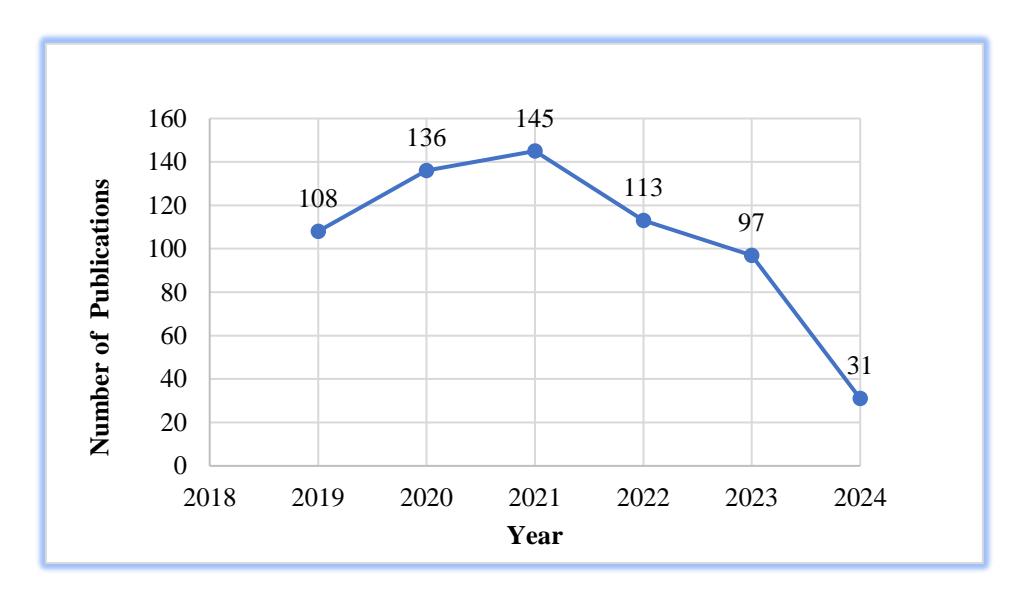
Figure 1. Number of Publications on "Medical Tourism" Source: Scopus database (2019-2024)
4.2. Collaboration Network of Medical Tourism Research
4.2.1. Prominent Countries/regions
In the collaboration network of countries/regions, 17 countries published a minimum of one article. Forty-four countries published at least five articles. In general, there is a well-established collaborative network between countries. A larger circle and font are more critical in a collaborative image. The United States, India, Malaysia, and Great Britain are the most prominent countries in "medical tourism" research. The dark side of the world map depicts the large number of publications (Figure 2).
The USA has the most publications, with 114 articles, and India with 65 publications, with 354 references. The following countries are Malaysia (52 publications), the United Kingdom (52), China (49), Australia (44), Iran (38), South Korea (34), Thailand (58), and Turkey (26 publications).
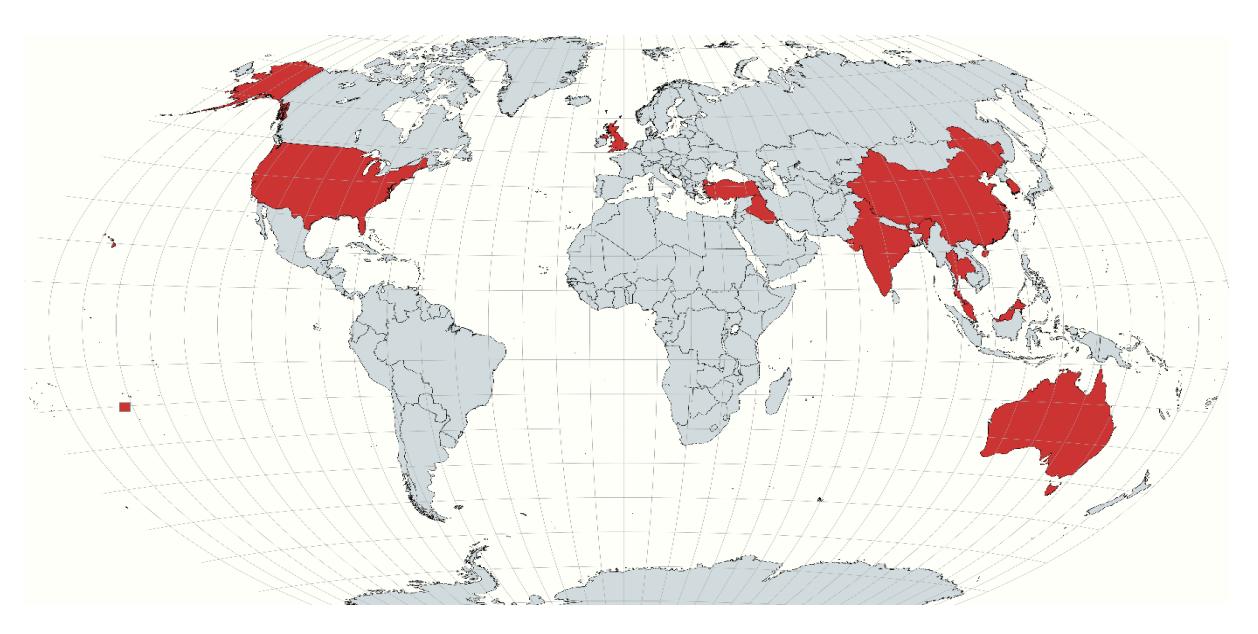
Note: Dark shade represents the prominent countries based on the number of publications
Figure 2. Prominent Countries/regions based on the number of publications Source: Map, Author's Compilation (2024)
4.2.2. Prominent Authors
In the author collaboration network, 13 authors have published at least one article. Twenty-three authors published at least three articles. Table 2 lists the top 10 authors with the number of publications, affiliations, and citations.
The prominent authors are Anita Medhekar (6 publications and 101 citations) from Central Queensland University, Australia, and Sunghyup Sean Hyun (5 publications and 46 citations) from South Korea. They are followed by two authors who have published five articles, Ririn Tri Ratnasari from Universitas Airlangga and Jeremy Snyder from Simon Fraser University. Jeremy Snyder has a collaborative network with his colleague, Valorie A. Crooks (4 publications) at Simon Fraser University. Ho Yin Wong, with 4 Deakin University papers, is also a prominent author with 92 citations. In the field of medical tourism, researchers around the world have formed a collaboration network on a specific scale. However, the collaboration between researchers from different countries and institutions still needs to be strengthened (See Table 1).
| Rank | Authors | Documents | Citations | Institutions | Country |
|---|---|---|---|---|---|
| 1 | Anita | Central | |||
| Medheker | 6 | 101 | Queensland | Australia | |
| University | |||||
| 2 | Sunghyup | 5 | 46 | Hanyang | South |
| Sean | 3 | 40 | University | Korea | |
| 3 | Ririn Tri | 5 | 20 | Universitas | Indonesia |
| Ratnasari | 3 | 20 | Airlangga | muonesia | |
| 4 | Leremy | Simon | |||
| Jeremy Snyder | 5 | 22 | Fraser | Canada | |
| Silydel | University | ||||
| 5 | Valorie A. | Simon | |||
| Crooks | 4 | 15 | Fraser | Canada | |
| CIOOKS | University | ||||
| 6 | Timothy J. | University of | |||
| Lee | 4 | 35 | the Sunshine | Australia | |
| Coast | |||||
| 7 | Andrea | 4 | 36 | Monash | Australia |
| Whittaker | • | University | 1100011111 | ||
| 8 | Ho Yin | 4 | 92 | Deakin | Australia |
| Wong | University | ||||
| 9 | Monika | WSB | |||
| Boguszewicz- | 3 | 22 | University | Poland | |
| 4.0 | Kreft | • | ** 1 | ||
| 10 | Suja | University of | United | ||
| Chaulagain | 3 | 54 | Central | States of | |
| Florida | America |
Table 2. Prominent Authors based on the number of publications
Source: Author's research by using VOSviewer 1.6.20 (2024)
4.3. Co-Citation Network of Medical Tourism Research
4.3.1. Document co-citation network.
Figure 3, created with CiteSpace 6.3.R1 software, shows the document's co-citation network, consisting of 180 network nodes and 557 network lines, with a modularity (Q) of 0.6639 and a network density of 0.0346.
We select keywords and a log-likelihood ratio (LLR) weighting algorithm to label clusters. The top 8 clusters are presented in Table 3.
These networks can help future researchers quickly find major research themes and choose appropriate research topics. The satisfaction, with 34 member references, is the largest cluster. Based on the average mean cite year, satisfaction is an emerging topic that researchers have focused on recently. The following clusters are health care (22), medical services (17), perceived competence (16), choice modeling (13), Transnational Medical Travel (12), medical health-wellness tourism (8), and Best Worst Method (3).
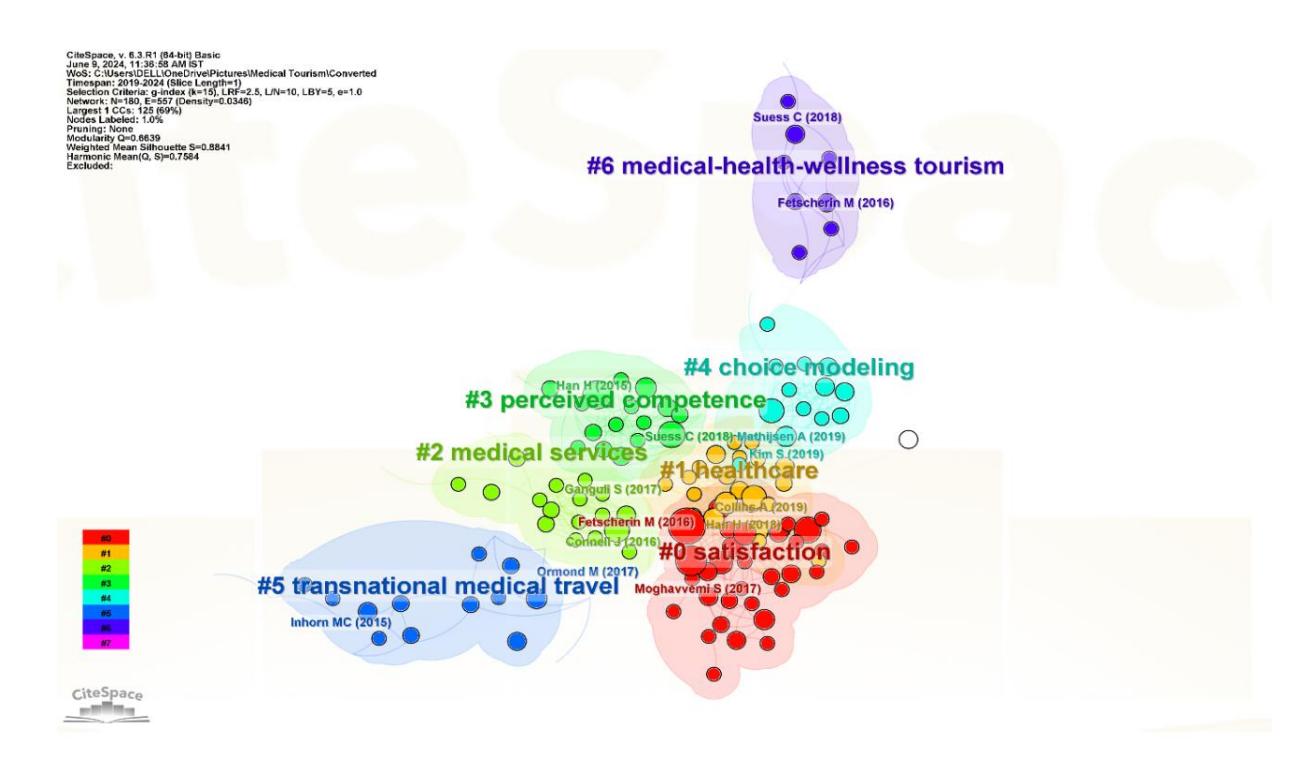
Figure 3. Network Visualisation of Document Co-citation Source: Author's research by using CiteSpace 6.3. R1 (2024)
Table 3. The Eight Major Clusters in Medical Tourism Research
| Cluster | Size | Silhouette | Label (LLR) | Mean (Year) |
|---|---|---|---|---|
| 0 | 34 | 0.787 | Satisfaction | 2017 |
| 1 | 22 | 0.891 | Healthcare | 2019 |
| 2 | 17 | 0.974 | Medical Services | 2016 |
| 3 | 16 | 0.838 | Perceived Competence | 2016 |
| 4 | 13 | 0.919 | Choice Modeling | 2021 |
| 5 | 12 | 0.952 | Transnational Medical Travel | 2016 |
| 6 | 8 | 0.975 | Medical health-wellness tourism | 2018 |
| 11 | 3 | 1 | Best Worst Method | 2019 |
Source: Author's research by using VOSviewer 1.6.20 (2024)
The silhouette score is used to measure the homogeneity and quality of a cluster; the higher the silhouette score, the better the homogeneity. The clustering result is considered reliable if the silhouette score is 0.7 or above. The clustering result is acceptable if the silhouette score is more than 0.5. All the clusters listed in Table 3 have silhouette scores above 0.7, indicating that these clusters are powerful and persuasive (Zhou et al.,2019).
Most Cited Articles
The most cited articles are mentioned in Table 4, which presents a ranked list of influential academic papers in medical tourism based on citation counts.
Table 4. Top 10 Most Cited Articles
| Rank | Title and Reference | Keywords | Citations |
|---|---|---|---|
| 1 | "Medical Tourism Destination Image and Its Relationship with the Intention to Revisit: A Study of Chinese Medical Tourists in Malaysia" (Cham, T., Lim, Y. M., Sia, B., Cheah, J., & Ting, H., 2020) | Behavioral Intention, Belt and Road Initiative (BRI), Destination image, Medical tourism | 87 |
| 2 | "Health tourism strategy selection via SWOT analysis and integrated hesitant fuzzy linguistic AHP-MABAC approach." (Büyüközkan, G., Mukul, E., & Kongar, E., 2021) | AHP, Health tourism, Health tourism strategy selection, MABAC, SWOT analysis | 71 |
| 3 | "A socio-psychological conceptualisation of overtourism" (Gössling, S., McCabe, S., & Chen, N., 2020) | Crowding, Overtourism, Social density, Social psychology | 70 |
| 4 | "Metagenomics-enabled microbial surveillance" (Ko, K. K. K., Chng, K. R., & Nagarajan, N., 2022) | Animals, COVID-19, Humans, Metagenomics | 66 |
| 5 | "Some interval-valued intuitionistic fuzzy Dombi Heronian mean operators and their application for evaluating the ecological value of forest ecological tourism demonstration areas" (Wu, L., Wei, G., Wu, J., & Wei, C., 2020) | Dombi Operation Ecological value Forest Ecological Tourism | 66 |
| 6 | "Does Medical Tourism Promote Economic Growth? A Cross-Country Analysis"(Beladi, H., Chao, C., Ee, M. S., & Hollas, D. R., 2017) | Economic Development, Labor Productivity, Medical Tourism | 64 |
| 7 | "Would you really recommend it? Antecedents of word-of-mouth in medical tourism." (Taheri, B., Chalmers, D., Wilson, J., & Arshed, N.,2021) | Iran, Medical tourism, Mixed methods, Word of mouth | 63 |
| 8 | "Home, sweet home? Understanding diasporic medical tourism behaviour. Exploratory research of Polish immigrants in Belgium." (Mathijsen, A. ,2019) | Diasporic Tourism Medical Travel, Tourism Motivation, VFR Tourism | 55 |
| 9 | "Medical Tourism Experience: Conceptualisation, Scale Development, and Validation" (Ghosh, T. and Мандал, С. ,2018) | Health Tourism, Tourist Perception, Travel Experience, Wellness Tourism | 55 |
| 10 | "The role of information sources and image on the intention to visit a medical tourism destination: a cross-cultural analysis" (Hoz-Correa, A. d. l. and Muñoz‐Leiva, F. ,2018) | Cross-cultural Destination Image, eWOM, Health Care, Information Sources, Medical tourism | 55 |
Source: Author's research by using CiteSpace 6.3. R1 (2024)
The article "Medical Tourism Destination Image and Its Relationship with the Intention to Revisit: A Study of Chinese Medical Tourists in Malaysia" by Cham et al. (2020) has the most citations. It systematically examines the connection between the destination image of Malaysia and the intention of Chinese medical tourists to revisit. This study highlights themes such as behavioural intention and the Belt and Road initiative.
The second most cited article by Büyüközkan et al. (2021) discusses selecting health tourism strategies using SWOT analysis and an integrated hesitant fuzzy linguistic AHP-MABAC approach. This methodological study in health tourism strategy selection has received 71 citations.
4.3.2. Author co-citation network
The Author co-citation networks can find the most influential authors in a given field. Because CiteSpace only considers the first author when analysing author co-citations (Zhang et al., 2023), it defaults to the abbreviation of the author's full name, which can cause authors with the same name to appear, especially in the Chinese language. Therefore, this study uses VOSviewer 1.6.20 to analyse the co-citation network of authors. The minimum number of citations per author is fixed at 20, and 260 authors out of 39,519 exceed the threshold.
Figure 4, prepared by VOSviewer, shows the co-cited network of authors, which consisted of 260 authors or institutions between 2019 and 2024.
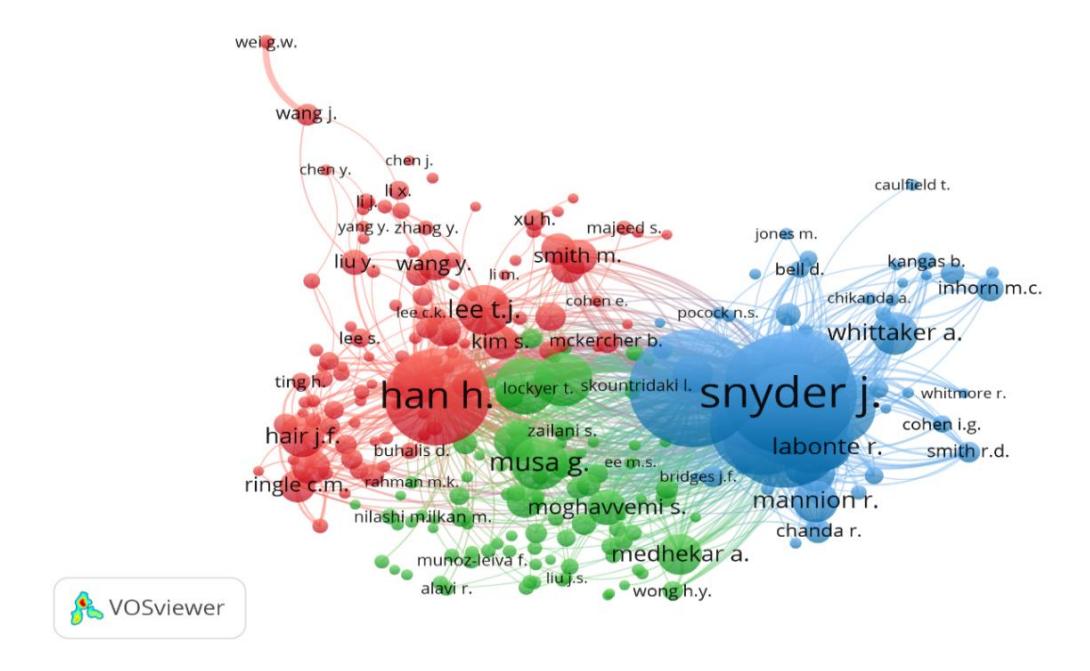
Figure 4. Overlay Visualisation of prominent authors in the Research field of Medical Tourism (Minimum no. of citations of an author =20) Source: Author's research by using VOSviewer 1.6.20. (2024)
The author's co-citation network results show that this research area has good citations. Authors such as Snyder J., Connell J., the United Nations Environmental Program (UNEP), and Lunt N. play an essential role in the co-reference networks of authors. Snyder J. is the most cited author, with 314 citations. His article " What is known about the patient's experience of medical tourism? A scoping review" highlights the need for further research on several aspects of medical tourism, including the decision-making process, understanding of risks, and motivations. It also emphasises the importance of continuity of care and the role of multiple stakeholders in shaping the patient's experience (Crooks et al., 2010).
Connell J. is another highly cited author with 301 citations. The article " Medical Tourism: Sea, sun, sand and surgery" highlights that Asian countries like India, Thailand, and Malaysia are prominent destinations due to their low costs and high-quality medical services. Other countries mentioned include Singapore, South Africa, and various Eastern European countries, which offer specialised medical services. (Connell, 2006).
4.3.3. Journal co-citation network
Figure 5 shows that there is a good co-citation network between the journals. A total of 214 journals and 1367 co-citation links were found, and the network density of the research field is 0.0523.
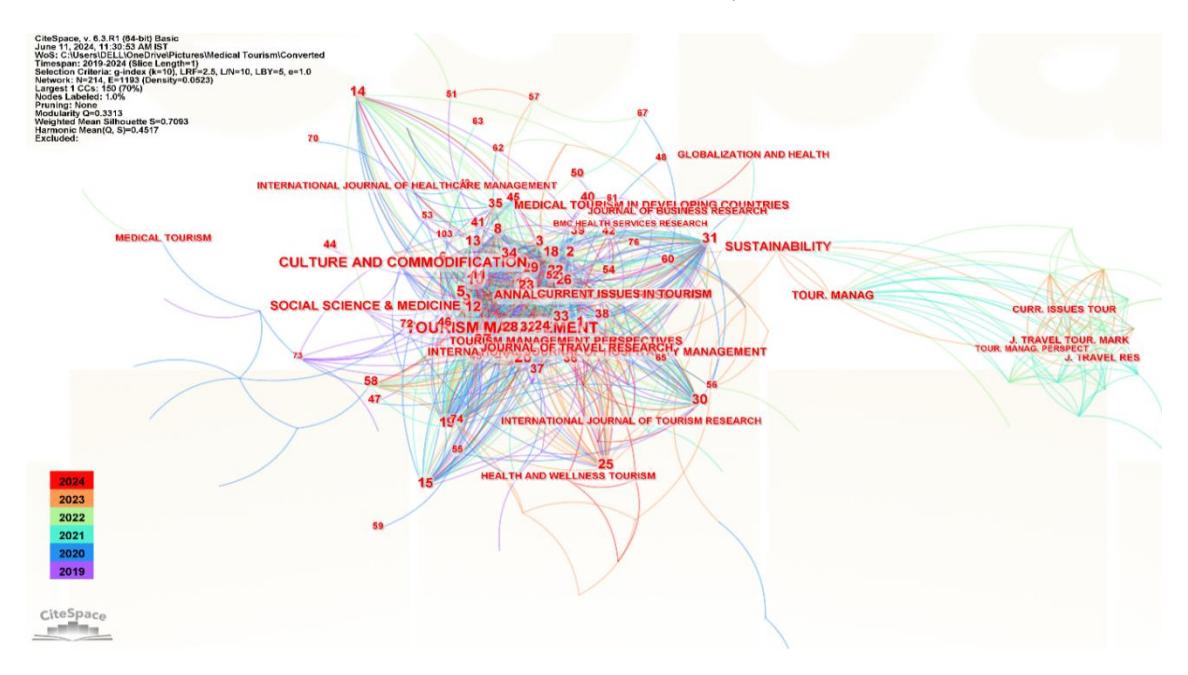
Figure 5. Visualisation of Journal Co-Citation Network Source: Author's research by using CiteSpace 6.3. R1 (2024)
Table 5. Most Cited Journals with Co-Citation Frequency and Impact Factor
| Rank | Journal | Occurrence | Impact Factor |
|---|---|---|---|
| 1 | Tourism Management | 1079 | 10.9 |
| 2 | Annals of Tourism Research | 292 | 10.4 |
| 3 | Journal of Travel Research | 247 | 8.0 |
| 4 | Tourism Management Perspectives | 240 | 7.3 |
| 5 | Sustainability (Switzerland) | 212 | 3.3 |
| 6 | Journal of Travel & Tourism Marketing | 205 | 8.2 |
| 7 | Current Issues in Tourism | 181 | 5.7 |
| 8 | Tourism Review | 152 | 7.3 |
| 9 | International Journal of Tourism Research | 148 | 4.1 |
| 10 | Social Science & Medicine | 137 | 4.9 |
Source: Scopus Database (2024)
Table 5 shows the ten most cited journals, including the number of citations and impact Factors. Tourism Management, with a total of 1,079 citations and a CiteScore of 24.1, is the most cited Journal in the medical tourism domain. The following are Annals of Tourism Research (292), Journal of Travel Research (247), Tourism Management Perspectives (240), Sustainability (212), Journal of Travel & Tourism Marketing (205), Current Issues in Tourism (181), Tourism Review (152), International Journal of Tourism Research (148) and Social Science & Medicine (137). A higher Impact factor can mean greater visibility and impact for their research (Trapp,2020).
4.4 Emerging trends of Medical Tourism Research and Future research themes
4.4.1. References with Citation Bursts
The citation bursts refer to a sudden and significant increase in the number of citations a particular scholarly article or subject receives over a specific period. This concept is often analysed using tools like CiteSpace, which can visually identify and display these bursts (Yan et al.,2017).
Reference Occurrence Impact Factor End 2019-2014 Han and Hyun (2015) 4.72 2019 2020 Lunt et al. (2016) 2.79 2019 2020 Fetscherin and Stephano (2016) 2 2019 2021 Eşiyok et al. (2017) 2.34 2021 2022 Kamassi et al. (2020) 2.49 2022 2024 Beladi et al. (2017) 2.19 2022 2024
Table 6. References with Citation Bursts
Source: Author's research by using CiteSpace 6.3. R1 (2024)
As shown in Table 6, six references on medical tourism have citation bursts. Two references have citation bursts starting in 2022 and ending in 2024. Kamassi et al. (2020) had a citation strength of 2.49, and the study shows that key stakeholders, e.g., healthcare providers and government organisations, strongly influence medical tourists' decision-making when seeking medical treatment abroad. In addition, positive medical tourism growth depends prominently on the cooperation between all stakeholders (Chakraborty, 2021).
It confirmed that medical tourism, on average, positively influences the host economy's output growth, primarily in non-OECD countries (Beladi et al.,2017). The study suggests a model for forming international medical travellers' intentions by considering the impact of quality, satisfaction, trust, and price reasonableness (Han and Hyun, 2015).
4.4.2. Keywords burst analysis
Table 7 provides a burst Analysis of the top 20 keywords, focusing on their intensity and duration from 2019 to 2024. Four keywords, namely Economics, Organization and Management, Risk Factor, and Hospital Sector, had a citation strength in 2019, indicating a peak in scholarly attention. Service Quality, Human Tissue, Travel Behaviour, and Infertility Therapy gained peak citations in 2020 and generally remained relevant through 2021 (Ng and Acker, 2018). The keyword 'Tourism' stands out with the highest citation strength of 5.13, showing extended interest from 2021 to 2022. Pandemic, Pandemics, and COVID-19 keywords are related to the global health crisis and show significant citation bursts around 2021 and 2022, with "COVID-19" having an exceptionally high strength of 3.67 until 2024. The analysis helps to identify key research trends and areas of growing or sustained interest over the specified time setting, emphasising how academic focus shifts in response to global events and advancing scientific knowledge (Li et al., 2017; Rebouh et al., 2022).
Keywords Year Strength Begin End 2019 - 2024 economics 2019 2.84 2019 2020 organization and management 2019 2.73 2019 2020 risk factor 2019 2.18 2019 2020 hospital sector 2019 2.18 2019 2020 service quality 2020 3.01 2020 2021 human tissue 2020 2.46 2020 2021 travel behavior 2020 2.46 2020 2021 infertility therapy 2020 2.19 2020 2021 tourism 2020 5.13 2021 2022 pandemic 2021 2.93 2021 2022 pandemics 2021 2.82 2021 2022 turkey 2021 2.19 2021 2022 covid 19 2021 3.67 2021 2024 hospital 2022 2.83 2022 2024 abdominoplasty 2022 2.52 2022 2024 turkey (republic) 2022 2.52 2022 2024 cosmetic surgery 2022 2.47 2022 2024 medical care 2022 2.47 2022 2024 morbid obesity 2022 2.12 2022 2024 doxycycline 2022 2.12 2022 2024
Table 7. Analysis of the Top 20 Keywords
Source: Author's research by using CiteSpace 6.3. R1 (2024)
5. Discussion
The bibliometric analysis highlights that medical tourism research has seen a decline in publication numbers, with a peak in 2021.The findings of the first research question indicate significant international collaborations, with the United States, India, and Malaysia being the most prominent contributors. The collaborative network visualisations demonstrate well-established connections among these countries, enhancing the field's development. Countries like the United Kingdom, China, and Australia also play crucial roles in this research domain.
In answer to second research question, the Influential authors in the field include Anita Medhekar, Sunghyup Sean Hyun, Ririn Tri Ratnasari, and Jeremy Snyder. These authors have contributed significantly to the literature and have established robust collaborative networks with their peers. The ten most cited articles are mentioned in Table 4, and the most cited journals include Tourism Management, Annals of Tourism Research, Journal of Travel Research, and Tourism Management Perspectives. These journals have the highest citation frequencies and CiteScores, indicating their pivotal role in disseminating critical research findings in the medical tourism field. Their prominence underscores their contribution to shaping the discourse and advancing knowledge in this area (the third research question).
In answer to the fourth research question, Keyword analysis reveals that terms like "service quality," "human tissue," "travel behaviour," "infertility therapy," and "satisfaction" have been frequently cited. Additionally, the impact of the COVID-19 pandemic has brought keywords like "pandemic" and "COVID-19" to the forefront (Bergmann, 2011). These keywords highlight the diverse and evolving interests in medical tourism research.
6. Conclusion
This comprehensive bibliometric analysis of medical tourism research from 2019 to Mid-2024 has provided valuable insights into the current trends, key contributors, and prominent publications in this field. The study used advanced bibliometric tools such as CiteSpace and VOSviewer to map the research landscape, highlighting significant international collaborations, influential authors, and emerging themes.
Key findings reveal that the United States, India, and Malaysia are prominent contributors to medical tourism research, indicating strong international collaboration networks. The number of publications peaked in 2021, likely driven by increased research funding and interest due to the COVID-19 pandemic, before stabilising in subsequent years. This suggests a shift or stabilisation in research priorities within the field. In conclusion, this bibliometric analysis enhances our understanding of the medical tourism research landscape, offering valuable guidance for future research efforts and policymaking.
Medical tourism research is no longer limited to the tourism perspective alone, but also includes ethical issues, global health access, and cross-border socio-economic impacts. The implications of this study can be understood from two perspectives, namely historical and future perspectives. From a historical perspective, based on the publication number curve, this study divides the development of this research field into two phases, the amplification phase (2019-2021) and the diminution phase (2021-2024), which can assist scholars in understanding the current research status and trends. This study identifies the most influential scholars and cited publications, assisting scholars in improving their reading efficiency and identifying influential sources for their research. The co-citation and keyword analyses reflect growing academic attention to how medical tourism contributes to economic development, labor mobility, and cross-border inequalities, especially in developing countries. The scholars can uncover valuable future research directions using recent hot themes or keywords.
While bibliometric analysis provides quantitative insights into publication trends and citation patterns, it may not adequately capture the nuanced discussions, theoretical developments, and practical implications that qualitative analyses could provide (Öztürk et al., 2024). The analysis covers publications from 2019 to mid-2024, which may not reflect past developments that could impact the relevance and applicability of the findings. The selection of keywords and search terms may have excluded relevant studies that use different terminology or focus on niche aspects of medical tourism not captured by the chosen keywords. Additionally, the data primarily sourced from the Scopus database might not fully represent research from regions or countries with less scientific output or limited access to this database (Tennant, 2020). This could lead to a geographic bias in the analysis. The review focused on peer-reviewed articles and other non-peer-reviewed sources that might offer practical and applied perspectives on medical tourism.
There is a potential to encompass the understanding of medical tourism by integrating insights from health economics, ethics, and cultural studies to address the complex and varied nature. To better understand the medical tourism trends and long-term impacts, longitudinal studies could be conducted that track changes over time, particularly in response to global health crises or significant policy changes. Future research could aim to consist of a more comprehensive array of databases and sources to capture a more diverse and globally representative body of literature on medical tourism.
References
- Agbeh, A. and Jurkowski, E. T. (2015). Medical tourism: an emerging terrain. Journal of Tourism & Hospitality, 4(5). DOI: 10.4172/2167-0269.1000186.
- Akin, M. H. (2021). Sağlık turizmi alanyazının bibliyometrik analizi (2015–2020). MANAS Sosyal Araştırmalar Dergisi, 10(3), 2026–2036. DOI: 10.33206/mjss.882655.
- Alhuay-Quispe, J., Estrada-Cuzcano, A. and Bautista-Ynofuente, L. (2022). Analysis and data visualisation in bibliometric studies. JLIS.it, 13(2), 58–73. DOI: 10.36253/jlis.it-461.
- Amini, A., Shahpoori Arani, H. and Milani Fard, M. (2022). Medical tourism industry: a systematic review on its principles, sequels, and ethical issues. Eurasian Journal of Science and Technology, 2(2), 143–155. DOI: 10.22034/EJST.2022.2.3.
- Andreeva, A., Kulesha, E., Gough, J. and Murzin, A. G. (2019). The SCOP database in 2020: expanded classification of representative family and superfamily domains of known protein structures. Nucleic Acids Research, 48(D1), D376–D382. DOI: 10.1093/nar/gkz1064.
- Azhari, S. C., Saepulmilah, C. and Meita, T. (2022). Development of literature on academic anxiety from 2002– 2021: a bibliometric analysis approach. Indonesian Journal of Education, 1(1), 1–10. DOI: 10.56495/ije.v1i1.171.
- Baas, J., Schotten, M., Plume, A., Côté, G. and Karimi, R. (2020). Scopus is a curated, high-quality bibliometric data source for academic research in quantitative science studies. Quantitative Science Studies, 1(1), 377– 386. DOI: 10.1162/qss_a_00019.
- Ballew, B. (2009). Elsevier's Scopus® database. Journal of Electronic Resources in Medical Libraries, 6(3), 245–252. DOI: 10.1080/15424060903167252.
- Bashir, A. and Singh, R. (2023). Research note mapping the research journey of tourism analysis: a bibliometric study. Tourism Analysis, 28(1), 155–159. DOI: 10.3727/108354222X16534530194787.
- Bauer, J. C. (2009). Medical tourism: wave of the future in a world of hurt? Healthcare Financial Management: Journal of the Healthcare Financial Management Association, 63(8), 36–42.
- Behrmann, J. and Smith, E. (2010). Top 7 issues in medical tourism: challenges, knowledge gaps, and future directions for research and policy development. Global Journal of Health Science, 2(2). DOI: 10.5539/gjhs.v2n2p80.
- Beladi, H., Chao, C., Ee, M. S. and Hollas, D. R. (2017). Does medical tourism promote economic growth? A cross-country analysis. Journal of Travel Research, 58(1), 121–135. DOI: 10.1177/0047287517735909.
- Benton, M. and Papademetriou, D. G. (2021). COVID-19 is becoming a '9/11 moment' for borders and health. Health Affairs, 40(7), 1162–1169. DOI: 10.1377/hlthaff.2021.00131.
- Bergmann, S. (2011). Fertility tourism: circumventive routes that enable access to reproductive technologies and substances. Signs: Journal of Women in Culture and Society, 36(2), 280–289. DOI: 10.1086/655978.
- Berryman, P. and Tompkins, O. S. (2010). Medical tourism. AAOHN Journal, 58(1), 40. DOI: 10.3928/08910162-20091223-04.
- Burnham, J. F. (2006). Scopus database: a review. Biomedical Digital Libraries, 3(1). DOI: 10.1186/1742-5581-3- 1.
- Büyüközkan, G., Mukul, E. and Kongar, E. (2021). Health tourism strategy selection via SWOT analysis and integrated hesitant fuzzy linguistic AHP-MABAC approach. Socio-Economic Planning Sciences, 74, 100929. DOI: 10.1016/j.seps.2020.100929.
- Castanha, R. C. G. and Grácio, M. C. C. (2013). Brazil's scientific production in mathematics: contribution to mainstream science (2002–2011). Journal of Scientometric Research, 2(3), 161. DOI: 10.4103/2320- 0057.135405.
- Chakraborty, R. (2021). Editorial. Bangladesh Journal of Bioethics, 12(1). DOI: 10.3329/bioethics.v12i1.52847.
- Cham, T., Lim, Y. M., Sia, B., Cheah, J. and Ting, H. (2020). Medical tourism destination image and its relationship to revisit: a study of Chinese medical tourists in Malaysia. Journal of China Tourism Research, 17(2), 163–191. DOI: 10.1080/19388160.2020.1734514.
- Chang, Y., Huang, M. and Lin, C. (2015). Evolution of library and information science research subjects based on keyword, bibliographical coupling, and co-citation analyses. Scientometrics, 105(3), 2071–2087. DOI: 10.1007/s11192-015-1762-8.
- Chatterjee, P. and Datta, S. K. (2023). Bibliometric and content analysis of literature on the role of healthcare hotels in medical and wellness tourism. Acta Turistica, 35(1), 7–42. DOI: 10.22598/at/2023.35.1.7.
- Chen, C. (2005). CiteSpace II: detecting and visualising emerging trends and transient patterns in scientific literature. Journal of the American Society for Information Science and Technology, 57(3), 359–377. DOI: 10.1002/asi.20317.
- Cheung, I. K. and Wilson, A. J. (2007). Arthroplasty tourism. Medical Journal of Australia, 187(11–12), 666–667. DOI: 10.5694/j.1326-5377.2007.tb01467.x.
- Cioban, G., Costel-Ioan, C. and Nedelea, A. (2018). Trends in medical tourism in the context of globalisation. The 14th Economic International Conference: Strategies and Development Policies of Territories. DOI: 10.18662/lumproc.76.
- Connell, J. (2006). Medical tourism: sea, sun, sand, and surgery. Tourism Management, 27(6), 1093–1100. DOI: 10.1016/j.tourman.2005.11.005.
- Conte, L. L., Brenner, S. E., Hubbard, T., Chothia, C. and Murzin, A. G. (2002). Scopus database in 2002: refinements accommodate structural genomics. Nucleic Acids Research, 30(1), 264–267. DOI: 10.1093/nar/30.1.264.
- Cormany, D. (2010). Hospitality and destination marketing's role in medical tourism: a call for research. International Journal of Behavioural and Healthcare Research, 2(1), 38. DOI: 10.1504/ijbhr.2010.037079.
- Costina, L. A., Julieta, S. G. and Bulin, D. (2013). Public and private sector involvement in medical tourism: developing and supporting. Ovidius University Annals: Economic Sciences Series, 55–58.
- Crooks, V. A., Kingsbury, P., Snyder, J. and Johnston, R. (2010). What is known about the patient's experience of medical tourism? A scoping review. BMC Health Services Research, 10(1). DOI: 10.1186/1472-6963-10- 266.
- Doğan, O. and Yüzbaşıoğlu, N. (2021). Medical tourism: understanding the phenomenon. In M. Singh and S. Kumaran (eds.), Growth of the Medical Tourism Industry and Its Impact on Society: Emerging Research and Opportunities (pp. 19–42). IGI Global. DOI: 10.4018/978-1-7998-3427-4.ch002.
- Donohue, J. C. (1972). A bibliometric analysis of certain information science literature. Journal of the American Society for Information Science, 23(5), 313–317. DOI: 10.1002/asi.4630230506.
- Donthu, N., Kumar, S., Mukherjee, D., Pandey, N. and Lim, W. M. (2021). How to conduct a bibliometric analysis: an overview and guidelines. Journal of Business Research, 133, 285–296. DOI: 10.1016/j.jbusres.2021.04.070.
- Eck, N. J. v. and Waltman, L. (2009). Software survey: VOSviewer, a computer program for bibliometric mapping. Scientometrics, 84(2), 523–538. DOI: 10.1007/s11192-009-0146-3.
- Ferdosi, M., Jabbari, A., Keyvanara, M. and Agharahimi, Z. (2013). A systematic review of publications on medical tourism. Journal of Education and Health Promotion, 2(1), 51. DOI: 10.4103/2277-9531.119037.
- Fetscherin, M. and Stephano, R. (2016). The medical tourism index: scale development and validation. Tourism Management, 52, 539–556. DOI: 10.1016/j.tourman.2015.08.010.
- Follis, L., Follis, K. and Burns, N. (2023). Healthcare (im) mobilities and the COVID-19 pandemic: notes on returning to the field. International Journal of Cultural Studies, 26(6), 785–801. DOI: 10.1177/13678779231173707.
- Freyer, W. and Kim, B. (2013). Medizintourismus und medizinreisen eine inter-disziplinäre betrachtung. Das Gesundheitswesen, 76(1), 65–68. DOI: 10.1055/s-0033-1343439.
- Ghosh, T. and Мандал, С. (2018). Medical tourism experience: conceptualisation, scale development, and validation. Journal of Travel Research, 58(8), 1288–1301. DOI: 10.1177/0047287518813469.
- Gillson, I. and Muramatsu, K. S. (2020). Health services trade and the COVID-19 pandemic. World Bank Group Publication, 1–14. DOI: 10.1596/33716.
- Gössling, S., McCabe, S. and Chen, N. (2020). A socio-psychological conceptualisation of overtourism. Annals of Tourism Research, 84, 102976. DOI: 10.1016/j.annals.2020.102976.
- Guo, L. and Zhang, W. (2022). Knowledge mapping of population health: a bibliometric analysis. Heliyon, 8(12), e12181. DOI: 10.1016/j.heliyon.2022.e12181.
- Habibi, A., Mousavi, M., Jamali, S. M. and Ebrahim, N. A. (2021). A bibliometric study of medical tourism. Anatolia, 33(3), 415–425. DOI: 10.1080/13032917.2021.1954042.
- Han, H. and Hyun, S. S. (2015). Customer retention in the medical tourism industry: impact of quality, satisfaction, trust, and price reasonableness. Tourism Management, 46, 20–29. DOI: 10.1016/j.tourman.2014.06.003.
- He, X., Peng, C., Xu, Y., Zhang, Y. and Wang, Z. (2022). Global scientific research landscape on medical informatics from 2011 to 2020: bibliometric analysis. JMIR Medical Informatics, 10(4), e33842. DOI: 10.2196/33842.
- Hod, R. (2022). Bibliometric analysis on medical education during the COVID-19 pandemic. Meandcovid19, 18(s14), 111–119. DOI: 10.47836/mjmhs.18.s14.13.
- Horowitz, M. D., Rosensweig, J. A. and Jones, C. A. (2007). Medical tourism: globalisation of the healthcare marketplace. MedGenMed: Medscape General Medicine, 9(4), 33.
- Hoz-Correa, A. d. l. and Muñoz-Leiva, F. (2018). The role of information sources and image on the intention to visit a medical tourism destination: a cross-cultural analysis. Journal of Travel & Tourism Marketing, 36(2), 204–219. DOI: 10.1080/10548408.2018.1507865.
- Hudson, S. and Li, X. (2012). Domestic medical tourism: a neglected dimension of medical tourism research. Journal of Hospitality Marketing & Management, 21(3), 227–246. DOI: 10.1080/19368623.2011.615018.
- Kamassi, A., Manaf, N. H. A. and Omar, A. H. (2020). The identity and role of stakeholders in the medical tourism industry: state of the art. Tourism Review, 75(3), 559–574. DOI: 10.1108/TR-01-2019-0031.
- Karuppan, C. C. M. and Karuppan, M. (2010). Changing trends in health care tourism. The Health Care Manager, 29(4), 349–358. DOI: 10.1097/HCM.0b013e3181fa05f9.
- Klímová, B. and Kuča, K. (2020). Medical tourism: its research and implications for public health. Central European Journal of Public Health, 28(3), 226–229. DOI: 10.21101/cejph.a5744.
- Ko, K. K. K., Chng, K. R. and Nagarajan, N. (2022). Metagenomics-enabled microbial surveillance. Nature Microbiology, 7(4), 486–496. DOI: 10.1038/s41564-022-01089-w.
- Lazarides, M. K., Lazaridou, I. and Παπάνας, Ν. (2023). Bibliometric analysis: bridging informatics with science. The International Journal of Lower Extremity Wounds. DOI: 10.1177/15347346231153538.
- Li, Z., Zeng, L. and Luo, Z. (2017). Identifying the landscape and trends in cyberspace research: from 1989 to 2016. 2017 IEEE 15th International Conference on Dependable, Autonomic and Secure Computing, 15th International Conference on Pervasive Intelligence and Computing. DOI: 10.1109/dasc-picom-datacomcyberscitec.2017.21.
- Liang, C., Luo, A. and Zhong, Z. (2018). Knowledge mapping of medication literacy study: a visualised analysis using CiteSpace. SAGE Open Medicine, 6, 205031211880019. DOI: 10.1177/2050312118800199.
- Lunt, N., Horsfall, D. and Hanefeld, J. (2016). Medical tourism: a snapshot of evidence on treatment abroad. Maturitas, 88, 37–44. DOI: 10.1016/j.maturitas.2016.03.001.
- Lunt, N., Jin, K. N., Horsfall, D. and Hanefeld, J. (2014). Insights on medical tourism: markets as networks and the role of strong ties. Korean Social Science Journal, 41(1), 19–37. DOI: 10.1007/s40483-014-0012-7.
- Mathijsen, A. (2019). Home, sweet home? Understanding diasporic medical tourism behaviour. Exploratory research of Polish immigrants in Belgium. Tourism Management, 72, 373–385. DOI: 10.1016/j.tourman.2018.12.009.
- Medeiros, J. M. G. d. and Vitoriano, M. A. V. (2015). A evolução da bibliometria e sua interdisciplinaridade na produção científica brasileira. RDBCI Revista Digital de Biblioteconomia e Ciência da Informação, 13(3), 298– 312. DOI: 10.20396/rdbci.v13i3.1595.
- Mehta, D. A. and Ray, D. S. (2023). Impact of medical tourism on Indian healthcare sector. International Journal of Research in Marketing Management and Sales, 5(2), 53–59. DOI: 10.33545/26633329.2023.v5.i2a.133.
- Merigó, J. M. and Yang, J. (2017). A bibliometric analysis of operations research and management science. Omega, 73, 37–48. DOI: 10.1016/j.omega.2016.12.004.
- Mohanan, M. and Shekhar, S. (2022). Bibliometric analysis of publications on wellness tourism. Turyzm/Tourism, 32(2), 69–86. DOI: 10.18778/0867-5856.32.2.04.
- Muzaffar, F. and Hussain, I. (2016). Medical tourism: are we ready to take the challenge? Journal of Pakistan Association of Dermatology, 17, 215–218.
- Ng, W. and Acker, A. (2018). Understanding urban travel behaviour by gender for efficient and equitable transport policies. International Transport Forum Discussion Papers. DOI: 10.1787/eaf64f94-en.
- Nola, I. A. and Radovčić, Z. (2022). Impacts of medical tourism on healthcare access. Healthcare Access. DOI: 10.5772/intechopen.98682.
- Omotade, O. (2015). Medical tourism: a look into the phenomenon. Master's Essay. University of Pittsburgh.
- Osadchuk, M. A., Osadchuk, A. M. and Trushin, M. (2020). Medical tourism in the context of national health systems' institutional characteristics. Journal of Environmental Management and Tourism, 11, 229–235.
- Öztürk, O., Kocaman, R. and Kanbach, D. K. (2024). How to design bibliometric research: an overview and a framework proposal. Review of Managerial Science. DOI: 10.1007/s11846-024-00738-0.
- Pasaco-González, B. S., Cerro, A. M. C., Moreno-Lobato, A. and Sánchez-Vargas, E. (2023). The role of demographics and previous experience in tourists' experiential perceptions. Sustainability, 15(4), 3768. DOI: 10.3390/su15043768.
- Radovčić, Z. and Nola, I. A. (2018). Medical tourism globe-trotting: features, impacts, and risks. International Journal of Healthcare Management, 13(sup1), 94–100. DOI: 10.1080/20479700.2018.1428388.
- Ramesh, G. and Lakshmi, N. (2012). Medical tourism in the globalised scenario: progress and opportunities in India. Review of Professional Management: A Journal of New Delhi Institute of Management, 10(2), 47. DOI: 10.20968/rpm/2012/v10/i2/100303.
- Rebouh, S., Lakehal, A. and Benzaoui, A. (2022). Environmental impact of the industrial activity on air quality: global visualisation on research progress. International Journal of Innovative Studies in Sociology and Humanities, 7(5), 22–28. DOI: 10.20431/2456-4931.0705003.
- Reed, C. (2008). Medical tourism. Medical Clinics of North America, 92(6), 1433–1446. DOI: 10.1016/j.mcna.2008.08.001.
- Santosa, F. A. (2023). Prior steps into knowledge mapping: text mining application and comparison. Issues in Science and Technology Librarianship, (102). DOI: 10.29173/istl2736.
- Schotten, M., Aisati, M. E., Meester, W. J. N., Steiginga, S. and Ross, C. A. (2017). A brief history of Scopus: the world's largest abstract and citation database of scientific literature. Research Analytics, 31–58. DOI: 10.1201/9781315155890-3.
- Shashi, S., Centobelli, P., Cerchione, R. and Merigó, J. M. (2021). Mapping knowledge management research: a bibliometric overview. Technological and Economic Development of Economy, 28(1), 239–267. DOI: 10.3846/tede.2021.14088.
- Sonalika, S. (2016). Medical tourism: a developing concept. Global Journal for Research Analysis, 4(8), 60–62. DOI: 10.36106/gjra.
- Taheri, B., Chalmers, D., Wilson, J. and Arshed, N. (2021). Would you recommend it? Antecedents of wordof-mouth in medical tourism. Tourism Management, 83, 104209. DOI: 10.1016/j.tourman.2020.104209.
- Tanveer, M., Bhaumik, A., Hassan, S. and Haq, I. U. (2020). A Scopus-based bibliometric evaluation of Saudi Medical Journal from 1979 to 2019. Talent Development & Excellence, 12(2), 2328–2337.
- Taufik, N. A. and Sulistiadi, W. (2018). The impact of the medical tourism industry on hospital services and marketing activities: a systematic review. Jurnal Administrasi Rumah Sakit Indonesia, 5(1). DOI: 10.7454/arsi.v5i1.2873.
- Tennant, J. (2020). Web of Science and Scopus are not global databases of knowledge. European Science Editing, 46. DOI: 10.3897/ese.2020.e51987.
- Thomas, B., Joseph, J. and Jose, J. (2023). Explorative bibliometric study of medical image analysis: unveiling trends and advancements. Scientific Visualization, 15(5), 35–49. DOI: 10.26583/sv.15.5.04.
- Trapp, J. (2020). The new Scopus CiteScore formula and the journal impact factor: a look at top-ranking journals and middle-ranking journals in the Scopus categories of general physics and astronomy, materials science, general medicine, and social sciences. Physical and Engineering Sciences in Medicine, 43(3), 739–748. DOI: 10.1007/s13246-020-00903-1.
- Turner, L. (2007). First world health care at third world prices: globalisation, bioethics and medical tourism. BioSocieties, 2(3), 303–325. DOI: 10.1017/S1745855207005765.
- Wu, L., Wei, G., Wu, J. and Wei, C. (2020). Some interval-valued intuitionistic fuzzy Dombi Heronian mean operators and their application for evaluating the ecological value of forest ecological tourism demonstration areas. International Journal of Environmental Research and Public Health, 17(3), 829. DOI: 10.3390/ijerph17030829.
- Yan, F., Yin, J. and Wu, B. (2017). Climate change and tourism: a scientometric analysis using CiteSpace. Journal of Sustainable Tourism, 26(1), 108–126. DOI: 10.1080/09669582.2017.1329310.
- Zhang, J., Quoquab, F. and Mohammad, J. (2023). Plastic and sustainability: a bibliometric analysis using VOSviewer and CiteSpace. Arab Gulf Journal of Scientific Research, 42(1), 44–67. DOI: 10.1108/AGJSR-10-2022-0225.
- Zhou, W., Chen, Q. and Meng, S. (2019). Knowledge mapping of credit risk research: scientometrics analysis using CiteSpace. Economic Research-Ekonomska Istraživanja, 32(1), 3457–3484. DOI: 10.1080/1331677X.2019.1660202.