

1. Introduction
In the mid-1990s, the internet surfaced as a novel path for reaching an extensive customer base, employing contemporary technologies such as social media to achieve maximum outreach (Wilts, 2024). In the past decade, social media has become a crucial element, encompassing various Web 2.0 applications that facilitate user communication. It now plays a vital role as a modern marketing platform. (Dwivedi et al., 2021). In India, a lot of people use different social media platforms, including Facebook, YouTube, Instagram, Twitter, Snapchat, etc. Social media's widespread appeal is evident in India, given that there were 462.0 million users as of January 2024 (datareportal.com). Social media platforms have become integral channels for businesses to engage directly with potential customers, offering real-time updates, personalized experiences, and a global reach (Dwivedi et al., 2021; Khan, S., & Rehman, 2024). Social media enhances information sharing between consumers and providers, influencing decision-making and engagement with tourist services. The travel world encompasses services, infrastructure, and activities for leisure or business, including transportation, lodging, and attractions (Yuan et al., 2022). From 2022 to 2024, the global travel industry has not only reverted to pre-pandemic levels but has also transformed at a pace and magnitude that distinguishes it from other consumer sectors. International tourist arrivals increased from 1.05 billion in 2022 (66% of 2019 levels) to 1.29 billion in 2023 (88%). The World Tourism Organization now estimates that 2024 concluded with 1.4 billion arrivals, effectively matching 2019 volumes for the first time.
This numerical recovery coincides with a significant shift towards eco-conscious travel. The global ecotourism market, valued at approximately USD 251 billion in 2024, is anticipated to grow to USD 551.8 billion by 2035, reflecting a compound annual growth rate of 7.4%. Simultaneously, 84% of travelers indicated to Booking.com that sustainability factors will affect their decisions in 2025, with approximately one-third (around 21.5 million U.S. outbound travelers) having already reserved certified "green" accommodations in 2023 (Global Tourism Statistics & Trends - 2023 and 2024, n.d.).
Digital transformation has accelerated in ways that are distinctive to the operational model of the travel industry. Contactless check-in, biometric boarding, and AI-driven dynamic pricing, previously considered experimental, are now integrated throughout the value chain. In 2022, 71% of tour operators utilized reservation technology, a significant increase from 25% in 2010. Additionally, twofifths of post-pandemic bookings are now finalized on mobile devices. In contrast, sectors like brickand-mortar retail have resumed operations without undergoing the same comprehensive reconfiguration of customer interaction points. The quantitative increase in arrivals, the double-digit compound annual growth rate in eco-travel, and the widespread digitization of the traveler journey indicate that the travel industry is undergoing a more rapid and fundamental evolution compared to many other sectors in the post-COVID period (Maglione, 2025).
With consumers relying more on social media for inspiration and reviews, the travel world must adeptly use these platforms to foster positive perceptions, inspire decisions, and drive conversions. Leveraging social media is essential for success in the digital travel landscape (Afren, 2024). As customers increasingly seek credible travel information on social media, mobile device usage has made these platforms key for travel business details. Despite its marketing popularity, few studies explore social media's impact on purchase decisions, though it now significantly influences trip planning (Fardous et al., 2021). Figuring out social media's impact on purchasing intentions in the travel world is imperative. In contemporary times, social media impacts consumer behavior and decisions. Its tangible, multimedia component has had an enormous effect on the sector, making analysis vital for optimizing strategy, engaging audiences, and remaining competitive (Appel et al., 2020). Appreciating the value of social media in the global travel world provides insights into accessing varied destinations, personalizing experiences to lifestyles, and changing consumer preferences, all of which are critical for businesses looking to connect with audiences and flourish in the digital marketplace (Kilipiri et al., 2023).
While"existing studies explore the overall influence of social platforms, there is limited in-depth analysis regarding specific demographic segments, regional variations, and the evolving nature of social media trends. Additionally, there is a dearth of research examining the effectiveness of different social media strategies employed by businesses in this industry. Addressing these gaps is crucial for a comprehensive understanding of the nuanced dynamics between social media and consumer purchasing intentions in the context of the travel world in the Indian context.
Based on these observations, this study intends to investigate how social media influences consumer intentions regarding travel and tourism purchases. It aims to address the inquiries on: (1) how social media impacts purchase intentions in the ever-evolving travel world? And (2) what role E-WOM, tourist motivation, and trust play in social media impacting purchase intentions in the ever-evolving travel world?
Social media impacts purchase intentions in the changing travel world by affecting consumer behavior through interesting content, reviews, and suggestions. It fosters trust and inspires travelers' decisions, whilst targeted marketing and influencer alliances aid travel companies in reaching certain audiences, eventually influencing purchasing decisions and increasing competitiveness in the digital space (Hamid et al., 2024; Shkeer et al., 2024).
In the ever-changing travel industry, E-WOM, tourist motivation, and trust play an integral role in determining purchase intentions via social media. E-WOM magnifies genuine reviews and personal experiences, instilling trustworthiness and resemblance in potential travelers (Bilal et al., 2022; Mayopu et al., 2024). Tourist motivation is boosted by engaging and inspiring components that highlight unique destinations and experiences, creating a desire to explore (He et al., 2023; ). Trust in social media influencers and user-generated content amplifies this effect, as consumers are more likely to rely on recommendations from perceived reliable sources (Hamid et al., 2024; Sharma et al., 2024). Together, these variables have a significant impact on travelers' decision-making processes, guiding their purchasing intentions and, eventually, influencing their travel choices.
While numerous studies explore social media, limited attention has been given to its impact on the travel and tourism industry. Despite its increasing prominence in the sector, existing research primarily focuses on current usage patterns, with a slight examination of potential applications and implications for the future. The impact of social media on the travel world is a significant innovation that influences consumer behavior. Hence, we have adopted a technology acceptance model (TAM) along with trust, tourists' motivation, and E-WOM to investigate the impact of social media in the Travel world (Singh & Srivastava, 2019; Sharmin et al., 2021) and their purchase intentions toward the use of social media. As far as the authors are aware, this is the first study with this unique model in the Indian context, so this is the novelty of this research. It achieves this by combining TAM with E-WOM, Tourist Motivation, and Trust.
2. Literature review
2.1. Technology Acceptance Model
The use of TAM is an important method for comprehending the adoption of new technology. The theory of reasoned action (TRA) has assisted individuals in comprehending the acceptance of information technology (Davis, 1989; Lee et al., 2003). TRA's core layout can be refined to reveal
how consumer excitement and dedication influence how technology is deployed (Hartwick & Barki, 1994). In contrast to the TRA, the TAM requires attitude. TAM works in several sorts of research in social media (Khan and Rehman, 2024; Lee & Fiore, 2024), tourism (Gupta et al., 2023; Li et al., 2024), hotel & restaurant (Lee et al., 2023; Shaker et al., 2023), and Travel (Liu & Zheng, 2023; Hassan et al., 2024). TAM is influenced by two major factors: perceived usefulness and perceived ease of use (Yu & Huang, 2020). Useful and informative technology is more likely to be appreciated (Hartwick & Barki, 1994). "Whether or not somebody believes that using particular tactics would allow them to accomplish their work more efficiently " is PU (Davis, 1989). " How effortless a person thinks it will be to use an event " (Davis, 1989) is PEOU. Davis et al. (1989) PU and PEoU alter how people perceive technology. In some studies, PU and PEoU show an enormous effect on attitude (Dogr & Kaushal, 2023). In the framework of digital marketing and social media, TAM offers a structured approach to evaluating customer attitudes towards digital platforms, tools, and campaigns. Marketers can acquire significant information by analyzing users' assessments of the usefulness and usability of social media and digital marketing techniques. These data enable marketing efforts to be more tailored to consumer tastes and demands (Abbas & Mehmood, 2021). Furthermore, TAM reveals potential hurdles to technology adoption, allowing marketers to solve issues and increase adoption rates. Integrating TAM into digital marketing strategies promotes informed decision-making, improves user experiences, and produces desired results in today's dynamic digital marketplace (Palaniswamy & Raj, 2022). In this current study, we outline the following hypotheses:
H1: PEOU has a positive influence on PU on Social Media and is Impacting Purchase Intentions in the Ever-Evolving Travel World.
H2: PU has a positive influence on ATT on Social Media and is Impacting Purchase Intentions in the Ever-Evolving Travel World.
H3: PEOU has a positive influence on ATT on Social Media and is Impacting Purchase Intentions in the Ever-Evolving Travel World.
2.2. E-WOM (Electronic Word of Mouth)
E-WOM is an interpersonal technique, where conversations between the sender and the receiver could affect the consumer's purchase choice (Demirbaş, 2018). Tourism providers benefit substantially from E-WOM, which embraces social media. Travel plans and decisions may arise from information put out on Instagram. E-WOM has a significant impact on people's opinions (Gosal et al., 2020). Numerous studies on how E-WOM affects attitudes (Gosal et al., 2020; Purwianti & Niawati, 2022; Simay et al., 2023). TAM evaluates perceptions of a technology's usefulness and ease of use to predict adoption intentions. Integrating E-WOM, which involves sharing opinions and recommendations online, enhances TAM's depth in measuring consumer attitudes. E-WOM significantly influences perceived usefulness through positive reviews and recommendations and impacts ease of use perceptions by providing insights into usability. Thus, E-WOM complements TAM, shaping consumers' adoption intentions by increasing perceived usefulness and ease of use (Liao et al., 2022). With this connection, marketers can adjust their tactics to successfully impact good online word-of-mouth and gain a deeper understanding of the role that E-WOM plays in technology acceptance (Eneizan et al., 2020; Prasetio et al., 2024). The finding that E-WOM negatively affects consumer attitudes toward social media challenges common assumptions. This highlights the complex role of E-WOM, shaped by misinformation, information overload, and individual processing differences. Understanding these factors is crucial for mitigating negative effects and fostering positive consumer attitudes toward social media platforms (Wakefield & Wakefield, 2018; Choirisa et al., 2021; Khan & Rehman, 2024). Few searches have been published in earlier pieces of literature. We provide the following theories from the perspective of the current investigation:
H4: E-WOM has a positive influence on ATT on Social Media and is Impacting Purchase Intentions in the Ever-Evolving Travel World.
2.3. Tourists Motivation
The term "tourist motivation" refers to the various reasons people travel, including relaxation, adventure, cultural discovery, and escaping daily routines (Fodness, 1944; Egger et al., 2020). It involves both incentives from outside sources and inherent wants. Knowing what motivates travelers enables the tourism sector to better provide experiences, raise customer happiness, and develop marketing plans that successfully draw in a wide range of visitors (Chauke et al., 2022). Tourist motivation changes attitudes on social media, as decisions and wishes for travel are influenced by inspirational content. This, in turn, affects consumers' intentions to buy in the ever-changing travel sector. Posts that are relatable and interesting encourage readers to explore, which encourages them to make vacation plans and interact with travel agencies more easily (Pereira et al., 2022). Only a few studies are addressed in the previous literature; our study fills this gap, and this is also the novelty of this study. From the standpoint of the ongoing investigation, we offer the following hypothesis:
H5: Tourist Motivation has a positive influence on ATT on Social Media and is Impacting Purchase Intentions in the Ever-Evolving Travel World.
2.4. Attitude
Both advantageous and detrimental views regarding social media are included in consumer attitudes. This has the potential to affect customer preferences and, in turn, increase their propensity to buy (Dwivedi et al., 2021). An individual's general review, sense, and emotions about using social media are referred to as their attitude toward social media. Studies on views on intention to buy (Gosal et al., 2020; Popy & Bappy, 2020; Khan and Rehman, 2024). Attitudes shape purchase intentions in travel and tourism by influencing perceptions of related products and services. Positive attitudes enhance perceived value, trust in providers, and satisfaction, increasing purchase likelihood and driving industry demand and growth, according to previous studies (Sadiq et al., 2022; Cheng & Zhang, 2023; Khan and Rehman, 2024). From the vantage point of the current study, the following hypotheses are developed:
H6: ATT has a positive influence on PI on Social Media and is Impacting Purchase Intentions in the Ever-Evolving Travel World.
2.5. Trust
Trust is described as a sense of security and dependence on a particular individual or entity. It has three fundamental components: ability, generosity, and honesty. Mobile technology service providers must exhibit the ability, credibility, and kindness to prioritize consumer interests. Trust is critical in online shopping due to the confidential and complex nature of transactions (Luhmann, 2018; Strzelecki & Rizun, 2022). Trust has an enormous effect on attitudes (Khoa et al., 2021; Han & Chen, 2022; Pop et al., 2022; Kim & Lei, 2024). TAM expands its examination of consumer attitudes by including trust, which encompasses optimism and reliance on technology. Trust is essential for perceived usefulness because people consider technology as advantageous when they believe it is reliable and safe. It also has an impact on usability, because trusted technology is perceived to be smoother and more obvious. Thus, trust increases perceived usefulness and ease of use, influencing adoption intentions. This coupling helps merchants understand and establish trust, resulting in increased adoption and usage (Jeong & Kim, 2023; Kim et al., 2023; Cahyono et al., 2024). Trust plays an important role in shaping travel purchase decisions. When customers trust a service provider, they have a good attitude towards the product and experience. This trust in reliability and quality leads to positive perceptions and greater buying intentions, which propels industry growth (Sadiq et al., 2022; Della Corte et al., 2023). Considering the point of view of the current inquiry, we introduce the hypothesis.
H7: Trust has a positive influence on ATT on Social Media and is Impacting Purchase Intentions in the Ever-Evolving Travel World.
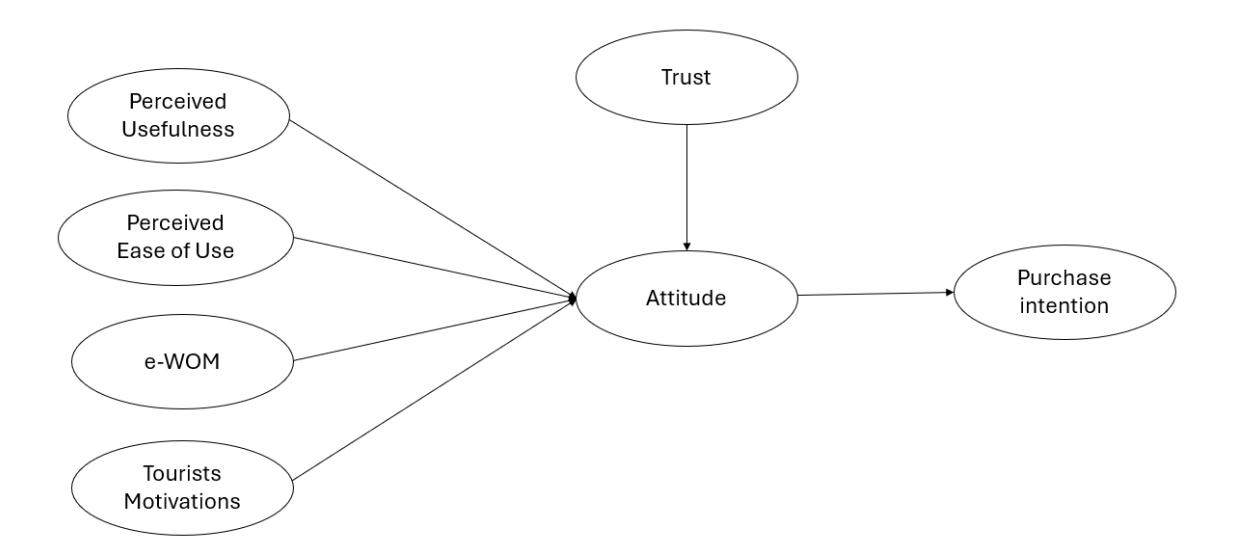
Figure 1. Proposed Model
3. Research Methodology
3.1. Sample and Data Colection
In the current study, 483 Indian clients participated in a questionnaire survey to test the research assumptions. The researchers excluded surveys with missing or repetitive responses, resulting in an overall response rate of 96.60% (483 out of 500 questionnaires). All seven constructs were drawn from previously published literature. For additional details regarding the items and their sources, please refer to the Appendix. Respondents were informed about the purpose of the questionnaire as well as the expected completion time. To protect their privacy, respondents were informed that their responses would be kept anonymous and confidential. To test the hypothesis, this study collected and analyzed data quantitatively. The sample was drawn via systematic random sampling, ensuring that every investigator in the target population had an equal chance of being picked."
In this study, demographic variables were divided by gender, age, education level, and income among 483 respondents. The gender distribution was 255 males (52.80%) and 228 females (47.20%). Age groups included: 5.2% under 20, 76% aged 20-30, 16.7% aged 30-40, and 2.1% over 40. Marital status showed 347 single (71.9%) and 136 married (28.1%). Education levels were: 2.1% below intermediate, 3.0% intermediate, 24% graduate, 50% post-graduate, and 20.8% Ph.D. Income levels were: 48.4% earning under 2.5 lakhs, 30.5% earning 2.5-5 lakhs, and 21.1% earning over 5 lakhs annually.
Demographic USD Equivalent Category Frequency Percentage (%) Variable (Approx.) Gender Male 255 52.80% 228 Female 47.20% Under 20 25 Age Group 5.2% 20-30 76.0% 367 30-40 81 16.7% Over 40 10 2.1% Marital Status 71.9% Single 347 Married 136 28.1% Education Below Intermediate 10 2.1% Level Intermediate 3.0% 15 Graduate 116 24.0% Post-graduate 242 50.0% Ph.D. 100 20.8% Under $3,000 USD Annual Income Under ₹2.5 lakhs 234 48.4% ₹2.5 - ₹5 lakhs 147 30.5% $3,000 - $6,000 USD
Table 1. Sample and Data Collection
3.2. Data Analysis
The researchers employed path modeling, structural equation modeling (SEM), and partial least squares (PLS) to analyze and validate variable relationships. The decision to use the PLS methodology was based on model versatility and the minimum amount of data required (Hair et al., 2021).
Over ₹5 lakhs
21.1%
Over $6,000 USD
The amplitude constructs exhibit excellent internal consistency, with Cronbach's alpha values ranging from 0.798 to 0.896 (Hair et al., 2019). Also, the composite reliability ratings for every aspect were between 0.868 and 0.927, which exceeded the recommended limit of 0.7 (Hair et al., 2019). Tables 1 through 7 summarise the investigation's findings.
4. Results
4.1. Measurement Model
Hair et al. (2019) discovered that the average variance derived from the data demonstrated consistent convergence above the critical value of 0.5. Furthermore, the items' standardized loadings exceeded 0.739, signifying that the data exhibited high convergent validity. Table 2 displays the reliability and convergent validity, while Table 4 confirms that the suggested model fits the information presented well.
To identify multi-collinearity, the "variance inflation factor" (VIF) was calculated using the methodology described by Hair et al. (2019). The table results reveal that there is no multicollinearity between the dependent variables because all independent variables have VIF values less than 5. To test discriminant validity, Fornell & Larcker (1981) advocated utilizing the square root of AVE in conjunction with correlations. Table 4 demonstrates that the values are beyond an acceptable range, hence showing discriminant validity. Furthermore, discriminant validity was assessed using the HTMT (Heterotrait-Monotrait) ratio criterion developed by Heseler et al. (2015). A specified threshold of 0.85 is considered adequate for this criterion, and Table 5 reveals that all HTMT values are less than 0.85, which is compatible with the findings of the Fornell & Larcker criterion test in Table 4.
4.2. Structural Model and Hypothesis Testing
The proposed hypotheses were resolute and appraised using the PLS-SEM analysis. Out of the seven hypotheses (H1 to H7), six of them are supported by the data (H1(β = 0.333) p-value 0.000, H2(β = 0.232) p-value 0.000, H3(β = 0.332) p-value 0.002, H5(β = 0.333) p-value 0.001, H6(β = 0.232) pvalue 0.000, and H7 (β = 0.222) p-value 0.011), while only one H4(β = -0.36) p-value 0.178 is not supported. Table 7 shows the standardized path coefficients, while Figure 1 depicts the path diagram for the SEM model. The determination coefficient (R2) is used to assess the research model's prediction potential, as illustrated in Table 6, by calculating the explanatory power of independent variables on the variance of the dependent variable. The variance explanation demonstrated the research model's overall explanatory capacity: R2 = (0.597) for PI adaptation, (0.416) for PU, and (0.576) for attitude.
Table 2. Reliability and Convergent Validity
| Main | Factor | Cronbach's | Composite | Average variance | |
|---|---|---|---|---|---|
| construct | VIF | Loading | alpha | reliability | extracted (AVE) |
| ATT | 1.532 | 0.772 | 0.802 | 0.871 | 0.628 |
| 1.518 | 0.766 | ||||
| 1.767 | 0.814 | ||||
| 1.780 | 0.815 | ||||
| EWOM | 1.248 | 0.667 | 0.801 | 0.872 | 0. 626 |
| 1.347 | 0.749 | ||||
| 1.303 | 0.785 | ||||
| 1.152 | 0.741 | ||||
| PEOU | 1.632 | 0.805 | 0.805 | 0.870 | 0.625 |
| 1.926 | 0.844 | ||||
| 1.982 | 0.804 | ||||
| 1.569 | 0.811 | ||||
| TM | 1.629 | 0.804 | 0.806 | 0.873 | 0.629 |
| 1.925 | 0.846 | ||||
| 1.979 | 0.807 | ||||
| 1.570 | 0.815 | ||||
| PI | 1.532 | 0.771 | 0.804 | 0.869 | 0.627 |
| 1.520 | 0.764 | ||||
| 1.767 | 0.819 | ||||
| 1.781 | 0.820 | ||||
| PU | 1.512 | 0.758 | 0.801 | 0.872 | 0.628 |
| 1.702 | 0.807 | ||||
| 1.522 | 0.755 | ||||
| 1.835 | 0.843 | ||||
| T | 1.111 | 0.771 | 0.800 | 0.874 | 0.527 |
| 1.473 | 0.772 | ||||
| 1.910 | 0.881 | ||||
| 1.477 | 0.796 |
Table 3. Model fit
| Fit index | Recommended value | Actual value |
|---|---|---|
| SRMR | < 0.09 | 0.072 |
| NFI | > 0.9 | 0.656 |
Table 4. Fornell and Lacker (Discriminant validity)
| ATT | EWOM | PEOU | TM | PI | PU | T | |
|---|---|---|---|---|---|---|---|
| ATT | 0.815 | ||||||
| EWOM | 0.820 | 0.773 | |||||
| PEOU | 0.810 | 0.750 | 0.860 | ||||
| TM | 0.806 | 0.748 | 0.858 | 0.699 | |||
| PI | 0.779 | 0.837 | 0.699 | 0.694 | 0.836 | ||
| PU | 0.790 | 0.790 | 0.797 | 0.795 | 0.742 | 0.863 | |
| T | 0.840 | 0791 | 0.760 | 0.762 | 0.755 | 0.493 | 0.867 |
Table 5. Discriminant Validity (HTMT Ratio Criterion)
| ATT | EWOM | PEOU | TM | PI | PU | T | |
|---|---|---|---|---|---|---|---|
| ATT | |||||||
| EWOM | 0.850 | ||||||
| PEOU | 0.848 | 0.827 | |||||
| TM | 0.844 | 0.822 | 0.821 | ||||
| PI | 0.845 | 0.818 | 0.820 | 0.818 | |||
| PU | 0.828 | 0.682 | 0.764 | 0.766 | 0.819 | ||
| T | 0.772 | 0.820 | 0.574 | 0.572 | 0.772 | 0.588 |
Table 6. Results of R2
| R-square | R-square adjusted | |
|---|---|---|
| ATT | 0.576 | 0.787 |
| PI | 0.599 | 0.887 |
| PU | 0.415 | 0.706 |
Table 7. Path Analysis
| H | Paths | β Coefficient | T statistics | P value | Results |
|---|---|---|---|---|---|
| H1 | PEOU -> PU | 0.333 | 2.256 | 0.000 | Supported |
| H2 | PU -> ATT | 0.232 | 3.449 | 0.000 | Supported |
| H3 | PEOU -> ATT | 0.332 | 2.255 | 0.002 | Supported |
| H4 | EWOM -> ATT | -0.36 | 2.614 | 0.178 | Unsupported |
| H5 | TM -> ATT | 0.333 | 2.254 | 0.001 | Supported |
| H6 | T -> ATT | 0.232 | 3.450 | 0.000 | Supported |
| H7 | ATT -> PI | 0.222 | 1.506 | 0.000 | Supported |
5. Discussion
The analysis conducted in this study unveiled a noteworthy finding: Perceived Ease of Use (PEOU) significantly enhances Perceived Usefulness (PU), while both PU and PEOU contribute positively to Attitude (ATT). Consequently, hypotheses H1, H2, and H3 have been substantiated. H1 highlights that when individuals perceive social media technology as easy to navigate, they are more inclined to view it as beneficial, suggesting that an increased ease of use amplifies the technology's perceived relevance and utility for various tasks. This finding echoes previous research by Khan and Rehman (2024) and aligns with established notions in the field, as supported by Siagian et al. (2022).
Further analysis of H2 and H3 indicates that when users find a social media platform not only simplistic but also advantageous (as discussed by Kurniawan et al., 2022), it cultivates a more favorable overall perspective towards the technology. The results reinforce earlier studies by Kurniawan et al. (2022), Khan and Rehman (2024), and Toros et al. (2024), shedding light on the positive correlation between user experience and overall attitude.
In a surprising result, the study revealed no significant relationship between Electronic Word-of-Mouth (E-WOM) and attitude, leading to the rejection of hypothesis H4. This unexpected outcome contradicts our study, which suggests that Indian consumers may not be significantly influenced by social media recommendations, highlighting a distinct finding in the tourism sector. Importantly, this research serves as the third study to demonstrate the negative impact of electronic word-of-mouth (E-WOM) on attitudes in this context, differing from the earlier conclusions drawn by Choirisa et al. (2021) and Purwianti & Niawati (2022). However, it aligns with the findings of Lee et al. (2007), who examined the impact of negative E-WOM on product attributes (Khan & Rehman, 2024). This is also the novelty of our study because only least few existing past studies have these outcomes, but in a different context.
Hypothesis H5 produced compelling results, revealing a strong connection between Tourists' Motivation and attitudes towards social media usage. This aligns with previous research conducted by Hsu et al. (2010), Prayag et al. (2018), and Pereira et al. (2022), though there remains a scarcity of substantial studies in this area. This investigation marks a critical milestone as it represents the first exploration of the relationship between social media engagement and Purchase Intentions in the rapidly evolving travel landscape within the Indian context. The findings imply that motivated tourists are more susceptible to the influences of social media travel content, which in turn heightens their propensity to book trips and stimulates consumer behavior and spending in travel-related markets. Hypothesis H6 yielded significant results, indicating that trust in the platform fosters a more positive perception of social media, allowing users to engage with it more confidently and readily. This affirmation aligns with insights from Zhao et al. (2018) and is echoed in the findings of Md Husin et al. (2023) and Della Corte et al. (2023). However, it is essential to note that few studies have ventured into the exploration of social media within the travel context, emphasizing the importance of this research.
Finally, H7 demonstrated favorable outcomes, suggesting that positive attitudes towards using social media for travel purchases stimulate greater interaction and engagement. This behavior includes participation in online travel communities, sharing experiences, seeking recommendations, and significantly increasing the likelihood of making travel-related purchases. The results are consistent with findings from McClure & Seock (2020), Chetioui et al. (2020), Kurdi et al. (2022), and AL-Sous et al. (2023), further substantiating the role of social media in shaping consumer behavior in the travel industry.
6. Conclusion
The model and conceptual framework proposed in this study significantly contribute to the research on social media's impact and consumer purchase intention in the travel and tourism industry. This study empirically tests the TAM model, integrating Trust, Tourist Motivation (TM), Electronic Wordof-Mouth (E-WOM), Attitude (ATT), and Purchase Intentions (PI) within the context of social media's influence on purchasing intent. It establishes a strong theoretical foundation for understanding purchase intentions in the travel and tourism sector under social media's impact. The findings highlight the relevance of the TAM model, enhanced with additional variables like E-WOM and trust, for examining social media's evolving impact on consumers' purchase intentions in this industry. This research makes numerous noteworthy aids to existing literature as the theoretical
implications. Firstly, it expands the literature on purchase intention in the travel industry using social media by incorporating trust, Tourist Motivation, and E-WOM into the TAM model. Notably, no previous study has inspected the influence of trust, Tourist Motivation, and E-WOM on consumer purchase intention within this industry, particularly in the Indian context. This study fills this gap, providing a robust theoretical foundation for future researchers and academics. Secondly, the results affirm the importance of incorporating trust, Tourist Motivation, and E-WOM into the TAM model to better understand the main determinants of purchase intention. Thirdly, the expanded model offers a detailed description of the crucial determinants of purchase intention, providing valuable insights for future researchers and academics to understand the trust factor better. From an economic standpoint, this study is potentially useful, offering a nuanced perspective for travel and tourism companies to discern consumers' intentions. A notable change observed is that consumers are increasingly reliant on and motivated by social media.
In addition to the theoretical implications, there are managerial implications from this study. There are managerial implications from this study. Understanding how social media influences buying intent is crucial for crafting effective marketing strategies in the travel and tourism sector. This study identifies trust, tourist motivation, and electronic word-of-mouth (E-WOM) with Technology Acceptance Model (TAM) variables as key factors in this process. By showing a wide literature review and examining the factors affecting purchase decisions among Indian consumers through social media, the study confirmed that specific social media elements significantly impact purchase intention. Utilizing social media facets such as communication, confidentiality, and web design can enhance consumer trust and website credibility, ultimately increasing purchase intent.
The study emphasizes the importance of social media in influencing intentions to buy in the travel world, highlighting the necessity for businesses to successfully exploit these channels. It was also observed that negative E-WOM, such as unfavorable reviews and comments, influences people's attitudes towards social media use. This unfavorable effect reduces travelers' motivation, trust, and desire to use social media. To counteract the harmful consequences of bad E-WOM, managers in the travel and tourist business should regularly monitor online reviews and social media discussions, respond quickly to consumer concerns, and communicate with customers to understand their opinions. Furthermore, building good E-WOM by providing excellent customer experiences and encouraging pleased consumers to share their experiences online may help boost a business's image. Given social media's worldwide reach, websites should support different languages to appeal to a varied consumer base. Incorporating these components into marketing tactics and enhancing website quality can improve the online shopping experience and boost social media purchase intent. This study emphasizes the value of user-friendly and accessible social media marketing platforms in today's global economy. Marketers must provide practical suggestions given the dynamic influence of social media on customer purchase intentions in travel and tourism. Targeted advertising campaigns that use user data to personalize content can help increase engagement and conversion rates. Encourage consistent engagement through user-generated content and influencer collaborations to increase trust and credibility. Staying updated with social media trends and procedures is vital for maintaining relevance in the digital landscape. Implementing these strategies helps marketers navigate the evolving social media environment, achieving positive outcomes in the travel world.
In India, cultural, societal, and economic considerations all have a substantial impact on how social media influences buying inclinations. Cultural diversity, linguistic preferences, and geographical variances influence customer behavior on social media sites. Social factors, such as family and peer networks, are extremely important in decision-making. Economic considerations, such as income levels and value opinions, can influence consumer decisions. Understanding these elements is critical for creating targeted social media ads that appeal to Indian customers and provide positive results in the travel world.
The systematic random sampling methodology was used in the study, however, it has several limitations. Some places contribute to the gathering of this data. As a result of this, the findings cannot be generalized. Furthermore, additional research on socio-psychological or demographic variables might be conducted in other parts of the country or other developing countries of your choice. The study focuses mostly on Indian customers, which may restrict the findings' generalisability to a larger worldwide audience. Future research might overcome this constraint by performing cross-cultural studies that investigate disparities in social media utilization and its impact on purchase intentions across various cultures.
Despite a comprehensive breakdown of demographic components, the study's findings may be limited due to the sample size and disproportionate representation in certain categories. The gender distribution was heavily skewed towards male respondents, which may have influenced the results. Additionally, the study focused mainly on younger age groups, with minimal representation of older demographics, potentially missing variations in behavior across age cohorts. Future studies should use larger and more diverse samples that accurately reflect the demographic makeup of the target population. Researchers could also explore specific demographic segments in greater detail, examining the preferences and behaviors of different age groups, genders, and income levels. Comparative studies across various cultural contexts would provide insights into how demographic factors and socio-cultural dynamics influence consumer behavior in social media and travel-related purchases.
The study's reliance on questionnaire responses may introduce response bias and limit generalizability. The small sample size of Indian consumers and the quantitative approach may overlook qualitative insights. Future research should use mixed-methods approaches, expand sample size and assortment, and consider longitudinal studies to explore the evolving impact of social media on consumer behavior in the Indian travel world.
Declarations
Competing Interests : The authors declare no competing interests.
Disclaimer : We hereby declare that the given information is correct and truthful to the best of our understanding.
Funding Declaration : No funding.
References
- Abbas, A., & Mehmood, K. (2021). Understanding digital marketing adoption in India: integrated by technology acceptance model (TAM) and theory of planned behaviour (TPB) framework. Journal of Management Sciences, 8(2), 70-87.
- Afren, S. (2024). The role of digital marketing promoting tourism business. A study of use of the social media in prompting travel. World Journal of Advanced Research and Reviews, 21(01), 272-287.
- Al Kurdi, B., Alshurideh, M., Akour, I., Tariq, E., AlHamad, A., & Alzoubi, H. (2022). The effect of social media influencers' characteristics on consumer intention and attitude toward the purchase of Keto products. International Journal of Data and Network Science, 6(4), 1135-1146. DOI: 10.5267/j.ijdns.2022.7.006.
- Al-Sous, N., Almajali, D., & Alsokkar, A. (2023). Antecedents of social media influencers on customer purchase intention: Empirical study in Jordan. International Journal of Data & Network Science, 7(1). DOI: 10.5267/j.ijdns.2022.11.010.
Appel, G., Grewal, L., Hadi, R., & Stephen, A. T. (2020). The future of social media in marketing. Journal of the Academy of Marketing science, 48(1), 79-95.
- Bilal, M., Jianqiu, Z., Akram, U., Tanveer, Y., Sohaib, M., & Raza, M. A. A. (2022). The role of motivational factors for determining attitude towards eWOM in social media context. In Research anthology on social media advertising and building consumer relationships (pp. 283-303). IGI Global Scientific Publishing. DOI: 10.4018/978-1-6684-6287-4.ch017.
- Briliana, V., Ruswidiono, W., & Deitiana, T. (2020). Do Millennials believe in food vlogger reviews? A study of food vlogs as a source of information. Briliana, V, 170-178. DOI: 10. 35609/jmmr.2020.5.3(5).
- Cahyono, K. E., Djatmika, E. T., & HANDAYATI, P. (2024). The Factors that Influence Online Buying using of Technology Acceptance Model Approach. Quality-Access to Success, 25(198).
- Chauke, T. J., Tshipala, N. N., & Boshoff, L. (2022). Tourist motivations to participate in adventure tourism activities in Gauteng, South Africa. International Journal of Leisure and Tourism Marketing, 7(4), 302-324.
- Cheng, P., & Zhang, C. (2023). Show me insides: Investigating the influences of product exploded view on consumers' mental imagery, comprehension, attitude, and purchase intention. Journal of Retailing and Consumer Services, 70, 103168.
- Chetioui, Y., Benlafqih, H., & Lebdaoui, H. (2020). How fashion influencers contribute to consumers' purchase intention. Journal of Fashion Marketing and Management: An International Journal, 24(3), 361-380. DOI: 10.1108/JFMM-08-2019-0157.
- Choirisa, S. F., Purnamaningsih, P., & Alexandra, Y. (2021). THE EFFECT OF E-WOM ON DESTINATION IMAGE AND ATTITUDE TOWARDS TO THE VISIT INTENTION IN KOMODO NATIONAL PARK, INDONESIA: The Effect of E-WOM on Destination Image and Attitude towards to the Visit Intention in Komodo National Park, Indonesia. Journal of Tourism Destination and Attraction, 9(1), 49-60. DOI: 10.35814/tourism.v9i1.1876.
- Corritore, C. L., Marble, R. P., Wiedenbeck, S., Kracher, B., & Chandran, A. (2005). Measuring online trust of websites: Credibility, perceived ease of use, and risk.Davis, F. D. (1989). Perceived usefulness, perceived ease of use, and user acceptance of information technology. MIS quarterly, 319-340. DOI: 10.2307/249008.
- Davis, F. D. (1989). Perceived usefulness, perceived ease of use, and user acceptance of information technology. MIS quarterly, 319-340. DOI: 10.2307/249008.
- Della Corte, V., Sepe, F., Gursoy, D., & Prisco, A. (2023). Role of trust in customer attitude and behaviour formation towards social service robots. International Journal of Hospitality Management, 114, 103587. DOI: 10.1080/1528008X.2021.1913693.
- Demirbaş, E. (2018). An overview on traditional and electronic word of mouth communication (WOM). Lectio socialis, 2(1), 16-26.
- Dogra, P., & Kaushal, A. (2023). The impact of Digital Marketing and Promotional Strategies on attitude and purchase intention towards financial products and service: A Case of emerging economy. Journal of Marketing Communications, 29(4), 403-430. DOI: 10.1080/13527266.2022.2032798.
- Dwivedi, Y. K., Ismagilova, E., Hughes, D. L., Carlson, J., Filieri, R., Jacobson, J., ... & Wang, Y. (2021). Setting the future of digital and social media marketing research: Perspectives and research propositions. International journal of information management, 59, 102168.
- Egger, I., Lei, S. I., & Wassler, P. (2020). Digital free tourism–An exploratory study of tourist motivations. Tourism Management, 79, 104098.
- Eneizan, B. I. L. A. L., Alsaad, A. B. D. A. L. L. A. H., Alkhawaldeh, A., Rawash, H. N., & Enaizan, O. (2020). E-wom, trust, usefulness, ease of use, and online shopping via websites: the moderating role of online shopping experience. Journal of Theoretical and Applied Information Technology, 98(13), 2554-2565.
- Fardous, J., Du, J. T., Hansen, P., Choo, K. K. R., & Huang, S. (2021). Group trip planning and information seeking behaviours by mobile social media users: A study of tourists in Australia, Bangladesh and China. Journal of Information Science, 47(3), 323-339.
- Fodness, D. (1994). Measuring tourist motivation. Annals of tourism research, 21(3), 555-581.
- Global Tourism Statistics & Trends 2023 and 2024. (n.d.). Road Genius. https://roadgenius.com/statistics/tourism/
- Gosal, J., Andajani, E., & Rahayu, S. (2020, January). The effect of e-WOM on travel intention, travel decision, city image, and attitude to visit a tourism city. In 17th International Symposium on Management (INSYMA 2020) (pp. 261-265). Atlantis Press.
- Gupta, S. K., Tiwari, S., Hassan, A., & Gupta, P. (2023). Moderating Effect of Technologies into Behavioural Intensions of Tourists toward Use of Mobile Wallets for Digital Payments: TAM Model Perspective. International Journal of Hospitality & Tourism Systems, 16(1).
- Hair, J. F., Astrachan, C. B., Moisescu, O. I., Radomir, L., Sarstedt, M., Vaithilingam, S., & Ringle, C. M. (2021). Executing and interpreting applications of PLS-SEM: Updates for family business researchers. Journal of Family Business Strategy, 12(3), 100392. DOI: 10.1016/j.jfbs.2020.100392.
- Hair, J. F., Risher, J. J., Sarstedt, M., & Ringle, C. M. (2019). When to use and how to report the results of PLS-SEM. European business review, 31(1), 2-24. DOI: 10.1108/EBR-11-2018-0203.
- Hamid, R. S., Ukkas, I., Goso, G., Abror, A., Anwar, S. M., & Munir, A. R. (2024). The role of social media in building trust, self-perceived creativity and satisfaction for millennial entrepreneurs. Journal of Small Business and Enterprise Development, 31(2), 377-394. DOI: 10.1108/JSBED-11-2022-0482.
- Han, J., & Chen, H. (2022). Millennial social media users' intention to travel: the moderating role of social media influencer following behavior. International Hospitality Review, 36(2), 340-357.
- Hartwick, J., & Barki, H. (1994). Explaining the role of user participation in information system use. Management science, 40(4), 440-465. DOI: 10.1287/mnsc.40.4.440
- Hassan, H. K., Das, S., & Quader, M. S. (2024). Adoption intention and usage behaviour of mobile travel apps: integration of trust, and technology acceptance model with social cognitive theory. International Journal of Business Innovation and Research, 33(1), 1-24.
- He, M., Liu, B., & Li, Y. (2023). Tourist inspiration: How the wellness tourism experience inspires tourist engagement. Journal of Hospitality & Tourism Research, 47(7), 1115-1135.
- Henseler, J., Ringle, C. M., & Sarstedt, M. (2015). A new criterion for assessing discriminant validity in variance-based structural equation modeling. Journal of the academy of marketing science, 43(1), 115-135.
- Hsu, C. H., Cai, L. A., & Li, M. (2010). Expectation, motivation, and attitude: A tourist behavioral model. Journal of travel research, 49(3), 282-296.
- Hua, L. Y., Ramayah, T., Ping, T. A., & Jun-Hwa, C. (2017). Social media as a tool to help select tourism destinations: The case of Malaysia. Information Systems Management, 34(3), 265-279.
Jalilvand, M. R., & Samiei, N. (2012). The impact of electronic word of mouth on a tourism destination choice: Testing the theory of planned behavior (TPB). Internet research, 22(5), 591- 612. DOI: 10.1108/10662241211271563.
- Jeong, S. H., & Kim, H. K. (2023). Effect of trust in metaverse on usage intention through technology readiness and technology acceptance model. Tehnički vjesnik, 30(3), 837-845.
- Kaabachi, S., Mrad, S. B., & Fiedler, A. (2019). The moderating effect of e-bank structure on French consumers' trust. International Journal of Bank Marketing, 38(2), 501-528. DOI: 10.1108/IJBM-04-2019-0119.
- Khan, S., & Rehman, A. (2024). Exploring the Shifting Landscape: Analyzing How Social Media Modifies Consumers' Travel and Tourism Purchase Intentions. Atna Journal of Tourism Studies, 19(2), 201-237.
- Khan, S., Rehman, A., & Al Rousan, R. (2025). From screen to plate: an investigation of how information by social media influencers influences food tasting intentions through the integration of IAM and TAM models. Journal of Hospitality and Tourism Insights, 8(2), 493-512.
- Khoa, B. T., Ly, N. M., Uyen, V. T. T., Oanh, N. T. T., & Long, B. T. (2021, April). The impact of social media marketing on the travel intention of Z travelers. In 2021 IEEE International IOT, Electronics and Mechatronics Conference (IEMTRONICS) (pp. 1-6). IEEE.
- Kilipiri, E., Papaioannou, E., & Kotzaivazoglou, I. (2023). Social media and influencer marketing for promoting sustainable tourism destinations: The Instagram case. Sustainability, 15(8), 6374.
- Kim, B., & Lei, S. I. (2025). Millennials' interactions with social media content on cruise tourism. Tourism Review, 80(4), 928-943.
- Kim, Y. W., Lim, C., & Ji, Y. G. (2023). Exploring the user acceptance of urban air mobility: extending the technology acceptance model with trust and service quality factors. International Journal of Human–Computer Interaction, 39(14), 2893-2904.
- Kurniawan, I. A., Mugiono, M., & Wijayanti, R. (2022). The effect of Perceived Usefulness, Perceived Ease of Use, and social influence toward intention to use mediated by Trust. Jurnal Aplikasi Manajemen, 20(1), 117-127.
- Lee, A., & Fiore, A. M. (2024). Factors affecting social media usage by market mavens for fashionrelated information provision. Journal of Fashion Marketing and Management: An International Journal, 28(2), 254-272.
- Lee, J., Park, D. H., & Han, I. (2008). The effect of negative online consumer reviews on product attitude: An information processing view. Electronic commerce research and applications, 7(3), 341- 352. DOI: 10.1016/j.elerap.2007.05.004.
- Lee, T. H. (2009). A structural model to examine how destination image, attitude, and motivation affect the future behavior of tourists. Leisure sciences, 31(3), 215-236.
- Lee, Y., Kozar, K. A., & Larsen, K. R. (2003). The technology acceptance model: Past, present, and future. Communications of the Association for Information Systems, 12(1), 50. DOI: 10.17705/1CAIS.01250.
- Li, F., Zhu, D., Lin, M. T., & Kim, P. B. (2024). The technology acceptance model and hospitality and tourism consumers' intention to use mobile technologies: Meta-analysis and structural equation modeling. Cornell Hospitality Quarterly, 65(4), 461-477.
- Li, F., Zhu, D., Lin, M. T., & Kim, P. B. (2024). The technology acceptance model and hospitality and tourism consumers' intention to use mobile technologies: Meta-analysis and structural equation modeling. Cornell Hospitality Quarterly, 65(4), 461-477.
- Liu, S., & Zheng, D. (2023). Impacts of tourists' trust, perception and acceptance of health quick response technology on responsible pandemic travel behaviours. Journal of Hospitality and Tourism Technology, 14(2), 278-294.
- Luhmann, N. (2018). Trust and power. John Wiley & Sons.
- Maglione, A. (2025, May 15). 12 Tourism trends that will shape the travel industry in 2022 and beyond. Regiondo. https://pro.regiondo.com/blog/tourism-trends-2018-2/
- Mayopu, R. G., Wang, Y. Y., & Chen, L. S. (2024). Exploring the advertising elements of electronic word-of-mouth in social media: An example of game reviews. Multimedia Tools and Applications, 83(30), 74685-74709.
- McClure, C., & Seock, Y. K. (2020). The role of involvement: Investigating the effect of brand's social media pages on consumer purchase intention. Journal of retailing and consumer services, 53, 101975.
- Md Husin, M., Aziz, S., & Bhatti, T. (2023). The impact of brand familiarity, perceived trust and attitude on investors' decision-making in Islamic stock market. Journal of Islamic Marketing, 14(8), 2009-2026.
- Mumuni, A. G., Lancendorfer, K. M., O'Reilly, K. A., & MacMillan, A. (2019). Antecedents of consumers' reliance on online product reviews. Journal of Research in Interactive Marketing, 13(1), 26-46. DOI: 10.1108/JRIM-11-2017-0096.
- Palaniswamy, V., & Raj, K. (2022). Social media marketing adoption by agriculturists: A TAM based study. International Journal of Professional Business Review: Int. J. Prof. Bus. Rev., 7(3), 8.
- Pereira, V., Gupta, J. J., & Hussain, S. (2022). Impact of travel motivation on tourist's attitude toward destination: Evidence of mediating effect of destination image. Journal of Hospitality & Tourism Research, 46(5), 946-971.
- Pop, R.A., Săplăcan, Z., Dabija, D.C. and Alt, M.A., (2022), "The impact of social media influencers on travel decisions: The role of trust in consumer decision journey', Current Issues in Tourism, Vol 25 No. 5, pp.823-843.
- Popy, N. N., & Bappy, T. A. (2022). Attitude toward social media reviews and restaurant visit intention: a Bangladeshi perspective. South Asian Journal of Business Studies, 11(1), 20-44. DOI: 10.1108/SAJBS-03-2020-0077.
- Prasetio, A., Witarsyah, N. A., & Indrawati, I. (2024). The effect of e-WOM on purchase intention in e-commerce in Indonesia through the expansion of the information adoption model. International Journal of Data and Network Science, 8(3), 1959-1968. DOI: 10.5267/j.ijdns.2024.1.017
- Prayag, G., Chen, N., & Del Chiappa, G. (2018). Domestic tourists to Sardinia: Motivation, overall attitude, attachment, and behavioural intentions. Anatolia, 29(1), 84-97.
- Prendergast, G., Ko, D., & Siu Yin, V. Y. (2010). Online word of mouth and consumer purchase intentions. International journal of advertising, 29(5), 687-708. DOI: 10.2501/ S0265048710201427.
- Purwianti, L., & Niawati, N. (2022). Analysis of e-WOM, brand attitude, brand image on purchase intention. SEIKO: Journal of Management & Business, 5(1), 356-366.
- Sadiq, M., Dogra, N., Adil, M., & Bharti, K. (2022). Predicting online travel purchase behavior: The role of trust and perceived risk. Journal of Quality Assurance in Hospitality & Tourism, 23(3), 796- 822. DOI: 10.1080/1528008X.2021.1913693.
Shaker, A. K., Mostafa, R. H., & Elseidi, R. I. (2023). Predicting intention to follow online restaurant community advice: a trust-integrated technology acceptance model. European Journal of Management and Business Economics, 32(2), 185-202.
- Sharma, B. K., Jain, P., Gautam, O., & Mishra, S. (2024). Determinants of trust on social networking sites and their impact on purchase intention through the mediation effect of customer experience. International Journal of Public Sector Performance Management, 13(3), 313-330. DOI: 10.1504/IJPSPM.2024.138037.
- Shkeer, A., Sharabati, A., Samarah, T., Alqurneh, M. and Ali, A., (2024), "The influence of social media content marketing on consumer engagement: A mediating of role of consumer cognition", International Journal of Data and Network Science, 8(4), pp.2423-2434.
- Siagian, H., Tarigan, Z. J. H., Basana, S. R., & Basuki, R. (2022). The effect of perceived security, perceived ease of use, and perceived usefulness on consumer behavioral intention through trust in digital payment platform (Doctoral dissertation, Petra Christian University).
- Simay, A. E., Wei, Y., Gyulavári, T., Syahrivar, J., Gaczek, P., & Hofmeister-Tóth, Á. (2023). The e-WOM intention of artificial intelligence (AI) color cosmetics among Chinese social media influencers. Asia Pacific Journal of Marketing and Logistics, 35(7), 1569-1598. DOI: 10.1108/APJML-04-2022-0352.
- Strzelecki, A., & Rizun, M. (2022). Consumers' change in trust and security after a personal data breach in online shopping. Sustainability, 14(10), 5866.
- Toros, E., Asiksoy, G., & Sürücü, L. (2024). Refreshment students' perceived usefulness and attitudes towards using technology: a moderated mediation model. Humanities and Social Sciences Communications, 11(1), 1-10.
- Wakefield, L. T., & Wakefield, R. L. (2018). Anxiety and ephemeral social media use in negative eWOM creation. Journal of Interactive Marketing, 41(1), 44-59. DOI: 10.1016/j.intmar.2017.09.005.
- Wilts, D. M. (2024). Trusting the Machine: Analyzing Gen Z's knowledge and usage of ChatGPT and its impact on trust in generated text (Bachelor's thesis, University of Twente).
- Yu, K., & Huang, G. (2020). Exploring consumers' intent to use smart libraries with technology acceptance model. The Electronic Library, 38(3), 447-461.
- Yuan, Y., Chan, C. S., Eichelberger, S., Ma, H., & Pikkemaat, B. (2022). The effect of social media on travel planning process by Chinese tourists: the way forward to tourism futures. Journal of Tourism Futures.
- Zhao, J., Fang, S., & Jin, P. (2018). Modeling and quantifying user acceptance of personalized business modes based on TAM, trust and attitude. Sustainability, 10(2), 356.
Appendix
| Main construct | Items | Adapted From | |
|---|---|---|---|
| ATT | ATT1 | Social media reviews make me confident in | Briliana et al. (2020) and |
| ATT2 | booking travel-related services or destinations. I find social media reviews about travel experiences to be informative. | Mumuni et al. (2019). | |
| ATT3 | Social media reviews help me discover the positive aspects of travel destinations, services, or experiences | ||
| ATT4 | Social media reviews help me identify potential drawbacks of travel destinations, services, or experiences. | ||
| EWOM | EWOM1 | I often read other tourists' social media travel reviews to know which destinations leave a good impression. | Jalilvand and Samiei (2012) and Hua et al. (2017) |
| EWOM2 | To ensure I choose the right travel destination, I often read reviews shared on social media by other travelers. | ||
| EWOM3 | I frequently consult tourists' travel reviews on social media when selecting an attractive destination. | ||
| EWOM4 | I usually gather information from social media travel reviews before deciding on a destination. | ||
| PEOU | PEOU1 | My interaction with social media for travel planning is clear and understandable. | Davis (1989) and Khan et al. (2015). |
| PEOU2 | It is easy for me to use social media platforms to find travel-related content | ||
| PEOU3 | Overall, using social media for travel planning is easy for me. | ||
| PEOU4 | Learning how to use social media platforms for travel-related purposes is easy for me. | ||
| TM | TM1 | Social media content increases my desire to visit new travel destinations I hadn't considered before. | Lee (2009) |
| TM2 | Seeing travel experiences shared by influencers or friends on social media | ||
| TM3 | motivates me to plan my trips. I feel more excited and motivated to travel when I come across visually appealing travel | ||
| TM4 | content on social media platforms. Travel-related posts on social media often trigger spontaneous travel planning or the intention to book a trip. | ||
| PI | PI1 | I will likely book a travel service or destination I saw on social media. | Prendergast et al. (2010). |
| PI2 | I intend to purchase or book travel-related services from providers I discovered through | ||
| PI3 | social media the next time I plan a trip I will try a travel service or destination recommended through social media platforms. |
| Main construct | Items | Adapted From | |
|---|---|---|---|
| PI4 | If a friend asked for travel recommendations, I would suggest a destination or service I found through social media. | ||
| PU | PU1 | Using social media platforms enables me to access travel-related information more quickly. | Davis (1989) and Khan et al. (2015). |
| PU2 | Using social media makes it easier for me to plan or book travel experiences | ||
| PU3 | I find social media a useful tool for organizing my travel. | ||
| PU4 | Social media helps me save time when searching for travel-related content. | ||
| T | T1 | I believe that the travel-related content on social media platforms is trustworthy. | Kaabachi et al. (2020) and Corritore et al. (2005). |
| T2 | I believe that travel influencers or reviewers on social media keep their promises and commitments | ||
| T3 | I believe that social media platforms prioritize users' interests when showing travel-related recommendations. | ||
| T4 | I trust the travel-related decisions I make based on social media content will result in positive outcomes |