

1. Introduction
The COVID-19 pandemic has significantly altered people's lifestyles, and as a result, they are now more appreciative of their lives by consuming healthier and more nutritious foods (Gonzales-Monroy et al., 2021). According to the Precedence Research 2025 report, this behavior shift has increased the global vegetarian food market to nearly $23 billion and is forecasted to reach $56 billion in 2034. As the demand for healthier food continues to grow, Lockhart (2022) suggests that this trend has encouraged the restaurant industry to redesign its menus, recognizing that vegetarian customers still struggle to find vegetarian-friendly restaurants. Accordingly, to cater to this demand, between 2019 and 2024, the number of vegetarian restaurants in the U.S. alone increased to 33,000 (IBIS World, 2024).
Although customers welcome the increased number of new vegetarian restaurants, it also creates more competition. Consequently, only 83% of these restaurants survived in the first year, and less than half stayed in the first five years (Guild, 2024). This data shows that the restaurant industry is very competitive. Generally, scholars suggest that these failures are mainly due to restaurants' failure to meet customers' expectations (Cai and Chi, 2021) and to offer enjoyable experiences (Sukhu and Bilgihan, 2021). Because of these challenges, scholars have intensively investigated this issue and found that vegetarian restaurant customers are unique, with their satisfaction determined by multiple factors. For example, food quality (taste) and services, restaurant ambiance, and business transparency (Oh et al., 2021), food presentation, nutrition and ingredients (Badu-Baiden et al., 2022), food variety and staff behavior (Ray et al., 2023), price and the origin of the ingredients (Wang, 2022) are responsible for vegan customers' restaurant experience.
These studies offer invaluable insights for understanding vegetarian restaurant selection criteria; however, they are incomplete (Bai et al., 2023), and several important research gaps exist and require immediate attention. First, the existing studies failed to develop a comprehensive and holistic vegetarian restaurant taxonomy. Moon, Jalai, and Erevelles (2021) argue that taxonomy reflects a helpful summary of important features that differentiate vegetarian restaurants from other types of restaurants. Thus, Parsa, Shuster, and Bujisic (2020) conclude that restaurateurs and scholars should be cautious with existing restaurant taxonomies as they may not be suitable for vegetarian restaurants. Applying the wrong taxonomies may generate incorrect approaches and strategies that fail to fulfill customers' wants and provide customer satisfaction.
Second, although vegetarian consumption has boosted vegetarian tourism (Lockhart, 2022), studies of vegetarian international tourists' criteria for selecting vegetarian restaurants during their vacations are scarce (Yesilgimen, and Akin, 2025). According to these authors, failure to understand such criteria will lead to customer dissatisfaction and, more importantly, affect destination preferences. Finally, the existing studies on the vegetarian restaurant phenomenon are focused and concentrated in developed countries, and studies in emerging countries, specifically in Indonesia, are lacking. According to Herjanto et al. (2024a), oftentimes, different locations offer unique cultural and social beliefs, economic conditions, and historical circumstances, which will impact the availability of various facilities and offerings. As one of the vegetarian-friendly destination countries, Indonesia is ranked 16th in the Global Vegetarian Index and has fewer than 450 vegetarian restaurants (Invest Island, 2023). These restaurants are spread throughout the country, and each region offers its local ingredients, unique cultural touch, and preparation (Vivi Guides, 2019). Thus, examining this phenomenon from an Indonesian perspective is imperative, as it enhances our understanding of vegetarian international tourists' selection criteria for vegetarian restaurants.
2. Literature Review
2.1. Customer Satisfaction
Conceptually, customer satisfaction is regarded as a positive emotion felt by customers because of their favorable assessment of an experience. According to the Expectation-Confirmation theory, the degree of consumer positive experience is determined by a comparison between customers' expectations and product performance (Oh et al., 2022). That is, the more products that can meet or exceed customers' expectations, the more satisfied customers are. Scholars argue that consumer satisfaction is one of the most important factors in the hospitality industry (Oh et al.,2022) because it promotes customers' willingness to support the businesses (Sarjono, 2014) and, therefore, is considered one of the most important ingredients to ensure business sustainability (Mihalic et al., 2012).
In general, scholars suggest that in the service industry, overall customer satisfaction is generated by a combination of (1) the product or service's performance (Manhas et al., 2024), (2) the business performance, and (3) the people involved in selling or servicing the customers (Gaur et al., 2013). Their findings indicate that product or service performance alone is insufficient to generate or ensure overall customer satisfaction. This insight is highly relevant and applicable to the hospitality industry, specifically the restaurant industry. It is because when customers select their restaurant, they not only expect high-quality and tasty food, but also an overall dining experience, including staff services and the restaurant's ambiance (Herjanto & Boone, 2025).
The extant hospitality literature shows that overall customer satisfaction is a key determinant of restaurant revisit intention and willingness to recommend it to others (Chun & Nyam-Ochir, 2020). These authors suggest that when customers have a positive experience, they tend to feel confident about revisiting the restaurant in the future, sharing their overall dining experience, and encouraging others to experience the same satisfactory dining experience. Similarly, Ing et al's (2024) study in the context of Malaysian restaurants found that customer satisfaction is also responsible for customer loyalty and commitment. That means, such a positive experience promotes customers' willingness to attach to the restaurant, as they perceive that there is no other restaurant that can provide a similar or more positive overall experience. As a result, they do not feel a need to switch to another restaurant and are better off staying with the same restaurant, ensuring peace of mind.
2.2. Cultural Influences on Customer Satisfaction
Satisfaction reflects customers' ability to fulfil their desire (Sezgen et al., 2021). This includes their desire to get involved in good life experiences, such as being respected and treated well, and enjoying good products, etc. According to Herjanto and Gaur (2014), the degree of satisfaction determines the long-lasting positive memory in customers' minds. That is, the more satisfied the customers are, the more they can remember such a positive experience.
Psychologically, emotions are known as brief, temporary mental states that occur when customers experience important events (Carlson et al., 2007) and are believed to determine customers' personal and social life (Ebner & Fischer, 2014) and behavior (Herjanto et al., 2021). According to Parrott (2004), customer emotional experiences and expressions are observed, learned, and adopted from their cultural beliefs, norms, and values. Thus, emotional expression and experience are culturally specific, and therefore, they can vary across different ethnic communities, and consequently, they will regulate how customers evaluate their experiences and determine their level of satisfaction. In summary, this cultural factor plays an important role in determining how people from different cultures perceive and examine their dining experiences.
For example, Sipangkar and Windasari's (2023) found that, among others, a restaurant's physical environment plays a more important role in generating Indonesian customer satisfaction, as they perceive such a place to be a meeting ground for family and friends. This reflects Indonesian culture, where the dining experience allows and supports collective culture through social interaction and group harmony. In contrast, Masuda (2020) found that Japanese customers regard food appearance and taste as the two most important factors to generate their satisfaction. These findings support Japanese culture that promotes mindful eating (Kokazi & Nakatani, 2021). Finally, Andaleeb and Conway's (2006) study discovered that American customers place staff responsiveness as the most important factor to satisfy them. This aligns with American culture that respects efficiency.
These examples above show that culture has played an important role in determining customer satisfaction. Thus, restaurateurs need to understand and respect these differences when developing and delivering their strategies and services.
2.3. A brief overview of previous studies on vegetarian restaurants
Indonesian tourism has grown dramatically, with nearly 13 million international tourists visiting Indonesia in 2024 (Antara, 2025). Given this significant positive tourism outlook and the global trends of the vegetarian lifestyle, the vice minister of tourism and creative economy, Ms. Angela Tanoesoedibjo, highlights the economic opportunities for Indonesia (Hendriyani, 2024) to become one of the global tourism destinations for international vegetarian tourists (Babic, 2023). Despite this promising trend, surprisingly, the number of vegetarian restaurants in Indonesia is limited (Darmawan, 2024). This situation offers a promising business opportunity, motivating existing restaurants to include vegetarian dishes in their menu and encouraging the opening of new vegan restaurants (Snapcart, 2023).
Although the increasing availability of vegetarian dishes and options is positive for vegetarian tourists, Coelho (2017) suggests this trend also creates more competition among these restaurants. According to Kimes and Wirtz (2002), generally, restaurants in the same category (i.e., vegetarian restaurants) usually offer similar menus. Accordingly, restaurants should differentiate themselves by providing a delightful customer experience (Panchapakesan, 2021). To provide such an experience, vegetarian restaurants are recommended to understand the customer experience taxonomy. (Adiwijaya et al., 2024), as it helps pinpoint customer experience variables (Heisey-Grove et al., 2020). Given its significance, the holistic and comprehensive taxonomy of customer experience in the context of vegetarian restaurants is unexpectedly scarce. Specifically, a taxonomy associated with international vegetarian tourists' experience at vegetarian restaurants in Asia, particularly Indonesia, is nearly nonexistent. According to Yesilgimen and Akin (2025), understanding such perspectives from different angles will provide a better picture of the phenomenon.
So far, existing studies indicate that after the COVID-19 pandemic, vegetarian restaurant customer satisfaction is determined by multiple themes. For example, the variety and quality of the vegetarian menu (Dinh and Siegfried, 2023), food quality, value, services, and restaurant atmosphere (Nilashi et al., 2021), food ingredients, allergy-free food, dietary restrictions foods, companion and novel menu (Oh et al., 2023), restaurant staff interaction quality, physical environment, outcome quality, and affective quality (Kim and Jeon, 2024), price (Ray et al., 2024) are responsible for generating customer satisfaction. However, the authors noticed that, except for Bai et al. 's (2023) study, the studies above do not itemize the factors that constitute these themes.
Bai et al. (2023) noted that several themes are responsible for vegetarian restaurant customer satisfaction. This includes the value (i.e., price), staff (i.e., friendliness), food (i.e., authenticity, options, ingredients), services (i.e., pleasant/poor experience), reputation (i.e., recommendation), setting (i.e., group/individual setting), convenience (i.e., reservation), menu (i.e., gluten-free menu), ambiance (i.e., view, atmosphere), location, and cooking skills. Given the completeness of these themes, the authors utilize Bai et al. (2023) as the underlying framework to further examine vegetarian restaurant customer satisfaction in the Indonesian context
3. Methods
Based on Herjanto et al. (2024a, 2024b), the thematic analysis approach is used in the present study to discover the initial themes related to vegetarian restaurant customer satisfaction. This approach allows scholars to identify and underscore the recurring patterns within the qualitative dataset (Herjanto et al., 2020), which helps to determine genuine meaning (Sandelowski, 2010). Accordingly, this approach is considered suitable for a meta-analysis study (Herjanto et al., 2020). To ensure the robustness of this study, Herjanto et al.'s (2024a) deductive and inductive process is followed. According to these authors, the deductive approach helps scholars identify the initial themes of the issue in question. This process starts with finding relevant literature on Google Scholar. Halevi et al. (2017) suggest that Google Scholar is a usable tool to retrieve academic journals from various databases.
To accurately find the initial themes, the authors utilized keywords including vegetarian restaurants, vegan restaurants, customer satisfaction, customer selection, and customer experience. In addition, to ensure that these themes truly reflect the post-COVID-19 pandemic, the authors limited their article search to published studies from 2020 onward. As a result, this process found more than 800 articles on Google Scholar. Following Herjanto and Franklin (2019), book chapters, reviews, notes, conference proceedings, working papers, and short surveys were disqualified from this identification process, as these documents may not be of similar quality to peer-reviewed journals. In addition, as suggested by Herjanto et al. (2022), the present study only included high-quality journals that are indexed in Scopus. According to Hanaa and Abdul (2024), Scopus is the most popular and reliable database for systematic procedure studies. The authors reviewed the abstracts of the selected articles and disqualified those that did not directly discuss vegetarian restaurant customer satisfaction. As a result, only 15 articles were included to determine the initial themes of vegetarian restaurant customer satisfaction. Except for Bai et al. (2023), the authors noticed that there was no study focused on multiple themes of vegetarian restaurant customer satisfaction. Given the completeness of these themes, the authors utilize Bai et al. (2023) as the underlying framework to further examine vegetarian restaurant customer satisfaction in the Indonesian context. Their themes consist of 12 themes, including value, staff, food, services, reputation, setting, convenience, menu, ambiance, location, and cooking skills.
To identify existing vegetarian restaurant customer satisfaction in the Indonesian context, the authors employed the TripAdvisor website "Vegetarian-friendly restaurants in Bali 2024." Given the extensive number of customers' comments on this site, we followed Cassar et al.'s (2020) footsteps to only include the top five and bottom five on the list. However, to meet our objectives in building the comprehensive customer satisfaction taxonomy, the data was only collected on the top five vegetarian restaurants. According to Pratiwi (2018), this selection is logical and reasonable as the TripAdvisor ranking order is developed based on restaurants' popularity and customers' preferences. Accordingly, she concluded that these top five restaurants received and recorded the most customer reviews. Additionally, Hertzberg's motivation-hygiene theory argues that satisfaction and dissatisfaction are not direct opposites, with different, unique features that exist in two different continuums (Peramatzis & Galanakis, 2022). Berenzina et al (2015) and Xu and Li (2016) found that these two constructs have different antecedents and consequences. As a result, Ding et al. (2021) concluded that these constructs might be examined separately.
Based on this framework, international vegetarian tourists' feedback and comments on the five most popular vegetarian restaurants in Bali were gathered from the TripAdvisor website during the 2020- 2024 period. This period was chosen because the Indonesian government reopened Bali as a tourism destination for domestic and international tourists who had resided in Indonesia (UN Tourism, 2020). The process of data-gathering began by typing "vegetarian restaurant, vegan restaurant, vegetarianfriendly restaurant, and vegan-friendly restaurant" as our keywords. Further, we input the word "Bali" into their selection field. Bali was selected because it is regarded as the most popular tourist destination in Indonesia. According to Reyes-Menedez et al. (2019), as the largest and most popular travel site, Tripadvisor is regarded as the most important online WOM platform.
To ensure the quality and reliability of the dataset and prevent misinterpretation, the authors only included comments written in English that received an excellent score of 5/5 or a good score of 4/5 from 2020 to 2024. A total of 1,392 comments were collected and analyzed. Following Herjanto et al.'s (2020) recommendation, an inductive approach was used to analyze these comments. This inductive process helps summarize data (Gabriel, 2013), identify relationships between research
questions and findings, and present these relationships through a model theory (Thomas, 2006). Following the published literature recommendations, our coding was conducted by two authors separately and independently (Briks & Mills, 2015), and each comment was individually coded and analyzed based on the PRICE model that was introduced by Naeem et al. (2024). According to Naeem et al. (2024), the PRICE model helps researchers to reach the saturation point in thematic analysis.
The first stage of this model is perspectivation. Following Ranse et al.'s (2012) recommendation, at this stage, two authors freely and independently read each comment multiple times to fully understand the meaning behind it. The second stage is recapitulation. Based on this understanding, the two authors analyzed and coded the data up to the point that no new themes were emerging or saturated (please note that one customer comment can be coded under multiple themes, as it may mention several restaurant satisfaction attributes). Further, two authors manually enter these codes and themes into an Excel file (Nowell et al., 2017). Some of the coded data aligned perfectly with the main themes, while other data were not suitable anywhere. As the coding process continued, the themes collapsed, and emerging themes were added. The third step is integration. Here, the two authors compared and discussed their findings, addressing any differences through scholarly dialogue, with the third author as an adjudicator to resolve any inconsistencies. After this discussion, this manual coding resulted in nine themes or themes (food, facility, service, staff, price, location, setting, entertainment, and surprising factor) of vegetarian restaurant customer satisfaction, seven of which are also listed in Bai et al. (2023) taxonomy, while the two themes are newly emerging. The fourth step is crystallization. At this point, the two authors consolidated their work to develop Figure 1 to summarize their themes and attributes. Finally, the last step is edification. In this last step, two authors presented and discussed their newly developed figure with the third author to ensure its relevance and clarity.
In our study, the food theme refers to the restaurant's edible offerings, and is served to customers, while the facility refers to physical and non-physical restaurant attributes that set expectations for the dining experience. Next, services refer to the overall process and quality of actions that are delivered by the restaurant to meet customer expectations, whereas staff refer to the inner quality of people who deliver those services. Furthermore, price is defined as the overall perceived value of money; location, on the other hand, refers to the geographic location of the restaurant, and setting refers to the restaurant's unique theme. Finally, entertainment is described as an additional feature to enhance customers' overall dining experience, and a surprising theme is referred to as spontaneous or unanticipated gestures of the restaurant to create a memorable experience. This emerging theme is shown in Figure 1.
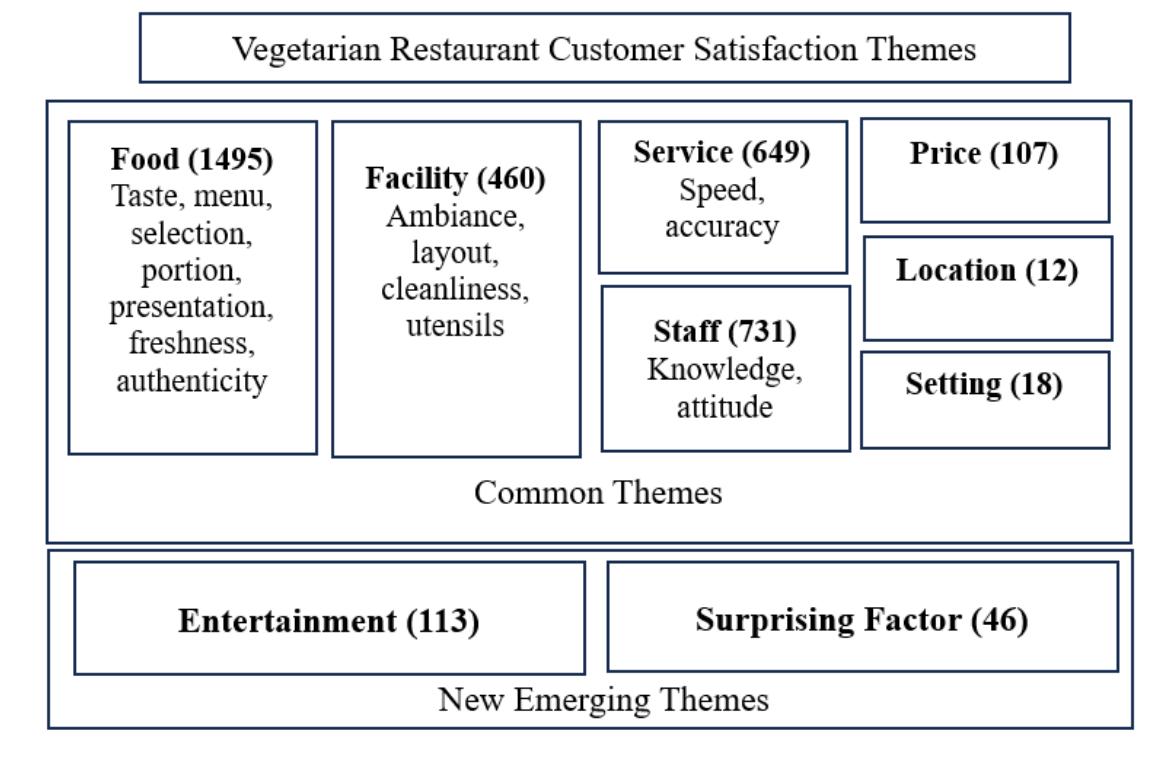
Figure 1. Final Thematic Map of Vegetarian Restaurant Customer Satisfaction
Figure 1 indicates that vegetarian restaurants' overall customer satisfaction is generated by a combination of the common and new emerging themes. On one hand, the common themes, food, facility, service, staff, price, location, and setting, serve as the most important themes in creating vegetarian restaurant customer satisfaction. Overall, the common themes are responsible for 95.4% of overall customer satisfaction. Individually, food, facility, service, staff, price, location, and setting contribute 41.2%, 12.67%, 17.87%, 20.13%, 2.94%, 0.33%, and 0.5%, respectively. On the other hand, the entertainment theme contributed 3.11%, and the surprising factor theme contributed 1.27%. Together, these newly emerging themes are responsible for 4.38% of customer satisfaction.
Finally, as recommended by Herjanto and Franklin (2019), the authors conducted Holsti's intercoder reliability test to ensure the quality of data findings. Holsti (1969) argues that a reliability coefficient score of a minimum of 85% indicates acceptable quality data. The formula for Holsti's intercoder reliability is as follows:
Coefficient of reliability = 2 m/n1 + n2 (Holsti, 1969)
m = total number of coding decisions that two coders agree upon
    n1 = number of coding decisions made by the first coder
  n2 = number of coding decisions made by the second coder
Based on this formula, it was found that the reliability of the menu, price, entertainment, setting, and surprise factors was 100%, food was 96%, service was 98%, facility and location was 99%, and staff was 97%.
4. Finding & Discussion
The present study identifies 21 attributes, categorized into 9 themes, as the primary factors affecting vegetarian restaurant customer satisfaction in the Indonesian context. These final themes contrast with Bai et al. (2023), who did not find entertainment and surprising factors in their study. As presented in Figure 1, seven themes (food, facility, service, staff, price, location, and setting) can be considered as common themes. Among them, food, staff, service, facility, and price are regarded as the top five important themes. The following comments illustrate these themes:
Food theme
Food portions: Very delicious food, good portions.
Food presentation: The presentation of the dishes was amazing.
Food freshness: The food was fresh and flavorsome.
The findings above can be explained as follows. First, a sufficient food portion is viewed as important by customers as they feel such a portion reflects perceived value for their money (Vermeer et al., 2009). Second, Zellner et al. (2011) argue that beautiful food presentation increases customer appetite and, more importantly, the dining experience. Finally, Jyvakorpi et al. (2018) suggest that in the restaurant industry, specifically vegetarian restaurants, fresh food is a must as it represents the food quality that enhances customer happiness and peace of mind. Based on these explanations, Namkung and Jang (2007) argue that the food theme is responsible for generating customer positive emotions of satisfaction. This phenomenon can further be explained through Weiner's (1985) attributional theory of emotion lenses, which suggests that customer positive emotions occur when the customer appraises an enjoyable event. That is, the more positive the customer perceives their event, the more satisfied the customer will be. According to Namkung and Jang (2007), this favorable situation can further motivate customers to revisit the restaurant.
Staff theme
Staff: Great attentive attitude from our lovely and friendly host, X (a waiter's name).
Staff: A waiter provided us with much-needed details about the dishes we had in question.
The results indicate that the staff theme is imperative to ensure customer satisfaction. That is because staff quality shows the degree of restaurant ingenuity to please customers. Accordingly, Panchapakesan et al. (2022) argue that staff professionalism, attitude, knowledge, and the restaurant's ability to offer personalization and fulfill their promises heighten customers' positive experience. Additionally, Sirieix et al. (2008) suggest that staff knowledge about their dishes improves customer confidence and peace of mind, which fosters comfort and satisfaction. According to the social exchange theory, when customers experience such treatment, they view the staff are effectively and genuinely providing care and value. Consequently, it improves customers' trust, satisfaction, and, more importantly, an emotional connection that leads to commitment (Panchapakesan et al. 2022). Because of this nature, Kim and Qu (2020) conclude that staff quality is a must-have ingredient to improve the customer's dining experience and encourage revisiting intention.
Service theme
Service: The dish was brought out to me very quickly after ordering.
Service: The waiter got us the best table with the best view.
Nguyen and Leblanc (2002) suggest that restaurant experience is also determined by the restaurant's service capability to offer comfort. According to Parasuraman et al.'s (1988) concept of SERVQUAL, a restaurant's overall service is not only focused on staff quality, but it also reflects the restaurant's ability to provide outstanding and error-free experiences. This includes the ability to offer reliable, accurate, and seamless services such as quick food delivery and well-organized table management. Furthermore, the concept of SERVQUAL explains that service reliability is perceived as a restaurant's willingness to help or improve customers' comfort. Thus, based on this discussion, it is reasonable to suggest that restaurants' service is responsible for generating customer satisfaction and loyalty (Villanueva et al., 2023).
Facility theme
Facility: The ambiance was chilled and clean!
Facility: The plates are stunning!!! Each plate/pottery/ceramic was beautiful.
In addition to overall service, Nguyen and Leblanc (2002) also suggest that restaurants' facilities offer positive feelings that enhance restaurant images. In our study, restaurants' facilities comprise several attributes such as ambiance, layout, cleanliness, and utensils. According to Servicescape theory, welldesigned and maintained restaurants' facilities improve customer comfort and enjoyment (Ryu & Han, 2010). For example, an appropriate and styled utensil not only will appeal aesthetically but also can help handle and enjoy the food properly (i.e., a good, sharp knife can easily cut vegetables, etc.) (Glaser & Mabel, 1981). As a result, customers feel relaxed and at ease, which further encourages them to think positively, arouses positive emotions, and motivates favorable behavior, such as spreading favorable word of mouth (Bitner, 1992). Thus, this situation further increases customers' perceived value and restaurants' attractiveness.
Price theme
Price: Excellent service, fine dining quality dishes at a value price. Price: Gorgeous café with incredible food, great value for money.
Finally, according to Ryu and Han (2010), the combination of food quality and staff and service quality, as well as restaurant facility, increases customer-perceived value. That means, when customers experience such a positive situation, they tend to have better perceived value (i.e., price tolerance). According to Thaler's (1985) mental accounting framework, customers' perceived value determines their behavior. That is, customers use their mental accounting to evaluate the input and output of their behavior. For example, when customers perceive that their input is higher than their output, or when they receive more benefits than their expenditure, customers tend to experience satisfaction, and vice versa. From the restaurant's perspective, thus, when customers perceive that the restaurant provides overall value (i.e., good food, good facilities, and good service), they tend to feel that the price they paid is fair. Consequently, this perceived fairness improves their level of satisfaction and willingness to revisit the restaurant.
Finally, location and setting themes are found to be the least important in generating vegetarian restaurant customer satisfaction. To illustrate,
Location: The restaurant is in a beautiful location in Ubud. Location: It (restaurant) is located in a good and central Ubud.
Setting: A beautiful restaurant in the middle of a jungle setting. Setting: An amazing place with a beautiful garden setting.
Our findings contradict Bai et al.'s (2023) study. These intriguing findings can be explained as follows. First, most international tourists who visit Bali usually stay in a tourist location, and more likely in such locations, the amenities are fully developed. That is, the location is quite convenient where international tourists can find different local and international restaurants and other tourist attractions conveniently and within a short distance (Sutimi, 2023). Second, this phenomenon can be explained through the lens of push-pull motivation theory. According to this theory, push-motivation or an internal desire to get out of routine may drive customers to experience a new food, while pullmotivation or external attributes that facilitate or heighten their push motivation (Salsabila & Alversia, 2019). This attribute includes location, climate, infrastructure, and costs. Although Bali's infrastructure is not fully developed, when the location of the restaurant is easy to reach, customers tend to perceive ease and are more willing to visit such restaurants.
On the other hand, several reasons can explain why the restaurant setting (theme) is not so important. Firstly, vegetarian customers have a strong health-conscious value, which may prioritize their dietary needs over the restaurant setting. Secondly, Bai et al. (2023) suggest that a restaurant setting is important as it creates comfort. To ensure such comfort, international tourists may select vegetarian restaurants based on their situation through online reviews and platforms. Therefore, they can view and match the restaurant setting and their preferences. Thus, when they visit the restaurant, they know what to expect and no longer worry about the restaurant setting. Theoretically, this phenomenon can be interpreted by Ajzen's (1991) Theory of Planned Behavior. This theory explains that attitude, social norms, and perceived behavior control play important roles in determining customer behavior. To put it in perspective, vegetarian restaurant customers have a strong and positive attitude toward healthy food, and they are also affected by their vegetarian–healthy diet circle to maintain their diet. Additionally, to ensure such a diet, they tend to control their choices by using such information above to make their selection (Morgan, 2021). Based on this explanation, such customers tend to prioritize their dietary needs rather than the restaurant's theme.
In addition to these common themes, the present study also discovered entertainment and personalized surprising factors as two new emerging themes. The comments below illustrate the importance of these themes:
Entertainment: Nice music to wind down.
Entertainment: Amazing restaurant with great tunes and entertainment. The dancing skaters and sparklers were the highlights.
Surprise factors: Chef Arik made us a special dessert as we were celebrating our 29th anniversary. Surprise factors: On our last day, my sister wasn't feeling well. The waiter went above and beyond by preparing a special porridge and serving Balinese traditional tea to soothe her stomach.
Yang and Luo (2021) suggest that entertainment, like music, determines the customer's overall restaurant experience. These authors explained that the right music can improve customers' moods, and therefore, customers may relax and enjoy the food better. Accordingly, this situation will create a strong, memorable, positive experience (Herjanto, 2014, 2017). Additionally, this situation can be explained through Mehrabian and Russell's (1974) Stimulus-Organism-Response theory, which posits that environmental stimuli (i.e., music or attraction) influence customers' emotions and behavior. Accordingly, when a restaurant offers live music, customers may feel relaxed, and consequently, they feel more comfortable spending more time in the restaurant.
Furthermore, unexpected (surprising) factors, such as special treatments from restaurants, can improve customer satisfaction (Herjanto and Boone, 2025). According to Panchapakesan et al. (2022), when customers experience such pleasant surprises, they tend to feel a high level of delight and joy, and more importantly, they view the restaurant as genuinely trying to exceed expectations. Hughes (2024) argues that surprise will activate the brain's dopamine system, which further generates attention, motivation, and intensity. When this system is activated, customers will remember such unexpected or surprising factors and record them in their long-term memory. Accordingly, this memory fosters positive, memorable moments that promote stronger emotional bonds and commitment with such restaurants (Panchapakesan et al., 2022).
5. Conclusion and Implicatons
The findings of the present study enhance the existing hospitality literature by underscoring the importance of nine attributes that influence customer (international tourist) satisfaction in vegetarian restaurants. Understanding these themes will help restaurateurs to develop suitable and innovative strategies to attract and satisfy their customers, specifically, international tourists who visit their restaurants. Without this knowledge and willingness to adapt to their unique preferences, vegetarian restaurants may experience some challenges ahead.
This study offers several theoretical implications. First, the present study employed deductive thematic analysis approaches to identify the initial themes of vegetarian restaurant customer satisfaction. The results extend the existing literature by explaining various themes influencing customers, specifically international tourists, and vegetarian restaurant satisfaction. This study indicates that seven common themes (food, facility, service, staff, price, location, and setting) strongly determine customer satisfaction. Secondly, this study also revealed that entertainment and surprise factors are two emerging themes that generate customer satisfaction. These new themes provide additional perspectives on the existing literature on vegetarian restaurant customer satisfaction. Therefore, it is critical that restaurateurs be fully aware of these common and new themes to develop a fundamental strategy for maintaining their business profitability.
Regarding the implications for restaurateurs, our study indicates that although international tourist (customer) preferences are mostly similar, they are not the same. Thus, the restaurateurs are recommended to satisfy every theme by consistently and frequently evaluating their performance. Restaurateurs are advised to hire and work with a specialized consultant to help build unique, attractive, and innovative vegetarian menus and strategies to attract customers. Further, build a partnership with customers by encouraging them to be involved in menu building by sharing their country of origin's recipes or their personal favorites. Third, restaurants could conduct a deep observation of customer comments, pay attention to trend changes, and, more importantly, quickly adapt and adjust themselves to their observation results. Fourth, restaurateurs could work cooperatively and competitively with their restaurant partners and competitors to learn from each other's knowledge and failures. Finally, restaurateurs should also build stronger customer awareness by increasing their digital and traditional presence by involving different international tourist testimonials and creating a digital forum to facilitate customer discussion on vegetarian food-related topics.
Like any empirical study, the present study experiences several limitations. First, this research uses a single source of data from TripAdvisor.com. Thus, the findings of this study may not provide a partial understanding of the phenomenon. Therefore, future research may include different online review sites such as Yelp, Uber Eats, Gojek, Go Food, etc. Second, the study only concentrated on positive comments (5-excellent and 4-good). This focus may generate a selective bias, causing an overly optimistic view. Therefore, it may fail to indicate the full range of customer satisfaction. To mitigate this situation, future scholars are recommended to include neutral and dissatisfied ratings as well. Third, this research is focused on the top five vegetarian restaurants, and therefore, this inclusivity excludes other international tourists' comments who visit other restaurants or different tourist destinations in Indonesia. Further investigations in different restaurants and tourist destinations will provide a better picture of vegetarian restaurant customer satisfaction in Indonesia. Next, our study focused on international tourists; thus, the findings might not apply to domestic tourists. Therefore, to get a better picture of this phenomenon, future researchers are recommended to replicate this study and focus on domestic tourists. Additionally, this research did not investigate whether customer satisfaction changes with different seasons. Future research should investigate this issue to improve our understanding. Lastly, extended research in different countries in Asia is very much recommended, as it will provide a full picture of this phenomenon from the Asian perspective.
References
- Adiwijaya, M., Herjanto, H., & Gutierrez, G. (2024). Post-COVID-19 amusement park satisfaction attributes. Indonesian Journal of Sustainability Accounting and Management, 8(2), 369–387.
- Andaleeb, S. S., & Conway, C. (2006). Customer satisfaction in the restaurant industry: An examination of the transaction-specific model. Journal of Services Marketing, 20(1), 3–11.
- Antara. (2025). Jan–Nov 2024 foreign arrivals highest in five years: BPS. Available at: https://en.antaranews.com/news/339946/jan-nov-2024-foreign-tourist-arrivals-highest-infive-years-bps
- Babic, I. (2023). The vegetarian paradise that is Bali. Available at: https://www.vegetarian.org.nz/about/news/article/the-vegetarian-paradise-that-isbali#:~:text=Due%20to%20its%20Hinduism%2C%20Bali,the%20most%20common%20ve getarian%20dish
- Badu-Baiden, F., Kim, S. (S.), Ahn, S. W., Wong, A. K. F., & Agrusa, J. (2022). Analysis of vegan restaurant diners' hierarchical experience structure by examining a vegan food attribute– benefit–value–intention linkage. International Journal of Hospitality & Tourism Administration, 24(6), 505–532.
- Bai, S., Zheng, X., Han, C., & Bi, X. (2023). Exploring user-generated content related to vegetarian customers in restaurants: An analysis of online reviews. Frontiers in Psychology, 13(2022), Article 1043844.
- Berezina, K., Bilgihan, A., Cobanoglu, C., & Okumus, F. (2015). Understanding satisfied and dissatisfied hotel customers: Text mining of online hotel reviews. Journal of Hospitality Marketing & Management, 25, 1–24.
- Birk, M., & Mills, J. (2015). Grounded theory: A practical guide. UK: Sage.
- Bitner, M. K. (1992). Servicescapes: The impact of physical surroundings on customers and employees. Journal of Marketing, 56(2), 57–71.
- Cai, R., & Chi, C. G. Q. (2021). Pictures vs. reality: Roles of disconfirmation magnitude, disconfirmation sensitivity, and branding. International Journal of Hospitality Management, 98, 103040.
- Carlson, N. R., Heth, C. D., Miller, H., Donahoe, J. W., Buskist, W., & Martin, G. N. (2007). Psychology: The science of behavior (6th ed.). USA: Pearson.
- Cassar, M. L., Caruana, A., & Konietzny, J. (2020). Wine and satisfaction with fine dining restaurants: An analysis of tourist experiences from user-generated content on TripAdvisor. Journal of Wine Research, 31(2), 85–100.
- Chun, S. H., & Nyam-Ochir, A. (2020). The effects of fast-food restaurant attributes on customer satisfaction, revisit intention, and recommendation using DINESERV scale. Sustainability, 12(18), 1–19.
- Coelho, L. (2017). New restaurants and their intra-industry effects: Evidence from Portugal. Tourism & Management Studies, 13(1), 33–42.
- Darmawan. (2024). Pengalaman jadi karyawan restoran vegan dan vegetarian yang tidak dirasakan karyawan restoran biasa. Available at: https://mojok.co/terminal/pengalaman-jadi-karyawanrestoran-vegan-dan-vegetarian/
Dinh, N. H. A., & Siegfried, P. (2023). Investigation of the impact of vegetarianism and veganism on the post-COVID-19 gastronomy and food industry. International Journal on Food System Dynamics, 14(3), 351–361.
- Ding, K., Choo, W. C., Ng, K. Y., Ng, S. I., & Song, P. (2021). Exploring sources of satisfaction and dissatisfaction in Airbnb accommodation using unsupervised and supervised topic modeling. Frontiers in Psychology, 12, 1–19.
- Ebner, N. C., & Fischer, H. (2014). Emotion and aging: Evidence from brain and behavior. Frontiers in Psychology, 5, 1–6.
- Gabriel, D. (2013). Inductive and deductive approaches to research. Available at: https://deborahgabriel.com/2013/03/17/inductive-and-deductive-approaches-to-research
- Gaur, S. S., Herjanto, H., & Bathula, H. (2012). Does buyer–seller similarity affect buyer satisfaction with the seller firm? The International Review of Retail, Distribution and Consumer Research, 22(3), 315–355.
- Glaser, P. E., & Mabel, J. A. (1981). Nutrition and food technology for a Controlled Ecological Life Support System (CELSS) (No. NAS 1.26:167392).
- González-Monroy, C., Gómez-Gómez, I., Olarte-Sánchez, C. M., & Motrico, E. (2021). Eating behavior changes during the COVID-19 pandemic: A systematic review of longitudinal studies. International Journal of Environmental Research and Public Health, 18(21), 11130.
- Guild, A. (2024). The real restaurant failure rate is lower than you think (2024 data). Available at: https://www.owner.com/blog/restaurant-failure-rate
- Halevi, G., Moed, H., & Bar-Ilan, J. (2017). Suitability of Google Scholar as a source of scientific information and as a source of data for scientific evaluation: Review of the literature. Journal of Informetrics, 11(3), 823–834.
- Hanaa, S. M., & Abdul, A. P. (2024). A holistic approach to augmented reality-related research in tourism through bibliometric analysis. Journal of Hospitality and Tourism Insights, 7(1), 76–94.
- Heisey-Grove, D., Rathert, C., McClelland, L. E., Jackson, K., & DeShazo, J. (2020). Classification of patient- and clinician-generated secure messages using a theory-based taxonomy. Health Science Reports, 4(2), 1–15.
- Hendriyani, I. G. A. D. (2024). Vice minister Angela highlights vegan economy opportunities at Vegan Festival 2024 in Surabaya. Available at: https://kemenparekraf.go.id/en/articles/viceminister-angela-highlights-vegan-economy-opportunities-at-vegan-festival-2024-insurabaya?utm_source=chatgpt.com
- Herjanto, H., & Gaur, S. S. (2015). Creating memorable experiences: Lessons from world's top 10 hotels. In V. Jauhari (Ed.), Creating memorable customer experiences—Insights from hospitality sector (pp. 49–72). Toronto, ON; NJ: Apple Academic Press.
- Herjanto, H., & Gaur, S. (2014). What makes experience a memorable one for the customers of top Indonesian hotels. ASEAN Journal on Hospitality and Tourism, 13(2), 90–100.
- Herjanto, H., Amin, M., & Mahfooz, Y. (2022). Consumer research during the COVID-19 pandemic: A systematic review. Nankai Business Review International, 13(4), 587–629.
- Herjanto, H., Chilicki, A., Anantamongkolkul, C., & McGuiness, E. (2020). Hotel selection criteria of solo traveling females. ASEAN Journal on Hospitality and Tourism, 18(2), 58–73.
- Herjanto, H., & Franklin, D. (2019). Investigating salesperson performance factors: A systematic review of the literature on the characteristics of effective salespersons. Australasian Marketing Journal, 27, 104–112.
- Herjanto, H., Bagozzi, R. P., & Gaur, S. S. (2021). The role of shame and virtues in the self-regulation of decisions to engage in digital piracy. Australasian Marketing Journal, 29(1), 15–28.
- Herjanto, H., Garza, F. R., Cary, J. C., & Kasuma, J. (2024a). Hotel guests' customer value: LGBTQ perspective. Tourism Review International, 28(4), 311–324.
- Herjanto, H., Garza, F. R., & Amin, M. (2024b). LGBTQ hotel selection criteria: A thematic analysis method. Journal of Hospitality and Tourism Insights, 7(4), 2199–2215.
- Herjanto, H., & Boone, S. (2025). From cuisine to connection: How cultural encounters and surprise gestures enrich restaurant experiences for international tourist dating couples in Maldives and Thailand. Indonesian Management and Accounting Research, 24(1), 115–138.
- Holsti, O. R. (1969). Content analysis for the social sciences and humanities. Reading, MA: Addison-Wesley.
- Hughes, K. (2024). The psychology of surprise on customer experience. Available at: https://www.kenhughes.info/the-psychology-of-surprise-the-gift-of-an-unexpectedcustomer-experience/
- IBISWorld. (2024). Vegetarian & vegan restaurants in the US number of businesses (2005–2030). Available at: https://www.ibisworld.com/united-states/industry/vegetarian-veganrestaurants/6164/#TopQuestionsAnswered
- Ing, P. G., Lin, N. Z., Xu, M., & Thurasamy, R. (2010). Customer loyalty in Sabah full-service restaurant. Asia Pacific Journal of Marketing and Logistics, 32(7), 1407–1429.
- Invest Islands. (2023). Indonesia's vegan-friendly destination among the trendiest in the world. Available at: https://www.invest-islands.com/news/indonesia-vegan-friendlydestination#next
- Jyväkorpi, S. K., Urtamo, A., Pitkälä, K. H., & Strandberg, T. E. (2018). Happiness of the oldest-old men is associated with fruit and vegetable intakes. European Geriatric Medicine, 9(5), 687–690.
- Kim, H., & Qu, H. (2020). Effects of employees' social exchange and the mediating role of customer orientation in the restaurant industry. International Journal of Hospitality Management, 89, 102577.
- Kim, Y. J., & Jeon, H. M. (2024). The role of experiential quality in a vegetarian restaurant from an eco-friendly perspective. Sustainability, 16, 1–15.
- Kimes, S. E., & Wirtz, J. (2002). Perceived fairness of demand-based pricing for restaurants. Cornell Hotel and Restaurant Administration Quarterly, 43(1), 31–37.
- Kokazi, N., & Nakatani, M. (2021). With a hint of sudachi: Food plating can facilitate the fondness of food. Frontiers in Psychology, 12, 1–10.
- Le Tan, T., Thy, N. T. M., Anh, N. T., Quyen, P. N. H., Quynh, D. D. N., & Uyen, D. H. C. (2021). Research on factors affecting the choice of vegetarian restaurants in Vietnam. International Journal of Community Service & Engagement, 2(4), 118–137.
- Lockhart, K. (2022). The growing trend of vegan vacations. Available at: https://www.shondaland.com/live/travel-food/a40104204/the-growing-trend-of-veganvacations/
- Manhas, P. S., Sharma, P., & Quintela, J. A. (2024). Product innovation and customer experience: Catalyst for enhancing satisfaction in quick-service restaurants. Tourism and Hospitality, 5(3), 559–576.
- Mehrbakhsh Nilashi, M., Ahmadi, H., Arji, G., Alsalem, K. O., Samad, S., Ghabban, F., Alzahrani, A. O., Ahani, A., & Alarood, A. A. (2021). Big social data and customer decision making in
- vegetarian restaurants: A combined machine learning method. Journal of Retailing and Consumer Services, 62, 102630.
- Mehrabian, A., & Russell, J. A. (1974). An approach to environmental psychology. Cambridge, MA: MIT Press.
- Menéndez, A., Saura, J. R., & Martínez-Navalón, J. G. (2019). The impact of e-WOM on hotel management reputation: Exploring TripAdvisor review credibility with the ELM model. IEEE Access, 7, 68868–68877.
- Mihalič, T., Žabkar, V., & Cvelbar, L. K. (2012). A hotel sustainability business model: Evidence from Slovenia. Journal of Sustainable Tourism, 20(5), 701–719.
- Moon, S., Jalali, N., & Erevelles, S. (2021). Segmentation of both reviewers and businesses on social media. Journal of Retailing and Consumer Services, 61, 102524.
- Morgan, C. (2021). The ups and downs of vegan social media communities. Available at: https://www.theveganreview.com/vegan-social-media-communities-groups/
- Naeem, M., Ozuem, W., Howell, K., & Ranfagni, S. (2024). Demystification and actualization of data saturation in qualitative research through thematic analysis. International Journal of Qualitative Methods, 23, 1–17.
- Namkung, Y., & Jang, S. (2007). Does food quality really matter in restaurants? Its impact on customer satisfaction and behavioral intentions. Journal of Hospitality & Tourism Research, 31(3), 387–409.
- Nilashi, M., Ahmadi, H., Arji, G., Alsalem, K. O., Samad, S., Ghabban, F., Alzahrani, A. O., Ahani, A., & Alarood, A. A. (2021). Big social data and customer decision making in vegetarian restaurants: A combined machine learning method. Journal of Retailing and Consumer Services, 62, 102630.
- Nguyen, N., & Leblanc, G. (2002). Contact personnel, physical environment and the perceived corporate image of intangible services by new clients. International Journal of Service Industry Management, 13(3), 242–262.
- Oh, M., Badu-Baiden, F., Kim, S., & Lema, J. (2021). Identification of delighters and frustrators in vegan-friendly restaurant experiences via semantic network analysis: Evidence from online reviews. International Journal of Hospitality & Tourism Administration, 24(2), 260–287.
- Oh, S., Ji, H., Kim, J., Park, E., & del Pobil, A. P. (2022). Deep learning model based on expectationconfirmation theory to predict customer satisfaction in hospitality service. Information Technology & Tourism, 24, 109–126.
- Panchapakesan, P., Amin, M., & Herjanto, H. (2022). How luxury restaurants will enhance the concept of guest delight. Journal of Hospitality and Tourism Insights, 5(2), 311–330.
- Parasuraman, A., Zeithaml, V. A., & Berry, L. L. (1988). SERVQUAL: A multiple-item scale for measuring consumer perceptions of service quality. In A. M. Findlay & L. Sparks (Eds.), Retailing: Critical concepts (pp. 140–161). London: Routledge.
- Parrott, W. G. (2004). The nature of emotion. In M. B. Brewer & M. Hewstone (Eds.), Emotion and motivation (pp. 5–20). UK: Blackwell.
- Parsa, H. G., Shuster, B. K., & Bujisic, M. (2020). New classification system for the US restaurant industry: Application of utilitarian and hedonic continuum model. Cornell Hospitality Quarterly, 61(4), 379–400.
- Peramatzis, G., & Galanakis, M. (2022). Herzberg's motivation theory in the workplace. Psychology Research, 12(12), 971–978.
- Pratiwi, A. (2018). Popular destinations in tourism: Case study of TripAdvisor. Advances in Social Sciences, Education and Humanities Research, 426, 359–363.
- Precedence Research. (2025). Vegan food market size, share, and trends 2025 to 2034. Available at: https://www.precedenceresearch.com/vegan-food-market
- Ray, A., Das, B., & She, L. (2024). What affects consumers' choice behavior towards organic food restaurants? Journal of Hospitality and Tourism Insights, 7(5), 2582–2602.
- Ryu, K., & Han, H. (2010). Influence of the quality of food, service, and physical environment on customer satisfaction and behavioral intention in quick-casual restaurants. Journal of Hospitality & Tourism Research, 34(3), 310–329.
- Salsabila, N., & Alversia, Y. (2019). Examining push–pull motivation and travel intention for potential travelers in Indonesia using the theory of planned behavior. Tourism Development Center International Conference, Bukittinggi, Indonesia.
- Sandelowski, M. (2010). What's in a name? Qualitative description revisited. Research in Nursing & Health, 33, 77–84.
- Sarjono, H. (2004). Customers' satisfaction analysis at Kartika Hotel International in East Java using fuzzy SERVQUAL approach. International Business Management, 8, 159–167.
- Sezgen, E., Mason, K. J., & Mayer, R. (2019). Voice of airline passengers: A text mining approach to understand customer satisfaction. Journal of Air Transport Management, 77, 65–74.
- Sipankar, H., & Windasari, N. A. (2023). Community utilization strategy to increase the number of customers for Mattea Social Place. Journal of Economics and Business, 12(1), 41–62.
- Sirieix, L., Grolleau, G., & Schaer, B. (2008). Do consumers care about food miles? An empirical analysis in France. International Journal of Consumer Studies, 32(5), 508–515.
- Snapcart. (2023). Vegetarian and vegan lifestyles among Indonesians. Available at: https://snapcart.global/vegetarian-and-vegan-lifestyles-among-indonesians/
- Sukhu, A., & Bilgihan, A. (2021). The impact of hedonic dining experiences on word of mouth, switching intentions, and willingness to pay. British Food Journal, 123(12), 3954–3969.
- Sutimi, M. (2023). Food and eating out in Bali. Available at: https://www.farawayworlds.com/travel/indonesia/plan/bali/food
- Thaler, R. H. (1985). Mental accounting and consumer choice. Marketing Science, 4(3), 199–214.
- Thomas, D. R. (2006). A general inductive approach for analyzing qualitative evaluation data. American Journal of Evaluation, 27(2), 237–246.
- UN Tourism. UNWTO works with Government of Indonesia to restart tourism in Bali. Available at: https://www.unwto.org/news/unwto-works-with-government-of-indonesia-to-restarttourism-in-bali
- Vivi Guides. (2019). Indonesian cuisine: What to eat region by region. Available at: https://vivitravels.com/en/guides/indonesian-cuisine-what-to-eat-region-by-region2/
- Vermeer, W. M., Alting, E., Steenhuis, I. H. M., & Seidell, J. C. (2009). Value for money or making healthy choices: The impact of proportional pricing on customers' portion size choices. European Journal of Public Health, 20(1), 65–69.
- Villanueva, M. C. C., Alejandro, A. F., & Ga-an, L. L. P. (2023). Measuring the service quality, customer satisfaction, and customer loyalty of selected fast-food restaurants during the COVID-19 pandemic. Open Journal of Business and Management, 11, 1181–1207.
Wang, H. H. (2022). The perspective of meat and meat-alternative consumption in China. Meat Science, 194, 108982.
- Weiner, B. (1985). An attributional theory of achievement motivation and emotion. Psychological Review, 92(4), 548–573.
- Xu, X., & Li, Y. (2016). The antecedents of customer satisfaction and dissatisfaction toward various types of hotels: A text mining approach. International Journal of Hospitality Management, 55, 57– 69.
- Yeşilçimen, P., & Akın, H. B. (2025). The impact of eating behavior on destination choice: The case of vegetarianism. Journal of Multidisciplinary Academic Tourism, 10(1), 35–47.
- Yu, J., Kim, S. (S.), Baah, N. G., & Han, H. (2024). Veganism, a new hotel paradigm: Exploring the attributes of vegan-friendly hotels and guest approach behaviors. International Journal of Hospitality Management, 117, 103639.