S-M Leea , Richard M. Lowb , H.K. Ngb , Y-C Wangc
sinminlee@gmail.com, richard.low@sjsu.edu, ho-kuen.ng@sjsu.edu, jackpot3747@gmail.com
Let G = (V, E) be a graph. A vertex labeling f : V → Z2 induces an edge labeling f ∗ : E → Z2 defined by f ∗ (xy) = f(x) + f(y), for each edge xy ∈ E. For i ∈ Z2, let vf (i) = |{v ∈ V : f(v) = i}| and ef (i) = |{e ∈ E : f ∗ (e) = i}|. We say that f is friendly if |vf (1) − vf (0)| ≤ 1. The friendly index set of G, denoted by FI(G), is defined as FI(G) = {|ef (1) − ef (0)| : vertex labeling f is friendly}. A k-galaxy is a disjoint union of k stars. In this paper, we establish the friendly index sets for various classes of k-galaxies.
Keywords: friendly labeling, friendly index set, disjoint union of stars Mathematics Subject Classification: 05C78, 05C25
DOI: 10.5614/ejgta.2019.7.1.1
1. Introduction
Let G = (V, E) be a graph. A vertex labeling f : V → Z2 induces an edge labeling f ∗ : E → Z2 defined by f ∗ (xy) = f(x) + f(y), for each edge xy ∈ E. For i ∈ Z2, let vf (i) = |{v ∈ V : f(v) = i}| and ef (i) = |{e ∈ E : f ∗ (e) = i}|. A vertex labeling f of G is friendly if |vf (i) − vf (j)| ≤ 1.
In 1987, Cahit [1] introduced cordial labelings. In the following decades, cordial graph labelings would become a major topic of study. Motivated by this particular type of labeling, the friendly index set FI(G) of a graph G was introduced [3]. The set FI(G) is defined as {|ef (0) − ef (1)| :
Received: 7 September 2017, Revised: 17 September 2018, Accepted: 7 November 2018.
a1304 N. First Avenue, Upland, CA 91786, USA
bDepartment of Mathematics, San Jose State University, San Jose, CA 95192, USA
cDepartment of Digital Media Design, Tzu-Hui Institute of Technology, Taiwan, Republic of China
vertex labeling f is friendly}. When the context is clear, we will drop the subscript f. G is cordial if and only if 0 or 1 is in FI(G).
Cairnie and Edwards [2] have determined the computational complexity of cordial labelings. Deciding whether a graph admits a cordial labeling or not is an NP-complete problem. Even the restricted problem of deciding whether a connected graph of diameter two has a cordial labeling is NP-complete. Thus in general, it is difficult to determine the friendly index sets of graphs.
In [7], the friendly index sets of complete bipartite graphs and cycles are determined. In [5, 6, 8, 9, 10, 11], the friendly index sets of other classes of graphs are determined. For further details of known results on friendly labelings and friendly index sets, the reader is directed to Gallian's [4] comprehensive survey of graph labelings.
To gain insight into a graph labeling problem, one usually begins by focusing on specific classes of graphs. In this paper, we establish the friendly index sets for various disjoint unions of stars.
2. Galaxies with identical stars
Let n ≥ 1 and St(n) denote the star with n pendant edges. The following result is well-known [11].
- 1. If n is odd, then FI(St(n)) = {1}.
- 2. If n is even, then FI(St(n)) = {0, 2}.
A k-galaxy is a disjoint union of k stars. Consider the galaxy St(n [2m] ), the disjoint union of 2m copies of St(n), where m, n ≥ 1. This particular galaxy has 2mn + 2m vertices and 2mn edges. We use the notation ∆e = e(1) − e(0) and ∆v = v(1) − v(0).
Lemma 2.1. If n is odd, then FI(St(n [2m] )) ⊆ {2mn − 4i ≥ 0 : i ≥ 0}. If n is even, then FI(St(n [2m] )) ⊆ {2mn − 4i ≥ 0 : i ≥ 0} ∪ {2mn − 2n + 2 − 4i ≥ 0 : i ≥ 0}.
Proof. We determine all of the possible values of ∆e. Let k of the centers of the 2m stars be labeled 0. Without loss of generality, let this be the first, second, . . . , and kth star. Let xi be the number of pendant vertices of the ith star that are labeled 0. Then, e(1) = kn − (x1 + · · · + xk) + (xk+1 + · · · + x2m), e(0) = (x1 + · · · + xk) + (2m − k)n − (xk+1 + · · · + x2m) and ∆e = −2(x1 + · · · + xk) + 2(xk+1 + · · · + x2m) + 2kn − 2mn. By friendliness, v(0) = k + (x1 + · · ·+xk)+(xk+1+· · ·+x2m) = m(n+1). Thus, xk+1+· · ·+x2m = m(n+1)−k−(x1+· · ·+xk), and so ∆e = 2m(n+ 1)−2k −4(x1 +· · ·+xk) + 2kn−2mn = 2m+ 2k(n−1)−4(x1 +· · · xk). Clearly, k ranges from 0 to 2m. However, we may assume that k ranges from 0 to m; otherwise changing all the vertex labels to their complements still leaves a friendly vertex labeling with the same friendly index and (2m − k) centers labeled 0. Thus, all the possible values of ∆e are 2m + 2k(n − 1) − 4(x1 + · · · + xk), where k = 0, 1, . . . , m, and 0 ≤ x1 + · · · + xk ≤ kn; i.e., 2m + 2kn − 2k with decrements of 4, until 2m − 2kn − 2k where k = 0, 1, . . . , m. For example, when k = 0, the only possible value of ∆e is 2m; when k = 1, the only possible values of ∆e are 2m + 2n − 2, . . . , 2m − 2n − 2; when k = m − 1, the possible values of ∆e are 2m + 2(m − 1)n − 2(m − 1), . . . , 2m − 2(m − 1)n − 2(m − 1); when k = m, the possible values of ∆e are 2m + 2mn − 2m, . . . , 2m − 2mn − 2m. When n is odd, any two possible values of ∆e above differ by a multiple of 4. The greatest value of |∆e| is 2mn. Part (1) of the lemma follows.
Now, consider an even value of n. For any two odd values of k, any two possible values of \(\Delta e\) above differ by a multiple of 4. For any two even values of k, any two possible values of \(\Delta e\) above differ by a multiple of 4. When k=m, the greatest value of \(|\Delta e|\) is 2mn; when k=m-1, the greatest value of \(|\Delta e|\) is 2mn-2n+2. Part (2) of the lemma follows.
Lemma 2.2. If n is odd, then \(\{2mn - 2n + 2 - 4i > 0 : i > 0\} \subset \{2mn - 4i > 0 : i > 0\}\).
Proof. For any integer j, we see that -2(2j+1)+2 is divisible by 4.
Theorem 2.1. \(FI(St(n^{[2m]})) = \{2mn - 4i \ge 0 : i \ge 0\} \cup \{2mn - 2n + 2 - 4i \ge 0 : i \ge 0\}.\)
Proof. It suffices to show that all values of \(|\Delta e|\) (as asserted) are attainable. Partition \(St(n^{[2m]})\) into m two-star galaxies St(n, n), i.e., m pairs of stars St(n). We give two sets of labelings.
First, for each pair of stars, label one center with 1 and the pendant vertices of this star with 0, and label the other center with 0 and the pendant vertices of this star with 1. Clearly, this vertex labeling is friendly. Furthermore, e(1) = 2mn and e(0) = 0, giving \(\Delta e = 2mn\). Interchange the labels of two pendant vertices in the first pair of stars, creating two edges with label 0. This makes e(1) = 2mn - 2, e(0) = 2, and \(\Delta e = 2mn - 4\). Continue with other pairs of pendant vertices, and then with other pairs of stars, giving friendly indices 2mn - 4i with \(i = 0, 1, \ldots, mn\).
Second, for each (except the last) pair of stars, use the initial labeling as in the previous paragraph. For the last pair of stars, label one center with 0 and the pendant vertices of this star with 1, and label the other center with 0, one pendant vertex of this star with 1 and the other pendant vertices with 0. Clearly, this vertex labeling is friendly. Furthermore, e(1) = 2(m-1)n + (n+1) and e(0) = n - 1, giving \(\Delta e = 2(m-1)n + 2\). Interchange the labels of the pendant vertices in each (except the last) pair of stars as in the previous paragraph, giving friendly indices 2mn - 2n + 2 - 4i with \(i = 0, 1, \ldots, (m-1)n\).
Example. Using Theorem 2.1, we conclude \(FI(St(4^{[2]})) = \{0, 2, 4, 8\}\). See Figure 1.
We now consider the galaxy \(St(n^{[2m+1]})\), the disjoint union of (2m+1) copies of St(n), where \(m \ge 0\) and \(n \ge 1\). It has (2m+1)(n+1) vertices and (2m+1)n edges. Here, we use the technique [as found in the proof for \(St(n^{[2m]})\)]. For brevity's sake, we omit the details.
Lemma 2.3. If n is odd, then \(FI(St(n^{[2m+1]})) \subseteq \{2mn + 1 - 2i \ge 0 : i \ge 0\}.\)
Proof. We use the same notation as in the previous lemma. Then, \(\Delta e = -2(x_1 + \dots + x_k) + 2(x_{k+1} + \dots + x_{2m+1}) + 2kn - (2m+1)n\). By friendliness, \(v(0) = k + (x_1 + \dots + x_k) + (x_{k+1} + \dots + x_{2m+1}) = \frac{1}{2}(2m+1)(n+1)\). Thus, \(\Delta e = 2m+1+2k(n-1)-4(x_1+\dots + x_k)\), where \(k=0,1,\dots,m\) and \(0 \le x_1+\dots + x_k \le kn\), i.e., 2m+1+2kn-2k with decrements of 4, until 2m+1-2kn-2k, where \(k=0,1,\dots,m\). All possible values of \(|\Delta e|\) are odd, and the greatest possible value of \(|\Delta e|\) is 2mn+1. The result follows.
Theorem 2.2. If n is odd, then \(FI(St(n^{[2m+1]})) = \{2mn + 1 - 2i \ge 0 : i \ge 0\}.\)
Figure 1. \(FI(St(4^{[2]})) = \{0, 2, 4, 8\}\). Note that 6 is missing.
Proof. It suffices to show that all the values of \(|\Delta e|\) in the lemma are attainable. Partition \(\operatorname{St}(n^{[2m+1]})\) into m two-star galaxies \(\operatorname{St}(n,n)\), i.e., m pairs of stars \(\operatorname{St}(n)\), and a single star \(\operatorname{St}(n)\). We use the initial labeling, as in the previous proof for the m two-star galaxies. For the last star, label the center with \(0, \frac{1}{2}(n-1)\) pendant vertices with 0, and the other pendant vertices with 1. Clearly, this vertex labeling is friendly. Furthermore, \(e(1) = 2mn + \frac{1}{2}(n+1)\) and \(e(0) = \frac{1}{2}(n-1)\), giving \(\Delta e = 2mn + 1\). Interchange the labels as in the previous proof, giving friendly indices 2mn + 1 - 4i, with \(i = 0, 1, \ldots, mn\), i.e., \(2mn + 1, 2mn - 3, 2mn - 7, \ldots, -2mn + 1\). Taking absolute values completes the proof.
Example. Using Theorem 2.2, we conclude \(FI(St(3^{[3]})) = \{1, 3, 5, 7\}\). See Figure 2.
Lemma 2.4. If n is even, then \(FI(St(n^{[2m+1]})) \subseteq \{2mn + 2 - 2i \ge 0 : i \ge 0\}.\)
Proof. We use the same notation as in the previous lemma. Then, \(\Delta e = -2(x_1 + \dots + x_k) + 2(x_{k+1} + \dots + x_{2m+1}) + 2kn - (2m+1)n\). By friendliness, \(v(0) = k + (x_1 + \dots + x_k) + (x_{k+1} + \dots + x_{2m+1}) = \frac{1}{2}(2m+1)(n+1) \pm \frac{1}{2}\). Thus, \(\Delta e = 2m+1 \pm 1 + 2k(n-1) - 4(x_1 + \dots + x_k)\), where \(k = 0, 1, \dots, m\) and \(0 \le x_1 + \dots + x_k \le kn\), i.e., \(2m+1 \pm 1 + 2kn - 2k\), with decrements of 4, until \(2m+1 \pm 1 - 2kn - 2k\), where \(k = 0, 1, \dots, m\). All possible values of \(|\Delta e|\) are even, and the greatest possible value of \(|\Delta e|\) is 2mn+2. The result follows.
Theorem 2.3. If n is even, then \(FI(St(n^{[2m+1]})) = \{2mn + 2 - 2i \ge 0 : i \ge 0\}.\)
Figure 2. \(FI(St(3^{[3]})) = \{1, 3, 5, 7\}.\)
Proof. It suffices to show that all the values of \(|\Delta e|\) in the lemma are attainable. Partition \(\operatorname{St}(n^{[2m+1]})\) into m two-star galaxies \(\operatorname{St}(n,n)\), i.e., m pairs of stars \(\operatorname{St}(n)\), and a single star \(\operatorname{St}(n)\). Use the initial labeling as in the previous proof for the m two-star galaxies. For the last star, we present two labelings.
First, label the center with 0, \(\frac{n}{2}\) pendant vertices with 0 and the other pendant vertices with 1. Clearly, this labeling is friendly. Furthermore, \(e(1) = 2mn + \frac{n}{2}\) and \(e(0) = \frac{n}{2}\), giving \(\Delta e = 2mn\). Interchange the labels as in the previous proof, giving friendly indices 2mn - 4i, with \(i = 0, 1, \ldots, mn\).
Second, label the the center with 0, \(\frac{n}{2}-1\) pendant vertices with 0 and the other pendant vertices with 1. Clearly, this labeling is friendly. Furthermore, \(e(1)=2mn+\frac{n}{2}+1\) and \(e(0)=\frac{n}{2}-1\), giving \(\Delta e=2mn+2\). Interchange the labels as in the previous proof, giving friendly indices 2mn+2-4i, with \(i=0,1,\ldots,mn\).
Example. Using Theorem 2.3, we conclude \(FI(St(2^{[3]})) = \{0, 2, 4, 6\}\). See Figure 3.
3. General galaxies
In the analysis of general galaxies, we use the known concept of perfect partitions [12]. Consider the galaxy \(\operatorname{St}(a_1,a_2,\ldots,a_n)\), where \(n,a_1,a_2,\ldots,a_n\geq 2\). There are \(|V|=n+a_1+a_2+\cdots+a_n\) vertices, and \(|E|=a_1+a_2+\cdots+a_n\) edges. For each \(i=1,2,\ldots,n\), define \(b_i=a_i-1\). Suppose that the partition problem for the multiset \(\{b_1,b_2,\ldots,b_n\}\) has a perfect solution (i.e. there exists a partition of the multiset into two sub-multisets of sizes k and n-k that have sums differing by at
On friendly index sets of k-galaxies | S-M Lee et al.
Figure 3. FI(St(2[3])) = {0, 2, 4, 6}.
most 1). Without loss of generality, we may assume that k ≤ n−k, (i.e. 2k ≤ n). If n and |E| have the same parity, then b1+· · ·+bk = bk+1+· · ·+bn, and −(a1+· · ·+ak)+(ak+1+· · ·+an) = n−2k. On the other hand, if n and |E| have opposite parity, then b1 + · · · + bk = bk+1 + · · · + bn ± 1, and −(a1 + · · · + ak) + (ak+1 + · · · + an) = n − 2k ± 1. For the rest of this section (unless we indicate otherwise), we assume that the partition problem for the multiset {b1, . . . , bn} has a perfect solution, and we use the above notation.
Theorem 3.1. Let \[n\] and \(|E|\) be odd. Then, \(\{1, 3, ..., |E|\} - \{|E| - 2, |E| - 6, ..., |E| - 2n + 4k + 4\} \subseteq FI(St(a_1, a_2, ..., a_n)) \subseteq \{1, 3, ..., |E|\}.\)
Proof. The second inclusion is obvious. Label the centers of the first k stars and the pendant vertices of the last (n − k) stars with 0, and all other vertices with 1. The vertex labeling is friendly, giving a friendly index of |E|. Interchange the 1-labels on the pendant vertices of the first k stars with the 0-labels on the pendant vertices of the last (n − k) stars, decreasing ∆e be 4 after each interchange. This generates the friendly indices |E| − 4i, where i = 0, 1, . . . , a1 + · · · + ak. The smallest value of ∆e is |E| − 4(a1 + · · · + ak) = −|E| + 2(n − 2k), with absolute value |E| − 2(n − 2k).
Corollary 3.1. Let n and |E| be odd. Suppose that −(a1+· · ·+a(n−1)/2)+(a(n+1)/2+· · ·+an) = 1. Then, FI(St(a1, a2, . . . , an)) = {1, 3, . . . , |E|}.
Proof. The smallest value of ∆e is −|E| + 2(n − 2(n − 1)/2) = −|E| + 2, with absolute value |E| − 2.
Theorem 3.2. Let n be even and |E| be odd.
1. If \[-(a_1 + \cdots + a_k) + (a_{k+1} + \cdots + a_n) = n - 2k + 1\], then \(\{1, 3, \dots, |E|\} - \{|E| - 2, |E| - 6, \dots, |E| - 2n + 4k + 2\} \subseteq FI(St(a_1, a_2, \dots, a_n)) \subseteq \{1, 3, \dots, |E|\}.\)
2. If \[-(a_1+\cdots+a_{(n/2)})+(a_{(n/2)+1}+\cdots+a_n)=1\], then \(FI(St(a_1,a_2,\ldots,a_n))=\{1,3,\ldots,|E|\}\).
3. If \[-(a_1 + \cdots + a_k) + (a_{k+1} + \cdots + a_n) = n - 2k - 1\] and \(k < n/2\), then \(\{1, 3, \dots, |E|\} - \{|E| - 2, |E| - 6, \dots, |E| - 2n + 4k + 6\} \subseteq FI(St(a_1, a_2, \dots, a_n)) \subseteq \{1, 3, \dots, |E|\}.\)
4. If \[-(a_1+\cdots+a_{(n/2)})+(a_{(n/2)+1}+\cdots+a_n)=-1\], then \(FI(St(a_1,a_2,\ldots,a_n))=\{1,3,\ldots,|E|\}\).
Proof. For (i) and (iii), the second inclusion is obvious. Label the centers of the first k stars and the pendant vertices of the last (n−k) stars with 0, and all other vertices with 1. The vertex labeling is friendly, giving a friendly index of |E|. Interchange the 1-labels on the pendant vertices of the first k stars with the 0-labels on the pendant vertices of the last (n − k) stars, decreasing ∆e by 4 after each interchange. This generates the friendly indices |E| − 4i, where i = 0, 1, . . . , min{a1 + · · · + ak, ak+1 + · · · + an}.
- (i). The friendly indices from the above procedure are |E|−4i, where i = 0, 1, . . . , a1+· · ·+ak. The smallest value of ∆e is |E| − 4(a1 + · · · + ak) = −|E| + 2(n − 2k + 1), with absolute value |E| − 2n + 4k − 2.
- (ii). With k = n 2 in (i), the smallest value of ∆e is −|E| + 2(n − 2(n/2) + 1) = −|E| + 2, with absolute value |E| − 2.
- (iii). The friendly indices from the above procedure are |E| − 4i, where i = 0, 1, . . . , a1 + · · ·+ak. The smallest value of ∆e is |E|−4(a1 +· · ·+ak) = −|E|+ 2(n−2k −1), with absolute value |E| − 2n + 4k + 2.
- (iv). This is the case −(a1 + · · · + ak) + (ak+1 + · · · + an) = n − 2k − 1, with k = n/2. The friendly indices from the above procedure are |E| − 4i, where i = 0, 1, . . . , ak+1 + · · · + an. The smallest value of ∆e is |E| − 4(ak+1 + · · · + an) = −|E| − 2(n − 2k − 1), with absolute value |E| − 2.
Theorem 3.3. Suppose that St(a1, a2, . . . , an), where n, a1, . . . , an ≥ 2, ai = 2 for some i, and aj > 2 for some j. Furthermore, suppose that the multiset {a1 − 1, . . . , an − 1} has a perfect solution. Then, FI(St(a1, a2, . . . , an)) = {|E| − 2i ≥ 0 : i ≥ 0}.
Proof. Rearrange if necessary, and assume that a1 = 2. There exists m, with 1 ≤ m ≤ n−1, such that a1 − 1 + · · · + am − 1 = am+1 − 1 + · · · + an − 1 + d, where d = −1, 0 or 1. It follows that −(a1 + · · · + am) + (am+1 + · · · + an) = n − 2m − d. We present two labelings.
First, label the centers of the first m stars and the pendant vertices of the last (n − m) stars with 0, and all other vertices with 1. The vertex labeling is friendly, giving a friendly index of |E|. Interchange the 1-labels on the pendant vertices of the first m stars with the 0-labels on the pendant vertices of the last (n − m) stars, decreasing ∆e by 4 after each interchange. This generates the friendly indices |E| − 4i, where i = 0, 1, . . . , min{a1 + · · · + am, am+1 + · · · + an}. The smallest value of ∆e is |E| − 4(a1 + · · · + am) = −|E| + 2(n − 2m + d), or |E| − 4(am+1 + · · · + an) =
−|E| − 2(n − 2m + d). They are both ≤ 0, since 1 ≤ m ≤ n − 1 and 2n + 1 ≤ |E|. In other words, all non-negative integers that are decrements of 4 from |E| are attainable friendly indices.
Second, keep the initial labeling above, except to interchange the 0-label on the center of the first star with the 1-label on a pendant vertex of the same star. This gives a friendly index of |E|−2. Interchange the 1-labels of the pendant vertices of the first m stars (except the first one) with the 0 labels on the pendant vertices of the last (n − m) stars, decreasing ∆e by 4 after each interchange. This generates the friendly indices |E| − 2 − 4i, where i = 0, 1, . . . , min{a2 + · · · + am, am+1 + · · ·+an}. The smallest value of ∆e is |E| −2−4(a2 +· · ·+am) = −|E|+ 6 + 2(n−2m +d), or |E|−2−4(am+1+· · ·+an) = −|E|−2−2(n−2m+d). They are both ≤ 3, since 1 ≤ m ≤ n−1 and 2n + 1 ≤ |E|. In other words, all non-negative integers that are decrements of 4 from |E| − 2 are attainable friendly indices.
Example. Here is an illustration of Theorem 3.3. Consider St(3, 5, 2, 3, 4). We observe that a1 + a2 = 3+5 = 8 and a3+a4+a5 = 2+3+4 = 9. As 8+9 = 17, we conclude FI(St(3, 5, 2, 3, 4)) = {1, 3, 5, 7, 9, 11, 13, 15, 17}. See Figures 4 and 5.
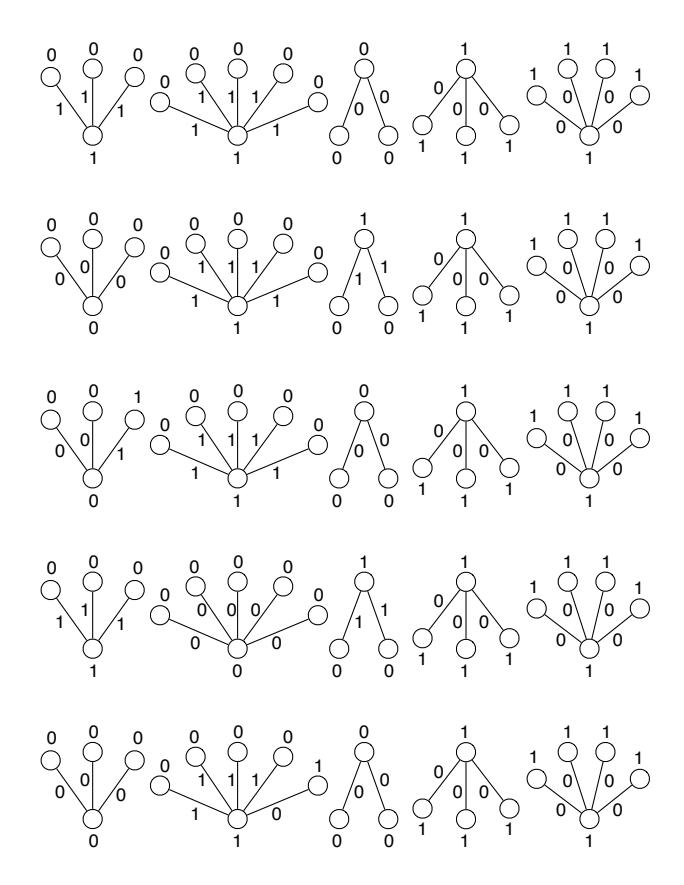
Figure 4. {1, 3, 5, 7, 9} is a subset of Fl(St(3, 5, 2, 3, 4)).
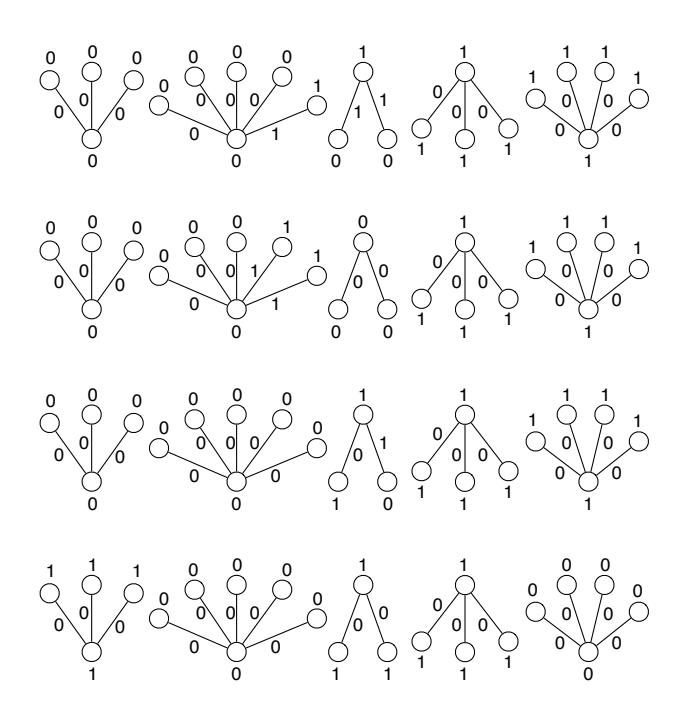
Figure 5. {11, 13, 15, 17} is a subset of FI(St(3, 5, 2, 3, 4)).
Acknowledgments
The authors are grateful to the anonymous referees. Their valuable comments and suggestions improved the final manuscript.
References
- [1] I. Cahit, Cordial graphs: a weaker version of graceful and harmonious graphs, Ars Combin. (1987), 201–207.
- [2] N. Cairnie and K. Edwards, The computational complexity of cordial and equitable labeling. Discrete Math. 216 (2000), 29–34.
- [3] G. Chartrand, S-M. Lee and Z. Zhang, On uniformly cordial graphs, Discrete Math. 306 (2006), 726–737.
- [4] J.A. Gallian, A dynamic survey of graph labeling, Electron. J. Combin. 20 (2017), #DS6.
- [5] Y.S. Ho, S-M. Lee and H.K. Ng, On friendly index sets of root-unions of stars by cycles, J. Combin. Math. Combin. Comput. 62 (2007), 97–120.
- [6] H. Kwong, S-M. Lee and H.K. Ng, On friendly index sets of 2-regular graphs, Discrete Math. (2008), 5522–5532.
- [7] S-M. Lee and H.K. Ng, On friendly index sets of bipartite graphs, Ars Combin. 86 (2008), 257–271.
- [8] S-M. Lee and H.K. Ng, On friendly index sets of total graphs of trees, Util. Math. 73 (2007), 81–95.
- [9] S-M. Lee and H.K. Ng, On friendly index sets of prisms and Mobius ladders, ¨ J. Combin. Math. Combin. Comput. 90 (2014), 59–74.
- [10] S-M. Lee, H.K. Ng and S.M. Tong, On friendly index sets of broken wheels with three spokes, J. Combin. Math. Combin. Comput.. 74 (2010), 13–31.
- [11] E. Salehi and S-M. Lee, Friendly index sets of trees, Congr. Numer. 178 (2006), 173–183.
- [12] E.W. Weisstein, "Perfect Partition." From MathWorld A Wolfram Web Resource. http://mathworld.wolfram.com/PerfectPartition.html