

I Gede Wenten1 , Khoiruddin Khoiruddin1 & Utjok Welo Risma Siagian2,*
Introduction
The importance of green energy in carbon emission reduction cannot be overstated. Unlike traditional fossil fuels, green energy sources, such as solar, wind, hydroelectric, biomass, geothermal, and more, produce minimal to zero carbon emissions during electricity generation [1, 2]. As a result, they offer a pathway to decarbonizing the energy sector, which is a pivotal step in the broader efforts to combat climate change. Among these, hydroelectric systems emerge as superior due to their maturity and low environmental impacts, yet they are not without their limitations, particularly when compared to wind energy systems which offer lower costs and greater efficiency [3]. Other water-based and terrestrial systems, including biomass and geothermal, offer ecological advantages over traditional fuels but require further innovation and environmental scrutiny to enhance their performance and minimize impacts.
Furthermore, green energy technologies have seen significant advancements in recent years, leading to innovations in solar panel efficiency, wind turbine design, and improved energy storage solutions [4-7]. These advancements have made green energy not only more efficient but also more economically viable. In solar technology, developments across various generations of solar cells—from traditional mono and polycrystalline to advanced thin films and hybrid nanostructures—have significantly enhanced efficiency and reduced costs, fostering a rapid adoption and innovation in the sector [8]. Alongside solar advancements, the design of wind turbines has also evolved with the integration of optimization techniques aimed at decreasing blade mass and reducing costs [9].
A notable approach involves a two-step optimization process for wind turbine blades, initially using topology optimization to improve internal structure and subsequently performing size optimizations considering structural parameters and constraints. This method has shown potential for a further 3% mass saving in the
Copyright ©2024 Published by IRCS - ITB J. Eng. Technol. Sci. Vol. 56, No. 2, 2024, 143-192 ISSN: 2337-5779 DOI: 10.5614/j.eng.technol.sci.2024.56.2.1
blades, demonstrating effective and reliable enhancements in wind technology, thereby contributing to the broader green energy landscape [9]. Alongside solar and wind advancements, significant progress has been made in energy storage technologies, crucial for maximizing the utility of renewable sources. Electrochemical cells, particularly those employing aqueous electrolytes, are emerging as viable options for large-scale energy storage due to their flexibility, low-cost materials, and safety features [10].
Green energy technology research is rapidly growing (Figure 1a), with the number of publications increasing by an average of 11.3% per year since 1963. The most significant increase in the number of publications occurred in 2023. This trend is likely due to several factors, including increased awareness of the need for sustainable energy solutions, government support for green energy research, and technological advancements in green energy technologies. Green energy technology research is highly interdisciplinary (Figure 1b), with the top five subject areas in publications being engineering, energy, environmental science, computer science, and materials science. This reflects the need for researchers from a wide range of fields to collaborate in developing and improving green energy technologies.
The strong representation of engineering and energy subject areas is unsurprising, given the technical challenges associated with developing and deploying green energy technologies. However, the significant number of publications in the environmental science, computer science, and materials science subject areas highlights the importance of interdisciplinary research in green energy. For example, environmental scientists are essential for assessing the environmental impacts of green energy technologies [11], while computer scientists are developing new algorithms and software to optimize the design and operation of green energy systems [12]. Materials scientists are also playing a vital role in developing new materials for green energy technologies, such as solar cells, batteries, and wind turbines [13-15]. The increasing number of publications on green energy technology is a positive sign for the future of energy production and consumption. It suggests that more knowledge is being produced about green energy technologies, and that this knowledge can be used to develop new and improved green energy technologies. This is essential for addressing the global challenge of climate change and transitioning to a sustainable energy future.
A comprehensive analysis of the keywords network of publications related to green energy technology reveals a highly interconnected and interdisciplinary field of research (Figure 1c). The most central keywords in the network, including solar, wind, hydropower, renewable energy, sustainable energy, materials, engineering, environment, computer science, and economics, indicate strong overlaps between different research areas. For example, researchers studying solar energy may also be interested in materials science, engineering, and environmental science. Similarly, researchers studying renewable energy may also be interested in sustainable energy, computer science, and economics. This suggests that researchers are collaborating across disciplines to develop new and innovative green energy technologies. The keywords network also shows a growing interest in the integration of green energy technologies with other technologies, such as the Internet of Things (IoT) and artificial intelligence (AI). The interconnectedness of these keywords suggests that researchers are exploring new ways to use IoT and AI to improve the design, operation, and integration of green energy systems.
While extensive literature explores the commercialization, strategic planning, technological advancements, and bibliometric trends in green energy technologies [16-19], a comprehensive examination focusing on opportunities for adoption remains less explored. This paper aims to delve into the world of green energy technologies, exploring their diverse forms and functions, and their substantial impact on carbon emission reduction. It will examine recent technological advancements, emerging innovations, and the barriers that hinder their widespread adoption. Additionally, a specific focus will be placed on understanding the Indonesian perspective regarding green energy adoption and the prospects and recommendations for a sustainable energy transition.
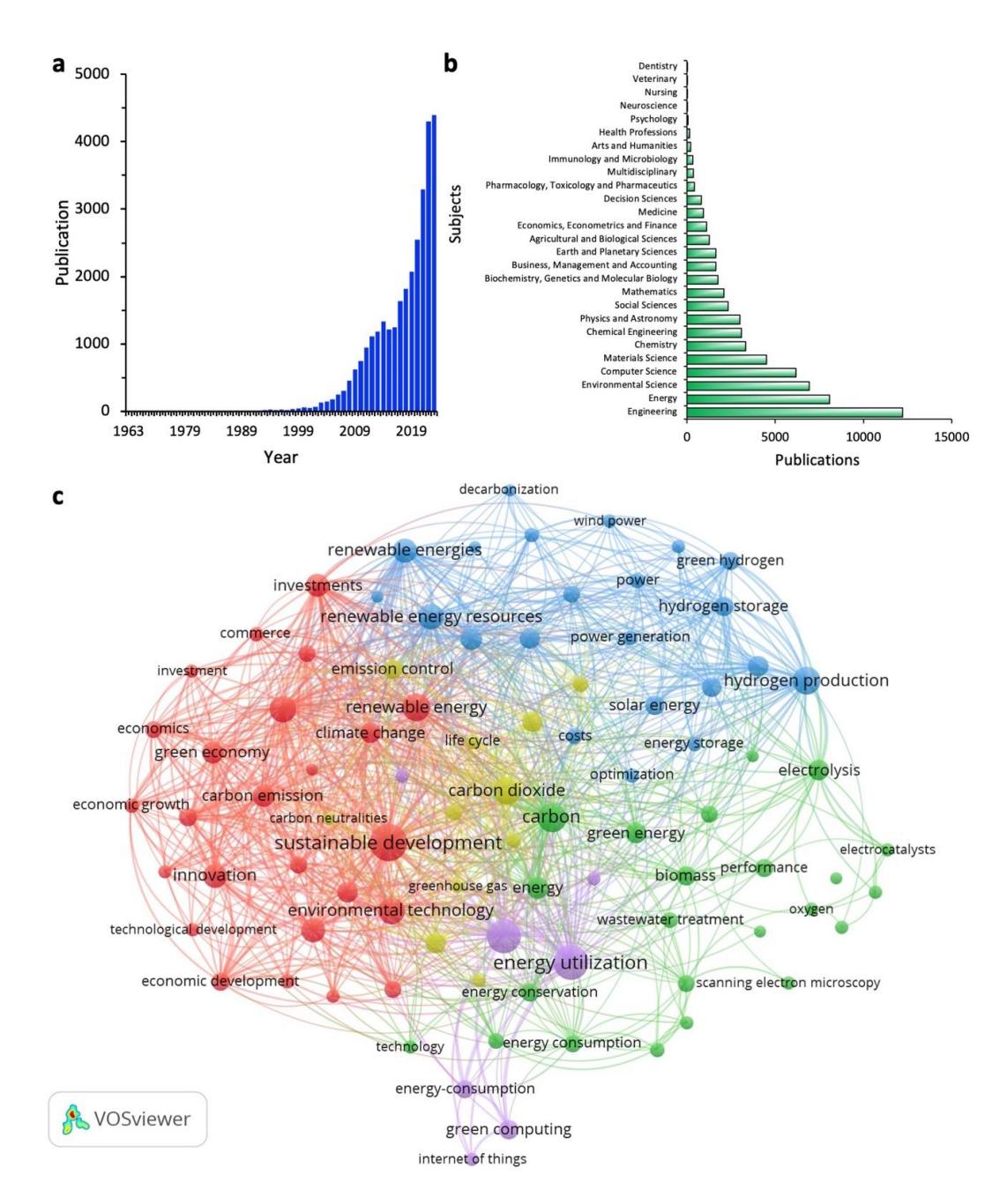
Publications related to green energy technology. (a) Annual publications. (b) Publications by subject. (c) Keyword network. Publications data were obtained from SCOPUS database (attn. on November 9th, 2023). Keyword network was generated by using VOSviewer.
The Impact of Carbon Emissions on the Environment
The impact of carbon emissions from various sectors (Figure 2a) on the environment is a critical concern in the face of rapidly advancing climate change [20, 21]. Carbon emissions, particularly in the form of carbon dioxide and other greenhouse gases, have profound and far-reaching consequences for our planet's ecosystems and climate. Climate change, driven by these emissions, is the most immediate and significant effect. These emissions trap heat in the Earth's atmosphere, creating a "greenhouse effect" that results in rising global temperatures [22, 23] (see Figure 2b and c). The consequences of this warming are evident in the form of more frequent and severe heatwaves, prolonged droughts, and changing precipitation patterns. Such shifts in climate patterns can have devastating impacts on agriculture, water resources, and human livelihoods.
Another notable consequence of rising temperatures is the melting of polar ice caps and glaciers, leading to the inexorable rise of sea levels. A focused study on the Thrace Peninsula evaluates the susceptibility of coastal regions to sea-level rise (SLR) and their vulnerability to climate change [24]. Employing a high-resolution digital elevation model and the Coastal Vulnerability Index, the study assessed impacts under various sea-level rise scenarios for the near-term (2020–2050), mid-term (2050–2100), and long-term (2100–2300). Findings indicate significant susceptibility to both natural and socio-economic hazards due to the concentration of populations and activities in these coastal areas [24]. Coastal communities face an existential threat as coastlines erode, lowlying islands submerge, and storm surges become more destructive [25, 26]. The implications for human migration and displacement are profound, as are the challenges posed to infrastructure, agriculture, and freshwater resources.
Extreme weather events, exacerbated by climate change driven by carbon emissions, have become more frequent and intense. Hurricanes, typhoons, cyclones, and heavy rainfall events have far-reaching impacts, causing devastating floods, landslides, and property damage [27-29]. These events disrupt lives, strain emergency response systems, and result in substantial economic losses. Climate change exacerbates extreme weather events, leading to significant societal and economic costs. Employing Extreme Event Attribution (EEA), a study has quantified the portion of these costs due to climate change by examining the role of anthropogenic emissions in specific weather events [30]. Analysis of various EEA studies suggests that climate change contributes approximately US$143 billion annually to the cost of extreme weather, predominantly from human fatalities. This indicates that current economic estimates of climate change impacts might be substantially low, emphasizing the need for urgent and effective climate change mitigation [30].
Ocean acidification, a direct consequence of excess CO2 absorbed by the oceans, poses a severe threat to marine ecosystems[31]. The acidification harms coral reefs, shellfish, and various species that rely on calcium carbonate for their shells and skeletons [32-34]. These disruptions reverberate throughout marine food chains, affecting the seafood industry and the global food supply.
As temperatures rise and habitats change, biodiversity faces considerable risks. Many species struggle to adapt or migrate to more suitable environments. Consequently, ecosystems become imbalanced, leading to a loss of biodiversity. This has profound implications for ecosystem services, from pollination to nutrient cycling, with cascading effects on agriculture and food security [35]. A comprehensive review highlights that climate change, along with habitat modification and overexploitation, drives mass extinctions and shifts in species' geographic ranges, diminishing biodiversity [36]. With modest global warming, a significant percentage of flora and fauna risk losing more than half of their climatic range, with more drastic losses expected as temperatures continue to rise [36].
Melting glaciers, driven by rising temperatures from carbon emissions, threaten the availability of freshwater resources for drinking, agriculture, and industry in various regions [37, 38]. Freshwater scarcity can exacerbate conflicts and affect food production, exacerbating global challenges. A study in southern France, a region facing decreased water discharge due to warming trends, illustrates the challenges of sustaining water resources amidst climate change and rising demand [38]. This study explores the relationship between the Reconnaissance Drought Index (RDI), water discharge, and atmospheric teleconnection patterns (TPs) in six coastal river basins, considering historical data and projections up to 2100 under a worst-case climate scenario (RCP8.5). Results indicate a potential reduction in annual water discharge by −49% to −88% by century's end, with hydroclimatic impacts varying across the region due to differences in atmospheric circulation patterns. Moreover, some consequences of carbon emissions are part of feedback loops that amplify climate change. For instance, as permafrost thaws due to higher temperatures, it releases methane, another potent greenhouse gas, further exacerbating global warming [39].
The economic consequences of carbon emissions are vast. Damage to infrastructure from extreme weather events, increased healthcare costs due to heat-related illnesses, and reduced agricultural yields all contribute to substantial economic burdens. Furthermore, the financial impacts extend to industries related to fossil fuels, which face transition risks as the world shifts towards cleaner energy sources [40-42].
Human health is also directly affected by the consequences of carbon emissions [40, 43, 44]. A study focusing on Vietnam through a systematic review and additional analysis has revealed increased spread of infectious diseases and heightened mortality and hospitalisation risks due to extreme weather events like heatwaves, droughts, and floods [45]. A systematic review focused on the Western Australian population reveals that climate change is exacerbating health issues, including cardiovascular, respiratory, neurological disorders, vector-borne illnesses, and mental health challenges [46]. The COVID-19 pandemic has further exposed healthcare system inadequacies, highlighting vulnerabilities in managing climate-induced diseases. In Western Australia, bushfires, raised temperatures, and social disparities significantly contribute to health risks.
The impact of carbon emissions on the environment is a complex web of interconnected consequences, affecting the Earth's climate, ecosystems, biodiversity, human societies, and economies. Understanding the severity and breadth of these impacts is essential in driving global efforts to reduce carbon emissions, mitigate climate change, and adapt to the changing environmental landscape.
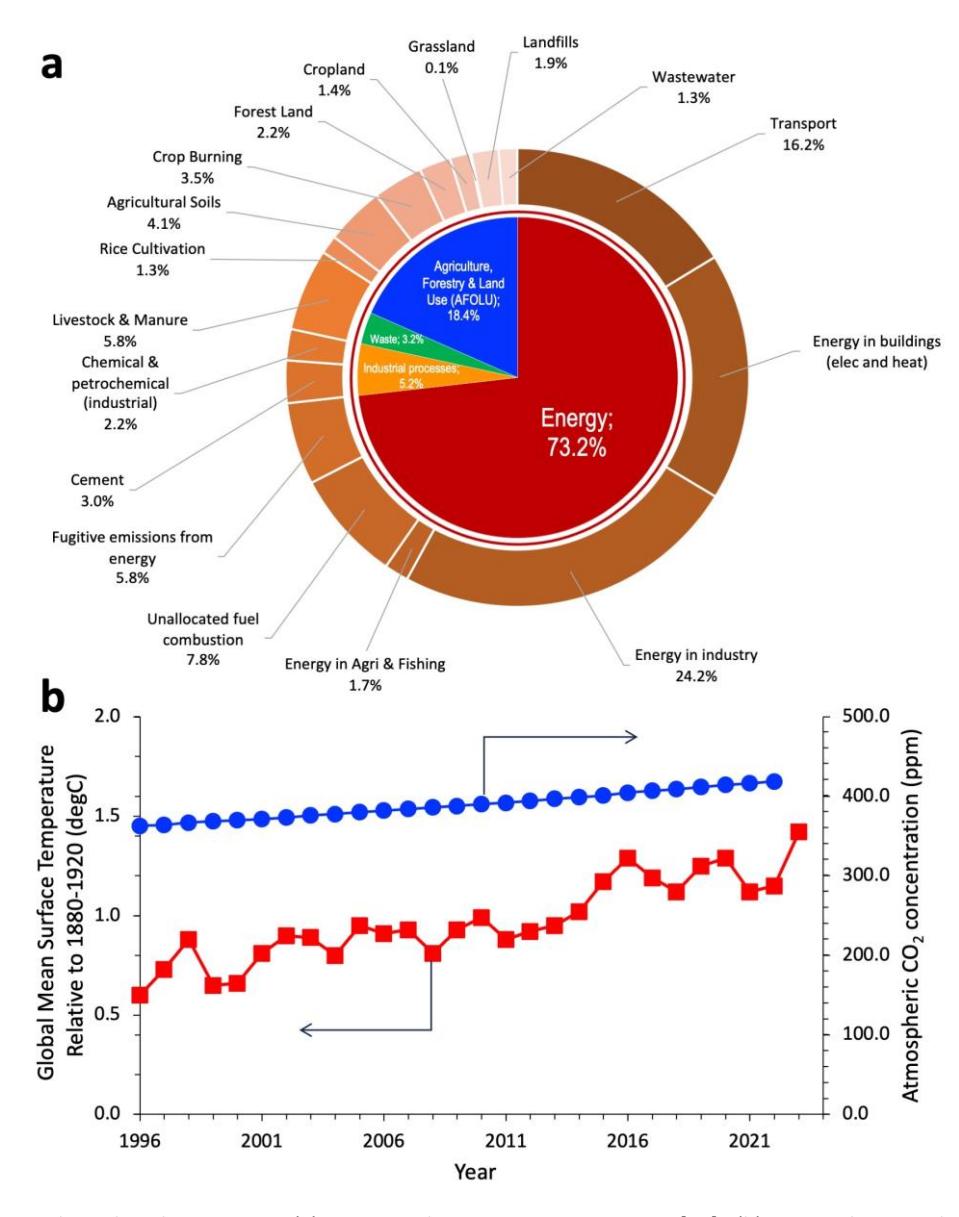
Carbon dioxide emission. (a) Emission by sector. Data source: [47]. (b) Atmospheric carbon dioxide concentration (data source: [48]) and global Mean Surface Temperature Relative to 1880-1920 (℃) (data source: [49]).
Green Energy Technologies: An Overview
Green energy technologies encompass a diverse array of innovative solutions aimed at harnessing energy from natural sources while minimizing environmental impact. These technologies play a pivotal role in addressing carbon emissions and fostering sustainability. The concept of green energy technology extends beyond economic and environmental aspects, encompassing social and technical criteria as well as regional considerations [50]. Sustainable energy transition strategies typically involve energy savings, generation efficiency, and the substitution of fossil fuels with renewable energy sources and low-carbon nuclear power [50]. In the context of construction engineering, green energy technology involves the application of techniques for energy-saving and emission reduction, contributing to the overall sustainability of building projects [51]. This section provides an overview of the various types of green energy technologies that play a pivotal role in addressing carbon emissions and fostering sustainability. These renewable sources include solar energy, wind energy, hydropower, biomass energy, geothermal energy, and more (Figure 3). Each of these technologies, harnesses energy from distinct natural processes, offering unique advantages and applications (Table 1).
Solar energy is one of the most recognizable and widely adopted forms of green energy. It harnesses the power of sunlight using photovoltaic cells to convert solar energy into electricity [52]. Solar panels, which are composed of interconnected photovoltaic cells, are commonly installed on rooftops, in solar farms, and even in portable devices, making solar power accessible for both residential and commercial use. The adoption of solar energy has a global impact, particularly in underdeveloped or developing nations where access to a constant supply of electricity is a challenge. The use of solar photovoltaic (PV) systems in remote areas has been instrumental in providing electricity to communities that lack access to traditional power grids. Furthermore, various government initiatives have been implemented to encourage the widespread usage of solar energy technology for electricity production, emphasizing its role in reducing pollution and addressing global energy demand [53]. The growth of the solar energy industry has been driven by technological advancements, cost reductions, and improved reliability. The rapid expansion of the photovoltaic industry, particularly in regions such as Japan, Germany, and California, has been supported by government programs and increased public awareness of the benefits of solar energy. The market expansion has primarily been led by well-established crystalline silicon technology, which has contributed to the overall growth of solar-based energy production [54].
Wind energy, a vital renewable energy source, is harnessed through the kinetic energy of wind to turn wind turbines, thereby generating electricity. Wind farms, strategically positioned in areas with consistent wind patterns, make a substantial contribution to electricity grids worldwide. The utilization of wind energy has gained prominence as a viable domestic power generation option, especially in the context of addressing power cutoffs and increasing energy availability. Wind power is particularly appealing due to its reversibility, absence of greenhouse gas emissions, and its virtually endless resource potential. The cubic relationship between wind speed and power production has further heightened the appeal of wind energy, as it offers a scalable and efficient power generation solution [55]. Moreover, offshore wind energy has been identified as a significant contributor to the installed capacity of grid-connected power generation [56].
Hydropower, also known as hydroelectric power, is a renewable energy source that converts the energy of flowing water into electricity [57]. Large dams and turbines are employed to generate power from rivers, while smaller-scale hydro systems can be implemented in less voluminous water bodies. The development and utilization of hydropower resources have been a subject of extensive research and development, with a focus on optimizing the efficiency and sustainability of hydropower systems. Hydropower, devoid of greenhouse gas emissions, presents an ostensibly environmentally benign solution [58]. Nonetheless, it is not without substantial ecological ramifications, notably in disrupting aquatic ecosystems, coupled with constraints dictated by geographical and seasonal variations affecting its dependability [58]. In juxtaposition with other renewables such as solar, wind, and biomass, each characterized by distinct advantages and limitations, hydropower manifests as a versatile and robust contributor to energy portfolios but is encumbered by challenges encompassing considerable initial capital outlays and potential environmental disturbances [58]. Thus, while hydropower is instrumental in augmenting the diversity of energy sources, judicious integration with alternative renewables is imperative to foster a sustainable and holistic energy paradigm [58].
Biomass energy, harnessed from organic matter like agricultural waste, wood, and algae, is utilized to generate heat, electricity, or biofuels [59]. It derives from the decomposition of plant and animal materials rich in stored solar energy, undergoing various processes such as combustion, gasification, or anaerobic digestion. The typical reaction involves substances like glucose reacting with oxygen to release energy, alongside carbon dioxide and water. The advantages of biomass energy are its renewable nature, versatility in applications, potential as an energy storage medium, and its role in carbon dioxide sequestration [60]. However, it contends with significant drawbacks including competition for land and resources, environmental consequences such as habitat loss, lower energy density relative to fossil fuels, and overarching sustainability concerns necessitating meticulous planning and management [61].
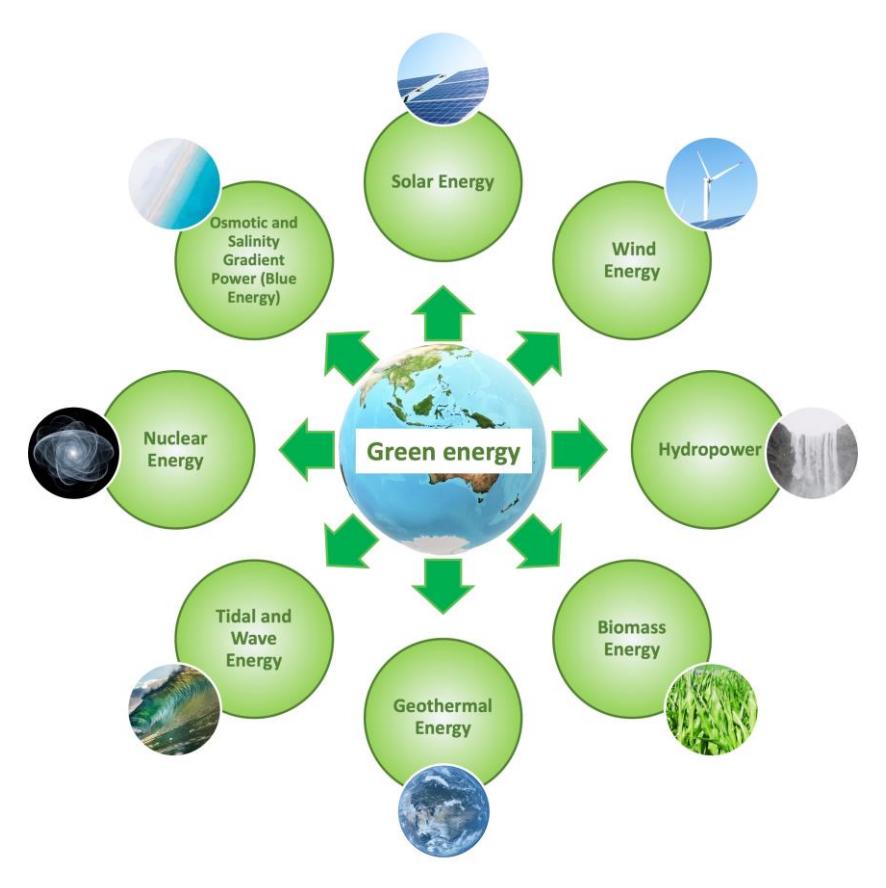
Green energy technologies.
Geothermal energy, sourced from the Earth's internal heat, utilizes steam and hot water from underground to power electricity generation and provide direct building heating [62], proving especially efficient in geothermally active regions. As a renewable and reliable energy source, it boasts high efficiency rates and minimal greenhouse gas emissions [63], offering a sustainable solution. However, its deployment is geographically limited, accompanied by high initial costs and potential environmental concerns like land alteration and resource depletion [64]. While it holds promise as a clean energy alternative, the sustainable and responsible development of geothermal energy necessitates careful planning and management to mitigate its disadvantages and optimize its benefits for regional development, system performance, and environmental sustainability [65].
Tidal and wave energy, emerging technologies aimed at harnessing ocean tides and waves' kinetic energy, offer renewable and sustainable energy, particularly beneficial for coastal regions [66,67]. Tidal energy stems from lunar and solar gravitational forces, while wave energy originates from wind interactions with the ocean surface. Both are praised for their predictability and high energy density, enabling efficient energy generation and grid integration with minimal environmental impact [68]. However, these technologies face high initial costs and are limited to suitable coastal areas [66, 67]. Environmental concerns, though generally low, include potential impacts on marine ecosystems during device installation and operation. Additionally, as they are still in the developmental stage, tidal and wave energy confront technological challenges that need addressing to enhance efficiency and cost-effectiveness [66].
Nuclear energy, derived from the fission of heavy atoms like uranium, offers a substantial, low-carbon energy source with high energy density and fuel efficiency, making it a sustainable option with minimal greenhouse gas emissions [69]. Despite its potential, nuclear energy faces significant challenges including safety risks from radioactive materials, high initial costs, complex waste management, and public apprehension influenced by historical events [69]. However, ongoing advancements are focused on enhancing safety measures and reducing waste, aiming to mitigate these concerns and improve the feasibility of nuclear power as a cleaner alternative to fossil fuels [69]. As the technology evolves, understanding both the advantages and disadvantages through comprehensive studies is essential for its development and public acceptance.
Osmotic power and salinity gradient power, collectively known as blue energy, are innovative renewable energy sources exploiting the natural osmosis process between freshwater and saltwater through semipermeable membranes [70]. These technologies are advantageous due to their renewable nature, predictability, and low environmental impact, as they do not emit greenhouse gases or pollutants. However, they are still in early developmental stages with challenges in technology maturity, location specificity to areas with accessible freshwater and saltwater, and currently lower energy efficiencies compared to more established renewable sources. Despite these limitations, osmotic and salinity gradient power hold potential for diversifying green energy options and warrant further research and development to enhance their efficiency and applicability on a larger scale [71].
Table 1 Green energy technologies.
| Green Energy | Description | Advantages | Disadvantages | Applications | Refs. |
|---|---|---|---|---|---|
| Solar Energy | Uses photovoltaic cells to convert sunlight into electricity. | Widely adopted, cost effective, accessible, reduces pollution, provides electricity in remote areas. | Dependent on sunlight. Requires significant land or roof space. | Electricity generation, rooftop solar panels, solar farms | [50, 53,54] |
| Wind Energy | Harnesses wind's kinetic energy to generate electricity. | Viable domestic power, reduces greenhouse gas emissions, abundant resource potential, scalable. | Intermittent and depends on wind availability. Require large areas. | Electricity generation, wind farms, portable devices | [56, 57] |
| Hydropower | Converts flowing water into electricity. | Environmentally friendly, versatile, robust contributor to energy portfolios. | Large dams can significantly alter river ecosystems. Involves high initial investment. | Electricity generation, large dams, small scale hydro systems | [57,58] |
| Biomass Energy | Uses organic matter to generate heat, electricity, or biofuels. | Renewable, versatile, carbon sequestration potential. | Using agricultural land can compete with food production. Unsustainable harvesting of biomass. | Electricity generation, heating, biofuels | [59– 61] |
| Geothermal Energy | Uses Earth's internal heat for electricity generation and heating. | Renewable, reliable, high efficiency, minimal emissions. | Location-specific. Require significant upfront investment. | Electricity generation, heating | [62– 65] |
| Tidal and Wave Energy | Harnesses ocean tides and waves' kinetic energy. | Renewable, sustainable, predictable, high energy density, minimal environmental impact. | Still in development stages, making it expensive. Affect marine ecosystems. Operating in marine environments exposes equipment to corrosion and biofouling. | Electricity generation | [66,68] |
| Nuclear Energy | Uses fission of heavy atoms to generate electricity. | Low-carbon, high energy density, fuel efficient, minimal emissions. | Poses environmental and health risks. Requiring substantial investment. | Electricity generation | [69] |
| Osmotic and Salinity Gradient Power (Blue Energy) | Uses osmotic process between freshwater and saltwater to generate electricity. | Renewable, predictable, low environmental impact. | Still under development and not widely deployed. Membrane fouling. Relatively low energy density. | Electricity generation | [70– 73] |
Emerging Innovations in Solar Energy: A Technological Revolution
One of the most exciting developments in solar energy is the rapid progress in photovoltaic (PV) technology, with perovskite solar cells (PSCs) leading the revolutionary shift. Traditional silicon-based solar panels have made significant strides, but perovskite solar cells offer higher efficiency, lower production costs, and broader application potential. Efforts to improve the stability and scalability of perovskite technology (Figure 4 a-c) are ongoing, aiming for commercial viability.
Notable advancements include the development of semi-transparent PSCs for tandem photovoltaics and building-integrated applications. Innovations in transparent contacts using ion-beam sputtering have led to significant deposition improvements, achieving efficiencies up to 12.65% [74]. Ultra-thin, stable, all-inorganic PSCs have been optimized using software and theoretical studies, resulting in a 34% improvement in power conversion efficiency (PCE) and increased mechanical stability [75]. Tin-based PSCs are emerging as a promising lead-free alternative, with simulations indicating a potential PCE increase to 30.33% [76]. Stabilization of perovskite precursor solutions using natural amino acids like N-acetylcysteine has also shown to maintain 98% of device efficiency over extended periods [77]. All-inorganic CsPbIBr2 perovskites have shown improved photocurrent density and a record efficiency of 12.8% with organic surface passivators [78]. Studies in lead-free and environmentally friendly alternatives continue, with a lead (Pb)-free ethyl ammonium-based PSC showing an efficiency increase to 24.42% upon optimization [79]. Tandem solar cells (TSCs) combining perovskite and Cu(In,Ga)Se2 materials have been a focus for achieving higher efficiencies, with detailed investigations into device structure design and fabrication methods leading to substantial performance improvements [80]. Overall, the advancements in perovskite solar cell technology reflect a combination of improved efficiency, enhanced stability, and environmentally conscious developments, marking a significant stride towards the next generation of solar energy conversion.
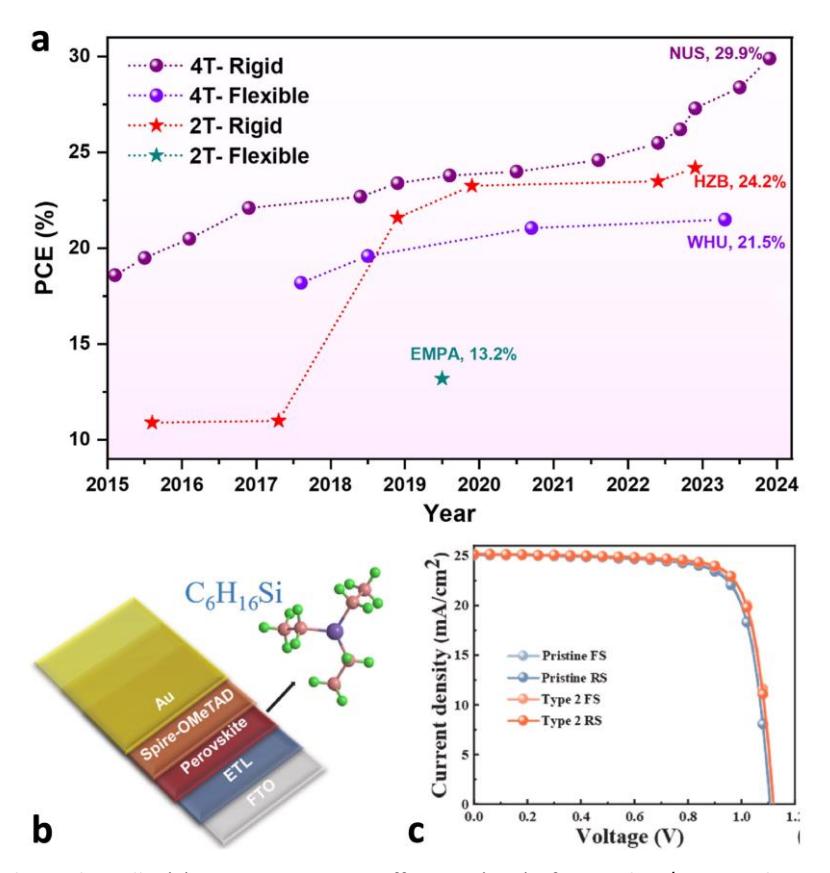
Perovskite solar cells. (a) Power conversion efficiency (PCE) of perovskite/CIGS tandem TSCs according to 2-terminal (2-T)/4-terminal (4-T) and rigid/flexible substrate [80]. (b) Perovskite solar cells with triethylsilane introduced precursor, and (c) its performance. Panels b and c are from [81]. Panels a-c are under a creative common license, https://creativecommons.org/licenses/by/4.0.
Tandem solar cells, which combine multiple layers of different materials, are another innovation in PV technology. These cells are designed to capture a broader spectrum of sunlight and convert it into electricity more efficiently. By stacking multiple layers with varying bandgaps, tandem cells can achieve efficiencies exceeding those of traditional single-layer silicon cells. Recent studies have shown multi-junction solar cells, particularly those incorporating perovskite solar cells (PSCs), to exhibit superior PCEs. Carbon perovskite solar cells (CPSCs), with enhanced stability from novel electron transport materials replacing TiO2, have seen PCEs rise from 7.97% to 14.38% and further to 16.87% through defect and doping optimizations [82]. A gradient doping profile in the perovskite layer has pushed PCEs even higher, reaching 22.22%. In tandem configurations with CIGS and GeTe as bottom sub-cells, PCEs have been recorded at 30.52%, 22.7%, and 36.59% for PSC/CIGS, CPSC/CIGS, and CPSC/GeTe respectively, with CPSC/GeTe standing out for its balance of high efficiency and stability [82]. Tandem solar cells' performance, often hampered by interface losses and current mismatching, has seen promising alternatives to traditional lenses through nanoscale 2D meta-materials. Utilizing deep learning for optical design in tandem cells has resulted in significant enhancements [83].
The average absorption of the top cell in the UV-vis region increased up to 93.4%, with the active layer absorbing nearly 90% of the solar spectrum [83]. A monolithic perovskite/silicon tandem solar cell architecture has demonstrated the importance of double-sided textures in the Si bottom cell [84]. Varying pyramid size on Si surfaces has shown that reducing texture size to 400–500 nm results in high open-circuit voltage and enhanced bottom cell current due to suppressed reflectance, offering a route to increased tandem cell efficiency and reduced production costs [84]. The review of PSCs emphasizes the need for improved stability and efficiency via tandem configurations, addressing challenges against moisture, thermal, and UV light-induced degradation, particularly focusing on ZnO-based electron transport layers (ETL) [93]. Perovskite/Cu(In,Ga)Se2 (CIGS) TSCs have been extensively researched for their unique advantages, with the latest advancements aimed at optimizing device structure design, material composition, and processing parameters to significantly improve performance and stability [88].
Thin-film solar technologies are undergoing significant advancements, offering lighter, more flexible, and potentially less expensive alternatives to traditional silicon-based panels. These panels are increasingly viable for a wider range of applications, including portable devices, wearable technology, and building-integrated solutions, due to their unique characteristics. Recent studies have focused on optimizing thin-film solar panels for various applications and environments. One investigation has examined the optimal ultrasonic bonding parameters for copper indium gallium (de)selenide (CIGS) thin-film photovoltaic solar panels, finding that individual and combinations of bonding parameters significantly affect the quality of bonds, which is crucial for durability and efficiency [85]. Additionally, thin-film solar panels are being adapted to vehicle technology to power auxiliary loads like air conditioning systems in electric vehicles (EV). Installed on vehicle exteriors, these panels can harness solar energy to supplement power requirements, reducing the energy demand from the vehicle and contributing to overall energy optimization [86]. This integration signifies the expanding versatility of thin-film solar technologies into applications.
Environmental considerations are also paramount in the advancement of thin-film solar panels. Studies have shown that while they have perfect photovoltaic characteristics and ductility, they also contain potentially toxic metals. Hence, there's a need to address the environmental pollution caused by disposing of these panels at the end of their life cycle [87]. Innovations in recycling methods, such as using microwave technology for separation of semiconductor layers, are being explored to mitigate environmental impacts and enhance the sustainability of thin-film solar panels [88]. Moreover, the financial performance of different thin-film technologies like CIGS has been compared to other photovoltaic technologies, demonstrating that certain thin-film panels can deliver higher yield and have a less sensitivity to lower solar irradiation and higher temperatures, which is crucial for performance in diverse climatic conditions [98]. As thin-film solar technologies continue to evolve, they are poised to play an increasingly integral role in providing flexible, efficient, and sustainable energy solutions across a wide array of applications, making solar power more accessible and integrated into everyday life.
Beyond traditional PV panels, building-integrated photovoltaics (BIPV) are emerging as a promising innovation. BIPV integrates solar cells directly into building materials such as windows, roofing, and facades, allowing structures to generate electricity while maintaining aesthetic appeal. This integration reduces the need for separate solar installations and seamlessly incorporates solar energy generation into urban environments.
Recent advancements in BIPV technology are enhancing both the aesthetic and efficiency of these systems. Colloredo transparent thin-film silicon solar cells have been developed using a transparent distributed Bragg reflector (DBR) electrode, optimizing optical and electrical properties to improve PV performance and aesthetic utility, ideal for BIPV applications [89]. Economic analyses underscore the profitability of BIPVs, showing a significantly lower levelized cost of electricity (LCOE) compared to green roof systems, suggesting a more costeffective renewable energy solution for building rooftops [90]. The potential of BIPVs in urban areas is notable, with studies in Tokyo demonstrating that building façades equipped with BIPV modules could satisfy a significant portion of the annual electricity demand, marking a substantial step towards decarbonization [91].
Innovations also extend to hybrid AC-DC distribution systems for buildings, which show a marked increase in renewable energy share, indicating a more efficient energy utilization [92]. Large-area perovskite films for highperformance printed PSCs have achieved notable efficiency, making them promising for next-generation BIPV applications. These films demonstrate long-term stability and high efficiencies even in larger modules, paving the way for more widespread BIPV adoption [93]. Aesthetic enhancements like grid-type LED displays have been integrated into BIPVs, providing not only an energy production function but also an aesthetic and informative role, contributing to increased public acceptance of BIPVs [104]. The dynamic development in BIPVs has expanded into innovative structures such as tensile membrane roofs with integrated photovoltaic cells, optimizing energy gains and architectural design [105]. Semi-transparent CIGSe mini-modules have been developed for BIPV applications, offering a balance between energy efficiency and visual transparency, demonstrating the adaptability of BIPV to various architectural needs [106]. These advancements in BIPV technology signify a comprehensive approach to integrating renewable energy production into building designs. Not only do they promise to enhance energy efficiency and sustainability, but they also offer aesthetic and functional improvements for urban environments.
Innovations in solar tracking systems are enhancing the efficiency of solar installations further. Single-axis and dual-axis trackers adjust the orientation of solar panels to follow the sun's path throughout the day, maximizing energy capture. Additionally, advanced tracking algorithms and sensors improve accuracy and responsiveness, increasing the overall energy yield of solar installations. The sustainable development of solar photovoltaic tracking technology is being driven by the integration of smart and digital technologies, aiming for higher precision, broader applications, and lower costs. This includes a focus on photovoltaic materials and manufacturing innovations and energy efficiency improvements [94]. A case study in Incheon, South Korea, demonstrated that a tracking PV system installed in the roof area of a commercial building generated 26.8– 35.5% more electricity annually than a fixed system. This system also showed promising life cycle cost savings, returning the initial investment in about 8 years [95]. These advancements not only improve the direct energy yield of solar installations but also expand the application possibilities of solar energy in various environments.
Energy storage solutions, particularly batteries, are integral to the success of solar energy systems. Innovations in battery technology, such as solid-state batteries and flow batteries, are improving energy storage capacity, cycle life, and safety. These advancements ensure that excess solar energy can be efficiently stored and used during periods of low sunlight. The integration of intermittent energy sources like solar and wind with advanced battery storage and Vehicle to Grid (V2G) operations presents several advantages [96]. Firstly, energy storage supports the power grid during high peak demand periods, ensuring stability and reliability. Secondly, it shifts the power grid load from peak times to less demand times, optimizing energy use and potentially reducing costs. Thirdly, it smoothens the fluctuating power supply fed into the power grid by intermittent renewable energy sources. This is particularly crucial as the world moves towards integrating more renewable energy sources into the power grid, necessitating robust and flexible energy storage solutions [96].
In the realm of transport, for example rail transport, incorporating battery backup sources for electrical loads of rail coaches has shown promising results [97]. Studies employing a parametric approach to simulate various states of charge (SoC) for batteries indicate that a Solar PV-battery hybrid system can significantly reduce diesel consumption. For instance, about 10% in diesel savings with higher SoC values and 7% during worst cases have been reported. Notably, employing advanced control strategies like Fuzzy logic and Adaptive neuro-fuzzy interference system (ANFIS) can further optimize these savings, leading to substantial financial and environmental benefits, including significant reductions in CO2 emissions [97].
| Table 2 Emerging innovations in solar energy. |
|---|
| Innovation | Description | Refs. |
|---|---|---|
| Perovskite Solar Cells (PSCs) | Higher efficiency, lower cost, broader applications | [74-77] |
| Tandem Solar Cells (TSCs) | Capture wider spectrum of sunlight for higher efficiency | [82-84 |
| Thin-Film Solar Panels | Lighter, flexible, less expensive | [85-87,89] |
| Building-Integrated Photovoltaics (BIPV) | Generate electricity while maintaining building aesthetics | [89,90 |
| Solar Tracking Systems | Maximize energy capture by following the sun's path | [94,95] |
| Energy Storage Solutions | Improve capacity, cycle life, and safety for excess solar energy | [96,97] |
Solar thermal energy stands out as a versatile and efficient renewable energy source, harnessing the sun's heat to generate electricity, as well as providing heating and cooling solutions. This technology employs solar thermal collectors to absorb sunlight and convert it into heat, which can then be utilized to produce steam for driving turbines and generating electricity or directly applied in heating and cooling systems [90-101]. Distinguishing between solar thermal and solar photovoltaic (PV) energy highlights the unique approaches and applications of these technologies in harnessing solar energy. Solar thermal energy focuses on generating heat from sunlight, which is then used for electricity production or thermal applications and features thermal energy storage systems for continuous operation. In contrast, solar PV energy directly converts sunlight into electricity through photovoltaic cells, requiring separate storage systems for continuous power supply. While solar thermal energy excels in large-scale and industrial settings due to its high efficiency, especially in CSP systems, solar PV energy offers versatility and ease of integration into residential, commercial, and off-grid applications. Despite the lower overall efficiency of solar PV systems compared to solar thermal systems, the adaptability and widespread applicability of solar PV make it a crucial component of the renewable energy landscape [99,102].
The benefits of solar thermal energy over other renewable sources are multifaceted. Key among these advantages is the capability of solar thermal systems to store thermal energy, enabling consistent electricity generation or heat provision beyond daylight hours, a feat not achievable with solar PV systems without relying on external energy storage solutions like batteries. Additionally, solar thermal systems, particularly concentrated solar power (CSP) systems, can achieve superior efficiencies in sunlight-to-electricity conversion due to their ability to concentrate sunlight and generate high temperatures for steam production. This versatility extends to various applications, from large-scale electricity generation and industrial heating to residential and commercial heating and cooling, making solar thermal energy an invaluable asset across different sectors. Moreover, its operation is characterized by a minimal environmental impact, producing no greenhouse gas emissions or pollutants, thereby offering a sustainable alternative to traditional energy sources [116-118].
Thermal Energy Storage (TES) technologies emerge as a critical component in addressing the inherent intermittency of solar power. Research into novel materials and configurations offers new solutions for energy storage. For instance, the exploration of demolition waste and eco-friendly materials for packed-bed TES systems indicates a move towards more sustainable and efficient energy storage options [103,104]. These innovations aim to enhance the cost-effectiveness and efficiency of solar thermal power plants and ensure their operational reliability and sustainability. The incorporation of TES into solar thermal systems enables continuous power generation, even in the absence of sunlight, thereby increasing the utility and attractiveness of solar thermal power as a key contributor to the global energy mix.
Emerging innovations in solar energy are ushering in a technological revolution that promises to reshape the energy landscape (Table 2). From advanced PV technologies like perovskite solar cells and tandem cells to BIPV, solar tracking systems, thin-film solar, and AI-driven energy management, these innovations are making solar power more efficient, accessible, and versatile.
Recent Advances in Wind Power Technology
Recent advances in wind power technology have propelled this renewable energy source to new heights of efficiency, reliability, and cost-effectiveness (see Table 4). These innovations are transforming the wind energy sector and driving the global transition toward cleaner and more sustainable electricity generation.
One of the notable breakthroughs in wind power technology is the development of larger and more powerful wind turbines. These advanced turbines feature taller towers and longer rotor blades, allowing them to capture energy from higher altitudes where wind speeds are typically stronger and more consistent. The scaling up of wind turbines has significantly increased energy output and improved the economics of wind energy projects. For instance, in Ref. [105], a comprehensive 5 MW wind turbine emulator's design and implementation were thoroughly investigated. This emulator, based on a separately excited DC motor controlled by a currentcontrolled drive, accurately simulates the transient and steady-state characteristics of 5 MW large wind turbines. Furthermore, as highlighted in Ref. [106], robust modeling and emulation are essential for supporting the design of ultra-large wind turbines. These methods involve the integration of computational platforms, which, while cost-effective, may lack the practical significance and accuracy of combined physical and computational approaches. This underscores the importance of comprehensive 5 MW wind turbine emulators in accurately assessing energy harvesting and examining mechanical and electrical properties of the Permanent Magnet Synchronous Generator (PMSG) used in large wind turbine nacelles [106].
Furthermore, innovations in rotor design and aerodynamics have enhanced the efficiency of wind turbines. Advances in blade materials and shapes, as well as improvements in yaw and pitch control systems, have made it possible to extract more energy from the wind while reducing mechanical stress and wear on the turbines. These optimizations contribute to higher energy yields and longer operational lifetimes. Recently, H-Darrieus wind turbines have been optimized for annual energy yield, reflecting a shift in focus from maximum power [126]. In a significant study of 21,600 H-Darrieus rotor test cases, various aerodynamic configurations were analyzed to maximize energy yield across different annual wind distributions [107]. Additionally, to address the challenges of large-scale floating wind turbines, twin-rotor systems are being examined for their potential to elevate power capacity and reduce costs [108]. A study using the unsteady Reynolds-averaged Navier-Stokes turbulence model found that twin-rotor floating wind turbines could enhance mean power by up to 13% under surge motion compared to single rotor systems [108].
Turbine designs optimized for specific wind conditions, such as low-wind-speed or turbulent environments, have also emerged. These tailored solutions are essential for maximizing energy capture in regions with unique wind characteristics. Recent studies have focused on enhancing small wind turbines (SWTs) for diverse applications. Notably, multi-blade SWTs have shown peak power efficiency around a design Tip Speed Ratio (TSR) of 4, with low-speed, low-induction multi-blade rotors offering high efficiency and shorter start times in off-design conditions [109]. Additionally, bioinspired small-scale wind turbine (SSWT) designs have been explored, with certain models like the golden eagle design achieving a power coefficient of 13% at low wind speeds and improved performance under inflow turbulence [110]. Furthermore, evaluations of existing wind turbine designs for micro-wind production have identified the Savonius and Savonius-Darrieus Hybrid turbines as particularly effective in low-quality wind environments, with the hybrid design generating more power at higher wind speeds [111].
Furthermore, research into bladeless wind turbines and airborne wind energy systems is ongoing. Bladeless turbines, for instance, use innovative aerodynamic principles to generate electricity without traditional rotor blades, potentially reducing visual impact and maintenance costs. These turbines, particularly Vortex Bladeless Wind Turbines (VBWT), harness wind energy through Vortex Induced Vibration (VIV), offering a quiet operation with low maintenance due to the absence of bearings or rotating devices. Recent advancements outline the potential of VBWT to operate efficiently across diverse environments, from offshore to wind farms, due to their ability to exploit high-intensity winds and varied engineering aspects ranging from electrical engineering to fluid dynamics [121]. Additionally, improvements in vortex bladeless windmills focus on resonance wind generation through Vortex Shedding, enhancing the design for portability and cost-effectiveness, with models indicating power production capabilities of up to 238.60 Wh [113]. Furthermore, a combination of experimental and numerical evaluations has identified optimal vibration frequencies for energy harvesting and potential applications in various settings, such as airport runways and highways, indicating a broad scope for VBWT integration into renewable energy solutions [114].
Floating offshore wind turbines represent a game-changing innovation in wind power technology. Traditional offshore wind turbines are anchored to the seabed, limiting their deployment to relatively shallow waters. In contrast, floating platforms can support wind turbines in deeper waters, opening up vast expanses of the ocean for offshore wind energy production. This innovation extends the potential for offshore wind farms to harness stronger and more consistent winds found farther offshore. However, the implementation of these systems in complex oceanic environments introduces substantial uncertainties in aerodynamic and hydrodynamic calculations, impacting both the reliability and cost-effectiveness of these turbines [115].
Recent advances in wind power technology have propelled wind energy to the forefront of the global renewable energy landscape (Table 3). Larger and more efficient wind turbines, digitalization, grid integration, floating offshore wind, tailored turbine designs, energy storage, and innovative concepts like bladeless turbines are revolutionizing that industry.
| Advances | Description | |
|---|---|---|
| Larger turbines | Taller towers & longer blades capture more energy from stronger winds at higher altitudes | |
| Advanced rotor design | Improved blade materials, shapes, yaw/pitch control for efficiency & stress reduction | |
| Turbines for specific conditions | Low-wind & turbulent wind turbines maximize energy capture in unique environments | [107,108] [109–111] |
| Bladeless turbines | Generate electricity without blades using Vortex Induced Vibration, reducing noise & maintenance | [112–114] |
| Floating offshore wind turbines | Utilize platforms in deeper waters for stronger & consistent winds, expanding offshore potential | [115] |
Table 3 Advances in Wind Energy Technology.
Advancements in Hydroelectric Power Generation
Advancements in hydroelectric power generation have ushered in a new era of efficiency, sustainability, and environmental responsibility for this well-established renewable energy source (see Table 5). Hydroelectric power, harnessed from the energy of flowing water, continues to evolve through technological innovations that maximize energy output while minimizing environmental impacts.
One of the key advancements in hydroelectric power generation is the development of more efficient turbine designs. Modern turbines are designed to capture energy from water more effectively, regardless of flow rates. Advanced materials and engineering techniques have led to turbines that can operate efficiently across a broader range of water conditions. This flexibility allows hydroelectric power plants to generate electricity even during periods of lower water flow, ensuring a more consistent power supply. Recent studies emphasize the design of Kaplan turbines with adjustable guide vanes for ultra-low heads, demonstrating increased hydraulic efficiency and the ability to handle large flows [116]. Furthermore, an extensive review of non-conventional hydro turbines suitable for ultra-low heads has provided a comprehensive classification and selection guide, highlighting the feasibility of these turbines in various settings and conditions [117]. Additionally, the introduction of novel materials in the hydropower sector is enhancing the adaptability, sustainability, and overall performance of hydropower systems, paving the way for more efficient manufacturing, installation, and restoration of power plants [118].
Furthermore, innovations in variable-speed generators and power electronics have enhanced the ability of hydroelectric power plants to respond quickly to changes in electricity demand. These technologies enable better control of the turbines' rotational speed and power output, allowing for smoother grid integration and the provision of ancillary grid services such as frequency regulation. Recent advancements in power electronics have significantly improved hydroelectric energy systems (HEES), offering solutions for efficient grid integration, machine control, and dynamic response. This technology contributes to the reduction of plant costs and space while improving power handling capabilities [119]. Additionally, the development and analysis of variable speed hydropower (VSHP) models aid in designing controllers that maximize the utilization of power plants for ancillary services while ensuring system variables remain within limits, despite challenges like oscillatory modes [120]. Moreover, a study on small hydropower plants demonstrates the potential of converter-fed synchronous generator systems for variable-speed operation, with a perturb and observe algorithm indicating a considerable increase in energy production and optimal speed tracking under varying inflow rates [121].
The advent of small-scale hydroelectric systems has expanded the reach of hydroelectric power generation. These systems, often referred to as mini-hydro or micro-hydro, are designed for decentralized energy production. They can be implemented in small rivers or streams, providing clean energy to remote and off-grid areas. Innovations in miniaturized turbines and compact generators have made small-scale hydroelectric power more accessible and cost-effective. Studies in low-income countries demonstrate that micro-hydropower (MHP) schemes significantly improve educational outcomes and shift labor from traditional agriculture to waged and salaried jobs, especially enhancing educational access for women and lower caste individuals, although employment benefits tend to favor dominant social groups [122]. Additionally, micro-hydropower is gaining attention in India as a favorable alternative to meet increasing power demands and reduce coal dependency, especially in the eco-sensitive north-eastern states, despite various constraints and challenges [123].
In the quest for more sustainable hydroelectric power, environmental considerations have driven advancements in fish-friendly turbine designs and fish passage technologies. Hydroelectric facilities are now equipped with systems that protect aquatic life and facilitate the safe migration of fish. These innovations aim to mitigate the ecological impacts associated with dam construction and operation. Studies emphasize the development of instream turbines, which exhibit fish-friendly operation over a wide range of riverine velocities and have shown to be environmentally, ecologically, and socially beneficial, especially for off-grid communities [124]. Despite the implementation of fish protection barriers and bypasses, research indicates that a significant proportion of fish (35%-88%) still pass through turbines, highlighting the necessity for well-performing, less selective bypass systems and less harmful turbine technologies [125]. Lastly, an analysis of 73 U.S. dams suggests that clustering dams based on hydrologic, structural, operational, and biological variables can facilitate the selection of fish passage designs, reducing the need for the more expensive made-to-order approach [126].
Pumped storage hydroelectric power plants represent another significant advancement in energy storage technology. These plants use surplus electricity during periods of low demand to pump water from a lower reservoir to an upper reservoir. When electricity demand peaks, the stored water is released to flow back down, driving turbines to generate electricity. Pumped storage facilities play a crucial role in grid stabilization and energy balancing, supporting the integration of intermittent renewable energy sources like wind and solar. With the increasing penetration of renewable energy sources, Pumped Hydroelectric Energy Storage (PHES) units are adapting to more demanding conditions with innovations like variable speed design and hydraulic short-circuit configurations, enhancing their capability to provide regulation reserves [127]. Moreover, the transformation of existing dams into Pumped Storage Hydroelectric (PHS) systems is gaining momentum. A GIS-based model study indicates that the Porsuk dam's transformation could introduce a second reservoir with a volume of 6.5x10⁶ m3, storing up to 0.664 GWh of energy, demonstrating the potential for sustainable and reliable energy supply through the strategic conversion of existing hydro infrastructure [128].
In recent years, the concept of "run-of-river" hydroelectric power plants has gained popularity. These plants minimize the environmental impact by diverting only a portion of the river's flow, allowing most of the water to continue downstream naturally. Run-of-river systems are designed to generate electricity without large reservoirs, reducing the disruption of ecosystems and habitats. However, to accurately assess the performance of these plants, the concept of Global Efficiency is introduced, considering the combined effect of net head and efficiency fluctuations. For instance, an analysis of the Cavaticcio run-of-river plant in Bologna reveals that residual energy fluctuations at discharge can significantly affect net head values and Global Efficiency, impacting the actual suitability of the generation group for the site [129].
Additionally, a novel approach in regional energy policy development considers the water-energy-ecosystem nexus, introducing an environmental performance index to evaluate the ecological dimensions of Run-of-river (RoR) hydroelectric power plants. This index encompasses environmental flows, impacts on ecologically valuable areas, water quality degradation, habitat modification, and biodiversity loss, among other factors [130]. Furthermore, the expected energy production of run-of-river hydropower plants is contingent upon various construction variables. Several models have been analyzed for optimizing design elements like penstock diameter and turbine implantation. These models guide the design and simulation of run-of-river systems, aiding in the economic feasibility assessments of such projects [131].
Advancements in hydroelectric power generation have elevated this renewable energy source to new levels of sustainability and efficiency (Table 4). Enhanced turbine designs, variable-speed generators, small-scale hydro, fish-friendly technologies, pumped storage, run-of-river systems, and improved dam safety measures collectively contribute to the continued growth and environmental responsibility of hydroelectric power.
Table 4 Advancements in hydroelectric power technology.
| Area | Advancement | Impact | Reference |
|---|---|---|---|
| Turbine Design | More efficient designs for capturing energy regardless of flow rates. Advanced materials and engineering for broader range of water conditions. | Consistent power supply even during low flow. Increased flexibility. | [116-118] |
| Grid Integration | Variable-speed generators and power electronics for quick response to demand changes. Improved control of turbine speed and power output. Grid stabilization and ancillary services. | Smoother grid integration. Provision of frequency regulation. | [119-121] |
| Decentralization | Small-scale (mini/micro) systems for decentralized energy production. Implementation in small rivers/streams for remote and off-grid areas. Accessible and cost-effective power. | Improved access to clean energy in remote areas. Educational and economic benefits. | [122, 123] |
| Environmental Sustainability | Fish-friendly turbine designs and fish passage technologies. Mitigation of ecological impacts from dam construction/operation. Protection of aquatic life. | Reduced environmental harm. Sustainable development. | [124-126] |
| Pumped storage plants using surplus electricity to store and release water for peak demand. Energy Storage Integration with intermittent renewables like wind/solar. Grid stabilization and energy balancing. | Increased renewable energy penetration. Reliable energy supply. | [127,128] | |
| Run-of-River Systems | Minimal environmental impact by diverting only part of river flow. No large reservoirs, reduced ecosystem disruption. Global Efficiency concept for accurate performance assessment. Water-energy-ecosystem nexus approach for environmental evaluation. | Sustainable energy generation with minimal impact. Balanced water-energy-ecosystem management. | [129-131] |
Harnessing the Power of Biomass: Recent Technological Advances
Harnessing the power of biomass has undergone significant advancements, making it a versatile and sustainable energy source with a reduced environmental footprint. Biomass, derived from organic materials such as plants, agricultural residues, and waste products, has gained recognition for its potential to generate renewable energy while mitigating greenhouse gas emissions.
One of the key recent technological advances in biomass utilization is the development of advanced biofuel production processes (see Figure 5a and Table 5). Second-generation biofuels, also known as advanced biofuels, are produced from non-food feedstocks like agricultural residues, algae, and dedicated energy crops. These advanced biofuels offer improved energy density and lower carbon emissions compared to first-generation biofuels, which primarily use food crops such as corn and sugarcane. Advanced biofuels, including cellulosic ethanol and algae-based biofuels, are more sustainable and do not compete with food production [132]. Further development in biofuel technology has led to the emergence of third-generation biofuels. Derived from microalgae and other non-food crops, third-generation biofuels show promise in significantly reducing greenhouse gas emissions and are recognized for their higher energy yield potential [133]. However, they are still largely in the research and development phase and require more energy-intensive processes for extraction and refining. Fourth-generation biofuels take an innovative leap forward, aiming to be carbon-neutral or carbonnegative by integrating with carbon capture and storage technologies. These advanced biofuels are designed to not only provide a sustainable energy source but also actively reduce atmospheric CO2 levels [134]. In contrast, first-generation biofuels, particularly bioethanol from maize, have led to an abundant supply of distillers' grains with soluble (DGS), a byproduct rich in cellulosic polysaccharides and protein. However, the inconsistency of DGS and logistics-related risks, such as toxigenic contaminants, have hindered its widespread adoption as animal feed. New research demonstrates the potential of 'one-pot' bioconversion of protein and carbohydrate fractions of DGS into valuable alcohols using engineered microbial strains, indicating a promising approach for improving the overall efficiency and value of first-generation bioethanol production [135] (see Figure 5b and c). While promising, these technologies are still in early developmental stages and require further research and substantial investment to achieve commercial viability.
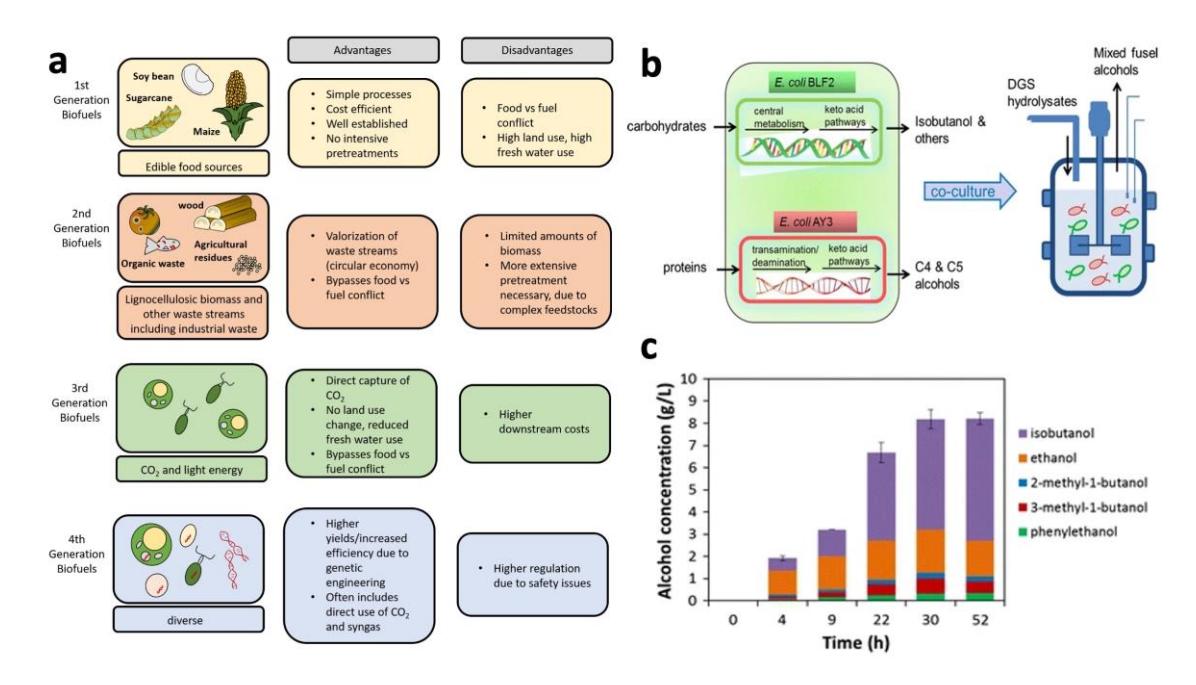
Biomass energy. (a) Biofuels generations [154]. (b) and (c) Bioethanol productions from by an Escherichia coli co-culture [135]. All panels are under a creative common lisence, https://creativecommons.org/licenses/by/4.0.
The refinement of biomass-to-energy conversion technologies has also led to increased efficiency in biomass power generation. Modern biomass power plants utilize various processes such as direct combustion, gasification, and anaerobic digestion to convert organic materials into electricity and heat. Particularly, gasification has seen advancements in its efficiency and ability to produce syngas, a versatile product used for electricity generation and biofuel production. Recent studies highlight the innovative approaches to enhance the biomass conversion processes. Electrification of Biomass-to-X (BtX) processes has shown potential in increasing the product yield and maximizing the efficient utilization of biomass, with electrified processes offering several advantages in terms of process performance, feasibility, and environmental impact [136]. However, further research is needed to fully realize the benefits of these technologies. Additionally, the exergycost-carbon nexus in trigeneration systems based on biomass gasification presents challenges in balancing costs and carbon footprints. Novel exergy-based models help in understanding the allocation rules and optimizing system configurations, considering energetic, economic, and environmental aspects [137]. Furthermore, a biomass-solar hybrid gasification system has been proposed, incorporating solar pyrolysis and photovoltaic-solid oxide electrolysis cell, which significantly improves the total energy conversion efficiency and carbon efficiency from biomass to fuel [138]. Lastly, transformative energy conversion technologies such as chemical looping are being explored to control air pollution and enable clean fuel production, with systems using fuel cells achieving greater efficiency between 60 and 70% [139].
Co-firing biomass with coal in existing coal-fired power plants, known as biomass co-firing, allows for a reduction in carbon emissions by substituting a portion of coal with biomass. Recent studies have provided deeper insights into the emissions and efficiency benefits of this practice. A study showed that by co-firing biomass with coal, sulfur dioxide (SO2) emissions were significantly reduced, demonstrating not only a dilution effect due to the lower sulfur content in biomass but also a synergistic effect where elements like calcium in biomass interact with sulfur. In detailed pilot and utility boiler studies, it was found that co-firing can lead to substantial reductions in SO2 emissions and desulfurization costs, suggesting a viable route for coal-fired utility boilers to meet stringent environmental standards [140].
Another study focused on biomass gasification co-firing, a technology that can be readily implemented in coalfired power plants. The novel system proposed in this study incorporates waste heat and flue gas water recovery with different co-firing ratios. The findings highlighted the reduction in N2 content in syngas, an increase in heat yield, significant coal savings, and a decrease in atmospheric pollutants emissions like CO2, SOx, and NOx. Additionally, the system showed improved exergy efficiency, indicating enhanced comprehensive performance of the co-firing system [141].
In addition to power generation, biomass can be converted into valuable bioproducts through biorefinery processes. Biorefineries enable the production of bio-based chemicals, materials, and biofuels from various biomass feedstocks. Technological innovations in biorefineries have led to the development of integrated and efficient systems for converting biomass into a wide range of marketable products, including bioplastics, biobased chemicals, and renewable natural gas. Recently, algal biorefinery concepts have gained substantial attention due to their potential to produce a variety of sustainable products from marine algae, with researchers exploring every promising biorefinery product, their transformation, and extraction processes alongside their commercial viability [142]. This comprehensive understanding of marine algal biomass can lead to the development of modern, cost-effective, and sustainable solutions for a variety of applications. Additionally, the algae biorefinery models are focusing on significant improvements in biomass, biofuel, and bioproduct productivity. Such advancements are guided by economic and sustainability principles to address the interconnectedness of bioproducts, energy, and ecosystems [143]. Furthermore, the valorization of organic solid waste through biorefinery processes presents a green and sustainable technology for breaking down waste into valuable bio-based products. By employing methods like pyrolysis and gasification, organic solid waste can be transformed into biofertilizer, bioethanol, biohydrogen, bioelectricity, biogas, bioplastics, organic acids, and bio enzymes [144]. This technology mitigates environmental pollution and promotes the reuse of waste as feedstock, offering a comprehensive solution for the treatment of waste materials.
Biomass energy storage technologies have seen significant advancements, particularly in the form of densification and pretreatment techniques. Biomass can be stored as pellets, briquettes, or bio-oils, facilitating easier transport and utilization. Densification of biomass into solid fuels such as pellets is a sustainable path that replaces coal, reduces carbon emissions, and valorizes organic wastes. Quality factors like density, mechanical stability, hydrophobicity, and energy content are influenced by biomass type, pretreatments, formulations, and densification methods. An increased interest in utilizing a wider range of biomass resources for fuel pellets due to rising demand has led to an enhanced understanding of densification mechanisms, the palletization process, and pellet quality [145]. Furthermore, pretreating biomass, especially lignocellulosic types, is crucial for overcoming inherent limitations such as high moisture content and low density. Torrefaction, a biomass upgrading technique involving mild pyrolysis under an inert atmosphere, significantly enhances the chemical and physical properties of raw biomass. This process increases the calorific value, durability, and grindability of the biomass, making it a more viable energy source. The comprehensive study of torrefaction processes, including their operating mechanisms, reactor designs, and commercial viability, supports the production of high-value solid fuels and contributes to the overall efficiency and sustainability of biomass energy storage [146,147].
Additionally, the integration of combined heat and power (CHP) systems with biomass facilities enhances energy efficiency by simultaneously generating electricity and heat from biomass feedstocks, suitable for district heating and industrial applications. However, addressing the reliability, availability, and maintainability (RAM) parameters is essential due to inherent uncertainties in biomass systems, including supply chain and energy conversion limitations. Studies highlight the importance of RAM integration in system optimization, revealing that even with these considerations, biomass-fueled systems remain economically competitive. For instance, using Miscanthus for CHP production in China achieved an overall system efficiency of 79.9%, with significant carbon fixation capacity [147, 148]. Similarly, in India, a novel CHP system utilizing rice husk for hydrogen-rich syngas production demonstrated maximum exergy efficiency and cost-effectiveness, contributing to sustainable energy goals [149].
Recent technological advances in harnessing the power of biomass have expanded its role as a renewable energy source and bio-based materials feedstock (Table 5). These advancements have enhanced the efficiency and sustainability of biomass-to-energy conversion, biofuel production, waste-to-energy processes, and biorefinery operations.
Table 5 Advancements in biomass energy.
| Area | Advancement | Impact | Refs. |
|---|---|---|---|
| Biofuel Production | - Second-generation biofuels from non-food feedstocks. - Improved energy density and lower emissions. | Sustainable energy without competing with food production. | [132] |
| - Third-generation biofuels from microalgae. - Significantly reduced greenhouse gas emissions and higher energy yield. | Even more sustainable, but still in research phase. | [133] | |
| - Fourth-generation biofuels with carbon capture and storage. - Carbon-neutral or negative biofuels. | Reduced atmospheric CO2, but early stage development. | [134] | |
| Biomass-to-Energy Conversion | Electrification of BTX processes for increased product yield and efficiency. | Enhanced biomass utilization and environmental benefits. | [135] |
| Exergy-based models for optimizing trigeneration systems. | Balancing costs, carbon footprint, and energy efficiency. | [136] | |
| Biomass-solar hybrid gasification for improved energy conversion efficiency. | Cleaner fuel production with high efficiency. | [137] | |
| Chemical looping for clean fuel production with fuel cells. | Efficient and clean fuel production between 60-70%. | [138] | |
| Biomass Co-firing | - Co-firing biomass with coal in existing power plants. - Reduced carbon emissions and SO2 through synergistic effects. | Viable option for coal-fired plants to meet environmental standards. | [139] |
| - Biomass gasification co-firing for coal-fired plants. - Reduced emissions, coal savings, and improved exergy efficiency. | Readily implementable technology with comprehensive benefits. | [140] | |
| Biorefineries | Production of bio-based chemicals, materials, and biofuels from diverse feedstocks. | Sustainable alternatives to fossil-based products. | [141] |
| Algal biorefinery concepts for producing various products from marine algae. | Cost-effective and sustainable solutions for diverse applications. | [142] [143] | |
| Valorization of organic solid waste through biorefinery processes. | Mitigating pollution and reusing waste as feedstock for bio-based products. | [144] | |
| Biomass Energy Storage | Densification of biomass into pellets, briquettes, or bio-oils for easier transport and utilization. | Sustainable replacement for coal, reduces emissions, and valorizes organic waste. | [145] |
| Torrefaction for upgrading biomass properties and increasing calorific value, durability, and grindability. | Improved biomass quality for efficient and sustainable energy storage. | [146,147] | |
| Combined Heat and Power (CHP) | Integration of CHP systems with biomass facilities for simultaneous electricity and heat generation. | Enhanced energy efficiency for district heating and industrial applications. | [147,148] |
| Novel CHP system utilizing rice husk for hydrogen rich syngas production with high efficiency and cost effectiveness. | Sustainable energy solution for hydrogen production. | [149] |
Geothermal Energy Extraction Technologies: A Modern Perspective
Geothermal energy extraction technologies have evolved significantly in recent years, offering a modern perspective on harnessing the Earth's natural heat for sustainable power generation. Geothermal energy, derived from the Earth's internal heat, has gained prominence as a reliable and low-carbon energy source, contributing to the global effort to reduce greenhouse gas emissions.
One of the notable advancements in geothermal energy extraction is the development of enhanced geothermal systems (EGS). EGS technologies create artificial reservoirs deep underground to extend geothermal power generation to previously untapped areas. This innovation expands the geographic reach of geothermal power by fracturing and stimulating rock formations to access heat sources. Recent studies underscore the importance of understanding regional variations in mantle heat flow and crustal thermal states for site selection. For instance, different thermal structures, influenced by factors like tectonic activity and radiogenic rock distribution, control deep thermal conditions and heat sources critical for EGS development, such as those observed in the Tibetan Plateau, North China sedimentary basin, and southeastern China [150]. Additionally, research into multi-well arrangements in EGS has established their effectiveness in large-scale fields, but understanding the variations in heat transfer performance among different well arrangements remain crucial. By segmenting multi-well patterns into double-well units and constructing mathematical models, studies have found that the lifespan and heat transfer characteristics of multi-well systems are significantly influenced by a flow reduction coefficient, affecting the efficiency of multi-well heat exchange, and guiding optimal well arrangement modes [151]. Moreover, economic challenges in hot dry rock exploitation have led to optimization frameworks considering levelized cost of electricity (LCOE) as an economic performance indicator. By employing Artificial Neural Network and Differential Evolution optimization, one study achieved a promising LCOE, demonstrating the potential of these methods to significantly reduce operation time and enhance the economic viability of EGS [152].
Binary cycle power plants have become a prevalent choice in geothermal energy extraction, utilizing secondary working fluids with lower boiling points to efficiently capture and convert heat into electricity. Recent innovations include the integration of these systems with multigeneration plants, enhancing sustainability by simultaneously producing power, hydrogen, freshwater, and cooling. Such integrated systems, especially those combining trans critical Rankine cycles and proton exchange membrane electrolyzers, demonstrate promising efficiency but require further optimization in terms of cost and environmental impact [153]. Moreover, hybridizing geothermal plants with solar power has increased power generation capacity, with the choice of organic working fluids affecting overall performance and economic viability [154]. Additionally, the study of hightemperature geothermal fluid utilization reveals that flash-binary cycles offer superior power output and efficiency, making them a preferable choice for high-temperature reservoirs [155].
Geothermal heat pump systems have gained popularity for their efficient heating, cooling, and district heating applications, leveraging the Earth's constant subsurface temperature. Advances in heat pump technology, like variable-speed compressors and smart controls, have significantly improved energy efficiency and system performance. Recent studies have furthered these advancements. Cascade multi-purpose heat pumps, designed to meet hot water and cooling needs concurrently, benefit greatly from the adoption of variable speed compressors in the low-stage for precise capacity control and enhanced system efficiency, particularly in fluctuating outdoor temperature conditions [156]. Additionally, in the context of meeting European Union climate change mitigation targets, Ground Source Heat Pump (GSHP) systems with high Coefficient of Performance (COP) are recognized as a promising technology for decarbonizing the building sector. Integrating these systems with renewable energy technologies like photovoltaics has shown to decrease primary energy consumption and greenhouse gas emissions significantly, demonstrating their potential in urban areas [157]. Moreover, the rising energy demand in rapidly urbanizing cities and the pressure on stormwater facilities have prompted the EU to encourage Nature-Based Solutions (NBS) for resilient infrastructure. In this vein, Sustainable Drainage Systems (SuDS) have emerged as a potential asset to house renewable energy structures, including surface geothermal energy systems. Combining SuDS with geothermal heat pumps can help develop the water– energy nexus and contribute to more sustainable urban water management and energy infrastructure [158].
Geothermal energy extraction technologies have become more environmentally conscious, with innovations aimed at minimizing environmental impacts. Closed-loop geothermal systems (CLGSs), which recirculate heat exchange fluids in a closed circuit, are one such advancement, reducing the risk of groundwater contamination and subsurface disruption. These systems, however, have traditionally faced limitations due to the small heat exchange area between the circulating fluid and the surrounding rock. Enhanced closed-loop geothermal systems (ECLGS) address this by artificially fracturing rocks and using high-thermal-conductivity proppants to increase heat transfer, significantly improving heat extraction efficiency [159]. Additionally, numerical models studying u-shaped and coaxial CLGSs have explored a wide range of parameters, including different working fluids and economic aspects like the levelized cost of heat (LCOH) and electricity (LCOE). These comprehensive studies, often involving millions of simulations, provide valuable data for potential developers and indicate that competitive LCOH can be achieved with CLGSs, although achieving competitive LCOE requires further reductions in drilling costs [160]. Moreover, the profitability of closed-loop systems has been a subject of debate, but recent studies developing techno-economic coupling models based on net present value (NPV) show that under certain conditions, such as government subsidies or reduced drilling costs, closed-loop geothermal systems can indeed be profitable within a reasonable timeframe, offering a sustainable and economically viable solution for extracting low-grade thermal energy [161].
Modern geothermal energy extraction technologies offer a promising perspective on the utilization of Earth's heat for sustainable power generation. Advancements in EGS, binary cycle power plants, geothermal heat pumps, drilling techniques, and environmental considerations have expanded the reach and sustainability of geothermal energy (see Table 6).
Table 6 Advancements in geothermal energy extraction technologies.
| Area | Advancement | Impact | Refs. |
|---|---|---|---|
| Enhanced geothermal systems (EGS) | Create artificial reservoirs for untapped areas. | Expands geographic reach of geothermal power. | [150] |
| Multi-well arrangements improve heat transfer and lifespan. | Efficient heat exchange and optimal well placement. | [151] | |
| Optimization frameworks using AI reduce operation time and cost. | Increased economic viability of EGS. | [152] | |
| Binary cycle power plants | Integrate with multigeneration plants for sustainable power, hydrogen, freshwater, and cooling. | Enhanced efficiency and sustainability. | [153] |
| Hybridize with solar power for increased capacity. | Improved power generation and economic viability. | [176] | |
| Flash-binary cycles preferred for high-temperature reservoirs. | Superior power output and efficiency. | [154] | |
| Geothermal heat pump systems | Variable-speed compressors and smart controls enhance efficiency. | Improved system performance and energy savings. | [155] |
| Cascade multi-purpose heat pumps for efficient hot water and cooling. | Precise capacity control and enhanced performance in variable conditions. | [156] | |
| Integration with renewables like photovoltaics reduces primary energy consumption and emissions. | Decarbonization of the building sector. | [157] | |
| SuDS integration for water–energy nexus and sustainable urban infrastructure. | Resilient water management and renewable energy structures. | [158] | |
| Environmental sustainability | Closed-loop geothermal systems (CLGSs) reduce contamination and disruption. | Minimizes environmental impact. | [159] |
| Enhanced CLGS (ECLGS) with proppants improves heat extraction efficiency. | Increased sustainability and performance. | [159] | |
| Numerical models guide optimal CLGS design and cost-effectiveness. | Competitive LCOH and LCOE achievable. | [160] | |
| Techno-economic models show profitability under certain conditions. | Sustainable and viable solution for low- grade thermal energy. | [161] |
Recent Advancements in Tidal and Wave Energy
Recent advancements in tidal and wave energy technologies have propelled these marine renewable energy sources to the forefront of sustainable power generation. Tidal and wave energy, harnessed from the kinetic energy of ocean tides and waves, offer a consistent and predictable source of renewable energy with minimal environmental impact.
The development of tidal stream generators marks a significant advancement in tidal energy, using strategically placed underwater turbines in areas with strong tidal currents to generate electricity. Innovations in turbine design, materials, and placement strategies have enhanced their efficiency and reliability. A review of 58 deployments between 2003 and August 2020 indicates that 54% operated well, with common failures related to blade, generator, and monitoring issues. Notably, floating deployments show a lower failure rate than fixed ones, suggesting evolving reliability in the sector [162]. Furthermore, advancements in hydrofoil design, a crucial component of tidal current turbines, have aimed to optimize lift and reduce drag and cavitation, thereby improving turbine performance and structural resilience [164].
Wave energy devices, particularly wave energy converters (WECs) like point absorbers, oscillating water columns, and attenuators, have seen significant advancements. For point absorbers, high-fidelity time-domain simulations under irregular waves have shown that optimizing the individual device parameters before array layouts is more effective, guiding array design with negligible effect on the optimization of the array layout by tuning the configuration of each device in the array [164]. Meanwhile, studies on oscillating water columns using time-resolved particle image velocimetry have provided insights into the vortex evolution and energy dissipation, indicating that vortex intensity and structure significantly affect energy extraction rates [165]. For attenuator-type WECs, numerical simulations have identified optimal design parameters, revealing that wave height and certain structural parameters significantly affect the hydrodynamic characteristics and power generation efficiency of the WECs [166].
Furthermore, floating platforms have emerged as a promising innovation in offshore tidal and wave energy. These platforms support offshore wind turbines and WECs, enabling access to abundant energy resources in deep waters. However, while still in the early stages of development, a wide range of designs for floating platforms exist, and the levelized cost of energy for floating offshore wind is an evolving figure. The design goals for these platforms are influenced by the offshore oil and gas industry, specialization to floating offshore wind, and further specialization to local environment [167]. Another study analyzes the dynamic responses of the integrated floating wind-wave generation platform (FWWP) using hydrodynamic software AQWA and the F2A method [168]. The research compares the hydrodynamics of different models, including single devices and the FWWP, considering hydrodynamic interactions and external damping. The study finds that the FWWP's hydrodynamic interactions significantly affect the point absorber wave energy converter (PAWEC) but have minimal impact on the platform, and it discusses the need for further optimization of power take-off (PTO) parameters and the potential for multiple WECs integrated with one floating offshore wind turbine (FOWT) (Figure 6a-b).
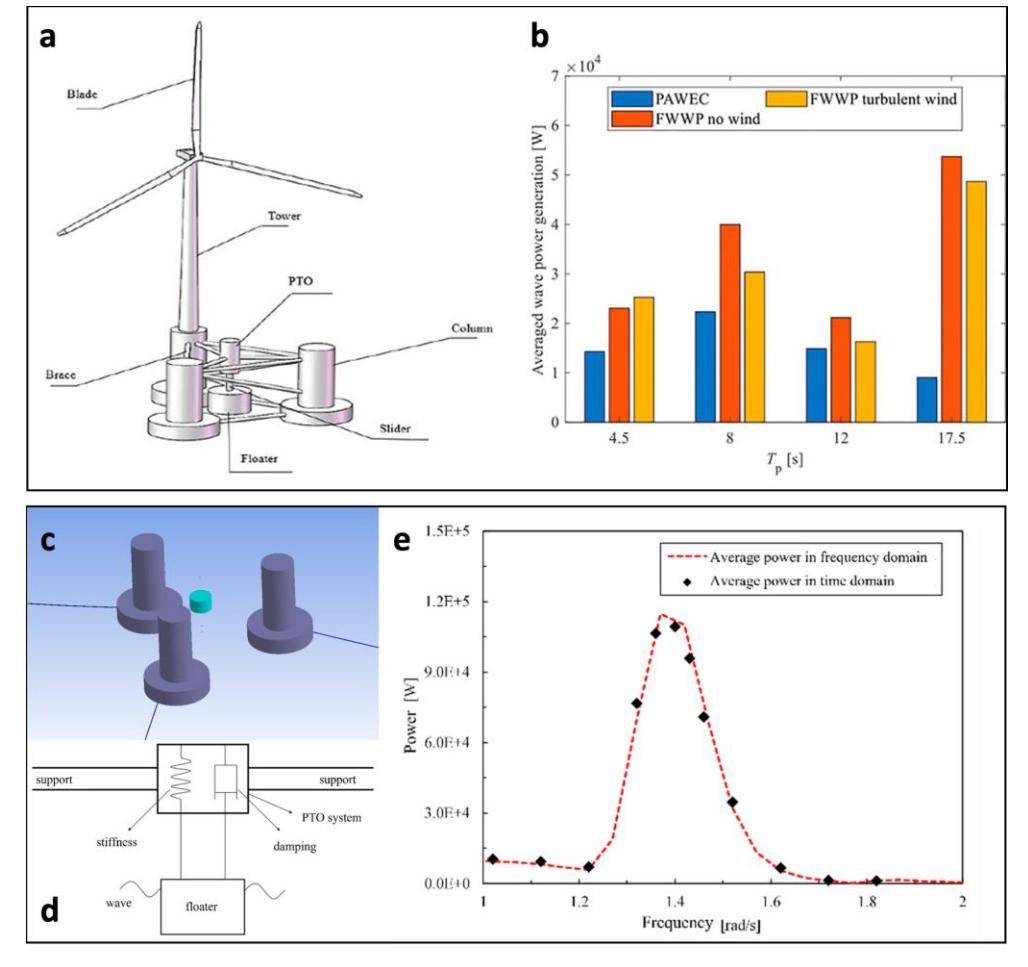
Floating platform. (a) Floating wind and wave integrated power generation platform and (b) its average wave power generation [168]. Diagram illustrating a combined floating wind and wave power generation platform: (c) hydrodynamic model; (d) simplified representation of the power take-off (PTO) system. (e) Comparison of power between the frequency domain and time domain. Panels c–e are from [169]. All panels are under a creative common license, https://creativecommons.org/licenses/by/4.0.
In addition, a study focuses on the analysis and optimization of a novel integrated wind-wave power generation platform that combines a semi-submersible floating wind turbine foundation and a point absorber wave energy converter (WEC) [169]. Using ANSYS-AQWA and STAR CCM+ software, the study examines the impact of different point absorber sizes and fluid viscosity damping on the platform's hydrodynamics and wave energy conversion efficiency. The results (Figure 6c-e) provide valuable insights for the design and optimization of such floating wind-wave power generation platforms.
Moreover, studies investigating the effect of platform motion on the WEC array demonstrate that the heave motion of the platform generally improves power absorption for most wave frequencies tested, due to the increase in wave-surface elevations and the phase differences of the heave motion between the WECs and the platform [170]. Lastly, research into the hydrodynamic performance of a hybrid floating platform (HFP) reveals that platform deformations significantly impact the relative pitch response between the buoy array and the platform. This indicates the importance of considering hydroelasticity and coupled dynamics in the design of multi-use floating platforms to avoid overestimation of hydrodynamic efficiency [171].
Recent advancements in tidal and wave energy technologies have positioned these marine renewables as viable contributors to the global transition to clean and sustainable energy sources. Innovations in tidal stream generators, wave energy converters, grid integration, floating platforms, environmental considerations, and international collaborations have enhanced the efficiency, reliability, and environmental responsibility of tidal and wave energy.
The Future of Nuclear Energy: Recent Breakthroughs
The future of nuclear energy holds promise and potential, thanks to recent breakthroughs in nuclear technology that are reshaping the industry and paving the way for safer, more sustainable, and more efficient nuclear power generation. Nuclear energy, with its low carbon emissions and potential for baseload power, remains a critical component of the global energy mix, and recent advancements are contributing to its continued evolution.
Recent breakthroughs in nuclear energy have focused on next-generation nuclear reactors (Figure 7a), nuclear fusion, and advanced materials, all aimed at making nuclear energy safer, more efficient, and more sustainable. Small Modular Reactors (SMRs) (see Figure 7b) are at the forefront of nuclear innovation, offering flexibility, enhanced safety features, and suitability for a variety of settings. A comprehensive assessment of integrating SMRs into energy systems requires considering various factors including renewable energy potential, legal frameworks, and community engagement. Geographical and stakeholder analysis, especially in renewable resource-limited areas, highlights SMRs' role in complementing intermittent renewable sources and enhancing energy security [172]. As global economies move towards net-zero carbon emissions by 2050, nuclear capacity, including SMRs, is poised to double. The expansion will involve not only traditional large reactors but also advanced nuclear technologies and non-electric applications, enhancing nuclear role in decarbonization strategies [173]. Despite the challenges in regulatory, licensing, and economic aspects, SMRs represent a new vision for nuclear power, potentially reducing upfront costs and financial risks [174].
Fusion energy, the "holy grail" of nuclear energy, promises a near-limitless and clean energy source. Despite the extreme conditions required for fusion reactions, significant strides have been made in developing tokamakbased D-T fusion reactors like ITER. Fusion energy faces critical challenges including steady-state operation of plasma and tritium cycle management, but the promise of a clean, safe solution for future long-term energy needs continues to drive research [175]. While nuclear fusion has reached a critical point in electricity generation, it still faces considerable challenges and may not align with market demands until the early 2030s or mid-2050s. However, the level of public and private engagement in nuclear fusion research has never been higher, indicating a strong consensus on its potential role in a post-resource, circular energy system [176]. The development of fusion reactors is being analyzed globally, considering different technological options and socioeconomic scenarios, indicating its potential role in addressing stringent environmental constraints alongside other low-carbon technologies [177].
Advancements in materials technology are critical to the future of nuclear power. SiC joining techniques, developed to meet the demand for complicated shapes in engineering design, especially for high-temperature applications, illustrate the focus on high-performance materials in advanced nuclear reactors [178]. Ultra-high temperature ceramic matrix composites (UHTCMCs) are emerging for applications in extreme environments, highlighting the importance of developing structural materials capable of withstanding oxidizing and rapid heating conditions [179]. The development of high-entropy alloys (HEAs) offers the possibility of designing materials with a combination of excellent properties, including irradiation resistance, essential for advanced nuclear energy systems [180]. The application-specific development of HEAs and their unique irradiation tolerance make them promising candidates for advanced nuclear reactors, addressing the increased challenges these systems present [181].
The exploration of thorium-based nuclear reactors is intensifying as they present a compelling alternative to conventional uranium reactors. Thorium is more abundant, and the reactors' inherent safety features significantly reduce the likelihood of meltdowns. Furthermore, they generate less long-lived radioactive waste, directly addressing a critical concern associated with nuclear energy. However, challenges such as cost, uncertainties, and current inefficiencies in thorium reactor technologies persist. Comprehensive evaluation reveals that cost and technological uncertainties are primary barriers to their adoption. Strategic research and development efforts are essential to make these reactors financially viable and efficient [182]. Efforts to integrate thorium-based fuels in advanced power reactors like APR-1400 are also underway. Using simulation tools, the neutronic performance of various thorium-based fuel types has been analyzed, demonstrating that they can safely sustain power production with acceptable safety parameters and efficient power distribution compared to conventional fuels. These alternative fuel types thus hold promise as a viable solution for future nuclear power generation, potentially offering enhanced safety and resource utilization [183]. In the context of the thorium fuel cycle, thorium molten salt reactor (TMSR) systems are gaining attention for their innovative approach to nuclear energy. Computational studies on SINAP's proposed TMSR system highlight the challenges and solutions in managing tritium, a by-product of the thorium cycle. The findings suggest that significant environmental contamination could occur without tritium removal strategies. Implementing effective removal methods, such as spray gas techniques used in molten salt reactor experiment (MSRE), can dramatically reduce tritium permeation. Additionally, using alternative salts in the reactor can lower tritium production, further minimizing environmental and safety concerns [184].
Innovations in nuclear waste management are focusing on advanced reprocessing techniques and novel storage solutions to address the challenges associated with spent nuclear fuel (SNF). Reprocessing has the potential to extract valuable resources, including rare earth elements and isotopes beneficial for medical and energy purposes, from the SNF, turning what is commonly perceived as waste into a valuable resource. This not only offsets costs but also advances waste management techniques to minimize waste volumes, contributing to the sustainability of the nuclear fuel cycle [185]. As radioactive waste accumulates, the development of sophisticated and efficient methods for treating nuclear wastewater is critical. Among various technologies, adsorption and membrane techniques are the most mature, with hybrid technologies like adsorptive membranes showing promising results. These advancements in waste treatment are accompanied by the potential for recovering valuable radionuclides, an aspect of radioactive waste management that remains largely unexplored [186]. Recent attention has also been directed towards the development of brannerite structured materials (AB2O6) as potential waste forms for the immobilization of uranium-rich radioactive wastes. Brannerites, and especially brannerite-based glass-ceramic composite materials, offer unique advantages in incorporating chemical impurities and ease of processing. These materials are being thoroughly studied to understand their synthesis, structure, and performance under waste storage conditions [187]. Moreover, strategies are being developed for transmuting Minor Actinides (MAs) in spent nuclear fuel using Accelerator-Driven Subcritical systems (ADS). ADS systems are explored for their ability to significantly reduce the mass and toxicity of final high-level waste by effectively eliminating MAs from spent fuel, demonstrating a potential pathway towards sustainable and clean nuclear fission energy [188].
Recent breakthroughs in nuclear energy technology are shaping the future of nuclear power generation in profound ways. Next-generation reactors, nuclear fusion, advanced materials, thorium-based reactors, digital technologies, and nuclear waste management innovations are redefining the nuclear energy landscape.
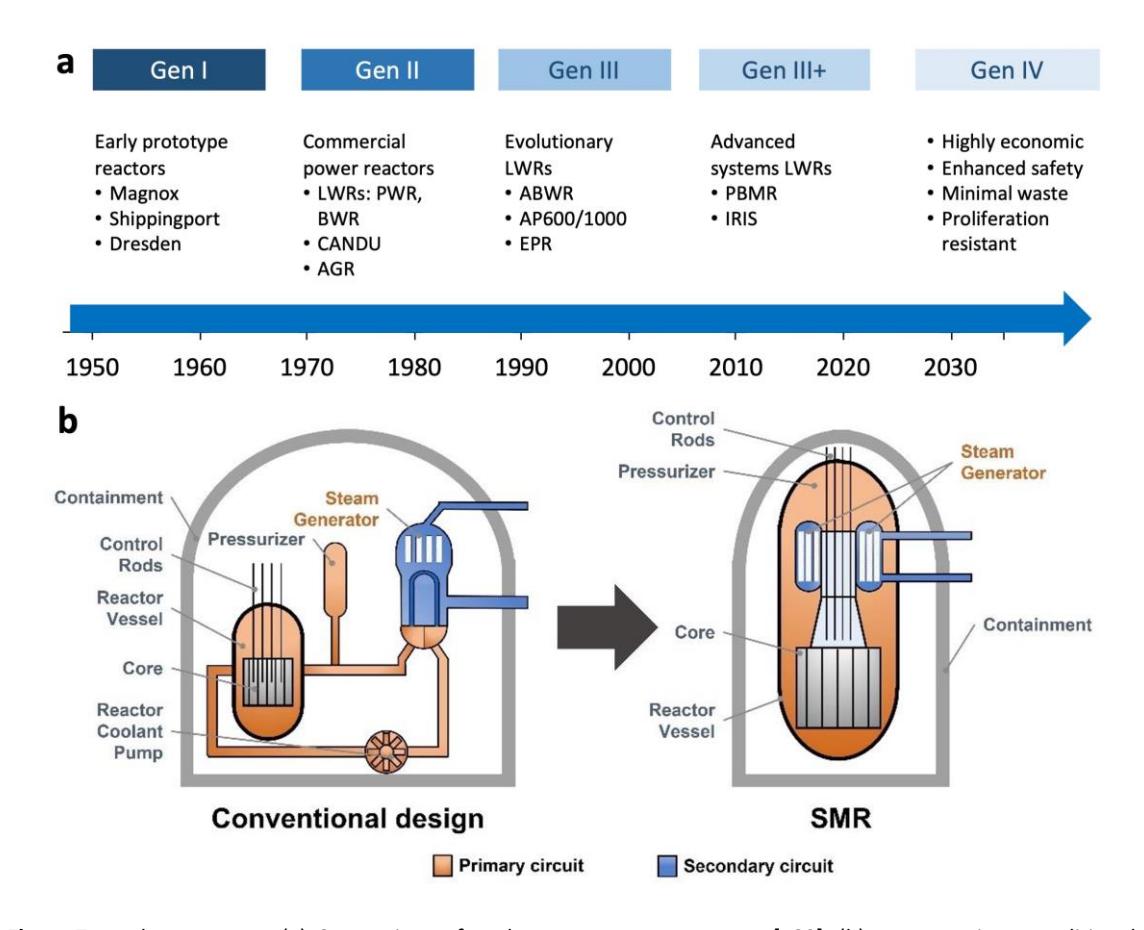
Nuclear reactors. (a) Generations of nuclear reactor. Data source: [189]. (b) Incorporating a traditional pressurized water reactor (PWR) design into a small modular reactor (SMR) ([190], under a creative common license, https://creativecommons.org/licenses/by/4.0).
PRO Power Revolution: Breaking Ground in Osmotic Energy Advancements
The PRO Power Revolution represents a ground-breaking development in the field of osmotic energy, a renewable energy source that harnesses the energy potential of salinity gradients between freshwater and saltwater. Osmotic energy has emerged as a promising and sustainable way to generate electricity, and recent advancements are pushing the boundaries of its practical application.
At the heart of the PRO Power Revolution is the pressure-retarded osmosis (PRO) process, which leverages the natural osmotic pressure difference between freshwater and saltwater to generate power. This process relies on a specialized semi-permeable membrane that allows water molecules to pass through while blocking salt ions. When freshwater and saltwater are separated by this membrane, freshwater is drawn through the membrane into the saltwater side due to osmotic pressure (Figure 8 a-c). This flow of water creates hydraulic pressure, which can be harnessed to drive a turbine and generate electricity.
One of the notable breakthroughs in osmotic energy is the development of high-performance PRO membranes. These membranes are designed to maximize water permeability while maintaining selective salt rejection. Advanced materials and membrane engineering techniques have led to improved membrane efficiency and durability, making the PRO process more practical and economically viable. Recent research has primarily focused on the development and modification of high-performance PRO membranes to address the global energy crisis and achieve water sustainability without creating liquid discharge. A comprehensive analysis of membrane modification has presented the use of various nanomaterials like zeolite, graphene oxide, and carbon nanotubes for enhancing PRO performance [191,192]. The incorporation of novel nanofibers into thin film composite and hollow fiber membranes has shown promise in maximizing PRO efficiency, indicating the potential of PRO in regions like the Middle East to harness salinity gradient energy while enhancing fresh water sources [191].
Furthermore, to optimize the PRO process and address challenges like concentration polarization, reverse solute diffusion, membrane fouling, and mechanical stability, there has been a significant focus on advanced fabrication and modification techniques. Novel PRO membranes with enhanced performance are being developed with various configurations and materials, featuring improved water flux and power density. Antifouling strategies and practical applications of these membranes in PRO systems are also critically reviewed, outlining a future perspective for practical operation [193].
In addition, surface modification of commercial reverse osmosis (RO) membranes has emerged as a strategy to enhance PRO membrane performance. By applying hydrophilic materials and increasing the membrane thickness, the filtration performance and mechanical stability of membranes can be improved. A work has shown that various modification materials, including polydopamine, polyelectrolytes, graphene oxide, and zeolites, can significantly increase water permeability while maintaining salt rejection rates [194]. Moreover, tensile tests have demonstrated the enhanced mechanical strength of modified membranes, particularly with 3D zeolites modification, highlighting the potential for robust and efficient PRO systems [194]. Lastly, innovative membrane fabrication techniques such as electrospinning have been explored to develop membranes with high porosity and low structural parameters. These thin-film composite membranes, modified with chlorine to improve water permeability, have shown peak power densities and efficient performance in PRO systems 195].
Innovations in system design, module, modelling, and optimization have significantly enhanced the overall energy efficiency of osmotic power generation. For instance, the application of a multiple-stage PRO scenario evaluated net specific energy generation with a notable 33.96% increase observed in the quaternary-stages pressure retarded osmosis scenario, demonstrating the Dead Sea and wastewater salinity gradients produced the highest net specific energy generation of 0.82 kWh/m3 [196]. Additionally, a more scalable approach called atmospheric batch PRO (AB-PRO) has been proposed to enhance osmotic energy harvesting. AB-PRO utilizes an atmospheric tank to store the diluted draw solution (DS) and a pressure exchanger for energy recovery, outperforming single-stage PRO (SS-PRO) in ideal conditions. However, when considering inefficiencies, AB-PRO experiences a ~40% reduction in efficiency due to factors like under-pressurization (UP) and entropy generation. Nevertheless, AB-PRO remains superior to SS-PRO at low water recoveries (R) and maintains stable energy efficiency across various R levels [197]. A new spiral-wound module design for PRO applications compared to the available module demonstrated a higher power density by 25% and 15% at draw concentrations of 35 g/kg and 60 g/kg respectively, along with a 35% decrease in pressure drop, thus significantly improving the module's overall performance [198]. Moreover, a process-scale model of the PRO indicated that for a membrane line with eight spiral-wound elements in series, the length-averaged model over-predicted the PRO performance by 20% [199].
Ongoing research is advancing the feasibility of large-scale osmotic energy projects, particularly focusing on the SWRO-PRO hybrid system. Long-term pilot studies reveal that Pressure Retarded Osmosis (PRO) can reduce energy consumption in seawater desalination by about 20% while significantly diluting brine, demonstrating its potential as a secondary energy recovery device [200]. These insights bridge the gap between small-scale experiments and commercial applications, showcasing the practical scalability of PRO technology [200]. Simultaneously, studies are addressing critical challenges like membrane fouling in PRO systems, examining the influence of feed water quality and pre-treatment methods on system performance [201]. Experiments on both bench-scale and pilot-scale systems, using real wastewater effluents and synthetic brine, have tested various pre-treatment methods including cartridge filter, microfiltration, ultrafiltration, nanofiltration, activated filter media, and granular activated carbon. Investigations using various pre-treatment techniques reveal that both particles and organic matters significantly contribute to fouling, impacting the flux and power density. These insights are guiding the development of more efficient PRO systems with higher resistance to fouling, ensuring better operational longevity and efficiency [201].
As the PRO Power Revolution continues to gain momentum, it holds the potential to contribute significantly to global efforts to transition toward cleaner and more sustainable energy sources. Osmotic energy's ability to generate electricity from salinity gradients is a promising addition to the renewable energy portfolio. While challenges such as membrane durability and system scalability remain, ongoing research and development are driving osmotic energy closer to practical implementation.
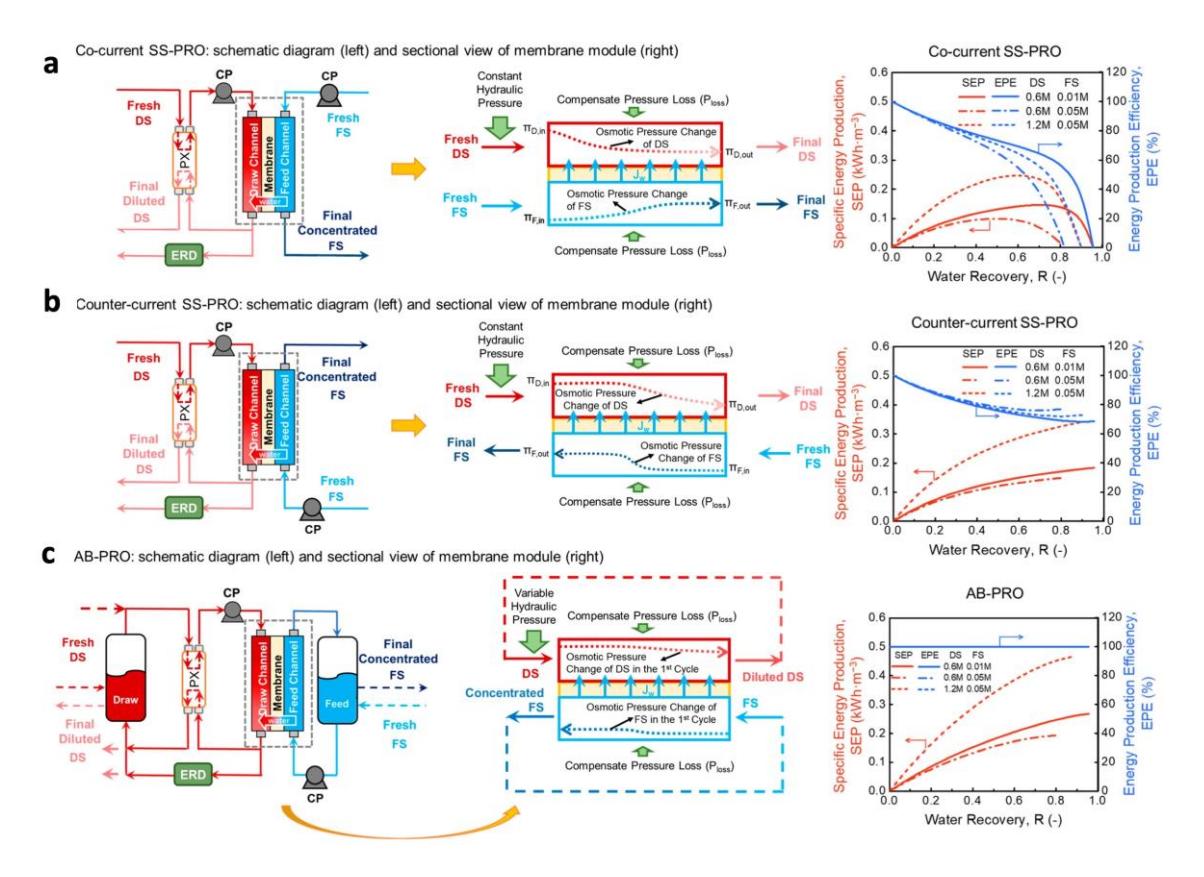
Pressure retarded osmosis. (a)-(c) The effect of PRO flow configuration on energy production [197]. These figures are under a creative common license, https://creativecommons.org/licenses/by/4.0.
Salinity-Powered Energy Generation: Innovations in Reverse Electrodialysis Technology
Salinity-powered energy generation is at the forefront of renewable energy research, offering a novel and sustainable approach to producing electricity by harnessing the energy gradients created by differences in salinity between saltwater and freshwater sources. Recent innovations in reverse electrodialysis (RED) technology are revolutionizing the field and unlocking the potential of salinity gradient power.
At the heart of this innovation is the reverse electrodialysis process, which capitalizes on the ion exchange that occurs when freshwater and saltwater are separated by selective ion-exchange membranes. As ions in the saltwater solution migrate through the membranes towards the freshwater, an electric potential is generated. This potential difference can be captured and converted into electricity using specially designed electrodes [202,203].
Innovative advancements in ion-exchange membranes are propelling the efficiency of salinity-powered energy generation through Reverse Electrodialysis (RED). These membranes are critical for efficient operation, with the development focusing on enhancing selectivity for specific ions and facilitating rapid ion transport. This selectivity is vital for the separation of ions and generating substantial electric potential in the RED process. Recent research has highlighted the demand for alternative membranes to meet RED's unique criteria, with strategies aimed at designing new membranes that exhibit improved physical, chemical, and electrochemical properties. This includes evaluating preparation methods for desired characteristics and discussing key findings in terms of system power output for newly designed Ion Exchange Membranes (IEMs) [204]. Additionally, research is focused on intensively studying and improving membrane properties, comparing major commercial and tailor-made membranes, and understanding the relationships between properties affecting membrane performance [205]. Moreover, controlling monovalent anion permselectivity and membrane surface hydrophilicity is crucial, with surface modification procedures like graft polymerization, dip coating, and layerby-layer being considered to prepare monovalent permselective Anion Exchange Membranes (AEMs) with antifouling characteristics [206]. Furthermore, profiled ion-exchange membranes show promise in reducing pumping power and electrical resistance in reverse electrodialysis. These profiled membranes, designed to improve spacer geometries, offer an alternative solution to minimize fouling and pressure drop inside RED stacks (Figure 9 a-f).
Profiled ion-exchange membrane for reverse electrodialysis applications (RED). (a-d) The effect of membrane pairs (flat vs pattern) on power density of RED [213]. (e, f) OCV, power density, and pressure drop of flat vs profiled or patterned pore-filled membrane. All panels are under a creative common license, https://creativecommons.org/licenses/by/4.0.
Innovations in system design and optimization are pivotal in enhancing the performance of salinity gradient power systems. The study of stack design for high concentration gradient reverse electrodialysis (RED) in recycling scenarios indicates that membrane properties and spacer thickness differ significantly from those in lower concentration gradients. This study found that intermediate water permeability and ohmic resistance membranes provided the highest power density and energy efficiency, and intermembrane distances up to 0.3 mm improved energy efficiency, suggesting a shift towards electrodialysis-like design for high efficiency in high concentration gradients [207].
Further exploration into RED performance optimization identified that low salinity stream concentration and feed flow rates are key operational variables impacting power output. For instance, a seawater high concentration stream, when paired with a low concentration stream of 0.02 M NaCl, under certain flow conditions, achieved the highest net power density, indicating the importance of accurately selecting water sources and devising strategies to adapt RED performance [208].
The development and choice of ion exchange membranes (IEMs) and electrode materials are also critical. The characteristics of IEMs such as permselectivity, conductivity, and thickness, alongside electrode materials, need intensive study and improvement. Research suggests focusing on improving membrane properties and exploring new electrode materials for large-scale RED systems for commercialization. Recent studies have been focusing on precious and inexpensive metal electrodes, optimizing the net power output by balancing the gross power output generated by the RED device and the pumping power input needed for salinity gradient mixing and redox electrolyte reactions [209,210].
Research initiatives and pilot projects are exploring the feasibility and scalability of salinity gradient power generation [211, 212]. These efforts aim to demonstrate the commercial viability and economic sustainability of large-scale RED systems. As the technology matures, it has the potential to contribute significantly to the global transition toward cleaner and more sustainable energy sources.
Salinity-powered energy generation is characterized by its minimal environmental impact. It produces no greenhouse gas emissions, and the technology can be deployed in coastal and estuarine regions where freshwater meets seawater. The brackish water and seawater used in the process are readily available, and the technology does not require significant land use, making it an environmentally responsible energy source.
The Importance of Green Energy in Carbon Emission Reduction
The importance of green energy in carbon emission reduction cannot be overstated in the context of combating climate change and mitigating the adverse effects of greenhouse gas emissions on our planet. As we grapple with the urgent need to reduce carbon emissions and transition to a more sustainable energy system, green energy technologies emerge as a key and transformative solution.
One of the primary drivers of climate change is the excessive release of carbon dioxide and other greenhouse gases into the atmosphere. These emissions primarily result from the burning of fossil fuels, such as coal, oil, and natural gas, for electricity generation, transportation, and industrial processes [214, 215]. The accumulation of these gases trap heat in the Earth's atmosphere, leading to global warming and its associated consequences, including rising sea levels, extreme weather events, and disruptions to ecosystems.
Green energy, in contrast, offers a cleaner and more environmentally friendly alternative. By harnessing energy from renewable sources, green energy technologies enable us to generate electricity and meet energy demands with significantly lower carbon emissions [216–218]. These technologies produce little to no direct greenhouse gas emissions during operation, making them crucial contributors to the reduction of carbon footprints (see Table 7).
Solar power, for instance, relies on photovoltaic cells to convert sunlight into electricity without emitting any greenhouse gases. A recent parametric study on solar cells integrated into building envelopes, conducted in New Borg El Arab, Alexandria, Egypt, has shown that placing solar cells on facades and roofs can significantly reduce a building's annual energy consumption—by approximately 15% for facade installations and 40% for roof installations [219]. The study, verified using Design-Builder software and experimental data, indicates that roofmounted cells facing south yield the highest power generation. Additionally, the internal facility temperature is moderated by solar cells, enhancing comfort conditions, while cells facing north contribute to the lowest CO2 emissions, demonstrating the multi-faceted benefits of solar integration in buildings [219].
Wind turbines generate electricity without the need for fossil fuels, further reducing carbon emissions associated with energy production. A study of wind energy capacity across 31 countries indicates that 837 GW installed in 2021 contributed to mitigating 1311 Mt of CO2 by generating 2186 TWh of electricity [220]. With the potential to account for 30% of global electricity by 2050, wind power could significantly reduce CO2 emissions by up to 14871 Mt by mid-century and 32864 Mt by 2100. Additionally, wind resources are expected to shift southward, enhancing the viability of wind power in equatorial regions. In terms of climate impact, wind energy expansion could lower global temperatures by up to 0.64 °C by 2100, with substantial contributions from leading nations like China and the United States towards this cooling effect.
Hydroelectric power, through the kinetic energy of flowing water, likewise offers a carbon-neutral energy source. A study focusing on the top ten hydropower-consuming countries in the European Union from 1991 to 2019 reveals that hydropower significantly lowers CO2 emissions [221]. Employing a "Quantile-on-Quantile" approach, the research individually examines the time-series relationship between hydropower use and CO2 emissions for each nation, uncovering varying levels of asymmetry in this association. The findings suggest that tailored policies are needed to optimize hydropower's potential in reducing carbon emissions across the EU.
The adoption of biomass energy, derived from organic materials like agricultural residues and wood, provides an opportunity to recycle carbon in the atmosphere. As plants grow, they absorb CO2 from the air; when biomass is used as an energy source, the carbon released is roughly equivalent to what the plants initially absorbed, resulting in a balanced carbon cycle. A study in China has demonstrated that replacing coal with biomass in power plants significantly reduces pollutants and CO2 emissions [222]. The research calculated the optimal economic transport radius for biomass, estimating that potentially available biomass (PAB) could reduce emissions of NOx, SO2, PM10, PM2.5, and CO2 by considerable amounts. However, projections show that PAB won't meet the demand for biomass power by 2030 under various scenarios, though CO2 emissions could decrease substantially. Additionally, technologies like bioenergy with carbon capture and storage (BECCS) could further lower emissions and help meet climate targets [222]. Another study presents a multi-generation system (MGS) combining solar and biomass energy [223]. This system, which integrates various energy conversion units, including a gas turbine, fuel cell, and organic Rankine cycle, has the potential to generate significant electrical and thermal power, produce freshwater, hydrogen, and cooling loads, with high thermodynamic efficiency and low exergy costs. CO2 emissions from the system are also quantified, providing a holistic view of its environmental impact.
Geothermal energy taps into the Earth's natural heat reservoirs, emitting minimal greenhouse gases compared to fossil fuels. Recent research focusing on the top seven geothermal energy-consuming countries from 1990 to 2019 employed a quantile-on-quantile (QQ) approach to assess the impact of geothermal energy on CO2 emissions [224]. This method provides a nuanced understanding by dividing the impact into upper, medium, and lower quantiles. Findings indicate that geothermal energy reduces CO2 emissions in Italy, Mexico, and New Zealand [224]. The study also confirms a predictive relationship between geothermal energy use and CO2 emissions across all countries, emphasizing the complex and varied environmental impacts of geothermal energy deployment. An extensive study covering the period from 1990 to 2021 investigated the impact of geothermal energy output on carbon dioxide emissions among the European Union (EU27) states using an autoregressive-distributed lag (ARDL) approach [225]. The study revealed that geothermal power production leads to reduced CO2 emissions, particularly among the EU13 emerging economies. However, emissions are influenced by factors like population density, economic growth, and fossil fuel usage, with the EU14 emerged economies seeing different impacts due to demographic variations [225].
Emerging technologies like tidal and wave energy, capturing ocean movements, are making strides in contributing to carbon reduction efforts. Addressing scientific gaps in ocean energy utilization for coastal zeroenergy buildings, a study proposed a hybrid system for a building in Hong Kong, combining sea-sourced cooling, floating solar photovoltaics, and tidal stream generators [226]. Using the dynamic energy simulation software TRNSYS, the study explored various renewable energy mix ratios and battery numbers' impacts. It found that most configurations, even without batteries, were technically and economically viable, significantly reducing annual CO2 emissions [226].
Green Energy Source Carbon Dioxide Emissions Environmental Benefits Solar Power Zero direct emissions No air pollution, no water contamination, no land degradation Wind Power Zero direct emissions No air pollution, no water contamination, minimal land use Hydroelectric Power Very low emissions No air pollution, no water contamination, minimal land use
Table 7 Green energy in carbon emissions reduction.
The significance of green energy lies not only in its immediate carbon reduction benefits but also in its potential to transform the energy landscape [216,227]. As we shift away from fossil fuels and embrace renewable energy sources, we reduce our dependence on finite and environmentally harmful resources. This transition fosters energy security, reduces air pollution, and creates a sustainable energy ecosystem for future generations.
Biomass Energy Carbon dioxide neutral Recycles carbon from the atmosphere, if sustainably sourced Geothermal Energy Very low emissions No air pollution, no water contamination, minimal land use Tidal and Wave Energy Very low emissions No air pollution, no water contamination, minimal land use
The integration of renewable energy sources into existing electricity grids is a fundamental requirement for maximizing their carbon reduction potential. Advanced grid management technologies and energy storage systems are pivotal in this regard, ensuring that intermittent sources like wind and solar power can provide a stable and reliable energy supply. Energy storage solutions, such as batteries and pumped hydro storage, enable excess energy to be stored during periods of surplus and released when demand peaks. Research has highlighted the importance of energy storage systems in the context of offshore renewable energy sources, emphasizing the need for efficient and reliable energy storage solutions to decarbonize offshore assets and mitigate climate change [228]. Additionally, studies have examined the role of energy storage solutions in enabling high penetrations of solar PV and other variable forms of renewable energy, emphasizing the relevance of storage in the context of the Finnish energy system for 2050 [229].
A notable shift in carbon reduction strategies is the trend toward decentralized energy production. Empowering individuals and communities to generate their own green reduces transmission losses associated with centralized power generation, promotes the adoption of cleaner energy sources, and enhances energy resilience. This trend is supported by various technologies, such as rooftop solar panels, small-scale wind turbines, and energy storage systems. Decentralized energy production also aligns with the global push for sustainable and low-carbon development, as it can be driven by renewable energy sources like solar and wind power [230–232]. Germany, for example, has been striving to transition its energy supply system toward a high share of renewables, leading to an increasingly decentralized supply structure. The country's energy strategy represents an influential top-down mechanism, but the process is also driven from the bottom up. The German federal states (Laender) experiment and innovate, and some explicitly strive to be forerunners in renewable energy policy. This multi-level governance poses both advantages and constraints to Germany's transition towards a renewable energy system [233].
Policy instruments, including carbon pricing mechanisms such as carbon taxes or cap-and-trade systems, provide economic incentives for emissions reduction. Governments and policymakers worldwide employ these instruments to encourage the adoption of cleaner technologies and sustainable practices, ultimately accelerating carbon reduction efforts. A study explores the impact of a hybrid carbon policy, combining both carbon tax and cap-and-trade mechanisms, on corporate emission reduction efforts and supply chain operations [234]. Utilizing a differential game approach, it examines the optimal decisions in centralized and decentralized supply chain scenarios and proposes a coordinated contract for Pareto improvement. The research finds that while the carbon tax rate, trade price, and proportion of paid quotas positively influence emission reduction, they can negatively affect corporate profits and social welfare [234].
Barriers to Green Energy Adoption
The adoption of green energy technologies faces several barriers that hinder their widespread implementation and integration into the energy landscape. These barriers are multifaceted and can vary from region to region, but they collectively pose challenges to the transition to a more sustainable energy future.
One of the primary barriers to the adoption of renewable energy technologies is the high upfront costs. Solar panels, wind turbines, and energy storage systems require significant initial investments, despite often having lower long-term operational costs compared to fossil fuel alternatives. A study on utility-scale solar photovoltaic (PV) facilities in the European Union (EU) showed that while solar PV capacity has grown significantly, the levelized costs of energy (LCOE) vary considerably based on tracking technology and location. One-axis tracking systems have been identified as the most cost-effective across various EU countries, reducing LCOE by more than 20% compared to two-axis systems. The analysis also underlined the impact of wages on LCOE, indicating higher costs in higher latitude countries [235]. Similarly, wind energy has seen accelerated cost reduction in recent years, more than experts predicted. A 2020 survey showed experts expect future onshore and offshore wind costs to decline 37–49% by 2050, resulting in costs 50% lower than previously anticipated in 2015. This reduction is attributed to witnessed cost reductions and expected continued advancements in technology. However, the survey also emphasized considerable uncertainty about future costs [236].
Energy storage devices, critical for managing the intermittent nature of renewable sources, are also a subject of economic concern. Various storage technologies fit different needs and applications, with lithium-ion batteries identified as suitable for both low and medium-size applications with high power and energy density requirements [237]. Other storage categories like capacitors and supercapacitors are appropriate for high power applications, and thermal energy storage is effective for seasonal and bulk energy storage. Hybrid solutions combining various storage devices might provide a viable and cost-effective approach for grid support and enhancing the utilization of renewable energy [237]. Another challenge stems from the intermittency and variability of many renewable energy sources, such as solar and wind power. These sources depend on weather conditions and time of day, leading to difficulties in maintaining a stable and reliable energy supply, especially without effective energy storage solutions or grid upgrades [238, 239].
The expansion of renewable energy faces challenges regarding land use, habitat disruption, and environmental impact, requiring a balance between renewable goals and environmental conservation. Advanced econometric methodologies in a study examining trilemma energy balance, clean energy transitions, and natural resource depletion indicate that while these factors enhance economic growth, only clean energy discourages growth [240]. However, a positive energy balance and clean energy transitions improve environmental sustainability, whereas natural resource depletion worsens it. A 1% increase in trilemma energy balance leads to a 0.4% boost in economic growth and a reduction of the ecological footprint by −0.6% [241]. Another study in Nordic countries found that renewable energy strongly and positively correlates with international trade and improves environmental quality [240].
Promoting renewable energy supports economic growth and environmental sustainability, helping to achieve sustainable development goals. The research suggests that understanding the role of renewable energy in international trade can help in formulating eco-friendly policies for balancing eco-environmental sustainability [240]. Lastly, a comprehensive review of renewable energy source exploitation focuses on technology status, resource availability, and system integration [242]. It assesses various renewable technologies such as wind, wave, geothermal, solar, and salinity gradient alongside the environmental performance of energy systems. This broad assessment underscores the significance of integrating renewable sources into energy systems and evaluating their environmental impacts, thereby contributing to informed policymaking for sustainable energy development [242].
Inconsistent or changing energy policies and regulations create uncertainty, hindering long-term planning and investments in green energy. Sustainable energy policies are crucial for the promotion of renewable energy alongside conservation strategies and technological innovations. A review of energy policies in the United States, Germany, the United Kingdom, Denmark, and China highlights the development history and the importance of consistent policy frameworks [243]. Strategies like energy-efficiency standards, which evolve with technological
advancements, and feed-in tariffs, which have shown success in various countries, are critical in encouraging renewable energy uptake. Additionally, enhancing building energy performance certification schemes is vital for transitioning towards net-zero energy buildings and smart cities. These policies, when consistently applied, can significantly reduce uncertainty, and promote long-term investments in renewable energy [243].
Overcoming these barriers to green energy adoption (see Table 8) requires a coordinated effort involving governments, industry stakeholders, researchers, and the public. Policy incentives, research and development investments, infrastructure development, and public education are key components of a successful transition to a more sustainable and green energy future.
Table 8 Barriers, impact, and solutions of green technology adoption.
| Barrier | Description | Impact | Solution |
|---|---|---|---|
| High upfront costs | Renewable energy technologies require significant initial investments. | Hinder widespread implementation | Subsidies, tax credits, financing options |
| Intermittent and variable energy sources | Difficult to maintain a stable and reliable energy supply. | Integration challenges, grid instability | Energy storage solutions, grid upgrades |
| Energy storage limitations | Cost-effective, high-capacity energy storage systems are still needed. | Unreliable power supply, grid instability | Research and development investments |
| Integration into existing power grids | Grid infrastructure upgrades and regulatory adaptations are needed. | Complex and costly integration | Grid modernization, regulatory frameworks |
| Lack of necessary infrastructure | Transmission lines, charging stations are required. | Limited infrastructure support | Infrastructure development, investment |
| Fossil fuel subsidies | Create market distortions and discourage renewables adoption. | Unequal competition, hinder green energy growth | Subsidy reform, market-based approaches |
| Public perception and acceptance | Communities may resist renewable energy projects due to various concerns. | Community engagement, public education | Subsidy reform, market-based approaches |
| Complex regulatory and permitting processes | Slow down project deployment and increase costs. | Streamlining processes, regulatory clarity | Regulatory reform, simplified permitting |
| Financing challenges | Secure financing can be difficult for smaller-scale or developing region projects. | Access to affordable loans and financing | Innovative financing mechanisms, risk mitigation strategies |
| Need for continued research and development | Technical challenges, efficiency improvements, cost reductions are needed. | Innovation investments, research collaborations | Innovative financing mechanisms, risk mitigation strategies |
| Land use and environmental concerns | Renewable energy projects can impact land use and habitats. | Balancing energy goals with conservation | Land-use planning, environmental impact assessments |
| Inconsistent energy policies | Uncertainty for investors and project developers. | Hinders long-term planning and investment | Stability in energy policies and regulations |
| Coordinated effort | Governments, industry stakeholders, researchers, and the public must work together. | Effective implementation of green energy transition | Policy incentives, R&D investments, infrastructure development, public education |
The Indonesian Perspective and Policies
The Indonesian perspective on green energy adoption is multifaceted, influenced by the country's unique geographical, economic, and environmental conditions. With over 17,000 islands spanning across the equator and a population exceeding 270 million, Indonesia faces a complex energy landscape characterized by opportunities and challenges in the transition to sustainable energy solutions.
Indonesia boasts an abundance of renewable energy resources, including solar, wind, hydroelectric, and geothermal potential [244,245]. The tropical climate ensures consistent sunlight throughout the year, making solar energy an attractive option. Additionally, Indonesia ranks among the world's top geothermal energy producers, harnessing the Earth's natural heat for electricity generation [246].
However, Indonesia also confronts pressing energy access issues, especially in remote and underserved regions. Expanding access to reliable and affordable electricity remains a top priority for the government, and green energy technologies are instrumental in achieving this goal. In 2022, the portion of renewable energy technologies (RET) in Indonesia's electricity blend was 12.6%, as demonstrated (Figure 10 a and b). Off-grid solar power systems and micro-hydro installations play a crucial role in providing electricity to areas where traditional grid extension is challenging.
Historically, Indonesia has relied heavily on fossil fuels, but it's now shifting towards green energy, which is complex due to existing infrastructure and economic dependencies on these industries. The government is promoting initiatives like the National Energy Policy and the Low Carbon Development Initiative to reduce emissions and enhance renewable energy adoption. However, implementing Low-Carbon Development faces significant barriers, especially in technology and governance. A study suggests that technological and governance barriers significantly hinder Low-Carbon Development progress, with governance identified as the most critical aspect to address [247]. Collaboration between central and local governments is emphasized for effective renewable energy development. Furthermore, while striving to meet Sustainable Development Goals, challenges remain in achieving universal energy access, renewable energy deployment, and energy efficiency improvement. Indonesia's energy policy needs to ensure enough budget allocation for 100% residential electrification by 2030, provide access to clean cooking fuels and technologies, and develop targeted policies for energy efficiency. The current policy scenarios may not suffice to meet the renewable energy targets, indicating a need for more robust strategies [248]. Rural electrification is a key focus of Indonesia's green energy efforts, with a recognition that decentralized energy solutions are essential for reaching remote communities [249,250]. These solutions empower local populations by providing them with clean and reliable energy access.
Indonesia is recognized globally for its substantial progress in geothermal energy development, significantly contributing to its clean energy portfolio. The country, traversed by the world's Ring of Fire, holds an estimated 28.91 GW of geothermal potential spread across multiple islands, accounting for about 40% of the world's geothermal energy potential. Despite this, the utilization remains relatively low, with less than 5% currently harnessed, generating approximately 1533.5 MW from geothermal plants [251]. The Indonesian government, acknowledging this underutilization, has ambitious plans to expand geothermal power plants to achieve 7000 MW by 2025, with a revised target from the initial 9500 MW, reflecting a more realistic approach. The legal framework has also been adjusted to accelerate this growth; geothermal power generation is no longer classified as mining, facilitating development and investment [251, 252] These government initiatives and legal reforms underscore the country's commitment to increasing the share of geothermal energy in the national energy mix, aiming for over 5% by 2025 [253]. Despite the optimistic outlook, the development of geothermal energy in Indonesia faces challenges such as resource assessment, financing, policy shifts, and addressing social and environmental impacts. Education at various levels and research institutions plays a crucial role in advancing this sector [253].
Another promising technology for application in Indonesia includes PRO and RED. Both technologies exploit salinity gradients to produce energy. Given Indonesia's archipelagic nature, featuring an extensive coastline and numerous river estuaries, the country is uniquely positioned to leverage these salinity differences at estuary junctions to generate electricity through PRO and RED technologies. However, these technologies are currently under development, necessitating further exploration and refinement for commercial-scale deployment, e.g. membrane performance, fouling, pre-treatment system and cost, and etc. Another technology with significant promise is nuclear energy. Yet, apprehensions concerning safety measures, human resource capabilities, and public perceptions towards this technology continue to pose substantial challenges to its adoption for electricity generation in Indonesia.
Indonesia is advancing in renewable energy while grappling with the intermittency of sources like solar and wind, necessitating efficient energy storage, grid upgrades, and demand-side management to address these challenges. The country presents attractive investment opportunities in the green energy sector, encouraging public-private partnerships and foreign investments to foster the growth of sustainable energy projects. Indonesia is actively transitioning to renewable energy, aiming to increase its renewable energy mix from 11% in 2021 to 23% by 2025 and 31% by 2050, amidst a predominantly fossil fuel-driven energy scenario in 2021 [253]. However, environmental conservation remains a priority due to its rich biodiversity and extensive
rainforests, making it imperative to balance renewable development with ecological preservation. Engaging communities and ensuring local support are vital for the success and sustainability of green energy initiatives. As Indonesia continues to prioritize technological innovation, research, and development, it aims to optimize green energy solutions, reducing costs and enhancing the efficiency of renewable technologies for broader adoption.
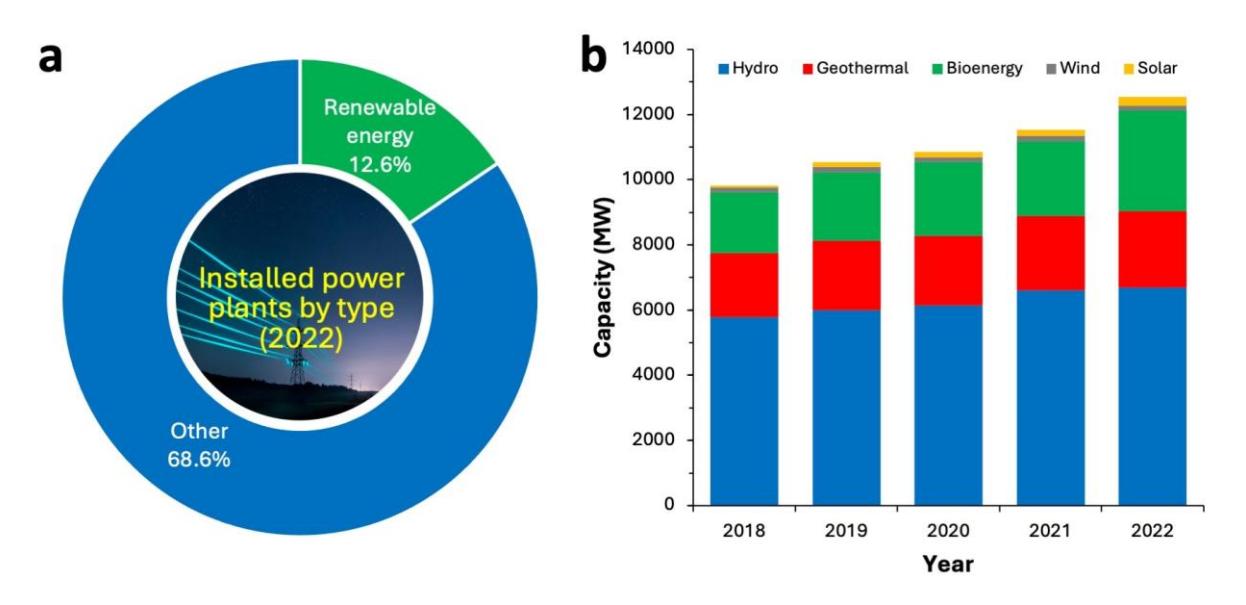
Renewable energy in Indonesia. (a) Total electricity supply by energy type. (b) Total installed capacity. Data source: [254].
Indonesia has significant potential in New and Renewable Energy (EBT) sources, including mini/micro-hydro power (450 MW), biomass (50 GW), solar energy (4.80 kWh/m2/day), wind energy (3-6 m/s), and nuclear energy (3 GW) [255]. The development of EBT is guided by Presidential Regulation No. 5 of 2006 on National Energy Policy, which aims for EBT to contribute 17% to the national primary energy mix by 2025. This includes specific targets for biofuels (5%), geothermal (5%), a combination of biomass, nuclear, hydro, solar, and wind (5%), and liquefied coal (2%). Government strategies include increasing micro-hydro power capacity to 2.846 MW by 2025, biomass capacity to 180 MW by 2020, wind capacity to 0.97 GW by 2025, solar capacity to 0.87 GW by 2024, and nuclear capacity to 4.2 GW by 2024, with total EBT development investment projected at 13.197 million USD by 2025 [255].
To support EBT development, the government has issued policies and regulations, including Presidential Regulation No. 5/2006, Law No. 30/2007 on Energy, Law No. 15/1985 on Electricity, various Government Regulations (PPs) on electricity provision and utilization, Ministry of Energy and Mineral Resources Regulations (Permen ESDM) on medium-scale renewable power generation, and a Decision (Kepmen ESDM) on small-scale distributed generation [255]. A draft regulation on New and Renewable Energy is being prepared to regulate the obligation to provide and utilize new and renewable energy and offer facilities and incentives for its development [255].
Future Prospects and Recommendations
Green energy technologies, pivotal for decarbonizing the energy sector, have advanced significantly, with solar, wind, hydroelectric, biomass, and geothermal energy leading the charge. Rapid growth in interdisciplinary research, especially in fields like engineering and environmental science, coupled with technological integration like IoT and AI, is driving innovation. However, to harness its full potential, especially in contexts like Indonesia, comprehensive analysis and tailored strategies are essential.
The impact of carbon emissions is profound, driving climate change and resulting in severe environmental and societal consequences. The need to mitigate these effects is urgent, necessitating comprehensive strategies and global cooperation. Green energy emerges as a transformative solution, with renewables like solar, wind, hydro, and geothermal offering cleaner alternatives to fossil fuels. Technological advancements in these areas are significantly enhancing efficiency and adoption, contributing to a sustainable, low-carbon future.
Advancements in solar, wind, hydroelectric, biomass, and geothermal technologies are transforming the energy landscape. Innovations in PV technology, rotor designs, turbine materials, biorefinery processes, and geothermal extraction methods are increasing efficiency and reducing costs. Integration into grids, advanced management systems, and innovative designs like floating platforms and bladeless turbines are expanding the applicability and reliability of these renewable sources.
Salinity-powered energy generation and reverse electrodialysis (RED) are revolutionizing renewable energy with innovative membrane technology and system design. These advancements are steering osmotic and salinity gradient energy towards practical and scalable applications, offering a sustainable addition to the renewable energy portfolio with minimal environmental impact. However, these technologies are currently under development, necessitating further exploration and refinement for commercial-scale deployment.
The adoption of green energy technologies faces several barriers, including high upfront costs, intermittency, complex grid integration, public perception, environmental concerns, and inconsistent policies. Overcoming these challenges requires coordinated efforts involving policy incentives, research investments, infrastructure development, and public education. Consistent and supportive regulatory frameworks, financial incentives, and international cooperation are crucial for a successful transition to a sustainable energy future.
Indonesia's energy strategy, shaped by its unique geographical, economic, and environmental conditions, emphasizes expanding access to reliable and affordable electricity with green technologies. Prioritizing rural electrification, significant geothermal development, and balancing economic growth with environmental conservation are key focuses. As Indonesia continues its transition, leveraging natural advantages, and fostering international cooperation will be essential in becoming a regional leader in sustainable energy.
Looking forward, Indonesia's prospects for green energy adoption are promising. Strategies including increasing renewable infrastructure investment, grid modernization, and public-private partnerships are vital. Emphasizing energy storage, rural electrification, environmental conservation, and robust monitoring systems will support the transition. By embracing these approaches, Indonesia can significantly contribute to combating climate change and promoting inclusive, sustainable development.