

Introduction
Indonesia as an agrarian country has various abundant natural resources because of its location in the tropical region. The tropical climate is known for its high rainfall and unlimited sunshine between seasons. This means that plantation, agricultural, and forestry activities can be carried out very effectively in Indonesia. Coconut trees and palm oils are among the many plants that can grow easily in areas with a tropical climate. Based on data from the Indonesian Central Bureau of Statistics (Badan Pusat Statistik – BPS), the level of coconut and palm kernel production in Indonesia was respectively 2,853.30 thousand tons and 46,223.30 thousand tons in 2021, resulting in these two plants being the plants with the highest production levels in Indonesia. The related plantation activities and increasing production levels go hand in hand with an increase in residual activity waste in the form of coconut shells and palm oil shells. Biomass waste causes severe environmental pollution, posing a significant threat to the sustainability of the coconut and palm oil industries in Indonesia. One way to reduce the buildup of biowaste is to reprocess it into something that has value, for example, as raw material in thermochemical processes such as the pyrolysis process to produce liquid smoke [1]. The main components found in biomass at relatively high concentrations include cellulose, hemicellulose, and lignin. Both biomasses are considered potential raw materials for liquid smoke production based on these considerations. This is because the primary compounds in liquid smoke are phenolic compounds and acetic acid, which are influenced
Copyright ©2024 Published by IRCS - ITB J. Eng. Technol. Sci. Vol. 56, No. 4, 2024, 545-558 ISSN: 2337-5779 DOI: 10.5614/j.eng.technol.sci.2024.56.4.10 by the pyrolysis process of lignin and cellulose. The presence of phenol and acetic acid in liquid smoke is the main factor inhibiting bacterial growth [2].
Pyrolysis is a thermal decomposition process of biomass with a maximum oxygen content of 2%, where the breaking of chain bonds into simpler bonds occurs [3]. Liquid smoke is the condensate from this hightemperature heating process. The quality of the liquid smoke product depends on the type of biomass used as raw material; in this case coconut shells and palm kernel shells were used, which have polysaccharide contents, such as hemicellulose, cellulose, and lignin, that are quite high. Pyrolysis will produce grade-3 liquid smoke products with strong taste and aroma characteristics, marked by a dark brown color. Grade-3 liquid smoke still contains toxic carcinogenic compounds, so its use is limited to wood preservatives or latex coagulants. Therefore, further purification processes are required to obtain higher-quality products. In this research, the purification process was carried out in two stages: distillation and adsorption. This purification process affects the characteristics of the resulting liquid smoke products, allowing them to be classified into three grades based on their quality: grade 1, grade 2, and grade 3. The highest purity level is found in grade-1 liquid smoke, while the lowest purity level is found in grade-3 liquid smoke [4].
Distillation is a purification method used to separate compounds based on their differences in boiling points using heat, where substances with a lower boiling point will evaporate more quickly. This distillation process produces grade-2 liquid smoke, with a lighter color compared to grade-3 liquid smoke. The liquid smoke still contains a lot of water and other compounds. A liquid smoke purification process is carried out using distillation to remove unwanted compounds. The distillation can also remove tar and benzopyrene compounds [5]. Unlike grade-3 liquid smoke, which cannot be applied in food, grade-2 liquid smoke can be used as a preservative, for example, as a fish preservative. Adsorption on liquid smoke is carried out to absorb the water still present in the liquid smoke, thereby concentrating the antibacterial content within it. The adsorbent used in this process is natural zeolite adsorbent. This adsorption process produces grade-1 liquid smoke with a higher-quality level than the previous grade.
Based on previous research, the purification of liquid smoke generally involves repeated distillation to produce tar-free liquid smoke [6]. The purification process in liquid smoke production can be modified into two stages by combining distillation and adsorption; previous studies have used this combination of methods. In one of these studies, the adsorption process of oil palm frond liquid smoke using zeolite adsorbents was conducted before the distillation process [7]. Conversely, in the other study, the distillation stage of tobacco stem liquid smoke was conducted first, while the adsorption process used activated carbon as the adsorbent [8]. The same method was applied in the present research, because pyrolysis-derived liquid smoke samples have high water content, requiring distillation treatment first to evaporate the water content. The adsorption process using active zeolite results in a higher acetic acid content compared to adsorption using activated carbon, hence, zeolite adsorbents were used in this study [9]. This is influenced by the high surface area and thermal stability of natural zeolite after activation treatment [10]. Considering the significant potential of coconut shell and palm kernel shell biomass waste to be processed into high-quality liquid smoke and the high production of waste, further research on this biomass waste was needed. The utilization of this biomass waste as raw material in the liquid smoke production process is expected to reduce waste from the plantation and forestry sectors in Indonesia, which are largely generated from the production of these two plants.
Methodology
The research methodology is illustrated in Figure 1, while the research flow diagram from the pyrolysis process to produce grade-1 liquid smoke is illustrated in Figure 2. The research variables were: biomass raw materials and the quality of liquid smoke based on grades. The main components contained in coconut shell biomass are: 27.31% cellulose, 27.70% hemicellulose, and 33.3% lignin, while the chemical components in palm oil shell biomass are: 26.6% cellulose, 27.70% hemicellulose, and 29.4% lignin [11, 12].
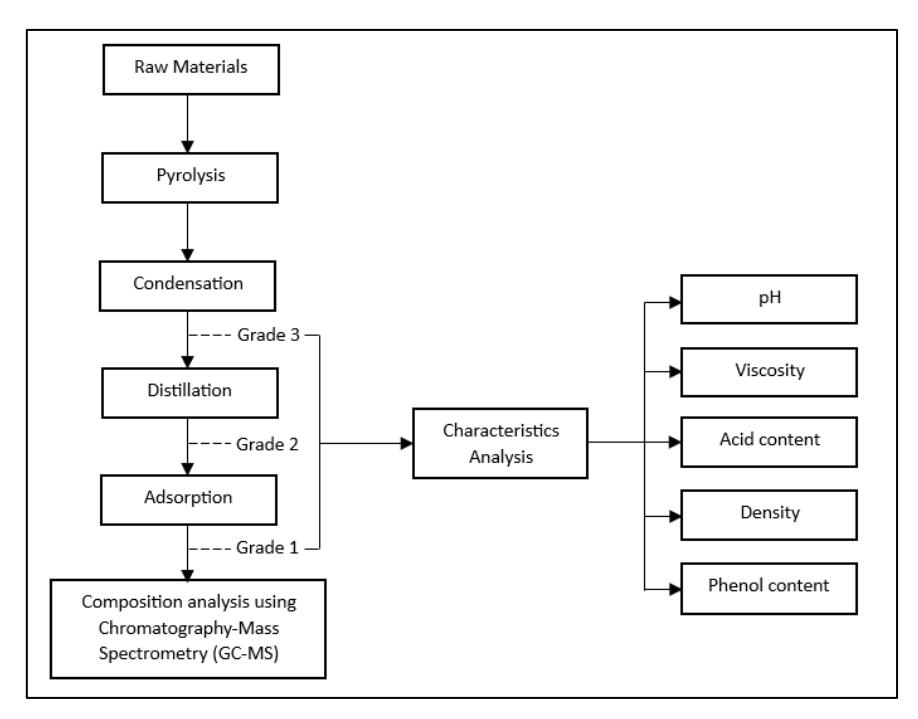
Research methodology.
The research began with the biomass pretreatment stage, which included cleaning, chopping, and drying using an oven for 1 hour at a temperature of 105 ℃. Drying was carried out at this temperature to evaporate the air content in the raw material so that the pyrolysis process could take place more quickly. Each biomass sample, weighing 10 kg, was then introduced into the pyrolysis reactor.
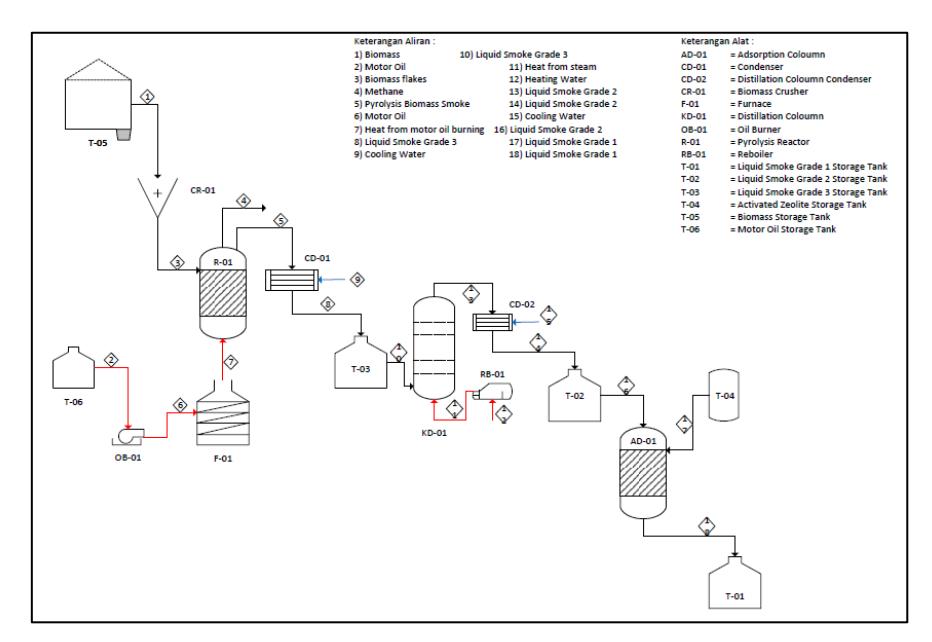
Research flow diagram.
The pyrolysis process took place over 3-4 hours, during which the radiator was periodically flushed. The pyrolysis reactor used was made of stainless steel material with a combustion chamber measuring 50 cm in height and 80 cm in diameter. The reactor door, located on one side, measured (15 x 15) cm. At the top of the reactor, there was a 304 stainless steel pipe measuring ¾ inch in diameter and 300 mm in length, which was connected to a radiator. The material was selected based on the ASTM A312 standards for pipe construction materials. The pipe was connected to the upper inlet side of the radiator, which had dimensions of 800 mm in height, 100 mm in thickness, 700 mm in width, and a diameter of ¾ inches [13]. The condenser was periodically flushed with water as a coolant to prevent overheating, which could decrease the converted liquid smoke. The combustion flame was ignited using firewood, oil, and paraffin. The pyrolysis-produced smoke was condensed in the radiator, resulting in grade-3 liquid smoke. The next process involved purification, which consisted of distillation and adsorption processes carried out on a laboratory scale.
The grade-3 product was directed into the second purification process, which was distillation using a series of simple distillation apparatuses. The liquid smoke was placed in a distillation flask, heated to a temperature of 100-102 °C, and with the assistance of cold water, condensation occurred. The distillation temperature was determined based on the boiling point of the compounds contained in liquid smoke, where the boiling point of carbonyls, which are impurities, is below 100 °C, while the boiling point of phenol and acid compounds is above 100 °C [ 13]. The resulting distillate was in the form of grade-2 liquid smoke. The liquid smoke from the distillation was then directed to the adsorption process using natural zeolite as adsorbent, which is a hydrated aluminosilicate framework with pores packed with cations of alkali, alkaline, and earth metals. The mass of zeolite adsorbent used for every 100 mL of liquid smoke was 2 grams. The adsorption process took place at a temperature of 60 °C for 1 hour with the assistance of a magnetic stirrer. The product of the adsorption process was then filtered to separate the liquid smoke from the zeolite adsorbent. The separated liquid smoke wasa grade-1 liquid smoke product with a higher-quality level compared to the other grades.
The liquid smoke products for all grade variations: (a) palm shell grade 3; (b) coconut shell grade 3; (c) palm shell grade 2; (d) coconut shell grade 2; (e) palm shell grade 1; (f) coconut shell grade 1.
Characteristic analyses were conducted on all liquid smoke samples for each grade. These analyses were: measuring pH value, density, viscosity, phenol content, and acidity. Gas chromatography-mass spectrometry (GC-MS) analysis was also performed to explore the potential of the grade-1 liquid smoke for use in other derivative products, such as bio-disinfectants.
pH Analysis
The pH analysis was conducted using a pH meter device, where a sample of each variation of the liquid smoke was prepared beforehand. The pH meter electrode was immersed in distilled water and cleaned with tissue, then inserted into the pH 4 and pH 7 solutions until the monitor displayed 'ready' and then the CFM button was pressed. This process was performed to calibrate the pH meter for accurate pH measurement. The electrode was then inserted into the liquid smoke sample to obtain the pH value. This step was repeated for each liquid smoke sample.
Viscosity Analysis
The viscosity analysis was conducted using a cleaned and dried Ostwald viscometer. The liquid smoke samples were transferred into the Ostwald viscometer using a dropper pipette. The suction bulb was then attached to the opening of the Ostwald viscometer to draw the liquid smoke sample up to the mark on the upper capillary
Analysis of Liquid Smoke Grade Characteristics from Coconut Shells and Palm Kernel Shell Waste 549 DOI: 10.5614/j.eng.technol.sci.2024.56.4.10
tube. A stopwatch was started as the liquid smoke sample flowed down after reducing the suction from the suction bulb gradually and it was stopped when the liquid smoke sample passed the mark on the lower capillary tube. The measurement was repeated three times for each sample, and the average value was recorded.
\[\eta d = K \times t \tag{1}\]
\[gk = gd \times \rho\] (2)
ŋd = dynamic viscosity (cm2 /s) ŋk = kinematic viscosity (gr/cm.s)
Density Analysis
Density analysis was conducted using a sterilized pycnometer. A 10-mL sample of liquid smoke was poured into the pycnometer until it exceeded the calibration mark. The pycnometer was then sealed until air bubbles appeared and the outer surface of the pycnometer was dried with a tissue before being weighed. The density of the liquid smoke was calculated using Eq. (3):
\[\rho = \frac{W2 - W1}{V} \tag{3}\]
W1 = weight of the empty pycnometer (gram) W2 = weight of the pycnometer + sample (gram)
Acetic Acid Analysis
Acetic acid analysis was conducted using the titration method, where each sample of liquid smoke, 0.2 mL in volume, was diluted with distilled water to reach a volume of 100 mL before adding 3 drops of PP indicator. The solution was then titrated using 0.1 N of NaOH standard solution. The volume of NaOH used during titration was recorded. The acid content is expressed as a percentage by weight of acetic acid [14]:
Acid Value (mg/ml) = \[\frac{V_{NaOH} \times N \times BM}{V_{LS}}\] (4)
N = normality NaOH = 0.1 N
Acetic acid molecular mass = 60 gr/mol
Phenol Analysis
The phenol analysis began with diluting 1 mL of liquid smoke to a volume of 1000 mL. The 1 mL of liquid smoke was weighed and diluted to a volume of 1,000 ml. Then, 1 ml of the liquid smoke solution was taken and mixed with 5 mL of alkaline NaCO3 solution and left for 10 minutes at room temperature. Folin Ciocalteu reagent at 0.5 ml was added to the liquid smoke solution. The solution was then homogenized with a vortex shaker. The absorbance of the solution was to stand for up to 30 minutes at a wavelength of 750 nm and read against a blank solution. The concentration of phenolate in the sample solution was calculated based on the standard curve obtained from pure phenol.
Result and Discussion
The pyrolysis process involves heating without the involvement of oxygen, so the equipment used in the pyrolysis process was designed to operate under conditions that facilitate this process. This was applied to the pyrolysis reactor, which contained biomass raw materials and served as the site for the reaction. The reactor was tightly sealed to prevent the oxygen entering the system.
The biomass raw materials, coconut shells and palm kernel shells, underwent pre-treatment adjusted to their physical characteristics. The coconut shells were cleaned of their husk and then uniformly chopped into small pieces. The palm kernel shells were obtained from a humid environment, requiring drying using the same method as used for the coconut shells, i.e., drying in an oven for 1 hour at a temperature of 105 °C. The drying process was carried out to reduce the water content, expediting the pyrolysis process. The particle size of the raw material has an impact on the volume of the resulting liquid smoke, where the quantity of liquid smoke
increases with smaller particle sizes of the raw material [15]. This was evidenced by the research results, showing that the palm kernel shell pyrolysis liquid smoke had a larger volume compared to the coconut shell pyrolysis liquid smoke, namely 2,795 mL.
The grade-3 liquid smoke had a dark brown color with a strong smoky odor. This grade-3 liquid smoke was purified through a distillation process to separate tar and carcinogenic (toxic) compounds from the liquid smoke, resulting in a higher-grade liquid smoke, namely grade 2. Distillation, which took place at a temperature of 100 °C, was also aimed at evaporating the water content in the liquid smoke. The distilled liquid smoke (grade 2) had a pale-yellow color with a less intense aroma. Grade-1 liquid smoke resulting from adsorption tends to have a pale-yellow color but is somewhat cloudy due to the use of zeolite. Grade-1 liquid smoke has the highest clarity compared to the other grades. Liquid smoke contains phenolic compounds, carbonyl compounds, and acidic compounds that possess antimicrobial and antioxidant properties. This type of liquid smoke is often used as a food preservative for meatballs, noodles, sausages, tofu, and more [16]. Liquid smoke has been widely used as a natural food preservative due to its ability to inhibit bacterial growth. It is also utilized as an environmentally safe organic pesticide [17]. The quality parameters of liquid smoke refer to the quality standards for liquid smoke in Japan, established by the Japanese Liquid Smoke Association, as shown in Table 1. This is because there is no established Indonesian National Standard (SNI) regarding the quality parameters of liquid smoke yet.
| Japanese Liquid Smoke | Liquid Smoke Sample | |||
|---|---|---|---|---|
| Parameter | Raw | Distillate | Raw | Distillate |
| pH Value | 1.5-3.7 | 1.5-3.7 | 2.67-3.74 | 2.36-2.94 |
| Density | >1.005 | >1.001 | 1.01231-1.02976 | 1.00016-1.00700 |
| Yellow | No color | |||
| Color | Brown | Pale yellow | Reddish-brown | Pale yellow |
| Reddish-brown | Brown | |||
| Transparency | Transparent | Transparent | Transparent | Transparent |
| Insoluble contents | No | No | No | No |
Table 1 Liquid smoke characteristics.
The characteristics of the produced liquid smoke are influenced by the type of biomass raw material used. The emergence of differences in liquid smoke characteristics caused by the type of raw material occurs due to differences in the number of chemical components composing the biomass, such as cellulose, hemicellulose, and lignin for each type of raw material. The composition of chemical components in biomass affects the characteristics of the liquid smoke. Decomposed hemicellulose will convert into acetic acid compounds, while the lignin content in biomass will degrade into phenolic compounds. The decomposition of lignin during pyrolysis produces multi-functional phenolic distributions at lower concentrations [18]. Therefore, in this study, the type of biomass raw material was a research variable. The research results show that the percentage area of phenol for coconut shell pyrolysis liquid smoke was 87.23%, while for the palm kernel shell liquid smoke it was 75,48%, proving that the type of biomass used affects the resulting liquid smoke.
Acidity Level (pH)
The acidity level (pH) is a crucial parameter in determining the quality of liquid smoke products, where the lower the pH value of the liquid smoke, the higher its quality. A low pH of liquid smoke indicates good quality in terms of its use as an antibacterial substance [19]. Figure 4 shows the pH values of the liquid smoke samples from coconut shells and palm kernel shells for each grade. Based on the pH analysis results, the liquid smoke from coconut shells had a lower average pH value compared to the liquid smoke from palm kernel shells, with average pH values of 2.48 and 3.18, respectively.
Going from grade 3 to grade 2 means an increase in acidity resulting from the purification treatment. The pH values of the liquid smoke from coconut shells and palm kernel shells tended to decrease respectively from 2.67 and 3.74 in grade 3 to 2.42 and 2.86 in grade 2, indicating an increase in acidity with the purification treatment applied. Grade-2 liquid smoke is obtained through a distillation process that removes impurities from grade-3 samples, resulting in concentrations of phenol and acetic acid in the liquid smoke [20]. This allows the liquid smoke to prevent microbial growth.
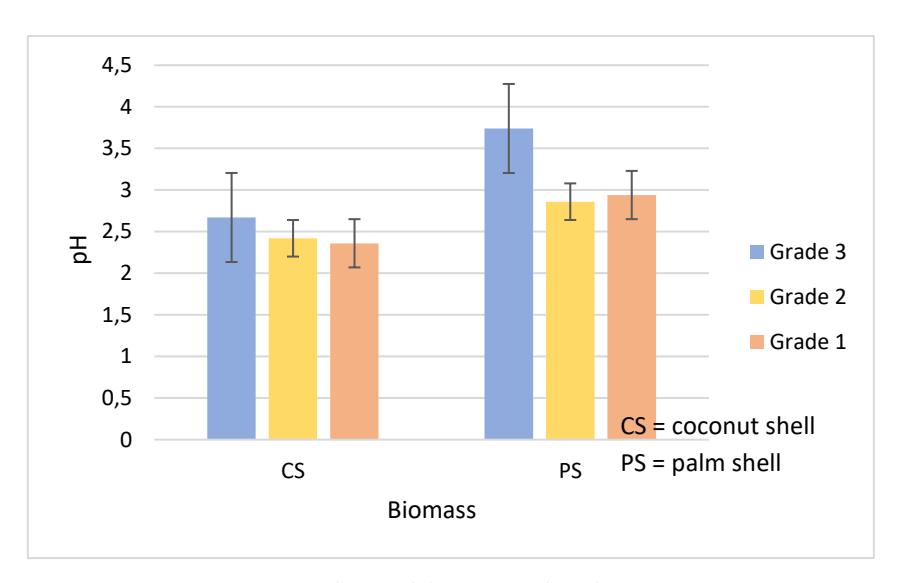
pH values with biomass and grade variations.
The pH of the liquid smoke from coconut shells continued to decrease in grade 1 due to the adsorption process using zeolite adsorbent. However, a different trend occurred in the grade-1 samples of the liquid smoke from palm kernel shells, with a slight increase in pH. This increase in pH aligns with the decrease in acidity of the sample, as some acids in the grade-2 liquid smoke were absorbed by the zeolite's pores, reducing the acid content and increasing the pH value. This phenomenon was also observed in a previous study, where the pH value of liquid smoke from palm kernel shells increased from grade 2 to grade 1 [12]. All liquid smoke samples met the pH standard for liquid smoke according to Yatagai. The pH was in the range of 1.50-3.70 for all samples, except for the grade-3 liquid smoke from palm kernel shells with a pH of 3.74, which is 0.04 above the standard threshold. This is considered fairly normal, because grade 3 itself is purely the result of pyrolysis without further treatment.
Density
The density value indicates the amounts of compounds present in the liquid smoke samples, such as phenols, acids, carbonyls, and tar, which are byproducts of the pyrolysis process [21]. The results of the density analysis are shown in Figure 5. In the graph, it can be seen that the density values for both biomass variations follow a similar pattern, decreasing from grade 3 to grade 2 and then increasing again in grade 1.
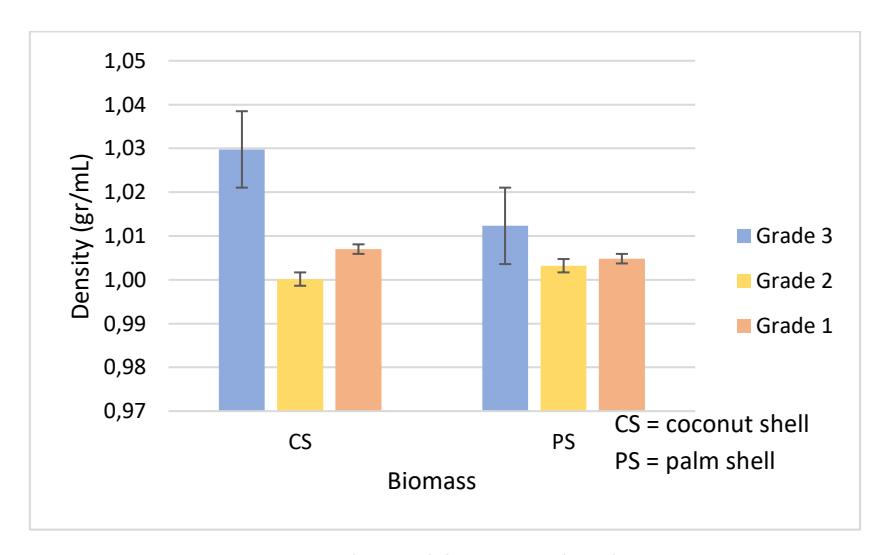
Density values with biomass and grade variations.
The decrease in density for grade 2 was due to the distillation process, which removes impurities that could potentially increase the density, such as tar compounds or other particles from residual pyrolysis. This is evident from the higher density of the grade-3 liquid smoke compared to the grade-2 and grade-1 liquid smoke. Distillation was performed at a temperature of 100 ℃ to remove tar and carbonyl compounds with low boiling points (≤100 ℃). The adsorption process caused an increase in the density of the grade-1 samples, where the purpose of this process is to absorb water in the liquid smoke at a constant volume, increasing the concentration of phenolic compounds in the liquid smoke.
The average density values for the liquid smoke from coconut shells and palm kernel shells were 1.0123 and 1.00678, respectively. According to Yatagai, the Japanese liquid smoke standard for grade 3 is >1.005, while for grade 2 and grade 1 it is >1.001 [22]. All liquid smoke samples from grade 3 and grade 1 met these standards. However, for the grade-2 liquid smoke, only the sample from palm kernel shells with a density of 1.00321 qualified.
Viscosity
Viscosity indicates the level of fluid thickness, representing the magnitude of friction that occurs within the fluid, so the higher the viscosity value, the more particles are dissolved. Figure 6 shows the results of the kinematic viscosity analysis for each liquid smoke sample. The viscosity of the liquid smoke from coconut shells and palm kernel shells followed the same pattern for each grade, aligning with its density values.
The average viscosity value for the liquid smoke samples from coconut shells was 4.427 cSt, and for the liquid smoke from palm kernel shells it was 4.928 cSt. In the graph, it can be seen that the grade-3 liquid smoke had a higher viscosity compared to grade 2 and grade 1, indicating a higher level of thickness. This high viscosity is due to grade-3 liquid smoke being classified as unpurified liquid smoke, containing a significant amount of water and impurities.
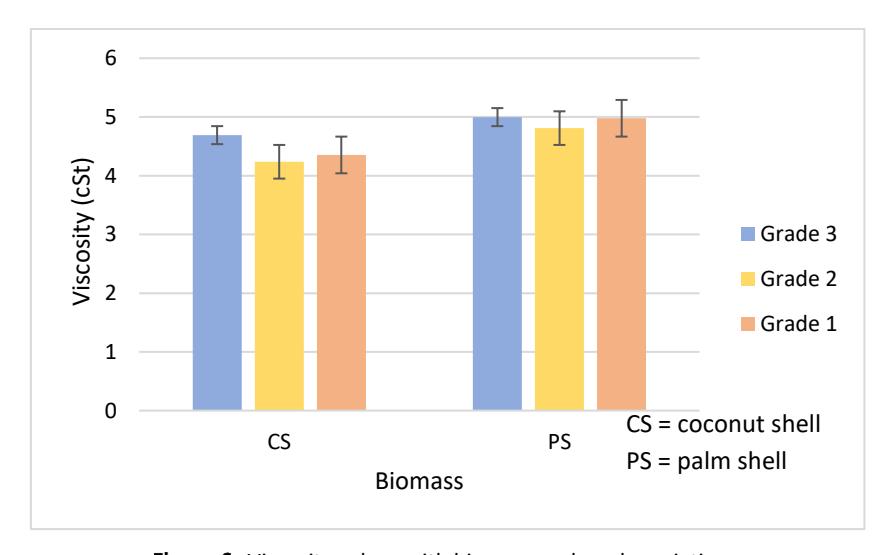
Viscosity values with biomass and grade variations.
The viscosity decreased in grade 2 due to the reduction in water content caused by evaporation during the distillation process at 100 ℃. The viscosity of purified liquid smoke derived from rubber wood ranges from 0.9159 to 1.3083 cSt [5]. The liquid smoke produced through a combination of distillation and adsorption experiences an increase in viscosity due to the reduction of impurities contained within it. This distillation temperature also weakens the intermolecular bonds in the compounds in the liquid smoke. The viscosity increased again in grade 1 after the adsorption process. Adsorption causes the liquid smoke to become denser because the concentration of phenolic compounds and acids in the liquid smoke also increases. This indicates that grade-1 liquid smoke has the best quality due to its high content of phenolic compounds and acids, which can work synergistically in preventing microbial growth.
Acid Content
The acidic compound analyzed in liquid smoke is acetic acid, as this acid is effective as an antimicrobial and antibacterial agent, inhibiting the growth of bacteria and fungi by preventing spore formation. Acetic acid is formed through the pyrolysis process of cellulose, accompanied by the formation of phenolic compounds as a result of lignin pyrolysis. The results of the acid content analysis using titration on liquid smoke samples are shown in Figure 7.
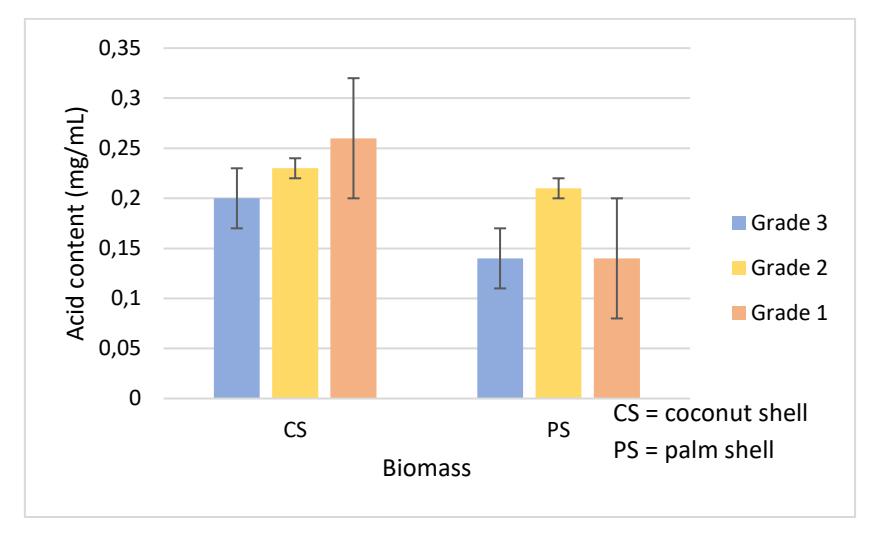
Acid values with biomass and grade variations
The acid content in the liquid smoke from coconut shells tended to increase from grade 3 to grade 1, with values of 0.2, 0.23, and 0.26 mg/mL, respectively. In contrast, the acid content in the liquid smoke from palm kernel shells was quite fluctuating, with an increase in acid value in grade 2 and a subsequent decrease in grade 1. This is influenced by the distillation and adsorption processes as purification steps for liquid smoke. The acid content for both the liquid smoke samples aligned with the pH analysis results. The higher the acid content, the lower the pH of the liquid smoke. The liquid smoke from coconut shells had a higher average acid content compared to the liquid smoke from palm kernel shells, specifically 0.23 mg/mL.
Phenol Content
The phenol content in the liquid smoke samples was tested using UV-Vis spectrophotometry. The presence of phenol in liquid smoke is beneficial as an antioxidant compound due to its antibacterial and antimicrobial characteristics. Phenol is one of the essential compounds in liquid smoke, along with acids, produced from the decomposition of lignin during pyrolysis. Derivatives of phenol commonly found in liquid smoke are syringol and guaiacol. The phenol content is directly proportional to the acid value of the liquid smoke, meaning the higher the phenol content, the more acidic the liquid smoke [23]. The results of the total phenol analysis on the liquid smoke samples are shown in Figure 8.
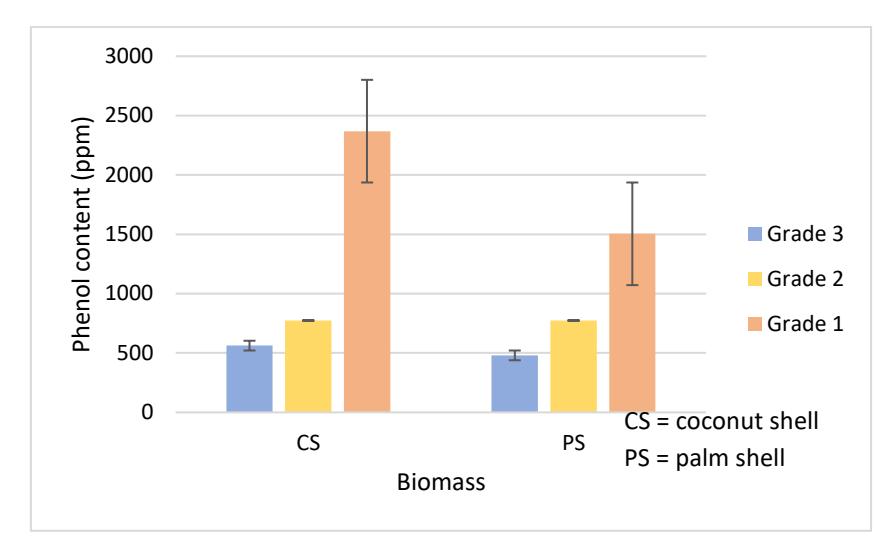
Phenol values with biomass and grade variations.
In the graph above, the liquid smoke from coconut shells and the liquid smoke from palm kernel shells consistently show an increase in phenol values with an increase in grade. The average phenol value for liquid smoke from coconut shells was 1,234.96 ppm, while for the liquid smoke from palm kernel shells, it was 919.37 ppm.
The phenol content depends on the acidity of the liquid smoke, where the higher the phenol content, the more acidic the liquid smoke becomes, leading to a decrease in pH. The increase in phenol content from grade 3 to grade 2 is due to the distillation process, which separates impurities in the liquid smoke, thus increasing the concentration of phenol. This is supported by the pH values of the liquid smoke for both raw materials decreasing from grade 3 to grade 2, as well as the increased acidity within this grade range [20]. Phenol content in liquid smoke does not have specific standards, but it generally falls within the range of 0.2 to 2.9% [24]. The adsorption process caused a significant increase in the phenol values of both liquid smoke samples, where remaining impurities were reabsorbed in the same volume, increasing the phenol yield and producing grade-1 liquid smoke without toxic properties. The phenol content in the liquid smoke was also analyzed based on the gas chromatography-mass spectrometry (GC-MS) results, where the percentage area of phenol for the grade-1 liquid smoke from coconut shells was 87.23% and for the grade-1 liquid smoke from palm kernel shells it was 75.48%.
Gas Chromatography-Mass Spectrometry
The improved quality of the grade-1 liquid smoke was measured by the components it contained. This analysis was conducted using gas chromatography-mass spectrometry (GC-MS) for each grade-1 liquid smoke sample. The testing results using GC-MS consisted of chromatogram images and a list of organic compounds for each sample [25]. Figure 9 shows the analysis results of the liquid smoke from coconut shells based on the dominant retention time, while the components of the liquid smoke are listed in Table 2.
| Table 2 | Components of grade-1 liquid smoke from coconut shells based on GC-MS analysis |
|---|
| Retention time | Compound Name | %Area | |
|---|---|---|---|
| Phenol | |||
| 3.86 | Phosphonic acid, (p-hydroxyphenyl)- | 87.23 | |
| Carbamic acid, phenyl ester | |||
| Phenol, 2-methoxy-mequinol | |||
| 5.45 | Formic acid, 2-methoxyphenyl ester | 12.77 | |
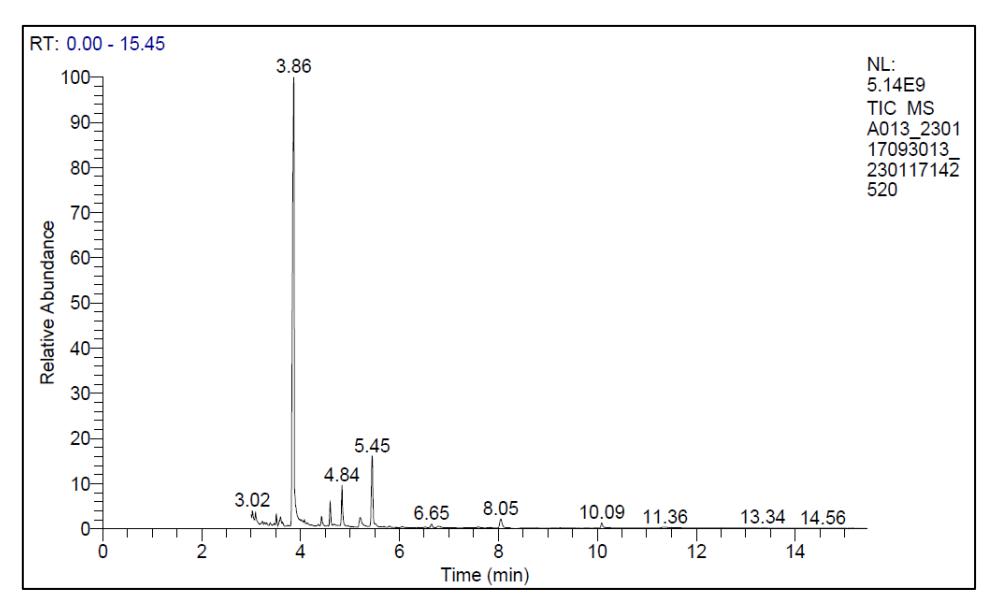
The graph of the GC-MS analysis results of the grade-1 liquid smoke from coconut shells.
The main components of liquid smoke are acid, phenol, and carbonyl. These compounds are produced from the thermal decomposition of hemicellulose, lignin, and cellulose. High-quality liquid smoke is recognized by its composition, primarily consisting of acid and phenol compounds [25]. The acid compounds identified in the coconut shell liquid smoke based on the GC-MS analysis were carbamic acid and formic acid. These compounds act as antibacterial agents that can eliminate disease-causing bacteria on the skin, such as M. tuberculosis. Formic acid can also eradicate bacteria such as Campylobacter and Clostridium perfringens, which are among the most common causes of bacterial gastroenteritis in humans [26, 27]. Additionally, phenol and its derivatives were also present in the coconut shell liquid smoke, including simple phenol, 2-methoxy-mequinol, and 2 methoxyphenyl ester.
The GC-MS analysis results for the liquid smoke from palm kernel shells are shown in Figure 10, where the graph displays only the highest time range during the analysis. The analysis graph of the liquid smoke from palm kernel shells has a more varied time range compared to the analysis results for coconut shell liquid smoke. This variation is attributed to the presence of simple phenols, which do not dominate the GC-MS analysis based on relative abundance over the time range.
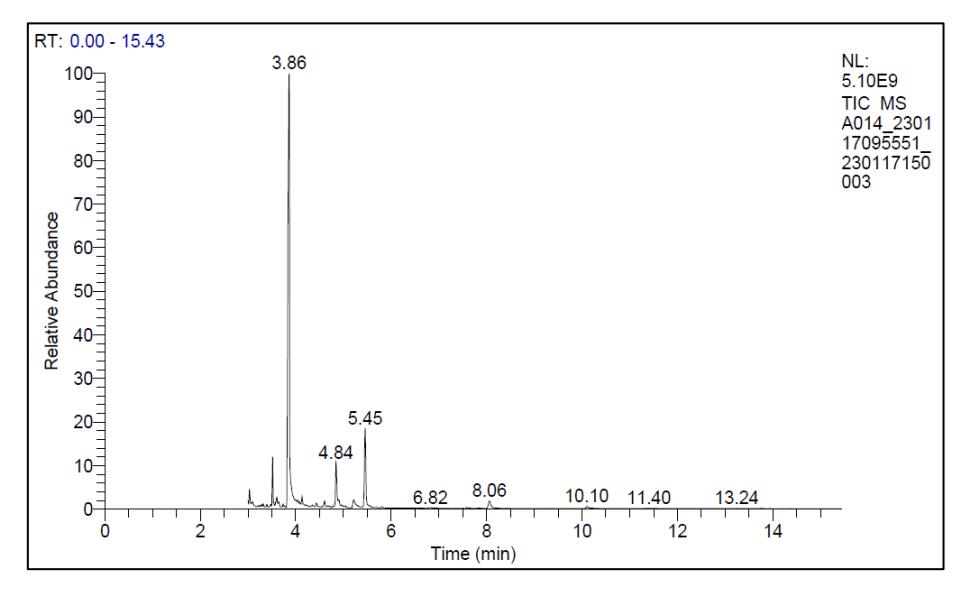
Graph of the GC-MS analysis results of the grade-1 palm kernel shell liquid smoke.
Based on the GC-MS analysis in Table 3, the liquid smoke from palm kernel shells contained acid compounds in the form of phosphonic acid and formic acid. Both of these acid compounds play a crucial role as antimicrobial agents. Pathogenic microbes like Escherichia coli and Pseudomonas aeruginosa can be inhibited in their growth mechanisms by phosphonic acid and formic acid, which attack the cell walls of these microbes [28]. E. coli bacteria possess approximately 300 adhesive organelles, commonly referred to as pili, which are important virulence factors in bacterial adhesion to host tissues, leading to infection in humans [29]. Pseudomonas aeruginosa bacteria itself is a major cause of lung infections in cystic fibrosis patients [30]. In addition to acid compounds, the liquid smoke from palm kernel shells also contained phenol and its derivatives, including simple phenol, phenol 2-methoxy-, phenol 3-methyl, and phenol 2-methyl. The phenol content in the liquid smoke from palm kernel shells was more varied compared to the coconut shell liquid smoke. The research results indicate that phenolic compounds and their derivatives had the highest percentage in both samples of liquid smoke. This is consistent with previous studies, where the oxidation of biomass components such as hemicellulose, cellulose, and lignin yielded phenolic compounds. The higher concentration of phenolic compounds compared to acidic compounds is also influenced by the pyrolysis temperature [31].
| Retention time | Compound Name | % Area |
|---|---|---|
| 2-Furanethanol, á-methoxy-(S)- | ||
| 3.51 | 3-Aminopyrazine 1-oxide | 4.61 |
| Furan, 2-(2-ethoxy-1-methoxyethyl)- | ||
| Phenol | ||
| 3.86 | Phosphonic acid, (p-hydroxyphenyl)- | 75.48 |
| Carbamic acid, phenyl ester | ||
| Phenol, 3-methyl | ||
| 4.86 | Phenol, 2-methyl | 7.48 |
| p-Cresol | ||
| Phenol, 2-methoxy | ||
| 5.45 | Mequinol | 12.42 |
| Formic acid, 2-methoxyphenyl ester |
Table 3 Components of grade-1 palm kernel shell liquid smoke based on GC-MS analysis.
The formic acid compounds present in the liquid smoke from coconut shells and palm kernel shells can kill certain bacteria, such as E. coli, Campylobacter, and Clostridium perfringens. The concentration of coconut shell liquid smoke products above 10% has been proven to have a higher effectiveness in inhibiting E. coli growth [32]. This capability aligns with the analysis results showing the high acidity values of both products, followed by low pH values. This makes liquid smoke products suitable for reuse in various high-quality applications, one of which is as a bio-disinfectant.
Conclusion
All biomass variations and grades of the liquid smoke in this study met the standards of Japanese liquid smoke. The research data obtained varied based on the grade variations of the liquid smoke, following a consistent trend pattern. The density and acidity level (pH) values showed a decreasing pattern, while the viscosity, acid values, and phenol values increased with an increase of the liquid smoke grade. The grade-1 liquid smoke had the best research data values, since it underwent two purification stages, i.e., distillation and adsorption. Based on GC-MS testing of the grade-1 liquid smoke, there were several acid compounds, including phosphonic acid, formic acid, and carbamic acid. These compounds can inhibit the growth and kill microbes such as Escherichia coli, Pseudomonas aeruginosa, Campylobacter, Clostridium perfringens, Mycobacterium tuberculosis, and Helicobacter pylori. The best liquid smoke for each grade, evaluated based on the phenol values as a benchmark for its effectiveness in preventing bacterial growth, was the coconut shell liquid smoke. The viscosity, density, pH, acid values, and phenol test data indicate that all biomass variations of liquid smoke have potential as highquality derivative products.
Acknowledgments
Our thanks go to the Institute for Research and Community Service (LPPM) Sriwijaya University, the Process Engineering Laboratory, Chemical Industry Products, Faculty of Engineering and the Chemical Analysis and Testing Instrumentation Laboratory, Faculty of Mathematics and Natural Sciences, Sriwijaya University for the research and analysis facilities provided so that the research could be completed well. This article was an additional output funded by DIPA of Public Service Agency Faculty of Engineering Universitas Sriwijaya 2023 No. DIPA-023.17.2.677515/2023, on November 30, 2022 in accordance with Rector's Decree Number 0189/UN9.3.1/SK/2023, dated on April 18, 2023.
Compliance with ethics guidelines
The authors declare that they have no conflict of interest or financial conflicts to disclose.
This article does not contain any studies with human or animal subjects performed by any of the authors.