

Introduction
Plastic waste is among the world most concerning issues on the environment, constituting the third-highest waste source globally with increasing trends in accordance to population and consumption (Chen et al., 2021). In a global scale, more than 270 million tons of plastic pollution are produced per annum, at which around 3 % ends up in the ocean (Ritchie, 2018). In Malaysia, the plastic manufacturing industry has one of the fastest paces of expansion with over 1300 plastic manufacturers (Chen et al., 2021). Moreover, the generation and consumption of single-use plastic is a serious issue faced in Malaysia. Geyer et al. estimated that 12000 million metric tonnes of plastic waste will be produced by 2050 with the current trends in plastic consumption (Geyer et al.).
The replacement of wood and glass offers many benefits as plastic is significantly lighter and more durable. Plastic is not affected by humidity or dampness and also helps in cost reduction. However, disposal is a key problem as it cannot be permanently removed from the environment, compared to food and paper wastes which are biodegradable (Chen et al., 2021). Non-biodegradable plastics take decades to break down into small fragments, otherwise known as microplastics. Consequently, plastic wastes accumulate on earth and the landfill space will be decreased, contributing to pollution. Biodegradable plastic is an eco-friendly alternative to petroleum-based ones. Bioplastics are biodegradable materials that are derived from biological sources including sugar cane, cellulose from the plants, potato starch, straw, and cotton (Shamsuddin, 2017). According to European Bioplastics, a bioplastic material is defined when it is either biobased, biodegradable, or features both properties (Ansink et al., 2022). Bioplastics are readily decomposed by microbial enzymes into natural byproducts like carbon dioxide, water, and biomass. (Folino et al., 2020). Biodegradable
2Research Centre for Polymer Technology, National Research and Innovation Agency, Gedung 460 Kawasan Sains dan Teknologi (KST) B.J. Habibie Setu, Tangerang Selatan, Banten, 15314, Indonesia
bioplastics have been known to possess a wide range of properties and the global market is expected to grow about 20% - 25% per annum (Bezirhan & Bilgen, 2015).
Polylactide, or PLA, is a biodegradable polyester that has carved out a key position in the biopolymer market. Its natural properties make it one of the most promising materials for future development. On a technical level, PLA is created in one of two ways: either by polymerizing lactic acid itself or through a method called ring-opening polymerization of lactide (de França et al., 2022). As a biodegradable and biocompatible material, it is classified as a thermoplastic aliphatic polyester. Furthermore, it is derived from renewable, non-fossil resources; specifically, it is produced by fermenting polysaccharides extracted from sources such as corn, potatoes, and sugar beets. (Balla et al., 2021; Dziuba et al., 2021).
Many industries use PLA due to the excellent biocompatibility, hypotoxicity, renewability, and low cost. According to studies, PLA has proven to be safe in contact with food and it is applicable in fresh and short shelf life packaging(Shaikh et al., 2021). However, the slightly poor ductility and slower degradation rate are significant drawbacks (Naser et al., 2021). Modification of PLA can be carried out by coating with organic solvents, blending polymers, and adding nanoparticles such as fillers (Li et al., 2023). Among these nanofillers, the organic montmorillonite (MMT) and nano calcium carbonate (CaCO3) have been widely used. Nano CaCO3 is more advantageous due to the lower price and better toughening effect (Gomez-Gamez et al., 2020; Han et al., 2024; Leluk et al., 2020). CaCO3 prepared from eggshells have been added into PLA as bio-fillers to enhance mechanical properties, degradation behaviour, processability, and crystallinity (Cree & Soleimani, 2023). The toughness after adding CaCO3 will be improved without the loss in stiffness and the biodegradation rate. In this study, eggshell waste was used as a source of CaCO3 accounting for 94-97% of components with the remaining 3-4.5% being organic matter (Owuamanam & Cree, 2020). The utilization of ESP as filler in polymer matrix has been done for PLA, with low loading of ESP showed significant increase for compressive strength and modulus but not much effect on tensile and flexural strength, while for LDPE, ESP can retain good rheological properties (Orisekeh et al., 2025; Perera et al., 2025). While other study by Sharma et al. shows the increasing of thermal stability and degradation (Sharma & Kumar, 2024). A study by Bijarimi et al. exhibits the increasing of tensile strength to 5.37 MPa (Bijarimi et al., 2023). Hence, based on these studies, the improvement on tensile strength for the addition of ESP in PLA is still a challenge and needs further studies. Chicken eggshells in Malaysia are usually disposed of from the food industry or household as municipal solid waste. Therefore, the full use of chicken eggshell waste as filler in the modification of PLA to produce biodegradable composite can significantly reduce the waste in Malaysia.
Experimental Methods
Materials
The materials used include chicken eggs purchased from a local supermarket and separated from egg whites and yolks. PLA in form of pellets were purchased from NatureWorks (USA), chloroform (purity 99.8%) was acquired from Merck (USA), and deionized (DI) water (18.2 MΩ, PureLab Flex) was used as solvents for sample preparation.
Preparation of Eggshell Powder (ESP)
Chicken eggshells were rinsed with water to clean off the dirt from the surface 2-3 times followed by drying in an oven at 110°C for 2 hours. The dried eggshells were pulverized, then the resulting fine powder was sieved through an 80 micron sieve shaker and kept in a desiccator to control the humidity before use.
Preparation of Composite Film
The PLA/ESP composite film was prepared by first dissolving 5wt% of PLA pellets in chloroform with continuous stirring for 60 minutes at ambient temperature. ESP powder was mixed in the prepared PLA-chloroform under vigorous mixing for 60 minutes. The levels of ESP in the PLA-chloroform solution were 5, 10, and 20 by wt% (Table 1). The resulting solution was thinly cast into a clean petri dish and the chloroform was allowed to evaporate under normal conditions. The obtained film was further dried in the oven at a temperature of 30°C for 48 hours.
Table 1 Composition of PLA and ESP in sample.
| Sample | PLA composition (wt%) | ESP composition (wt%) |
|---|---|---|
| PLA/ESP-0 wt% | 5 | 0 |
| PLA/ESP-5 wt% | 5 | 5 |
| PLA/ESP-10 wt% | 5 | 10 |
| PLA/ESP-20 wt% | 5 | 20 |
Characterization of PLA/ESP Composite Film
The resulting composite film with varying content of ESP powder was analyzed using Fourier Transform Infrared (FTIR) Spectroscopy (Perkin Elmer, USA) to identify the effect of ESP addition into the PLA matrix on the functional groups from 500 to 4000 cm-1 . Subsequently, the surface morphology was examined by a Field-Emission Scanning Electron Microscope (FESEM) (Zeiss Supra 55 VP, Germany) with energy dispersive X-ray (EDX) analysis. The crystalline type of composite was determined by X-ray diffraction (Bruker D8 Advance, USA) X'Pert3 Powder and Empyrean, while the PANalytical system used Cu Kα irradiation (λ = 1.54), in a range of (diffraction angles (2θ)) from 10 to 80ᵒ.
Physical Properties Characterization
The effect of the ESP filler on the physical properties of the composite was evaluated through tensile testing. Test specimens were prepared in a dumbbell shape using a die-cutter, in accordance with the ASTM D638 Type IV standard. The thickness of each specimen was measured using a thickness gauge prior to analysis. A Universal Testing Machine (Instron, USA) was then used to determine the tensile strength, Young's modulus, and breaking elongation. The tests were conducted at a constant crosshead speed of 5 mm/min until specimen rupture.
Water Absorption Test
The samples with a dimension of 30 × 35 mm2 were prepared and placed into the water for a duration of up to 3 weeks. During water absorption, samples were taken out and weighed at different intervals of 1, 2, and 3 weeks. The water absorption rate was calculated for each sample using Eq. (1):
Water Absorption (%)= \[\frac{w_t - w_o}{w_o} \times 100\%\] (1)
Soil Burial Test
Composite samples were cut into 25 ×35 mm pieces and buried into a plastic container with soil at a depth of 3 cm. The container was placed within an environmental enclosure maintained at ambient temperature (approximately 28°C). The relative humidity was kept within a 40–50% range by periodically misting the enclosure with distilled water. To assess degradation, samples were analyzed every 7 days over a 3-week period. The analysis involved carefully excavating the samples from the soil, cleaning their surfaces with distilled water, and then drying them in an oven at 30°C for 24 hours before their final mass was recorded. The weight lost over time was determined using Eq. (2):
Weight loss (%)= \[\frac{w_i - w_t}{w_t}\] (2)
where wi is the dry weight of the sample before soil burial, and wt is the dry weight of the sample after soil burial at time (t).
Results
Pure PLA film showed a transparent property and a smooth surface (Figure 1). After ESP was introduced, the transparency of PLA composite film decreased with increasing loadings. For the 5 wt% ESP, dispersion did not fully occupy composite film. A more distinct difference was observed when the ESP loading increased to 10 wt% where the transparency of composite film turned slightly translucent due to even distribution. At 20 wt%, composite film obtained an opaque property with ESP being evenly distributed. The roughness of composite film increased with higher loadings due to some agglomerations of particles in the casting solution.
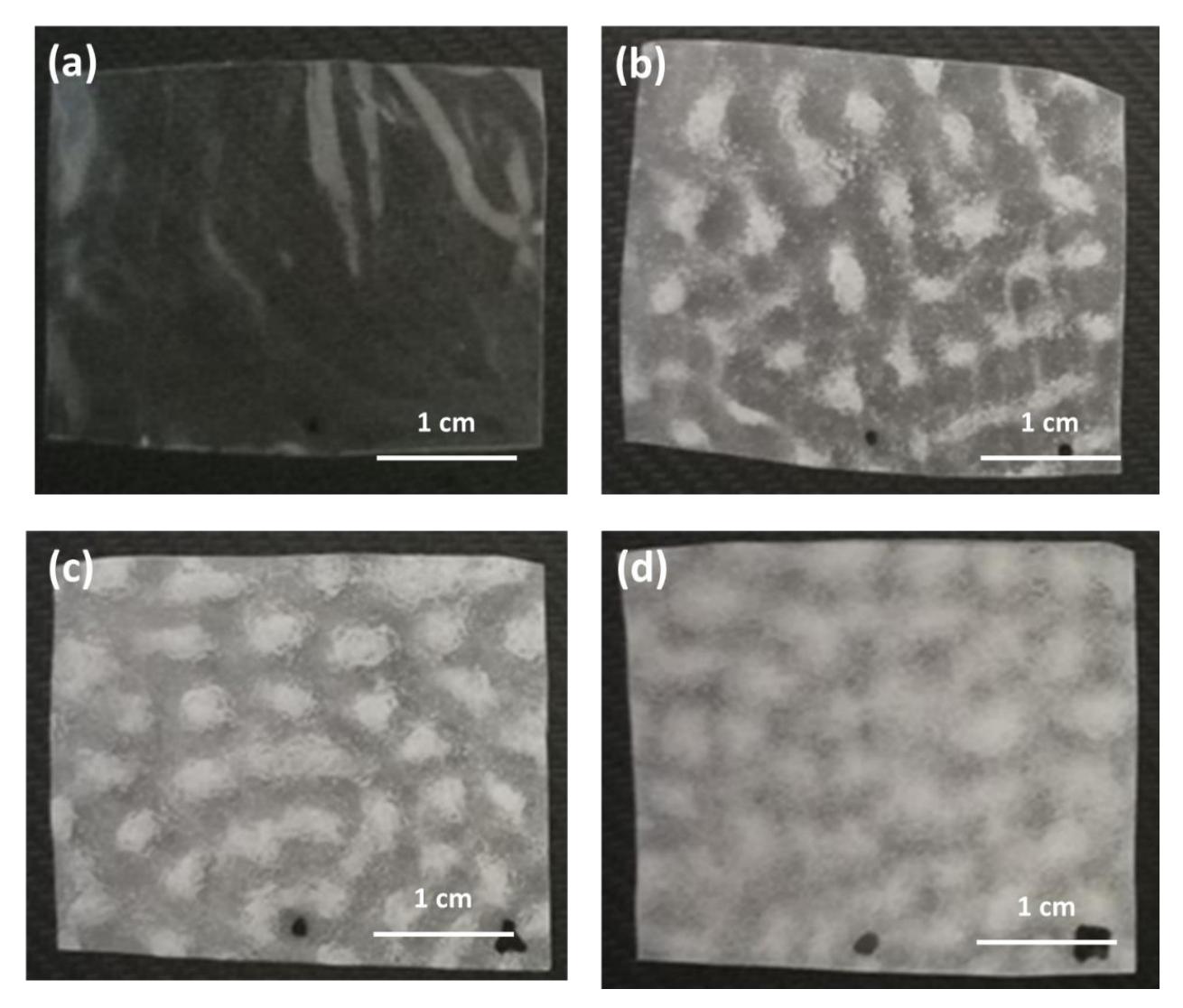
Figure 1 Morphology of composite film of a) 0 wt%, b) 5 wt%, c) 10 wt%, d) 20 wt% ESP in PLA.
In the morphology of PLA/ESP-10wt%, ESP was observed in cross-section orientation to study the detailed morphological structure of PLA/ESP nanocomposite (Figure 2). The spot with higher dispersion of ESP nanoparticles was selected and observed. Based on the observation, the surface of the film has a rough surface and appeared with white irregular surfaces due to the presence of nanoparticles. With higher magnification power, the roughness of the surface was clearly observed. The EDX result (Figure 2 (e) and (f) shows the existence of calcium, carbon, and oxygen as building blocks of CaCO<sub>3</sub>. However, there is appearance of Cl that can be caused by washing of eggs with chlorine solution to decrease the microbial contamination (Reddyvari et al., 2025).
Figure 3 shows the FTIR spectra, with small peaks observed in the wavenumber range of 3001-2948 cm<sup>-1</sup>, indicating C-H stretching. A sharp absorption peak at 1753 cm<sup>-1</sup> was attributed to C=O stretching, representing the carboxylic acid functional group (Gbadeyan et al., 2022). However, the peak of the carbonyl group (C=O) at 1753 cm<sup>-1</sup> was slightly shorter for PLA composite with filler loading of 20wt% compared to other composite film (Aframehr et al., 2017). This suggests an interaction between the carbonyl groups and CaCO<sub>3</sub> through hydrogen bonding. In addition, broad and intense peaks were found at 1171 cm<sup>-1</sup>, 1078 cm<sup>-1</sup>, 1039 cm<sup>-1</sup>, and 869 cm<sup>-1</sup> attributed to the C-O asymmetric, O-C-O out of plane, and O-C-O in-plane bending, showing the presence of carbonate group (Gbadeyan et al., 2022). The peak shown at 869 cm<sup>-1</sup> was more intense with increasing CaCO<sub>3</sub> loading (Ding et al., 2023).
Based on the XRD diffraction pattern obtained, \(CaCO_3\) powder was well crystallized and showed several diffraction peaks at 20 value (Figure 4(a)) including 23.2, 29.7, 36.3, 39.6, 43.4, 47.7, 48.7, 57.7, and 60.9° assigned to crystal planes of (012), (104), (110), (113), (202), (018), (116), (122) and (214) respectively (Lanzón et al., 2023). These peaks correspond to calcite phase of rhombohedral \(CaCO_3\) with JCPDS pattern of 01-085-0849 (Lanzón et al., 2023; Roy et al., 2019). The prominent peak was shown at 29.7° (Figure 4). This proves that \(CaCO_3\) is present in ESP and can be used in the fabrication of PLA film as biofillers.
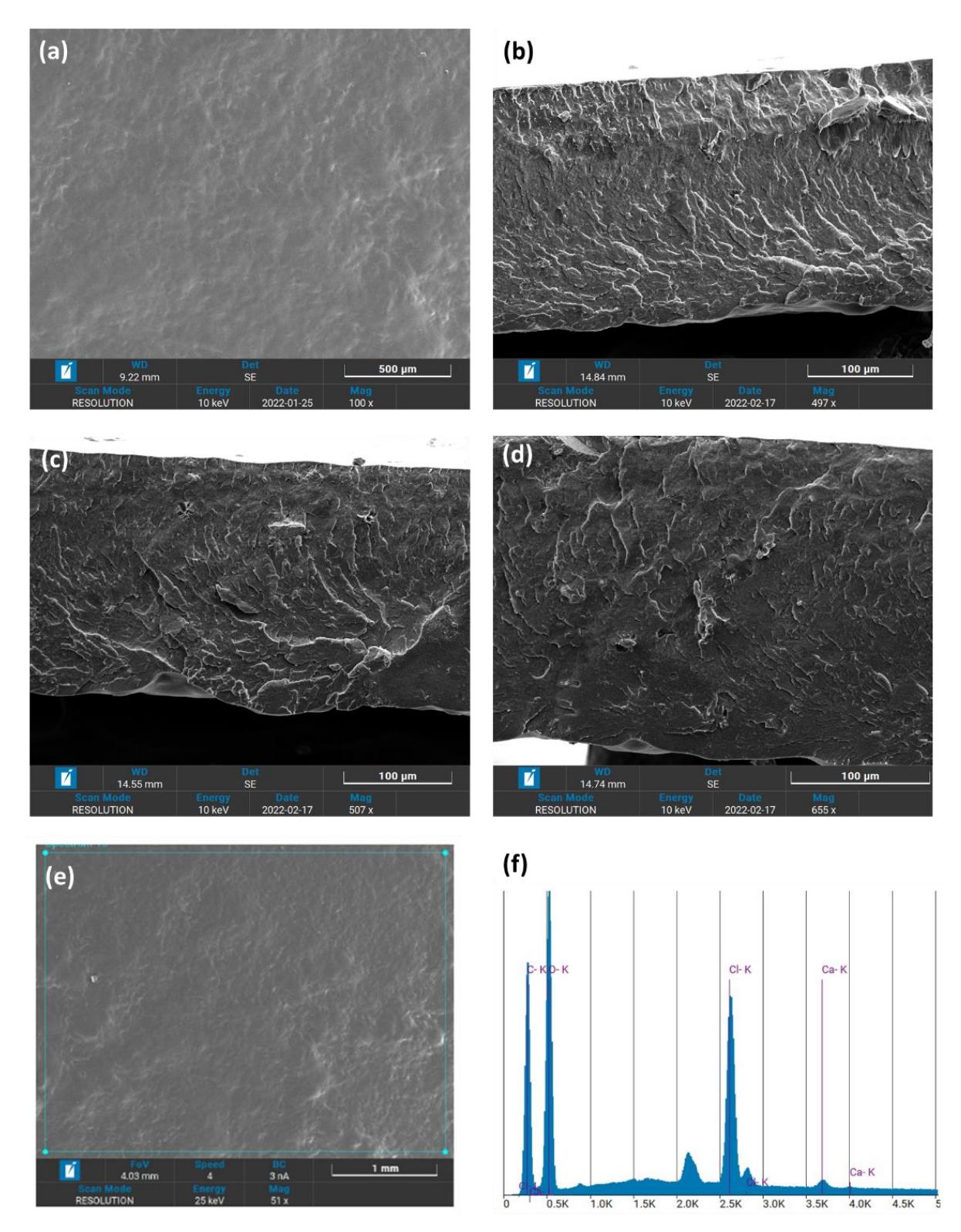
FESEM images of a) top view PLA/ESP-10 wt%, b) cross-section PLA/ESP-10 wt%, c) PLA/ESP-5 wt%, d) PLA/ESP-20 wt%, e) EDX analysis area, and f) EDX result.
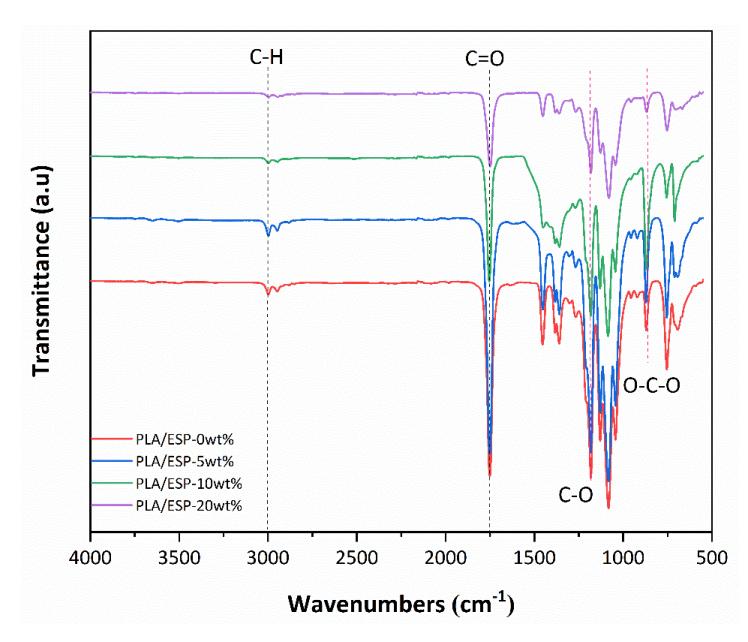
FTIR spectra of composite PLA/ESP. ---- line shows presence of carbonate in CaCO3.
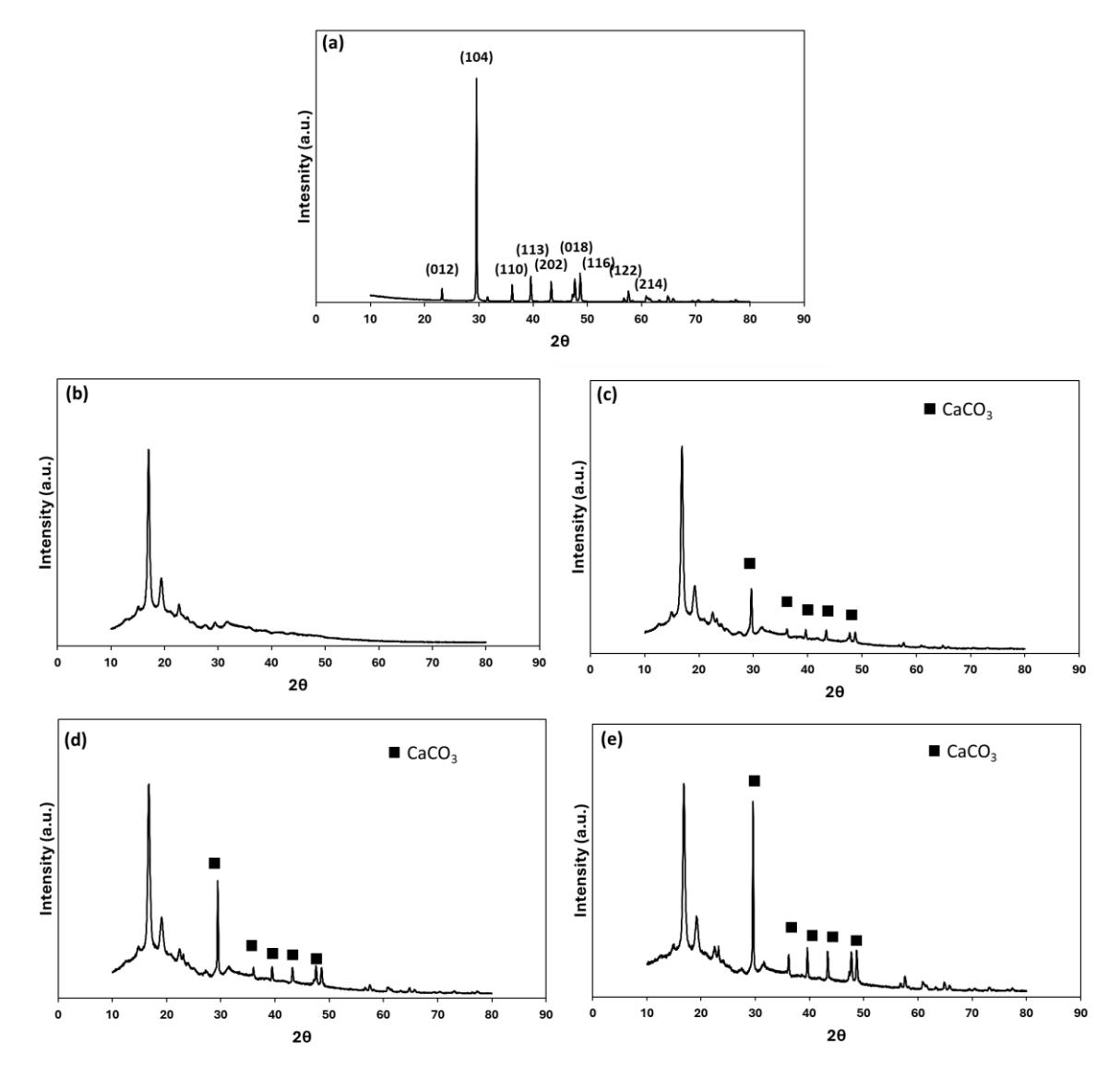
XRD spectra of (a) ESP, (b) 0 wt%, (c) 5 wt%, (d) 10 wt%, (e) 20 wt% ESP in PLA.
Pure PLA shows tensile strength value at 24.12 MPa, which is required to pull composite specimen to the point of material failure (Figure 5(a)). According to previous reports, the incorporation of ESP in the PLA matrix enhances the strength and flexibility of composite with increasing tensile strength and Young's modulus, compared to the pure PLA (Orisekeh et al., 2025; Sharma et al., 2024). The initial Young modulus of pure PLA was recorded at 3022 MPa. Based on the data obtained (Figure 5(b)), an increasing trend from 4400 MPa to 7932 MPa was observed after ESP was added from 5 wt% up to 10 wt%. However, the value decreased to 3321 MPa with the 20 wt% CaCO3 loading. The addition of ESP in PLA increased the tensile strength to 26.61 MPa for 10 wt% loading.
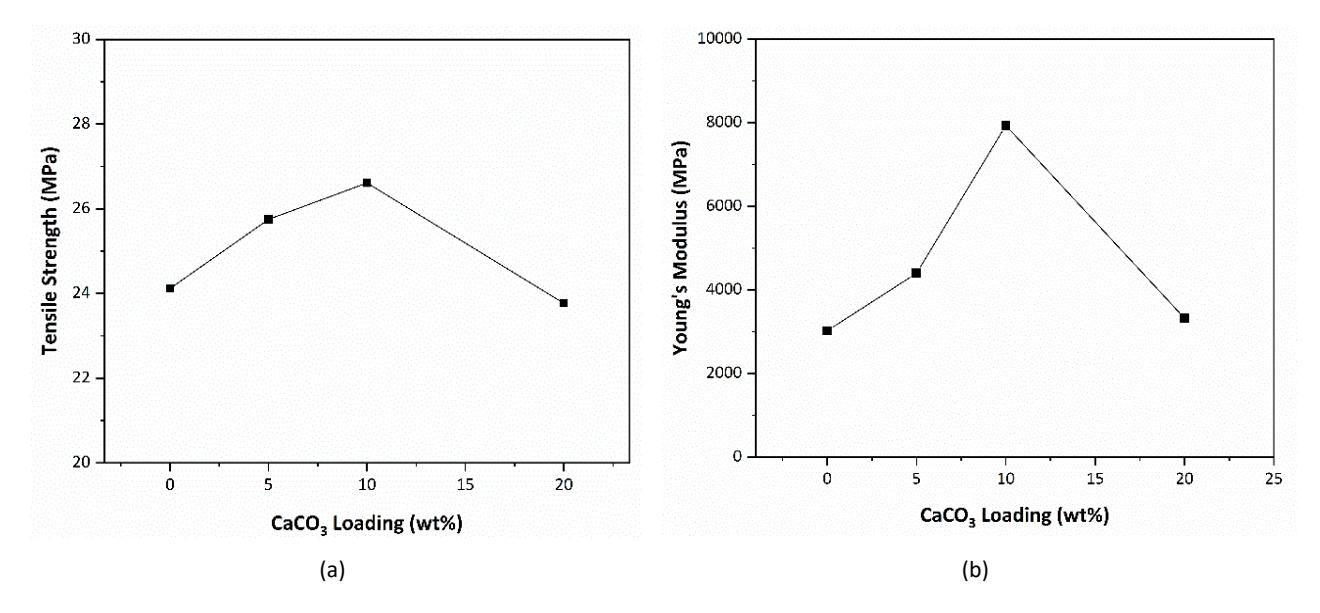
(a) Tensile strength and (b) Young's modulus of composite PLA/ESP.
For pure PLA film, there was no mass gain after being immersed in water for 7 days due to the strong hydrophobic properties, which led to a low absorption rate of water (Figure 6). This can be improved by blending with inorganic substances to create free voids for water absorption (Figure 7).
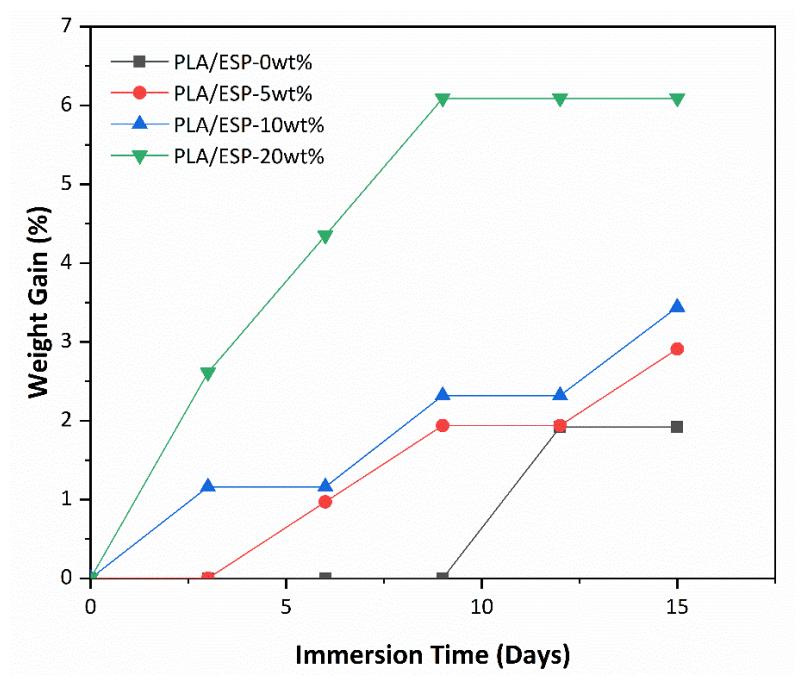
Weight gain of composites PLA/ESP from swelling test.
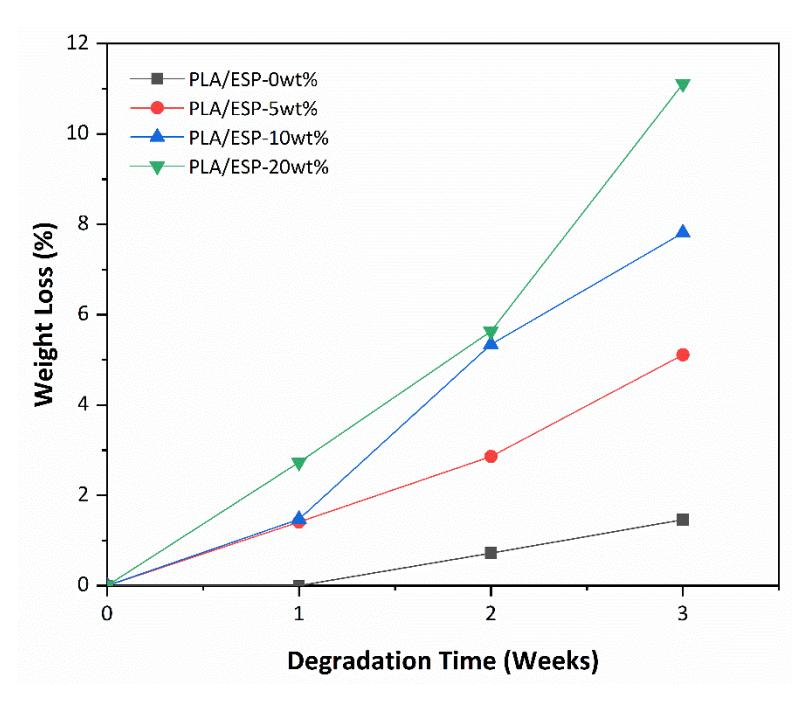
Weight loss of composites PLA/ESP from soil burial test.
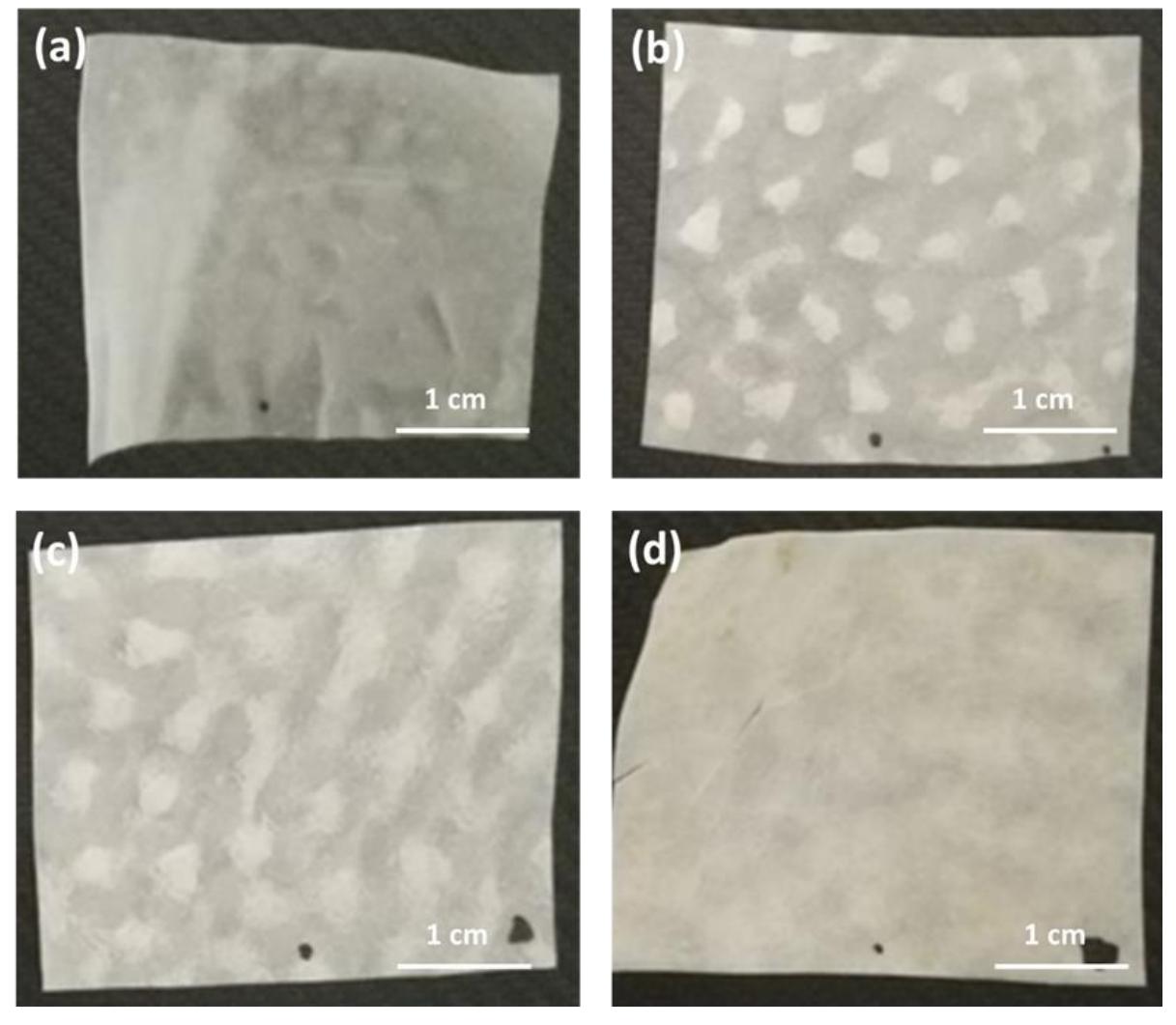
Morphology of composite PLA/ESP for ESP at a) 0 wt%, b) 5 wt%, c) 10 wt%, and d) 20 wt% after 28 days of soil burial.
As shown in Figure 8, after 28 days, the PLA composite turned milky white, and transparency decreased. Additionally, cracks appeared, making composite more fragile and prone to cracking. Pure PLA had the least weight loss during the 28-day soil burial test, amounting to 1.46%. In contrast, PLA with 20 wt% ESP had the highest weight loss reaching 11.11%. The biodegradability of the PLA/ESP3 composite improved with higher ESP loadings, as showed by the greater weight loss. Composite prepared using 20 wt% loading experienced a significant increase in weight loss, ten times greater than that of pure PLA. This may be attributed to the increased ESP loading leading to more agglomerate formation, which modifies the polymer matrix and results in imperfect morphology (Guo et al., 2024; Guo et al., 2023).
Discussion
In this study, only a little agglomeration of ESP nanoparticles was found. According to Aframehr et al. (Aframehr et al., 2017), a large number of aggregations were observed with higher CaCO3 content which leads to the weak interactions between nanoparticles and polymer matrixes. CaCO3 nanoparticles possess high surface polarity and energy, tending to agglomerate with increasing nanoparticle content (Homavand et al., 2024; Sulimai et al., 2016; Yao et al., 2021).
Zarei et al. reported an improvement of up to 46% in tensile strength following the inclusion of filler (Zarei et al., 2024). The load applied to composite can be transferred from PLA to ESP through the interaction between these materials, which can enhance tensile strength (Jiang et al., 2021; Zarei et al., 2024). However, further inclusion of ESP can lead to agglomeration caused by increasing interface interaction between the polymer matrix and CaCO3, eventually lowering the mechanical strength (Hanumantharaju et al., 2023).
According to previous reports, the mass gain of PLA composite films increases with the loading of ESP. PLA composite with 20 wt% ESP showed a significant increase in mass gain compared to pure. This condition was attributed to the agglomeration of CaCO3 nanoparticles, which caused an increase in particle size, leading to imperfect morphology, more voids, and free spaces in the polymer chain. In other words, the agglomeration of CaCO3 nanoparticles, due to high surface polarity and energy, leads to more free spaces, allowing for increased water absorption (Sharma & Kumar, 2024).
The imperfect polymer matrix tends to create more spaces as ESP loadings increase, weakening the crosslinking between the nanoparticles and PLA (Cree & Soleimani, 2023). Therefore, biodegradation of PLA composite occurs more rapidly with higher ESP loadings. Moisture content significantly affects the biodegradability rate, causing a significant increase. This is because composite swells when water diffuses into the polymer chain, resulting in the physical relaxation of the molecular chain (Cree & Soleimani, 2023). Therefore, it can be assumed that the biodegradation rate of composite films increases with the water absorption rate. Biodegradation is the metabolic and enzymatic breakdown of organic matter by microorganisms, such as bacteria and fungi. This process is dependent on the presence of water, which enables the transformation of the organic material.. This implies that moisture content in the soil supports microbial activities related to biodegradation.
Conclusion
In conclusion, the study underscored the significance of using CaCO3 prepared from eggshells as filler in PLA polymer. In the mechanical test, PLA with 10wt% ESP had the highest tensile strength and Young's modulus due to the improved interface interaction. The PLA with 20wt% ESP showed the highest mass gain in the water absorption test due to the agglomeration of particles in composite resulting in more free spaces and greater water diffusion. In the biodegradability test, the weight loss of the samples increased with the higher ESP loading. The imperfect morphology of composite further accelerated the biodegradation process by enabling the films to swell, leading to the physical relaxation of the molecular chains when exposed to moisture in the soil.
Acknowledgement
We would like to acknowledge research grant 100-TNCPI/PRI 16/6/2 (099/2022) in providing fund for the experiments.
Compliance with ethics guidelines
The authors declare they have no conflict of interest or financial conflicts to disclose.
This article contains no studies with human or animal subjects performed by authors.